Booster Club Vendor Master File Review: Prevent Duplicate and Unauthorized Payments
A booster club vendor master file review is a periodic audit of the organization’s complete vendor list — every company, contractor, or individual the booster club has paid or is authorized to pay — to identify and correct duplicate entries, outdated records, unauthorized vendor additions, and payment detail errors before they produce improper payments. For most athletic booster clubs, the vendor list is informal: a collection of payees in accounting software, a spreadsheet inherited from prior officers, or a growing roster of approved recipients that expands each season as new relationships form. Informal lists that are never systematically reviewed develop problems that maintained ones do not — duplicate vendor records that trigger accidental double payments, vendors added without board approval, former officers’ personal accounts that remain active, and payment details no one has verified are still accurate. This guide explains why a structured vendor master file review matters, what the review process covers, and how clean vendor records protect the recognition commitments your program makes to sponsors and donors.
Read More
Booster Club Debit Card Controls Policy: Purchase Limits, Receipts, and Monthly Review
A booster club debit card controls policy is a written framework that governs who may hold a debit card linked to the organization’s bank account, how much cardholders may spend per transaction and per day, what receipts and expense documentation each purchase must produce, and how an independent officer reviews those transactions every month. Debit cards create a faster and more convenient path through the organization’s funds than checks — and that convenience is precisely why controls matter. A check requires an authorized signature and produces a paper record at the point of issuance; a debit card purchase happens instantly, with only a receipt and a bank line item to document what was purchased and why. Without a formal policy defining purchase limits, receipt requirements, and a monthly review process, the gap between a cardholder’s authorized discretion and an unauthorized transaction is invisible until damage is already done. This guide covers each component of a workable debit card controls policy and explains how those controls connect to the recognition commitments that give booster fundraising its purpose.
Read More
Booster Club Bank Account Closure Checklist: Approvals, Final Reconciliation, and Records
A booster club bank account closure checklist is the step-by-step process a treasurer and board complete when permanently shutting down a bank account: obtaining a board vote, confirming signatory authority, reconciling the final balance, resolving any restricted funds, submitting the closure request to the bank, collecting the final account statement, and archiving all documentation for the required retention period. Properly closing an account — rather than simply abandoning it — prevents escheatment risk, removes former officer access to organizational funds, clears the organization’s financial records, and gives school administrators and auditors a documented accounting of every account the program has ever held. This guide covers every step in a format that works for any booster club account closure, whether the account served the general operating fund, a named scholarship, a capital campaign, or a sport-specific budget.
Read More
Booster Club Dormant Bank Account Policy: Review, Reactivation, and Closure Steps
A booster club dormant bank account policy is a written procedure that identifies which accounts are inactive, sets a timeline for review, and establishes whether each account should be reactivated with updated signatories or formally closed and its funds consolidated. Booster clubs frequently accumulate extra accounts over time — separate checking accounts for specific sports seasons, campaign funds opened for capital projects, memorial scholarship accounts, or legacy accounts from programs that no longer operate. When officer transitions happen and no policy governs those accounts, the organization can find itself with accounts nobody controls, funds nobody can access, and records nobody can reconstruct.
Read More
Booster Club Unclaimed Property Compliance Checklist: Handle Stale Payments and Refunds
Intent: research — A booster club unclaimed property compliance checklist gives school athletic program administrators and booster organization officers a documented workflow for identifying and resolving unresolved checks, stale refunds, membership credits, event deposits, and vendor balances that could trigger state unclaimed property (escheatment) obligations. This guide defines what counts as unclaimed property in the booster club context, explains the dormancy periods and due-diligence steps most states require, and connects systematic recordkeeping to the financial credibility that protects donor trust and the funds reserved for awards, recognition, and long-term program commitments.
Read More
Booster Club Vendor Certificate of Insurance Tracking: A Renewal and Compliance Workflow
Booster club vendor certificate of insurance tracking is the process of collecting, verifying, and monitoring certificates of insurance (COIs) from every vendor the organization hires — ensuring that each certificate names the booster club (and usually the school district) as an additional insured, reflects current coverage limits, and is replaced before its expiration date. When a vendor’s COI lapses and an incident occurs, the booster club and its officers can face direct liability exposure that the vendor’s policy would otherwise cover. A tracking workflow prevents that gap by turning a one-time document collection task into a recurring, calendar-driven compliance process.
Read More
Booster Club Data Breach Response Plan: Protect Member, Donor, and Volunteer Information
A booster club data breach response plan is a written set of procedures that tells your organization exactly what to do when membership lists, donor payment records, volunteer screening files, or contact information may have been accessed, copied, or exposed without authorization. Booster clubs accumulate sensitive personal information across nearly every program function — from annual membership drives and fundraising campaigns to background check records and donor recognition files. Without a written response plan, a breach that could be contained within hours can become a weeks-long crisis that damages relationships with members, donors, the school, and the sponsors who fund the recognition programs your community relies on.
Read MoreBooster Club Equipment Checkout Form: Track Gear for Games, Banquets, and Recognition Events
A booster club equipment checkout form is a one-page record that documents which piece of school-owned or club-owned gear is leaving storage, who is responsible for it, where it is going, and when it is due back. Fill in the borrower’s name, item description, quantity, event destination, checkout date, expected return date, and a signature line — then add a return verification column that the equipment coordinator signs when the item comes back undamaged. That single-page workflow closes the accountability loop that verbal requests and informal handoffs leave open, and it keeps the club’s display banners, audio equipment, table linens, trophies, and recognition props accounted for across every game night, awards banquet, and hall of fame induction ceremony on the calendar.
Read MoreBooster Club Sales Tax Compliance Checklist for School Athletics
A booster club sales tax compliance checklist gives school athletic program administrators and booster organization officers a structured way to verify whether the club is meeting its sales tax obligations — covering spirit wear sales, fundraising event transactions, merchandise tables, and any other exchange of goods for payment. Sales tax compliance is one of the most commonly misunderstood obligations for volunteer-run school organizations: federal tax-exempt status under the IRS does not automatically exempt an organization from state sales tax requirements, and most states treat booster club merchandise and fundraising sales under rules that vary significantly by state, organization type, and transaction type.
Read More
Booster Club Merchandise Inventory Policy: Track Sales, Stock, Sponsors, and Recognition
A booster club merchandise inventory policy is a written governance document that establishes how the organization receives, counts, tracks, sells, and reconciles its merchandise stock — from spirit wear and apparel to program books, novelty items, and sponsor-branded goods. Without a written policy, merchandise operations run on informal habits that create accountability gaps: money goes unaccounted, sponsor commitments go unverified, and the organization cannot produce the clean financial reports that school liaisons and auditors expect.
Read More
Booster Club Membership Refund Policy: Clear Rules for Dues, Cancellations, and Exceptions
A booster club membership refund policy is a written governance document that defines when dues are refundable, how cancellation requests are submitted, who approves exceptions, and what happens to benefits already received. Without a clear written policy, every refund request becomes a case-by-case negotiation that drains board time, creates inconsistency, and erodes the trust of members and sponsors who expect the organization to operate with the same discipline it brings to fundraising and event management.
Read More
Booster Club Background Check Policy: A School-Aligned Screening Checklist for Volunteers
A booster club background check policy is a written set of procedures that defines which volunteers require criminal history screening before working with students, who administers the checks, how records are stored, and how results are acted upon. Most school-affiliated booster clubs operate on school property, alongside student athletes, and with access to sensitive donor and sponsor data. A formal screening policy protects students, shields the organization from reputational and legal exposure, and demonstrates to school administrators, parents, and sponsors that the program takes safety as seriously as it takes fundraising.
Read More
Booster Club Incident Report Form: What to Document After Events and Fundraisers
A booster club incident report form is a structured written record documenting anything that went wrong — or nearly went wrong — at a booster event or fundraiser: injuries to volunteers or attendees, property damage, missing or disputed funds, equipment failures, and behavioral incidents. Completing one promptly after an event is not a sign that something catastrophic occurred. It is standard documentation practice that protects the organization, the individual volunteers present, and the school when questions arise later — from an insurance adjuster, a school administrator, a board member, or a parent.
Read More
Booster Club Vendor Selection Policy: Fair Bids, Conflicts, and Sponsor Commitments
A booster club vendor selection policy establishes the process your organization uses to choose vendors for apparel, printing, event supplies, signage, and recognition display services — so that every purchasing decision follows a consistent, documented process that protects volunteers from conflict accusations, honors sponsor commitments, and can withstand review by school administrators or an outside auditor. Most booster clubs form vendor relationships informally: the treasurer knows a print shop, a board member’s company handles banner printing, a title sponsor insists on a preferred photographer. Without a written policy, those informal relationships create exposure the moment any volunteer questions whether a decision was made for the program’s benefit or for someone else’s.
Read More
Booster Club Restricted Funds Policy: Track Donor Intent From Gift to Recognition
Intent: research A booster club restricted funds policy is a written governance document that defines how the organization accepts, records, segregates, approves spending from, and reports on gifts designated for a specific purpose. When a donor contributes funds earmarked for a new scoreboard, a family establishes a named scholarship in an athlete’s memory, or a local business sponsors the installation of a digital recognition display, each gift carries an intent the organization is obligated to honor. Without a formal policy, restricted funds are routinely commingled with unrestricted operating money, recognition commitments go untracked, and the organization cannot demonstrate to donors, school administrators, or auditors that designated gifts were spent as directed.
Read More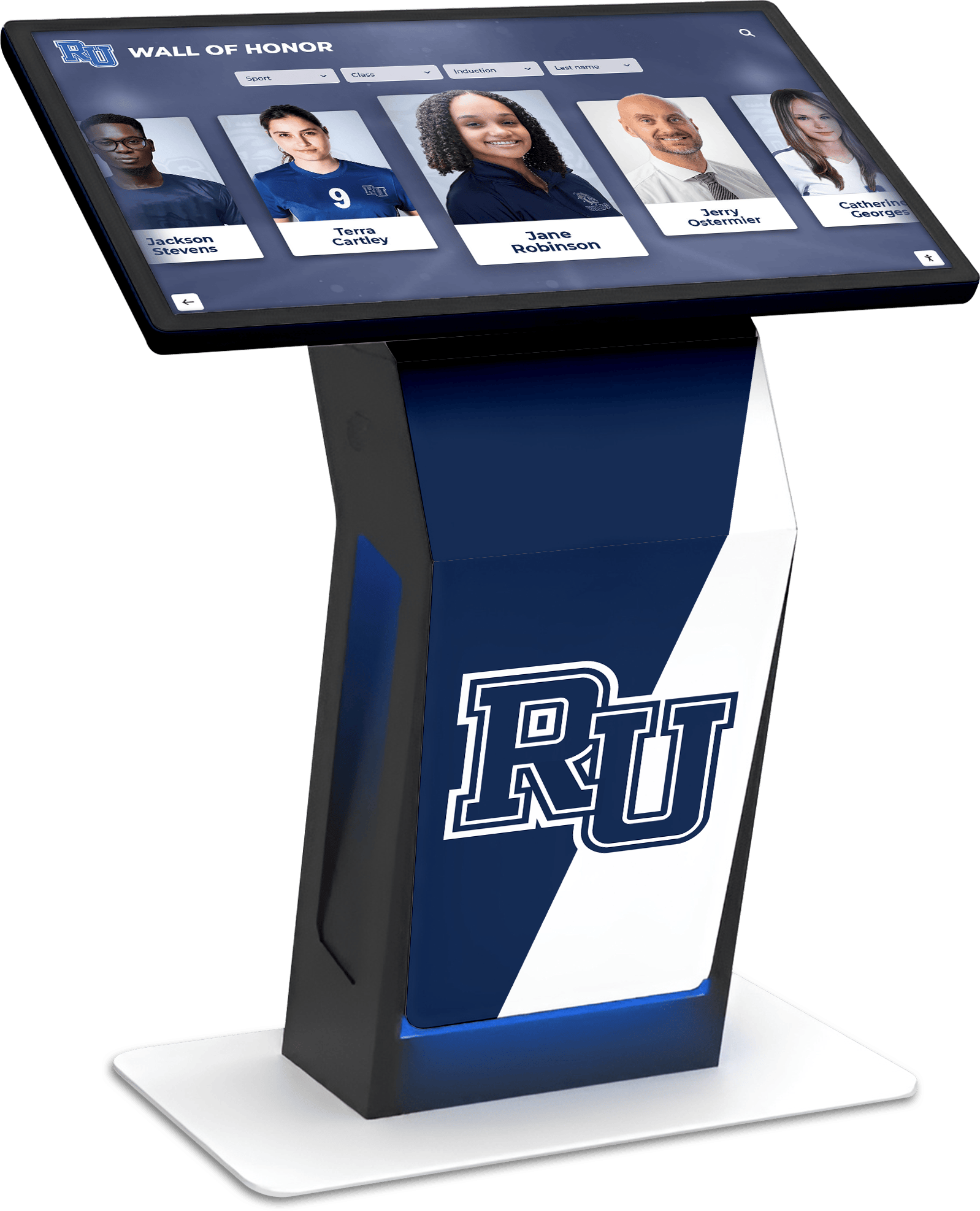
Booster Club Board Orientation Checklist for a Smooth Leadership Start
A booster club board orientation checklist is the single most effective tool a volunteer organization can use to prevent the annual leadership transition from erasing the institutional knowledge built over the previous year. Most booster clubs rotate officers every one to three years, and every rotation carries the same risk: the new treasurer does not know which sponsors have outstanding invoices, the incoming president does not know the history behind a naming gift, and no one can locate the password to the recognition display platform. This guide provides a complete orientation checklist organized for both outgoing and incoming officers — covering financial records, policy documents, sponsor and donor files, recognition displays, digital platform access, athletic history archives, and event records.
Read MoreBooster Club Investment Policy: Safeguards for Reserves, Restricted Gifts, and Recognition Funds
A booster club investment policy is the written framework that governs how your organization holds, invests, and spends its financial assets — and, critically, which categories of funds carry restrictions that constrain how earnings can flow. For most booster clubs, the policy applies to three distinct fund types: general reserves that must stay accessible for operations, restricted gifts that a sponsor or donor designated for a specific purpose, and recognition funds set aside to support awards, digital hall of fame programs, trophy cases, and other multi-season athletic recognition commitments.
Read MoreBooster Club Reserve Policy: How Much to Hold and What Recognition Costs to Protect
A booster club reserve policy defines how much unrestricted cash your organization holds as a financial cushion and which specific obligations — sponsor deliverables, awards, banners, and long-term recognition display costs — that cushion must be sized to protect. Most booster clubs set reserves informally, if at all. The result is that recognition commitments made to sponsors and donors become exposed whenever a revenue shortfall, a leadership transition, or an unexpected expense interrupts the normal operating cycle.
Read MoreBooster Club Fraud Prevention Policy: Controls That Protect School Athletics Funds
A booster club fraud prevention policy is a set of written controls that makes unauthorized or undetected misuse of athletics funds structurally difficult — not by assuming volunteers are dishonest, but by designing procedures that protect them and the organization simultaneously. When a single volunteer can collect money, record transactions, and authorize disbursements without any independent review, small errors and intentional misappropriations look identical until the damage is already done. A well-constructed policy separates those responsibilities, requires independent verification, and creates the documentation trail that school administrators, auditors, and sponsors need to trust that every dollar is accounted for.
Read More
Booster Club Reimbursement Policy: Approval Rules, Receipts, and Recordkeeping
A booster club reimbursement policy defines how volunteers and officers submit expense claims, what documentation is required, who must approve each request, and how long the organization retains those records. Without a written policy, reimbursement becomes a judgment call — inconsistent across officers, difficult to audit, and open to disputes that undermine both volunteer relationships and institutional credibility. A documented policy eliminates ambiguity, sets equal expectations for everyone who spends money on behalf of the organization, and gives school administrators and auditors the paper trail they need.
Read More
Booster Club Cash Handling Policy: Controls for Events, Deposits, and Sponsor Funds
A booster club cash handling policy is a written set of procedures that governs how the organization collects, counts, deposits, and reconciles money from fundraising events, membership dues, ticket sales, concessions, and sponsorship payments. Without a formal policy, even well-intentioned volunteers expose the organization — and themselves — to accusations of mishandling, discrepancies that no one can explain, and gaps that auditors and school administrators cannot verify. A policy does not imply distrust; it creates the structure that protects volunteers and preserves institutional credibility across leadership transitions.
Read MoreBooster Club Insurance for School Athletics: Coverage, Risk, and Recognition Assets
Booster club insurance covers the gap between what a school’s general liability policy protects and the specific risks that a parent-run organization takes on when it fundraises, manages equipment, employs volunteers, and administers recognition programs for athletes. Most booster clubs operate under the assumption that the school’s coverage extends to them — and most of the time, that assumption is incorrect. A booster club that holds bake sales, rents bounce houses, accepts donated scoreboards, signs contracts with vendors, and places sponsor banners in a gymnasium is running an independent organization with independent liability exposure.
Read More