



A class ring goes on the ring finger of the right hand—the fourth finger, counting from the thumb. That is the short answer, and it has been the dominant convention in American high schools and colleges for the better part of two centuries. But the tradition surrounding the class ring runs considerably deeper than finger placement: there is a specific direction the stone faces, a ceremonial moment when that direction changes, and a set of customs that vary between high school and college rings, between institutions, and even between individual wearers. Understanding the full tradition helps students and alumni wear their rings with intention rather than accident.
Few pieces of personal jewelry carry as much institutional weight as the class ring. First introduced at the United States Military Academy at West Point in 1835, the class ring spread through American higher education and eventually into high schools throughout the twentieth century. Today, it remains one of the most recognizable symbols of school identity, academic achievement, and community belonging—a tangible record that a particular student passed through a particular institution at a particular time in history.

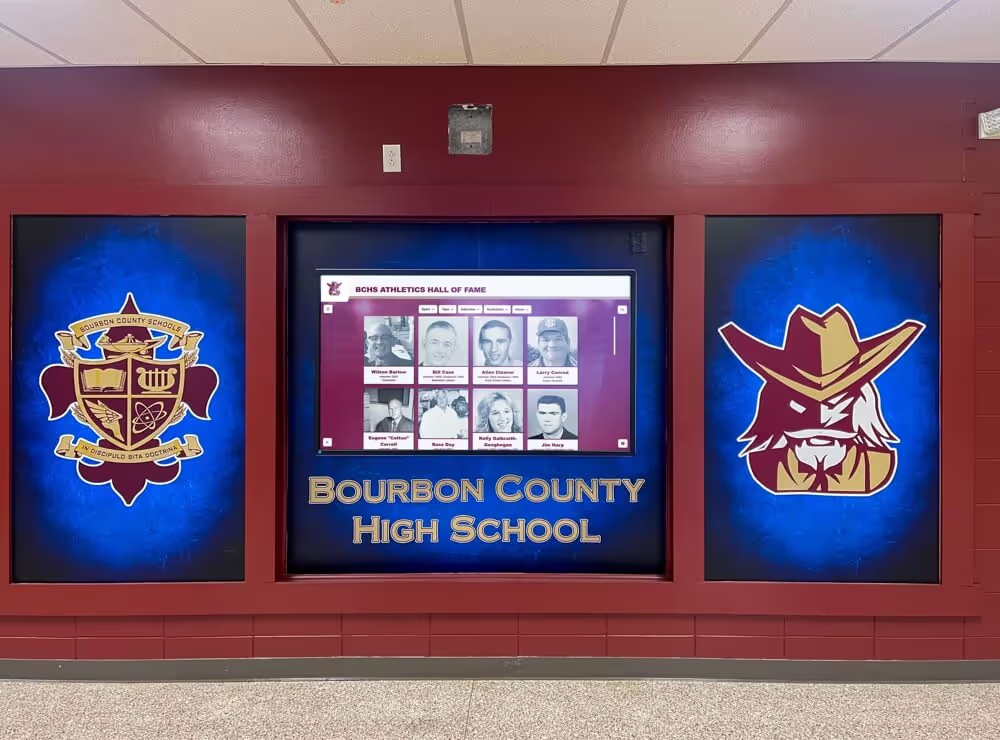
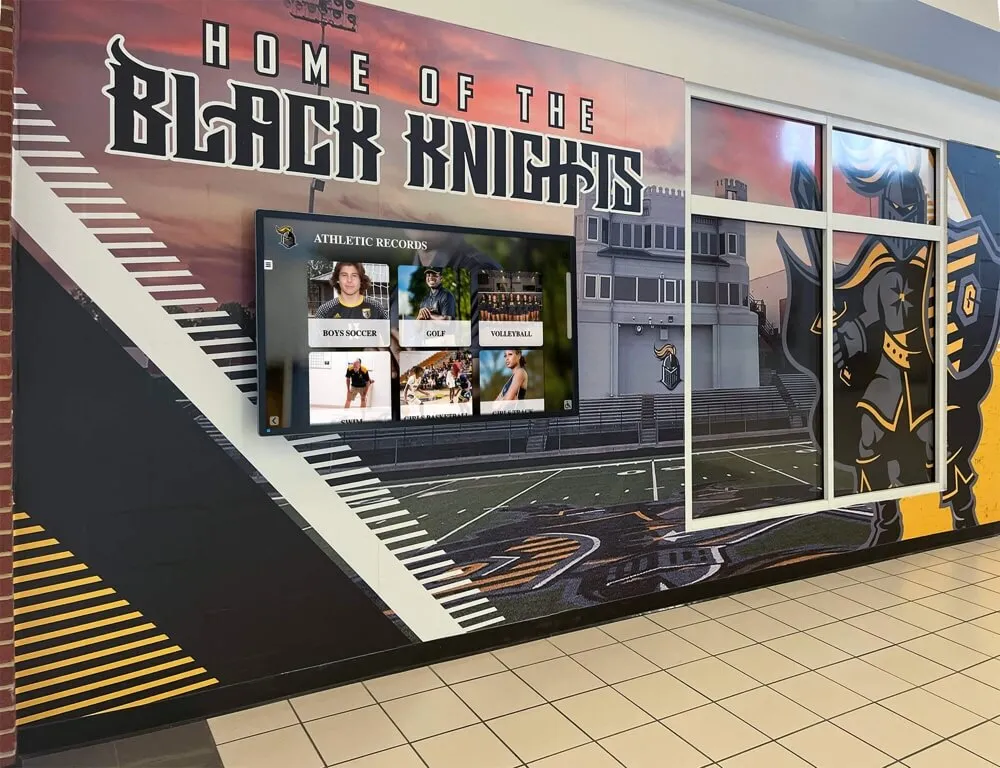
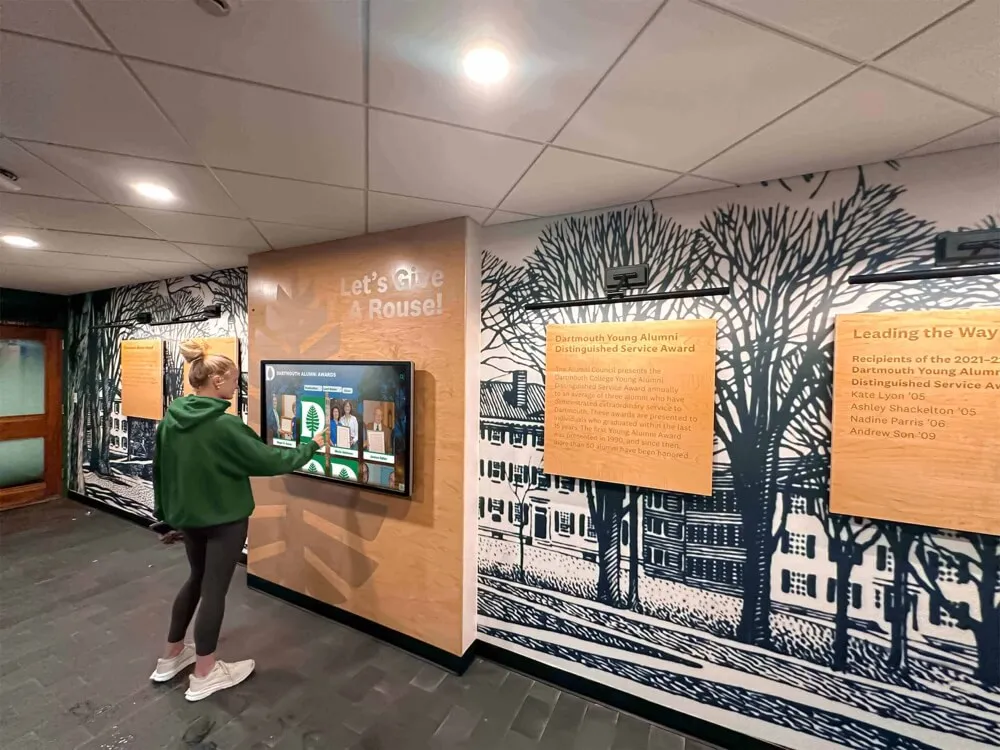
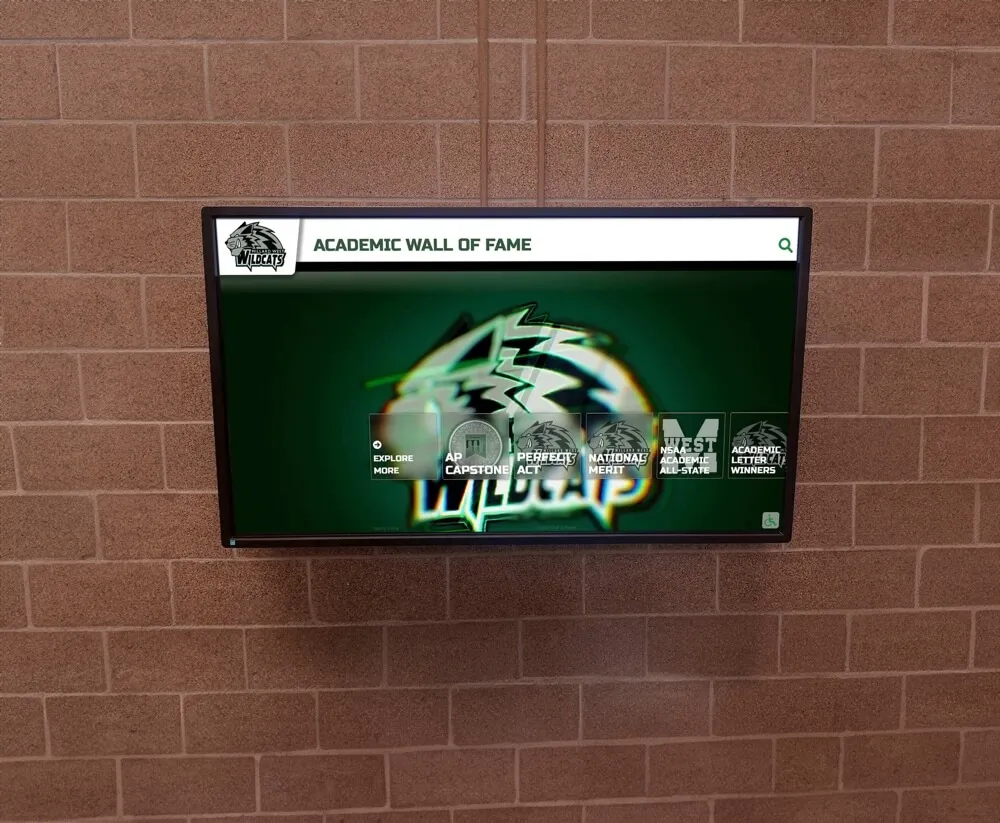
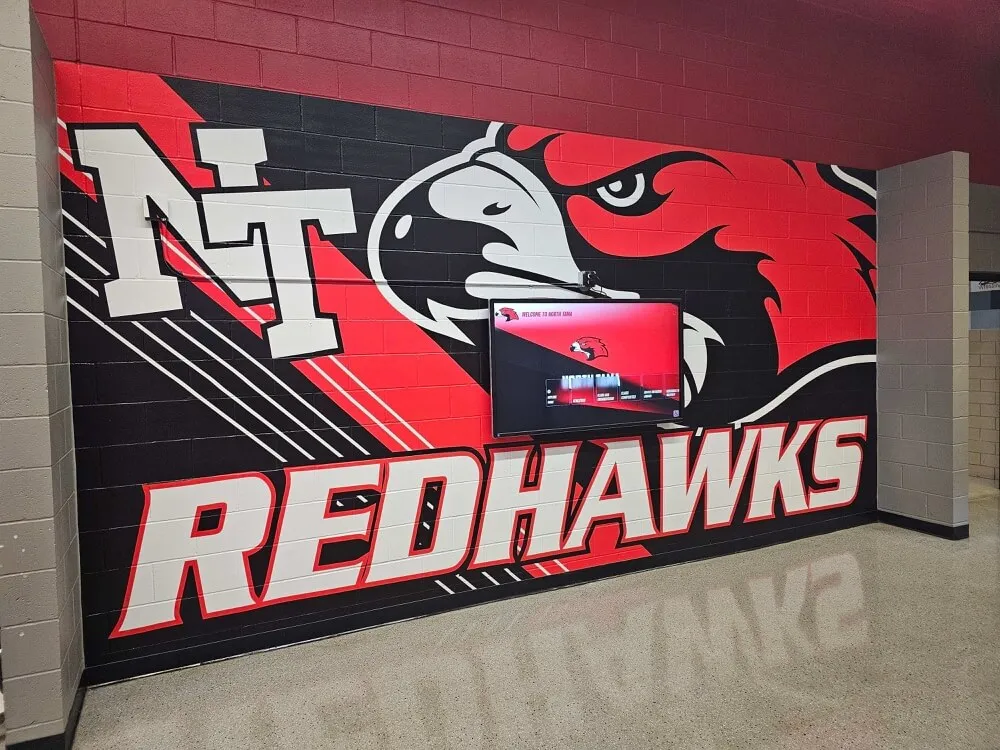
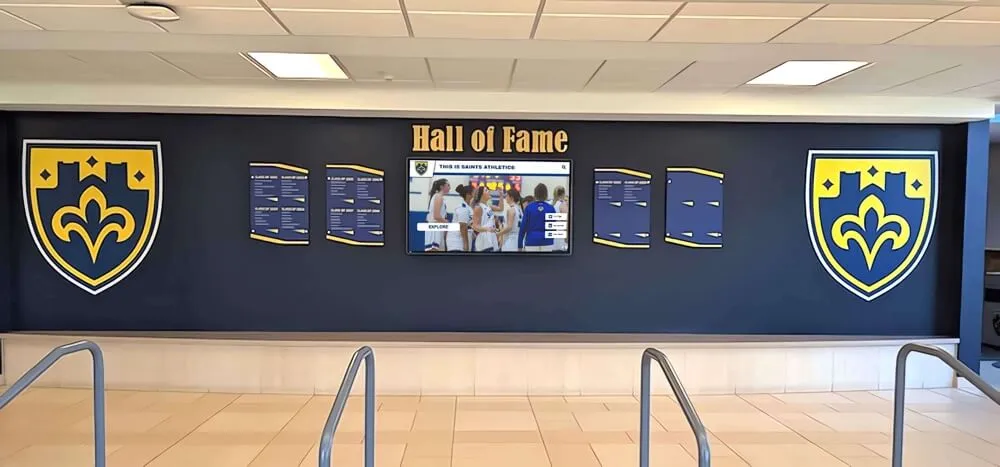
School traditions like the class ring share space with other forms of enduring recognition—murals, hall of fame displays, and achievement walls that connect current students to generations of predecessors
What Finger Does a Class Ring Go On?
A class ring goes on the ring finger of the right hand. This is the fourth finger on the right hand, the same position occupied by a wedding or engagement ring—but on the opposite hand. The right-hand convention distinguishes the class ring from marital jewelry and reserves the left ring finger for its traditional purpose.
Most ring manufacturers, schools, and jewelers confirm this convention universally. Jostens, Herff Jones, and Balfour—the three companies that produce the vast majority of American class rings—all describe the right ring finger as the standard wearing position in their customer materials.
Some students and alumni choose the right index (pointer) finger instead, particularly when sizing makes the ring finger impractical. Others wear the ring on a chain around the neck, especially during athletic seasons or in professions where rings present a safety concern. There is no strict rule prohibiting alternative placements, but the right ring finger remains the recognized tradition.
Left Hand vs. Right Hand
The right hand is the traditional choice because it avoids confusion with engagement and wedding rings, which are culturally associated with the left ring finger in the United States. Wearing a class ring on the left ring finger is uncommon and can create ambiguity, particularly for people who are not yet married but receive frequent questions about the ring’s significance.
Some international traditions differ. In several European and Latin American countries, engagement and wedding rings are worn on the right hand, which sometimes leads to different conventions for class or graduation rings. Within the United States, however, the right ring finger remains the clear norm.
The Turning Tradition: Which Direction Should the Stone Face?
The direction the ring’s stone or crest faces carries its own well-established tradition—and that direction changes at a specific ceremonial moment.
While you are a student: The stone faces inward, toward you. This convention symbolizes that the school’s identity is something you are still taking in, absorbing, and growing into. The crest or stone points back toward the wearer as a reminder that the work is not yet finished.
After graduation: You turn the ring so the stone faces outward, away from you and toward the people you encounter. This turn symbolizes that you are now carrying your school’s identity into the world—the education you received is now something you are sharing and demonstrating through your actions and achievements.
This turning is not merely symbolic in practice; it is formalized through a tradition many schools call the Ring Turning Ceremony (or Ring Turn Ceremony, depending on the institution).

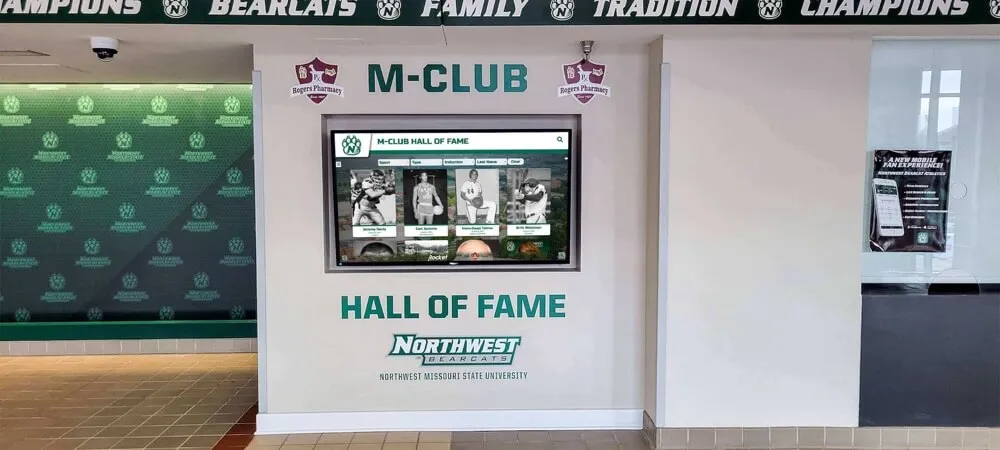
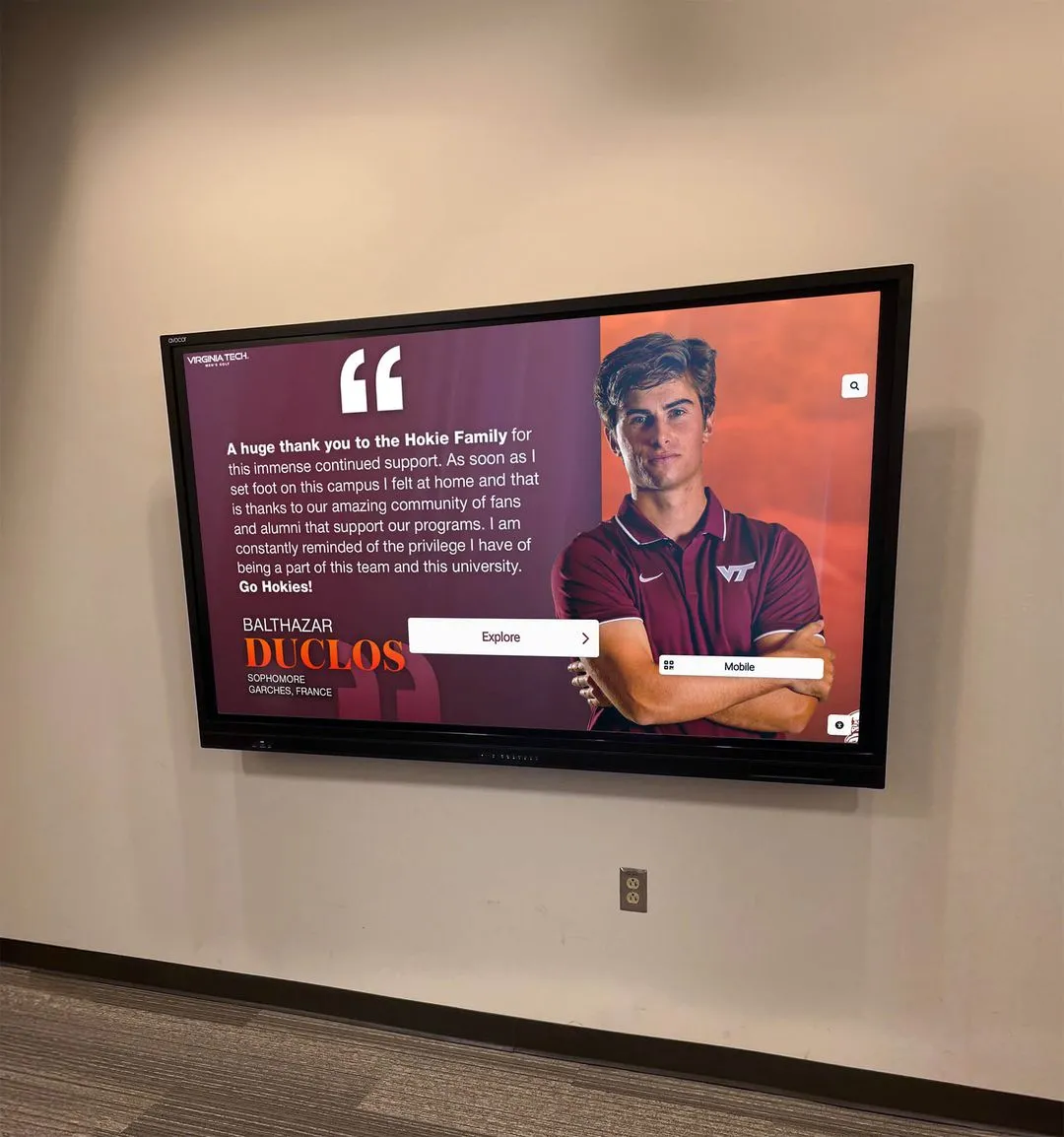
Just as class rings mark individual students' connections to their institutions, alumni portrait displays preserve that record for decades—giving future students a window into the generations who came before them
The Class Ring Turning Ceremony
The Ring Turning Ceremony is a formal milestone event practiced by many high schools and colleges, particularly those with strong institutional traditions. The ceremony marks the moment students officially rotate their class rings from the inward-facing student position to the outward-facing graduate position.
When Does the Ceremony Happen?
At the high school level, ring ceremonies are most commonly held during junior year, when students first receive their rings, or during senior year as part of the broader graduation season. At military academies and service schools, the ring ceremony is one of the most significant events in the academic calendar—at West Point, the Ring Weekend celebration involves an elaborate ceremony where cadets dip their rings in water from significant historical sites.
At colleges and universities, the equivalent event is often called Ring Day, a senior celebration that varies considerably in formality from institution to campus. Some universities hold formal convocations with faculty and administrators presiding; others organize student-run celebrations with the ring turn as the central ritual.
What Happens at the Ceremony?
At most institutions, the ring turning ceremony includes:
- Distribution or presentation of the ring to students who have earned it through academic standing and class membership
- A formal address from a school administrator, faculty member, or student leader about the ring’s meaning and the responsibilities of membership in the school community
- The turning moment itself, sometimes done collectively, where students rotate their rings from inward to outward
- A reception or celebration connecting students, families, and faculty
Some schools build elaborate traditions around the ceremony—water from a significant river, a candle lighting, a specific phrase spoken in unison. These variations reflect the deep institutional investment schools place in the ritual and what it means to belong to a particular community. Just as championship rings at the high school and college level carry deep ceremonial weight that persists across generations, the class ring turning ceremony has proven remarkably durable as a milestone tradition.
High School vs. College Class Rings: Are the Conventions Different?
The core convention—right ring finger, stone faces inward as a student and outward after graduation—applies to both high school and college rings. The difference lies primarily in significance and timing.
High school class rings are typically received during junior year and worn for two years before graduation. Some high school students turn their rings at graduation; others participate in a formal ring ceremony earlier. The high school ring often features school colors, mascots, and graduation year prominently.
College class rings tend to carry greater institutional prestige and are often worn for longer periods after graduation. Many college alumni wear their rings for decades, using them as a professional and personal identifier. University rings frequently include academic major, Greek letters, or specific achievement markers alongside institutional insignia.
Military academy rings occupy a category of their own. West Point’s class ring is one of the most famous in the world; similar traditions exist at the Naval Academy, Air Force Academy, and other service institutions. These rings carry enormous institutional significance and the wearing conventions are highly formalized.
What Happens to Your Class Ring When You Get Engaged or Married?
When an engagement ring or wedding band enters the picture, class ring wearers face a practical question: where does the class ring go?
The most common approaches include:
- Wear both rings on the right hand: Stack the class ring on the right ring finger while the engagement or wedding ring occupies the left ring finger. This is the most traditional solution and preserves both rings in their conventional positions.
- Move the class ring to the right index finger: If the right ring finger feels crowded or the rings do not stack comfortably, the index finger is the most natural alternative placement.
- Wear the class ring on a necklace: Many people transition to wearing the class ring on a chain after marriage, particularly during work situations where ring safety is a concern or where the class ring’s size makes daily wear impractical.
- Reserve the class ring for special occasions: Some alumni keep the ring for reunion weekends, homecoming events, and other school-connected occasions rather than daily wear.
There is no universal rule governing this transition. The right answer depends on the individual’s attachment to the ring, the ring’s size and comfort for extended wear, and practical considerations of the wearer’s daily life.

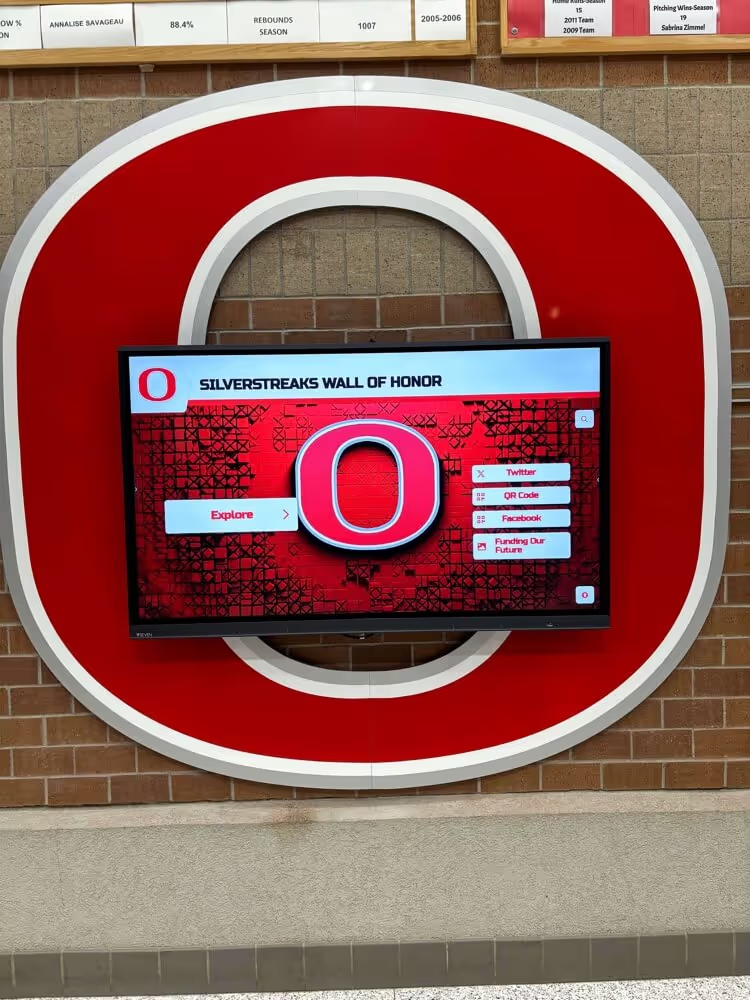
Schools that honor their history—through rings, hall of fame walls, and traditions passed from class to class—build identities that alumni carry with them throughout their lives
The History of the Class Ring
The class ring has a specific and well-documented origin: the United States Military Academy at West Point, which introduced the first class ring in 1835 for the graduating class of that year. The purpose was to create a shared symbol of institutional membership and shared experience among cadets who would go on to serve in the military and needed a way to identify each other’s training and fellowship.
The tradition spread through American higher education during the late nineteenth and early twentieth centuries, eventually becoming standard at colleges and universities across the country. High schools adopted the tradition through the mid-twentieth century, and by the 1960s and 1970s, the class ring had become a defining rite of passage for American secondary school students.
Today, roughly one million class rings are sold annually in the United States, according to industry estimates from ring manufacturers. The tradition has proven durable despite significant cultural changes—students continue to purchase and wear class rings as a connection to their school identity and peer community.
This longevity reflects something real about how school traditions function. Like graduation cap traditions and class composite presentations, the class ring occupies a category of physical symbols that mark membership, achievement, and belonging within an educational community.
What Is Typically on a Class Ring?
Class rings are highly customizable, but they typically include:
- The graduation year, prominently engraved or embossed on the ring
- The school name or abbreviation, often on the band
- The school mascot or seal, featured in the stone setting or as metalwork
- A stone, typically in the school’s colors, set in the center of the ring face
- Academic or extracurricular achievements, such as honor society membership, sport icons, or subject area symbols on the side panels
- The graduate’s name, often engraved inside the band
Customization has expanded significantly in recent decades. Students can now choose from dozens of stone colors, metal types (yellow gold, white gold, silver, two-tone options), and side panel designs that reflect individual achievement rather than only institutional identity. This personalization has helped sustain the tradition’s appeal for generations of students who might otherwise dismiss it as generic.
Why Class Rings Matter: Connection to School Identity
A class ring is, at its core, a physical representation of belonging. When a student wears their ring during high school or college, they are signaling membership in a specific community at a specific time. When an alumni wears it decades later, they are carrying that community identity forward into their present life.
This is why schools invest so heavily in the ring tradition—and why the turning ceremony is treated as a genuine milestone rather than a perfunctory transaction. The ring, like the recognition systems that honor valedictorians and academic standouts, communicates that this institution has a continuous identity that individual students enter, participate in, and carry forward.

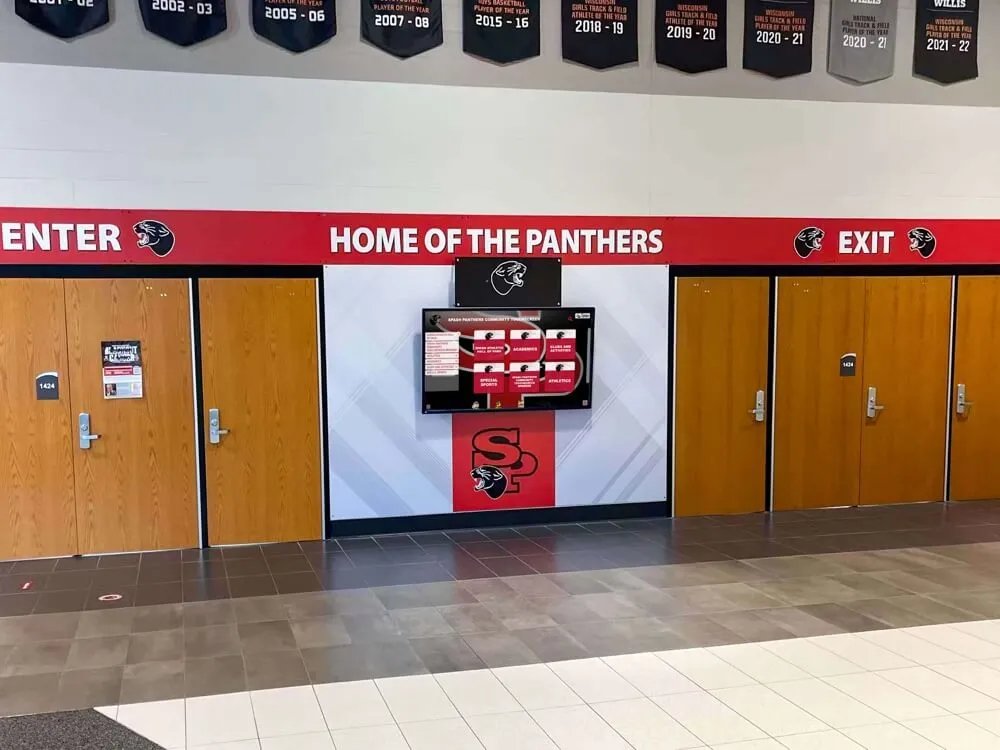
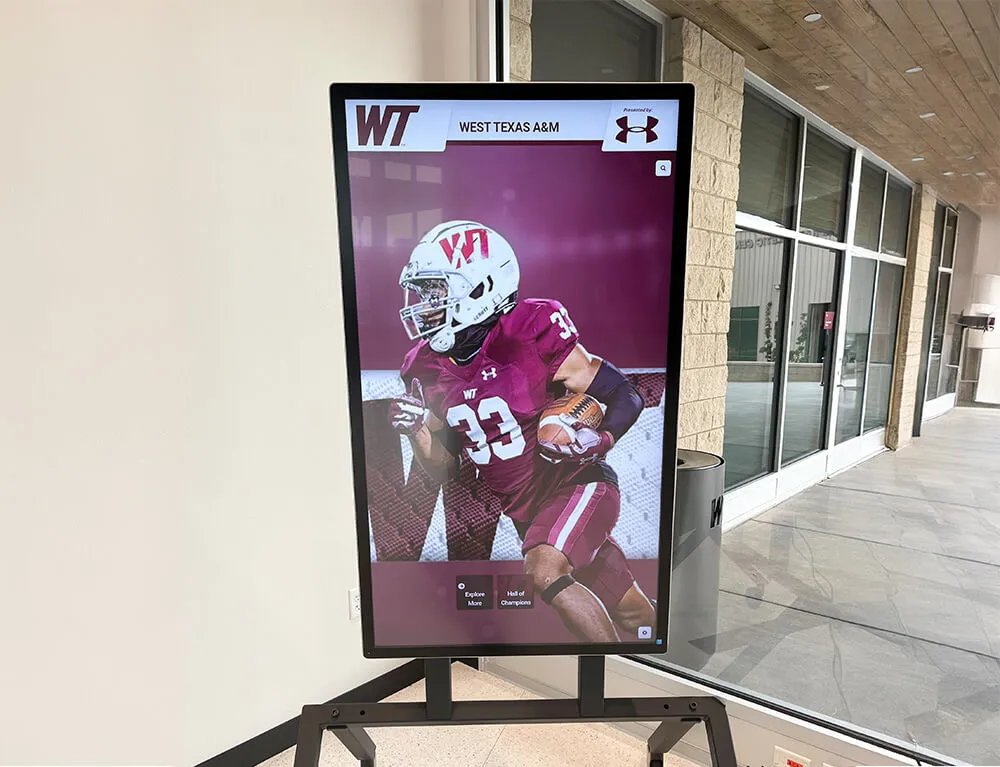
Digital recognition systems extend the logic of the class ring—they make school identity tangible, searchable, and durable for generations of students, alumni, and community members
Schools that understand this connection invest in recognition infrastructure that links the ring to other milestone ceremonies like NHS inductions. Hallway displays, digital hall of fame systems, and touchscreen recognition kiosks create a visible, ongoing record of the community the ring represents—ensuring that the belonging it symbolizes is reinforced every day students, staff, and alumni walk through school halls.
Research on nostalgia and community identity consistently shows that physical symbols tied to formative experiences create strong emotional connections. A 2023 analysis of school tradition-building published by the American School Counselor Association found that students who participated in formal milestone rituals—including ring ceremonies—reported higher rates of school belonging and more positive school-to-career identity transitions. The ring and the tradition surrounding it are not merely sentimental; they serve measurable developmental purposes.
Academic Letter Awards and Class Rings: A Broader Recognition Ecosystem
The class ring sits within a broader ecosystem of school recognition symbols that schools use to honor student achievement. Academic letter awards, honor cords, letter jackets, and class rings all serve overlapping but distinct functions: they mark different types of achievement and create different relationships between the individual student and the broader institution.
Understanding where the class ring fits in this ecosystem helps schools think more intentionally about how their full suite of recognition symbols works together. A student who earns an academic letter, wears honor cords at graduation, and receives a class ring has a consistent set of physical markers connecting their achievement to their school identity—each one reinforcing the others.
Planning recognition ceremonies for academic achievement similarly becomes part of the story of how schools communicate what achievement means and what it looks like to have excelled within a particular community.
Schools that take this ecosystem seriously—creating consistent, visible, durable recognition for student achievement across all dimensions—build the kind of institutional identity that generates alumni engagement, donor support, and community pride for generations. Digital showcases for class officers and student leaders extend this logic further, making the full range of student achievement permanently visible beyond individual ring ceremonies. The class ring is one piece of that recognition architecture, but it is most powerful when the school around it communicates the same values through every other recognition system it operates.

When schools recognize achievement consistently—through rings, digital displays, and hallway installations—they create a recognition culture that students and alumni carry with them throughout their lives
Caring for Your Class Ring
Class rings are designed to be worn for decades, but they require basic care to maintain their appearance and integrity:
- Clean regularly with a soft brush, mild soap, and warm water. Avoid abrasive cleaners that can scratch metal or cloud the stone setting.
- Remove during activities where the ring could be damaged—weight training, contact sports, woodworking, or any task involving heavy machinery. Ring avulsion (a ring being caught and causing injury) is a real risk in certain environments.
- Store carefully when not wearing it, away from other jewelry that could cause scratching.
- Have it inspected periodically by a jeweler, particularly the prongs holding the stone, to ensure they have not loosened with wear.
- Check with the manufacturer about professional cleaning or refinishing options—most major ring companies offer restoration services for older rings.
A well-maintained class ring can last a lifetime and become an heirloom passed to future generations. Many alumni have meaningful stories about receiving a parent’s or grandparent’s class ring as a connection to family history and institutional heritage.
The Role of Schools in Honoring the Ring Tradition
Schools that invest in the ring tradition—through formal ceremony, thoughtful presentation, and consistent communication about what the ring means—give students a foundation for alumni engagement that compounds over decades. When a graduate is proud of where they came from and feels genuinely connected to their school community, they are more likely to attend reunions, support fundraising campaigns, and recommend the institution to families they know.
Alongside physical traditions like the class ring, schools are increasingly using alumni engagement strategies to strengthen connections with graduates—a recognition that the emotional attachment tied to school symbols is a genuine institutional asset worth cultivating deliberately.
Digital recognition tools extend the ring’s logic into the twenty-first century. Where the ring connects an individual to their class and institution, a well-designed digital hall of fame or donor recognition display connects generations of alumni to each other and to the school’s ongoing identity. The best schools build recognition systems that honor both the individual milestones—the ring, the ceremony, the graduation day—and the collective legacy those individual moments add up to over the institution’s history.
Frequently Asked Questions About Class Ring Traditions
What finger does a class ring go on?
A class ring goes on the ring finger of the right hand. This is the standard convention in American schools and has been since the class ring tradition began at West Point in 1835. Some wearers use the right index finger as an alternative, and others wear the ring on a necklace chain during activities where finger rings are impractical.
Which direction should a class ring face?
The stone or crest faces inward (toward you) while you are a student and outward (away from you) after graduation. This directional shift is the core of the ring turning tradition and is often marked by a formal ceremony at the high school or college.
What is the class ring turning ceremony?
The ring turning ceremony is a formal event—held at many high schools and colleges—where students officially rotate their rings from the student position (inward) to the graduate position (outward). It typically includes a formal address about the ring’s meaning, a collective turning moment, and a celebration with families and faculty. Military academies, in particular, treat the ring ceremony as one of the most significant events in a student’s academic career.
Can you wear a class ring on your left hand?
You can, but it is uncommon in the United States because the left ring finger is traditionally associated with engagement and wedding rings. Most ring manufacturers and school traditions designate the right hand as the appropriate side, and wearing the ring on the right hand avoids ambiguity about its meaning.
Where does a class ring go after you get married?
Most married alumni wear their class ring on the right ring finger while the wedding band occupies the left ring finger—the cleanest solution that honors both traditions. Alternatively, the class ring can move to the right index finger or be worn on a necklace chain. There is no universal rule; the choice depends on comfort, daily lifestyle, and the wearer’s personal attachment to the ring.
Ready to create lasting recognition for the students and alumni who define your school’s identity?
Rocket Alumni Solutions designs and installs interactive digital recognition displays, hall of fame systems, and donor walls for high schools, universities, and organizations across the country. Whether you are celebrating ring ceremony milestones, honoring graduating classes, or building a recognition culture that connects alumni to your school’s ongoing story, our touchscreen installations make that tradition visible and lasting.