



Schools face a fundamental challenge when it comes to celebrating achievements: how do you honor decades of athletic excellence, academic accomplishments, donor generosity, and institutional history within limited wall space while creating displays that engage students, inspire pride, and remain current as achievements continue accumulating? Wall display cases have traditionally served this purpose—physical installations mounted throughout school facilities showcasing trophies, plaques, photographs, and memorabilia that transform hallways and lobbies into visual celebrations of school culture and community accomplishment.
Yet many schools discover that traditional wall-mounted display cases, while familiar and tangible, create ongoing challenges including limited capacity requiring constant reorganization, static presentations that students walk past without engagement, maintenance demands protecting valuable items from dust and damage, and inflexible formats that struggle to accommodate diverse achievement types from donor recognition to championship trophies to historical artifacts.
This comprehensive guide explores wall display case ideas for schools from practical implementation perspectives—examining traditional trophy case designs and their optimal applications, creative approaches for donor plaque displays, innovative solutions for academic recognition, strategies for historical memorabilia presentation, and modern digital alternatives that address space limitations, engagement challenges, and long-term sustainability while maintaining the pride and celebration that school recognition demands.
Schools, universities, athletic departments, and alumni associations invest in wall display cases both to honor individual and team achievements appropriately and to create visible institutional culture demonstrating values, celebrating excellence, and connecting current students with proud traditions spanning generations. Understanding the full spectrum of options—from classic glass-fronted trophy cases to contemporary digital recognition walls—enables informed decisions aligned with available space, budget realities, and strategic goals for community engagement and institutional pride.

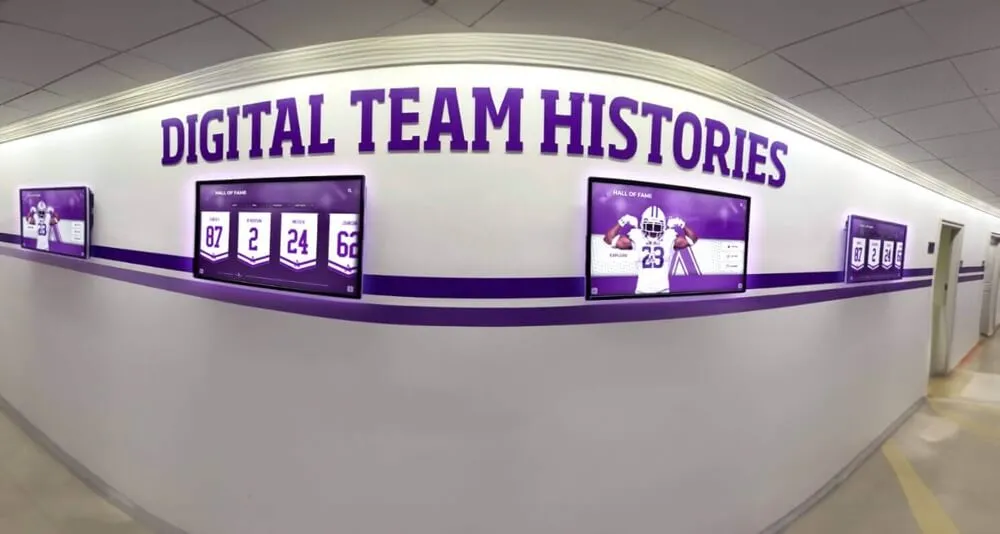
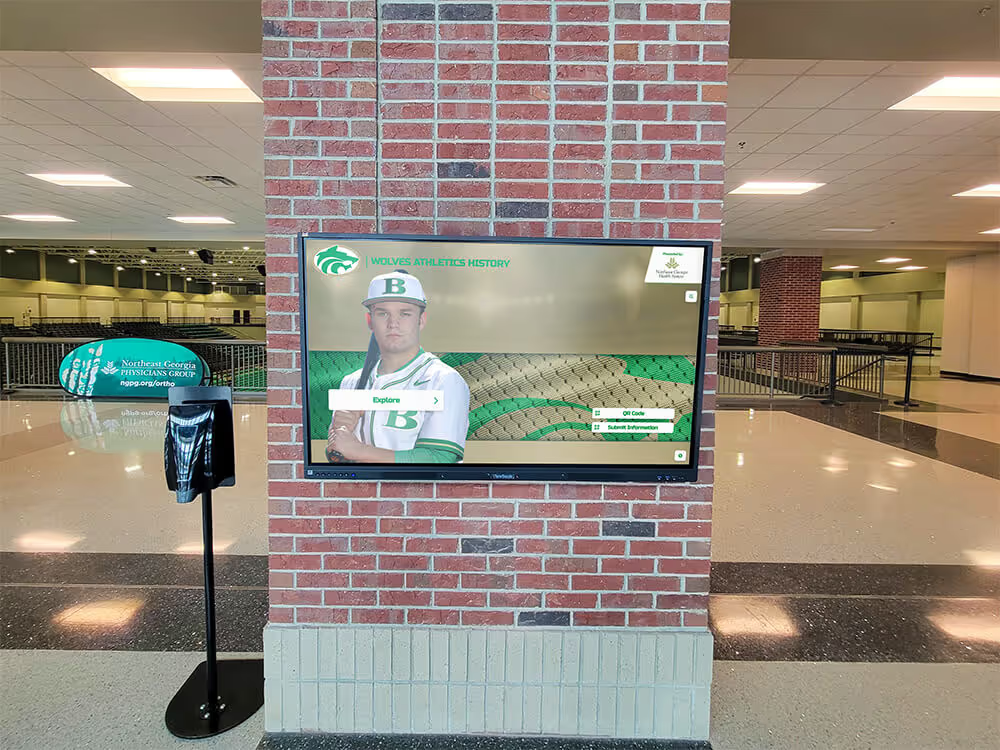
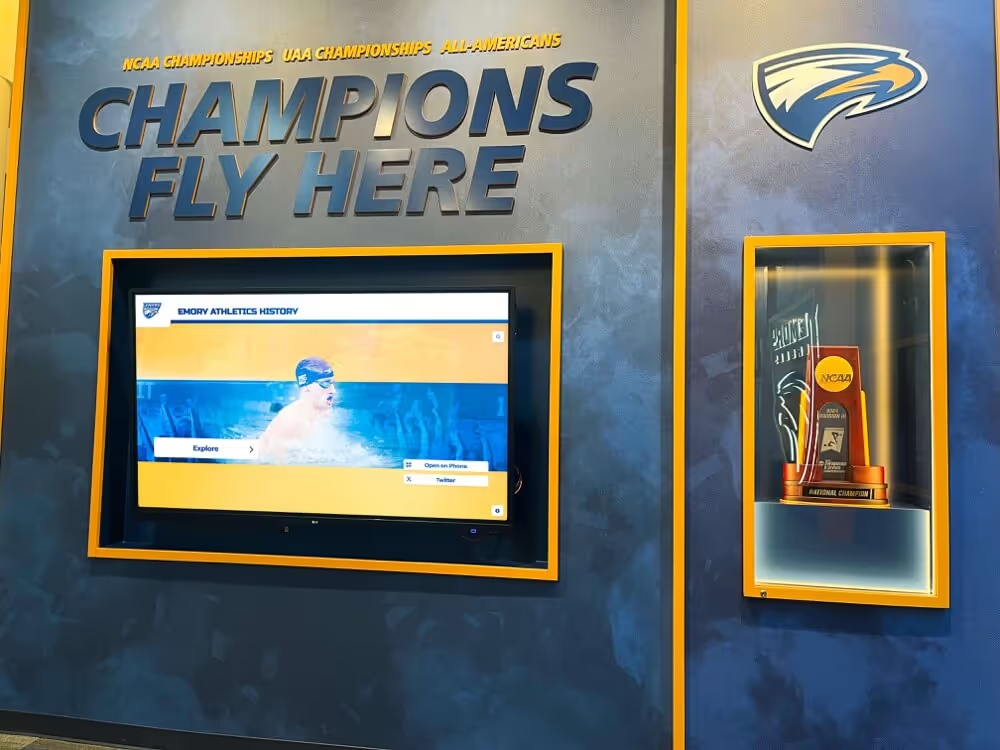
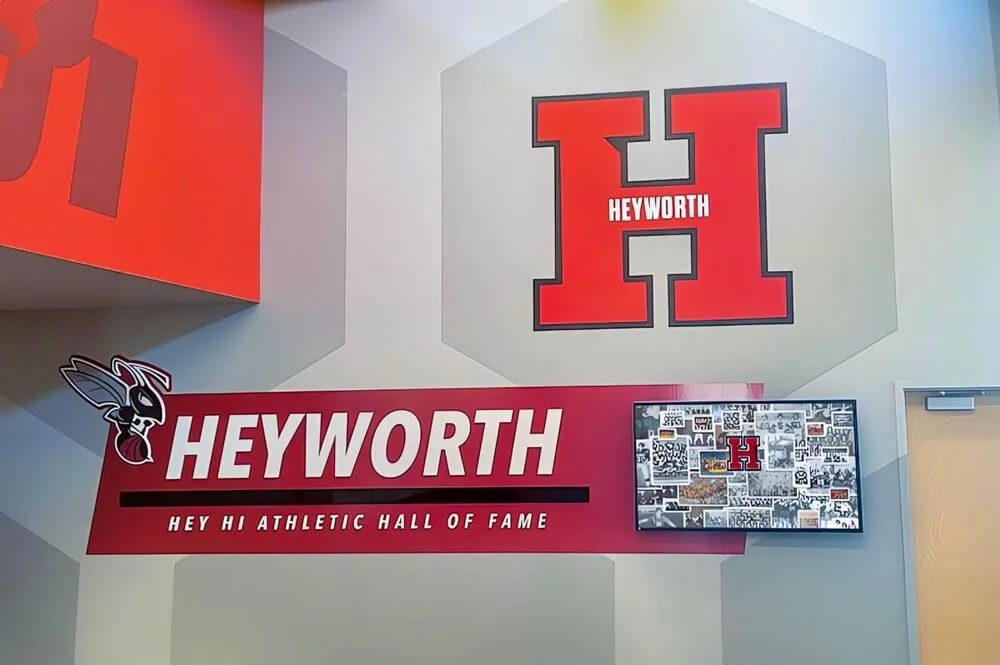
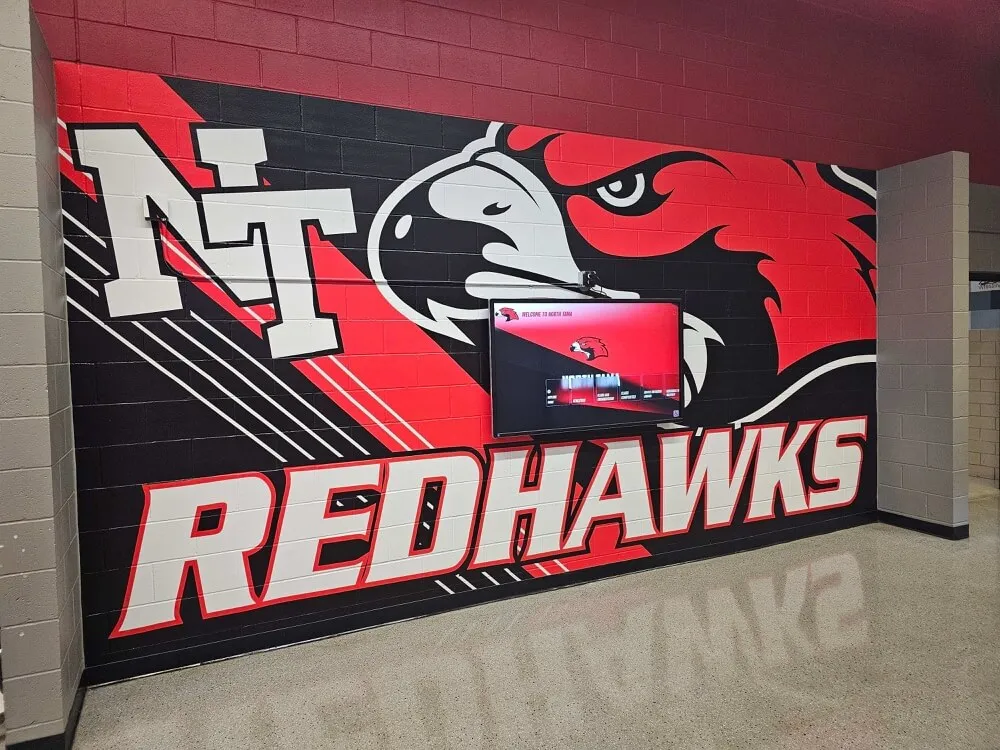
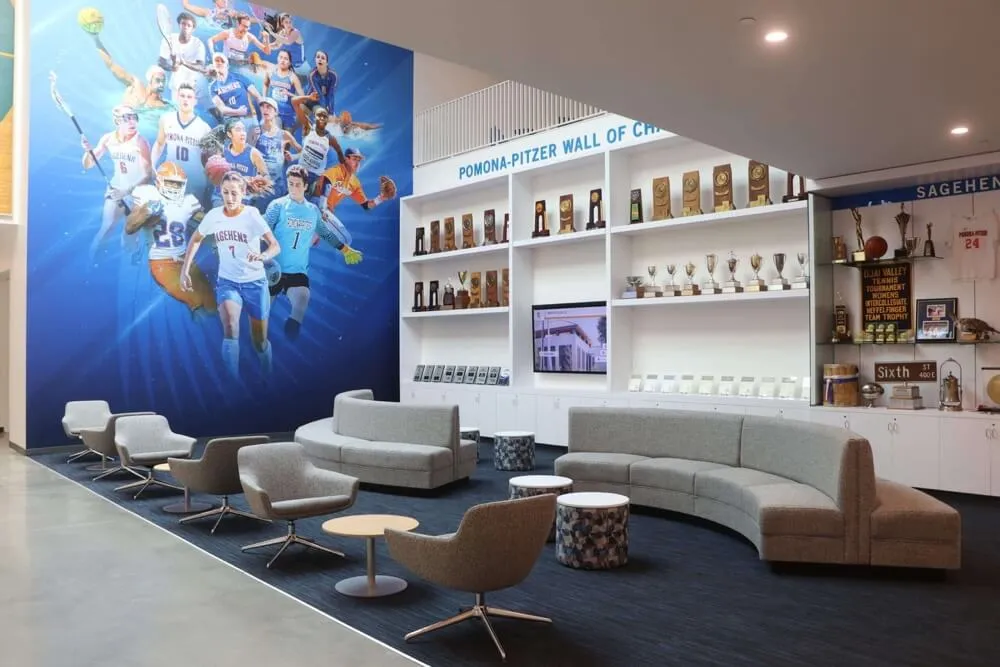
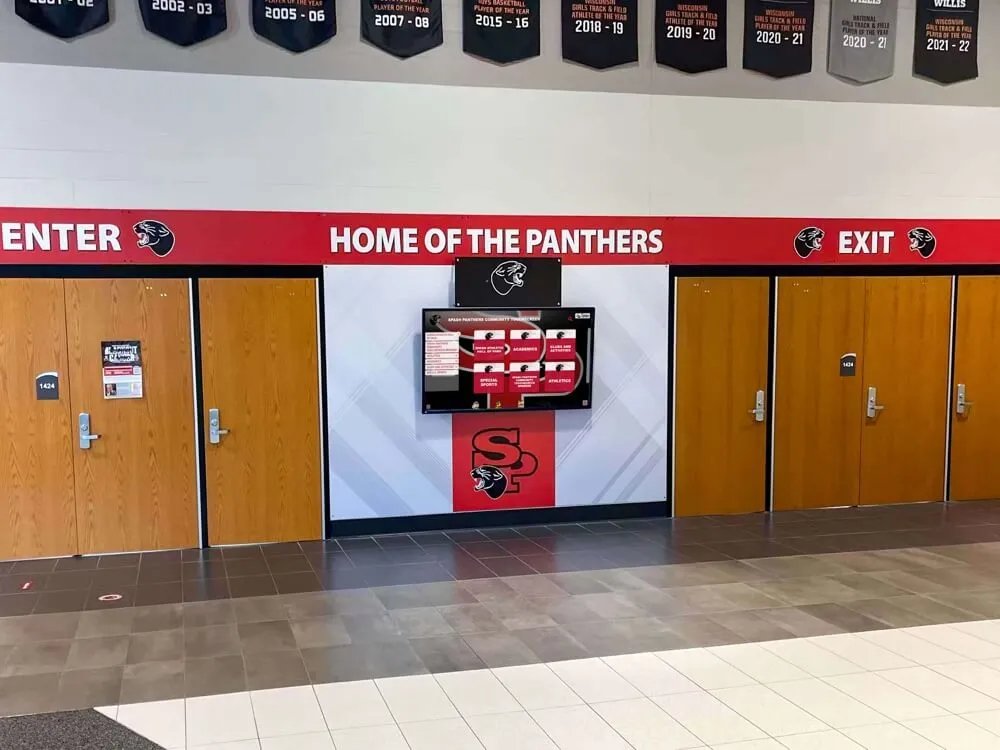
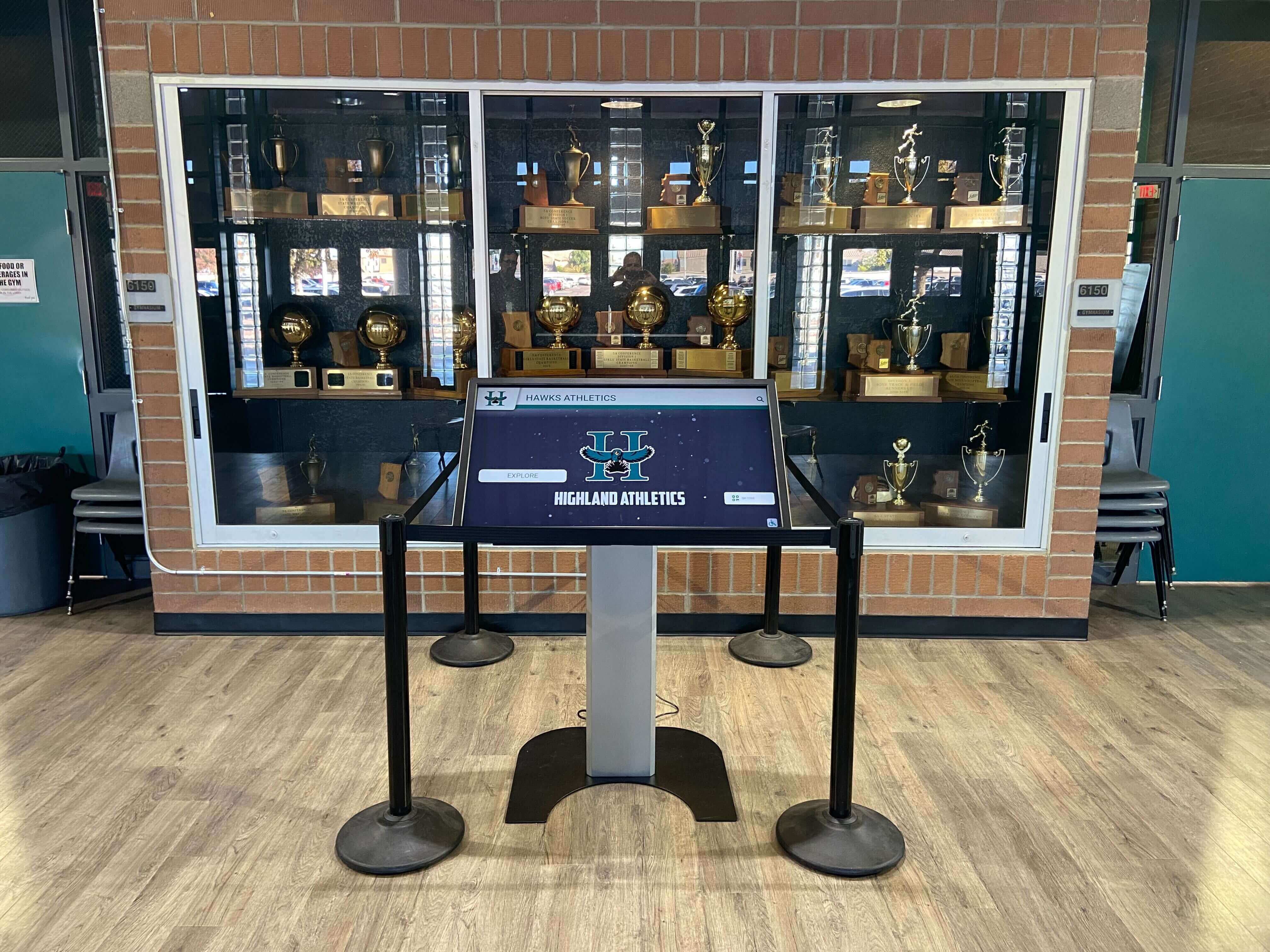
Modern wall display cases combine traditional trophy presentation with interactive digital elements for comprehensive recognition
Traditional Trophy Wall Display Cases
Physical trophy cases remain the most recognized form of athletic achievement display in educational institutions, serving as focal points in gymnasiums, athletic hallways, and school lobbies where championships and individual accomplishments receive prominent visibility.
Glass-Fronted Wall-Mounted Trophy Cases
Standard glass-fronted trophy cases offer traditional presentation while protecting valuable awards from damage and theft.
Standard Trophy Case Characteristics
- Aluminum or wood frames with tempered glass fronts and sides
- Interior lighting (LED or fluorescent) highlighting displayed items
- Adjustable shelving accommodating various trophy sizes
- Locking mechanisms securing valuable awards
- Wall-mounted or recessed installation options
- Available depths from 4 inches (shallow display) to 20+ inches (comprehensive capacity)
- Standard widths ranging 36-96 inches with custom sizing available
- Interior backing options including fabric, painted surfaces, or school colors
Trophy Display Best Practices
- Arrange trophies by sport, year, or championship level for clear organization
- Place largest, most prestigious awards at eye level for maximum visibility
- Group related achievements creating visual storytelling
- Incorporate team photographs connecting trophies to specific rosters
- Include descriptive plaques providing achievement context
- Rotate seasonal displays highlighting current sport seasons
- Maintain consistent internal organization preventing cluttered appearance
Trophy cases work particularly well for championship hardware, league titles, tournament victories, and individual athletic honors where three-dimensional awards benefit from protected display. Schools implementing comprehensive athletic recognition systems often feature trophy cases as centerpieces complemented by additional recognition formats for broader athletic achievement celebration.
Shadow Box Display Cases
Shadow boxes provide focused presentation for individual achievements, memorabilia collections, or thematic displays requiring customized depth and arrangement.
Shadow Box Advantages
- Customizable depth accommodating jerseys, equipment, and dimensional items
- Artistic arrangement possibilities creating visual interest
- Individual focus highlighting specific achievements or people
- Flexible sizing from small single-item displays to large comprehensive installations
- Archival mounting techniques protecting historical items
- UV-protective glass preventing fading and deterioration
- Custom backing incorporating team colors, logos, or imagery
Effective Shadow Box Applications
- Retired jersey displays honoring exceptional athletes
- Championship season memorabilia including tickets, programs, and photographs
- Hall of fame inductee recognition featuring personal artifacts
- Historical timeline presentations documenting program development
- Memorial tributes honoring deceased community members
- Special achievement showcases for unprecedented accomplishments
- Equipment evolution displays showing sport history
Schools should reserve shadow box presentations for truly exceptional achievements or historically significant items rather than routine recognition, maintaining special status that these focused displays communicate. Similar focused approaches enhance outstanding achievement recognition in specific positions or roles.
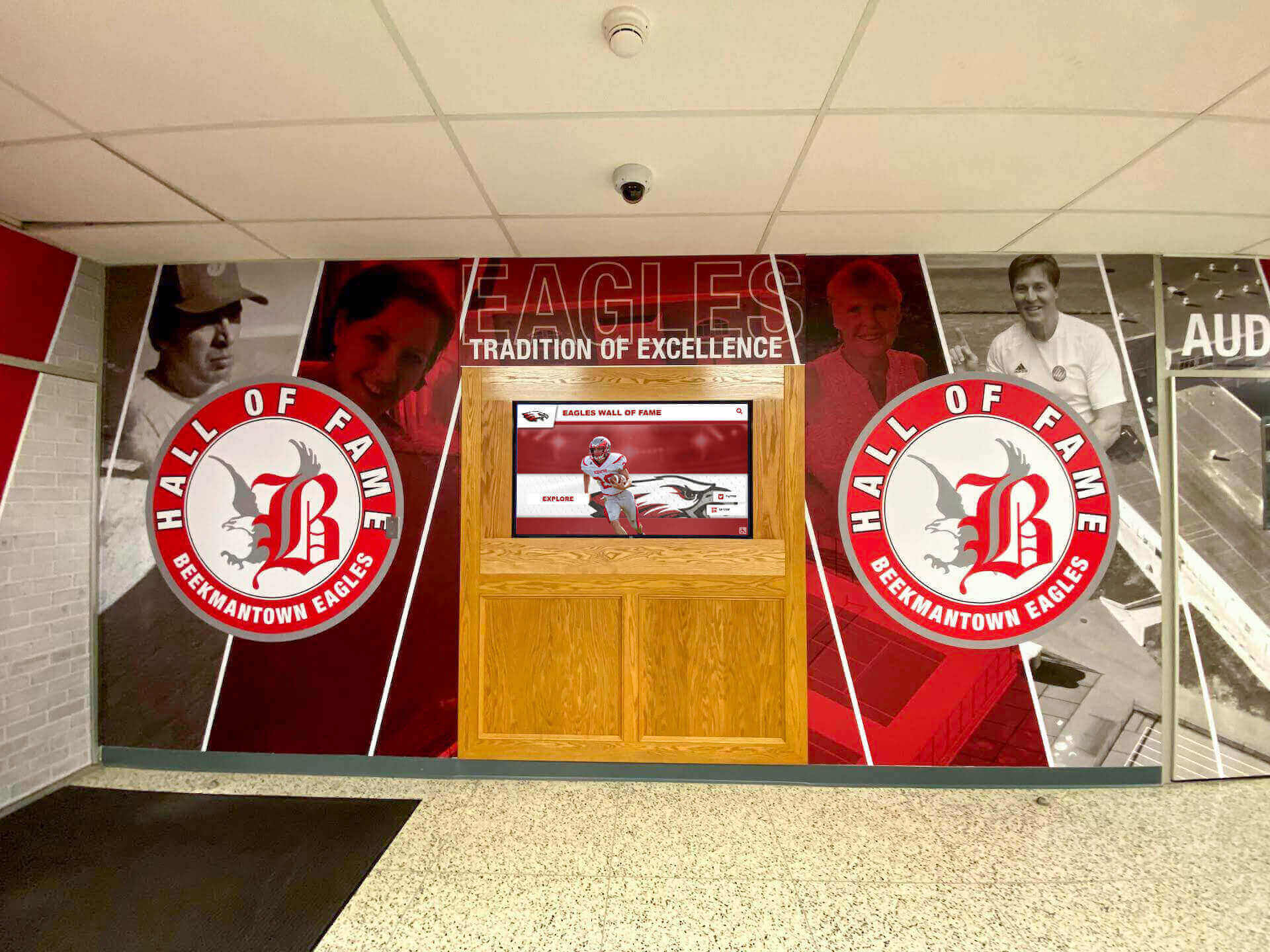
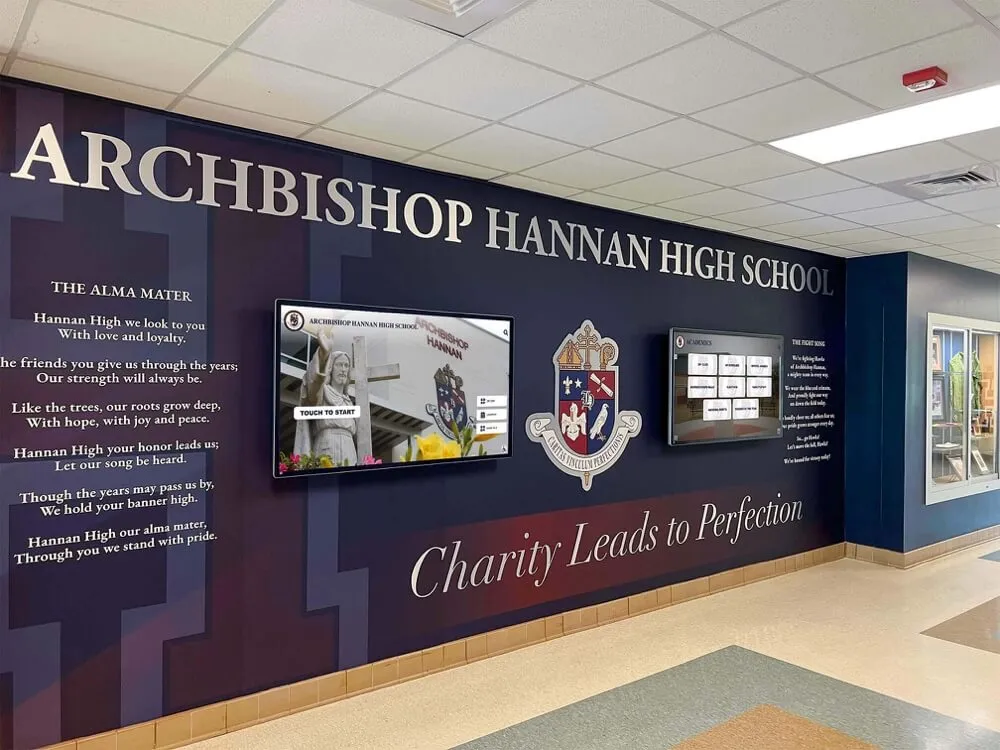
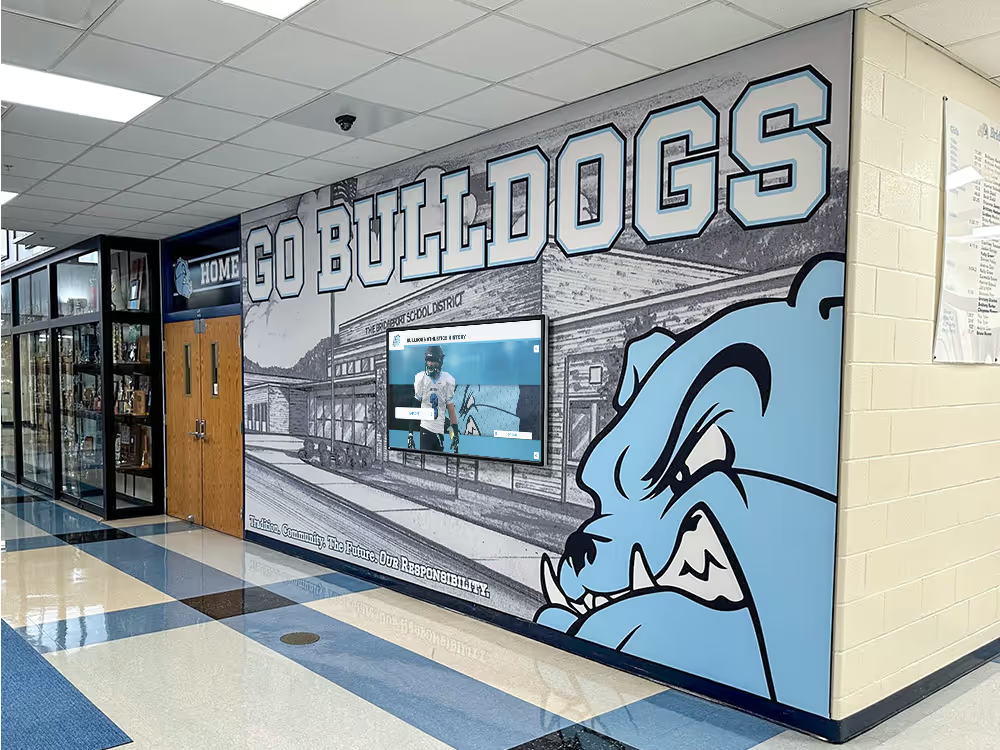
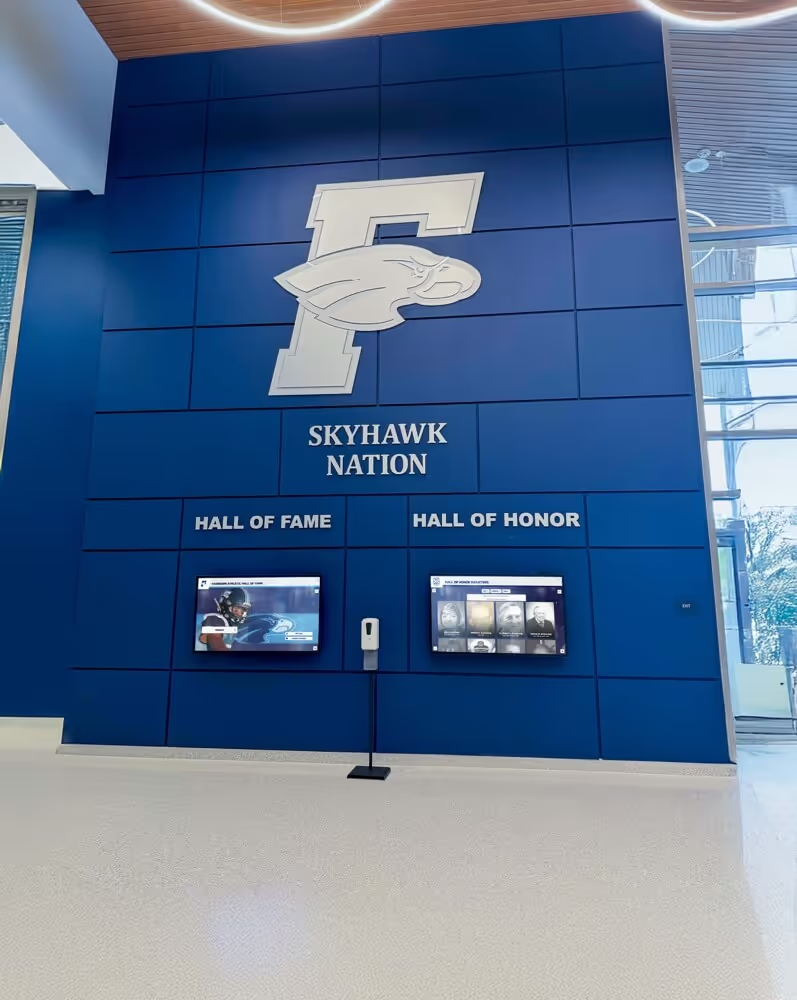
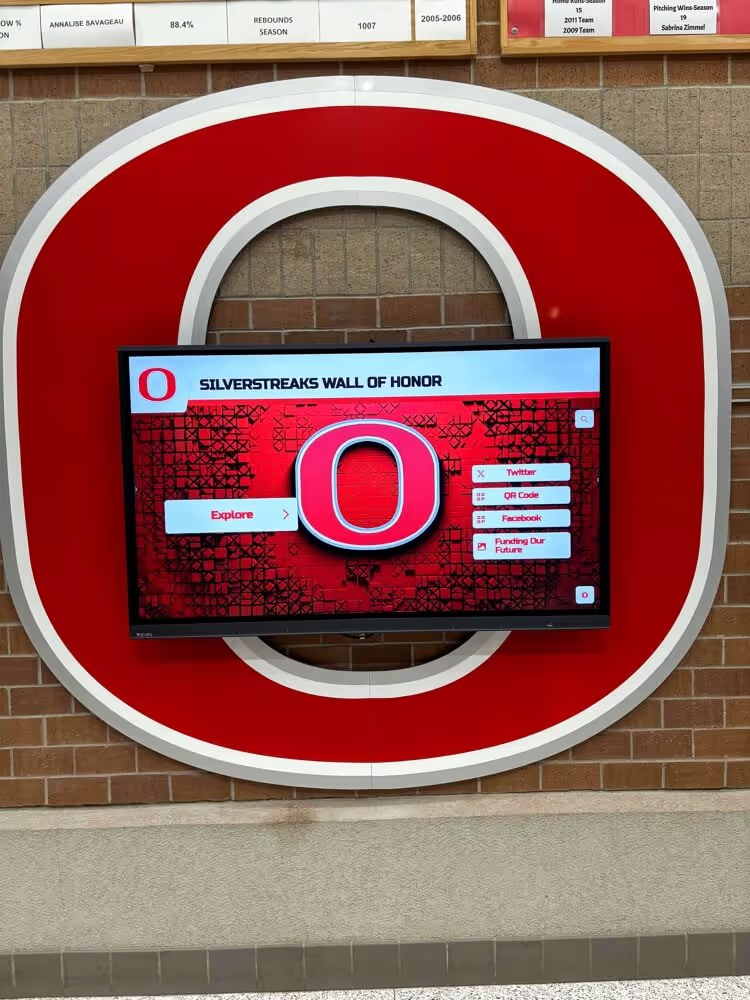
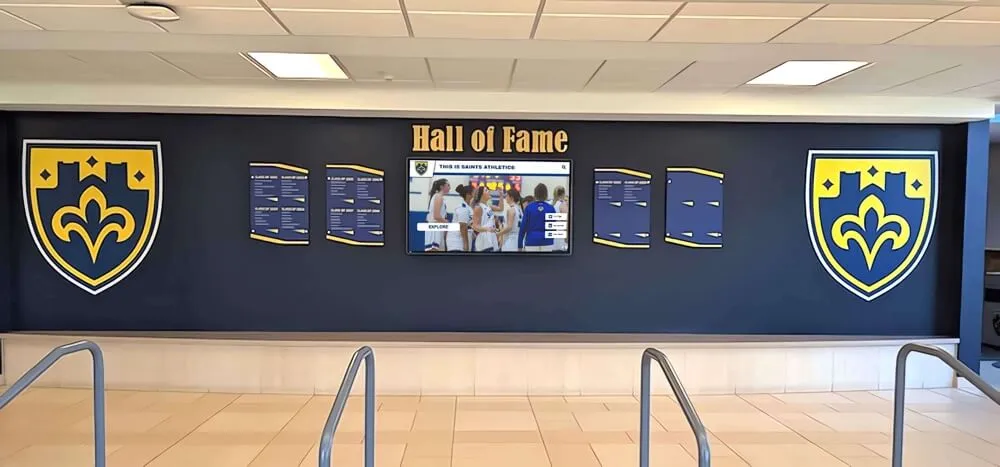
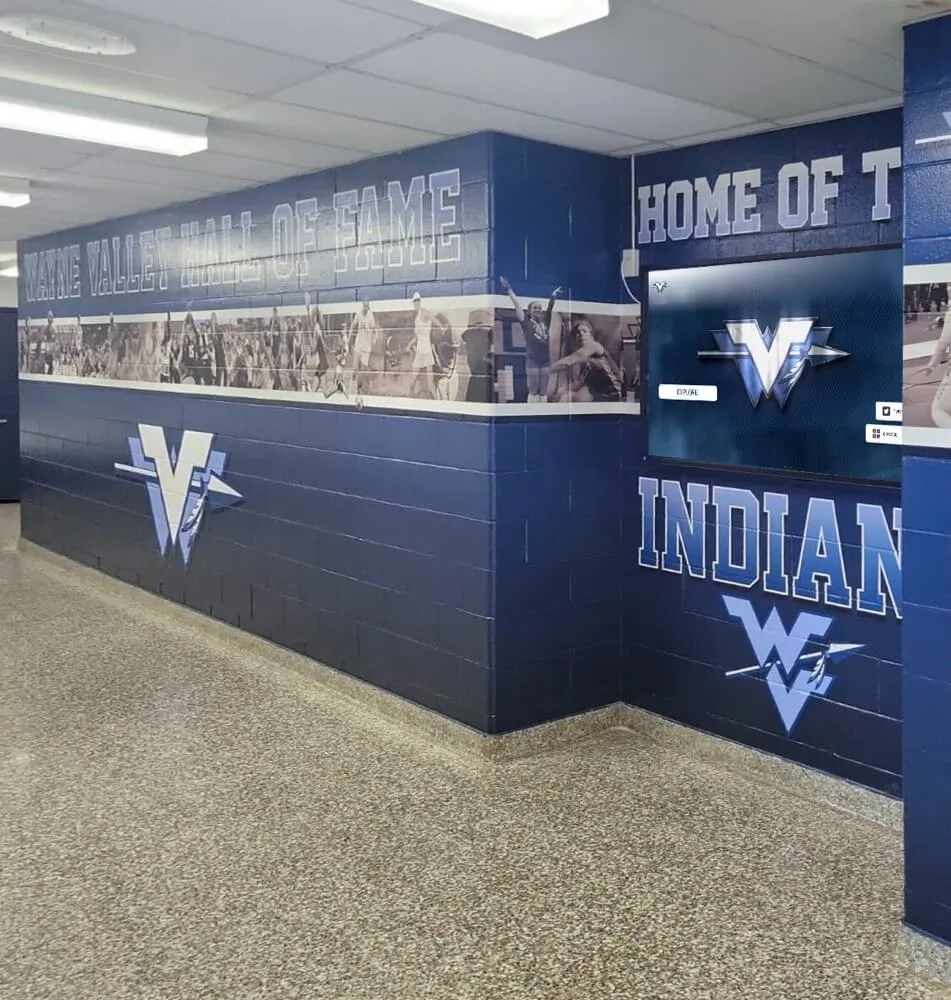
Large-scale wall displays transform school lobbies into celebration spaces showcasing institutional pride and achievement
Open Shelf Display Systems
Open shelving eliminates glass barriers while providing accessible trophy display requiring less maintenance than enclosed cases.
Open Display Benefits
- Lower cost compared to glass-fronted cases
- Easy access for trophy rotation and updates
- Flexible arrangement without case dimension constraints
- Contemporary aesthetic fitting modern facility design
- Simple cleaning and maintenance
- Integration with architectural elements and wall design
Open Display Limitations
- Theft and damage risk for valuable items
- Dust accumulation requiring regular cleaning
- No climate control for sensitive items
- Less formal presentation than enclosed cases
- Security concerns in high-traffic or unsupervised areas
Open displays work well in supervised locations like main offices, monitored hallways, or areas with security presence. They prove particularly effective for rotating displays changing frequently or less valuable items where protection needs remain minimal.
Donor Recognition Wall Display Cases
Schools, universities, and nonprofit educational organizations require specialized display approaches for donor recognition that communicate appreciation while accommodating growing supporter communities and various gift recognition levels.
Traditional Donor Plaque Wall Arrangements
Fixed plaque installations provide permanent donor recognition through engraved nameplates mounted directly to walls or arranged on display panels.
Standard Plaque Display Formats
- Individual bronze, brass, or aluminum plaques per donor
- Grouped plaque panels organizing supporters by giving level
- Architectural plaque walls integrated with facility design
- Grid arrangements creating orderly professional presentation
- Tiered layouts with size variations communicating gift hierarchy
- Perpetual plaque systems with removable nameplates
Donor Wall Design Considerations
- Capacity planning for 10-15 years of anticipated growth
- Visual hierarchy ensuring major donors receive proportional prominence
- Consistent spacing and alignment for professional appearance
- Strategic lighting highlighting donor recognition
- Organizational branding through colors, logos, and design elements
- ADA-compliant mounting heights and accessibility
- Expansion planning allowing future additions
The primary limitation of traditional plaque approaches involves fixed capacity—walls fill requiring expensive expansions, architectural modifications, or difficult decisions about whose recognition remains visible. Schools experiencing donor growth often discover initial plaque installations become inadequate within 5-7 years, necessitating complete reinstallation. Organizations implementing comprehensive donor recognition strategies should carefully evaluate long-term capacity requirements before committing to fixed plaque systems.
Donor Recognition Display Cases with Dimensional Elements
Enclosed display cases can showcase donor recognition beyond flat plaques by incorporating dimensional elements telling richer stories.
Enhanced Donor Display Content
- Commemorative bricks or pavers from capital campaign walkways
- Miniature replicas of named facilities or spaces
- Photographs of donors with facility dedications or ribbon cuttings
- Campaign materials documenting fundraising milestones
- Impact visualization showing what donor support enabled
- Historical context connecting donors to institutional development
- Recognition society badges, pins, or commemorative items
This approach transforms donor recognition from simple name listing to engaging storytelling that helps current students understand how philanthropic support shaped their educational experience. Dimensional displays work particularly well in development office areas, fundraising event spaces, or lobbies where prospective donors gather and observe recognition culture.
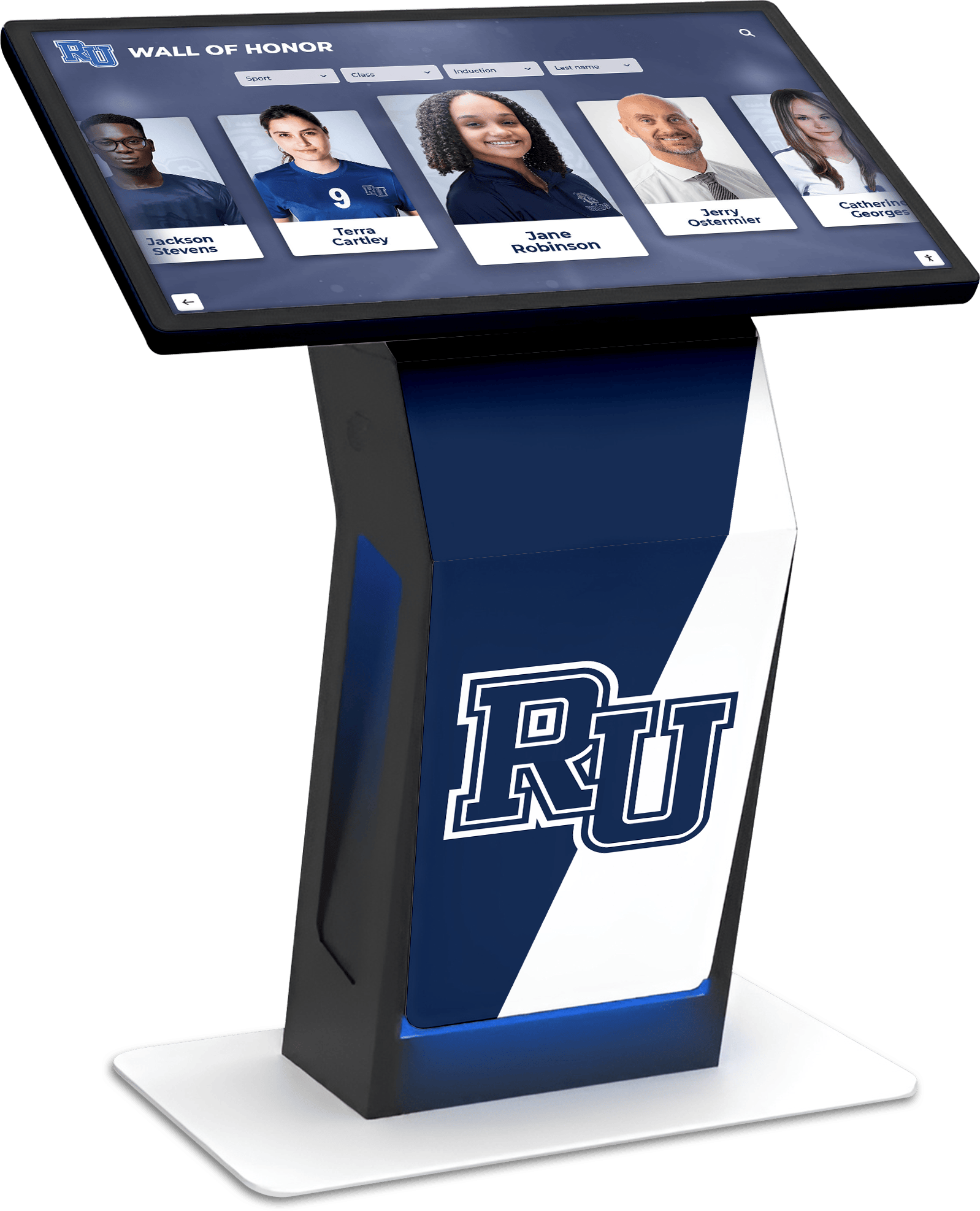
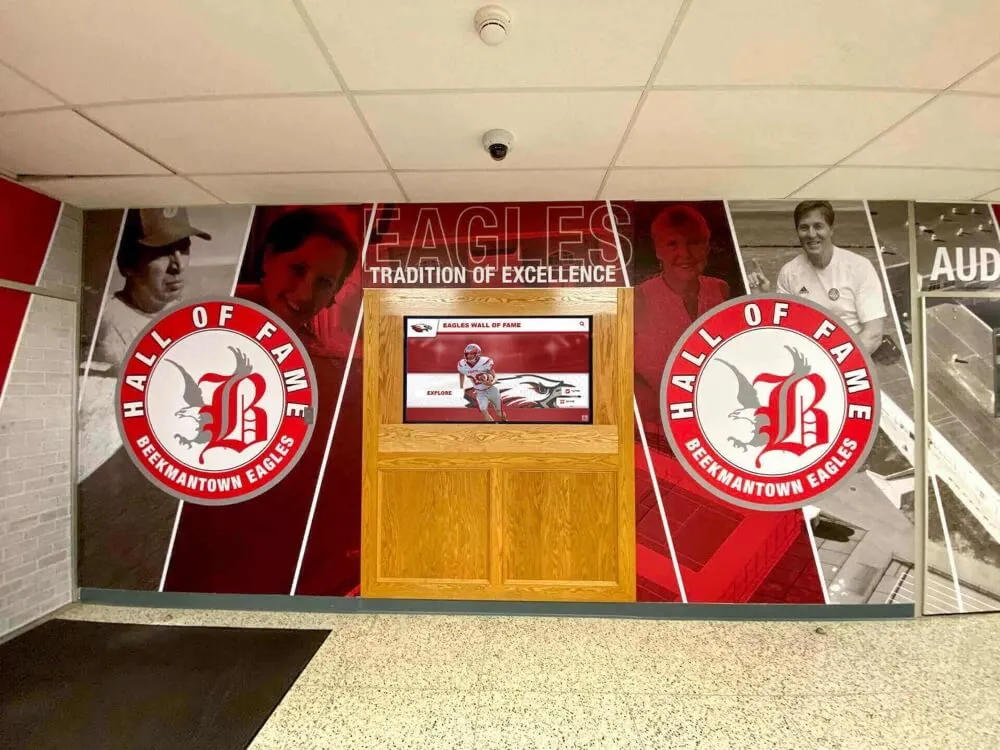
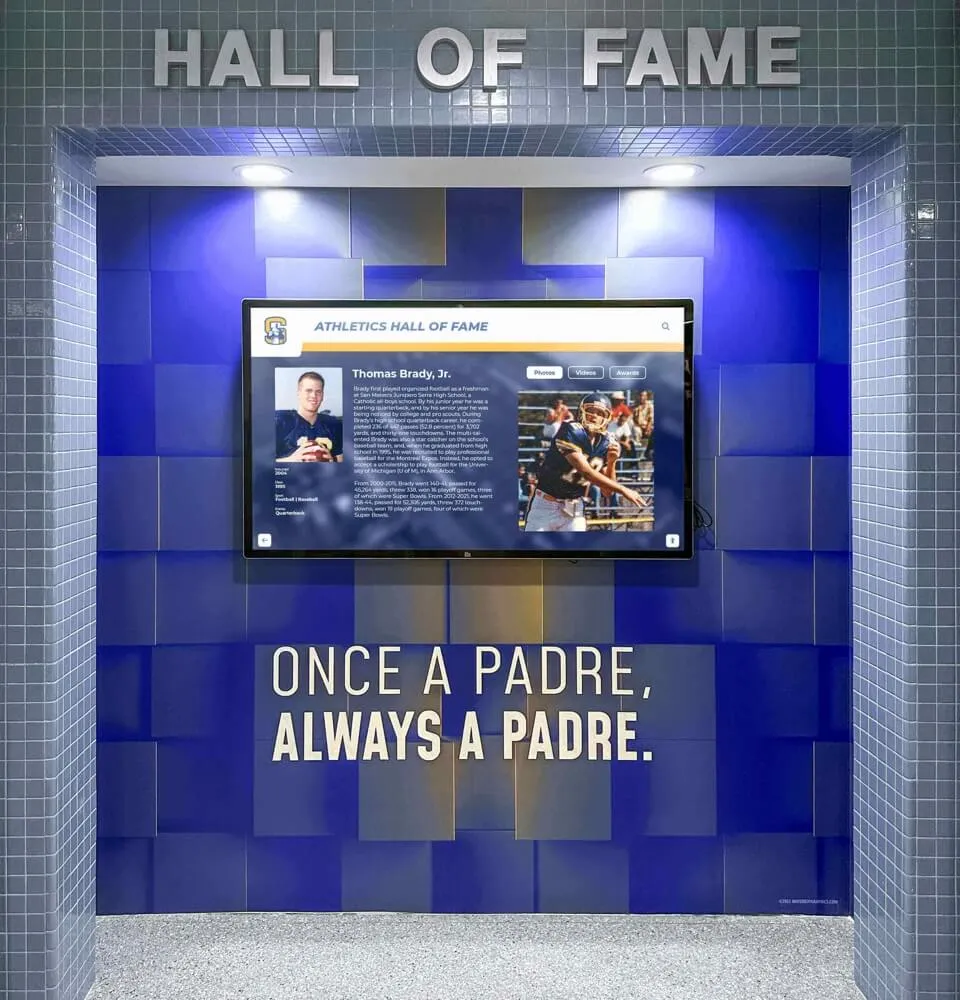
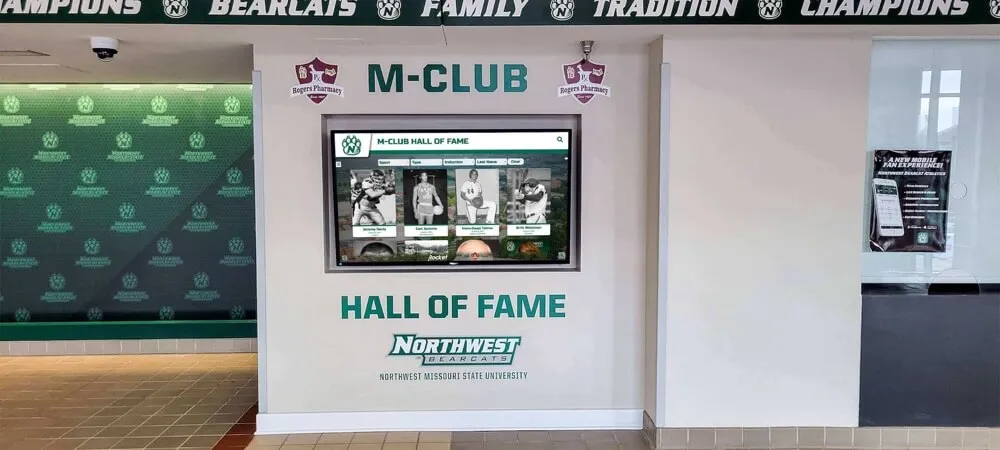
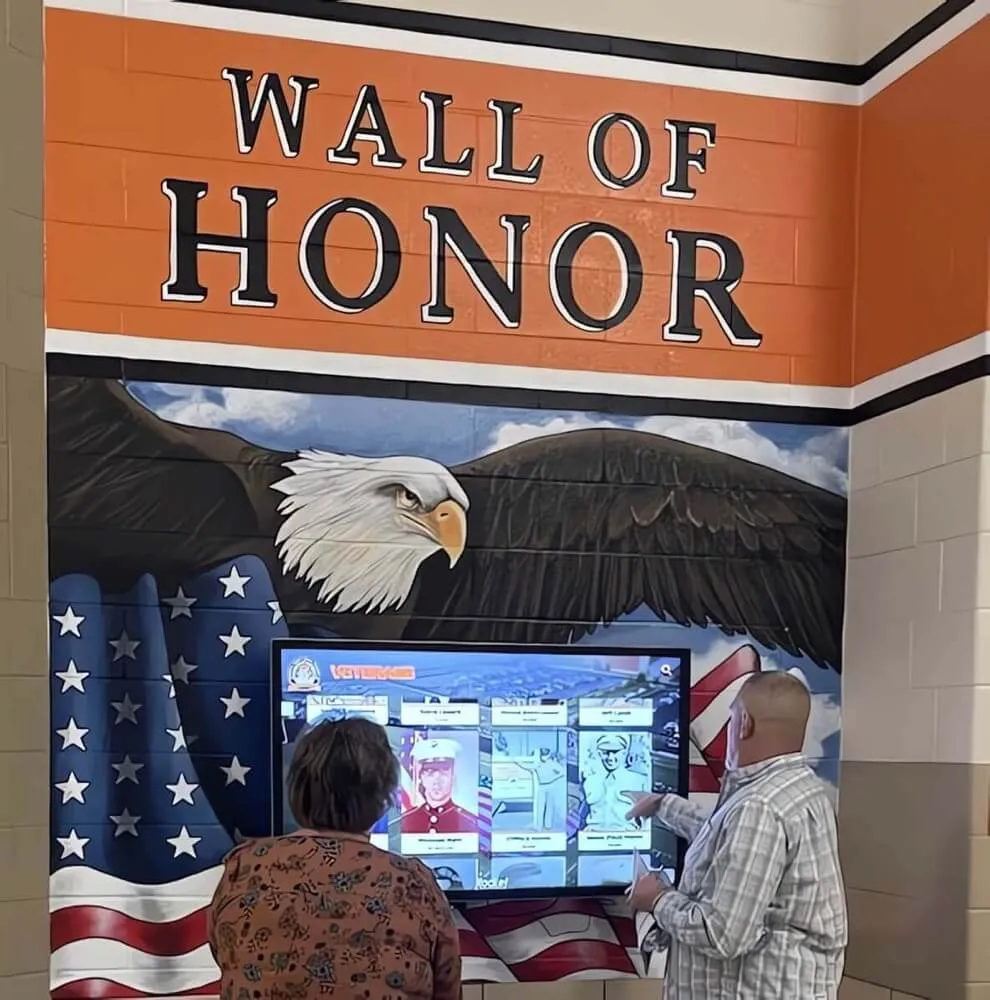
Digital recognition kiosks provide unlimited capacity for donor acknowledgment without physical space constraints
Digital Donor Recognition Alternatives
Modern digital displays eliminate capacity limitations while providing engaging presentation impossible within traditional plaque constraints.
Digital Donor Recognition Advantages
- Unlimited donor capacity without additional hardware investment
- Immediate updates eliminating 6-12 week plaque ordering delays
- Rich multimedia profiles including photographs, videos, and impact stories
- Searchable databases enabling visitors to find specific donors
- Flexible giving level presentations adapting as programs evolve
- Long-term cost efficiency avoiding per-donor plaque expenses
- Integration with fundraising databases automating content management
- Multiple display locations from single content source
Organizations comparing 15-20 year total cost of ownership frequently discover digital recognition systems prove more economical than traditional plaques despite higher upfront investment—eliminated ongoing plaque costs ($200-$800 per donor) accumulate substantially across growing donor communities. Schools implementing digital donor walls report 85-95% reduction in administrative time managing recognition while providing superior donor experience through immediate, comprehensive acknowledgment.
Academic Achievement Wall Display Cases
Academic accomplishments deserve visibility equal to athletic recognition, yet many schools struggle to create engaging academic displays that students notice and value.
Honor Roll and Academic Excellence Displays
Traditional approaches to academic recognition often involve printed lists or static plaques that quickly become outdated.
Standard Academic Display Formats
- Printed honor roll lists updated quarterly or annually
- Engraved perpetual plaques with removable student nameplates
- Glass-fronted cases displaying academic certificates and awards
- Scholarship recipient recognition boards
- National Merit Scholar and academic competition acknowledgment
- Advanced Placement and academic honors showcases
Academic Display Enhancement Strategies
- Include student photographs personalizing recognition beyond names
- Provide achievement context explaining honor significance
- Create visual interest through varied layouts and design elements
- Incorporate school branding reinforcing academic program pride
- Update regularly maintaining current achievement celebration
- Recognize diverse achievement types beyond GPA measures
Schools implementing comprehensive academic recognition programs discover that systematic, visible acknowledgment measurably impacts student motivation and achievement culture when displays receive planning and prominence comparable to athletic recognition.
Subject-Specific Achievement Showcases
Dedicated displays for specific academic disciplines create focused recognition celebrating diverse intellectual excellence.
Department-Specific Display Ideas
- Science fair project displays showcasing winning research
- Art gallery walls featuring student creative work
- Writing contest winner publications and recognition
- Mathematics competition achievement displays
- Foreign language proficiency and cultural achievement recognition
- Career and technical education certification showcases
- Music and performing arts accomplishment highlights
Rotating displays that change seasonally or quarterly maintain freshness while providing opportunities for more students to receive temporary showcase recognition beyond permanent installations.
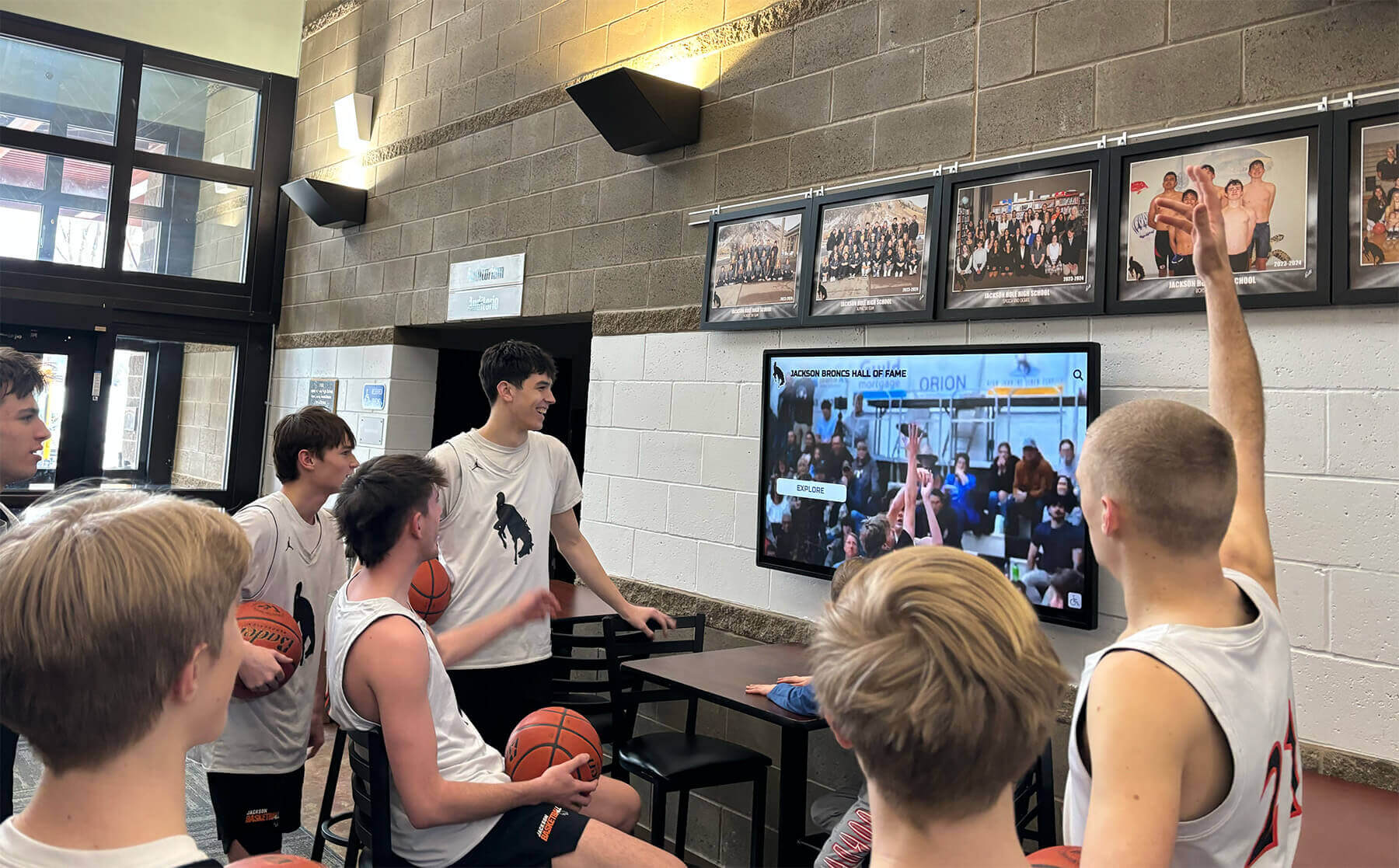
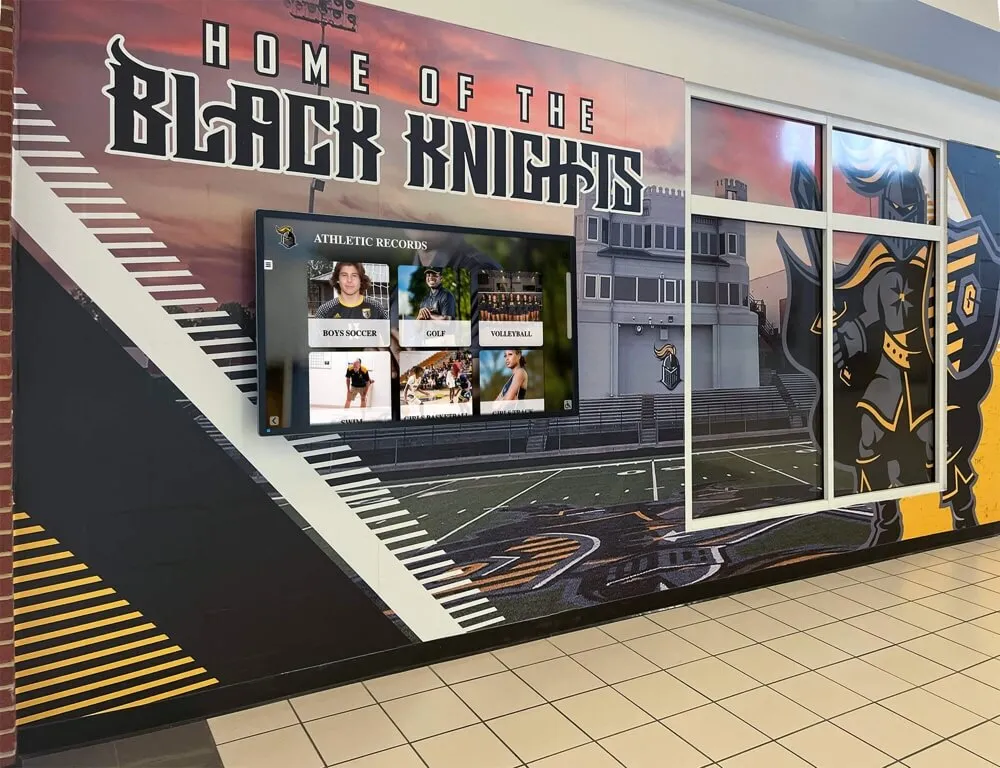
Strategic placement of recognition displays in high-traffic areas maximizes student engagement and visibility
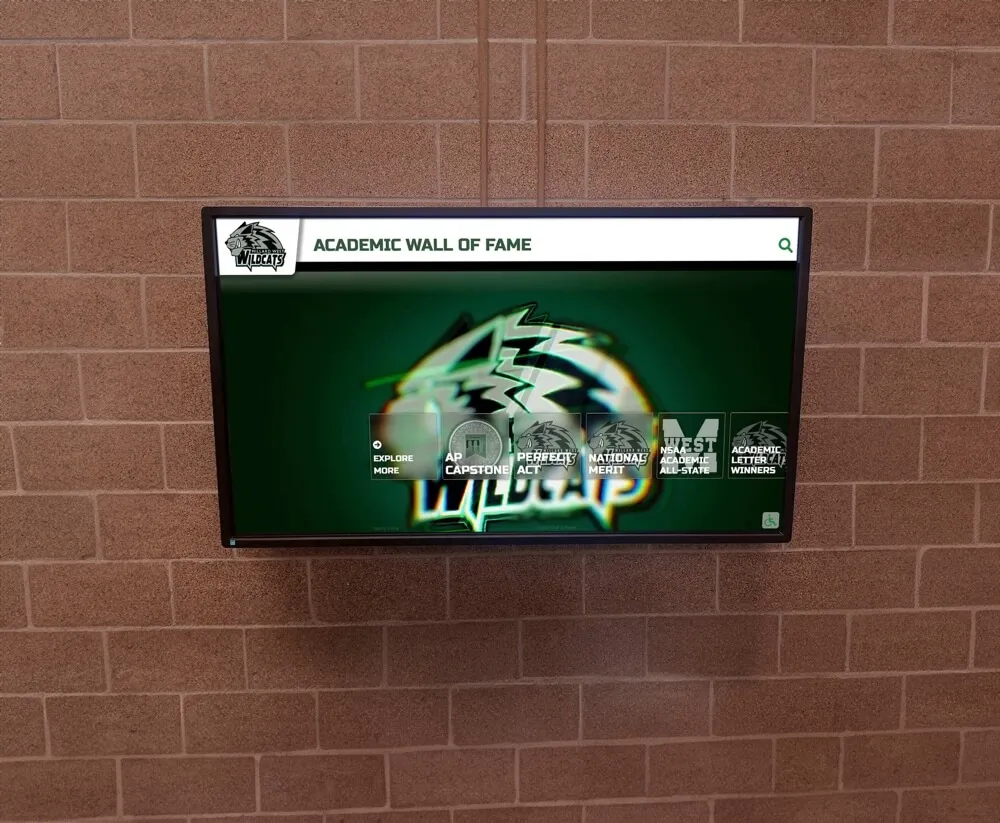
Interactive Digital Academic Recognition
Digital platforms transform academic recognition from passive displays into engaging experiences where students actively explore achievements and discover peer accomplishments.
Digital Academic Recognition Features
- Searchable honor roll databases spanning multiple years
- Individual student profiles documenting achievement progression
- Subject-specific filtering showing department excellence
- Class ranking and percentile information (where appropriate)
- Achievement badge systems visualizing accomplishment diversity
- Historical comparison showing institutional achievement trends
- Integration with student information systems automating updates
Schools report that digital academic displays generate significantly higher student engagement than traditional formats—students actively search for themselves and classmates, explore historical achievements, and develop greater awareness of academic excellence throughout their communities. This engagement reinforces academic culture while providing motivation that static lists cannot create.
Historical Memorabilia and Archive Display Cases
Schools accumulate decades or centuries of historical artifacts, photographs, documents, and memorabilia deserving preservation and public display connecting current communities with institutional heritage.
Timeline and Historical Evolution Displays
Chronological presentations help students understand institutional development while preserving important historical context.
Effective Timeline Display Elements
- Decade-by-decade photographs showing facility and community changes
- Significant event markers including championships, dedications, and milestones
- Historical documents in protective enclosures
- Vintage equipment, uniforms, and artifacts
- Yearbook excerpts and publication archives
- Newspaper clippings documenting notable achievements
- Architectural drawings and campus development plans
Archival Display Best Practices
- UV-protective glass preventing photograph fading
- Climate-controlled cases for sensitive paper documents
- Archival mounting techniques avoiding adhesive damage
- Regular rotation preventing extended light exposure
- Documentation explaining historical context for younger viewers
- Digital backup of displayed items preserving deteriorating originals
Organizations managing valuable historical collections should consider digital archive approaches that preserve originals while making content accessible through interactive displays reducing handling and environmental exposure risks.
Themed Memorabilia Collections
Focused displays organized by theme rather than chronology create engaging presentations around specific aspects of institutional identity.
Thematic Display Concepts
- School mascot evolution and spirit tradition
- Notable alumni achievement and career success
- Facility dedication and building history
- Milestone anniversaries and centennial celebrations
- Coaching legends and program builders
- Community partnership and local connection
- School colors, songs, and tradition origins
Thematic approaches allow creative storytelling that helps students connect with specific aspects of school culture while understanding traditions they participate in have deep historical roots worthy of preservation and pride.
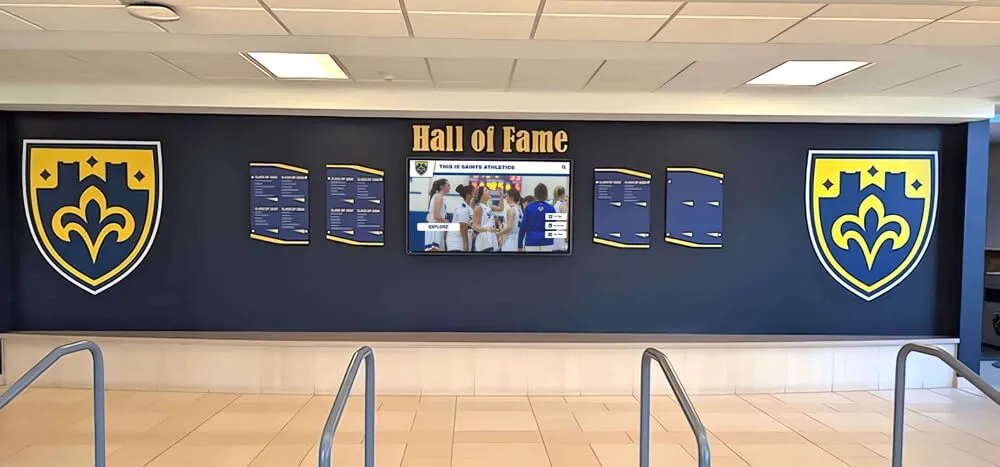
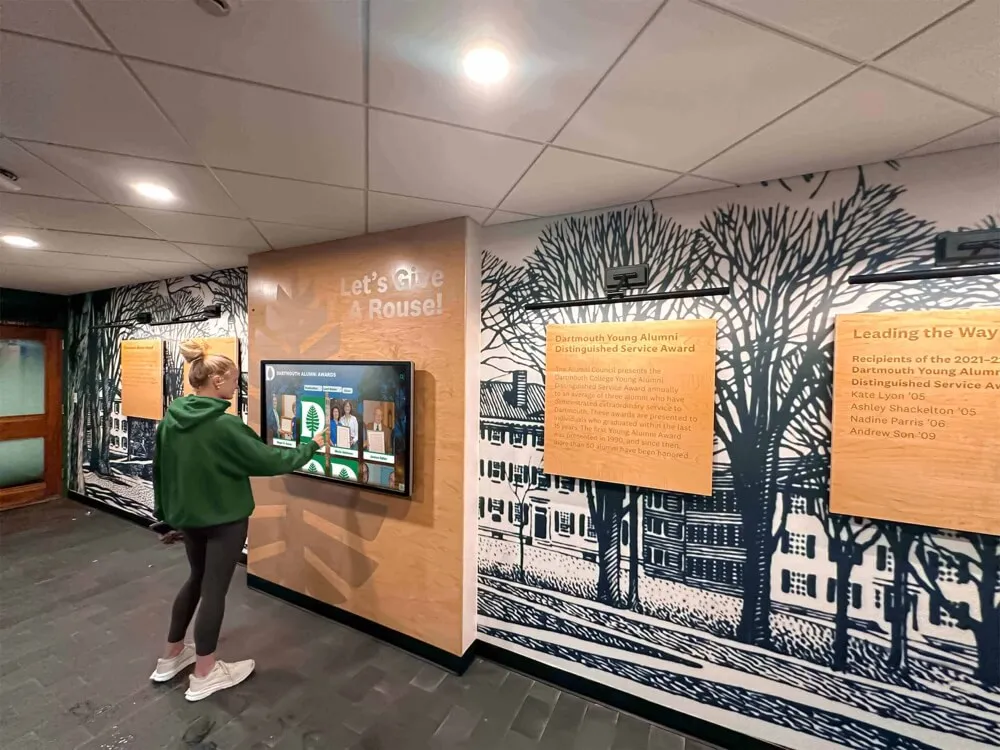
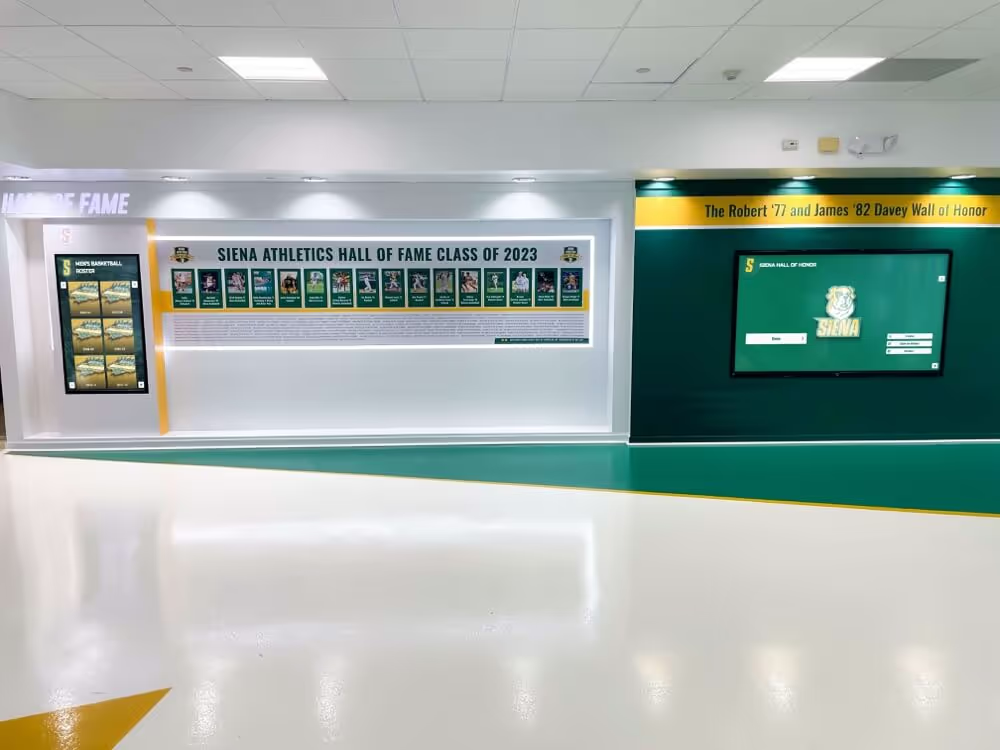
Hybrid displays combining traditional physical elements with digital components leverage advantages of both approaches
Digital Heritage and Archive Systems
Modern technology enables comprehensive historical presentation impossible within physical space constraints.
Digital Archive Advantages
- Unlimited content capacity accommodating entire institutional archives
- Searchable databases enabling exploration by year, person, event, or topic
- Scanned historical photographs and documents in high resolution
- Video interviews with alumni, retired faculty, and community members
- Interactive timelines with layered content depth
- Protection of original materials reducing handling and display exposure
- Easy content updates adding new materials as they’re discovered
- Multiple access points from physical kiosks to web platforms
Schools implementing comprehensive digital archives report that historical content receives dramatically higher engagement when presented through searchable, interactive platforms compared to static physical displays—students spend 5-10x longer exploring digital archives than traditional display cases.
Strategic Placement and Location Considerations
Even excellent wall display cases fail to achieve recognition objectives when positioned inappropriately or installed without consideration for traffic patterns, visibility, and facility integration.
High-Traffic Location Selection
Display effectiveness depends heavily on strategic placement where students, staff, visitors, and community members regularly encounter recognition during normal facility use.
Optimal Display Locations
- Main building entrances creating immediate visibility for all visitors
- Primary hallways connecting high-traffic areas like cafeterias and classrooms
- Gymnasium lobbies and athletic facility entrances
- Auditorium and performing arts center entrances
- Administrative office reception areas with extended visitor dwell time
- Library and media center common spaces
- School store and student gathering locations
Placement Mistakes to Avoid
- Remote hallways requiring intentional seeking
- Positions behind furniture, equipment, or architectural obstacles
- Basement or secondary spaces with minimal foot traffic
- Outdoor installations exposing displays to weather and vandalism
- Mounting heights too low (below 36 inches) or too high (above 72 inches)
- Competing visual environments overwhelming recognition presentation
- Inadequate lighting preventing comfortable viewing
Schools should observe actual traffic patterns during passing periods, events, and various school activities before finalizing display placement—locations appearing prominent in empty buildings may prove less visible during active school operations when crowds and activities shift attention.
Creating Recognition Zones and Themed Areas
Rather than scattering individual display cases throughout facilities, many schools create concentrated recognition zones that become destinations where multiple related displays combine for greater impact.
Recognition Zone Concepts
- Athletic wings featuring trophy cases, championship banners, and team photographs
- Academic excellence hallways showcasing honor rolls, competition awards, and scholar recognition
- Donor appreciation lobbies highlighting philanthropic support and campaign achievements
- Historical heritage galleries presenting institutional archives and memorabilia
- Alumni success corridors featuring notable graduate achievements and career accomplishments
Concentrated recognition creates environments where visitors spend extended time exploring multiple related displays rather than glancing at isolated cases while passing to other destinations. These zones become identity-reinforcing spaces that students, families, and community members visit intentionally.
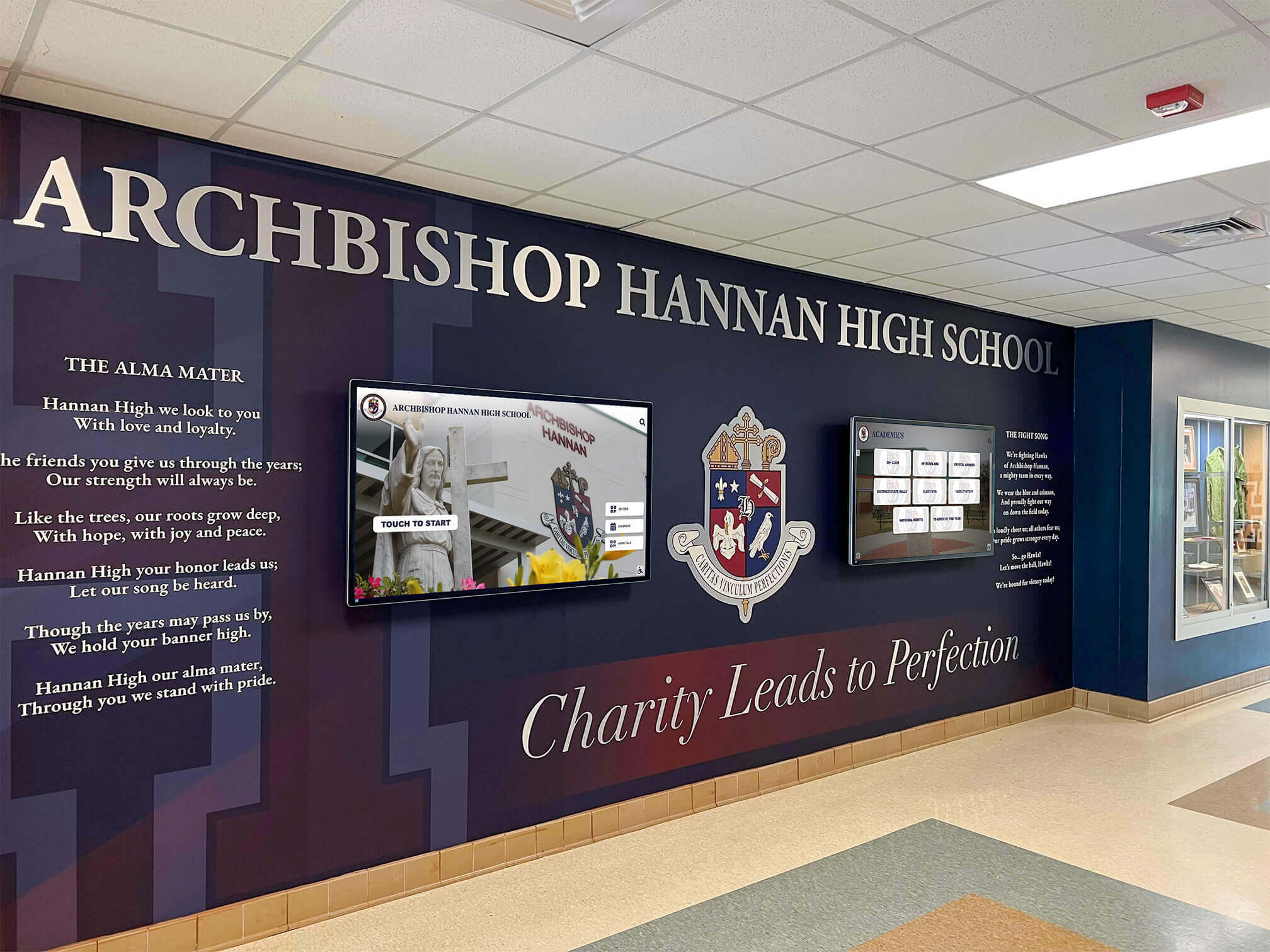
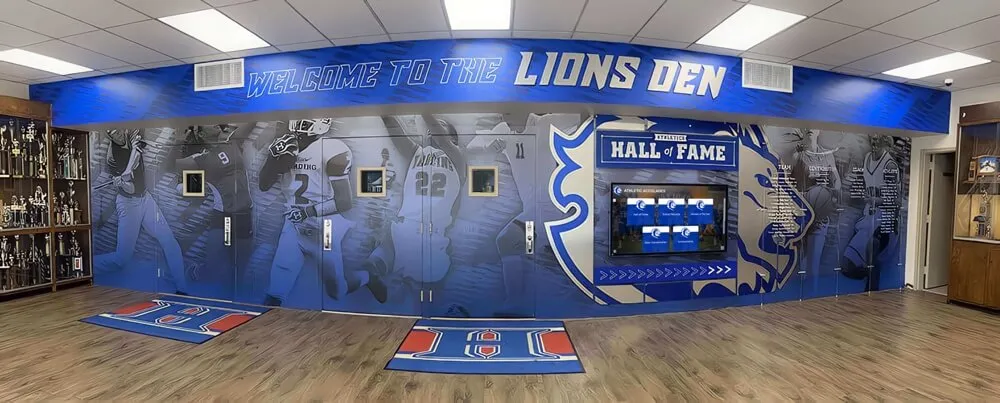
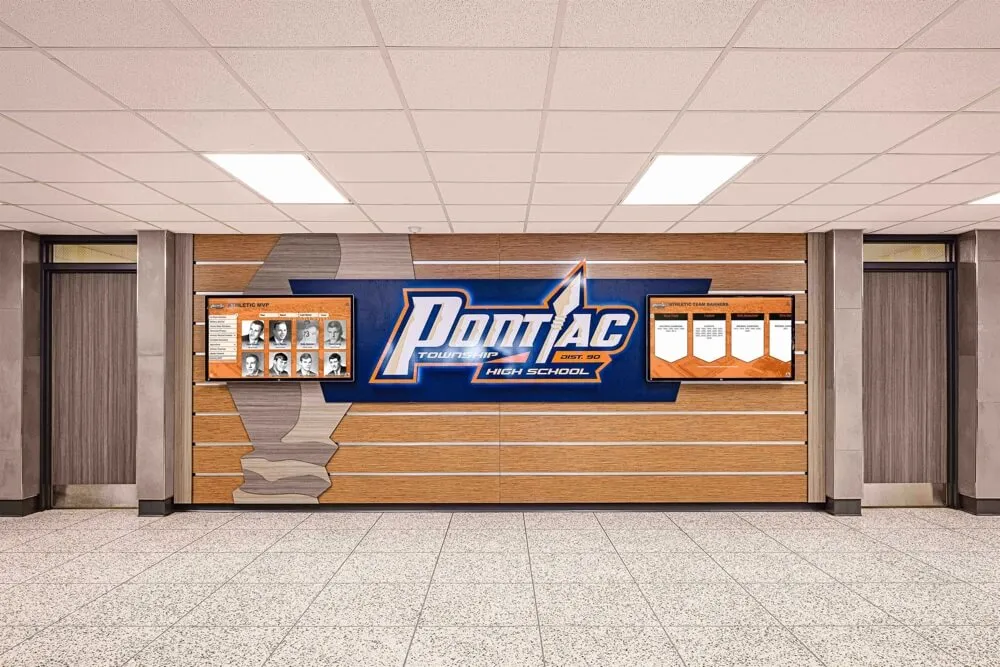
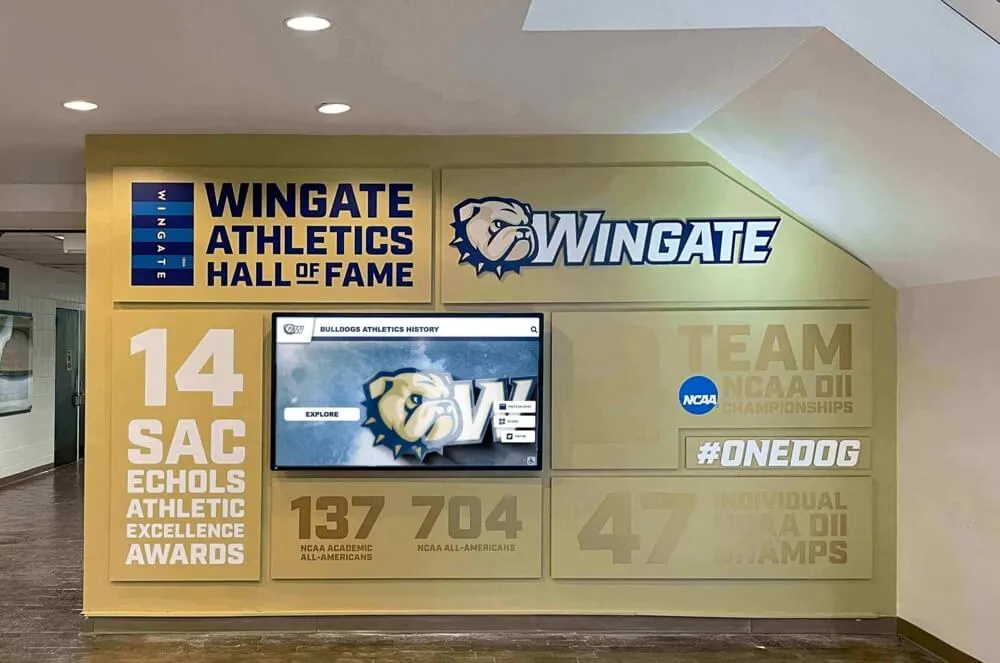
Integrated lobby designs combine wall displays with architectural elements and school branding for cohesive recognition environments
Accessibility and Universal Design
All wall display cases should meet accessibility standards ensuring every community member can comfortably view and appreciate recognition regardless of physical abilities.
ADA Compliance Requirements
- Mounting heights placing primary viewing areas 15-48 inches from floor
- Clear floor space (30 x 48 inches minimum) for wheelchair approach
- Protruding objects (cases extending more than 4 inches from walls) mounted at least 27 inches above floor or equipped with cane-detectable barriers below
- Accessible routes leading to all recognition displays
- Braille and tactile labels for significant elements
- High-contrast text and background (4.5:1 ratio minimum) for low-vision accessibility
Beyond legal compliance, accessible design demonstrates institutional values while ensuring recognition reaches entire communities. Digital displays offer particular accessibility advantages through adjustable text sizing, screen reader compatibility, and audio description capabilities that physical displays cannot provide.
Material Selection and Design Considerations
Wall display case durability, appearance, and maintenance requirements depend significantly on material choices and construction quality.
Frame and Structure Materials
Aluminum Frames
- Lightweight construction simplifying installation
- Corrosion-resistant for long-term durability
- Available in various finishes including anodized colors
- Cost-effective option for budget-conscious projects
- Modern aesthetic fitting contemporary facility design
- Low maintenance requirements
Wood Frames
- Traditional appearance complementing classic architecture
- Natural material creating warm, prestigious presentation
- Customizable finishes matching facility woodwork
- Higher cost than aluminum alternatives
- Regular maintenance preventing deterioration
- Custom fabrication enabling unique designs
Steel and Stainless Steel
- Exceptional durability and security
- Contemporary industrial aesthetic
- Corrosion-resistant properties
- Higher cost than aluminum
- Heavy construction requiring substantial mounting
- Long lifespan with minimal maintenance
Frame selection should consider facility architecture, budget constraints, anticipated lifespan, and desired aesthetic creating cohesive visual integration with surrounding environments rather than appearing as afterthought additions.
Glass and Glazing Options
Standard Glass
- Clear visibility and economical cost
- Fragile construction requiring careful handling
- Tempered versions offering improved safety
- Standard option for most applications
Acrylic Glazing
- Shatter-resistant construction improving safety
- Lighter weight than glass simplifying installation
- Scratch susceptibility requiring protective measures
- Cost-effective alternative to glass
- Clarity degradation over time with UV exposure
Laminated Glass
- Safety glass construction preventing shattering
- Sound dampening properties
- Enhanced security against forced entry
- Higher cost than standard options
- Preferred for high-value displays
UV-Protective Glass
- Blocks 95-99% of ultraviolet radiation
- Prevents fading of photographs, fabrics, and artifacts
- Essential for historical memorabilia and archival displays
- Moderate cost increase over standard glass
- Extends display content lifespan significantly
Organizations displaying valuable historical items, irreplaceable memorabilia, or artifacts requiring preservation should invest in UV-protective glazing despite higher costs—protection value far exceeds incremental expense when preserving items that cannot be replaced.
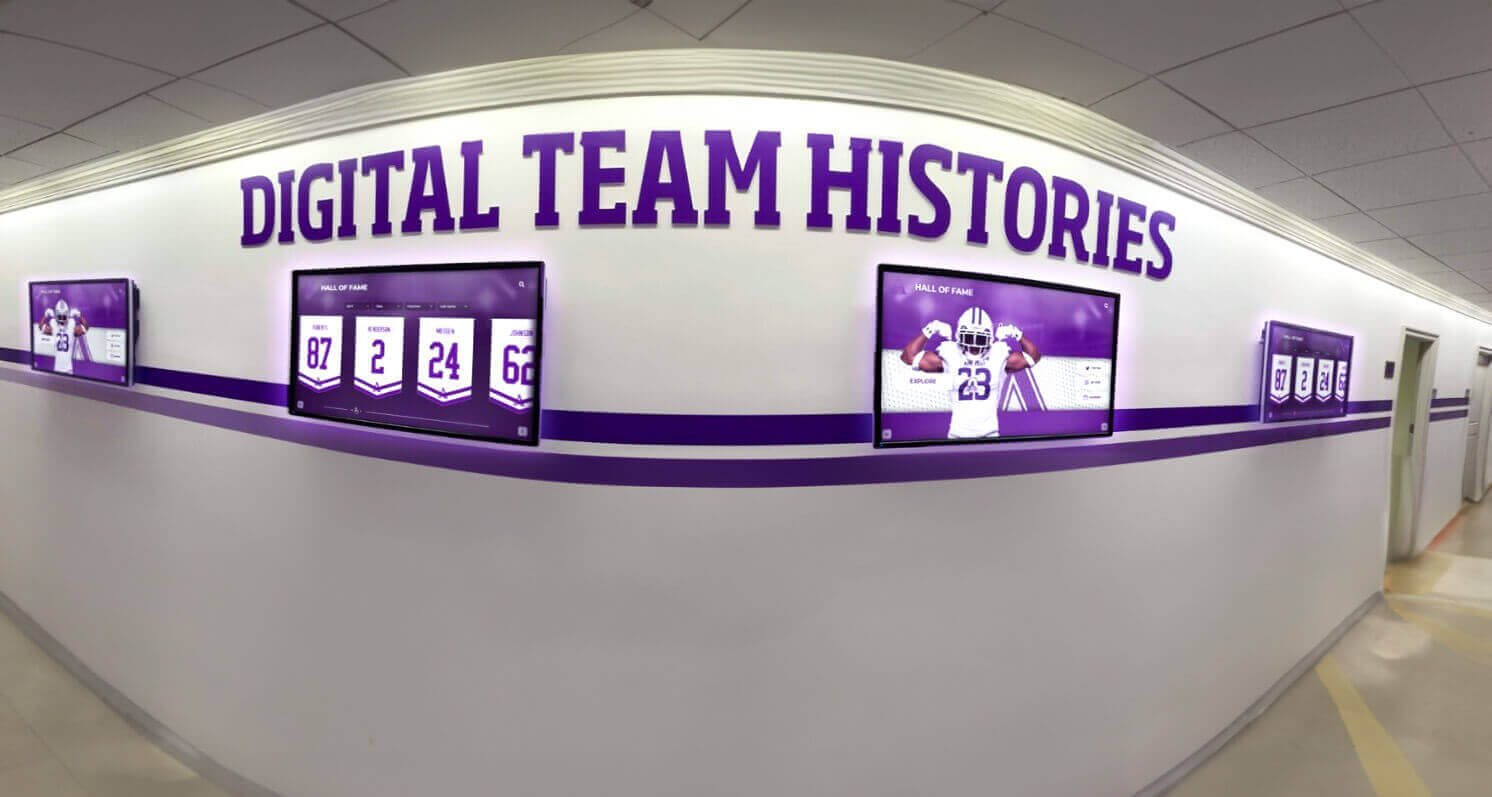
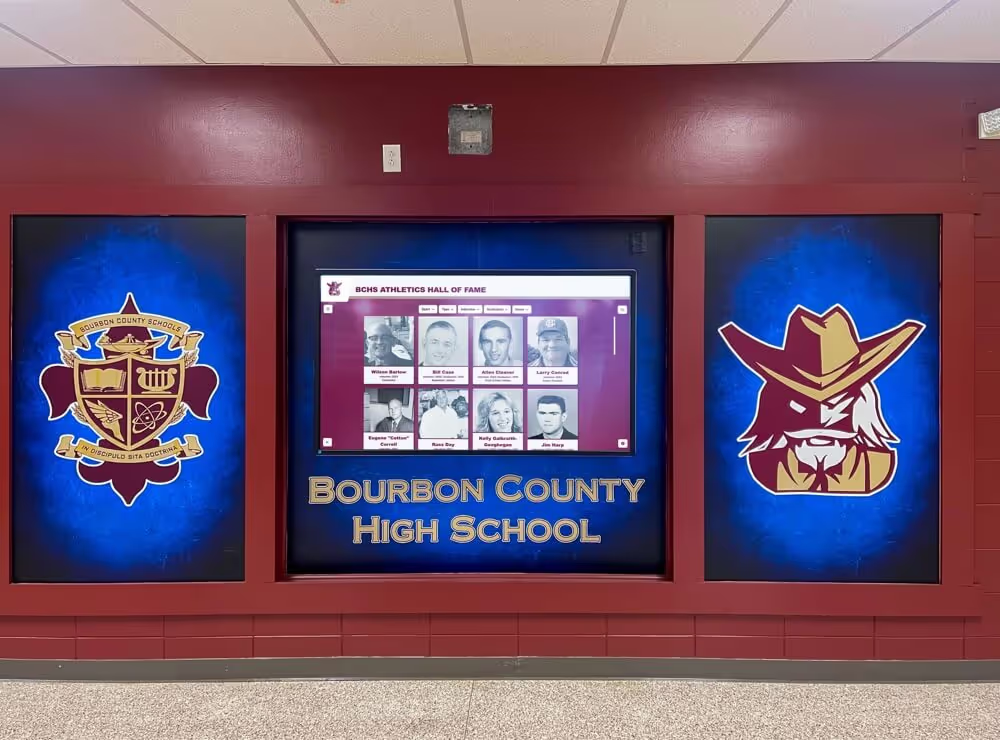
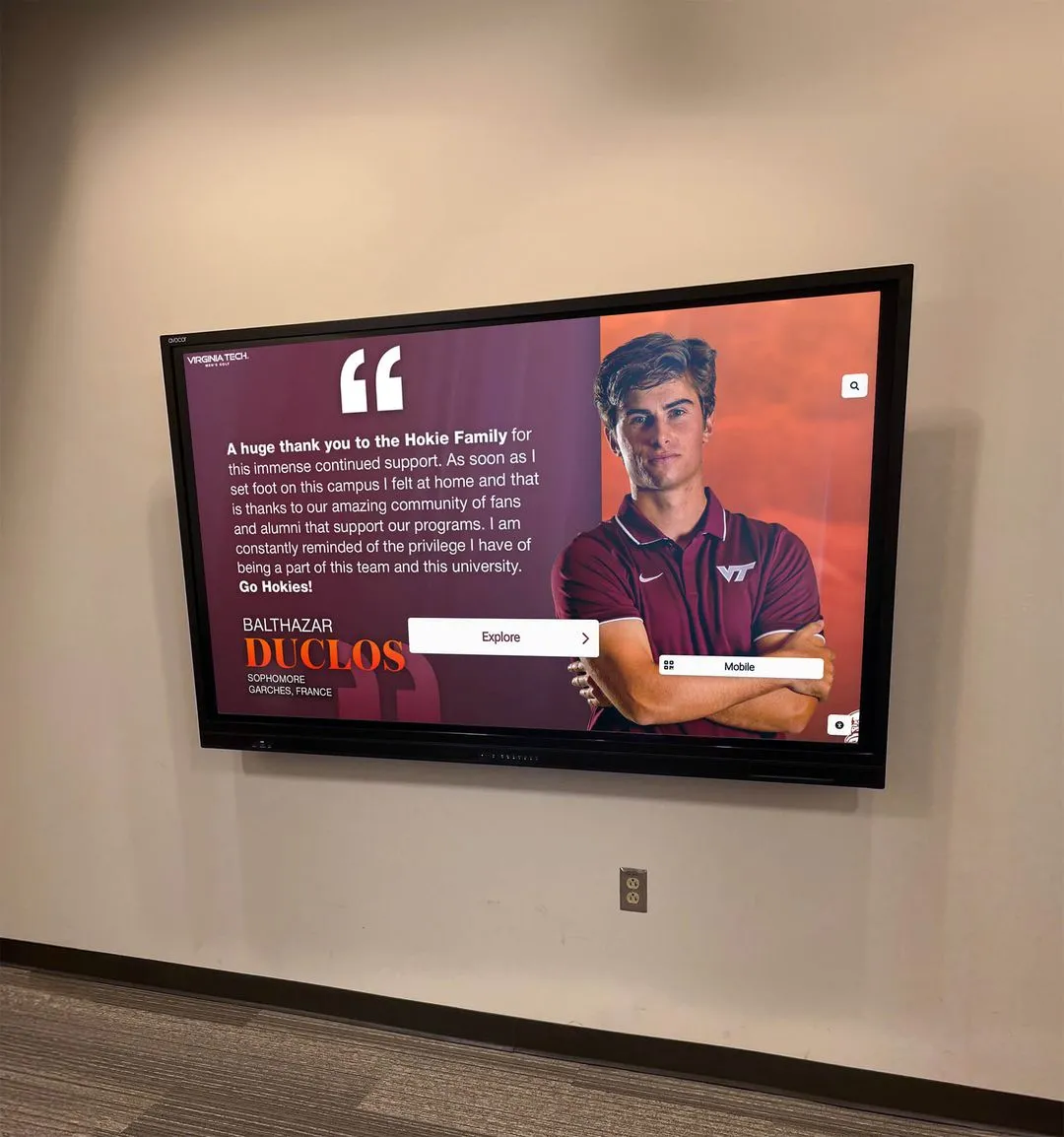
Digital displays eliminate glass maintenance while providing dynamic content presentation impossible with static cases
Lighting Design for Display Cases
Proper lighting transforms wall display cases from barely noticed installations into prominent focal points commanding attention and ensuring comfortable viewing experiences.
Internal Display Lighting
- LED strip lighting providing energy-efficient, long-lasting illumination
- Adjustable fixtures accommodating content changes
- Color temperature selection (3000-4000K) ensuring natural appearance
- Motion-activated options reducing energy consumption
- Dimmable systems enabling presentation versatility
- Glare prevention through proper fixture positioning
External Accent Lighting
- Dedicated spotlights or track lighting highlighting entire display case
- Architectural lighting integrated with facility design
- Adjustable fixtures accommodating future relocations
- Timer or sensor controls for automated operation
Schools should allocate 8-12% of total display case budget to proper lighting—the investment dramatically improves recognition impact while ensuring displays receive visibility justifying hardware costs. Poor lighting renders even exceptional display cases ineffective, while proper illumination makes modest installations appear premium.
Maintenance and Long-Term Management
Wall display cases require systematic maintenance ensuring continued appearance quality, content accuracy, and recognition effectiveness over years or decades of operation.
Routine Physical Maintenance
Regular Cleaning Schedule
- Weekly exterior glass cleaning removing fingerprints and smudges
- Monthly interior dusting of displayed items and shelving
- Quarterly deep cleaning including frame and hardware
- Annual professional cleaning and inspection
- Immediate attention to spills, damage, or vandalism
Preventive Maintenance Tasks
- Lock mechanism lubrication and function testing
- Hinge adjustment and door alignment
- Lighting inspection and bulb replacement
- Mounting hardware inspection ensuring secure attachment
- Glass or acrylic inspection for chips, cracks, or scratches
- Interior backing condition assessment
Assign specific facilities staff responsibility for display case maintenance rather than assuming general cleaning crews will provide adequate attention—recognition displays require specialized care that general maintenance may overlook.
Content Management and Organization
Systematic Content Updates
- Establish regular schedules for content rotation and updates
- Assign clear responsibility for content management to specific staff
- Create inventory documentation tracking displayed items
- Implement approval processes for content additions and changes
- Maintain storage systems for items in rotation
- Document display arrangements enabling reconstruction after maintenance
Capacity Planning and Space Management As achievements accumulate, schools face difficult decisions about what remains displayed and what moves to storage:
- Establish clear criteria determining display priority
- Create rotation schedules ensuring diverse content receives visibility
- Implement archival storage for removed items maintaining preservation
- Consider digital alternatives accommodating unlimited content
- Plan expansion or additional cases before current capacity fills
- Communicate content decisions transparently to affected constituencies
Many schools discover that traditional display cases create increasingly difficult space allocation decisions as decades of achievements compete for limited visibility. Organizations experiencing capacity challenges should evaluate comprehensive digital alternatives that eliminate zero-sum space constraints while preserving historical achievement visibility.
Security and Theft Prevention
Display cases containing valuable trophies, memorabilia, or historical artifacts require appropriate security measures preventing theft and vandalism.
Security Best Practices
- Quality locks and tamper-resistant hardware
- Security camera coverage of high-value displays
- Display placement in supervised or monitored areas
- Item documentation including photographs and descriptions
- Insurance coverage for valuable collections
- Alarm systems for cases containing particularly valuable items
- Mounting systems preventing case removal from walls
- Consideration of replica displays for irreplaceable items
Schools should assess actual value and replacement cost of displayed items when determining appropriate security investment—$15,000 in security systems protecting $100,000 in irreplaceable championship trophies and historical memorabilia represents sound investment compared to inadequate protection risking permanent loss.
Modern Digital Display Alternatives
While traditional wall display cases maintain important roles in school recognition, digital alternatives address fundamental limitations including space constraints, static presentations, and ongoing maintenance demands that physical installations cannot overcome.
Interactive Touchscreen Recognition Walls
Digital touchscreen displays eliminate capacity limitations while creating engaging recognition experiences that static displays cannot provide.
Touchscreen Display Advantages
- Unlimited Content Capacity: Single display accommodates thousands of achievements, profiles, photographs, and recognition entries without additional hardware investment
- Interactive Engagement: Students actively explore content through search, filtering, and navigation rather than passive viewing
- Multimedia Storytelling: Video highlights, photo galleries, career profiles, and detailed narratives impossible within physical case constraints
- Immediate Updates: Cloud-based content management enables instant recognition without fabrication delays or physical installation
- Multiple Recognition Categories: Single display serves athletic, academic, donor, and historical recognition eliminating separate case requirements
- Analytics and Insights: Track which content receives engagement informing future recognition strategies
- Accessibility Features: Screen readers, text sizing, language options, and audio descriptions exceeding physical display capabilities
Schools implementing solutions like Rocket Alumni Solutions discover single digital displays replace 10-15 traditional trophy cases while providing superior engagement and administrative efficiency. Students report spending 5-10x longer exploring digital recognition compared to glancing at physical cases, while staff note 85-90% reduction in maintenance time.
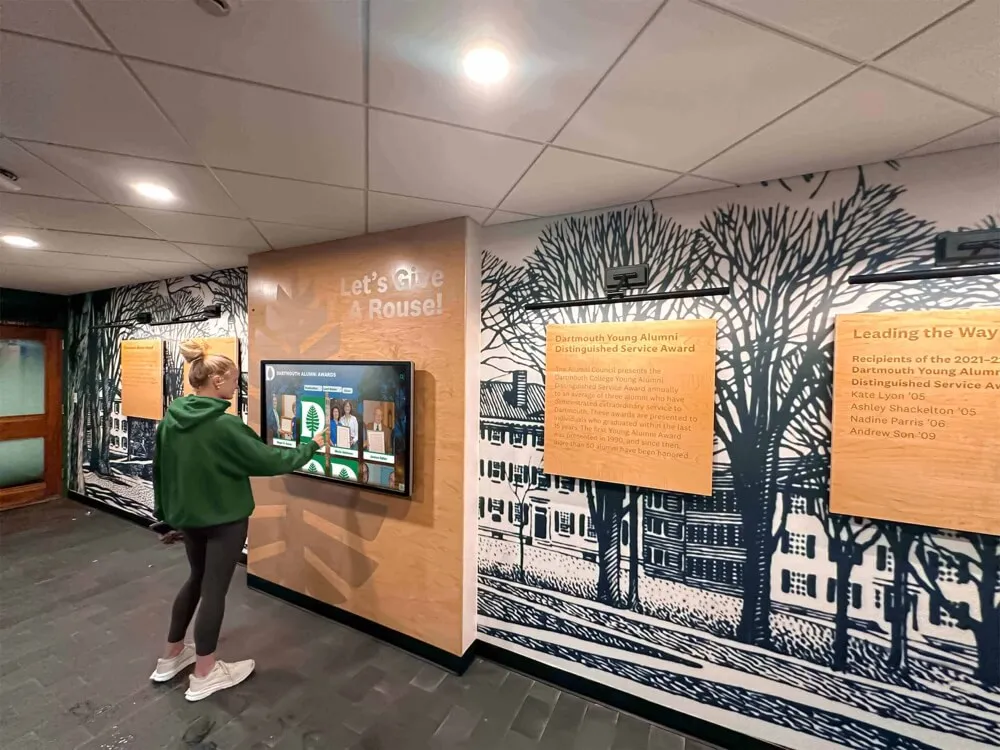
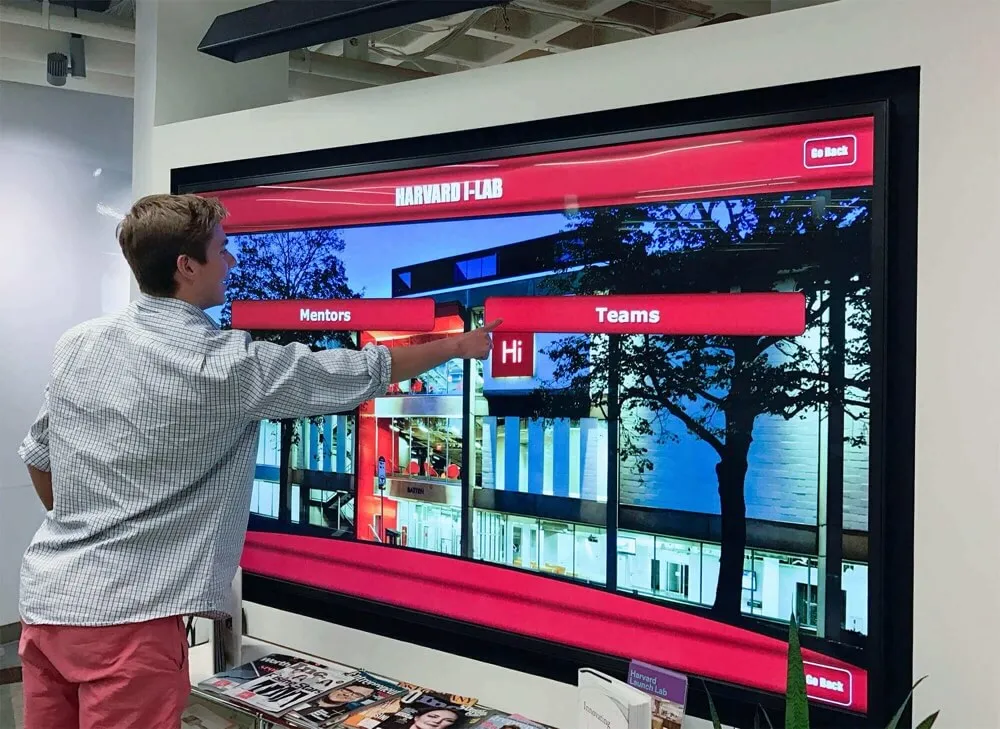
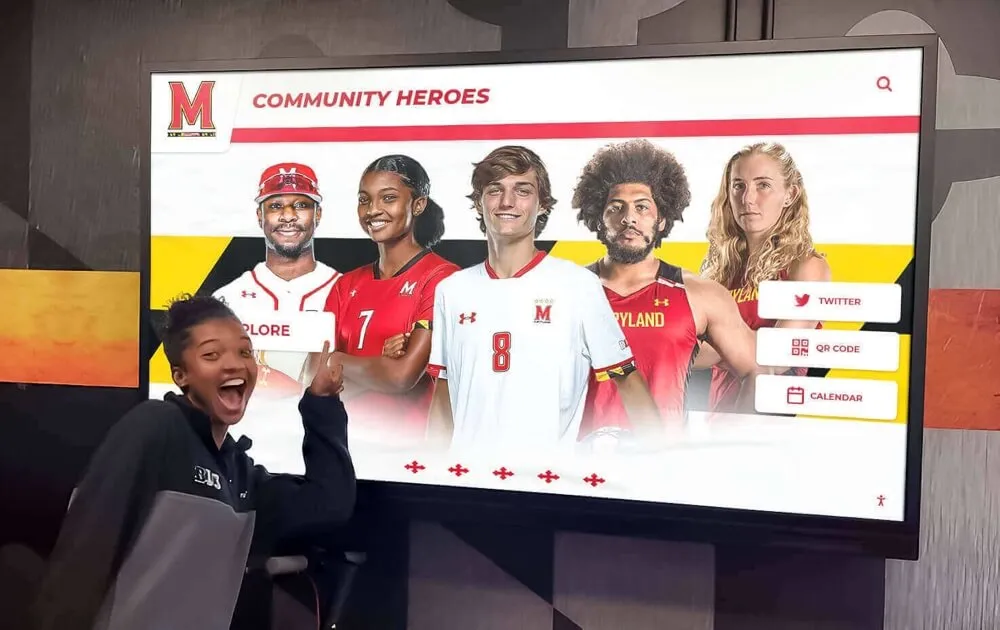
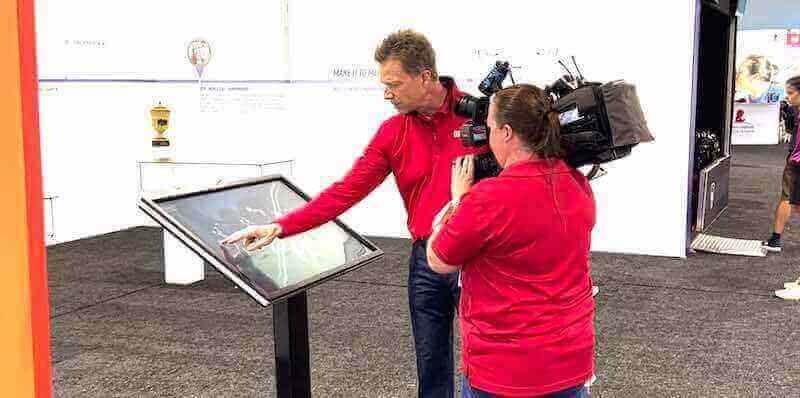
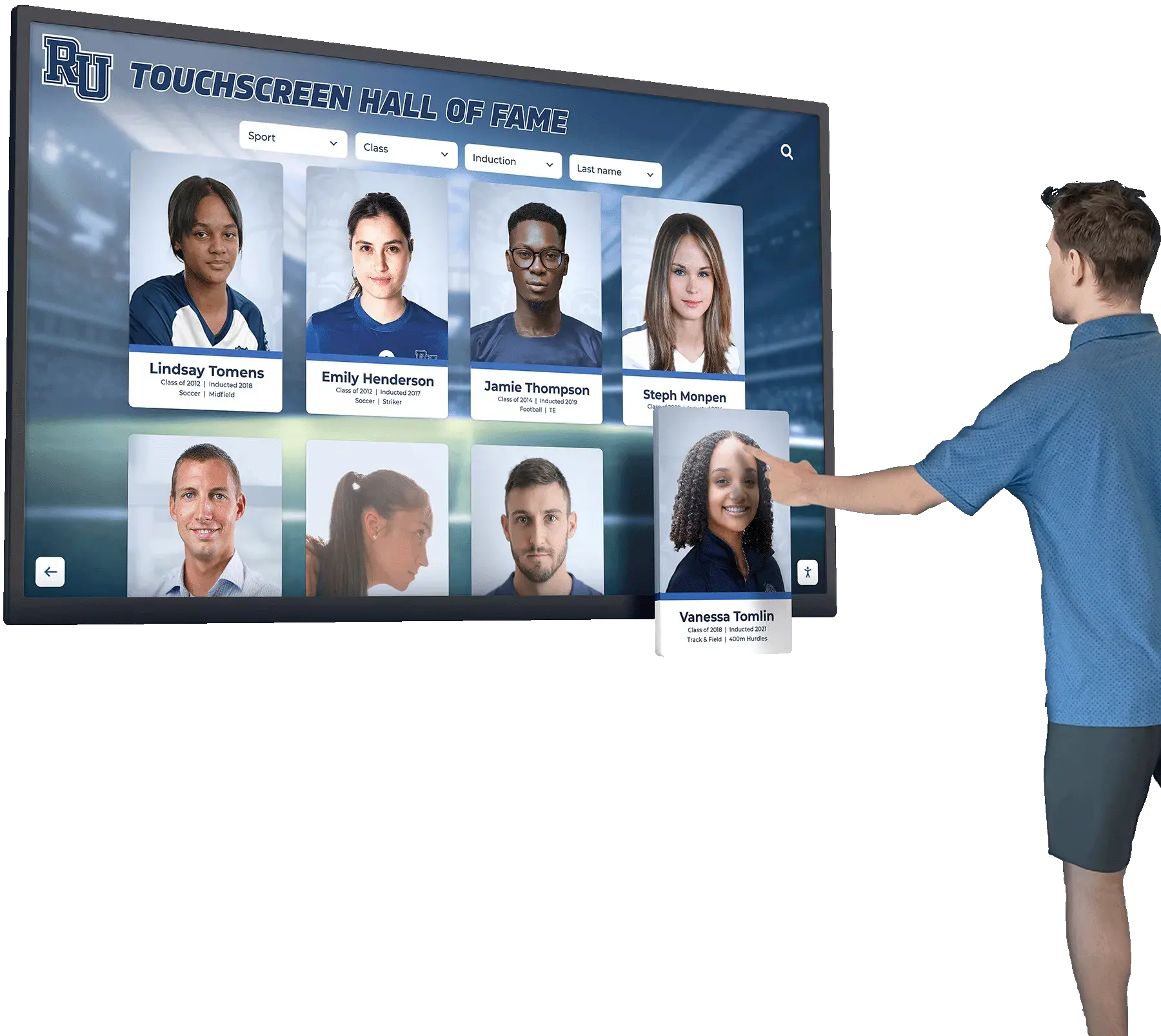
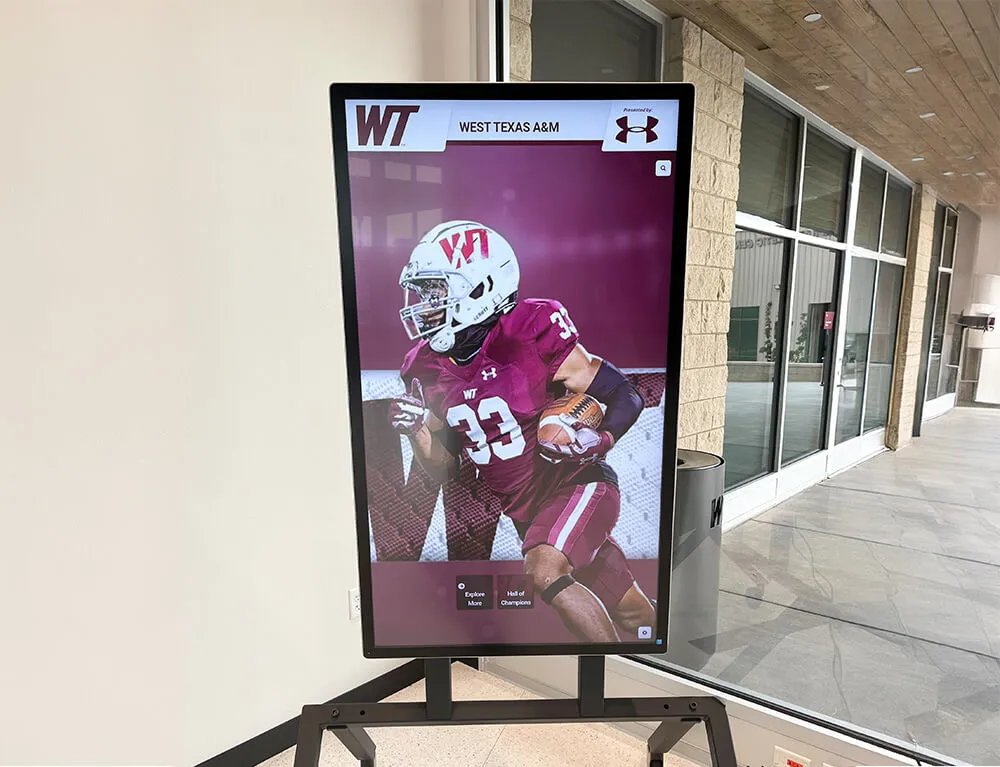
Interactive digital displays create engagement opportunities where visitors actively explore achievements rather than passively viewing static content
Web-Based Recognition Extensions
Digital recognition should extend beyond physical campus to engage alumni, families, and community members worldwide.
Online Recognition Platform Benefits
- 24/7 accessibility from any internet-connected device
- Searchable databases enabling achievement exploration
- Social sharing capabilities extending recognition reach
- Mobile optimization ensuring smartphone accessibility
- Alumni engagement tools connecting graduates with current programs
- Permanent archives preserving institutional history
- Content reuse across multiple platforms from single source
Organizations implementing comprehensive digital recognition systems report that web-based extensions receive engagement from alumni decades after graduation, creating ongoing connection and supporting fundraising relationships through maintained visibility and pride in institutional excellence.
Hybrid Approaches: Combining Physical and Digital
Many schools discover optimal results through hybrid strategies leveraging distinct advantages of both traditional cases and digital systems.
Effective Hybrid Strategies
- Physical trophy cases for championship hardware where three-dimensional presentation matters
- Digital displays for comprehensive rosters, statistics, and historical context
- Traditional donor plaques for major gifts with digital recognition for annual fund supporters
- Physical memorabilia cases for artifacts with digital archives providing unlimited historical content
- Shadow boxes for hall of fame inductees complemented by digital interactive biographies
This balanced approach satisfies preferences for tangible recognition while providing organizational capacity and flexibility that traditional approaches alone cannot deliver. Hybrid implementation requires careful design coordination ensuring visual coherence between physical and digital elements rather than disjointed installations appearing unrelated.
Budget Considerations and Cost Planning
Understanding complete costs enables realistic planning and prevents surprise expenses undermining recognition projects.
Traditional Display Case Investment
Wall-Mounted Trophy Case Costs (2026 estimates)
- Basic 4’x6’ wall-mounted case with LED lighting: $1,500-$3,000
- Mid-range 6’x8’ case with adjustable shelving: $3,500-$6,000
- Premium 8’x10’ recessed case with custom design: $8,000-$15,000
- Custom shadow boxes: $500-$2,500 each depending on size and features
- Professional installation labor: $500-$2,000 per case
- Electrical work for lighting: $300-$1,200 per case
Donor Plaque Wall Costs
- Design and planning services: $2,000-$8,000
- Wall preparation and mounting systems: $1,500-$5,000
- Individual donor plaques: $150-$800 each depending on material
- Architectural elements and headers: $2,000-$10,000
- Installation labor: $1,500-$4,000
- Total initial project: $15,000-$60,000 for 50-100 donors
Ongoing Expenses
- New trophy case additions as achievements accumulate: $1,500-$15,000+ per case
- Annual cleaning and maintenance: $200-$600 per case
- Glass replacement when damaged: $200-$800 per panel
- Lighting updates and repairs: $100-$400 annually
- New donor plaques: $150-$800 each ongoing
Schools should plan 10-15 year total cost of ownership rather than focusing only on initial installation—ongoing expansion and maintenance expenses accumulate substantially.
Digital Display System Investment
Interactive Display Costs (2026 estimates)
- 55" touchscreen display hardware: $3,000-$6,000
- 65" touchscreen display hardware: $5,000-$9,000
- Professional mounting and installation: $500-$1,500
- Initial content development and setup: $2,000-$8,000
- Annual software licensing and hosting: $1,200-$3,000
- Total initial investment: $8,000-$20,000
Long-Term Comparison (15-year projection)
Traditional Trophy Case Approach
- Initial 5 trophy cases: $20,000
- Adding 10 cases over 15 years: $60,000
- Maintenance and cleaning: $12,000
- Glass repairs and updates: $4,000
- Total 15-year cost: $96,000
Digital Display System
- Initial installation: $12,000
- Annual licensing × 14 years: $28,000
- Content updates (occasional photography): $8,000
- Total 15-year cost: $48,000
Organizations experiencing achievement growth discover digital systems provide favorable total cost of ownership while delivering superior capacity, engagement, and administrative efficiency. Budget analysis should examine complete lifecycle costs rather than initial investment alone.
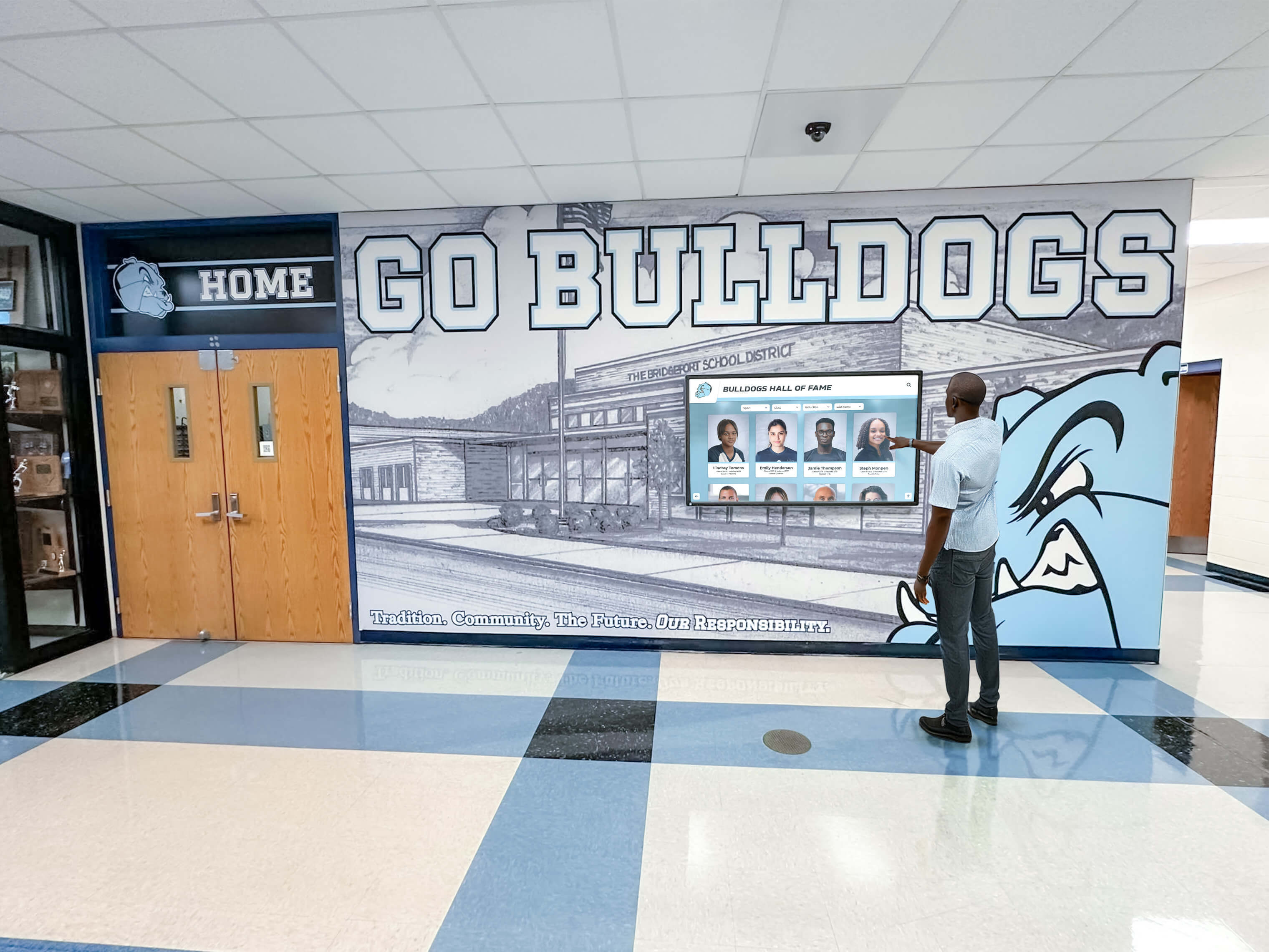
Digital recognition systems deliver long-term value through eliminated expansion costs and reduced maintenance compared to traditional cases
Creative Display Ideas by Recognition Category
Beyond standard approaches, creative display concepts create memorable recognition aligned with specific achievement types and institutional culture.
Athletic Recognition Creative Concepts
Sport-Specific Themed Displays
- Basketball court floor sections mounted as championship memory displays
- Retired jerseys displayed with dimensional depth and dramatic lighting
- Equipment evolution showcases from historical to current
- Record board displays showing progression over decades
- Championship banner displays with winning roster photographs
Interactive Athletic Recognition Modern technology enables engaging presentations impossible with traditional cases including game highlight videos, career statistics, and digital record boards tracking performance across seasons and years.
Academic Achievement Creative Displays
Subject-Specific Recognition Walls
- STEM achievement corridors combining awards with student project displays
- Literary excellence galleries featuring winning writing and publications
- World language cultural showcases integrating achievement recognition
- Arts integration displaying creative work alongside competition recognition
Growth and Improvement Celebration Rather than only recognizing absolute achievement, create displays highlighting improvement journeys showing students’ academic growth over time—particularly motivating for students starting from different performance baselines.
Community and Donor Recognition Concepts
Impact Visualization Displays Instead of simple donor name lists, create displays showing what philanthropic support enabled:
- Before-and-after facility transformation photographs
- Student testimonials describing how gifts affected education
- Scholarship recipient profiles connected to donor society membership
- Program development timelines showing gift impact over years
This storytelling approach helps current students understand donor recognition represents genuine gratitude for transformed educational experiences rather than transactional acknowledgment.
Implementation Planning and Project Management
Successful wall display case projects require systematic planning preventing common pitfalls that undermine recognition effectiveness.
Needs Assessment and Goal Definition
Critical Planning Questions
- What achievements, awards, and recognition require display visibility?
- What physical space limitations affect display capacity and placement?
- What budget constraints determine affordable approaches?
- What maintenance capabilities does your organization possess?
- What stakeholder preferences influence design and format decisions?
- What timeline requirements or dedication deadlines exist?
- What future growth expectations affect capacity planning?
Thorough needs assessment prevents common mistakes including inadequate capacity, inappropriate placement, or format mismatches with organizational capabilities and culture.
Stakeholder Engagement
Key Constituencies to Involve
- Athletic directors and coaches for sports recognition planning
- Academic departments for scholarly achievement displays
- Development offices for donor recognition requirements
- Alumni associations for historical memorabilia and tradition
- Facilities managers for installation feasibility and maintenance
- School administrators for budget approval and priority alignment
- Students providing youth perspective on engagement and appeal
Broad stakeholder input creates recognition systems serving diverse constituencies while building support for implementation and ongoing maintenance commitment.
Vendor Selection and Contracting
Evaluation Criteria
- Product quality and construction durability
- Design capabilities matching your vision
- Installation expertise and professional credentials
- Warranty coverage and service support
- Reference customers with similar projects
- Timeline commitments and delivery reliability
- Total cost transparency avoiding hidden charges
Request detailed proposals from multiple vendors enabling comparison across quality, service, and cost dimensions. The lowest bid frequently proves most expensive long-term when inferior quality requires premature replacement or extensive maintenance.
Conclusion: Creating Recognition Environments Worthy of Achievement
Wall display cases serve essential functions in educational institutions—honoring individual and team accomplishments, demonstrating institutional values, preserving organizational history, and creating visible culture that inspires current students while connecting them with proud traditions spanning generations. Whether implementing traditional glass-fronted trophy cases conveying tangible championship presence, creative shadow box installations highlighting specific achievements, donor plaque walls acknowledging philanthropic support, or modern digital displays providing unlimited capacity and engaging interaction, effective recognition requires strategic planning aligned with available space, budget realities, stakeholder preferences, and long-term sustainability.
Traditional display cases maintain important roles in school recognition, particularly for championship trophies and three-dimensional items where physical presentation communicates prestige and permanence that digital alternatives cannot fully replicate. However, schools managing limited wall space, growing achievement communities, tight recognition budgets, or desires for comprehensive storytelling should carefully evaluate modern digital alternatives addressing fundamental limitations traditional cases impose.
Transform School Recognition With Modern Digital Solutions
Discover how Rocket Alumni Solutions helps schools, universities, and athletic departments implement engaging recognition displays that honor every achievement, tell compelling stories, and accommodate unlimited growth through interactive touchscreen technology and cloud-based content management designed specifically for educational recognition needs.
Explore Recognition Display SolutionsThe most successful recognition programs balance preferences for tangible trophy presentation with organizational needs for scalable, maintainable systems operating sustainably across decades. By understanding traditional display case options and their optimal applications, planning strategic placement maximizing visibility, implementing systematic maintenance ensuring long-term quality, and evaluating both physical and digital alternatives through comprehensive cost analysis, schools create recognition worthy of student achievements while building infrastructure supporting continued excellence celebration.
Thoughtful wall display case selection and implementation creates environments where accomplishment receives celebration proportional to effort and achievement, institutional pride becomes visible throughout facilities, and community members feel inspired to pursue excellence in athletics, academics, service, and leadership. The recognition strategies explored in this guide provide frameworks for building display systems that strengthen school culture through effective acknowledgment while honoring extraordinary individuals and teams whose accomplishments represent the best of your educational community and inspire generations to come.