Schools and educational institutions face an increasingly common challenge: how to meaningfully recognize growing donor communities when physical wall space remains limited and supporters expect recognition experiences that reflect modern digital realities. Traditional bronze plaques mounted in school lobbies served well for decades, but they cap out when walls fill, require expensive updates for every new contributor, and fail to reach donors who never visit campus or live across the country.
Virtual donor walls transform how educational institutions honor supporters by combining interactive touchscreen displays for on-site recognition with online platforms enabling anywhere, anytime access. These technology-powered solutions eliminate capacity constraints, enable rich storytelling with photos and videos, accommodate both physical kiosk installations and web-based viewing, and create engaging experiences connecting donors emotionally with educational missions—whether they’re standing in your lobby or browsing from their living room.
This comprehensive guide explores how virtual donor wall technology works for schools, the key differences between on-site digital displays and online donor recognition platforms, proven implementation strategies that maximize engagement, and practical approaches that honor every contribution level while supporting ongoing fundraising success and long-term donor stewardship.
Educational institutions implementing virtual donor recognition report eliminating space limitations that previously capped acknowledgment capacity, dramatically reducing long-term costs compared to continuous plaque ordering, and creating meaningful engagement with donors who never physically visit campus but remain deeply connected to institutional missions through accessible online recognition.

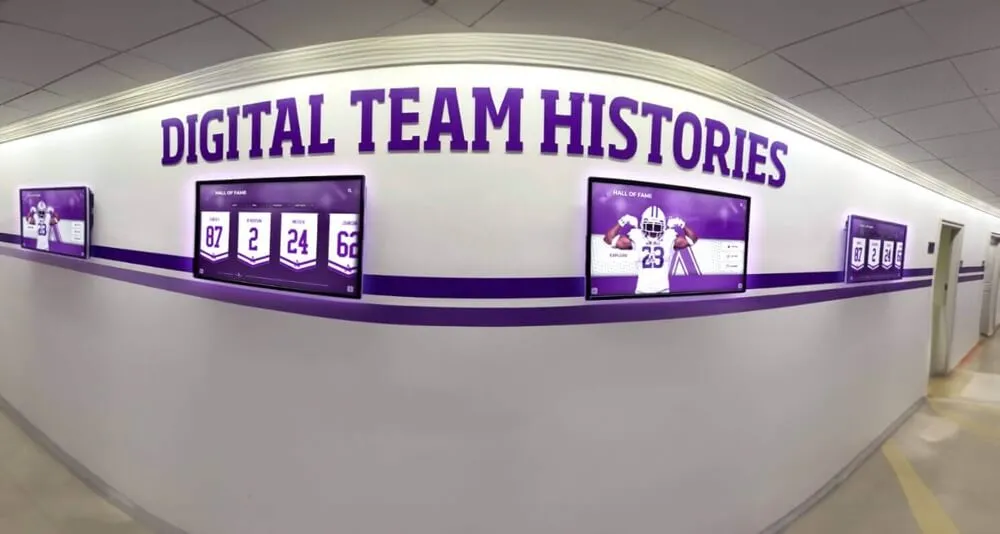
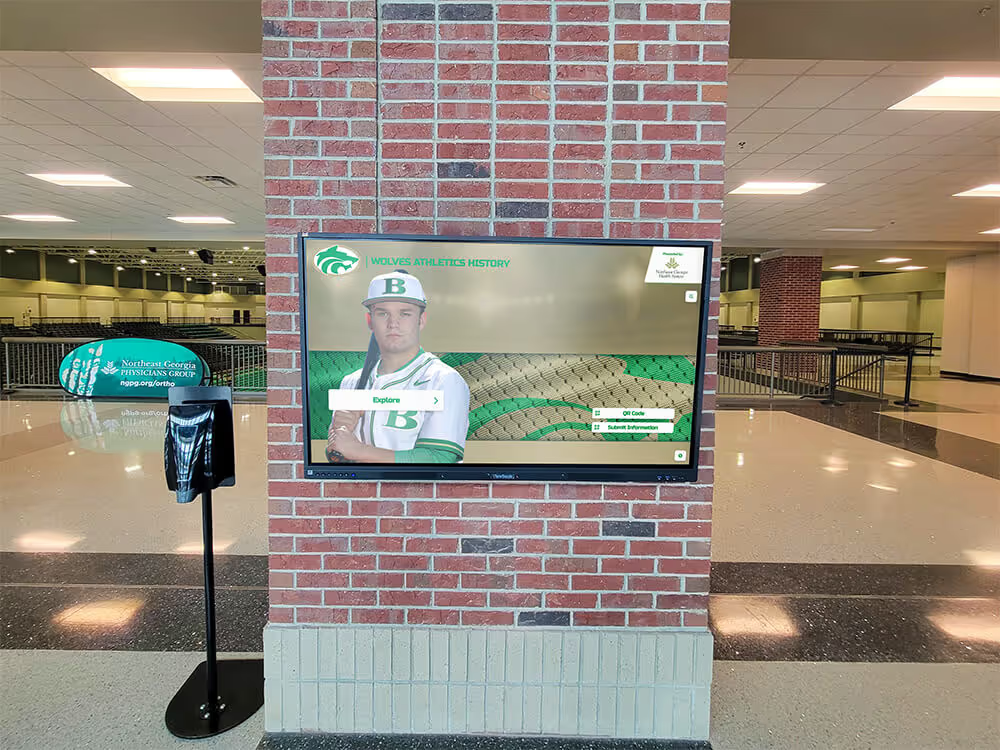
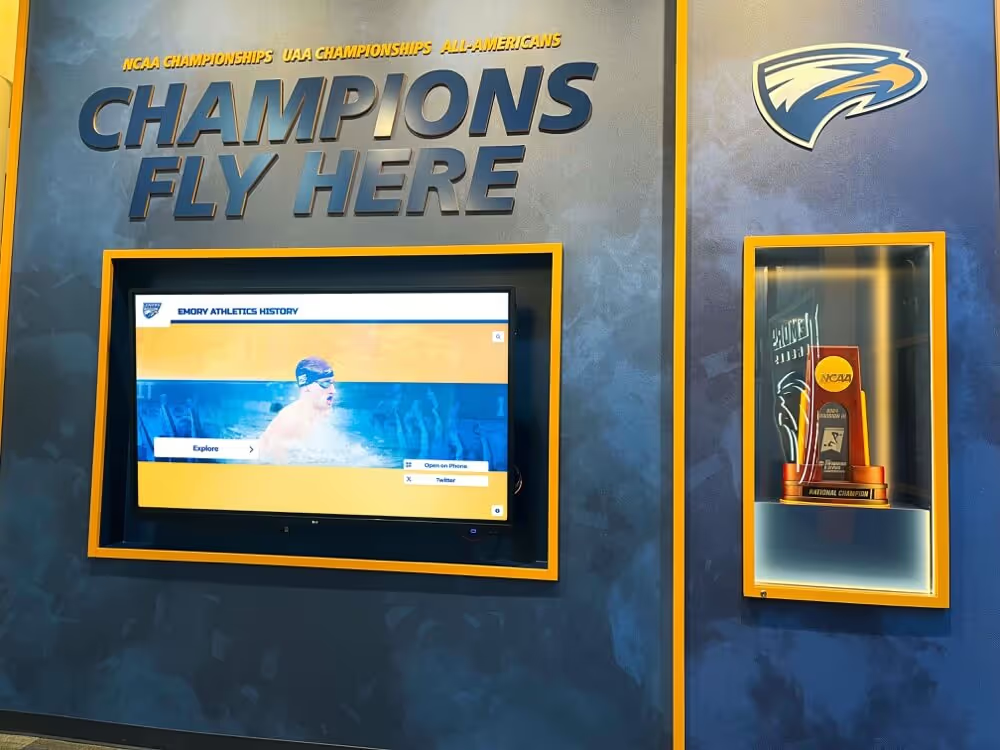
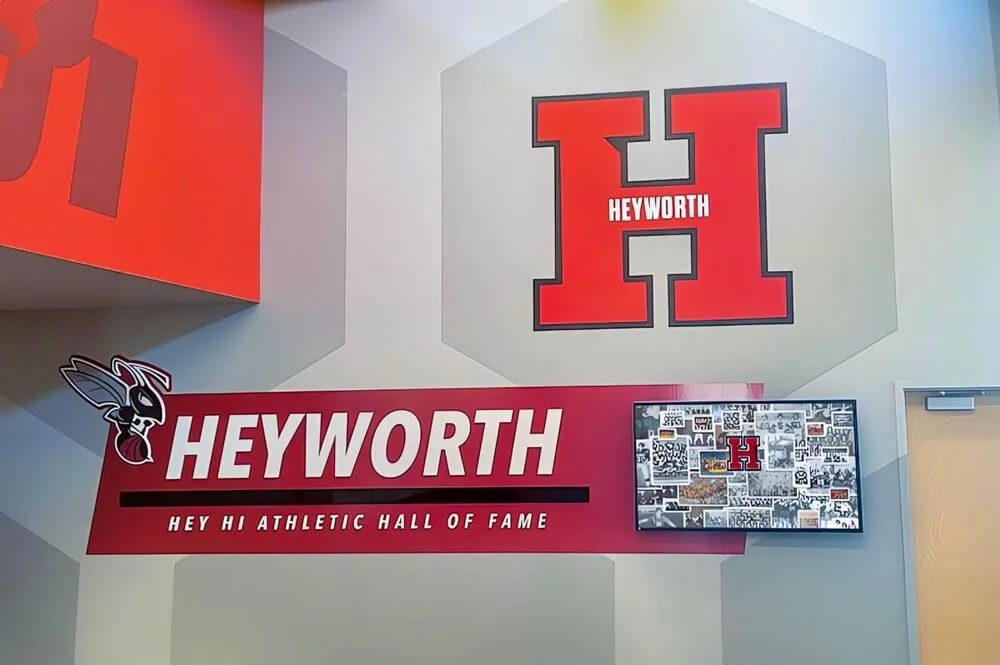
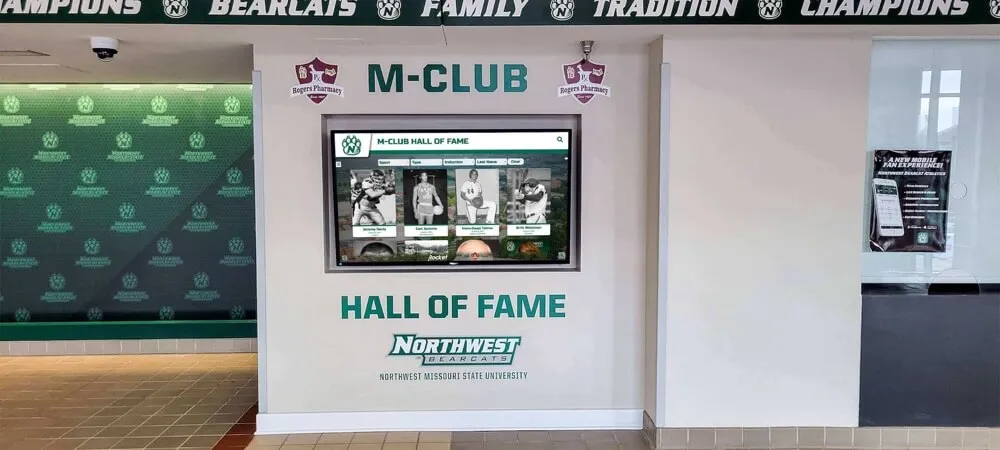
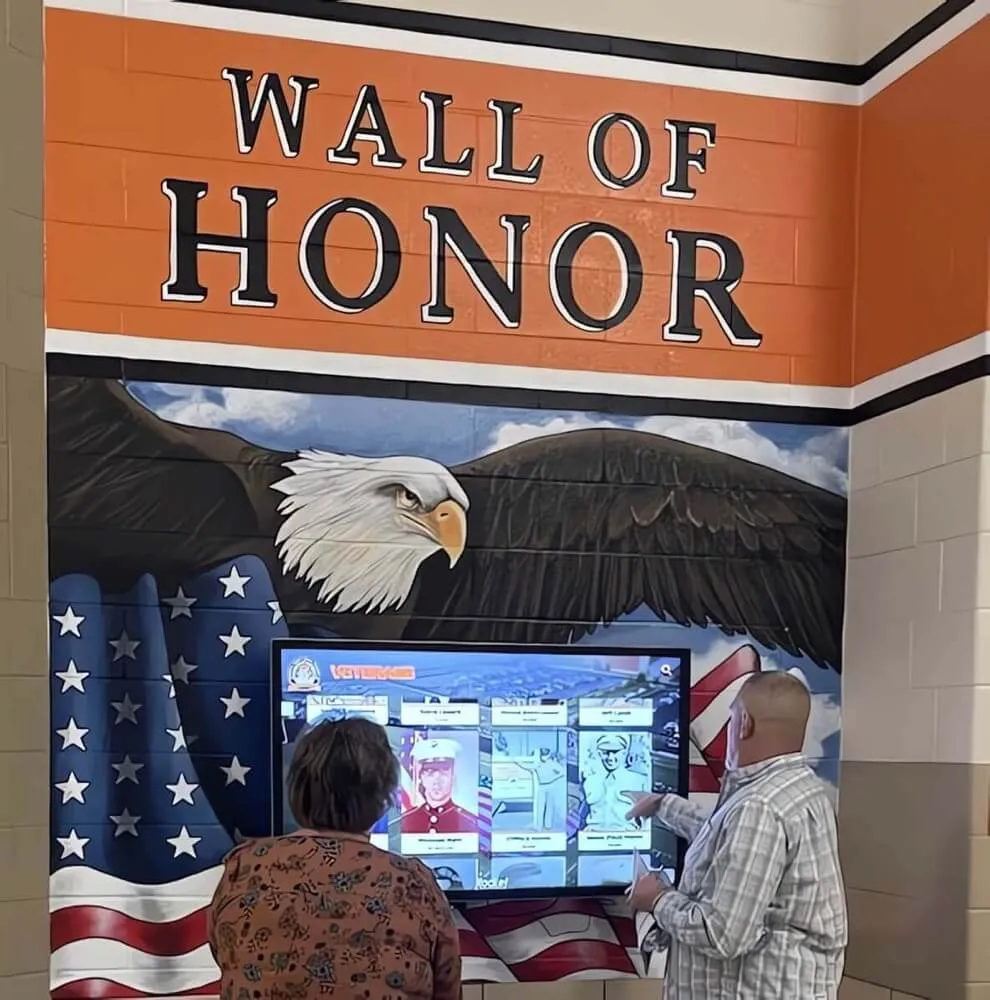
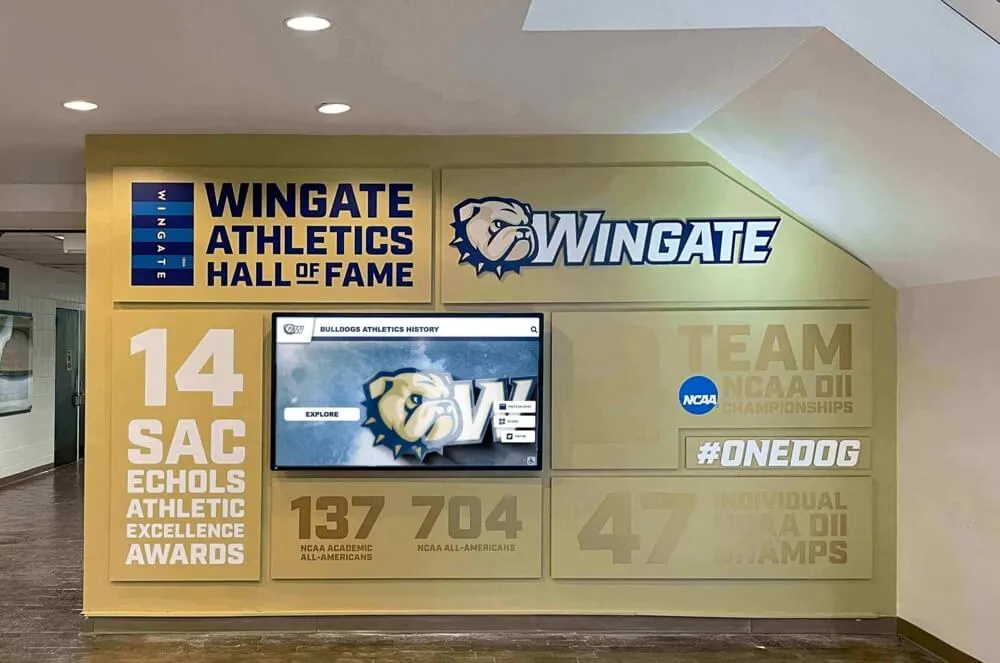
Virtual donor walls create prominent recognition that honors supporters through both physical displays and online platforms
Understanding Virtual Donor Wall Technology
Virtual donor walls encompass two complementary technology approaches that schools often implement together: interactive touchscreen displays installed in physical locations and web-based online platforms accessible from any internet-connected device. Each approach serves distinct recognition purposes while working together to create comprehensive donor acknowledgment systems.
On-Site Virtual Donor Walls: Interactive Digital Displays
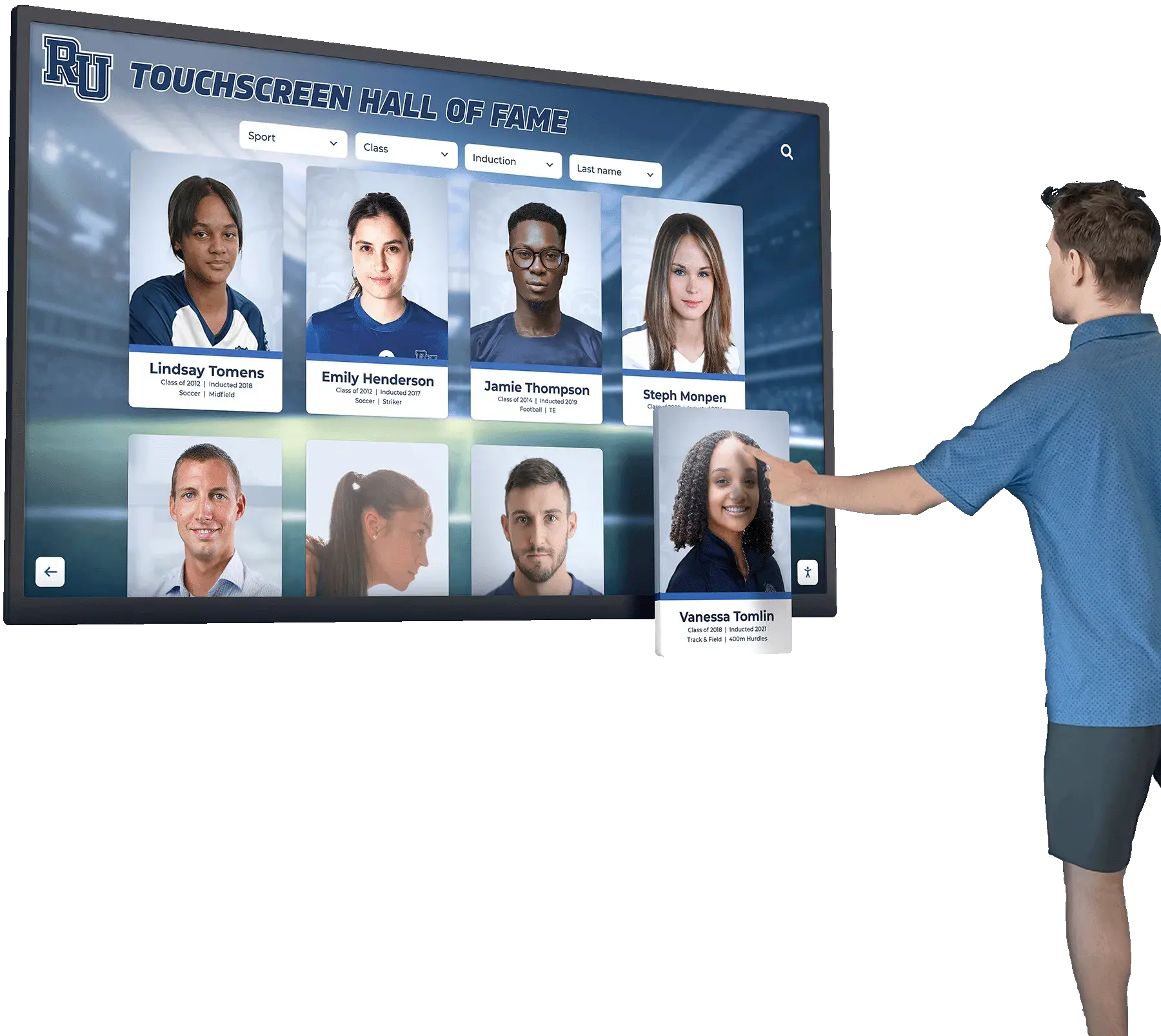
Physical virtual donor walls utilize commercial touchscreen displays combined with specialized recognition software to create interactive kiosks positioned in high-traffic school locations. Unlike traditional plaques that remain static, these digital installations enable visitors to search donor directories, filter by giving level or recognition society, explore detailed donor profiles with photographs and personal stories, and view impact information about programs that contributions support.
Core Digital Display Components
Schools implementing on-site virtual donor walls require three essential technology elements working together. Commercial-grade touchscreen displays ranging from 43 to 86 inches provide the visual platform—these professional screens feature higher brightness than consumer televisions (ensuring visibility under lobby lighting), extended operational ratings for continuous daily use, and responsive capacitive touch technology similar to tablets that visitors intuitively understand without instruction.
Cloud-based content management software enables authorized school administrators to update donor recognition remotely through web browsers from any location, eliminating requirements for technical expertise or on-site system access. Professional donor wall platforms provide intuitive interfaces allowing staff to upload donor photographs, create recognition profiles through guided forms, organize giving level categories, and schedule content publication—all without coding or design skills.
Network connectivity, typically leveraging existing school WiFi or ethernet infrastructure, links displays with cloud-based content servers that automatically push recognition updates. These modest bandwidth requirements fall well below video streaming demands since donor content updates asynchronously rather than requiring constant live connections. Schools exploring comprehensive recognition technology will find parallels with digital signage displays for schools serving similar communication purposes.
Online Virtual Donor Walls: Web-Based Recognition Platforms
Online donor walls extend recognition beyond physical campus boundaries through web-based platforms accessible via desktop computers, tablets, and smartphones. These digital environments replicate many interactive features that on-site displays provide while adding geographic reach that proves especially valuable for institutions with dispersed alumni communities or donors who contributed remotely and may never visit campus facilities.
Online Platform Capabilities
Web-based virtual donor walls typically feature searchable donor directories organized by name, giving level, recognition society, or contribution year. Individual donor profiles incorporate professional or personal photographs, biographical information, personal giving statements explaining philanthropic motivations, cumulative contribution totals, and recognition of memorial or tribute giving. Advanced platforms include video testimonials, impact stories connecting donations to specific outcomes, and social sharing features enabling donors to celebrate their philanthropy with personal networks.
Progressive schools implement responsive web design ensuring online donor walls function effectively across device sizes from large desktop monitors to mobile phones. Mobile optimization proves particularly important given that many donors initially discover online recognition through smartphones when schools share links via email communications or social media channels. The accessibility parallels concepts discussed in digital yearbook platforms that similarly extend recognition beyond physical formats.
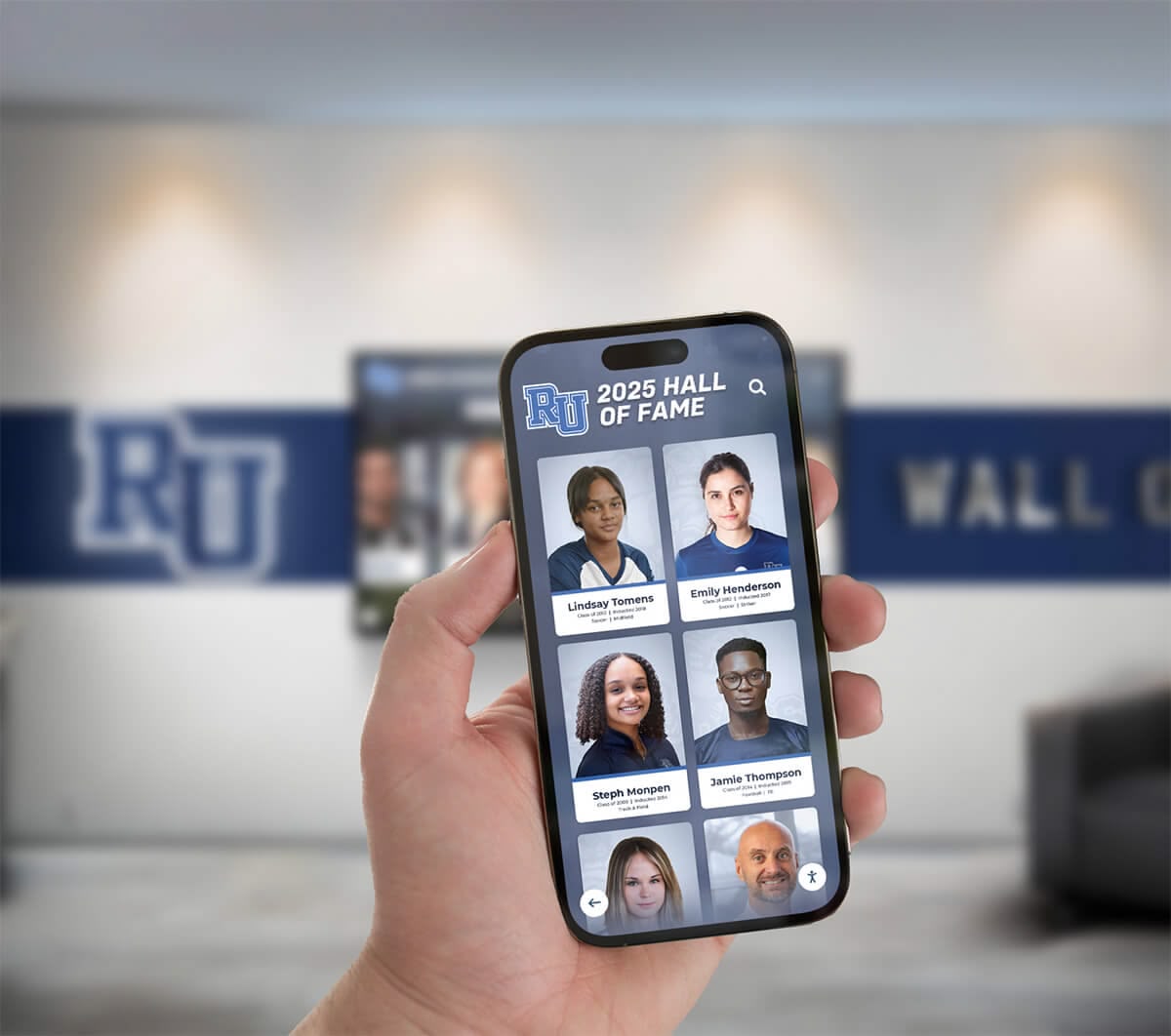
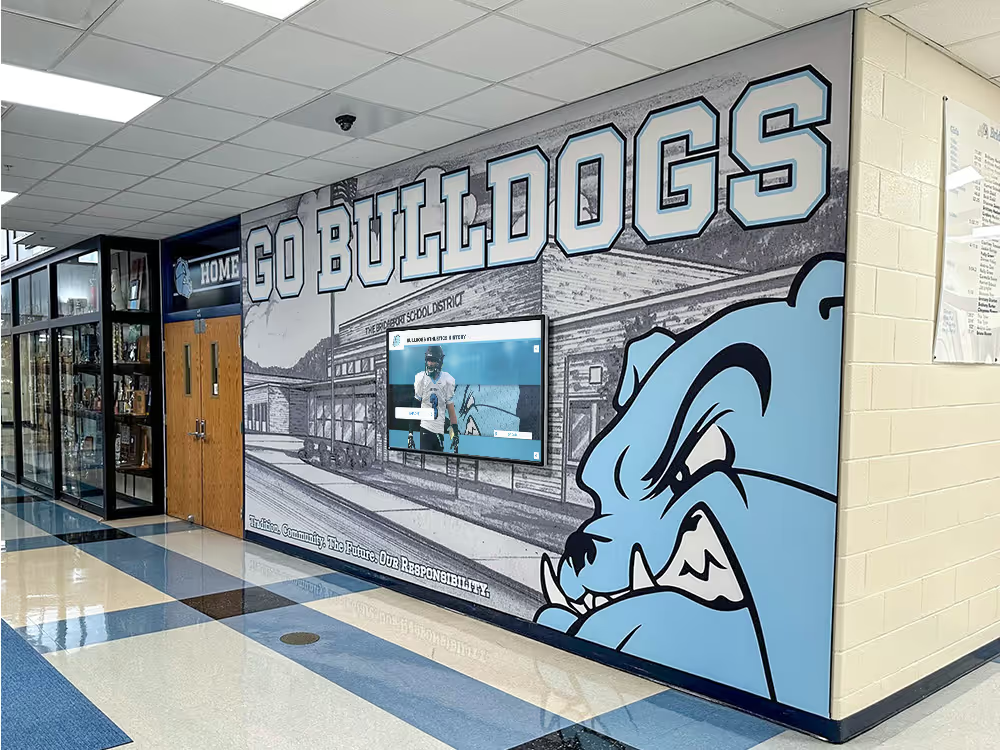
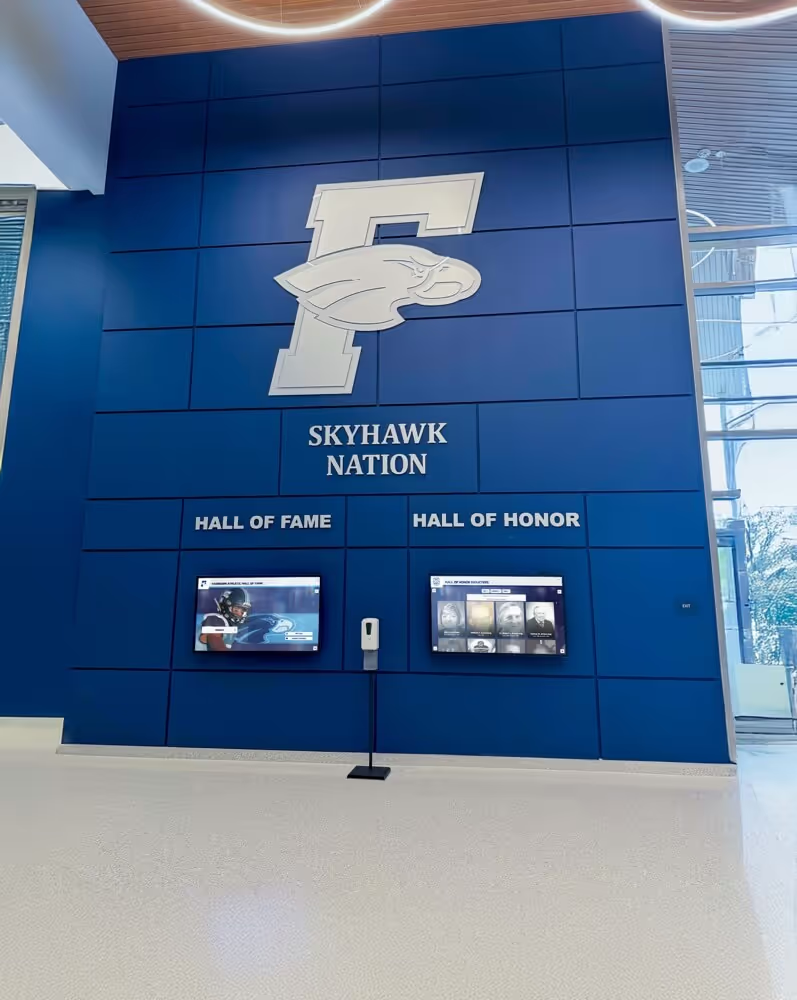
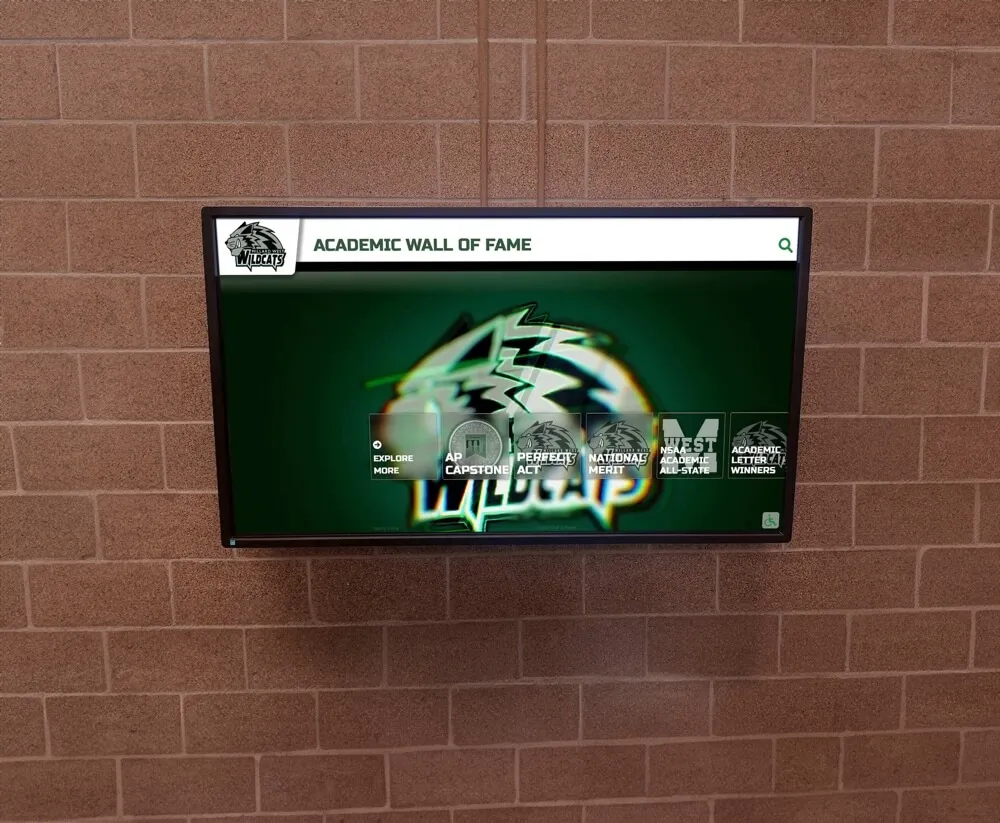
Mobile-responsive virtual donor walls enable contributors to access recognition from anywhere, creating year-round engagement beyond physical campus visits
Hybrid Approaches: Combining Physical and Digital Recognition
The most comprehensive virtual donor wall implementations integrate both on-site touchscreen displays and online platforms with traditional recognition elements, creating hybrid environments that honor diverse donor preferences while maximizing technological advantages. Schools often position large-format interactive displays in main lobbies or campaign-specific locations while maintaining permanent naming plaques for major donors in high-prestige areas—then connecting both physical elements through online platforms that extend recognition reach.
Integrated Recognition Strategy Benefits
Hybrid systems accommodate donors who value traditional permanence alongside supporters who embrace digital innovation. Major gift donors might receive dedicated naming plaques for endowed programs or facility spaces while also being featured in searchable online directories and interactive display content. Annual fund contributors gain meaningful acknowledgment through digital platforms without requiring individual physical plaques that would quickly overwhelm available wall space.
This integrated approach particularly benefits capital campaigns where schools establish giving level tiers ranging from leadership gifts warranting permanent architectural recognition to broader participation levels better suited for virtual acknowledgment. Campaign timelines benefit from digital flexibility—schools can recognize new donors immediately through online platforms and touchscreen displays while permanent architectural elements install on construction completion schedules.
Key Advantages of Virtual Donor Walls for Schools
Virtual donor recognition delivers distinctive benefits addressing practical constraints and engagement opportunities that traditional approaches cannot match, particularly for educational institutions experiencing enrollment growth, active fundraising campaigns, or geographically dispersed donor communities.
Unlimited Capacity and Scalable Recognition
The most transformative advantage of virtual donor walls is unlimited contributor capacity unconstrained by physical space availability. Traditional plaque walls accommodate dozens or perhaps a few hundred donors before exhausting lobby space, creating difficult decisions about who receives recognition and how to handle growing annual fund programs. Virtual systems store thousands or tens of thousands of donor records without additional hardware investment or physical expansion requirements.
Scalability Scenario
Consider a school launching an ambitious annual fund program targeting broad alumni participation. Traditional recognition planning would require estimating maximum donor numbers years in advance, then allocating expensive wall space hoping projections prove accurate. Underestimating creates capacity crises requiring difficult retrofitting or relegating newer donors to less prominent locations. Overestimating results in expansive walls with visible empty space that can discourage giving by suggesting lack of community support.
Virtual donor walls eliminate these constraints entirely. Schools simply add new donor profiles through content management systems as contributions process—no production delays, no installation costs, no space planning calculations. When annual fund participation grows from 200 to 2,000 donors over a decade, recognition infrastructure scales automatically without capital investment beyond initial display purchase. This capacity flexibility proves especially valuable for institutions implementing creative employee recognition programs that may expand recognition categories over time.
Enhanced Engagement Through Interactive Features
Virtual donor walls transform passive viewing into active exploration, creating personal discovery moments that strengthen emotional connections between donors and institutions. Visitors search for their own names or those of family members, classmates, and friends among recognized supporters, generating meaningful recognition experiences impossible with static alphabetical lists.
Interactive Engagement Elements
- Real-time name search with autocomplete functionality reducing search friction
- Giving level filtering enabling visitors to explore leadership donor communities
- Recognition society browsing showcasing donor affinity groups
- Timeline views demonstrating donor relationship progression over years
- Photo galleries contextualizing donors within campus environments and programs
- Video testimonials expressing philanthropic motivations in donors’ own voices
- Impact metrics connecting contributions to measurable educational outcomes
- QR code generation linking physical displays to extended online content
- Social sharing capabilities enabling donors to celebrate recognition with networks
These interactive capabilities create engagement particularly valuable during on-campus events when alumni, parents, and community members visit facilities. Families attending athletic competitions, performances, or recognition ceremonies discover their acknowledgment, capture photos, and share recognition moments on social media—extending institutional visibility while reinforcing donor decisions through public celebration. Similar engagement principles apply to touchscreen displays in athletic facilities serving recognition purposes.
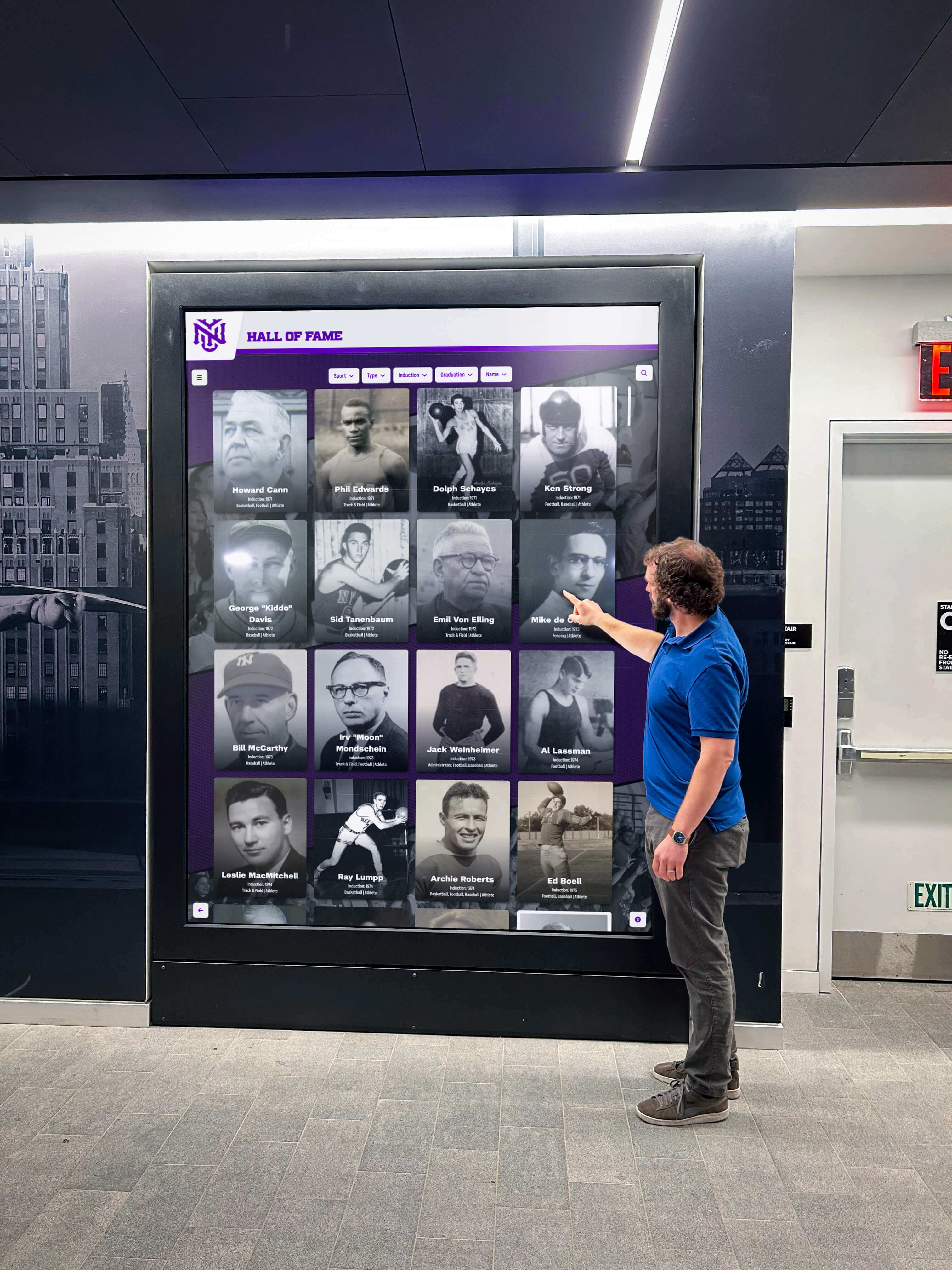
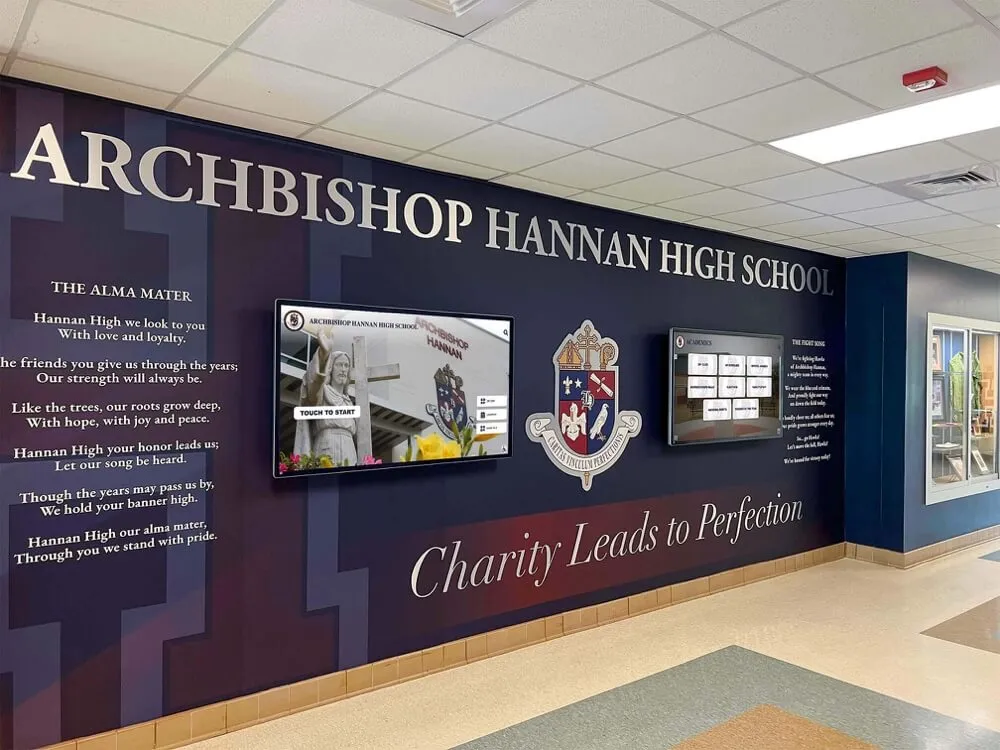
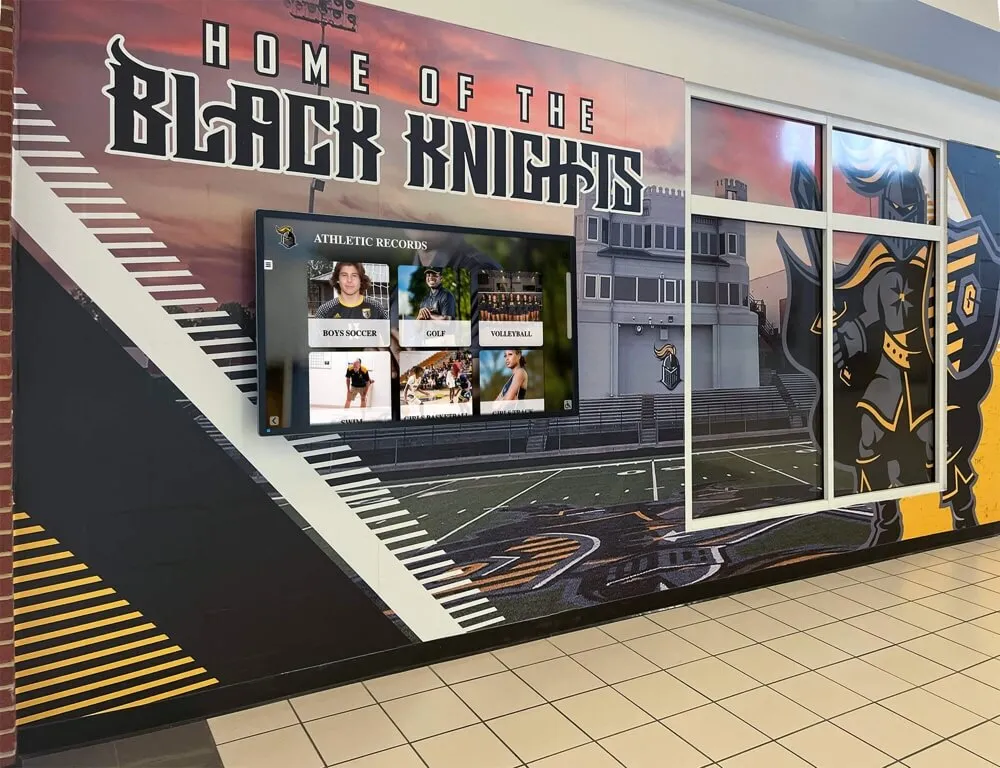
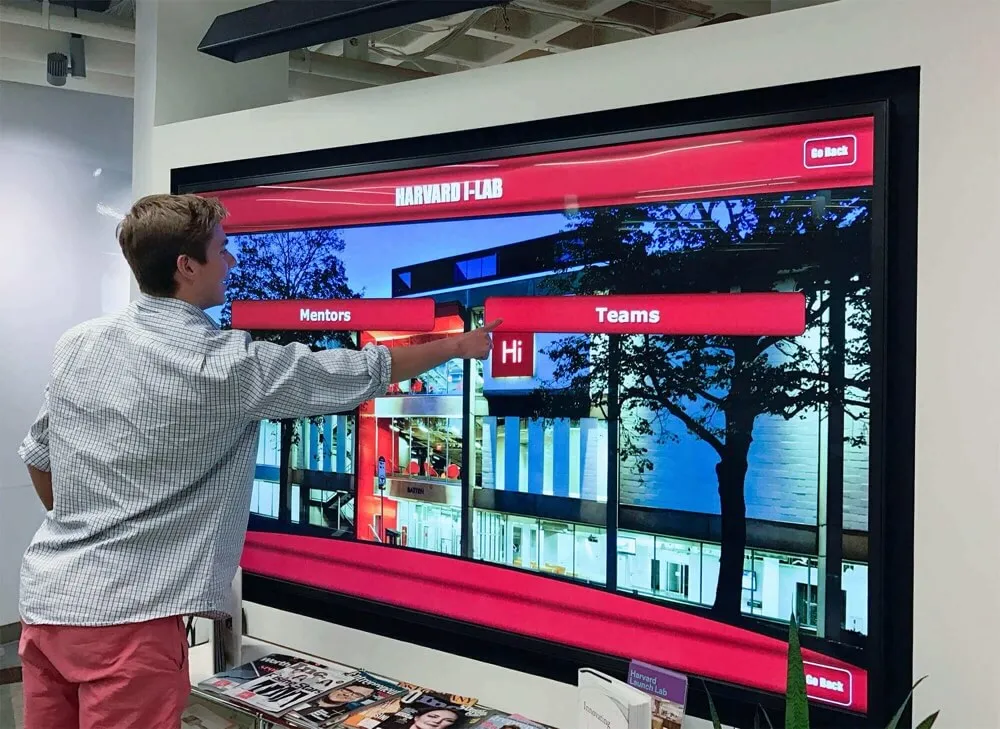
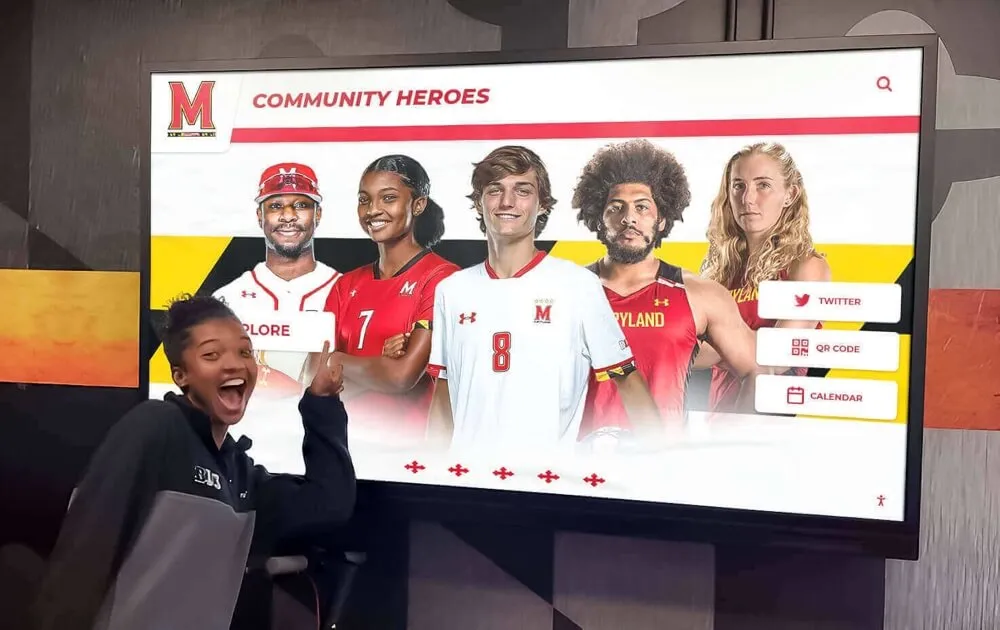
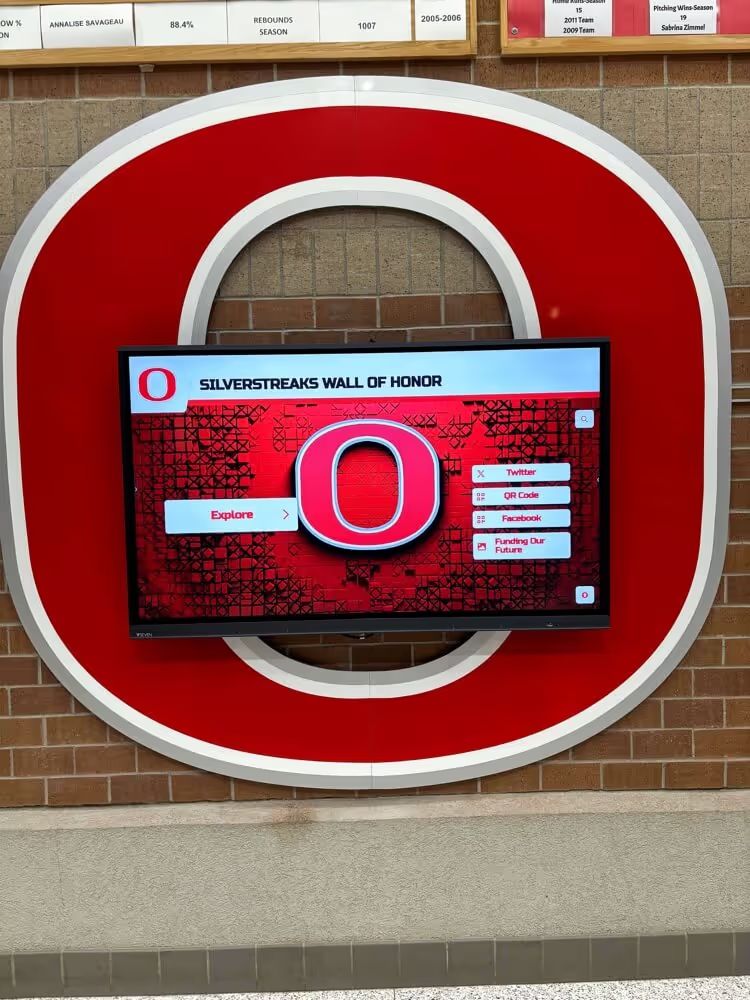
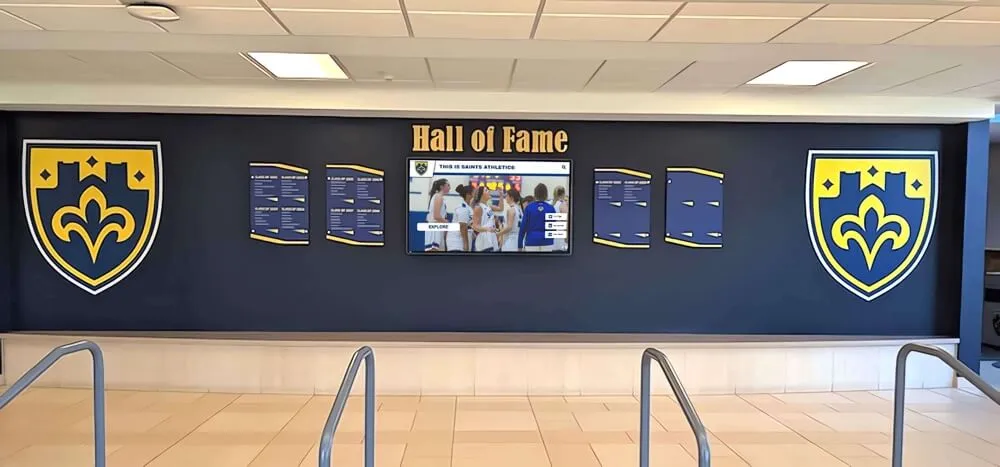
Interactive touchscreen technology enables intuitive exploration of donor communities through search, filtering, and browsing features
Rich Storytelling With Multimedia Content
Virtual platforms enable comprehensive donor profiles incorporating storytelling elements impossible with traditional plaques: high-resolution photographs showing donors engaged with school programs, personal statements explaining why they support educational missions, video testimonials expressing philanthropic values, and detailed impact narratives connecting contributions to specific student outcomes and program successes.
Multimedia Profile Components
Professional or candid photographs provide visual context transforming name lists into human stories. Development teams can feature donors visiting classrooms, attending athletic events, participating in volunteer activities, or celebrating with scholarship recipients—imagery that creates emotional resonance with general visitors while honoring donors through authentic representation of their institutional relationships.
Personal giving statements enable donors to express philanthropic motivations in their own words. These first-person narratives might explain family connections to schools spanning multiple generations, describe how educational experiences shaped donor careers, recognize inspirational teachers or mentors, or articulate values about educational access and opportunity. Such personal content proves especially meaningful for younger donors who value authentic mission connection over prestige symbolism.
Impact storytelling connects contributions to tangible outcomes, demonstrating how donor generosity enables specific programs, supports student scholarships, funds facility improvements, or advances educational innovation. These outcome narratives strengthen donor satisfaction while simultaneously inspiring prospective supporters by illustrating concrete differences that philanthropy makes. Schools implementing comprehensive storytelling approaches often draw lessons from alumni recognition programs celebrating similar achievement and contribution stories.
Real-Time Updates and Remote Content Management
Cloud-based virtual donor wall platforms eliminate the weeks or months that traditional plaque ordering, engraving, shipping, and installation require. Authorized school administrators update recognition within minutes through web interfaces, publishing new donor profiles immediately or scheduling content release coordinating with donor events or campaign milestones. This agility enables acknowledgment that keeps pace with giving activity rather than creating frustrating multi-month delays between gift processing and public recognition.
Operational Update Benefits
Remote content management provides additional advantages beyond update speed. Multiple authorized users contribute content from different locations simultaneously—development staff add donor profiles from office computers, marketing teams upload impact photography from program sites, and leadership review and approve content from tablets while traveling. Version control tracks changes with timestamps and user attribution, supporting accountability while enabling restoration if errors occur.
Schools report dramatic administrative burden reductions compared to traditional recognition requiring repeated vendor coordination, production scheduling, installation logistics, and facility access management for every update cycle. Annual fund campaigns that previously demanded quarterly plaque orders consolidate into simple database updates. Major gifts receive immediate acknowledgment rather than waiting months for production. Recognition corrections addressing spelling errors or title updates occur instantly rather than requiring complete plaque replacement.
Geographic Reach and Year-Round Accessibility
Online virtual donor walls extend recognition reach far beyond physical campus boundaries, creating acknowledgment access for donors who contributed remotely, live across the country or internationally, or simply cannot visit facilities regularly. This geographic accessibility proves especially valuable for colleges and universities with dispersed alumni communities and high schools with relocated graduates maintaining distant connections to alma maters.
Remote Engagement Scenarios
Alumni living thousands of miles from campus can explore online donor walls anytime, sharing recognition with family members and professional colleagues who might never visit physical facilities. Parents who supported annual fund drives while students attended can maintain lasting connections through accessible online acknowledgment years after graduation. Retired faculty or staff honored through tribute giving campaigns experience meaningful recognition without requiring campus travel that health or mobility limitations might complicate.
Schools enhance remote engagement by sharing direct links to individual donor profiles through email communications celebrating contribution anniversaries, solicitation campaigns inviting giving level advancement, or stewardship updates reporting program impact. These personalized digital touchpoints create recognition moments throughout the year rather than limiting acknowledgment to occasional campus visits, supporting ongoing donor relationships critical for sustained philanthropic engagement.

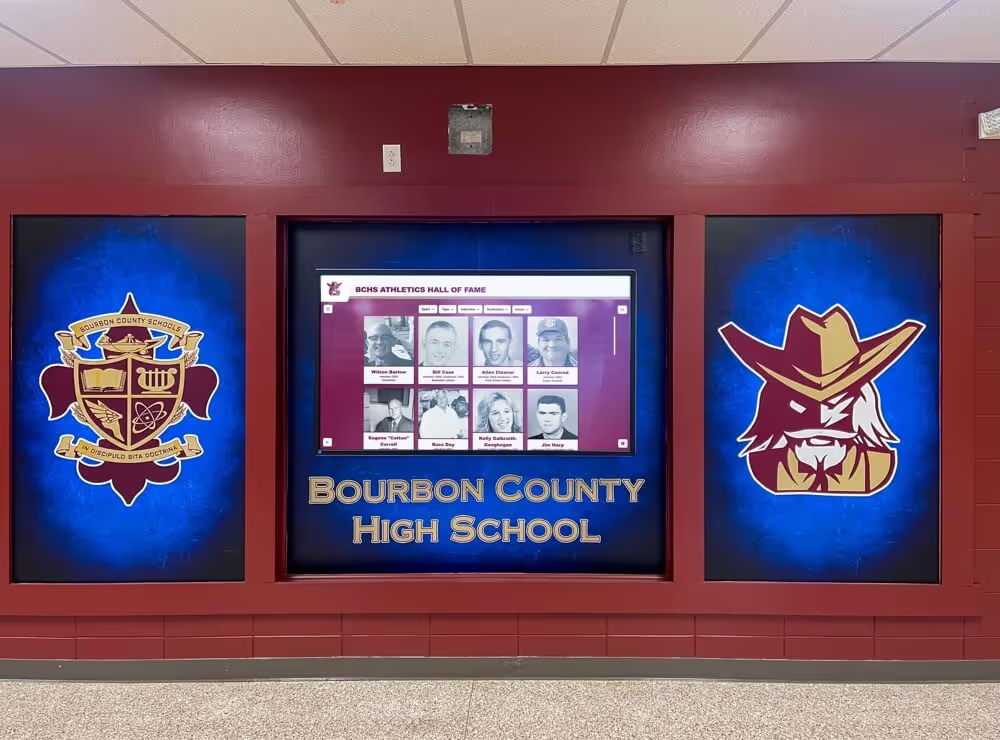
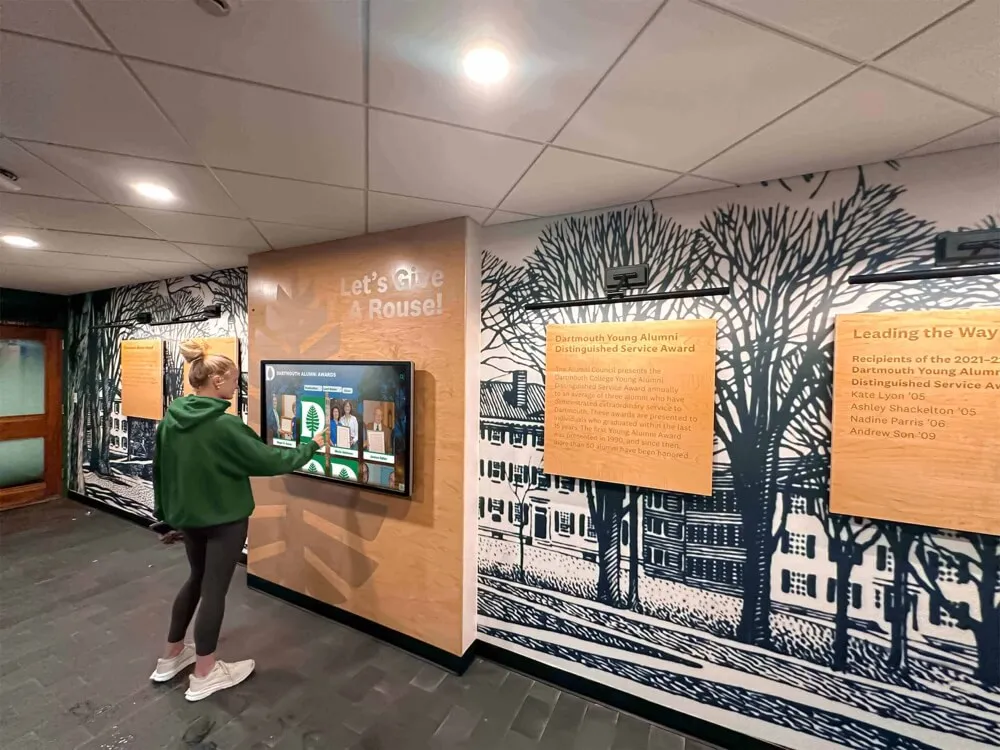
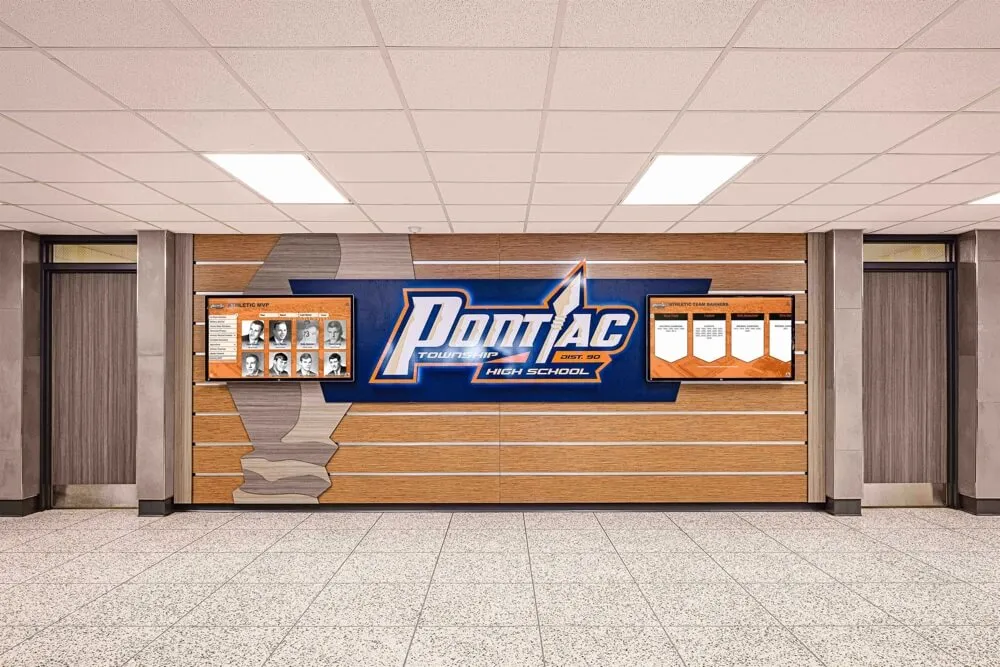
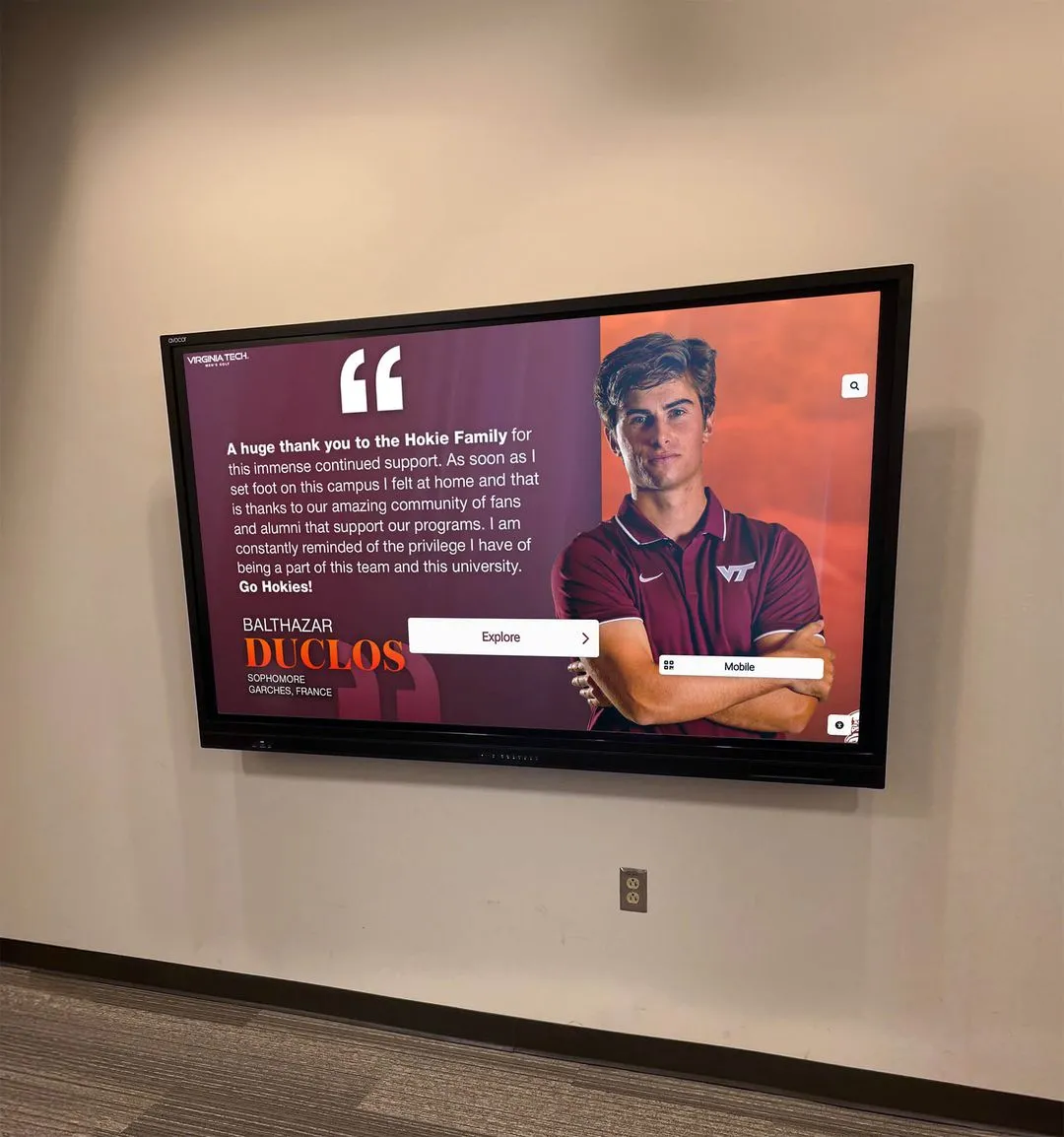
Virtual donor wall displays showcase individual contributor profiles with photographs and giving information through intuitive touchscreen interfaces
Implementation Planning for School Virtual Donor Walls
Successful virtual donor wall deployments require systematic planning addressing technology selection, content development, installation logistics, and ongoing management responsibilities that ensure recognition systems deliver intended engagement and stewardship benefits.
Determining Display Requirements and Technology Specifications
Schools should begin virtual donor wall planning by assessing primary recognition objectives, target donor audiences, available installation locations, and budget parameters that will guide technology selection decisions.
Technology Decision Framework
Educational institutions need to determine whether recognition priorities emphasize on-site campus visibility, remote online accessibility, or balanced hybrid approaches combining both. Schools with active on-campus communities—vibrant athletic programs, frequent performing arts events, robust alumni gathering traditions—gain maximum value from impressive touchscreen installations in main lobbies or athletic facility entrances. Institutions with geographically dispersed stakeholders or limited campus visitation might prioritize robust online platforms with modest physical display presence.
Budget considerations significantly influence technology scope. Professional interactive touchscreen displays range from $3,000-5,000 for 43-inch systems suitable for smaller spaces to $8,000-15,000 for 75-86 inch installations creating dramatic lobby focal points. Content management software typically operates on annual subscription models ranging from $1,000-5,000 depending on features, donor capacity, and support services. Online platform development costs vary based on customization requirements but generally fall between $5,000-20,000 for professional donor-specific sites beyond basic webpage implementations.
Installation Location Analysis
Appropriate display positioning maximizes visibility while complementing architectural characteristics and traffic flow patterns. Main entrance lobbies create premier recognition locations where every visitor encounters donor acknowledgment. Administrative building reception areas provide excellent visibility for prospective family tours. Athletic facility entrances honor supporters during competitions and community events. Campaign-specific locations near funded facilities directly connect donor recognition with philanthropic impact.
Location assessment should consider structural mounting support for display weight (large touchscreens can exceed 100 pounds requiring robust wall anchoring), electrical access for power connectivity, network availability for internet connection, ambient lighting conditions affecting screen visibility, and Americans with Disabilities Act compliance for wheelchair-accessible mounting heights. Schools implementing broader recognition infrastructure might reference planning approaches from hall of fame wall installations addressing similar spatial and technical considerations.
Content Development and Donor Profile Creation
Comprehensive content preparation before virtual donor wall launch ensures smooth deployment and positive donor experiences from day one. Schools should conduct systematic donor database audits verifying information accuracy, identifying content gaps, and establishing data collection processes supporting ongoing profile quality.
Content Inventory and Gap Analysis
Development teams begin by exporting complete donor records from fundraising databases, including names, giving levels, cumulative contribution totals, recognition society memberships, and available contact information. This inventory reveals data completeness: Which donors have professional photographs versus generic placeholders? Who has provided personal giving statements? Where do memorial or tribute designations exist? What impact stories connect specific donations to program outcomes?
Gap analysis identifies systematic content collection priorities. Major donor portfolios typically require complete high-quality profiles given their visibility and relationship importance—schools proactively solicit professional photographs, personal statements, and detailed biographical information through direct development officer outreach. Broader annual fund participant recognition might accept more modest profiles initially, with enhanced content developed opportunistically through donor event photography, solicitation campaign responses, or reunion activities generating biographical updates.
Photography and Visual Content Standards
Professional visual presentation significantly impacts recognition quality and donor satisfaction. Schools should establish consistent photography standards balancing quality with practical collection constraints. Development teams might coordinate donor portrait sessions during on-campus events, solicit photo submissions through email requests with technical specifications, or utilize social media profile imagery with appropriate permissions.
Image specifications typically include minimum resolution requirements (1920x1080 pixels for display clarity), aspect ratio guidelines (16:9 or square formats depending on design preferences), and file format standards (JPEG or PNG). Schools should develop approval processes ensuring donors review how images will appear before public display, preventing satisfaction issues from unflattering photographs or outdated imagery donors prefer not to highlight.
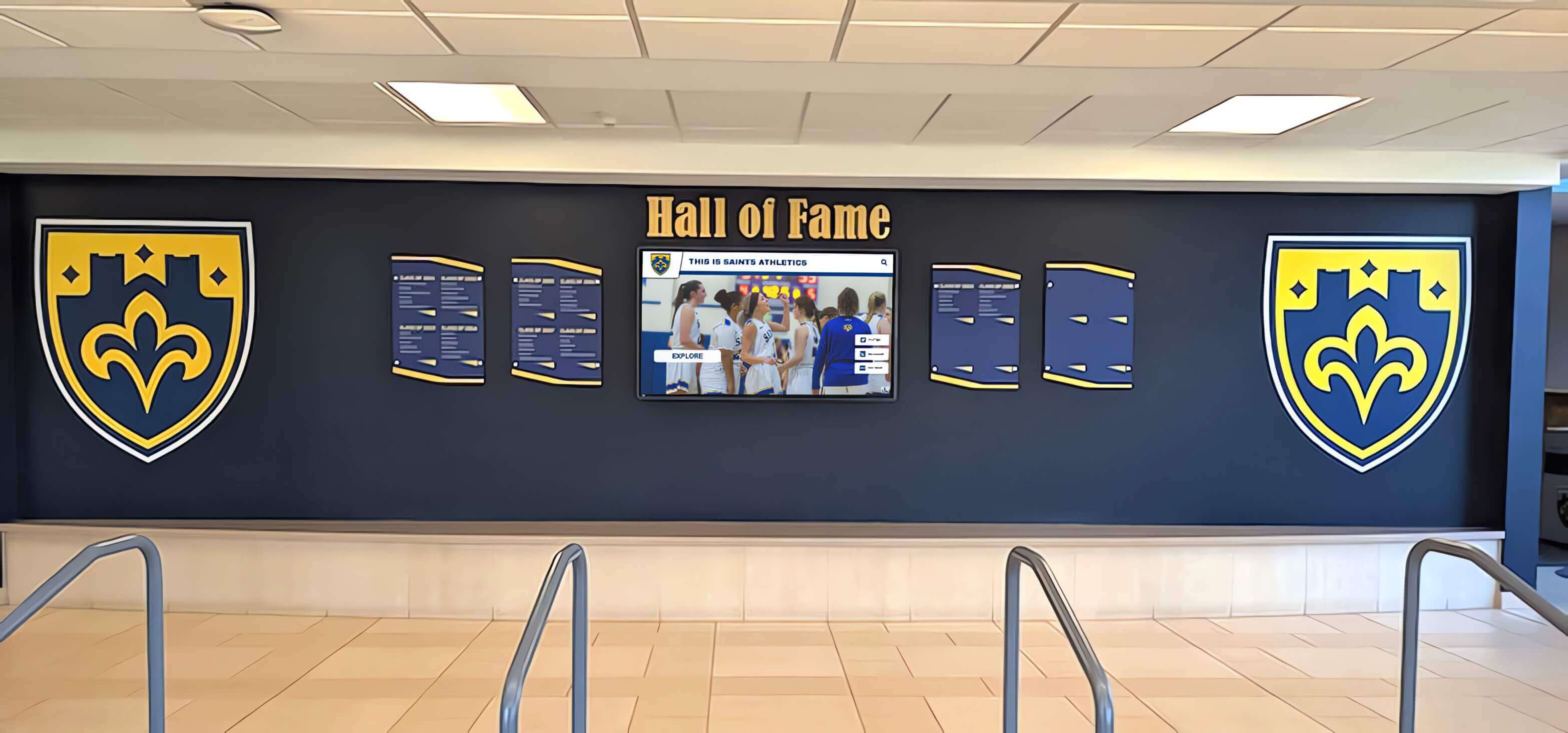
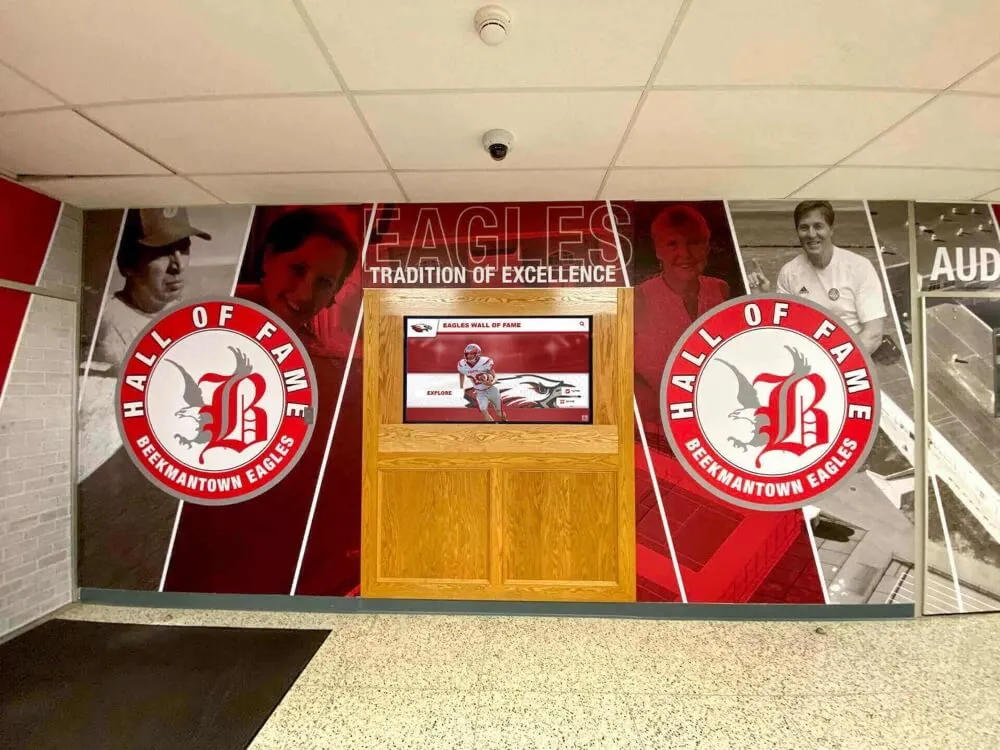
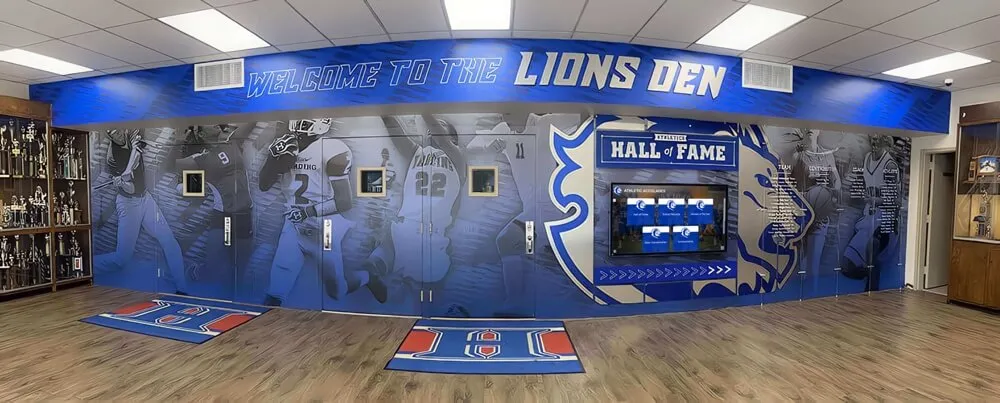
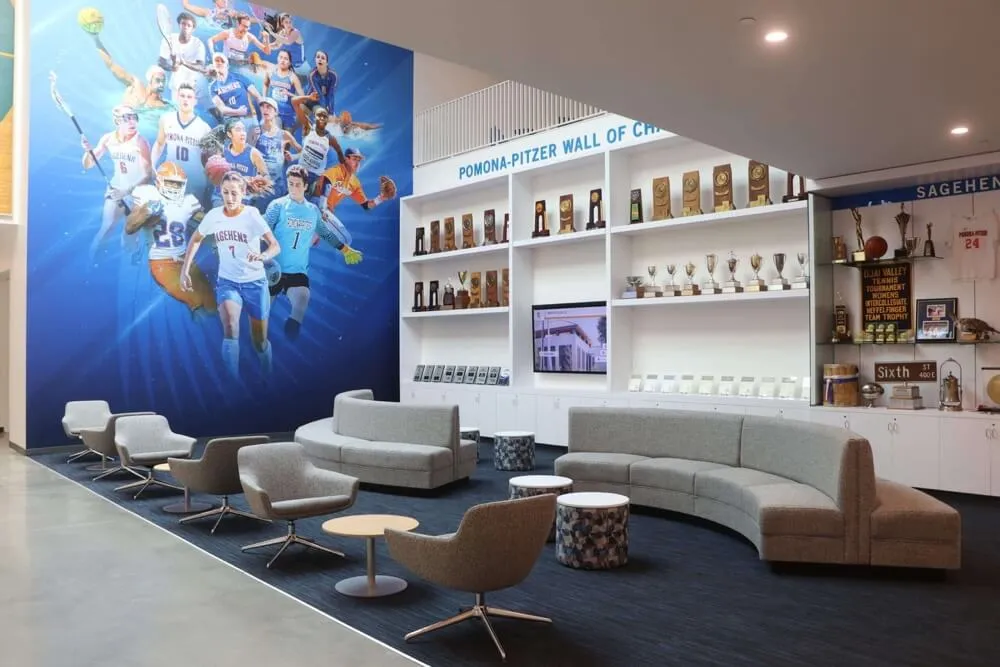
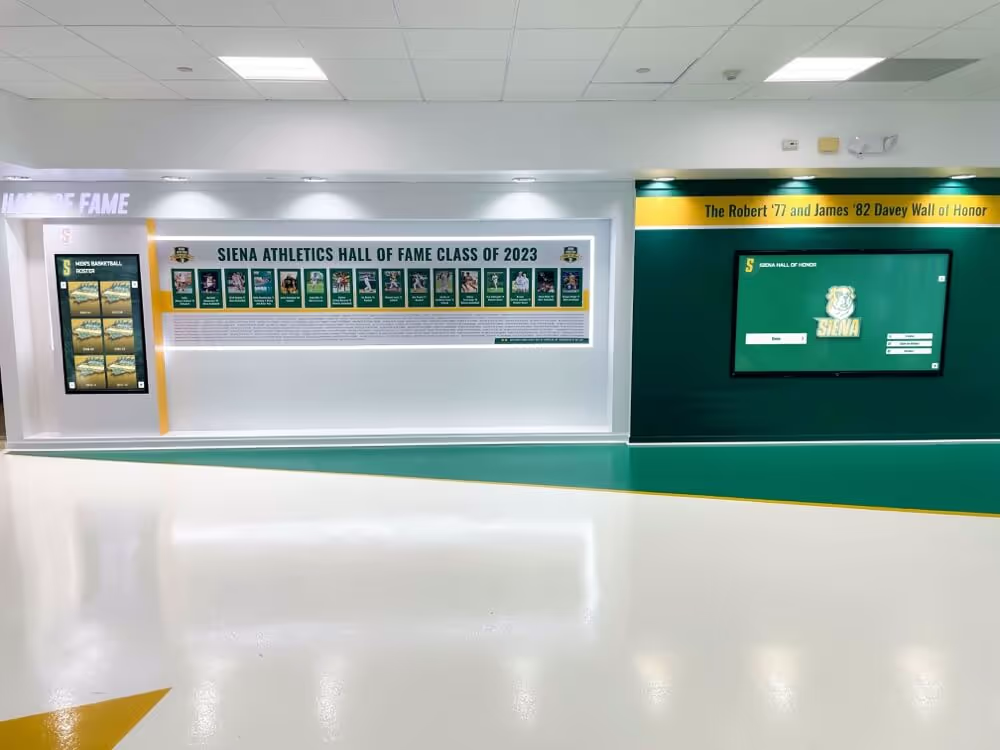
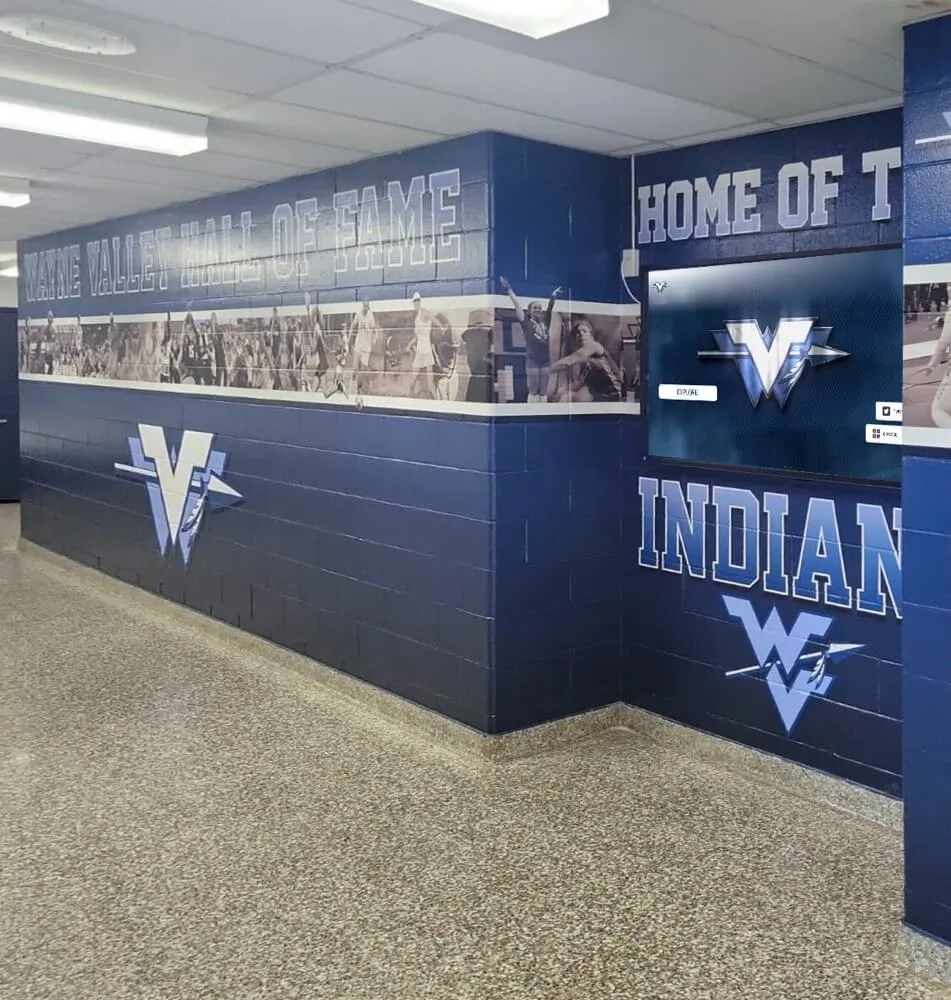
Hybrid recognition environments integrate digital virtual donor walls with architectural elements creating comprehensive acknowledgment systems
Launch Strategy and Donor Communication
Virtual donor wall debuts represent significant recognition milestones warranting thoughtful launch strategies that maximize positive donor response while generating renewed fundraising momentum and community engagement.
Pre-Launch Donor Outreach
Schools should communicate proactively with recognized donors before virtual wall launches, explaining the new recognition approach, highlighting enhanced features like searchable directories and multimedia profiles, and inviting donors to preview their acknowledgment. This advance notice prevents surprise or confusion while demonstrating respect for donor relationships through transparent communication about recognition changes.
Development teams might host preview events inviting leadership donors to be first to experience new interactive displays, providing exclusive access before general public viewing. These events create special stewardship moments while generating social media content and donor testimonials supporting broader launch communications. Preview attendees often become recognition advocates, sharing positive experiences with peer donors and amplifying institutional messaging about enhanced donor acknowledgment.
Public Launch and Community Engagement
Official virtual donor wall unveilings benefit from event programming that celebrates both the recognition technology and, more importantly, the generous donor community it honors. Schools might coordinate launches with homecoming weekends, giving days, campaign kickoffs, or other high-attendance occasions maximizing community exposure and generating excitement about the new recognition approach.
Launch events should feature demonstration stations where guests can explore interactive features with guidance from development staff or student ambassadors. Brief presentations might explain technology capabilities, demonstrate search and filtering functions, and highlight compelling donor stories featured in profiles. These educational components help visitors understand how to engage with virtual donor walls while emphasizing mission impact that philanthropy enables.
Schools implementing comprehensive digital recognition systems often coordinate virtual donor wall launches with related campus improvements—perhaps timing debuts with building renovations, athletic facility upgrades, or academic program expansions that donor contributions funded. This strategic connection reinforces relationships between philanthropic support and tangible institutional advancement, strengthening fundraising narratives for ongoing campaigns. Similar coordination principles apply when schools implement digital recognition for student awards programs celebrating academic and extracurricular achievements.
Best Practices for Virtual Donor Wall Success
Educational institutions maximizing virtual donor wall impact implement proven strategies that maintain content quality, sustain donor engagement, protect privacy, and integrate recognition systems with broader fundraising and stewardship initiatives.
Maintaining Content Freshness and Accuracy
Virtual donor walls require ongoing attention ensuring recognition content remains current, accurate, and engaging. Unlike static plaques that remain unchanged for years, digital platforms create expectations for regular updates reflecting current donor communities and recent giving activity.
Update Cadence Recommendations
Schools should establish systematic update schedules aligned with fundraising cycles. Major gift recognition warrants immediate virtual donor wall updates following gift processing and donor acknowledgment—these high-profile additions demonstrate responsiveness while creating momentum encouraging additional leadership giving. Annual fund recognition typically follows campaign conclusion schedules, with batch updates adding all qualifying contributors after fiscal year end when final participation numbers and giving levels are confirmed.
Development teams benefit from quarterly content reviews assessing overall recognition accuracy beyond just adding new donors. These audits verify contact information currency, identify deceased donors requiring memorial designation updates, correct spelling errors or title changes donors report, and remove outdated information no longer relevant to current donor relationships.
Engagement Content Rotation
Beyond fundamental donor profile information, schools should rotate featured content maintaining visitor interest and highlighting different donor community segments. Monthly spotlight features might profile randomly selected donors from various giving levels, recognition societies, or graduation classes—creating variety while ensuring all contributors receive featured visibility over time rather than only spotlighting largest donors repeatedly.
Seasonal content updates connect donor recognition with timely institutional programming. Fall might feature athletic program supporters as competitions begin, winter could highlight scholarship donors as students return from holiday breaks, and spring recognition could celebrate faculty support as academic years conclude. This thematic rotation maintains relevance while demonstrating diverse philanthropic impact across institutional missions.
Protecting Donor Privacy and Managing Preferences
Virtual donor recognition raises privacy considerations requiring careful policy development and donor preference management, particularly given online platforms creating public internet accessibility beyond controlled physical campus environments.
Privacy Policy Framework
Schools must establish clear donor recognition policies addressing what information receives public display versus what remains confidential. Standard approaches typically include donor names, giving level categories (leadership, sustaining, patron tiers), and recognition society memberships as default public information. Specific contribution amounts often remain private unless donors explicitly consent to disclosure—many supporters prefer acknowledging generosity through giving level ranges rather than exact dollar figures.
Biographical information, photographs, and personal statements should always require explicit donor approval before publication. Development teams implement structured consent processes where donors review exactly how profiles will appear, approve specific photographs and text, and authorize both on-site display and online platform inclusion. These approval workflows prevent privacy concerns while ensuring donor satisfaction with recognition presentation.
Anonymous and Private Recognition Options
Virtual donor wall systems must accommodate supporters preferring anonymous giving or minimal public acknowledgment. Schools should provide multiple recognition preference options: full public recognition with detailed profiles, basic recognition listing names only, recognition under family or business names rather than individual names, and completely anonymous contribution acknowledgment through private donor lists maintained internally without public display.
Technology platforms should enable granular privacy controls where individual donors can opt out of online recognition while remaining visible on physical displays, exclude photographs while allowing name listings, or request geographic privacy limitations restricting recognition visibility to authenticated community members rather than general public internet access. These flexible privacy options demonstrate respect for diverse donor preferences while maximizing participation in recognition programs.
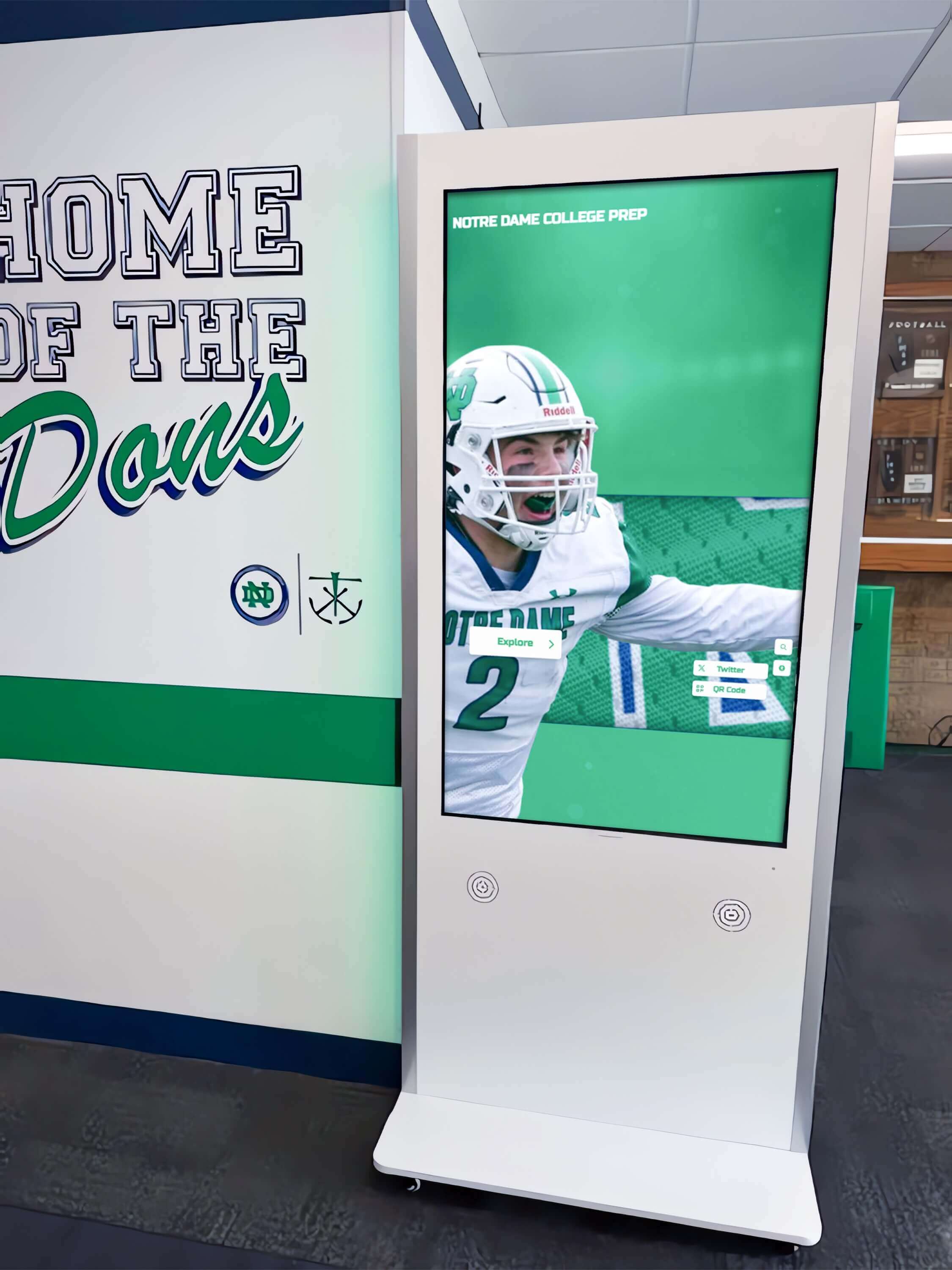
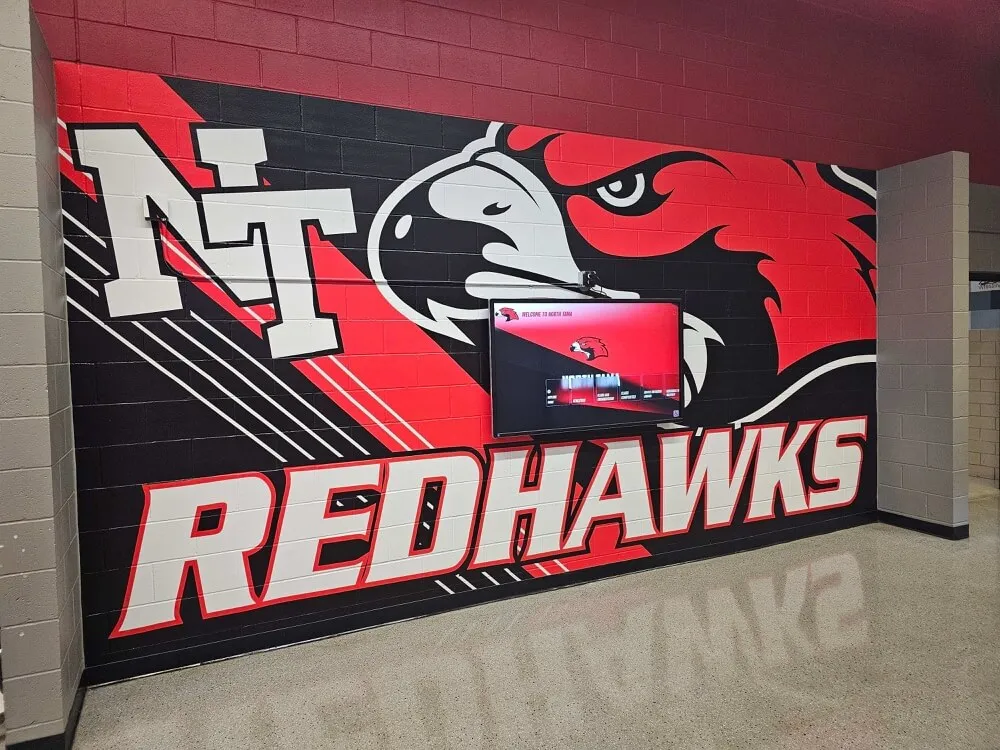
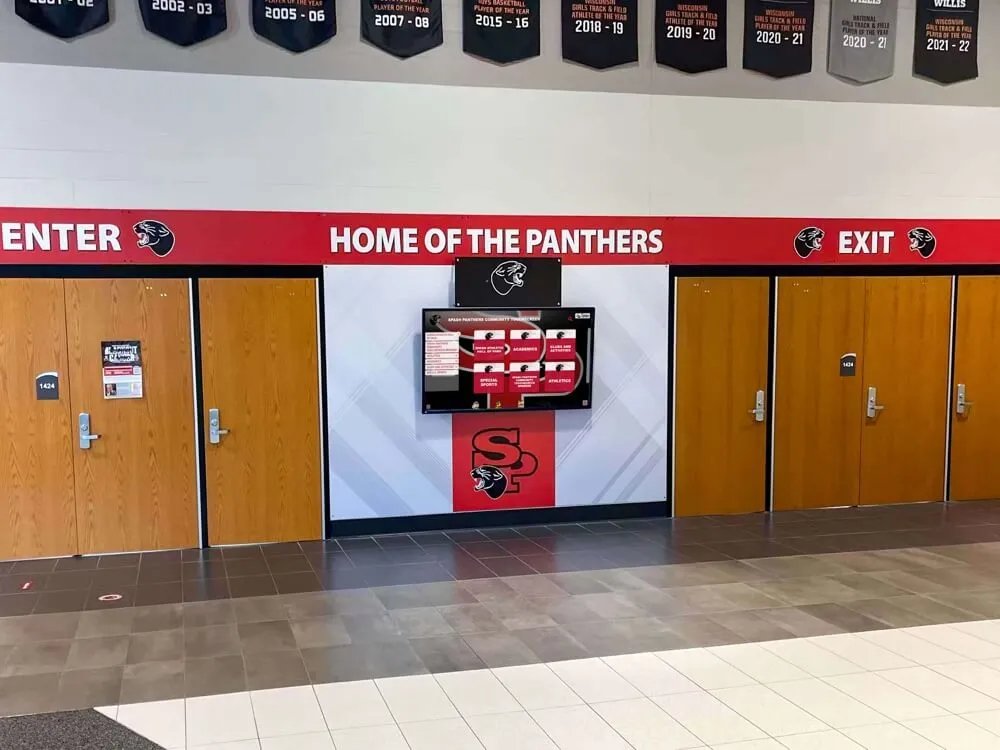
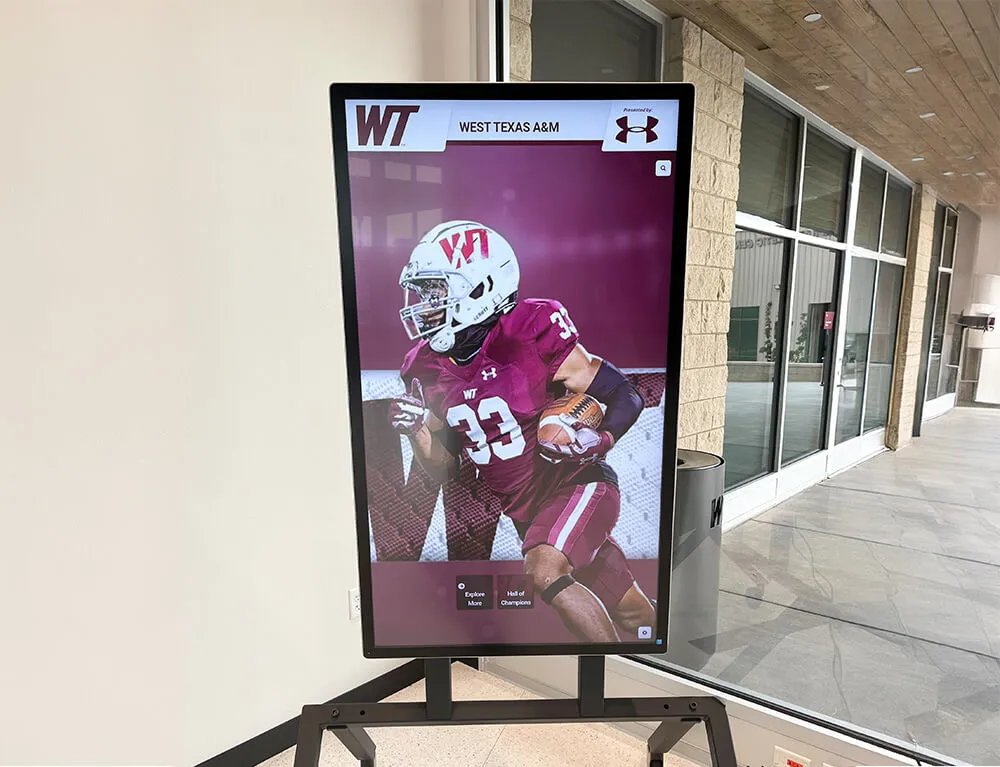
Strategic placement of interactive virtual donor walls in high-traffic school locations maximizes visibility and engagement opportunities
Integrating Recognition With Fundraising Campaigns
Virtual donor walls deliver maximum institutional value when development teams integrate recognition strategies with active fundraising initiatives, using acknowledgment systems as cultivation and solicitation tools rather than purely stewardship functions.
Campaign-Aligned Recognition Tiers
Schools launching comprehensive campaigns benefit from establishing giving level structures directly aligned with virtual donor wall recognition categories. Campaign materials explicitly explain acknowledgment corresponding to each contribution tier—perhaps leadership circle members receive featured profiles with video testimonials, sustaining donors gain detailed biographical listings, and participation level supporters appear in searchable directories. This transparent connection between giving levels and recognition quality motivates contribution advancement while setting clear expectations about acknowledgment.
Virtual platforms enable dynamic campaign-specific recognition sections highlighting time-limited initiatives. Schools might create dedicated displays for annual giving days showing real-time donor participation, capital campaign progress meters visualizing fundraising advancement toward goals, or challenge grant trackers demonstrating matching gift momentum. These dynamic elements transform donor walls from static acknowledgment into active fundraising tools generating excitement and encouraging additional support.
Prospect Cultivation Applications
Development officers can leverage virtual donor walls during prospect cultivation by showcasing peer donor communities and demonstrating established giving patterns among constituencies prospects identify with. Alumni relations might demonstrate class giving participation encouraging reunion campaign support, athletics development could highlight booster club leadership motivating increased program investment, and major gift officers might reference recognition society members inspiring prospect advancement toward similar acknowledgment tiers.
Mobile accessibility enables development teams to share virtual donor wall links during remote prospect meetings, follow-up communications after campus tours, or stewardship updates reporting campaign progress. These digital touchpoints extend recognition visibility beyond physical campus visits while providing concrete examples of how schools honor supporter generosity—important reassurance for major donor prospects evaluating whether organizations will appropriately acknowledge their potential contributions. Similar cultivation strategies apply across recognition programs discussed in digital hall of fame implementations celebrating institutional heritage.
Common Virtual Donor Wall Implementation Challenges
Schools planning virtual donor recognition should anticipate typical obstacles and develop mitigation strategies addressing technical, organizational, and stakeholder management issues that frequently arise during planning and deployment phases.
Technology Adoption and Change Management
Virtual donor wall implementations represent significant departures from traditional recognition approaches, requiring change management addressing stakeholder concerns about abandoning familiar plaque-based acknowledgment in favor of digital alternatives some constituents may view skeptically.
Addressing Traditional Donor Expectations
Long-established donors, particularly older alumni and major gift supporters, often express strong preferences for permanent physical recognition they perceive as more prestigious and enduring than digital displays. Schools must acknowledge these sentiments respectfully while articulating virtual platform advantages: unlimited capacity accommodating community growth, enhanced storytelling impossible with static plaques, accessibility for distant supporters, and long-term cost efficiencies enabling resource reallocation toward mission programs rather than continuous plaque production.
Hybrid recognition strategies effectively bridge traditional and digital approaches, providing major donors permanent architectural naming opportunities for facilities or endowed programs while complementing with rich digital profiles offering storytelling depth plaques cannot achieve. This balanced approach honors traditional expectations while capturing digital innovation benefits.
Technology Reliability Concerns
Some stakeholders worry about digital system failures, obsolescence, or maintenance requirements compared to “set it and forget it” plaque permanence. Schools should address these concerns transparently, explaining commercial display reliability ratings (professional screens typically provide 50,000+ hour operational lifespans exceeding 15 years of continuous use), cloud platform redundancy preventing data loss, and straightforward replacement procedures if hardware eventually requires updating.
Long-term technology planning should acknowledge that displays will eventually need replacement—but frame this as opportunity for enhancement rather than problematic obsolescence. As display technology advances, schools gain options for larger screens, higher resolutions, or emerging interaction methods, with content seamlessly transferring to improved hardware. This upgrade path contrasts with traditional recognition where physical capacity exhaustion often requires expensive wall reconstruction.
Budget Constraints and Cost Justification
Virtual donor wall investments can appear substantial compared to incremental plaque purchasing, requiring careful cost analysis and long-term financial modeling demonstrating total ownership advantages over multi-year periods.
Total Cost of Ownership Analysis
While virtual donor wall initial costs typically exceed traditional recognition startup expenses, comprehensive financial analysis usually reveals favorable long-term economics. Consider a school with 500 current donors growing to 1,500 donors over ten years:
Traditional Plaque Approach: Initial wall construction ($15,000) plus individual plaques ($150 each) totals $75,000 for initial 500 donors. Adding 1,000 donors over subsequent decade at $150 per plaque plus $50 installation costs equals $200,000 additional investment, plus likely wall expansion ($20,000) when initial space exhausts. Ten-year total: approximately $295,000.
Virtual Donor Wall Approach: 65-inch touchscreen display ($8,000), professional installation ($2,000), content management software ($3,000 annually), and initial content development ($10,000) totals $23,000 initial year, plus $3,000 annual software subscription equals $50,000 over ten years. Adding 1,000 additional donor profiles requires only content development time with no hardware or production costs.
This analysis demonstrates substantial long-term savings while providing superior recognition features, unlimited scalability, and operational flexibility that traditional approaches cannot match. Schools should develop institution-specific financial models incorporating realistic donor growth projections and actual vendor pricing when building virtual donor wall business cases.
Data Integration and Content Management Workload
Virtual donor wall success requires systematic data management processes ensuring recognition content remains current without creating unsustainable administrative burden for development teams already managing extensive fundraising responsibilities.
Fundraising Database Integration
Schools should prioritize virtual donor wall platforms offering direct integration with existing fundraising databases and CRM systems including Raiser’s Edge, Blackbaud CRM, DonorPerfect, Salesforce Nonprofit Cloud, and other common development platforms. Automated integration eliminates manual data entry, reduces errors from duplicate transcription, and enables near-real-time recognition as gifts process through development systems.
Integration planning should address data field mapping (ensuring fundraising database fields correctly correspond with virtual donor wall profile elements), update synchronization frequencies (real-time, daily, weekly), and data validation rules preventing incomplete or inaccurate information from populating public displays before development staff review and approval.
When direct database integration proves technically or financially unfeasible, schools should establish streamlined manual update processes using spreadsheet templates, clear data specifications, and defined approval workflows minimizing administrative friction. Well-designed manual processes can sustain virtual donor walls effectively, particularly for institutions with modest donor volumes or infrequent recognition updates.
Transform How Your School Recognizes Supporters
Virtual donor walls represent fundamental advancement in how educational institutions honor generous supporters, combining unlimited digital capacity with rich storytelling capabilities and geographic accessibility that traditional recognition cannot match. Schools implementing these technology-powered solutions eliminate space constraints limiting acknowledgment, dramatically reduce long-term costs compared to continuous plaque production, and create engaging experiences connecting donors emotionally with missions—whether supporters stand in lobbies or browse from across the country.
The most successful implementations balance technology innovation with authentic appreciation, treating virtual donor walls as relationship-building tools rather than simple acknowledgment systems. By maintaining content freshness, protecting privacy preferences, integrating recognition with active fundraising campaigns, and managing stakeholder expectations thoughtfully, development teams transform digital platforms into powerful stewardship assets supporting sustained philanthropic engagement and long-term fundraising success.
As educational institutions navigate increasingly competitive fundraising environments while serving geographically dispersed communities, virtual donor wall technology provides scalable, cost-effective recognition infrastructure that grows with institutions and adapts to evolving donor expectations—creating lasting tribute to supporter generosity while inspiring continued investment in educational missions.
Ready to explore how virtual donor wall technology can transform recognition at your school? Discover Rocket Alumni Solutions’ interactive touchscreen displays and cloud-based content management platforms designed specifically for educational institutions. Our comprehensive donor recognition solutions combine impressive on-site displays with accessible online platforms, helping schools honor contributors while supporting ongoing fundraising success through meaningful engagement experiences.