



Every school athletic program has a version of the same problem: a local business writes a check, receives a handshake and a mention in the game-day program, and a year later the athletic director is starting the sponsorship conversation from scratch. The team sponsor banner — a vinyl or fabric display hung in the gymnasium, along the fence line, or in the lobby — is one of the oldest tools schools use to give business sponsors something visible to show for their investment. Done well, it anchors a recognition system that runs all year. Done poorly, it fades, gets stored during the off-season, and represents exactly the kind of forgettable acknowledgment that drives sponsors to let their commitments lapse.
This guide covers what schools need to know to make team sponsor banners work — where to place them for maximum visibility, how to structure sponsor tiers around banner-based recognition, what design decisions extend banner life, and how digital displays pick up the recognition burden during the months when banners come down.
Walk through any competitive athletic program and you will find that the schools retaining sponsors season after season are not necessarily the ones with the largest budgets or the most winning records. They are the ones whose sponsors can see exactly what they are getting — a banner in the right place, in front of the right audience, for the right amount of time. A sponsor who can walk into the gymnasium in February and point to their business name on a banner 30 feet from the court has received proof of value. A sponsor who received a logo mention in a printed program that went out in November and has since been recycled has not.

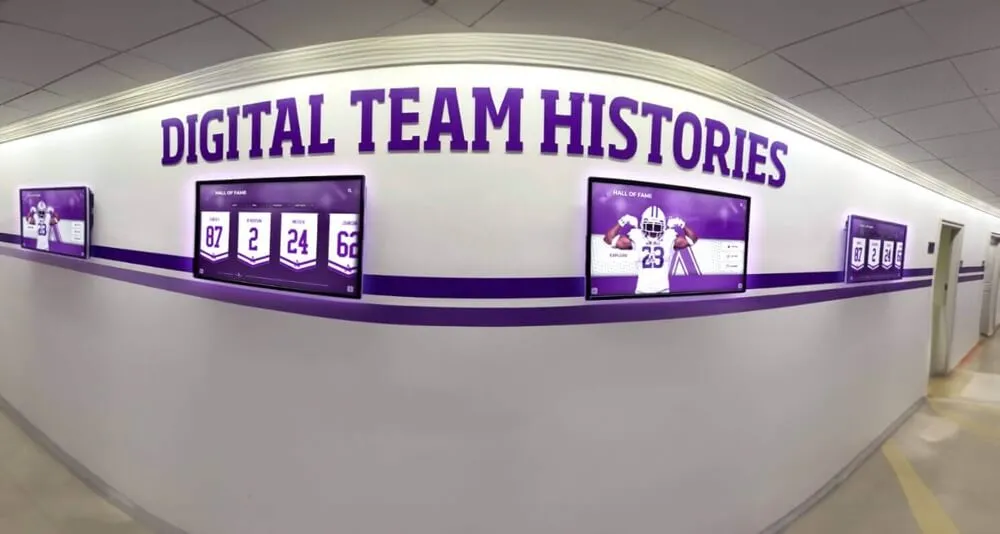
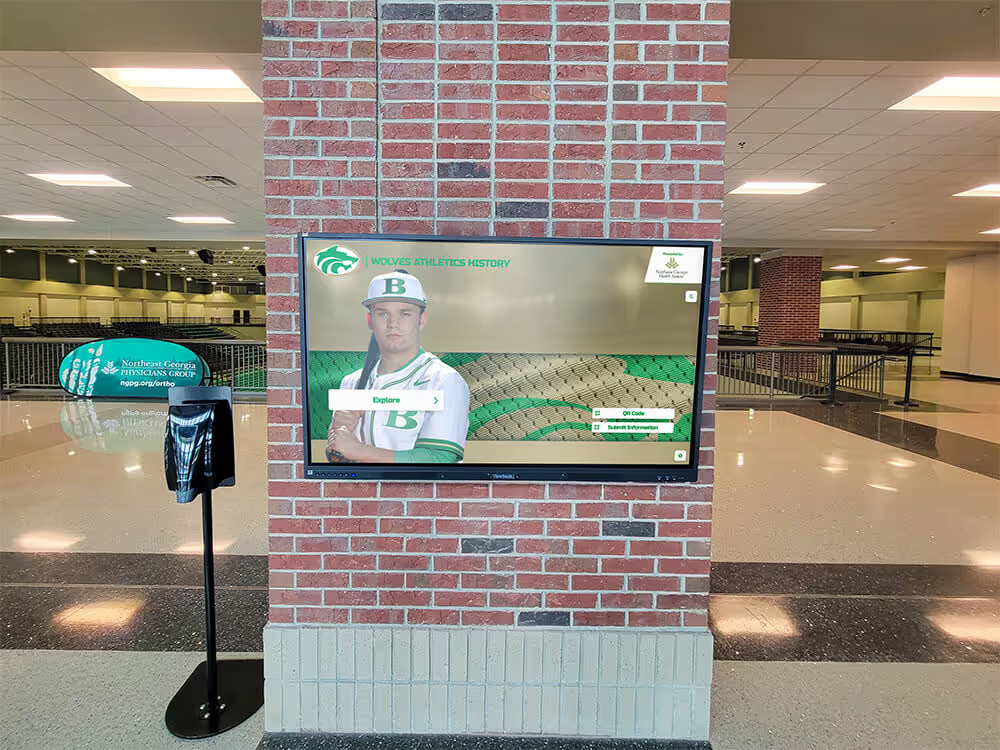
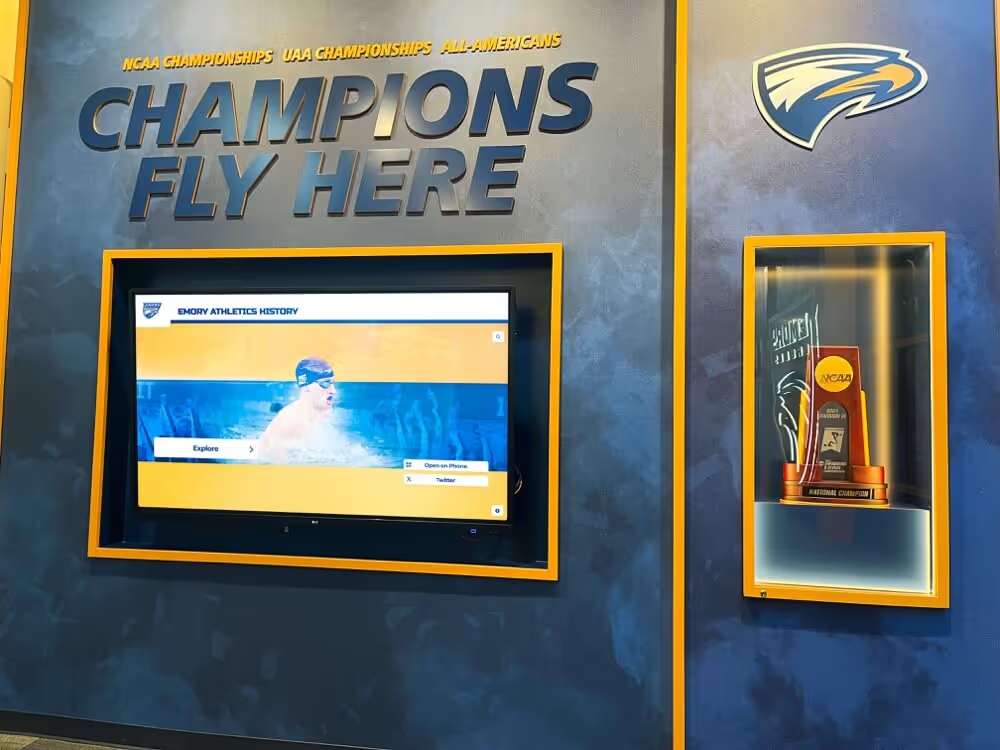
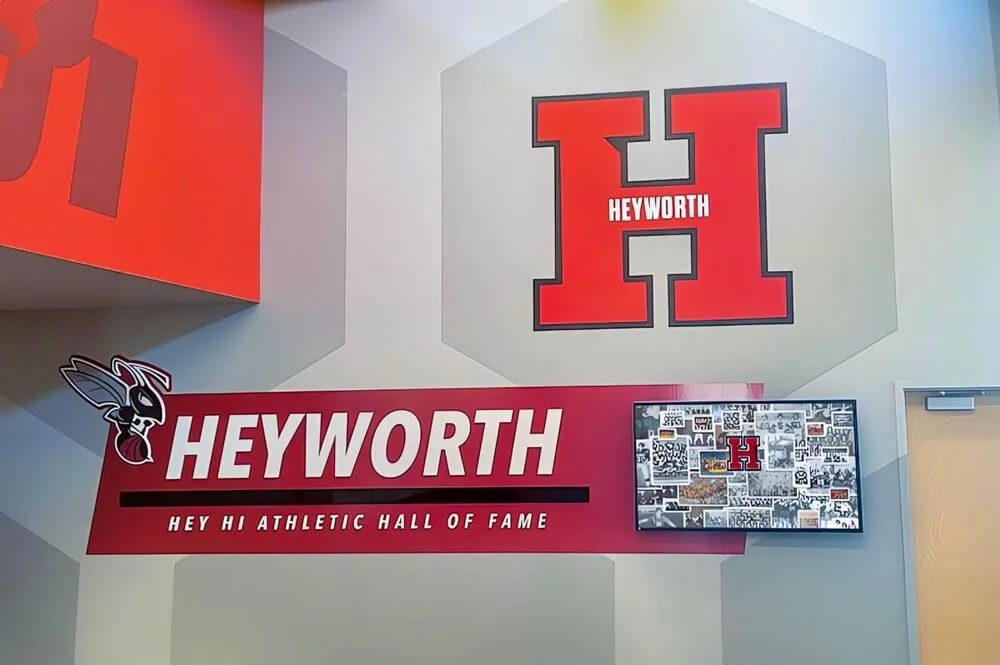
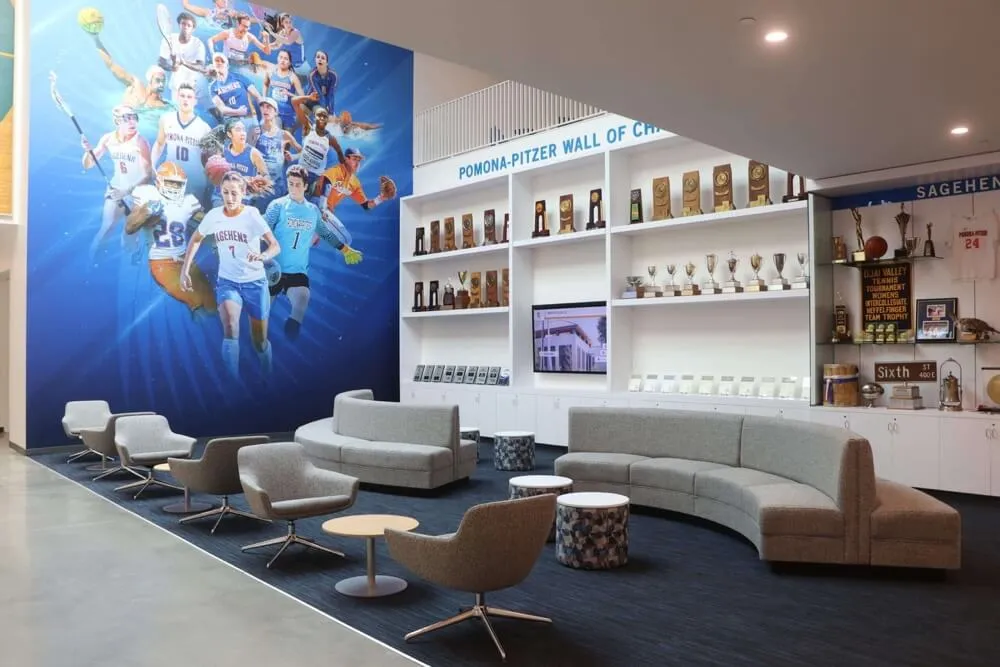
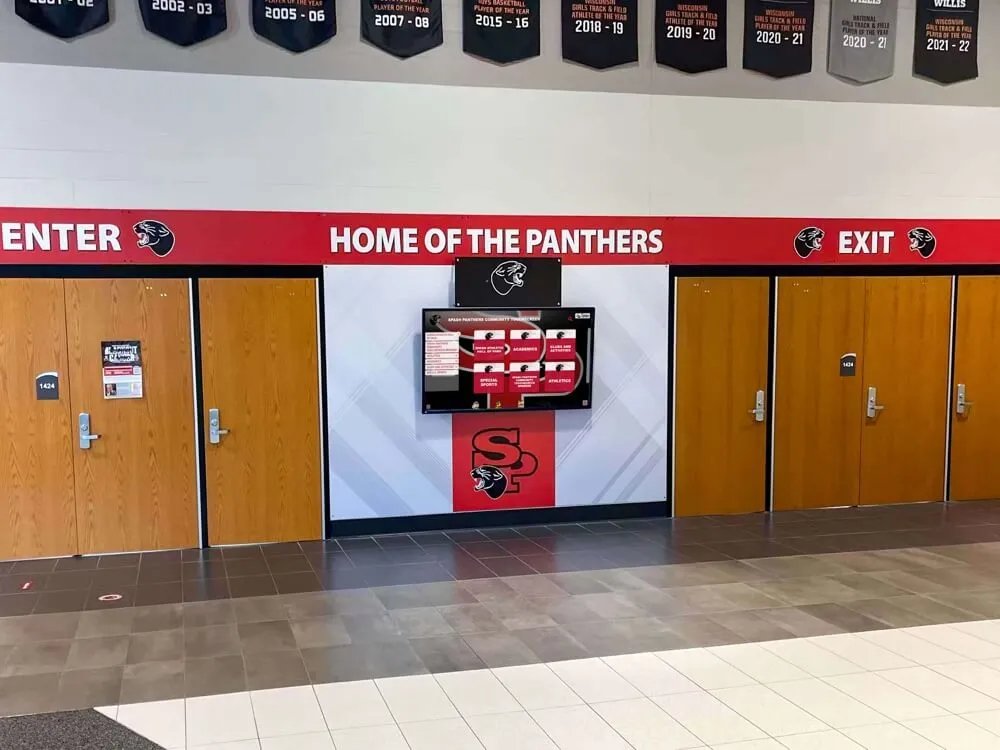
Effective athletic recognition systems display sponsor and community supporter names alongside athlete imagery — making the business connection to program success visible to everyone who uses the facility
Why Team Sponsor Banners Work (and Where They Fall Short)
A physical team sponsor banner carries a weight that other recognition formats do not. It is large, it is permanent enough to outlast a single event, and it commands attention in spaces where students, coaches, families, and opposing teams are already paying attention. When a sponsor’s logo appears on a 3×5 banner behind the scorer’s table at a playoff game, it reaches an audience of several hundred people at minimum — and that reach extends to livestream viewers and anyone who posts photos from the event.
The limitation is visibility duration. A banner displayed only during games is a recognition asset that works for perhaps 30 to 50 hours per season — the combined length of home events. A school with a strong home schedule might deliver 60 hours of in-facility banner visibility across a full athletic year. That is real value, but it is not year-round recognition.
Schools that build sponsor retention into their programs treat the physical banner as one component of a recognition system, not the entire system. Understanding how digital displays complement physical banner recognition reveals why the most sustainable sponsor programs use multiple channels simultaneously — combining banners for game-day impact with digital systems that keep sponsor names visible during every practice, study hall, and visitor walk-through.
Sponsor Banner Placement Matrix
Where a banner hangs determines who sees it and how often. These decisions should be made deliberately, based on the traffic patterns in your facility and the tier of sponsor receiving each placement. Use this matrix when building your sponsorship recognition inventory.
| Placement Location | Typical Audience | Visibility Hours (Annual) | Best Fit Tier | Notes |
|---|---|---|---|---|
| Gymnasium interior — end walls | Athletes, coaches, visiting teams, fans at games | 200–400 hrs (practices + games) | Gold, Title | Visible during all practices and games; highest year-round frequency |
| Gymnasium interior — scorer’s table backdrop | Game attendees, livestream viewers | 40–80 hrs (games only) | Title, Gold | Premium game-day placement; high visibility per impression |
| Main entrance / lobby | All building visitors, students, staff daily | 800–1,200 hrs | Title, Gold | Year-round, high-frequency; strongest visibility hours of any interior placement |
| Hallway athletic corridor | Students, staff, visiting families | 600–1,000 hrs | Gold, Silver | Visible daily during school year; underused by most programs |
| Fieldhouse / weight room | Athletes and coaches only | 400–600 hrs | Silver, Gold | Targeted audience; athletes see sponsor names during training every week |
| Outdoor fence line (baseball, softball, soccer) | Game attendees, passersby | 20–60 hrs (season only) | Silver, Friend | Seasonal only; weathering requires durable materials; lower retention |
| Press box or scoreboard area | Game attendees at outdoor events | 20–60 hrs (season only) | Title, Gold (outdoor sports) | Premium outdoor placement; high-visibility but limited season duration |
| Locker room / team room | Athletes only | 200–400 hrs | Silver, Friend | Personal touchpoint; builds athlete-to-sponsor connection often overlooked |
The most common mistake athletic programs make is placing banners only at game-day locations — scorer’s table backdrops, outdoor fence lines — when interior placements like gymnasium end walls and main lobbies deliver three to five times more annual visibility hours because they are active during practices, school days, and all-year events.
For schools interested in developing a more comprehensive banner program, reviewing sports team banner design and placement strategies provides a useful framework for thinking about banner recognition as part of a broader athletic identity system — not just a sponsor deliverable.

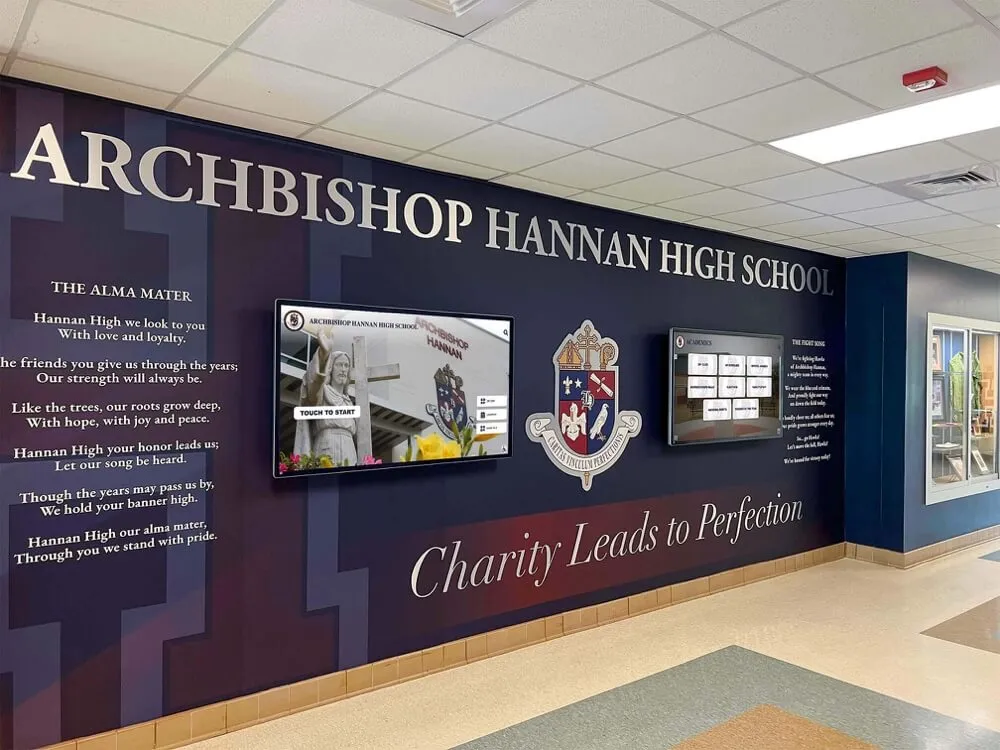
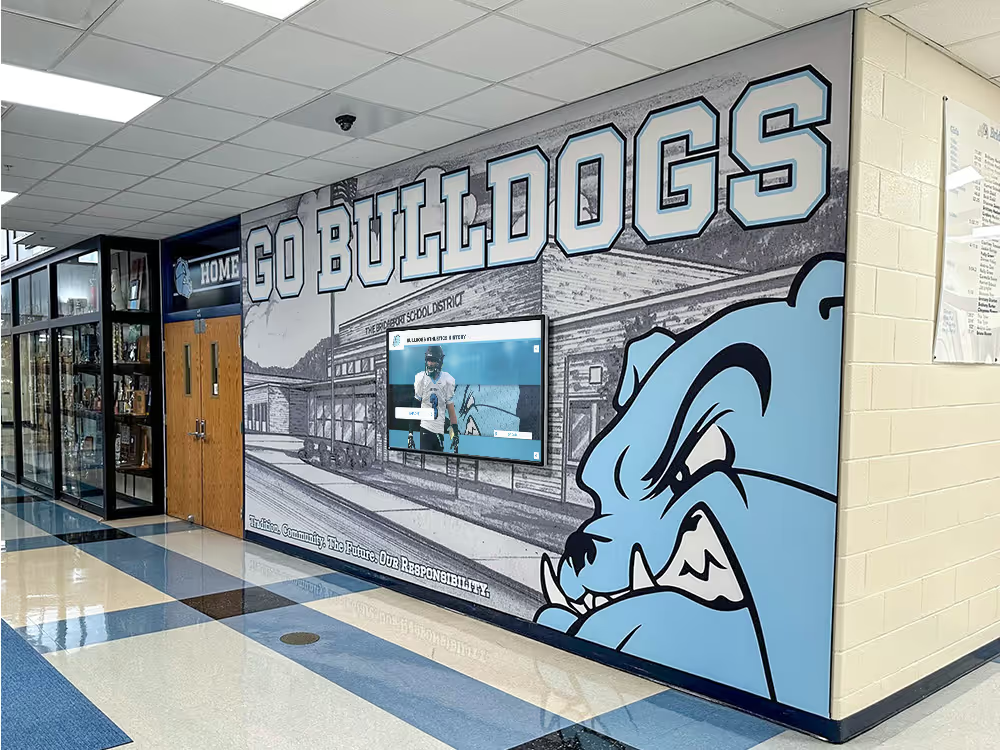
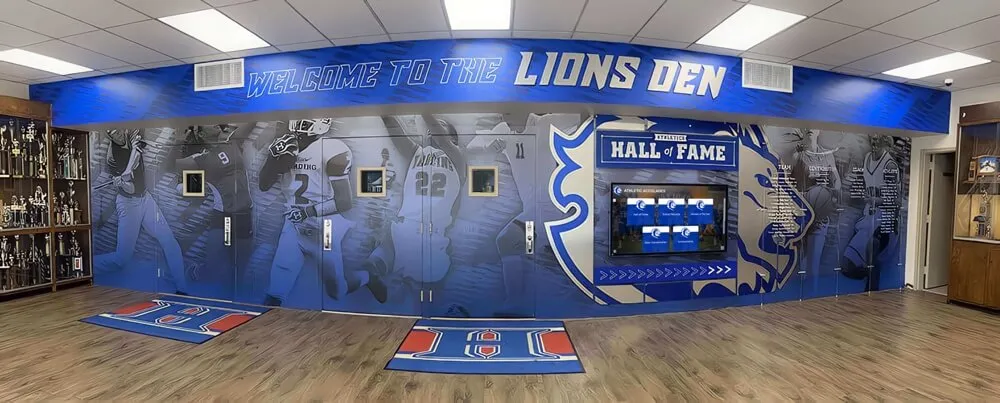
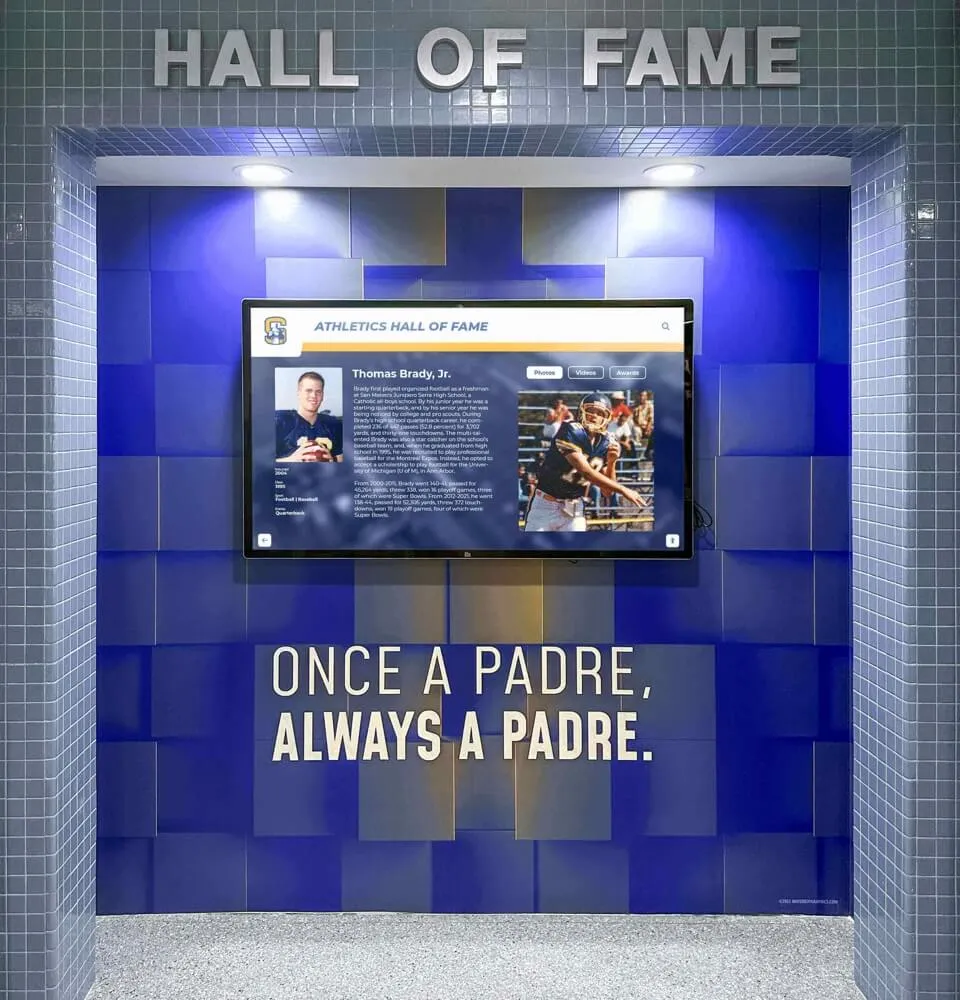
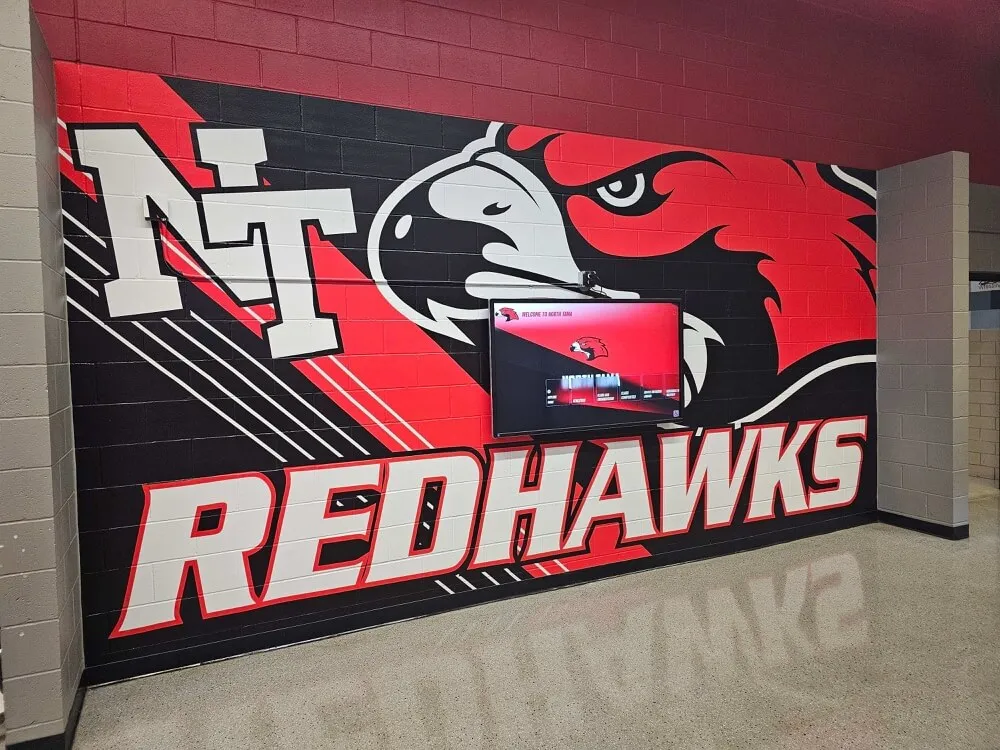
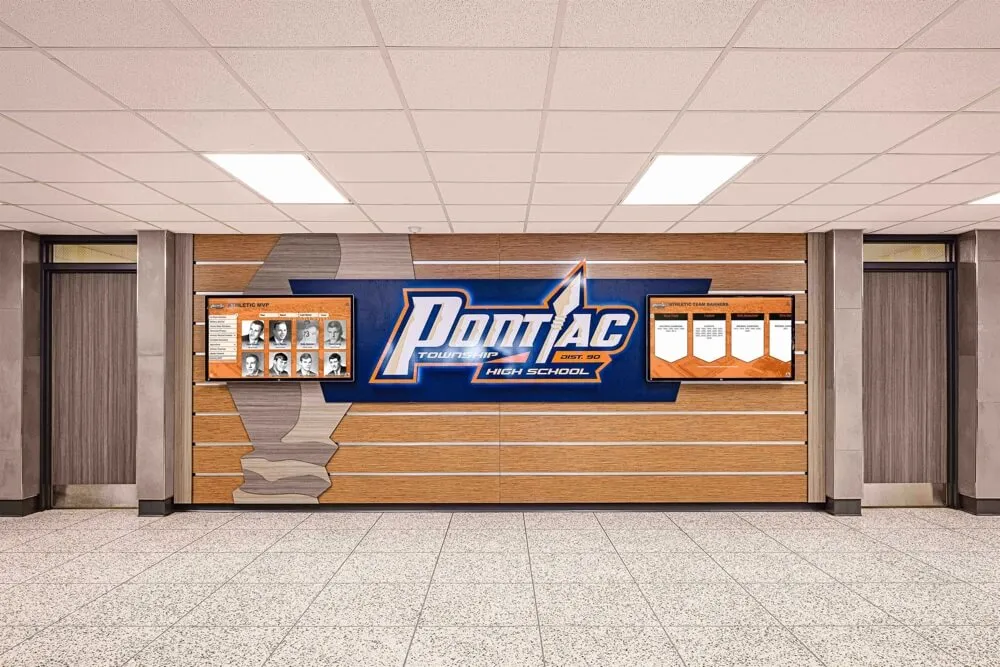
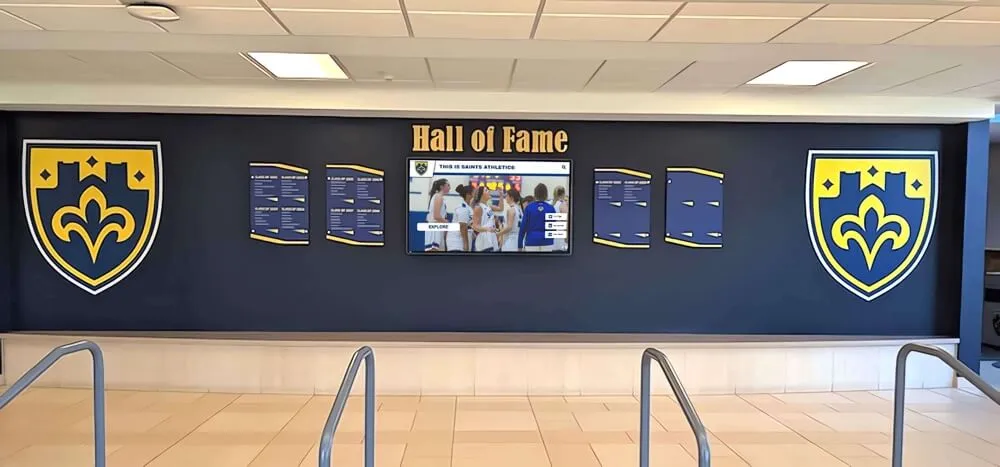
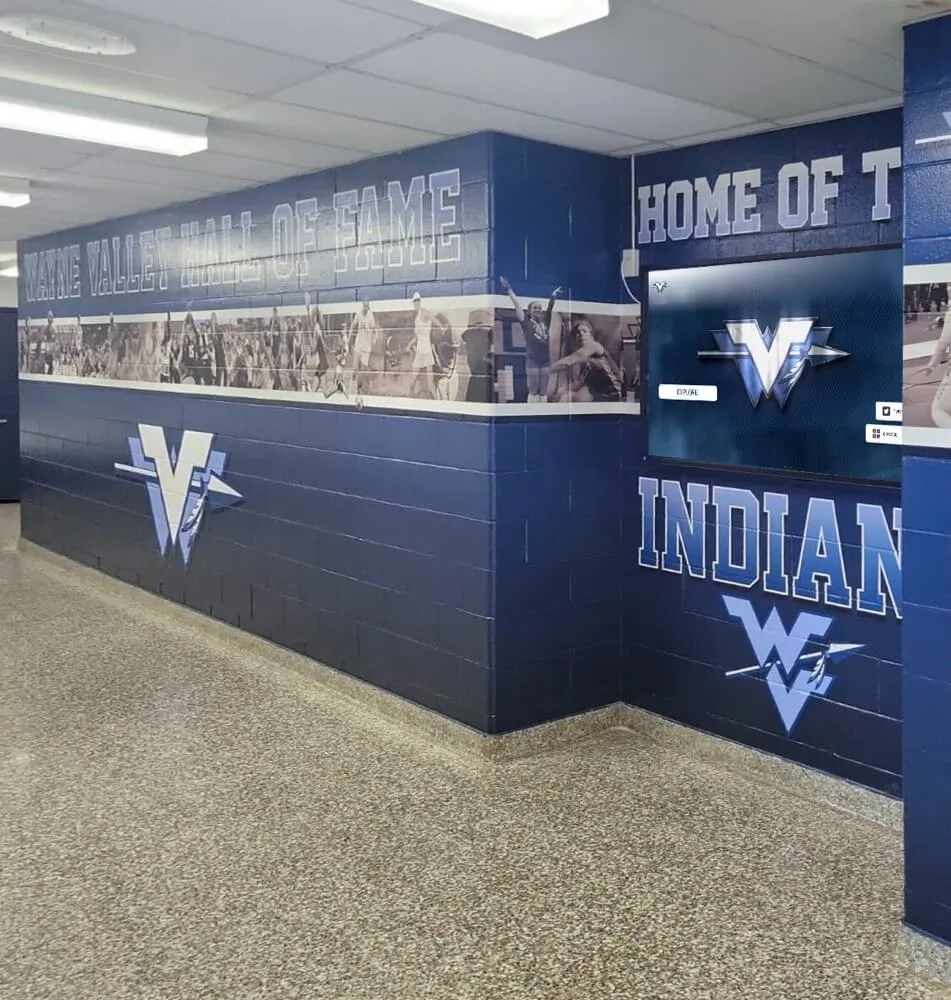
Athletic hallways that combine murals, digital screens, and physical recognition create environments where sponsor banners feel like part of a cohesive recognition system rather than isolated advertising
Sponsor Tier Examples Built Around Banner Recognition
Tiered sponsorship structures give athletic programs a clear menu to offer businesses and allow the school to match banner placement quality to investment level. Here are four tier examples scaled for a mid-size high school program, with banner recognition as the core deliverable at each level.
Title Sponsor — $2,500 and above
A single Title Sponsor per major sport or program year. This tier receives the highest-visibility banner placement in the facility and exclusive recognition in that placement category.
Banner recognition included:
- One premium banner (minimum 4×8 ft) in the main gymnasium lobby or entrance — the highest-traffic interior location
- One banner at scorer’s table backdrop for all home varsity events in the sponsored sport
- Business logo and name on any facility-wide digital display systems in rotation year-round
- Banner replacement and refresh funded by the school at each renewal
Additional recognition: Named in all PA announcements at home events; featured in printed programs; season-end fulfillment summary with documented attendance data.
Gold Sponsor — $1,000–$2,499
Two to four Gold Sponsors per program. These sponsors receive prominent interior banner placement with strong year-round visibility.
Banner recognition included:
- One banner (3×5 ft) in the gymnasium interior — end wall or upper bleacher area
- Business logo on shared sponsor recognition board in athletic lobby
- Inclusion in digital display sponsor rotation if facility has digital signage
Additional recognition: Mention in home event programs; social media acknowledgment at season start.
Silver Sponsor — $500–$999
Up to eight Silver Sponsors. This tier receives interior hallway placement that delivers daily student and staff visibility.
Banner recognition included:
- One banner (2×4 ft) in the athletic hallway corridor or near the locker room entrance
- Name listing on shared sponsor recognition board
Additional recognition: Listed in printed game programs; mentioned in season-start social media post.
Friend of Athletics — $150–$499
Open enrollment. Businesses at this level receive targeted recognition without dedicated banner space.
Recognition included:
- Business name on shared sponsor recognition panel (physical or digital)
- Name in printed program listing
- Option to purchase banner add-on at cost if facility space permits
These tier thresholds and banner specifications should be adjusted based on your school’s market, facility layout, and actual recognition inventory. The key principle is that each tier’s price point should reflect the genuine visibility value of the recognition delivered — not what the school hopes to raise.
Schools developing sponsor tiers for the first time benefit from understanding how donor recognition walls and sponsor recognition systems work in parallel — particularly how digital elements allow schools to add recognition tiers that do not require physical installation every season.
Want to Show Sponsors Their Recognition All Year?
Rocket Alumni Solutions builds digital recognition displays that keep sponsor names visible every day the facility is open — not just on game nights. Pair physical banners with digital systems to build a sponsor recognition program that retains partners season after season.
See Sponsor Recognition Display OptionsDesigning Team Sponsor Banners That Hold Up
The physical quality of a team sponsor banner communicates directly to the sponsor how seriously the school takes the recognition commitment. A faded, wrinkled vinyl banner hanging crookedly in a gymnasium corner says the opposite of what it is supposed to say.
Material and Format Recommendations
Vinyl banners remain the most common choice for indoor athletic facilities because they are durable, washable, and cost-effective to produce. A 13 oz. laminated vinyl with reinforced grommets handles gymnasium humidity and the wear of being taken down, stored, and rehung across multiple seasons. For outdoor placements — fence lines, press boxes — a mesh vinyl that allows wind to pass through reduces the likelihood of banner damage in exposed locations.
Fabric banners (typically polyester) offer a more premium appearance and hang more flatly than vinyl. They are a strong choice for lobby and hallway placements where the display is permanent-feeling and presentation quality matters more than weather resistance. Schools with established championship banner traditions often use matching materials for sponsor banners to create visual consistency across the facility.
Banner dimensions by placement:
- Gymnasium end walls: 4×8 ft minimum; larger formats (6×10) if wall space allows
- Scorer’s table backdrop: 2×6 or 3×8 ft (horizontal orientation)
- Lobby or hallway: 2×4 or 3×5 ft (vertical or horizontal depending on mounting)
- Outdoor fence: 2×4 or 3×6 ft mesh vinyl
Logo Requirements and Sponsor Onboarding
Before a banner can be produced, the school needs the sponsor’s logo in a print-ready format — typically an EPS, AI, or high-resolution PNG file with transparent background. Building a simple sponsor onboarding checklist that requests this file along with the signed agreement prevents production delays and signals to the business that the program is organized.
The onboarding checklist should also confirm: preferred business name spelling, secondary contact for recognition verification, and whether the sponsor would like to receive photos of the installed banner upon completion.
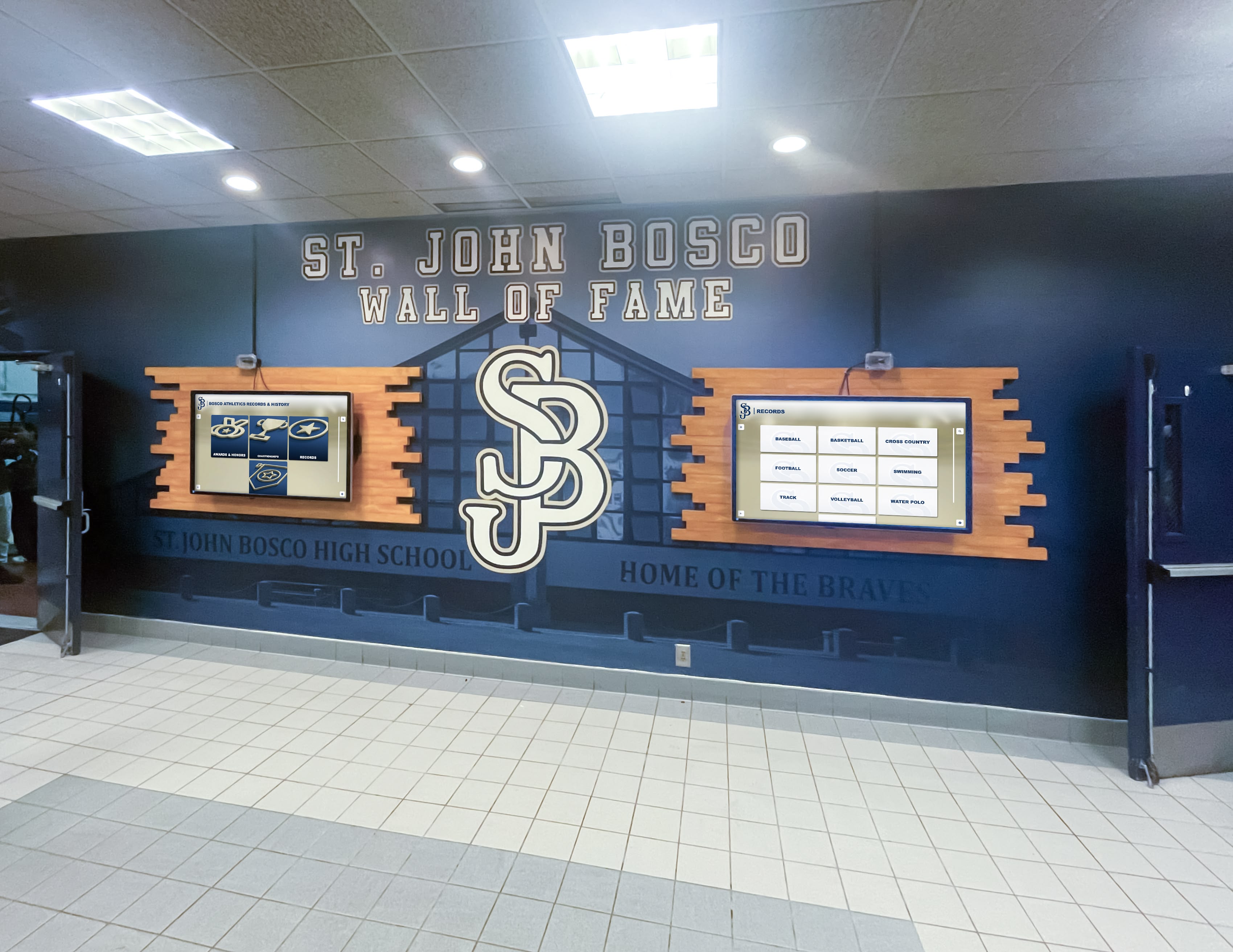
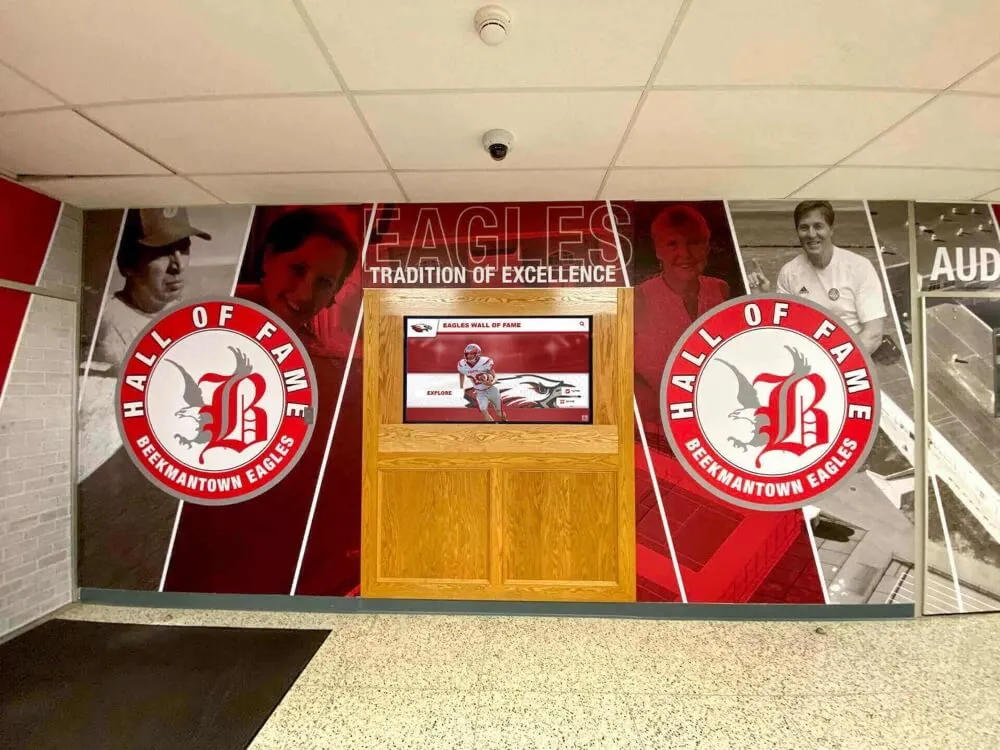
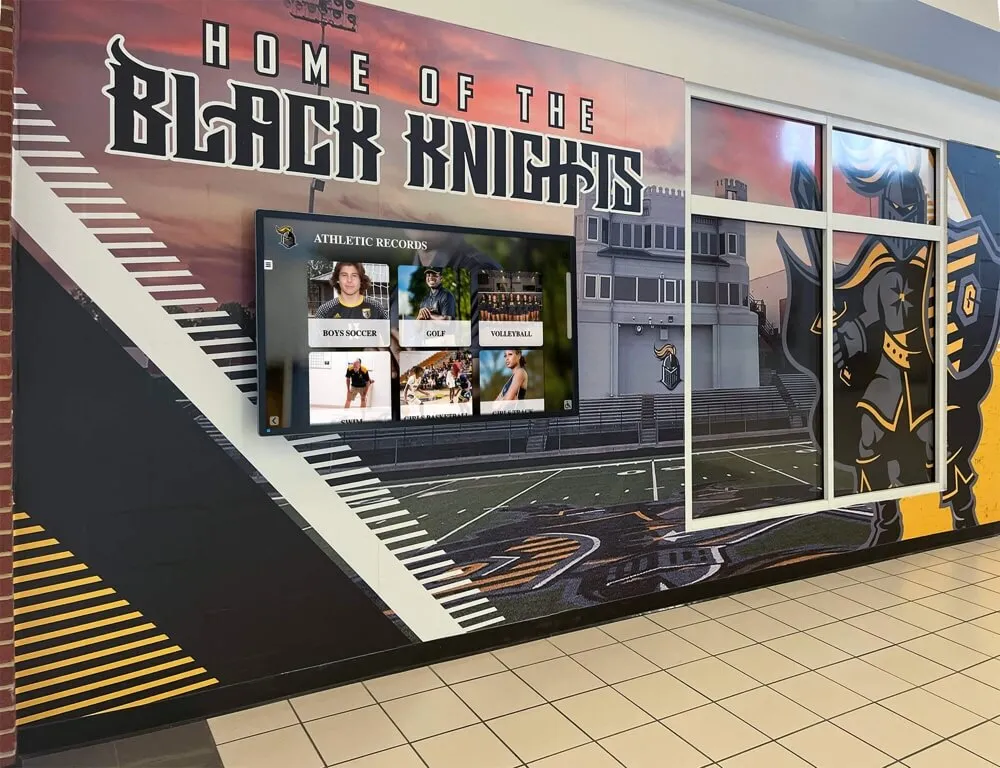
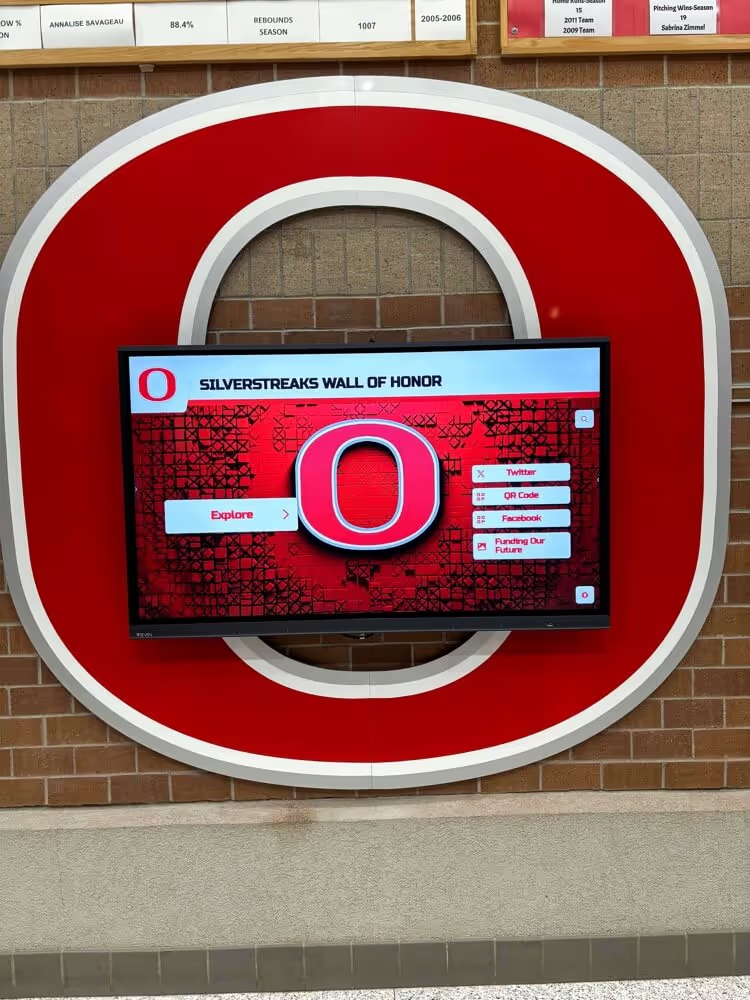
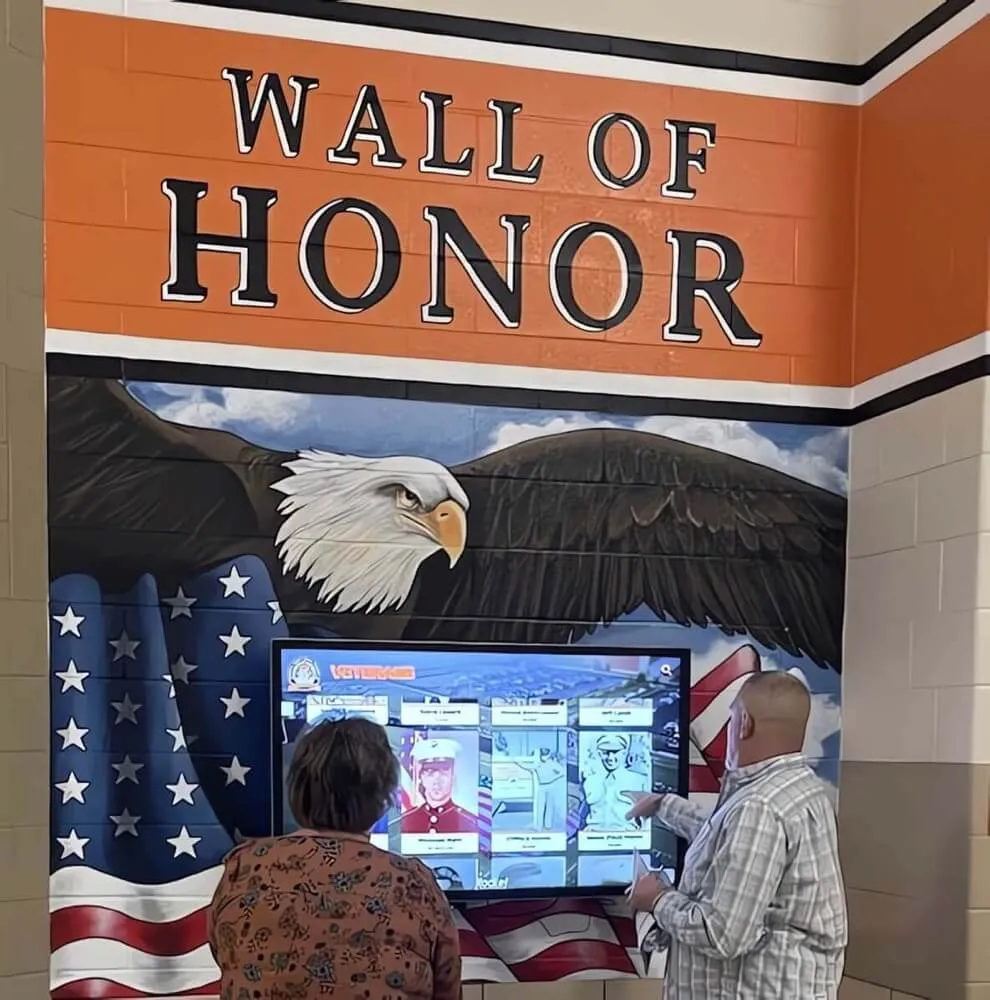
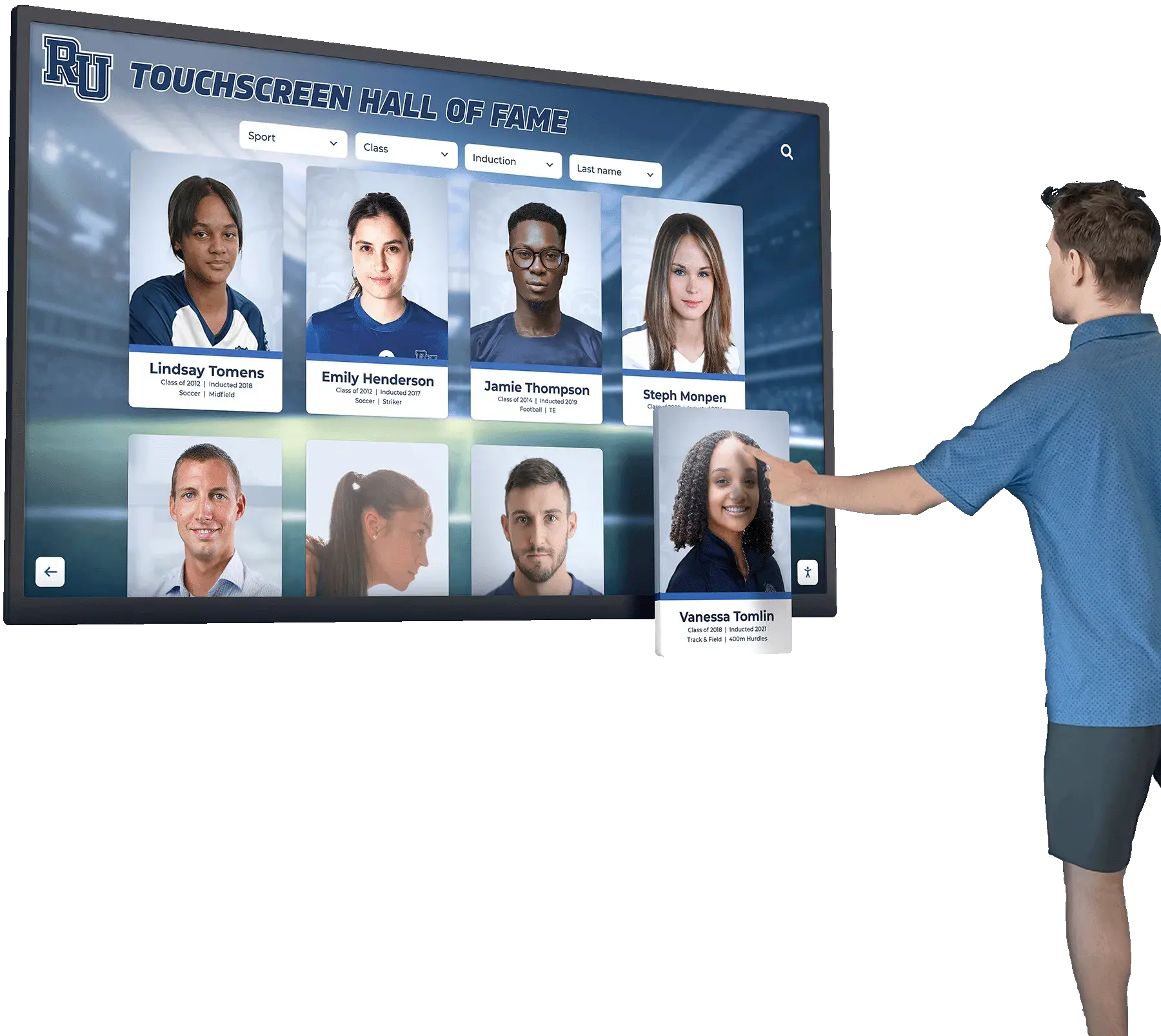
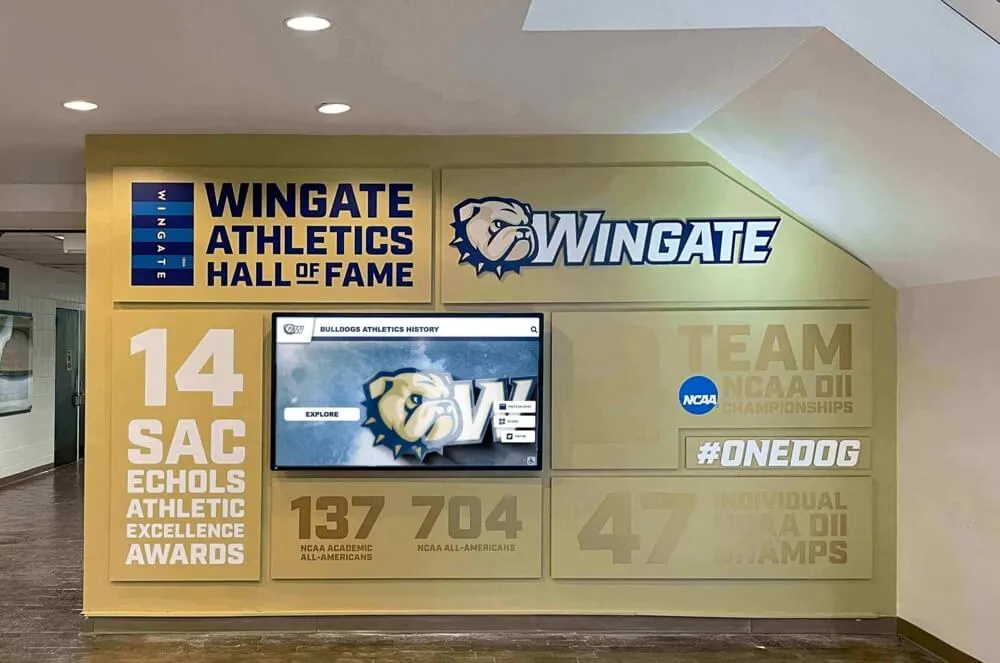
Physical and digital recognition work together most effectively when they occupy the same visual space — a hallway where a sponsor banner and a digital display are both visible creates layered acknowledgment that neither can achieve alone
Renewal and Replacement Policies
One often-overlooked element of team sponsor banner programs is the written policy for banner replacement and removal. A sponsor who pays for a banner this season reasonably expects it to be removed and replaced — not left hanging indefinitely with a competitor’s added alongside it — unless multi-year recognition has been specifically agreed to.
A clear banner policy includes:
- Confirmation of where the banner will be hung and for how long (specific season dates)
- Who is responsible for installation and removal
- Whether the sponsor keeps the banner at season end or the school retains it for re-display
- What happens to banners for sponsors who do not renew (removal policy and timeline)
Documenting these policies in writing protects both the school and the sponsor and removes ambiguity from the renewal conversation.
Extending Recognition Beyond the Physical Banner
The visibility limitation of a physical team sponsor banner — active only when the facility is occupied during events — is where digital recognition systems create their strongest case for school athletic programs. A digital display in the gymnasium lobby, athletic corridor, or entrance area runs 12 hours a day, five days a week, for the entire school year. That is approximately 2,000 hours of annual visibility against the 40 to 80 hours a scorer’s table banner delivers.
Digital Sponsor Recognition as a Banner Complement
Schools that have added digital displays to their athletic recognition infrastructure typically use them to accomplish two things physical banners cannot: year-round visibility and dynamic content that can be updated instantly.
A lobby touchscreen or digital wall display can feature sponsor logos, business descriptions, and even QR codes linking to sponsor websites — delivering active marketing value that a static vinyl banner cannot match. When a parent waiting for practice to end spends 30 seconds reading a sponsor’s digital profile on a lobby screen, that interaction represents a qualitatively different engagement than a logo glanced at across a gymnasium.
Understanding how dual-purpose digital displays serve both recognition and marketing functions in athletic facilities helps athletic directors communicate the added value of digital recognition to sponsors — and justify the investment in digital display infrastructure to school administrators.
Interactive Displays and Sponsor Visibility
Interactive touchscreen displays take digital sponsor recognition a step further. A touchscreen system that allows visitors to browse sponsor profiles — including business description, years of support, and programs funded — creates meaningful engagement that neither physical banners nor passive digital screens can replicate.
For schools with established hall of fame or wall-of-honor traditions, these same systems can house sponsor recognition alongside athlete profiles and team histories — creating unified recognition environments where business supporters are visibly part of the program’s legacy, not a separate category of acknowledgment.
The principles behind impactful donor recognition walls in school environments apply directly to athletic sponsor displays: recognition earns the most loyalty when it is visible, specific, and treated with the same care as the athletic achievements displayed alongside it.
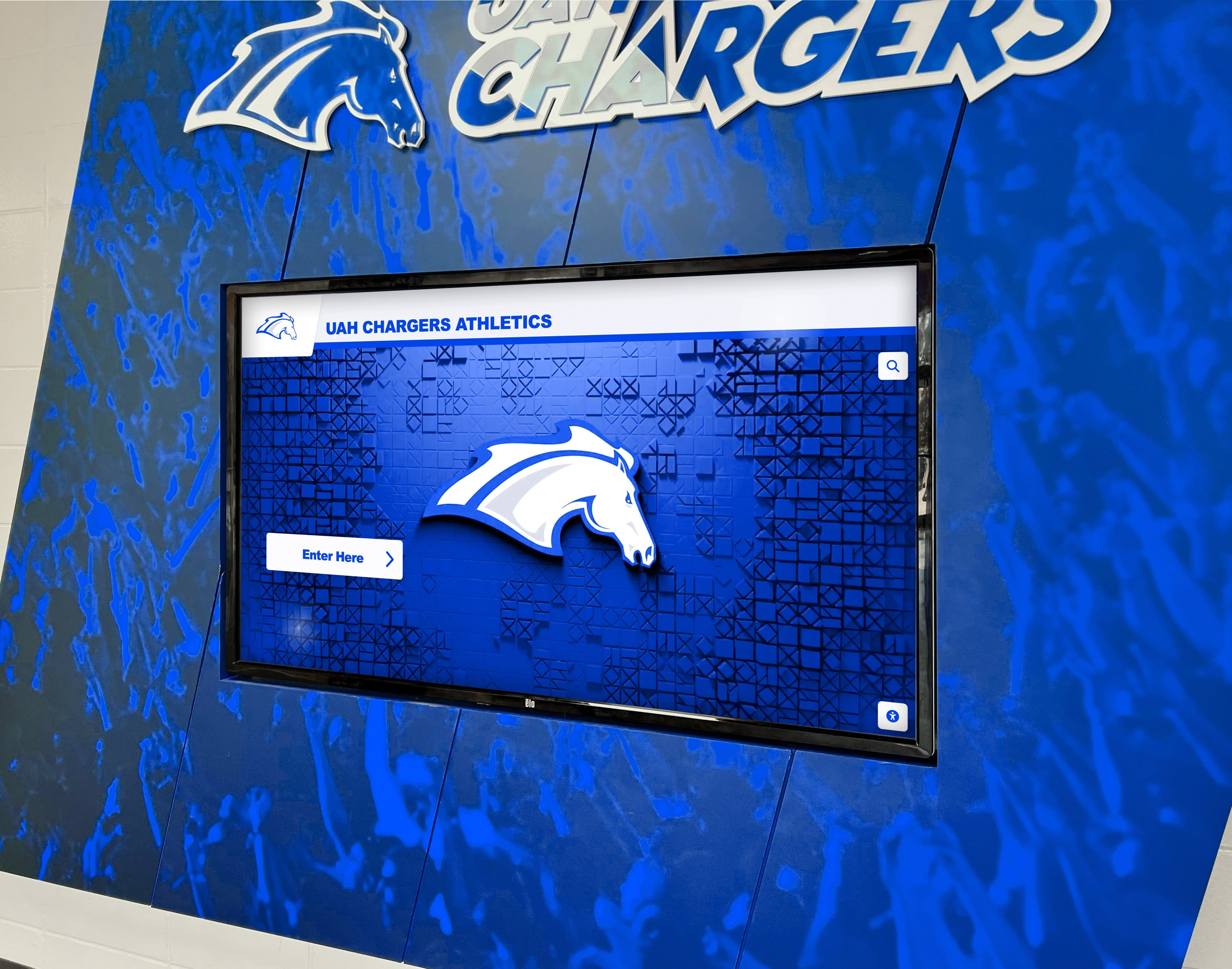
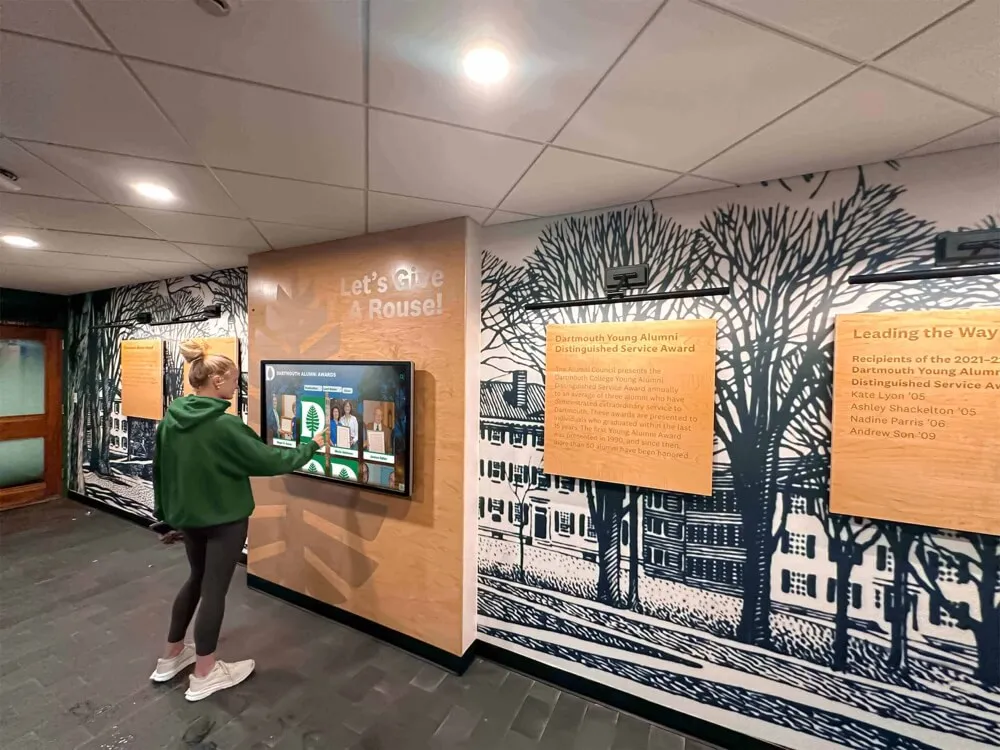
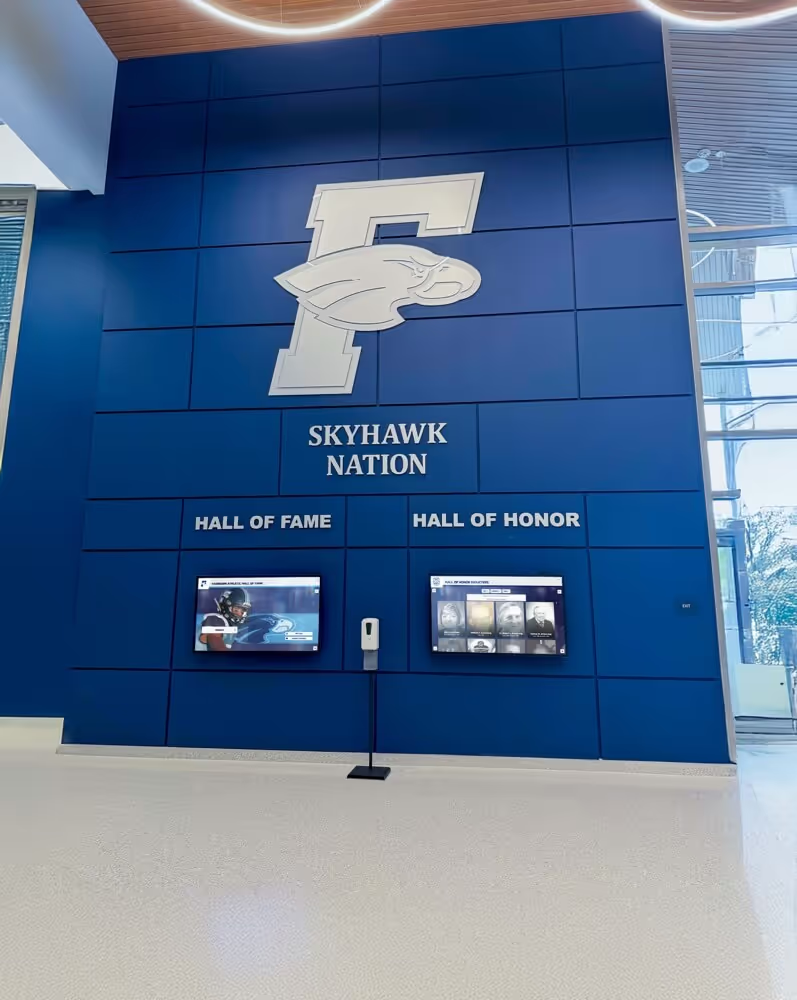
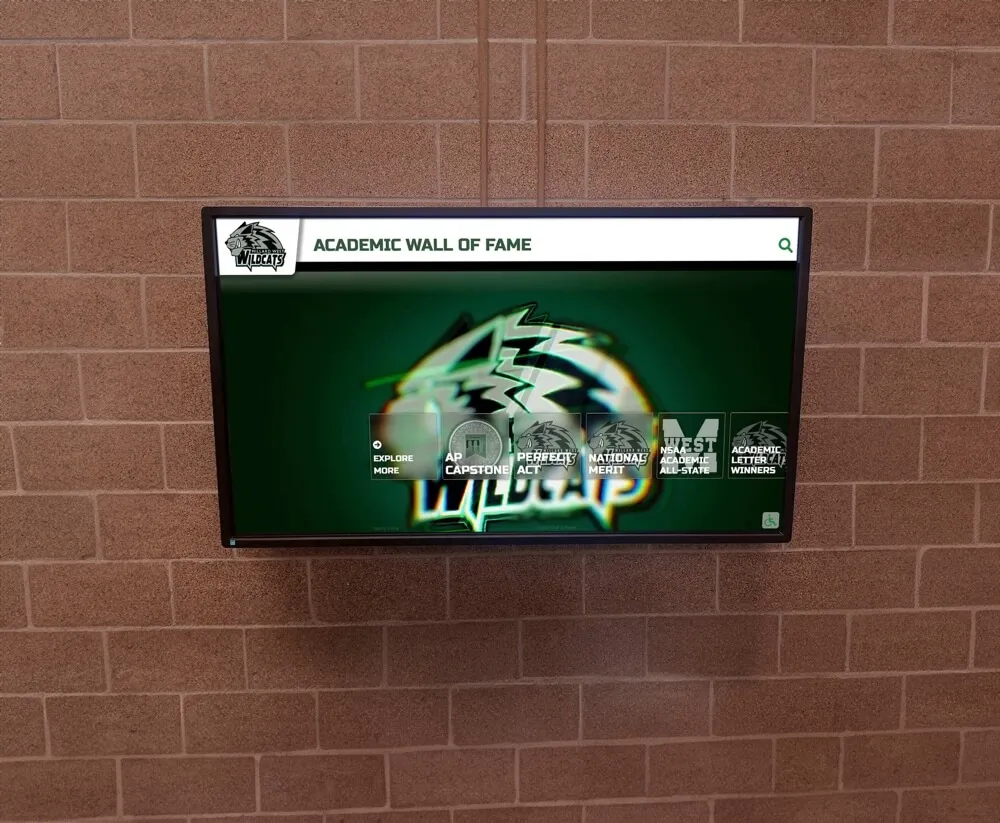
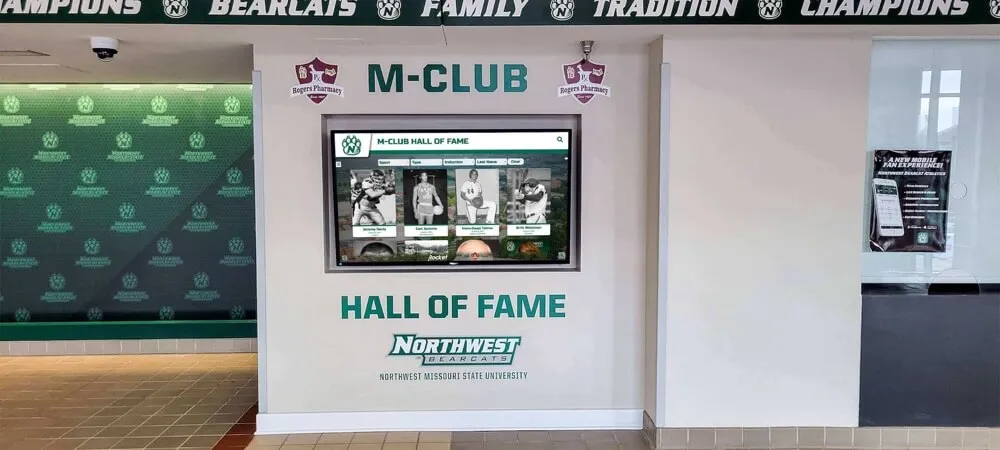
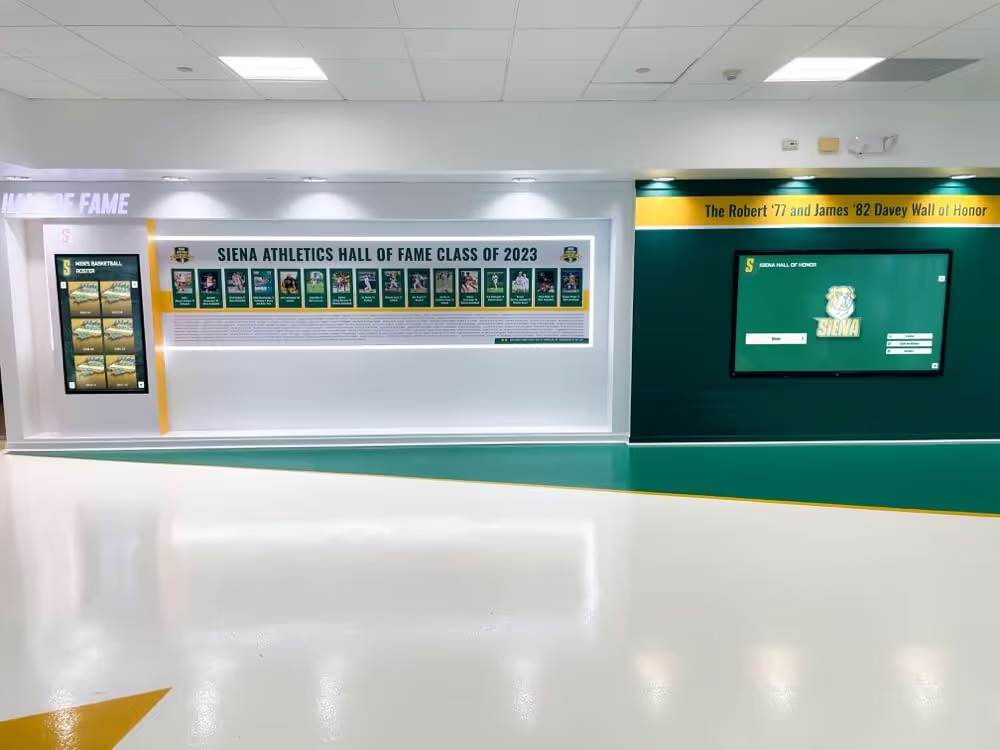
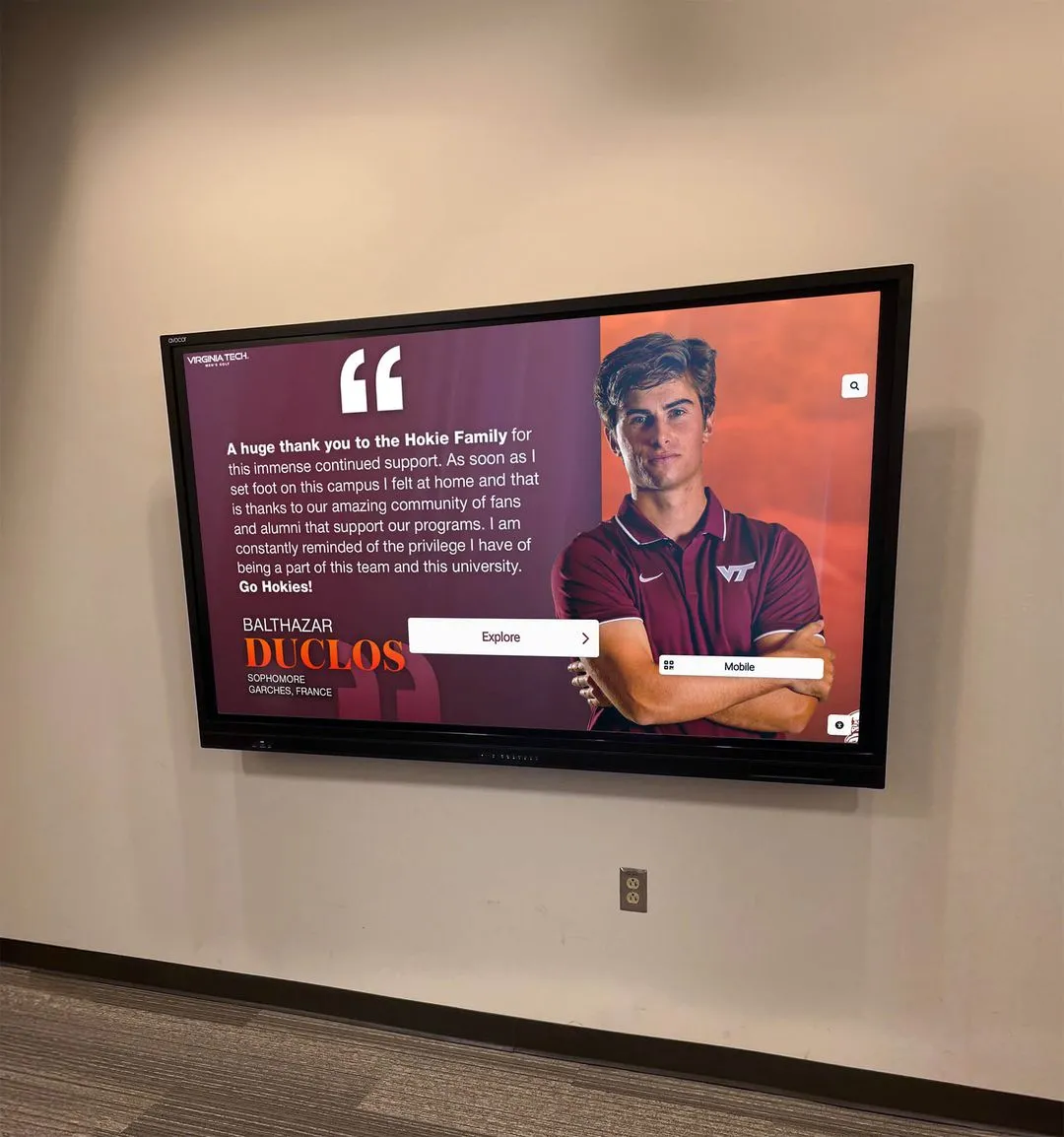
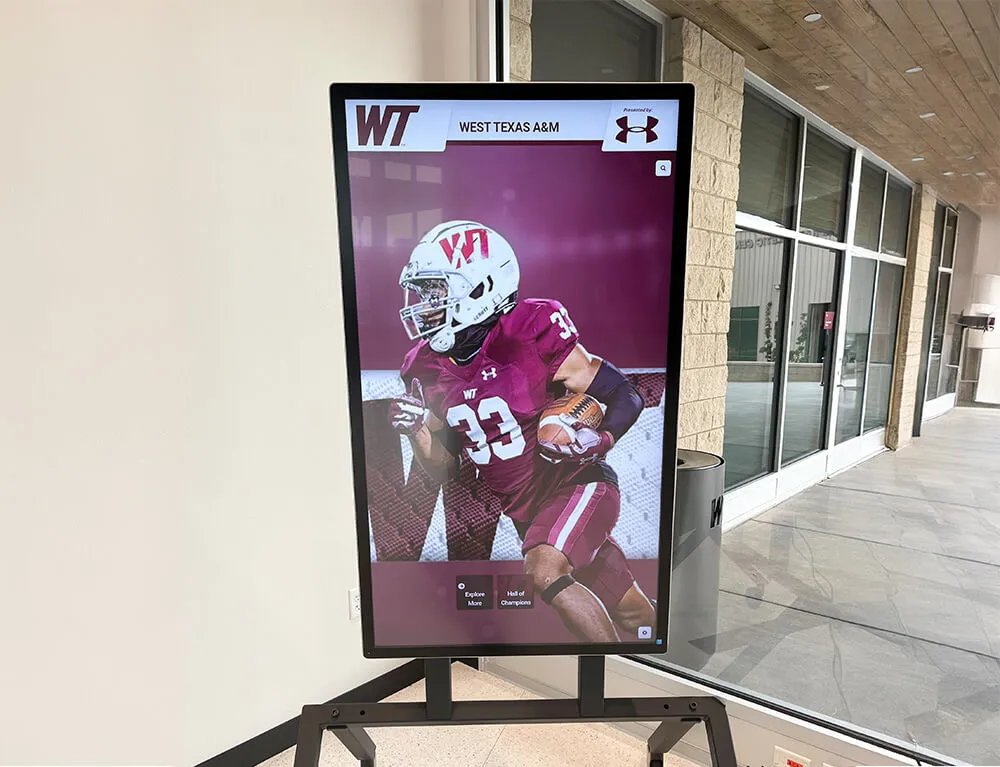
Digital screens integrated into athletic facility design become permanent recognition assets that work every day the building is open — extending sponsor visibility far beyond what physical banners alone can deliver
Building Year-Round Sponsor Recognition
The goal of any team sponsor banner program is to make sponsor recognition visible, consistent, and compelling enough to justify annual renewal. Physical banners accomplish this during the season. The months between seasons — when banners may be stored, the facility is quieter, and sponsors are being approached by competing programs — are where the recognition gap most often costs schools renewals.
A complete year-round recognition framework includes:
During the season: Physical banners in designated placements; PA announcements at home events; digital display rotation; printed program recognition.
Between seasons: Digital display rotation continues; sponsor name visible on website sponsor page; social media acknowledgment at season end; season-end fulfillment summary sent to sponsor contact.
At renewal time: Fulfillment documentation showing attendance data for events where recognition was active; photos of banner placement; digital display metrics if available; personalized renewal letter from athletic director.
Schools with the strongest sponsor retention rates treat the off-season not as a gap in recognition but as an opportunity to demonstrate that the school’s commitment to sponsors extends beyond the game-day calendar. Digital displays make this much easier because they continue running without any additional staff action once content is loaded.
For nonprofit and booster organizations managing sponsor recognition as part of broader donor stewardship programs, the framework developed for nonprofit donor recognition with digital displays offers transferable principles — particularly around documentation, tiered visibility, and multi-year recognition strategies.
Schools looking to connect sponsor recognition to broader athletic legacy programs, including athlete signing day recognition and hall-of-fame systems, can see how national signing day recognition integrates with sponsor display systems — creating unified environments where every form of athletic achievement and community investment is visible in the same space.
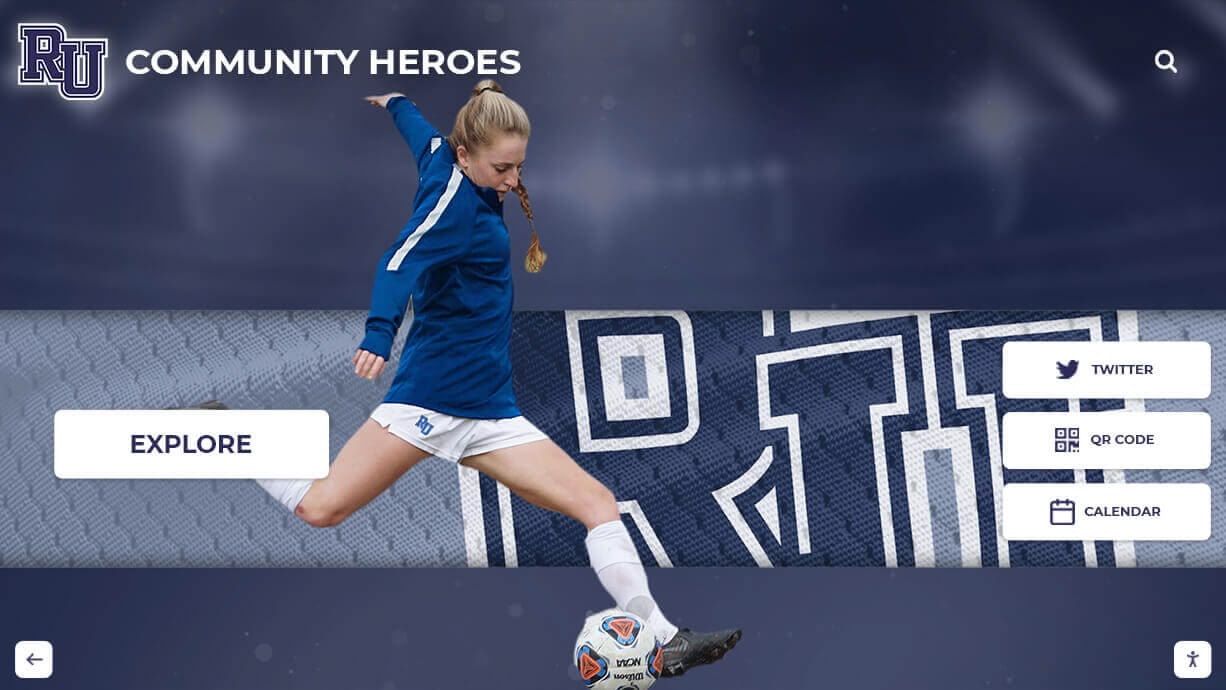
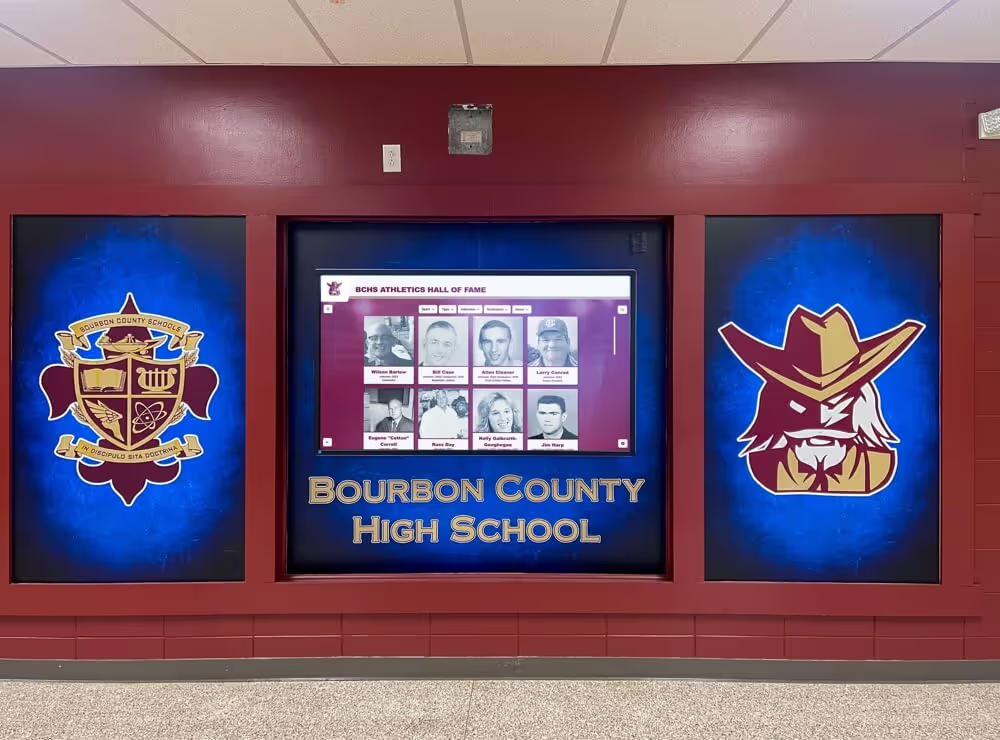
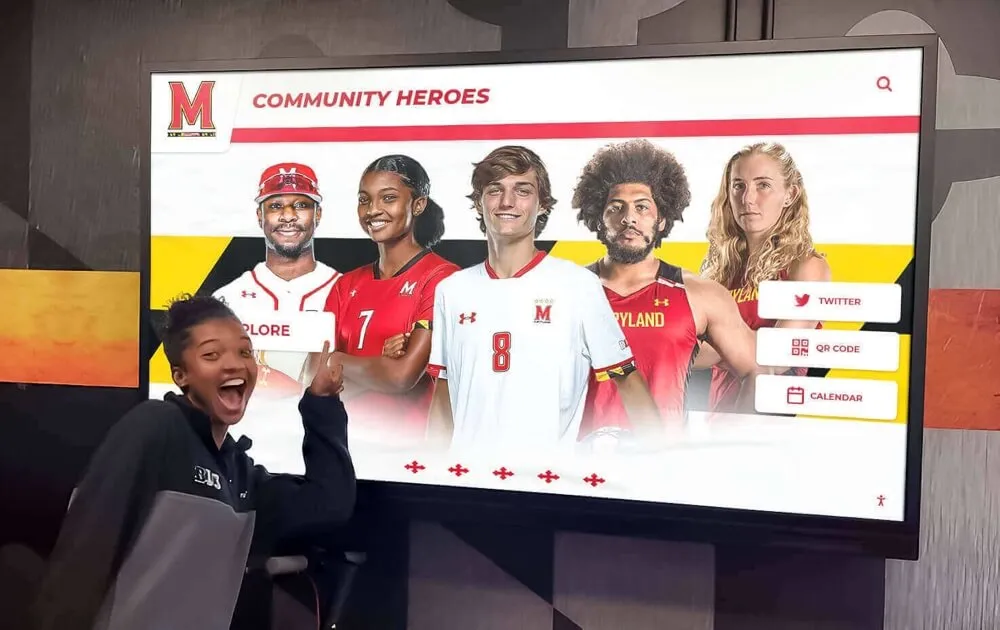
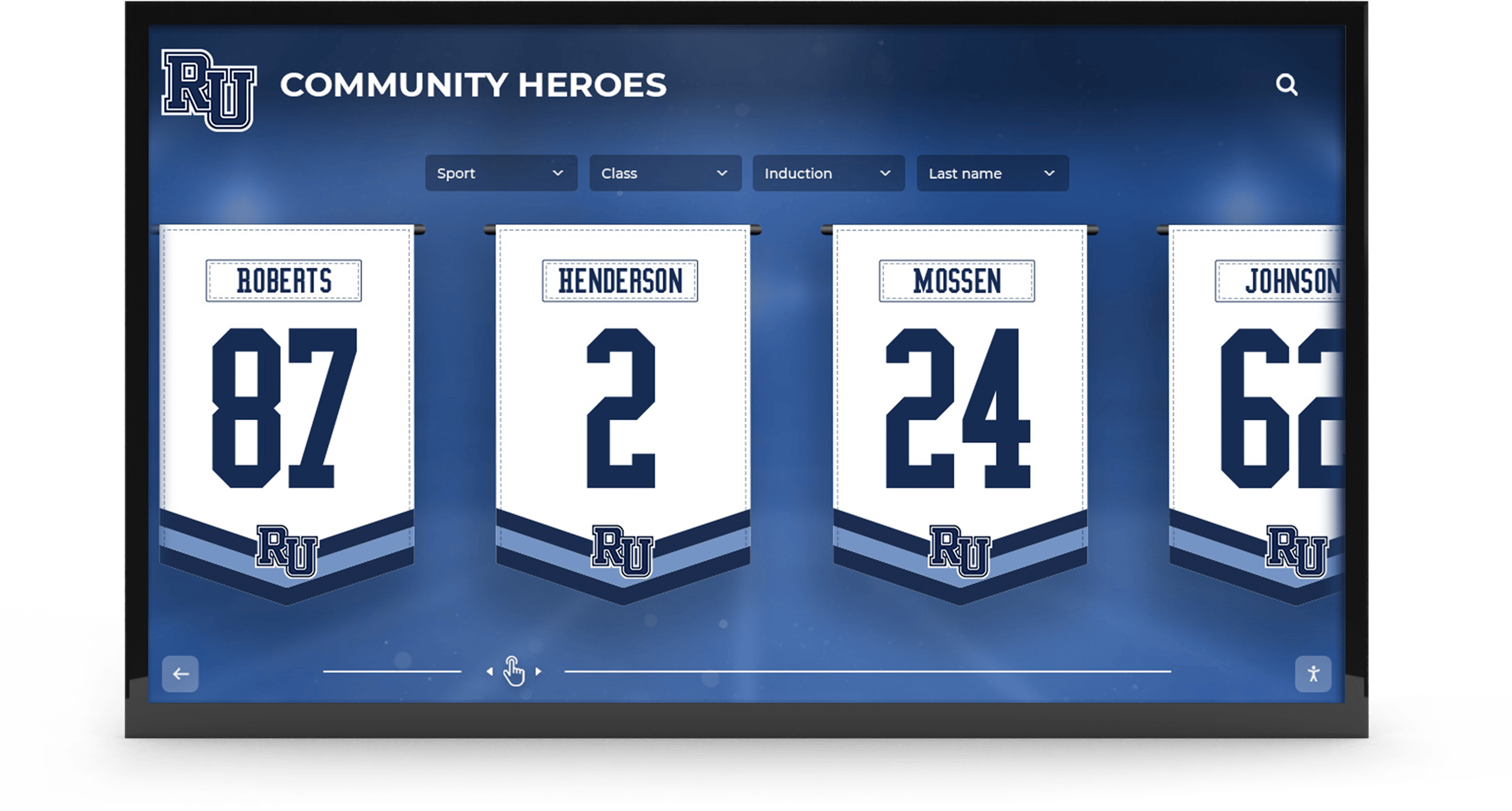
Recognition environments that place athlete imagery alongside community supporter acknowledgment create the association sponsors are paying for — their brand connected to the excellence and community pride of the athletic program
Understanding how schools approach digital hall of fame and sponsor recognition together can surface ideas for combining sponsor visibility with athlete legacy in systems that create year-round recognition value for all categories of supporters.
Frequently Asked Questions About Team Sponsor Banners
Where should a team sponsor banner be placed in a school gymnasium?
The highest-visibility placements in a school gymnasium are the end walls above the baseline and the scorer’s table backdrop. End wall placements deliver the most annual visibility hours because they are active during both games and practices — often 200 to 400 hours per year. Scorer’s table placements are premium game-day locations that reach fans and livestream viewers directly but accumulate fewer total hours. For lobby placements outside the gym, visibility is even higher — typically 800 to 1,200 hours annually — because they are active every day the building is open, not just during athletic events.
What size should a sponsor banner be for a high school athletic program?
Standard sizes for high school athletic sponsor banners range from 2×4 feet (for hallway and secondary placements) to 4×8 feet or larger for gymnasium end walls and lobby installations. Scorer’s table backdrops typically use horizontal banners in the 2×6 or 3×8 foot range. The right size depends on placement distance from typical viewing areas — larger spaces require larger banners to be legible from across the room — and the school’s tier structure, with higher-tier sponsors receiving larger or more prominent formats.
How do schools structure sponsor tiers around banner recognition?
Effective tier structures assign banner placement based on visibility value: Title or Premier sponsors receive premium placements with the highest annual visibility hours (lobby, gymnasium end walls, scorer’s table); Gold sponsors receive strong interior placements such as gymnasium wall and hallway; Silver sponsors receive secondary placements such as locker room corridors or shared sponsor boards; and Friend-level sponsors receive name recognition on shared displays without dedicated banner space. Each tier’s pricing should reflect the estimated annual visibility hours of its banner placement, calculated from event attendance and daily facility traffic.
How long should sponsor banners stay up during the year?
Interior sponsor banners — particularly those in gymnasiums and lobbies — can and should remain displayed year-round rather than being removed at season end. Year-round display significantly increases total annual visibility hours and gives sponsors visible proof of recognition when they visit the facility outside of event season. Outdoor banners (fence lines, press boxes) are typically seasonal given weather exposure, and replacement policies should be documented clearly in sponsorship agreements. Schools that keep banners up year-round consistently report stronger sponsor retention than those that remove them between seasons.
How do digital displays improve team sponsor recognition compared to banners alone?
Digital displays complement physical sponsor banners by providing year-round visibility that does not depend on a banner remaining installed, the ability to rotate multiple sponsors through a single high-traffic location, dynamic content that can include sponsor descriptions and QR codes linking to business websites, and instant updates when sponsor rosters change. A lobby digital display active 10 hours per day throughout the school year delivers approximately 1,800 annual visibility hours — far exceeding what any single physical banner placement achieves. Schools that combine physical banners with digital displays offer sponsors a meaningfully richer recognition package and a stronger case for annual renewal.
Making Sponsor Banners the Foundation of a Recognition Program That Renews
A team sponsor banner that hangs in the right place, stays up year-round, and is part of a recognition system that extends beyond game nights is worth renewing. A banner that gets taken down after the season, stored in a closet, and replaced only if the sponsor checks in is not. The difference is intention: athletic programs that treat sponsor recognition as a fulfillment obligation — documented, tracked, and communicated back to the sponsor — build the kind of track record that makes the renewal conversation easy.
Physical banners anchor that recognition in the facility. Digital displays extend it across the calendar. And a written fulfillment summary at season end closes the loop with proof that the school delivered what it promised. That combination — visible, documented, year-round — is what converts a one-time sponsor into a multi-year partner.
Build a Sponsor Recognition System That Works All Year
Rocket Alumni Solutions designs digital recognition displays for school athletic programs — giving sponsors the year-round visibility that physical banners alone cannot deliver. Interactive touchscreens, digital sponsor walls, and lobby display systems that keep community partners recognized every day the facility is open.
Request a Demo of Digital Sponsor Recognition