Every May, schools across the country set aside time to recognize the educators who shape young minds, coach after-school programs, sponsor clubs, and show up every day for students who need a steady, encouraging presence. Teacher appreciation is more than a card and a gift basket—at its best, it is a systematic, year-round commitment to making educators feel genuinely seen. Whether your school is planning Teacher Appreciation Week activities or building a permanent recognition infrastructure that honors faculty contributions long after the flowers are forgotten, this guide covers practical ideas that range from simple gratitude walls to interactive digital displays that last for decades.
The numbers behind teacher retention make recognition more than a feel-good gesture. According to the Learning Policy Institute, teacher turnover costs U.S. districts an estimated $8,000–$21,000 per departing teacher—and schools where staff feel recognized and valued consistently report lower attrition rates. When schools invest in meaningful, visible appreciation for their educators, they are also investing in the continuity and culture that make learning possible.

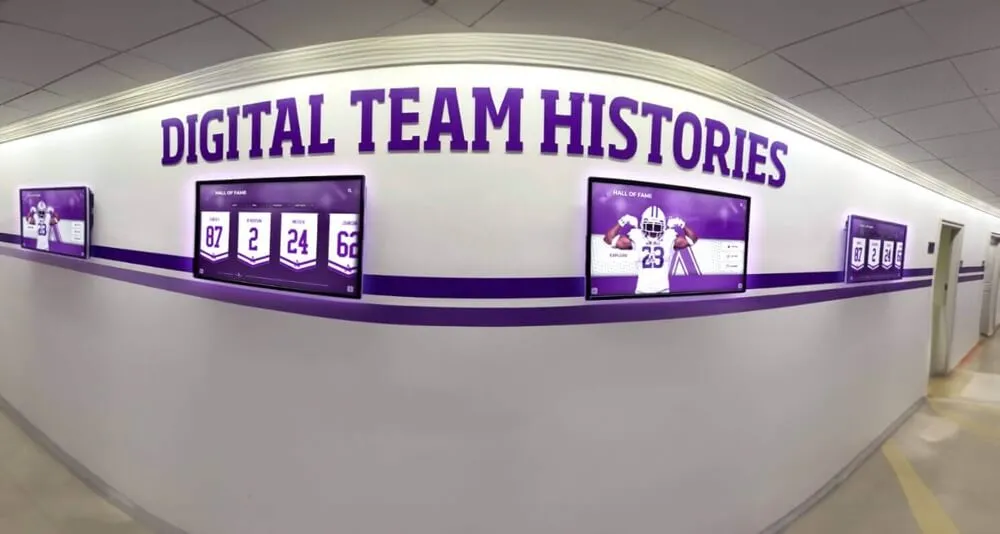
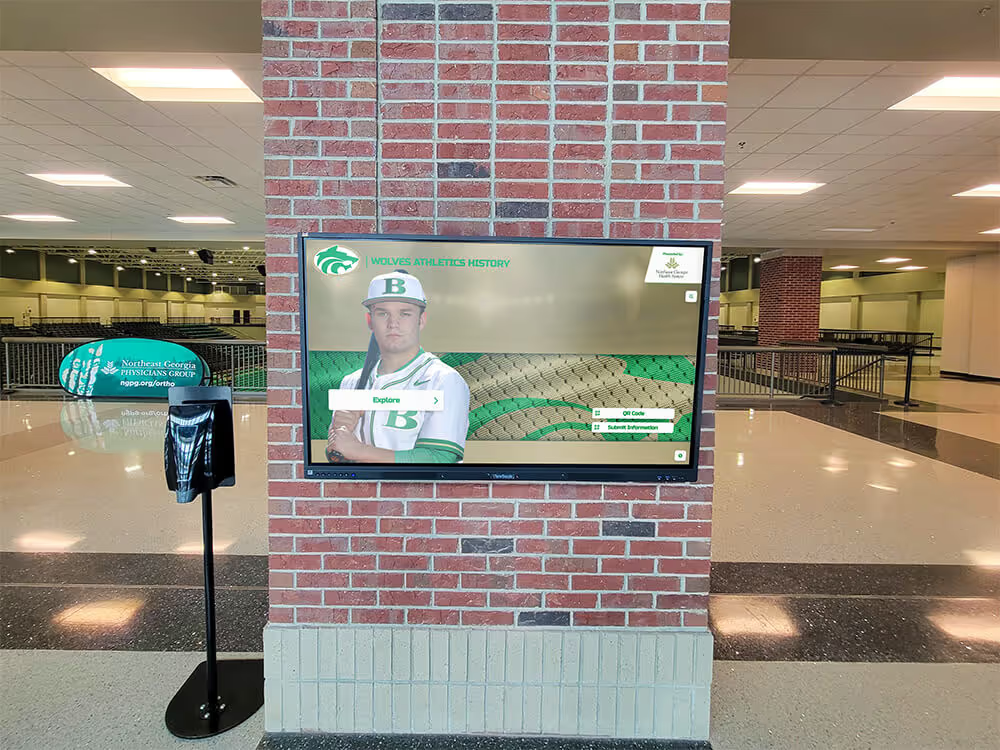
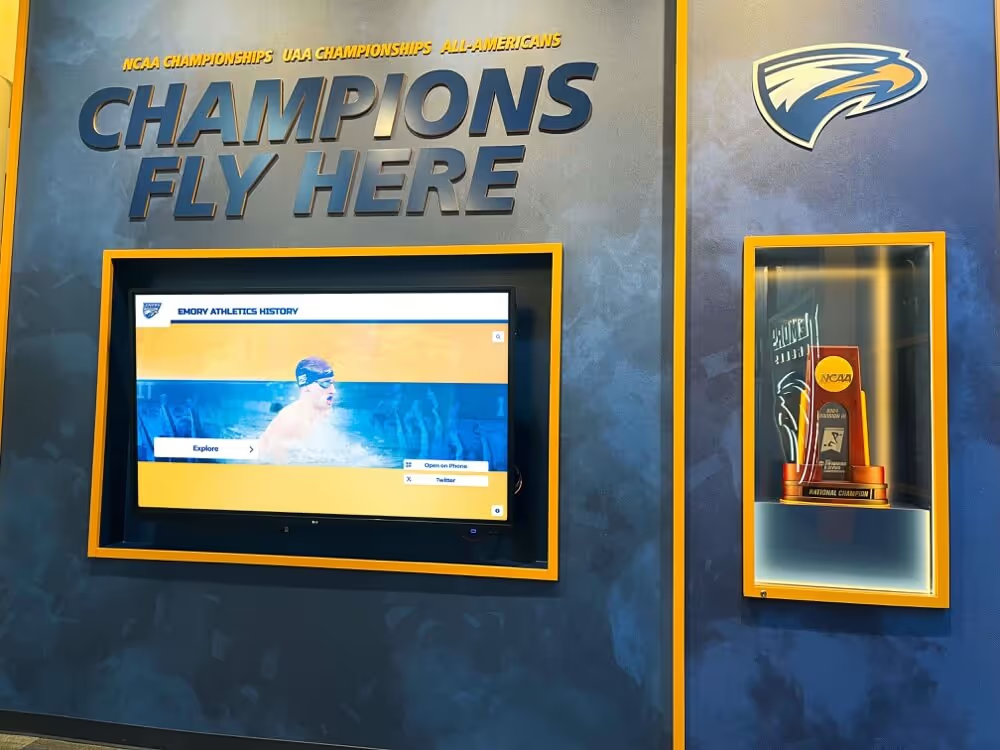
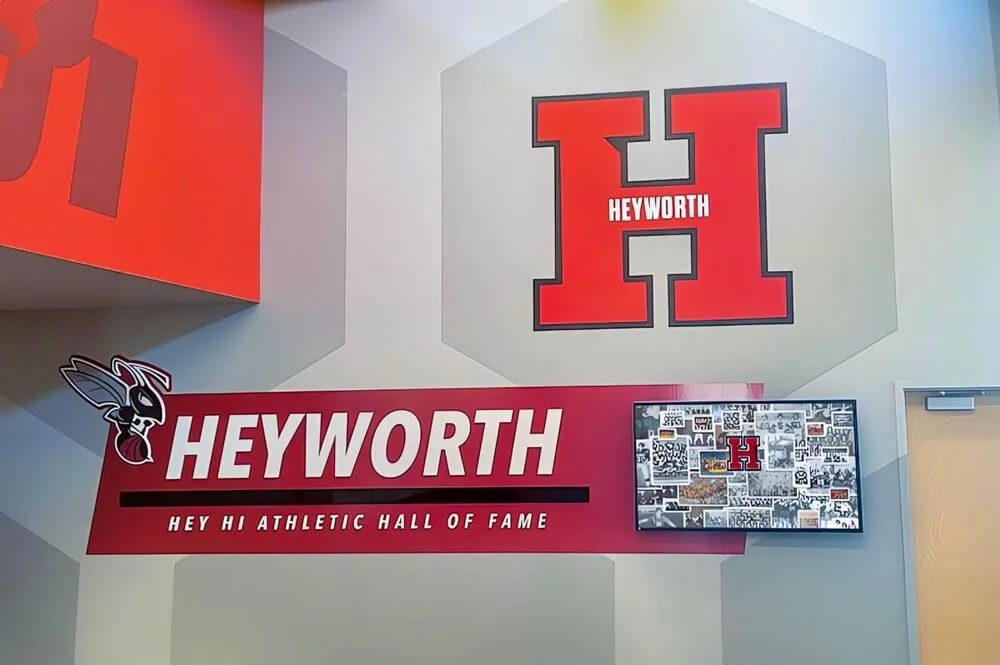
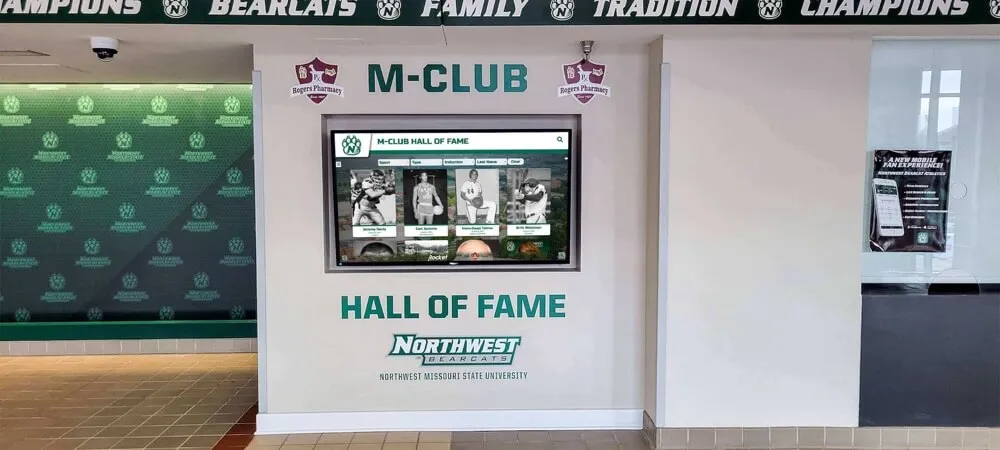
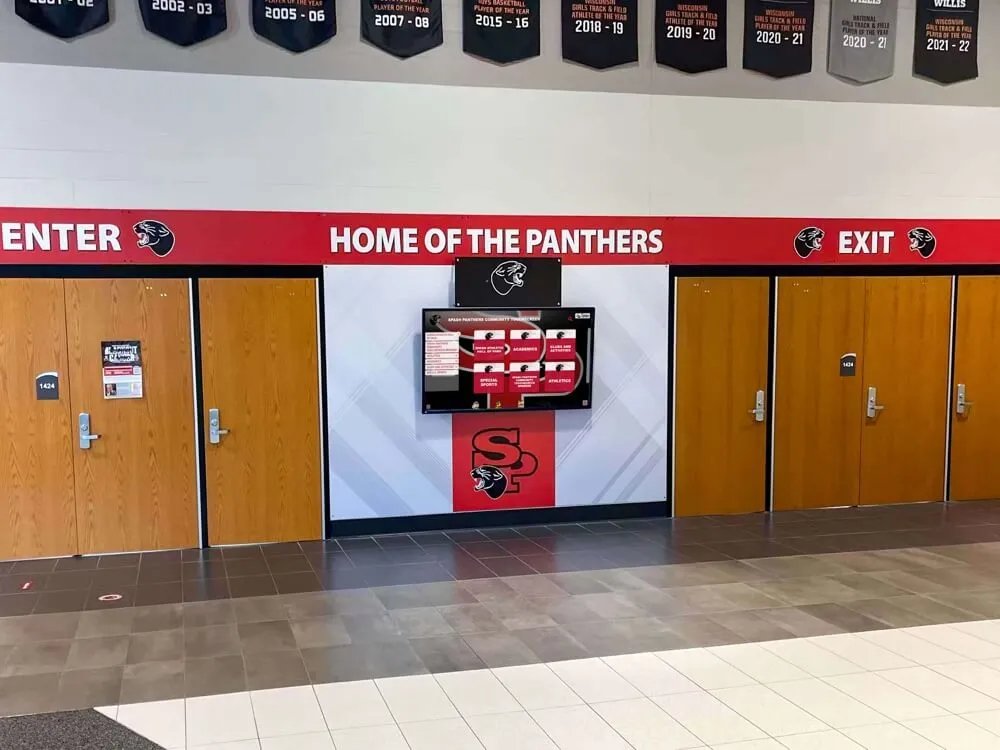
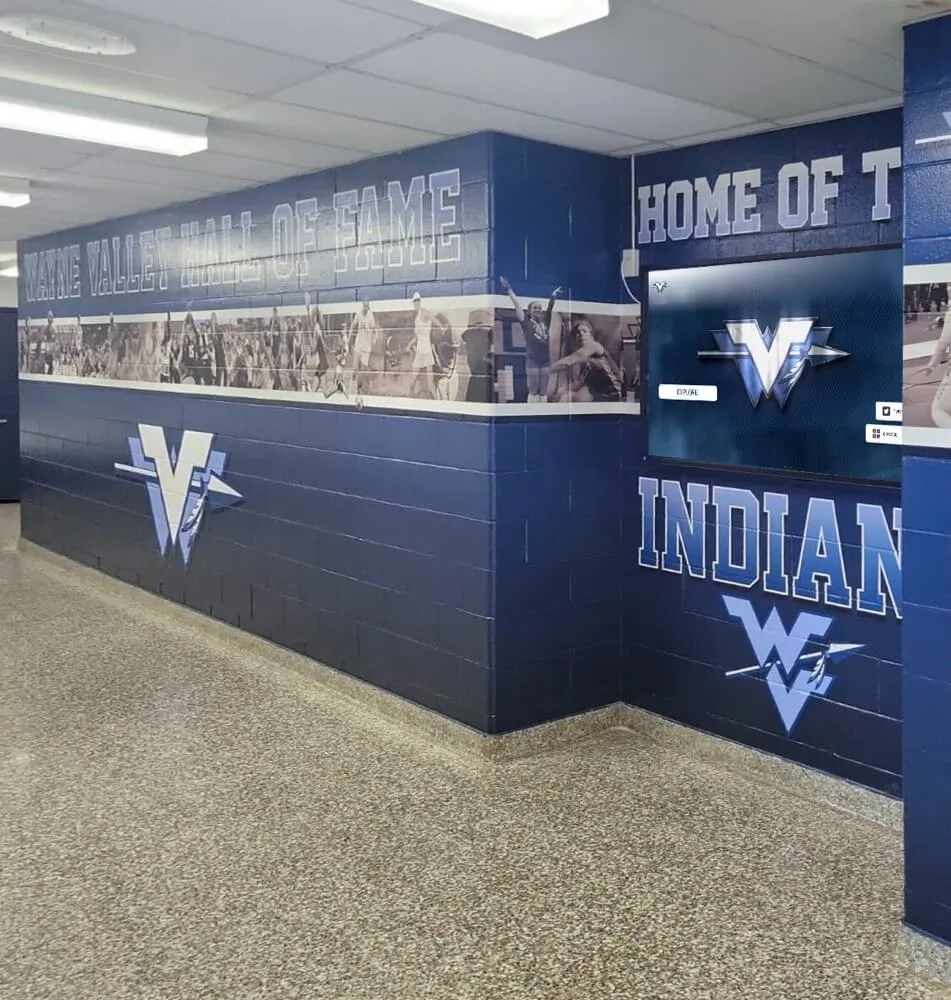
Digital recognition walls mounted in school hallways transform daily pedestrian traffic into regular encounters with faculty achievement and institutional pride
Why Teacher Appreciation Needs a Year-Round Strategy
Teacher Appreciation Week—observed annually during the first full week of May, with National Teacher Appreciation Day on the Tuesday of that week—provides a focused moment for schools to celebrate their educators. But recognition that exists only one week per year misses the cumulative, motivational impact of acknowledgment woven into everyday school life.
A 2023 Gallup analysis found that employees who receive regular recognition for their work are five times more likely to be engaged and four times less likely to leave their organization. Education is no different. Teachers who feel their contributions are publicly acknowledged—not just privately appreciated—bring more discretionary effort to their classrooms, mentor students more deeply, and remain at their schools longer.
Effective teacher recognition programs treat Appreciation Week as the peak of a year-round strategy: a concentrated celebration that amplifies ongoing gestures of recognition rather than substituting for them.
Traditional Teacher Appreciation Week Ideas
Traditional approaches to teacher appreciation remain valuable because they are personal, immediate, and require no technology or large budget. The most effective programs layer these accessible ideas over more permanent infrastructure.
Classroom Decorations and Surprise Entries
Walking into a decorated classroom on the first day of Appreciation Week sets a positive tone before the school day begins. Student government groups, parent organizations, or administrative teams can coordinate door decorations that greet teachers with personalized elements: the teacher’s name, meaningful quotes, or a list of student signatures that communicate genuine effort rather than generic decoration.
Hallway gratitude murals—large butcher paper sheets where students and families add appreciative notes throughout the week—create a collective display that grows more meaningful as the week progresses. At week’s end, the mural panels can be laminated and gifted to the school’s most tenured teachers as a keepsake that captures community sentiment in a single artifact.
Personalized Gifts That Carry Meaning
The most appreciated gifts for teachers tend to be practical and personalized rather than generic. Survey your teachers in advance of Appreciation Week to understand what genuinely helps them: classroom supplies they consistently fund out-of-pocket, experiences, or personal items they would not purchase for themselves.
Gift cards to teacher supply platforms, custom planners with the school’s branding, or donations made to classroom wish lists on platforms like DonorsChoose translate appreciation into tangible impact. For subject-specific recognition—honoring an art teacher with custom studio supplies or a science teacher with lab materials their budget does not cover—the gesture demonstrates that the school knows who this person is and what they do each day.
Handwritten Notes from Students and Families
No gift replaces a well-written, specific, personal note. The most consistently reported form of recognition that teachers treasure long-term is a handwritten letter—from a student, from a parent, or from a former student who reached out years later—that articulates specifically how a teacher’s care made a difference.
Schools can structure this through organized letter-writing campaigns: classroom time for students to write to their teachers on school letterhead, parent communication that invites families to send written notes during Appreciation Week, and outreach to recent alumni who may want to reconnect with the educators who influenced them most.
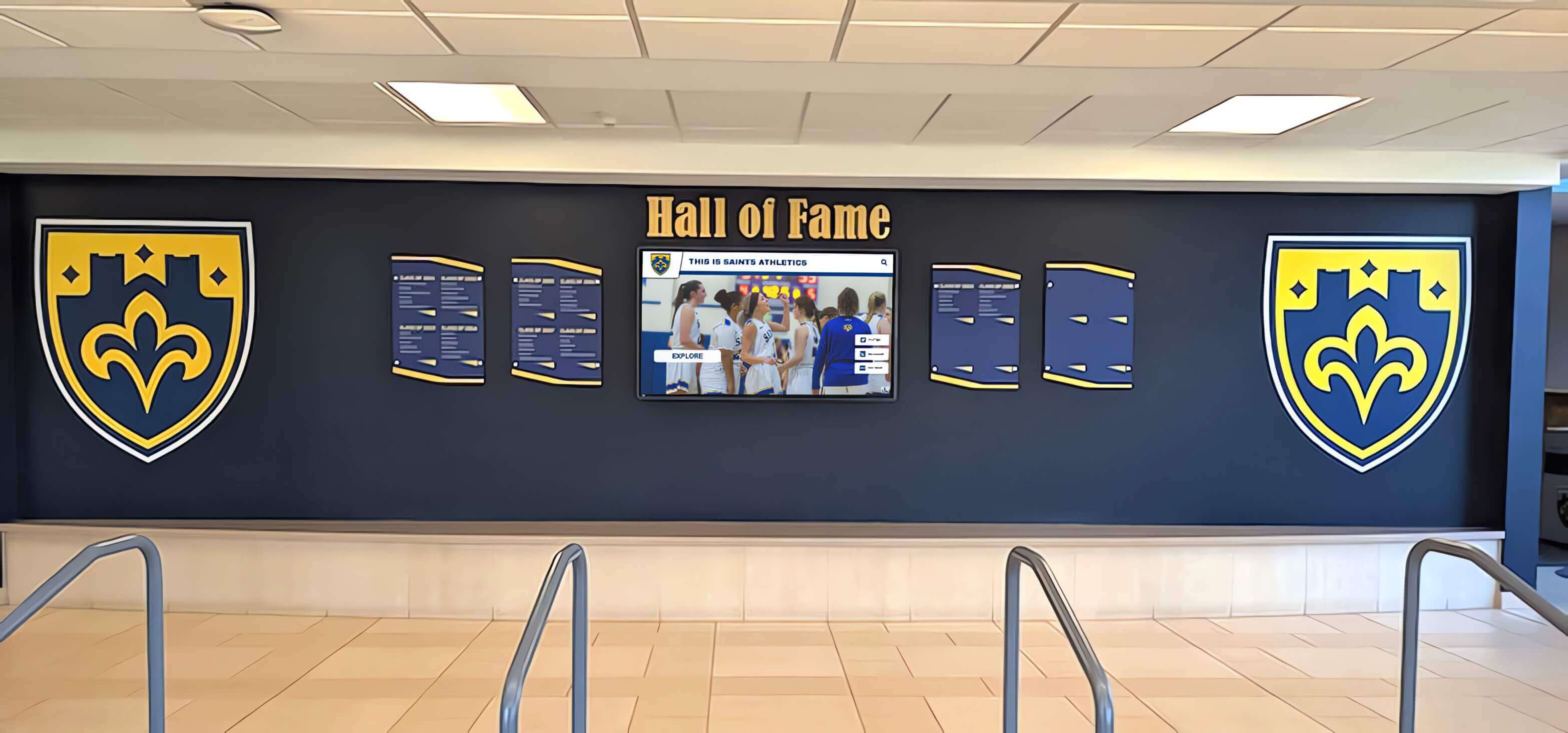
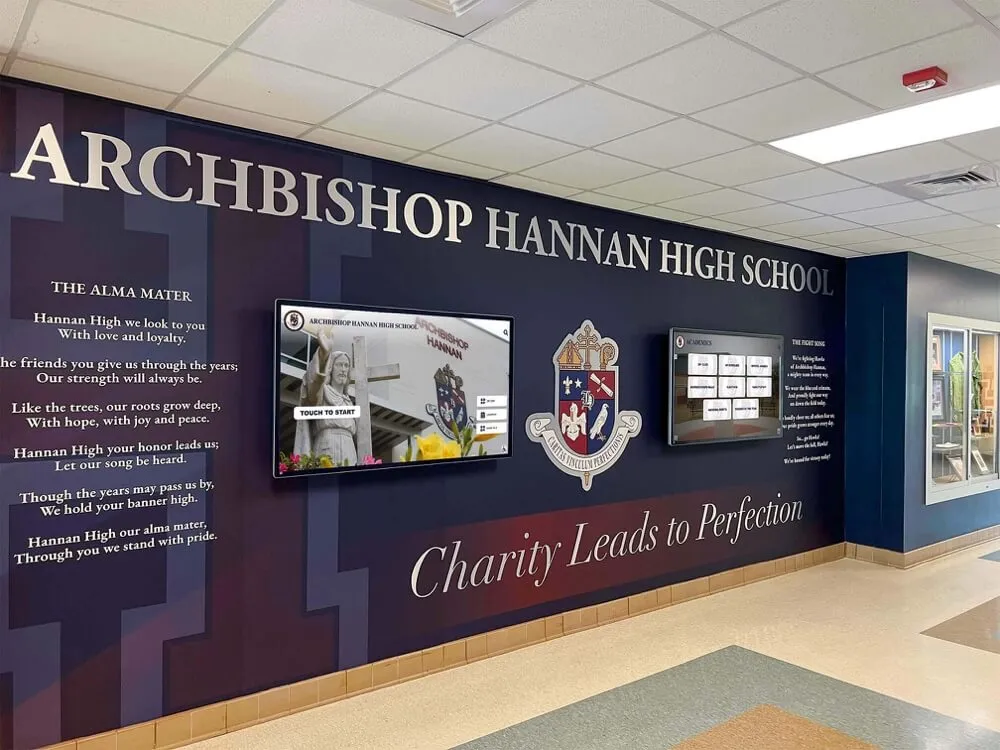
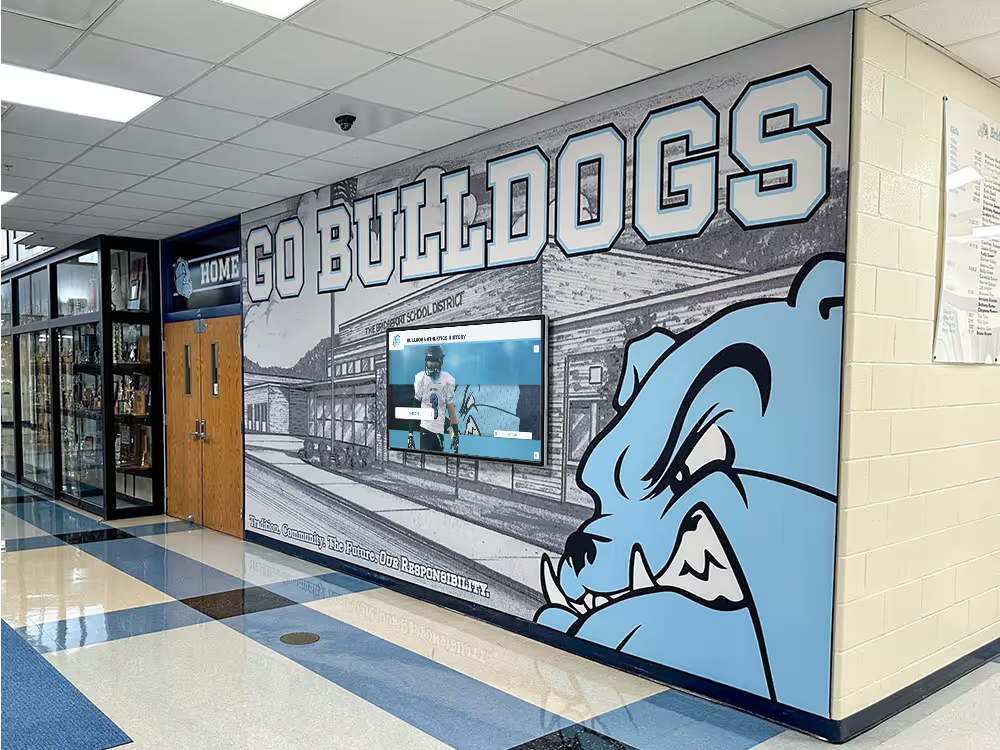
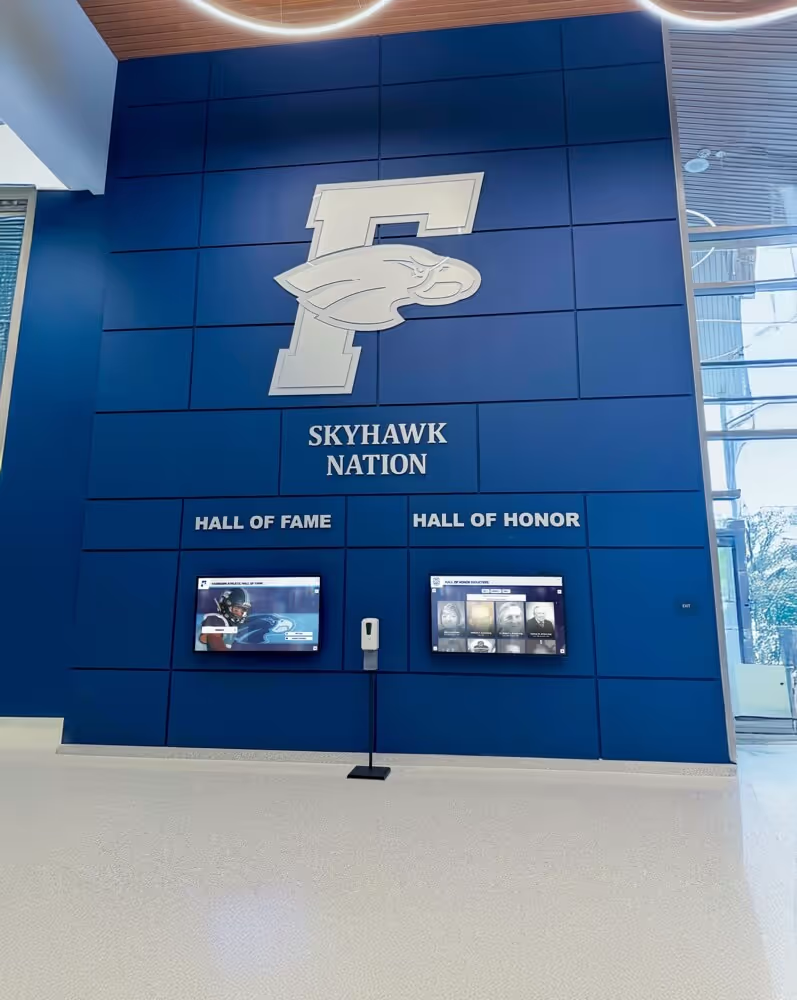
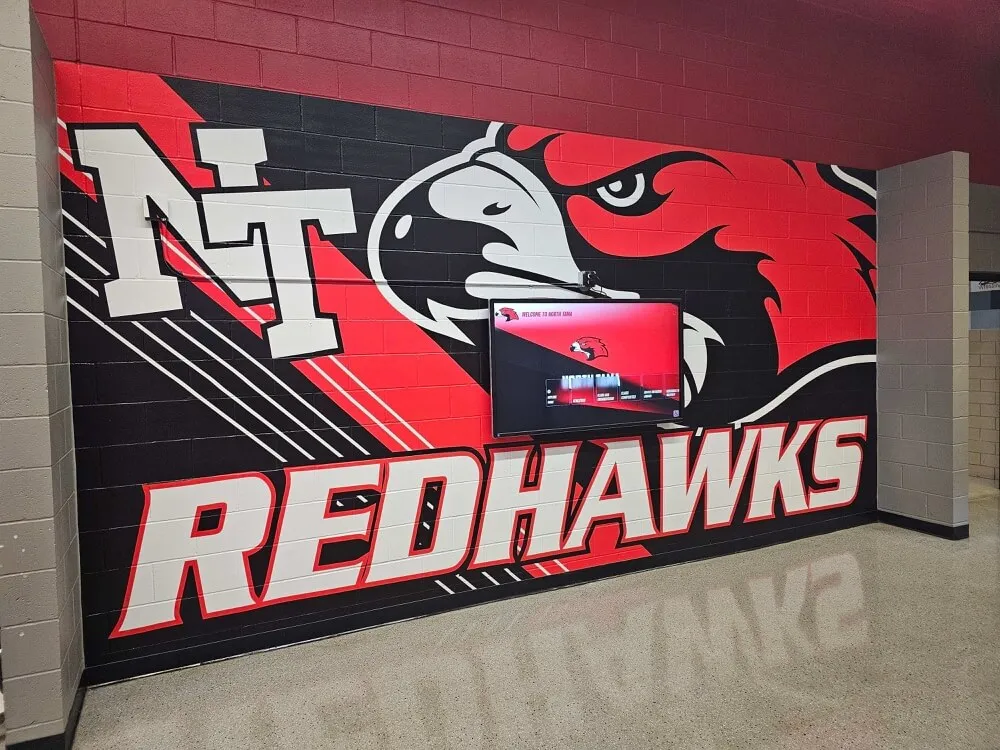
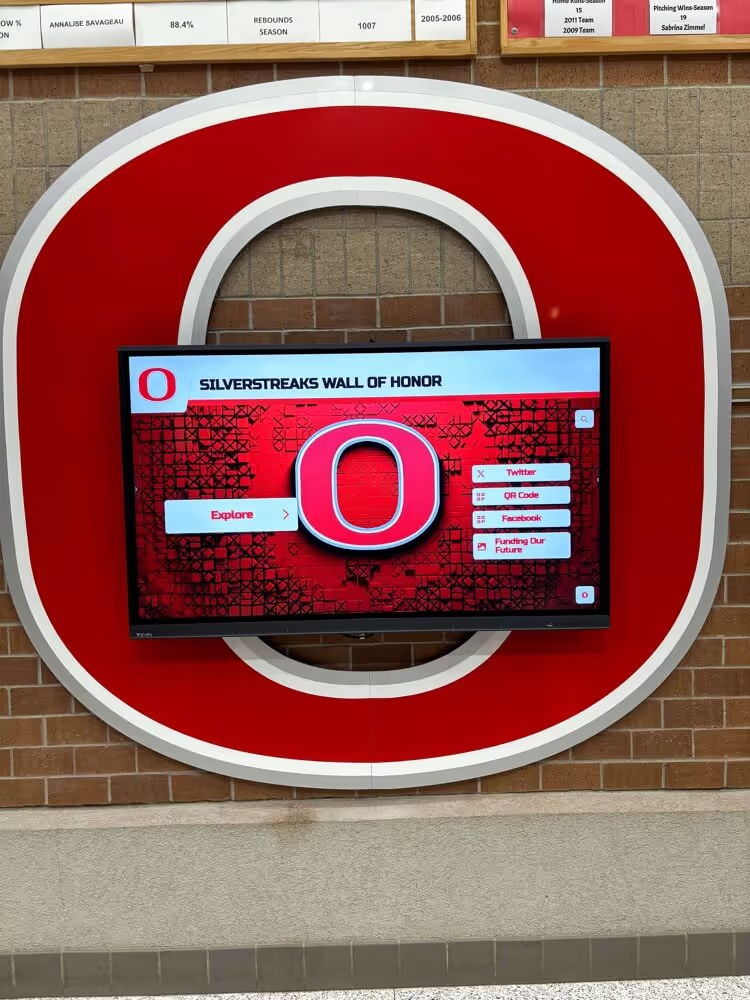
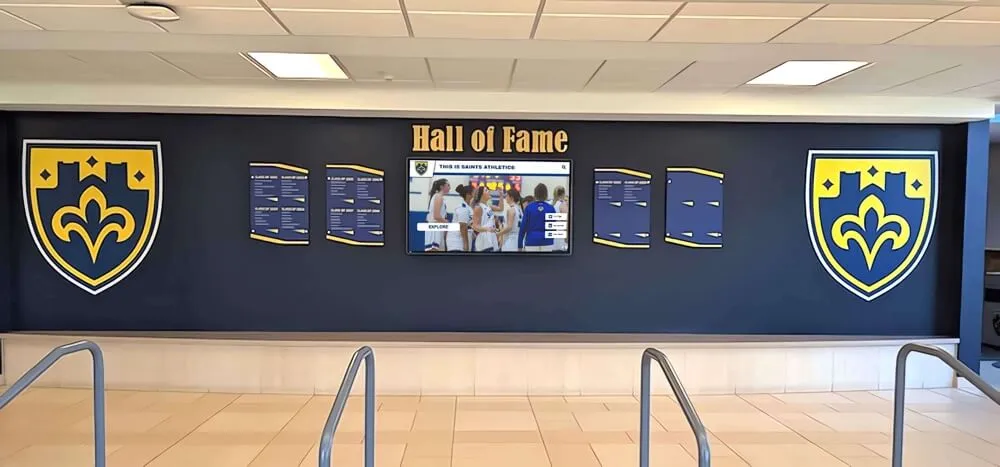
School lobby recognition walls that combine traditional elements with digital displays give teachers year-round visibility extending well beyond Appreciation Week celebrations
School-Wide Events and Ceremonies
Appreciation Week is also an opportunity to bring the community together in organized recognition events that give teachers the public celebration their work deserves.
Staff Luncheons and Appreciation Meals
A catered lunch—or a community potluck where families bring dishes—transforms a regular workday into a visible expression of institutional gratitude. The most memorable staff luncheons include intentional structure beyond simply providing food:
- Short awards presentation acknowledging specific teachers for specific contributions during the year
- Remarks from administration that connect individual teacher work to school-wide goals and student outcomes
- A student performance or message that brings the reason for the recognition directly into the room
Involving student council or student government in planning and executing these events creates ownership across generations of the school community. For ideas on how student leaders can organize meaningful recognition events, student council program leadership resources offer practical frameworks applicable to staff appreciation planning.
Morning Announcement Recognition
Daily morning announcements during Appreciation Week can feature a different teacher spotlight each day—a brief personal fact, years of service, a favorite memory from teaching—alongside student-recorded audio messages honoring specific educators. This approach costs nothing beyond a few minutes of planning and gives faculty public recognition that the entire student body hears simultaneously.
A countdown structure (“Day 3 of Teacher Appreciation Week—today we honor our science department”) builds weekly momentum and ensures every department receives dedicated visibility before the week concludes.
Department and Role-Specific Recognition
Rather than generic all-staff recognition, consider organizing appreciation around academic departments or specific roles:
- Arts faculty recognition can include display of student artwork created in teachers’ honor—schools looking for guidance on art class gallery display approaches find that visual displays created by students communicate respect in a medium the teacher values professionally
- Athletic and coaching staff recognition for faculty who give time beyond the classroom to student programs
- Support staff recognition—cafeteria workers, custodians, school counselors, and office staff—who often go unacknowledged in standard appreciation frameworks
Volunteer staff who contribute to schools deserve recognition alongside certified teachers. Resources on meaningful volunteer appreciation ideas apply directly to the non-certified staff whose daily contributions hold schools together.
Wall Displays: Bringing Teacher Appreciation Into the Building’s Architecture
Physical wall displays transform appreciation from a private gesture into a public, visible, and permanent expression of institutional gratitude. Well-designed faculty recognition walls accomplish something that a card or gift cannot: they communicate to everyone who walks past that the school considers its educators worth honoring prominently and continuously.
Faculty Recognition Boards
A dedicated faculty recognition board—distinct from student honor rolls and athletic display cases—gives teachers their own recognized space in the building. Effective boards include:
- Individual teacher profiles with photo, name, subject, and years of service
- Recognition for milestone anniversaries (5, 10, 20, 25 years)
- Teaching awards and certifications received during their career
- Community contributions beyond the classroom
Updated annually, a well-maintained board communicates that the institution values institutional memory around its educators—not just its student achievers. When faculty see their names displayed alongside their contributions in the same hallways where students walk every day, the recognition operates continuously rather than only during a designated week.
Gratitude Walls and Tribute Panels
Schools with dedicated wall space can create gratitude installations—framed panels, painted murals, or modular display systems—designed to be permanent or semi-permanent fixtures:
Framed quote panels: Collect meaningful quotes from current and former students about specific teachers over multiple years. Framed and mounted, these create a wall of testimony that communicates faculty impact in the most personal possible terms.
Faculty milestones timeline: A visual timeline of teacher careers at the school—hire date, programs developed, awards received, student clubs launched—gives visitors and students a sense of the institutional depth that experienced faculty represent.
Community heroes recognition: Many schools are now using community praise touchscreen displays to honor the full range of contributors to school culture—faculty, coaches, volunteers, and community partners—in a single dynamic display updated throughout the year.
What Makes a Faculty Wall Display Effective
The strongest faculty wall displays share common characteristics:
- Visible placement in high-traffic corridors, lobbies, or common areas where teachers, students, families, and visitors walk daily
- Professional quality in materials, layout, and photography that signals institutional investment
- Regular updating so the display reflects current faculty rather than becoming a historical artifact
- Personal specificity that goes beyond name and title to reflect what each teacher actually contributes
A display that includes a teacher’s photo, name, subject, years of service, and one specific contribution or achievement communicates more than a generic nameplate—and creates a richer public record that persists long after any single Appreciation Week.
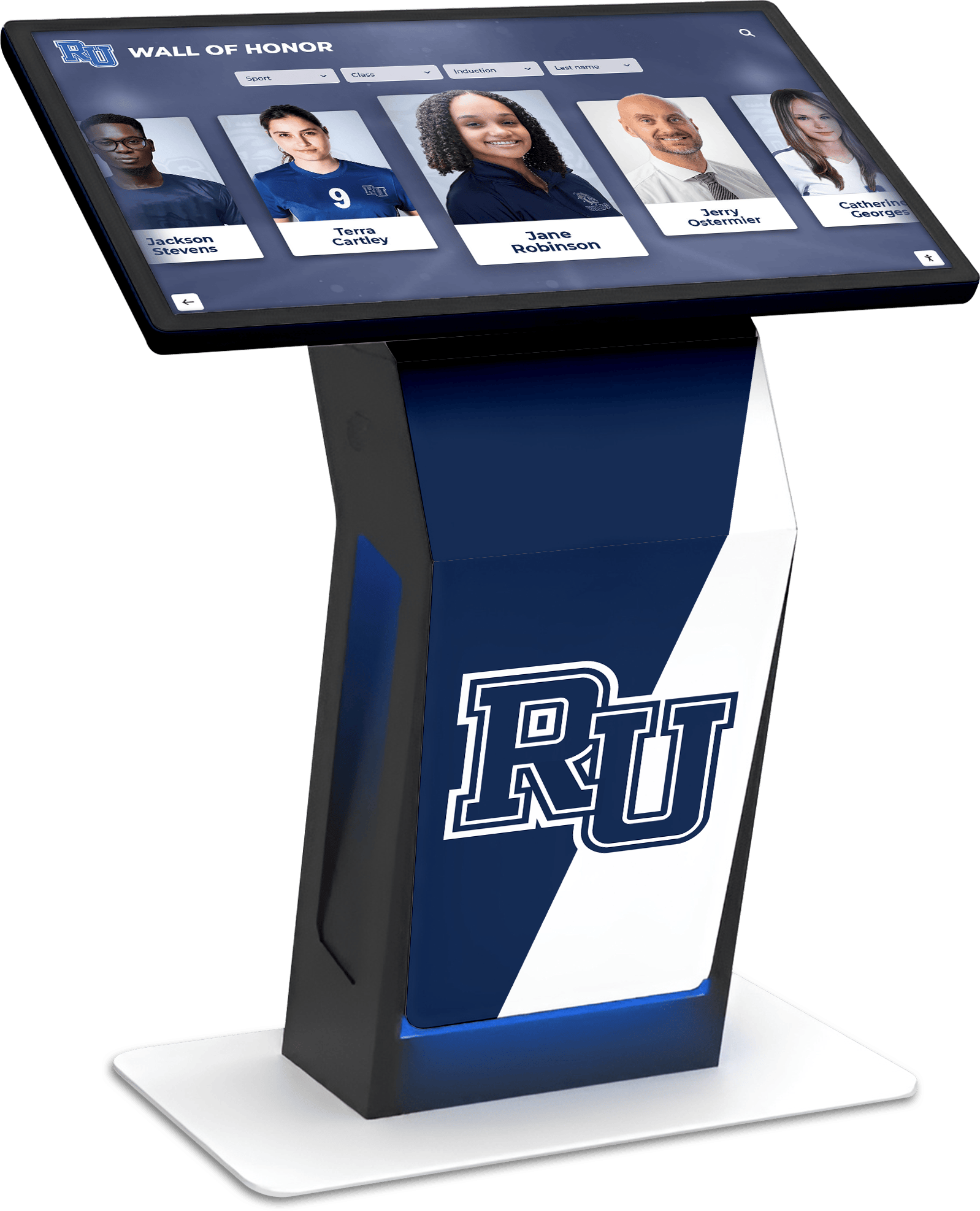
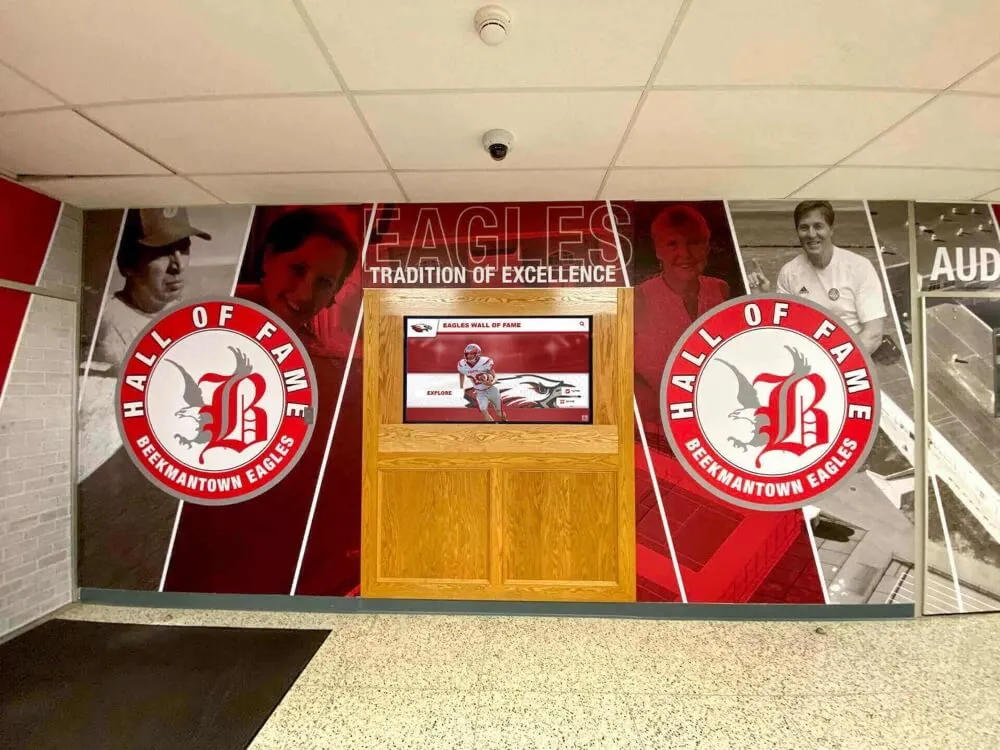
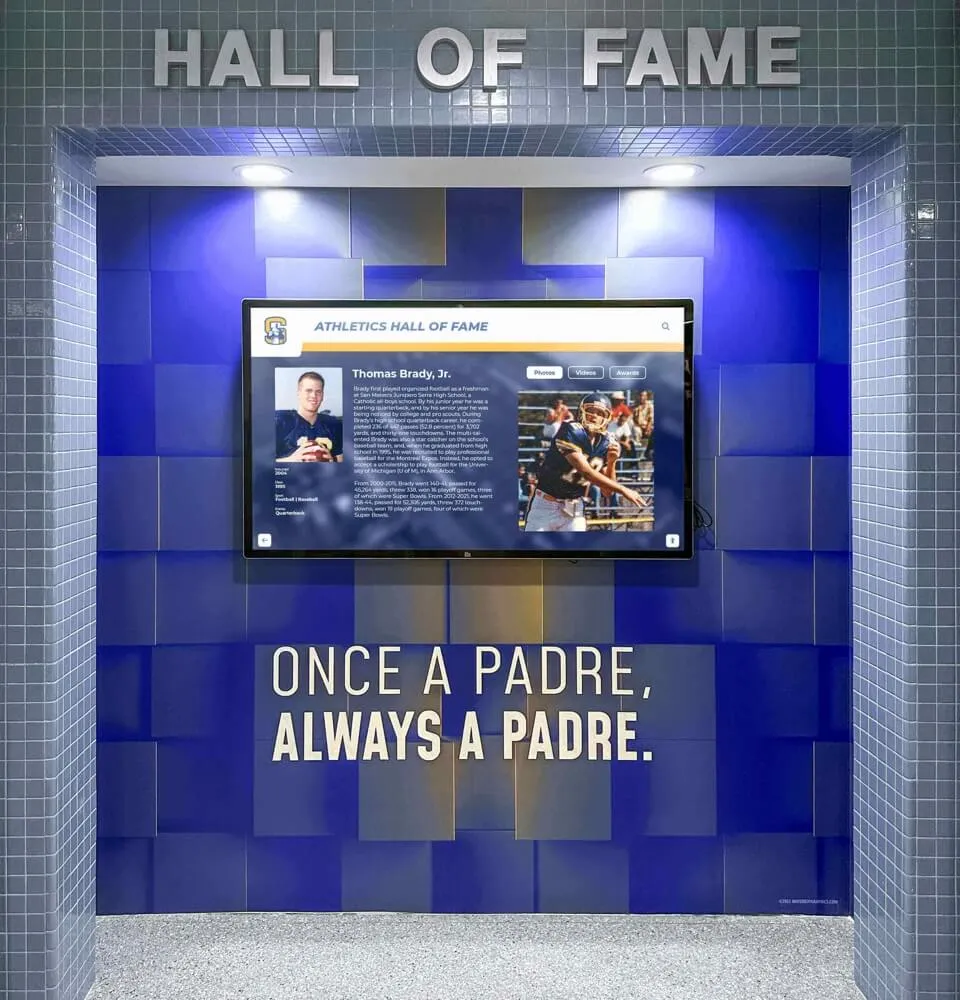
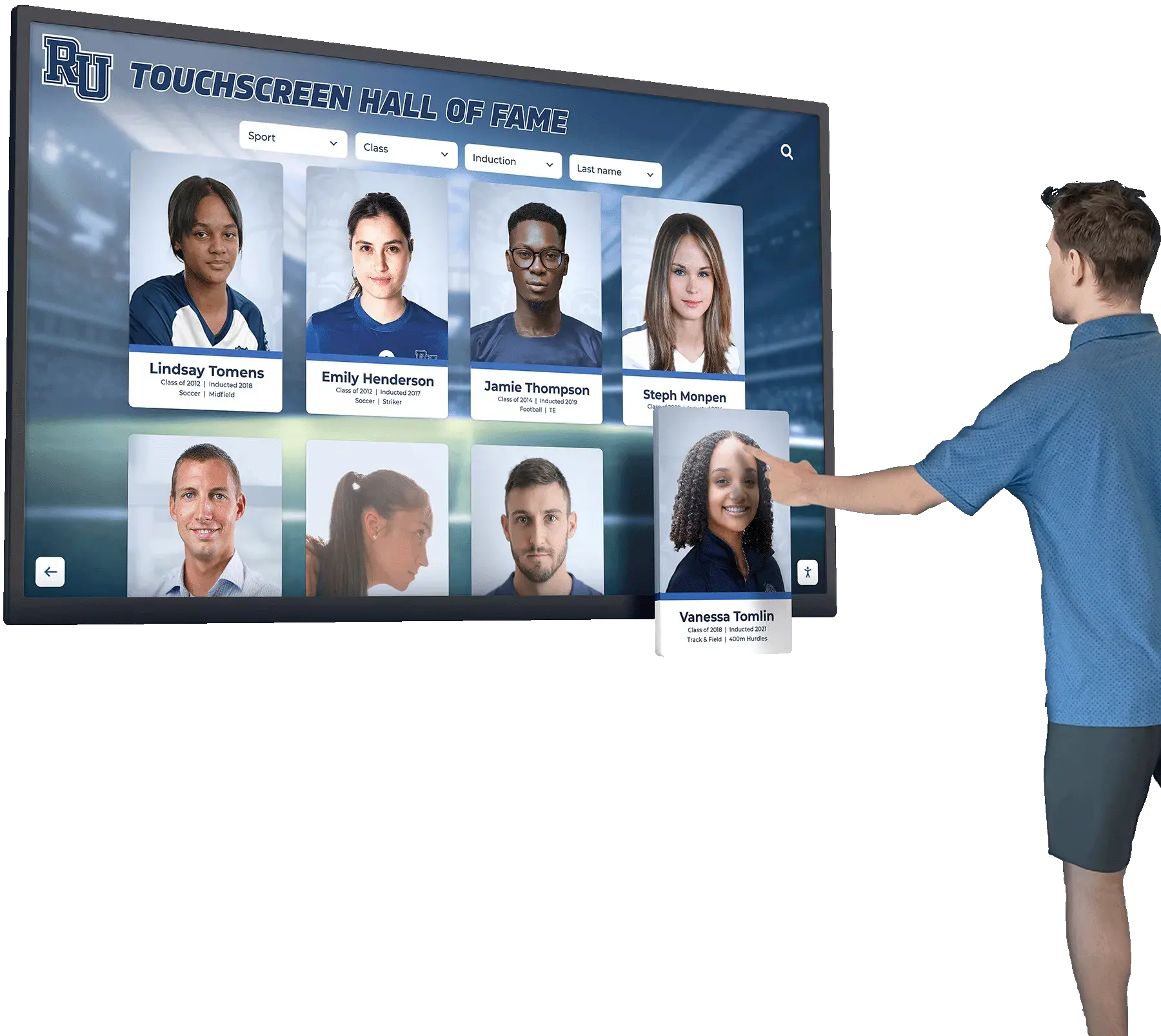
Interactive honor wall kiosks give schools a dynamic recognition system updated in real time and browsable by teachers, students, and visitors throughout the school year
Digital Tributes That Extend Teacher Appreciation Beyond the Week
Digital recognition approaches give schools the ability to share appreciation with audiences that physical displays cannot reach—alumni communities, families who cannot visit the building, and the broader public—while creating records that persist across many years.
Social Media Appreciation Campaigns
A structured social media campaign during Teacher Appreciation Week, organized around a school-specific hashtag and consistently branded visual templates, creates collective momentum. Effective campaigns feature one teacher per day with a profile post—photo, subject, years of service, and a brief note about their impact. Schools that invite student and family submissions for quotes and photos feed the campaign with authentic community content throughout the week.
For schools interested in producing consistent, professional-quality social media graphics for recognition campaigns, resources on school social media graphic tools help communications staff develop recognizable visual branding for appreciation content that looks polished across platforms.
Video Tribute Compilations
A student-produced video tribute—recordings of students sharing specific memories and thank-you messages to their teachers—creates one of the most emotionally resonant Appreciation Week deliverables. These videos can be shared at the staff luncheon, played during morning announcements throughout the week, posted to the school’s social media channels, and archived on the school website for permanent access.
Schools with media production classes or broadcast journalism programs can involve students directly in producing these videos, creating a dual benefit: genuine teacher recognition and authentic student engagement in a meaningful communications project.
Email and Newsletter Recognition
A dedicated teacher appreciation edition of the school newsletter—with teacher profiles, years-of-service milestones, awards received, and family-submitted tributes—reaches the parent and alumni community in a format they regularly engage with. For long-tenured faculty approaching retirement, or teachers who have made particularly significant contributions to school culture, a featured newsletter profile that goes deep into their career is a recognition form that many teachers treasure more than any physical gift.
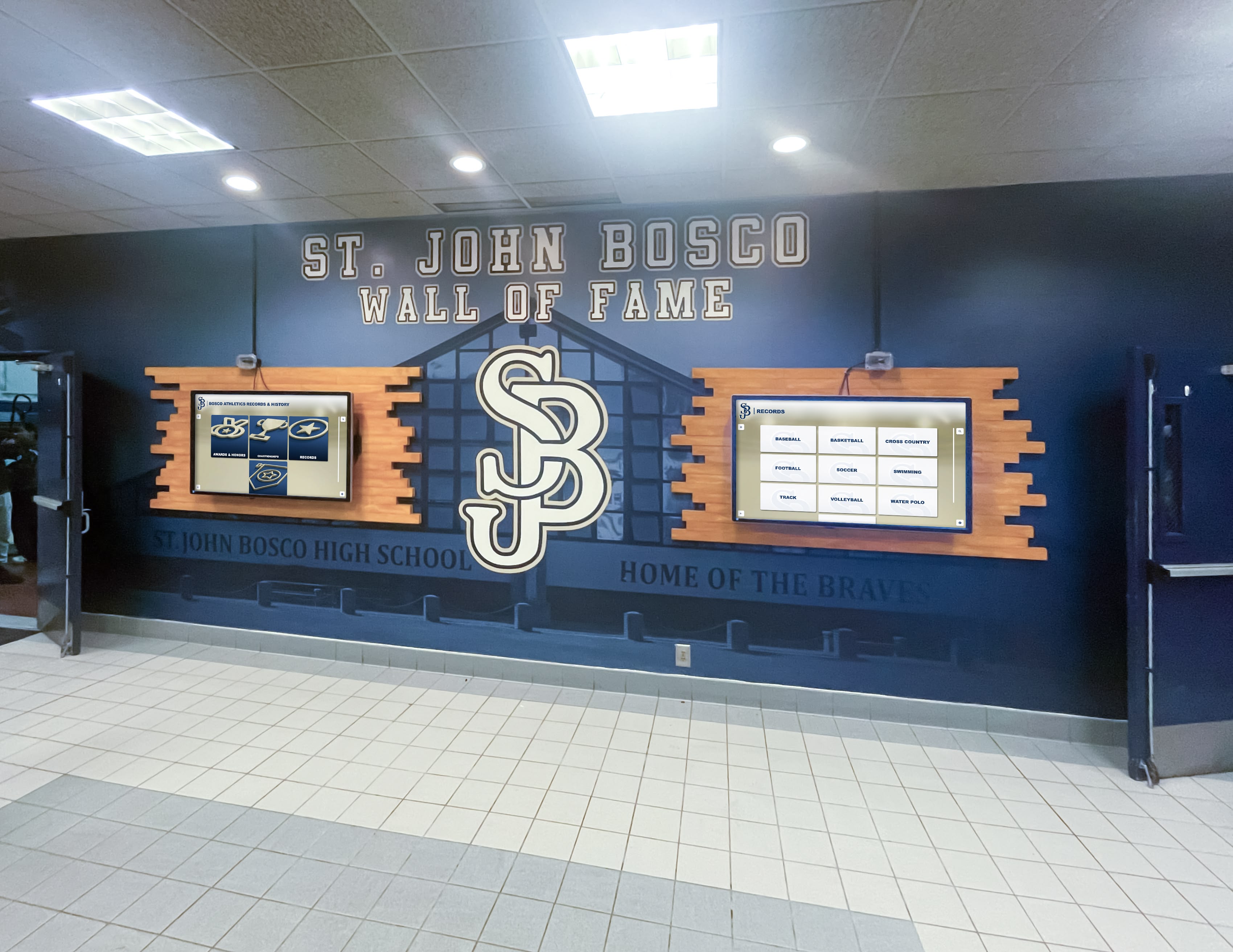
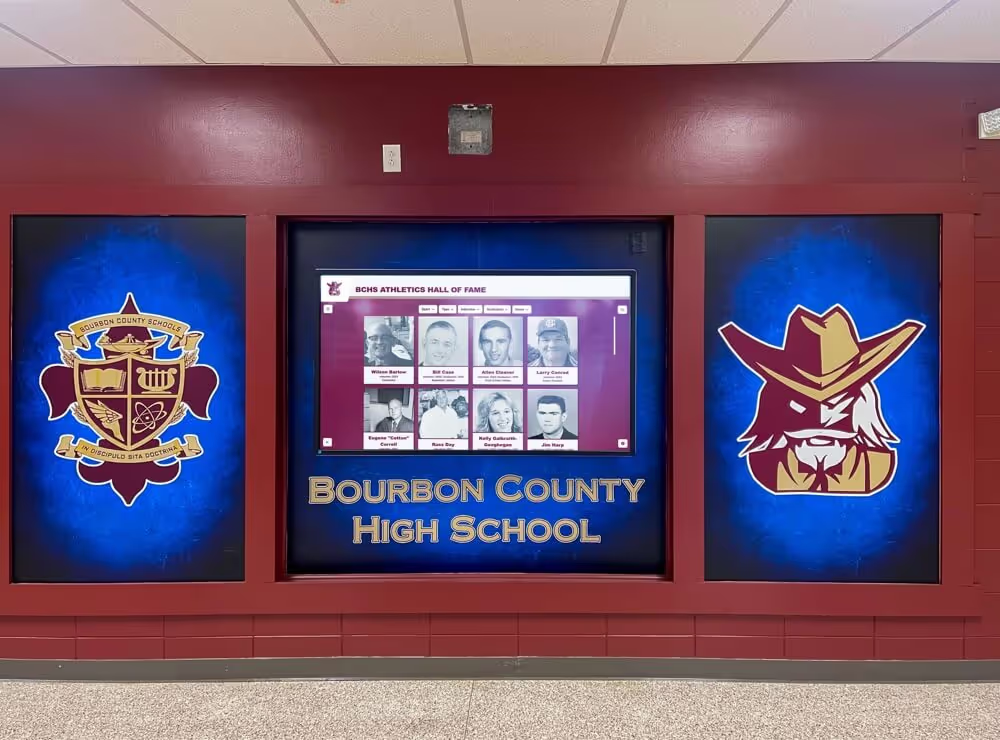
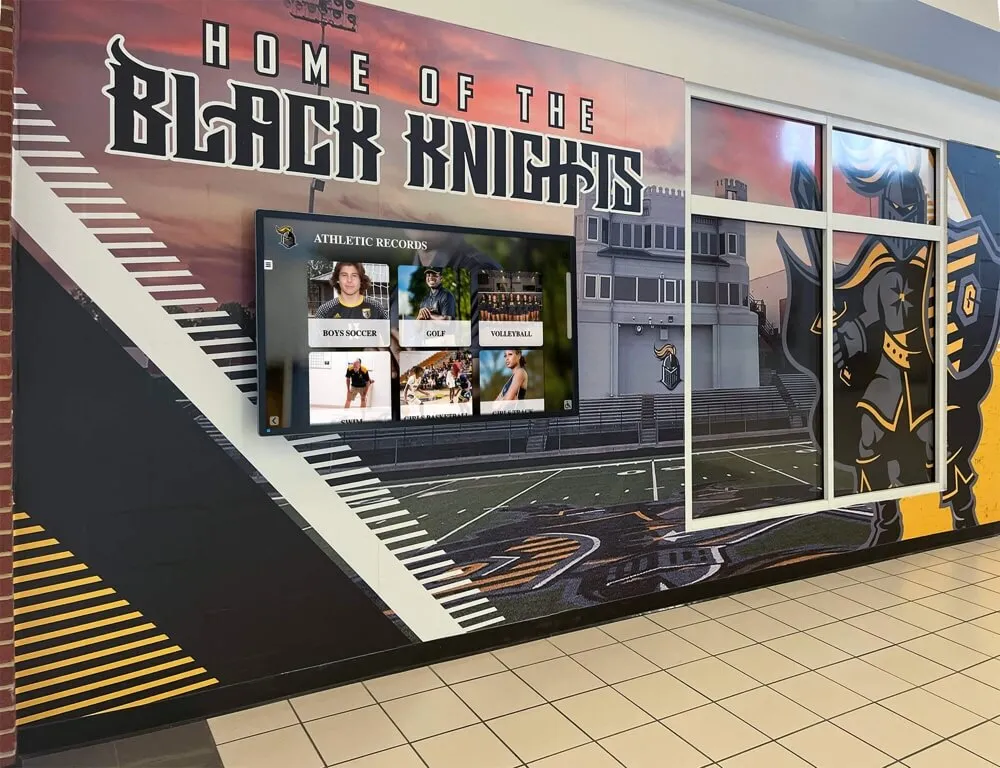
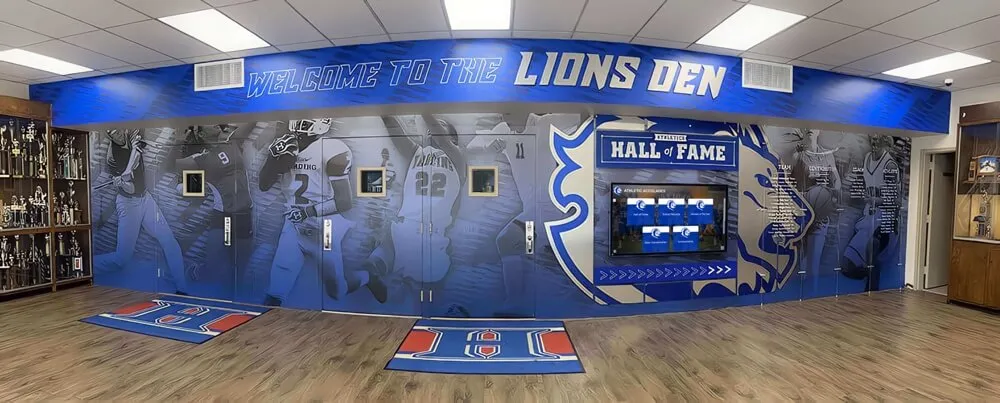
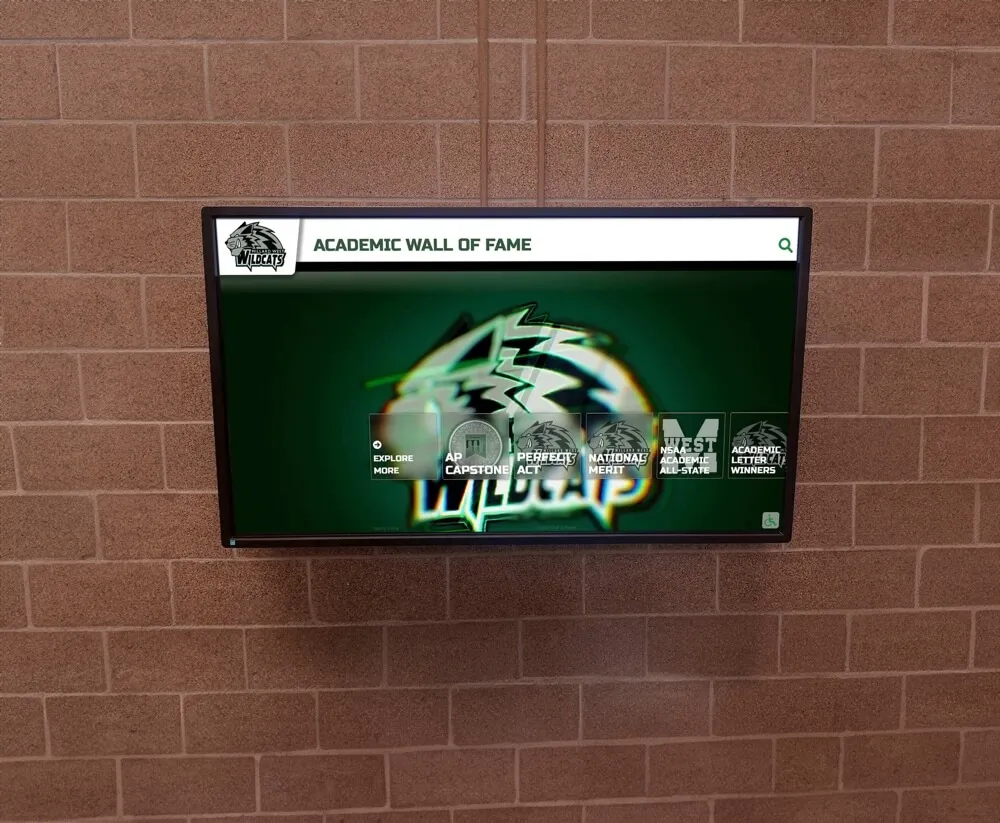
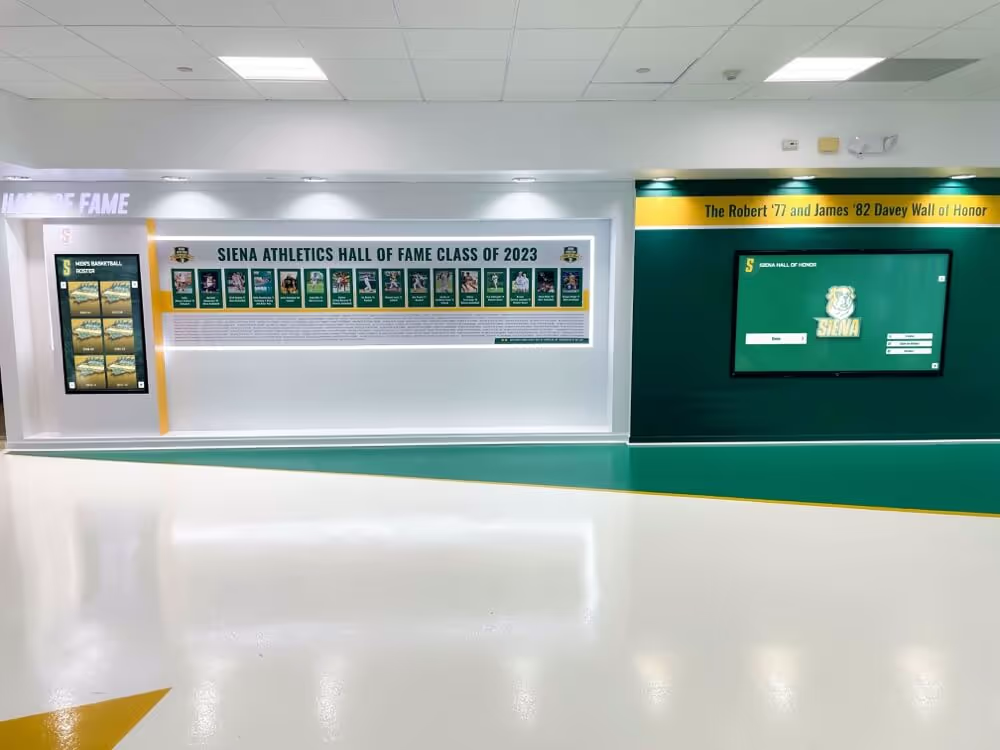
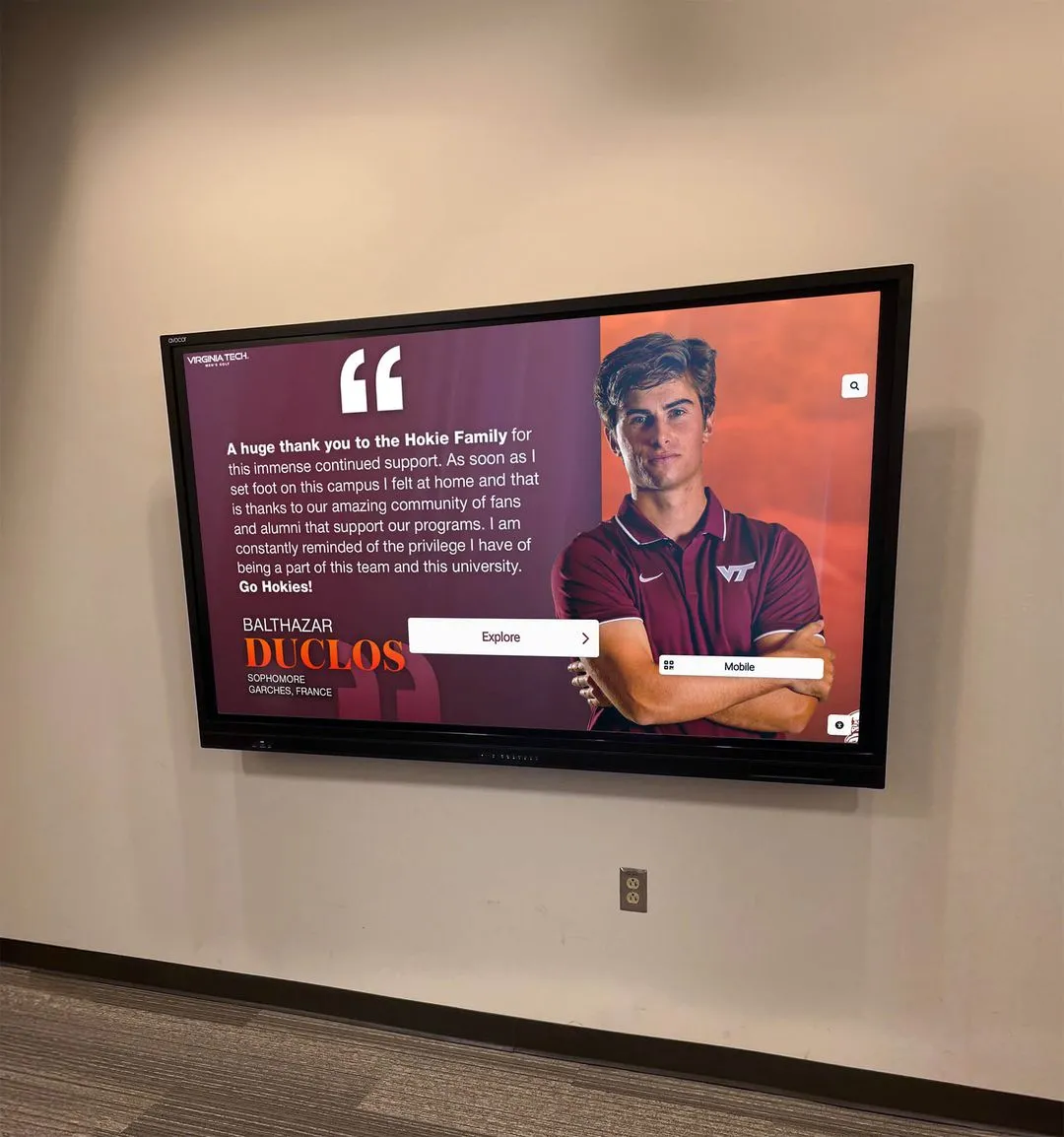
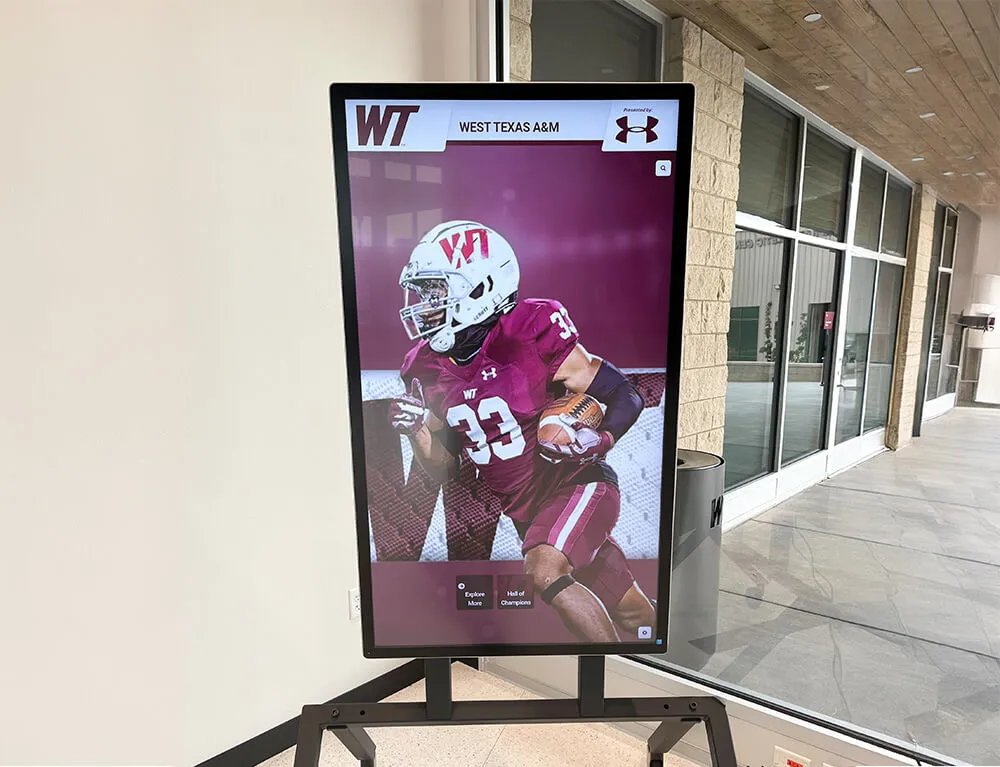
Dual-screen hallway displays create consistent year-round visibility for faculty recognition alongside student and program achievement content
Permanent Digital Recognition Systems for Faculty
The limitation of Appreciation Week—however well-executed—is that it ends. For schools that want teacher appreciation to become a permanent, visible feature of institutional culture, digital recognition systems offer a solution that scales across time.
Faculty Halls of Fame
A faculty hall of fame—whether physical, digital, or both—creates the highest tier of teacher recognition: permanent, selective, and prestigious. Unlike annual appreciation certificates, hall of fame induction is cumulative recognition that honors a teacher’s entire career contribution rather than any single year of service.
Strong faculty hall of fame programs include clear induction criteria (years of service threshold, leadership contributions, community impact), an annual induction ceremony that gives inductees a formal public moment of recognition, and permanent display in a prominent location where inductees’ contributions are documented for future generations.
For schools developing recognition frameworks for retired or deceased faculty, guidance on honoring deceased faculty through memorial recognition provides frameworks for building recognition that outlasts individual careers while preserving institutional memory across decades.
Interactive Digital Display Systems
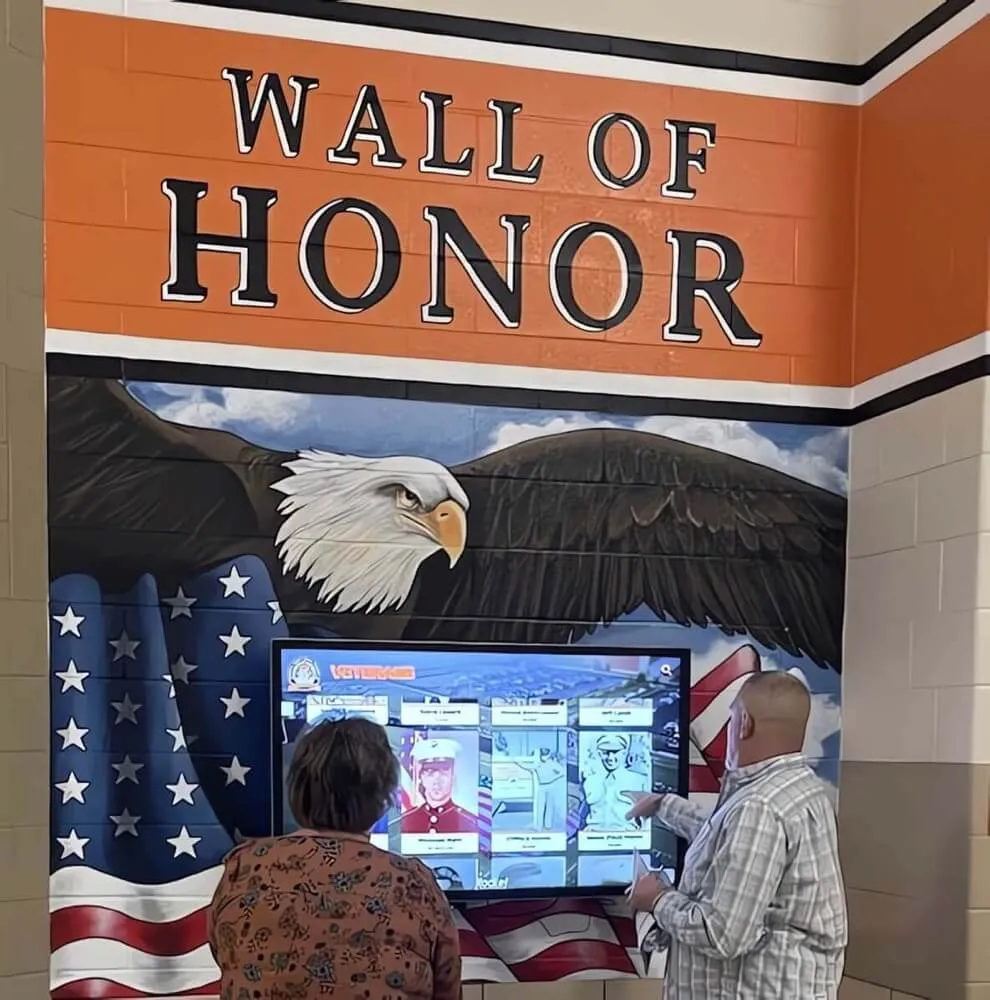
Schools investing in permanent faculty recognition infrastructure are increasingly turning to interactive digital display systems that bring teacher tribute walls to life. These systems—touchscreen kiosks or display panels installed in hallways, lobbies, or faculty recognition areas—offer capabilities that static display cases cannot:
- Searchable databases of faculty profiles organized by department, years of service, or recognition category
- Multimedia content including photos, video interviews, and recorded student testimonials
- Annual updates without physical reconstruction—new faculty can be added and content refreshed through software rather than physical display renovation
- Alumni connection features that link current faculty recognition to the student generations they taught
Understanding how interactive display systems work in school environments is a useful starting point for school leaders evaluating whether digital recognition infrastructure fits their community’s needs and budget.
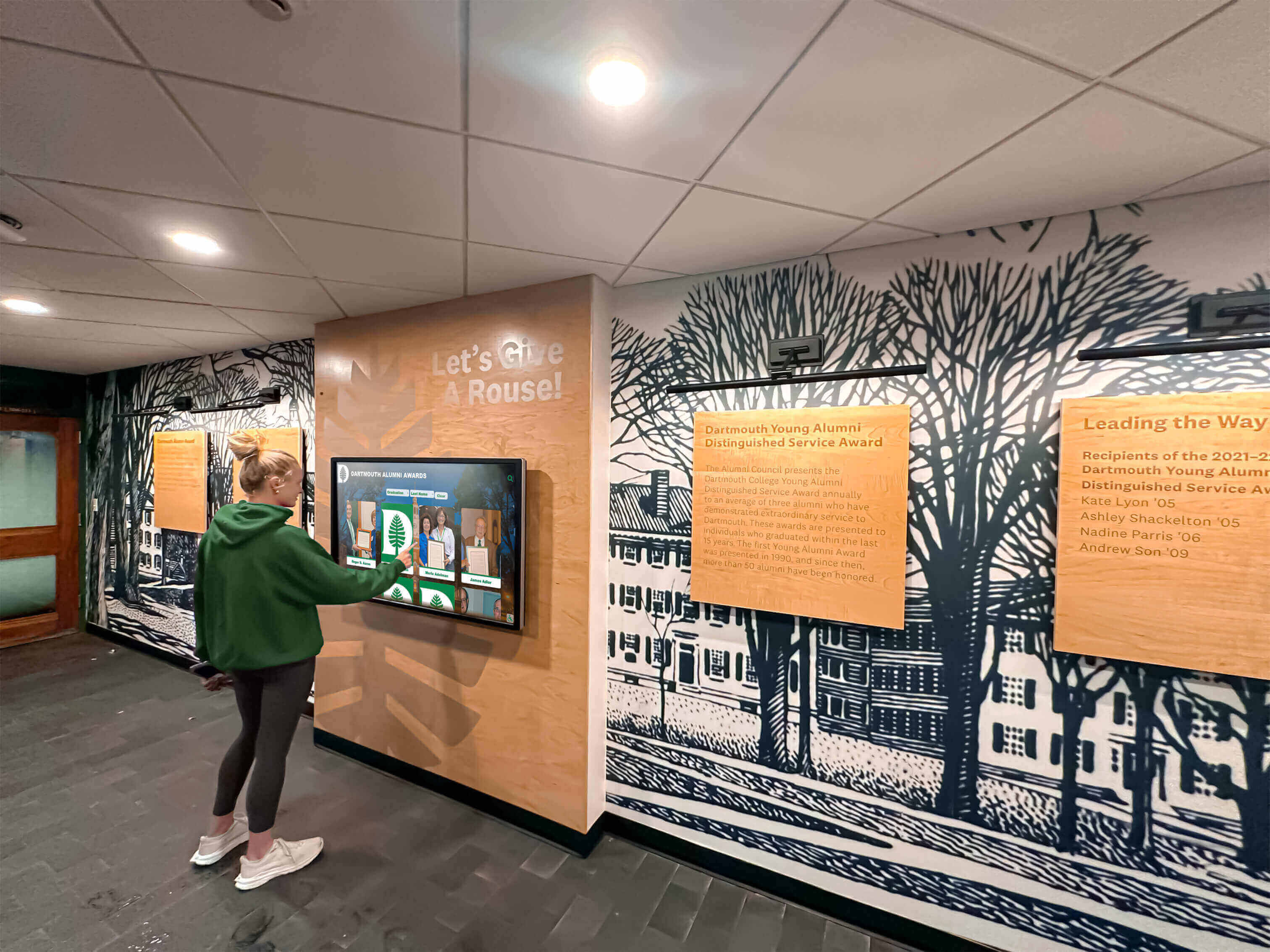
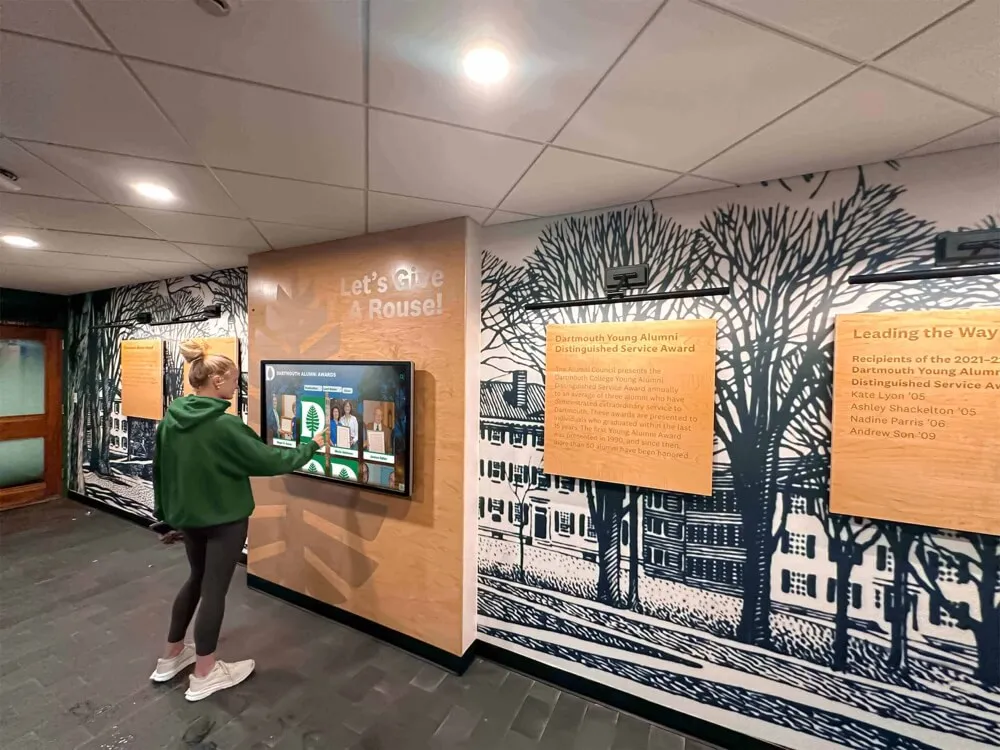
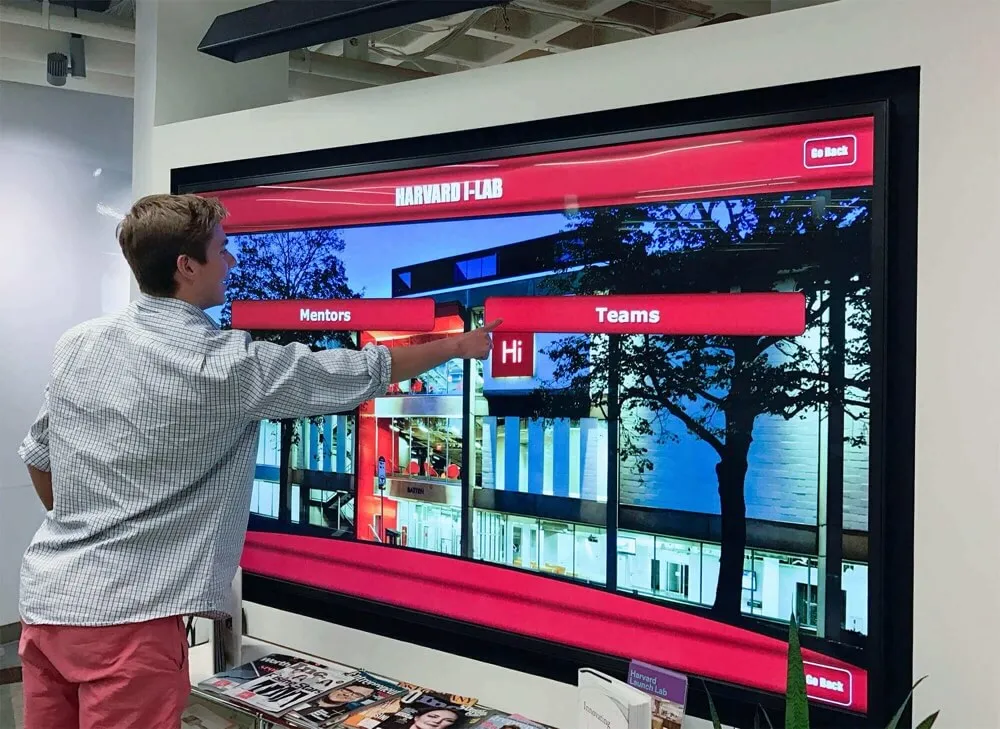
Students who can browse faculty recognition profiles on touchscreen displays in their daily paths develop deeper understanding of the educators who built the programs they participate in
Dual-Purpose Recognition Infrastructure
Schools that invest in recognition display infrastructure find that the same systems honoring faculty can simultaneously recognize donors, alumni, athletic champions, and academic achievers—creating a unified recognition environment that reflects the full community. Understanding how digital hall of fame and donor wall installations serve multiple recognition purposes simultaneously helps administrators make the case for infrastructure investment that benefits multiple stakeholder groups at once.
Schools that build recognition walls with teachers at the center—rather than treating faculty recognition as secondary to athletic or donor displays—communicate institutional values that current staff, prospective hires, and the broader community can see and respond to every day.
For administrators evaluating specific display options, resources on creative donor recognition wall designs illustrate the range of approaches—from engraved panels to fully integrated digital systems—that adapt naturally to faculty recognition contexts.
Rocket Alumni Solutions designs and installs interactive recognition systems for schools that want to create permanent, prominent, year-round faculty recognition alongside student achievement displays—from touchscreen hall of fame kiosks to full wall installations that honor teachers the way the community expects its heroes to be honored.
Building a Year-Round Teacher Recognition Calendar
Moving beyond Appreciation Week requires a structured approach to distributing recognition across the school year. Consider these touchpoints:
September: New school year welcome recognition—acknowledge returning faculty publicly at the opening all-staff meeting, and spotlight teachers who are beginning milestone years of service
November: Fall semester acknowledgments—five-year anniversaries, new certification recognitions, first-year teacher completion milestones
January: Mid-year recognition—highlight teachers who have gone above their role by launching new programs, coaching a championship team, or leading a community initiative
March: National Education Month recognition opportunities, department-specific spotlights, and preview of upcoming Appreciation Week plans
May: Teacher Appreciation Week as the formal peak of the recognition calendar—large events, public displays, media campaigns, and formal awards
June: End-of-year honoring—retirement recognition, years-of-service awards, hall of fame inductions for qualifying faculty
A recognition calendar that identifies specific moments throughout the academic year prevents appreciation from concentrating only in May and ensures that faculty feel consistently valued—not just when the national spotlight happens to fall on educators.
Frequently Asked Questions
What are the best teacher appreciation ideas that go beyond gifts?
The most impactful teacher appreciation ideas create visible, public, and lasting recognition rather than private gestures. These include faculty recognition walls or boards in prominent hallways, personalized handwritten notes from students and families, morning announcement spotlights throughout Appreciation Week, social media campaigns featuring specific teachers with specific accomplishments, and formal awards ceremonies giving teachers a public moment of celebration. Schools that build permanent recognition infrastructure—digital display systems, faculty halls of fame, milestone timeline displays—create appreciation that outlasts any given week.
When is Teacher Appreciation Week?
Teacher Appreciation Week is observed annually during the first full week of May, with National Teacher Appreciation Day on the Tuesday of that week. The week is coordinated by the National Education Association (NEA) and celebrated by schools, parent organizations, and communities across the United States. Planning for Appreciation Week activities—especially for wall displays, video tributes, and formal events—typically begins four to six weeks in advance.
How can schools create permanent teacher recognition displays?
Schools can create permanent teacher recognition through several approaches: dedicated faculty recognition boards updated annually with photos and milestones, faculty halls of fame with formal induction criteria and ceremonies, hallway timeline displays documenting faculty careers and achievements, and interactive digital display systems hosting searchable teacher profiles with photos, years of service, and multimedia content. Digital systems offer the greatest flexibility—profiles can be updated without physical renovation, content includes video and images, and the database grows over time to document the full scope of a school’s faculty history.
What should a teacher appreciation wall display include?
An effective teacher appreciation wall display should include each teacher’s photo, name, subject area, and years of service at minimum. Stronger displays add specific recognition elements: awards received, programs developed or led, milestone anniversaries, student-contributed tribute quotes, and contributions beyond the classroom such as coaching, advising, or community involvement. Placement matters significantly—a display in a low-traffic area does far less recognition work than one in a main lobby or primary hallway where students, families, and visitors encounter it daily.
How do digital displays improve teacher recognition compared to traditional bulletin boards?
Digital display systems improve teacher recognition in three critical ways: capacity, dynamism, and accessibility. Static bulletin boards are limited by physical space and become visually outdated within months of installation. Digital systems can host complete faculty histories—decades of profiles, achievements, and milestones—in the same footprint, updated through software rather than physical reconstruction. Touchscreen systems allow students and visitors to actively search and browse recognition content, creating engagement that passive displays cannot generate. Digital content can also be shared online, extending the reach of faculty recognition to alumni, prospective staff, and the broader community.
Making Teacher Appreciation Last
Teacher Appreciation Week provides a focused, meaningful moment—but the educators who shape a school’s culture deserve recognition that reflects the permanence of their contribution. When schools invest in visible, year-round faculty recognition infrastructure—recognition boards updated each fall, digital displays that accumulate faculty achievement over decades, formal induction processes for halls of fame, and structured calendars that distribute appreciation across twelve months rather than five days—they communicate institutional values that every person who walks through the building can read.
The schools that retain their best teachers longest are the ones where those teachers feel genuinely, publicly seen—not just privately appreciated during a single designated week. Building that culture begins with taking recognition seriously enough to invest in systems that outlast any single celebration.
Build Faculty Recognition That Lasts Beyond Appreciation Week
Rocket Alumni Solutions designs and installs interactive digital recognition systems for schools that want to honor teachers, faculty, and staff with the same quality of permanent, visible display infrastructure used for athletics and alumni achievement. From touchscreen honor walls to integrated faculty recognition galleries, we build recognition that works every day of the school year.
Explore Digital Recognition Solutions