



A sponsorship thank you letter is the first step in turning a one-season business sponsor into a multi-year athletic partner. Most schools send some version of a thank-you after a sponsorship arrives — but few treat it as the stewardship tool it actually is. A well-written thank-you letter documents what was promised, confirms what was delivered, expresses genuine gratitude, and plants the seed for renewal. Done right, it is the single highest-return communication in an athletic program’s sponsorship calendar.
This guide covers what a sponsorship thank you letter for school athletics should include, provides complete sample wording you can adapt, walks through a sponsor-recognition checklist to attach or reference, and explores how the most effective athletic programs extend sponsor recognition far beyond the letter itself — into digital displays, permanent donor walls, and year-round visibility that makes every renewal conversation easier to have.
The relationship between an athletic program and its sponsors is built on two things: what the school promises and whether it delivers. A thank-you letter sits at the intersection of both. It is the school’s official acknowledgment that a sponsor’s investment was received, valued, and honored — and when it includes specific documentation of what recognition was delivered, it becomes proof of performance that sponsors can share with the marketing manager who needs to justify the next check.

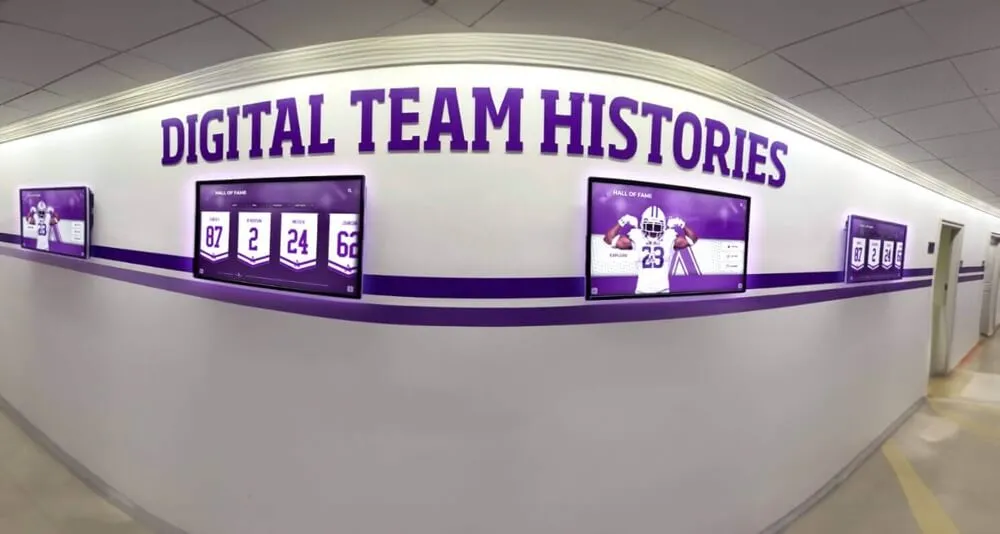
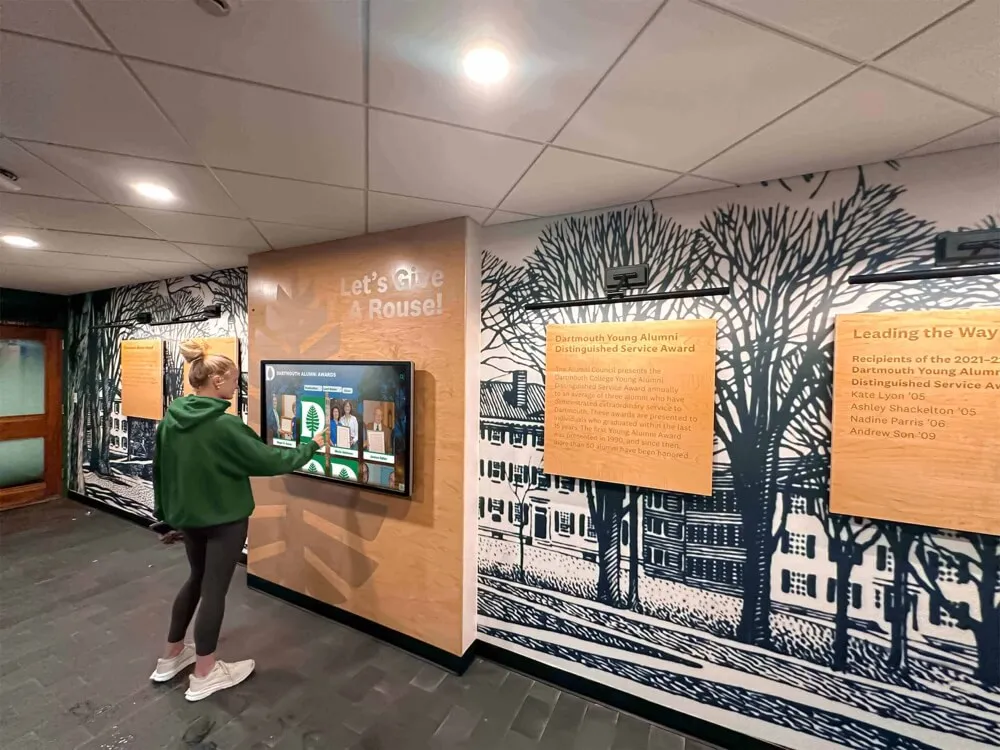
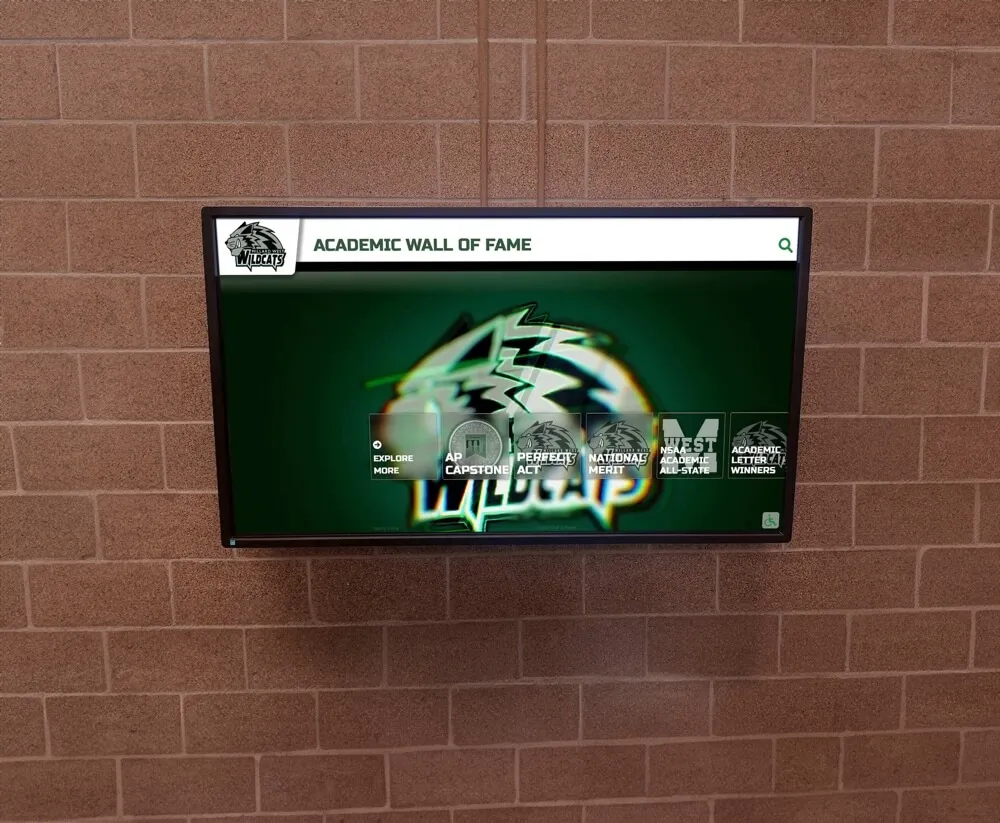
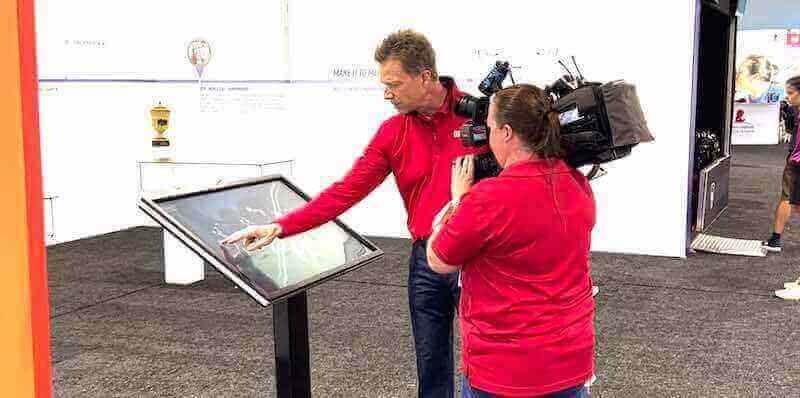
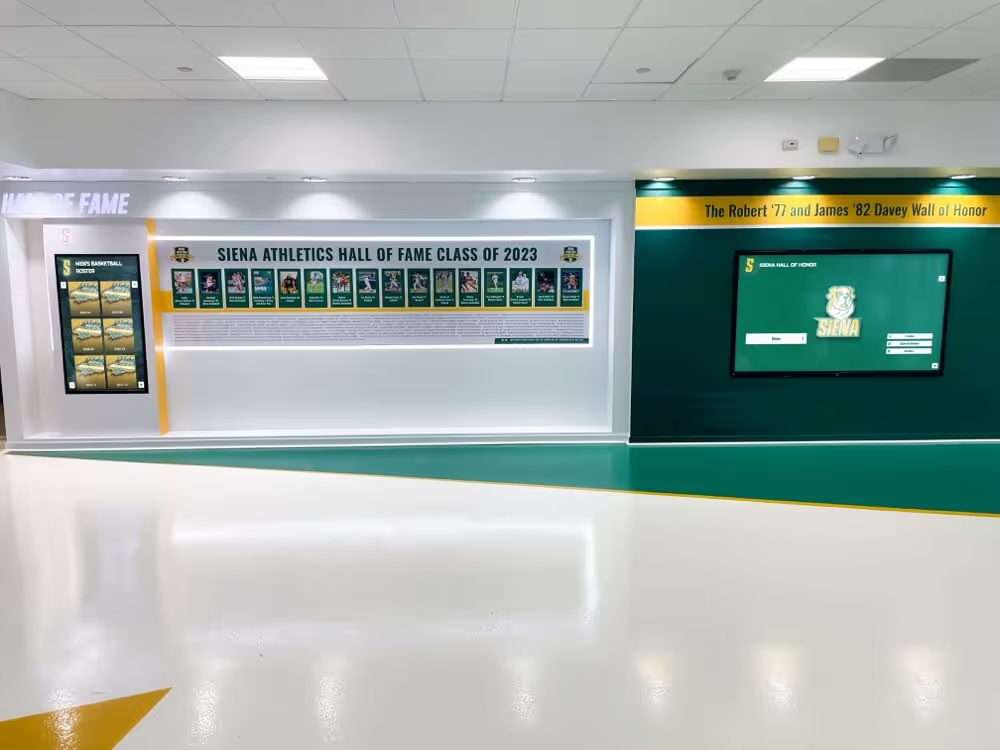
The most effective sponsor stewardship programs treat the thank-you letter as one component of a year-round recognition relationship — backed by visible, permanent acknowledgment in the athletic facility
Why a Sponsorship Thank You Letter Is a Stewardship Tool, Not a Formality
Most athletic administrators think of the sponsorship thank-you as a courtesy — something sent so the sponsor feels appreciated. That framing is not wrong, but it is incomplete. The most productive thank-you letters do four things at once:
1. Acknowledge the gift specifically. Not “thank you for your support” but “thank you for your $1,500 Gold Sponsor contribution to the [School Name] Athletics program.” Specificity signals that the school tracks its sponsors carefully and takes the relationship seriously.
2. Document recognition delivered. List every specific benefit the sponsor received: the logo in the printed program for 14 basketball games, the PA announcement at each home meet, the digital display rotation in the athletic lobby. Documenting delivery converts the letter from a thank-you note into a proof-of-performance record.
3. Quantify the audience reached. Where attendance data is available, include it. A sponsor who invested $1,500 wants to know their logo appeared in front of 6,800 total attendances across the season, not just that it “appeared in printed programs.” Concrete numbers justify renewal at the same level or above.
4. Open the door to renewal. A thank-you letter that ends with a natural transition — “we look forward to discussing how your business can be part of next season” — plants the renewal conversation weeks before the new solicitation cycle begins.
Programs that treat the thank-you letter as a stewardship document rather than a courtesy form have measurably better sponsor retention. According to the Association of Fundraising Professionals, retaining an existing donor or sponsor costs five to ten times less staff time than acquiring a new one — making every invested effort in the thank-you letter a direct return on the program’s limited outreach resources.
For a deeper look at how schools document and demonstrate sponsorship value, the resource on measuring sports sponsorship ROI covers the visibility and engagement metrics athletic programs use to show sponsors what their investment actually produced.
What to Include in a Sponsorship Thank You Letter for School Athletics
A complete sponsorship thank you letter for school athletics includes six core elements:
1. Specific Acknowledgment of the Sponsorship
Name the sponsor by business name (not just owner name), state the sponsorship level or dollar amount, and name the specific program or season being acknowledged.
Sample language:
“On behalf of [School Name] Athletics, I want to sincerely thank [Business Name] for your generous $[X] contribution as a [Level] Sponsor of our [Year] athletic season. Your investment directly supported [program area — e.g., varsity athletics across all 12 of our sports programs].”
2. Recognition Delivered Summary
List every recognition element the sponsor received, in specific terms. This section is the proof-of-performance record that separates a meaningful stewardship letter from a form thank-you.
Sample language:
“As a [Level] Sponsor, [Business Name] received the following recognition during the [Year] season:
- Business logo featured in the event program for all 14 home varsity basketball games (estimated circulation: [X] per game)
- Business name announced at the start of each home game by our PA announcer
- Business logo displayed in rotation on our athletic lobby digital screen during pre-game and lobby hours throughout the [Sport] season
- Business name included in our season-end recognition ceremony program
- Business name listed on the [School] Athletics sponsor webpage for the duration of the season”
3. Audience Reach Data
Convert recognition deliverables into attendance and audience figures wherever you have them.
Sample language:
“Across the season, your sponsorship reached an estimated [X,XXX] event attendances at home games and practices open to families — not including the daily visibility your logo received from the [X] students and staff members who pass through the athletic corridor every school day.”
4. Program Impact Statement
Connect the sponsor’s investment to a tangible program outcome. Did their contribution fund travel to a regional tournament? Cover equipment costs for a specific team? Support a named scholarship award?
Sample language:
“Your support at the [Level] tier contributed directly to [specific outcome — e.g., funding the travel budget for our state cross-country qualifier, covering game film equipment for our football program]. That investment was felt by [X] student athletes who benefited from what it made possible.”
5. Personal Expression of Gratitude
Include a genuine, personalized sentence that reflects the specific relationship. Avoid the form-letter feel of “your support is vital to our program.” A detail that shows this is not a templated note — a community connection, a staff member’s appreciation, something specific to the season — earns more goodwill than any carefully written paragraph.
6. Renewal Bridge
End with a forward-looking sentence that positions renewal as a natural next step, not a solicitation.
Sample language:
“We look forward to reaching out in [Month] to discuss opportunities for [Business Name] to be recognized as part of the [Year+1] season. In the meantime, please don’t hesitate to contact me directly with any questions about your recognition or the program’s upcoming plans.”

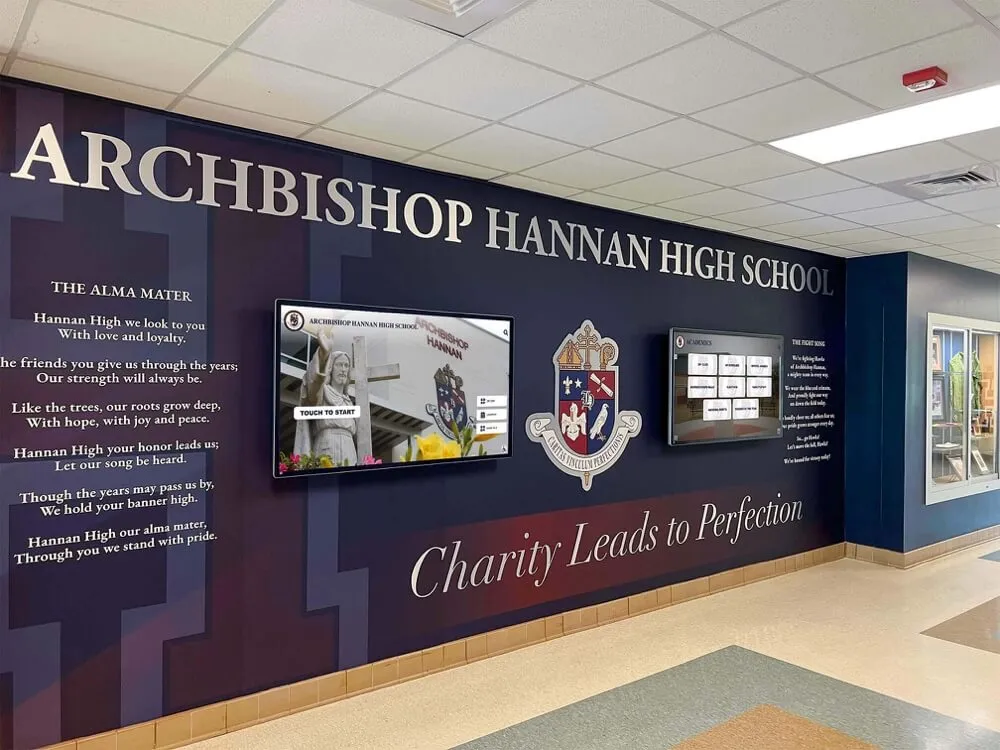
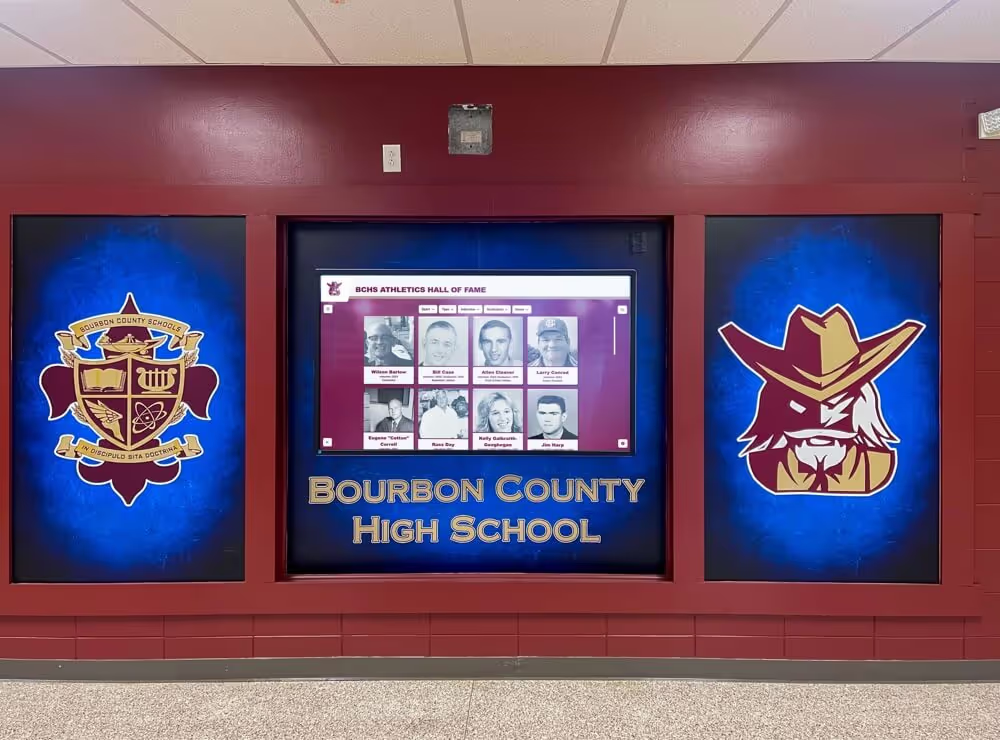
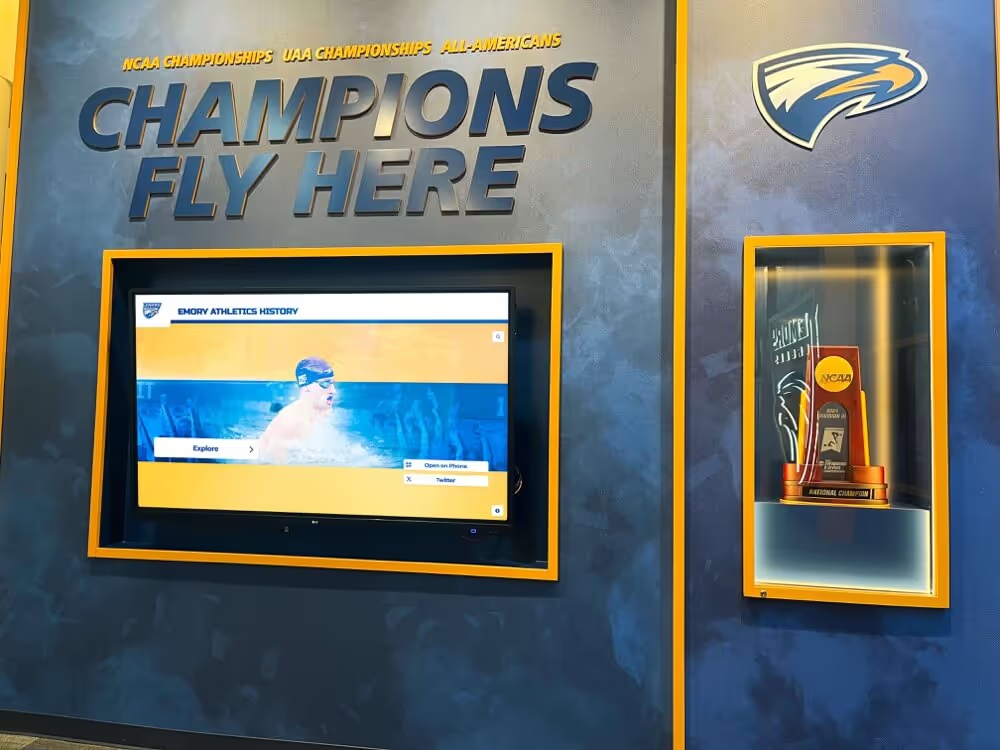
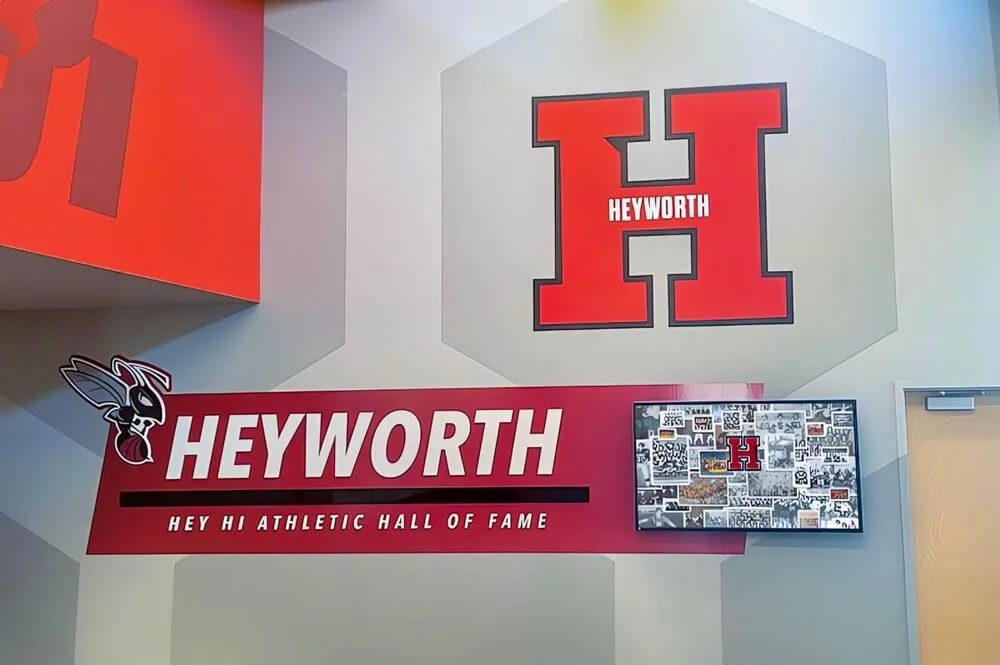
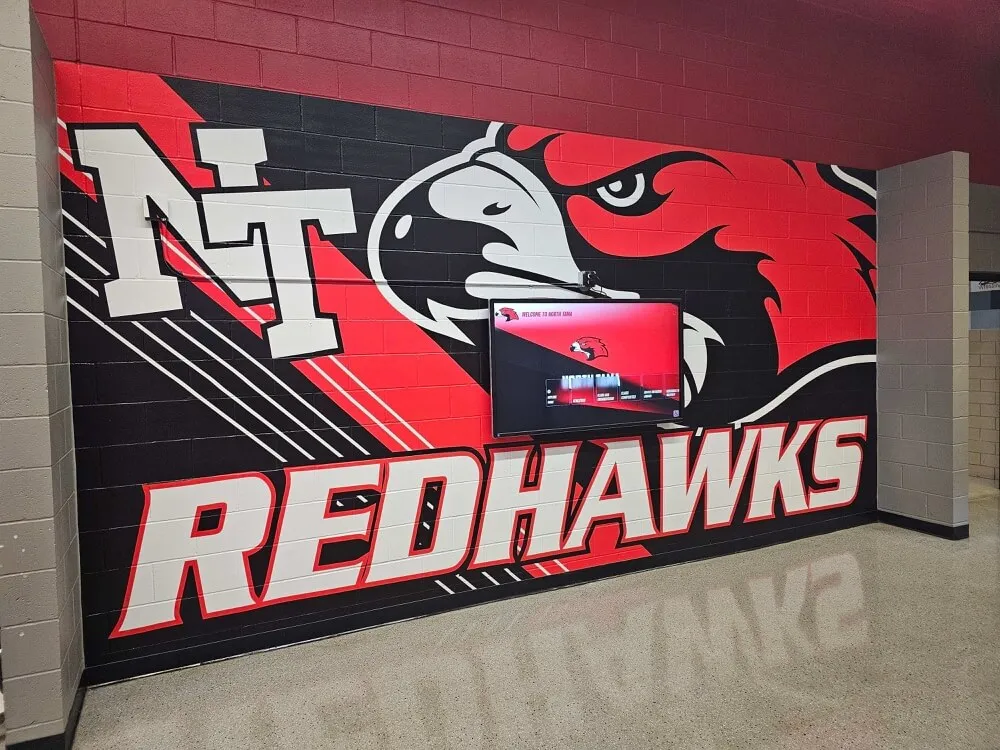
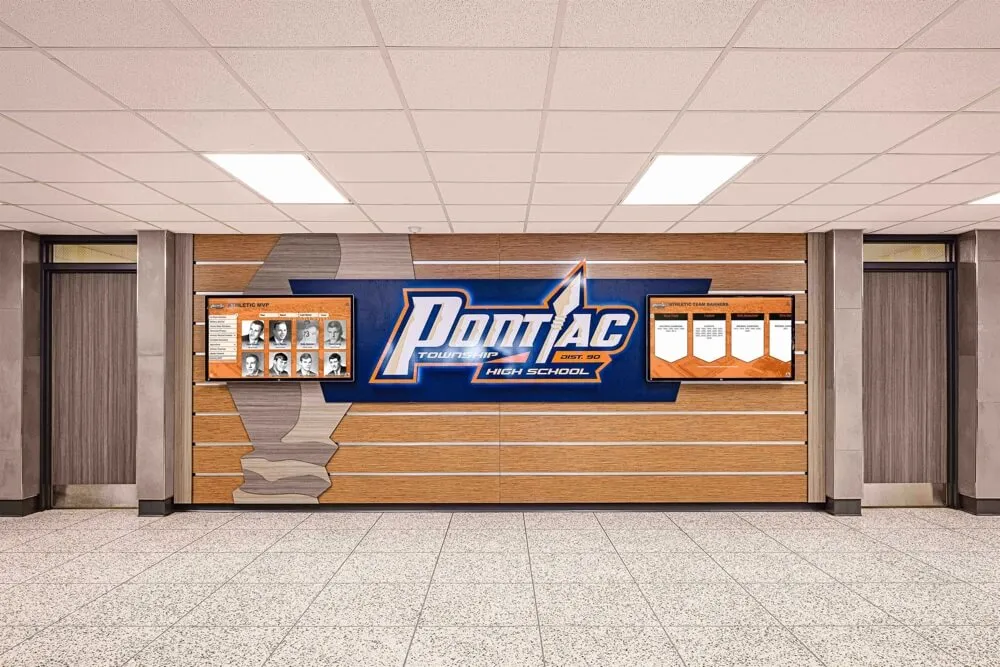
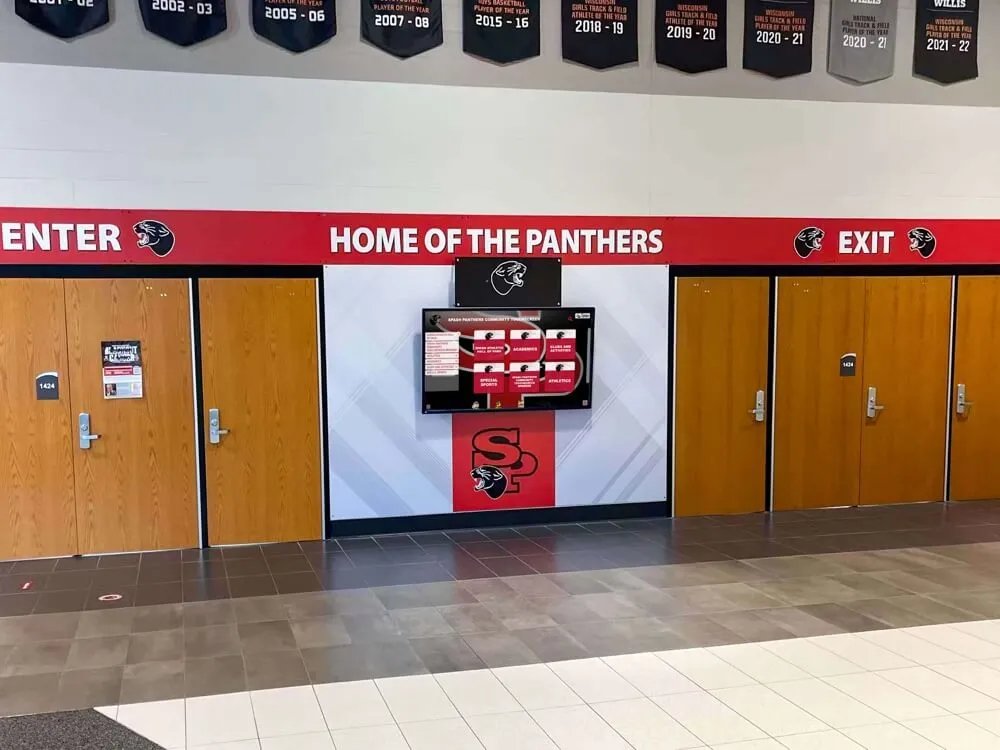
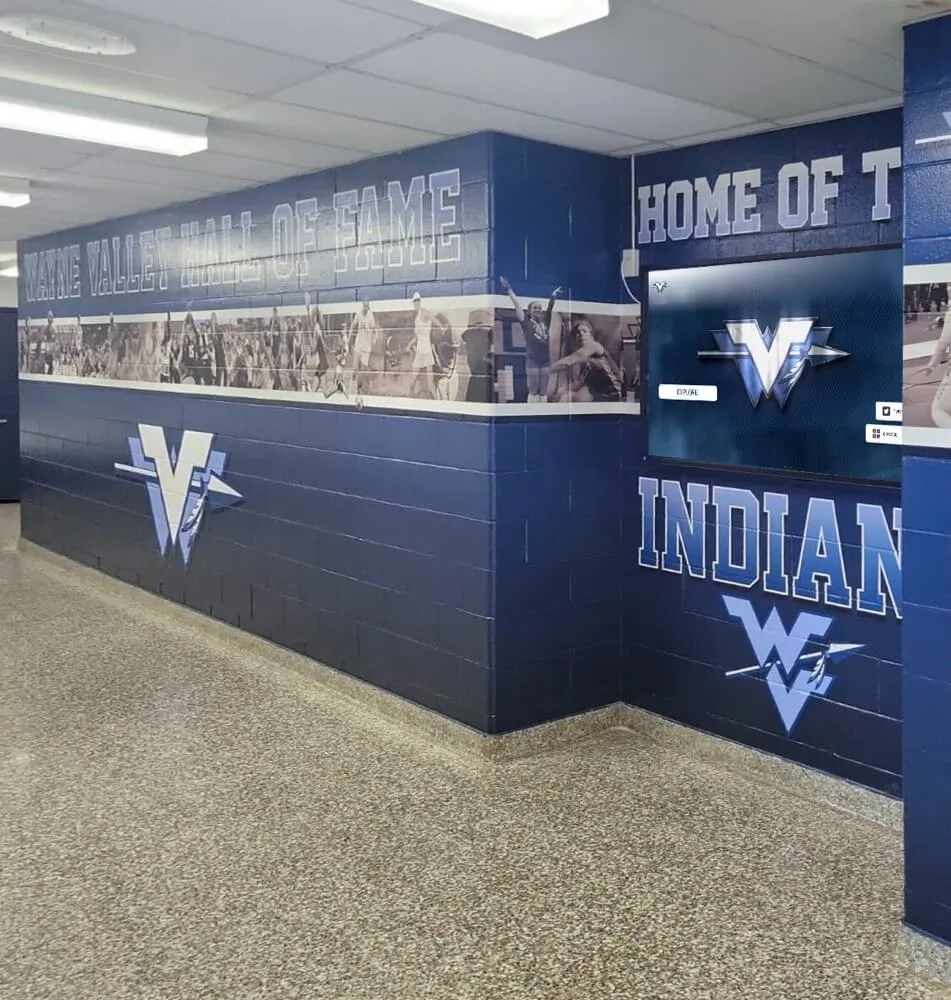
Permanent sponsor recognition boards and digital walls give the thank-you letter a physical counterpart — proof that the school's acknowledgment goes beyond the written page
Complete Sample Sponsorship Thank You Letter for School Athletics
The following is a full sample letter you can adapt for your program. Bracketed elements indicate school-specific data to replace:
[School Name] Athletics [Date]
[Business Name] [Address]
Dear [Owner/Contact Name],
On behalf of [School Name] Athletics and the [Number] student athletes who compete across our [Number] varsity and junior varsity programs, I want to extend my sincere thanks for [Business Name]’s commitment as a [Level] Sponsor of the [Year] athletic season.
Your $[Amount] investment made a direct, visible difference in what our programs were able to provide this year. Here is what [Business Name] received in recognition of that support:
Recognition Delivered — [Year] Season:
- Logo featured in printed game-day programs for all [X] home [Sport] games — estimated [X,XXX] total copies distributed across the season
- Business name announced at the start of every home [Sport] game by our PA announcer in front of an average crowd of [X] attendees per game
- Logo displayed in rotation on our athletic lobby digital screen throughout the [Sport] season — visible to [X] students and staff daily, plus all visiting families on game and event nights
- Business name included in our [Year] season-end sponsor recognition at the [Award Ceremony/Banquet Name]
- Business profile listed on the [School] Athletics sponsor page for the full duration of the season
Across the season, our home events drew an estimated [X,XXX] combined attendances from families, alumni, and community members. Your business name and logo reached that audience consistently, every game.
[Personalized sentence — reference a specific connection, event the sponsor attended, or program outcome their support enabled.]
We are grateful to count [Business Name] as a genuine partner in building what [School Name] Athletics represents to this community. We look forward to reaching out in early [Month] to talk about next season’s sponsorship opportunities. In the meantime, I am always available at [Phone] or [Email].
With sincere appreciation,
[Name] [Title], [School Name] Athletics
Schools building out their full sponsorship program — from initial outreach through stewardship — will find booster club sponsorship letter templates and practical tips a useful resource for the solicitation side of the cycle, alongside this stewardship framework.
Make Every Sponsorship Promise Visible and Verifiable
Rocket Alumni Solutions builds interactive digital recognition systems for school athletic facilities — giving programs a year-round platform to fulfill digital sponsorship commitments, display sponsor profiles, and document recognition that sponsors can see in person whenever they visit the facility.
Request a DemoSponsor Recognition Checklist: Document Before You Write the Letter
Sending an accurate, specific sponsorship thank you letter requires tracking recognition delivery throughout the season. Use this checklist to ensure nothing is missed when it is time to write.
Print and Event Recognition
- Confirm logo appeared correctly in all game-day programs — note number of games and estimated print run per game
- Confirm business name was included in all scheduled PA announcements — note number of events and format of announcement
- Confirm any banners or signage were displayed correctly — note location, dimensions, and season display dates
- Confirm business name appeared on printed schedules, posters, or other distributed materials — note quantities
- Confirm inclusion in season-end banquet or recognition ceremony program materials
Digital Recognition
- Confirm logo appeared in digital screen rotation — note display locations, frequency, and total season duration
- Confirm any sponsor profile or video content ran correctly on lobby touchscreens or display systems
- Confirm social media mentions were published — include post dates, platforms, and follower counts at time of posting
- Confirm business was listed on athletics website sponsor page — note date added and removal date if applicable
- Confirm any email newsletter mentions went out — note subscriber count at time of send
Post-Season Documentation
- Compile audience reach estimates for each recognition channel
- Collect photos or screen captures of recognition in place (signage, digital screen, program pages)
- Compile attendance figures for events where sponsor was recognized
- Draft thank-you letter with all of the above incorporated
- Set calendar reminder for renewal outreach [six to eight weeks before next season solicitation window]
A one-page version of this checklist attached to the thank-you letter gives sponsors a quick visual confirmation of everything their investment produced. It also creates an internal documentation record the program can use to train new staff and ensure consistency across seasons and leadership changes.
For a complete framework covering the full athletic sponsorship cycle from solicitation through stewardship, the athletic sponsorship recognition guide for schools provides a structured reference for building programs that retain sponsors year over year.
Going Beyond the Letter: Preserving Sponsor Recognition Year-Round
A thank-you letter is a moment in time. The most effective athletic programs understand that genuine sponsor stewardship extends well beyond any single communication — it is embedded in the facility, the digital environment, and the ongoing visibility that sponsors receive throughout the year.
Digital Displays as Year-Round Sponsor Recognition
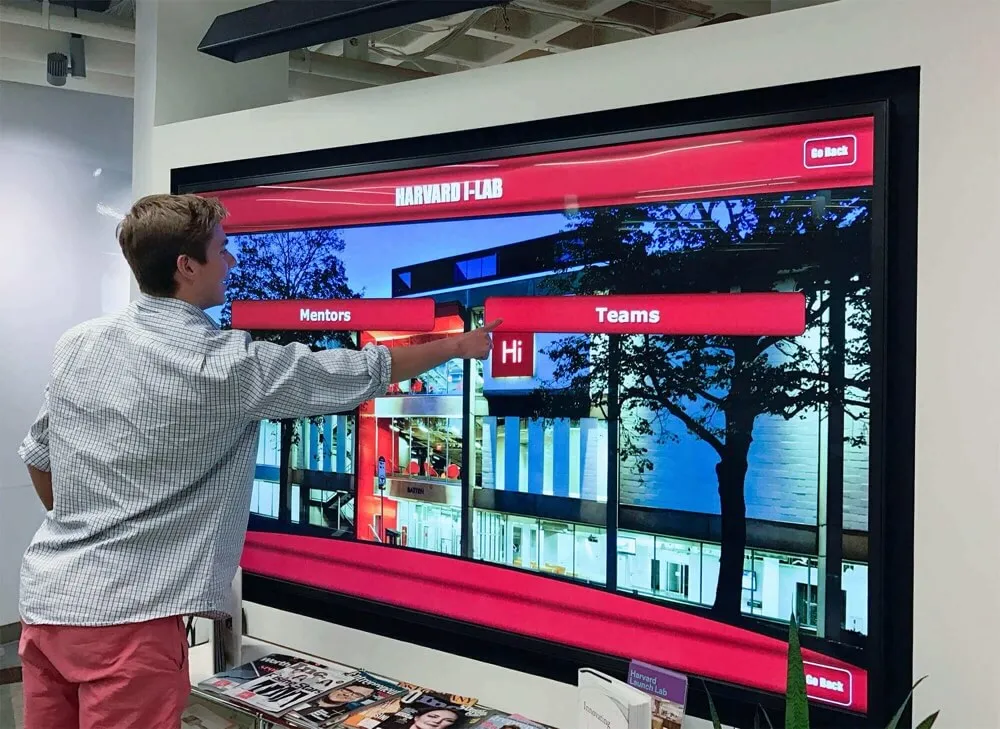
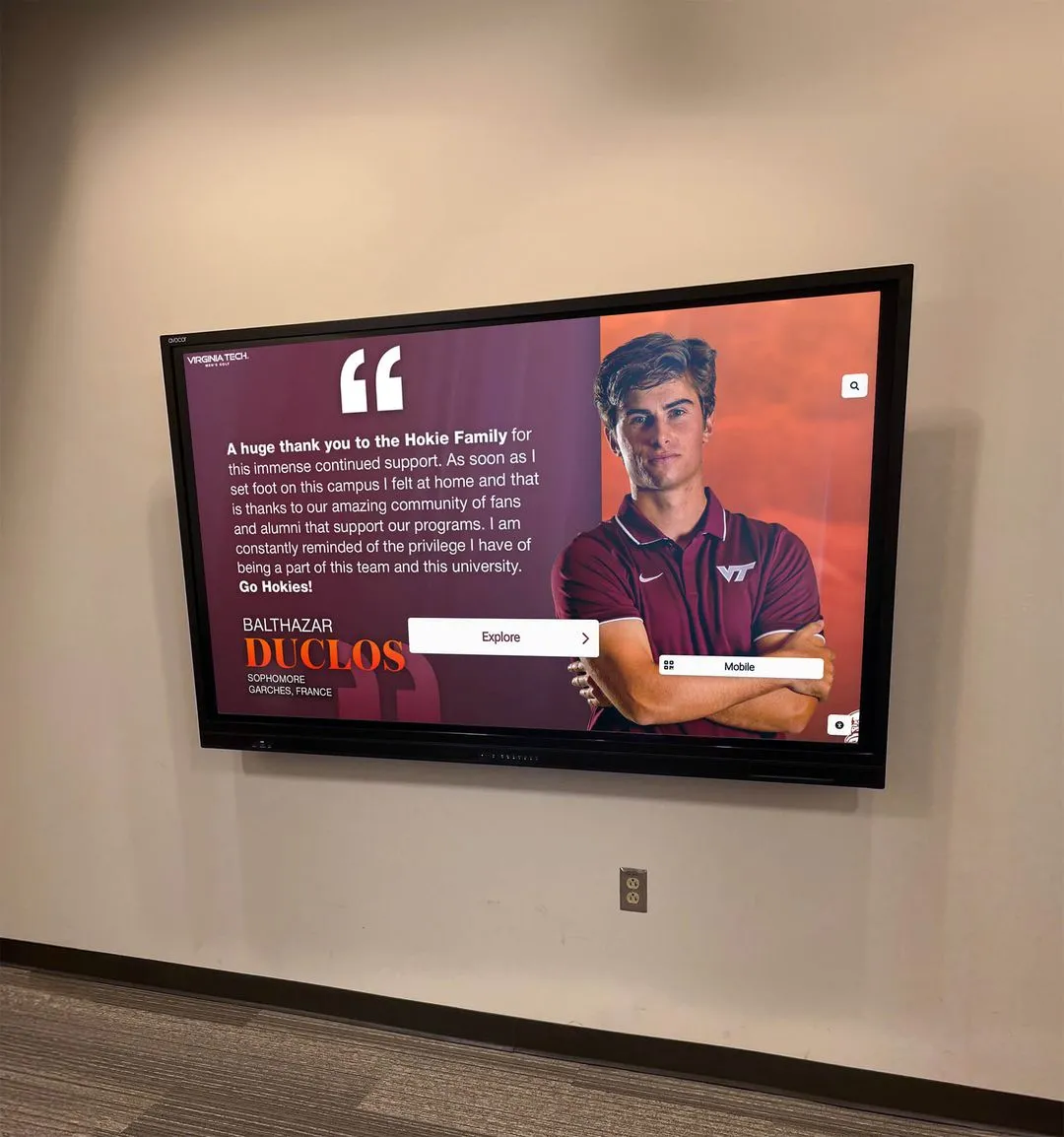
Athletic facilities that have invested in digital displays — lobby touchscreens, corridor screens, digital record boards — have a significant advantage in sponsor retention because they can show sponsors their recognition in place, in the actual facility, at any time of year. A sponsor who visits for a preseason event in October can see their logo in the screen rotation. A sponsor who drops in during February can see their profile on the digital display.
This persistent visibility fundamentally changes what the thank-you letter documents. Instead of promising recognition during the season, schools with digital systems can promise and deliver year-round visibility. That difference matters when a business owner is evaluating whether to renew at the same level, upgrade, or reallocate their marketing budget elsewhere.
Exploring digital donor recognition and modern approaches to thanking supporters illustrates how digital systems create ongoing, visible acknowledgment that sponsors can verify in person every time they enter the facility — something no printed program or PA announcement can replicate.
Permanent Sponsor Boards and Facility Recognition
For sponsors who have committed at higher tiers or across multiple consecutive years, the thank-you letter should reference (and document) recognition that goes beyond a seasonal display rotation. A permanent or semi-permanent sponsor recognition board in the athletic facility — listing multi-year partners by name and tier — creates lasting acknowledgment that seasonal sponsors aspire to and long-term partners genuinely value.
Physical recognition of this kind communicates something a seasonal digital rotation cannot: this sponsor’s commitment is so valued that the program made space for their name in the permanent visual environment of the facility. For schools looking to structure these multi-year recognition tiers, exploring corporate sponsorship recognition frameworks for schools provides a detailed approach to moving from seasonal acknowledgment toward genuine institutional partnership recognition.
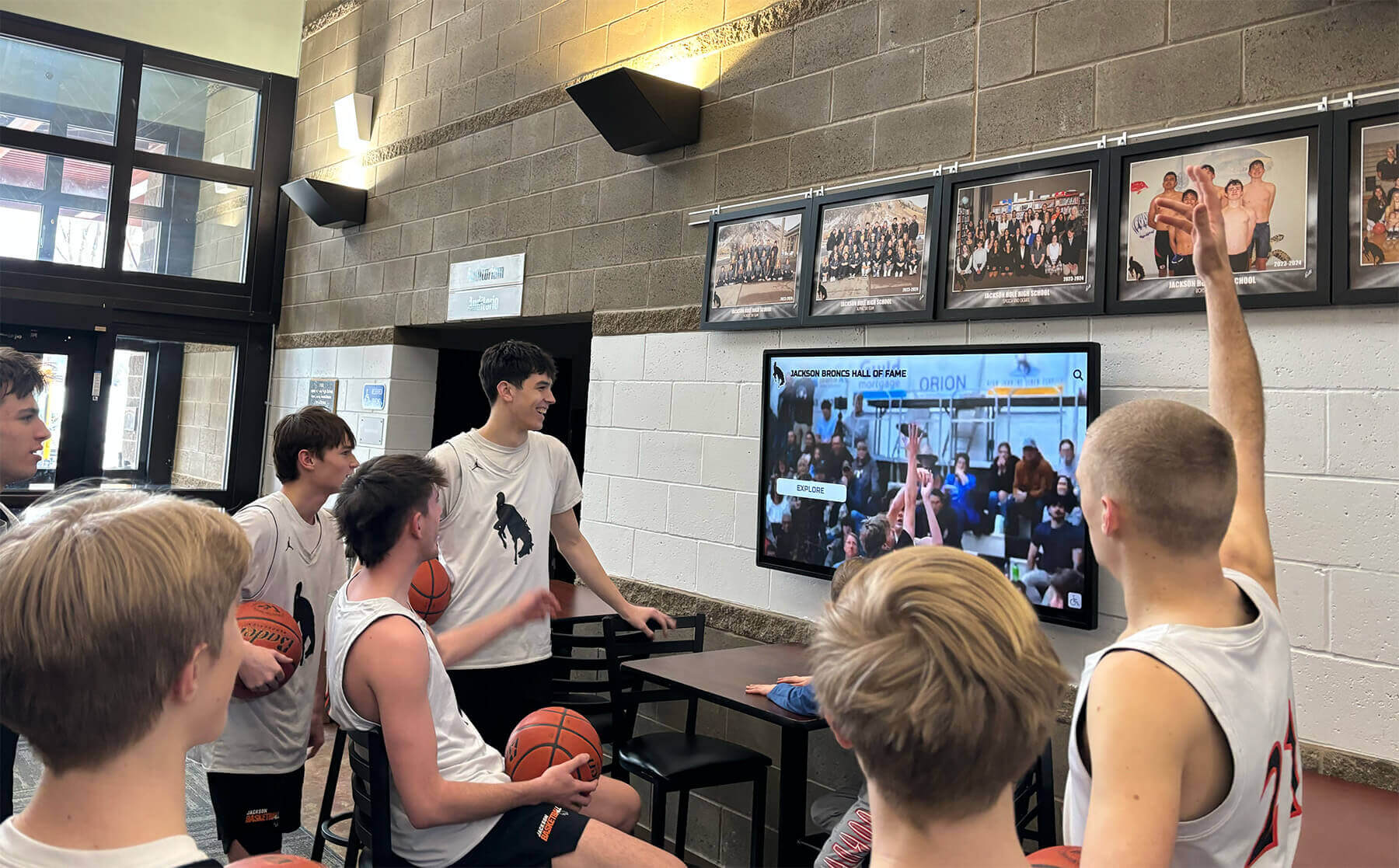
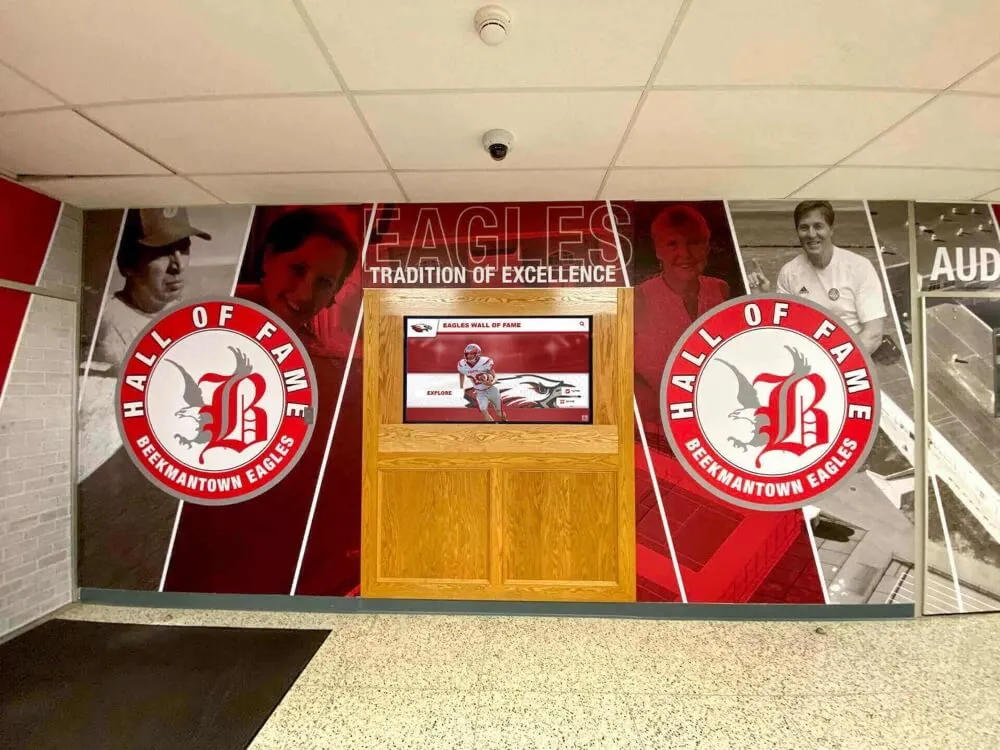
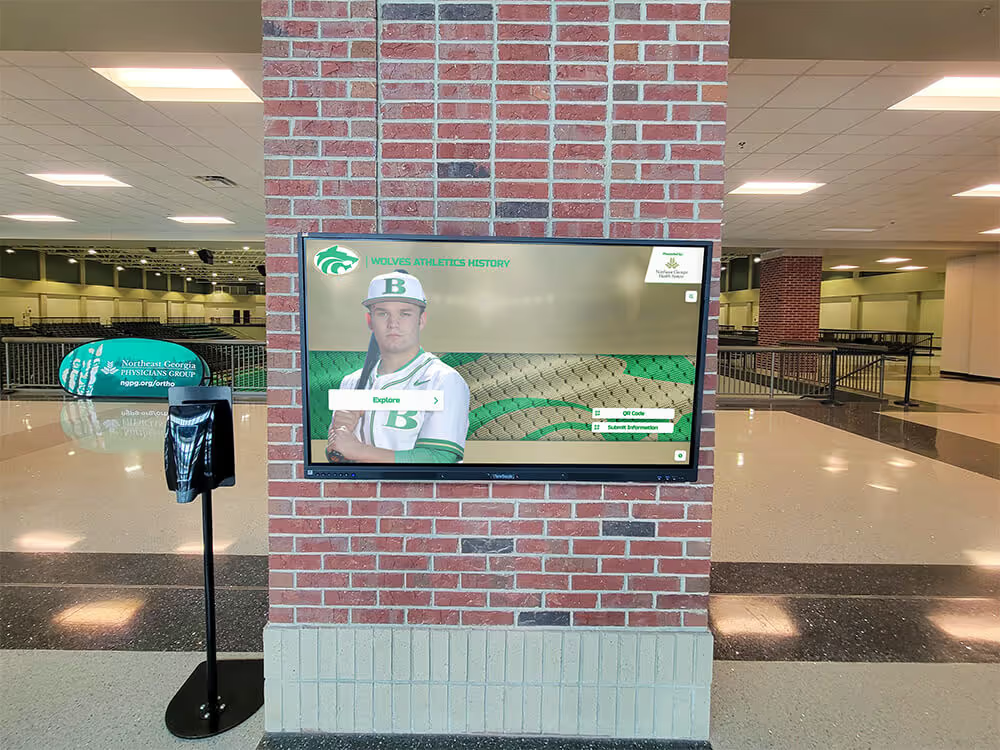
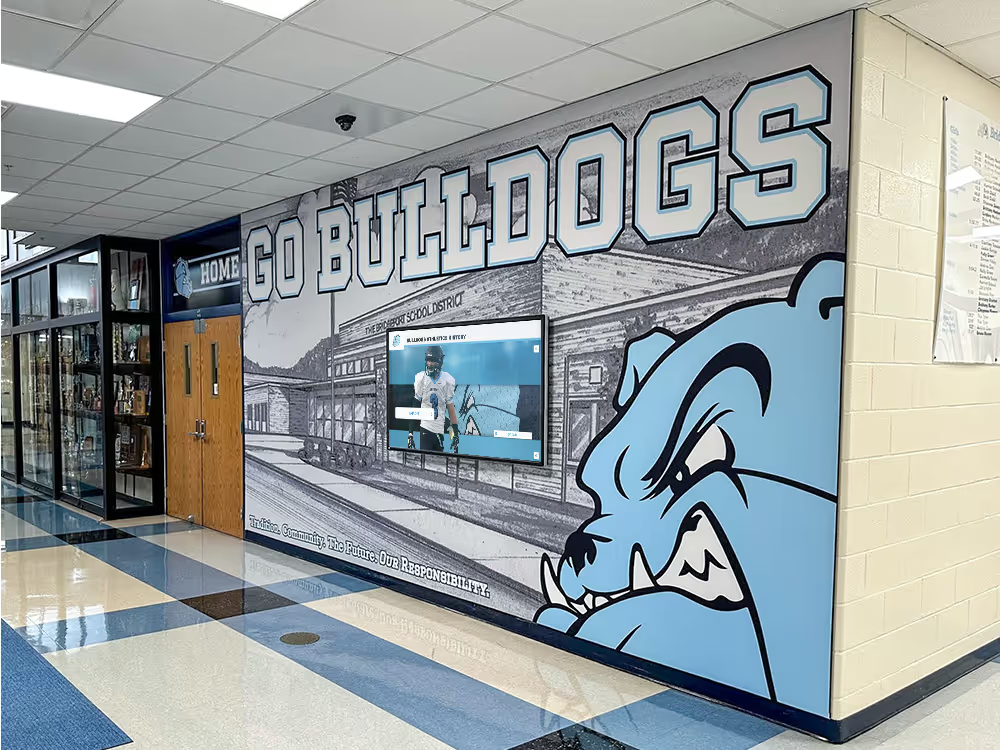
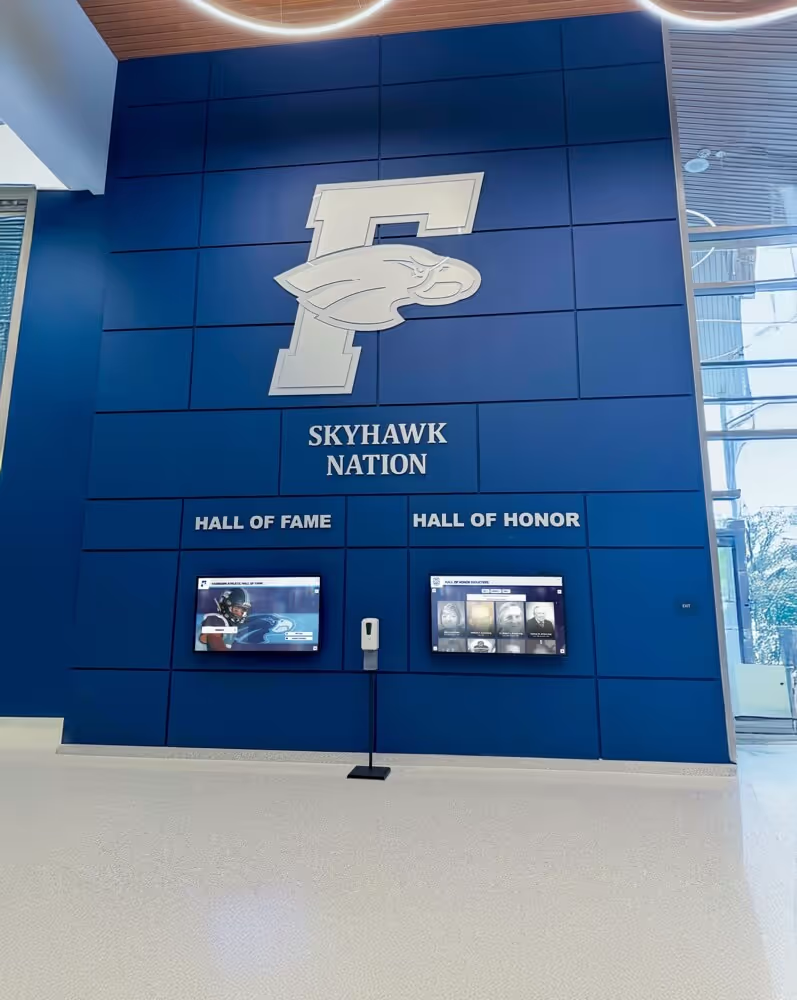
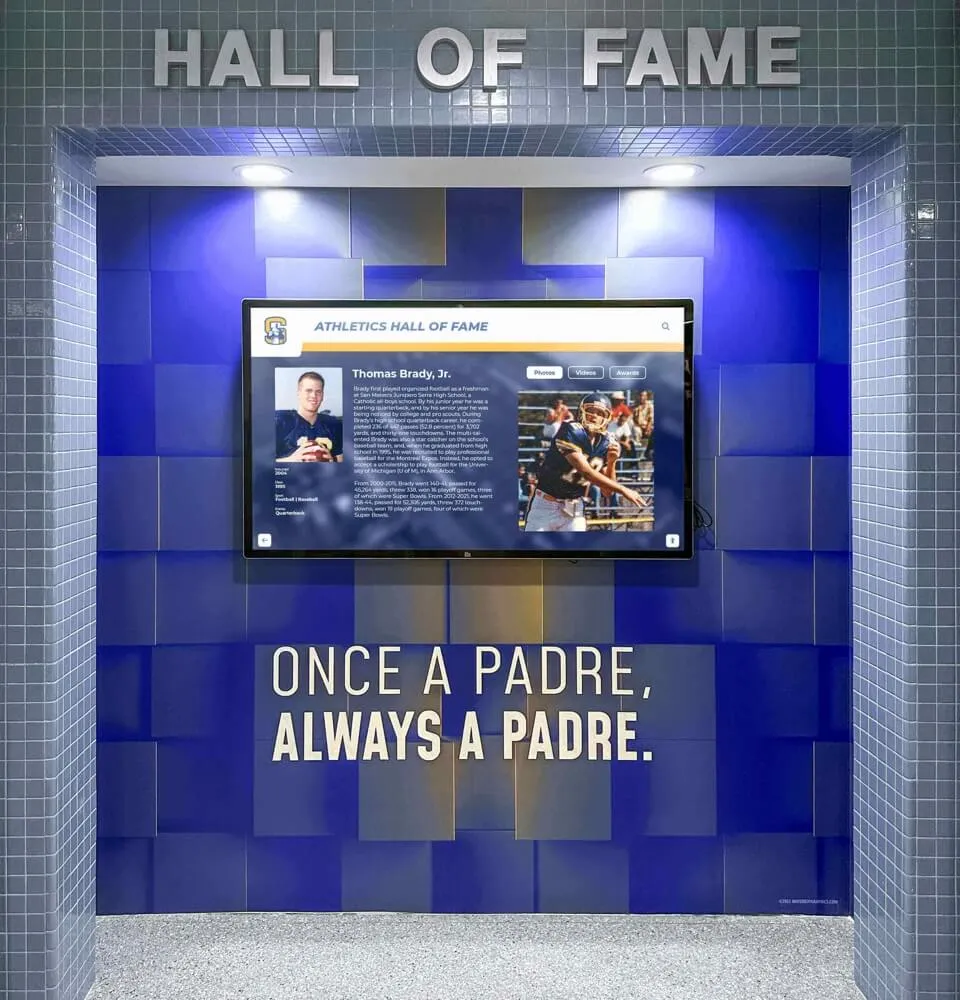
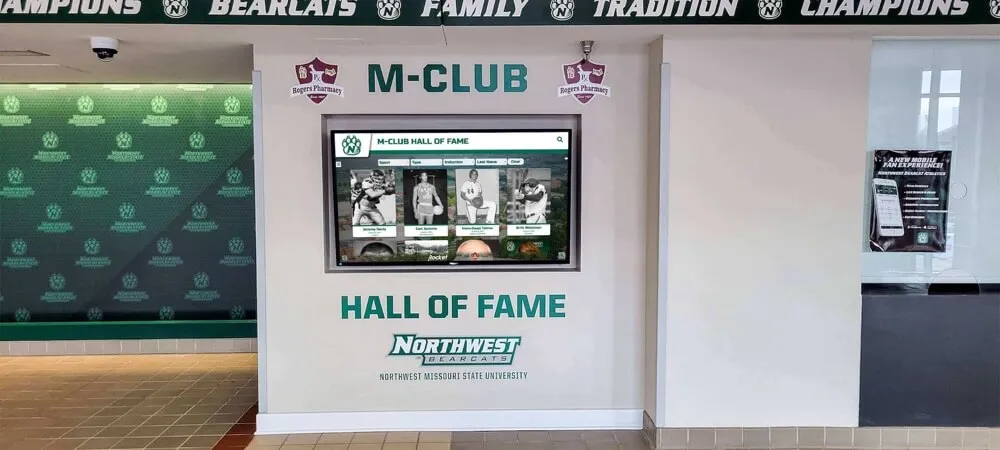
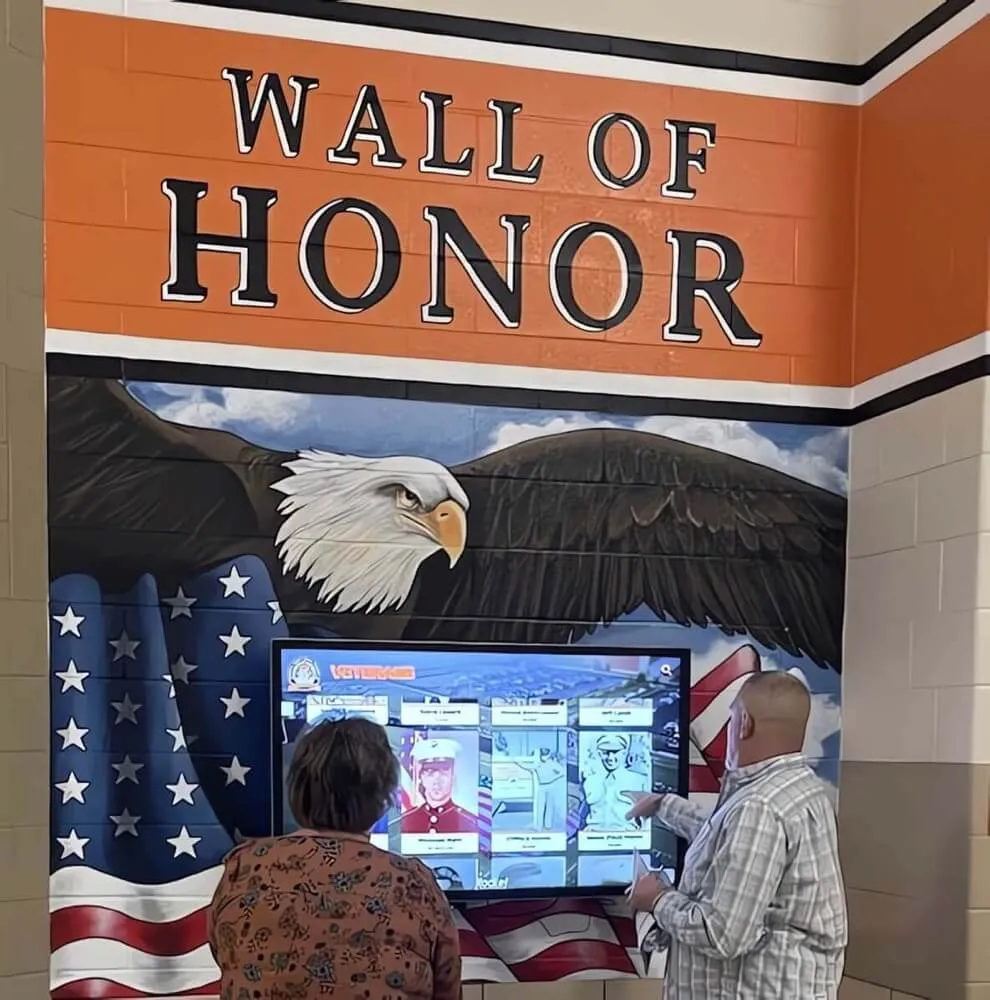
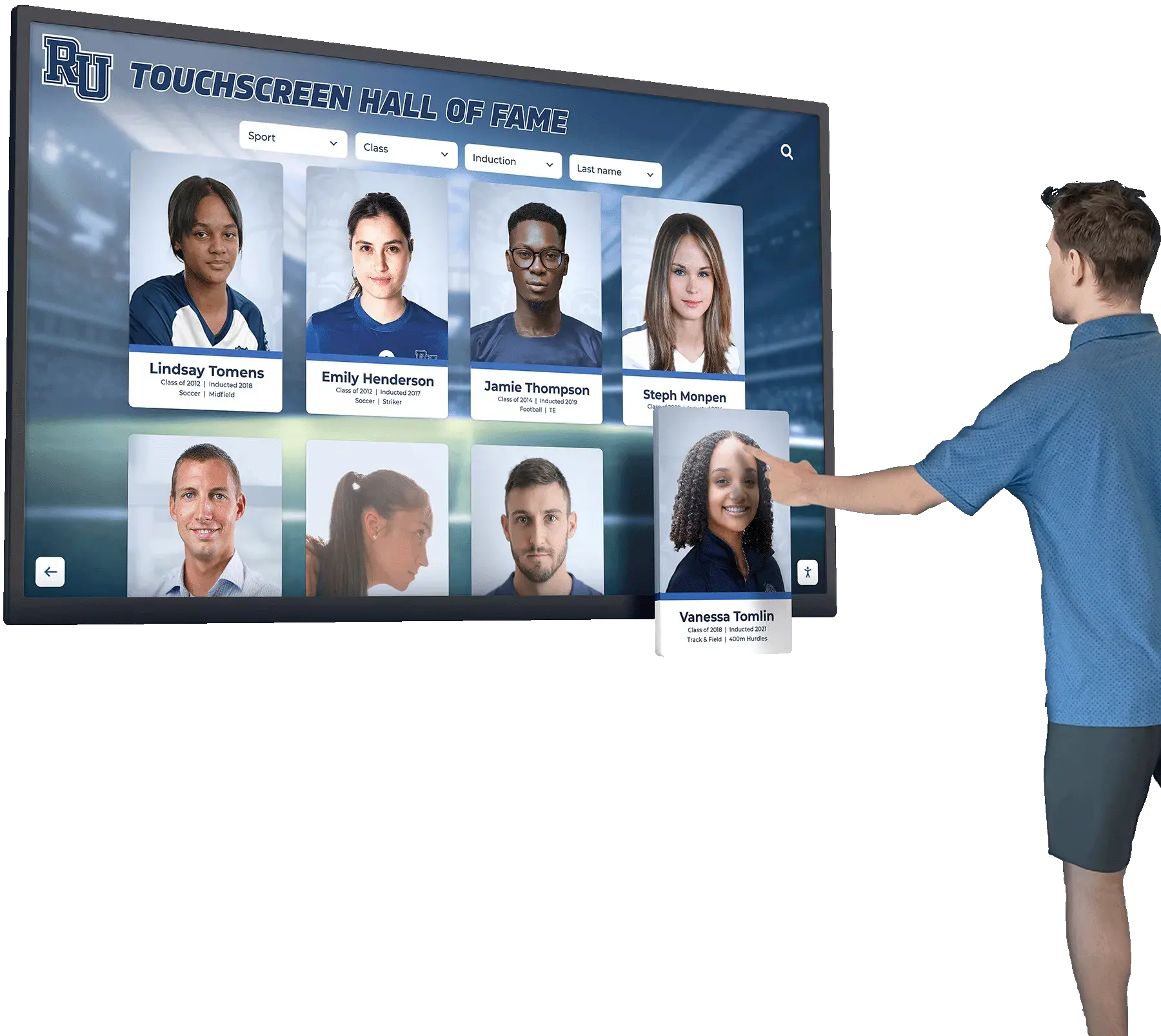
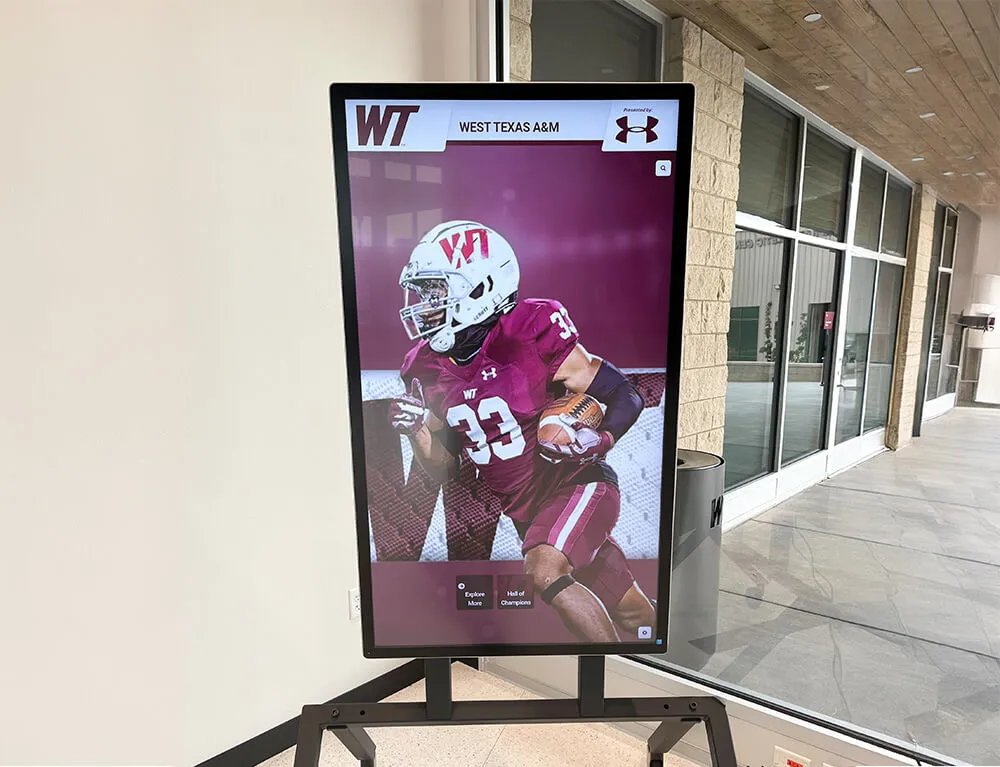
Digital screens visible to athletes, coaches, and families throughout the day — not just on game nights — give sponsors proof of year-round visibility that a seasonal thank-you letter alone cannot provide
Connecting Year-End Recognition Events to Sponsor Stewardship
Year-end recognition events — athletic banquets, letter ceremonies, awards nights — provide natural opportunities to thank sponsors publicly in front of the athletic community. When sponsors are named at these events, especially if a representative is present, the acknowledgment carries weight that a mailed letter cannot replicate.
Schools that treat athletic letter ceremonies and year-end recognition events as sponsor stewardship moments — not just athlete recognition events — find that sponsors who attend these gatherings have dramatically higher renewal rates than those who receive only written communication.
Practical ways to integrate sponsors into year-end events:
- Acknowledge sponsor names and business contributions during the opening remarks, with specific thanks for what each level funded
- Reserve seats or a reserved table for sponsor representatives at Title and Gold levels
- Present a framed certificate or recognition plaque to sponsors at their first year of support and at multi-year milestones
- Follow up the event with a thank-you letter that specifically references the event and the sponsor’s presence or participation
Digital Recognition Systems That Archive Campaign Outcomes
For schools with interactive digital recognition systems, the stewardship process can extend into the permanent archive. A sponsor who supported a championship-season program can have that recognition preserved in the school’s digital history — visible to future athletes, families, and visitors who explore the display years later.
This archival dimension transforms a transactional acknowledgment into something closer to legacy: evidence that a specific business was part of a specific athletic program during a specific era. For programs building out this kind of infrastructure, digital recognition systems for athletic programs illustrate how comprehensive display platforms handle both current and historical recognition in unified systems that grow with the program over time. Similarly, hall of fame digital recognition systems and athletic display and digital record board solutions show the range of technical options available to schools at different stages of their recognition infrastructure build-out.
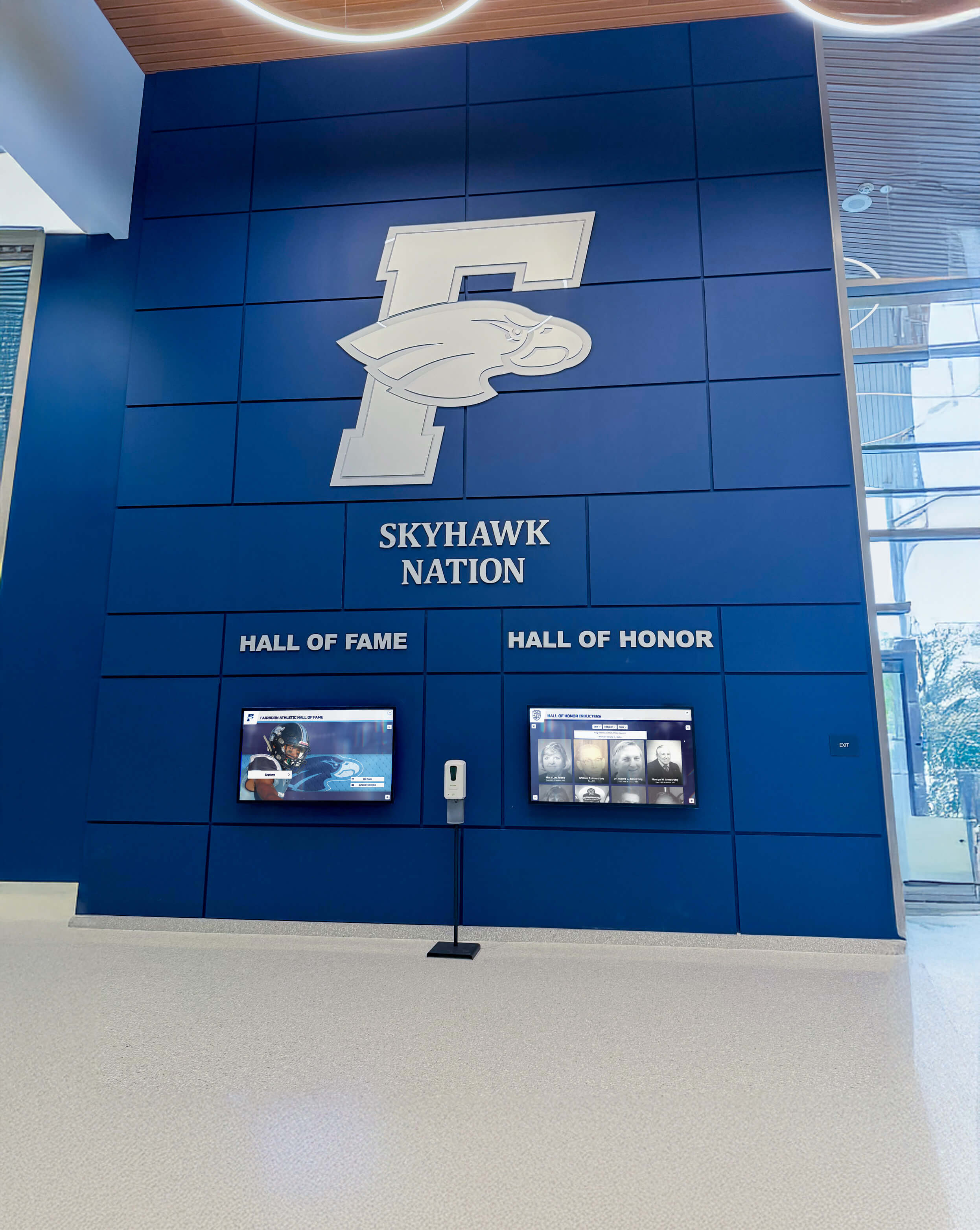
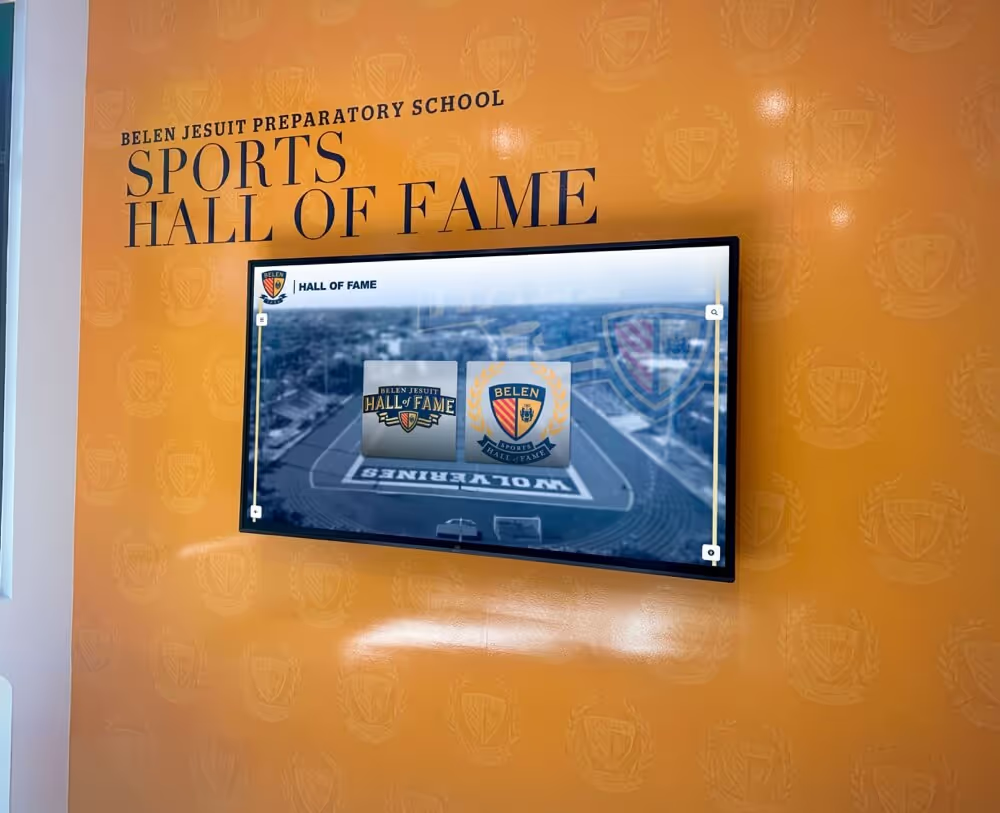
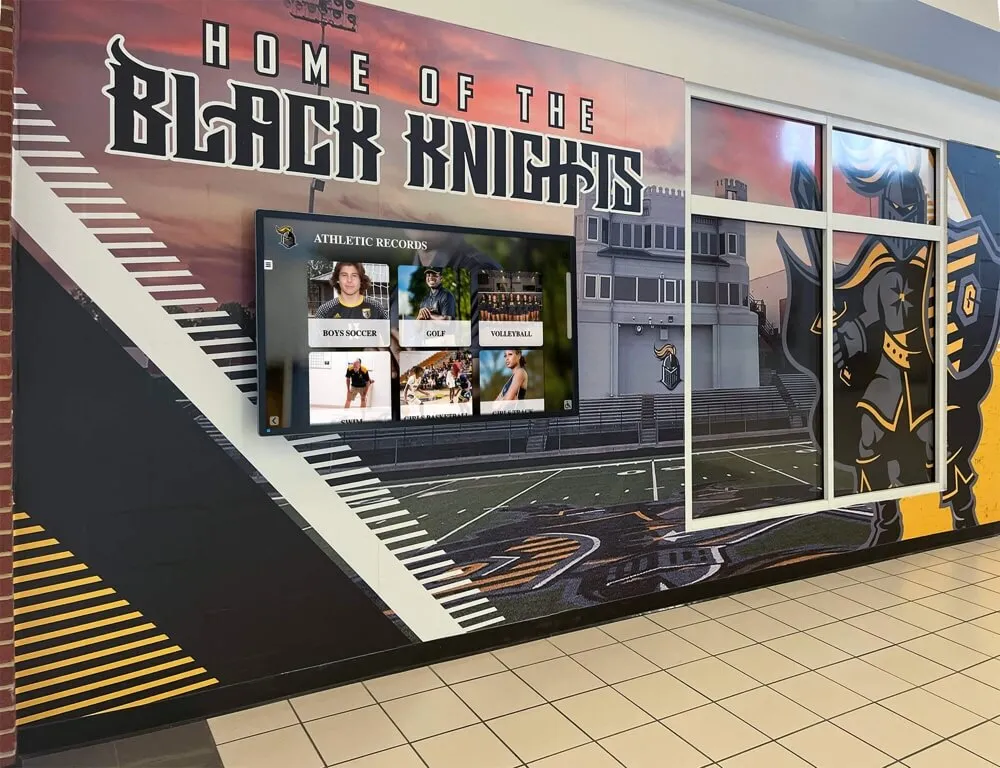
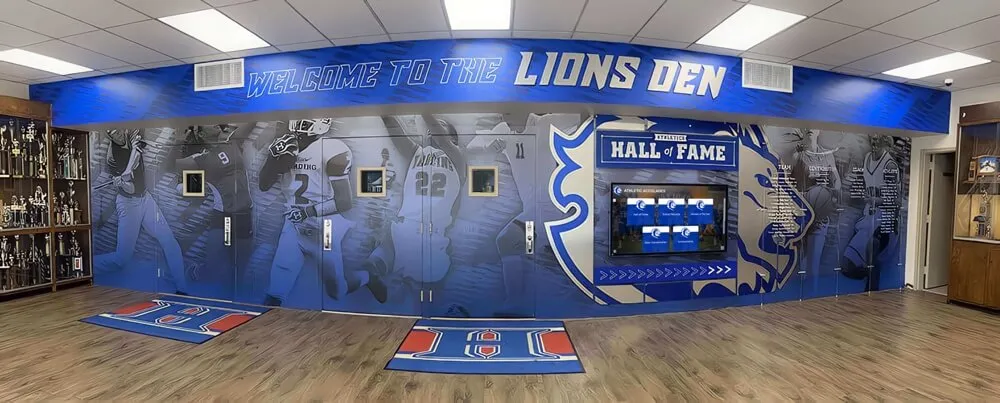
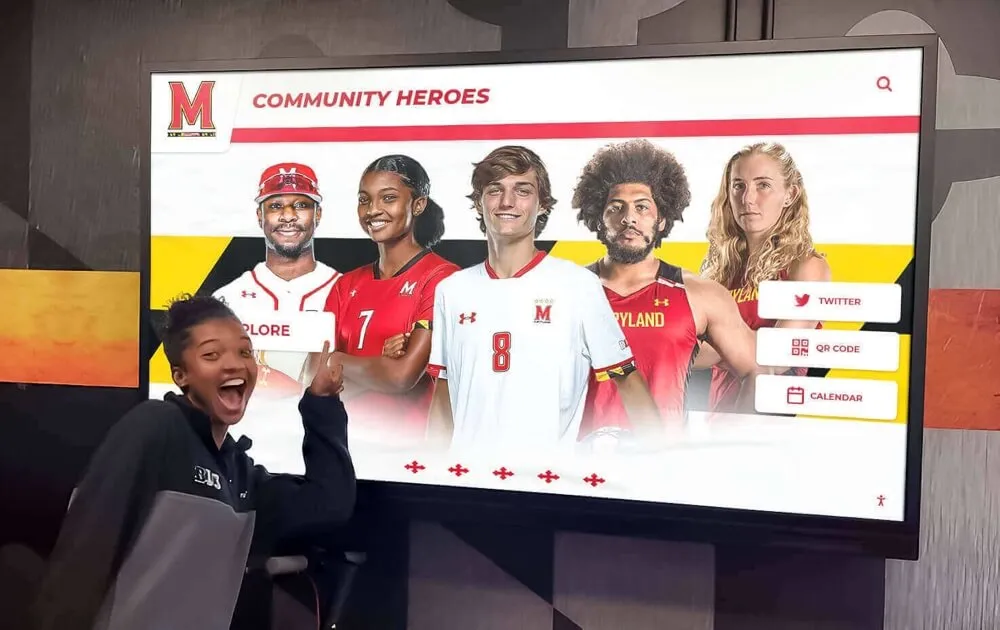
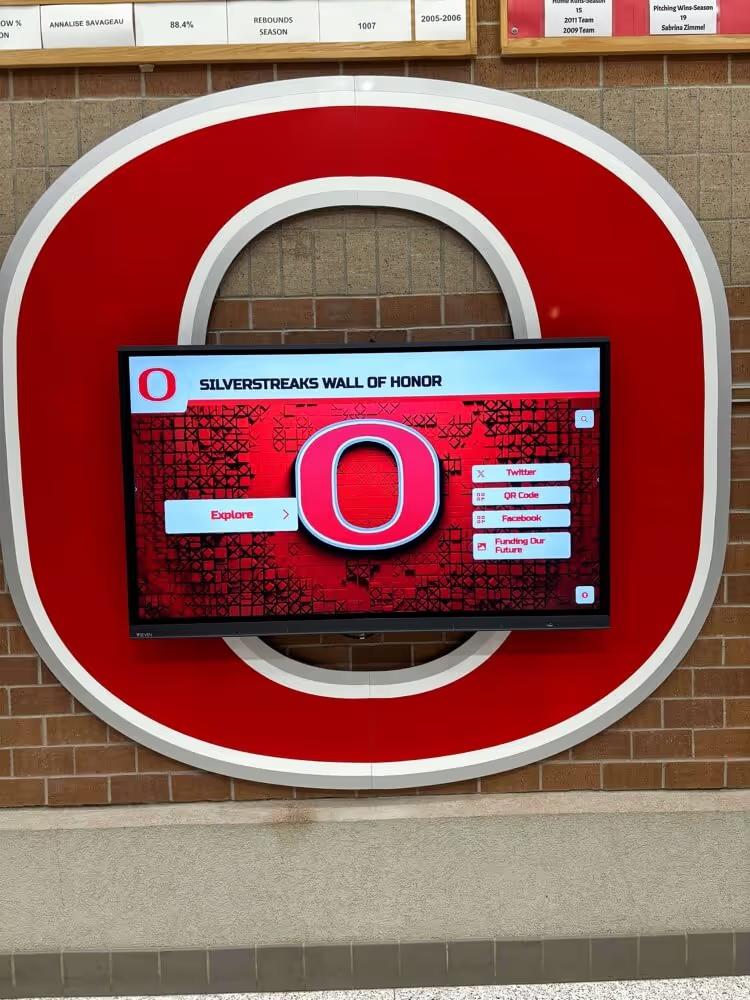
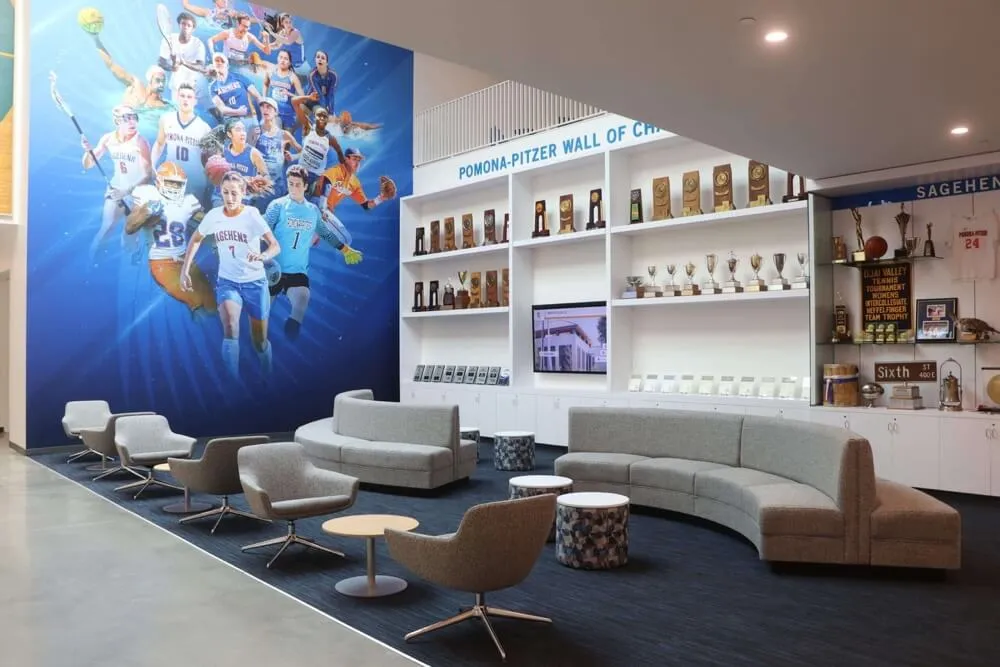
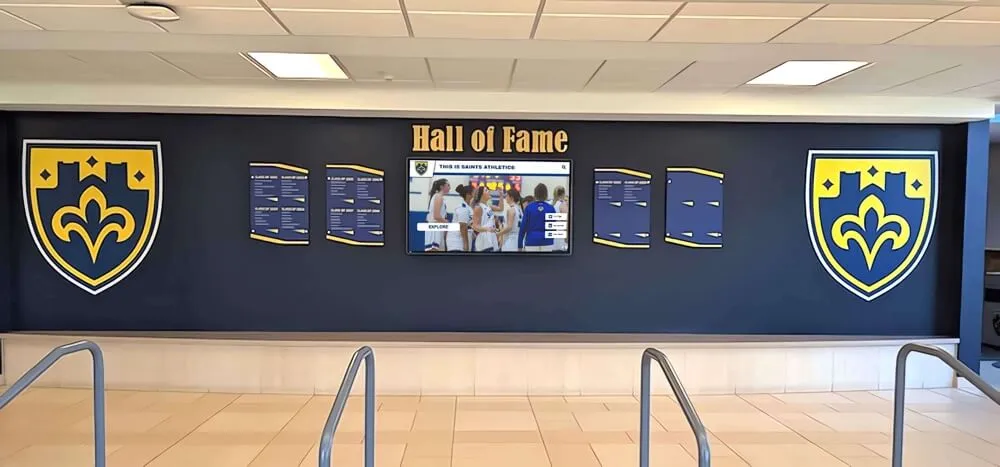
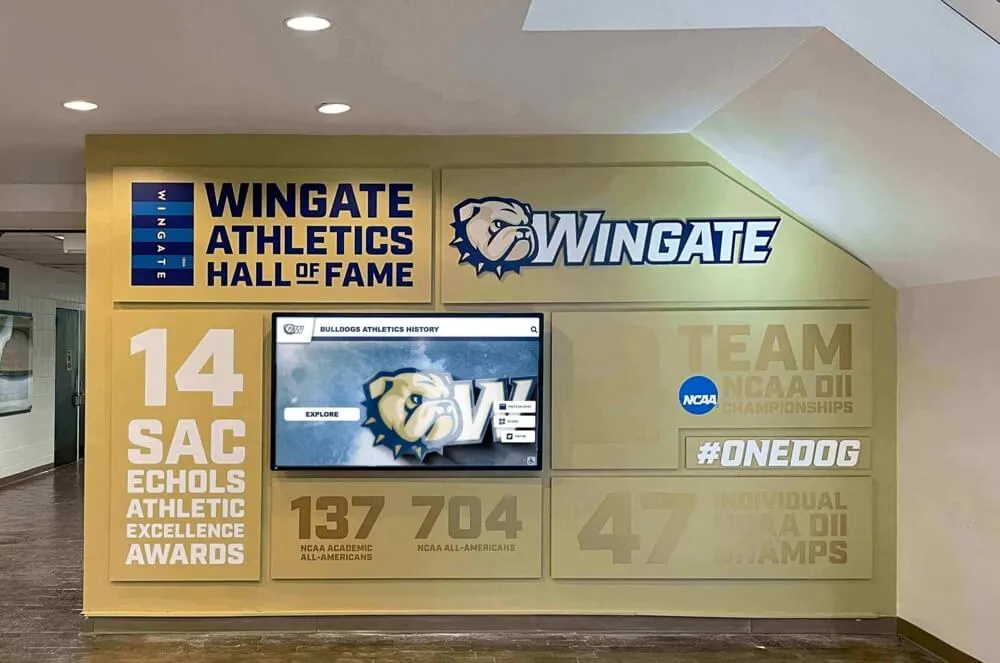
A facility recognition environment that honors sponsors alongside athletes communicates to every visitor that community investment is woven into the identity of the program
Timing and Delivery: When to Send the Sponsorship Thank You
Timing matters as much as content. A sponsorship thank-you letter that arrives three months after the season ends communicates inattention. The most effective stewardship programs follow a three-touchpoint model:
Mid-season acknowledgment (optional but high-value): A brief note sent at the midpoint of the season confirming that recognition is being delivered as promised. This is not a full thank-you — it is a check-in that demonstrates active stewardship. “I wanted you to know your logo has now appeared in 7 of our 14 home game programs and has been on our digital display throughout the season” is a sentence that earns significant goodwill before the season is over.
Season-end thank you (required): Sent within three to four weeks of the final event for each sponsored program. This is the full letter described above: specific acknowledgment, recognition delivered summary, audience reach data, program impact, personal thanks, and renewal bridge.
Renewal follow-up (six to eight weeks later): Not a thank-you, but building directly from it. The renewal letter references the season-end documentation: “As we outlined at season’s end, your sponsorship reached an estimated [X,XXX] attendances last season. We are finalizing next year’s recognition inventory now and wanted to give [Business Name] first consideration as we confirm [Level] Sponsor spots.”
This three-touchpoint cycle — mid-season check-in, season-end thank-you, renewal follow-up — creates a communication relationship that feels like genuine partnership rather than annual solicitation.
Frequently Asked Questions About Sponsorship Thank You Letters
What should a sponsorship thank you letter include?
A sponsorship thank you letter for school athletics should include: a specific acknowledgment naming the sponsor, sponsorship level, and contribution amount; a documented summary of every recognition element delivered during the season with concrete details (number of games, print run, display duration); audience reach estimates for each recognition channel; a program impact statement connecting the sponsorship to a tangible outcome; a genuine personal expression of gratitude; and a forward-looking sentence that opens the door to renewal. Letters that document what was actually delivered — rather than simply expressing appreciation — are significantly more effective at retaining sponsors for the following season.
When should schools send a sponsorship thank you letter?
Schools should send a season-end sponsorship thank you letter within three to four weeks of the final event for each sponsored program. Many programs also send a brief mid-season acknowledgment confirming that recognition is being delivered as promised. Waiting longer than four to six weeks after the season ends signals inattention and weakens the letter’s impact. The follow-up renewal conversation should happen six to eight weeks after the thank-you, giving sponsors time to evaluate the season’s value before the next solicitation arrives.
How do you thank a sponsor for sponsoring a school sports team?
Thank a school sports sponsor by acknowledging the specific gift, documenting what recognition was delivered, quantifying the audience their investment reached, connecting their sponsorship to a tangible program outcome, and expressing genuine personal gratitude. Beyond the letter, recognize sponsors publicly at year-end events, maintain their visibility on digital displays and sponsor boards in the athletic facility, and follow up with a specific renewal conversation in the weeks following the thank-you. Sponsors who feel genuinely seen and appreciated — not just thanked with a form letter — renew at significantly higher rates.
How do you preserve sponsor recognition beyond a single season?
Preserving sponsor recognition beyond a single season means building acknowledgment into the physical and digital infrastructure of the athletic facility. Digital display systems allow sponsor logos and profiles to remain visible year-round — not just during the sponsored season — and can archive recognition for multi-year sponsors so their history with the program is visible to future athletes and families. Permanent sponsor recognition boards in athletic lobbies and corridors create lasting acknowledgment for multi-year partners. Interactive touchscreen systems maintain sponsor profiles as part of a searchable athletic history that persists indefinitely, long after a printed program has been discarded.
What is the difference between thanking a donor and thanking a sponsor?
Thanking a donor and thanking a sponsor involve different framing because the relationships are different. Donor stewardship emphasizes the impact of charitable generosity — emotional connection, mission alignment, and community values. Sponsor stewardship emphasizes the return on a marketing investment — documented visibility, audience reach, and proof of delivery. A sponsorship thank you letter should document what the business received (specific recognition deliverables and audience data), while a donor thank-you emphasizes what the gift made possible for students and programs. Using donor language with sponsors signals a misunderstanding of the relationship and weakens both the stewardship and the renewal conversation.
Building a Stewardship Culture That Retains Sponsors
The sponsorship thank you letter is where retention begins, but it is not where it ends. Athletic programs that build genuine stewardship cultures — communicating consistently, documenting delivery faithfully, and making sponsor recognition visible and permanent in the facility — find that the annual solicitation cycle becomes progressively easier over time. Long-term sponsors refer peer businesses. They renew at higher tiers. Sometimes they initiate conversations about naming opportunities before the school has to ask.
The infrastructure that supports this culture includes more than well-written letter templates. It includes digital display systems that maintain sponsor visibility throughout the year, recognition boards that honor multi-year partners in the physical environment of the facility, and year-end events where sponsors are acknowledged publicly alongside the athletes their support helps develop. When the thank-you letter arrives, it should be confirming a recognition relationship the sponsor has already seen and felt — not introducing it for the first time.
Make Sponsor Recognition Visible, Permanent, and Easy to Document
Rocket Alumni Solutions designs interactive digital recognition systems for school athletic programs — giving you the display infrastructure to deliver year-round sponsor visibility, archive recognition for multi-year partners, and provide the documented proof of delivery that makes every sponsorship thank you letter — and every renewal conversation — more effective.
Request a Demo