



Athletic facilities collect sponsors the same way they collect trophies — one season at a time, over years. A gymnasium might have a half-dozen business contributors; a fieldhouse might have twenty. What separates programs with strong sponsor retention from those starting from scratch every fall is not the size of the recognition budget. It’s whether sponsors can walk into the building and see proof that their investment is on display. Sponsor plaque ideas range from engraved bronze mounted at the gym entrance to fully interactive digital walls that update without a fabrication order — and the right choice for your facility depends on how many sponsors you need to recognize, how often that list changes, and where visitors actually look.
This guide covers sponsor plaque wording examples you can adapt directly, layout approaches for different facility types, and a practical comparison of static plaques versus digital recognition so athletic directors and advancement teams can make a confident choice.
Sponsor recognition in athletic facilities works best when it is visible, specific, and treated with the same care as championship banners and hall-of-fame displays. A plaque buried in a side corridor delivers different value than one positioned at the main entrance — and a digital screen running 12 hours a day delivers different value than either.

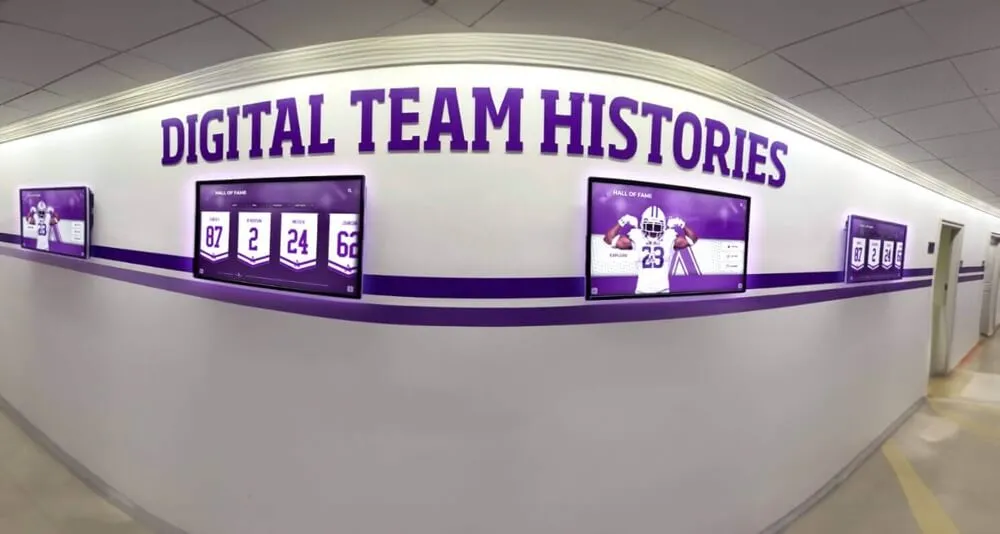
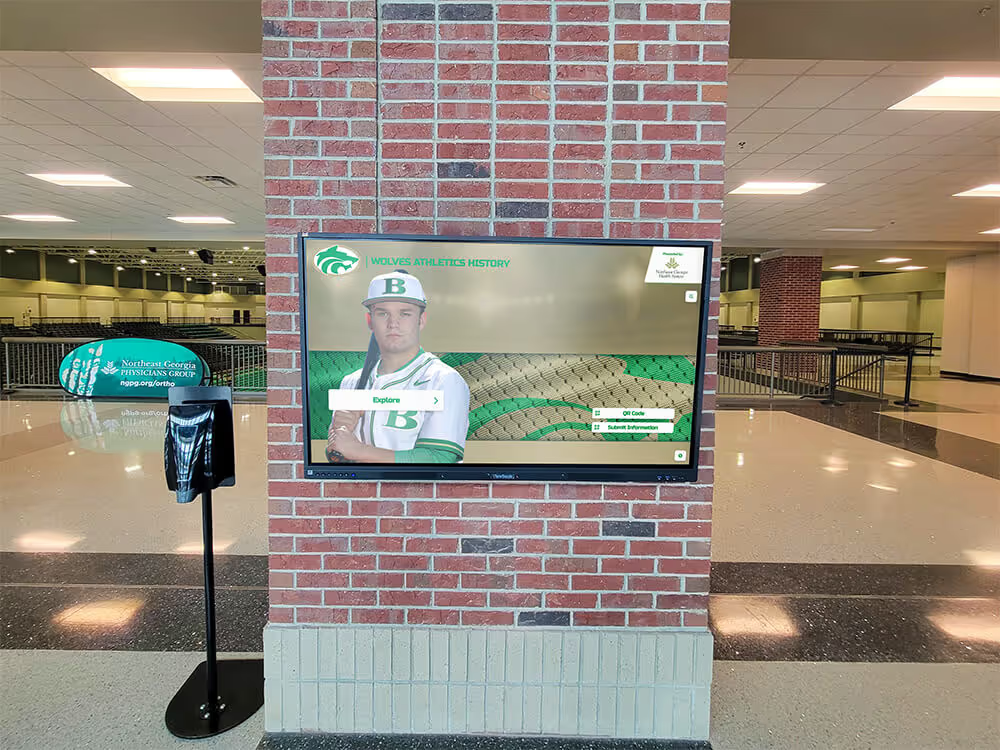
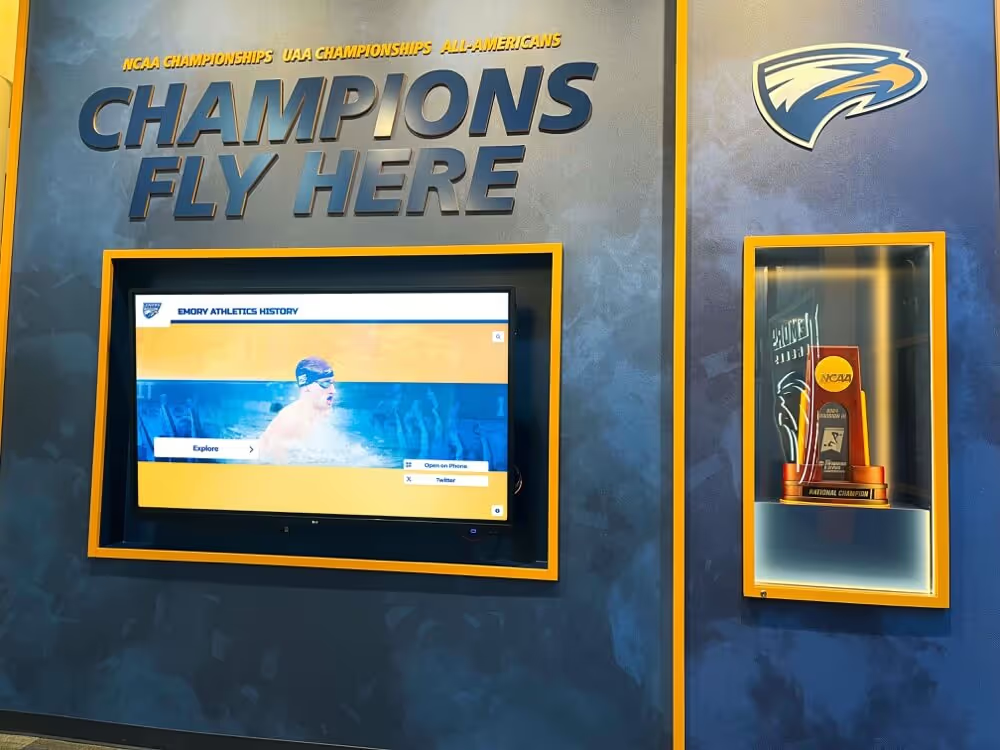
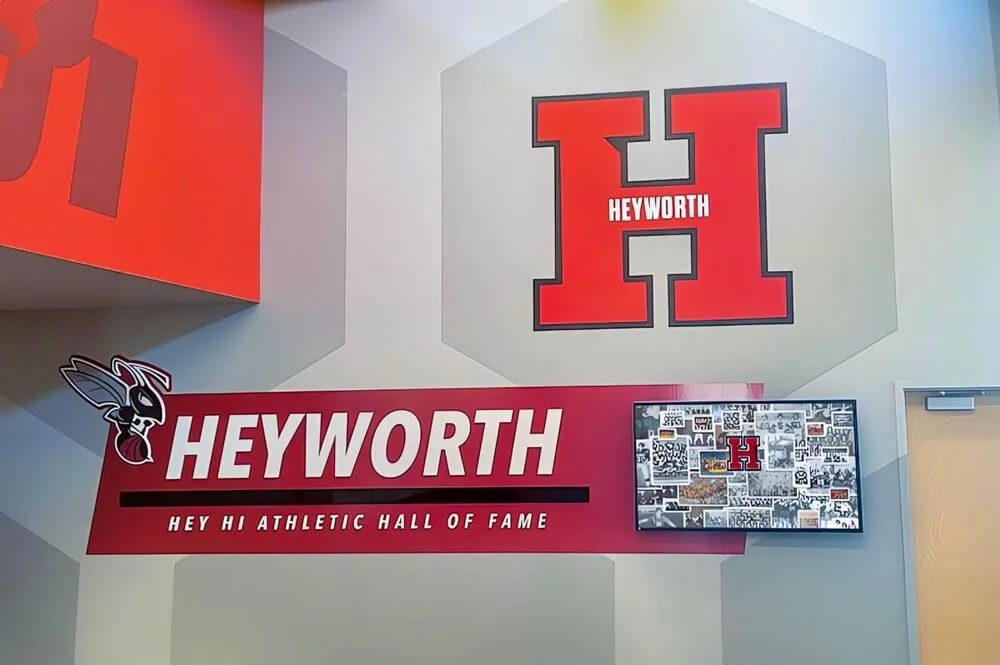
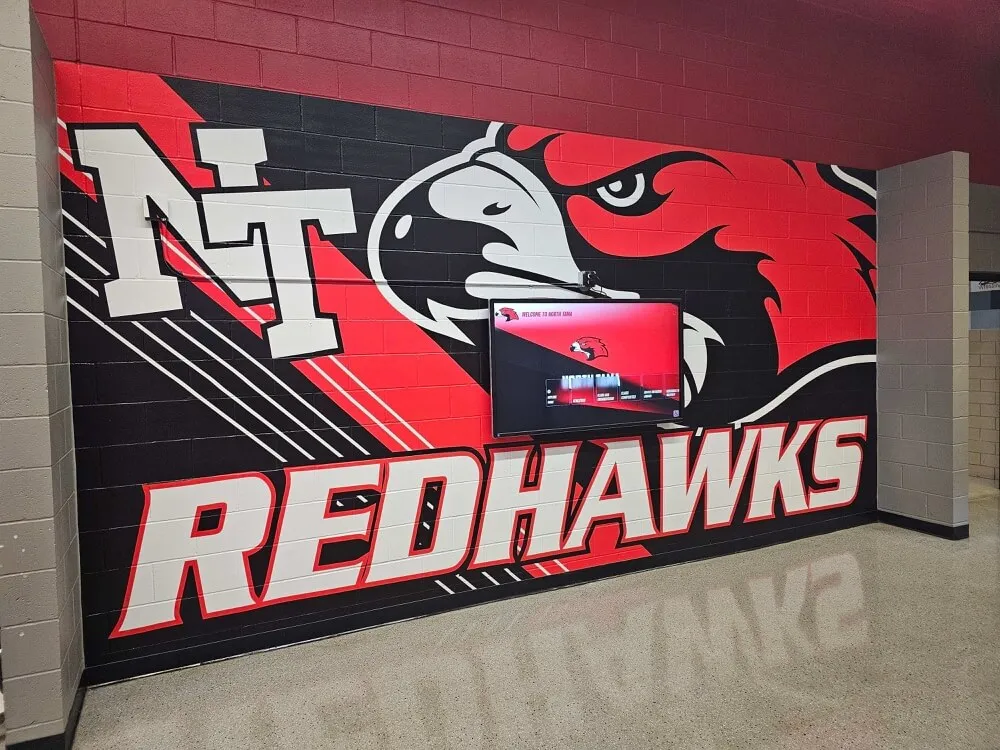
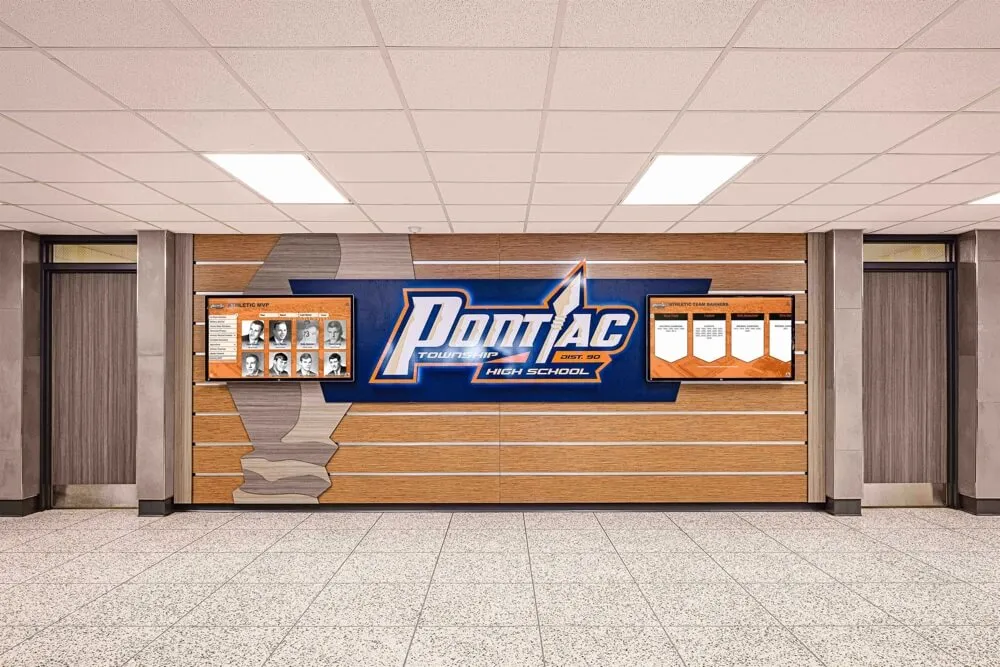
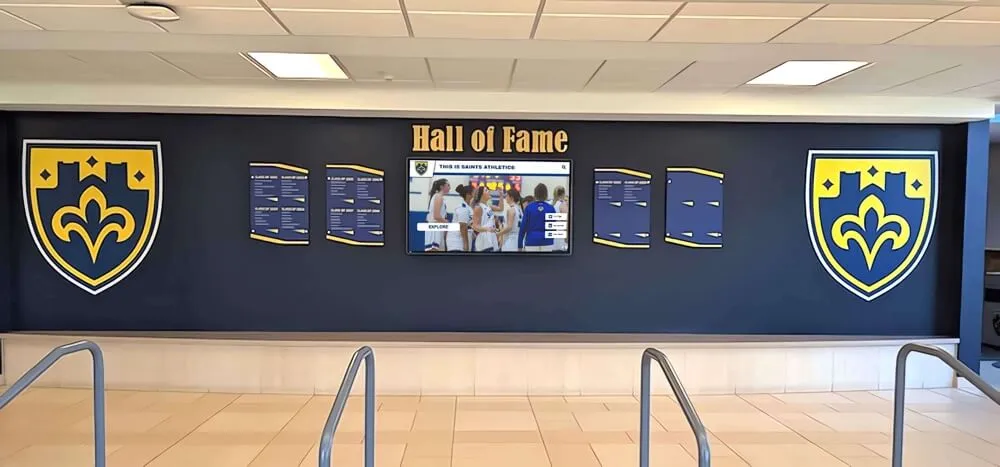
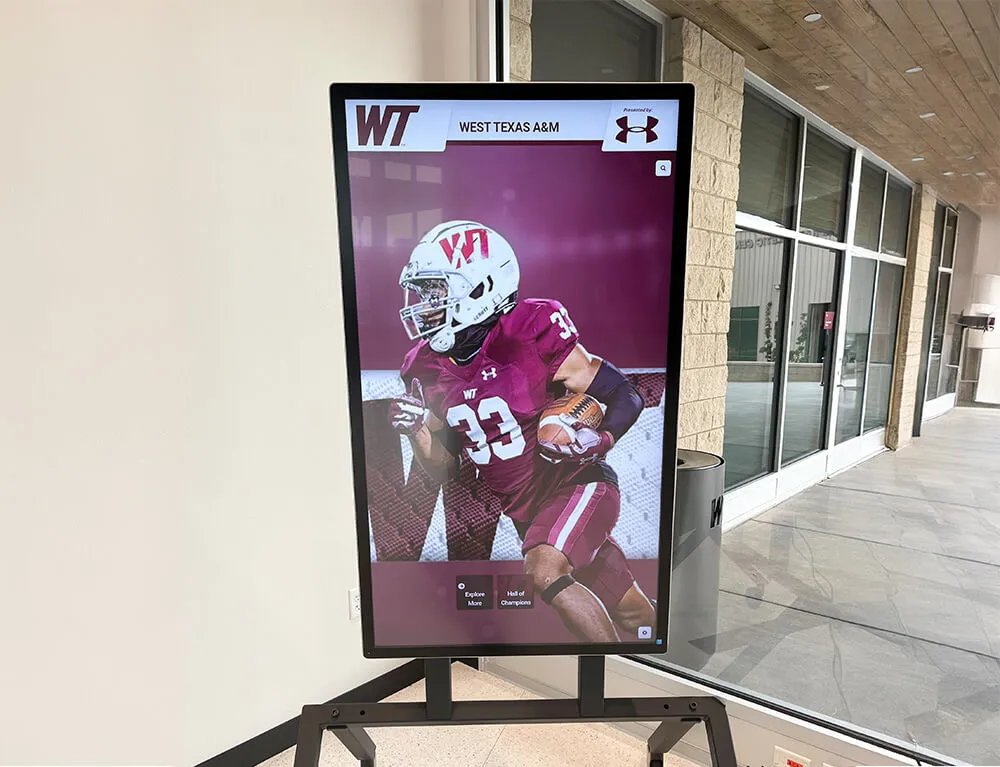
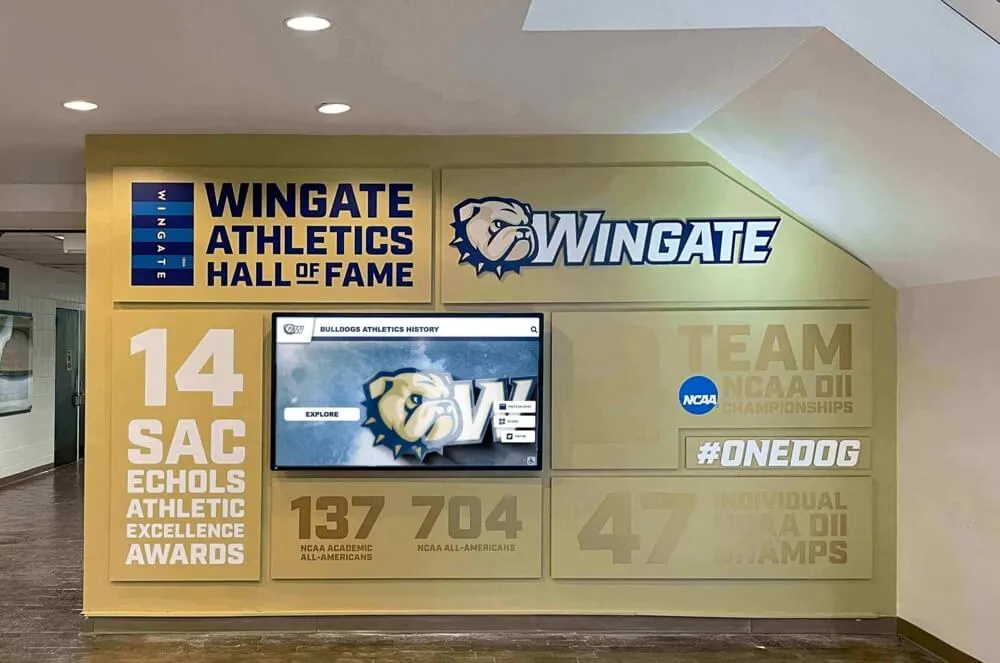
Well-designed sponsor recognition walls position business supporters alongside athletic achievements — creating visible proof of the partnership between community investment and program success
Why Sponsor Plaques Matter in Athletic Facilities
A sponsor plaque is not just an acknowledgment — it is a fulfillment deliverable. When a business contributes to a school athletic program, the recognition they receive is part of what they paid for. A plaque in a meaningful location, with accurate information and professional appearance, communicates that the school takes its recognition commitments seriously.
The practical effect of quality recognition is sponsor retention. Programs that give sponsors something visible to show for their investment — something they can bring staff or family to see during a game — retain sponsors at higher rates than programs that provide only a mention in a printed program or a line in the game-day PA script.
Sponsor plaques also anchor the physical environment of the facility in a way that other recognition formats cannot. Where donor recognition plaques use traditional and modern display approaches to honor individual donors, sponsor plaques focus on organizational partners whose relationship to the program is ongoing and commercial — which shapes both the wording and the layout approach.
Sponsor Plaque Wording Ideas
Wording for sponsor plaques requires a different tone than memorial or naming plaques. The relationship is a business partnership, not a philanthropic gift — and the language should reflect appreciation without sounding like an advertisement or a legal acknowledgment. These examples can be adapted to match your institution’s voice.
General Sponsor Acknowledgment
Proud Sponsor of [School Name] Athletics
[Business Name]
[Year or “Since Year”]
Clean and direct. This format works at any tier and scales to any size plaque. Adding “Since [Year]” recognizes longevity without requiring a new plaque every season.
Presenting or Title Sponsor
Presented by [Business Name]
Official Sponsor of [School Name] [Sport or Program]
[Season Year]
For title-level sponsors with exclusive presenting rights, leading with “Presented by” gives the business name top billing — the format most closely aligned with what sponsors at this level typically expect.
Multi-Year or Community Partner
[Business Name]
Community Partner Since [Year]
In Support of [School Name] Student-Athletes
“Community Partner” language elevates the relationship beyond a single transaction and works particularly well for locally-owned businesses whose identity is tied to the community.
In-Kind or Equipment Sponsor
This [Equipment or Facility Element] Provided by
[Business Name]
In Support of [School Name] Athletics
[Year]
In-kind sponsors who donate equipment, flooring, scoreboards, or other physical assets deserve recognition tied to the specific contribution — not a generic acknowledgment that could apply to any sponsor.
Capital Project Sponsor
[Facility Name or Project Name]
Renovation Supported by
[Business or Organization Name]
[Year]
For businesses that contribute to capital projects — field renovations, locker room upgrades, scoreboard replacements — recognition should reference the specific project, not just the program. This is a distinction sponsors at the $5,000+ level notice and value.
For more wording variations across recognition contexts, recognition plaque ideas covering wording and design offers a useful range of templates adaptable to athletic and donor recognition programs.
Layout Ideas for Athletic Facility Sponsor Displays
Wording is only part of the recognition decision. Where plaques are grouped, how they relate to other recognition displays, and how much visual weight the sponsor wall carries in the space all affect how well the recognition reads to visitors and how proud sponsors feel about the placement.
Entrance Sponsor Wall
The entrance lobby or main gymnasium foyer is the highest-traffic location in most athletic facilities. A dedicated sponsor wall near the entrance — organized by tier with the title sponsor receiving the largest plaque or most prominent position — delivers the strongest annual visibility hours of any interior placement.
Layout principles for entrance sponsor walls:
- Group plaques by tier, not by year of contribution
- Place the title sponsor at eye level, centered, with additional space separating it from lower tiers
- Use consistent plaque sizes within tiers for visual coherence
- Include the school logo or athletic mark as a design anchor
- Leave physical space for future sponsors; a wall that is already full signals limited opportunity to prospective partners
Gymnasium Interior Wall
For sponsors who fund specific sports programs, a sponsor recognition panel inside the gymnasium — positioned above the baseline or adjacent to the main entrance — keeps recognition visible during both practices and games. This placement is active approximately 200 to 400 hours per year, significantly more than a scorer’s table banner during events alone.
Championship banner design ideas for high school gyms and athletic halls illustrates how banners and plaques can share wall space in gymnasiums without competing visually — a layout consideration worth reviewing if you are adding sponsor plaques to a space that already holds championship recognition.
Athletic Corridor Sponsor Row
Schools with dedicated athletic hallways connecting locker rooms, weight rooms, and gymnasiums have an underused recognition asset: the hallway wall. A row of uniform sponsor plaques along a corridor creates a “partner wall” that students and coaches pass daily, delivering visibility hours that event-only placements cannot match.
Athletic corridor sponsor row elements:
- Uniform plaque size and mounting height throughout the corridor
- Business name, logo space, and brief descriptor (one line)
- Year of contribution or multi-year recognition notation
- Coordination with any hall-of-fame or team history displays already in the corridor
Fieldhouse or Multi-Sport Facility Sponsor Hub
Facilities serving multiple sports benefit from a central sponsor recognition hub — a single location where all program sponsors are recognized collectively, supplemented by sport-specific recognition near individual venues (gymnasium, pool, weight room, outdoor fields).
The central hub approach prevents recognition from becoming scattered and gives major sponsors a prestige location separate from the sport-specific displays.
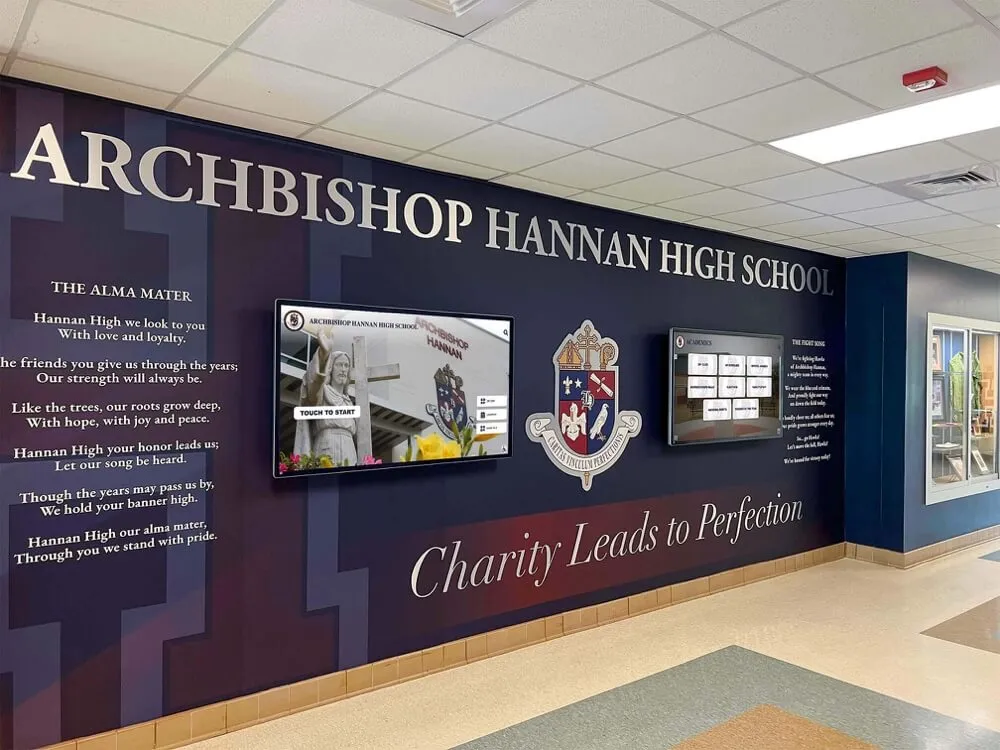
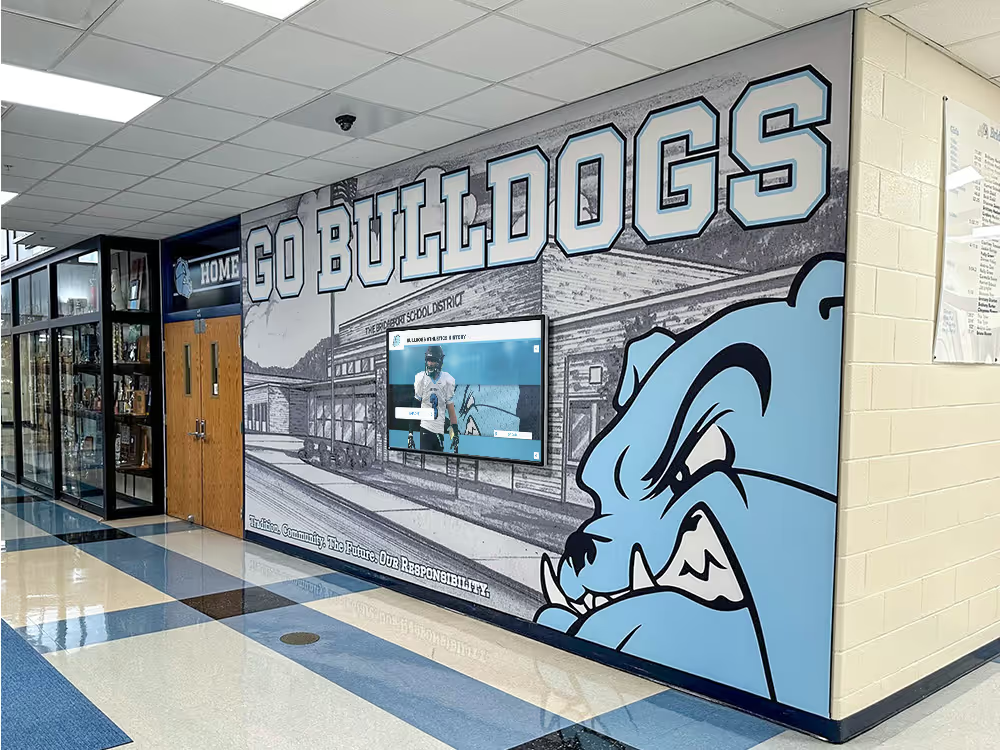
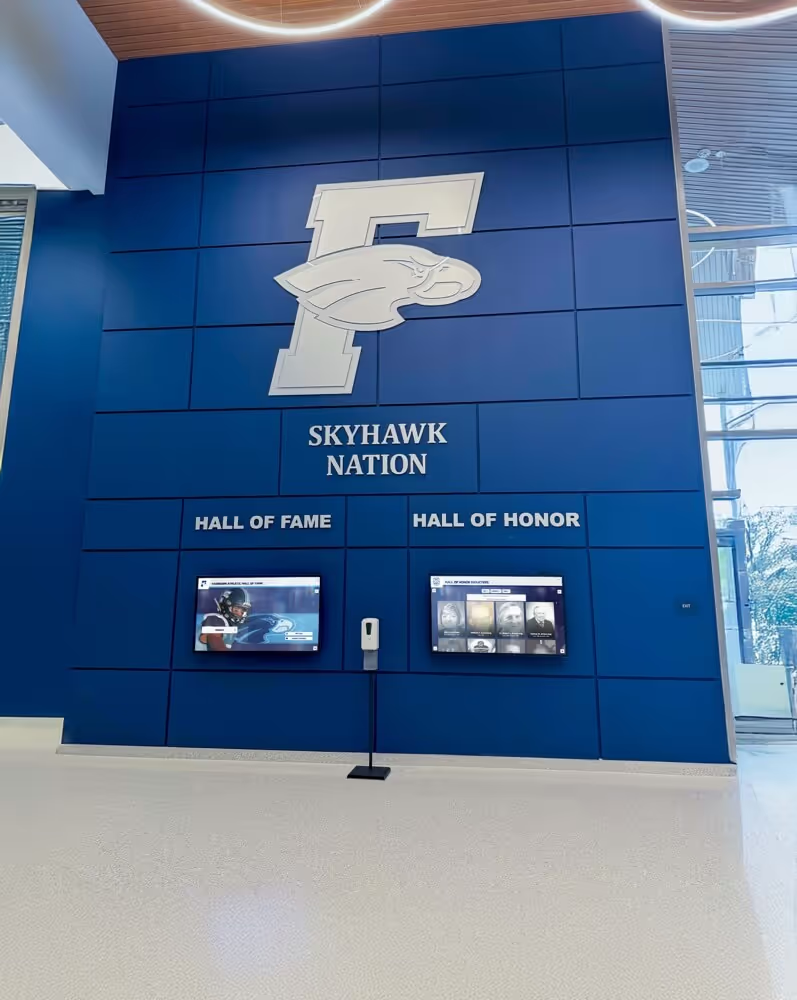
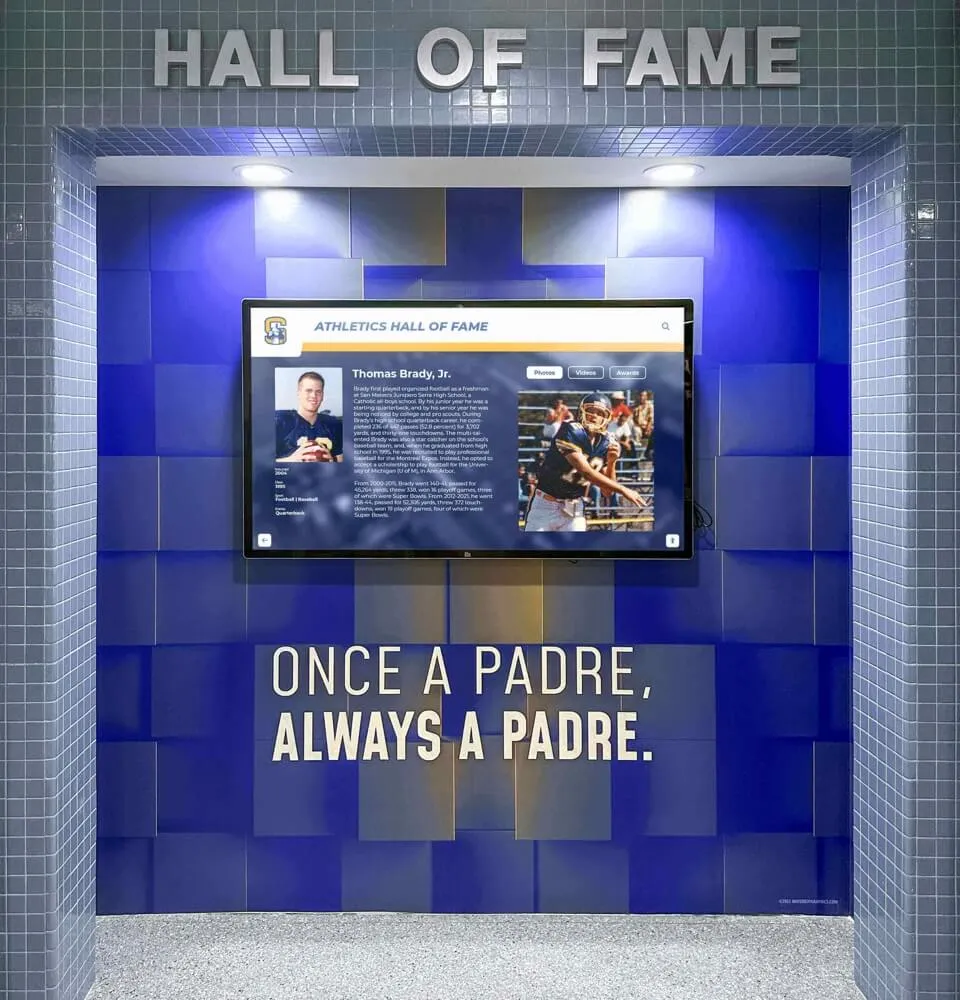
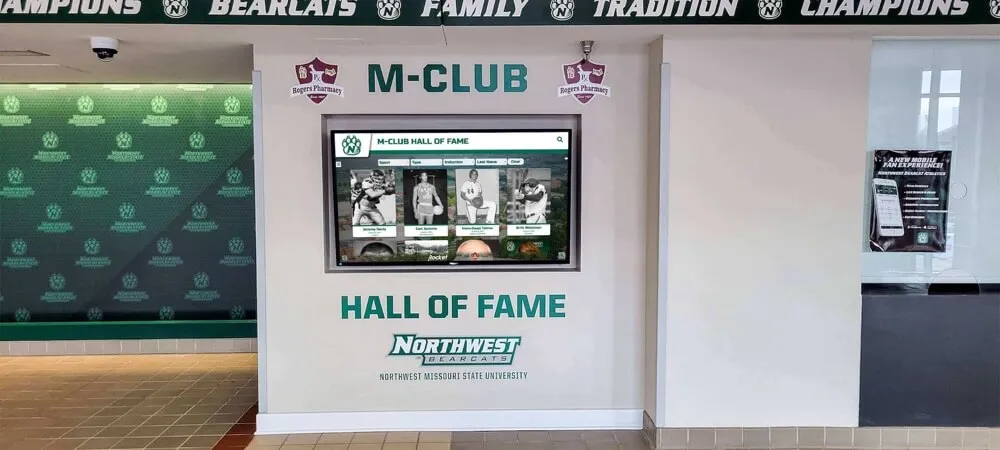
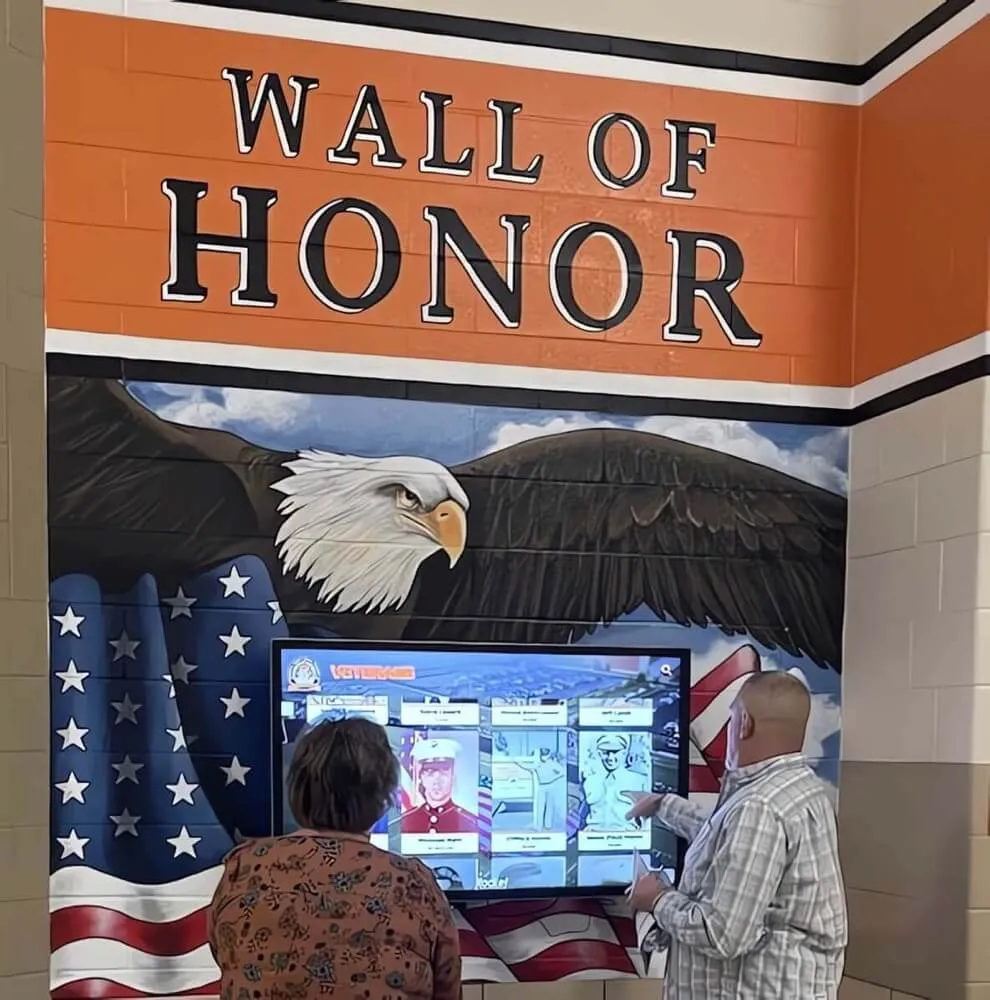
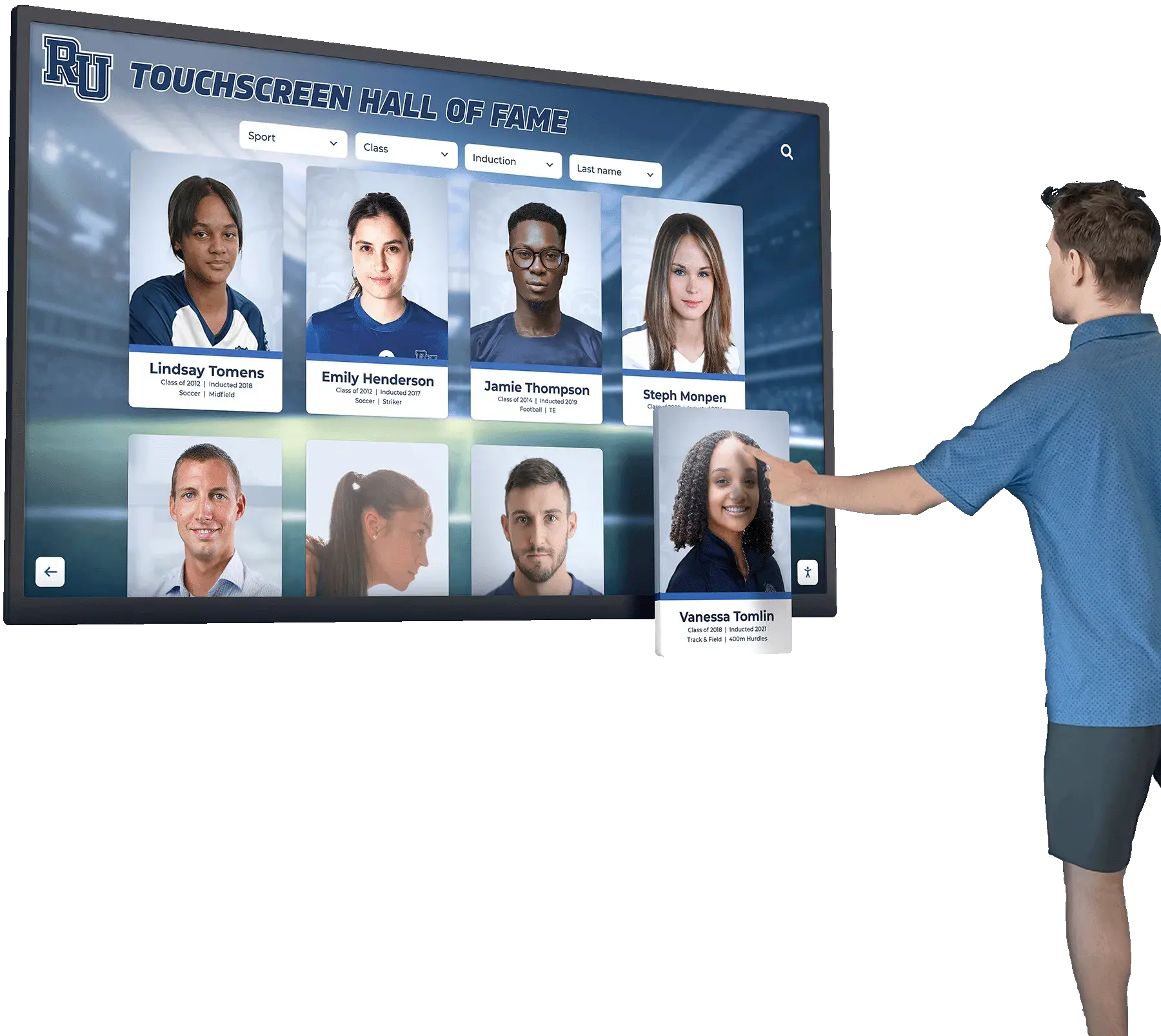
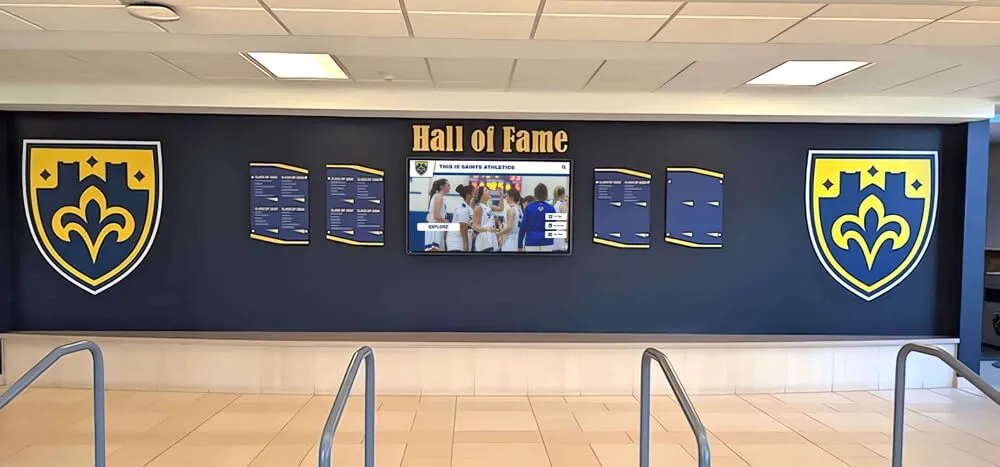
Centralized recognition hubs — physical or digital — give sponsors a dedicated showcase that communicates the program's investment in their visibility
Static Plaques vs. Digital Recognition: A Practical Comparison
The decision between traditional engraved plaques and digital display systems is not binary — most effective programs use both. But understanding what each does well helps athletic directors allocate recognition budget appropriately and explain the value of each format to sponsors.
| Factor | Static Plaque | Digital Display |
|---|---|---|
| Upfront cost | Lower per plaque ($300–$1,500 typical) | Higher ($8,000–$25,000+ for display system) |
| Cost to add a sponsor | Fabrication cost per plaque | Near-zero (content update only) |
| Recognition capacity | Limited by physical wall space | Unlimited — software-based |
| Visual permanence | High — physical object in specific location | Moderate — requires power and maintenance |
| Sponsor preference | Many sponsors prefer physical recognition | Growing acceptance; some prefer digital |
| Update flexibility | Low — requires new fabrication | High — update same day |
| Storytelling depth | Logo, name, brief text | Logo, description, photos, multi-year history |
| Off-hours visibility | Continuous (if lobby placement) | Continuous if screen is on |
| Annual operating cost | Low after installation | Software license, electricity, occasional hardware |
| Scalability | Constrained by space | Scales to any number of sponsors |
The core limitation of static plaques is capacity: every sponsor that joins the program requires a new plaque and wall space. For programs with stable sponsor rosters of five to fifteen partners, this is manageable. For programs with twenty or more sponsors — or programs actively growing — the physical constraint becomes real.
The core limitation of digital displays is upfront investment and the perception among some longer-tenured sponsors that “a screen” feels less permanent than engraved metal. Hybrid approaches address this directly: a permanently installed bronze plaque for the title sponsor, combined with a digital display for the remaining recognition tier, delivers both permanence and scalability.
For a detailed side-by-side of plaque and digital formats in the recognition context, plaque and trophy options comparing traditional vs digital recognition covers the tradeoffs from the institutional perspective.
Choosing Materials for Physical Sponsor Plaques
When a physical plaque is the right choice, material selection communicates how much the school values the sponsor relationship. A well-made bronze plaque at the gymnasium entrance reads differently than a laminated paper certificate in a dollar-store frame.
Bronze: The highest-prestige material for institutional plaques. Bronze develops a natural patina that many administrators find adds character and permanence. Best for title sponsors and long-term partner recognition. Cost range: $600–$1,500+ for a standard 12"×18" plaque.
Brass: Similar appearance to bronze with a brighter gold tone. Requires more maintenance to prevent tarnish but is appropriate for indoor athletic facilities. Cost range: $400–$900 for similar sizing.
Aluminum with bronze or brushed finish: The most common choice for programs recognizing multiple sponsors at different tiers. Durable, lightweight, and cost-effective. Modern production techniques make aluminum plaques nearly indistinguishable from brass in standard viewing conditions. Cost range: $200–$600.
Acrylic: A contemporary option suited to modern facility aesthetics. Clear or colored acrylic with printed or engraved text creates a distinctive look that works in renovated facilities where traditional metals would feel mismatched. Lower cost than metals; primarily indoor use.
Regardless of material, consistency across all sponsor plaques in a given facility matters more than any individual material choice. A wall of matched aluminum plaques reads as a deliberate, professional recognition system. A wall of mixed sizes, materials, and mounting styles reads as an accumulation of one-off decisions.
Placement and Mounting Considerations
How plaques are mounted and where they sit at viewer eye level determines whether they are noticed. These practical considerations apply regardless of material choice.
Mounting height: Center the plaque at 58–62 inches from the floor — standard eye level for standing adults. Plaques mounted too low (below 48 inches) are frequently overlooked by adult visitors. Plaques mounted too high require visitors to look up, reducing the likelihood of reading detail text.
Viewing distance: Text on plaques should be legible at the typical distance a visitor would stand. For lobby plaques in wide hallways, this may be 8–12 feet. For plaques mounted directly beside doors or entry sequences, 3–5 feet is typical. Adjust type size accordingly — at 10 feet, 1-inch letterforms are readable; below that distance, 0.5 inches is sufficient.
Lighting: Plaques in naturally lit lobbies may not need supplemental lighting. Corridor plaques or those in dim spaces benefit from directional accent lighting. LED strip lighting mounted above the plaque — aimed downward at approximately 30 degrees — highlights the engraving without creating glare.
Grouping: Related plaques (all sponsors from a given sport season, or all sponsors at a given tier) should share consistent spacing and alignment. A laser level during installation is not optional — misaligned plaques communicate carelessness.
Athletic schedule board ideas for gymnasiums and lobbies offers useful context for thinking about how sponsor plaques integrate with the other display systems already in your facility — schedule boards, digital screens, and directional signage all share wall space and should be planned as a cohesive system.
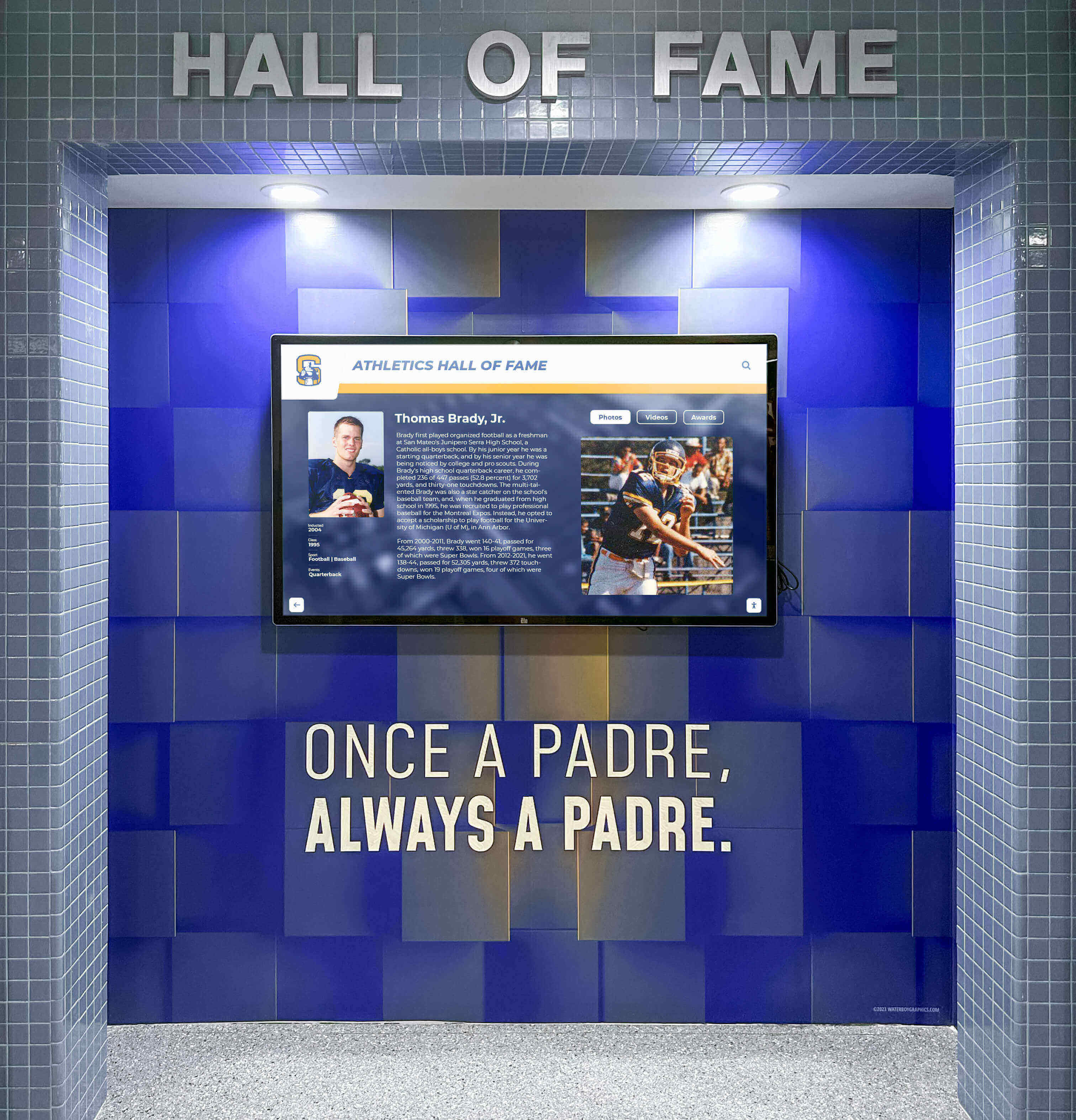
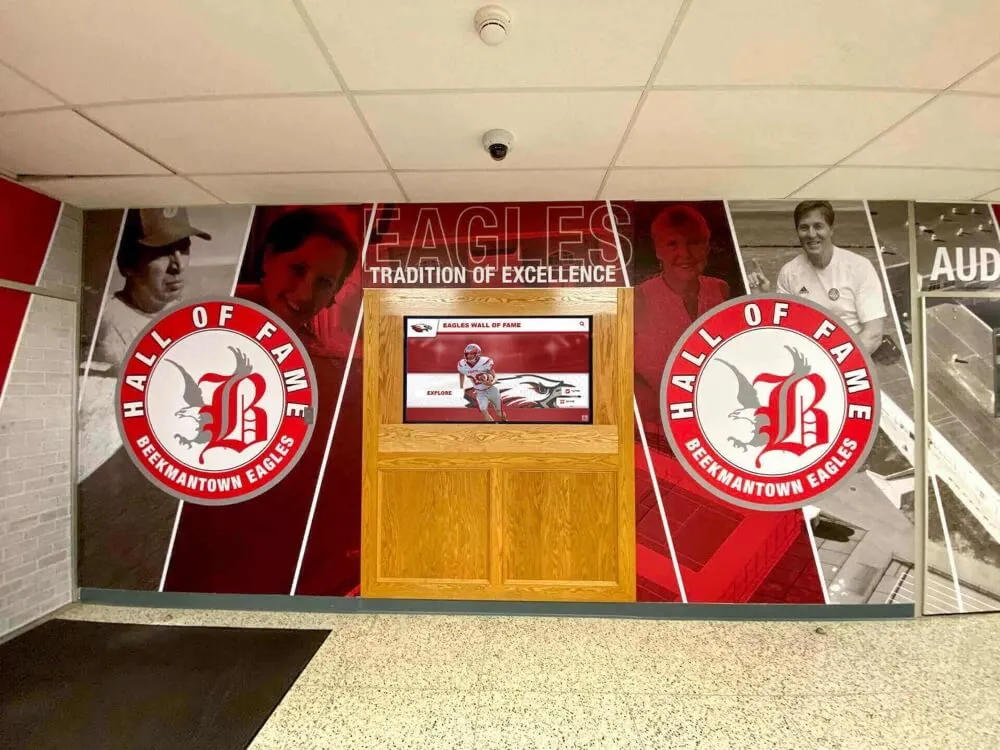
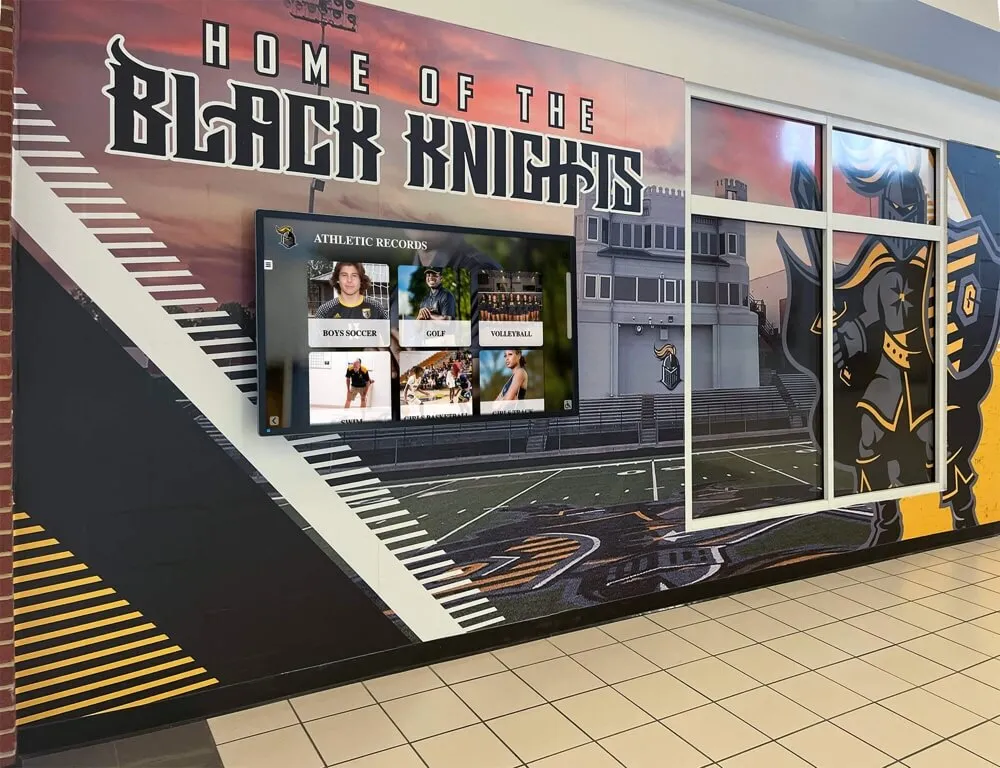
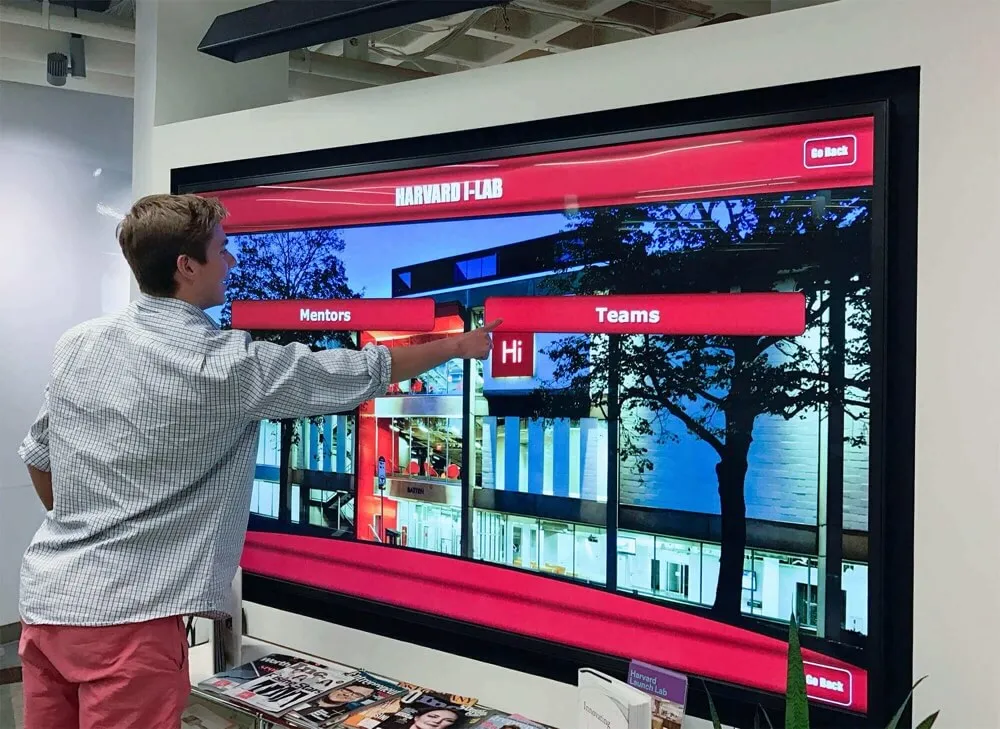
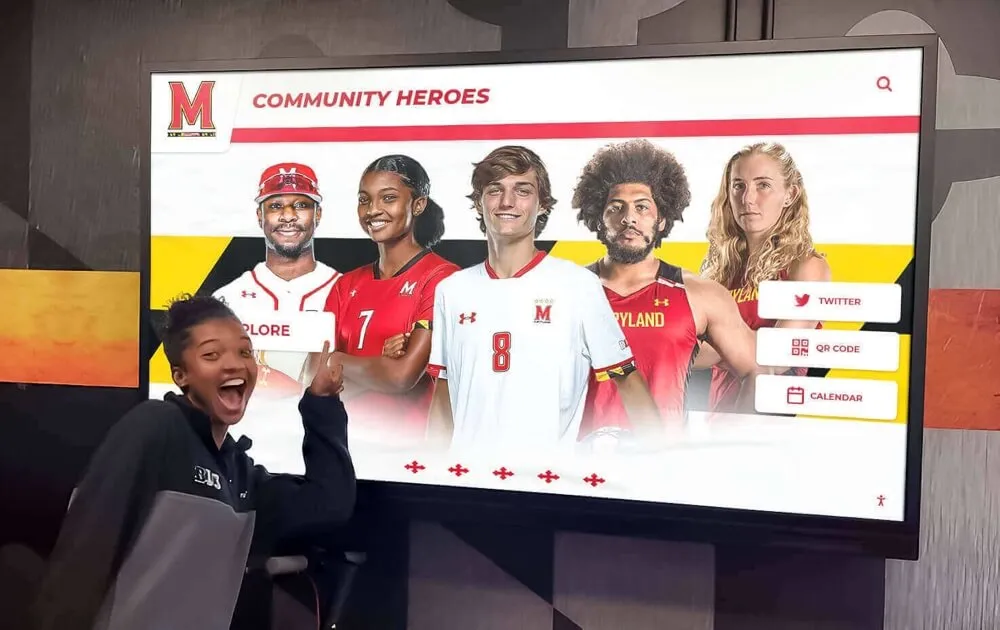
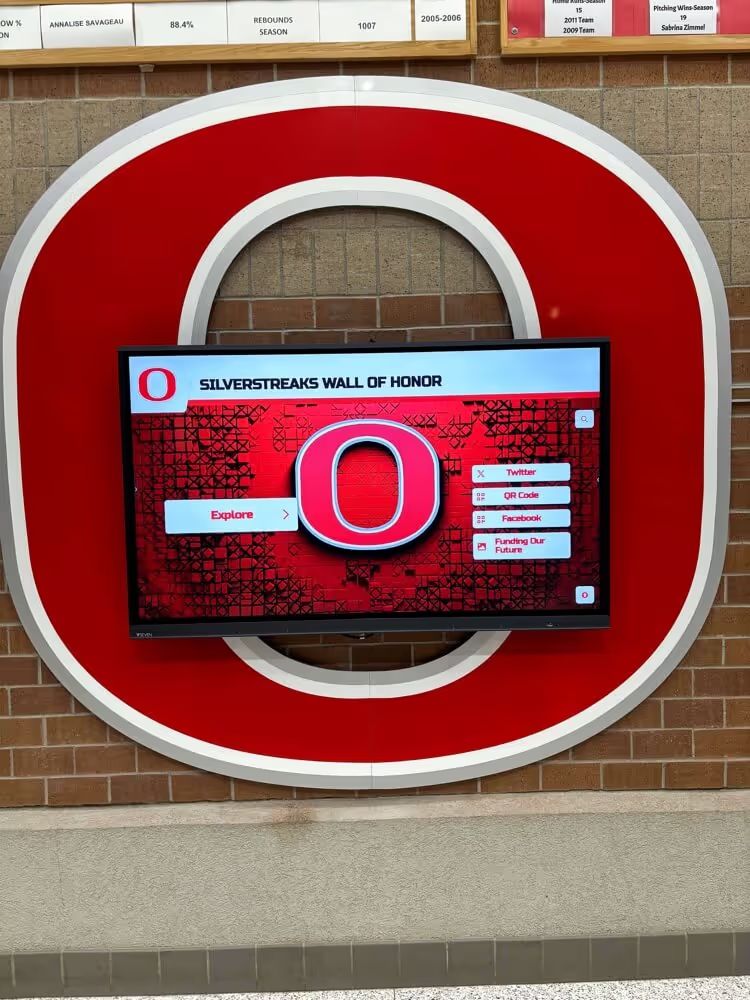
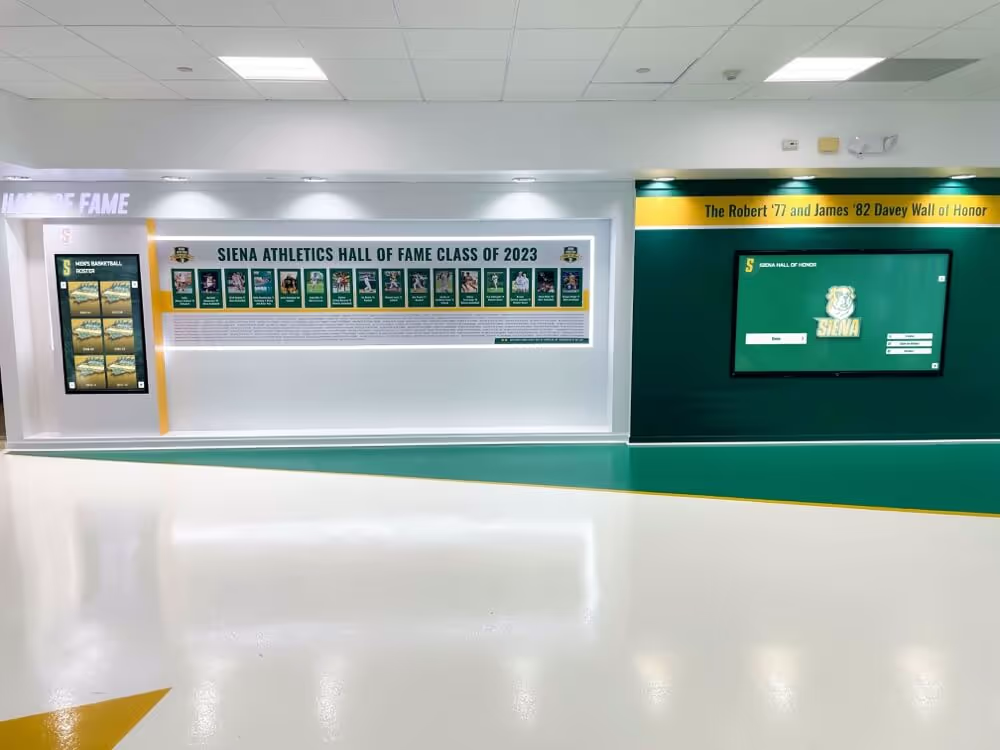
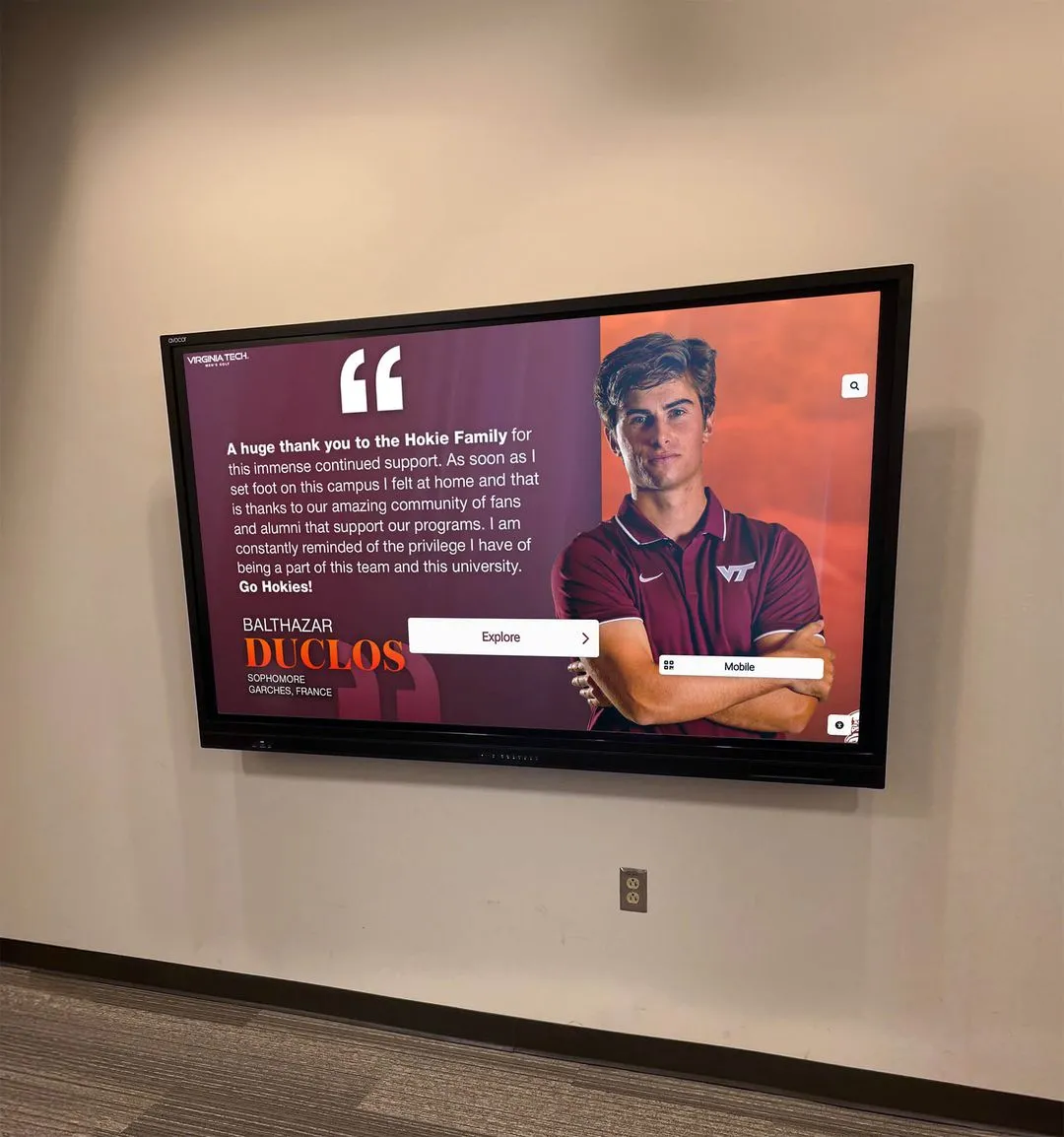
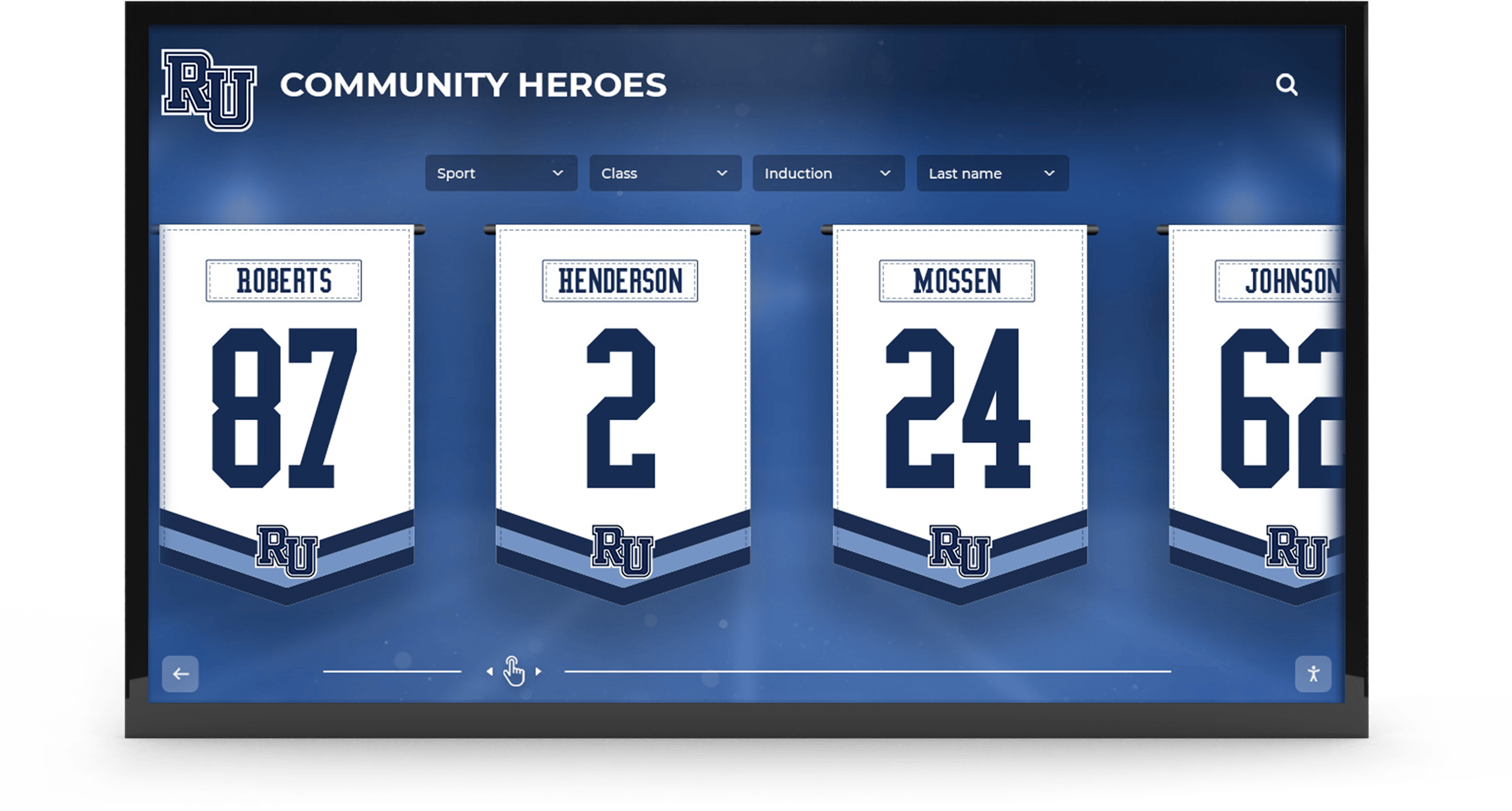
When digital screens are integrated into facility design at the planning stage, they become permanent recognition assets that work alongside physical plaques rather than replacing them
Digital Sponsor Recognition: What It Adds Beyond a Plaque
Digital recognition systems extend what a physical plaque can accomplish — not by replacing the permanence of an engraved metal installation but by adding capabilities that no plaque can match.
Year-round visibility without fabrication delays. A new sponsor can be on a digital display within hours of signing their agreement. A new plaque requires a fabrication order, production time, and installation scheduling. For programs adding sponsors mid-season, this difference is material.
Sponsor profiles with depth. Where a plaque holds a name, logo, and brief text, a digital system can hold a full sponsor profile: business description, years of partnership, a note about what their contribution funds, and contact information or a QR code for visitors who want to learn more. This is meaningful for sponsors whose businesses are not immediately recognizable from their name alone.
Rotation and equitable visibility. A lobby digital display rotating through all sponsor tiers can deliver equitable visibility to a roster of twenty sponsors in the same physical space that a static display could accommodate three or four. For programs where the title sponsor requires a dedicated physical plaque but lower-tier sponsors are recognized digitally, this solves the space constraint cleanly.
Integration with broader athletic recognition. The strongest recognition environments combine sponsor acknowledgment with athletic achievement displays — hall-of-fame inductees, championship records, and athlete profiles alongside business partners who helped fund the program. Digital hall of fame displays and donor wall sponsor recognition demonstrates how these systems can be unified rather than siloed across separate displays.
For programs evaluating whether digital recognition is the right complement to existing physical plaques, donor recognition plaque ideas covering traditional and modern options provides a useful framework for understanding where each format delivers the most value given different recognition goals.
See How Digital Sponsor Recognition Works
Rocket Alumni Solutions builds digital recognition displays for athletic facilities — combining sponsor acknowledgment, hall-of-fame profiles, and program history in a single system. If you're planning a new sponsor wall or modernizing an existing recognition program, a demo shows what your specific facility could look like.
Request a DemoBuilding a Sponsor Recognition Tier Structure Around Plaques
Plaque recognition works best when it is connected to a clear tier structure that defines what each sponsor level receives. Tiers give prospective sponsors a visible menu, help the athletic department manage recognition consistently, and prevent the awkwardness of making case-by-case decisions about who gets what.
A simple four-tier framework built around plaque recognition might look like this:
Presenting Sponsor ($3,000+): One custom bronze or brass plaque (12"×18" minimum) at the main facility entrance; dedicated digital sponsor profile; named in all program communications.
Gold Sponsor ($1,000–$2,999): One aluminum plaque (10"×14") in the gymnasium interior or athletic corridor; included in digital sponsor rotation; listed in printed programs.
Silver Sponsor ($500–$999): One aluminum plaque (8"×10") in the athletic corridor or team room; name on shared sponsor panel; listed in programs.
Community Supporter ($150–$499): Name on shared sponsor recognition panel (physical or digital); listed in printed program.
Adjust thresholds based on your market and program size — the principles hold regardless of the specific dollar amounts. The key is that each tier’s recognition should reflect the genuine value of the placement it includes, which means knowing the estimated visibility hours of each location before setting pricing.
For programs that also host banquets or awards ceremonies, athletic banquet decoration ideas and recognition staging offers approaches for extending sponsor recognition into event settings as a complement to the permanent facility display.
Frequently Asked Questions About Sponsor Plaques for Athletic Facilities
What should a sponsor plaque say for a school athletic program?
An effective sponsor plaque for a school athletic program includes the business name (prominently), a brief acknowledgment phrase (“Proud Sponsor of [School Name] Athletics” or “Community Partner Since [Year]”), and the year or program name. For title-level sponsors with exclusive presenting rights, lead with “Presented by [Business Name].” Keep wording concise — plaques are not the place for multi-sentence descriptions. The goal is recognition that reads clearly from 6 to 10 feet away.
Where should sponsor plaques be placed in a school gymnasium?
The highest-value placements for sponsor plaques in a school gymnasium are the main entrance lobby (year-round visibility, 800–1,200 hours annually), the gymnasium interior end walls above the baseline (visible during all practices and games, approximately 200–400 hours annually), and the athletic corridor connecting primary facility spaces (daily visibility for students and coaches, 600–1,000 hours annually). Avoid low-traffic locations like storage hallways or spaces only accessible to staff.
What is the difference between a sponsor plaque and a digital sponsor recognition display?
A sponsor plaque is a permanent physical installation — engraved metal, acrylic, or stone — that holds fixed information about a specific sponsor. It requires fabrication and installation to add or update. A digital sponsor recognition display is a screen-based system that shows sponsor information (logos, names, descriptions, QR codes) in a rotating or interactive format. Digital systems have higher upfront cost but near-zero cost to add sponsors, unlimited capacity, and the ability to include rich sponsor profiles. Most programs use both: a physical plaque for major or long-term sponsors, digital displays for the full roster.
How much does a sponsor plaque cost for a school athletic facility?
Sponsor plaque costs vary by material, size, and production method. Aluminum plaques (8"×10" to 10"×14") typically range from $200 to $600. Brass plaques in similar sizes run $400 to $900. Bronze plaques at 12"×18" or larger range from $600 to $1,500 or more for custom work. Acrylic plaques are generally the most affordable option at $150 to $400. For programs recognizing ten or more sponsors annually, the cumulative cost of physical plaques each season becomes a meaningful budget line — which is why many programs shift lower tiers to digital recognition and reserve physical plaques for title and presenting sponsors.
Should sponsor plaques be updated every year or remain permanent?
The most sustainable approach is to design plaques for multi-year or indefinite display rather than replacing them annually. Adding “Since [Year]” rather than listing a single season year makes a plaque valid for as long as the sponsor remains active. When a sponsor does not renew, a physical plaque can be covered, stored, or — in the case of a digital display element — simply removed from rotation. Annual replacement adds significant cost and creates waste. Reserve annual updates for digital elements; physical plaques should be designed to last.
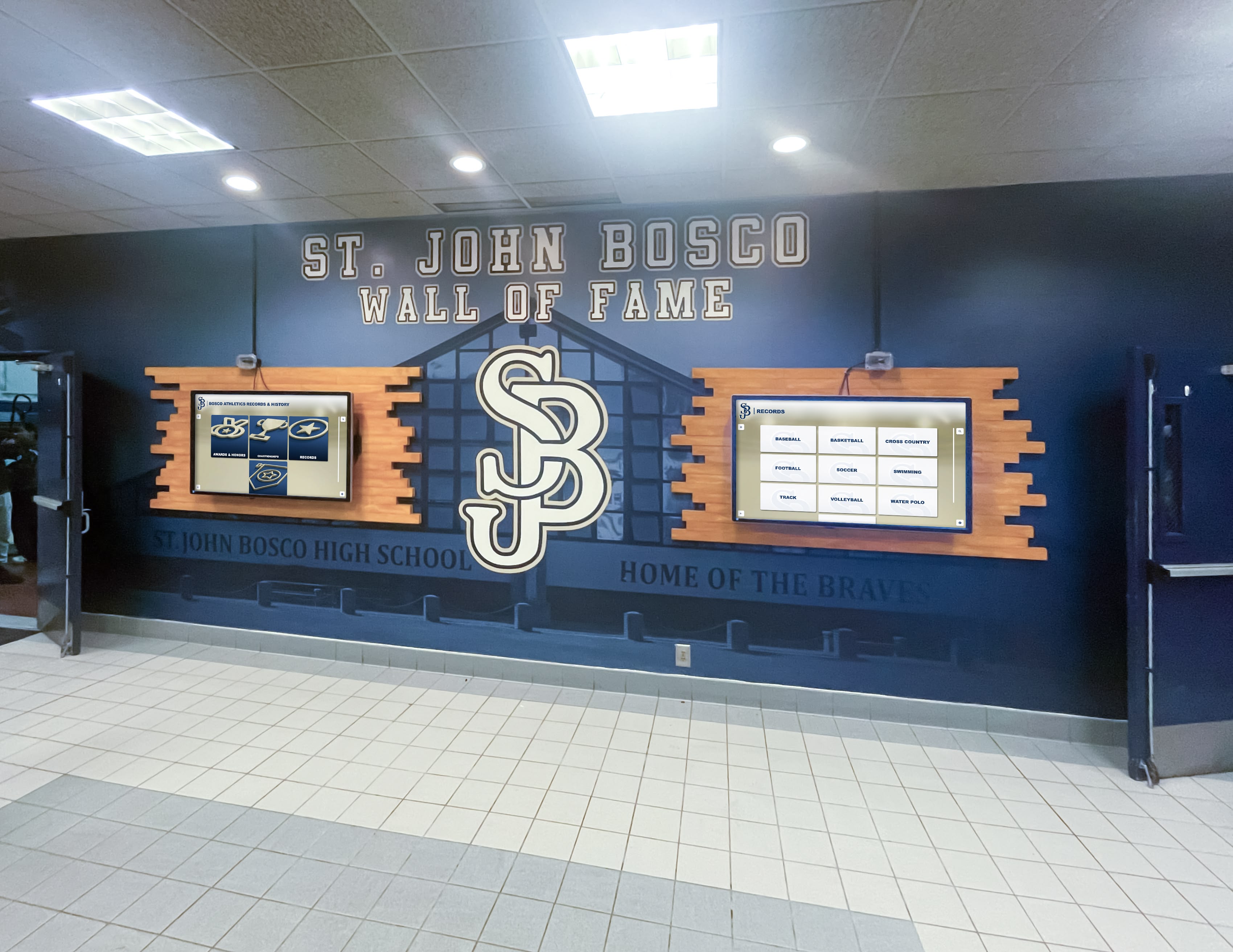
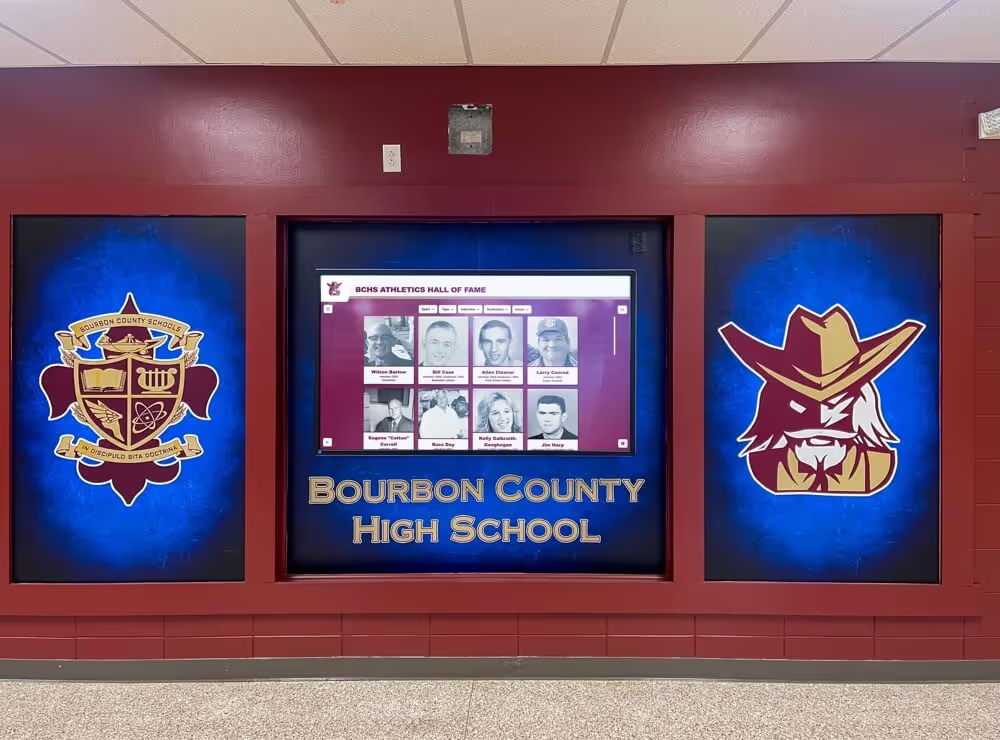
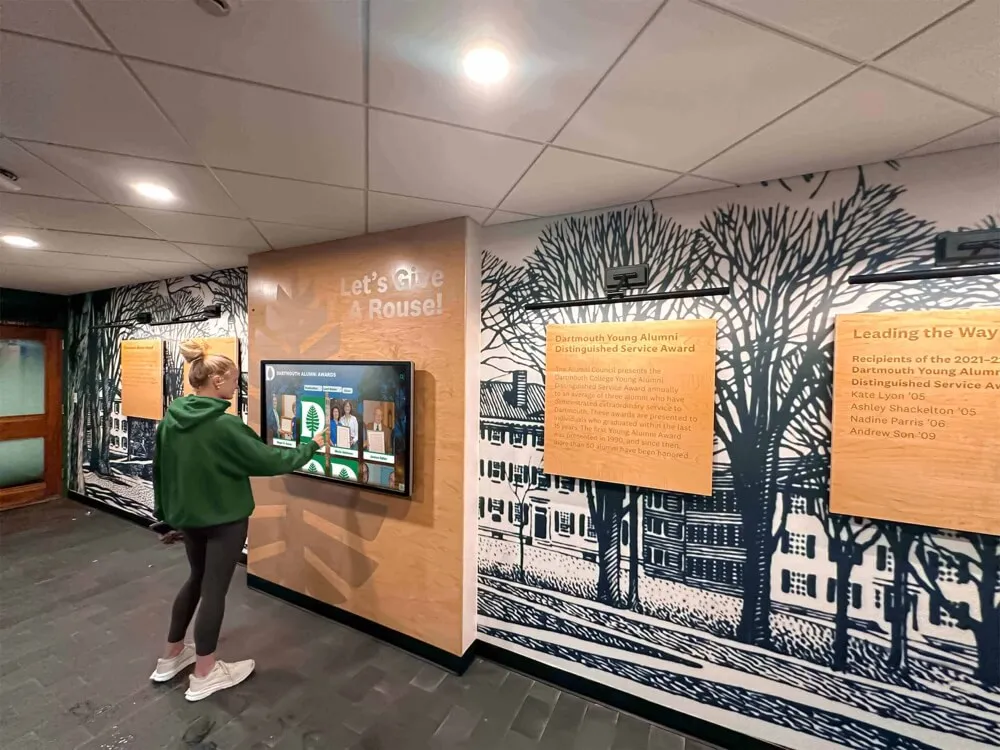
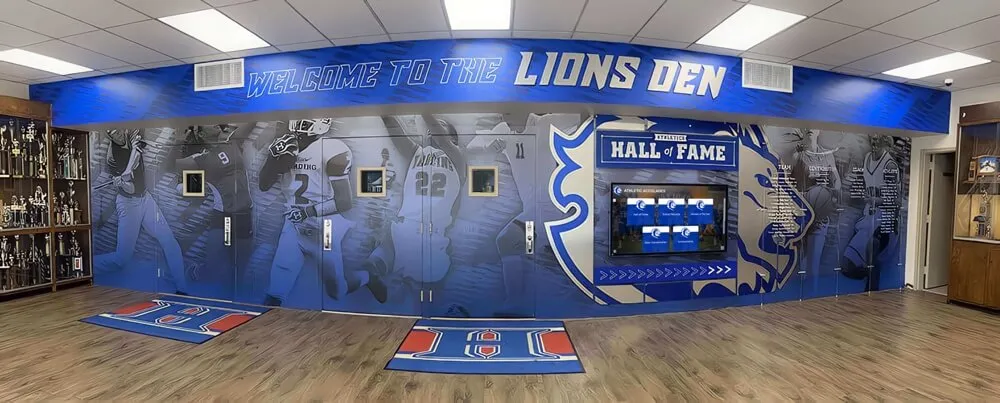
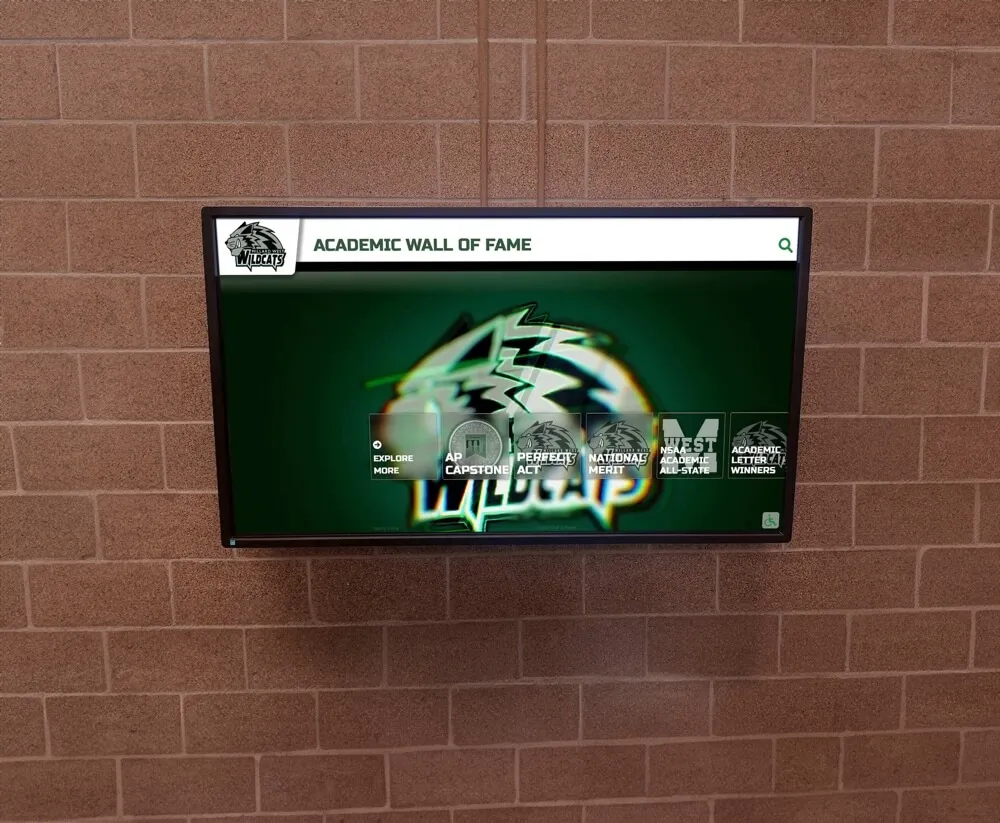
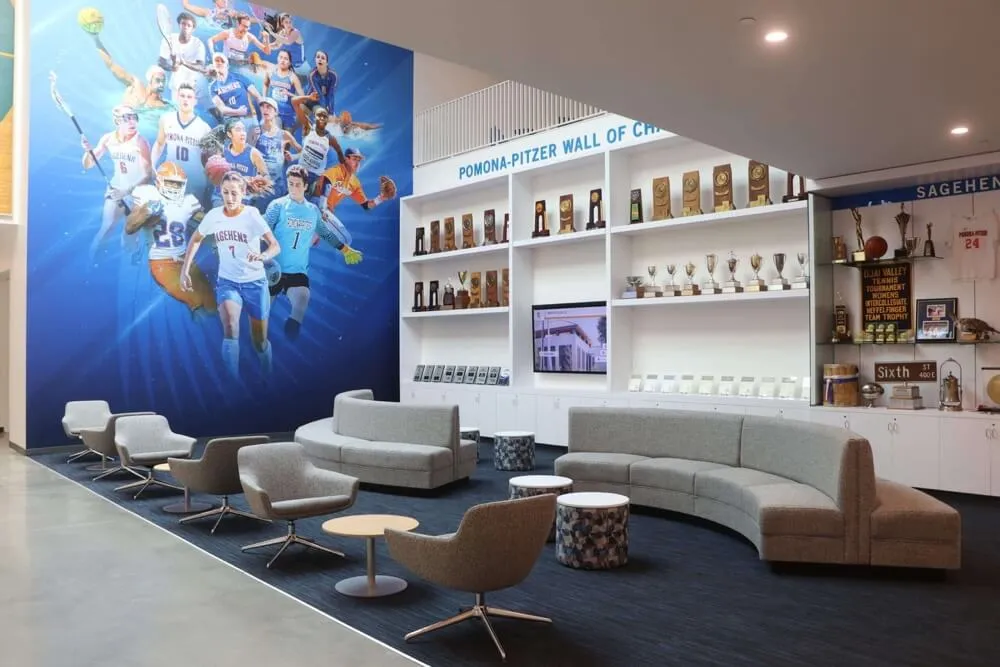
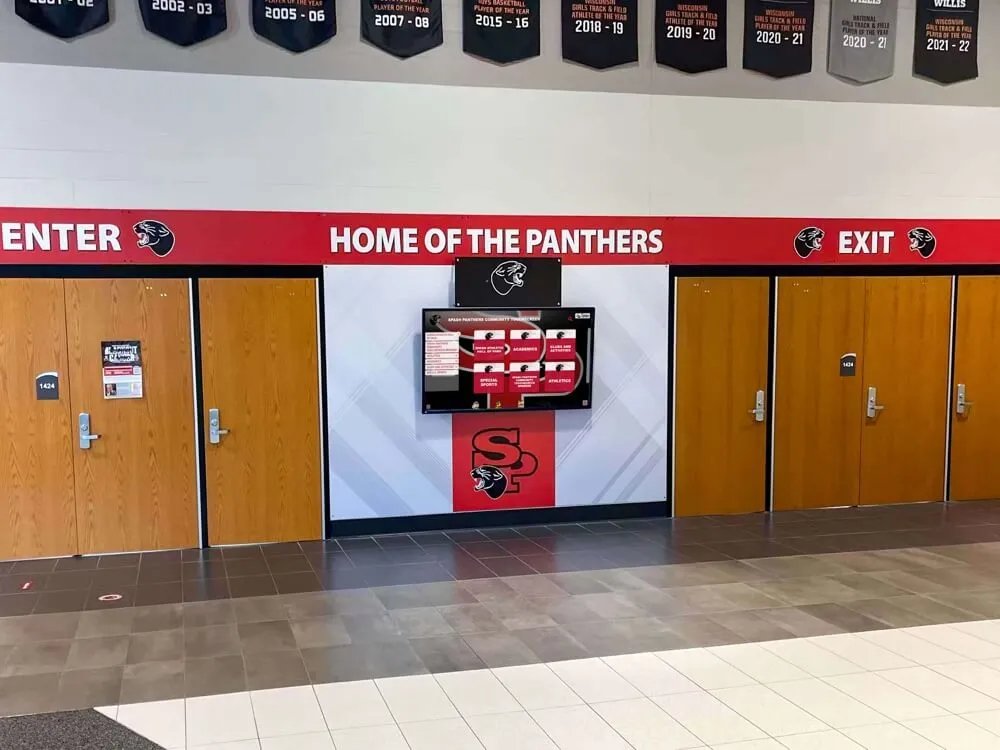
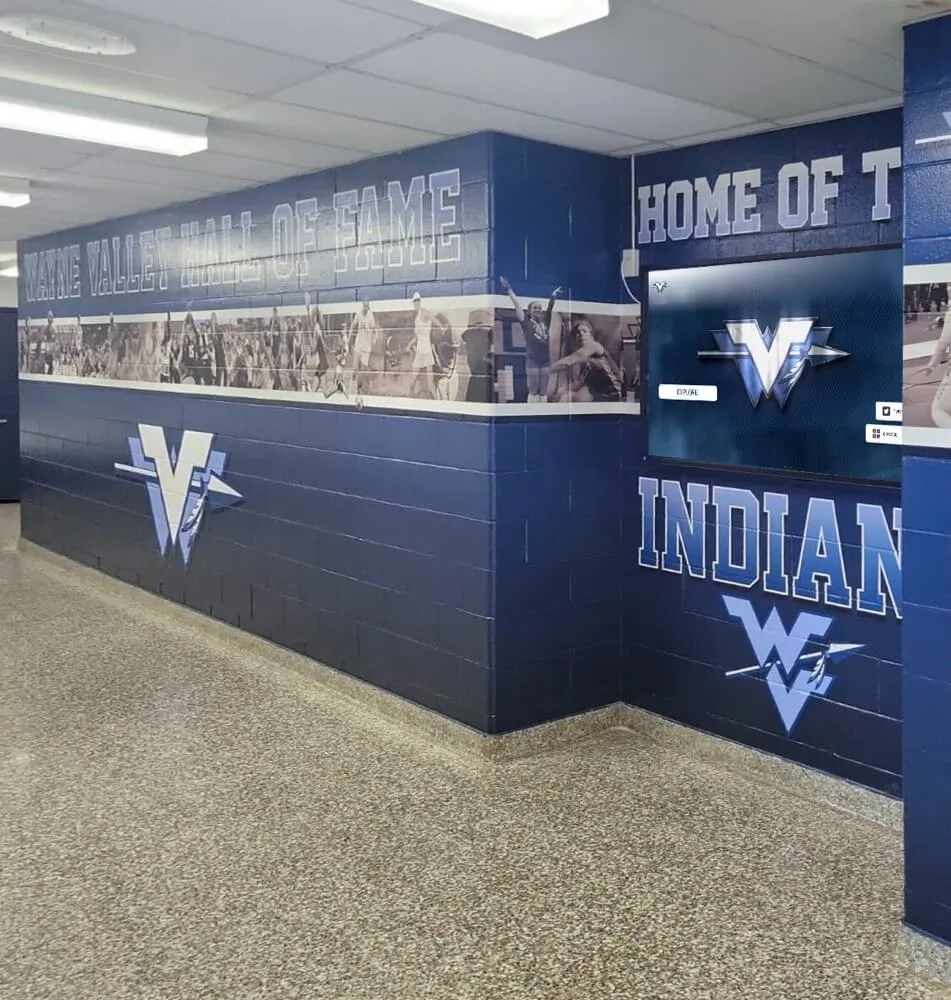
Hallways that combine physical recognition elements with digital screens create layered sponsor acknowledgment that works for both traditional and digital recognition preferences
Putting It Together: A Recognition Plan That Works for Sponsors
The strongest athletic facility sponsor recognition programs share a few common elements: clear tier structure that connects plaque placement to investment level, consistent material and design standards across all plaques, and a visibility plan that extends recognition beyond game nights.
Physical plaques at the entrance and inside the gymnasium deliver the prestige and permanence most established sponsors expect. A digital system handles the capacity challenge as the roster grows and allows the program to tell richer stories about each partner’s history with the school. The two formats complement each other rather than competing — and together they give sponsors something tangible to point to all year, not just when the bleachers are full.
For more ideas on how student awards, donor recognition, and sponsor acknowledgment work together in school recognition environments, creative student awards and recognition ideas offers transferable principles for building recognition cultures where every category of contributor feels visible and valued.
Build a Sponsor Recognition System Your Partners Will Notice
Rocket Alumni Solutions designs digital recognition displays for school athletic facilities — keeping sponsor names visible every day the building is open, not just during events. Interactive touchscreens, digital sponsor walls, and lobby display systems that complement your physical plaques and scale as your program grows.
Request a Demo of Digital Sponsor Recognition