



At the end of every school year, student government associations across the country face the same challenge: how do you close out a year of fundraisers, spirit weeks, school service projects, and officer meetings with a ceremony that genuinely honors what your officers and volunteers accomplished? An SGA awards ceremony is more than a formality—it is the moment that transforms a year of behind-the-scenes work into visible, lasting recognition. When done well, it reinforces why students join student government in the first place, motivates incoming officers, and creates a tradition that future classes aspire to continue.
This guide covers everything your advisor and outgoing officers need to plan a meaningful SGA awards ceremony: the award categories worth including, creative names for each recognition, physical and digital display options that make the honors last beyond a single evening, and ideas for connecting student government achievement to the broader recognition culture your school is building.
The planning calendar for an effective end-of-year SGA awards ceremony typically begins four to six weeks before the event. That window allows time to collect nominations, design or order physical awards, secure a venue, build a program, and communicate with families and staff who should attend. Rushing this timeline tends to produce a ceremony that feels perfunctory—which sends the wrong message to the students who dedicated hundreds of hours to school service.

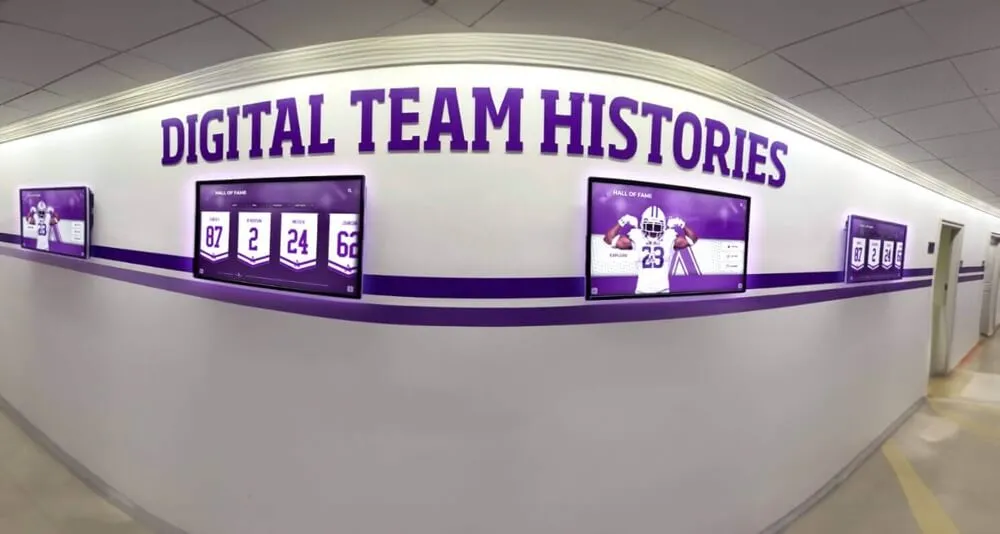
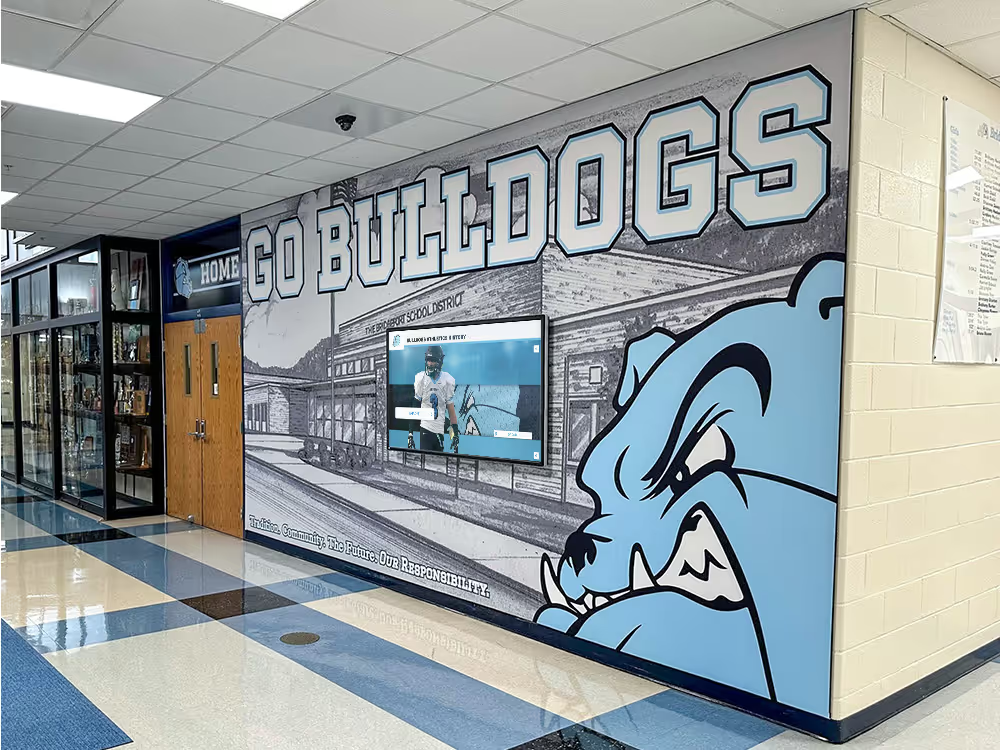
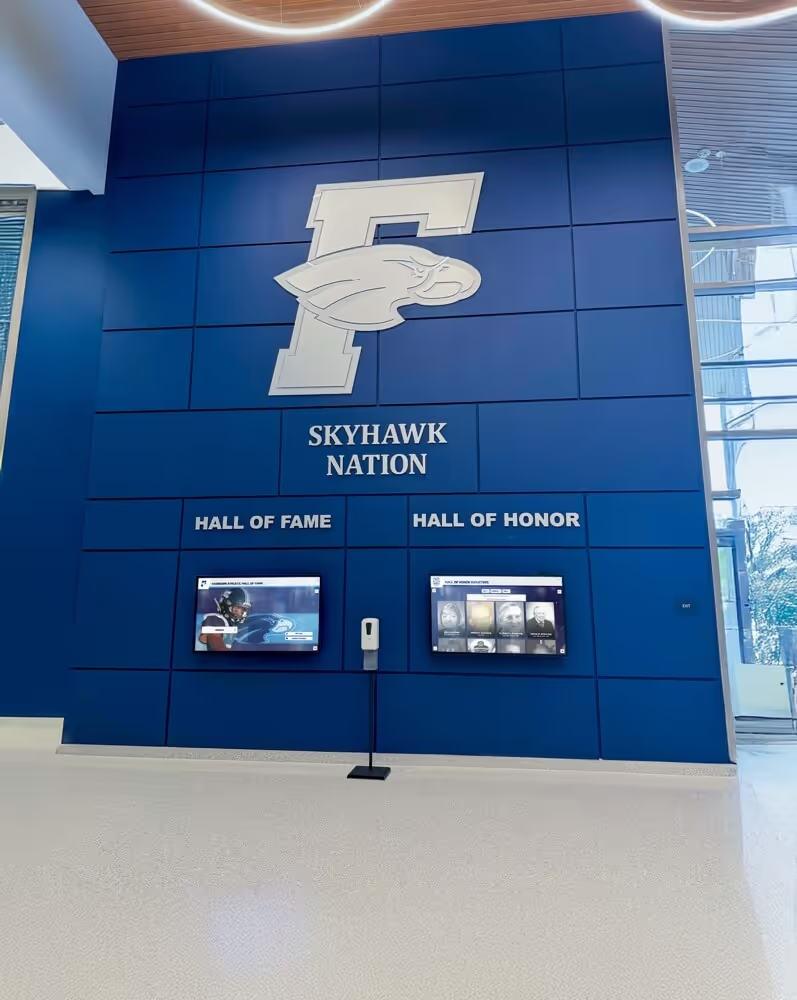
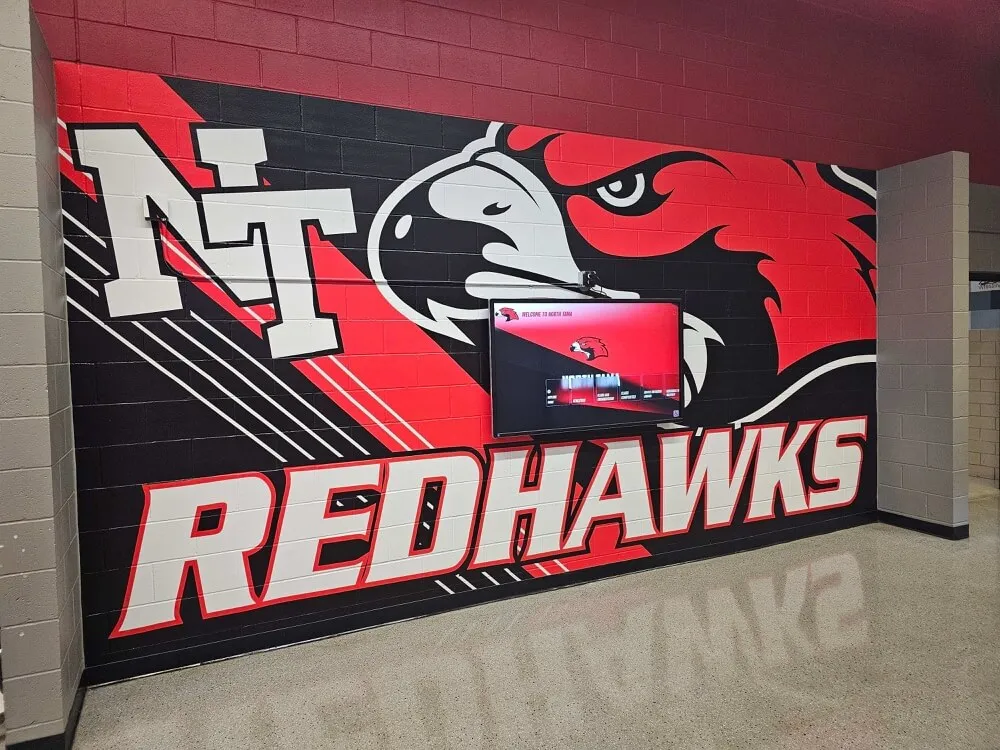
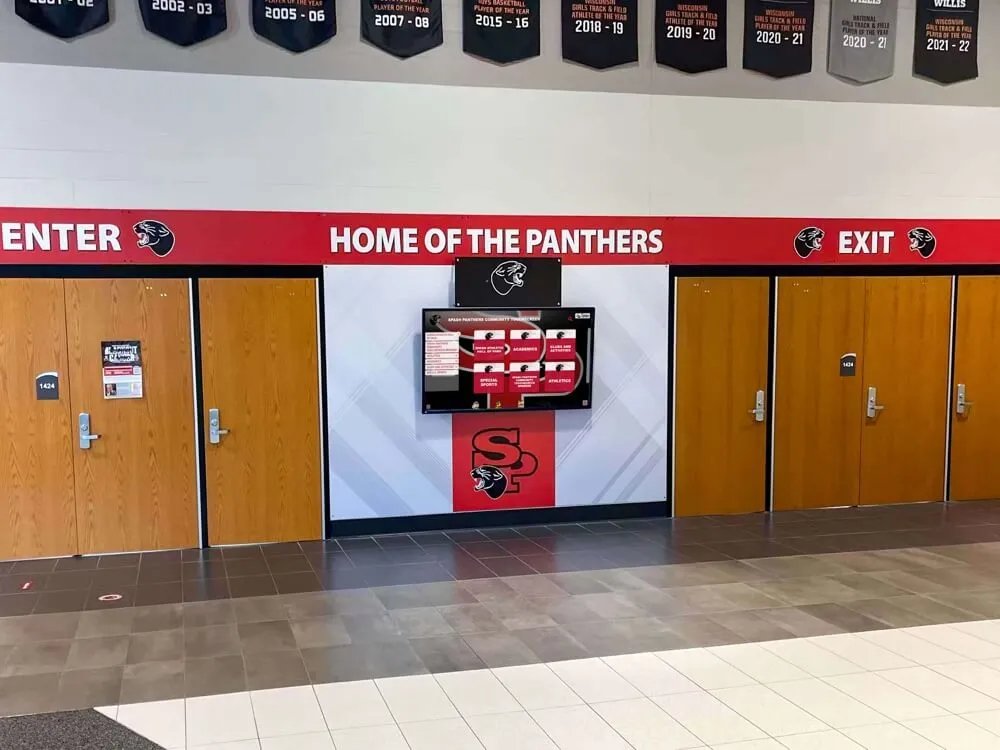
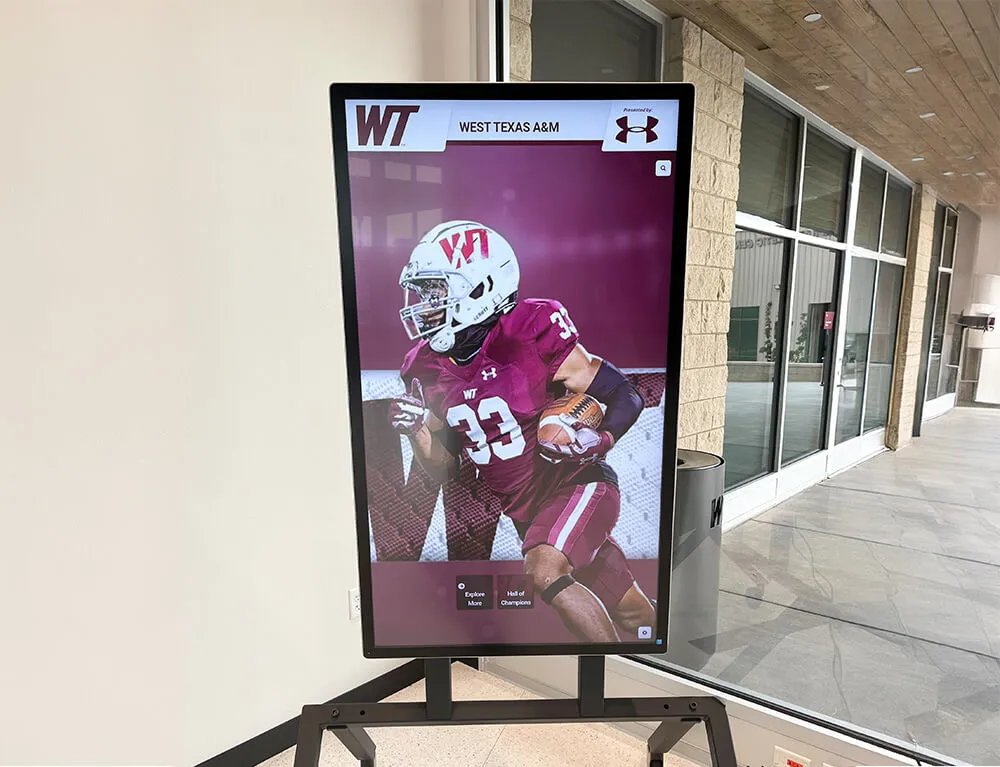
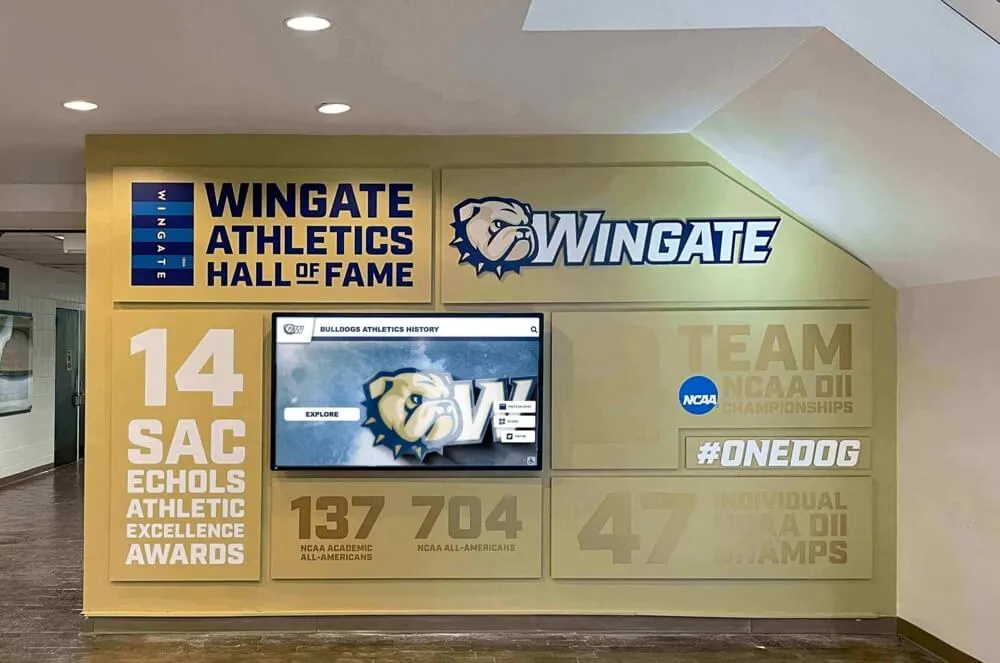
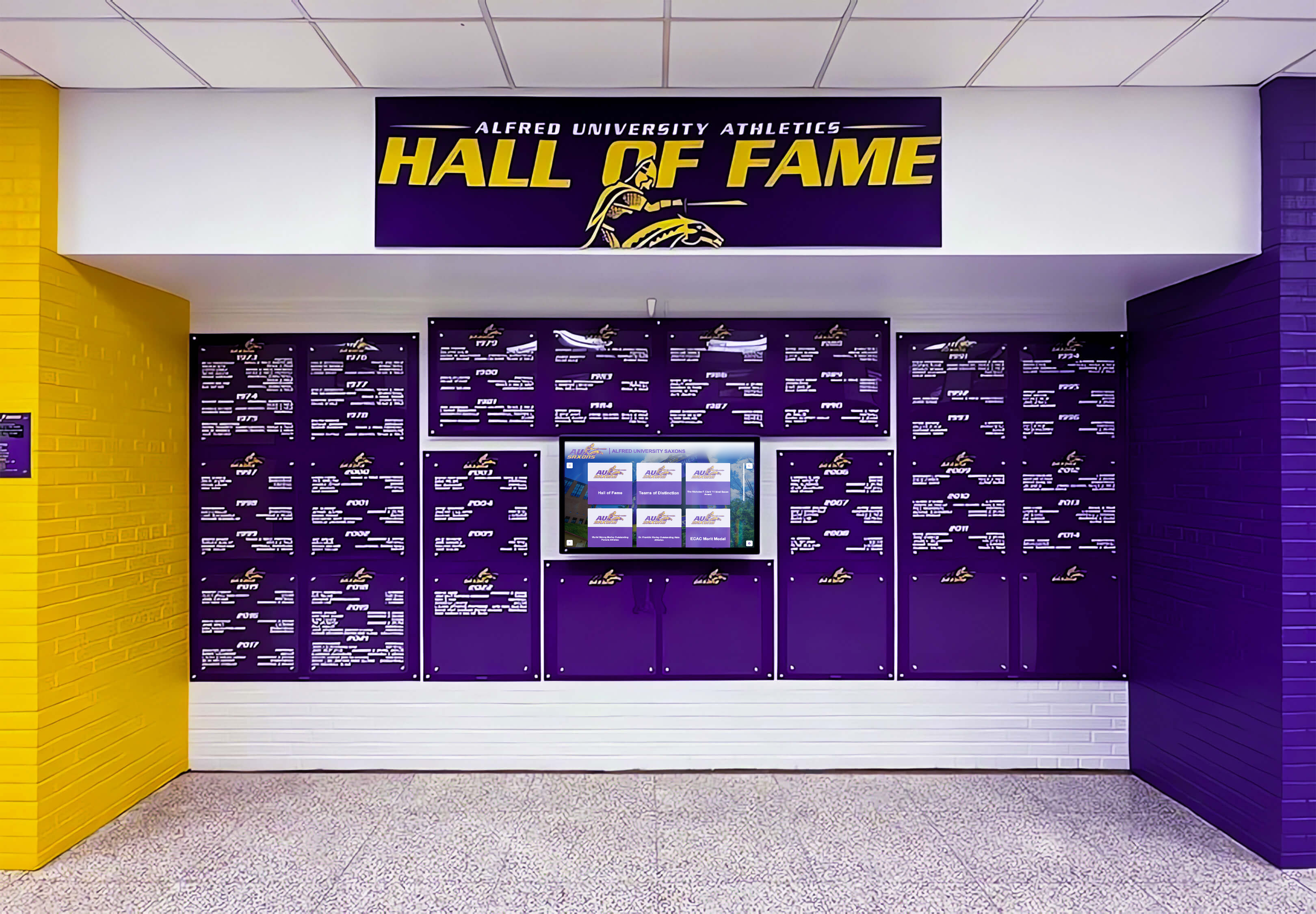
Permanent recognition displays give student leaders the same institutional visibility that athletic programs have enjoyed for decades—communicating that leadership service is equally valued by the school community
Why an SGA Awards Ceremony Matters
Student government officers hold some of the most demanding volunteer roles in any school. A class president juggles academic responsibilities alongside leading class meetings, coordinating homecoming logistics, representing students in administrative discussions, and mentoring peers. Committee chairs often manage entire project budgets and timelines independently. Service volunteers contribute hours that never appear on any academic transcript.
Research on youth civic engagement consistently shows that recognition is among the strongest predictors of continued civic participation. Students who feel their contributions are publicly acknowledged are significantly more likely to maintain leadership roles through college and beyond. Recognition communicates institutional values: when schools invest in a meaningful SGA awards ceremony, they signal that student leadership is not merely extracurricular decoration but a genuine contribution worth honoring.
Beyond individual student development, a well-designed ceremony creates social proof within the school culture. When underclassmen attend an end-of-year ceremony and see seniors receiving meaningful recognition for years of service, the message is clear: this organization rewards commitment, recognizes growth, and takes its members’ contributions seriously. That visibility drives recruitment and retention more effectively than any recruitment poster.
According to the National Association of Student Activity Advisors, organizations that host formal end-of-year recognition ceremonies report significantly higher year-to-year member retention compared to those that rely on informal acknowledgment. The structure of recognition—not just the recognition itself—carries motivational weight.
SGA Award Categories to Include
The most effective SGA awards ceremonies recognize leadership at multiple levels and in multiple forms. A ceremony that only honors the three executive officers misses the committee chairs, class representatives, and service volunteers whose contributions made everything else possible.
Executive Leadership Awards
These foundational awards recognize students in formal officer positions:
President of the Year — Recognizes the SGA president for demonstrated leadership, effectiveness in representing student interests, and impact on school culture. Consider adding a “Legacy Award” variant for outgoing presidents who served multiple terms.
Vice President Excellence Award — Highlights the VP’s role in coordinating internal operations, managing officer communication, and supporting executive leadership throughout the year.
Secretary Achievement Award — Celebrates the often-underrecognized documentation, communication, and organizational work that keeps the entire organization running efficiently.
Treasurer Recognition Award — Honors precise financial management, responsible stewardship of student activity funds, and accurate reporting throughout the year.
Class Representative Awards — Freshman, sophomore, junior, and senior class representatives each deserve individual recognition for their work bridging communication between their class and the broader SGA body.
Committee and Program Leadership
Student government accomplishes most of its concrete work through committees. Recognizing committee leadership acknowledges the operational backbone of the organization:
Spirit and Events Committee Award — For the chair and key members who planned homecoming, pep rallies, spirit weeks, and school events that define the student experience.
Community Service Leadership Award — Recognizes students who organized volunteer projects, charity drives, and service initiatives connecting the school to its surrounding community.
Fundraising Achievement Award — Honors the students who planned, promoted, and executed fundraising campaigns that generated resources for school programs and activities.
Communications and Outreach Award — Celebrates social media managers, newsletter editors, and public communications volunteers who kept the school community informed about SGA activities.
Student Wellness and Culture Committee Award — For programs targeting school climate, mental health awareness initiatives, or cultural celebration events the committee organized.
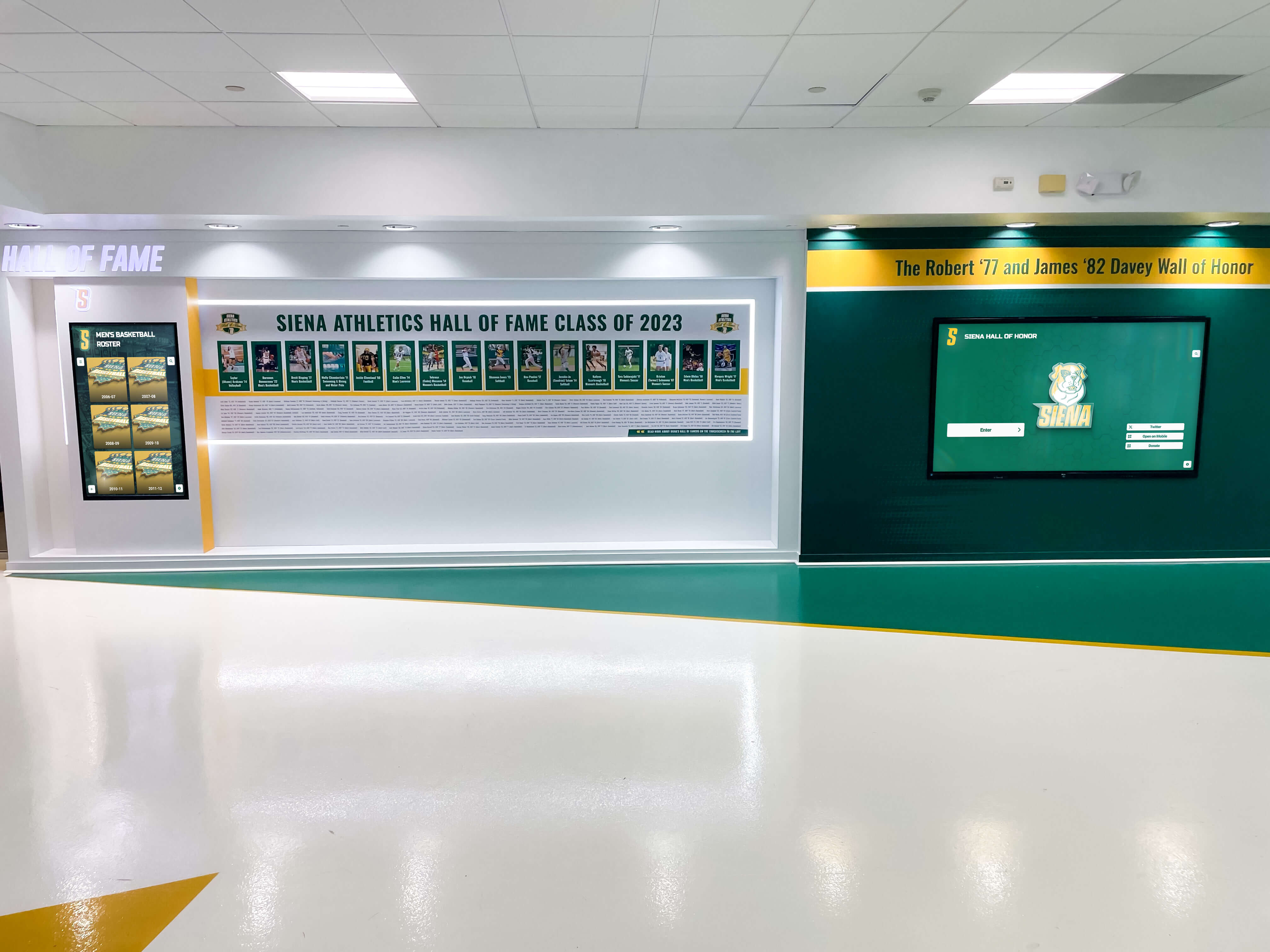
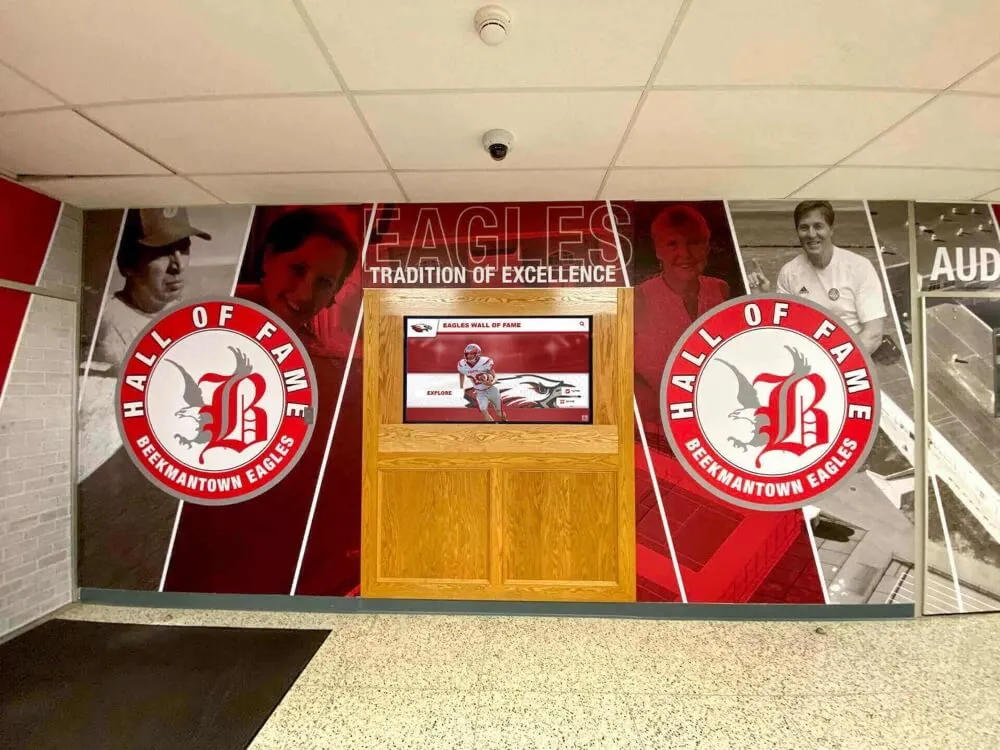
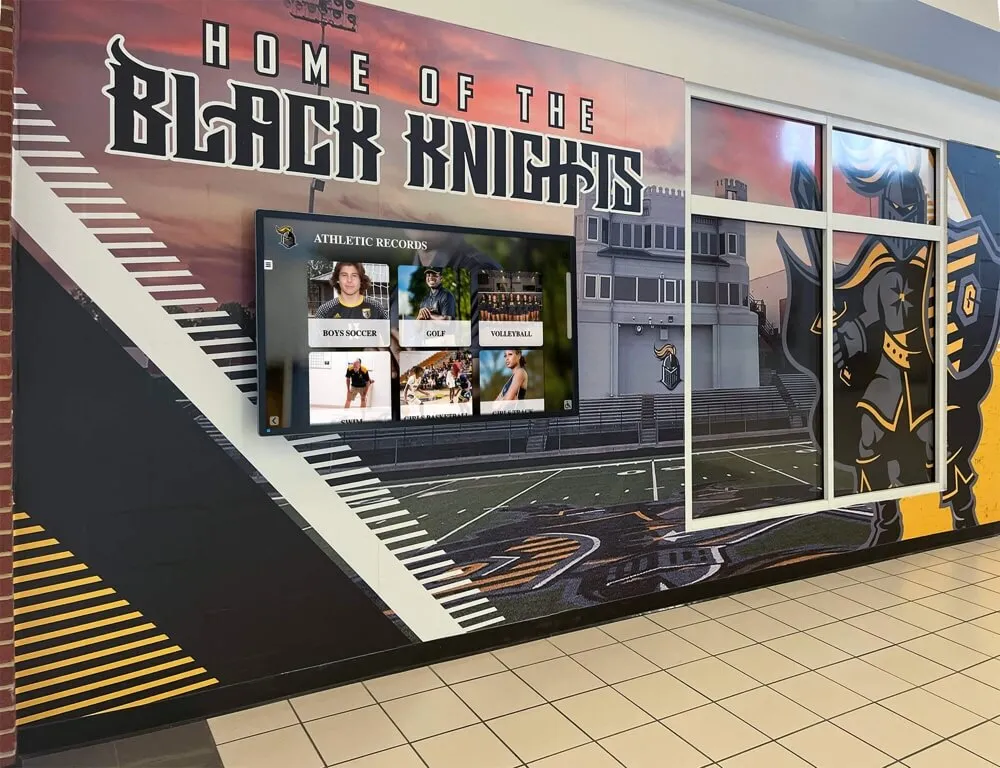
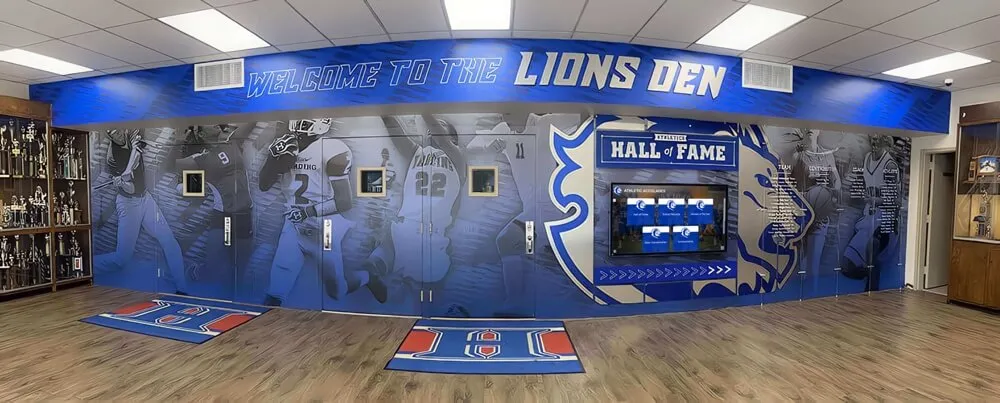
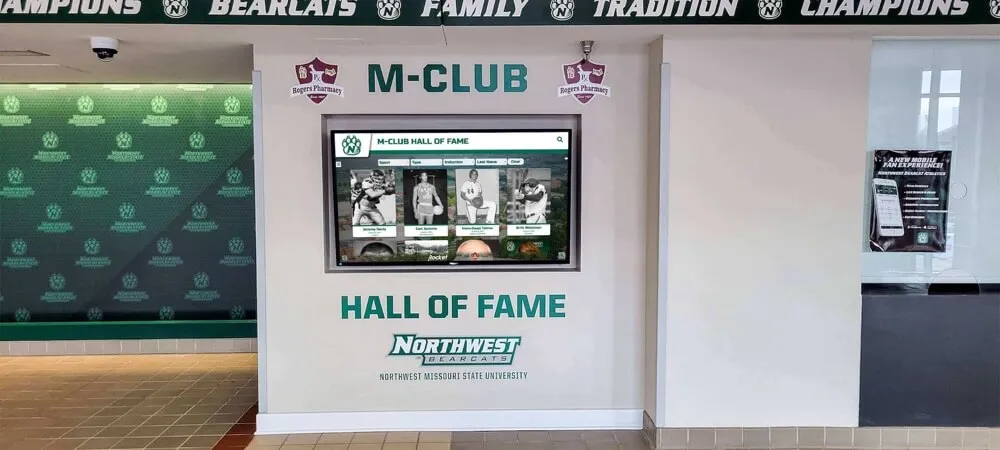
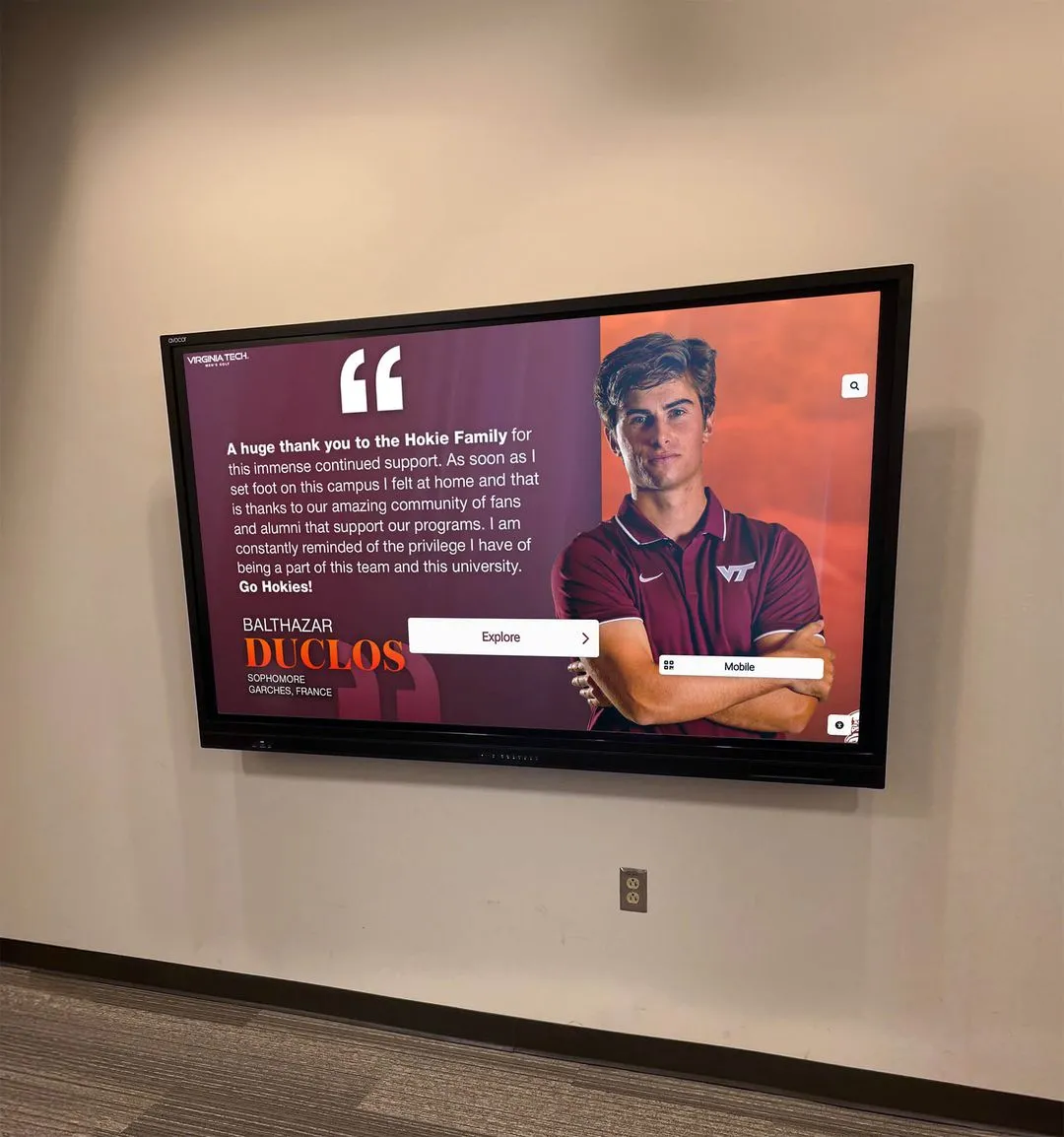
Portrait-based recognition systems create personal connections between honored students and the broader community—giving each award recipient a lasting visual presence in the building
Character and Impact Awards
These awards recognize qualities and contributions that transcend formal roles:
Most Dedicated Member Award — Peer-nominated recognition for the student who consistently showed up, put in extra work, and demonstrated sustained commitment regardless of formal title.
Rising Leader Award — For an underclassman demonstrating exceptional leadership potential that the organization expects will grow significantly in coming years.
Servant Leadership Award — Honors the student who consistently prioritized the success of others and the organization over personal recognition or visibility.
Faculty Advisor Appreciation Award — Presented by student members to the advisor who dedicates significant time beyond regular responsibilities to support SGA throughout the year.
Bridge Builder Award — For a student who connected different groups within the student body, reduced divisions, or worked effectively across different school communities and constituencies.
Innovation Award — Recognizes the student who introduced a new program, process, or initiative that improved how SGA operates or expanded its impact on the school.
Creative Award Names for SGA
Standard award titles (“President’s Award,” “Service Award”) communicate what was recognized but not why it matters. More evocative award names create identity, tradition, and aspiration within your organization:
For leadership excellence: The Gavel Award, The Charter Award, The Keystone Award, The Standard Bearer Award
For service: The Compass Award, The Foundation Award, The Cornerstone Award, The Anchor Award
For fundraising achievement: The Gold Key Award, The Catalyst Award, The Impact Award, The Campaign Award
For innovation: The Spark Award, The Blueprint Award, The Initiative Award, The Horizon Award
For character: The Integrity Award, The Backbone Award, The North Star Award, The Steadfast Award
Giving awards names that persist year-to-year creates tradition. When students know the Cornerstone Award has been given annually for a decade to the member who most embodies service leadership, earning it carries institutional weight that a generic “Service Award” does not. Named awards accumulate meaning over time as each new recipient adds to the legacy of who has held the honor before them.
For guidance on how other schools approach the design and presentation of recognition plaques and physical award formats, schools often find frameworks originally developed for athletics recognition that translate directly to student government contexts.
Physical Award Options
The form your awards take shapes how recipients value them. The most meaningful physical recognition tends to be personalized, durable, and displayable—something the recipient can keep as a tangible marker of what they accomplished.
Plaques with individual engraving — A well-designed plaque with the student’s name, award title, year, and a brief description of their specific contribution creates a lasting keepsake. Custom plaques range widely in quality; investing in heavier materials and quality engraving communicates that the recognition is genuine rather than perfunctory. Plaques suitable for home display remind recipients of their leadership achievement long after the ceremony has passed.
Framed certificates with custom design — Certificates remain the most flexible format: they can be produced at school with thoughtful design and quality paper or outsourced to a printer for professional-grade results. The difference between a printed certificate and a mounted, framed version is substantial in terms of perceived value. A certificate that looks indistinguishable from a participation ribbon fails the recognition function; one that communicates institutional investment succeeds.
Custom medals or pins — Particularly effective for organizations with strong visual identity, custom medals or lapel pins serve as wearable recognition. Alumni who wear their SGA pin years after graduation become ambassadors for the organization’s culture and history.
Personalized items — Engraved pens, custom journals, or personalized books tied to the recipient’s future plans demonstrate that award selection was thoughtful rather than generic. A college-bound president receiving a personalized portfolio feels differently about that recognition than one receiving a generic gift card.
For recognition gift ideas that create lasting impact, the principles that make athletic and academic awards meaningful—personalization, durability, and specific acknowledgment of what was accomplished—apply equally to student government recognition.
Planning the Ceremony Format
How you structure the ceremony shapes how meaningful it feels to recipients, attendees, and families. Several formats work well for SGA end-of-year ceremonies depending on available time, budget, and institutional preference:
Formal Evening Ceremony — A standalone event separate from any other school function signals that SGA achievements warrant dedicated celebration. Held in the evening to accommodate family attendance, this format allows the full program: student speeches, award presentations with extended descriptions, a slideshow, and a reception. Schools that host annual banquets for athletic programs often find this format equally effective for SGA.
Year-End Assembly Integration — Incorporating SGA awards into an end-of-year all-school assembly maximizes visibility but limits depth. This format works well for announcing major awards, but consider supplementing with a separate smaller ceremony for the complete award program where each recipient receives adequate individual attention.
Advisor-Led Recognition Dinner — Smaller SGAs may prefer an informal dinner attended only by officers, committee chairs, and their families. This format creates intimacy, allows extended storytelling about each recipient, and provides a natural setting for outgoing officers to share reflections with incoming leadership.
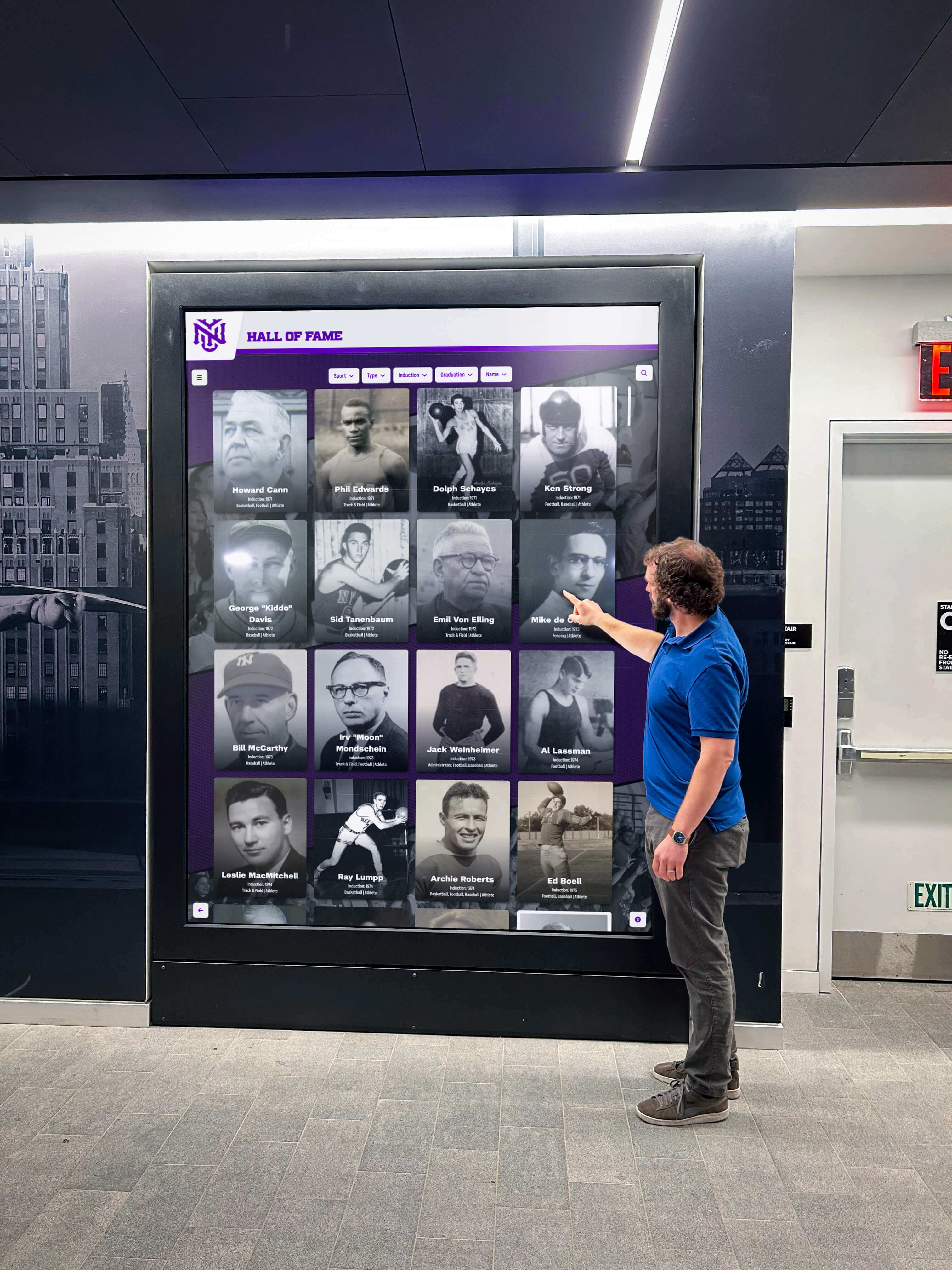
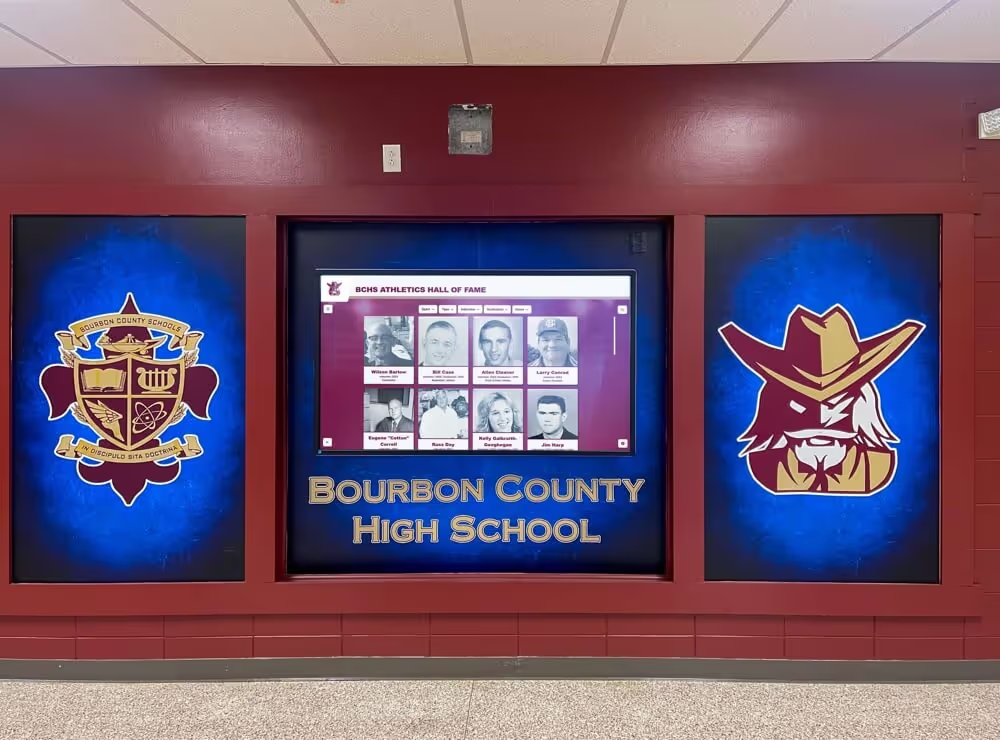
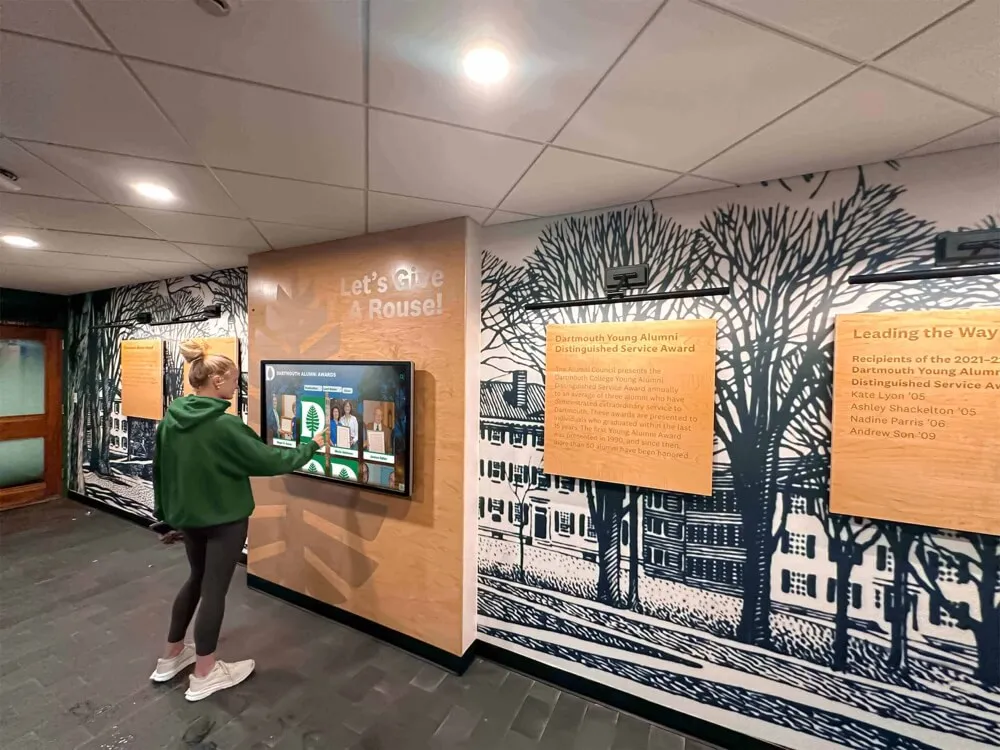
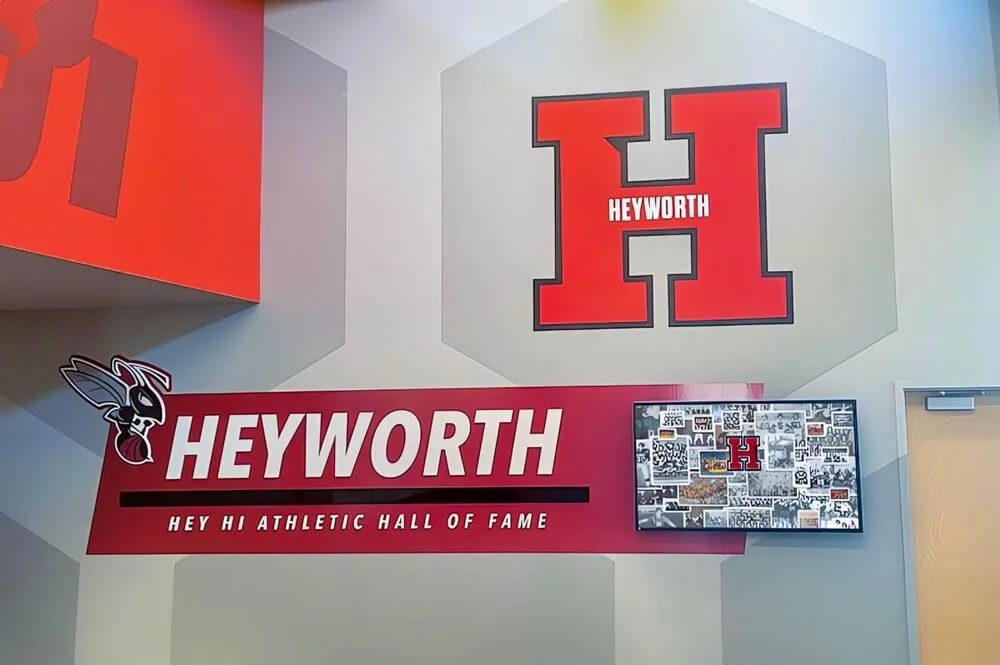
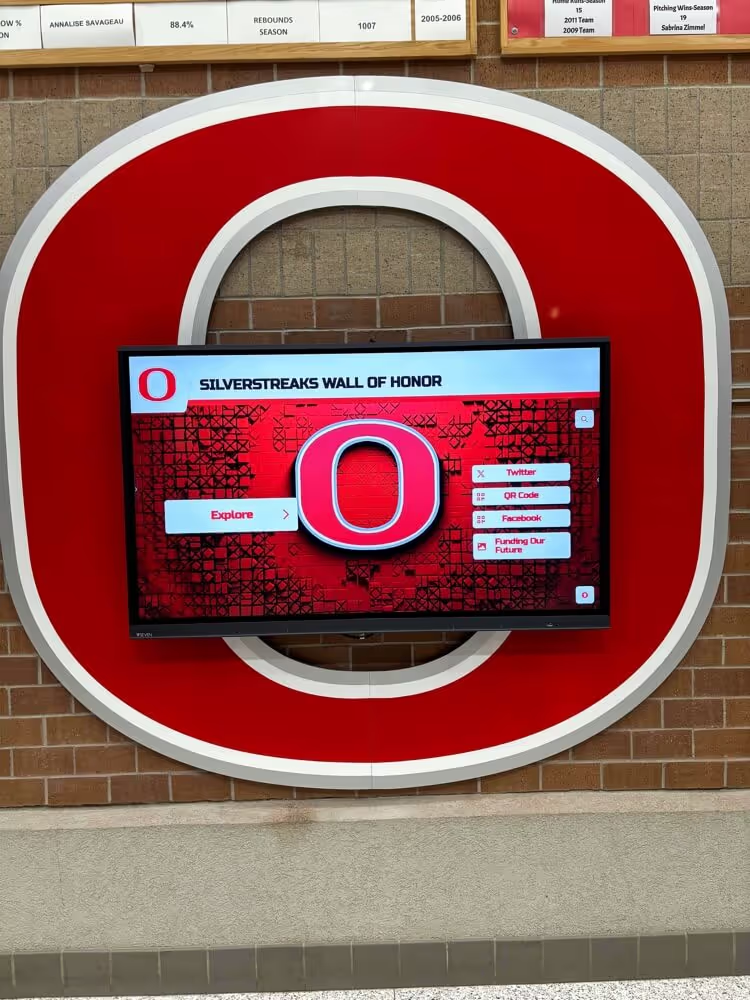
Interactive recognition displays allow the SGA awards ceremony to extend beyond a single evening—recognition profiles remain accessible in school hallways throughout the year
Regardless of format, the most memorable ceremonies share common elements: specific descriptions of what each recipient actually did (not just their title), personal remarks from the advisor or fellow officers, visible acknowledgment of family members who supported the student’s service, and a moment for outgoing leaders to pass institutional memory to incoming ones.
For comprehensive guidance on planning award ceremonies that create memorable recognition events, resources developed for academic and athletic recognition events translate directly to student government contexts—the core principles of meaningful ceremony design are consistent across recognition types.
Building a Ceremony Program
A printed or digital ceremony program serves multiple purposes: it gives attendees context during presentations, creates a keepsake document for recipients and families, and reinforces the professionalism of the event. Strong ceremony programs include:
- Brief organizational history or year-in-review summary
- Names and photos of all award recipients, listed alongside their specific accomplishments
- A thank-you section acknowledging administration, faculty, and family supporters
- Space for personal messages from the outgoing president to the incoming leadership
- Information about the coming year’s officer team if elections have been completed
Nomination and Selection Processes
The credibility of an SGA awards ceremony depends significantly on how nominees and recipients are selected. Vague or opaque selection processes undermine the perceived legitimacy of every award given.
Peer nomination systems — Opening nominations to the full membership (not just officers) surfaces candidates who may fly beneath administrative radar. Forms asking nominators to provide specific examples of the nominee’s contributions—not just a name and award category—generate evidence-based nominations that support more defensible selection.
Point or service-hour tracking — Organizations that log member participation throughout the year have objective data to inform award decisions. Tracking meeting attendance, event participation, committee hours, and service hours provides grounding for recognition that goes beyond advisor impression.
Advisor recommendation — For character-based awards, the faculty advisor’s direct observation often provides the most informed perspective. Structuring this as a recommendation rather than sole selection builds in accountability while preserving the advisor’s insight.
Combined selection committee — Using a committee that includes the outgoing executive officers, the advisor, and at minimum one faculty sponsor distributes the selection decision and reduces the perception of favoritism.
Creating Lasting Recognition: SGA Walls and Displays
The challenge with a single annual ceremony is that recognition fades quickly once the event ends. Creating permanent, visible recognition within your school building transforms the SGA awards ceremony from a one-night event into year-round institutional acknowledgment.
SGA Recognition Boards
A dedicated SGA recognition board in a prominent location—near the school’s main office, student government room, or main hallway—creates visibility that persists through the school year. Effective SGA boards include:
- Officer portraits by year — Photos of each year’s officer team, labeled with names and positions
- Annual award recipient lists — Winners displayed by year and category, creating cumulative history
- Program milestones — Significant fundraising totals, events hosted, and service hours logged by the organization
- Advisor recognition — Honoring faculty advisors who have served the program across multiple years
Updated annually, these boards create institutional memory that connects current students to the SGA leaders who came before them. Incoming freshmen who see a recognition board documenting years of achievement understand immediately that they are considering joining an organization with real history and tradition.
Understanding how to showcase student achievement through permanent displays is a critical step in building the kind of legacy recognition that motivates future student leaders to invest years in an organization.
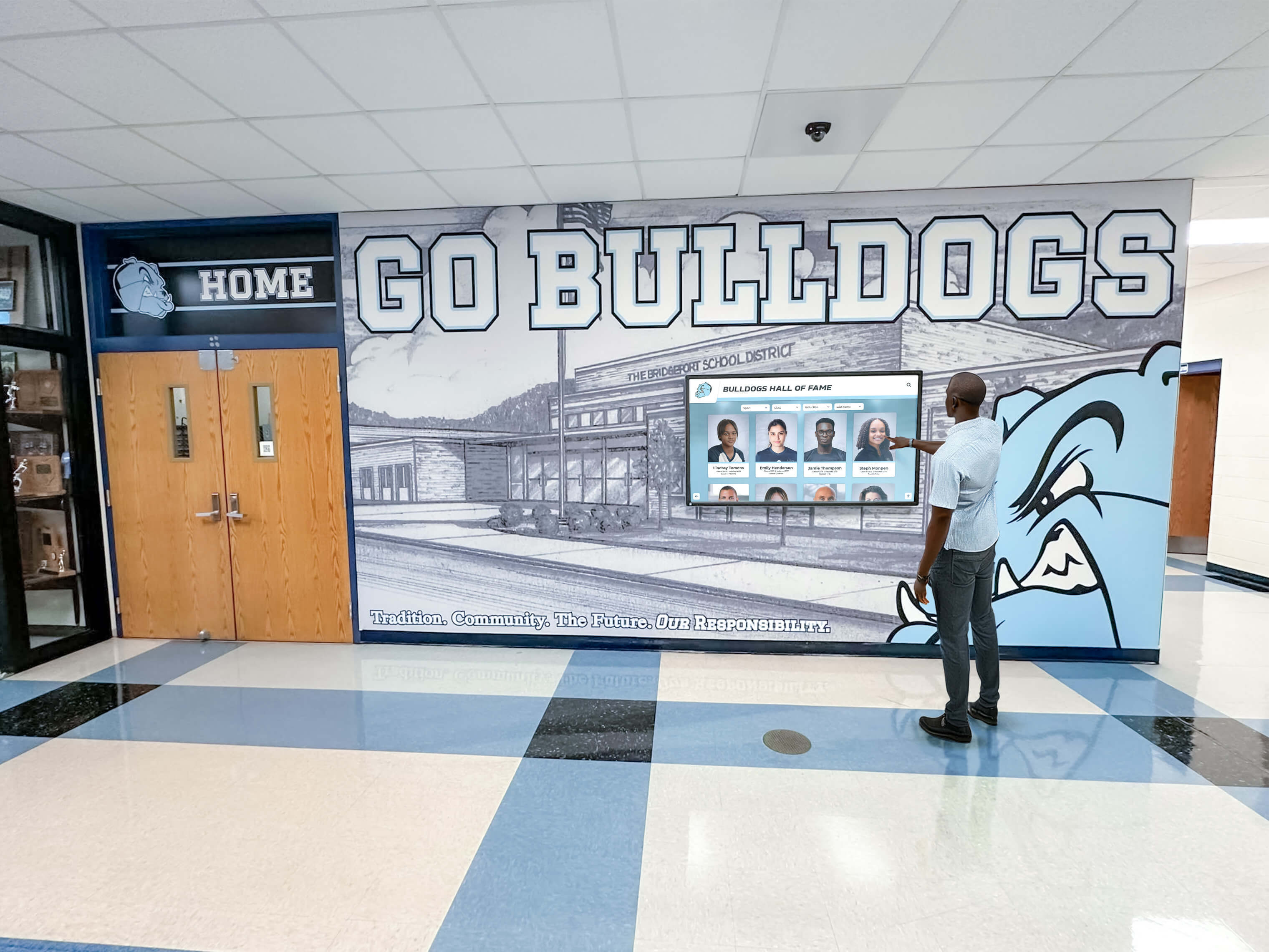
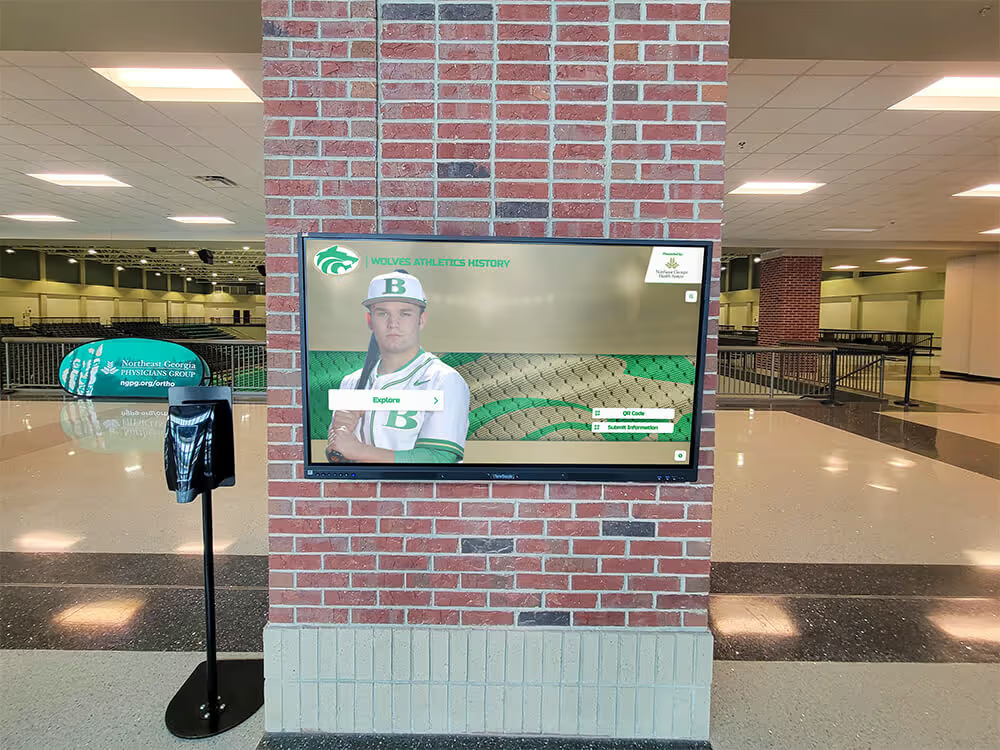
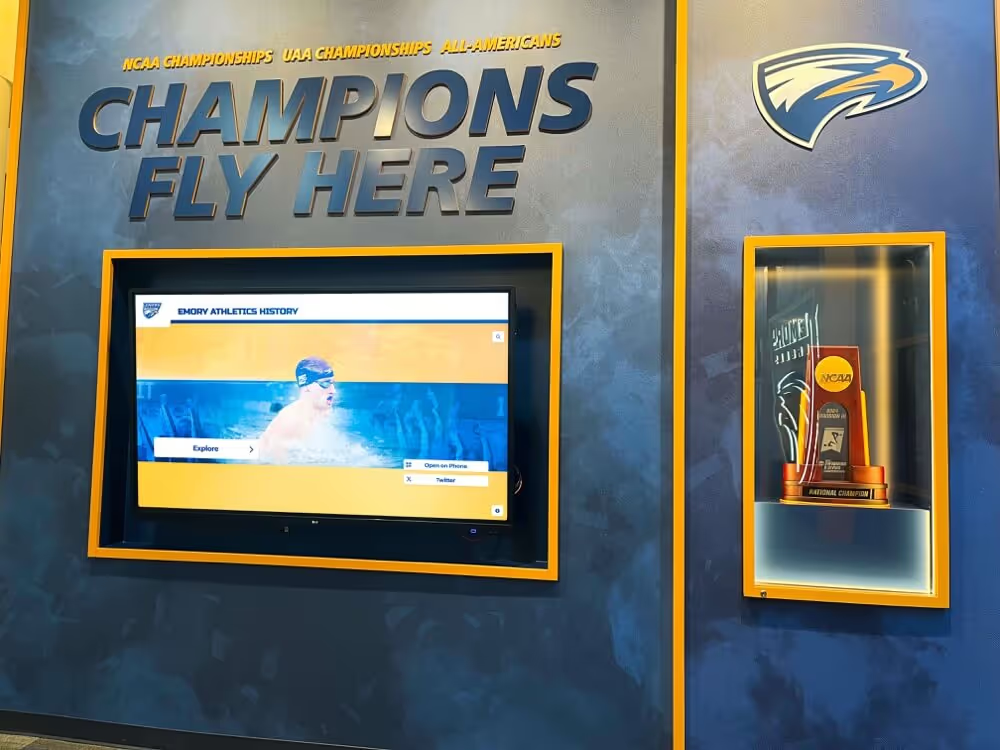
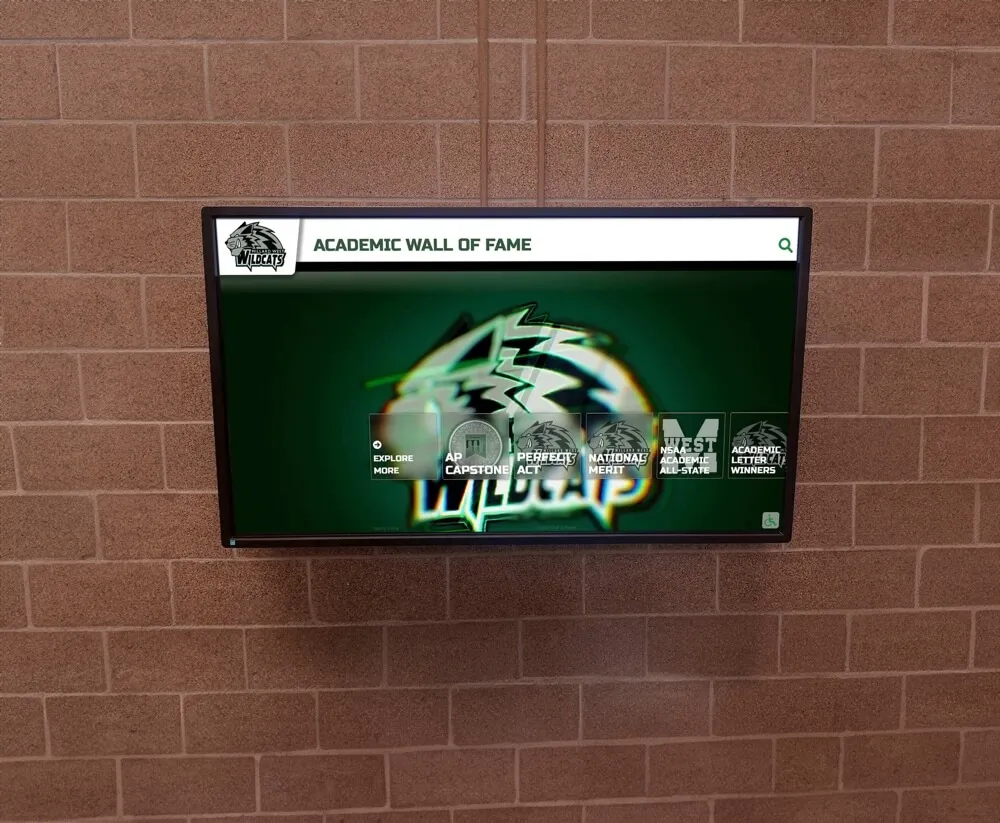
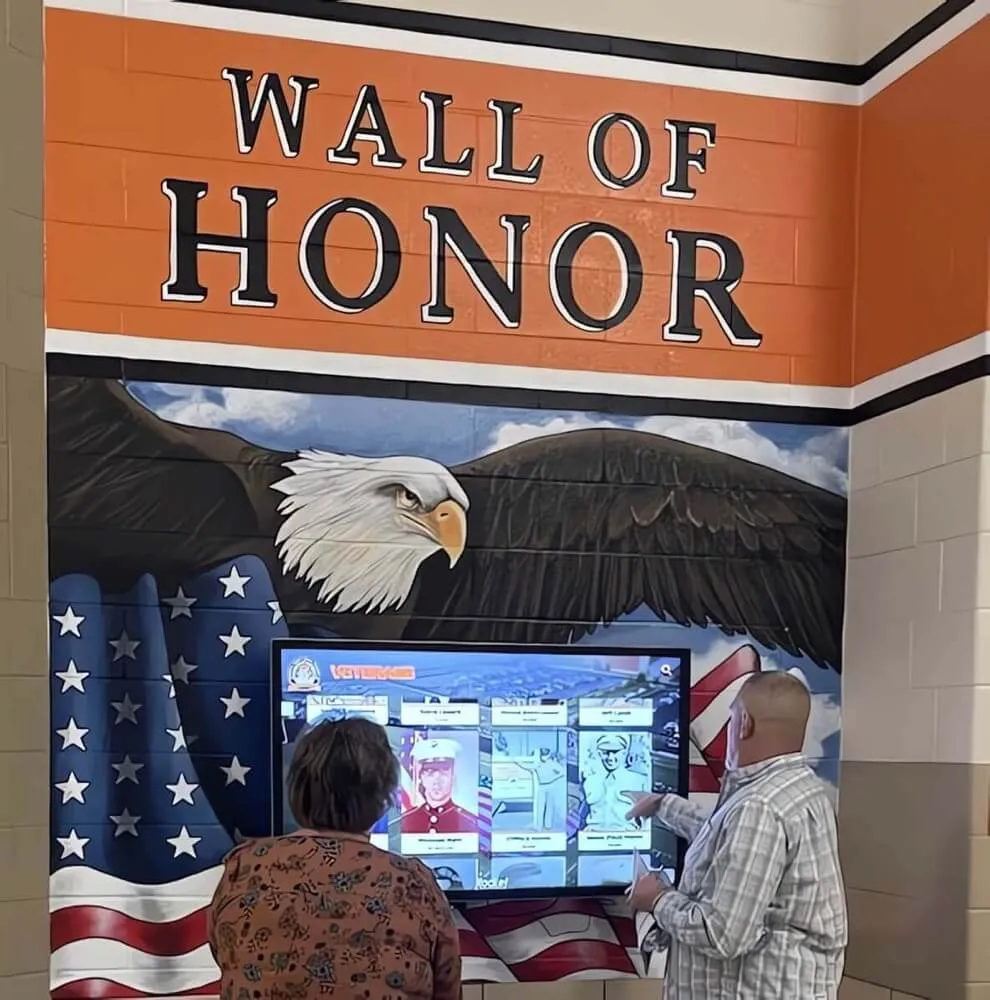
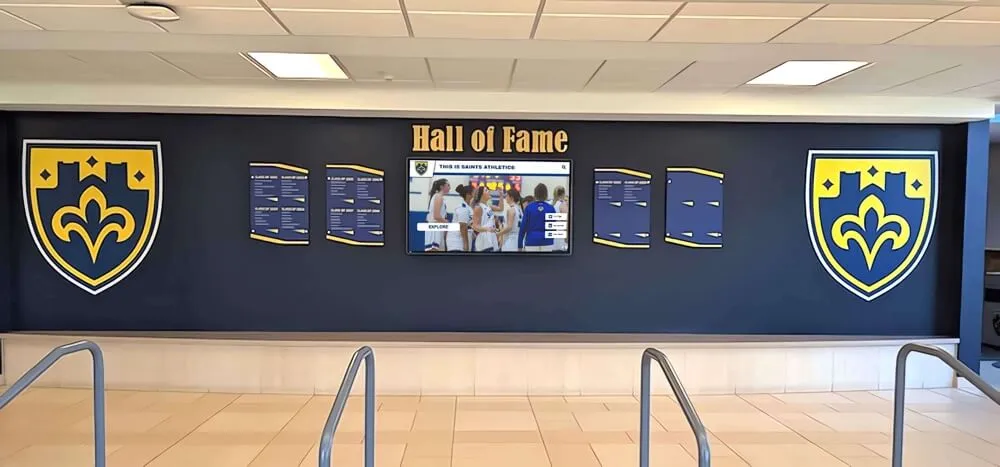
Touchscreen recognition displays allow students to explore years of SGA achievement—creating a living institutional memory that connects current leaders to those who served before them
Hall of Fame Integration
Schools with existing hall of fame programs can integrate SGA recognition into a broader system honoring multiple forms of student achievement. This approach gives SGA leaders the same institutional prestige typically reserved for athletic or academic achievement while reinforcing the message that school service is equally valued.
For schools exploring how to implement or expand interactive digital hall of fame touchscreen systems, these platforms offer the ability to host SGA officer histories, fundraising milestones, and annual award recipients alongside athletic and academic honorees in a unified recognition environment.
Research from youth development programs consistently confirms that student recognition has measurable long-term impacts on future leadership participation and academic success—making investment in permanent recognition infrastructure an educational decision, not merely an aesthetic one.
Connecting SGA Fundraising to Donor Recognition
One often-overlooked dimension of SGA awards ceremonies is the connection between student government and fundraising. Many SGAs manage campaigns that generate hundreds or thousands of dollars for school programs annually—a stewardship role that mirrors the work of alumni development offices at universities.
When SGA drives fundraising campaigns, recognizing both the student leaders who organized the effort and the donors who contributed creates a complete recognition ecosystem:
SGA Fundraising Leadership Awards — Specifically acknowledge the students who conceptualized, promoted, and executed fundraising campaigns. Tracking concrete metrics (total raised, donor count, year-over-year growth) gives these awards objective grounding that vague service awards lack.
Donor Recognition Walls — Schools where SGA drives significant fundraising may consider a donor recognition component honoring contributors from the student body and broader community. This approach gives fundraising a visible, lasting dimension beyond the ceremony itself and creates motivation for future donor participation.
Campaign Milestone Recognition — When a fundraising initiative hits a significant benchmark—first campaign to raise over $10,000, most donors engaged in a single year, largest single-year increase—commemorating that achievement creates a standard that future campaigns aim to surpass.
Understanding how digital hall of fame displays and donor walls serve recognition purposes together is valuable context for schools where SGA plays a central fundraising role alongside its leadership and service functions.
For schools exploring how interactive display solutions serve educational institutions across multiple recognition needs, the same technology that creates compelling athletic hall of fame experiences can anchor SGA leadership and donor recognition programs.
Year-Round SGA Recognition Beyond the Ceremony
The most impactful SGA recognition programs treat the end-of-year ceremony as the peak of a year-round recognition culture rather than the sole recognition moment:
September: Welcome and induction of new officers with a brief ceremony acknowledging incoming leaders by name and position. Setting the tone at the beginning of the year communicates that the organization takes recognition seriously from day one.
November/December: Mid-year acknowledgment of committee progress, notable event successes, fundraising milestones reached, and early service accomplishments. This mid-cycle recognition maintains motivation during the longest stretch between major school events.
February/March: Rising leader spotlights recognizing underclassmen demonstrating exceptional early commitment and contribution. This mid-year peer recognition signals to younger members that their work is visible to leadership.
May/June: Full year-end SGA awards ceremony with all categories, passing-of-the-gavel tradition for incoming officers, and formal documentation of the year’s accomplishments for the permanent record.
Schools approaching graduation season often find it valuable to integrate SGA achievement recognition into broader high school graduation ceremony planning frameworks—ensuring that outgoing SGA leaders receive acknowledgment at the school’s most visible and attended recognition event.
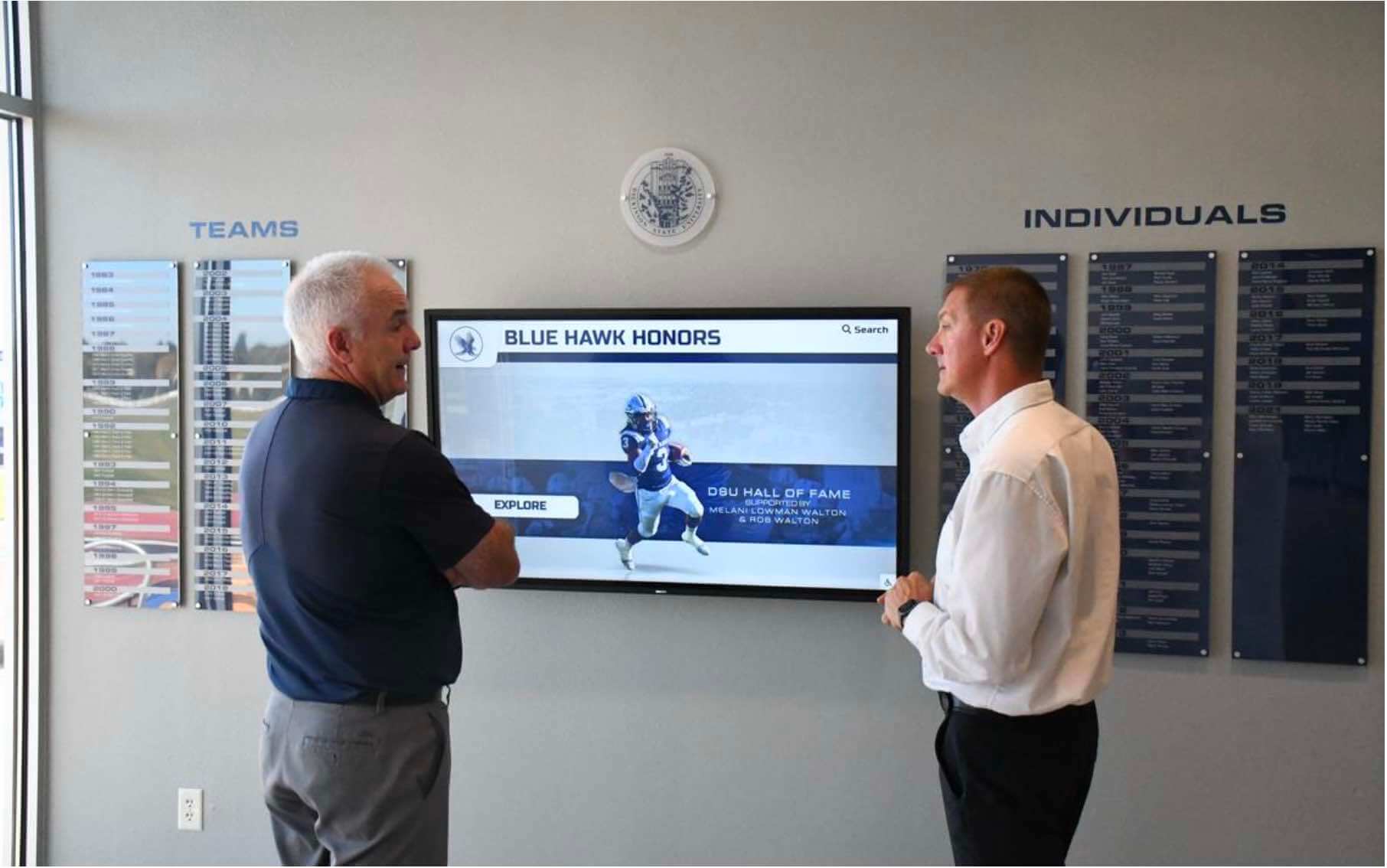
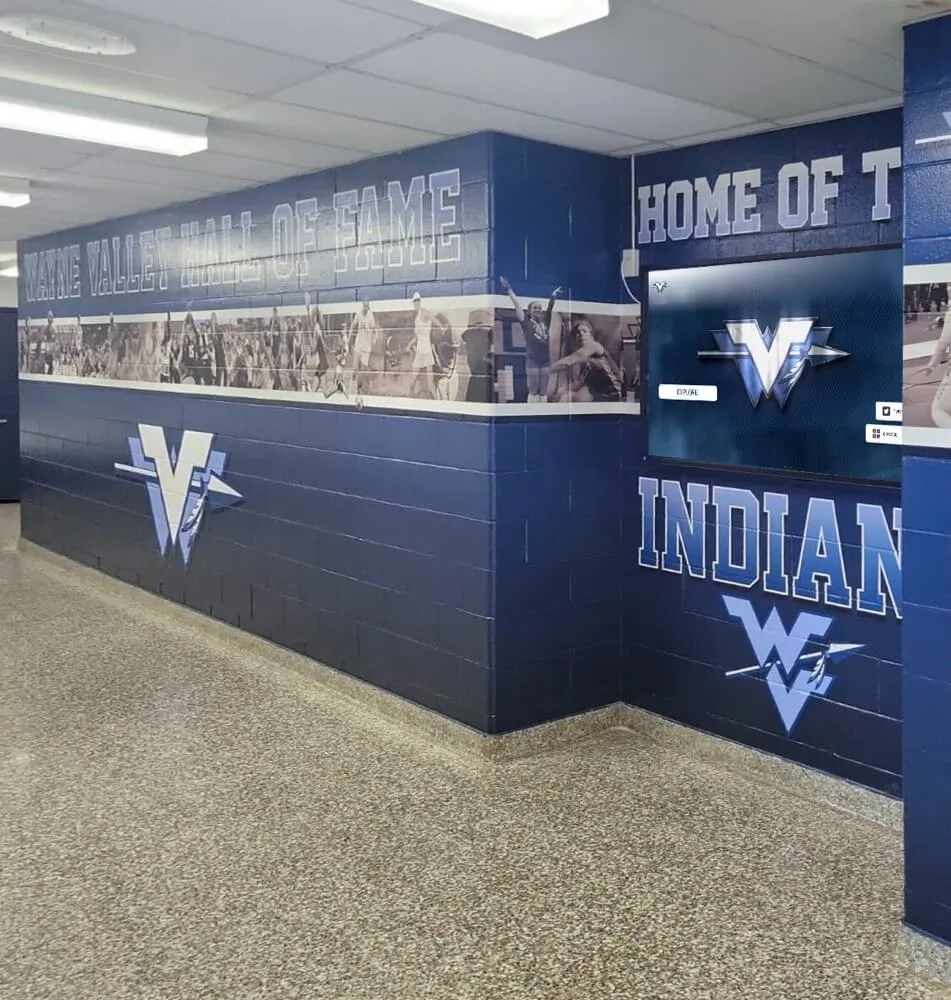
Well-designed digital recognition systems become institutional touchpoints that administrators, students, and visitors engage with throughout the year—not only during scheduled ceremonies
Digital Recognition Systems for SGA Programs
Modern schools are increasingly implementing digital recognition platforms that give student government leadership the same institutional visibility long reserved for athletic programs. These systems offer capabilities that static display cases and printed certificates cannot match:
Searchable SGA officer histories — Students, families, and community members can browse every year of SGA leadership, seeing who served in which positions and reviewing what those leaders accomplished during their terms.
Photo and multimedia integration — Officer portraits, event photos, and video content create richer recognition profiles than traditional display formats allow. A student who sees a video of last year’s president speaking at a community event understands the role in a way that a framed photo cannot communicate.
Fundraising milestone documentation — Total raised by campaign, year-over-year comparisons, and donor acknowledgment can be integrated into the same platform hosting officer profiles, creating a unified record of organizational achievement.
Easy annual updates — New officers, award recipients, and program milestones can be added through software rather than physical reconstruction, making year-round recognition sustainable without requiring facilities projects.
For schools considering how existing school display cases can be upgraded or complemented by digital recognition systems, there are options at a wide range of investment levels that work alongside rather than replacing traditional recognition infrastructure.
Rocket Alumni Solutions designs and installs interactive recognition systems—from touchscreen hall of fame kiosks to full donor and achievement walls—that give schools the infrastructure to honor SGA leadership permanently and visibly alongside athletic, academic, and donor recognition programs.
Frequently Asked Questions
What awards should be given at an SGA awards ceremony?
An SGA awards ceremony should include awards for executive officers (president, vice president, secretary, treasurer), committee leadership (spirit/events chair, service chair, fundraising chair), and character-based recognition (most dedicated member, rising leader, servant leadership). Including a faculty advisor appreciation award recognizes the adult whose sustained behind-the-scenes support makes the organization function. The most effective ceremonies distribute awards broadly enough that committee chairs and volunteers—not only executive officers—receive formal recognition for their contributions.
How do you plan an SGA awards ceremony?
Plan your SGA awards ceremony four to six weeks before the event. Key steps include: defining award categories and names, opening a nomination process for peer-nominated awards, designing or ordering physical awards (plaques, certificates, medals), securing a venue and scheduling family invitations, building a ceremony program with specific recipient descriptions rather than generic titles, and creating a slideshow or visual tribute documenting the year’s accomplishments. The ceremony should give each recipient a personal moment of recognition with specific acknowledgment of what they actually contributed—not just their title.
What are good award names for student government recognition?
Effective SGA award names create tradition and aspiration within the organization. Consider names like the Gavel Award for executive leadership, the Cornerstone Award for sustained service, the Catalyst Award for fundraising achievement, the North Star Award for character and integrity, and the Spark Award for initiative and innovation. Award names that persist year-to-year carry more institutional weight than generic titles—students who know the history of a named award understand they are joining a lineage of recognized leaders rather than receiving a one-time acknowledgment.
How can schools create lasting SGA recognition beyond the annual ceremony?
Lasting SGA recognition typically involves a permanent display in a prominent school location—a dedicated recognition board, hall of fame integration, or digital display system that documents officer histories, annual award recipients, and program milestones across multiple years. Interactive digital systems offer the greatest flexibility: they can host searchable officer histories, fundraising milestones, event photos, and award records that grow over time without requiring physical renovation. Placing these displays in high-traffic areas ensures year-round visibility rather than recognition limited to a single annual event.
Should SGA fundraising achievements be recognized at the awards ceremony?
Yes—recognizing fundraising achievements at the SGA awards ceremony serves multiple purposes. It acknowledges the students who managed campaigns, creates accountability and motivation for future fundraising efforts, and demonstrates to the broader school community how SGA resources are generated and used. Consider including specific metrics (total raised, number of donors, comparison to prior years) when presenting fundraising awards, as concrete numbers give the recognition grounding that vague praise does not. Schools where SGA fundraising supports significant programs may also consider permanent donor recognition walls that honor contributors alongside student organizers.
Building an SGA Recognition Legacy
An SGA awards ceremony done well accomplishes more than closing out a school year—it creates the institutional memory, motivation structure, and public visibility that sustains student government programs across generations of students. Officers who receive meaningful recognition at year’s end are more likely to remain connected to the school community, mentor successors, and speak positively about student government to the underclassmen who will carry the organization forward.
The schools with the strongest SGA traditions are invariably ones where that tradition is visible: documented in hallway displays, celebrated in ceremonies that families attend, and acknowledged at the school’s most prominent recognition events. Building that tradition begins with a single, thoughtfully designed ceremony—and grows over years into institutional legacy that every new class of student leaders inherits and adds to.
Whether your school is running its first formal end-of-year ceremony or refining a program that has existed for decades, the core principle remains the same: recognition that is specific, public, and lasting creates motivation that generic acknowledgment cannot. The students who spent their year showing up for the school community deserve to have that investment honored with the same seriousness they brought to the work itself.
Create Permanent Recognition for Your SGA Leaders
Rocket Alumni Solutions designs and installs interactive digital recognition systems that give student government, academic achievers, and donors lasting, visible recognition in school hallways and lobbies. From touchscreen officer history walls to integrated donor and achievement displays, we build systems that honor leadership the way it deserves to be honored—permanently and prominently.
Explore Recognition Display Solutions