



Nonprofits seeking sustainable fundraising success face a fundamental challenge: transforming one-time donors into loyal, long-term supporters who give repeatedly and increase contribution levels over time. While thank-you letters and annual reports serve important stewardship functions, they rarely create the emotional connections and public acknowledgment that inspire continued generosity. Intent: Research how nonprofit donor recognition displays transform donor stewardship into strategic fundraising tools that drive retention, inspire upgrades, and cultivate lasting philanthropic relationships.
Nonprofit donor recognition displays represent one of the most powerful yet underutilized tools for strengthening donor relationships and inspiring continued giving. Well-designed recognition systems do far more than list supporter names—they celebrate philanthropic values, demonstrate tangible program impact, create emotional connections between donors and mission outcomes, and establish social proof that motivates prospective supporters to join recognized giving communities. Whether implementing traditional donor walls with timeless elegance or interactive digital displays offering unlimited capacity and multimedia storytelling, effective recognition transforms acknowledgment from administrative obligation into strategic relationship-building that measurably improves donor retention and lifetime value.
This comprehensive guide explores how nonprofits create donor recognition displays that inspire continued giving, the psychological principles that make recognition effective stewardship, practical implementation approaches that balance impact with budget constraints, and proven strategies that maximize return on recognition investment through enhanced donor satisfaction, improved retention rates, and increased giving progression over multi-year relationships.
The connection between donor recognition and continued giving is well-documented across nonprofit sectors. Organizations implementing strategic recognition programs consistently report higher donor retention rates, increased average gift sizes, more frequent giving, and greater willingness among supporters to consider planned giving commitments compared to donors receiving minimal or generic acknowledgment.

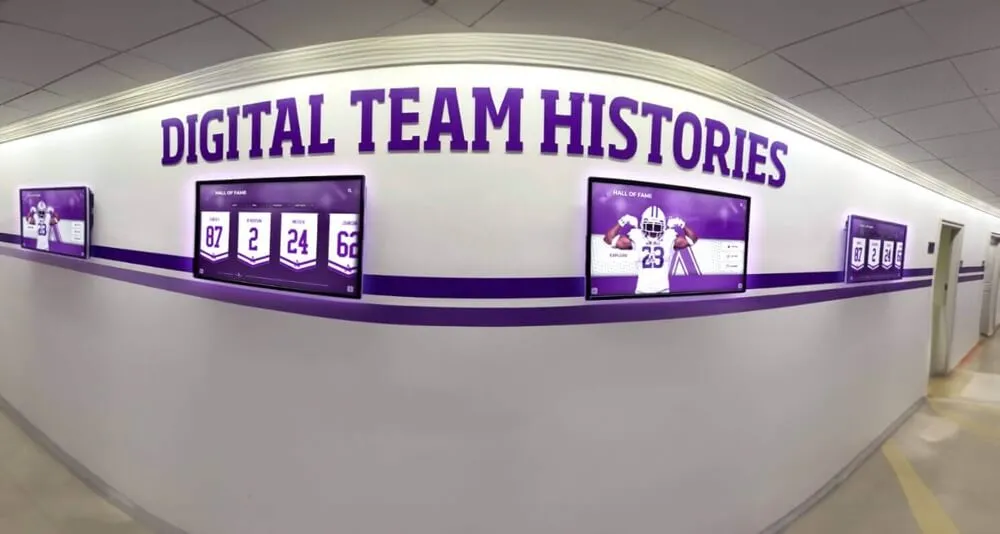
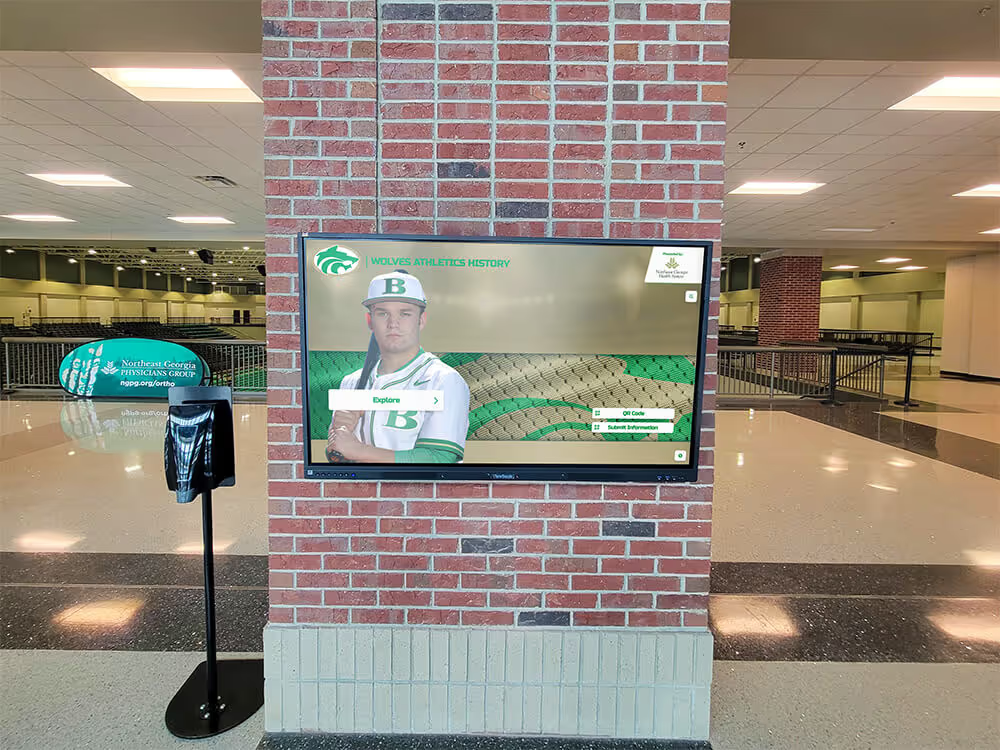
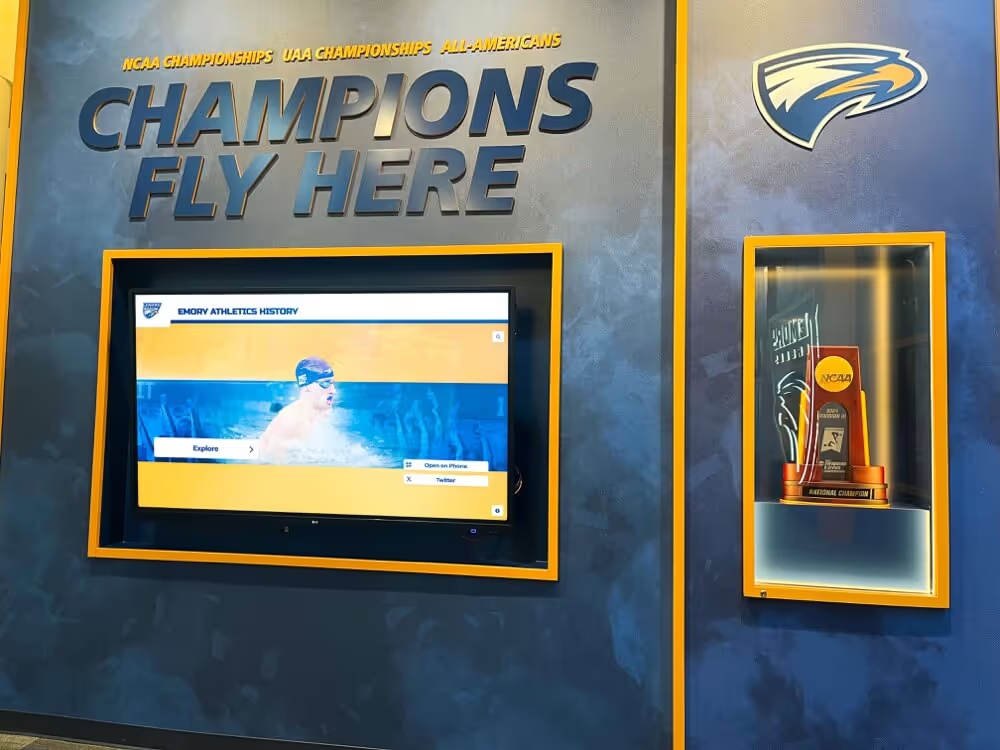
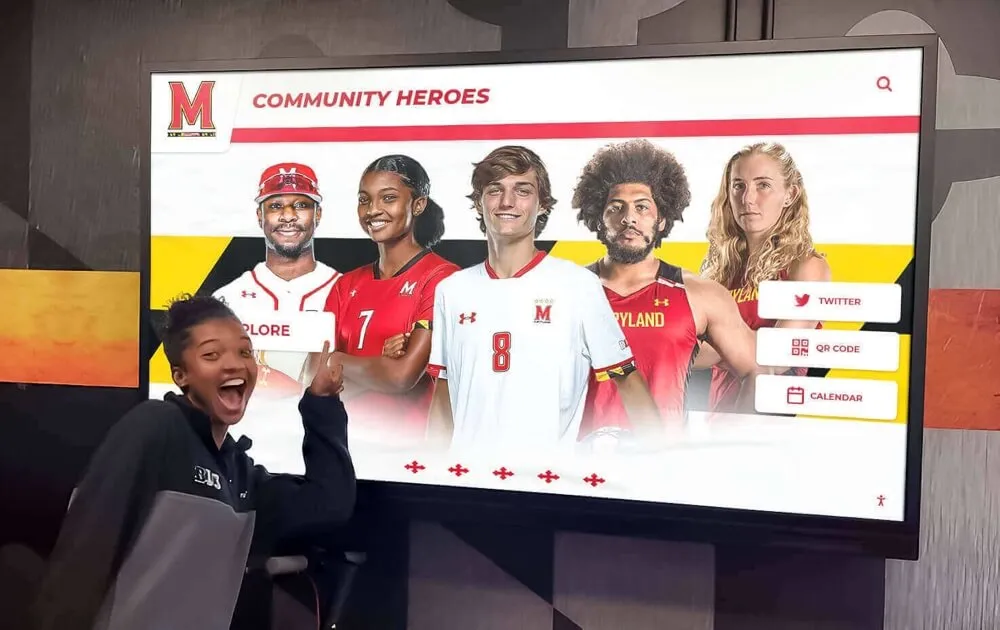
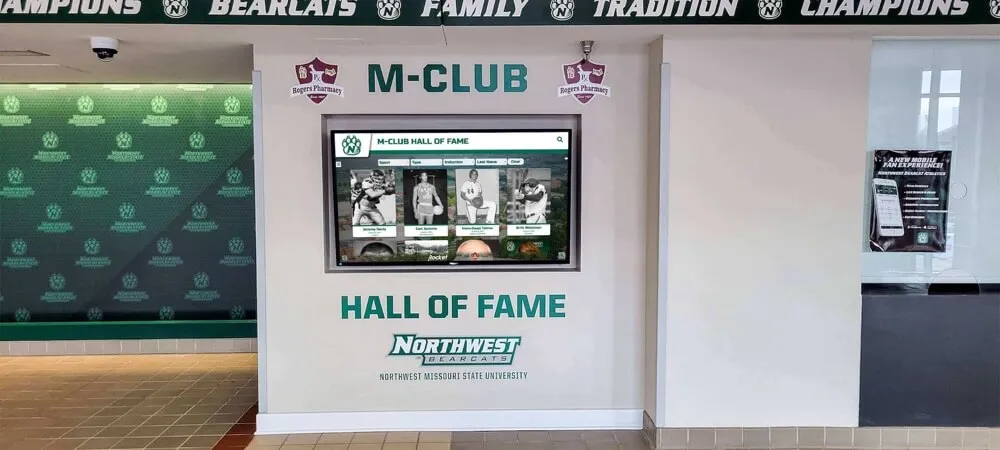
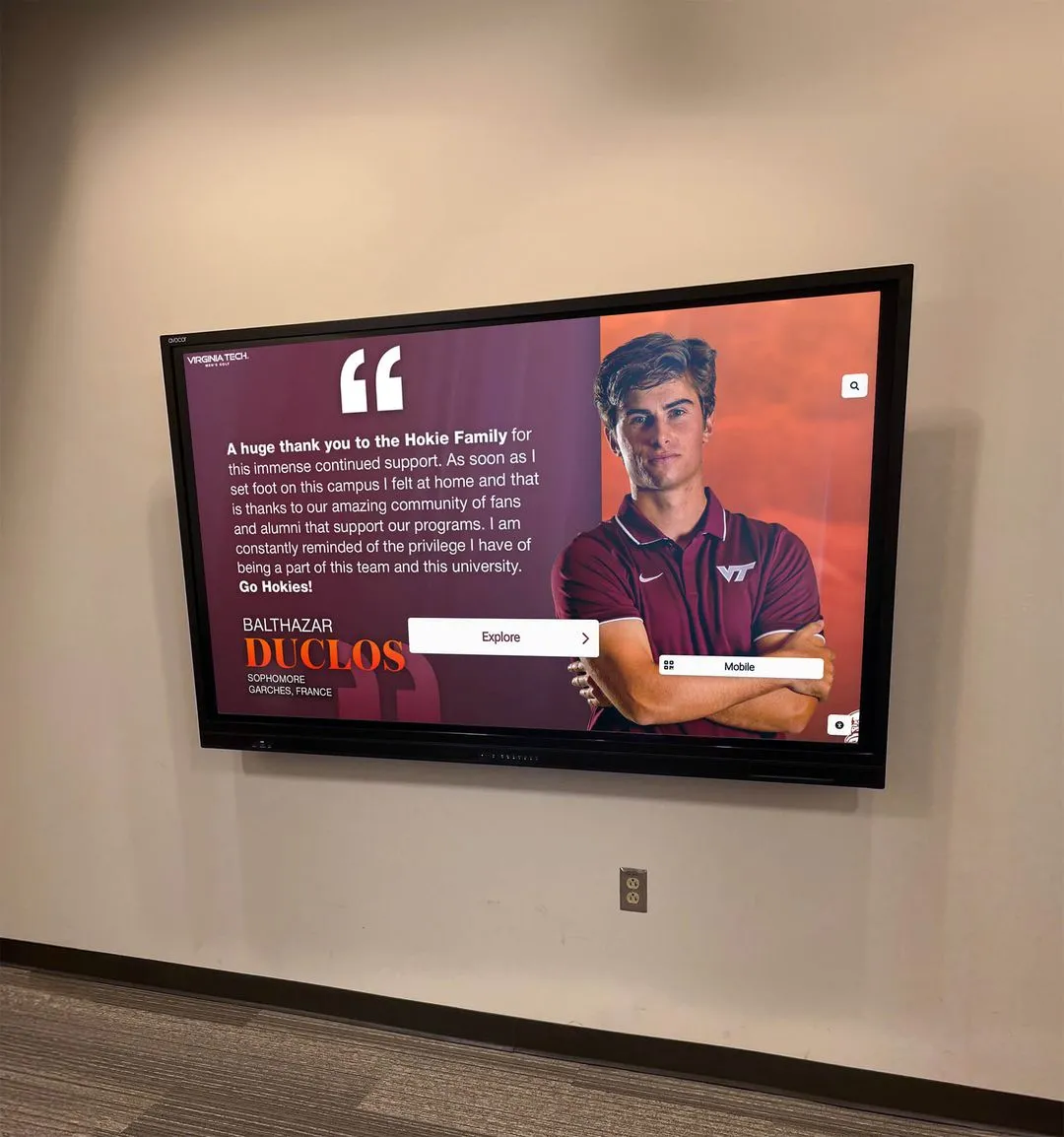
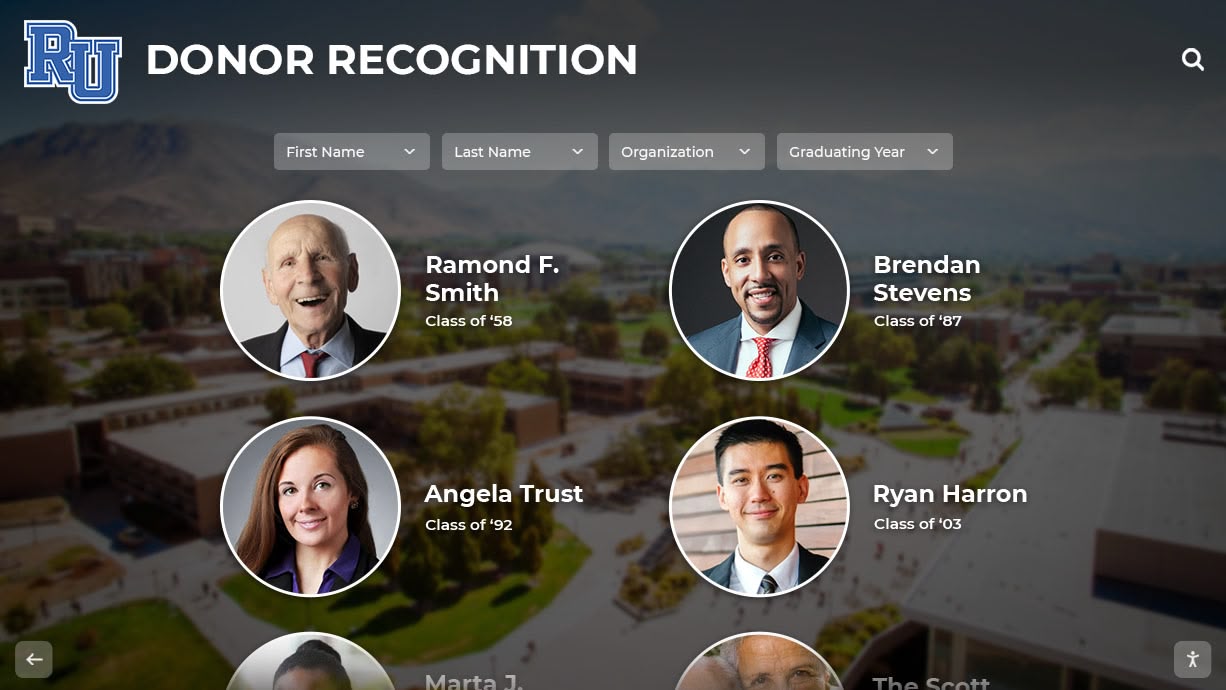
Modern nonprofit donor recognition displays showcase supporters through engaging profiles that celebrate individual stories and collective impact
Why Recognition Drives Continued Nonprofit Giving
Effective donor recognition operates on multiple psychological and social levels simultaneously, addressing fundamental human needs for acknowledgment, belonging, and meaningful contribution while creating tangible benefits that reinforce giving decisions and motivate continued support.
Recognition validates donor choices in competitive philanthropic environments where countless organizations request support. When nonprofits publicly honor supporters, they communicate that contributions genuinely matter, that generosity receives appropriate appreciation, and that donors made wise decisions investing in your mission rather than alternative causes. This validation proves particularly important for donors who may question whether modest contributions create meaningful impact—seeing their names recognized alongside major supporters affirms that every gift contributes to collective success regardless of amount.
Social Connection and Philanthropic Community
Public recognition creates sense of belonging within communities of shared values. Donors recognized alongside respected peers experience connection to something larger than individual transactions—they join philanthropic movements united by commitment to your mission and belief in organizational capacity to create positive change. This community feeling strengthens emotional bonds between supporters and organizations while establishing social relationships that transcend transactional giving patterns.
Donor recognition displays function as visual representations of philanthropic communities, demonstrating breadth and depth of support your nonprofit commands. Prospective donors observing extensive recognition installations perceive organizations as worthy of community investment, credible in mission delivery, and successful in attracting diverse supporter constituencies. This social proof significantly influences giving decisions, particularly among donors who value alignment with community norms and respected peer choices.
Tangible Return on Philanthropic Investment
While donors give primarily for altruistic reasons rather than personal benefit, recognition provides tangible acknowledgment that creates positive feelings and reinforces giving satisfaction. Recognition serves as visible return on philanthropic investment, demonstrating that nonprofits noticed contributions, valued support sufficiently to create permanent or prominent acknowledgment, and maintain commitment to honoring supporters appropriately over time.
This acknowledgment becomes particularly important for sustaining giving relationships through challenging periods when donors may reconsider discretionary philanthropy. Supporters who see their recognition during facility visits experience concrete reminders of existing relationships, prior generosity, and organizational appreciation—all factors that strengthen retention during economic uncertainty or when competing priorities emerge.
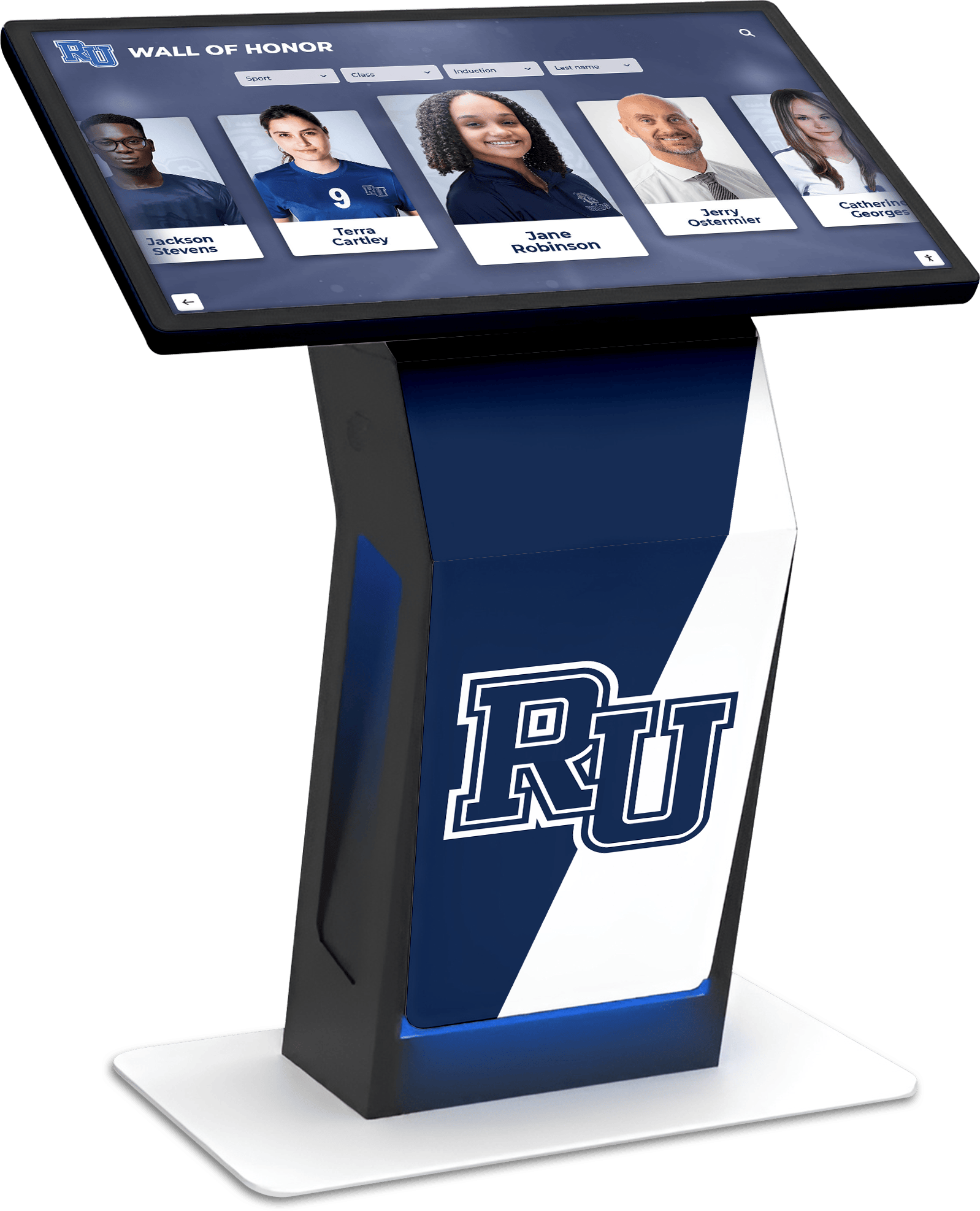
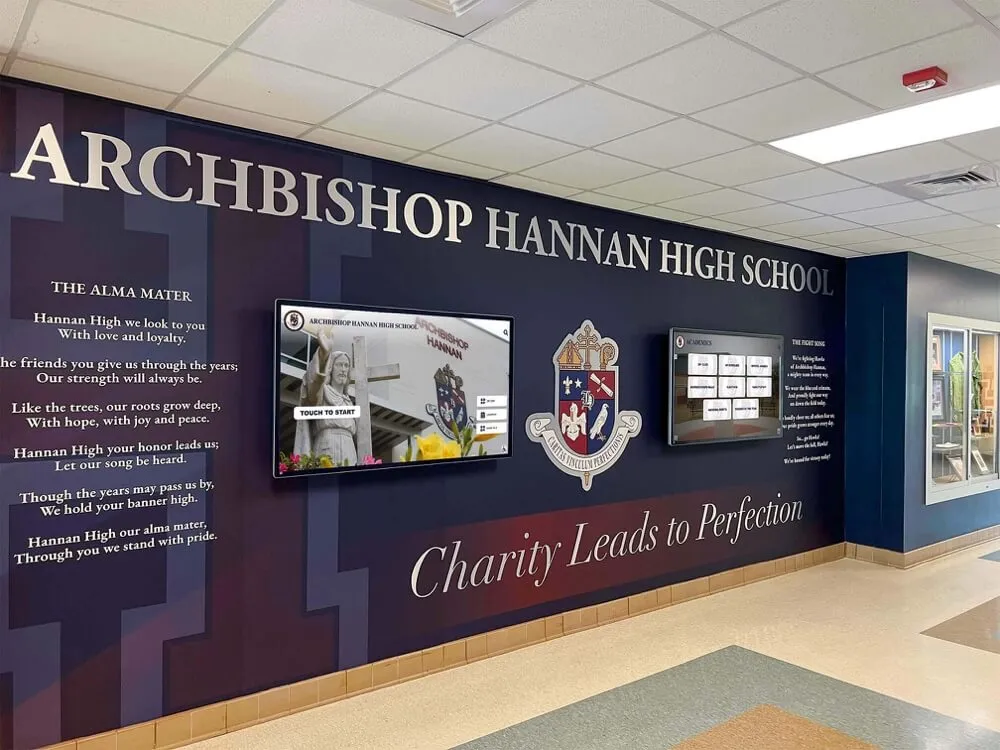
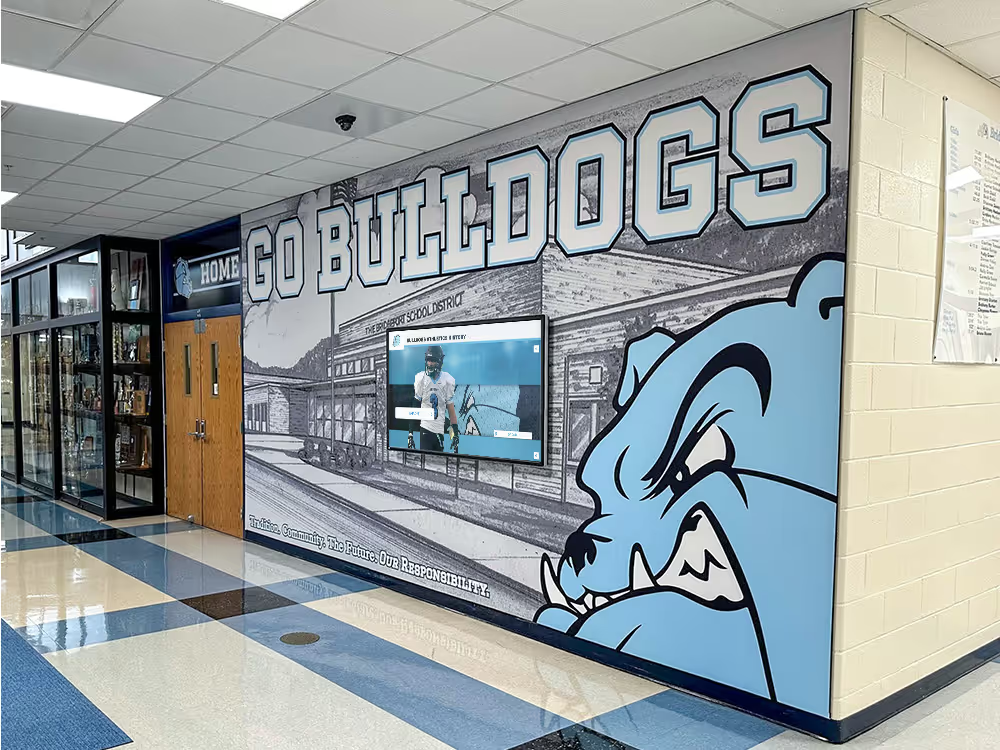
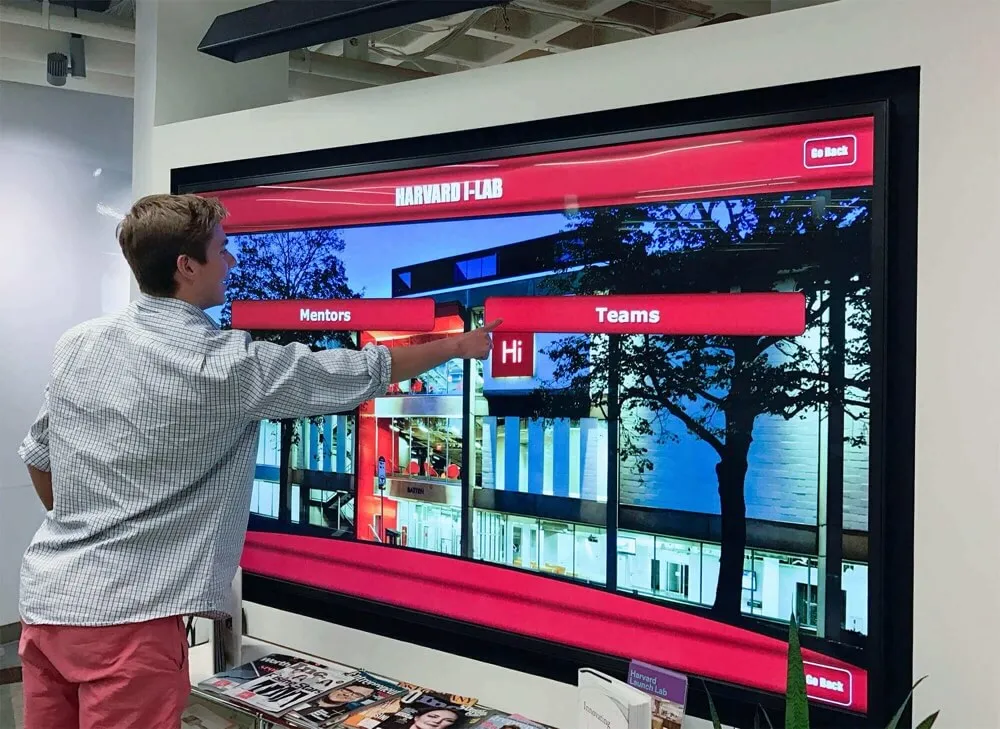
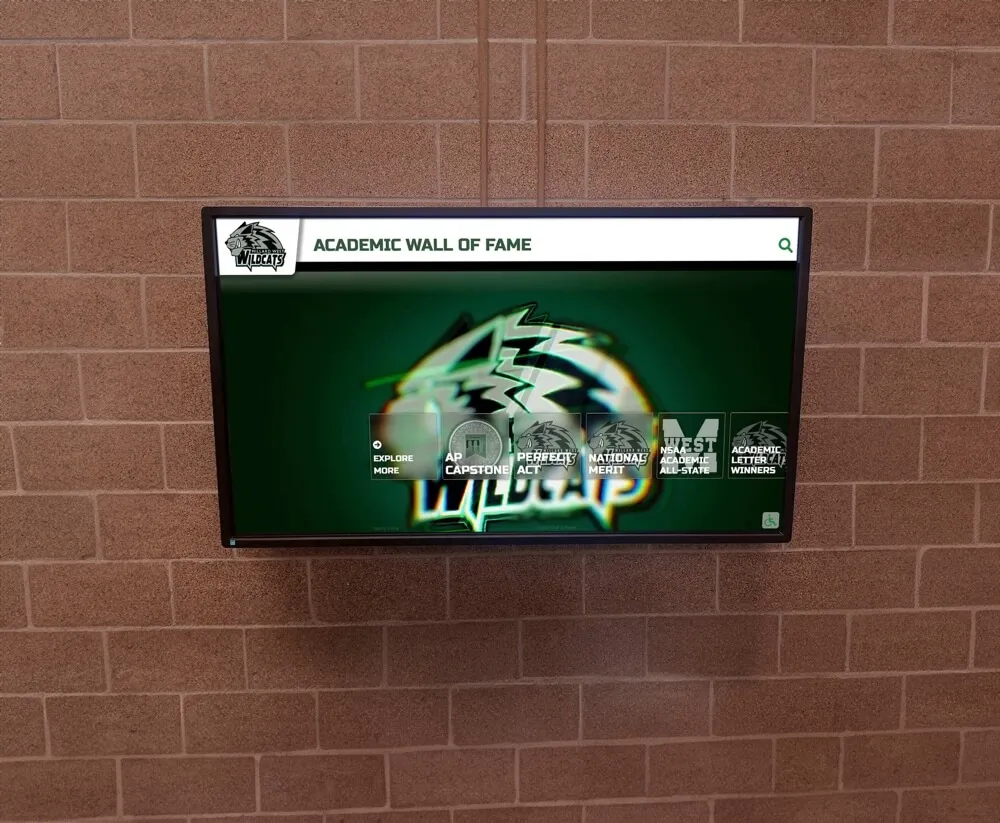
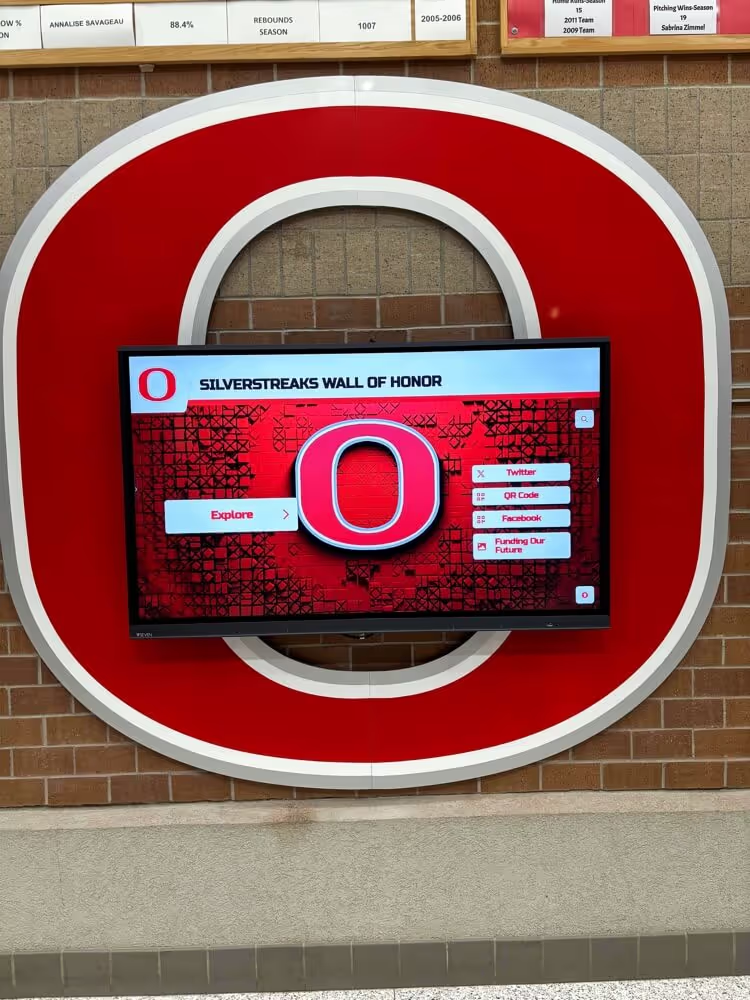
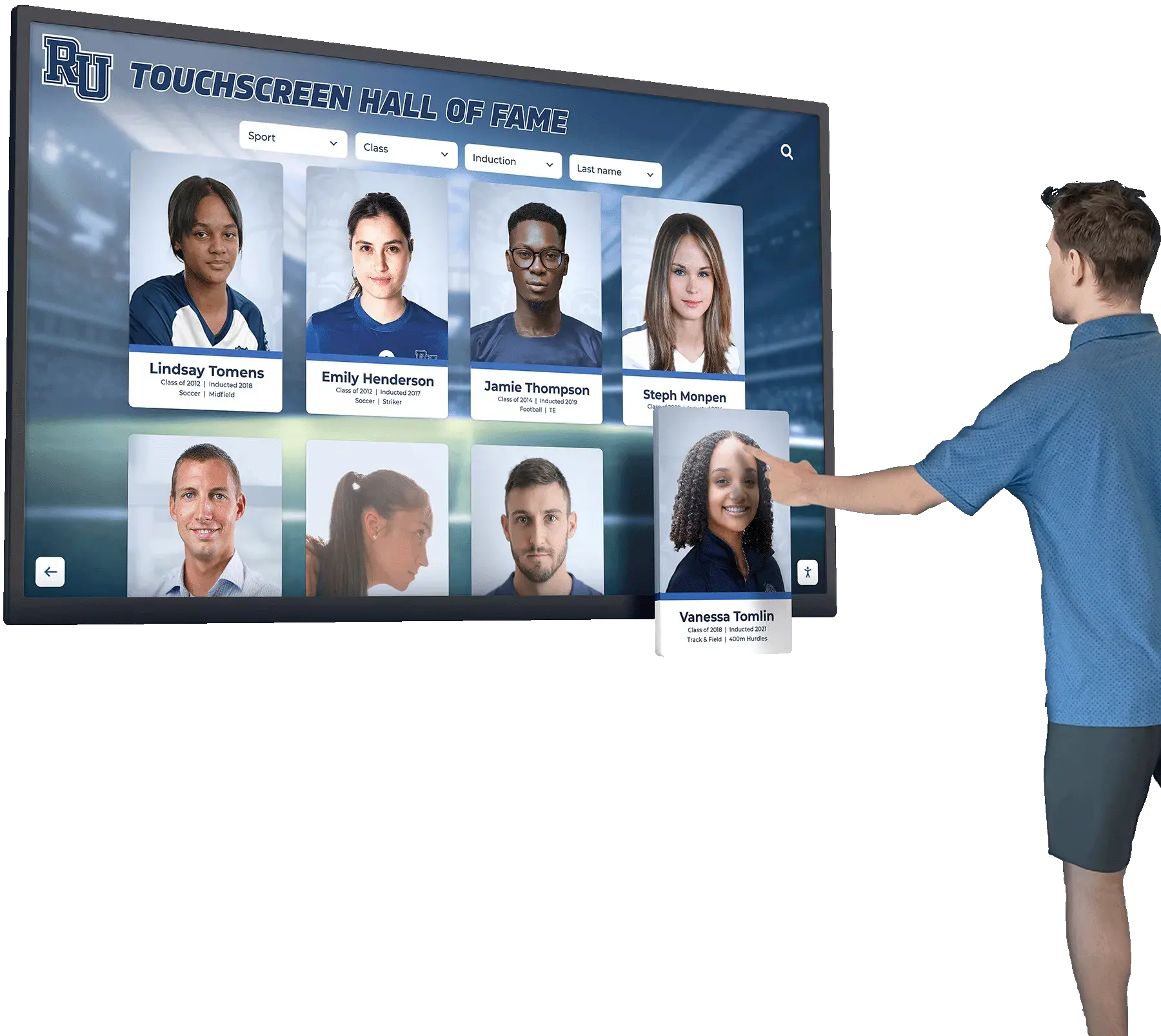
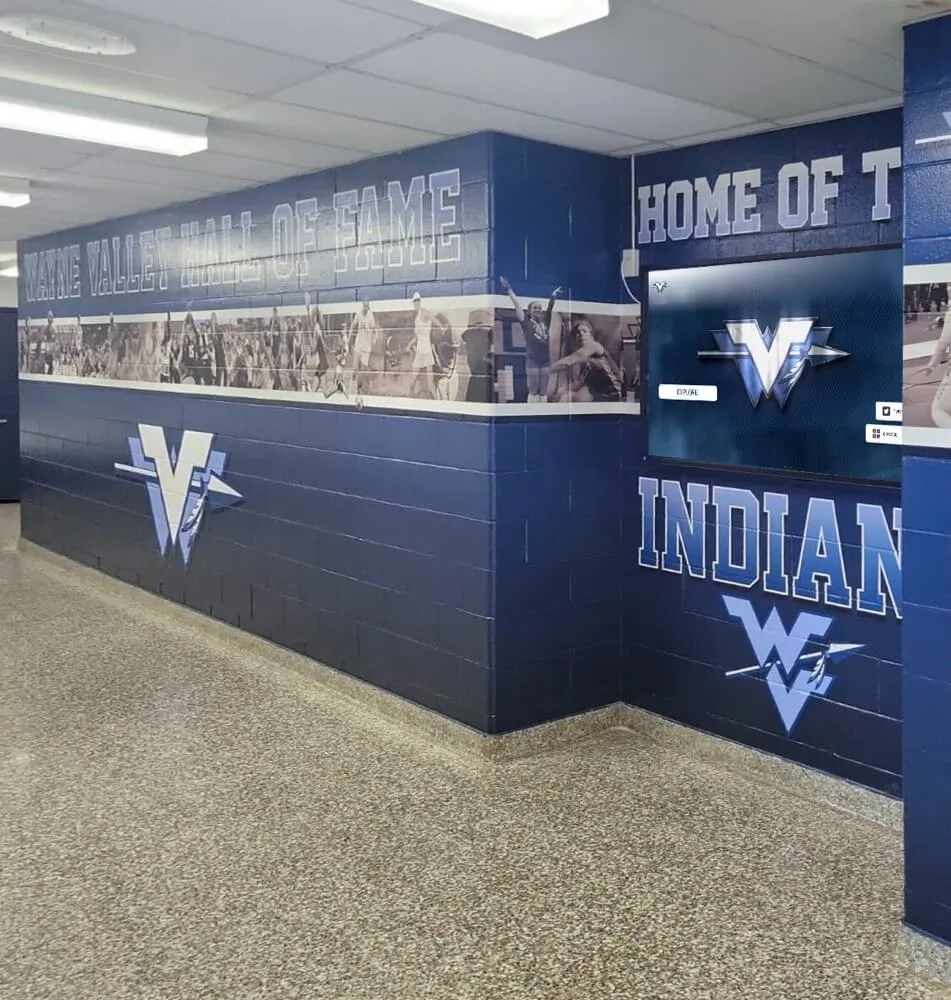
Interactive touchscreen displays enable donors to explore recognition content, search for supporters, and discover detailed impact stories
Essential Elements of Recognition That Inspires Continued Giving
Not all recognition approaches deliver equal stewardship value. The most effective nonprofit donor recognition displays incorporate specific elements that maximize donor satisfaction while creating engagement experiences that strengthen relationships and motivate continued support.
Prominent Visibility and Strategic Placement
Recognition impact correlates directly with visibility—displays in high-traffic locations where donors, beneficiaries, and community members regularly encounter acknowledgment create far greater stewardship value than recognition hidden in administrative areas or low-traffic spaces. Strategic placement ensures donors experience their recognition during facility visits while exposing prospective supporters to social proof that encourages giving decisions.
Optimal Recognition Locations
- Main entrances creating immediate visibility for all facility visitors
- Lobbies and reception areas where guests naturally gather
- Event spaces hosting fundraising activities and donor gatherings
- Facility areas directly benefiting from donor support (programs, wings, equipment)
- Waiting areas providing extended viewing opportunities
- Accessible locations accommodating visitors with mobility limitations
- Positions with appropriate lighting ensuring readability throughout operating hours
Nonprofits should evaluate potential recognition locations during different times of day, various organizational activities, and diverse visitor patterns before finalizing placement decisions. Observing actual traffic flow, typical dwell times, and viewing angles ensures recognition occupies positions maximizing exposure while creating comfortable observation opportunities that encourage engagement rather than rushed glances.
Appropriate Prominence Matching Contribution Levels
Effective recognition systems clearly differentiate giving levels through visual hierarchy, ensuring major donors receive acknowledgment proportional to extraordinary generosity while maintaining inclusive recognition for all supporters regardless of contribution size. This balance proves critical—overemphasizing major donors while minimizing annual fund supporters creates two-tiered communities that may discourage modest donors, while treating all gifts identically fails to motivate donor progression toward leadership giving levels.
Creating Effective Visual Hierarchy
- Larger profile displays or individual plaques for major donors
- Featured positioning for leadership supporters on home screens or prime wall locations
- Enhanced content richness for top tiers including photos, videos, and detailed stories
- Color differentiation distinguishing recognition societies and giving levels
- Typography variation using larger, bolder text for higher contribution tiers
- Dedicated sections or panels grouping donors by giving level
- Clear naming of recognition societies creating aspiration for level advancement
- Respectful acknowledgment for all donors maintaining inclusive community
Digital recognition systems particularly excel at sophisticated hierarchy implementation through flexible content presentation, allowing organizations to feature major donors prominently while providing searchable directories where every supporter receives dignified acknowledgment. Organizations can also program contextual recognition—highlighting facility-specific donors during events in those spaces while rotating featured supporters to maximize visibility across entire donor communities over time. Similar hierarchical approaches enhance academic recognition programs celebrating student achievement across multiple performance levels.
Storytelling That Demonstrates Impact
The most compelling nonprofit donor recognition displays extend beyond listing names and contribution amounts to demonstrate tangible outcomes that generosity enables. Impact storytelling creates emotional connections between donor support and mission accomplishment, helping supporters understand specific differences their contributions make while reinforcing that giving decisions create meaningful change worthy of continued investment.
Impact Storytelling Approaches
- Beneficiary profiles explaining how donor support changed individual lives
- Program descriptions detailing initiatives that contributions fund
- Facility transformation photos showing improvements donor generosity enabled
- Outcome metrics demonstrating measurable results from philanthropic investment
- Timeline displays illustrating organizational growth through donor support
- Before-and-after comparisons visualizing donor impact
- Staff testimonials explaining how resources enhance mission delivery
- Community benefit information showing broader societal impact beyond direct beneficiaries
Digital donor displays offer particular advantages for impact storytelling through unlimited content capacity, multimedia integration, and flexible updates as programs evolve and new impact evidence emerges. Nonprofits can incorporate videos showing programs in action, photo galleries documenting facility improvements, and detailed narratives impossible within space constraints of traditional plaque systems. Organizations implementing storytelling-rich recognition report enhanced donor satisfaction, improved giving conversations during cultivation activities, and stronger emotional connections between supporters and missions they fund.

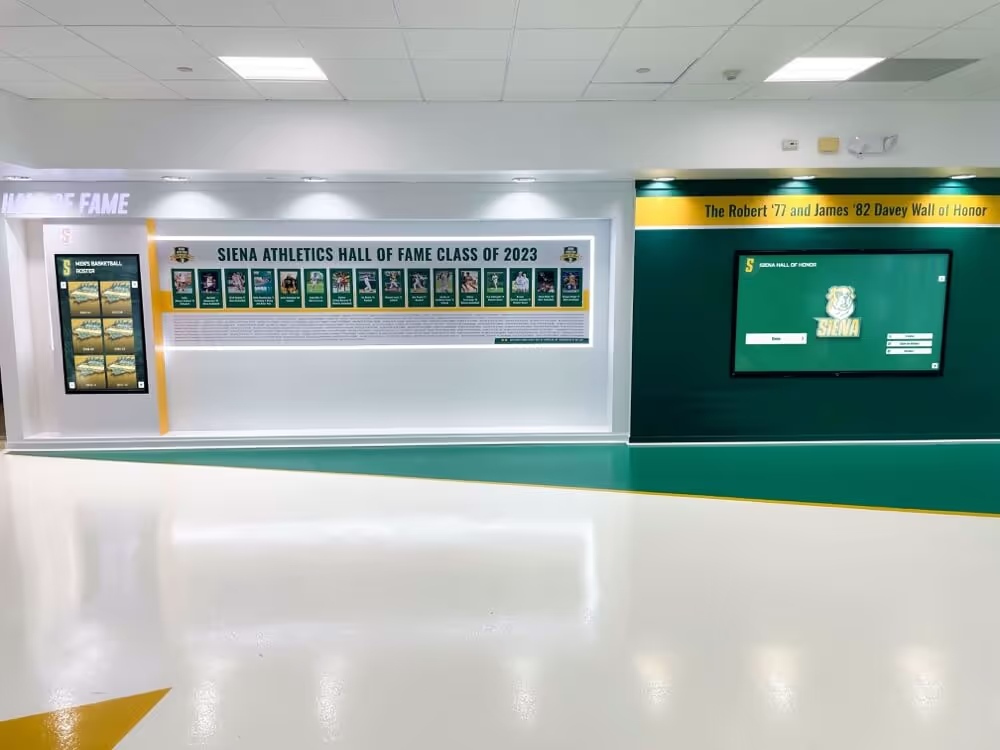
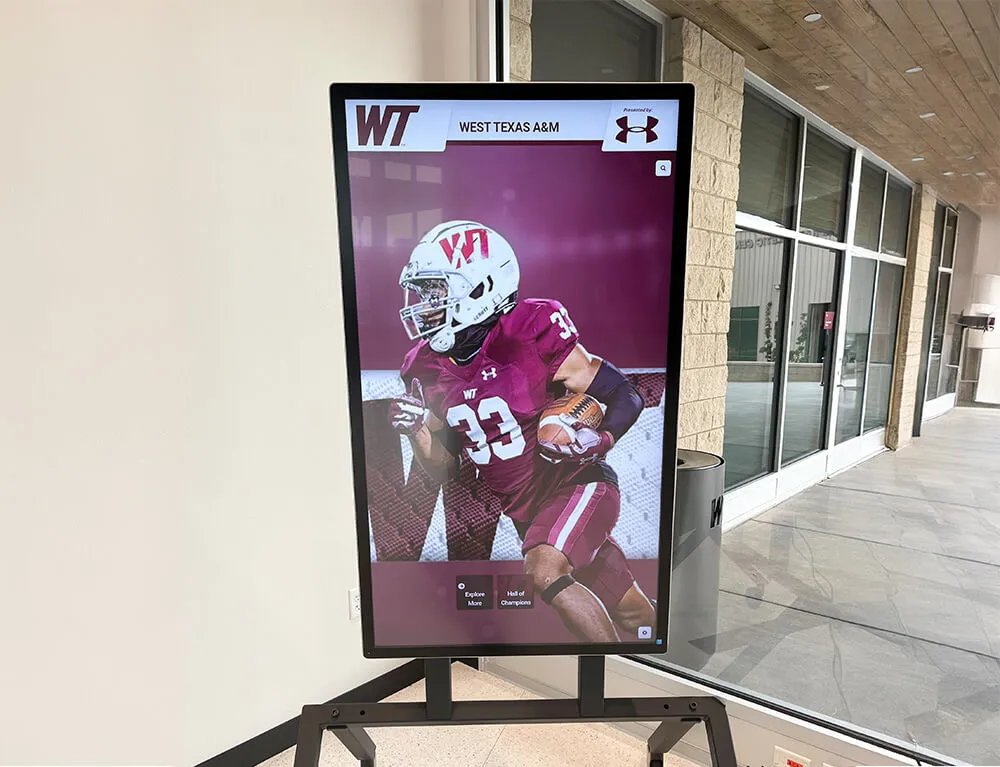
Hybrid recognition approaches combine traditional elements with digital technology, honoring diverse donor preferences while maximizing flexibility
Technology Solutions for Nonprofit Donor Recognition Displays
Modern donor recognition technology addresses fundamental limitations of traditional approaches while creating enhanced engagement opportunities that strengthen stewardship and inspire continued giving.
Interactive Digital Donor Recognition Walls
Interactive touchscreen donor displays transform static acknowledgment into engaging experiences where visitors actively explore donor communities, search for specific supporters, filter by giving level or recognition society, and discover detailed profiles incorporating photos, personal statements, and impact information. This interactivity creates memorable engagement that passive viewing cannot match, encouraging visitors to spend more time with recognition content while creating personal discovery moments that strengthen emotional connections.
Digital Display Advantages for Nonprofits
- Unlimited donor capacity without physical space constraints
- Easy content updates through cloud-based management systems
- Rich multimedia profiles incorporating photos, videos, and detailed stories
- Search and filtering functionality improving user experience
- Accessibility compliance ensuring inclusive recognition
- Integration capabilities connecting with fundraising databases
- Long-term cost efficiency eliminating continuous plaque expenses
- Analytics tracking engagement and identifying popular content
- Real-time recognition enabling immediate acknowledgment as gifts process
- Flexible visual hierarchy accommodating diverse giving levels
Organizations implementing digital donor recognition overcome capacity limitations that plague traditional plaque walls, accommodating thousands of donors without additional hardware investment. This scalability proves particularly valuable for nonprofits experiencing donor base growth or running major campaigns adding hundreds of new supporters requiring recognition accommodation. Similar technological approaches enhance digital displays for athletic directors managing comprehensive recognition programs across multiple sports and achievement categories.
Mobile-Accessible Recognition Through QR Codes
Progressive nonprofits extend recognition beyond physical displays through mobile-accessible content that donors access via QR codes or dedicated websites. Visitors scan QR codes at physical installations or access donor directories through smartphone browsers, exploring recognition content on personal devices. This mobile integration enables extended engagement beyond brief facility visits, creates social sharing opportunities amplifying organizational visibility, and provides accessible alternatives for supporters unable to visit physical locations.
Mobile Recognition Benefits
- Continued engagement after facility visits conclude
- Social media sharing expanding organizational reach
- Accessible recognition for supporters unable to visit physically
- Personal device interaction reducing touchscreen surface contact
- Year-round access independent of facility operating hours
- Additional content beyond physical display capacity
- Analytics tracking mobile engagement and sharing patterns
- Integration with digital fundraising campaigns and online giving platforms
Mobile integration particularly resonates with younger donors who expect digital experiences and value ability to share recognition within personal networks. Organizations report increased social media mentions, expanded awareness among donor peer groups, and enhanced digital fundraising campaign performance when mobile donor recognition integrates seamlessly with online giving platforms and stewardship communications.
Traditional Recognition Maintaining Timeless Appeal
While digital technology offers compelling advantages, traditional donor recognition approaches maintain enduring appeal for many supporters who value permanence, prestige, and tangible acknowledgment that physical materials provide. Bronze plaques, engraved donor walls, and architectural recognition elements create different psychological impacts than digital displays, particularly among older donors who may perceive traditional recognition as more prestigious or permanent.
Traditional Recognition Strengths
- Perceived permanence and lasting tribute
- Prestige associated with quality materials and craftsmanship
- No technology maintenance or software licensing requirements
- Familiar formats donors immediately understand and appreciate
- Classic aesthetics complementing traditional architecture
- Duplicate plaque opportunities providing donor keepsakes
- No dependency on network connectivity or power availability
- Proven effectiveness over decades of nonprofit stewardship
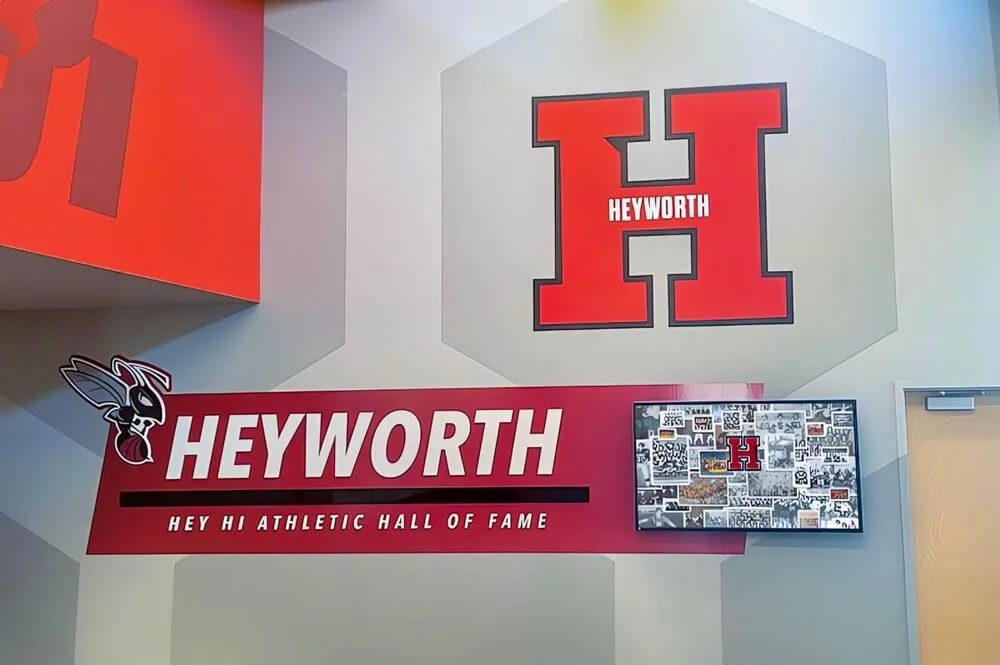
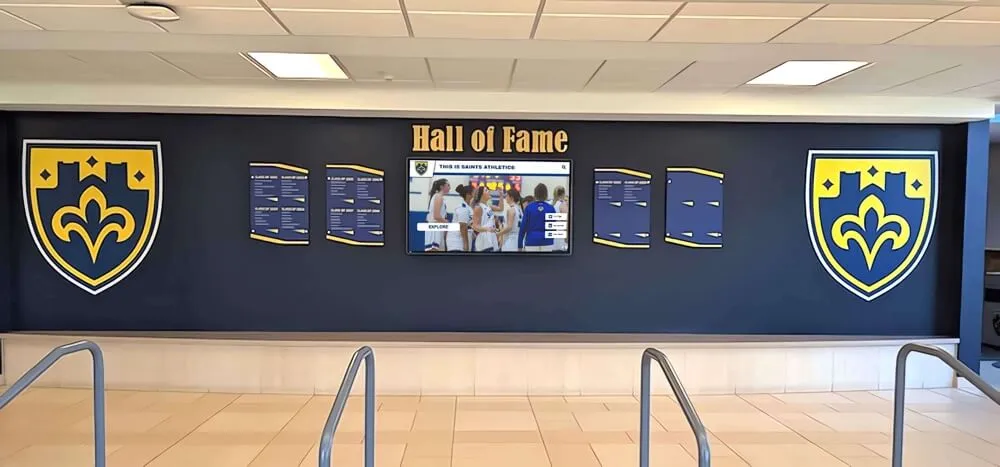
Many organizations implement hybrid approaches combining traditional architectural elements with digital capabilities, honoring established donor expectations while incorporating modern engagement features. These blended systems might feature traditional plaques for major donors alongside digital recognition for annual contributors, architectural frames surrounding digital touchscreens, or QR codes integrated with traditional plaques linking to extended digital profiles. Hybrid strategies accommodate diverse donor preferences while maximizing recognition flexibility and growth capacity.
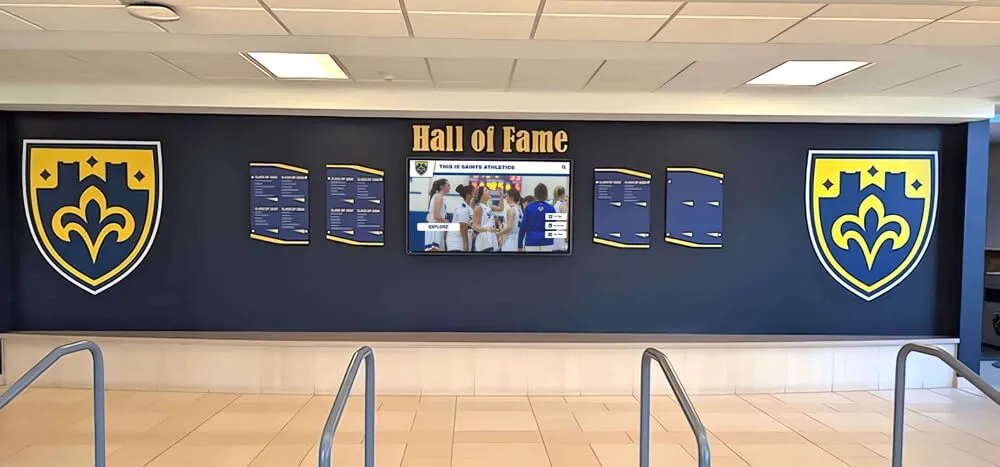
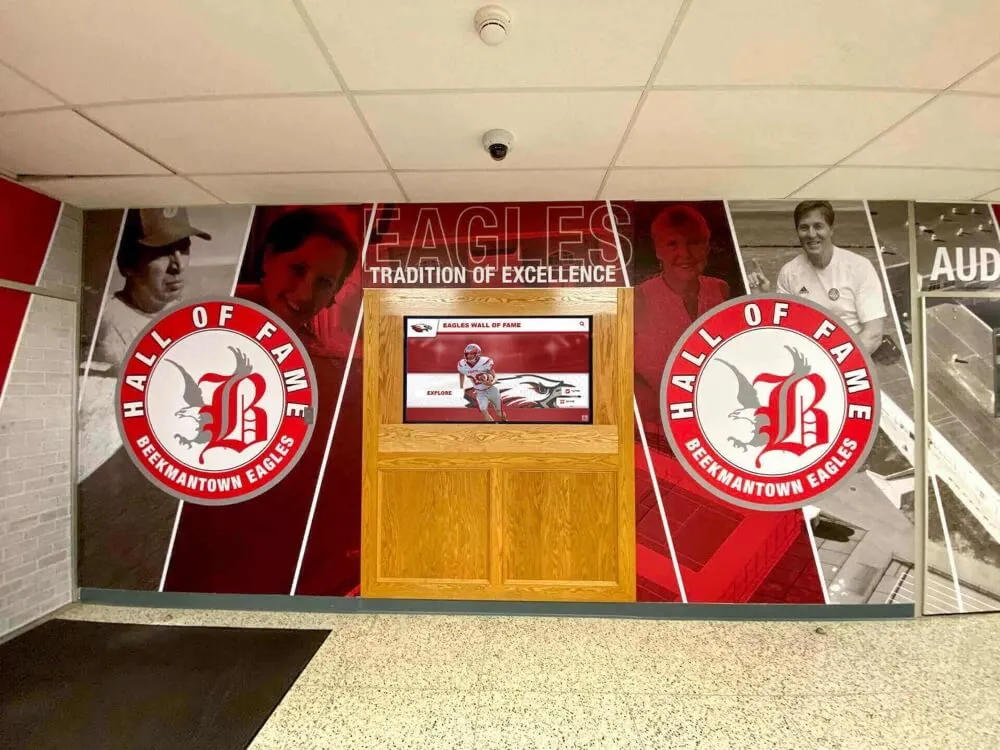
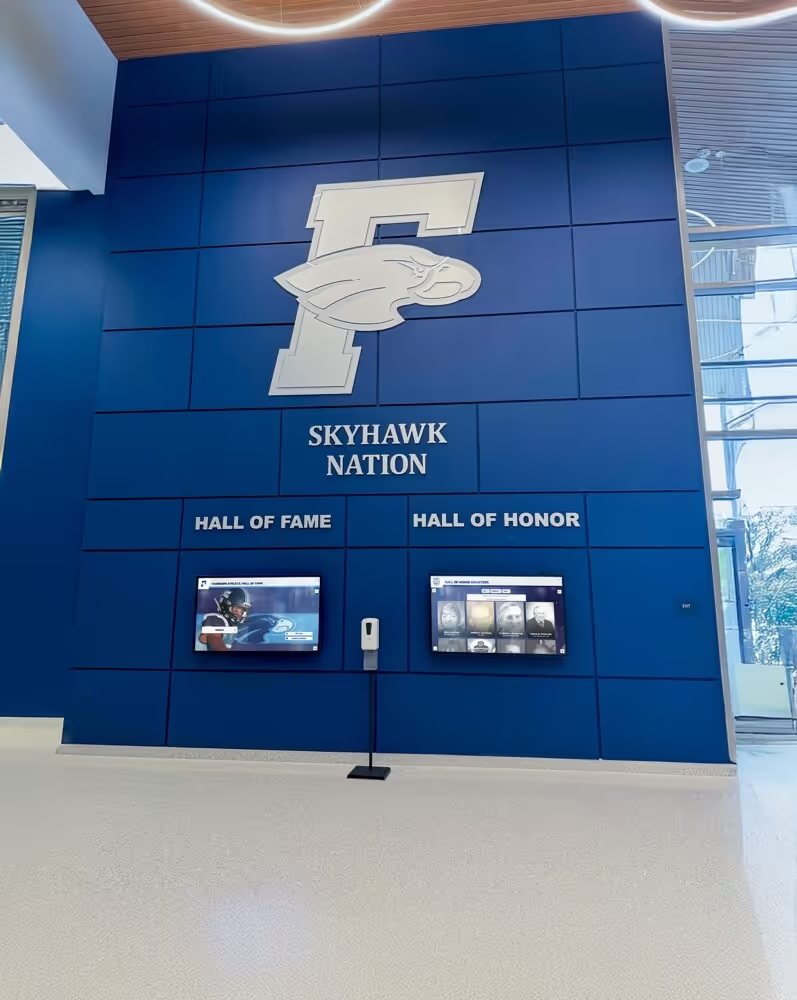
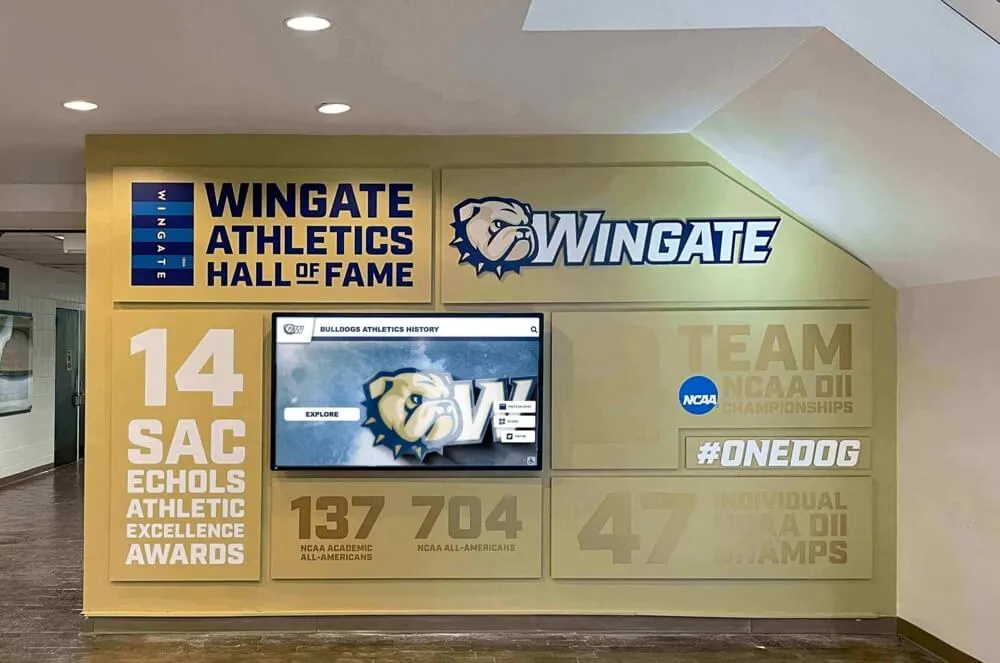
Blended recognition systems honor traditional donor preferences while incorporating digital flexibility and storytelling capabilities
Designing Recognition Systems That Encourage Giving Progression
Strategic recognition design creates clear pathways encouraging donors to increase support over time, advancing through giving levels while experiencing enhanced acknowledgment that rewards generosity progression.
Transparent Giving Level Structures and Benefits
Clear communication about recognition tier requirements and associated benefits helps donors understand advancement pathways while creating aspirational motivation to increase giving. Nonprofits should establish logical giving level progressions with meaningful naming, transparent qualification criteria, and distinctive benefits that make progression worthwhile beyond simple contribution increases.
Sample Nonprofit Giving Level Framework
- Visionary Circle: $100,000+ cumulative or transformational single gifts
- Cornerstone Society: $50,000-$99,999 lifetime giving
- Leadership Partners: $25,000-$49,999 cumulative contributions
- Impact Circle: $10,000-$24,999 total support
- Sustaining Members: $5,000-$9,999 cumulative gifts
- Champion Level: $2,500-$4,999 cumulative donations
- Supporter Circle: $1,000-$2,499 cumulative contributions
- Friends of [Organization]: $500-$999 annual gifts
Recognition tier naming should reflect organizational mission and resonate with donor values. Environmental nonprofits might use nature-inspired names, arts organizations could reference artistic terminology, human services agencies might emphasize impact language, while educational institutions often employ academic references. Authentic naming aligned with organizational identity strengthens recognition meaningfulness and donor connection to philanthropic communities they join.
Communicating Recognition Benefits
- Enhanced profile prominence in recognition displays
- Special event invitations and exclusive access opportunities
- Facility naming opportunities for major gift levels
- Detailed impact reports demonstrating contribution outcomes
- Personal cultivation interactions with leadership and program staff
- Advisory board participation for top-tier supporters
- Recognition in publications and communications
- Legacy society acknowledgment for planned giving commitments
Transparent communication about tier benefits enables donors to make informed decisions about giving progression while understanding specific advantages associated with increased support. Organizations should regularly promote recognition level structures through fundraising communications, facility signage near donor displays, and cultivation conversations where development staff discuss advancement opportunities with donors showing capacity and inclination for increased giving.
Real-Time Recognition Reducing Acknowledgment Delays
Traditional plaque-based recognition creates unavoidable delays between gift processing and public acknowledgment—ordering, engraving, and installation typically require weeks or months. These delays diminish recognition impact while creating donor frustration, particularly among major supporters expecting prompt acknowledgment proportional to significant contributions.
Digital donor recognition eliminates acknowledgment delays through real-time content updates. Nonprofits can publish new donor profiles within minutes or hours of gift processing, providing immediate public recognition that strengthens donor satisfaction while demonstrating organizational responsiveness and appreciation. Automated integration between donor displays and fundraising databases enables recognition that appears automatically as gifts process, ensuring every supporter receives timely acknowledgment without creating administrative burden for development staff.
Benefits of Immediate Recognition
- Enhanced donor satisfaction with acknowledgment timeliness
- Demonstration of organizational appreciation and responsiveness
- Reduced administrative burden compared to plaque ordering processes
- Ability to coordinate recognition with donor event attendance
- Improved stewardship supporting donor retention and upgrade cultivation
- Elimination of awkward delays affecting major gift relationships
- Real-time campaign progress communication building momentum
Organizations implementing near-real-time recognition report measurably improved donor satisfaction scores, enhanced relationships with major supporters, and operational efficiency gains eliminating complex plaque ordering and installation coordination. This responsiveness particularly matters for donors attending events shortly after making contributions—seeing immediate recognition creates positive emotional experiences reinforcing giving decisions and strengthening organizational relationships.
Celebration of Milestones and Multi-Year Loyalty
Recognition systems that celebrate giving milestones and sustained support over multiple years create additional stewardship touchpoints while reinforcing that nonprofits notice and appreciate long-term relationships beyond single transactions. Milestone recognition might acknowledge cumulative giving thresholds, consecutive years of support, recognition tier advancement, or special loyalty designations for sustained giving.
Milestone Recognition Opportunities
- Consecutive year giving acknowledgment (5, 10, 15, 20+ years)
- Cumulative giving threshold celebrations ($10K, $25K, $50K, $100K+)
- Recognition tier advancement announcements
- Planned giving commitment acknowledgment
- Leadership circle induction celebrations
- Tribute and memorial giving recognition
- Legacy society membership for bequest commitments
- Volunteer service recognition for non-monetary contributions
Digital recognition systems particularly excel at milestone tracking and celebration through automated monitoring of donor histories and flexible content highlighting. Organizations can program displays to feature milestone achievers prominently, incorporate special badges or designations for multi-year donors, and create anniversary acknowledgments that appear during giving anniversary months. These automated celebrations provide meaningful stewardship touches without creating unsustainable administrative burden, particularly valuable for resource-constrained nonprofits managing hundreds or thousands of donor relationships.
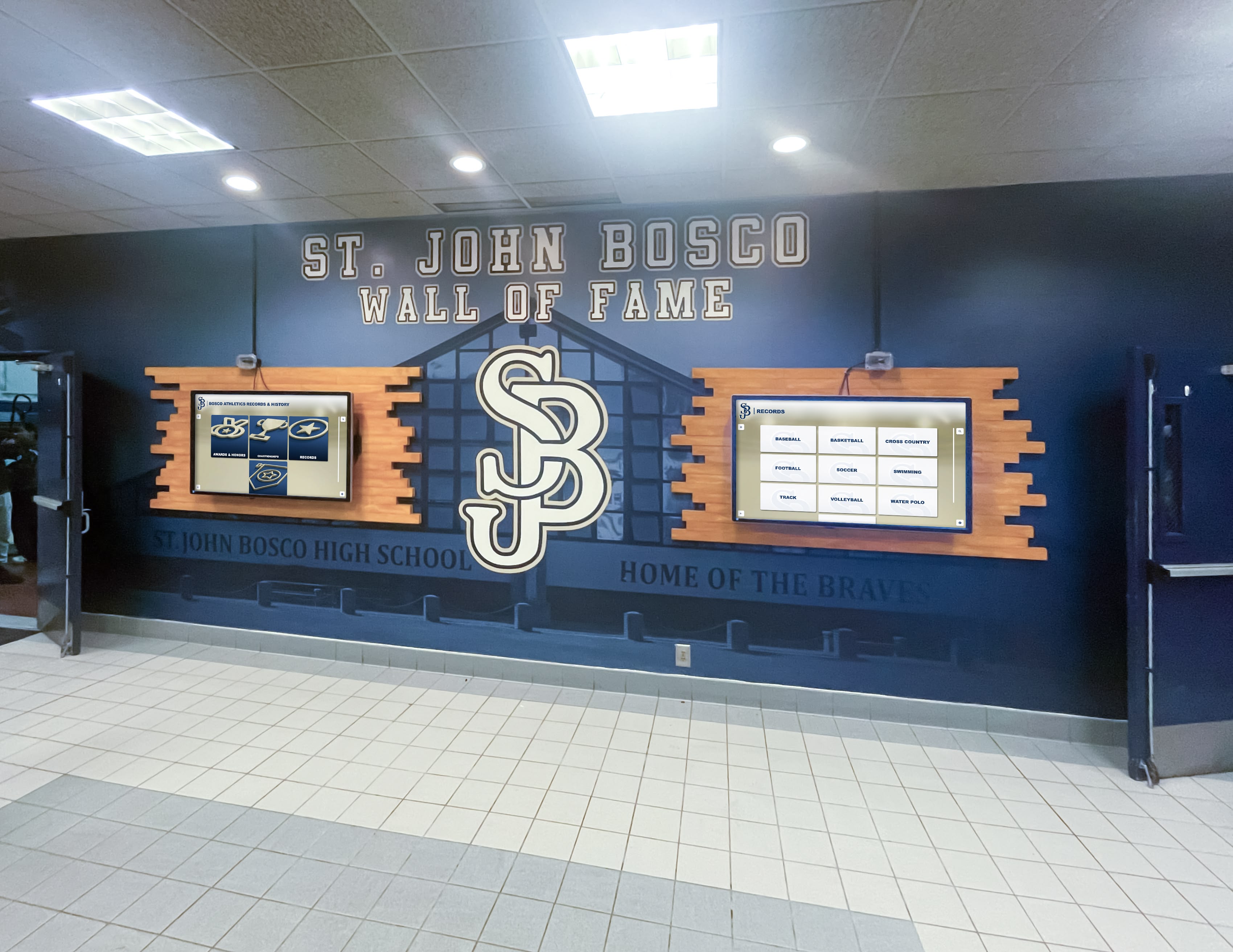
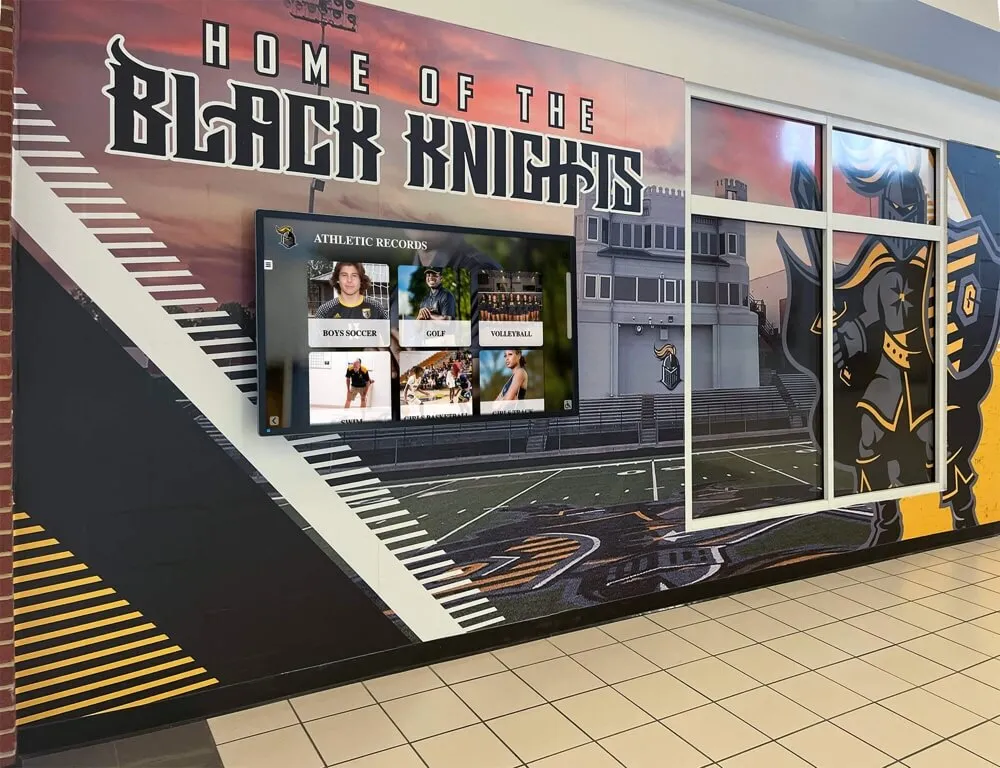
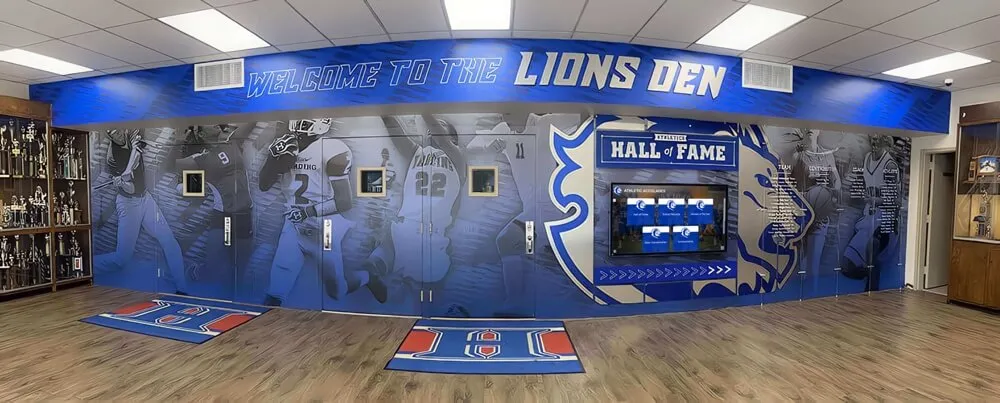
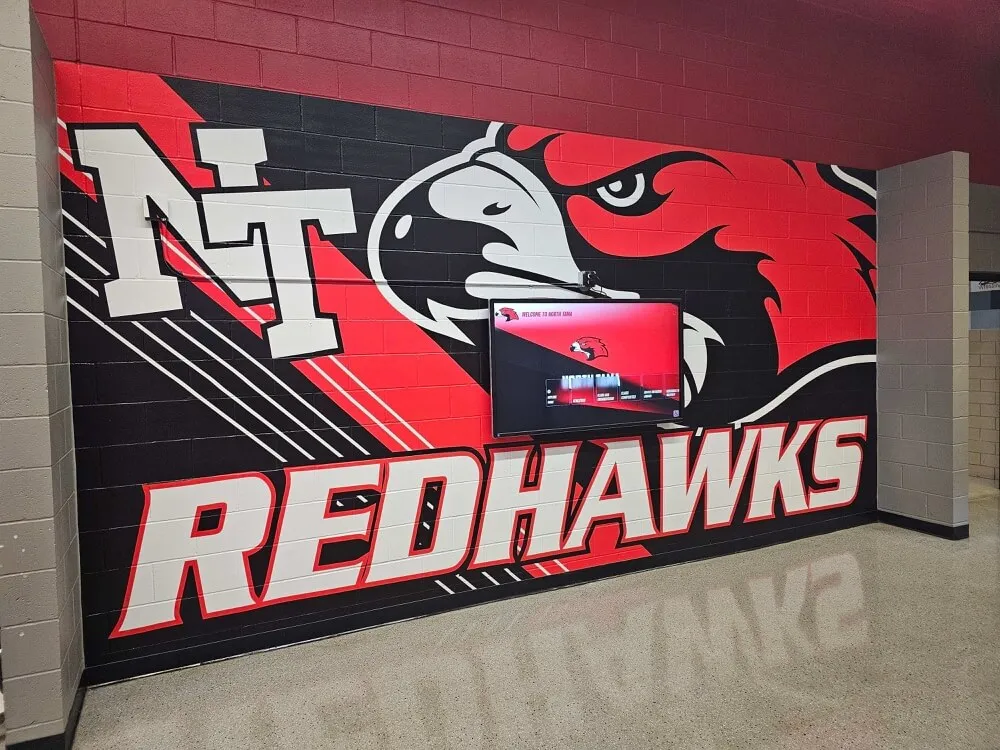
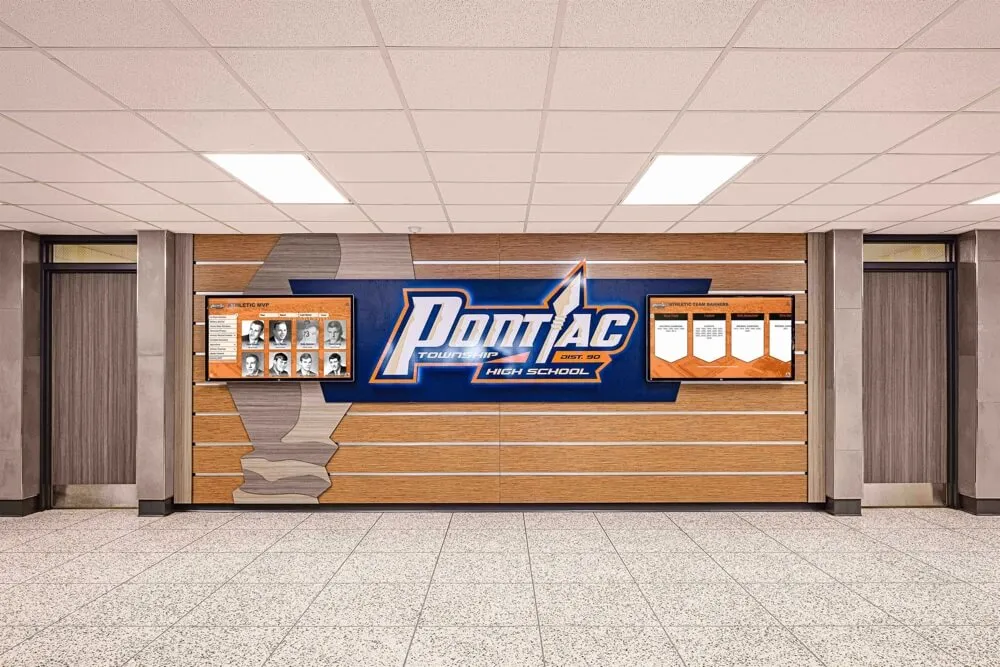
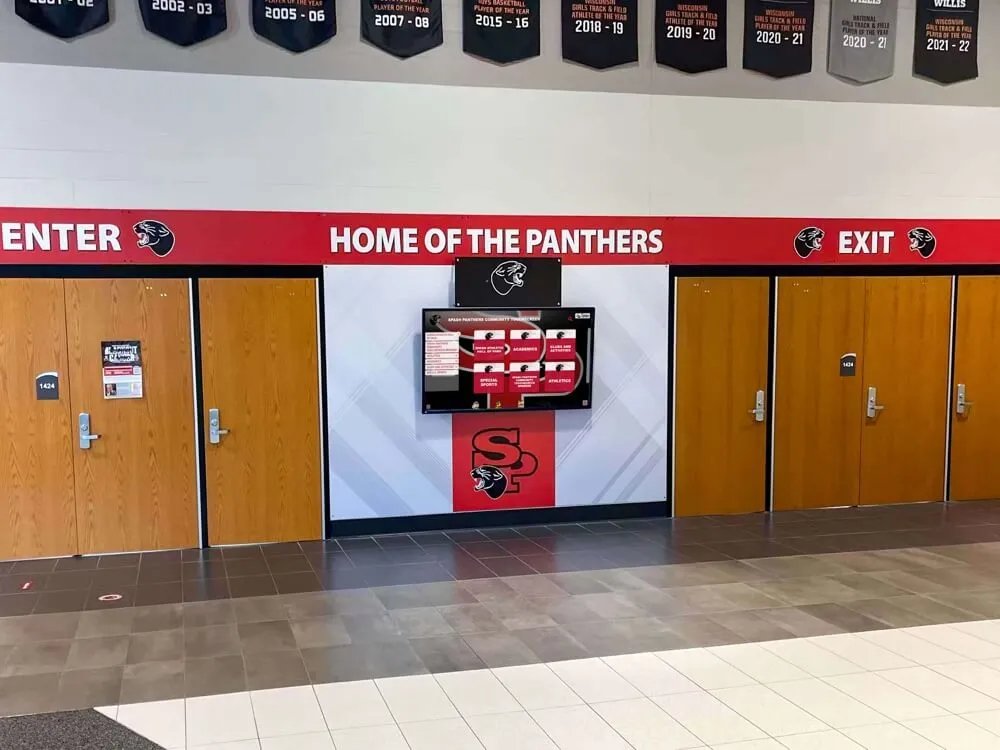
Multi-screen installations create prominent recognition environments suitable for nonprofits with extensive donor communities
Budget-Conscious Recognition Strategies for Nonprofits
Organizations managing limited resources can implement effective donor recognition through creative, cost-efficient approaches that honor supporters appropriately while maintaining financial sustainability.
Phased Implementation Approaches
Rather than attempting comprehensive recognition systems requiring substantial upfront investment, nonprofits can implement phased approaches beginning with modest installations and expanding as fundraising success provides resources for enhancements. Phased implementation allows organizations to demonstrate recognition effectiveness, gather donor feedback informing future phases, and align recognition investment with fundraising revenue growth.
Phased Recognition Roadmap
- Phase 1: Single digital display or modest traditional wall recognizing major donors
- Phase 2: Expansion incorporating leadership giving levels and annual fund supporters
- Phase 3: Enhanced content development adding photos, stories, and impact information
- Phase 4: Additional display installations in secondary locations or program spaces
- Phase 5: Mobile integration, database integration, and advanced features
This incremental approach prevents organizations from overextending financially while allowing recognition systems to evolve alongside donor communities and organizational capacity. Each phase creates learning opportunities informing subsequent implementations, reduces financial risk, and demonstrates prudent stewardship of resources—a consideration many donors appreciate when evaluating nonprofit effectiveness.
Leveraging Existing Technology Infrastructure
Nonprofits can reduce recognition costs by repurposing existing digital signage, utilizing facility televisions for scheduled donor content, or incorporating recognition into existing communication channels rather than investing exclusively in dedicated donor display systems.
Cost-Reduction Technology Strategies
- Repurpose lobby displays for dedicated donor recognition hours
- Utilize existing televisions in reception areas for rotating donor slideshows
- Implement web-based donor directories accessible through facility computers or kiosks
- Incorporate donor recognition into existing digital signage content rotation
- Create QR code campaigns linking to mobile-optimized donor honor rolls
- Leverage social media channels for ongoing donor spotlight features
- Include donor recognition sections in regular publications and newsletters
While shared-purpose displays lack dedicated prominence of permanent donor walls, they provide cost-effective interim recognition while organizations build toward comprehensive dedicated systems. Many nonprofits successfully combine modest physical recognition with robust digital acknowledgment through websites, mobile platforms, and publications—creating multi-channel recognition that honors supporters across various touchpoints without requiring substantial capital investment in single display installations. Similar budget-conscious approaches support creative recognition in schools managing limited resources while maintaining meaningful acknowledgment programs.
Recognition Through Strategic Partnerships
Some nonprofits offset recognition costs through partnerships with corporate sponsors, community foundations, or major donors willing to underwrite display installations as their contributions. Recognition system sponsorship creates naming opportunities for sponsors while reducing organizational costs, though nonprofits should carefully consider potential conflicts between sponsor prominence and donor recognition purposes.
Partnership Recognition Models
- Sponsor underwrites recognition system installation in exchange for naming rights
- Corporate partners provide in-kind technology donations or installation services
- Community foundations fund recognition infrastructure supporting member nonprofits
- Major donors designate gifts specifically for recognition system implementation
- Vendor partnerships providing reduced costs in exchange for case study participation
- Collaborative installations shared among affiliated nonprofit organizations
Organizations pursuing partnership approaches should establish clear agreements defining sponsor acknowledgment parameters, ensure donor recognition maintains appropriate prominence relative to sponsor visibility, and structure arrangements supporting long-term sustainability beyond initial installation phases.
Accessibility and Inclusive Recognition Practices
Effective nonprofit donor recognition displays ensure all supporters receive dignified acknowledgment while creating experiences accessible to diverse visitors including those with disabilities, varying technological comfort levels, and different cultural backgrounds.
ADA Compliance and Universal Design
Professional donor recognition installations meet Americans with Disabilities Act requirements through WCAG 2.1 AA accessibility standards ensuring recognition remains accessible to visitors with visual, auditory, mobility, or cognitive disabilities. Accessibility features include wheelchair-accessible mounting heights, screen reader compatibility for visually impaired visitors, adjustable text sizing, high-contrast display modes, simple navigation patterns, and alternative interaction methods beyond touchscreen interfaces.
Accessibility Implementation Requirements
- Mounting heights placing touchscreen centers 15-48 inches from floor
- Screen reader compatibility providing audio description of visual content
- Keyboard navigation supporting non-touch interaction alternatives
- Color contrast ratios exceeding 4.5:1 for text readability
- Font sizing minimum 16-18px with user controls for enlargement
- Simple navigation requiring minimal clicks or taps
- Alternative text descriptions for all images and visual elements
- Audio features providing content access for visually impaired visitors
Beyond legal compliance, accessibility demonstrates organizational values while expanding recognition reach across entire communities. Elderly donors appreciate larger text and simplified navigation, visitors with visual impairments benefit from audio features, and supporters with mobility limitations require appropriate mounting heights enabling comfortable interaction. These inclusive design principles ensure recognition serves stewardship functions effectively across diverse donor populations. Similar accessibility considerations enhance digital displays for various applications serving public audiences.
Privacy Considerations and Donor Preferences
While most donors appreciate public recognition, organizations should respect privacy preferences for supporters who prefer confidential giving or limited acknowledgment. Recognition systems should accommodate anonymous donors, supporters preferring first name only or initials, and donors requesting exclusion from specific recognition formats while accepting others.
Privacy-Respecting Recognition Practices
- Opt-in processes where donors actively consent to public recognition
- Preference collection during gift processing capturing recognition choices
- Anonymous donor categories acknowledging contributions without identification
- Flexibility supporting varied privacy levels across recognition channels
- Regular privacy preference verification during donor database updates
- Secure data handling protecting donor information in digital systems
- Clear communication about recognition practices during cultivation
- Respect for memorial gift family preferences in tribute recognition
Organizations should incorporate privacy preference collection into gift acknowledgment processes, asking donors explicitly about recognition choices rather than assuming universal consent to public acknowledgment. Digital recognition systems particularly benefit from granular privacy controls allowing donors to specify different preferences for different recognition contexts—accepting physical display acknowledgment while declining social media features, or approving name recognition while requesting photo exclusion.
Measuring Recognition Effectiveness and ROI
Nonprofits should systematically evaluate recognition impact, assessing whether displays achieve intended stewardship goals while identifying improvement opportunities and demonstrating return on investment to justify recognition system expenses.
Donor Retention and Giving Progression Metrics
The most important recognition effectiveness measures focus on donor behavior—whether recognized supporters give more frequently, at higher levels, and over longer periods compared to donors receiving minimal or generic acknowledgment.
Key Performance Indicators
- Donor retention rates comparing recognized versus unrecognized supporters
- Average gift progression among recognized donors year-over-year
- Recognition tier advancement tracking donor level upgrades
- Multi-year giving consistency measuring sustained support
- Planned giving inquiry correlation with recognition visibility
- New donor acquisition influenced by recognition social proof
- Donor satisfaction survey responses about recognition quality
- Lifetime value comparison for recognized donor segments
Organizations should establish baseline metrics before implementing new recognition approaches, enabling comparison demonstrating recognition system effectiveness. Typical retention improvements range from 10-25 percentage points higher for recognized donors, while gift progression often shows 15-40% larger increases among supporters receiving prominent acknowledgment compared to minimal recognition cohorts.
Engagement Analytics for Digital Recognition
Digital donor displays provide detailed engagement analytics tracking visitor interaction patterns, popular content, typical session durations, and peak usage times. These insights inform content optimization, identify highly engaging donor profiles worthy of feature highlighting, and reveal opportunities for recognition enhancement based on actual visitor behavior.
Valuable Digital Analytics
- Total interactions and unique visitor counts
- Search query patterns revealing donor discovery methods
- Profile view rankings identifying most-engaged content
- Session duration indicating engagement depth
- Time-of-day usage patterns informing content scheduling
- QR code scan frequency measuring mobile integration success
- Social sharing activity quantifying content amplification
- Geographic access data from mobile users
Organizations should review analytics quarterly, identifying trends suggesting content refresh needs, declining engagement warranting investigation, or growing interactions validating recognition approach effectiveness. Analytics-informed optimization ensures recognition investments deliver maximum stewardship value while providing concrete usage data supporting recognition system ROI demonstrations to boards and leadership.
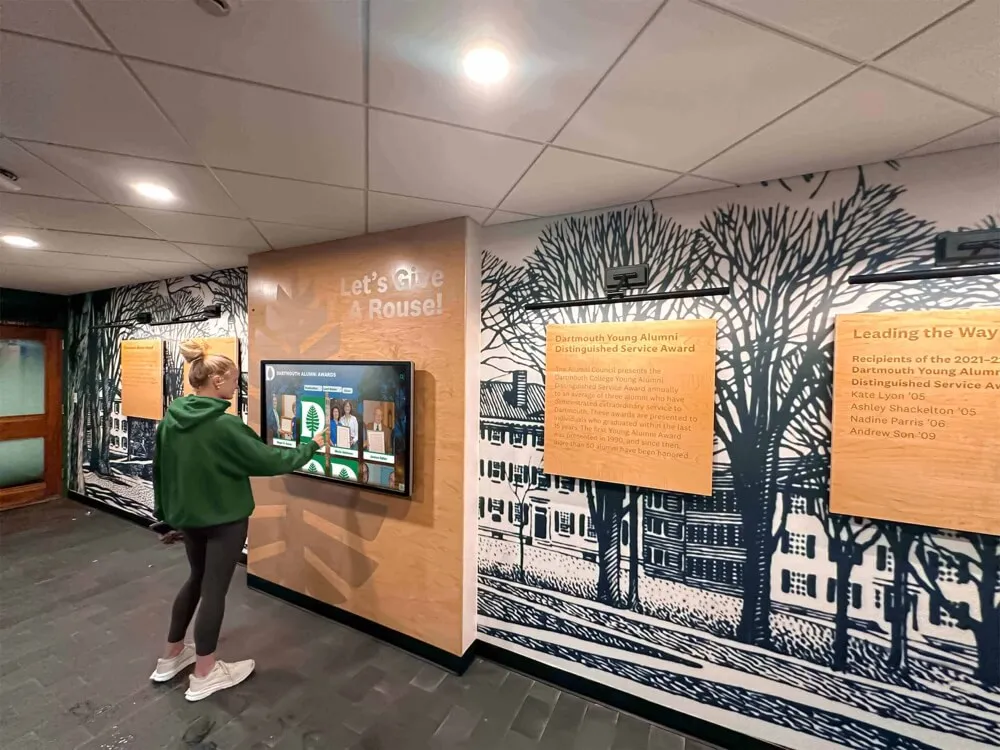
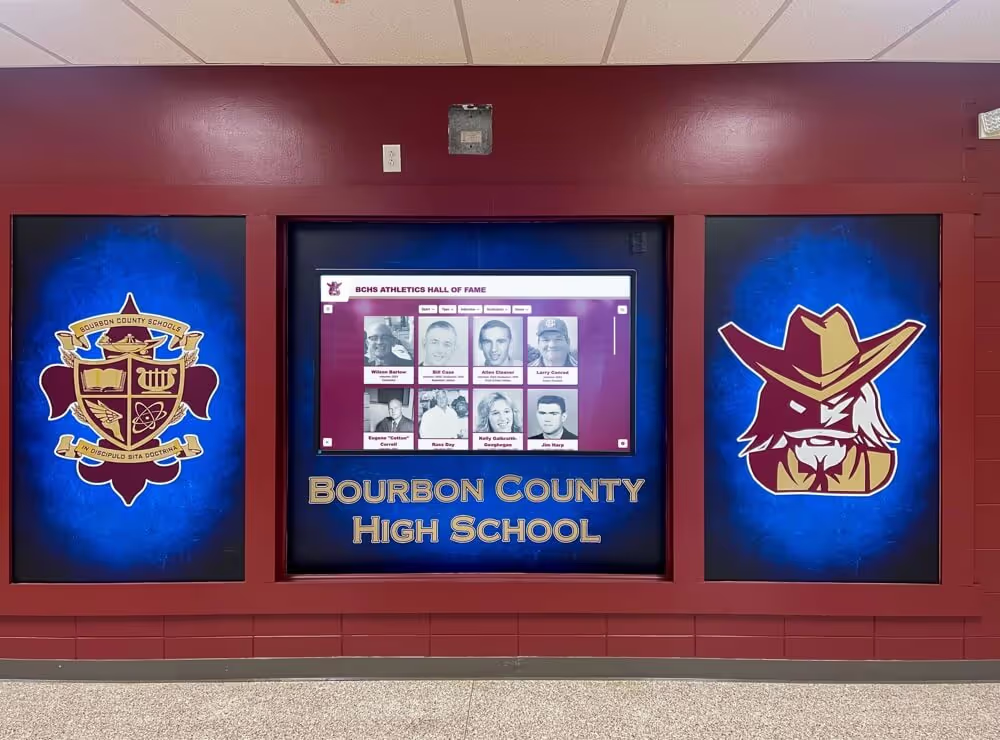
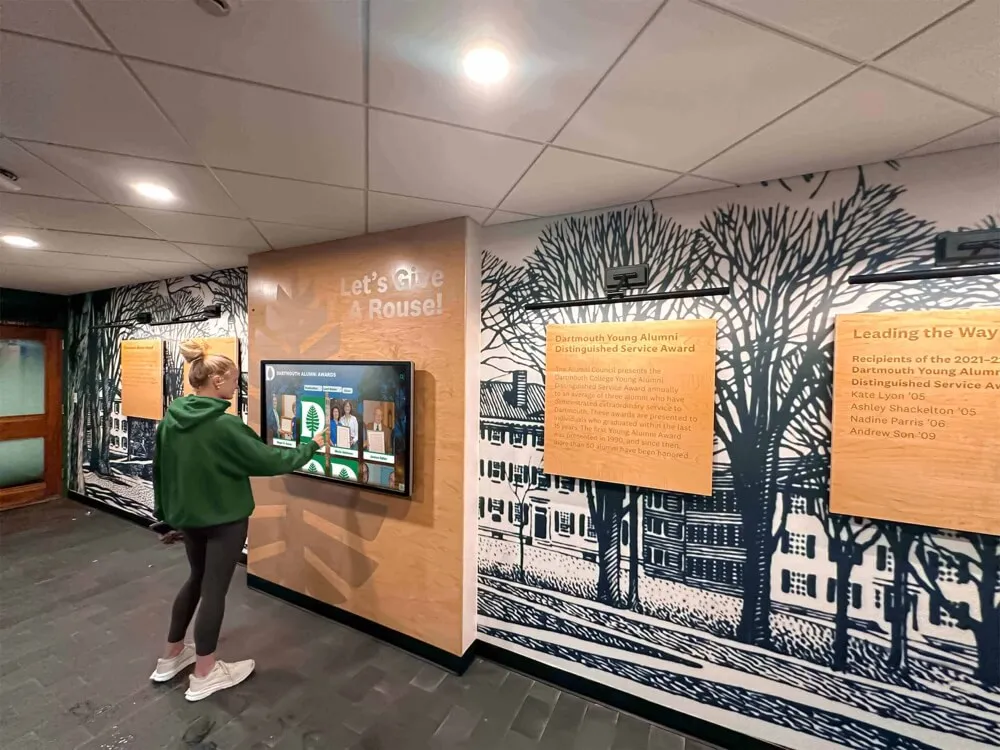
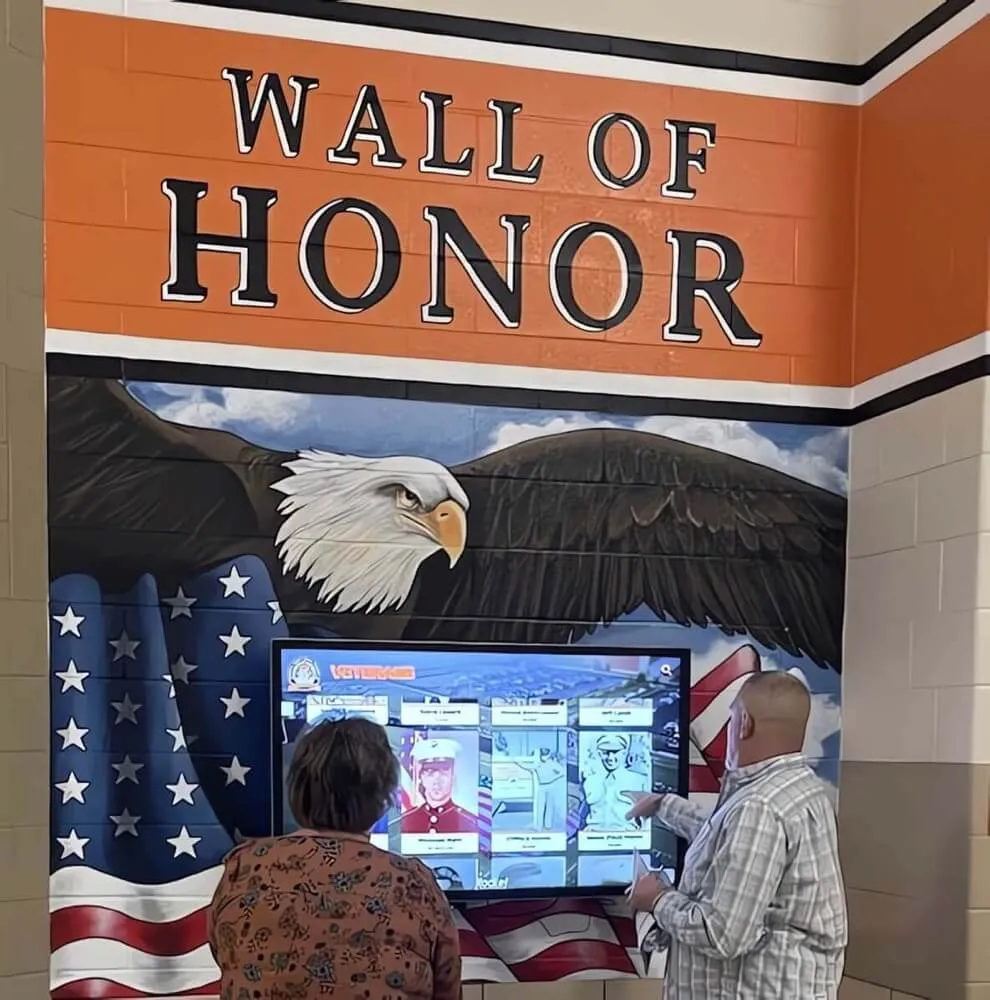
Interactive touchscreen interfaces create engaging donor recognition experiences that visitors actively explore and remember
Best Practices for Nonprofit Donor Recognition Implementation
Successful recognition requires systematic planning addressing content development, installation logistics, ongoing maintenance, and strategic communication ensuring donors understand and appreciate acknowledgment programs.
Content Development and Donor Profile Creation
Comprehensive content preparation before display installation ensures high-quality recognition from initial launch while preventing incomplete presentations that may disappoint supporters or create negative impressions about recognition program quality.
Content Development Process
- Complete donor database audit verifying name accuracy and current information
- Giving level verification ensuring proper tier assignment
- Donor photograph collection through events, direct requests, or submissions
- Personal statement solicitation inviting supporters to share motivations
- Impact story development connecting contributions to specific outcomes
- Memorial designation confirmation for tribute gifts
- Privacy preference verification respecting supporter choices
- Approval workflows confirming donor content before publication
Many organizations underestimate content development timelines, discovering donor photograph collection and statement gathering require persistent outreach over several months. Starting content preparation early—concurrent with recognition system planning—prevents installation delays while ensuring robust, meaningful content at launch. Organizations should designate specific staff responsible for content coordination, establish clear collection timelines, and communicate regularly with donors about content requests and participation opportunities.
Strategic Communication About Recognition Programs
Effective communication maximizes recognition value by ensuring donors know when and where acknowledgment appears, understand recognition tier structures and advancement opportunities, and feel genuinely appreciated through personalized outreach beyond generic announcements.
Recognition Communication Strategies
- Personalized emails when donor profiles publish with photos and direct links
- Physical location information helping donors visit and share recognition
- Recognition tier structure communication explaining advancement pathways
- Milestone celebration announcements for multi-year supporters
- Social media features spotlighting individual donors and impact stories
- Event invitations highlighting recognition unveilings and updates
- Annual recognition reports showing cumulative giving and current status
- QR code cards enabling remote profile access from any location
These communications transform one-time acknowledgment into ongoing relationship touchpoints extending stewardship value beyond physical display presence. Organizations report measurably enhanced donor satisfaction, improved retention rates, and stronger cultivation conversations when recognition communication integrates with comprehensive stewardship programs rather than existing as isolated installations without supporting relationship development.
Ongoing Content Management and Accuracy Maintenance
Recognition displays require regular maintenance ensuring continued accuracy, visual quality, and appropriate acknowledgment as donor communities grow and evolve. Organizations should establish clear update protocols, assign maintenance responsibilities, and implement quality assurance processes protecting recognition program credibility.
Maintenance Best Practices
- Quarterly or annual update cycles adding new donors
- Immediate corrections for any identified errors
- Regular accuracy audits verifying current information
- Physical cleaning and display maintenance for traditional installations
- Software updates and technical maintenance for digital systems
- Content refresh cycles preventing stale or outdated presentations
- Donor communication about update timing and processes
- Documentation of changes maintaining institutional knowledge
Organizations should assign recognition maintenance to specific staff members with defined responsibilities, backup coverage during absences, and documented procedures guiding routine updates and error corrections. This systematic approach ensures recognition remains current, accurate, and professionally presented—critical factors affecting donor satisfaction and recognition program effectiveness over extended periods.
Frequently Asked Questions About Nonprofit Donor Recognition Displays
How do donor recognition displays inspire continued giving?
Donor recognition displays inspire continued giving by validating philanthropic decisions, creating sense of community among supporters, providing tangible acknowledgment that reinforces giving satisfaction, and demonstrating organizational appreciation beyond transactional thank-you communications. Recognition addresses fundamental human needs for acknowledgment and belonging while establishing social proof that motivates both continued support from existing donors and new gifts from prospective supporters observing community investment in organizational missions. Prominent recognition creates visible returns on philanthropic investment, reminding donors during facility visits of existing relationships and prior generosity while strengthening emotional connections to missions and communities they support. Organizations implementing strategic recognition programs consistently report 10-25% higher donor retention rates, 15-40% greater giving progression, and measurably improved donor satisfaction compared to minimal acknowledgment approaches, demonstrating that recognition represents strategic fundraising investment rather than purely ceremonial expense.
What type of donor recognition display works best for nonprofits?
The most effective donor recognition display type depends on organizational context including donor demographics, budget constraints, facility characteristics, growth projections, and strategic priorities. Traditional plaque-based recognition offers perceived permanence and prestige particularly valued by older donors, requires no technology maintenance, and provides familiar formats supporters immediately understand. Digital interactive displays provide unlimited donor capacity, easy content updates, rich multimedia storytelling, accessibility compliance, and favorable long-term economics for organizations experiencing donor base growth. Many nonprofits implement hybrid approaches combining traditional architectural elements with digital capabilities, honoring established donor preferences while incorporating modern engagement features and unlimited growth capacity. Organizations should evaluate recognition options based on total cost of ownership over 10-15 year periods, projected donor growth, content management capabilities, facility characteristics, and supporter preferences gathered through surveys or focus groups. The best recognition approach authentically reflects organizational culture, serves diverse donor preferences, operates sustainably within available resources, and supports strategic fundraising goals through effective stewardship that inspires continued giving.
How much should nonprofits budget for donor recognition displays?
Nonprofit donor recognition display budgets vary dramatically based on approach, scale, and implementation complexity. Traditional individual plaque systems typically cost $200-$500 per donor plaque plus architectural elements, mounting panels, and installation labor, totaling $10,000-$40,000 for initial installations recognizing 50-150 donors with ongoing per-donor costs for each new supporter. Digital touchscreen donor displays range from $8,000-$35,000 for initial installation including hardware, software licensing, content development, and professional installation, plus annual software licensing of $1,500-$5,000 and periodic content updates. Organizations should calculate total cost of ownership over 10-15 year periods accounting for anticipated donor growth—digital systems often prove more cost-effective long-term by eliminating per-donor plaque expenses and accommodating unlimited growth without additional hardware. Budget-conscious nonprofits can implement effective recognition through phased approaches beginning modestly and expanding as resources allow, repurposing existing technology infrastructure, or leveraging partnerships offsetting costs. Organizations should allocate 1-3% of total fundraising revenue toward recognition investment, viewing acknowledgment as strategic stewardship supporting retention and giving progression rather than discretionary expense.
How often should nonprofit donor recognition displays be updated?
Nonprofit donor recognition update frequency depends on giving patterns, donor expectations, recognition approach, and practical budget considerations. Most organizations update recognition annually following fiscal year conclusion or after major fundraising campaigns when donor rosters expand significantly. Digital donor displays enable more frequent updates—quarterly or monthly—through cloud-based content management eliminating production and installation delays associated with traditional plaques. Organizations implementing real-time recognition through database integration provide immediate acknowledgment as gifts process, delivering enhanced stewardship particularly valued by major donors expecting prompt recognition. Regardless of update frequency, nonprofits should establish clear communication about recognition timing, ensuring donors understand when contributions will appear in public displays while managing expectations and reducing concerns about acknowledgment delays. Regular review cycles beyond donor additions also provide opportunities to verify accuracy, refresh content maintaining contemporary presentation, and celebrate milestones including multi-year giving anniversaries or cumulative threshold achievements. Organizations balancing stewardship value against administrative burden typically find quarterly updates for digital systems and annual updates for traditional installations provide optimal combination of timeliness and sustainability.
Should nonprofit donor displays include all contribution levels or only major gifts?
Comprehensive nonprofit donor recognition including diverse contribution levels demonstrates that every gift matters regardless of amount while building inclusive philanthropic culture where entire supporter community feels valued and connected to organizational mission. Organizations recognizing only major donors risk alienating annual fund supporters, modest contributors, and volunteer advocates who collectively provide substantial support even though individual gifts may be smaller than leadership donations. However, recognition design should appropriately differentiate giving levels through visual hierarchy, positioning, and profile detail ensuring major donors receive prominence proportional to extraordinary generosity without diminishing appreciation for every supporter. Digital recognition systems particularly excel at accommodating diverse giving levels through flexible display options—featuring major donors prominently while providing searchable directories where all supporters receive dignified acknowledgment within appropriate organizational contexts. Organizations should establish minimum recognition thresholds aligned with operational capacity and community norms, typically including cumulative donors above $500-$1,000 in permanent display recognition while potentially acknowledging smaller annual gifts through publication-based formats, social media features, or rotating digital content. Inclusive recognition supporting diverse giving levels strengthens overall fundraising programs by demonstrating that organizations value every supporter while creating clear advancement pathways encouraging donors to increase giving over time.
Conclusion: Recognition as Strategic Fundraising Investment
Nonprofit donor recognition displays represent far more than ceremonial acknowledgment—they function as strategic fundraising tools that measurably improve donor retention, inspire giving progression, and create emotional connections strengthening long-term philanthropic relationships. Effective recognition addresses fundamental human needs for acknowledgment and belonging while demonstrating organizational appreciation, celebrating shared values, and creating social proof that motivates continued generosity among existing supporters and inspires new giving from prospective donors observing community investment in organizational missions.
The most successful nonprofits view recognition as integral fundraising strategy rather than optional expense, allocating appropriate resources toward displays that honor supporters meaningfully while operating sustainably within organizational capabilities. Whether implementing traditional approaches offering timeless prestige, digital solutions providing unlimited capacity and multimedia storytelling, or hybrid systems combining advantages of both, effective recognition requires strategic planning, quality content development, prominent placement, ongoing maintenance, and integrated communication ensuring donors understand and appreciate acknowledgment programs.
Create Recognition That Inspires Lasting Donor Relationships
Discover how Rocket Alumni Solutions helps nonprofits implement engaging donor recognition displays that honor supporters, demonstrate impact, and inspire continued giving through interactive technology, unlimited capacity, and cloud-based content management designed specifically for nonprofit stewardship needs.
Explore Donor Recognition SolutionsOrganizations investing in comprehensive donor recognition create environments where generosity receives celebration worthy of supporter commitment, impact becomes visible throughout facilities, and community members feel inspired to join philanthropic movements supporting missions they value. The recognition strategies explored in this guide provide frameworks for building acknowledgment systems that strengthen fundraising programs through effective stewardship while honoring the extraordinary individuals whose generosity advances nonprofit missions and strengthens communities.
Begin by assessing current recognition approaches, identifying limitations and opportunities, then exploring solutions that align with organizational culture, donor preferences, budget realities, and strategic fundraising goals. Successful recognition implementation requires collaborative planning engaging development teams, facility managers, technology staff, and donor representatives ensuring selected approaches address stewardship needs while operating sustainably within organizational capabilities. The investment in thoughtful donor recognition creates lasting infrastructure supporting fundraising success, strengthening donor relationships, and celebrating the remarkable supporters who make nonprofit missions possible for generations to come.