



A memorial gift donor wall lists gifts made in memory or honor of a specific person — an alumnus, faculty member, coach, or community member — alongside the name of the donor who gave the gift. The standard convention is to display the tribute subject’s name as the primary label (“In Memory of James R. Kowalski ‘72”) with the giving donor’s name on a secondary line, both appearing at the recognition tier that corresponds to the gift amount received.
Memorial gift donor recognition demands its own set of conventions because the gift carries emotional weight that typical philanthropic transactions do not. The person being honored is often deceased. Their family may have strong feelings about how the name appears in print. The donor may be someone with no prior relationship to your institution — a sibling, a colleague, a former student — whose only connection is the grief or gratitude they converted into something lasting. Getting the recognition right is both a stewardship obligation and a genuine act of care.
This guide explains how to list memorial gifts on a donor wall in a way that honors both the tribute subject and the giving donor. It covers naming conventions, family permissions, tribute text wording, campaign reporting, and how modern digital donor displays present sensitive memorial content with the thoughtfulness it deserves.
In memory donor recognition sits at the intersection of institutional stewardship and personal grief — which means the stakes for accuracy and sensitivity are higher than for almost any other recognition decision your development office will make. According to Giving USA’s annual report on charitable giving, gifts made in memory of a loved one are among the most emotionally motivated forms of philanthropy, with many memorial gifts arriving in the weeks immediately following a death — precisely when families are paying the closest attention to how their loved one is being acknowledged. A recognition program that handles these moments well builds lasting relationships. One that handles them carelessly can end a philanthropic relationship permanently.

A well-designed memorial gift donor wall honors both the giving donor and the tribute subject — requiring clear naming conventions, family coordination, and recognition language that reflects the significance of the gift
What Makes Memorial Gifts Different on a Donor Wall
A memorial gift donor wall is different from a standard giving recognition display in several fundamental ways that affect policy decisions.
Two parties need acknowledgment. The donor made the gift, but the tribute subject is the reason for it. Most donor recognition involves one party; memorial gifts involve two — each with distinct needs and expectations.
The tribute subject cannot consent. When a living donor’s name goes on a plaque, development staff can confirm with them exactly how they’d like it to appear. A person being memorialized cannot weigh in — making family coordination especially important for every decision, from legal name spelling to the choice of tribute language.
The emotional stakes are higher. A misspelled name or incorrect class year on a tribute plaque is not a minor clerical error; it is a source of genuine pain for the family. This applies with equal force to digital displays, where a tribute entry may be visible to hundreds of visitors daily and remains in the record indefinitely.
Gifts may arrive from people with no prior relationship to the institution. A colleague of a retired English teacher may give to a school they have never visited, prompted entirely by an obituary’s suggestion. These donors may still deserve recognition — and treating them graciously at that first contact frequently converts a one-time tribute gift into a durable philanthropic relationship.
Gifts often arrive in clusters. When a beloved coach, faculty member, or alumnus dies, many donors may give in their memory within a short window. How you group, aggregate, and present those gifts on a tribute donor wall requires a policy written down before the campaign begins — not improvised after the gifts arrive.
In Memory Of vs. In Honor Of: The Core Distinction
A well-designed memorial gift donor wall clearly distinguishes between two related but different tribute types that require different handling:
In Memory Of gifts are made following a death. The tribute subject is deceased. These gifts are typically initiated by family members, colleagues, classmates, or community members responding to an obituary or death notice that named the institution as a suggested recipient.
In Honor Of gifts celebrate a living person — a retirement, a milestone anniversary, a birthday, or a significant achievement. The honoree is alive and may be present at the recognition event where the tribute is first revealed.
Both types belong on a tribute donor wall, but they require meaningfully different workflows:
| In Memory Of | In Honor Of | |
|---|---|---|
| Tribute subject status | Deceased | Living |
| Family/honoree notification | Required before public display | Courtesy notification; honoree approval essential |
| Name accuracy source | Obituary, legal records, family | Contact the honoree directly |
| Appropriate wording | “In Memory of,” “In Loving Memory of” | “In Honor of,” “Celebrating [Name]” |
| Emotional sensitivity | High — grief timeline is real | Moderate — honoree may want adjustments |
| Update sensitivity | High | Low to moderate |
This distinction also matters for campaign reporting. Development offices tracking tribute gifts in their fundraising CRM should use separate gift type codes for In Memory Of and In Honor Of gifts so that stewardship workflows — notification letters, tribute gift receipts, recognition update timing — can be applied correctly to each category.
Naming Conventions for a Memorial Gift Donor Wall
The clearest convention for a memorial gift donor wall places the tribute subject first and the giving donor second. This makes intuitive sense: visitors to the wall want to understand why a gift was made before they learn who made it.
Standard Formats for In Memory Of Gifts
Two-line standard format:
In Memory of Patricia Anne Hollister, Class of 1968
Gift of the Hollister Family
With giving level tier:
[Founder's Circle]
In Memory of Coach Robert "Bobby" DeLuca
Established by the DeLuca Family and the 1991 State Championship Team
Single-donor tribute with personal context:
This display is dedicated in memory of Marcus T. Ellison '88
by his wife, Linda Ellison
Standard Formats for In Honor Of Gifts
Faculty or staff recognition:
In Honor of Dr. Frances Wu, Director of Athletics 1995–2023
A gift from the faculty and staff of Westbrook College
Alumni milestone recognition:
In Honor of the Class of 1974 — Celebrating 50 Years
Established by the members of the Class of 1974 Reunion Committee
Handling Multiple Donors for One Tribute
When a single person is memorialized by many donors — common when a faculty member, coach, or beloved alumnus passes away — the institution may receive dozens of individual gifts for the same memorial campaign. Recognition options include:
- Group under one collective tribute entry with the aggregate total, listing “Gifts from 47 supporters in memory of Coach Maria Santos.” This is clean, respectful, and avoids creating dozens of separate wall entries for a single memorial.
- List significant individual gifts separately and aggregate smaller gifts under a collective line — appropriate for campaigns where major donors or the family itself played a primary role in soliciting gifts from the broader community.
Either approach works; what matters is that the policy is written before a campaign begins, communicated to the family during the solicitation phase, and applied consistently. Schools that have built academic recognition programs across multiple constituencies — alumni, faculty, donors, student achievers — often find that general recognition policy frameworks adapt naturally to the tribute gift context.
Getting Family Permissions Right
For In Memory Of gifts, family coordination is a stewardship obligation, not a courtesy. Before any tribute text appears publicly on a physical or digital donor wall, development staff should work through five essential steps:
Confirm the legal name. Given names, middle names, and suffixes should match what the family considers the person’s proper name — which may differ from an alumni database record, a payroll file, or how the person signed correspondence. Ask directly. Never assume.
Confirm birth and graduation years. Class years carry particular institutional meaning. A wrong class year on a tribute plaque is among the most common — and most distressing — errors in memorial recognition.
Confirm the preferred tribute language. Some families want “Beloved Coach and Mentor.” Others prefer nothing beyond the name and years. Get this in writing, even via email confirmation.
Notify before the display goes live. The family should see the final tribute text before it appears publicly. A brief message — “Here is how we plan to recognize [Name]. Please let us know by [date] if you’d like any changes” — takes minutes to write and prevents corrections after the wall opens to the public.
Establish a single named family contact. When a gift comes from multiple family members or a combination of family and community donors, identify one person authorized to approve the tribute text. Multiple voices can produce conflicting feedback; development offices need a single decision-maker per tribute entry.
For In Honor Of gifts honoring a living person, the honoree themselves should approve any tribute text before public display. Surprises at the scale of a permanently visible recognition entry are rarely welcome.
Tribute Wording Examples for a Tribute Donor Wall
The best tribute donor wall text is specific, brief, and personal. Generic phrases like “In loving memory” work as openers, but the entries that donors and families remember for decades add at least one concrete detail about who the person was.
Strong examples for a memorial gift donor wall:
- “In memory of Maria R. Suarez ‘72, whose 30 years teaching sophomore English at Jefferson High changed more lives than she ever knew.”
- “Established in honor of Coach David Park, who led the Lakeside Swim Program from 1998 to 2024 and never once missed a 5 a.m. practice.”
- “This tribute wall was made possible through gifts from the Class of 1985, in memory of their classmates lost too soon.”
- “In loving memory of Eleanor and Thomas Fitch — donors since 1981, parents of four Westbrook graduates, and fixtures at every Homecoming since the gymnasium was built.”
What to avoid in memorial tribute wording:
- Dates without context (“1943–2019” tells a visitor nothing without a name, role, or relationship)
- ALL CAPS text (reads as shouting, not solemnity)
- Religious language not confirmed with the family
- Errors that suggest the institution did not proofread (“Dedicatd in Memory of” is never acceptable at any scale)
- Generic titles that strip the person of individuality (“A Beloved Community Member” describes no one specifically)

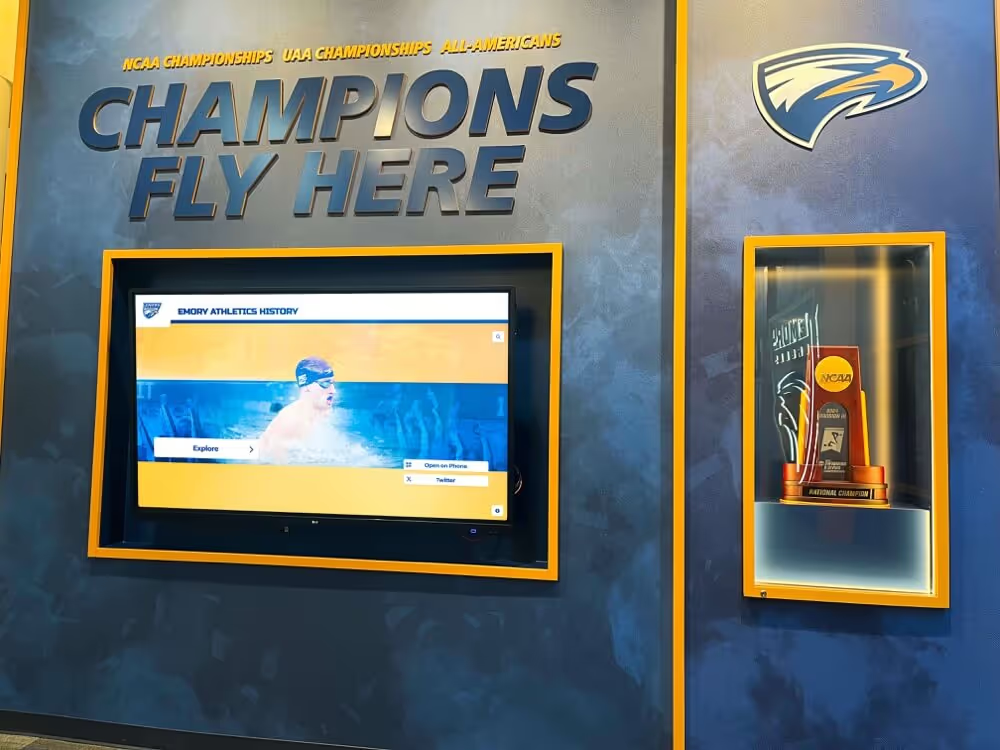
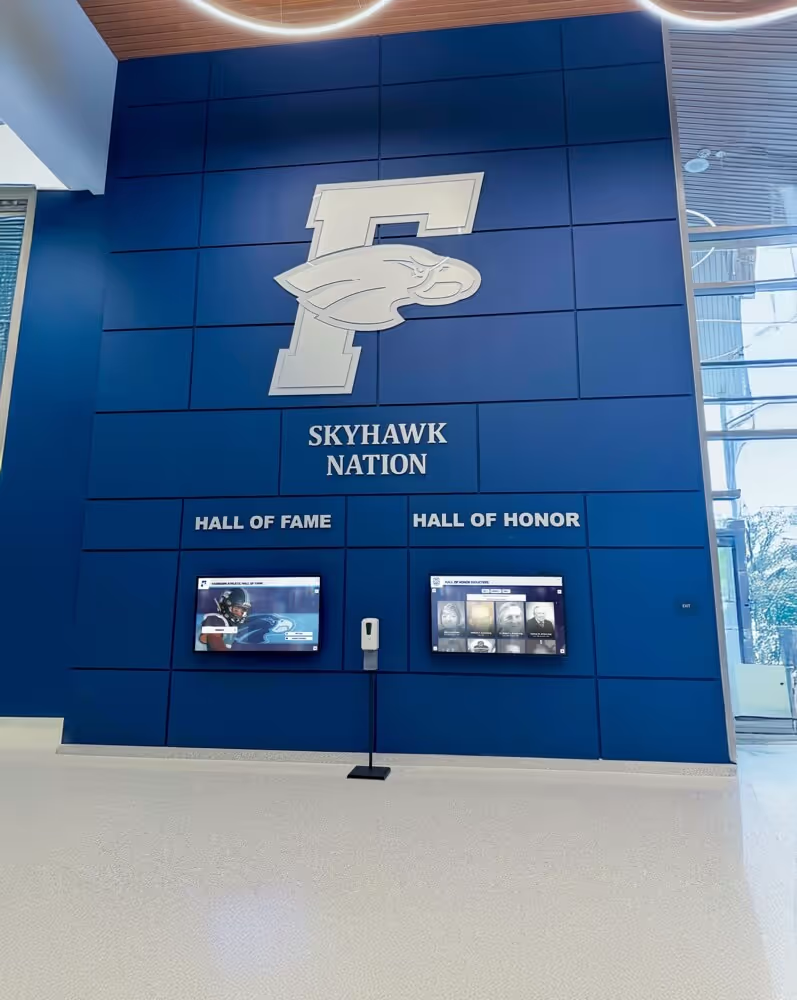
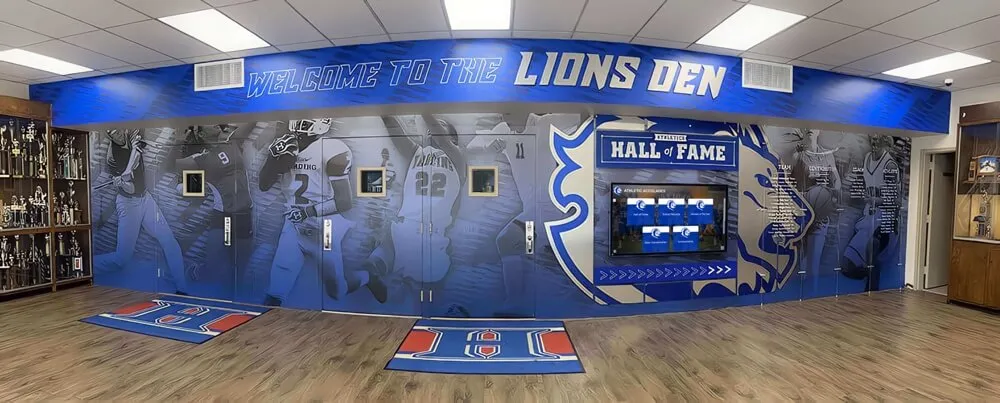
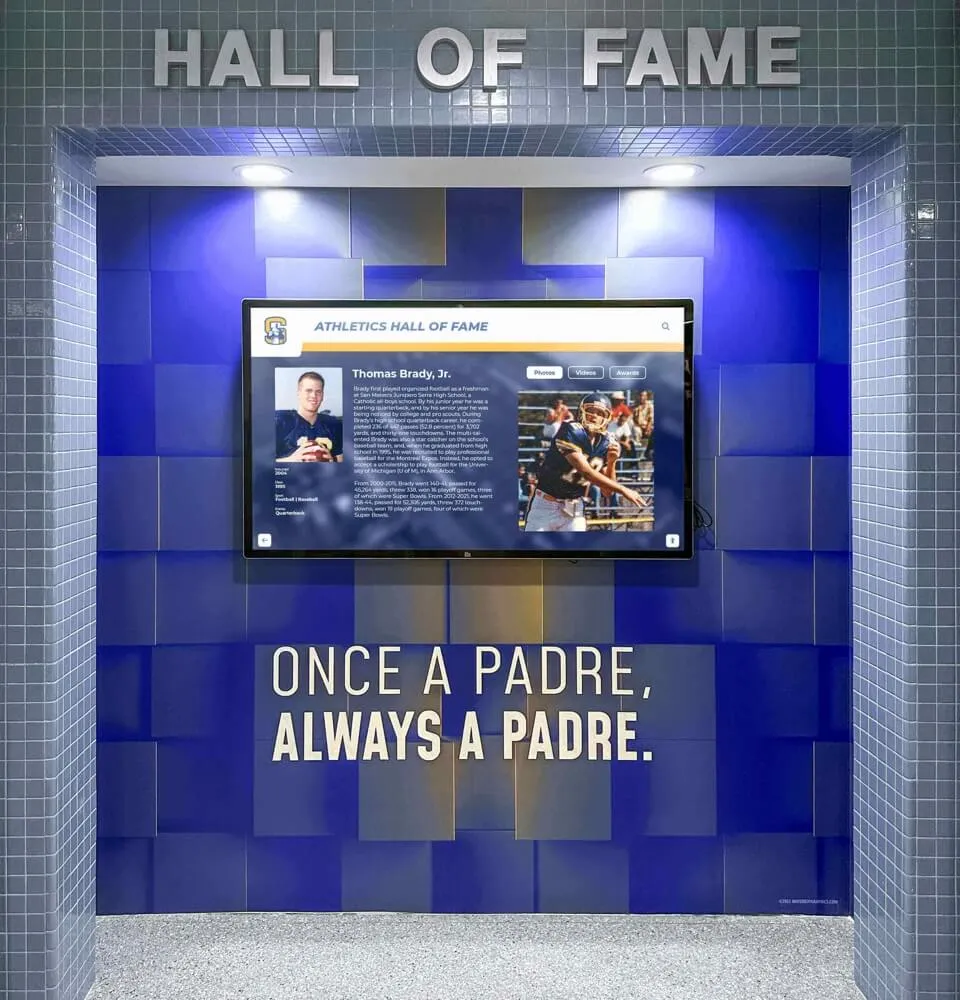
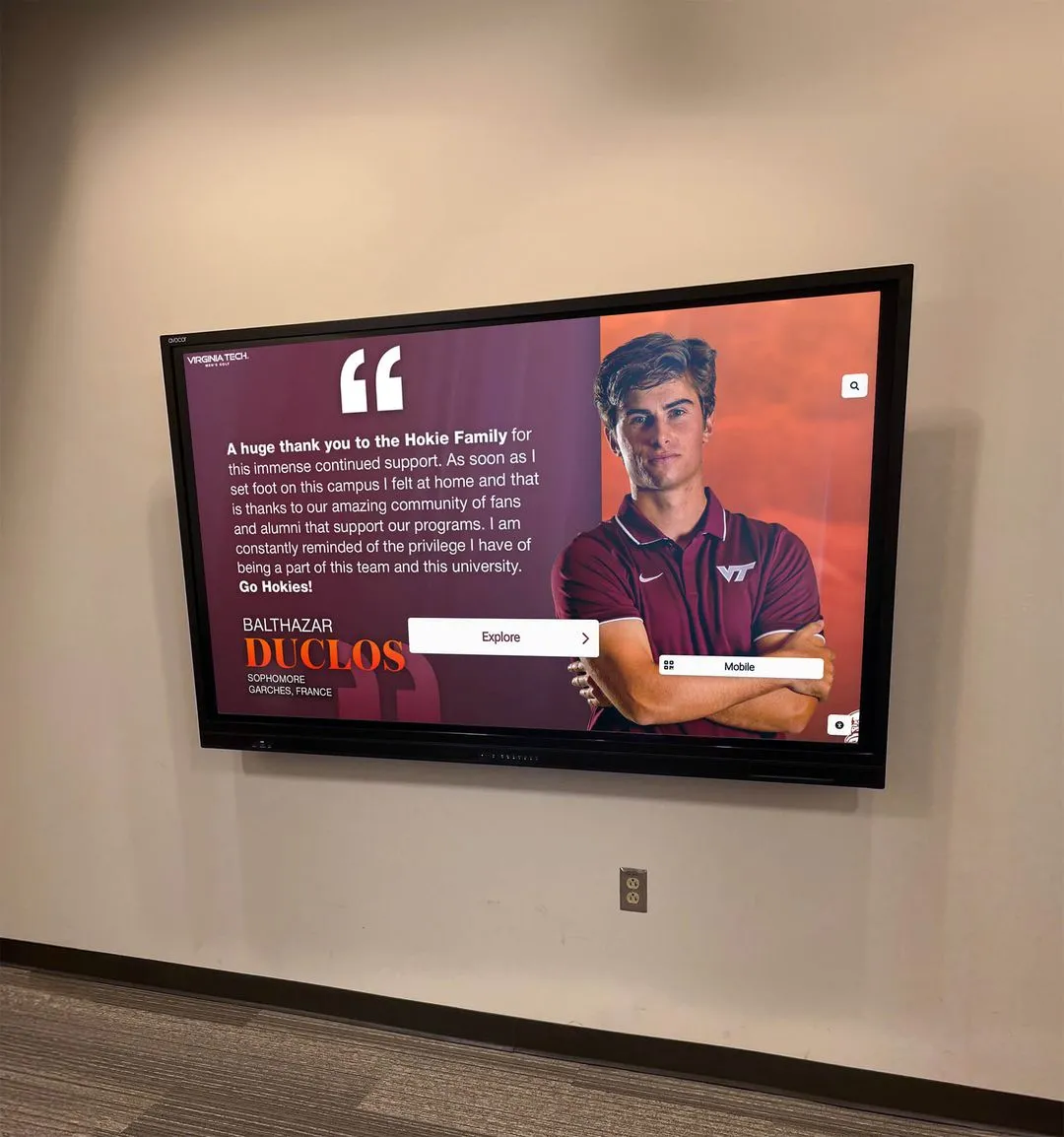
Digital donor walls can display tribute names, photographs, and extended memorial narratives — capabilities that physical plaque installations cannot match
Campaign Reporting and Tracking Memorial Gifts
Memorial gifts frequently arrive in clusters — many donations for the same tribute subject over a short period. From a development operations standpoint, this creates several reporting decisions that should be resolved in policy before the first campaign begins.
Aggregate vs. individual recognition thresholds. If 40 donors each give $100 in memory of a beloved principal, the aggregate is $4,000 — potentially a named recognition level — but each individual gift is well below any standard naming threshold. A written policy should specify how aggregated tribute gifts are handled: as a single collective entry at the appropriate tier, as individual entries for major contributors only, or as a combination of both.
Gift type coding. Use dedicated tribute gift type codes in your fundraising CRM to track In Memory Of gifts separately from In Honor Of gifts and from unrestricted individual contributions. This enables accurate tribute campaign reports, identifies families with major gift potential, and ensures the correct stewardship workflow runs for each gift category.
Reporting to families. Many families genuinely appreciate a final tribute campaign report — total raised, number of donors, and how the funds will be used. This communication closes the stewardship loop, reinforces the relationship with the family, and frequently generates additional gifts from family members who want to deepen the recognition of their loved one. Schools running structured recognition programs find that honor roll reporting practices translate directly to effective tribute campaign management — the same transparency that works for academic recognition works for memorial gift stewardship.
Endowment gifts vs. tribute gifts. Some memorial gifts establish named endowments — scholarship funds, lecture series, athletic award funds — that carry the tribute subject’s name permanently alongside the program they support. These are distinct from non-endowed tribute gifts on a general donor wall, and your recognition policy should specify which naming rights attach to each giving level so that families understand what their gifts create.
How Digital Donor Displays Handle Sensitive Memorial Context
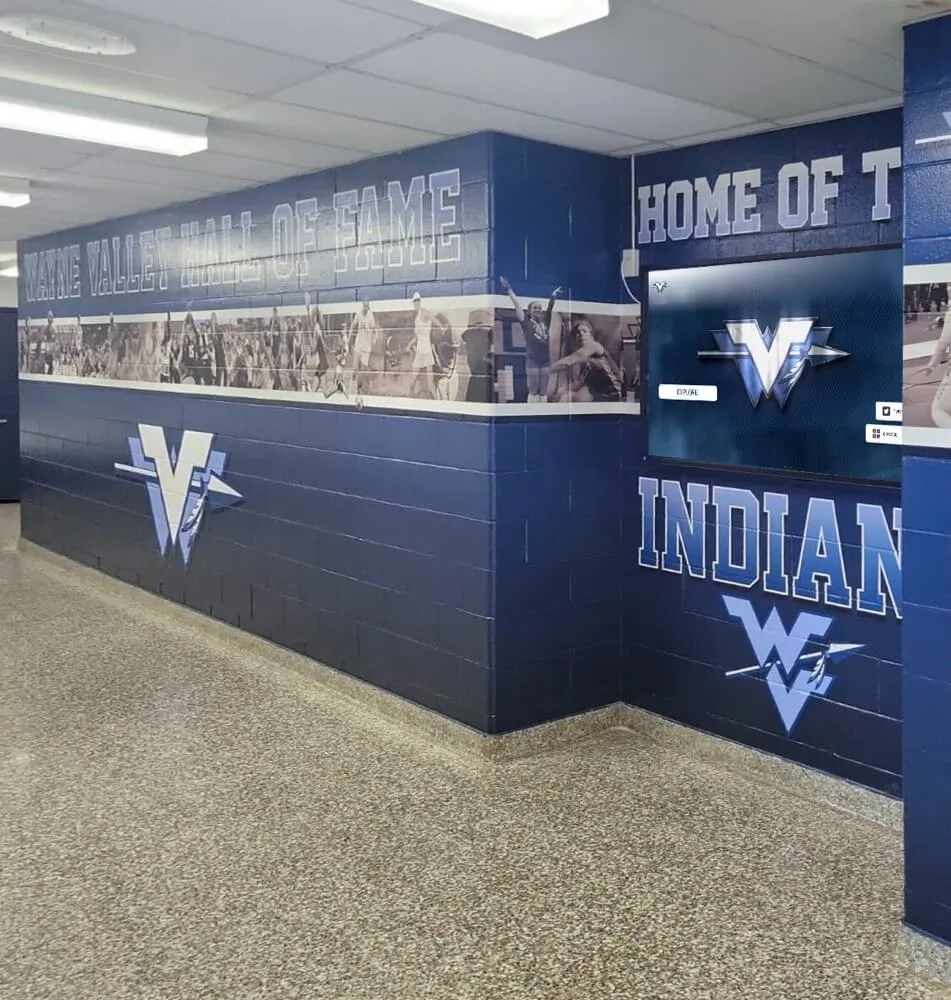
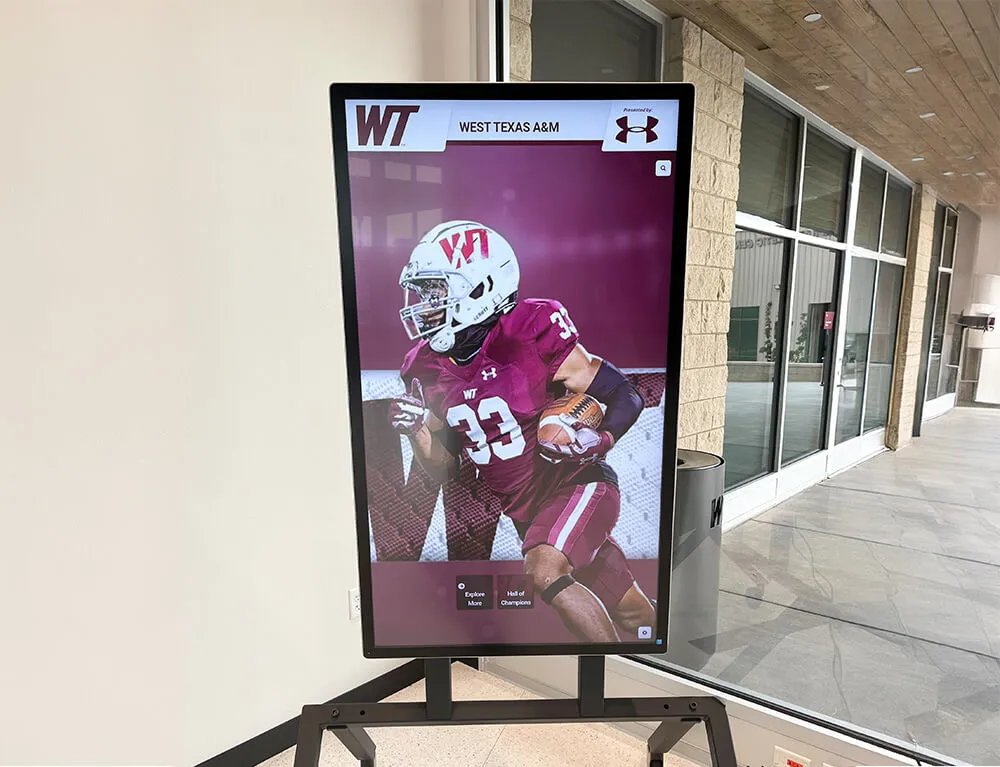
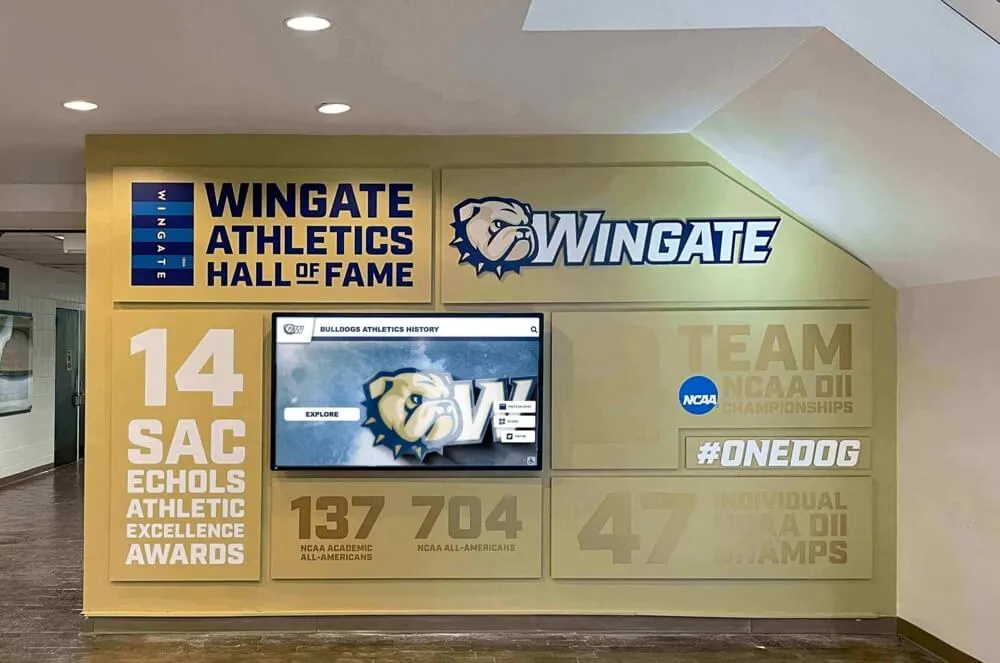
A tribute donor wall built on digital infrastructure handles sensitive memorial content in ways that static engraved walls fundamentally cannot.
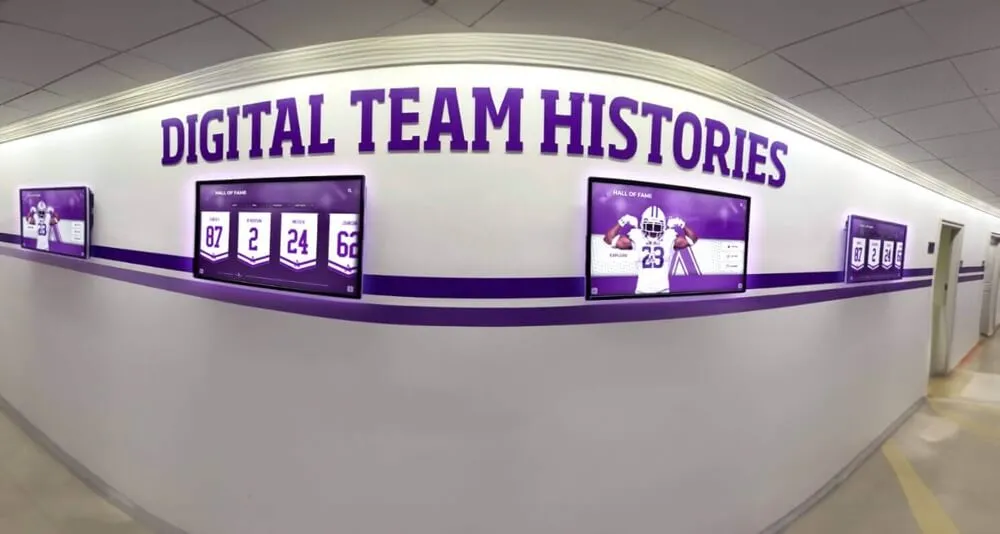
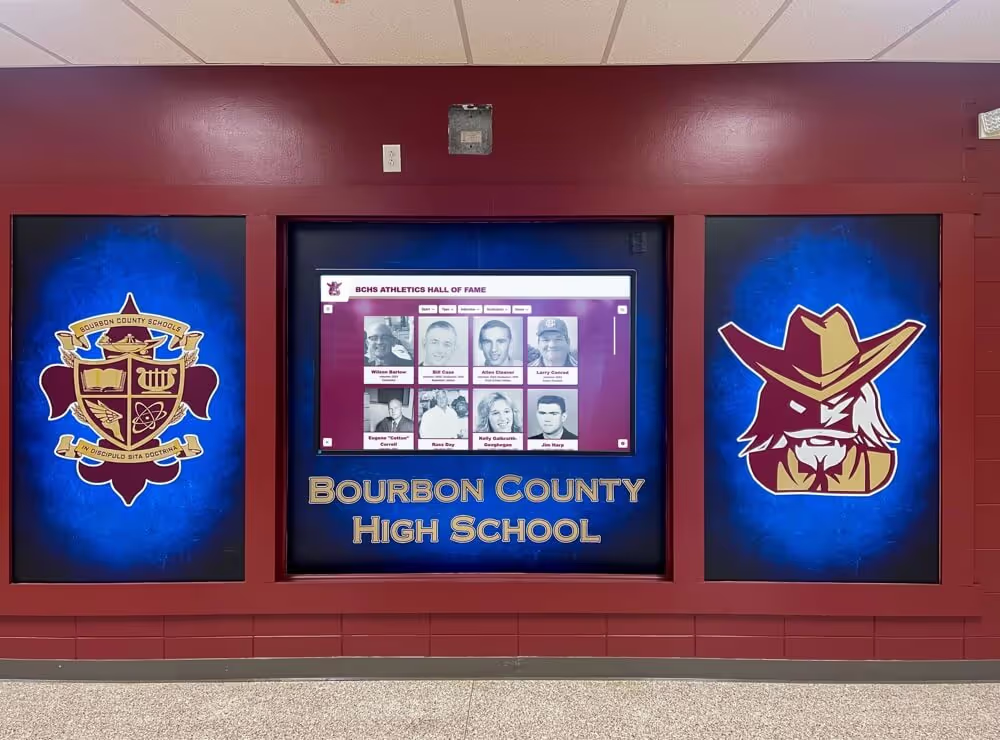
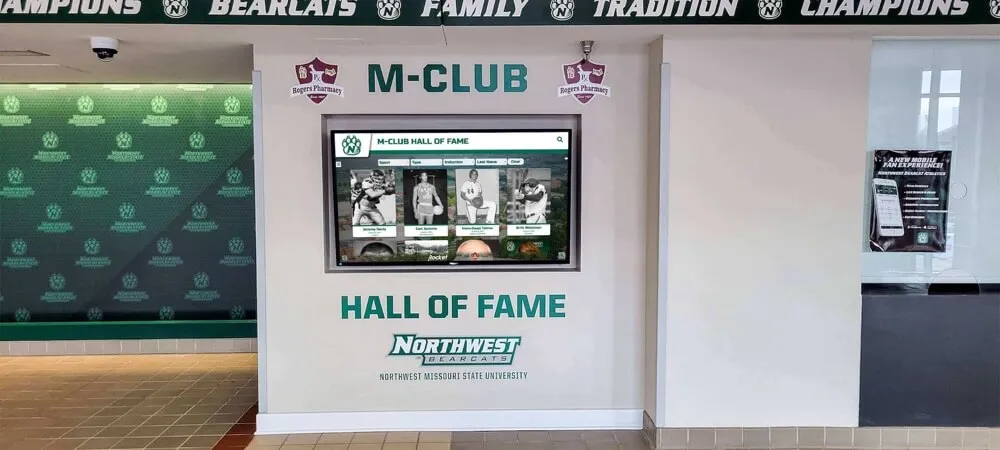
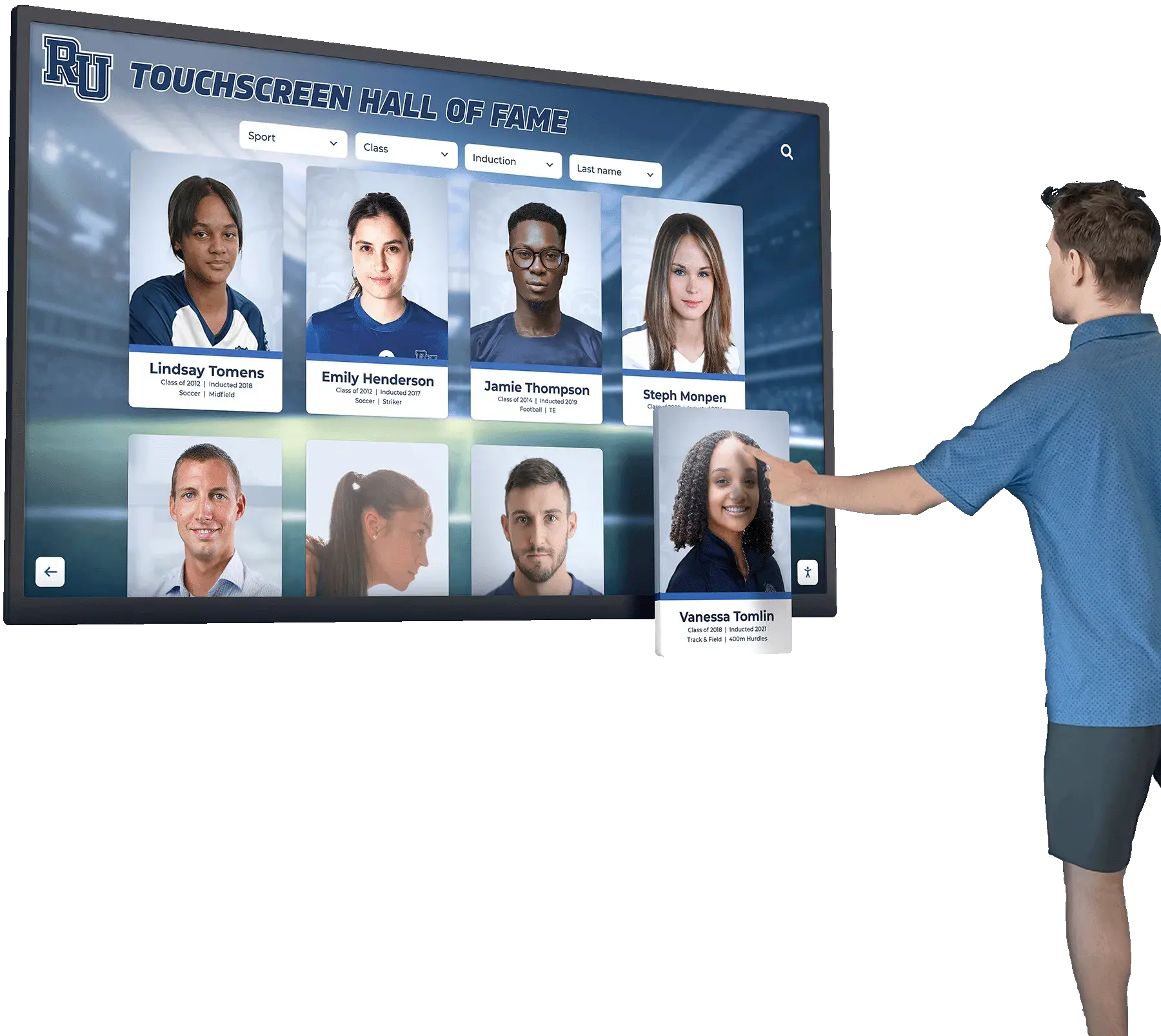
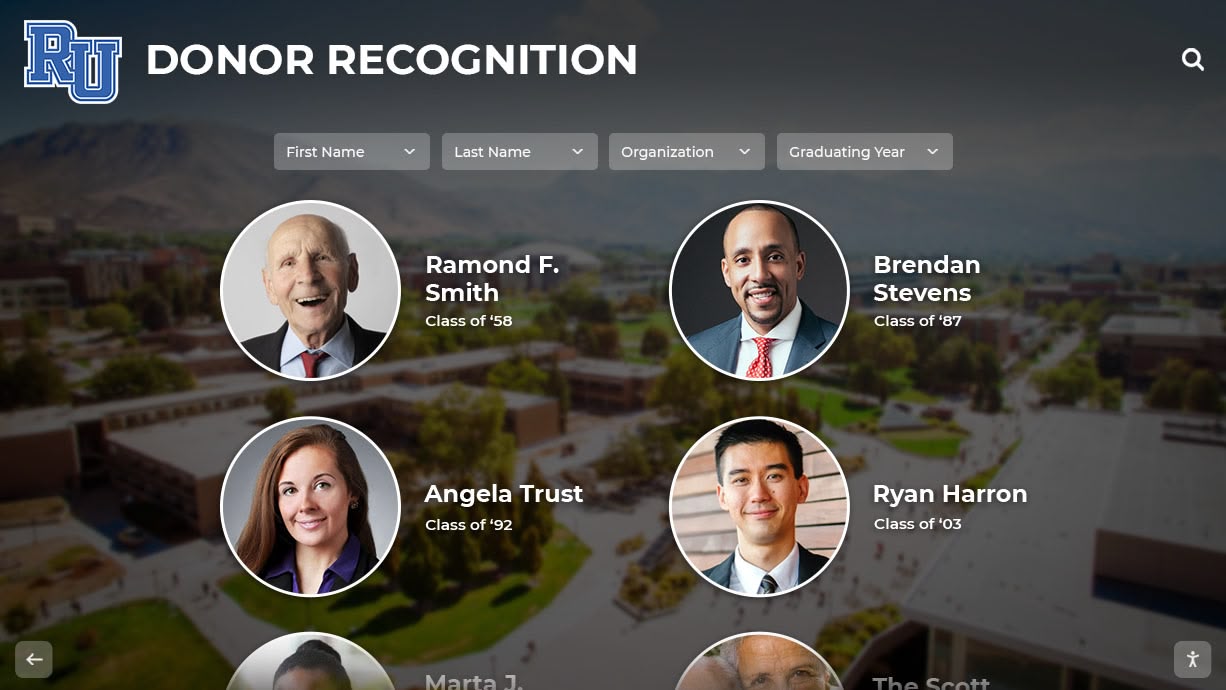
Photographs and multimedia. A memorial tribute on a digital display can include a photograph of the person being honored — a yearbook photo, a candid from a championship event, a portrait at retirement. For alumni, faculty, and coaches recognized on hall of fame displays, the photographic element transforms a name on a list into a genuine memorial moment. Families frequently provide photographs specifically for this purpose, and the ability to include them at no additional production cost is among the most meaningful capabilities a digital platform offers. The same principle that makes photographic recognition so powerful for all-state musician recognition programs applies equally to memorial tribute displays.
Extended tribute narratives. Where a plaque carries a name and perhaps a single engraved line, a digital tribute entry can carry a full narrative — the person’s history with the institution, their impact, quotes from colleagues, and a description of how the gift will be used. This extended storytelling capacity is particularly valuable for memorial gifts, where the tribute subject’s story is the reason the gift exists.
Immediate corrections. Tribute text errors on bronze plaques require ordering, fabricating, removing, and reinstalling a replacement — at significant cost and delay, often weeks. On a digital display, a correction takes five minutes and is live immediately. For families already in grief and paying close attention to how their loved one is acknowledged, this operational capability is both practically important and emotionally meaningful.
Graduated visibility. Digital displays can present memorial entries in dedicated sections — a “Tribute Gallery” or “In Memoriam” zone within the larger donor recognition interface — so visitors who seek out tribute content find it intentionally, rather than encountering it unexpectedly while browsing a giving tier list. This design choice reflects genuine care for the emotional weight of memorial content. The same graduated engagement strategy that works for alumni event programming applies directly to tribute display design — meeting audiences where they are emotionally, rather than presenting all recognition content in an undifferentiated stream.
Accessibility for sensitive care environments. For institutions that include senior living communities or assisted care facilities in their donor base, digital tribute displays designed for those environments handle memorial content within a context where grief and remembrance are daily realities. The considerations that govern digital displays in assisted living settings — accessibility, emotional tone, font size, navigation simplicity — apply equally to any tribute wall serving elderly visitors and grieving families.
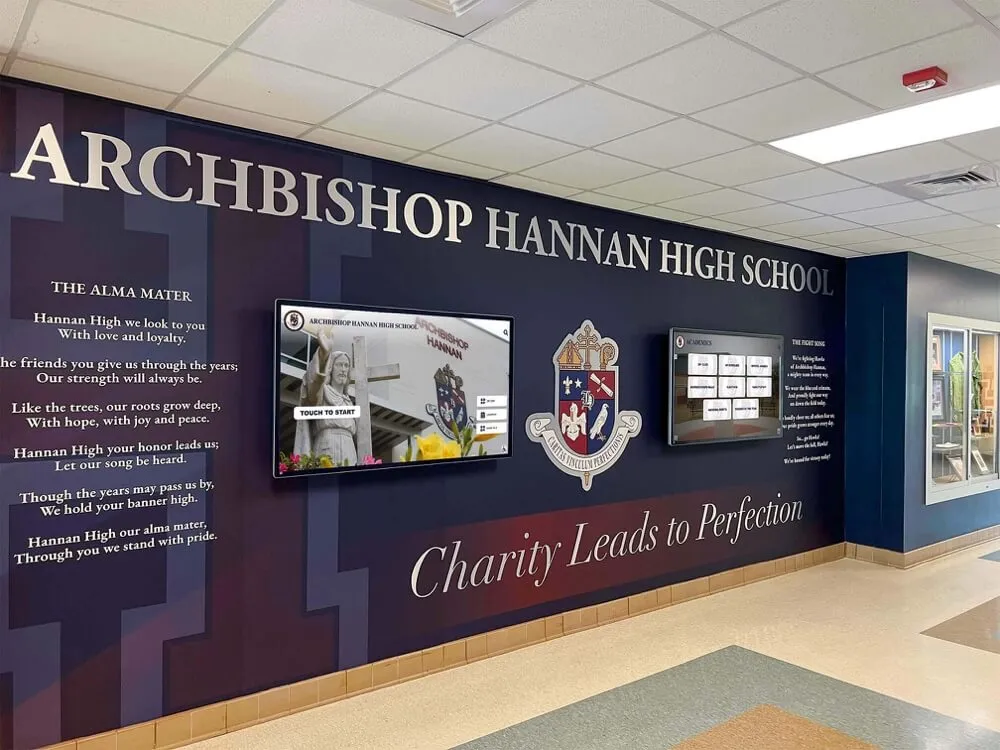
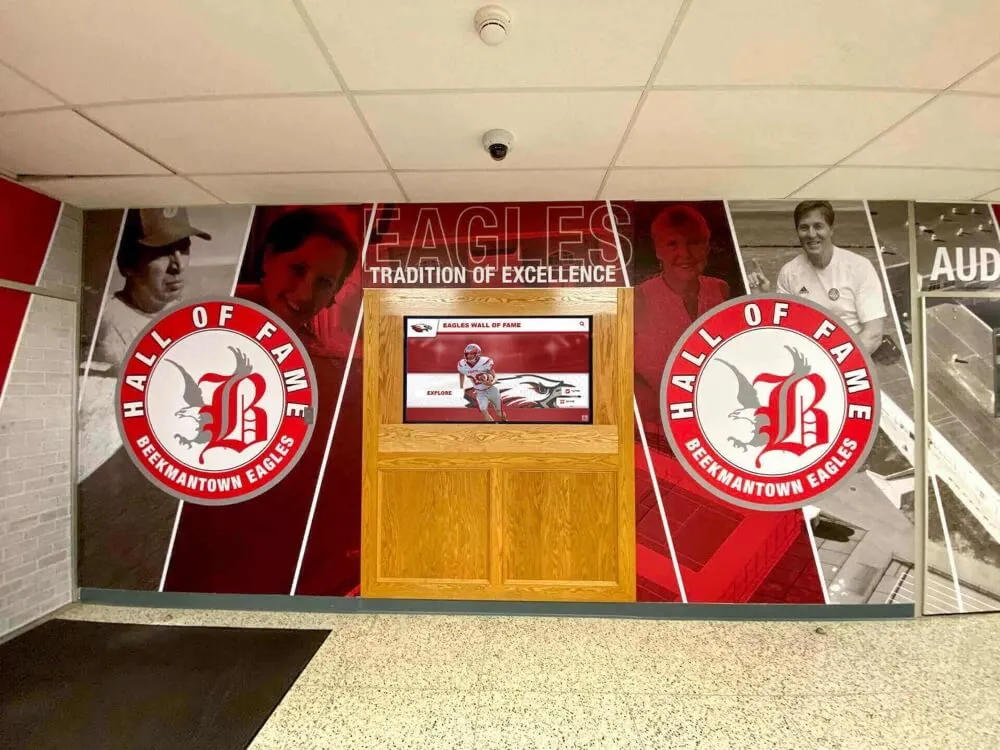
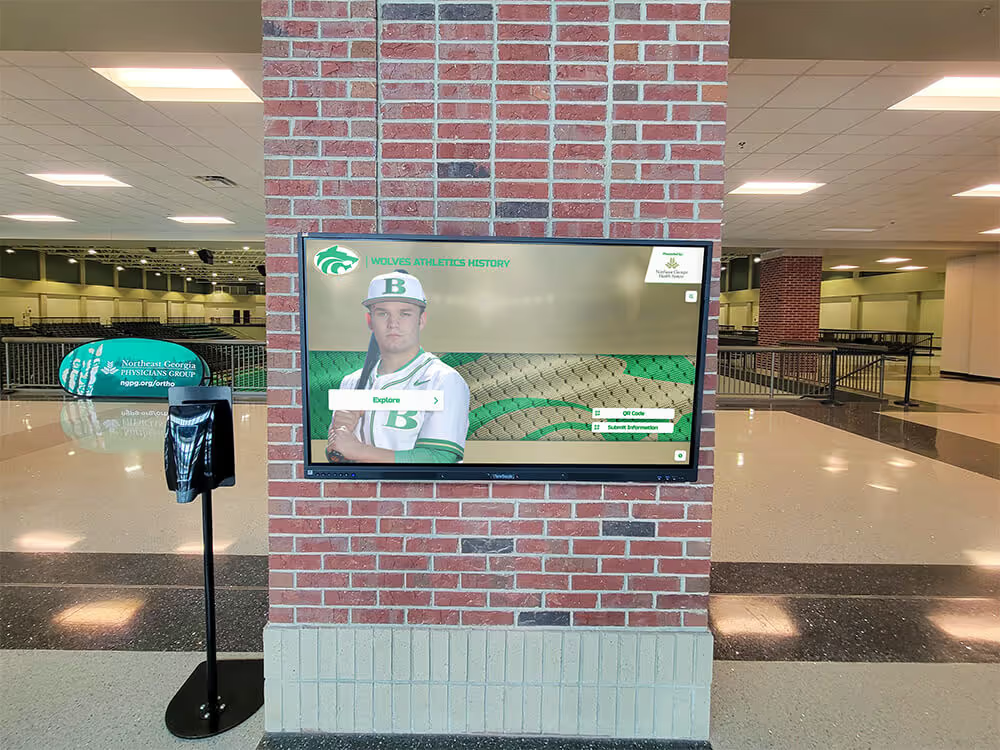
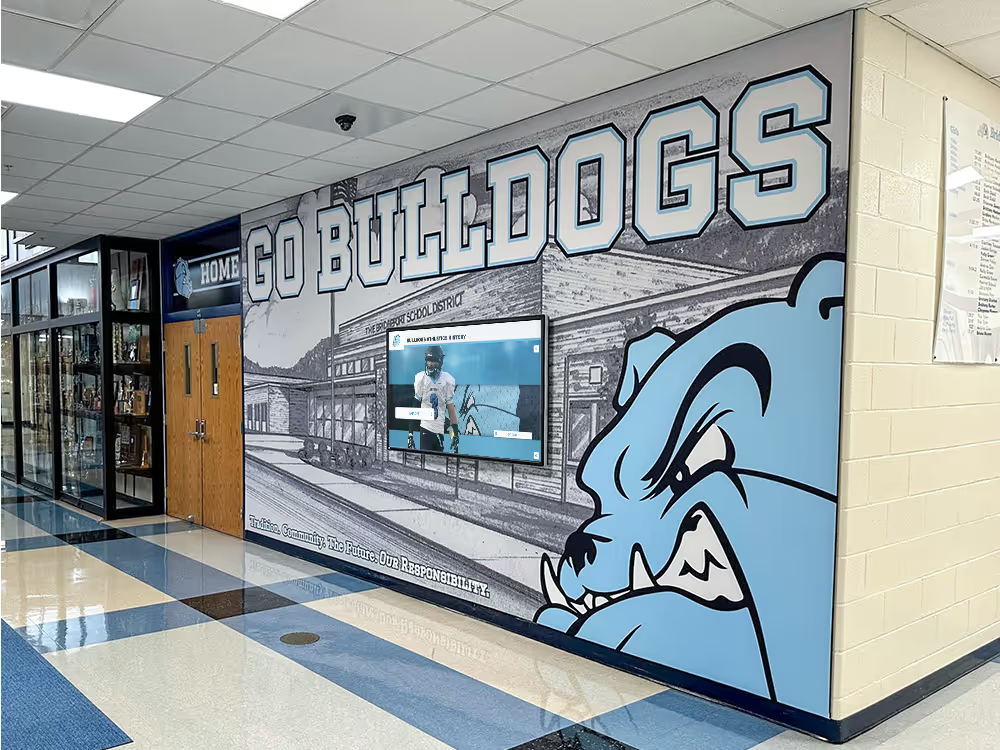
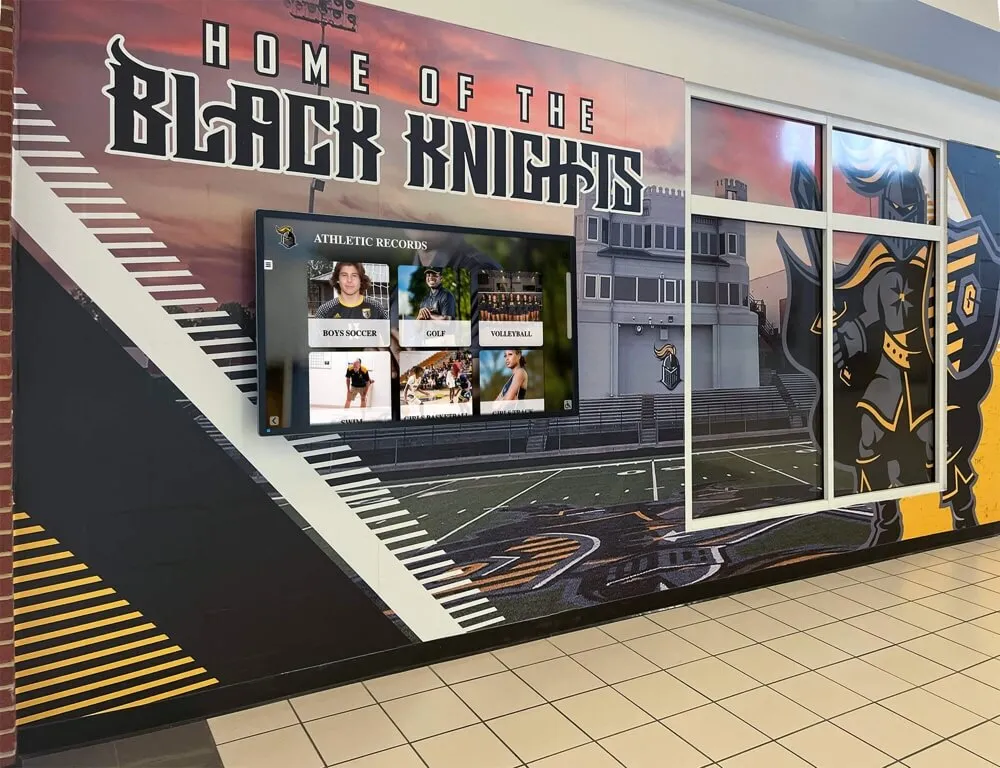
Rocket Alumni Solutions designs interactive touchscreen donor displays specifically for educational institutions, with content management workflows that allow development teams to update tribute entries, add photographs, and adjust memorial text from any web-connected device. A tribute entry can grow over time — a modest entry at a gift’s initial recognition can expand when an endowment reaches its naming threshold, or when a family provides additional photographs and personal materials years later.
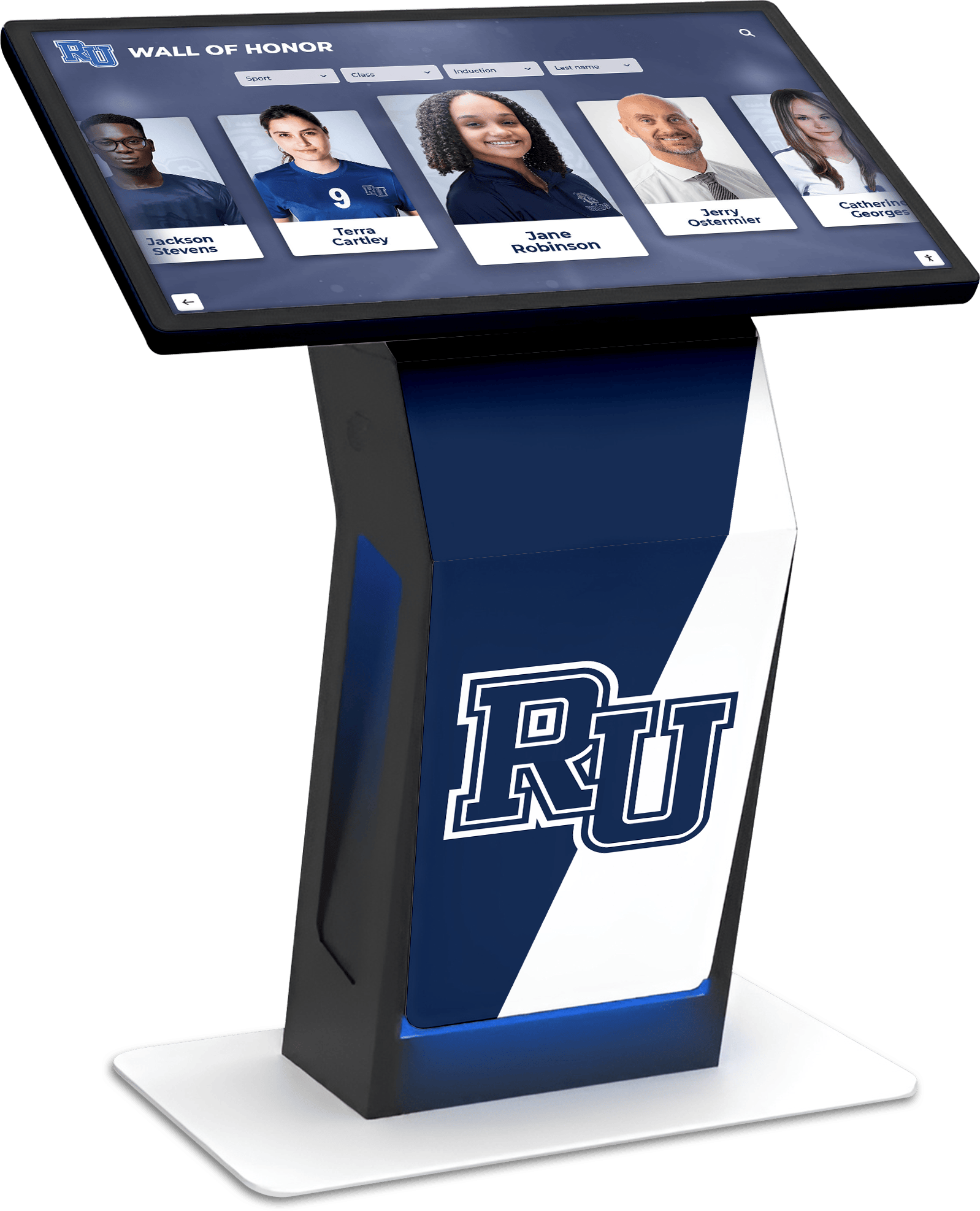
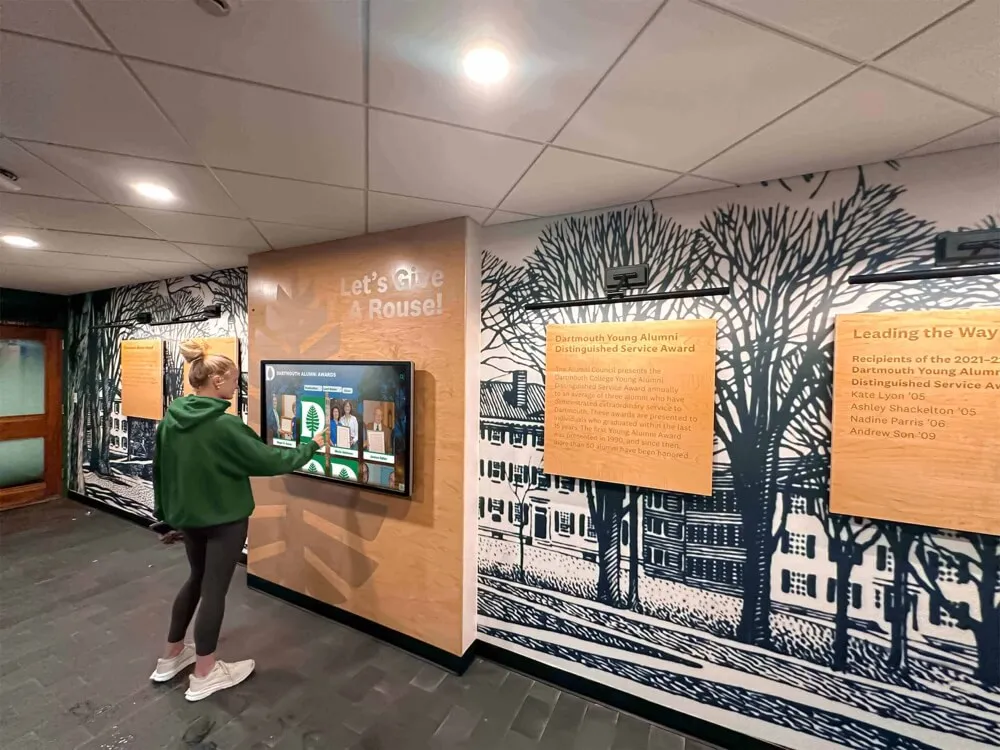
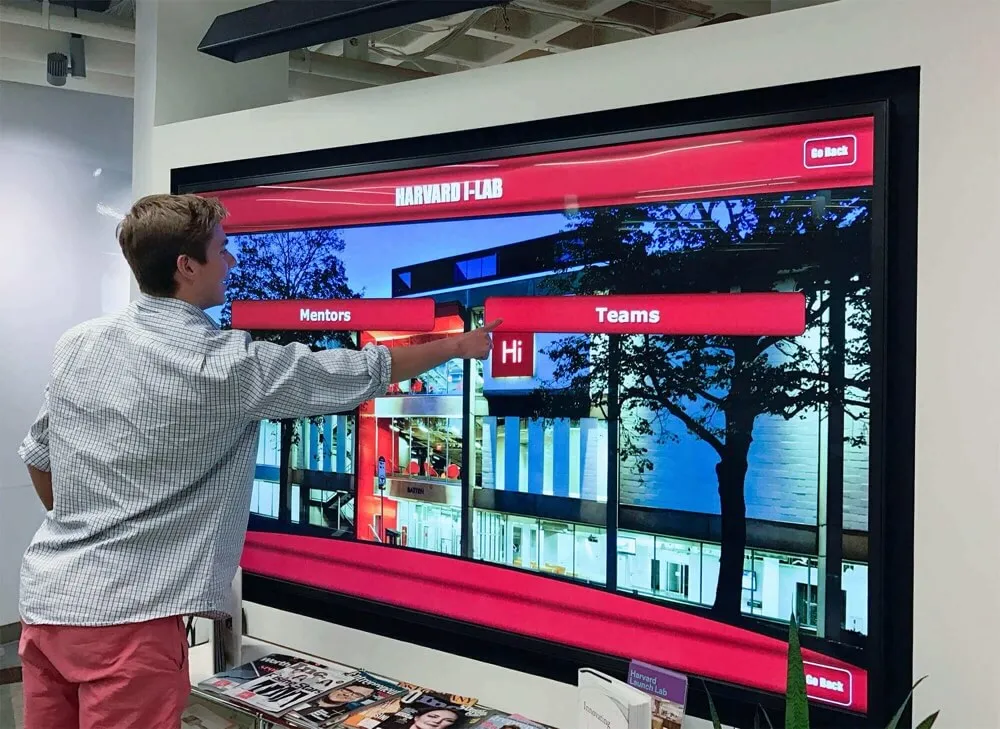
Interactive digital tribute walls allow development staff to update memorial entries instantly, add family-provided photographs, and correct tribute text within minutes — critical capabilities for a recognition program serving grieving families
Memorial Gifts and Ongoing Alumni Relationships
Memorial gifts frequently arrive from people who are not yet in your alumni database — spouses, adult children, siblings, colleagues, and community members making their first contact with the institution through a tribute gift. How development staff handle that initial stewardship experience determines whether the relationship continues.
A development office that sends a tribute gift acknowledgment letter, notifies the family when the tribute display goes live, and delivers a final campaign report detailing the total raised and how the funds will be used has created three meaningful stewardship touchpoints from a transaction that could have been handled with a generic receipt and silence. Many institutions that run formal alumni outreach programs — including class reunion programming — build memorial tribute recognition directly into their alumni engagement calendars, inviting tribute contributors to recognition events where they can experience the display they helped fund.
The tribute donor who gives $150 in memory of a college roommate and receives three thoughtful, personalized communications about the tribute and its impact is far more likely to give again — and to introduce the institution to their own network — than the donor whose contribution generated a receipt and nothing else.
Memorial Gift Donor Wall Policy Checklist
A written policy for In Memory Of and In Honor Of recognition on your donor wall should address every item below before any tribute gift is publicly acknowledged:
- Format convention (two-line tribute-then-donor, single-line, or extended narrative)
- Who owns the approval process for tribute text — development officer, family contact, or honoree
- Required lead time for family review before display goes live
- Minimum gift amount for individual tribute entries vs. collective tribute groupings
- How aggregated tribute campaign gifts are credited and at what recognition tier
- Gift type coding for memorial vs. honor vs. standard gifts in your CRM
- Photograph policy — accepted, encouraged, required file format, staff responsibility for digitization
- Error correction process and timeline commitment to families
- How to handle requests to remove or modify an existing tribute entry after display
- Endowment naming thresholds tied to specific tribute programs (scholarships, award funds, lecture series)
Schools building comprehensive recognition policies across multiple programs — from academic achievement displays to athletic halls of fame to memorial donor walls — find that these written standards reduce inconsistency across development team members and create a predictable, dignified experience for donors and families regardless of which staff member handles a particular tribute campaign.
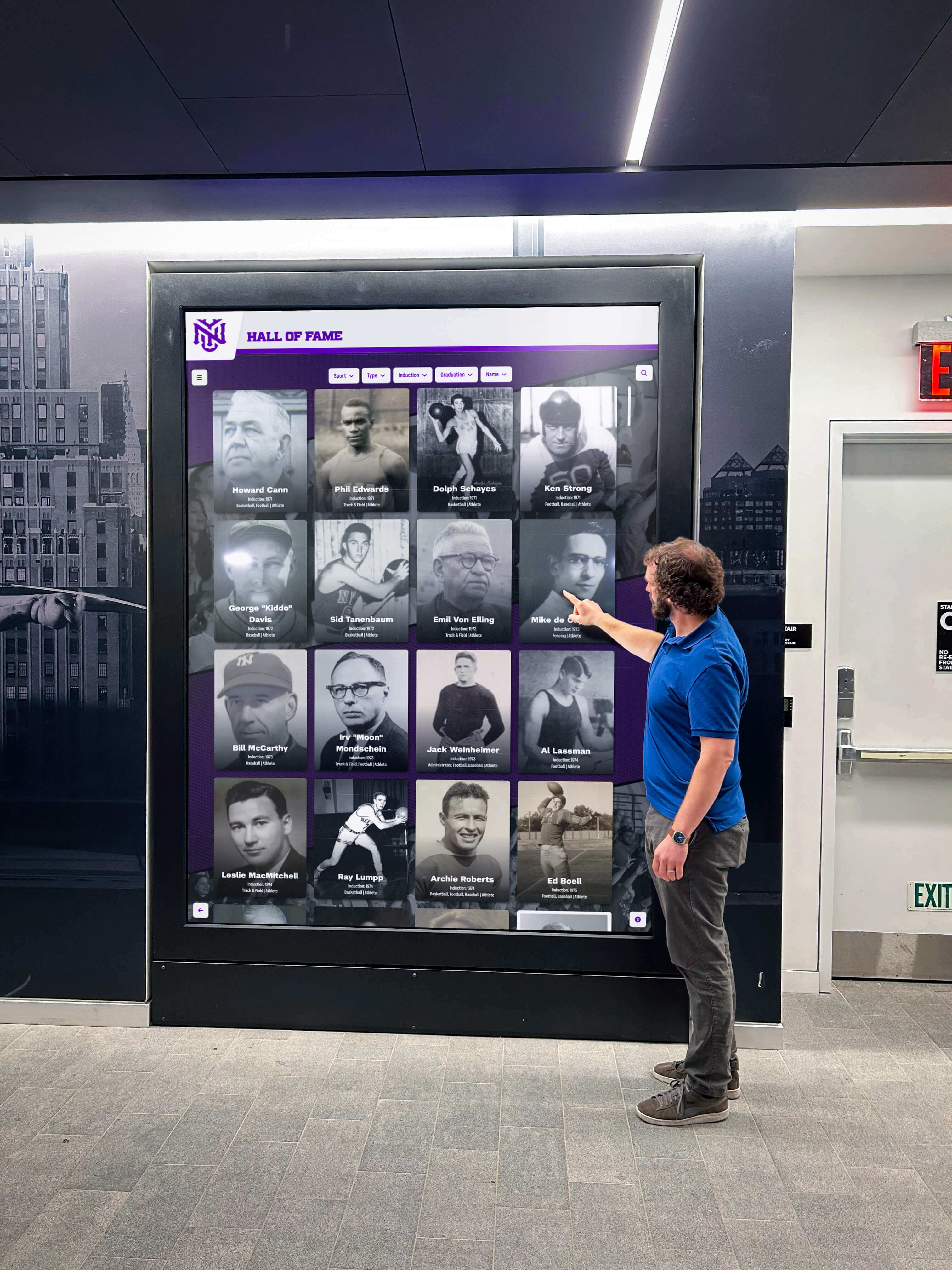
A well-designed tribute donor wall invites families and visitors to explore memorial recognition intentionally — digital platforms make that experience accurate, updatable, and emotionally appropriate
Frequently Asked Questions About Memorial Gift Donor Walls
How should we list memorial gifts on a donor wall?
The standard format places the tribute subject’s name as the primary label — “In Memory of James R. Kowalski ‘72” — with the giving donor’s name on a secondary line. Both appear at the recognition tier corresponding to the gift amount received. For campaigns where many donors contribute in memory of one person, aggregate the gifts under a collective tribute entry rather than creating dozens of individual entries for a single memorial.
Do we need family permission before displaying a memorial tribute on a donor wall?
Yes, for In Memory Of gifts. Before any tribute text appears publicly on a physical or digital donor wall, confirm the legal name and class year with the family, secure approval for the specific tribute language, and notify the family before the display goes live. For In Honor Of gifts honoring a living person, the honoree themselves should personally approve the tribute text before it appears publicly.
Can a digital donor display show photographs alongside memorial tributes?
Yes. Digital donor displays can include photographs of the person being honored alongside tribute text, the donor’s name, and any relevant narrative about how the gift will be used. Families frequently provide photographs specifically for this purpose. This capability is one of the most meaningful advantages digital displays offer over traditional engraved plaques — a photograph transforms a name on a list into a genuine memorial tribute.
How do we handle many small gifts made in memory of one person?
When numerous donors make modest gifts in memory of the same person, group them under a collective tribute entry rather than listing each individually. The entry might read: “In Memory of Coach Maria Santos — Gifts from 47 Supporters.” Apply the aggregate total to determine the appropriate recognition tier. Your written policy should specify how this aggregation works and communicate the approach to the family during the solicitation phase.
How do we correct an error in a memorial tribute entry on the donor wall?
On a traditional engraved plaque, corrections require ordering and installing a physical replacement — a process that typically takes weeks and costs several hundred dollars per entry. On a digital donor display, corrections take minutes from any web-connected device and are live immediately. Given that tribute errors cause genuine distress to grieving families, this operational difference is among the strongest arguments for digital donor recognition at institutions with active memorial gift programs.
Conclusion: Recognition That Honors the Gift and the Person Behind It
A memorial gift donor wall done well is one of the most meaningful recognition investments a school or institution can make. It acknowledges the donor’s generosity, honors the life that inspired it, and creates a permanent, visible tribute that families return to — at reunions, on anniversaries, at homecomings, and on the ordinary Tuesdays when they bring a visiting relative to see the school their loved one cared about.
Getting that recognition right requires clear naming conventions, a written permission process, thoughtfully crafted tribute wording, and a display infrastructure that can update as gifts change and families provide new materials over time. It also requires the humility to recognize that these gifts are not primarily about the institution — they are about the people the institution was fortunate enough to have in its community.
Ready to Build a Memorial Donor Wall That Does Justice to Every Tribute?
Rocket Alumni Solutions designs interactive touchscreen donor recognition displays for educational institutions — with cloud-based content management that allows your team to update tribute entries, add photographs, and correct memorial text in minutes, not weeks.
Explore Interactive Donor Display SolutionsIn memory donor recognition done with care turns a grief-driven act of giving into the beginning of a relationship — with the donor, with the family, and with the broader community that knew and loved the person being remembered. A digital tribute donor wall, built on a platform that can grow and update alongside your donor community, is the infrastructure that makes that care possible at scale.