A memorial bench with a small dedication plaque is one of the most recognizable gifts a donor can give a school or campus. The form has endured for generations: a durable seat in a courtyard, a small plaque with the honoree’s name, and a quiet invitation for passersby to pause and remember. But what happens when the 25th bench goes in? Or the 50th? Most campuses don’t have unlimited green space, maintenance budgets don’t grow linearly with bronze hardware, and a donor who gave $5,000 deserves recognition that more than a handful of people walking past will ever notice.
Memorial bench donor recognition is a powerful starting point for tribute programs at schools, universities, and nonprofits—but it should be one component of a broader acknowledgment strategy, not the whole system. This guide examines why benches matter, where they hit structural limits, and which complementary approaches can honor every donor at scale without crowding a single courtyard.
For development officers, alumni relations teams, and advancement directors managing growing donor programs, the challenge isn’t whether to offer memorial benches—it’s knowing when to reach beyond them. Physical tributes carry emotional weight that digital systems can struggle to match in the moment a family first sees a loved one’s name in stone. But digital and hybrid approaches carry something benches cannot: the ability to grow indefinitely, update instantly, tell the full story of every gift, and be experienced from anywhere in the building—not just from one spot on a campus path.

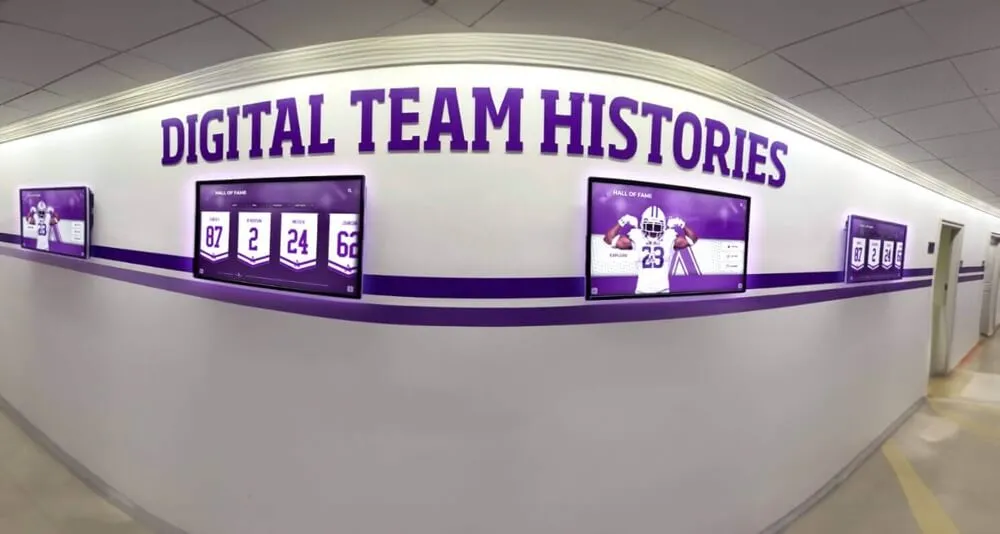
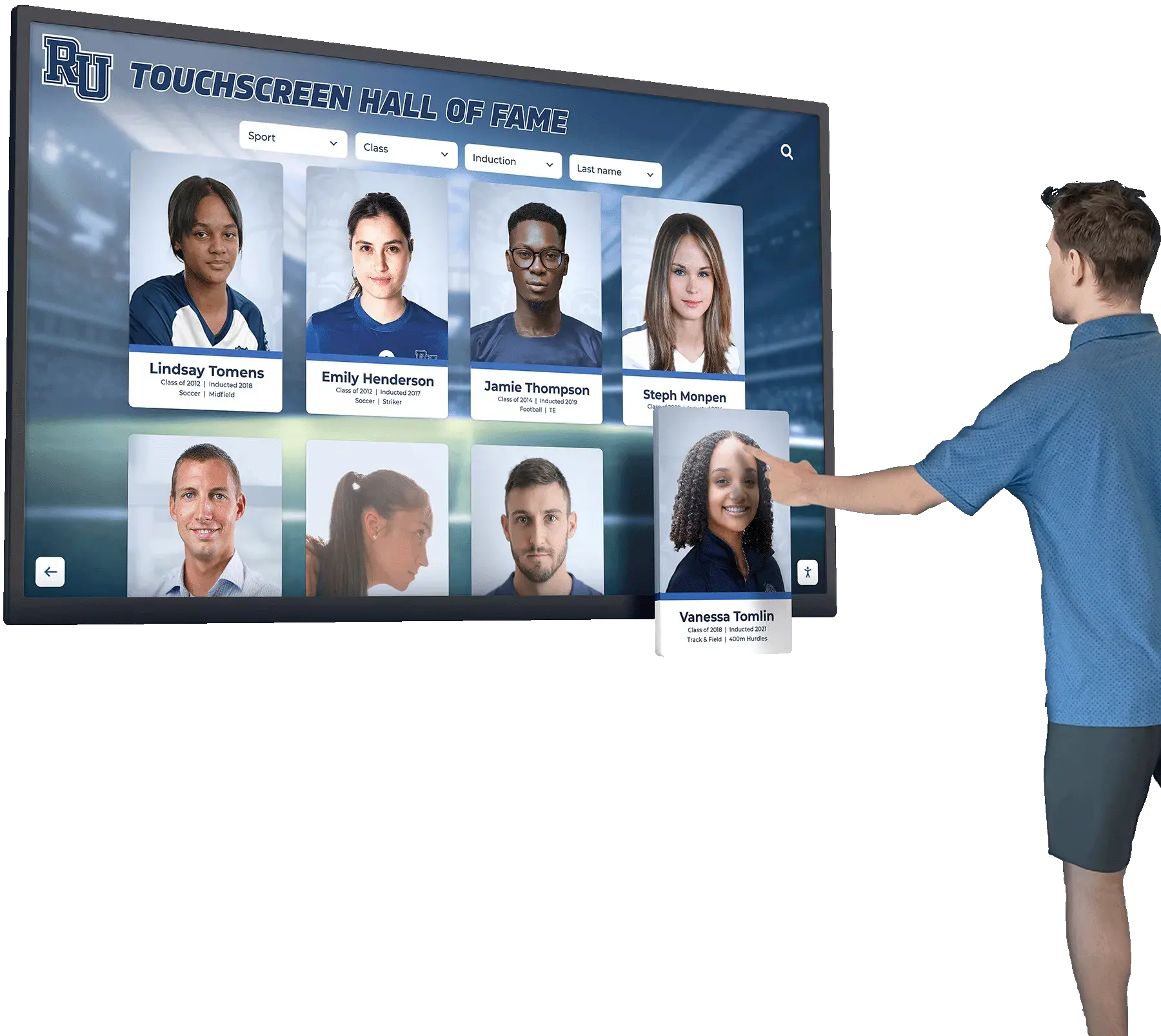
Comprehensive recognition systems honor supporters through permanent architectural features alongside dynamic digital content—creating layered tribute that scales across a growing donor community
Why Memorial Benches Work—and Where They Fall Short
Memorial benches succeed for specific reasons that are worth understanding before looking for alternatives. They are visible daily to students, staff, and families who wouldn’t otherwise think about donor recognition. They are tactile: someone sits on a tribute rather than just reading it. The association between rest, reflection, and remembrance makes the form emotionally resonant, especially for gifts made in honor of a deceased family member, retired educator, or beloved alumnus.
The memorial plaque wording on a bench dedication also carries its own ritual weight—a short inscription that families read at installation and return to at anniversaries, graduations, and homecomings. That permanence is meaningful and should not be dismissed.
But benches have inherent constraints that matter at scale:
Space is finite. Most campus courtyards, athletic facility exteriors, and garden areas can accommodate 10 to 30 benches before placement becomes awkward, sightlines are blocked, or maintenance becomes unmanageable. Beyond that point, new installations compete with existing ones for visibility and prestige.
Recognition is passive and location-dependent. A donor recognized on a bench in the northeast corner of the athletic complex receives zero visibility from donors, visitors, or students in the main lobby, gymnasium, or performing arts wing. Recognition exposure depends entirely on whether someone happens to walk past.
Storytelling is constrained. A 3-inch by 6-inch plaque can carry a name, years, and perhaps a short phrase. It cannot carry a photograph, a quote, a description of the program the donor supported, or any context about the relationship between the donor and the institution.
Updates are expensive and irreversible. Engraved plaques cannot be corrected or expanded without replacement. Incorrect inscriptions, name changes, or additional recognition details all require new hardware.
Capacity builds slowly. If your program creates 5 benches per year and your donor base grows at 15% annually, the gap between donors and available recognition hardware grows every year.
None of these limitations mean benches should be abandoned. They mean bench programs should be paired with recognition approaches that compensate for exactly these weaknesses.
The Scaling Problem in Memorial Recognition Programs
According to the Association of Donor Relations Professionals, organizations that fail to acknowledge donors within 48 hours of a gift see significantly reduced retention rates—and recognition that donors never encounter because it’s hidden on a physical installation they rarely pass doesn’t fulfill that acknowledgment function regardless of how beautiful the craftsmanship is.
The scaling problem compounds over time. A program that starts with a courtyard of 12 memorial benches looks cohesive and intentional. At 35 benches installed over 15 years, the space begins to feel cluttered. At 50+, maintenance demands increase substantially: metal plaques corrode, wood slats require seasonal care, mounting hardware loosens, and the cumulative investment in upkeep can rival the original installation costs.
Schools and nonprofits exploring memorial garden spaces increasingly find that the most successful tribute environments combine permanent physical elements—benches, pavers, garden markers—with digital displays that can carry the full recognition load without physical constraints. The garden provides the emotional environment; the digital system provides the scalable acknowledgment.
8 Memorial Bench Donor Recognition Ideas That Scale Beyond Physical Hardware
1. Interactive Digital Donor Displays
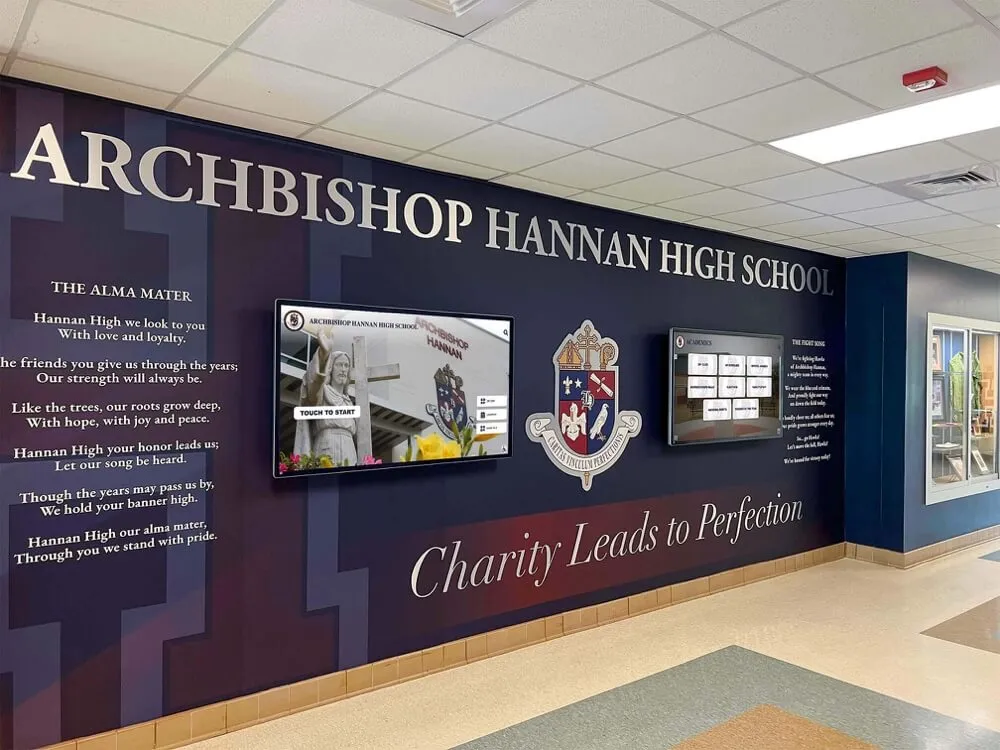
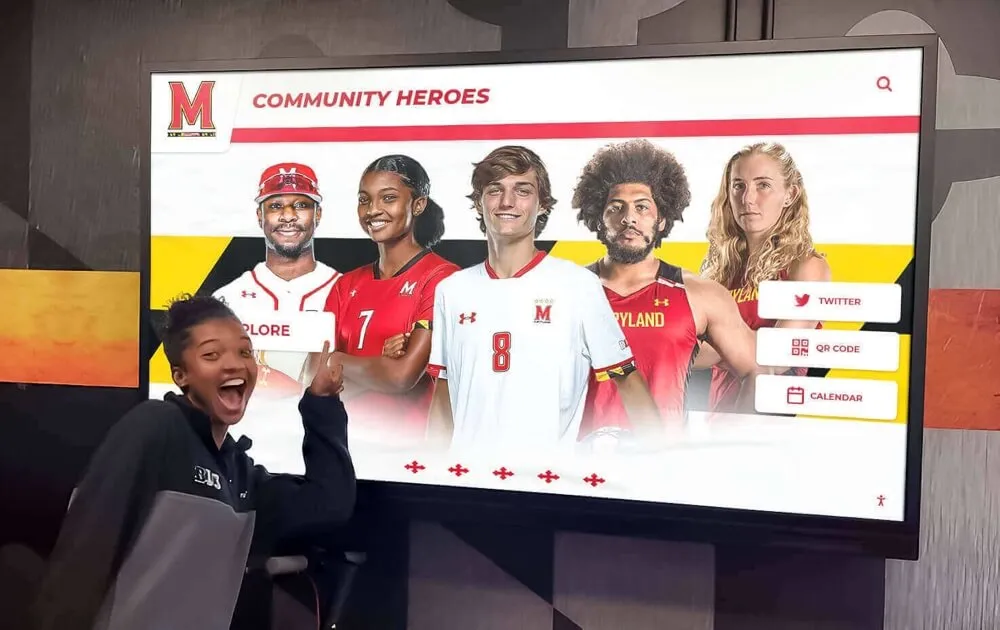
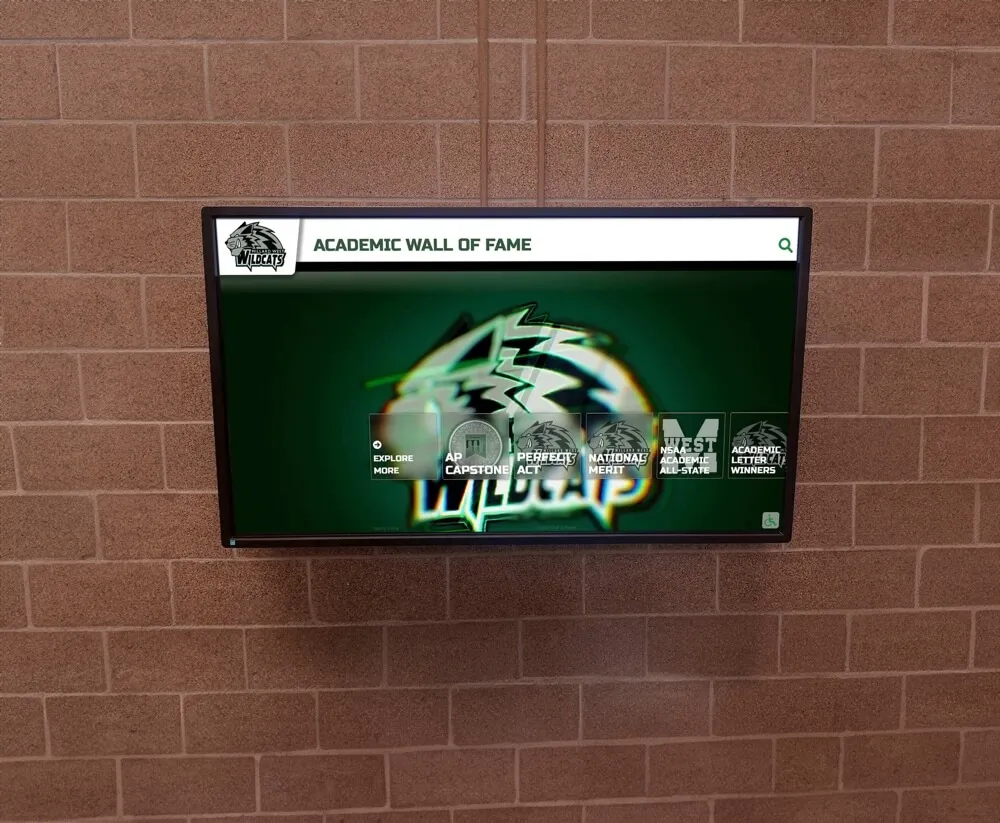
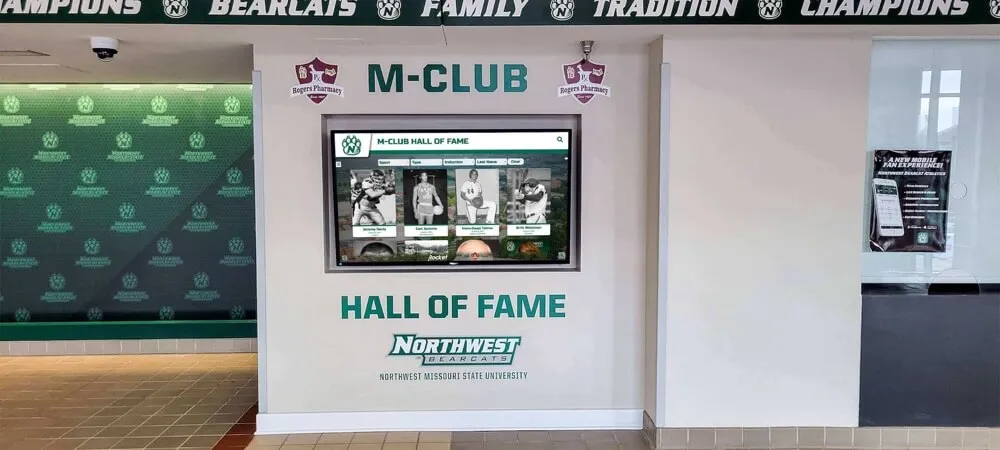
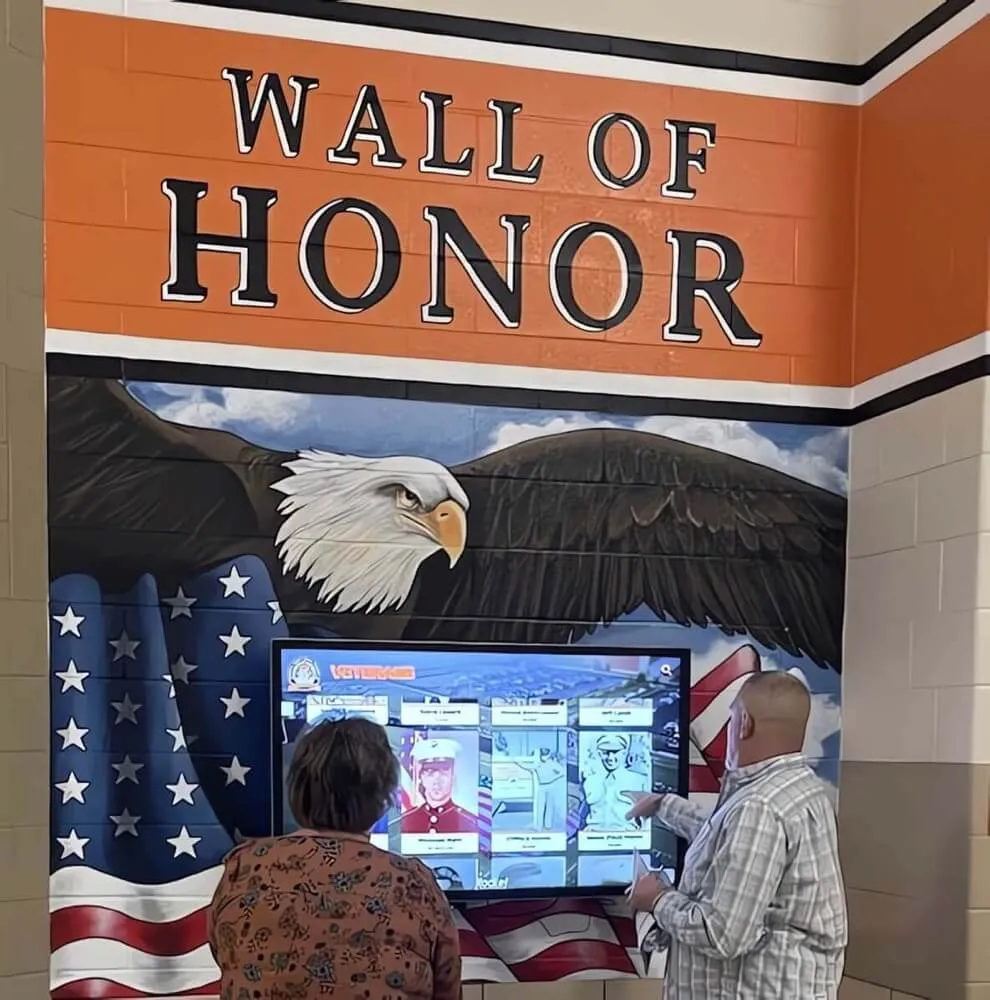
A touchscreen donor display in a high-traffic interior location—lobby, gymnasium entrance, library commons—can recognize hundreds or thousands of donors in the footprint of a single wall panel. Visitors search for specific names, explore giving histories, and encounter photos and personal statements that a bench plaque could never carry.
For institutions running memorial bench programs, digital displays create a natural complement: the bench carries the tactile, outdoor tribute; the display carries the institutional record that families can share with pride and that visitors encounter daily. Designing touchscreen experiences for engagement is its own discipline—content hierarchy, searchability, and profile depth all affect whether donors feel genuinely honored or simply listed.
Digital recognition also updates in real time. New donors can be acknowledged within hours of a gift being processed, not months after the next plaque order ships.
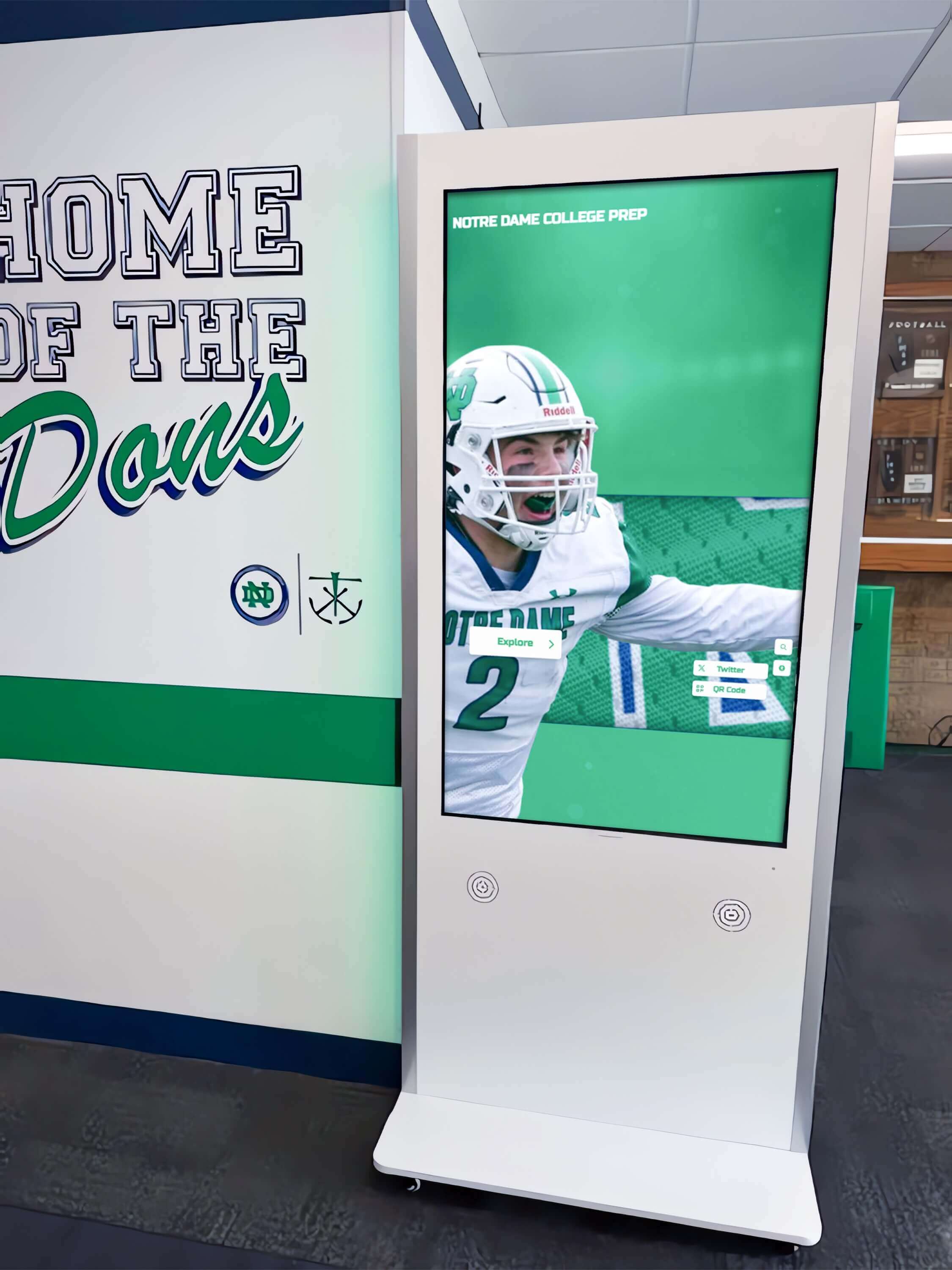
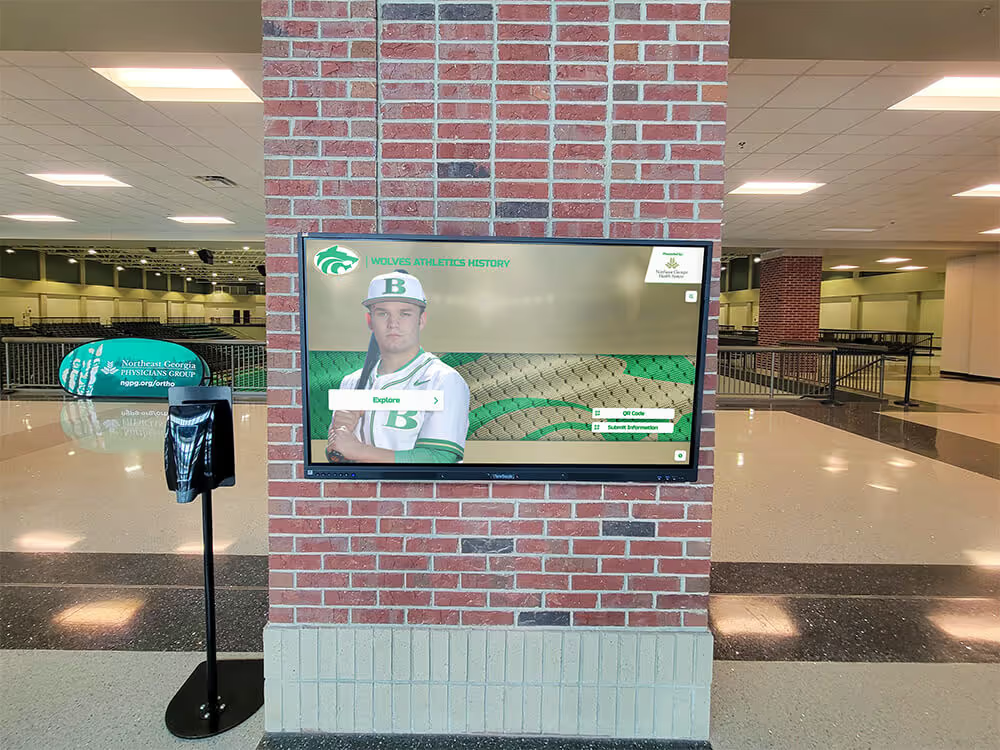
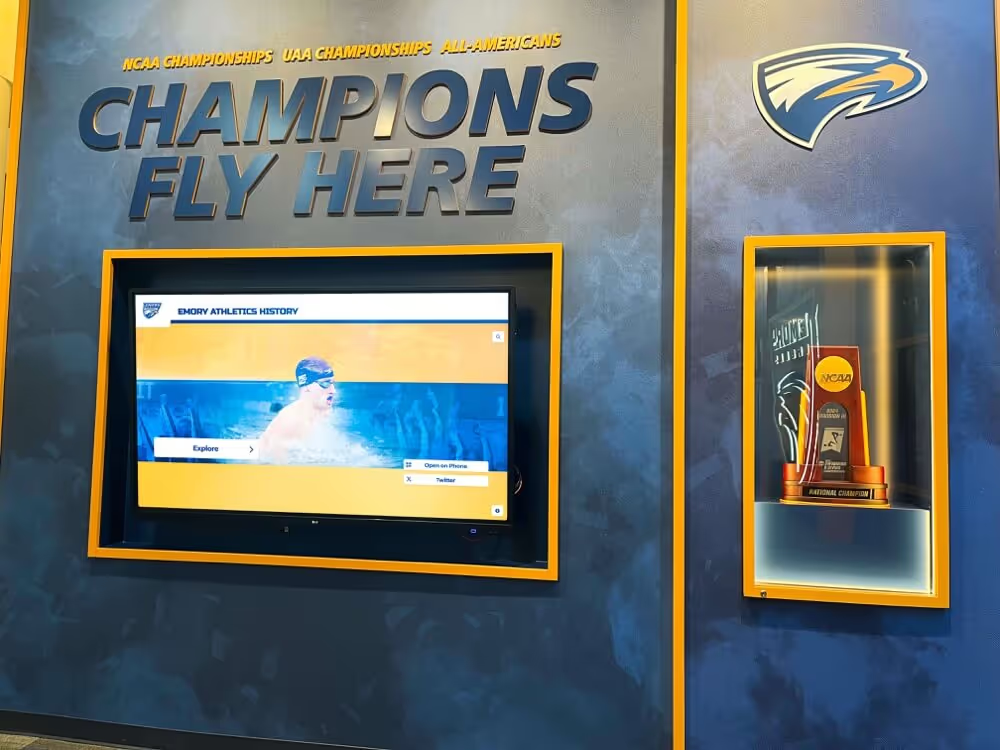
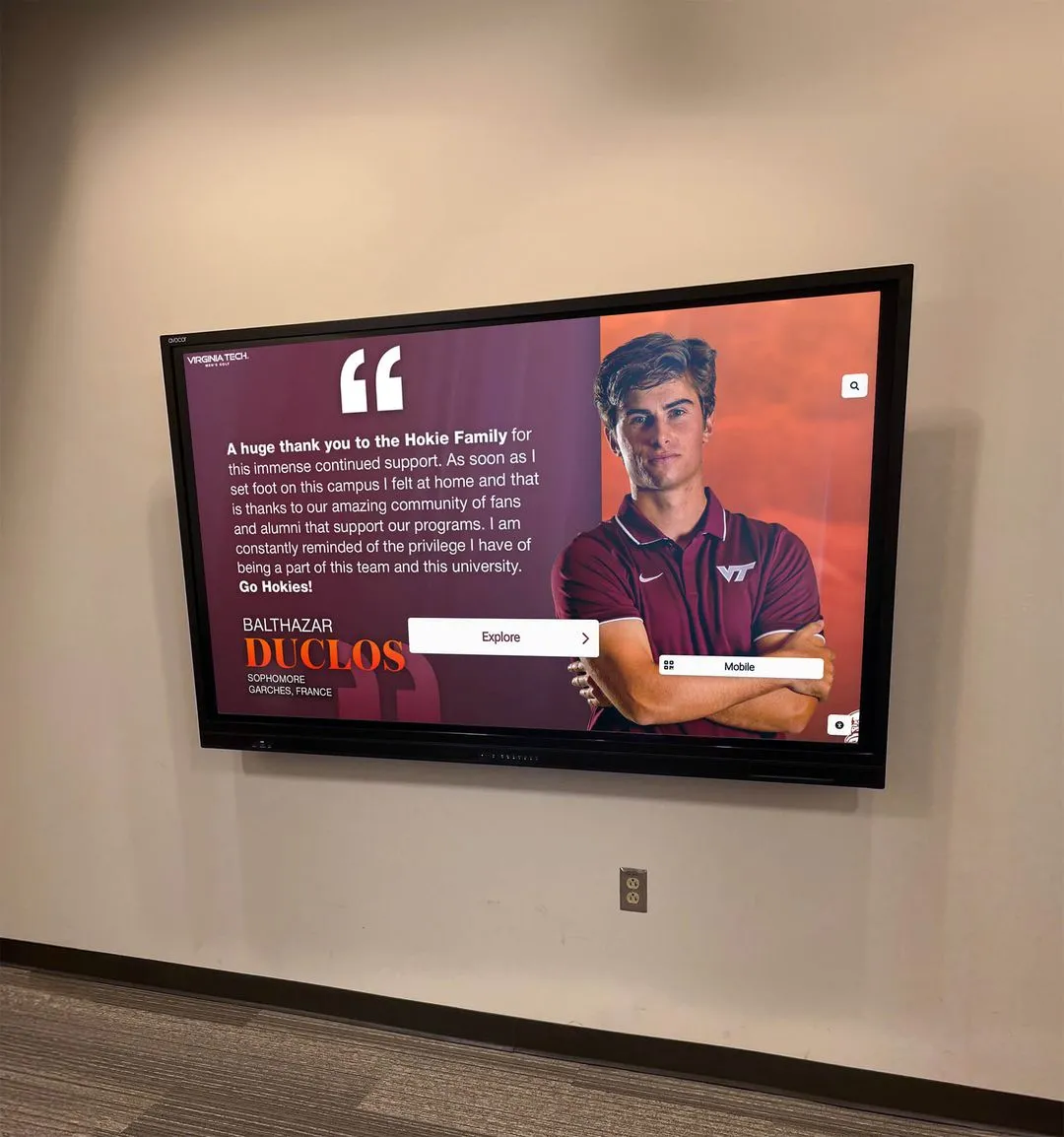
Touchscreen kiosks installed in high-traffic hallways give every donor visibility regardless of where a physical tribute may be located on campus
2. Named Spaces and Room Dedications
Memorial benches sit in the $2,500–$10,000 gift range at most institutions. Naming opportunities for interior spaces—a practice room, a weight room, a tutoring lounge, a hallway display alcove—can serve donors at similar giving levels while offering greater visibility and permanence.
Named spaces function as round-the-clock recognition: every class period, every practice session, every late-night study session reinforces the donor’s name to students, staff, and families. Unlike a bench, a named space cannot be overlooked. It appears on room schedules, campus maps, and facility directories.
A thoughtful donor recognition program creates a menu of naming opportunities at multiple price points. Benches fill one tier. Interior rooms, hallways, display cases, and equipment bays fill others—each with appropriate recognition hardware, updated signage, and ideally a digital component that provides context beyond what signage alone can carry. The complete guide to donor walls details how institutions structure tiered recognition hierarchies that keep naming opportunities available for new donors even as the program matures.
3. Engraved Brick and Paver Programs
Engraved paver programs extend the logic of the memorial bench—permanent, tactile, outdoor—while offering dramatically more capacity and a lower per-unit cost. A courtyard with 500 engraved pavers creating a walkway to an athletic entrance can recognize a full capital campaign donor community while creating a visually compelling arrival experience.
Paver programs work especially well alongside existing bench installations. Donors who contributed at bench-level in earlier years become part of a larger living tribute when surrounded by a community of paver contributors—creating a campus narrative about generosity rather than a series of isolated tributes scattered across the grounds.
Maintenance per paver is substantially lower than per bench, and modular paver systems allow additions without disturbing existing installations. Engraving quality on granite or porcelain pavers holds for decades without significant degradation.
4. Digital Donor Recognition Walls
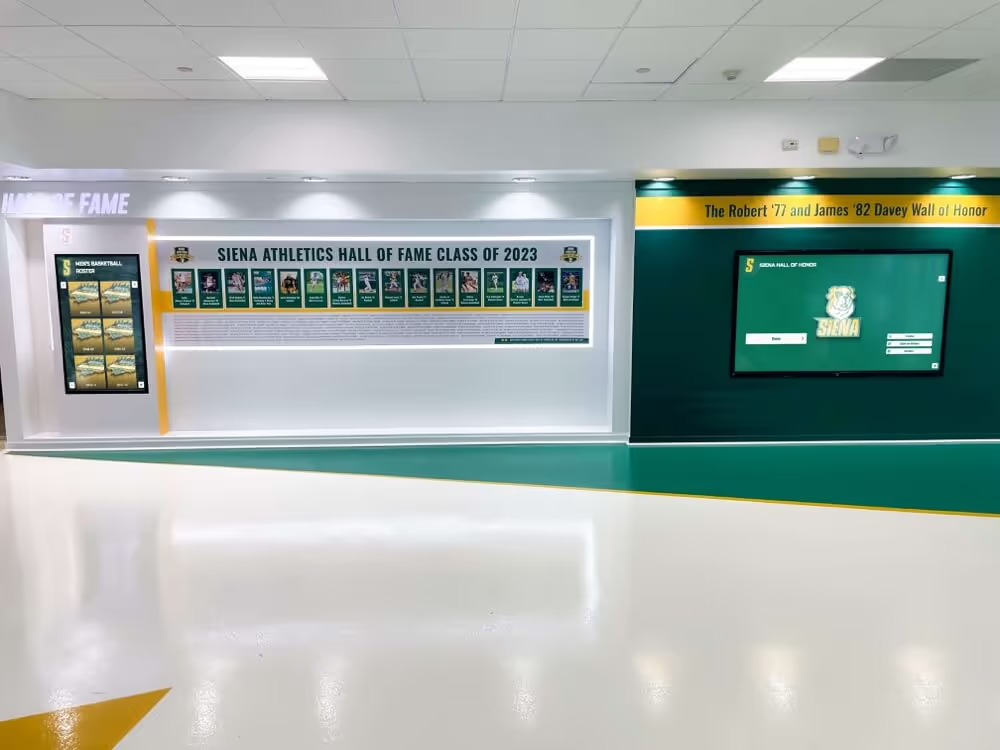
A donor recognition wall—whether physical, digital, or hybrid—creates a centralized tribute space that serves institutional memory as well as individual acknowledgment. Donor wall display ideas for schools range from traditional bronze panel arrays to fully digital touchscreen systems that display giving timelines, impact stories, and multimedia profiles.
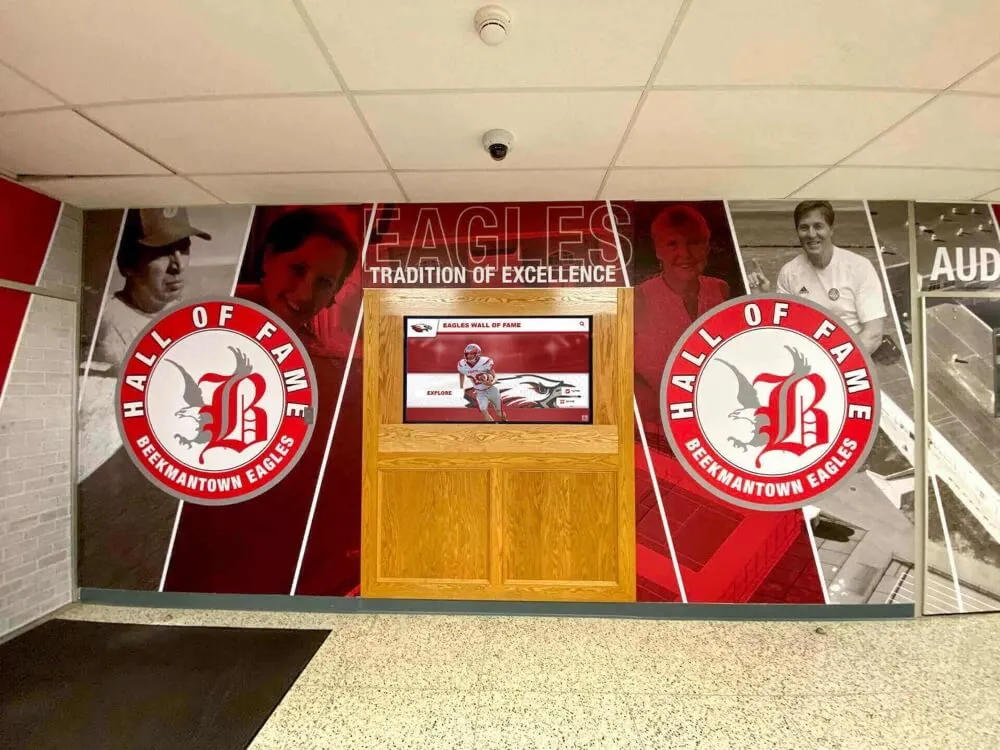
The strategic advantage of a donor wall over distributed bench recognition is concentration: a single space in the main building creates a destination that visitors, prospective donors, and community members experience consistently. Development staff can direct tour groups to the wall. Event guests encounter it during galas and receptions. Alumni see it every time they return.
For programs that have already installed memorial benches across campus, a donor wall creates an interior anchor that complements the outdoor tributes. The wall tells the institutional story; the benches mark specific locations where generosity shaped the physical environment.
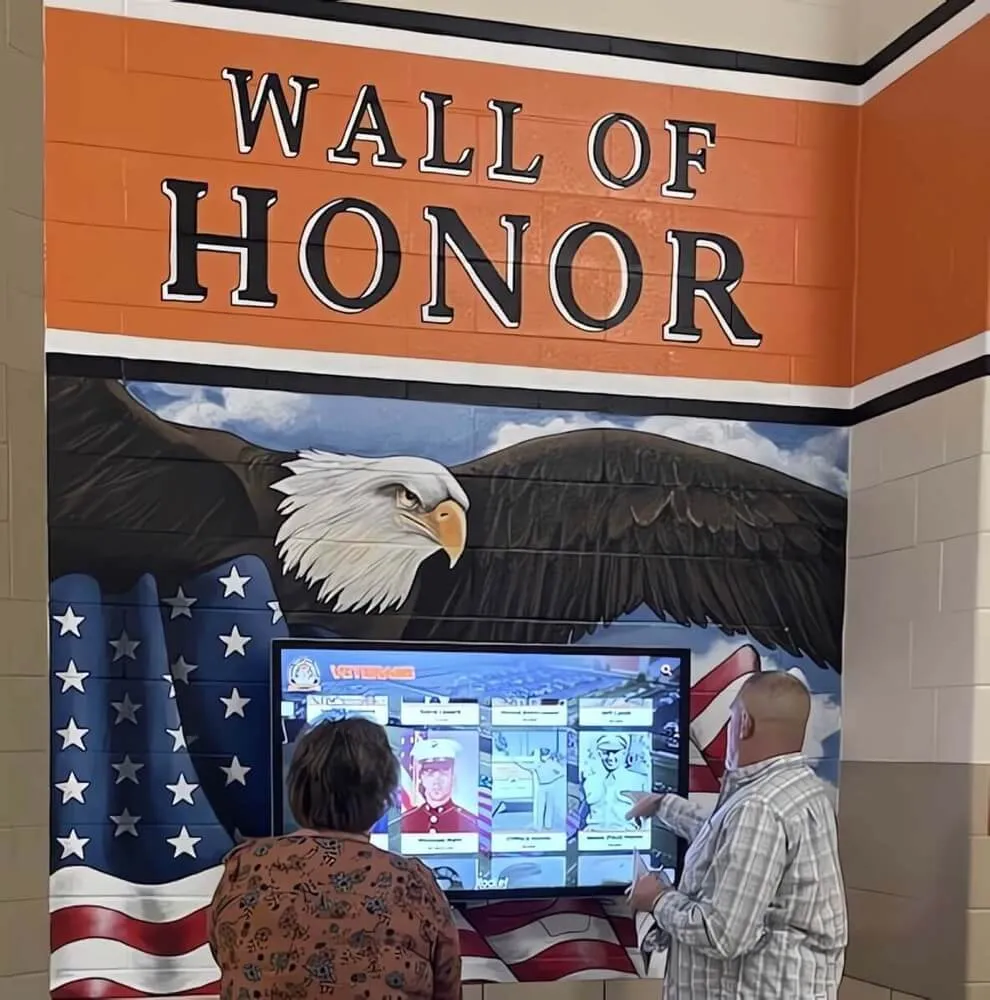
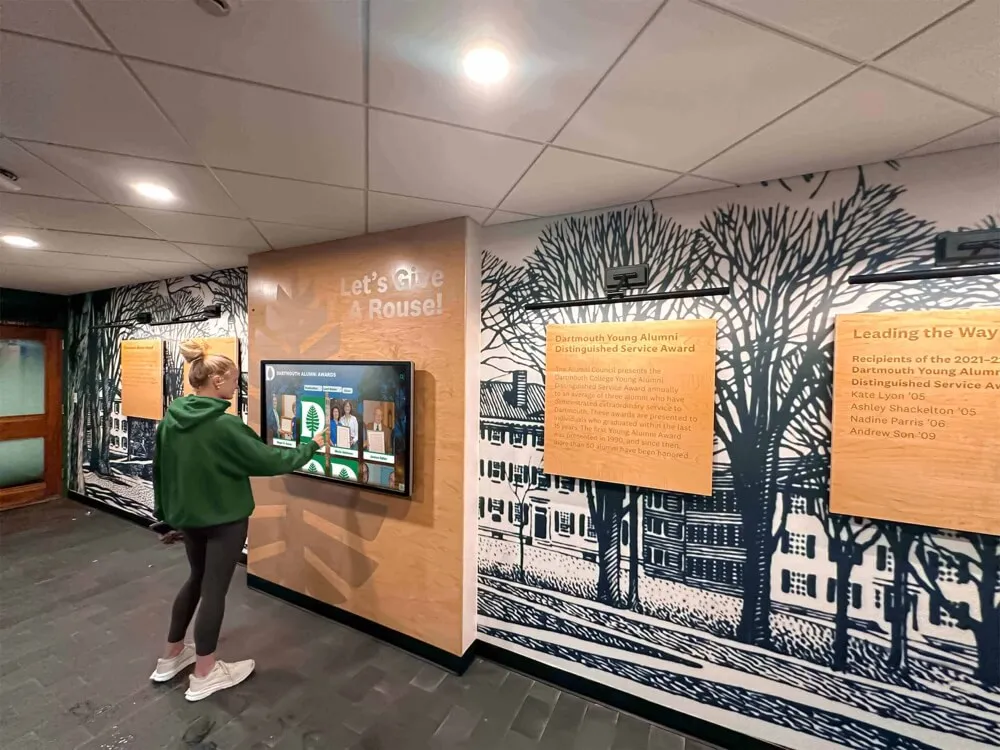
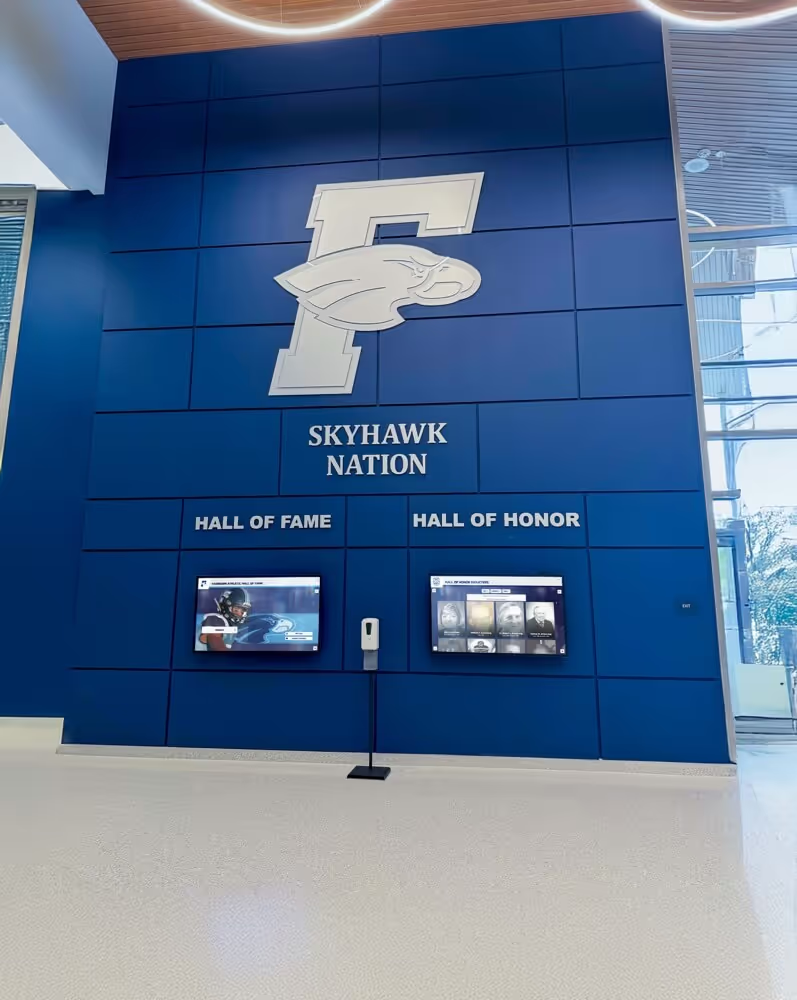
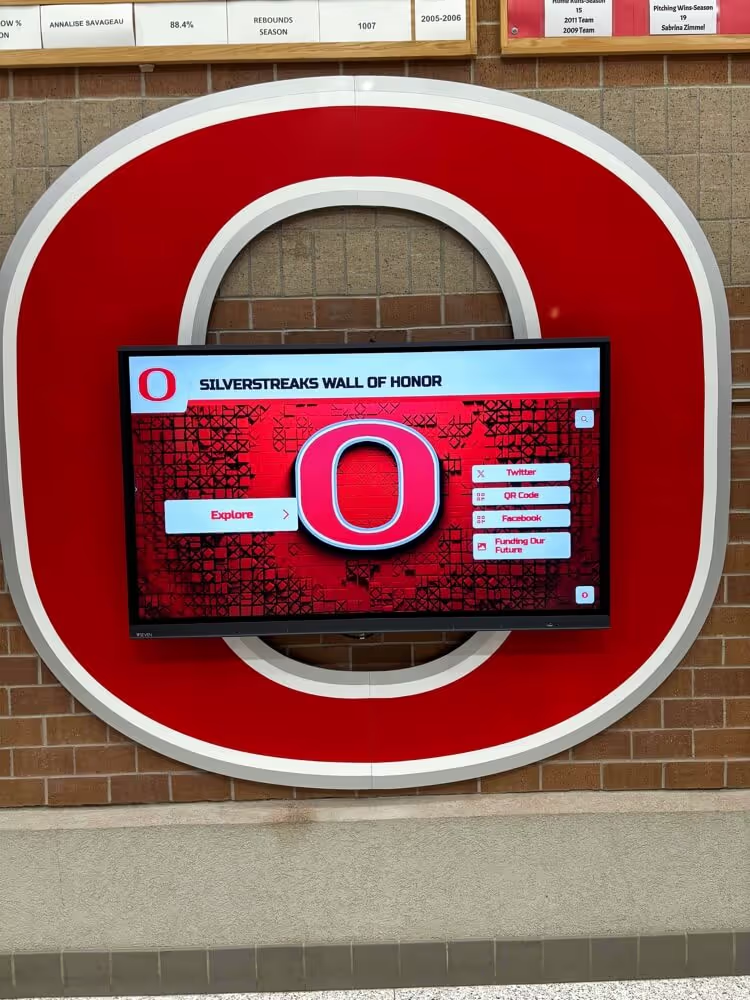
A centralized wall of honor creates a recognition destination that gathers tribute in one high-visibility location rather than distributing it across disconnected outdoor installations
5. Memorial Garden Environments
Rather than placing individual benches in disparate locations, a dedicated memorial garden integrates seating, plantings, pavers, and interpretive signage into a cohesive tribute space. The garden becomes a destination rather than a byproduct of individual gifts placed wherever space was available.
Memorial gardens can incorporate:
- Central monument listing all donors or campaign contributors
- Memorial benches arranged intentionally rather than placed ad hoc
- Engraved stone markers at garden borders or pathway intersections
- Dedication trees with bronze root plaques honoring major gifts
- QR code markers linking to extended digital profiles accessible by smartphone
- Interpretive panels describing the program, facility, or mission the garden honors
The key shift is from isolated hardware to designed environment. A garden’s emotional power comes from its coherence—from feeling like it was built as a whole rather than accumulated over decades. Programs transitioning from scattered bench installations to designed gardens often find they can retire low-visibility benches while creating a tribute space that provides dramatically more recognition value for both existing and future donors.
6. QR Code Memorial Markers
Memorial bench plaques don’t have to be the final word on a tribute. A small, durable QR code marker mounted alongside a traditional bench plaque extends the recognition into unlimited digital space: a family photo, a video tribute, a description of the scholarship the donor funded, a giving history spanning decades, or a message from current students who benefit from the endowment.
QR integration is one of the lowest-cost, highest-impact upgrades available to programs with existing bench installations. Families who funded the tribute typically provide content enthusiastically—they want the full story told, not just a name and two dates. The QR code lets a bench carry the permanence and emotion of engraved stone while the landing page carries the narrative depth of a profile that could be a thousand words.
Donor recognition signage options increasingly incorporate digital access points, recognizing that visitors expect to be able to learn more from any recognition surface in the same way they’d expect to scan a label in a museum exhibit.
7. Dual Hall of Fame and Donor Recognition Systems
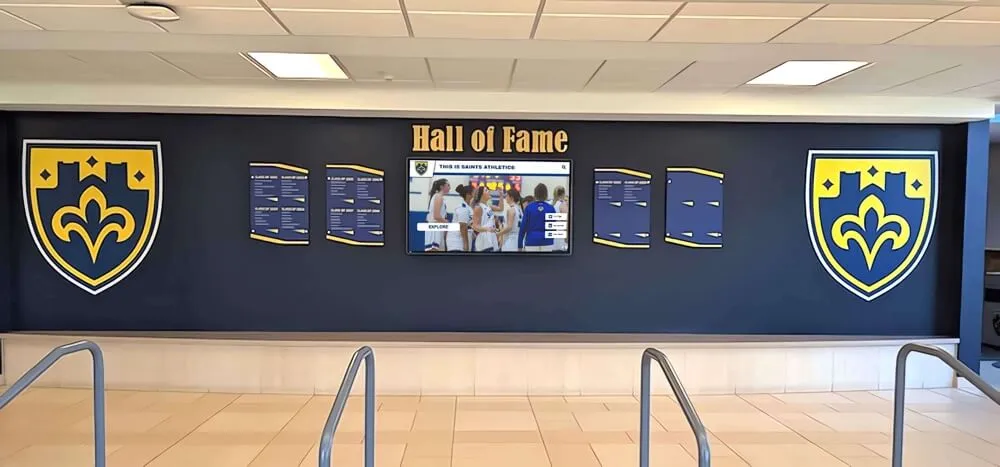
Athletic donors, performing arts supporters, and academic program funders often have direct connections to the programs they support. A dual digital recognition system that integrates a hall of fame display with donor acknowledgment creates a tribute environment where the community’s achievements and its philanthropic support appear together—reinforcing the relationship between donor investment and program excellence.
For a school athletic program, this might mean a lobby display that shows championship history, all-time records, hall of fame inductees, and the booster community that funded facilities, travel, and equipment—all in a single interactive installation. A donor who funded the weight room renovation sees their name in the same display where the program’s championship banners appear.
This proximity matters psychologically. Recognition that appears alongside achievement communicates that the donor was essential to that achievement—not a separate administrative category, but a genuine part of the story.
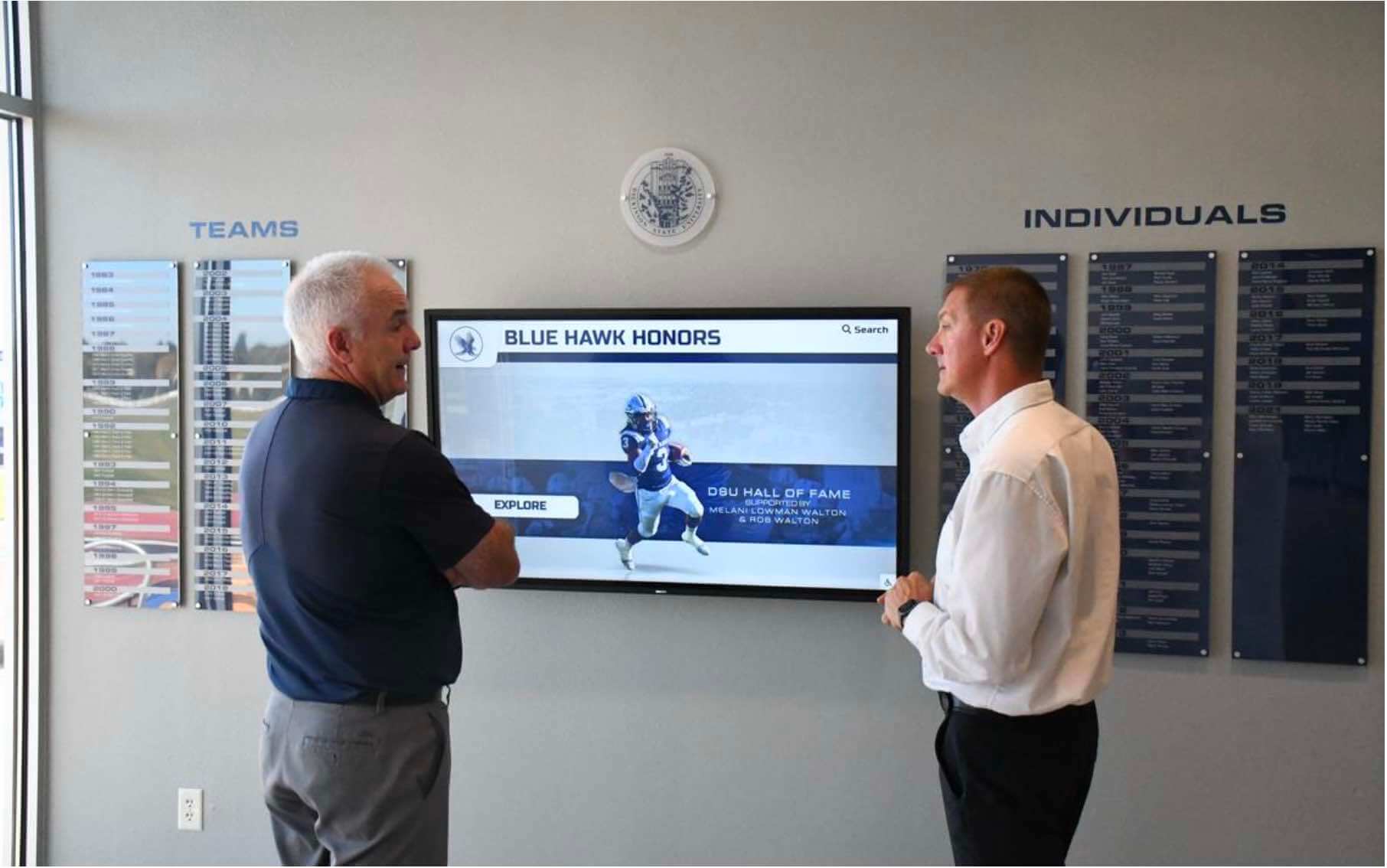
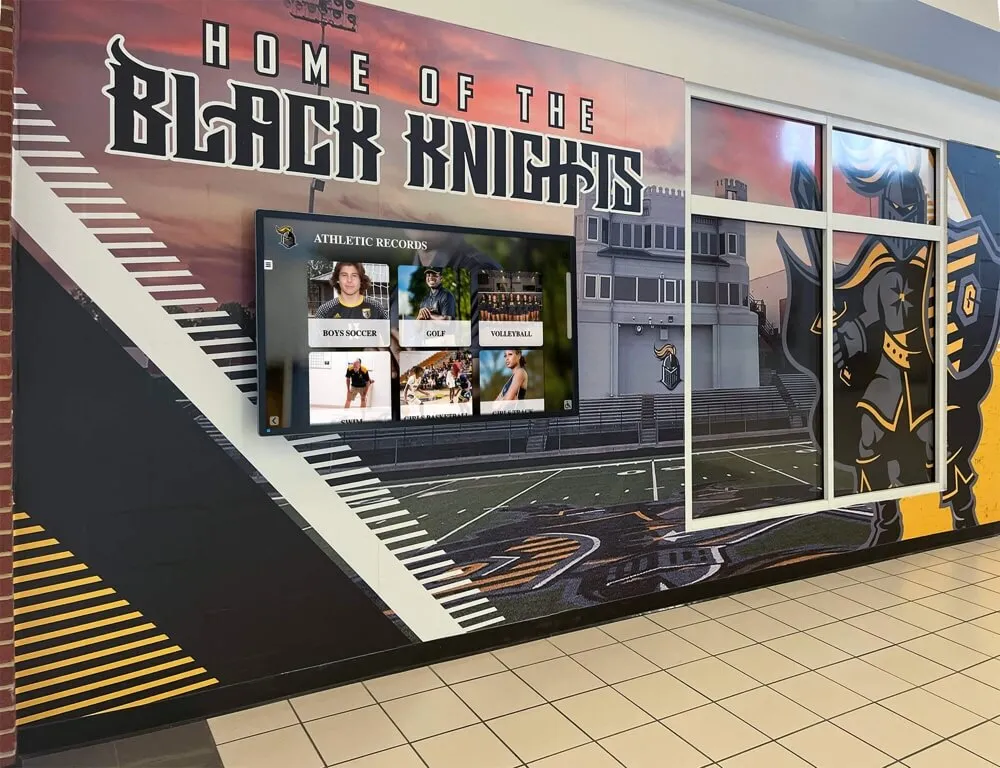
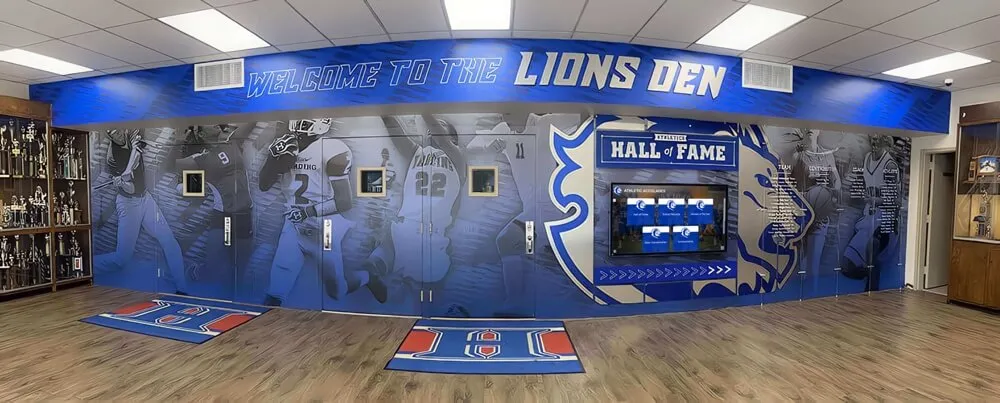
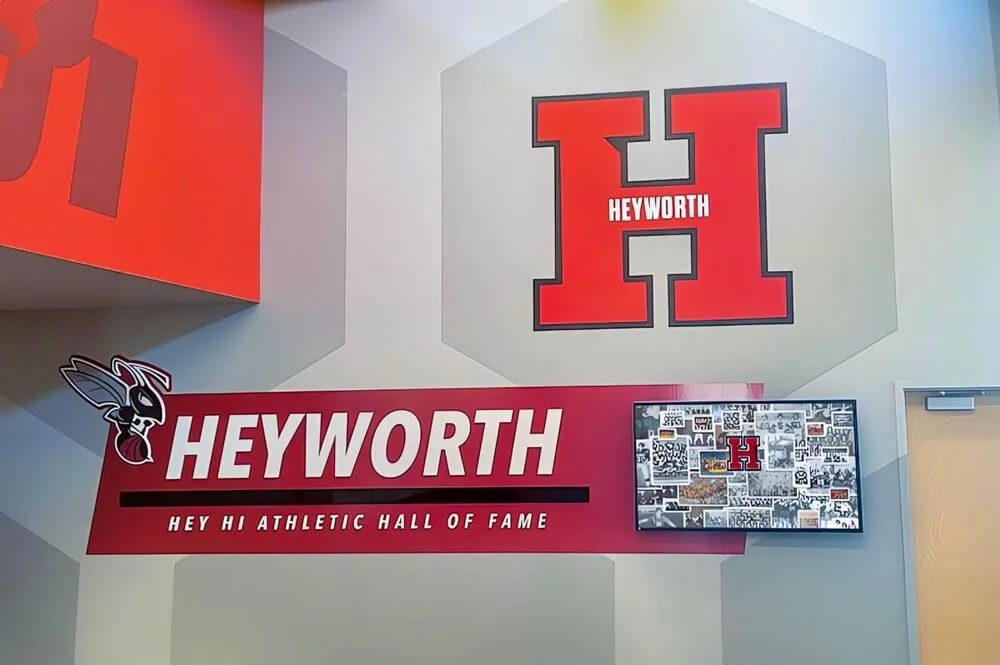
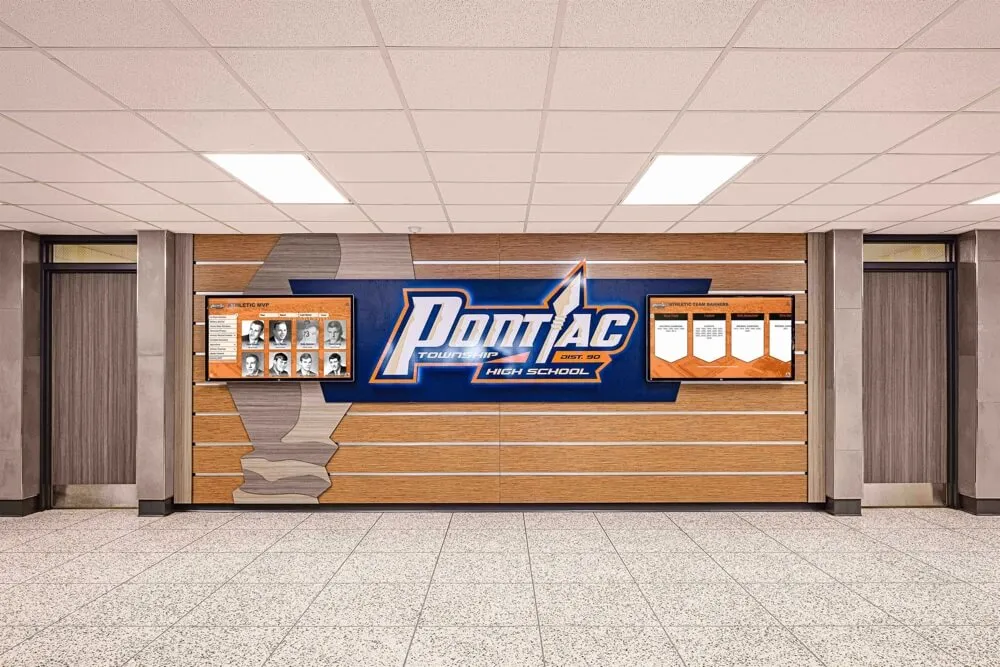
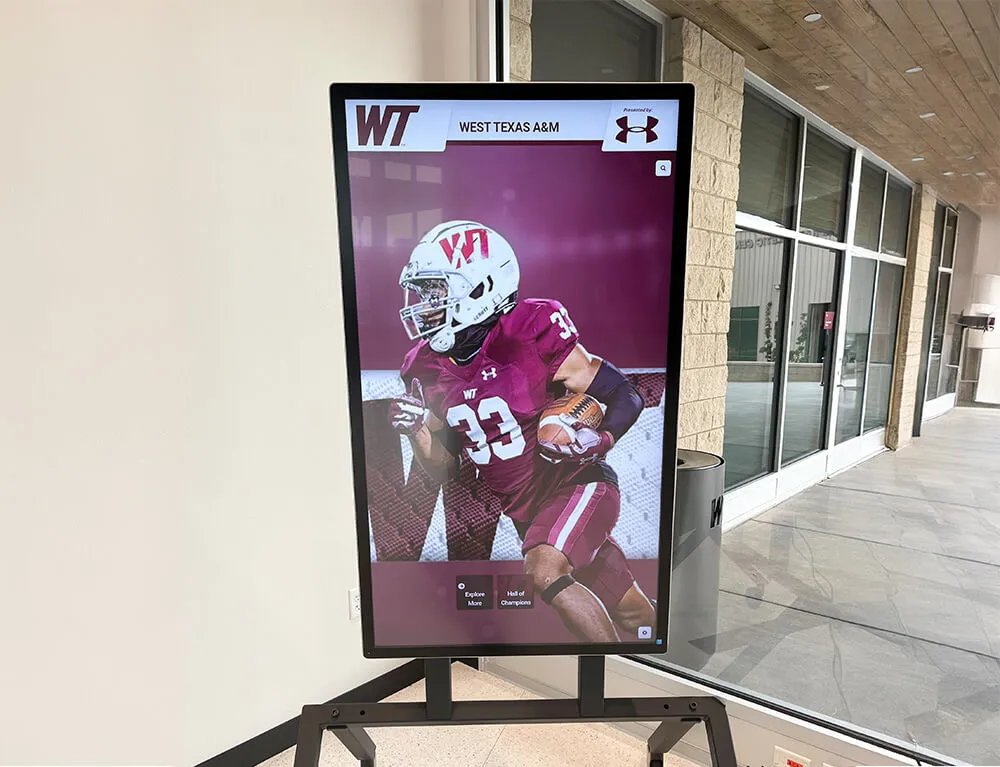
Hall of fame and donor recognition systems that share a display environment create tribute spaces where philanthropy and achievement appear as parts of the same institutional story
8. Virtual and Online Donor Walls
An online donor recognition page extends acknowledgment beyond the physical campus entirely—reaching alumni who haven’t returned in decades, prospective donors researching whether an institution is worth supporting, families in other states or countries who want to see a loved one honored, and media covering campaigns or anniversary milestones.
Virtual donor walls can replicate the visual hierarchy and structure of physical installations—with giving tier sections, searchable directories, and featured profiles—while updating automatically as new gifts are processed and new donors join the community. For programs with significant online traffic or active alumni networks, the virtual wall often receives more total views than any physical installation.
Virtual walls also support donor appreciation gifts programs by providing a shareable link that donors can send to their own networks—turning recognition into organic outreach that introduces new audiences to the institution’s mission and generosity culture.
Combining Bench Programs With Digital Recognition
The most effective approach for most institutions isn’t replacing memorial bench programs—it’s building a recognition architecture where benches occupy their natural role as premium physical tributes while digital and virtual systems handle scale, story depth, and broad visibility.
A practical tiered structure might look like:
Tier 1 — Named Facilities ($50,000+): Building wings, major rooms, athletic complexes. Architectural signage plus comprehensive digital recognition profile.
Tier 2 — Memorial Benches and Pavers ($5,000–$25,000): Permanent outdoor tributes with QR code markers linking to extended profiles on a digital recognition display inside.
Tier 3 — Digital Donor Wall ($1,000–$4,999): Interior interactive touchscreen recognition with photo, giving history, and personal statement. No physical outdoor component.
Tier 4 — Online Recognition ($250–$999): Virtual wall listing, searchable directory, shareable profile link.
Each tier provides clear value and appropriate visibility for the gift level. Donors at Tier 2 receive both physical and digital recognition—a combination that honors the emotional weight of a memorial gift while ensuring broad institutional visibility. Wall wraps for schools and other large-format design options can reinforce institutional identity throughout the spaces where recognition systems live—creating environments that feel worthy of the donors they honor.
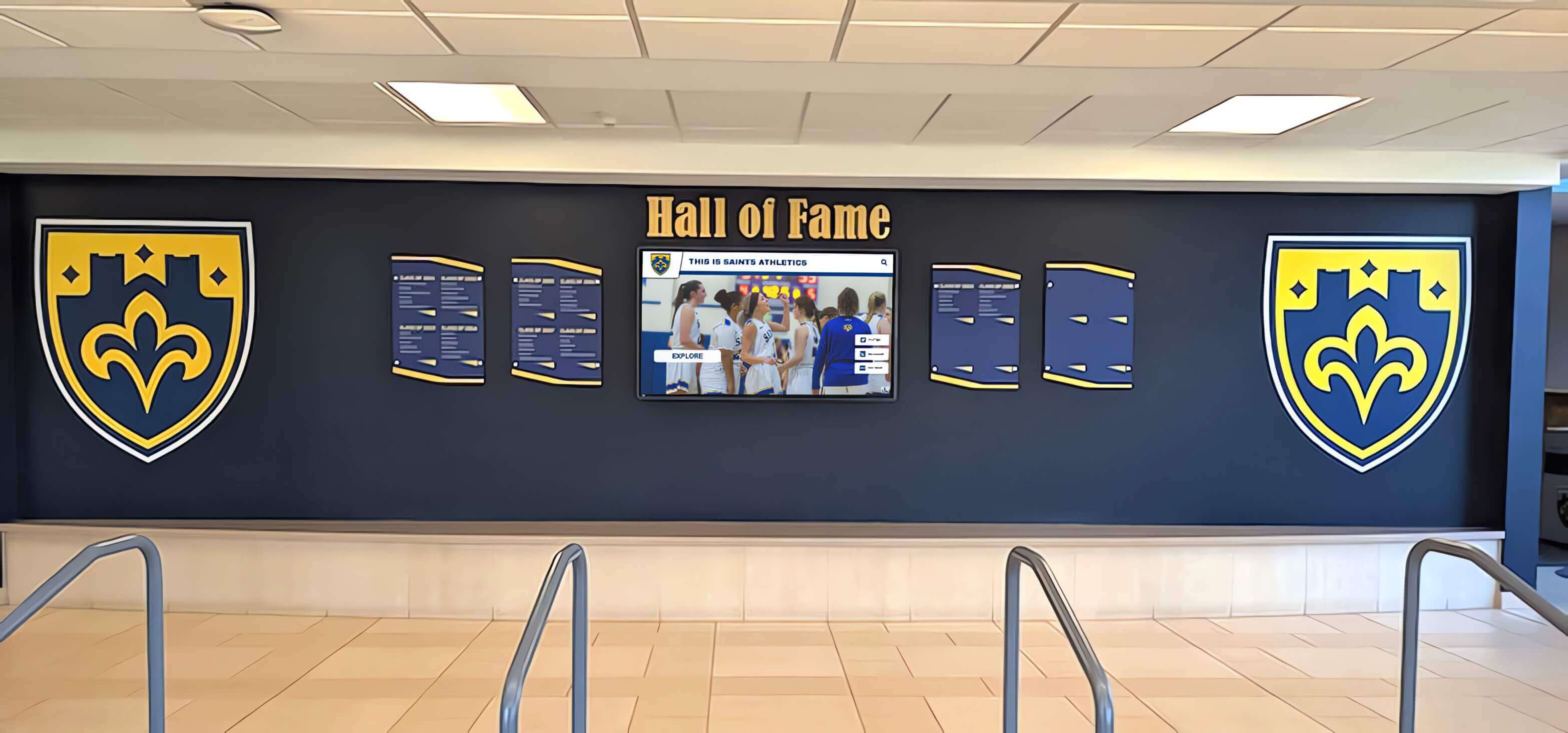
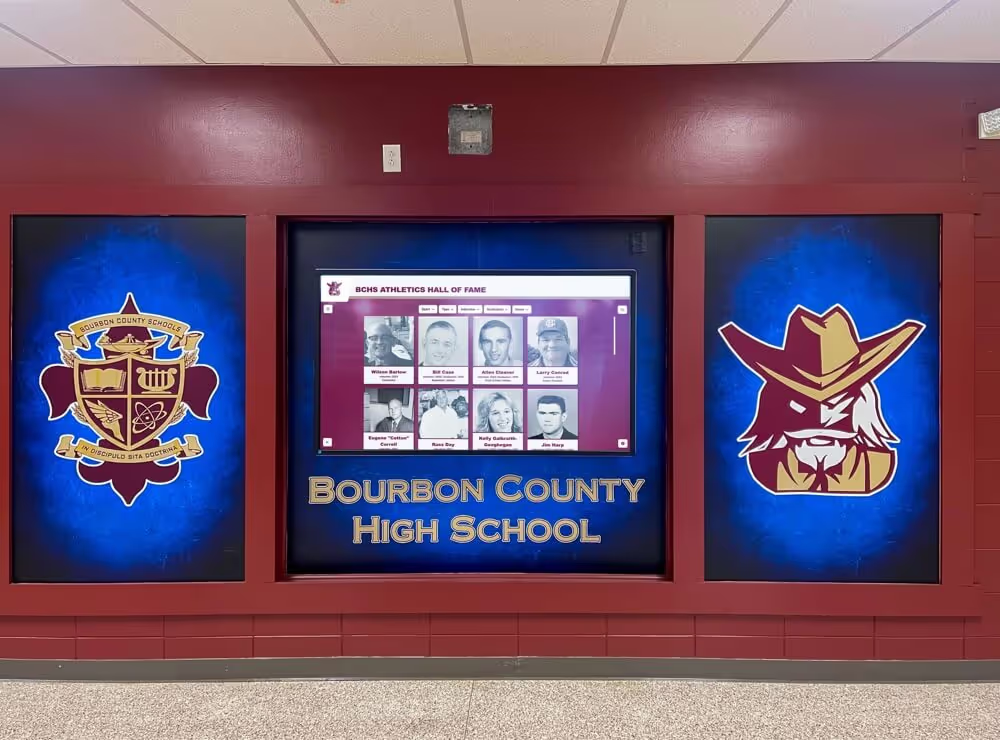
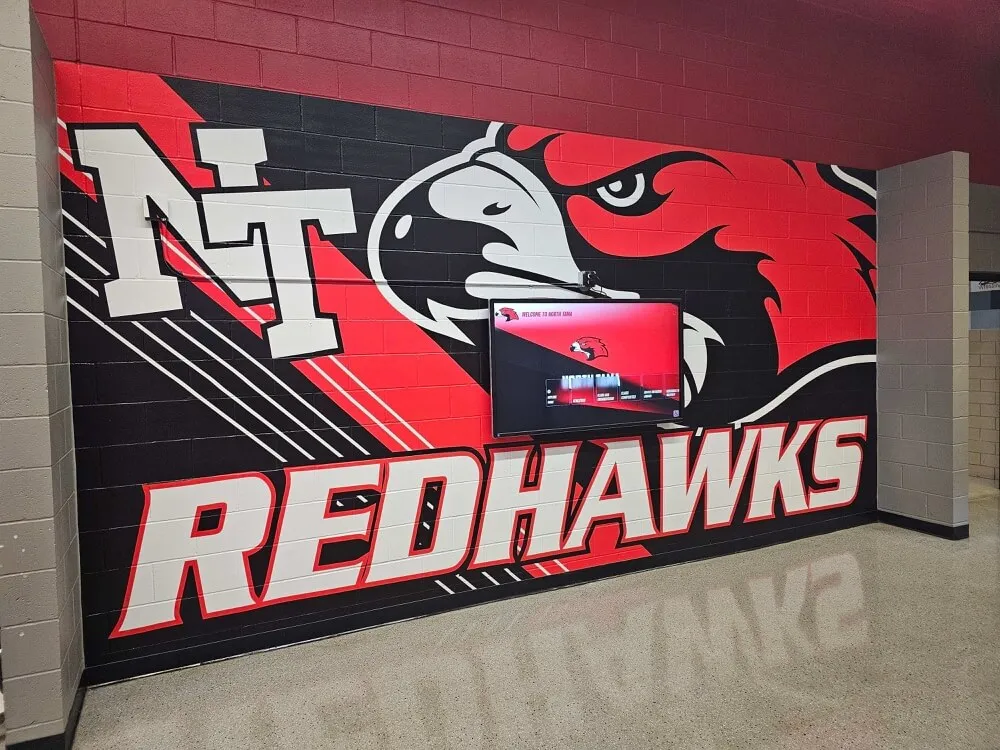
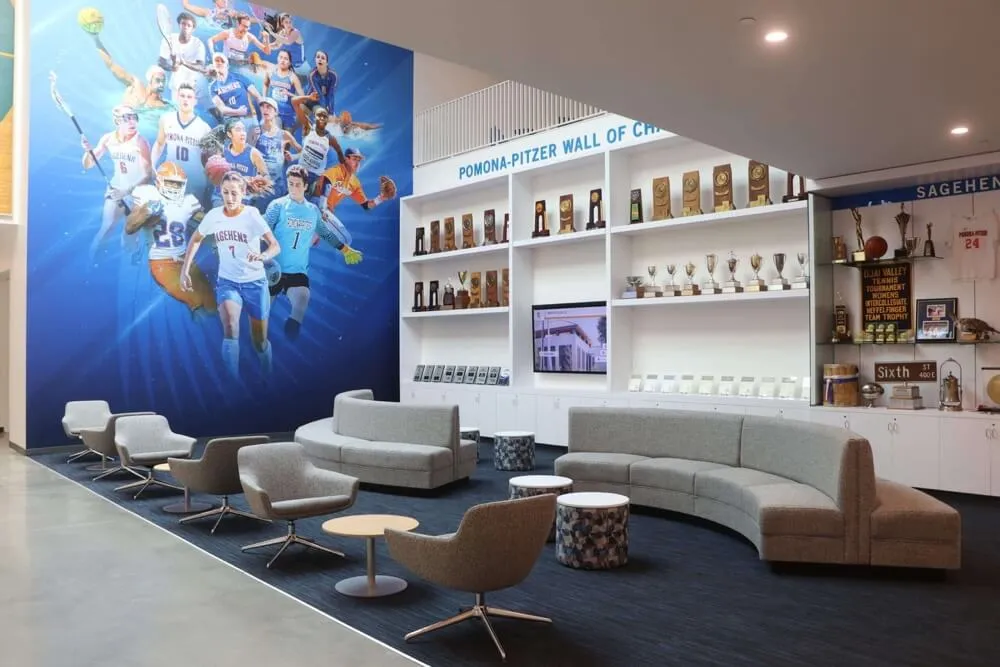
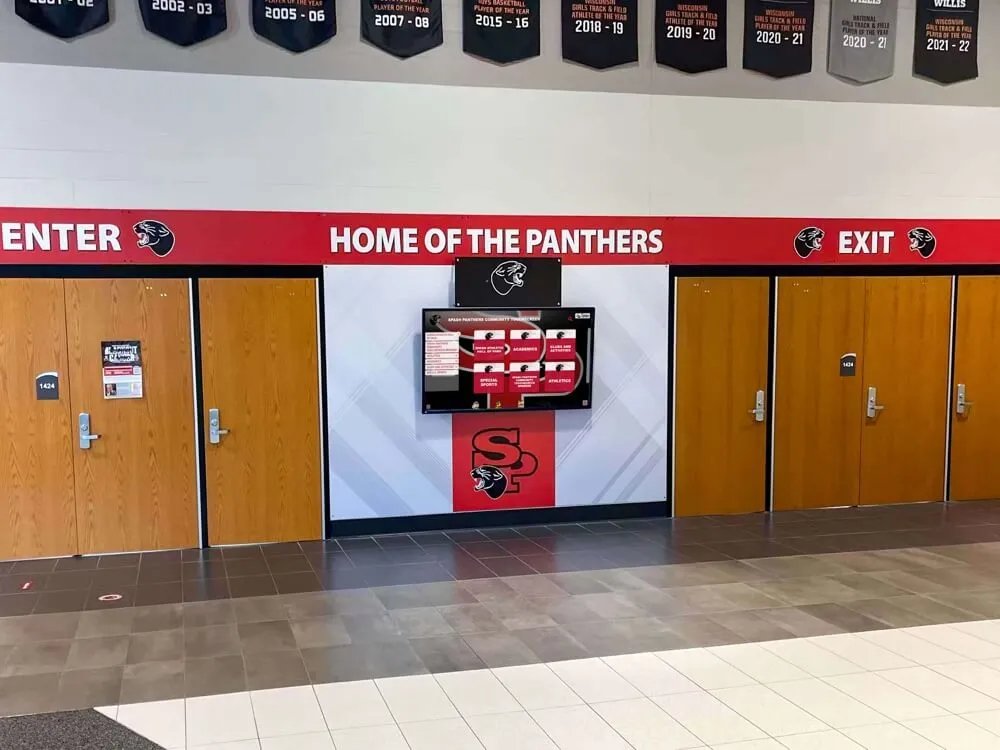
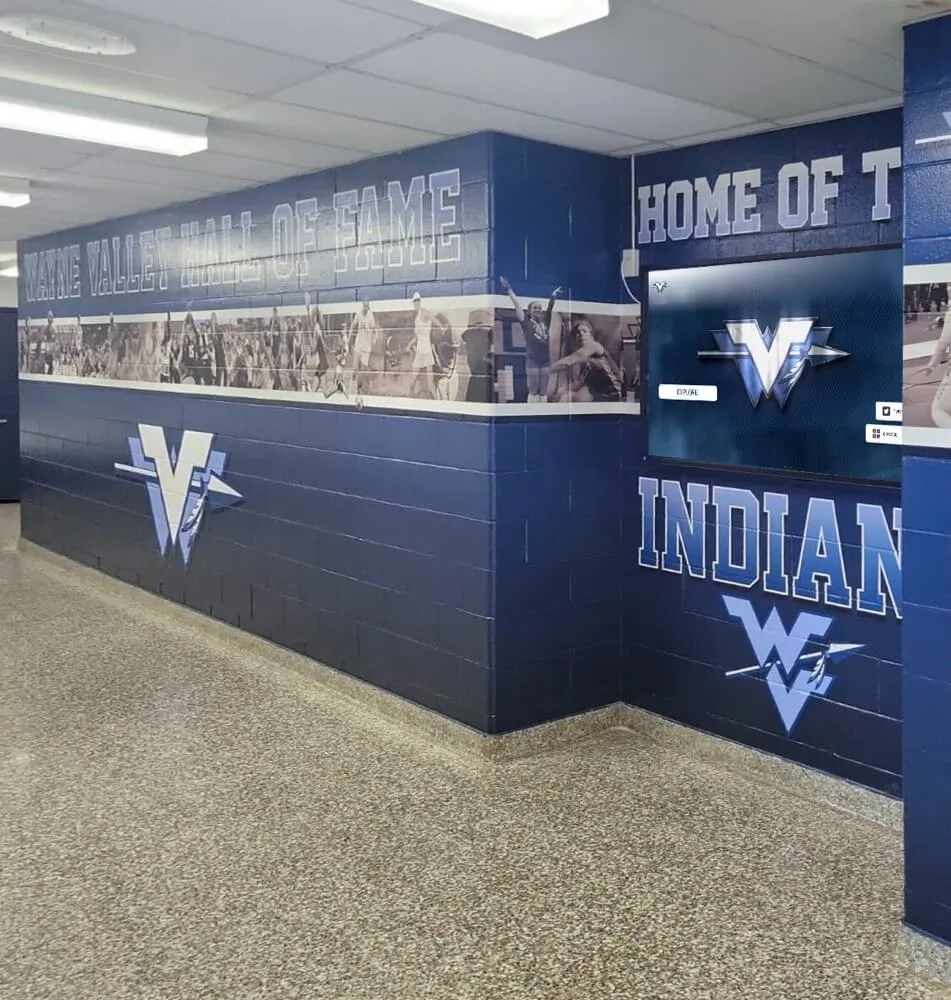
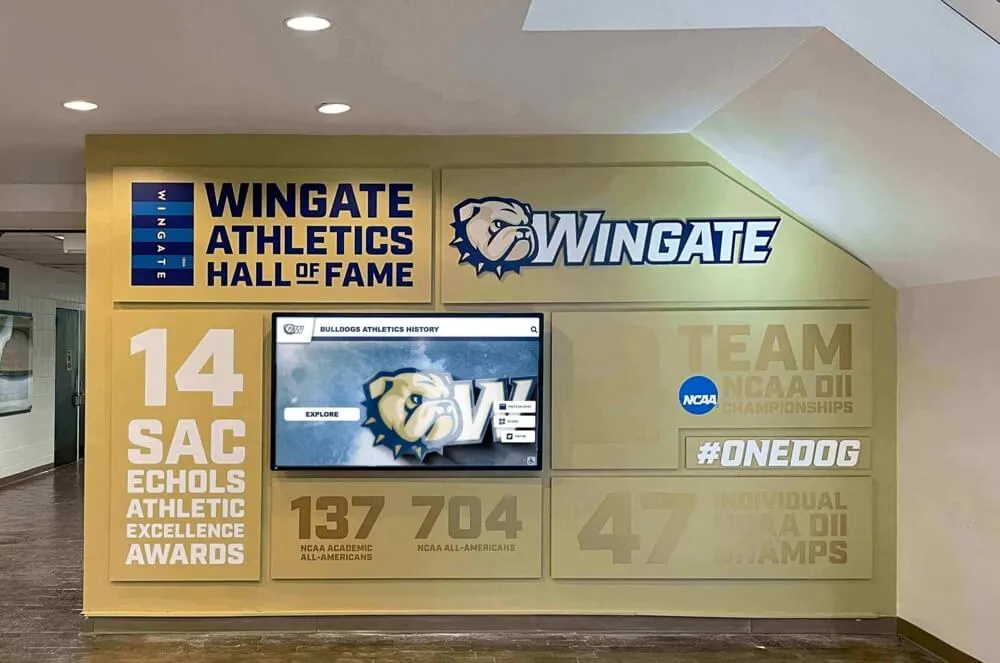
Lobby recognition environments that incorporate institutional branding, permanent hardware, and digital displays create comprehensive tribute spaces that donors and families find meaningful
Best Practices for Memorial Bench Donor Recognition Programs
Whether your institution is launching a new bench program or evolving an existing one, several practices distinguish programs that retain donors and inspire upgraded giving from those that fulfill a minimum acknowledgment function.
Start With a Siting Master Plan
Before accepting the next memorial bench gift, develop a physical map showing where benches have been installed, where additional installations are feasible, and at what number the program reaches saturation. This prevents the common failure mode of placing benches wherever space happened to be available when each gift was accepted—resulting in clusters near some buildings and none near others, or benches hidden behind landscaping that grew up around them.
Siting plans also create a natural conversation with donors: “We have three locations remaining in the main courtyard. Here’s what each looks like in terms of visibility and foot traffic.”
Create a Companion Digital Profile for Every Physical Tribute
Every memorial bench should have a corresponding digital record—whether in a lobby display, online donor wall, or both. This profile carries the name, honoree relationship, program supported, years of involvement, and any photos or personal statements the family wants to share.
This pairing serves three purposes: it gives the tribute institutional permanence beyond the physical hardware, it ensures families have something they can share digitally, and it provides the development team with a complete donor record that survives staff transitions, renovation projects, and the inevitable moment when the physical plaque becomes hard to read.
Set Refresh Cycles for Physical Installations
Metal plaques corrode, wood fades, and mounting hardware loosens over time. An annual inspection of all bench installations—cleaning, hardware tightening, plaque assessment—prevents the gradual decline that transforms tribute installations into maintenance problems. Establish a budget line for plaque replacement before it’s needed rather than scrambling to find funds when a donor family points out that their loved one’s name is illegible.
Athletic program tribute spaces face the same maintenance calculus: physical installations require ongoing investment to maintain the dignity they represent at installation, and programs that account for that lifecycle cost upfront avoid the embarrassment of deteriorated recognition that communicates the opposite of appreciation.
Use Recognition Events to Surface the Full Story
Annual recognition events—whether a dedicated donor appreciation dinner or a moment during a larger institutional celebration—give every tributary a chance to be featured more fully than their plaque can carry. A five-minute multimedia profile shown on a screen in front of 200 guests communicates more about why a gift mattered than any hardware ever could.
These events also create natural moments to introduce expanded recognition options to existing donors. A family who funded a memorial bench in 2019 may not know that a digital lobby display now lets them add a photo and personal statement—or that the program offers a new courtyard garden installation they might want to participate in through an additional gift.
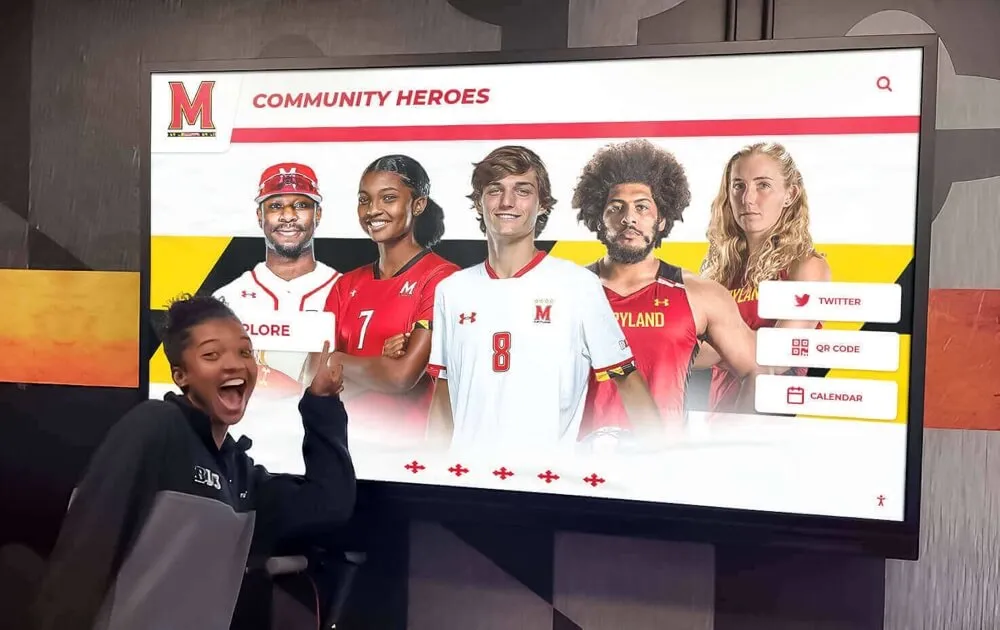
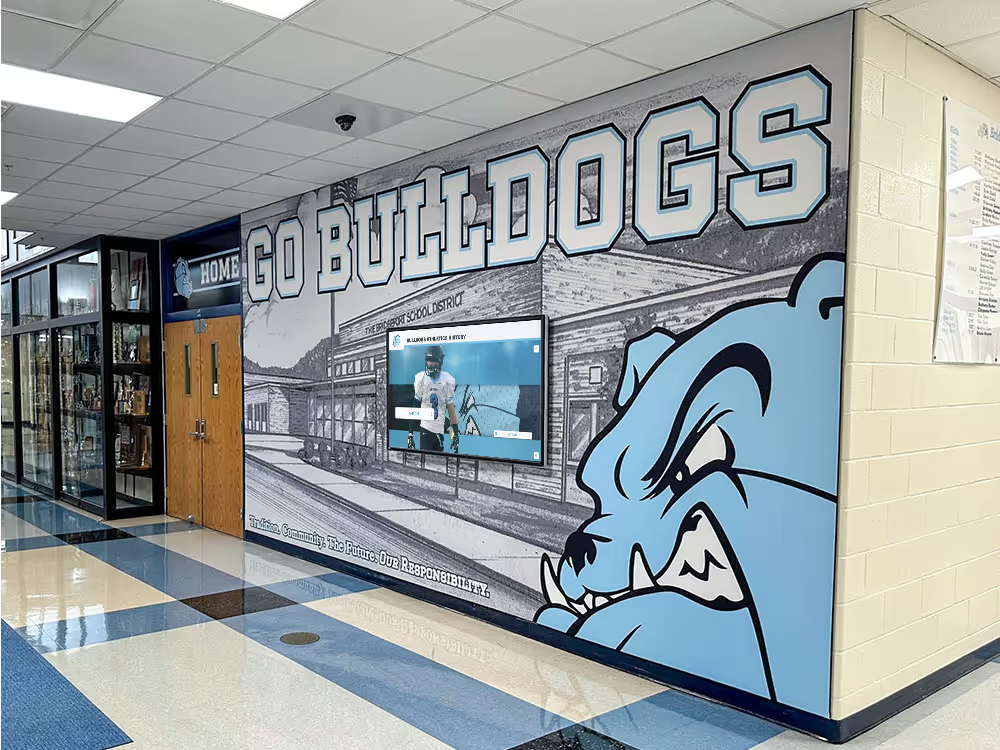
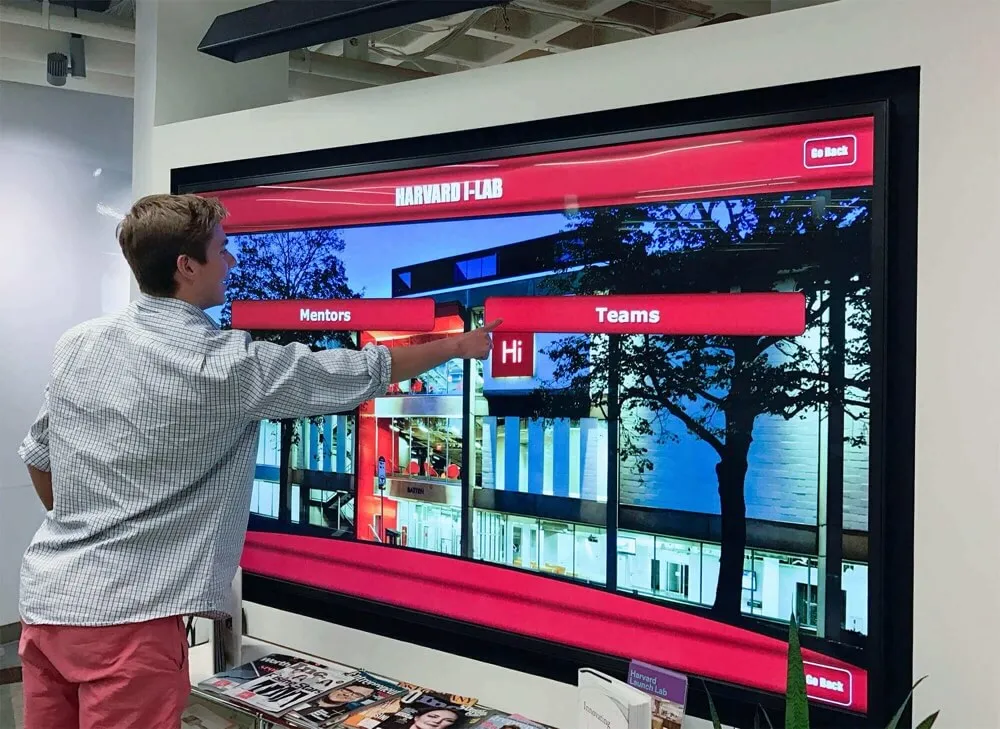
Recognition systems that students interact with daily create institutional culture around philanthropy—making generosity visible and celebrated throughout the school environment
Frequently Asked Questions About Memorial Bench Donor Recognition
How much does a memorial bench donor recognition program typically cost?
Memorial bench programs vary widely by material and installation complexity. A basic powder-coated steel bench with a cast bronze plaque typically costs $2,500–$5,000 installed. Recycled plastic lumber benches with engraved nameplates run $1,500–$3,000. Premium teak or ipe benches with custom bronze dedications can exceed $8,000. These figures cover hardware and installation only—companion digital recognition profiles add $200–$800 per donor depending on content development and system integration. Total program costs over a decade typically run $40,000–$150,000 for programs installing 3–10 benches annually, making the per-donor cost substantially higher than digital-only recognition alternatives.
When should a school stop adding memorial benches and switch to digital recognition?
There’s no universal threshold, but most facilities reach practical saturation between 20 and 40 bench installations. Signs that a program has reached or approached that point include: donors asking about alternative recognition options because premium bench locations are no longer available, maintenance costs rising faster than new gift revenue, and development staff spending significant time on placement logistics rather than donor cultivation. At that point, establishing a digital donor display as the primary recognition vehicle—with benches reserved for exceptional gifts in newly developed spaces—typically serves both donors and the institution better than continued bench proliferation.
Can QR codes on memorial plaques withstand outdoor weather conditions?
Durable outdoor QR code markers are available in stainless steel, anodized aluminum, and UV-resistant polymer formats designed for long-term outdoor exposure. Laser-engraved or deep-etched QR codes on metal substrates maintain scan functionality for 10+ years without fading or degradation. Surface-printed or laminated codes fade significantly faster in UV exposure and should be avoided for permanent outdoor installation. Cost for a durable outdoor QR marker typically ranges from $75–$250 depending on material and size. The combination of a permanent physical bench with a durable QR code marker provides both timeless tribute and unlimited digital content capacity.
How do digital donor recognition displays differ from a donor wall plaque?
A digital donor display is a touchscreen or digital screen system that shows donor information dynamically—searchable directories, multimedia profiles, giving histories, photos, and video. Unlike a physical donor wall plaque, a digital display can hold thousands of donors without additional hardware, update immediately when new gifts are received, and carry rich content including photographs, personal statements, and impact stories. A physical donor wall plaque is permanently engraved or fabricated, cannot be updated without replacement, and is limited to text that fits within the physical plaque dimensions. Most institutions use both: physical plaques for major donors and named spaces where permanence communicates prestige, and digital displays as the scalable recognition system for the full donor community.
What’s the best way to honor a memorial gift when the donor wants both a physical tribute and broad visibility?
The most effective approach combines a physical installation—bench, named space, or paver—with a comprehensive digital presence. The physical installation provides the tangible, location-specific tribute that families and donors value for its permanence and emotional resonance. The digital component provides broad visibility throughout the building, 24-hour access for visitors, searchability by name, and the ability to carry multimedia content that physical hardware cannot hold. Pairing both forms of recognition addresses the complete range of what memorial donors typically want: something real that stands in a place they love, and something visible that ensures their generosity is seen and understood beyond a small corner of a campus courtyard.
Building a Recognition Program That Grows With Your Donor Community
Memorial bench donor recognition will remain a cornerstone of tribute programs at schools, universities, and nonprofits because the form works—it is tactile, permanent, and emotionally resonant in ways that screens and databases cannot replicate. But no bench program operates in isolation from the questions of scale, visibility, and story depth that determine whether recognition actually retains donors and inspires continued generosity.
The institutions that build the most durable donor relationships are those that treat recognition as an architecture rather than a product: a system where physical and digital tributes occupy distinct roles, reinforce each other, and together create an environment where generosity is visible throughout the institution—not just in one courtyard on one side of campus. Benches anchor specific spaces with permanence. Digital systems carry the full community’s story into every lobby, hallway, and event space. Virtual walls extend that story to anyone, anywhere, who wants to see it.
Designing that architecture requires honest assessment of where your current recognition program leaves donors underserved—and clarity about which approaches address those gaps most effectively for your specific institution, donor base, and facility context.
Extend Your Memorial Bench Program With Scalable Digital Recognition
Rocket Alumni Solutions helps schools, universities, and nonprofits build recognition systems that honor every donor—from cornerstone memorial bench contributors to broad annual fund supporters—through interactive digital displays, cloud-managed donor profiles, and hybrid recognition environments that grow with your program rather than running out of space.
Explore Digital Donor Recognition SystemsThe goal is a recognition environment where no significant gift goes unseen, where every tribute carries enough context to mean something to a stranger passing by, and where your institution’s culture of gratitude is visible throughout the spaces where students, staff, families, and community members live and work every day. Memorial benches help build that environment. The right digital and physical partners complete it.