



Every development officer has faced the dilemma: a loyal donor submits a $2,500 gift, and six weeks later her employer’s matching gift program contributes another $2,500. Your total raised is $5,000. But whose name goes on the donor wall — hers, her company’s, or both? And if you list both at the $2,500 level, does the donor feel shortchanged when she personally gave half? If you credit either party at the full $5,000, have you misrepresented one contribution at the expense of the other?
Matching gift donor recognition sits at the intersection of individual stewardship, corporate relations, and institutional gift accounting — and most donor wall policies were written before employer matching became a mainstream giving vehicle at schools and universities. The result: inconsistency across development teams, donors credited at the wrong level, employers listed without knowing they were recognized, and finance staff trying to reconcile totals that don’t quite add up.
This guide offers a clear framework for crediting matching gift donors on both physical and digital donor walls. It explains the three most common recognition models and when each is appropriate, addresses the double-counting trap and how to avoid it operationally, and shows how modern digital donor displays make matching gift recognition accurate, timely, and easy to maintain as gift totals change.
Matching gifts represent one of the fastest-growing giving vehicles in educational fundraising, yet recognition policy often lags behind the operational reality. According to research from Double the Donation, an estimated 26 million Americans work for companies that offer matching gift programs — and an estimated $4–7 billion in eligible matching funds goes unclaimed annually because donors are unaware their employer participates or don’t complete the required paperwork. Schools and universities that actively promote matching gift programs frequently see donor wall totals grow substantially once eligible employees begin submitting their matches — creating recognition questions that demand a written policy, not an improvised answer.

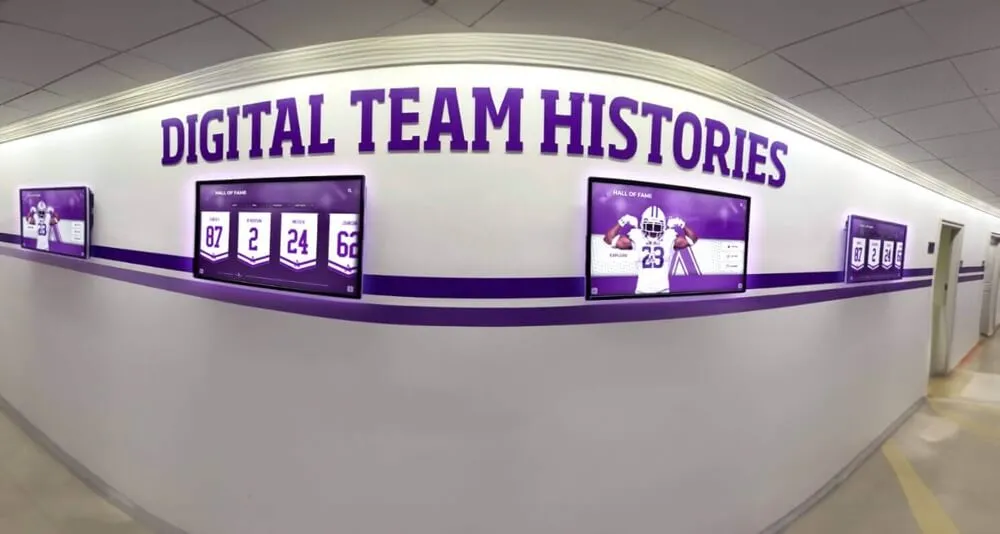
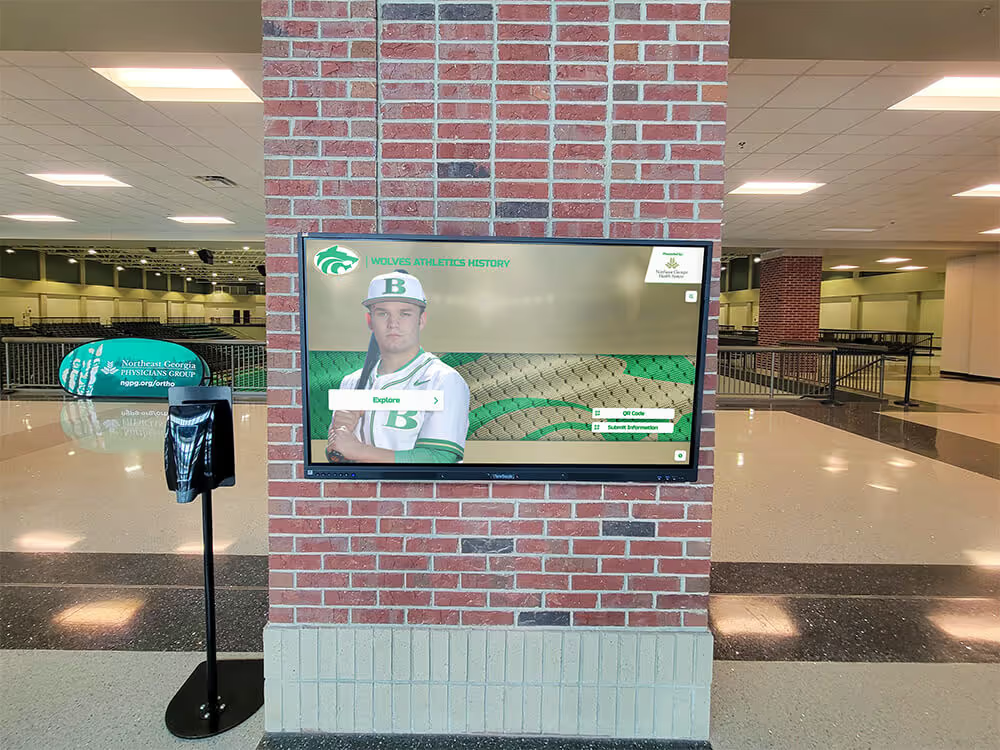
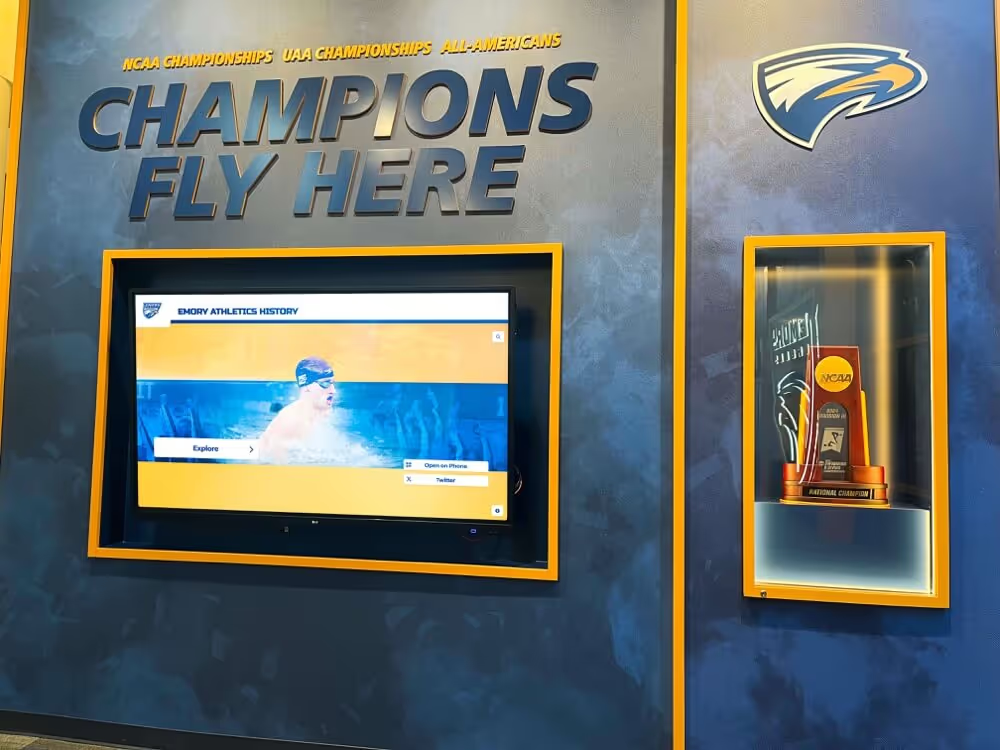
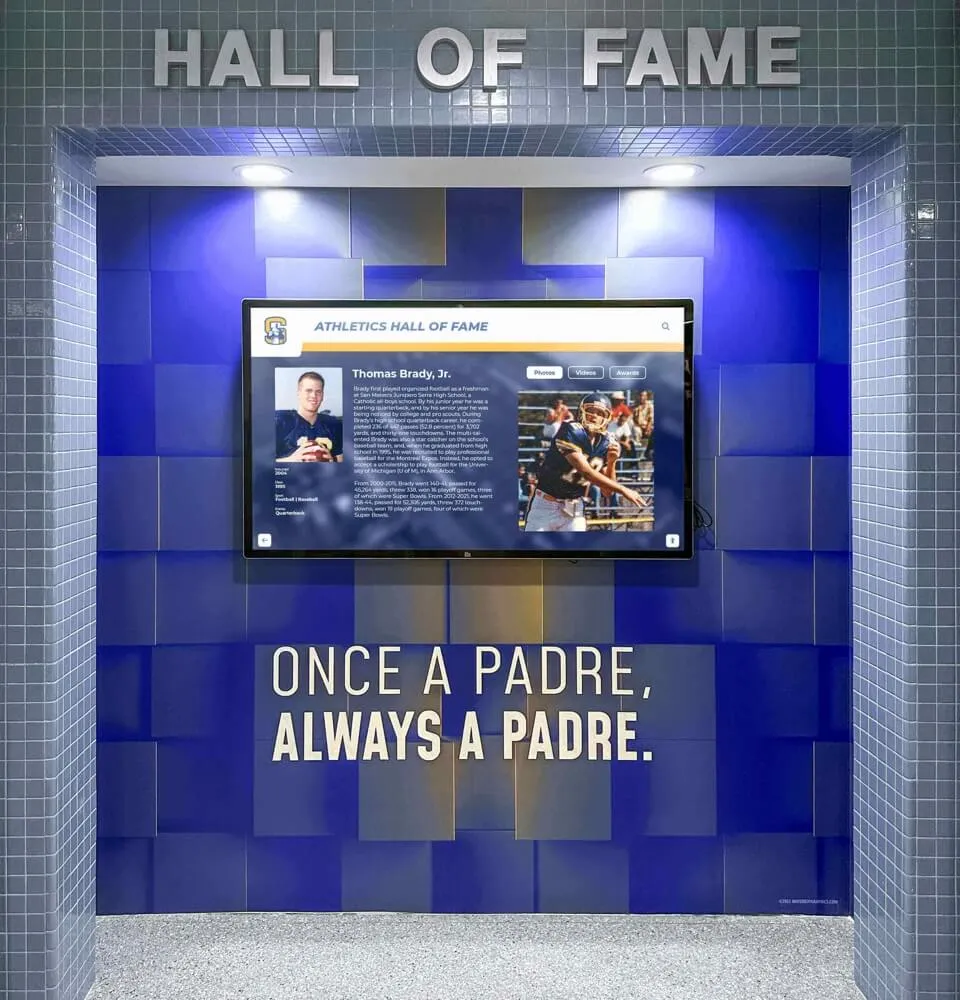
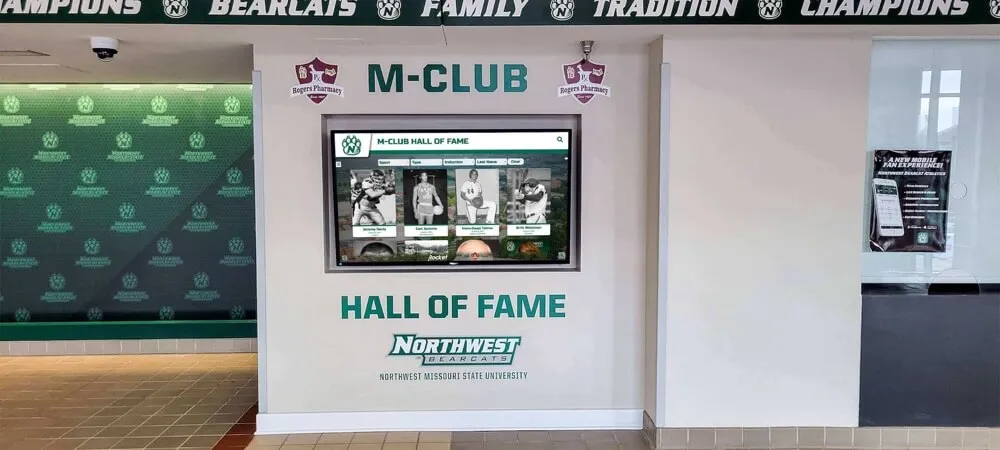
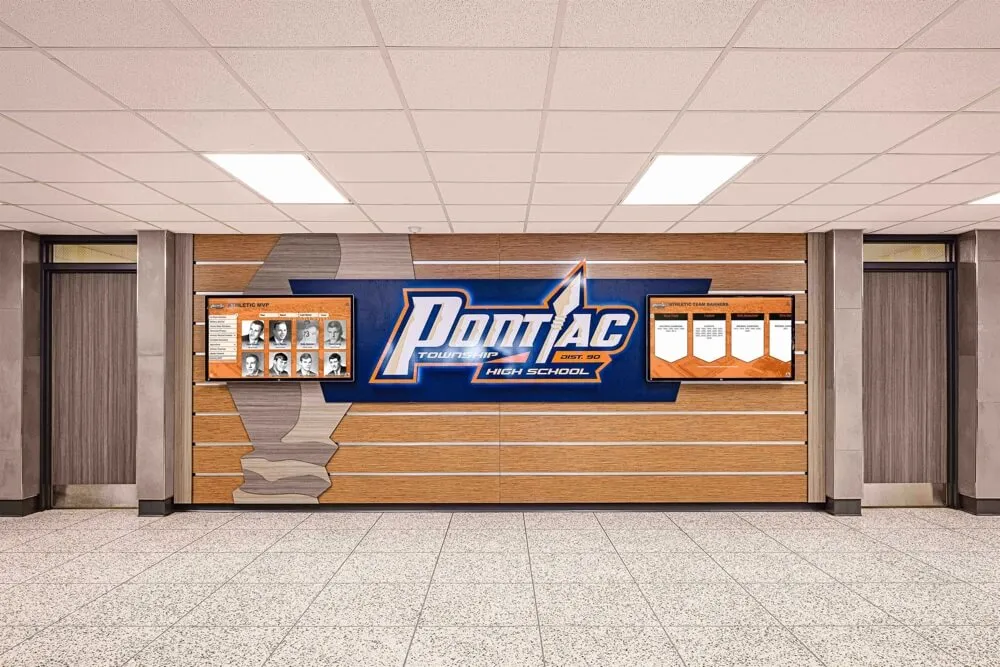
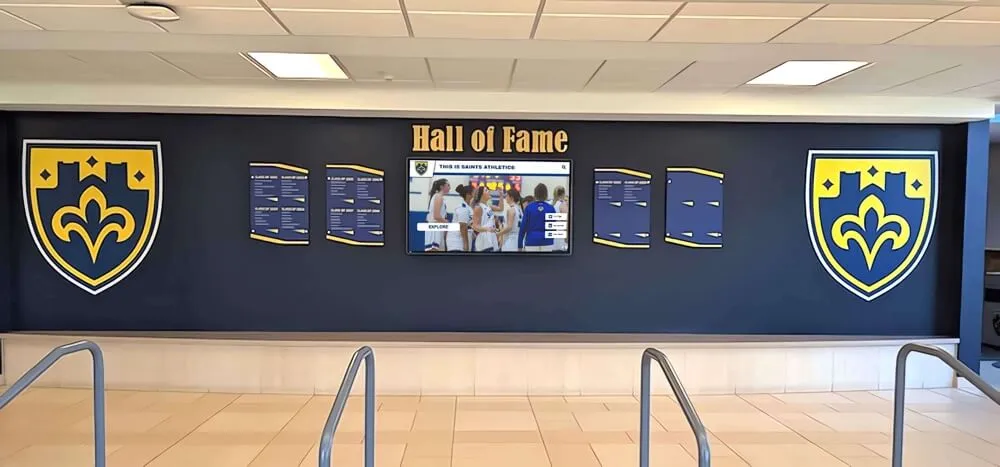
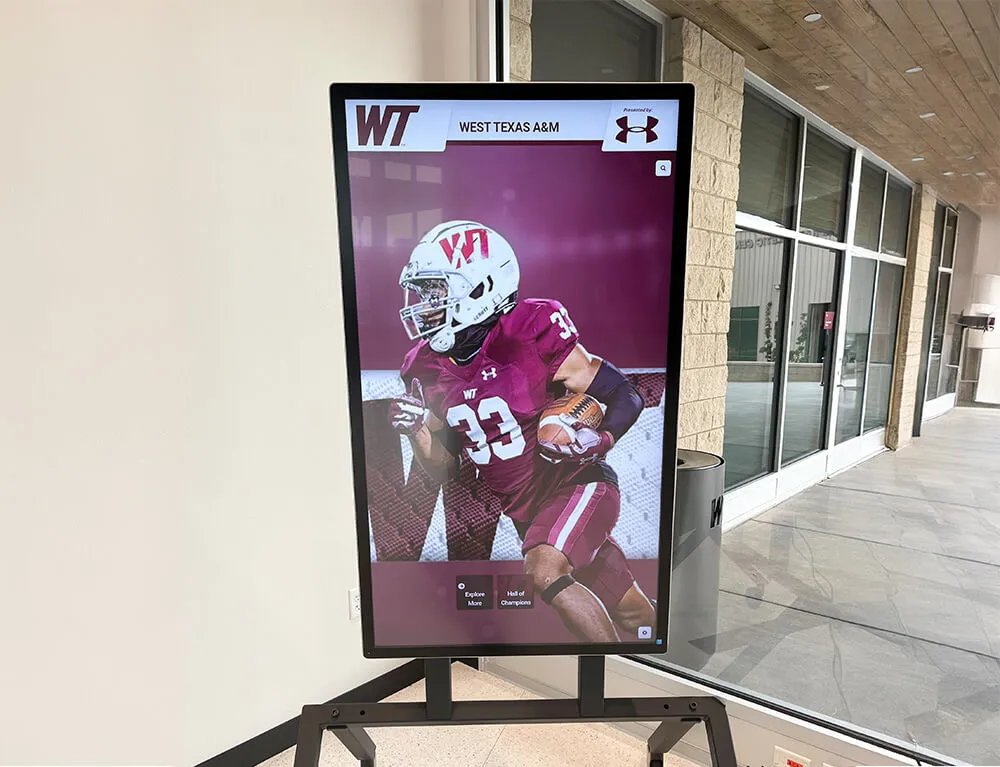
Digital recognition walls must reflect accurate, up-to-date gift totals — a challenge that matching gifts make more complex without clear policy
Why Matching Gift Recognition Demands Its Own Policy
Traditional donor wall policies assume a simple transaction: a donor gives a gift, the gift is processed, and the donor appears on the wall at the corresponding level. Matching gifts break this model in three important ways.
Timing: Individual gifts typically process within days. Employer matches often take weeks or months — sometimes crossing a fiscal year boundary. A donor recognized at the $1,000 level in November may warrant recognition at the $2,500 level after a match clears in February. On a traditional bronze plaque wall, that update means ordering and reinstalling a new plaque. On a digital donor display, it is a content management update that takes minutes.
Attribution: Matching gift dollars arrive from two legally distinct entities — the individual donor and the employer. Your gift crediting rules determine which entity gets recognized, at what level, and on which tier of your donor wall. Without a written policy, different team members will handle similar situations differently, creating inequitable treatment of otherwise comparable donors.
Stewardship relationships: Employers that operate matching gift programs care about how their contribution is acknowledged, just as individual donors do. Whether you recognize the company on your donor wall directly affects the corporate relationship — and can influence whether a corporate foundation contact renews the matching commitment or expands the program in future years.
Beyond stewardship, active promotion of matching gifts changes the composition of your donor pool in ways that surface recognition policy gaps quickly. Development teams that invest in matching gift outreach — whether through database screenings, confirmation emails, or dedicated landing pages — should invest equally in the recognition framework that greets those donors when their matches clear. Similar thinking applies across recognition contexts: schools building appreciation programs for different donor constituencies, from major gift supporters to community partners, benefit from consistent written standards that guide every team member through the same decisions. Resources like this teacher appreciation recognition guide illustrate how thoughtful recognition policy applies to multiple constituencies beyond traditional major donors.
Three Recognition Models for Matching Gift Donors
Development teams typically choose among three approaches. Each has legitimate use cases; the key is selecting one intentionally and applying it consistently across every matching gift relationship.
Model 1: Credit the Individual Donor Only
Under this model, the employee’s personal gift and the matching contribution from the employer are combined and credited entirely to the individual donor. If an employee gives $1,000 and the employer matches at 1:1, that donor appears at the $2,000 level on your donor wall. The employer receives private acknowledgment and any required gift receipt but does not appear on public recognition displays.
Best for: Organizations where individual donor relationships are the primary fundraising focus, where employer matches are modest relative to individual gifts, or where development teams prefer not to build separate corporate recognition structures alongside the main donor wall.
Primary advantage: Simplest to administer, prevents donor frustration about having their recognition divided across two separate entries, and directly rewards the donors who take initiative to submit matching gift requests.
Important caution: Employers making substantial matches may feel invisible in your recognition program, potentially reducing their incentive to maintain or expand matching gift offerings.
Model 2: Recognize Both Individually and Together
The most comprehensive approach creates two distinct entries: one for the individual donor (credited with their personal gift only) and one for the employer (credited with the matched amount). Both appear on the donor wall at the tier appropriate for their actual contribution amount.
Best for: Institutions managing active corporate partnerships, capital campaigns where corporate naming opportunities exist, or schools with employer matching rates high enough that corporate recognition carries meaningful relationship value.
Primary advantage: Accurately represents each party’s contribution; strengthens both individual and corporate stewardship simultaneously.
Important caution: Requires clear visual separation on the donor wall — perhaps a dedicated “Corporate Matching Partners” section — so visitors understand why a company and an individual donor appear as separate entries without assuming the same dollars are being counted twice.
Model 3: Credit the Employer Only for Matched Amounts
In this less common approach, matching gift dollars are attributed entirely to the employer organization rather than the individual employee. This works most naturally in formal corporate giving programs or where the institution has structured employer recognition tiers distinct from individual donor recognition.
Best for: Institutions with robust corporate giving programs where employer branding and named giving opportunities are a primary fundraising relationship.
Important caution: Individual donors who went through the effort of submitting matching gift paperwork may feel their personal contribution goes unrecognized, discouraging future submissions — which defeats the purpose of matching gift promotion.
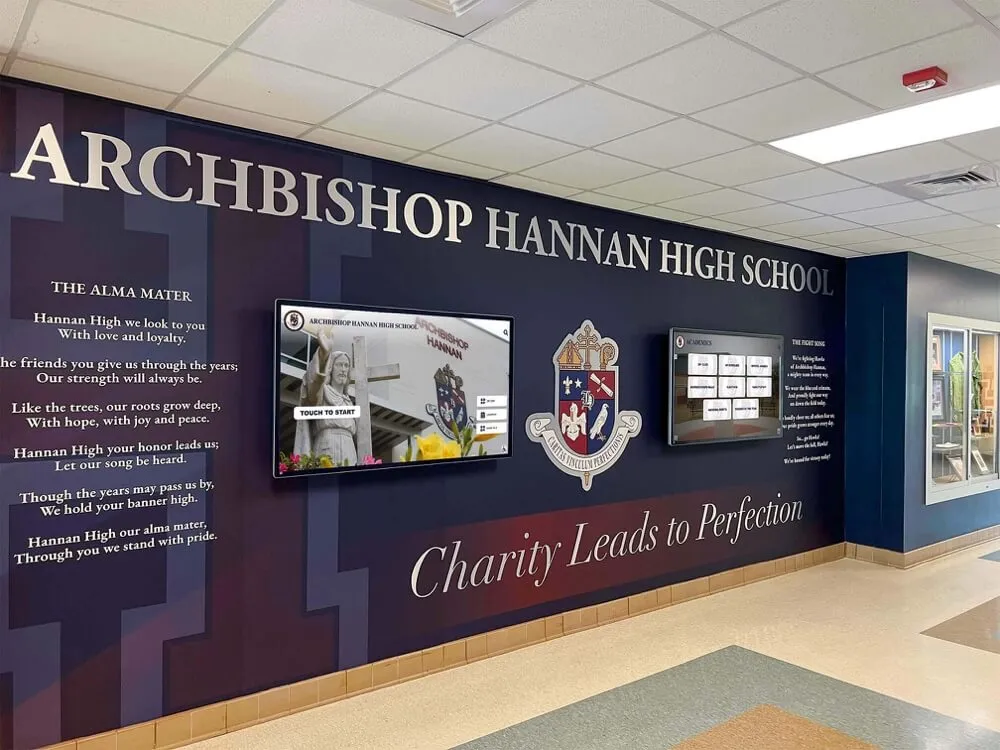
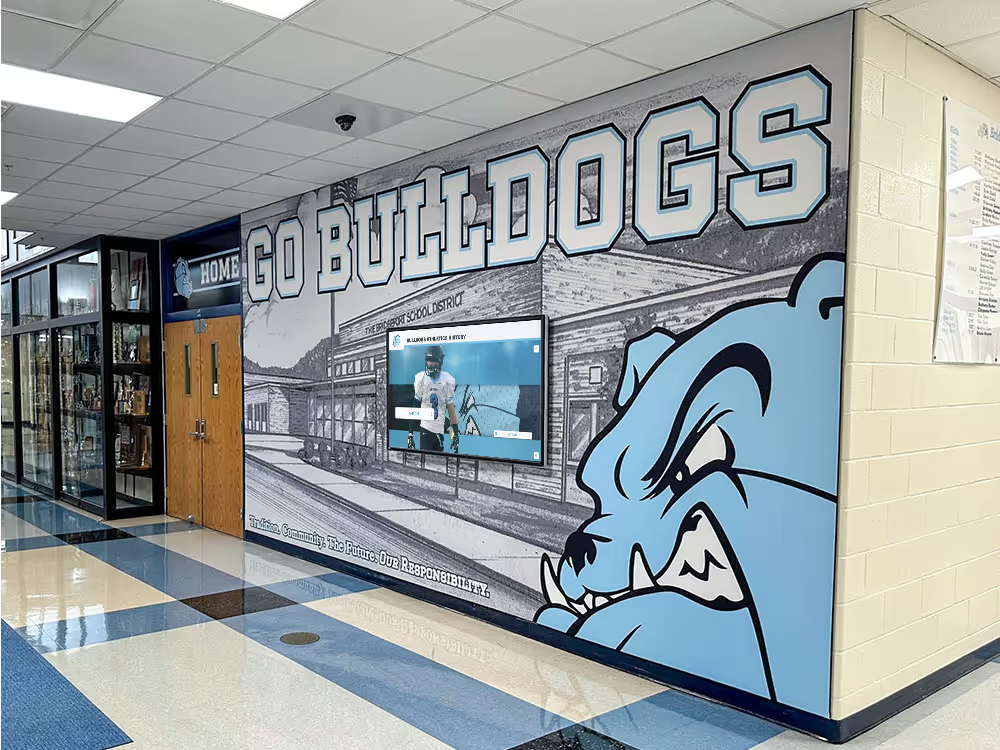
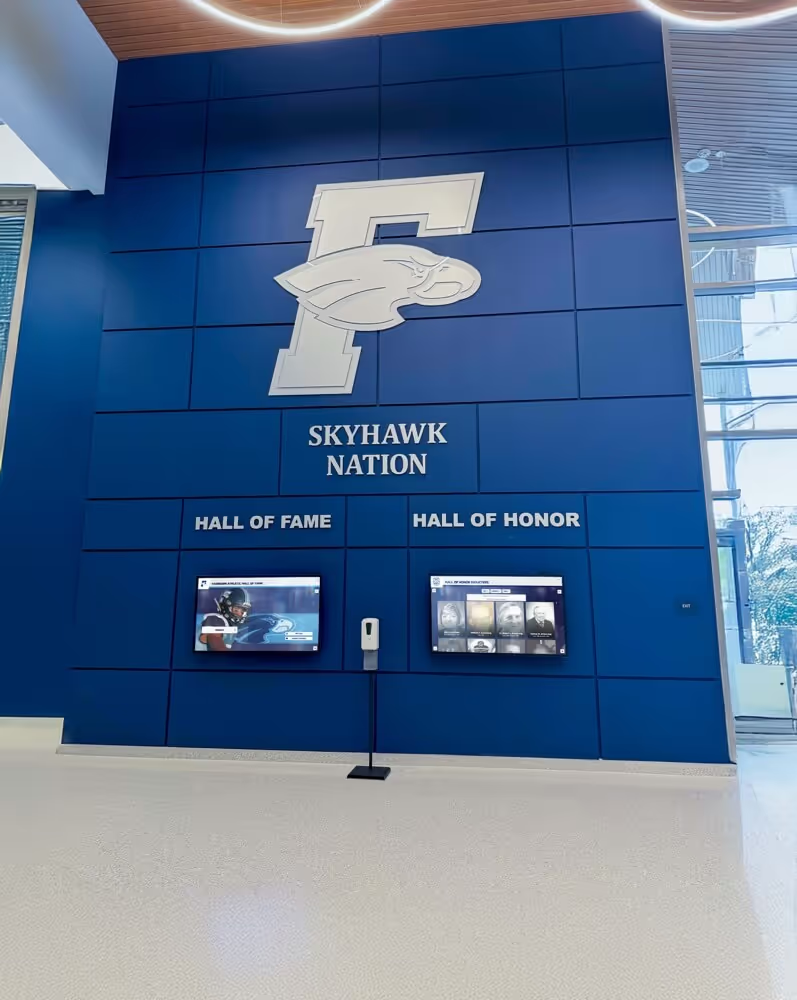
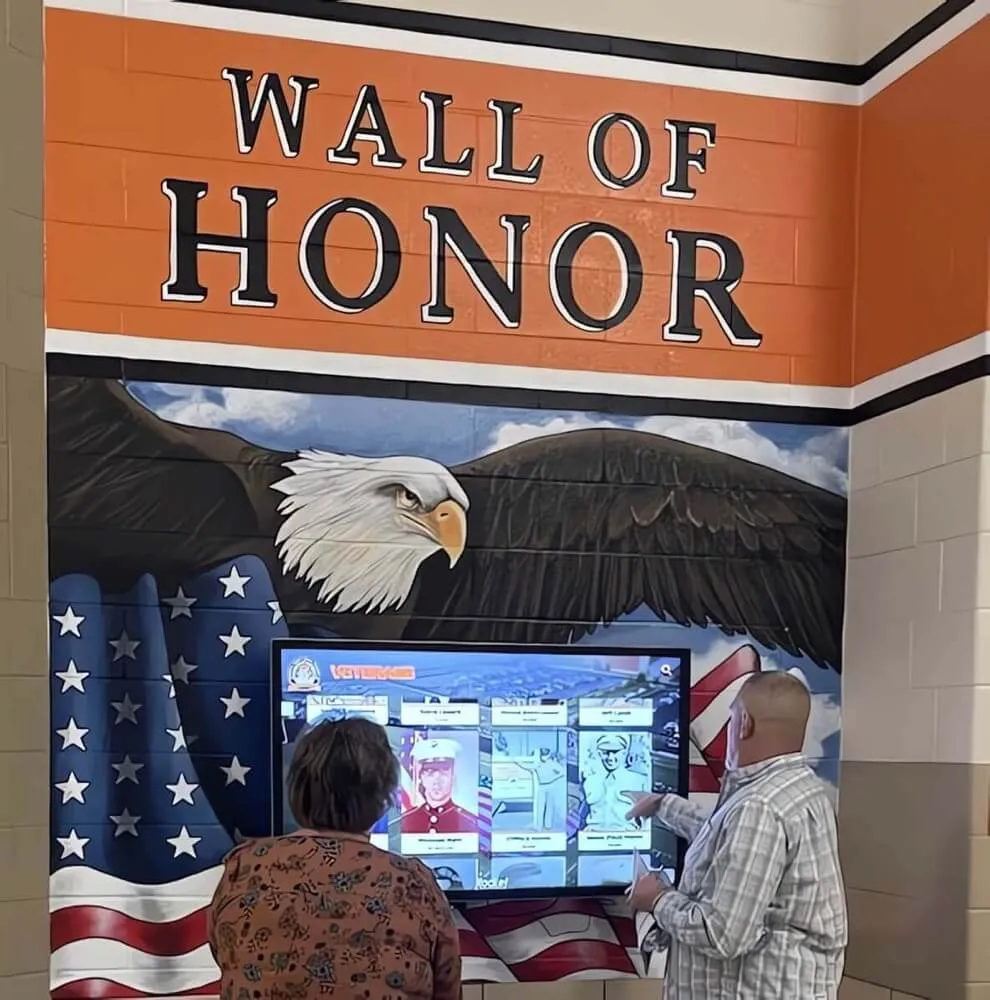
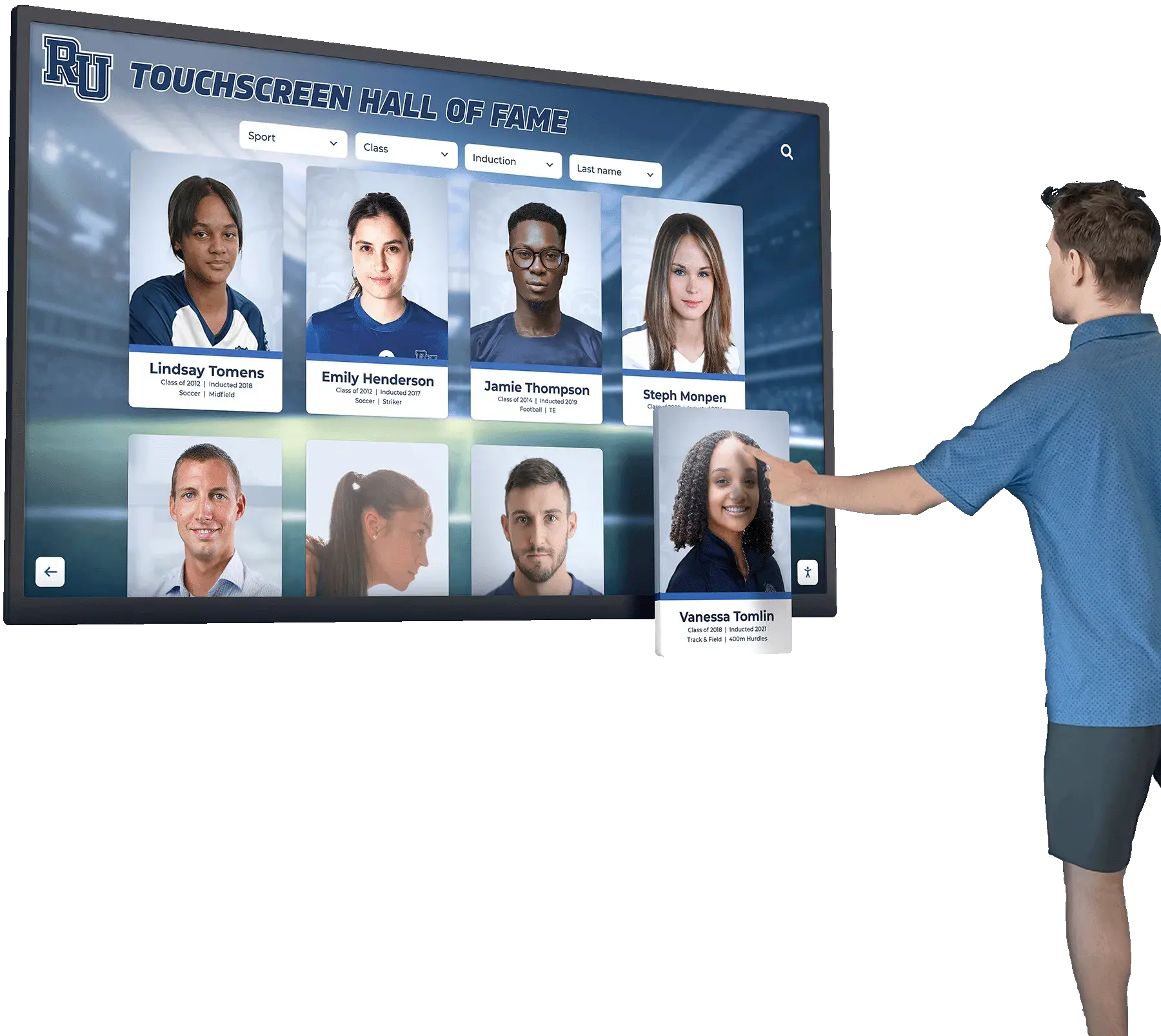
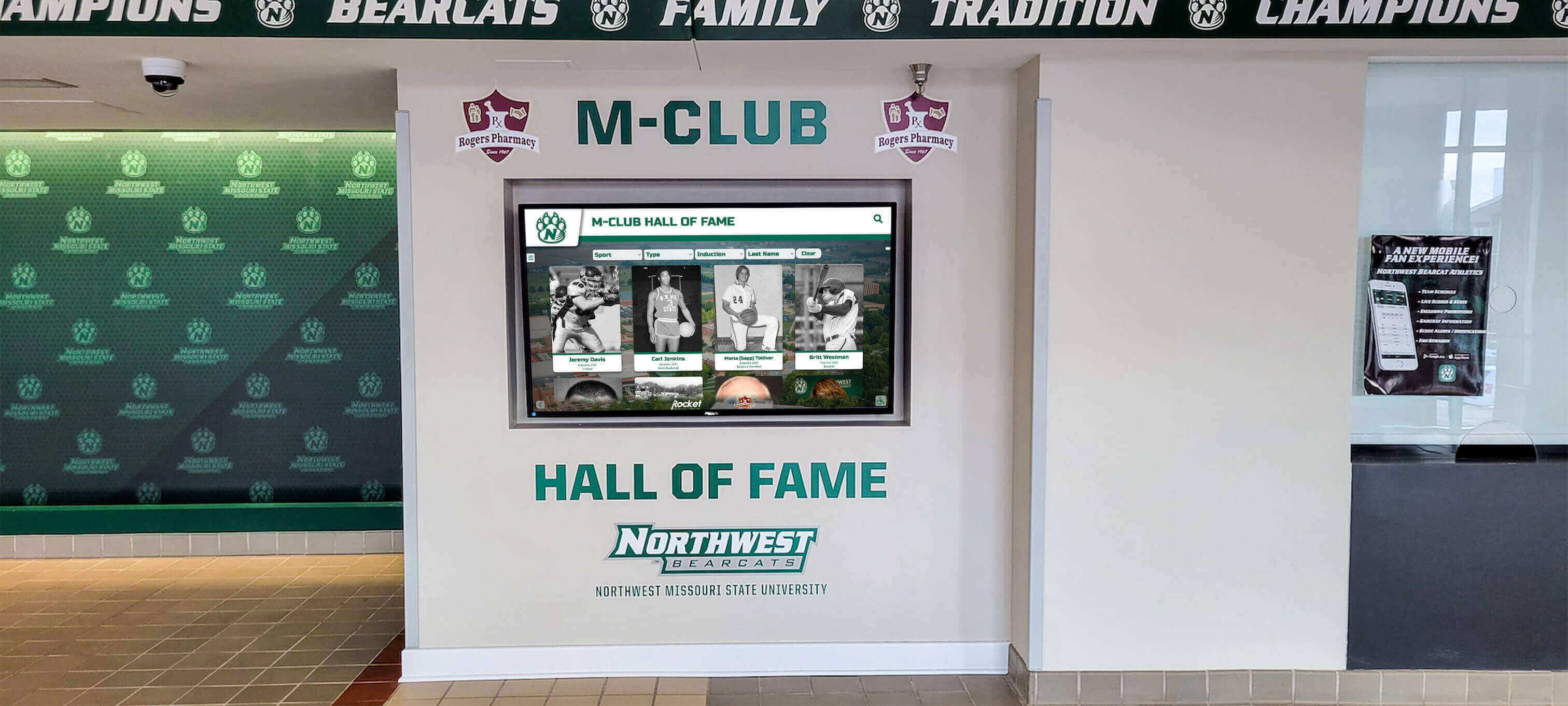
Clear recognition tiers — visually separated by giver type — prevent visitor confusion about how employer and individual matching gift contributions are credited
Avoiding Double-Counting: The Core Policy Decision
Double-counting means attributing the same gift dollars to two different parties in a way that inflates your reported totals. It is both a gift accounting concern and a donor stewardship ethics issue: leadership, auditors, and donors themselves should be able to trust that recognition totals reflect actual dollars received.
The clearest test: do your recognized totals on the donor wall add up to the actual gift revenue in your general ledger?
- If an individual gives $1,000 and the employer matches $1,000, you received $2,000 total.
- Under Model 1, the individual appears at the $2,000 level — no double-counting; the $2,000 recognized equals $2,000 received.
- Under Model 2, the individual appears at $1,000 and the employer appears at $1,000 — still no double-counting; the totals still sum to $2,000, with each party credited accurately for their actual contribution.
What creates double-counting is crediting the individual at the full $2,000 AND the employer at $1,000, producing $3,000 in recognized giving from a $2,000 transaction. This typically happens when a development database applies a matching credit to an individual’s hard credit record without flagging that the employer was simultaneously acknowledged in a corporate giving report at a different tier.
Operational prevention steps:
- Assign a dedicated gift type code for matching gift contributions in your fundraising CRM
- Document clearly that matched dollars appear on exactly one recognition record — individual, employer, or split between them — never on both simultaneously
- Run a quarterly reconciliation report comparing recognized wall totals to actual gift revenue; investigate any discrepancy before it compounds across fiscal years
Modern digital record boards designed for recognition purposes often surface this reconciliation naturally — because content managers must assign each dollar to a specific profile, the process itself forces the policy question. Platforms built specifically for institutional recognition, like those discussed in this overview of digital record board solutions, can integrate with fundraising databases in ways that help enforce consistent gift crediting rules.
Handling Soft Credits vs. Hard Credits in Your CRM
Major fundraising CRM platforms — including Raiser’s Edge, Blackbaud CRM, and DonorPerfect — distinguish between hard credits (actual gift revenue assigned to a donor record) and soft credits (attribution to affiliated individuals or organizations for relationship tracking). Matching gift recognition policy should map directly to how your system assigns these credits.
Under Model 1 (individual-only recognition): Apply the full matched amount as a hard credit to the individual donor record. Give the employer organization a soft credit for the matched portion, ensuring the company receives appropriate acknowledgment and gift documentation without appearing in donor wall totals derived from hard credits.
Under Model 2 (recognize both): Apply hard credits to each party for their respective contributions — individual hard credit for the personal gift, employer hard credit for the match. Soft credits can mirror these for any affiliate tracking needed. Critically, make sure your donor wall reporting queries pull from hard credits only, so soft credit attributions don’t inflate recognition totals.
If your CRM doesn’t support a clean hard/soft credit distinction for matching gifts, work with your gift processing team before establishing public recognition policy — not after. The recognition approach you choose must be supported by your database structure, or your totals will drift from reality every time a matching gift processes. Integrated alumni and donor management platforms that handle complex attribution are discussed in detail in this resource on alumni network software, which covers how these systems manage relationship tracking across multiple donor types.
When Matching Gifts Clear After Donor Wall Updates
Timing is among the hardest practical challenges in matching gift recognition. Most employer programs process contributions on different schedules than individual gifts — sometimes weeks or months after the personal gift clears. A donor recognized at the $1,000 level in October may deserve elevation to the $2,500 level after a matching gift arrives in January.
On a traditional physical donor wall, this creates a genuine operational problem:
- Engraved plaques cannot be updated without physical replacement
- Ordering, fabricating, removing, and reinstalling a revised plaque typically costs $300–$500 or more per donor
- If the matching gift arrives after your annual recognition event or fiscal year-end, the corrected acknowledgment misses the moment when it matters most
- Donors who visit campus between their personal gift and the match clearance may see recognition that no longer accurately reflects their relationship with your institution
On a digital donor recognition display, the same update takes minutes from any web browser. When a matching gift clears in your fundraising database, your recognition coordinator logs into the content management platform, updates the donor’s credited total and giving level tier, and the display refreshes automatically — no vendor coordination, no physical installation scheduling, and no per-update cost. This capability alone represents a meaningful operational advantage for development shops with active matching gift programs, where gift totals regularly change after initial recognition occurs.
Rocket Alumni Solutions’ interactive touchscreen donor walls support cloud-based content updates that reflect matching gift clearances in near real-time. Development staff can update individual donor profiles from any device with internet access, ensuring visitors walking past the display always see current, accurate recognition — whether they visit the week a personal gift processes or months later after an employer match arrives. The platform’s approach to institutional recognition is illustrated in this overview of Rocket Alumni Solutions’ interactive display capabilities.
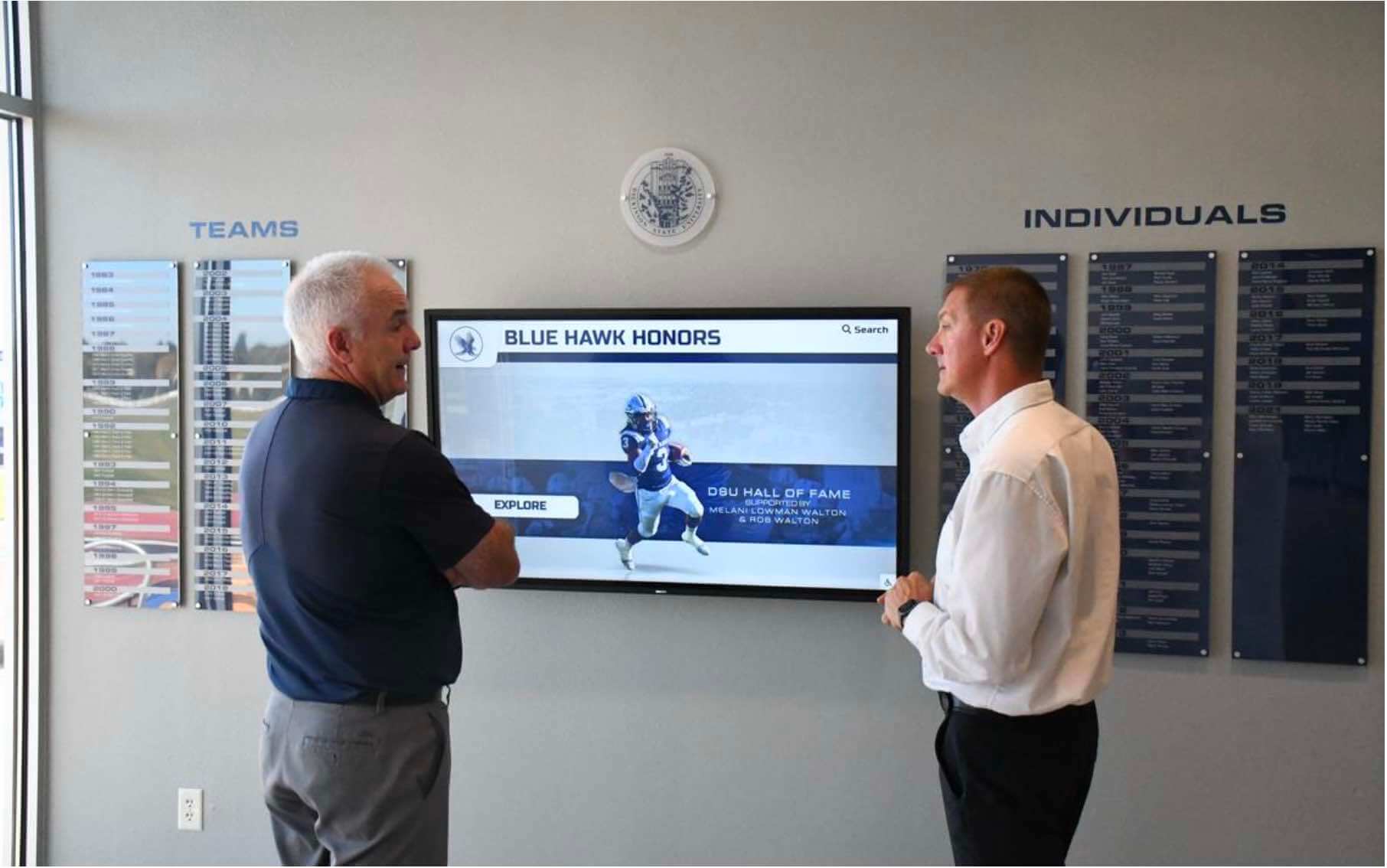
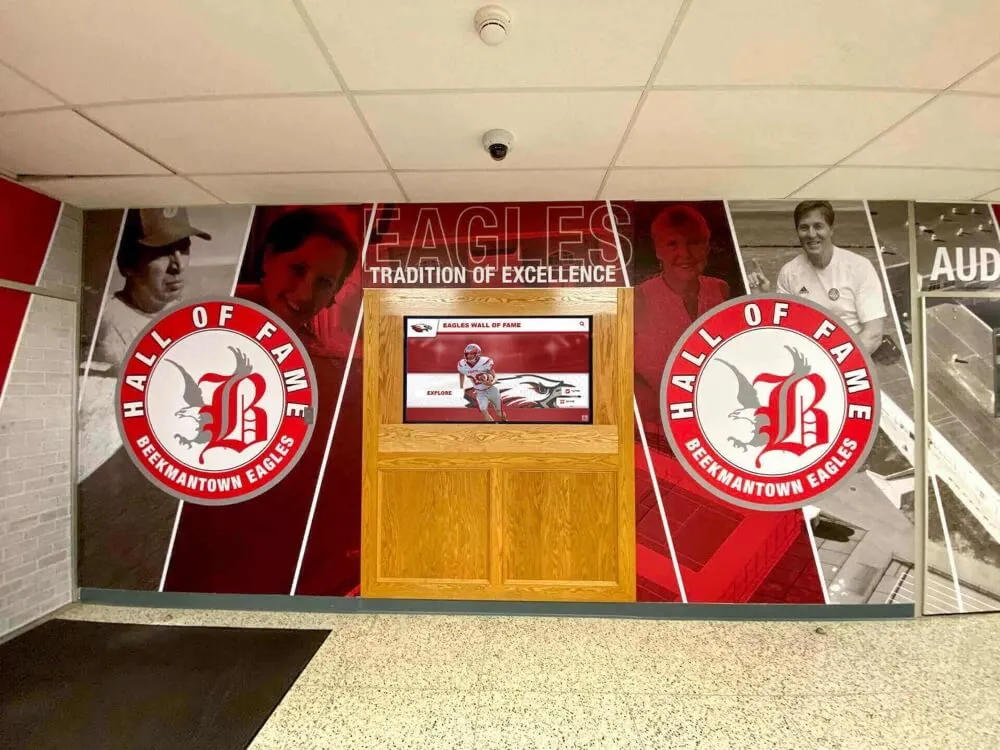
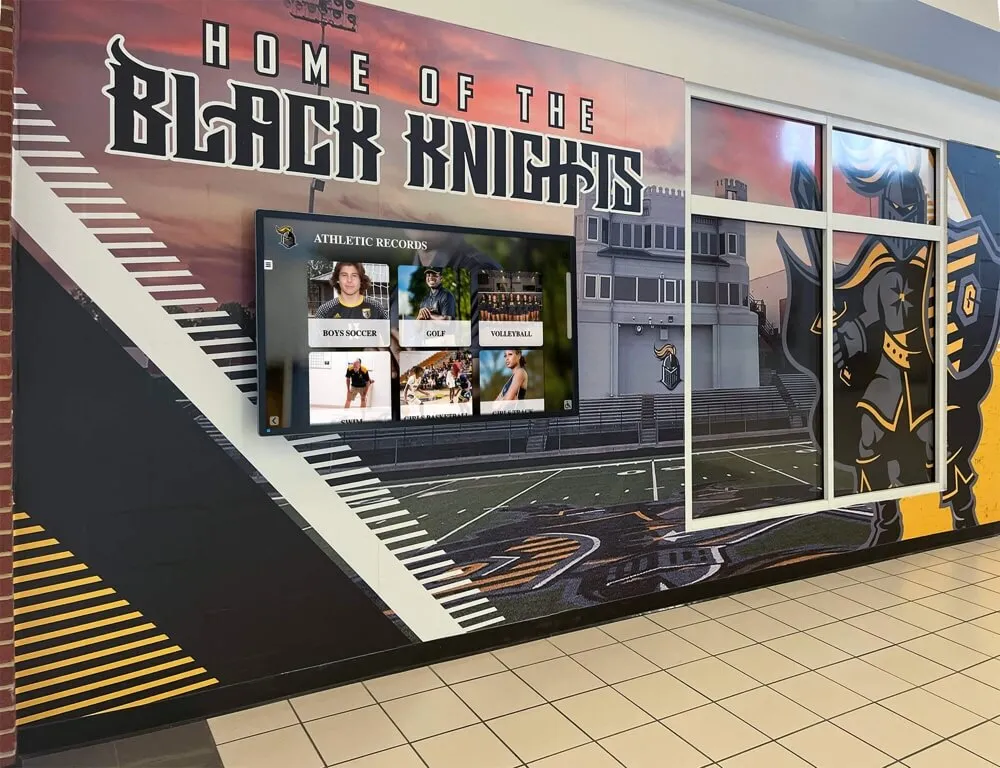
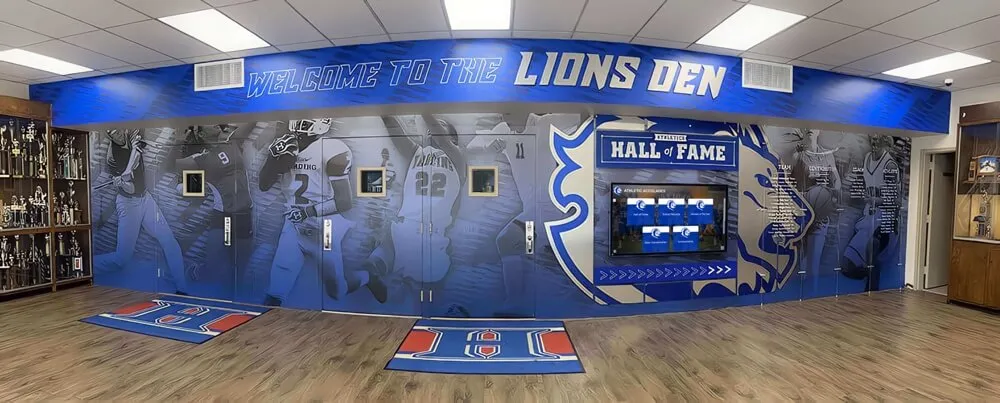
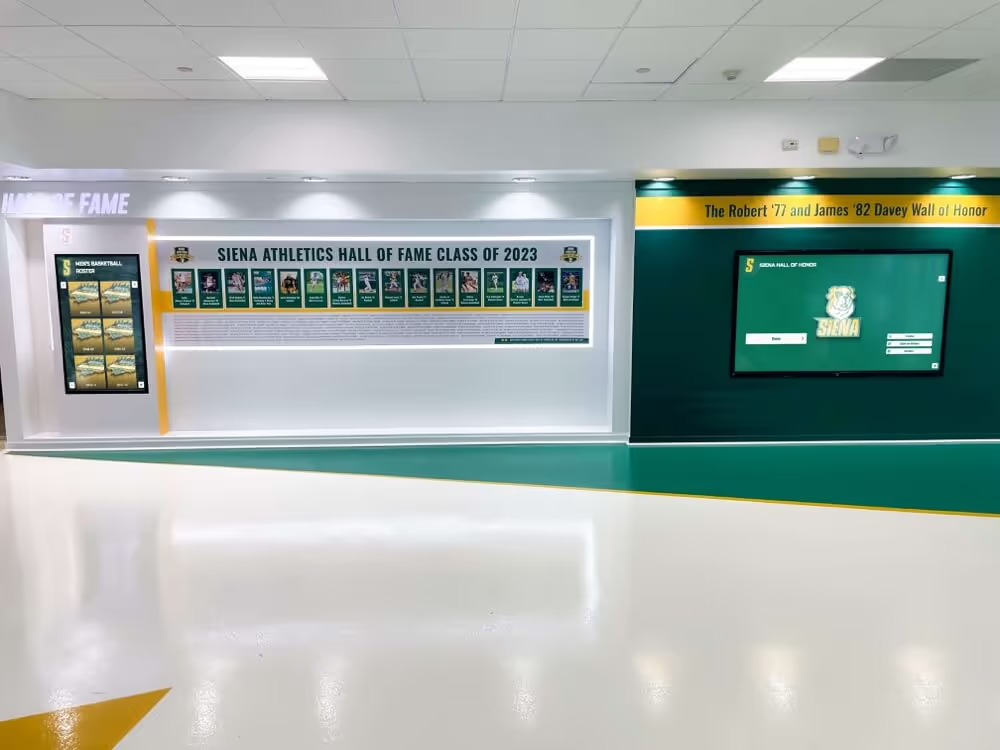
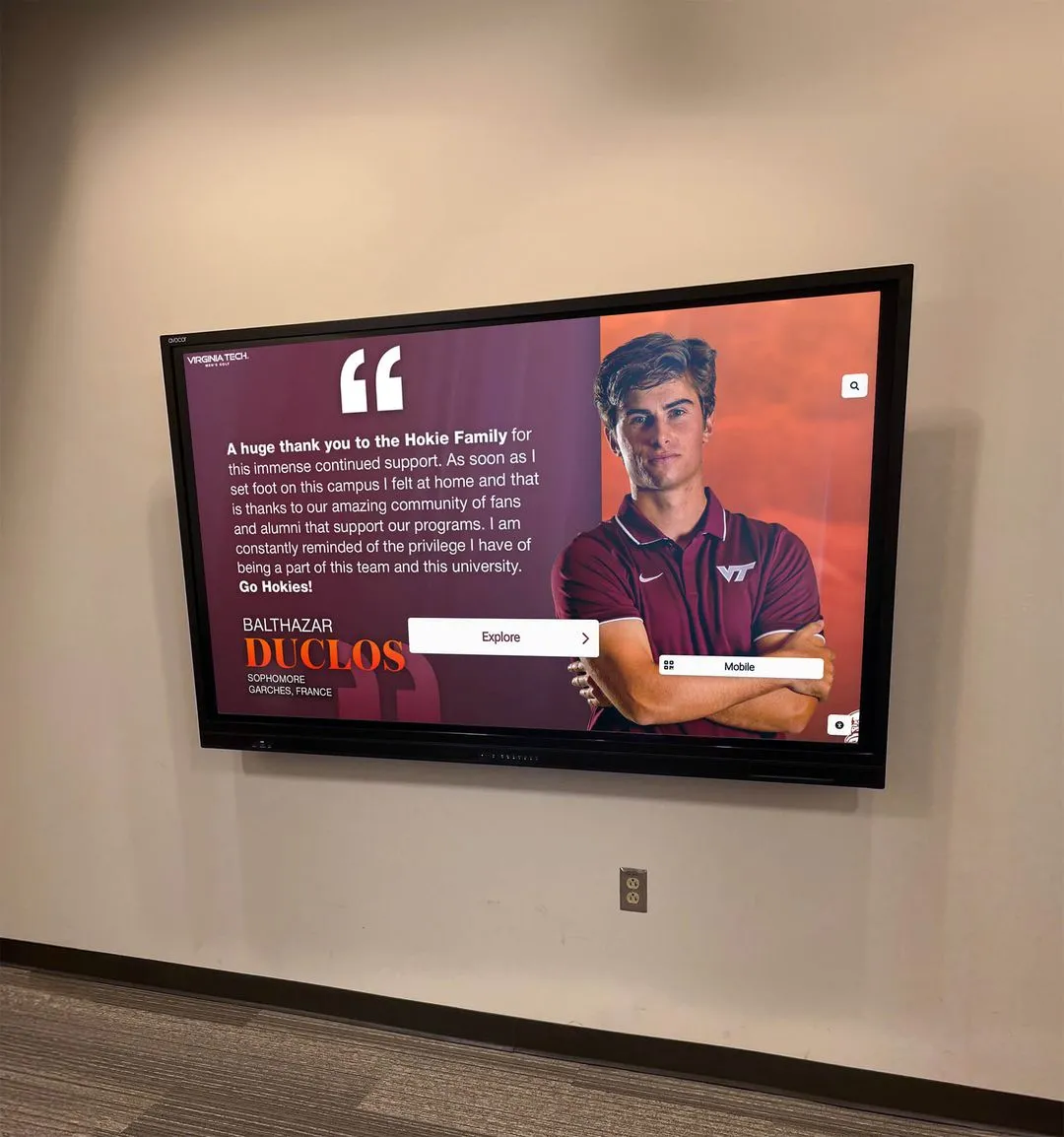
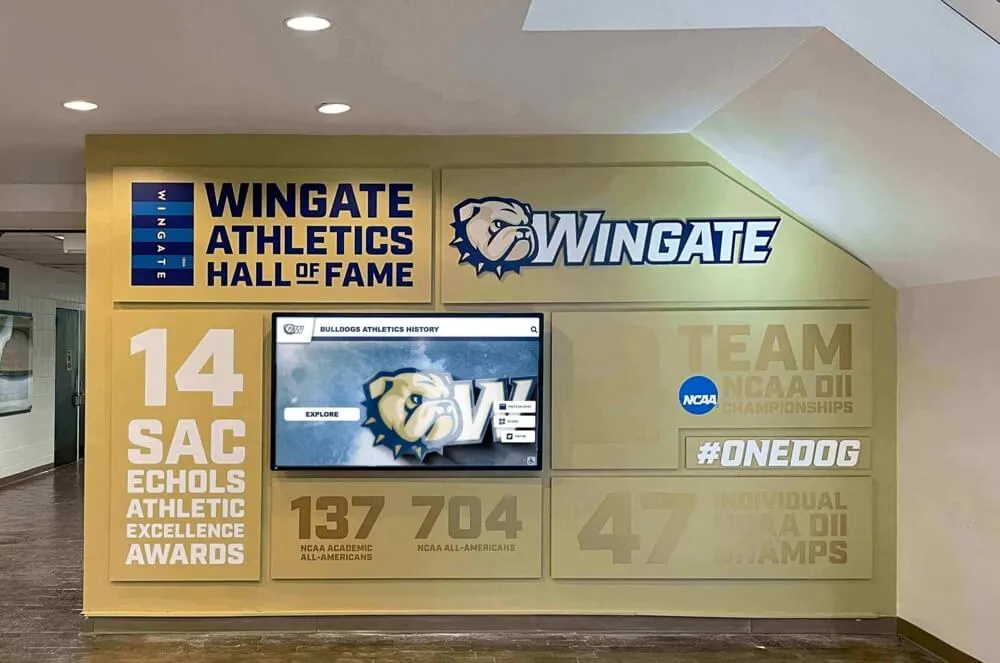
Digital donor displays enable immediate recognition updates when matching gifts clear — eliminating the plaque replacement cycle traditional walls require
Recognizing Corporate Matching Partners on Your Donor Wall
For institutions using Model 2 — or building dedicated corporate recognition structures alongside their individual donor wall — how you present employer matching partners visually matters for both accuracy and relationship management.
Create a separate section for corporate entries. Mixing employer names with individual donor names on the same tier listing confuses visitors who may not understand why “Acme Corporation” appears between “Sarah Johnson” and “David Kim” at the same giving level. A distinct “Corporate Matching Partners” or “Employer Partners in Giving” section makes the recognition structure immediately legible. Visitors understand intuitively that the employer’s presence reflects a different kind of generosity than the individual relationships listed elsewhere on the wall.
Consider logo recognition for employer entries. Many companies prefer logo placement alongside their name for brand consistency, and logos make corporate entries visually distinct from individual text-only listings. Traditional bronze plaque walls typically cannot accommodate logo reproduction cleanly; digital donor displays handle company logos as readily as they handle photography. If corporate matching partners represent significant fundraising relationships for your institution — or if you have aspirations to deepen those relationships — this practical advantage deserves weight in your recognition platform decisions.
Maintain a dedicated stewardship contact at each employer. Many corporate matching gift programs are administered by an HR department or a corporate foundation separate from the individual employees who champion your institution internally. When your matching partner earns recognition on your donor wall, notify both audiences: the employee-donors whose advocacy drove the match, and the program administrator whose organization made the contribution. Both feel the relationship appropriately — and both are more likely to expand engagement when they understand how their role is acknowledged. Thinking about recognition across different institutional contexts, from athletic facilities to development programs, helps clarify how dedicated spaces for distinct donor communities serve stewardship goals, as explored in this guide to athletic training room design for student-athletes.
Building Your Written Matching Gift Recognition Policy
A single-page written policy answers the most common recognition questions before they reach a development officer’s inbox. A strong matching gift recognition policy should address:
- Recognition model: Which of the three models does your institution use, and in what circumstances would you deviate?
- Tier calculation rules: Does the employer match count toward the individual’s giving level, create a separate employer entry at the matched amount, or both?
- Update timing: Are matching gift recognitions updated immediately upon clearance, at a quarterly cycle, or only at annual recognition events?
- Retroactive matches: What happens when a match arrives for a prior-year gift that has already been published in an annual honor roll?
- Corporate logo and presentation standards: If employer entries appear on the donor wall, what visual treatment applies?
- Relationship ownership: Which team member stewards the corporate matching partner versus the individual employee-donor?
With a written policy in place, every member of your development team — gift processors, major gift officers, donor relations staff, and student workers — can answer recognition questions consistently. This consistency matters most at moments of high visibility: when a donor calls to ask why their name appears at a certain level, when a corporate HR contact asks how their company’s match is being acknowledged, or when a board member reviews the donor wall ahead of a major event. Consistent, accurate public recognition also influences how donors and prospects perceive institutional credibility across every program the development office supports.
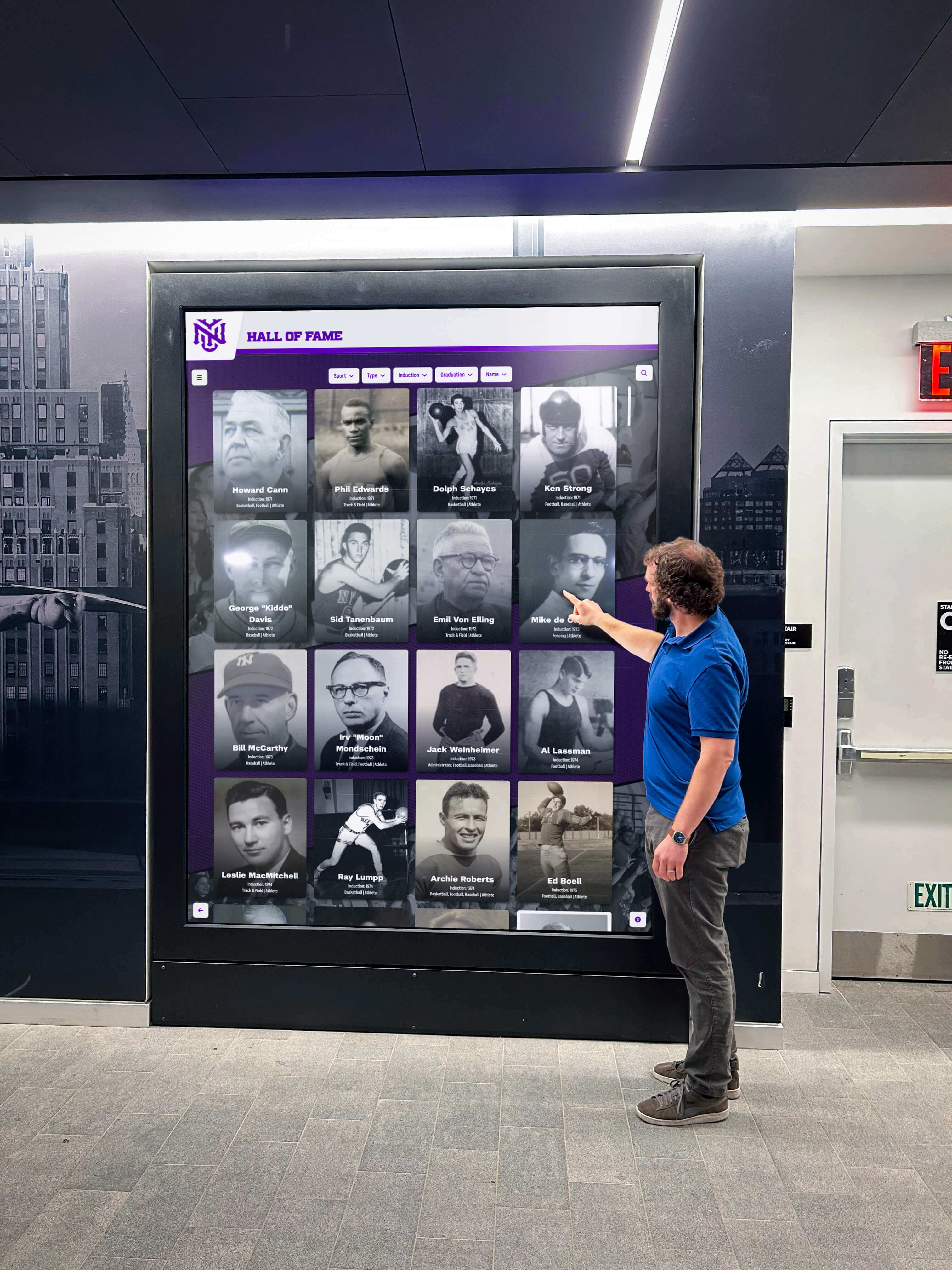
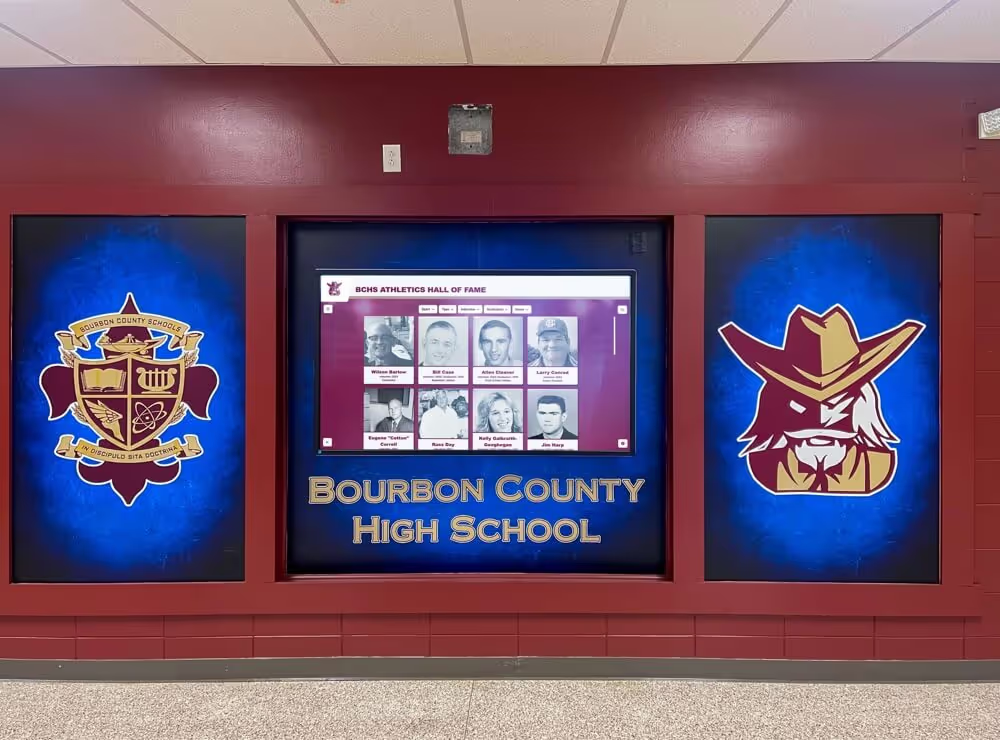
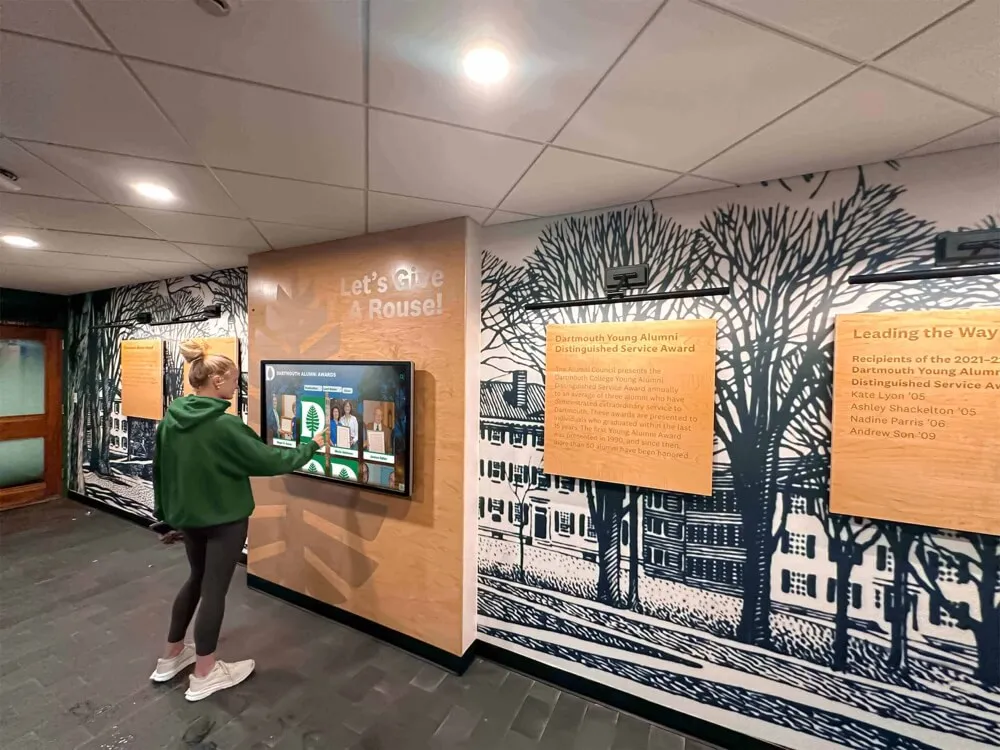
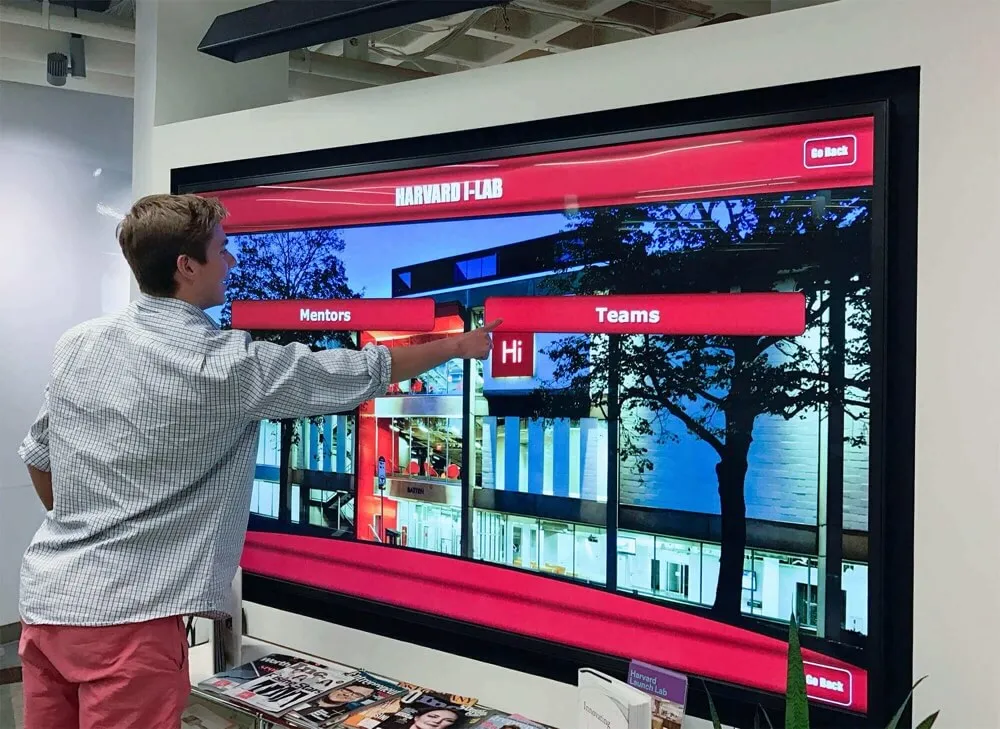
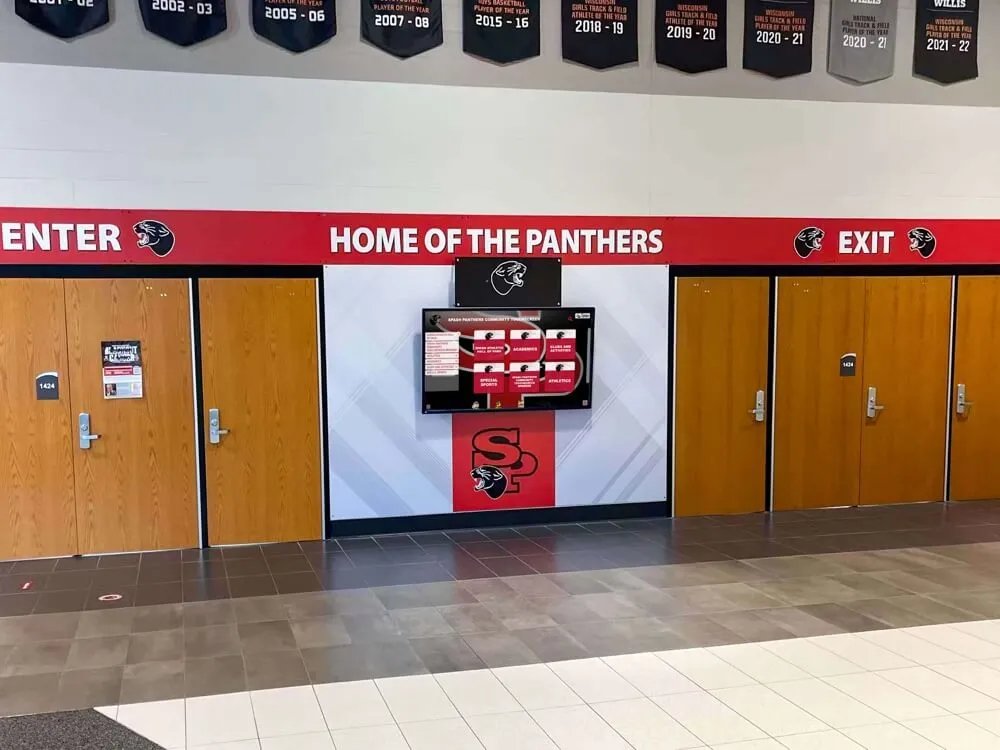
Interactive digital recognition allows development staff to update matching gift totals instantly — keeping every visitor's experience accurate regardless of when individual or employer contributions process
How Digital Donor Displays Support Matching Gift Accuracy Long-Term
Beyond individual update convenience, digital donor recognition systems create structural advantages for matching gift programs that compound over time.
Unlimited capacity with no per-entry cost. As your matching gift promotion efforts succeed and more employee donors submit their employer matches, the number of recognized entries grows — and so does the frequency of updates when those matches clear at different times. A digital platform absorbs that growth without ordering new panels, producing additional plaques, or rebalancing a physical wall layout. A $1,000 donor who becomes a $3,500 donor after a multi-year matching history simply moves up a tier in the content management system.
Real-time integration with fundraising databases. Advanced digital donor wall platforms offer API integrations with major CRM systems. When a matching gift processes and updates a donor’s cumulative record in Raiser’s Edge or DonorPerfect, that change can trigger automatic recognition level updates on the display without any manual intervention. The alignment between gift accounting and public recognition — the core challenge matching gifts create — becomes automated rather than dependent on staff remembering to check and update.
Analytics that inform matching gift promotion. Digital displays track how visitors interact with recognition content. Understanding which donor profiles receive the most engagement, which search terms visitors use, and what viewing patterns emerge across different sections of the wall provides data that informs both stewardship and fundraising strategy. Institutions that understand how their donor recognition resonates with visitors are better positioned to design recognition structures — including corporate matching partner sections — that inspire prospective donors to give and participate in their own employer matching programs. These engagement principles extend across institutional recognition, from athletic halls of fame to comprehensive donor programs, as seen in the way institutions recognize specialized contributors like athletic trainers in hall of fame programs.
Touchscreen accessibility for diverse campus audiences. Donors visiting campus during an event, parents attending orientation, and community members touring facilities all interact with a digital donor wall differently than they would with a bronze plaque installation. Touchscreen displays invite active exploration — visitors search for names, browse giving tiers, and discover connections between their networks and the institutional community. That discovery is meaningful precisely because the recognition is accurate. A digital wall that reflects current matching gift totals creates a moment of genuine appreciation when a donor finds their name at the tier their combined gift-plus-match earned them. The interactive experience that makes this possible is explored in depth in this guide to interactive touchscreens in public institutions.
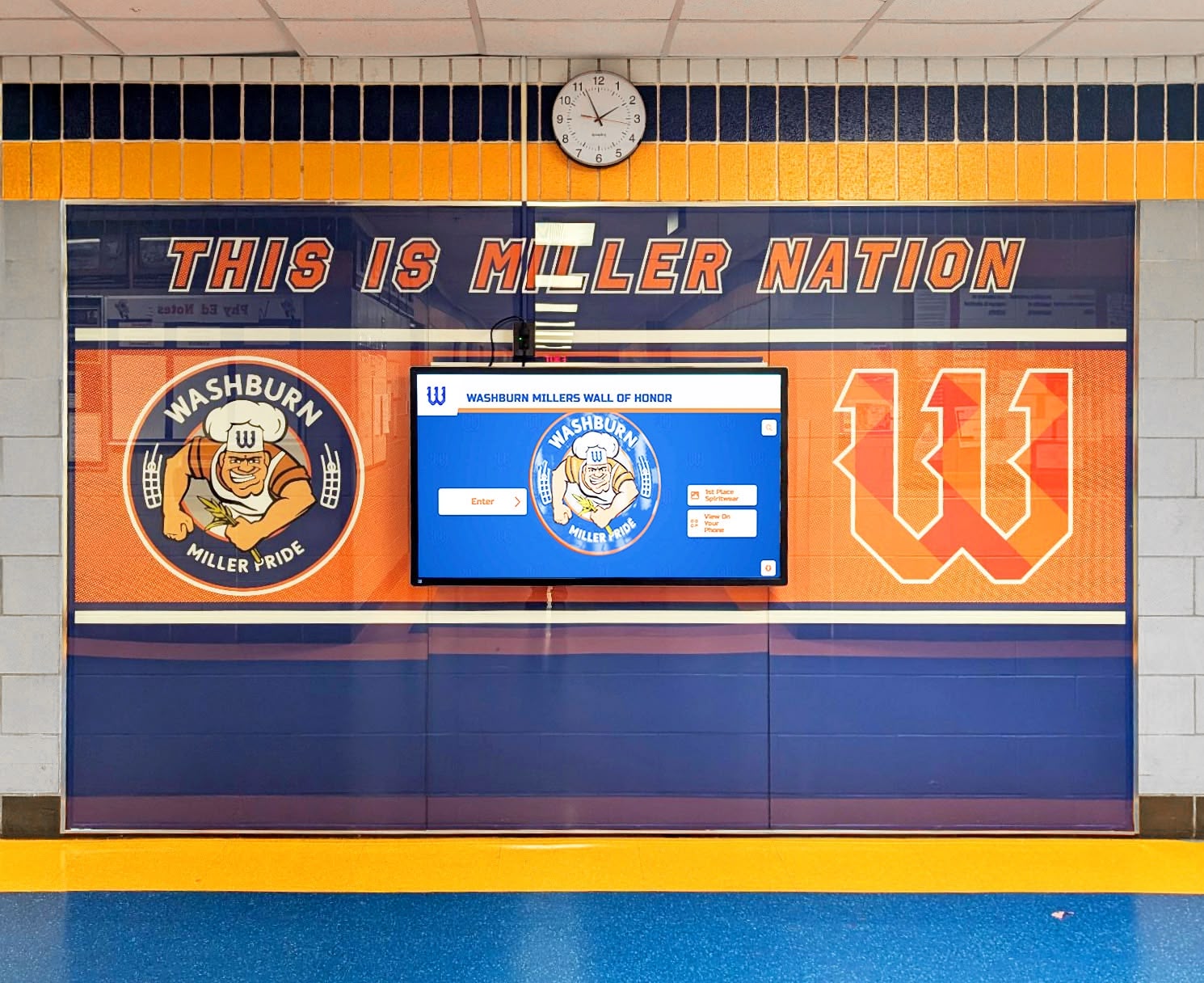
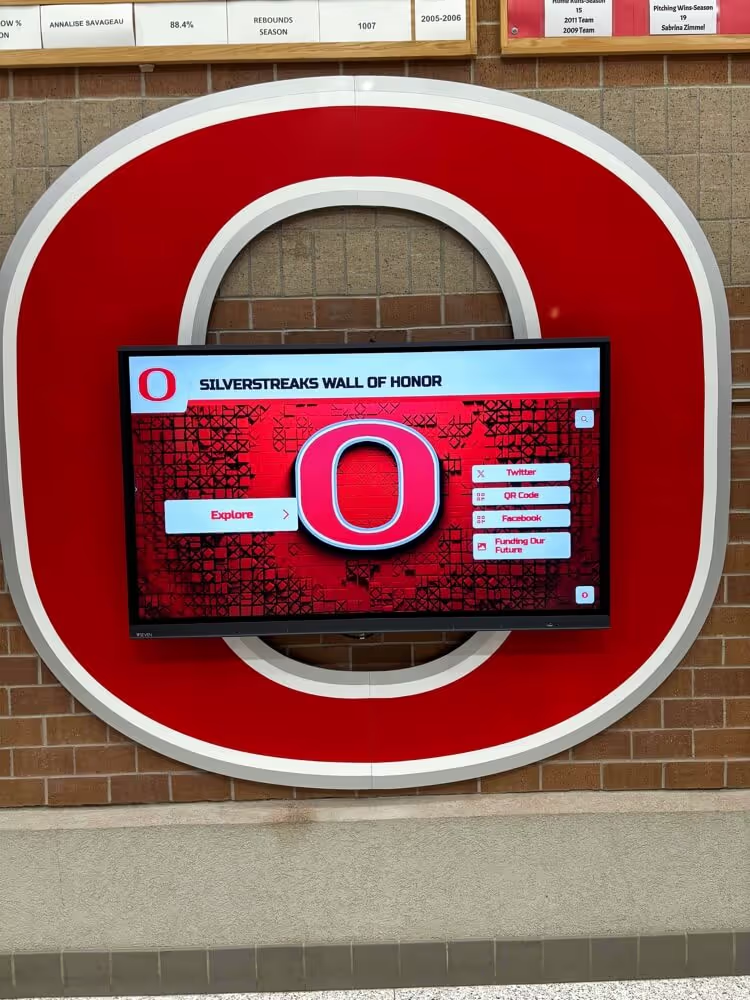
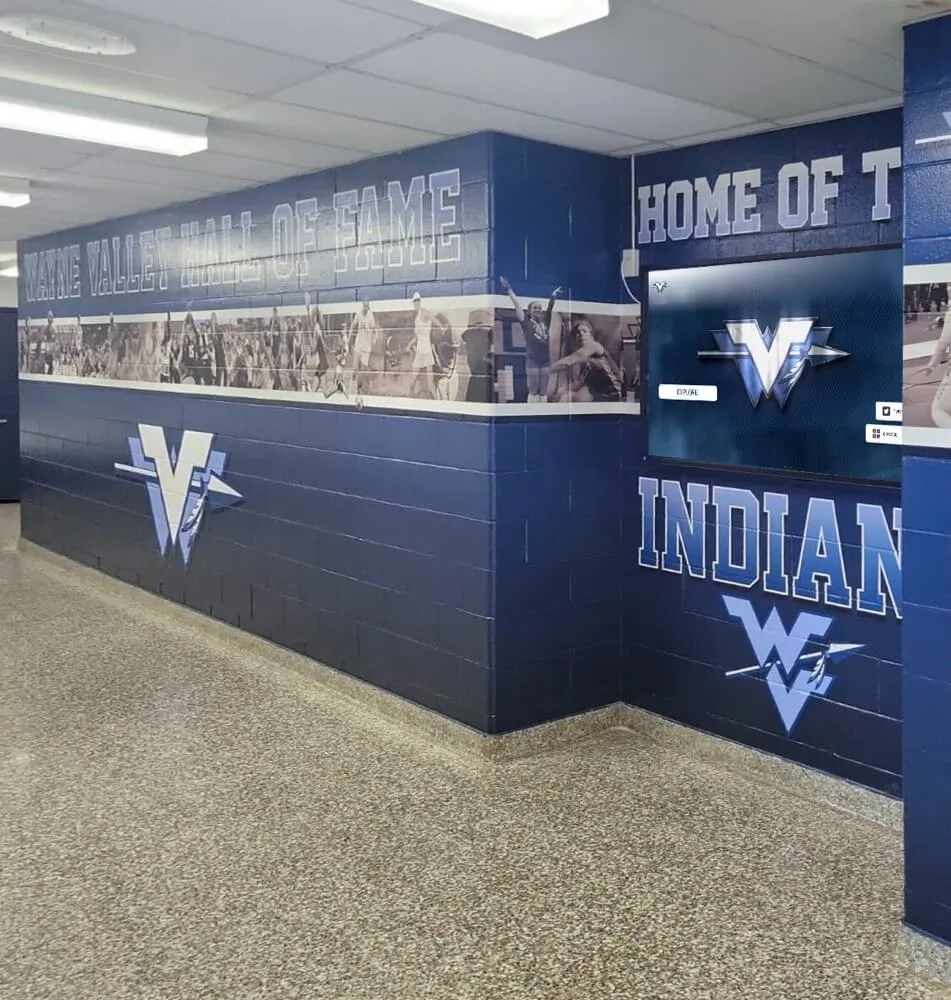
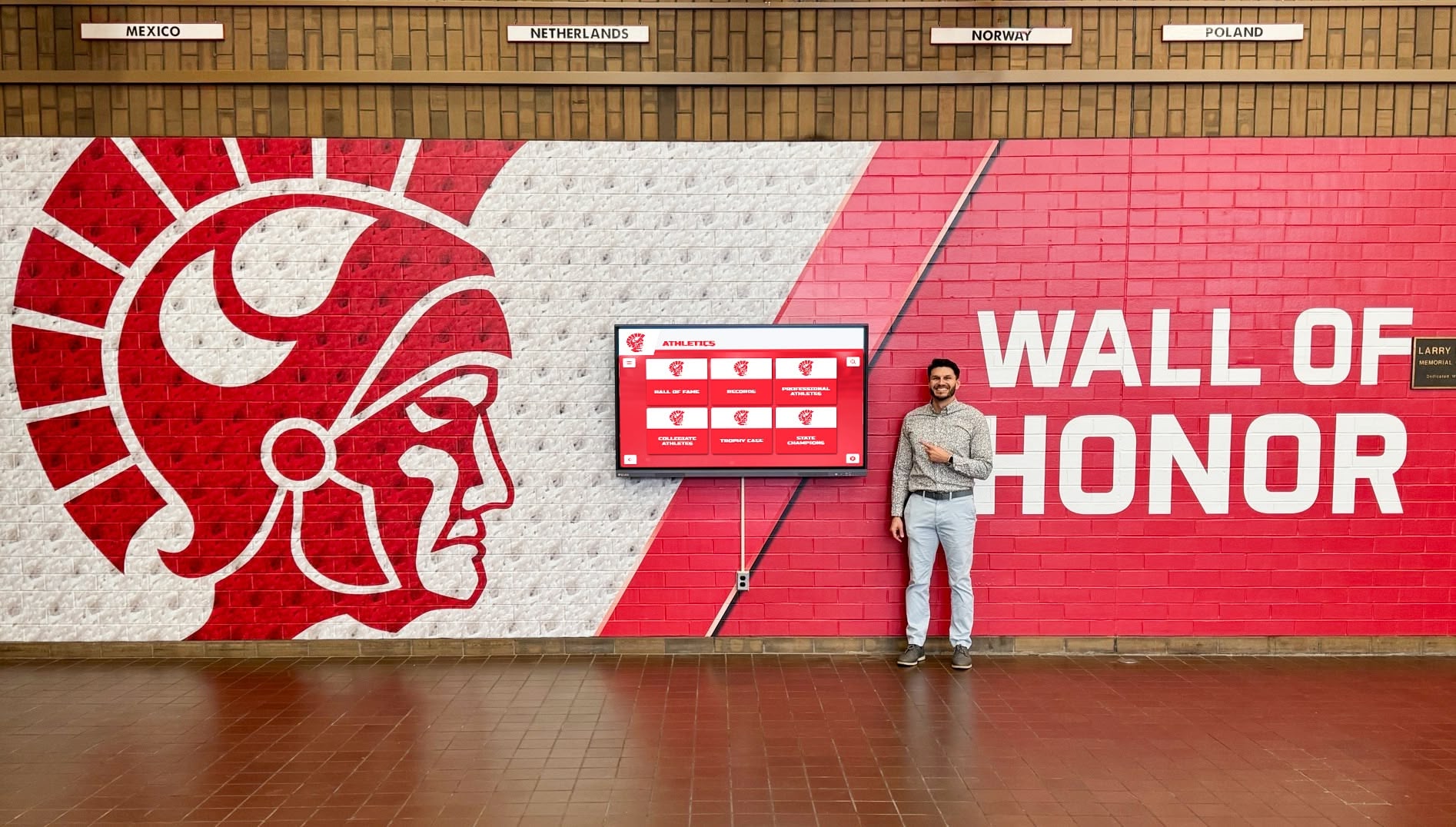
Digital walls of honor integrate matching gift updates seamlessly — no fabrication delays, no physical replacement costs, no recognition gaps
Frequently Asked Questions About Matching Gift Donor Recognition
Should matching gift amounts count toward an individual donor’s giving level tier?
Under most recognition models, yes — but the policy must be written down before it is applied. The most common approach credits the individual donor with the combined total of their personal gift and the employer match for the purpose of determining recognition tier placement. This approach rewards donors who submit matching gift paperwork and aligns their visible recognition with the full impact they generated for the institution. Critically, if the employer is also being recognized on a separate corporate partner section of the donor wall, the employer’s contribution should appear only in that section — not also elevated in the individual donor’s tier — to prevent the same dollars from counting twice.
How do we handle retroactive matching gifts that arrive after an honor roll has already been printed?
Retroactive matches arriving after a printed honor roll or annual report are common, and the practical answer depends on your recognition medium. For printed publications, many institutions add a correction note in the following year’s publication acknowledging the gift that arrived after the prior-year edition’s close date. For digital donor walls, the update occurs immediately — no special process required, since the display content can be changed anytime. This is one of the strongest arguments for maintaining a living digital recognition display alongside any periodic print publication: the digital wall is always current, even when a printed piece cannot be revised.
Do we need to notify the donor when their matching gift clears and their recognition level changes?
Yes — and doing so transforms a routine administrative update into a meaningful stewardship touchpoint. A brief personalized email notifying the donor that their employer’s matching gift has been received, that their combined total now places them at a new recognition tier, and that their updated recognition is visible on the donor wall is a high-value communication requiring minimal staff time. Donors who actively submitted matching gift paperwork will appreciate confirmation that the process worked and that their full contribution is visible. This notification also provides a natural prompt for any additional matching gift opportunities the donor might pursue.
Can our digital donor wall automatically update when a matching gift processes in our fundraising database?
Some digital donor recognition platforms offer direct API integration with major fundraising CRM systems, enabling automated updates when matching gifts process and change a donor’s cumulative record. The availability and specifics depend on your donor wall platform and your CRM — confirm the integration pathway with your digital display vendor during procurement. Even without automated integration, cloud-based content management platforms allow manual updates in under five minutes from any web-connected device, which is sufficient for most development operations. The key advantage over physical walls remains: updates happen quickly, at low cost, with no vendor coordination required.
What happens when an employer stops offering matching gifts — do we remove the corporate recognition?
Generally, no. Recognition on a donor wall reflects historical giving, not ongoing program participation. A corporate partner that contributed $10,000 in matching funds over several years earned that recognition when the gifts were made; removing it retroactively would misrepresent institutional history and damage the relationship with employees who championed those gifts. However, your written policy should address this scenario explicitly — including whether the employer entry notes are updated to reflect the years of participation, whether the entry remains indefinitely, or whether it moves from an “active matching partners” section to a historical “founding partners” section over time.
Conclusion: Policy First, Technology Second — Then Recognition That Stays Accurate
Matching gift donor recognition challenges are fundamentally policy challenges, not technology challenges. The right credit model, clear CRM attribution rules, and a written policy document that every team member can reference are the foundations on which accurate, equitable donor recognition is built. Technology — specifically a digital donor display with cloud-based content management — then makes that policy easy to execute, maintain, and update as matching gifts clear on schedules that never align perfectly with recognition cycles.
Schools and universities that get matching gift recognition right strengthen two distinct relationships simultaneously: the individual donors who went through the effort of submitting employer matching paperwork, and the corporate partners whose programs made those additional dollars possible. Both relationships reward investment. Both benefit from accurate, timely, publicly visible acknowledgment.
Ready to Keep Your Donor Wall Accurate as Matching Gifts Clear?
Rocket Alumni Solutions builds interactive touchscreen donor walls designed for educational institutions that need recognition systems as dynamic as their fundraising programs. Cloud-based content management means matching gift updates take minutes, not weeks — and the display your donors see always reflects what your records actually show.
Explore Interactive Donor Display SolutionsMatching gift recognition done well is a force multiplier for your fundraising program: it rewards donors who advocate for their institution inside their companies, deepens corporate relationships that can grow into formal partnerships, and ensures the visible record of your donor community reflects the genuine generosity behind it. A clear policy paired with a digital recognition platform that can update in real time makes that standard achievable — even as matching gift timelines, gift amounts, and corporate programs continue to evolve.