



Walking across the graduation stage represents a crowning academic achievement, but for some students, that moment carries additional distinction. Latin honors—cum laude, magna cum laude, and summa cum laude—represent prestigious academic recognitions awarded to students who demonstrate exceptional scholastic performance throughout their educational careers. These centuries-old designations continue to hold significant value in academic communities, appearing on diplomas, transcripts, and resumes as enduring marks of academic excellence.
Understanding Latin honors becomes increasingly important as students and families navigate educational pathways, college applications, and career planning. These distinctions affect college admissions, scholarship opportunities, graduate school prospects, and even employment considerations in competitive fields. Yet the specific requirements, eligibility criteria, and institutional variations surrounding Latin honors often create confusion among students wondering what GPA they need to achieve these recognitions or whether their accomplishments will receive formal acknowledgment.
This comprehensive guide explores the history and meaning of Latin honors, clarifies the GPA requirements and eligibility criteria at different educational levels, explains how institutions determine honor designations, and discusses the lasting benefits these distinctions provide. We’ll also examine how modern schools celebrate and display Latin honor achievements through traditional and digital recognition systems that preserve institutional academic excellence traditions.
Latin honors represent more than ceremonial tradition—they provide objective markers of academic achievement that distinguish top performers while motivating excellence across student populations. Schools that effectively communicate Latin honors criteria and meaningfully celebrate recipients create cultures where intellectual achievement receives recognition comparable to athletic or artistic accomplishments.

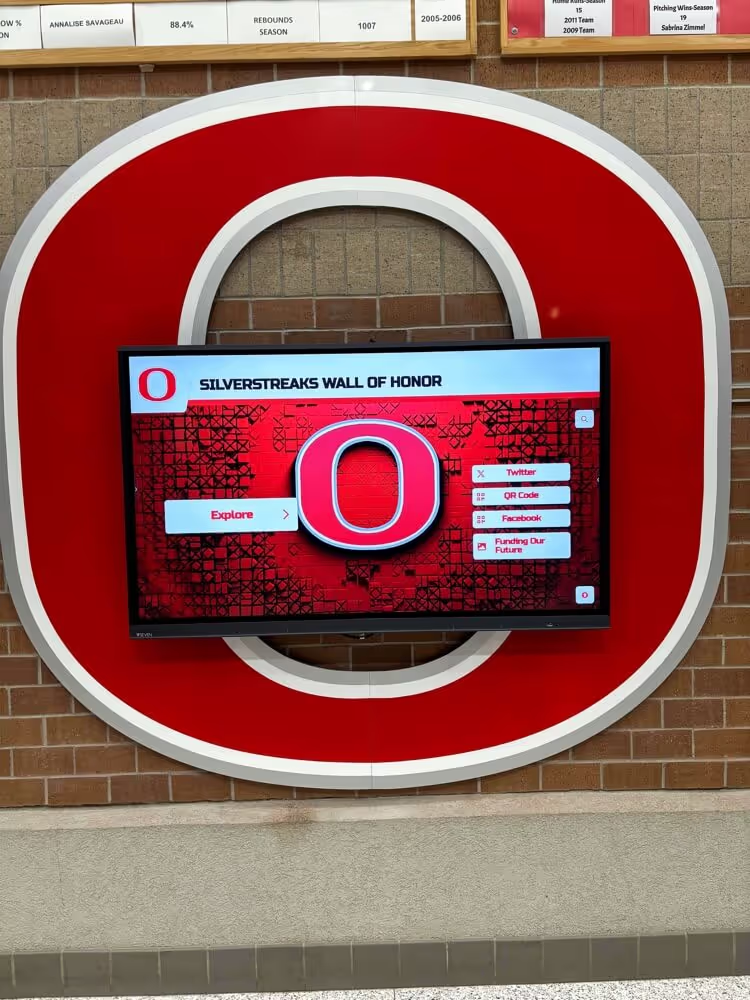
Modern digital displays enable schools to permanently recognize Latin honors recipients and other academic achievers
What Are Latin Honors?
Latin honors are academic distinctions conferred upon graduating students who achieve exceptional grade point averages and meet additional institutional criteria established by their schools, colleges, or universities. The term “Latin honors” derives from the Latin phrases traditionally used to designate these achievement levels, reflecting academic traditions extending back to medieval European universities.
The three standard Latin honors levels, in ascending order of distinction:
Cum Laude (with honor/with praise)
- Recognizes above-average academic performance
- Typically requires GPA in the top 20-35% of graduating class
- Demonstrates consistent academic achievement across coursework
- Most common of the three Latin honor designations
Magna Cum Laude (with great honor/with great praise)
- Acknowledges significantly superior academic achievement
- Generally requires GPA placing students in top 10-15% of class
- Represents sustained excellence across academic curriculum
- More selective recognition than cum laude
Summa Cum Laude (with highest honor/with highest praise)
- Represents the pinnacle of undergraduate academic achievement
- Typically requires GPA ranking in top 5% or less of graduating class
- May include additional requirements beyond GPA thresholds
- Most prestigious undergraduate academic recognition at many institutions
According to the National Center for Education Statistics, approximately 30-40% of bachelor’s degree recipients graduate with some form of academic honors, though this percentage varies significantly by institution type and selectivity. Latin honors represent the most widely recognized system for designating these top academic performers.
How Latin Honors Differ From Other Academic Recognitions
Latin honors exist within broader ecosystems of academic recognition that include various honor societies, dean’s lists, and institutional awards. Understanding these distinctions helps clarify what Latin honors specifically represent:
Latin Honors vs. Honor Societies
- Latin honors: Cumulative GPA-based recognition conferred at graduation
- Honor societies (Phi Beta Kappa, Phi Kappa Phi): Selective membership organizations requiring nomination and often additional criteria beyond grades
- National Honor Society requirements: High school equivalent requiring scholarship, service, leadership, and character
Latin Honors vs. Dean’s List
- Latin honors: Single designation awarded at graduation based on complete academic record
- Dean’s List: Semester-by-semester recognition for term-specific academic performance
- Dean’s List typically requires 3.5-4.0 GPA each semester with minimum credit requirements
Latin Honors vs. Departmental Honors
- Latin honors: Institution-wide recognition based on overall GPA
- Departmental honors: Major-specific distinction often requiring thesis, research, or additional coursework
- Students may receive both general Latin honors and departmental honors simultaneously
These complementary recognition systems work together to acknowledge academic excellence across different dimensions, timeframes, and achievement types. Schools implementing comprehensive academic recognition programs typically incorporate Latin honors alongside other merit-based distinctions.

Schools celebrate multiple forms of academic distinction including Latin honors, honor societies, and specialized achievements
The History and Origins of Latin Honors
The Latin honors tradition traces its roots to medieval European universities where Latin served as the universal language of scholarship and ecclesiastical learning. Understanding this historical context illuminates why these ancient designations persist in modern educational systems.
Medieval University Origins
The earliest universities in Bologna, Paris, and Oxford (12th-13th centuries) conducted all academic proceedings in Latin, from lectures and disputations to degree conferrals and scholarly publications. Academic distinctions naturally employed Latin terminology, establishing precedents that subsequent institutions adopted and maintained across centuries.
Medieval universities did not use the modern three-tier Latin honors system. Instead, they employed various Latin designations for different examination performance levels and degree classifications. The specific cum laude framework emerged later as universities systematized their academic distinction processes.
American Academic Adoption
American colleges began incorporating Latin honors during the late 18th and early 19th centuries as they modeled themselves after European academic institutions. Harvard College, founded in 1636, formalized Latin honors practices that influenced subsequent American higher education development.
According to educational historians, the modern three-tier system (cum laude, magna cum laude, summa cum laude) became standardized across American universities primarily during the late 19th and early 20th centuries as institutions sought consistent methods for distinguishing exceptional graduates. This standardization coincided with broader educational reforms including elective systems, departmental structures, and GPA-based assessment methods.
Extension to Secondary Education
While Latin honors originated in university contexts, many high schools adopted similar recognition systems during the 20th century. High school Latin honors typically mirror collegiate practices but may employ different GPA thresholds reflecting secondary education grading scales and distribution patterns.
The spread of high school Latin honors reflects broader democratization of academic recognition and increasing emphasis on preparing students for collegiate success. Schools implementing Latin honors at the secondary level signal commitment to academic excellence while providing students with credentials that enhance college applications and scholarship opportunities.
GPA Requirements for Latin Honors at Colleges and Universities
College and university Latin honors requirements vary significantly across institutions, reflecting different academic philosophies, grading cultures, and student body characteristics. Understanding these variations helps students set appropriate goals and recognize the contextual nature of Latin distinctions.
Common University GPA Thresholds
While specific requirements differ by institution, typical GPA ranges for Latin honors at four-year colleges and universities follow these general patterns:
Summa Cum Laude
- GPA threshold: 3.9-4.0 on 4.0 scale
- Class rank equivalent: Top 5% or higher
- Some institutions: Top 1-2% only
- Additional requirements: May include thesis, comprehensive exam, or departmental honors
Magna Cum Laude
- GPA threshold: 3.7-3.89 on 4.0 scale
- Class rank equivalent: Top 10-15%
- Percentile-based institutions: Specific percentage of graduating class
- Reflects sustained high achievement across curriculum
Cum Laude
- GPA threshold: 3.5-3.69 on 4.0 scale
- Class rank equivalent: Top 20-35%
- Entry-level Latin honor at most institutions
- Demonstrates consistent above-average performance
Research published in the Journal of Higher Education indicates that the median GPA for cum laude recognition at selective four-year institutions is approximately 3.5, though this varies considerably based on institutional grading practices and academic rigor.
Institutional Variation in Latin Honors Policies
Universities employ different philosophical approaches to determining Latin honors eligibility:
Fixed GPA Threshold Approach
- Institutions establish specific GPA cutoffs (e.g., 3.5, 3.7, 3.9)
- Any student meeting threshold receives corresponding honor
- Percentage of honors graduates fluctuates based on student performance
- More common at larger public universities
- Provides clear target GPAs for student planning
Percentile-Based Approach
- Fixed percentage of graduating class receives each honor level
- GPA cutoffs adjust annually based on class performance distribution
- Ensures consistent honors recipient percentage year-over-year
- More common at selective private institutions
- May create unpredictability for students regarding specific GPA requirements
Hybrid Approaches
- Combine minimum GPA requirements with percentile limitations
- Example: Top 15% of class with minimum 3.7 GPA for magna cum laude
- Balances absolute performance standards with relative class standing
- Prevents grade inflation from expanding honors beyond intended selectivity
According to a 2024 survey by the National Association of Colleges and Employers, approximately 60% of four-year institutions use fixed GPA thresholds, 25% employ percentile-based systems, and 15% utilize hybrid approaches for determining Latin honors.
Examples of Specific University Requirements
Real-world examples illustrate the significant variation across institutions (note: these are representative examples and specific policies should be verified with individual institutions):
Highly Selective Private Universities
- May require summa cum laude GPA of 3.95+ or top 1-2% of class
- Magna cum laude: 3.85-3.94 or top 5-10%
- Cum laude: 3.70-3.84 or top 15-20%
- Often include departmental honors requirements for summa designation
Large Public Universities
- Typically use fixed GPA thresholds
- Summa cum laude: 3.9+
- Magna cum laude: 3.75-3.89
- Cum laude: 3.5-3.74
- May restrict to students completing majority of coursework at institution
Liberal Arts Colleges
- Often employ percentile-based systems
- Summa cum laude: Top 5% of graduating class
- Magna cum laude: Top 10% (excluding summa recipients)
- Cum laude: Top 20% (excluding magna and summa)
- GPA thresholds adjust annually based on class performance
Students should consult their institution’s specific Latin honors policies early in their academic careers to understand requirements and plan accordingly. Many schools publish annual or historical GPA cutoffs for percentile-based systems, providing reference points for current students.

Prominent hallway displays celebrate academic honors recipients alongside other student achievements
High School Latin Honors: Requirements and Recognition
High schools increasingly adopt Latin honors systems to recognize exceptional academic achievement, prepare students for collegiate honors frameworks, and create comprehensive recognition beyond traditional valedictorian and salutatorian designations.
Typical High School GPA Requirements
High school Latin honors generally employ higher GPA thresholds than collegiate equivalents due to different grading scales and the prevalence of weighted GPAs recognizing advanced coursework:
Weighted GPA Scale Systems (Accounting for AP, IB, Honors courses)
- Summa cum laude: 4.5-5.0+ weighted GPA
- Magna cum laude: 4.25-4.49 weighted GPA
- Cum laude: 4.0-4.24 weighted GPA
Unweighted GPA Scale Systems (Standard 4.0 scale)
- Summa cum laude: 3.9-4.0 unweighted GPA
- Magna cum laude: 3.75-3.89 unweighted GPA
- Cum laude: 3.5-3.74 unweighted GPA
According to the National Association of Secondary School Principals, approximately 45% of public high schools use some form of Latin honors recognition, with higher adoption rates at schools serving college-bound student populations.
Weighted vs. Unweighted GPA Considerations
High schools face complex decisions about whether Latin honors should reflect weighted or unweighted GPAs:
Weighted GPA Advantages
- Rewards students taking rigorous AP, IB, and honors coursework
- Encourages enrollment in challenging classes
- Better reflects true academic achievement levels
- Aligns with college admissions practices
Unweighted GPA Advantages
- Provides clearer, more universal standards
- Avoids penalizing schools with limited advanced course offerings
- Ensures equity for students without access to weighted course options
- Simpler for students and families to understand
Many high schools resolve this tension by establishing separate weighted and unweighted Latin honors designations, or by requiring both minimum weighted and unweighted GPAs for recognition. Schools implementing honor roll certificate programs face similar considerations about weighted versus unweighted achievement recognition.
Additional High School Latin Honors Criteria
Beyond GPA requirements, high schools often incorporate supplementary criteria:
Credit and Coursework Requirements
- Minimum credit hours completed at the institution
- Required number of advanced (AP, IB, honors) courses
- Completion of specific core curriculum requirements
- Restrictions on pass/fail or credit/no-credit courses
Behavioral and Conduct Standards
- No serious disciplinary violations
- Minimum attendance requirements
- Academic integrity compliance
- Citizenship or character expectations
Duration Requirements
- Minimum number of semesters/years at the school
- May exclude transfer students or require minimum local enrollment
- Ensures Latin honors reflect sustained achievement at the institution
These additional criteria ensure Latin honors recognize not just academic performance but comprehensive excellence including character, persistence, and institutional contribution.
How Institutions Calculate and Determine Latin Honors
The process of calculating and awarding Latin honors involves specific methodological considerations that affect which students receive recognition and at what levels.
GPA Calculation Methods
Institutions employ various approaches to calculating the GPA used for Latin honors determination:
Cumulative GPA (Most Common)
- All completed coursework across all semesters
- Standard approach at most institutions
- Provides comprehensive academic performance picture
- May include or exclude certain course categories
Major GPA vs. Overall GPA
- Some institutions consider major/departmental GPA separately
- Departmental honors may use major GPA exclusively
- Overall Latin honors typically use cumulative GPA
- Dual consideration ensures recognition of specialization excellence
Included and Excluded Coursework Different institutional policies regarding which courses count toward Latin honors GPA:
Typically Included
- All letter-graded courses
- Required core curriculum
- Major and minor coursework
- Elective courses
Sometimes Excluded
- Pass/fail or credit/no-credit courses
- Transferred credits from other institutions
- Remedial coursework
- Physical education or activity courses
- Courses below certain credit thresholds
Students should understand their institution’s specific calculation policies, as seemingly minor exclusions can affect final GPA and honors eligibility significantly.
Transfer Students and Latin Honors Eligibility
Transfer students face unique considerations regarding Latin honors qualification:
Common Transfer Student Policies
- Minimum credit requirements completed at awarding institution (typically 50-60 credits)
- Latin honors calculated only on courses taken at the degree-granting institution
- Some institutions include transfer credits in honors GPA calculation
- May have separate honors designations for transfer versus four-year students
These policies balance recognizing transfer student achievement while ensuring Latin honors reflect substantial institutional connection and comparable academic experience to traditional four-year students.
Timeline and Notification Process
Latin honors determination follows specific institutional timelines:
Preliminary Determination
- Often occurs during final semester based on projected final grades
- Allows honors designation to appear in commencement programs
- Subject to revision based on final grade outcomes
Final Certification
- After all final grades posted and degree audits completed
- Official determination appears on diploma and transcript
- Typically occurs after commencement ceremony
- May result in retroactive changes to preliminary honors designations
This two-stage process sometimes creates situations where students believe they earned specific honors based on commencement program listings, only to discover final certifications differ. Schools should clearly communicate the preliminary nature of honors designations in commencement materials.

Comprehensive recognition systems celebrate academic excellence through traditional and digital display integration
Benefits and Significance of Latin Honors
Latin honors provide tangible and intangible benefits extending beyond ceremonial recognition at graduation ceremonies.
Academic and Professional Advantages
Graduate School Applications
- Latin honors distinction strengthens graduate school applications
- Demonstrates sustained academic excellence
- Particularly relevant for competitive programs and scholarships
- May partially compensate for lower standardized test scores
Employment Considerations
- Employers in competitive fields (consulting, finance, law) often consider Latin honors
- Signals work ethic, intellectual capability, and achievement orientation
- Most relevant for recent graduates with limited professional experience
- Importance diminishes with career progression and work experience accumulation
Scholarship and Fellowship Opportunities
- Many prestigious fellowships (Rhodes, Fulbright, Marshall) favor applicants with high academic honors
- Graduate assistantships and research positions often prefer Latin honors recipients
- Some undergraduate scholarships guarantee renewal for honors students
According to a 2024 study by the National Association of Colleges and Employers, approximately 35% of employers consider academic honors when evaluating entry-level candidates, with higher percentages in consulting (62%), finance (54%), and legal fields (48%).
Personal and Psychological Benefits
Validation of Academic Effort
- Provides tangible recognition of years of academic dedication
- Validates sacrifices made prioritizing academics
- Creates lasting sense of accomplishment
- Builds confidence for future academic and professional challenges
Family and Community Recognition
- Source of family pride and celebration
- Recognition within home communities
- Potential impact on younger siblings and community members
- Demonstrates return on family investment in education
Lifetime Credential
- Appears on diplomas permanently
- Professional resumes throughout career
- Alumni directories and institutional recognition
- Permanent part of academic record
These lasting benefits justify the effort required to achieve Latin honors while providing motivation sustaining students through challenging coursework and demanding academic schedules.
Integration With Broader Recognition Systems
Latin honors work most effectively when integrated with comprehensive academic recognition approaches. Similar to how schools celebrate National Merit Scholars and implement scholarship award ceremony planning, Latin honors recognition benefits from systematic celebration and prominent visibility.
How Schools Display and Celebrate Latin Honors Recipients
Meaningful recognition requires more than listing honors designations on diplomas and transcripts—effective schools create visible, engaging celebrations that honor achievement while inspiring current students.
Traditional Recognition Approaches
Graduation Ceremony Acknowledgment
- Distinctive cords, stoles, or medallions worn by honors recipients
- Separate recognition during degree conferral
- Listing in printed commencement programs
- Special seating or procession arrangements
Physical Recognition Displays
- Plaques listing annual Latin honors graduates
- Honor roll boards in prominent locations
- Trophy cases featuring academic excellence
- Traditional limitations: space constraints, update challenges, limited information capacity
Transcript and Diploma Notation
- Permanent record on official transcripts
- Latin designation printed on diploma
- Academic summary documents
- Official certification letters
While these traditional approaches provide important formal recognition, they often lack the visibility, engagement, and comprehensive information that modern digital solutions enable.
Modern Digital Recognition Systems
Contemporary schools increasingly leverage interactive digital displays to transform academic honors recognition:
Comprehensive Profile Displays Digital platforms enable rich, multimedia recognition impossible with static displays:
- High-resolution photographs of honors recipients
- Complete academic achievement summaries
- Graduation GPA and honors level designation
- Academic awards and accomplishments
- Post-graduation outcomes (college matriculation, careers)
- Personal statements or reflections
- Integration with National Merit Scholar recognition
Interactive Exploration Features Modern touchscreen systems create engaging experiences:
- Search functionality by name, year, honors level
- Filtering by graduation class or achievement type
- Historical achievement browsing across decades
- Social sharing capabilities for family celebration
- Mobile-accessible platforms extending recognition beyond campus
Administrative Efficiency Digital systems dramatically reduce recognition program maintenance burden:
- Cloud-based content management from any location
- Bulk upload tools for annual honors recipients
- Automated publishing and scheduling
- No physical space limitations
- Easy updates reflecting policy or designation changes
Schools implementing solutions like those from Rocket Alumni Solutions report 80-90% reduction in time spent maintaining academic recognition displays while achieving significantly greater visibility and engagement.

Interactive touchscreen kiosks enable engaging exploration of academic honors and achievement histories
Strategic Display Placement and Integration
Recognition impact depends heavily on display location and integration with broader school environments:
High-Traffic Location Selection
- Main entrance lobbies and reception areas
- Cafeteria and common gathering spaces
- Guidance counselor and administrative offices
- Library study areas
- Classroom hallways and academic wings
Integration With Academic Culture Building
- Positioning near other achievement displays
- Proximity to college planning resources
- Connection to scholarship and academic program information
- Alignment with school mission and values communications
Effective schools position academic recognition prominently, ensuring intellectual achievement receives visibility equal to athletic accomplishment. This strategic placement creates environments where academic excellence becomes culturally central and aspirational.
Latin Honors at Different Types of Institutions
Latin honors implementation varies significantly across institutional types, reflecting different academic cultures, student populations, and educational missions.
Research Universities
Large research universities typically:
- Use fixed GPA thresholds published clearly in academic policies
- Award Latin honors to 25-35% of graduating students
- May restrict highest honors to students completing advanced research or theses
- Often have college or school-specific honors in addition to university-wide designations
- Provide clear GPA targets enabling student planning throughout academic careers
Liberal Arts Colleges
Small liberal arts colleges often:
- Employ percentile-based systems ensuring consistent honors recipient proportions
- Award summa cum laude to approximately 5% of graduating class
- Include comprehensive exam, senior thesis, or capstone requirements
- Emphasize departmental honors alongside general Latin distinctions
- Feature closer faculty relationships enabling individualized honors recommendations
Community Colleges
Two-year institutions typically:
- May use Latin honors for associate degree recipients
- Often require completion of transfer-oriented academic programs
- Sometimes restrict honors to students continuing to four-year institutions
- Provide foundation for Latin honors achievement at transfer institutions
- May have unique designations reflecting two-year context
Specialized Institutions
Professional, technical, and specialized schools:
- Engineering schools may weight technical coursework heavily
- Arts institutions might include portfolio or performance requirements
- Business schools sometimes incorporate leadership or ethical criteria
- Military academies integrate conduct and physical performance standards
Understanding these institutional variations helps students set appropriate expectations and recognize the contextual nature of Latin honors across different academic environments.
Controversies and Considerations Surrounding Latin Honors
Despite widespread acceptance, Latin honors systems face ongoing debates and criticisms worth understanding.
Grade Inflation Concerns
Educational researchers have documented significant grade inflation at American colleges over recent decades, with median GPAs rising from approximately 2.9 in the 1980s to 3.15 in the 2010s, according to studies published by the American Academy of Arts and Sciences.
This grade inflation raises concerns about Latin honors:
- Increasing percentages of students qualifying for honors
- Potential dilution of honors distinction and prestige
- Variation across institutions making comparisons difficult
- Questions about whether honors truly reflect exceptional achievement
Some institutions respond through:
- Implementing percentile-based systems limiting honors recipient proportions
- Requiring supplementary achievement beyond GPA thresholds
- Clearly communicating class rank alongside honors designations
- Exploring alternative recognition systems emphasizing absolute achievement
Equity and Access Questions
Critics raise equity concerns about Latin honors:
Resource Disparities
- Students from well-resourced schools may have GPA advantages
- Access to advanced coursework affecting weighted GPA calculations
- Tutoring and academic support availability
- Time for academic focus versus work obligations
First-Generation and Transfer Students
- Transfer credit policies sometimes disadvantaging transfer students
- First-generation students may lack guidance optimizing GPA
- Credit hour requirements potentially excluding part-time students
- Information access about Latin honors criteria and importance
Learning Differences and Disabilities
- Accommodation availability affecting academic performance
- GPA emphasis potentially undervaluing students with different learning profiles
- Alternative assessment methods not reflected in traditional GPAs
Equity-conscious institutions address these concerns through:
- Clear, accessible communication about Latin honors criteria
- Academic advising ensuring all students understand requirements
- Transfer-friendly policies recognizing diverse educational paths
- Complementary recognition systems valuing varied achievements
- Regular review of policies for unintended bias or barriers
Alternative Recognition Approaches
Some institutions experiment with alternatives to traditional Latin honors:
Narrative Transcripts
- Written descriptions of achievements beyond GPA
- Context about courses, projects, and learning experiences
- Portfolio-based assessment and recognition
- More comprehensive but less standardized than Latin honors
Multiple Honor Designation Systems
- Separating departmental, research, and overall achievement honors
- Creating distinct pathways for different excellence types
- Recognizing growth alongside absolute achievement
- Balancing inclusivity with selectivity maintenance
These alternatives supplement rather than replace Latin honors, providing additional recognition dimensions while maintaining traditional distinctions that external audiences understand and value.

Individual achievement profiles provide comprehensive recognition beyond simple GPA designation
Preparing to Achieve Latin Honors: Student Strategies
Students aspiring to Latin honors should employ strategic approaches maximizing achievement potential while maintaining balanced educational experiences.
Early Planning and Goal Setting
Understanding Requirements Early
- Review institution-specific Latin honors policies during first semester
- Calculate GPA needed for different honors levels
- Understand credit hour, coursework, and timeline requirements
- Identify any supplementary criteria beyond GPA
Setting Realistic Goals
- Assess current academic standing honestly
- Consider course difficulty and major requirements
- Account for personal circumstances affecting study time
- Set incremental targets tracking progress toward honors thresholds
Strategic Course Selection
- Balance challenging courses demonstrating rigor with achievable excellence
- Understand how different grading policies affect GPA calculation
- Consider timing of difficult courses to avoid overwhelming semesters
- Explore pass/fail policies and their impact on honors eligibility
Academic Excellence Practices
Study Habits and Time Management
- Develop consistent study routines and schedules
- Utilize campus academic support resources proactively
- Form study groups with motivated peers
- Seek professor office hours for clarification and deeper learning
Strategic Academic Planning
- Meet regularly with academic advisors
- Plan course sequences optimizing learning and achievement
- Consider summer coursework for GPA boost or credit acceleration
- Balance breadth requirements with focused major coursework
Resource Utilization
- Leverage tutoring centers and writing support services
- Attend review sessions and supplemental instruction
- Participate in academic workshops and skill-building programs
- Connect with professors and teaching assistants for guidance
Maintaining Perspective and Balance
While pursuing Latin honors represents worthy academic goals, students should maintain healthy perspective:
Avoiding Unhealthy Competition
- Focus on personal learning and growth rather than purely competitive achievement
- Recognize that honors represent one dimension of college value
- Maintain relationships and wellbeing alongside academic pursuits
- Understand that meaningful learning matters more than GPA alone
Balancing Breadth of Experience
- Pursue meaningful extracurricular involvement
- Explore leadership, service, and creative opportunities
- Develop relationships and networks beyond academics
- Create comprehensive college experience beyond honor pursuit
The students who thrive academically while earning Latin honors typically maintain balanced approaches valuing learning, growth, and comprehensive development alongside achievement recognition.
Frequently Asked Questions About Latin Honors
What GPA do you need for cum laude, magna cum laude, and summa cum laude?
GPA requirements for Latin honors vary significantly by institution, but typical ranges at four-year colleges and universities include: Cum laude (with honor) generally requires 3.5-3.69 GPA or top 20-35% of the graduating class; Magna cum laude (with great honor) typically requires 3.7-3.89 GPA or top 10-15% of class; and Summa cum laude (with highest honor) usually requires 3.9-4.0 GPA or top 5% of class. High schools often use higher thresholds when employing weighted GPA scales, with summa cum laude sometimes requiring 4.5+ weighted GPA. Some institutions use fixed GPA cutoffs while others employ percentile-based systems where specific GPA thresholds fluctuate annually based on graduating class performance distribution. Students should consult their specific institution’s published Latin honors policies early in their academic careers, as requirements can vary substantially even among peer institutions. Additionally, some selective universities require supplementary achievements like thesis completion or comprehensive examinations for the highest honors beyond GPA thresholds alone.
Do Latin honors appear on diplomas and transcripts?
Yes, Latin honors designations appear permanently on both official diplomas and academic transcripts for students who qualify. The specific Latin phrase—cum laude, magna cum laude, or summa cum laude—prints directly on the diploma alongside the degree title, providing visible formal recognition that graduates display and reference throughout their careers. Official transcripts maintained by the registrar’s office similarly include the Latin honors designation, ensuring the recognition appears whenever students or alumni request transcript copies for graduate school applications, employment verification, professional licensing, or other purposes. This permanent documentation distinguishes Latin honors from semester-specific recognitions like dean’s list, which appear on transcripts for specific terms but not on diplomas. Some institutions also note Latin honors in commencement programs, though these preliminary designations sometimes differ from final certifications if final semester grades change the calculated GPA. The dual appearance on diplomas and transcripts ensures Latin honors recognition remains accessible and verifiable throughout graduates’ personal and professional lives.
Can you graduate with honors from high school?
Yes, many high schools award Latin honors (cum laude, magna cum laude, summa cum laude) to graduating seniors who meet specific GPA and additional requirements, though high school honors practices vary more widely than collegiate systems. According to the National Association of Secondary School Principals, approximately 45% of U.S. public high schools use some form of Latin honors recognition. High school Latin honors typically require higher GPA thresholds than college equivalents, particularly at schools using weighted GPA scales that account for AP, IB, and honors coursework—summa cum laude at high school level might require 4.5+ weighted GPA or 3.9+ unweighted. Beyond GPA requirements, high schools often include supplementary criteria like minimum credit requirements, advanced coursework completion, attendance standards, and conduct expectations. High school Latin honors appear on diplomas and transcripts, providing credentials that strengthen college applications and scholarship opportunities. Schools may also recognize honors graduates with special cords, stoles, or seating at graduation ceremonies. Similar to graduation awards and recognition programs, Latin honors represent systematic approaches to celebrating exceptional academic achievement.
How do Latin honors affect college admissions and scholarships?
While Latin honors themselves are awarded at graduation and therefore do not directly affect initial college admissions for high school students applying to undergraduate programs, high school Latin honors designation demonstrates the level of academic excellence that makes students competitive for selective college admission and merit-based scholarships. High school students on track for Latin honors typically possess the GPAs, rigorous course selections, and academic achievements that admissions offices value, even if final honors designation occurs after admission decisions. For college graduates, Latin honors significantly impact graduate school admissions, particularly for competitive programs in law, medicine, business, and doctoral studies, where undergraduate Latin honors demonstrate sustained academic excellence and intellectual capability. According to a 2024 National Association of Colleges and Employers study, approximately 35% of employers consider Latin honors when evaluating entry-level candidates, with higher percentages in consulting, finance, and legal fields. Many prestigious fellowships including Rhodes, Fulbright, and Marshall scholarships favor applicants with high Latin honors. Graduate assistantships and research positions often prefer cum laude or higher recipients. The impact typically diminishes as graduates gain professional experience and develop work-based accomplishments, but for recent graduates, Latin honors provide meaningful differentiation in competitive academic and employment markets.
What’s the difference between Latin honors and graduation with distinction?
Latin honors (cum laude, magna cum laude, summa cum laude) and “graduation with distinction” represent overlapping but sometimes distinct recognition systems depending on institutional practices. At many universities, these terms are synonymous—“graduating with distinction” simply means earning one of the three Latin honors levels, with the specific level (cum laude, magna cum laude, or summa cum laude) determined by GPA or class rank. However, some institutions maintain separate recognition systems where Latin honors reflect cumulative GPA achievement across all coursework, while “departmental distinction” or “honors in the major” requires additional accomplishments within a specific academic department such as thesis completion, comprehensive examinations, advanced research, or special honors coursework sequences. In these cases, students might graduate “magna cum laude” based on overall GPA while also earning “distinction in economics” based on departmental requirements, receiving both general and specialized recognition simultaneously. Additionally, some professional programs (engineering, business, nursing) award program-specific distinction separate from university-wide Latin honors. Students should consult their institution’s specific policies to understand whether distinction and Latin honors represent identical recognition or complementary systems acknowledging different achievement dimensions. Comprehensive high school awards ceremony ideas often incorporate both general academic honors and subject-specific distinctions in similar recognition approaches.
Conclusion: The Enduring Value of Latin Honors
Latin honors represent enduring academic traditions that successfully bridge historical precedent and contemporary educational values. These centuries-old designations continue providing meaningful recognition for exceptional student achievement while offering benefits extending from college applications through early career advancement. Understanding Latin honors requirements, pursuing them strategically when aligned with personal goals, and celebrating recipients appropriately all contribute to educational cultures that value intellectual excellence alongside other forms of achievement.
For students, Latin honors provide worthy aspirational goals that encourage sustained academic effort without requiring perfection or precluding balanced educational experiences. The specific designation matters less than the learning, growth, and capabilities students develop pursuing academic excellence. Whether graduating summa cum laude or simply completing degree programs with competence and integrity, students should take pride in educational accomplishments while recognizing that Latin honors represent one dimension of success among many valuable outcomes.
Celebrate Academic Excellence With Modern Recognition Systems
Discover how Rocket Alumni Solutions helps schools and universities create engaging digital displays that honor Latin honors recipients, showcase academic achievements, and inspire excellence throughout your educational community.
Explore Recognition Solutions for Your SchoolFor educational institutions, Latin honors provide frameworks for systematic academic recognition that motivates excellence, validates student effort, and communicates institutional values emphasizing intellectual achievement. When schools combine clear Latin honors criteria, transparent communication about requirements, and prominent celebration of recipients through traditional ceremonies and modern digital recognition displays, they create cultures where academic accomplishment receives visibility and prestige comparable to other forms of distinction.
The most effective institutions integrate Latin honors within comprehensive academic recognition systems that acknowledge diverse achievements across multiple dimensions, ensuring recognition opportunities exist for students at all performance levels while maintaining meaningful distinction for exceptional accomplishment. By combining traditional Latin honors with complementary programs recognizing growth, subject-specific excellence, and varied achievement types, schools create inclusive cultures that motivate all students while celebrating those who reach the highest academic standards.
As educational landscapes evolve with changing student populations, technological capabilities, and societal expectations, Latin honors endure because they fulfill fundamental human needs for recognition, achievement validation, and excellence celebration. Schools that thoughtfully implement, clearly communicate, and meaningfully celebrate Latin honors honor both centuries of academic tradition and contemporary students whose dedication and achievement deserve lasting recognition. Explore how comprehensive awards ceremony planning can showcase Latin honors alongside other academic distinctions creating memorable recognition experiences your community will value.