



Organizations committed to meaningful donor stewardship increasingly recognize that traditional recognition approaches—static plaques, printed honor rolls, and fixed wall displays—struggle to convey the full story behind philanthropic partnerships. Interactive digital displays transform donor recognition from passive acknowledgment into engaging experiences where supporters can explore contribution impacts, watch mission-driven storytelling, and understand the broader philanthropic community supporting shared values.
These touchscreen recognition systems combine the prestige of permanent donor walls with the flexibility of digital content management, enabling organizations to honor supporters with multimedia presentations, update recognition instantly as campaigns progress, accommodate unlimited donors without physical space constraints, and create interactive experiences that engage visitors far more effectively than engraved nameplates ever could.
This comprehensive guide examines interactive digital displays specifically for donor recognition applications—exploring how these systems work, the stewardship advantages they provide, implementation considerations, content strategies that maximize engagement, and realistic comparisons to traditional recognition approaches to help organizations make informed decisions aligned with their recognition philosophy and budget realities.
Educational institutions, healthcare organizations, cultural institutions, and mission-driven nonprofits implementing interactive digital displays discover that technology-enabled recognition creates stewardship opportunities impossible with traditional materials. When a donor’s grandchild can touch their grandparent’s name on a recognition display and instantly see photos, hear audio messages explaining contribution motivations, and explore the specific programs their philanthropy supports, the recognition transcends nameplate acknowledgment to become meaningful storytelling that inspires continued engagement across generations.

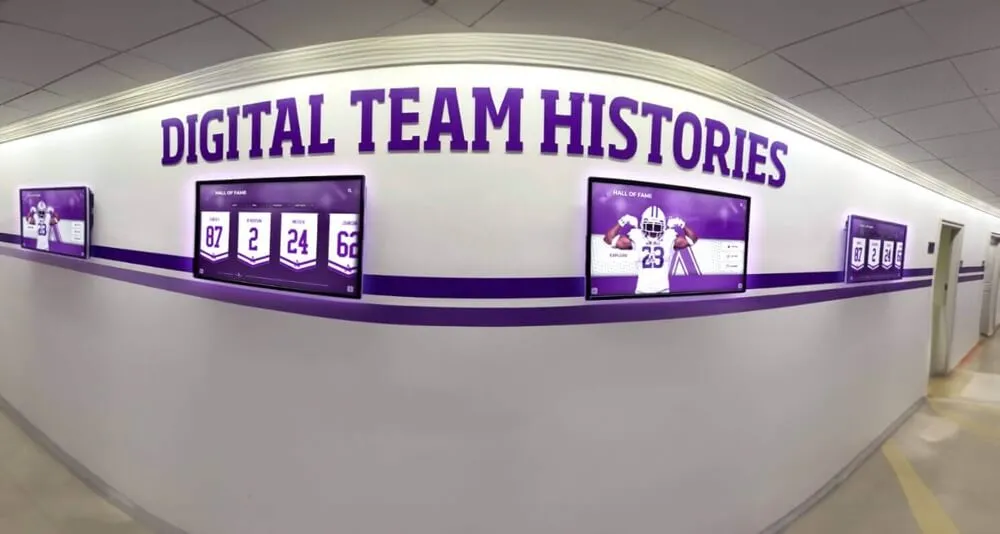
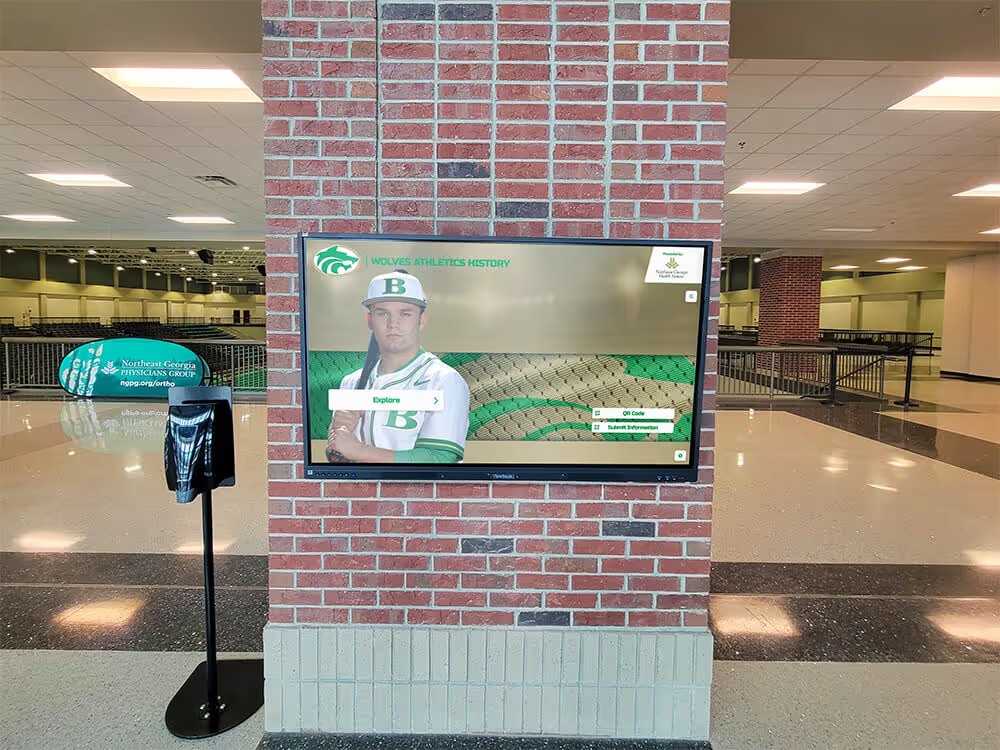
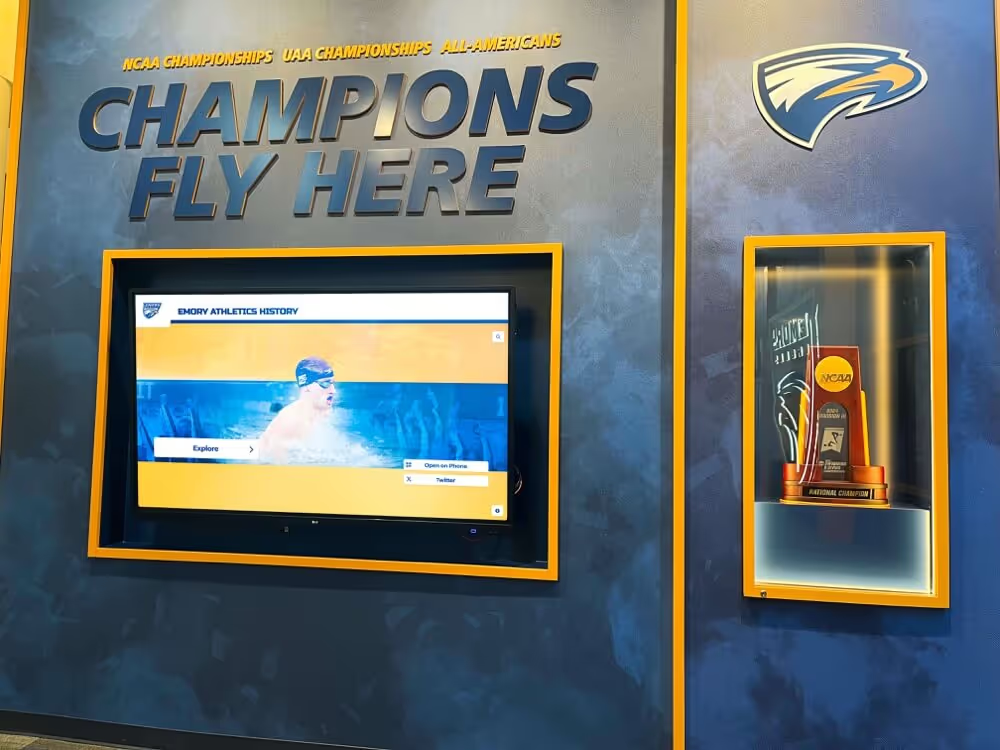
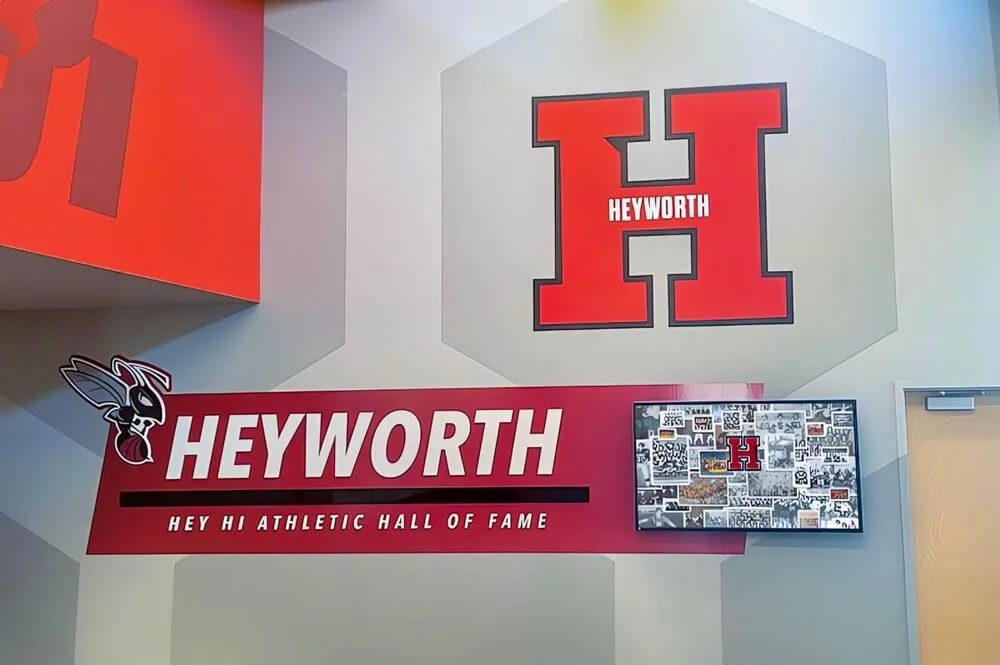
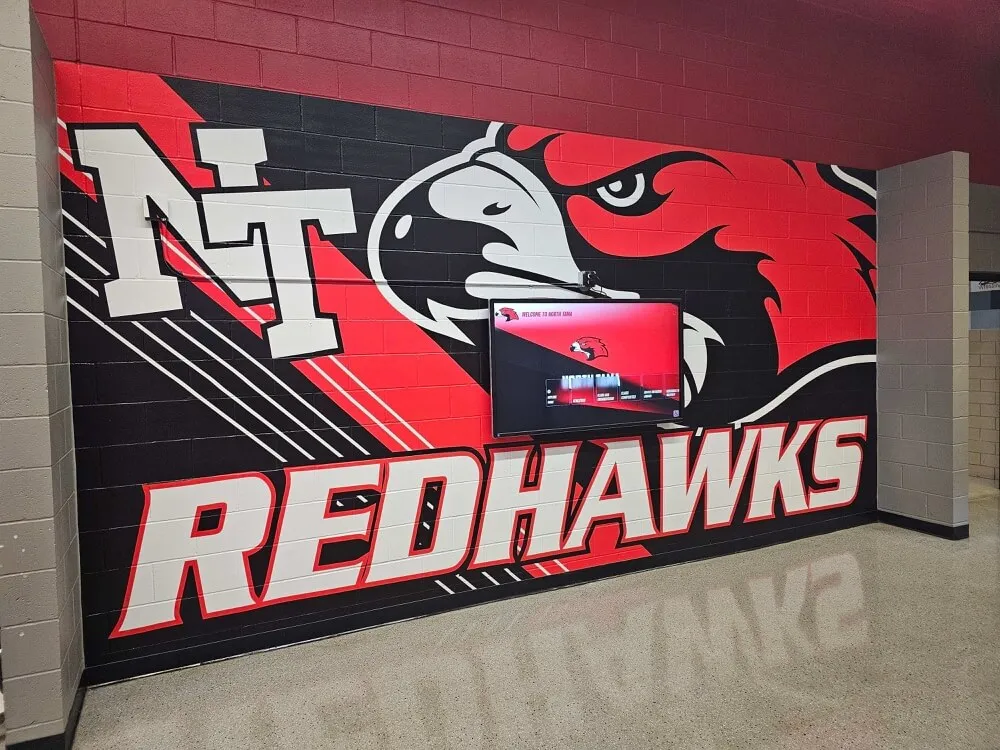
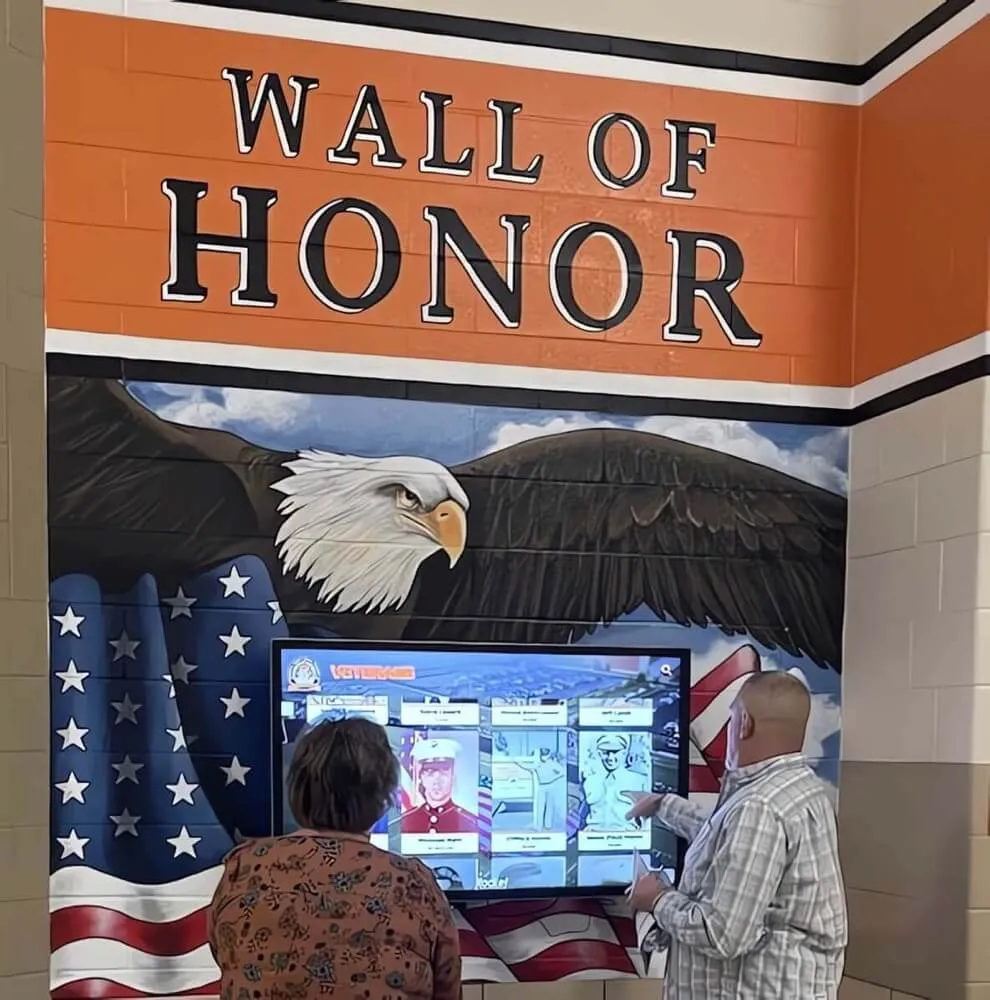
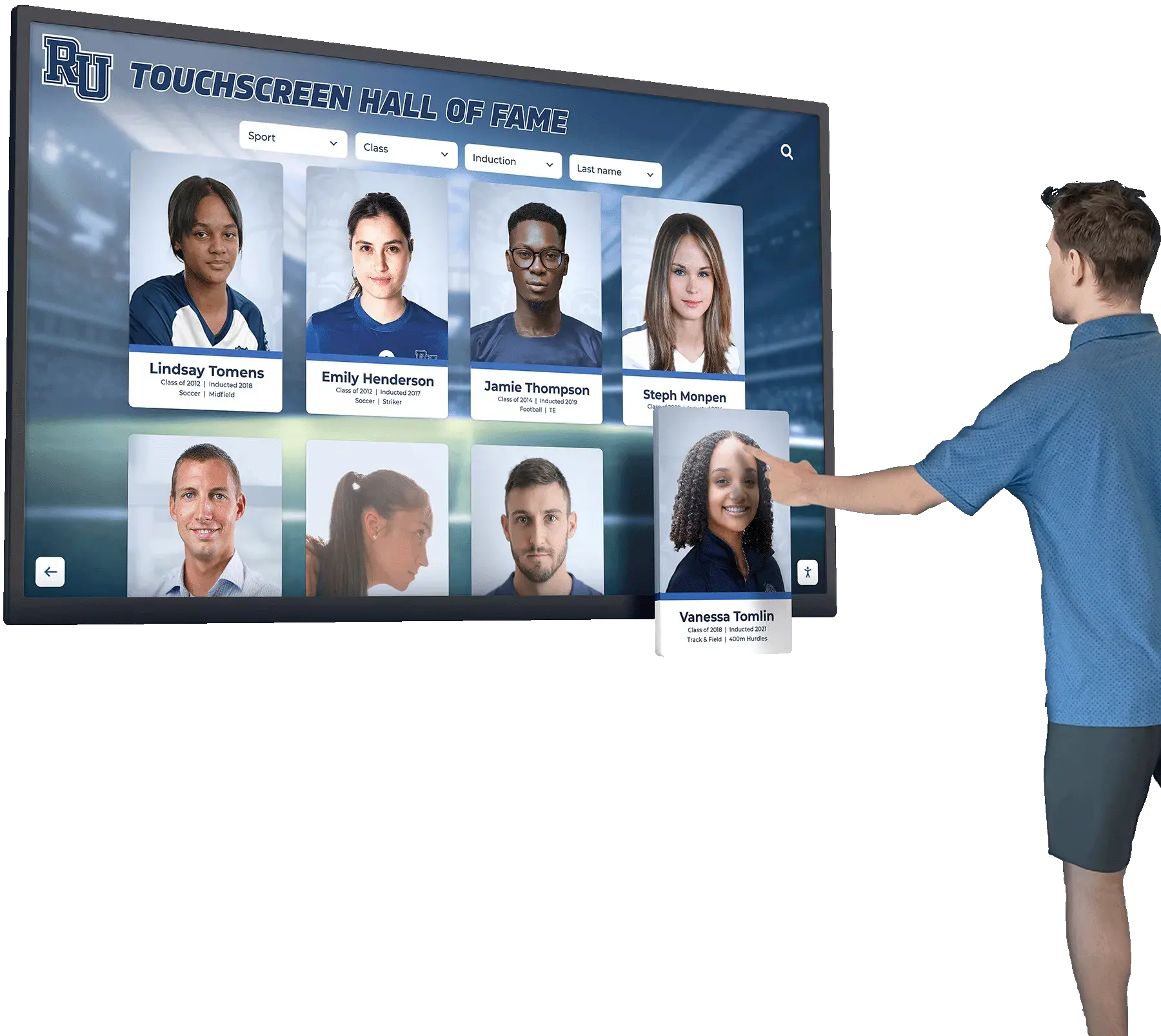
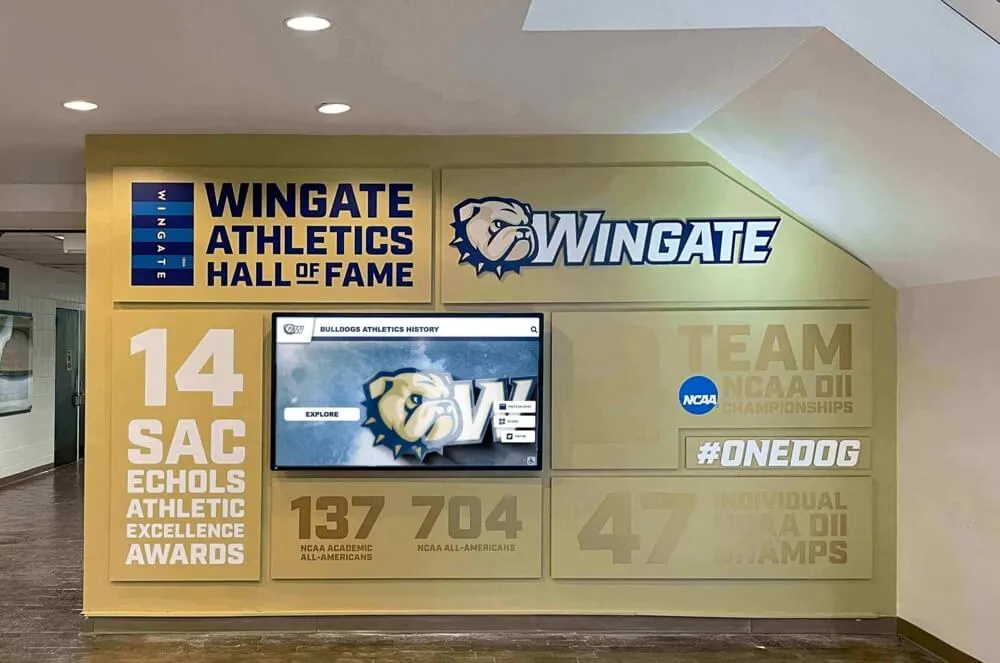
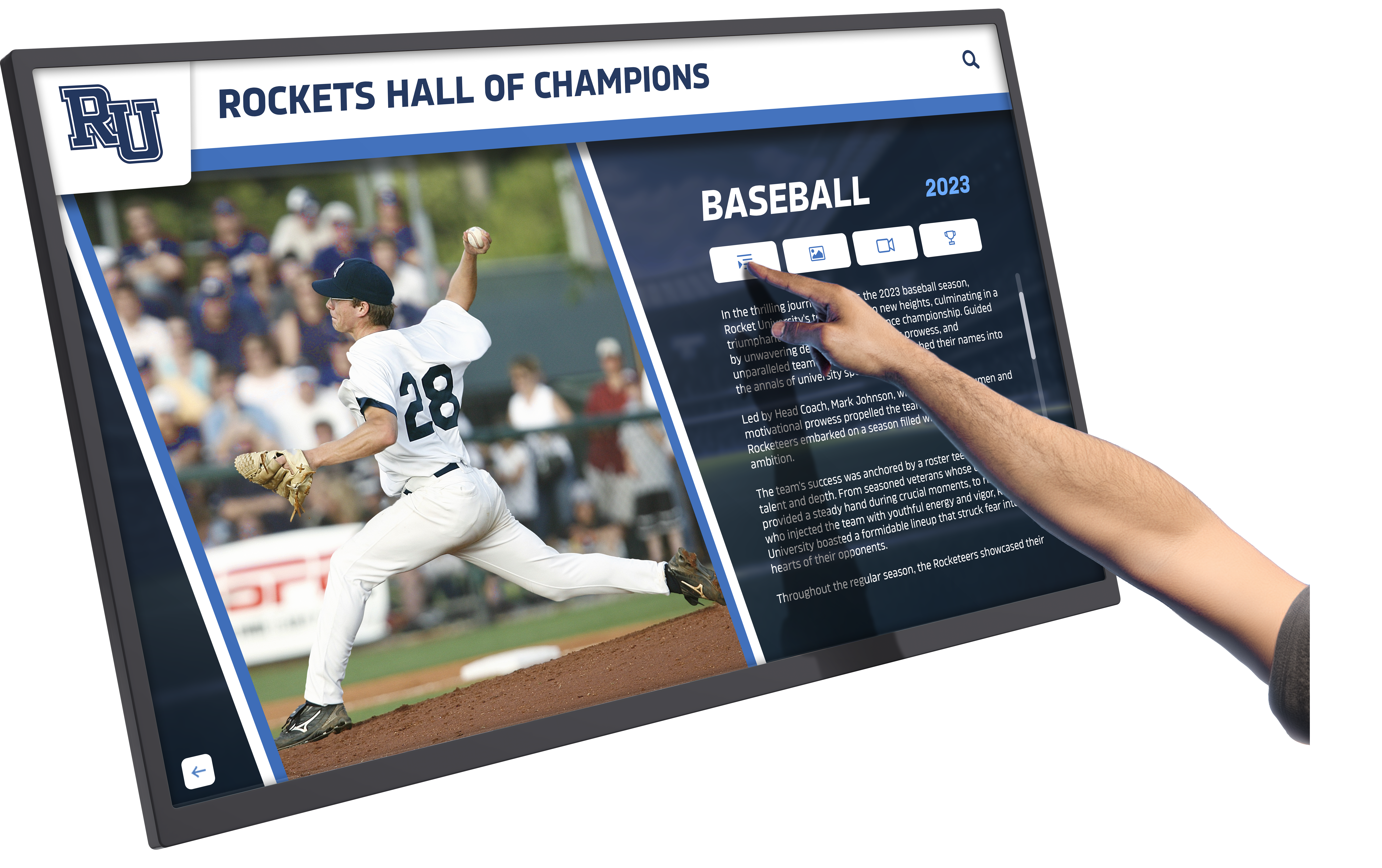
Interactive digital displays transform donor recognition into engaging experiences where supporters explore contribution impacts through multimedia storytelling
What Interactive Digital Displays Bring to Donor Recognition
Interactive digital displays specifically designed for donor recognition combine touchscreen technology with content management systems to create dynamic recognition experiences that evolve alongside fundraising programs.
These systems typically feature commercial-grade touchscreen monitors (43" to 75" diagonal) running specialized recognition software that presents donor information through searchable databases, visual presentations, and multimedia content. Unlike basic digital signage that only broadcasts messages, interactive displays invite exploration—visitors can search for specific donors, browse giving levels, explore funded programs, and engage with content at their own pace rather than passively viewing static information.
Core Interactive Display Capabilities
- Touchscreen navigation: Intuitive interfaces enabling visitors to explore donor communities through touch-based searching, filtering, and browsing
- Unlimited capacity: Digital databases accommodate thousands of donors without physical expansion requirements or wall space limitations
- Multimedia integration: Photos, videos, audio messages, and rich graphics that tell deeper stories than text alone
- Real-time updates: Instant recognition additions and content modifications without production delays or installation costs
- Searchability: Name search functions helping visitors locate specific donors or explore giving level categories
- Analytics tracking: Usage data revealing which content engages visitors and how people interact with recognition displays
According to research from the Association of Donor Relations Professionals, organizations implementing interactive digital recognition report 67% higher visitor engagement with donor recognition compared to traditional wall installations, with touchscreen interactions averaging 3-5 minutes versus seconds spent viewing static plaques. This extended engagement translates to deeper donor appreciation and increased recognition visibility throughout facilities.
Organizations considering interactive digital displays should understand these systems as recognition platforms rather than simple displays—the software, content strategy, and ongoing management matter as much as the physical hardware. Strategic recognition wall design principles apply equally to digital implementations, though the technology enables approaches impossible with traditional materials.
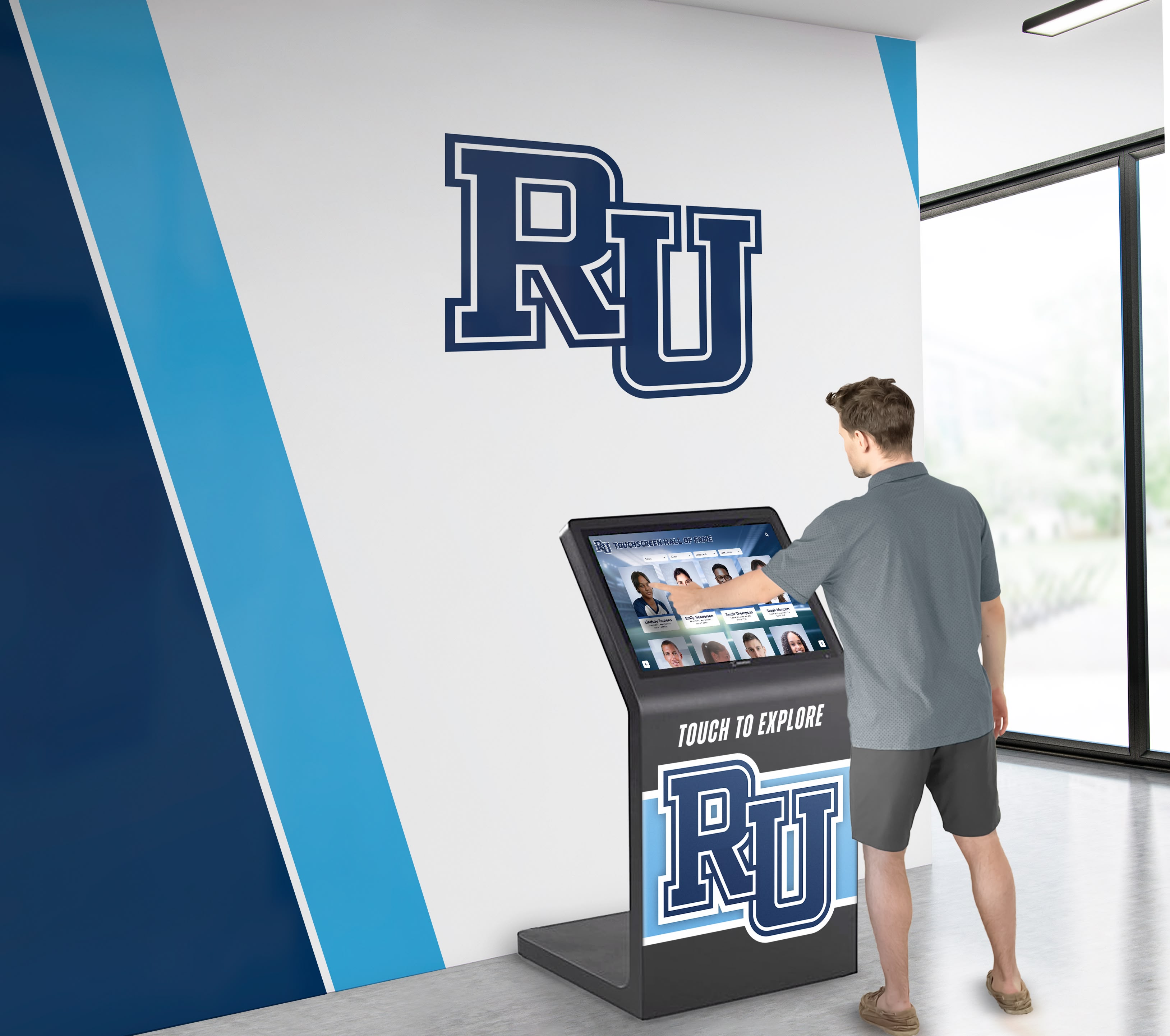
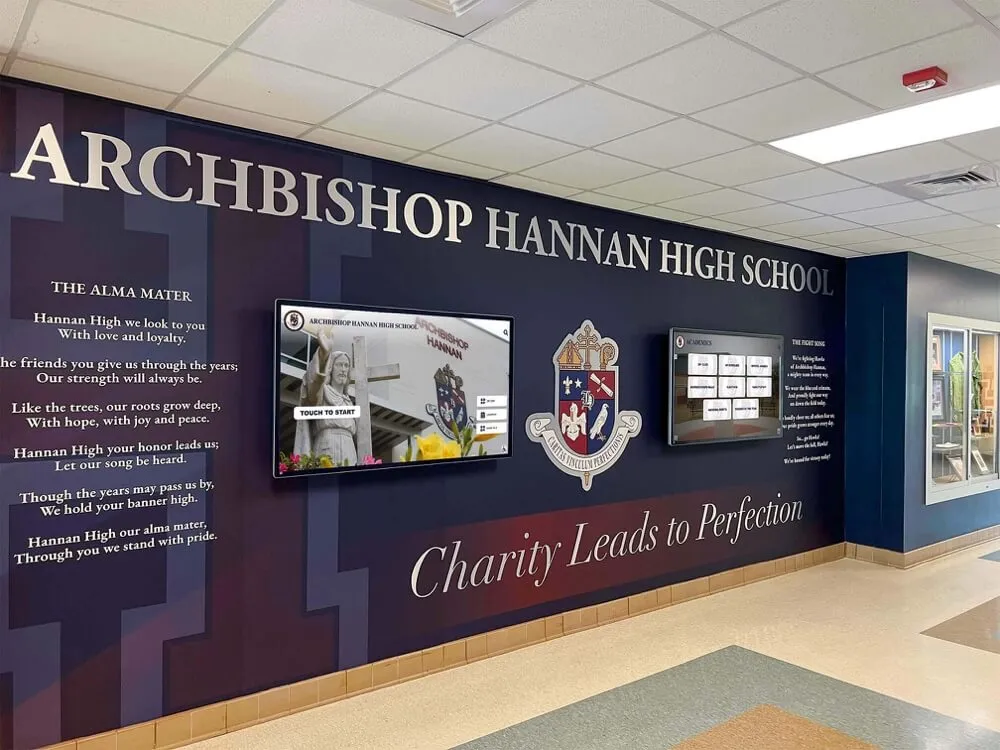
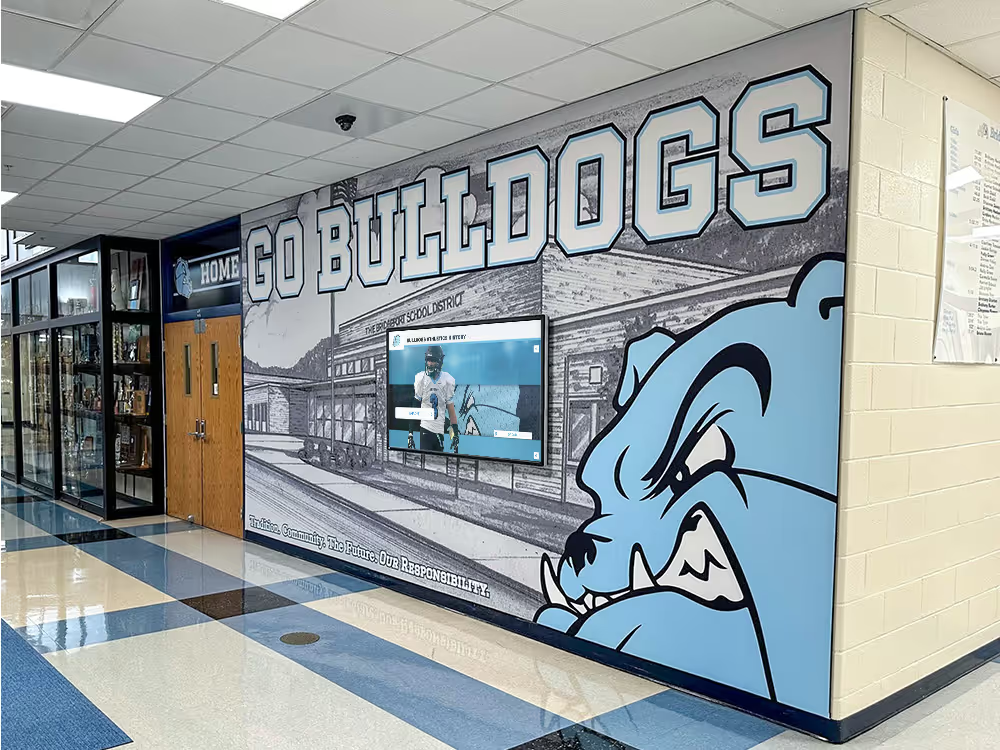
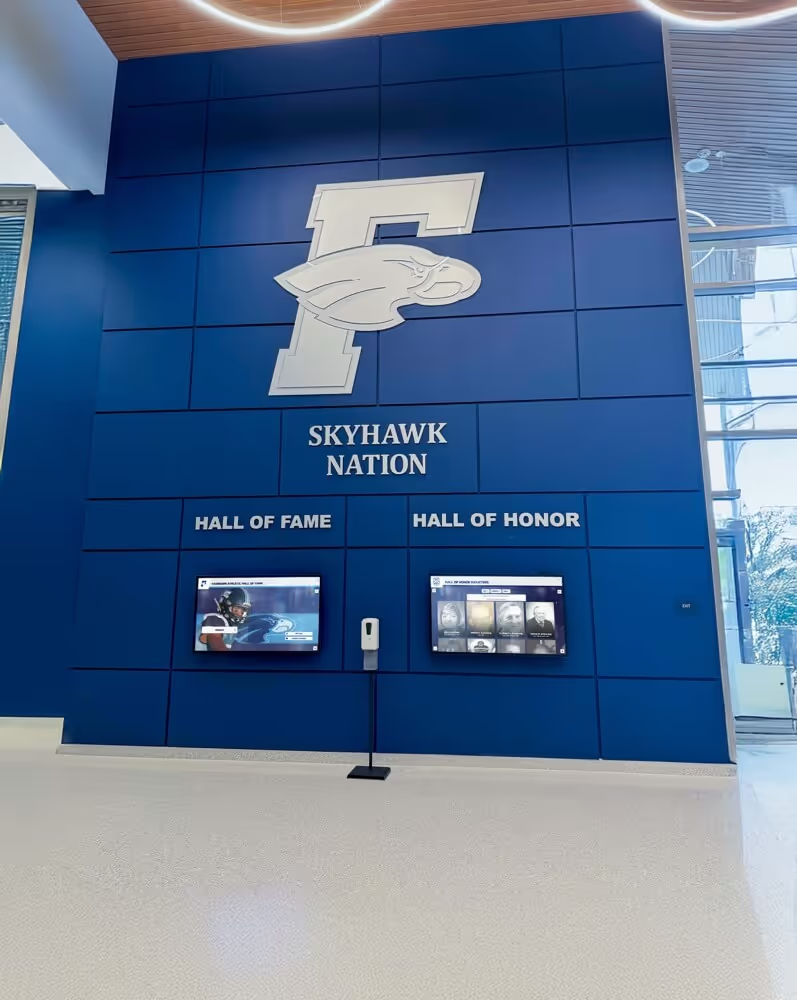
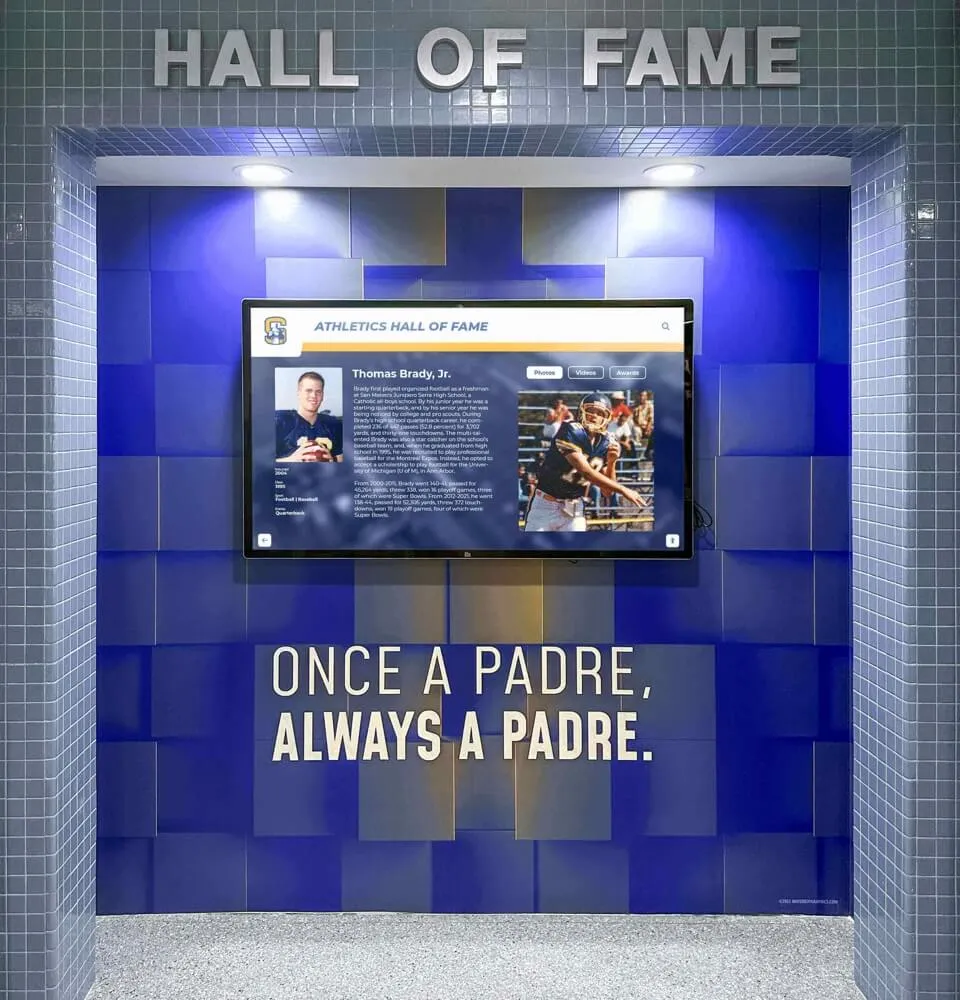
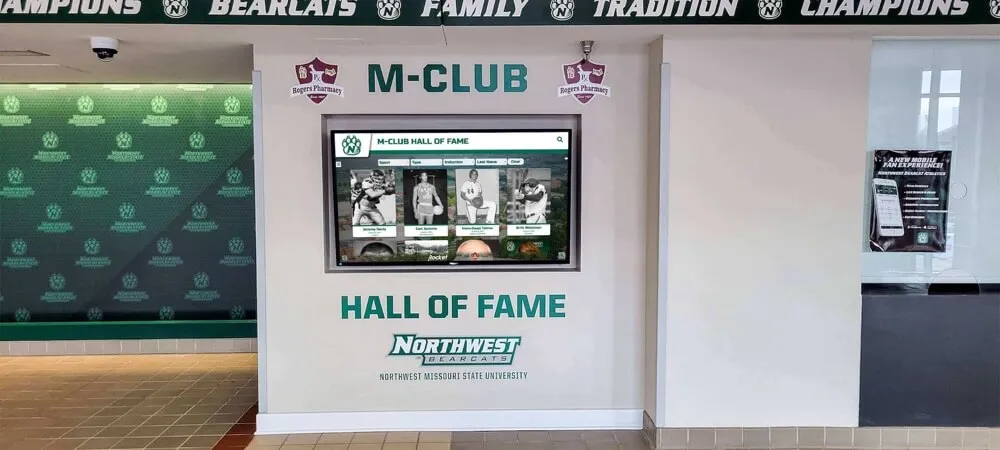
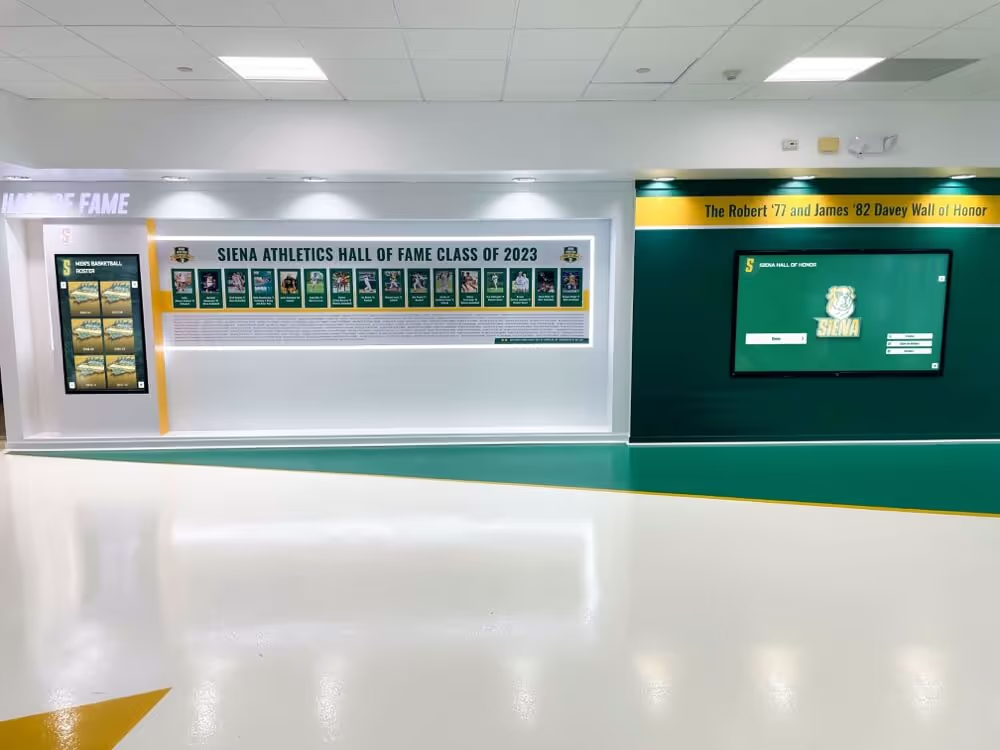
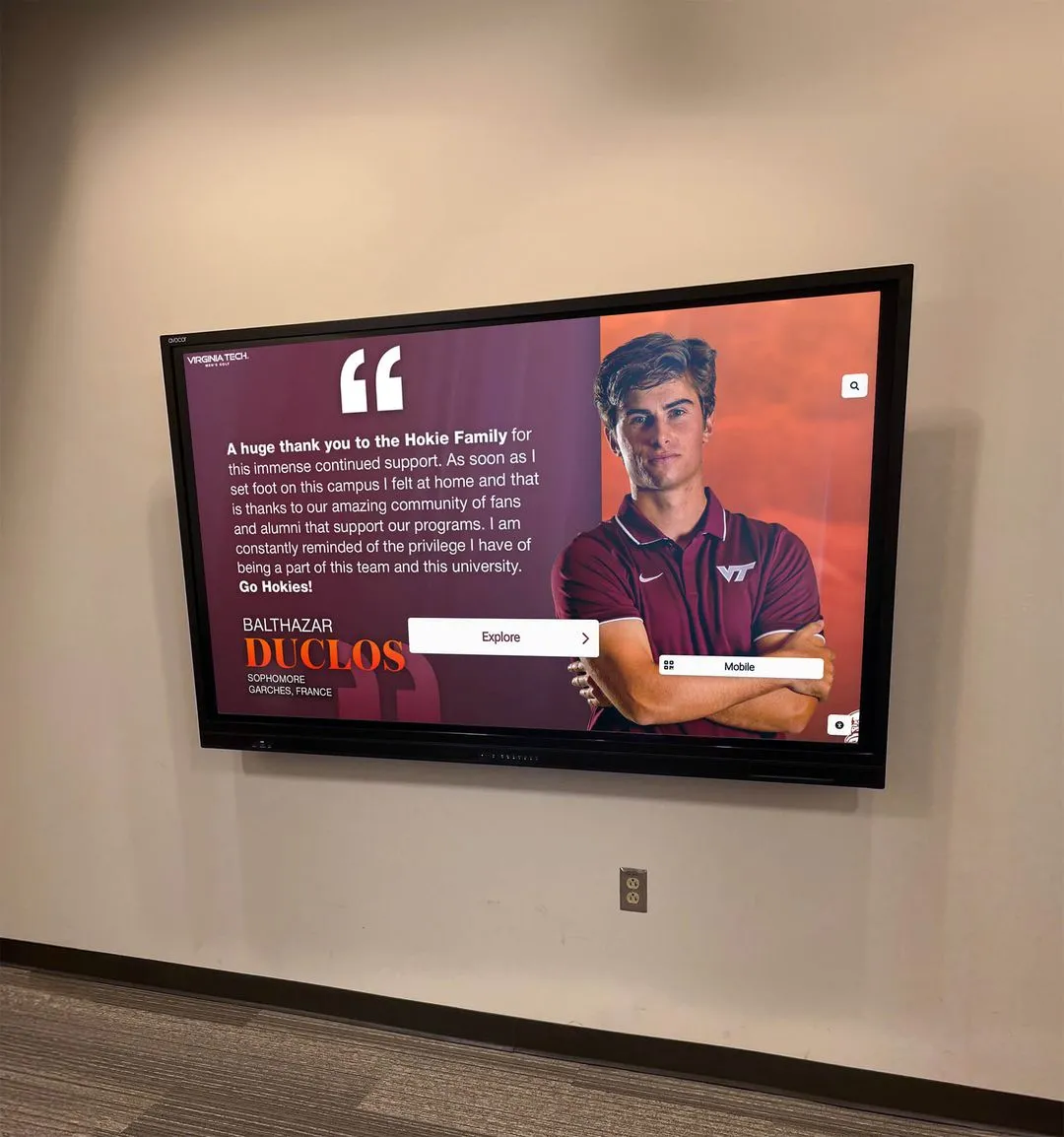
Touchscreen kiosks in high-traffic lobbies create natural opportunities for donor recognition exploration and mission reinforcement
Stewardship Advantages of Interactive Recognition Technology
The fundamental value proposition of interactive digital displays centers on stewardship capabilities that strengthen donor relationships beyond initial gift acknowledgment.
Storytelling Beyond Names and Numbers
Traditional donor walls communicate recognition through names, giving levels, and sometimes brief dedication messages. Interactive displays enable organizations to share the stories behind contributions—why donors give, what inspired their philanthropy, the specific impacts their support creates, and personal connections to organizational missions that motivated transformational gifts.
Enhanced Storytelling Capabilities
- Video testimonials from donors explaining giving motivations in their own words
- Before-and-after visual comparisons showing tangible impacts of funded projects
- Interactive timelines documenting how sustained support builds cumulative impact
- Photo galleries celebrating program beneficiaries and successful initiatives
- Audio messages from leadership thanking supporters and describing vision
- Impact metrics and data visualizations connecting dollars to outcomes
This multimedia storytelling creates emotional connections that static nameplates cannot achieve. When prospective donors see current supporters’ authentic testimonials and understand specific program impacts, they gain confidence that contributions create meaningful differences. Organizations using interactive displays effectively transform recognition installations into stewardship tools that simultaneously honor existing donors while inspiring future philanthropy.
Educational institutions particularly benefit from storytelling approaches that connect alumni donors to current student experiences. An alumni donor recognized on a traditional plaque remains a name; that same donor featured in an interactive display with photos from their student years, a brief video discussing why they give back, and current scholarship recipient photos creates a compelling narrative that inspires other alumni to consider their own giving potential. Similar recognition storytelling strengthens community showcase initiatives across various institutional contexts.
Flexibility for Campaign Progress and Recognition Updates
Capital campaigns typically span multiple years, with donor commitments and recognition tiers evolving throughout campaign timelines. Traditional recognition walls require organizations to choose between installing incomplete displays that look unfinished or delaying recognition until campaigns conclude years after initial gifts.
Interactive digital displays eliminate this constraint through instant content updates that recognize new donors immediately while maintaining polished, complete presentations at every campaign stage.
Campaign Flexibility Benefits
- New donors appear in recognition displays within hours or days of gift confirmation
- Giving level upgrades reflect instantly without re-engraving or plaque replacement
- Campaign progress meters and fundraising totals update in real-time
- Recognition categories expand or adjust as campaign strategies evolve
- Temporary campaign-specific recognition integrates seamlessly alongside permanent donor honor rolls
- Naming opportunities update immediately when supporters fund specific spaces or programs
This flexibility proves particularly valuable for capital campaign planning where recognition timelines must accommodate multiyear fundraising initiatives. Organizations can celebrate early leadership gifts immediately rather than making major donors wait years for recognition, maintaining momentum and demonstrating appreciation throughout campaign lifecycles.
Additionally, digital flexibility accommodates recognition evolution as organizational relationships with donors deepen. An initial annual fund supporter who later establishes a planned giving commitment can see their recognition upgraded to legacy society status without physical plaque removal or wall reconstruction—the digital update happens invisibly while maintaining recognition continuity.
Unlimited Capacity and Space Efficiency
Physical donor walls inevitably encounter space limitations. Whether organizations run out of wall space, exhaust plaque capacity on fixed displays, or face facility constraints preventing recognition expansion, traditional approaches create difficult decisions about which donors receive visible acknowledgment.
Interactive digital displays solve capacity constraints through searchable databases that accommodate unlimited donors while consuming minimal physical space. A single 55" touchscreen can recognize thousands of supporters through categorized listings, search functionality, and organized presentations—the equivalent of entire hallways of traditional plaques in a compact, elegant installation.
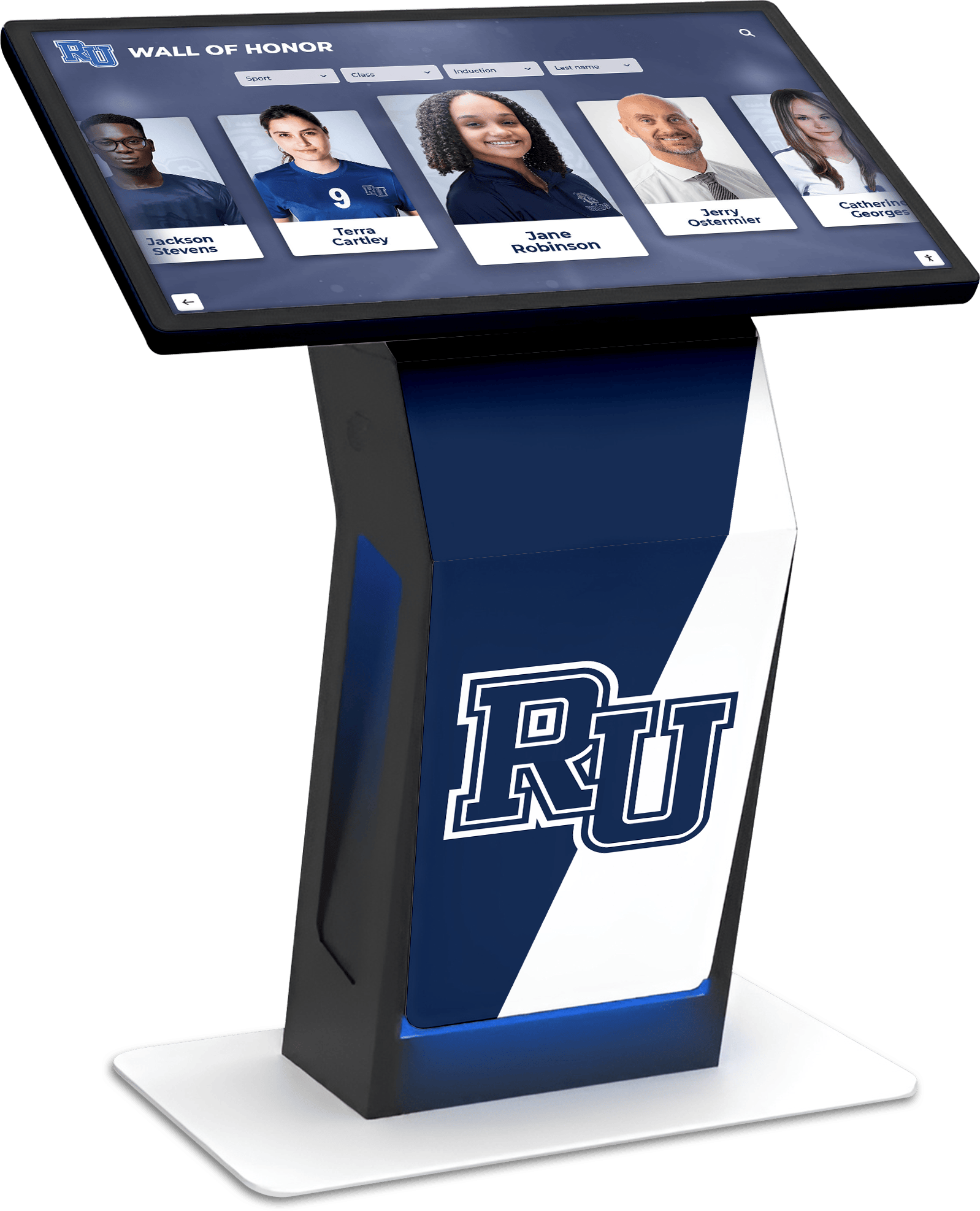
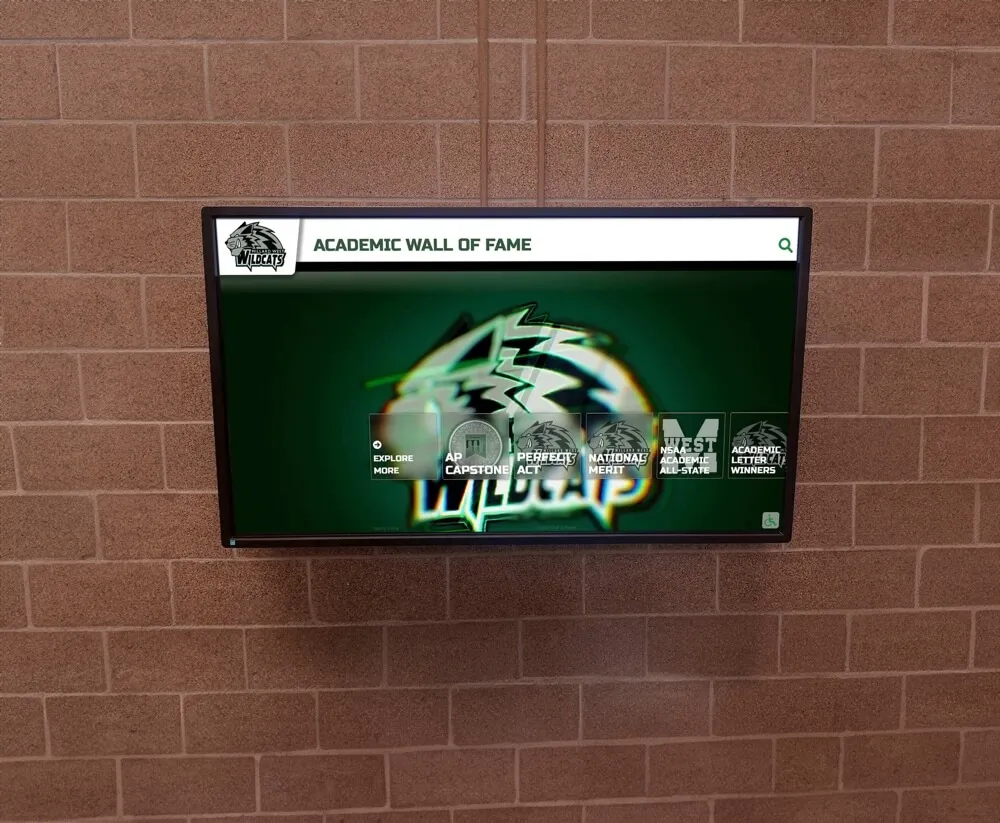
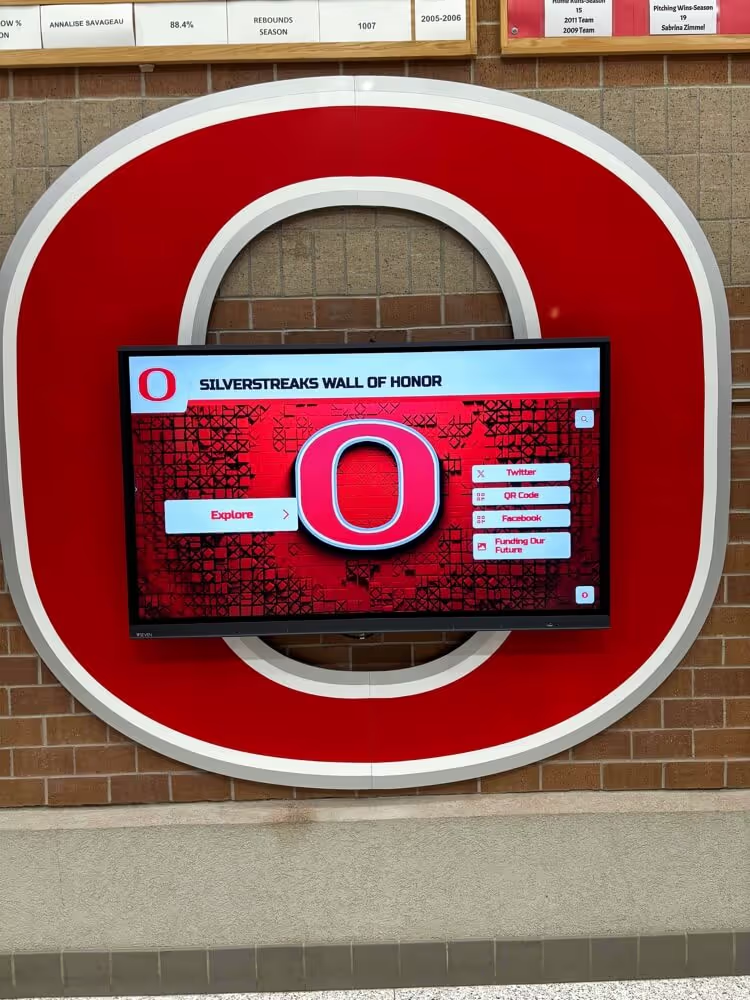
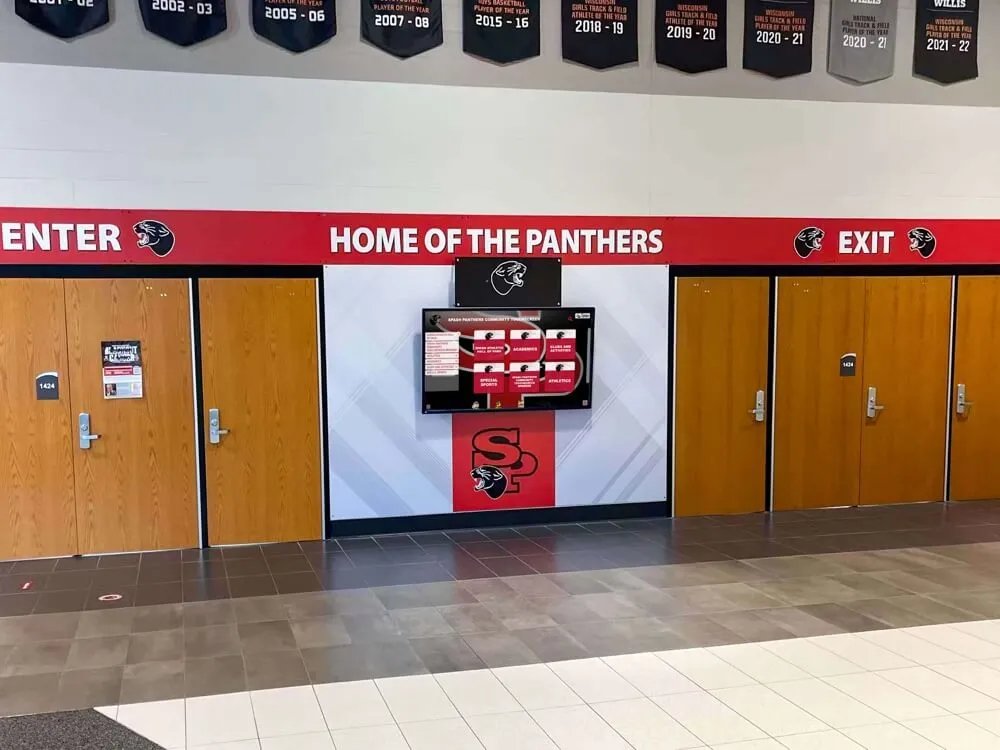
Single touchscreen installations accommodate unlimited donors through searchable databases that traditional walls cannot match
Space Efficiency Advantages
- Unlimited donor capacity regardless of giving program growth
- Compact footprint suitable for space-constrained lobbies and corridors
- No wall expansion costs as donor communities grow
- Multiple giving societies and recognition categories in unified presentations
- Historical donor recognition archives alongside current supporters
- Space savings enable recognition placement in premium, high-traffic locations
Organizations managing growing donor communities particularly appreciate this scalability. A university with 500 donors today but aspirations for 5,000 can install an interactive display confident the system will accommodate future growth without requiring costly expansions or secondary recognition locations. The recognition investment scales naturally with fundraising success rather than creating constraints that limit program growth.
Implementation Considerations for Interactive Donor Recognition
Successfully deploying interactive digital displays requires thoughtful attention to hardware specifications, software capabilities, content development, and ongoing management—each element contributing to recognition effectiveness and long-term sustainability.
Hardware Selection and Installation Requirements
The physical display system forms the foundation for interactive donor recognition, requiring commercial-grade equipment designed for continuous operation in public spaces rather than consumer-grade electronics intended for home use.
Critical Hardware Specifications
- Commercial touchscreen displays: Industrial-grade monitors rated for 16-24 hour daily operation with 50,000+ hour expected lifespans
- Screen size selection: 43"-55" for individual kiosks, 65"-75" for wall-mounted installations in larger spaces
- Touch technology: Infrared or capacitive touchscreens providing responsive interaction across entire display surfaces
- Processing hardware: Dedicated media players or embedded computers ensuring smooth content performance
- Mounting systems: Professional-grade wall mounts, floor stands, or custom millwork integration
- Network connectivity: Ethernet or WiFi connections enabling remote content management and updates
Installation environments significantly impact hardware specifications. High-traffic lobbies require more durable touchscreens and protective bezels than controlled-access donor lounges. Outdoor donor garden installations need weatherproof enclosures and high-brightness displays readable in direct sunlight. Organizations should match hardware specifications to specific installation conditions rather than selecting generic digital signage equipment.
Professional installation ensures proper mounting security, concealed cable management, appropriate viewing heights and angles, and integration with facility power and network infrastructure. While basic displays can be mounted like televisions, professional installations deliver polished presentations worthy of major donor recognition—similar to how digital hall of fame systems require thoughtful integration into institutional environments.
Recognition Software Platforms and Content Management
The software driving interactive displays matters more than hardware for long-term recognition success. Purpose-built donor recognition platforms provide features specifically designed for fundraising contexts that generic digital signage or slideshow applications cannot match.
Essential Software Capabilities
- Donor database integration: Direct connections to fundraising databases for automated recognition updates
- Search and filtering: Intuitive interfaces enabling visitors to find specific donors or browse categories
- Giving level organization: Structured presentations organizing donors by contribution tiers, societies, or recognition clubs
- Multimedia content support: Photo galleries, video integration, audio messages, and rich graphics
- Template systems: Consistent presentation formats ensuring professional donor recognition aesthetics
- Remote content management: Cloud-based administration enabling updates from any location
- Usage analytics: Tracking data revealing engagement patterns and content performance
Organizations should evaluate software platforms specifically for donor recognition applications rather than adapting general-purpose digital signage systems. Recognition-specific platforms understand giving level hierarchies, campaign structures, naming opportunities, and donor privacy considerations that generic content management systems ignore.
Cloud-based management proves particularly valuable for organizations with limited technical staff. Rather than requiring on-site IT support for every content update, cloud platforms enable development office staff to manage donor recognition directly through web interfaces—adding new donors, updating giving levels, refreshing content, and modifying layouts without specialized technical expertise.
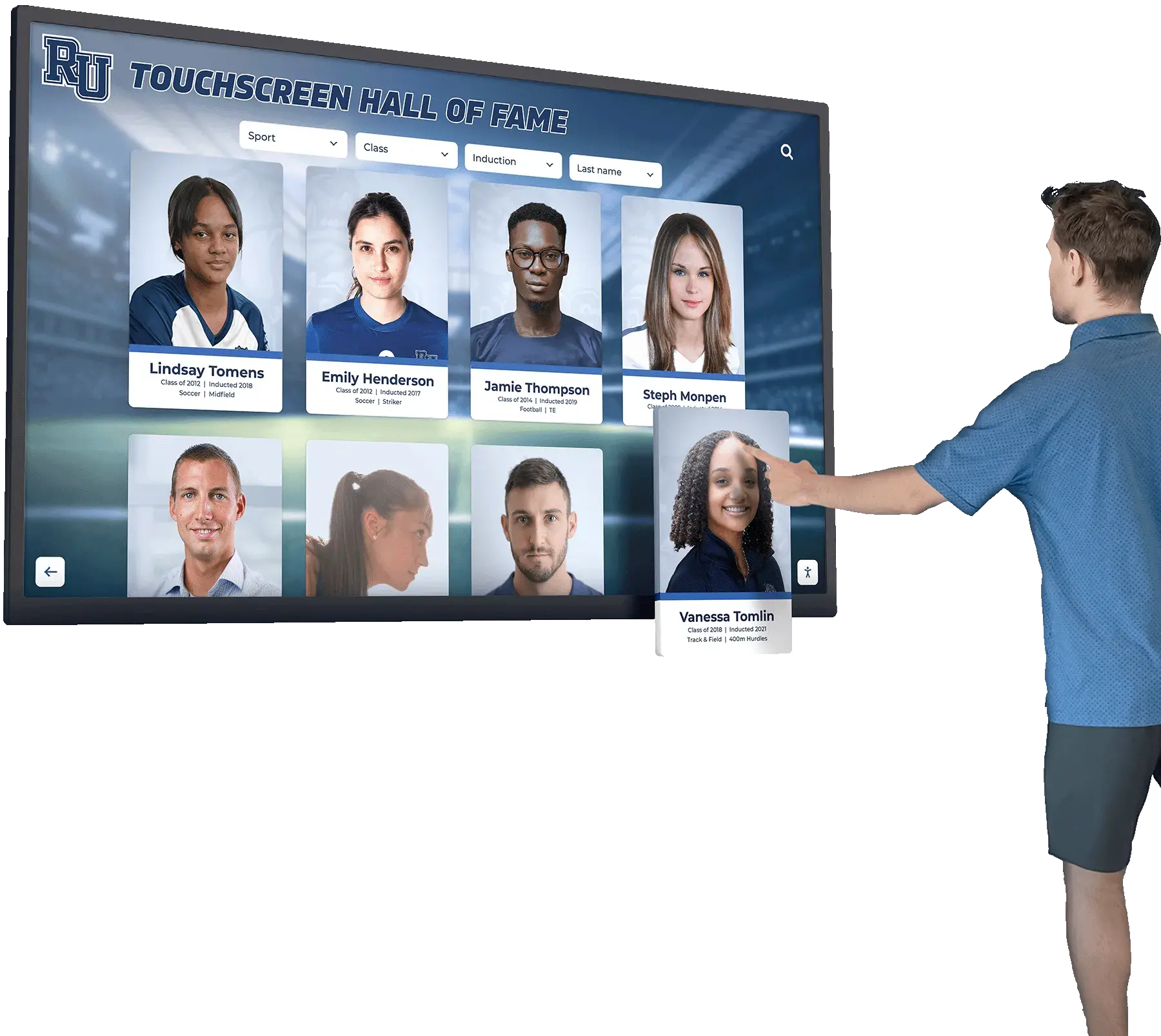
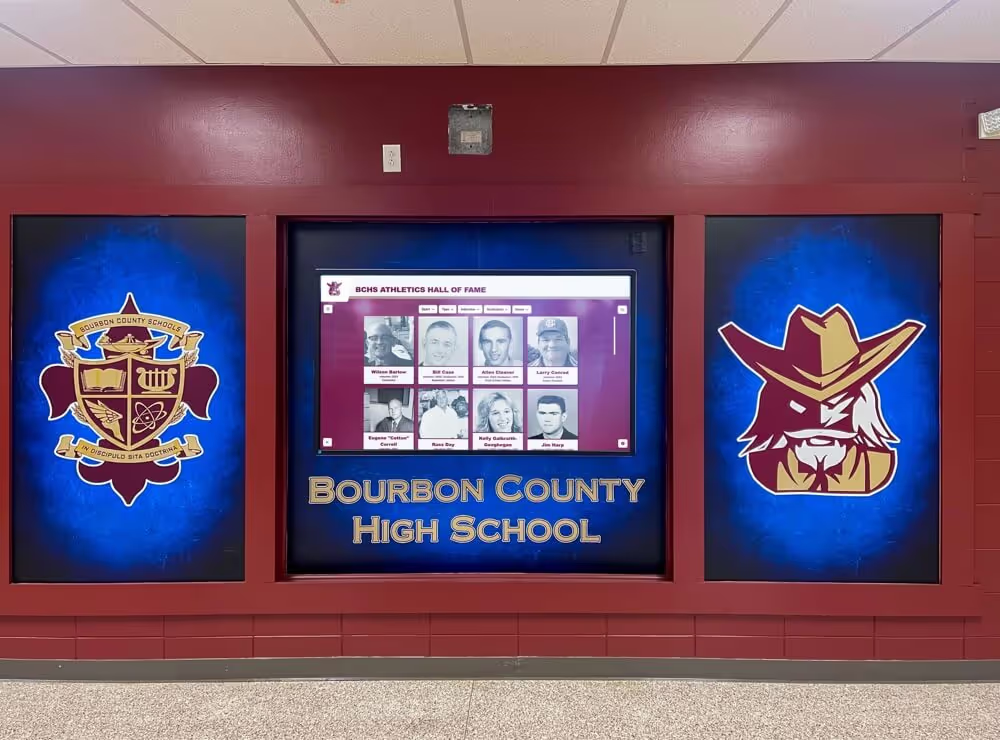
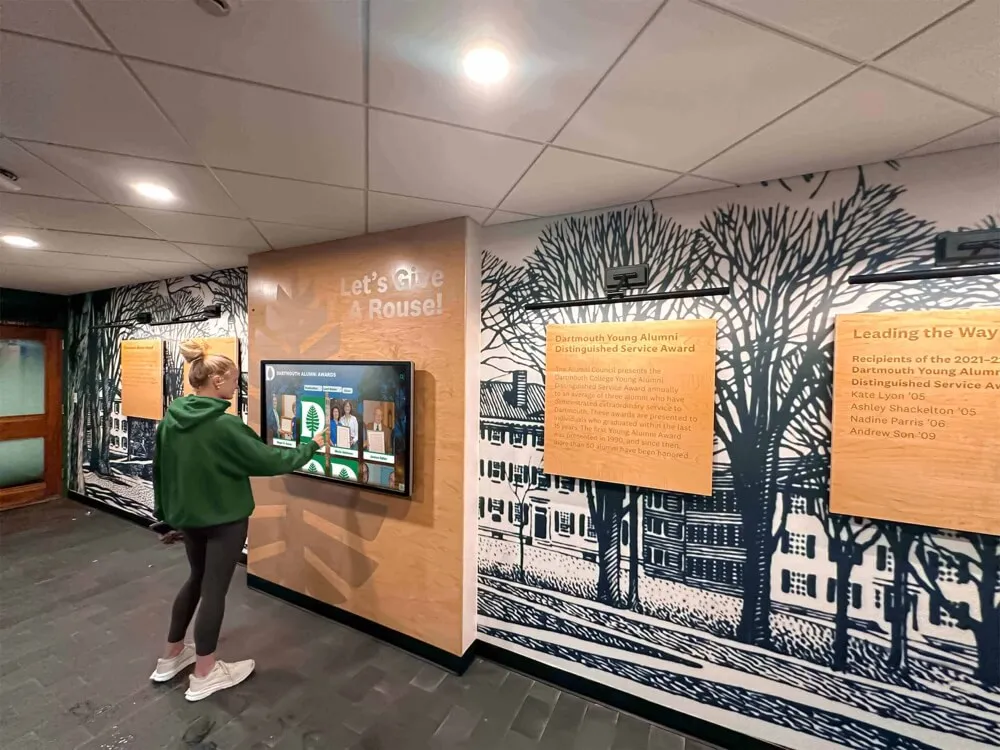
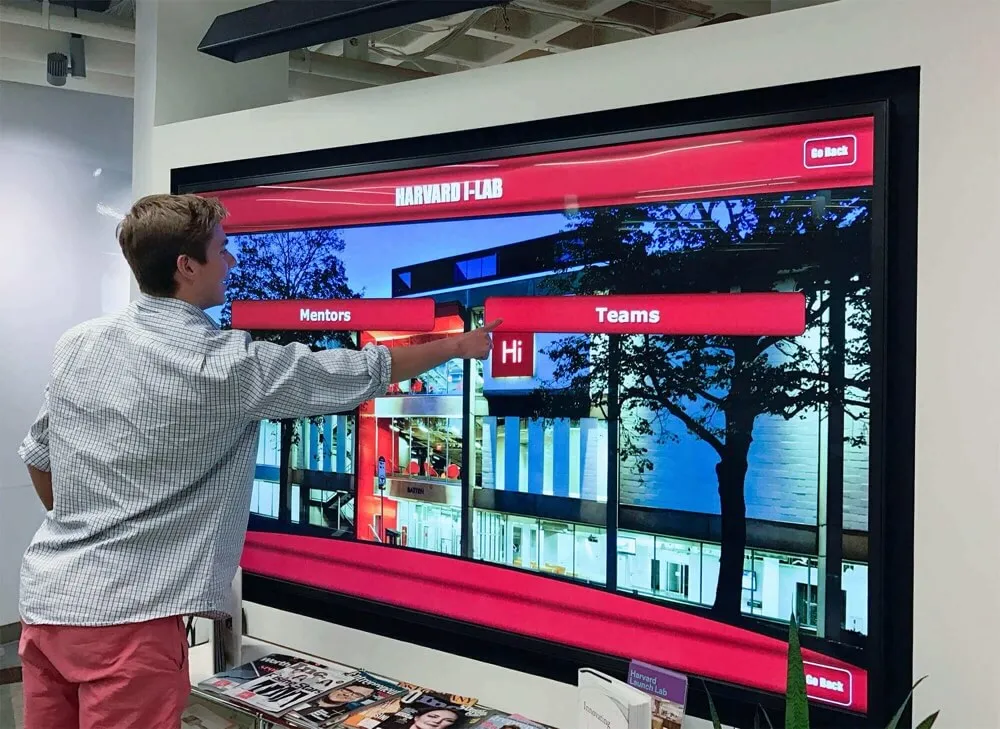
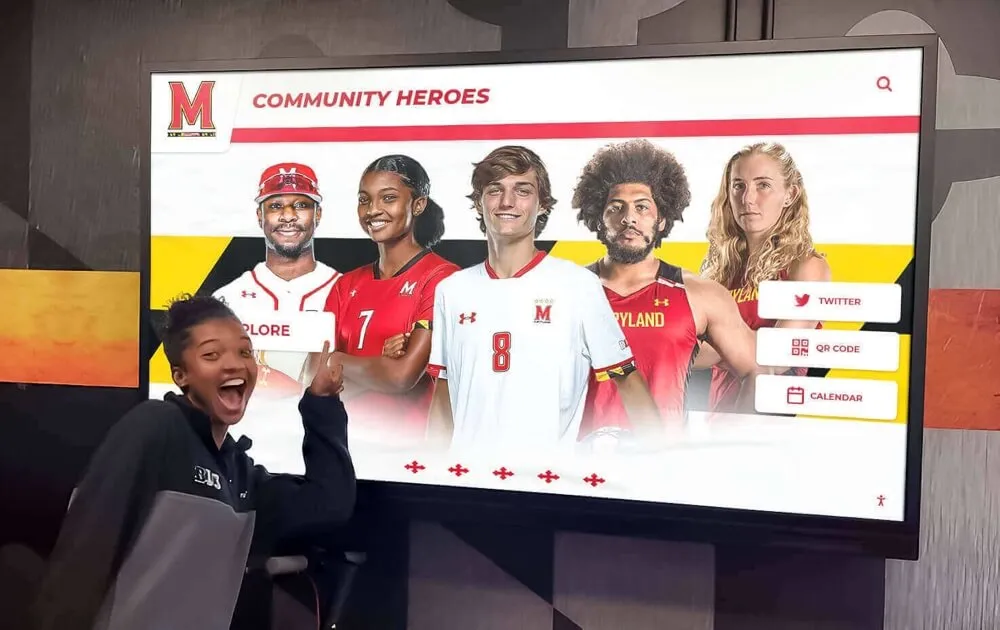
Searchable donor profiles enable deep exploration of supporter communities and philanthropic partnerships
Content Strategies That Maximize Recognition Impact
Hardware and software provide the platform, but content determines whether interactive displays create meaningful stewardship or simply digitize traditional nameplate approaches.
Designing Engaging Donor Recognition Experiences
Effective interactive recognition content balances comprehensive donor acknowledgment with engaging presentations that invite exploration rather than overwhelming visitors with information density.
Content Organization Principles
- Clear entry navigation: Home screens offering intuitive pathways to donor categories, search functions, and featured content
- Hierarchical information architecture: Progressive disclosure starting with overview information and enabling deeper exploration through touch navigation
- Visual storytelling: Photo-driven presentations with concise text rather than text-heavy displays requiring extensive reading
- Featured donor spotlights: Rotating highlights showcasing select donors with rich multimedia stories
- Giving society galleries: Visual presentations of recognition club members organized by contribution levels
- Impact sections: Content connecting collective philanthropy to tangible organizational outcomes
- Historical context: Archives honoring legacy donors and illustrating philanthropic tradition over time
Organizations should design content from visitor perspectives rather than administrative convenience. A database dump of 1,000 donor names organized alphabetically provides acknowledgment but creates little engagement. That same donor community presented through visual giving society galleries, searchable by name or category, with featured spotlights telling select donor stories, and impact metrics connecting contributions to outcomes creates an experience that educates, inspires, and appropriately honors supporters.
The most effective interactive recognition treats each donor as a potential story rather than a database entry. While not every supporter needs extensive multimedia presentations, the capability to feature select donors with richer content creates recognition tiers—basic acknowledgment for all donors, enhanced recognition for major contributors, and featured storytelling for transformational gifts—all within the same integrated system.
Multimedia Integration and Production Considerations
Interactive displays enable video, audio, and rich graphics, but multimedia content requires production capabilities and ongoing content development commitments beyond static plaque text.
Multimedia Content Types
- Donor testimonial videos: Brief (30-90 second) clips where supporters explain giving motivations
- Impact demonstration videos: Visual storytelling showing funded programs in action
- Photo galleries: Curated image collections illustrating donor connections to organizations
- Audio messages: Recorded thank-you messages from leadership or program beneficiaries
- Before-and-after comparisons: Visual documentation of transformation funded by philanthropy
- Data visualizations: Interactive charts and graphics illustrating collective donor impact
Organizations should approach multimedia content realistically—not every donor requires video production, and static photos with well-written text often communicate effectively. Focus multimedia resources on major donor spotlights, featured giving societies, and impact storytelling that serves broader stewardship goals beyond individual recognition.
For smaller organizations with limited production capabilities, professional photography combined with well-designed templates creates polished recognition without video production budgets. A donor recognized with a professional portrait photo, brief biographical text, a quote about giving motivations, and impact metrics tied to their contribution receives meaningful acknowledgment that honors their support appropriately. Schools and educational institutions can leverage similar approaches across multiple recognition applications using consistent production methodologies.
Budget approximately $500-$2,000 per featured donor for professional multimedia content development including interview filming, photo shoots, editing, and graphic design. Organizations typically feature 10-20 donors with rich multimedia presentations while providing simpler recognition for broader supporter communities—creating recognition tiers that allocate production resources to stewardship priorities.

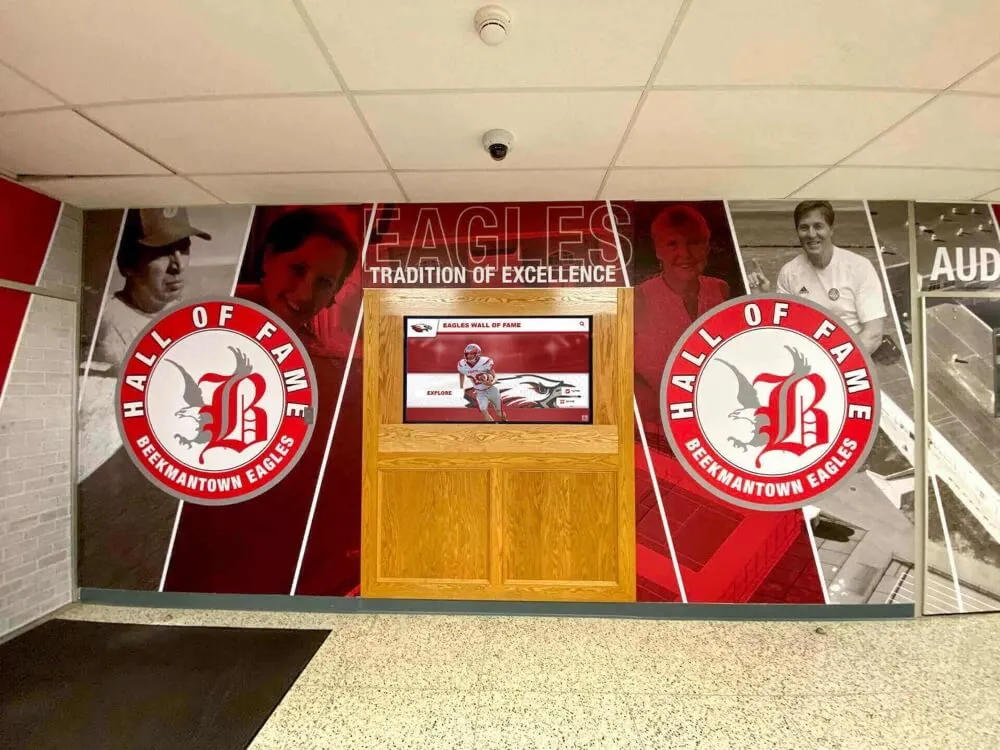
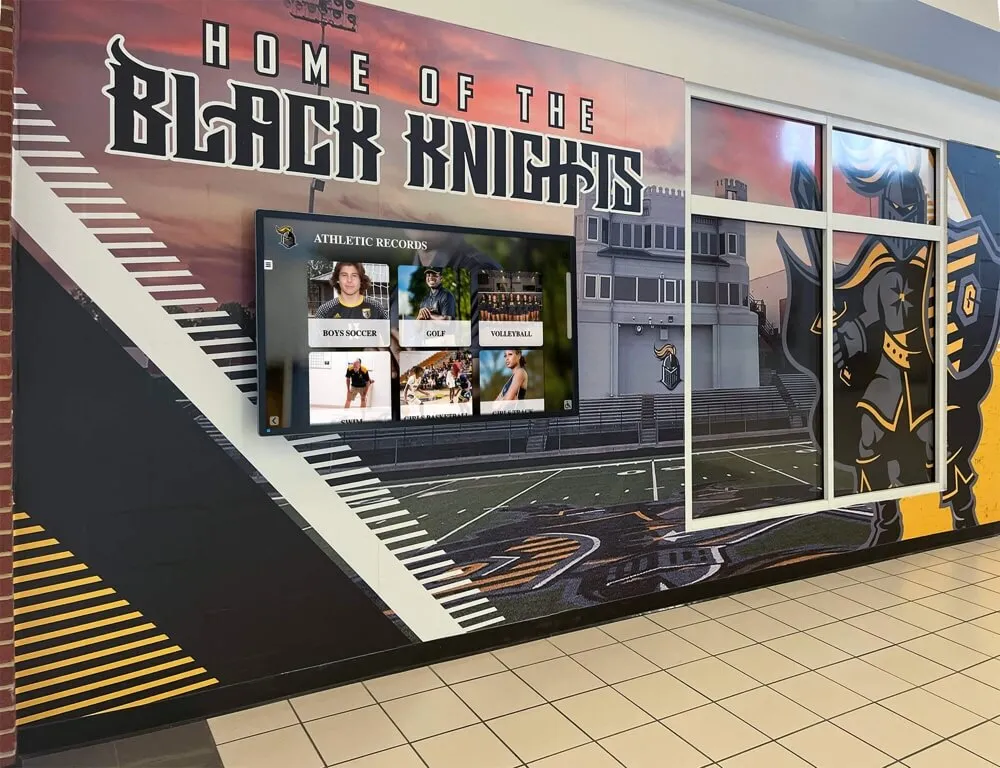
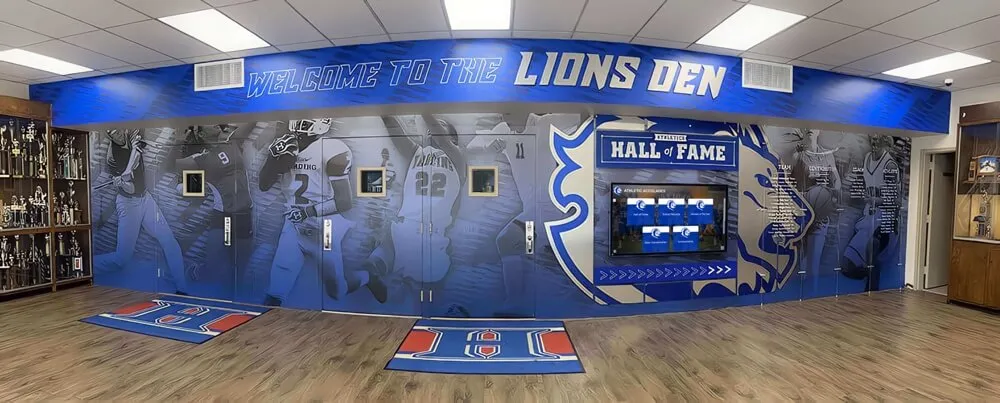
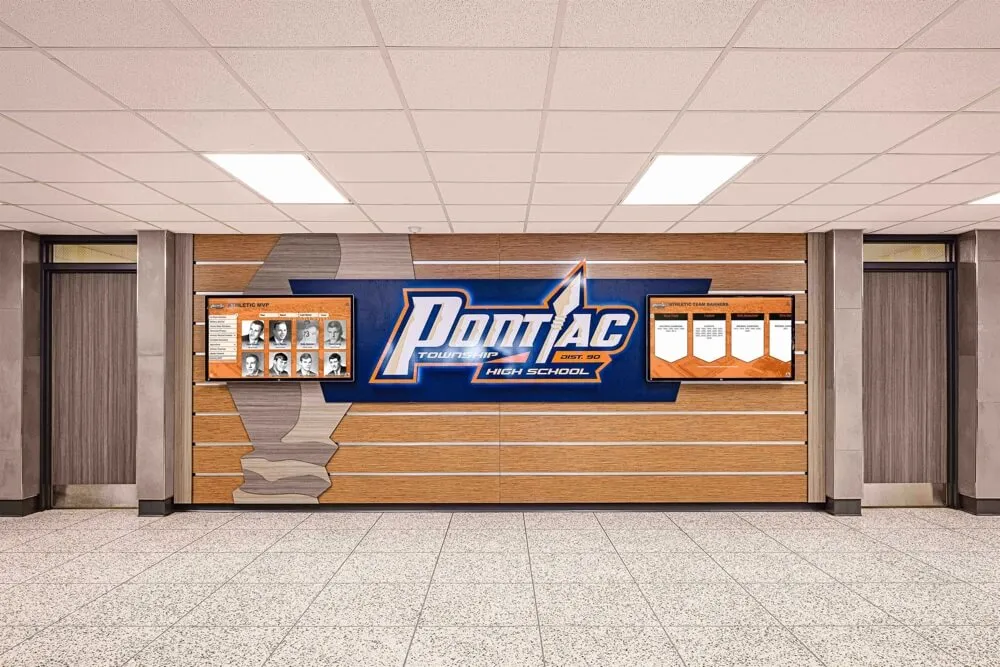
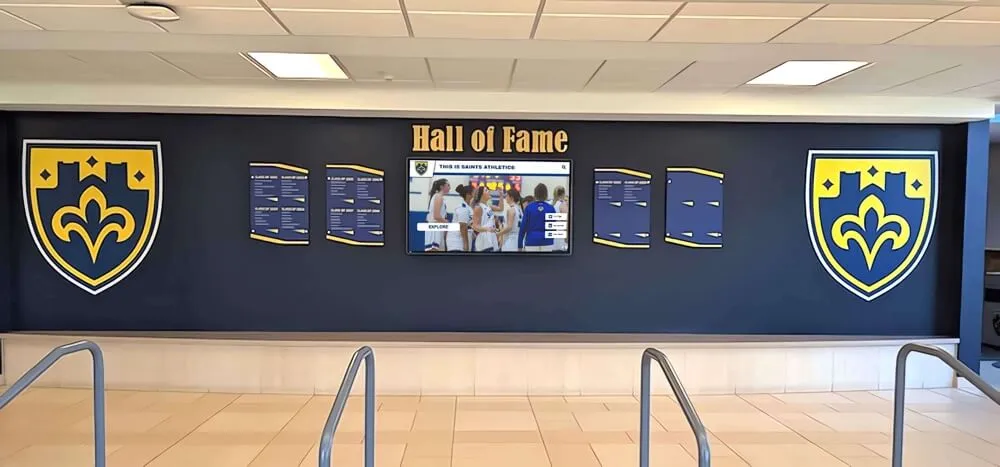
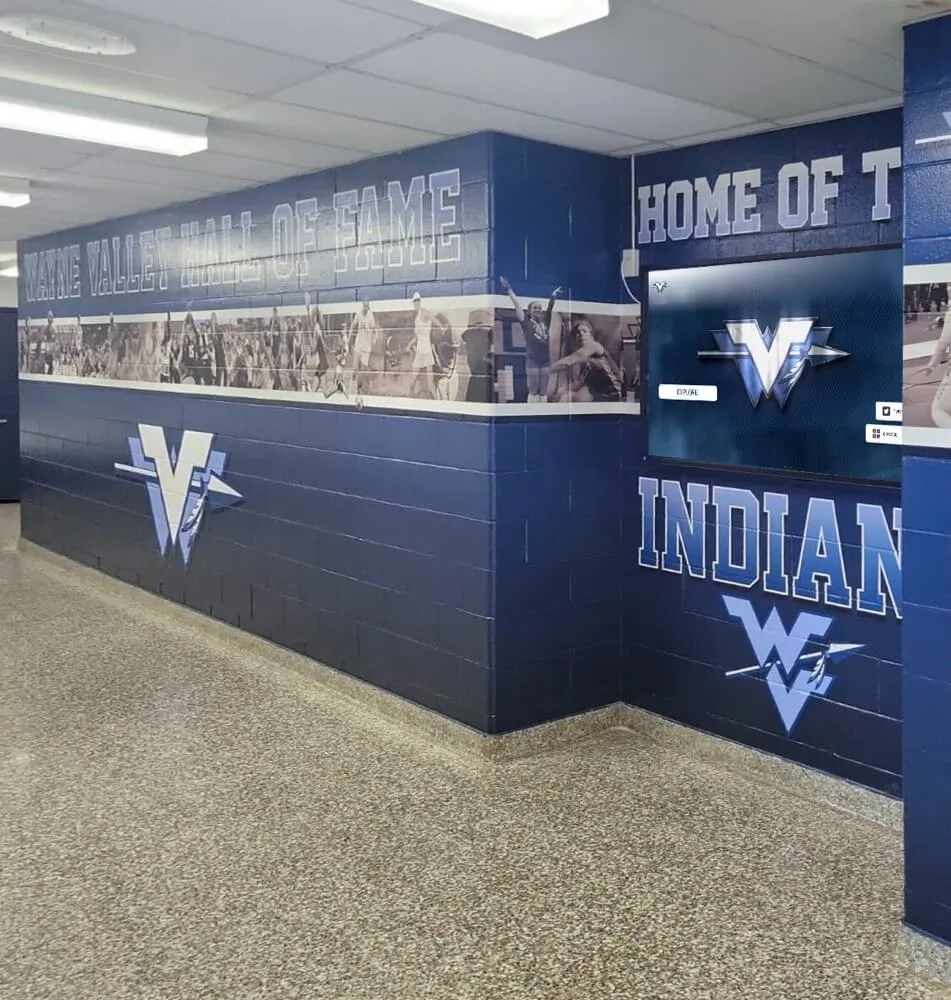
Comprehensive recognition walls combine interactive displays with environmental graphics for impactful donor acknowledgment
Interactive Displays vs. Traditional Donor Recognition: Realistic Comparisons
Organizations evaluating recognition approaches need honest assessments of how interactive digital displays compare to traditional plaques in terms of initial investment, ongoing costs, prestige perception, and practical functionality.
Investment Considerations and Total Cost of Ownership
Interactive digital displays require higher upfront investment than basic plaque installations but often prove more cost-effective over multi-year timelines when considering expansion costs, update flexibility, and recognition capacity.
Initial Implementation Costs
- Interactive display system: $8,000-$25,000 for complete touchscreen kiosk including hardware, software, installation, and initial content development
- Annual software/maintenance: $1,200-$3,600 for recognition platform subscriptions, content hosting, and technical support
- Content development: $3,000-$15,000 for initial donor content creation, template design, and multimedia production
- Environmental integration: $2,000-$10,000 for custom millwork, environmental graphics, or architectural integration
Total first-year implementation typically ranges $15,000-$50,000 depending on system scale, content complexity, and installation requirements. While this exceeds costs for 20-30 traditional bronze plaques, the capacity and flexibility differences become apparent across multi-year fundraising programs.
Traditional Plaque Cost Comparisons
Consider a growing donor recognition program:
- Years 1-3: 100 donors at $400 per bronze plaque = $40,000
- Years 4-6: Additional 150 donors requiring wall expansion and new plaques = $70,000
- Years 7-10: Another 200 donors necessitating second wall location = $90,000
- Total 10-year cost: $200,000 for fragmented recognition across multiple walls
Alternative interactive approach:
- Year 1: Single interactive display system = $25,000
- Years 2-10: Annual software and content updates = $27,000 (9 years × $3,000)
- Total 10-year cost: $52,000 for unlimited capacity in single elegant installation
The interactive system accommodates all 450 donors in one location with instant updates, searchable access, and multimedia capabilities that bronze plaques cannot provide. Organizations managing growing donor communities often find interactive displays more cost-effective than traditional materials when evaluating complete recognition program lifecycles rather than comparing initial installation costs alone.
Prestige, Tradition, and Donor Preferences
Some organizations worry that digital recognition lacks the traditional prestige of engraved bronze plaques, particularly when honoring major donors who expect permanent, tangible acknowledgment.
This concern deserves thoughtful consideration, though evidence suggests presentation quality and institutional commitment matter more than material composition. A professionally designed, beautifully integrated interactive display in a prominent, prestigious location honors donors appropriately. A cheap-looking touchscreen running basic slideshow software in an afterthought location does not—but the same applies to poorly designed traditional plaques.
Prestige Considerations
- Permanence perception: Bronze plaques communicate permanence through material durability; digital displays convey permanence through institutional commitment and prime locations
- Donor expectations: Major donors spanning generations may expect traditional recognition; younger supporters often appreciate innovative technology approaches
- Institutional fit: Conservative organizations with classical architecture may favor traditional materials; innovative institutions can embrace technology as brand-aligned recognition
- Hybrid approaches: Combining traditional plaques for major donors with interactive displays for broader communities addresses both preferences
Organizations uncertain about donor preferences should ask. Include major donors in recognition planning conversations, show examples of both traditional and interactive approaches, and seek input on recognition philosophies that resonate with your specific supporter community. Many organizations discover donors care most about meaningful acknowledgment in prominent locations rather than specific recognition materials or methodologies.
Institutions can also implement hybrid recognition combining traditional architectural elements with interactive technology—for example, an elegant donor wall featuring engraved leadership donor names on permanent architectural panels surrounding a central interactive display that tells deeper stories about supporter motivations and collective impact. This approach provides traditional prestige for top giving tiers while offering interactive engagement and unlimited capacity for broader donor communities, similar to how hall of fame recognition systems often blend traditional and digital elements.
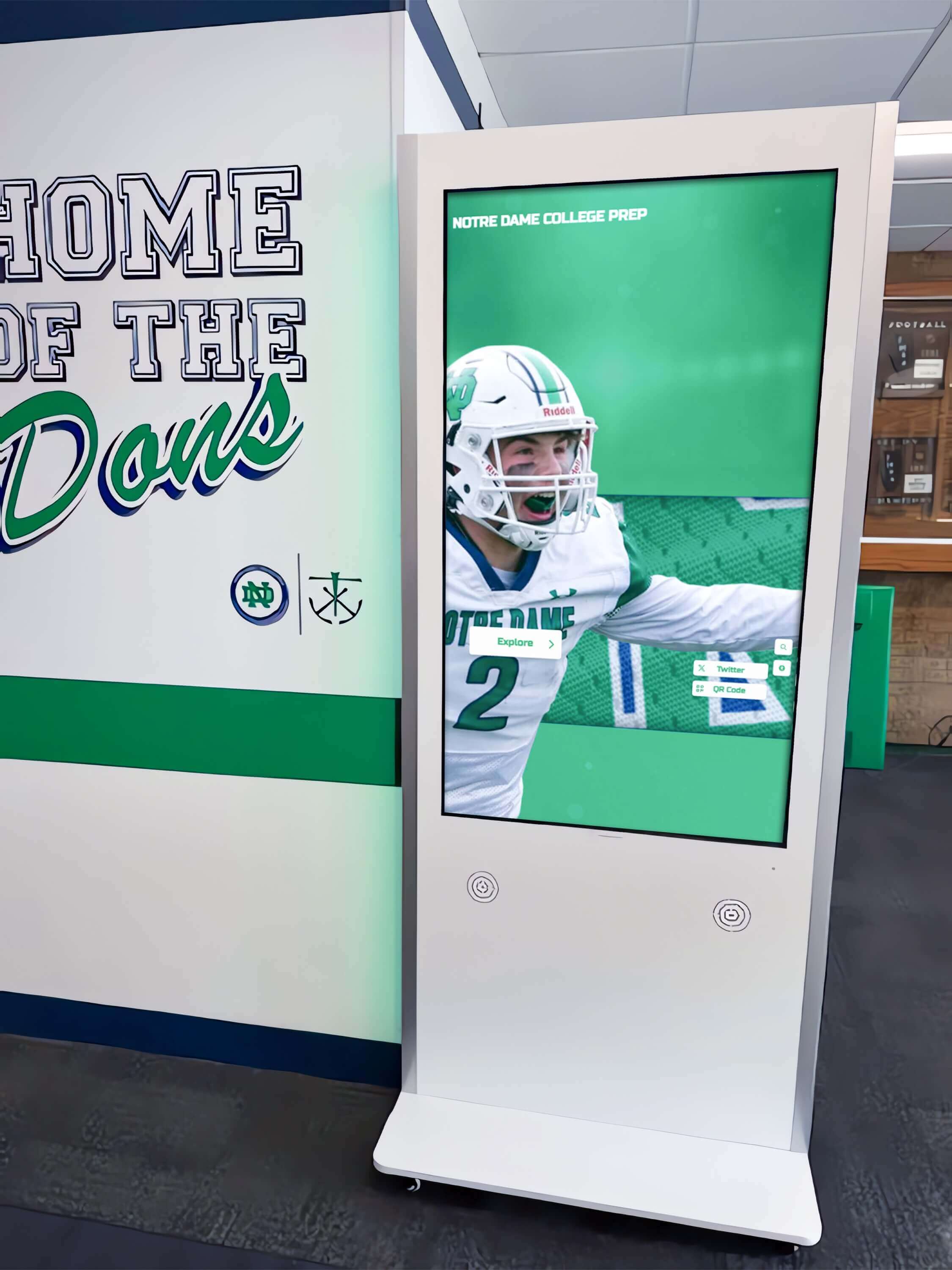
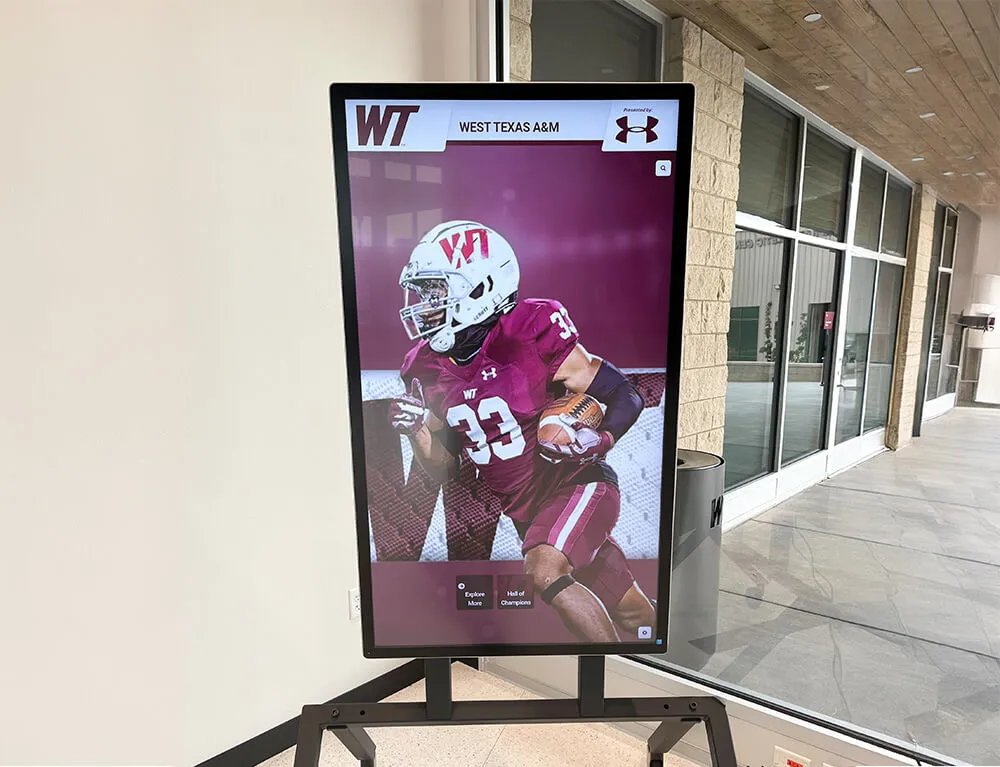
Professional interactive installations in prominent locations communicate institutional commitment to donor recognition and stewardship excellence
Best Practices for Interactive Donor Recognition Success
Organizations implementing interactive digital displays maximize recognition effectiveness through thoughtful approaches to content management, visitor engagement, and integration with broader stewardship strategies.
Location Selection and Visitor Traffic Optimization
The most sophisticated interactive display creates minimal impact if installed in locations where donors and visitors rarely encounter the recognition.
Optimal Location Characteristics
- High-traffic areas: Main lobbies, entrance corridors, reception areas with consistent visitor flow
- Natural gathering spaces: Locations where people wait, pause, or congregate rather than rush through
- Prominent visibility: Recognition placement that draws attention rather than blending into surroundings
- Donor accessibility: Locations where supporters can bring families and guests to view their recognition
- Comfortable interaction: Adequate space for groups to gather around displays without blocking circulation
- Appropriate dignity: Prestigious environments worthy of major donor acknowledgment
Avoid locations where interactive displays become afterthoughts—tucked in distant corridors, placed in secondary buildings with limited access, or installed in spaces lacking the dignity that donor recognition deserves. Recognition location communicates institutional priorities as clearly as recognition content itself.
Educational institutions managing school lobby design should consider donor recognition as primary lobby functions rather than supplementary additions. When recognition receives prime real estate in the most visible, prestigious spaces, the installation communicates appropriate appreciation while maximizing visibility that reinforces philanthropic culture.
Content Freshness and Ongoing Management
Interactive displays enable instant updates, but this flexibility creates obligations—stale content undermines recognition effectiveness just as outdated information diminishes engagement.
Content Management Best Practices
- Regular donor additions: New supporters appear in recognition displays within days of gift processing
- Campaign progress updates: Fundraising totals, thermometers, and milestone celebrations refresh as campaigns advance
- Seasonal content rotation: Featured donor spotlights, impact stories, and highlighted programs cycle quarterly or seasonally
- Event integration: Campaign kickoffs, donor appreciation events, and institutional milestones receive recognition tie-ins
- Historical content archives: Legacy donor recognition and philanthropic history remain accessible alongside current campaigns
- Engagement analytics review: Usage data informs content optimization and guides feature development
Assign clear content management responsibilities to specific development office staff members. Without designated owners, interactive displays risk becoming static installations that fail to leverage their fundamental flexibility advantage over traditional recognition.
Organizations should also establish content review calendars—quarterly reviews ensuring recognition accuracy, seasonal updates refreshing featured content, and annual audits confirming giving level accuracy and donor privacy compliance. Interactive displays require minimal maintenance compared to facility upkeep, but some systematic attention ensures recognition remains current, accurate, and engaging over multi-year timelines.
Integration with Comprehensive Stewardship Programs
Interactive donor recognition works most effectively when integrated with broader stewardship strategies rather than functioning as isolated installation projects.
Stewardship Integration Strategies
- Donor visit programming: Bring major donors to view their recognition during cultivation conversations
- Family engagement: Encourage supporters to bring family members to see recognition during campus visits
- Donor event integration: Host recognition unveiling events, campaign milestone celebrations, or giving society receptions at display locations
- Prospective donor tours: Include recognition displays in donor prospect tours demonstrating appreciation culture
- Annual reports and communications: Feature interactive display photos and content in stewardship publications
- Digital extensions: Create online recognition that mirrors interactive display content for broader accessibility
Think of interactive displays as physical manifestations of organizational donor recognition philosophy rather than standalone technology projects. When recognition displays reflect comprehensive stewardship values, align with fundraising campaign messaging, and integrate with donor engagement programming, they reinforce strategic priorities throughout every supporter interaction.
Organizations can also extend interactive recognition beyond physical displays through web-based recognition portals that provide online access to the same searchable donor databases, multimedia content, and impact storytelling featured on touchscreen installations. This hybrid approach ensures supporters across distances can explore recognition while maintaining prestigious physical displays in institutional facilities. Similar digital-physical integration strategies strengthen comprehensive recognition systems across multiple organizational contexts.
Special Considerations for Different Organization Types
While interactive digital displays work across varied institutional contexts, specific organization types benefit from tailored approaches reflecting sector-specific donor recognition priorities.
Educational Institutions: Alumni and Academic Program Recognition
Schools, colleges, and universities implementing interactive donor recognition can leverage unique advantages connecting philanthropic support to educational mission outcomes.
Alumni recognition benefits particularly from interactive approaches enabling class-based organization, decade-specific galleries, and searchable alumni directories that help visitors locate classmates and connect personal histories to institutional traditions. An interactive display can present donors organized by graduation year, feature class reunion giving societies, highlight legacy families spanning multiple generations, and create visual timelines showing how alumni philanthropy built campus facilities and academic programs over institutional histories.
Academic program recognition connects donor support directly to educational outcomes—scholarship recipient profiles, endowed chair presentations, research equipment funded by contributions, and facility enhancements made possible through capital campaigns. Interactive displays can demonstrate tangible impacts more effectively than traditional plaques by showing the students, faculty, and programs that donor investments support. Similar approaches strengthen school history preservation initiatives across educational contexts.
Healthcare Organizations: Patient Care Impact and Memorial Recognition
Hospitals, medical centers, and healthcare foundations face unique recognition considerations balancing donor acknowledgment with patient care environments and memorial giving sensitivity.
Healthcare donor recognition increasingly focuses on impact storytelling that demonstrates how philanthropy improves patient care, advances research, and expands community health services. Interactive displays enable healthcare organizations to share impact stories through patient testimonials (with appropriate privacy protections), medical equipment demonstrations, research breakthroughs, and community health program outcomes—all connected to specific donor contributions that made advances possible.
Memorial and tribute giving represents significant portions of healthcare philanthropy. Interactive displays can honor memorial gifts with appropriate dignity through photo galleries, dedication messages, and legacy society recognition while providing families meaningful ways to share stories about loved ones memorialized through contributions. The searchability of digital recognition helps family members locate memorial dedications years after initial gifts, maintaining connection and demonstrating lasting institutional appreciation.
Cultural Institutions: Patron Recognition and Exhibition Integration
Museums, performing arts organizations, libraries, and cultural institutions can integrate donor recognition with mission-driven storytelling through interactive displays that connect patronage to cultural preservation and community access.
Exhibition-integrated recognition connects specific donor support to particular collections, programs, or performances. An interactive display near a museum gallery can recognize donors who funded the exhibition while providing curatorial context, artifact details, and collection histories that enrich visitor experiences. Performing arts venues can highlight patron support in lobby displays that also present upcoming performances, artist backgrounds, and company histories—combining recognition with mission advancement.
Membership and patron society recognition works particularly well through interactive presentations organizing supporters by giving levels, highlighting membership benefits, featuring patron testimonials, and demonstrating collective impact of sustained cultural support. Digital recognition enables cultural organizations to update patron lists as memberships renew and giving societies evolve—flexibility particularly valuable for organizations with annual membership structures rather than single capital campaigns.
Technical Specifications and Vendor Selection
Organizations ready to implement interactive donor recognition need practical guidance selecting appropriate technology partners and specifying system requirements.
Evaluating Interactive Display Providers
The market for interactive recognition technology includes dedicated donor recognition platforms, general-purpose digital signage companies, and custom software development firms—each offering different capabilities and support models.
Evaluation Criteria
- Donor recognition specialization: Providers with purpose-built recognition platforms versus generic digital signage adaptation
- Fundraising database integration: Direct connections to common CRM systems (Raiser’s Edge, Salesforce, etc.)
- Content management tools: User-friendly interfaces enabling non-technical staff to manage recognition
- Support and training: Ongoing technical assistance and user training availability
- Reference installations: Existing clients in similar organizational sectors for reference checking
- Pricing transparency: Clear cost structures for hardware, software, implementation, and ongoing support
- Upgrade pathways: Technology roadmaps ensuring long-term system viability
Request demonstrations showing actual donor recognition implementations rather than generic capability presentations. Ask about typical implementation timelines, content development processes, training programs for your staff, and support response protocols when technical issues arise.
Organizations should also evaluate total cost of ownership beyond initial purchase prices. A $15,000 system with excellent software, comprehensive training, and responsive support often proves more cost-effective than an $8,000 basic installation requiring custom development, lacking user-friendly management tools, and providing minimal technical assistance.
System Specifications to Request
When soliciting proposals or evaluating systems, specify requirements ensuring installations meet donor recognition needs rather than accepting generic digital signage configurations.
Critical Specifications
- Display hardware: Commercial-grade touchscreen, minimum 50,000-hour rated lifespan, appropriate screen size for installation space
- Touch technology: Infrared or capacitive multitouch with 10+ simultaneous touch points
- Processor requirements: Dedicated media player with sufficient power for smooth video playback and responsive touch interaction
- Software features: Searchable donor database, giving level organization, multimedia support, remote cloud management
- Content capacity: Support for 1,000+ donor records with photos, biographical information, and multimedia content
- Network connectivity: Ethernet or WiFi with secure connections for remote management
- Analytics capabilities: Usage tracking, popular content reporting, engagement metrics
- Database integration: API connections to existing fundraising CRM systems
- Warranty and support: Minimum 3-year hardware warranty, software updates included, technical support availability
Professional installations should include environmental integration appropriate to facility architecture—custom mounting systems, concealed cable management, architectural millwork if desired, and complementary environmental graphics surrounding interactive displays to create cohesive recognition presentations.
Frequently Asked Questions About Interactive Digital Displays for Donor Recognition
How much does an interactive digital display for donor recognition typically cost?
Complete interactive donor recognition systems typically range from $15,000 to $50,000 for initial implementation including commercial-grade touchscreen hardware, specialized recognition software, professional installation, and initial content development. Ongoing costs include annual software subscriptions ($1,200-$3,600) and periodic content updates. While upfront investment exceeds basic plaque installations, interactive systems often prove more cost-effective over 5-10 year timelines due to unlimited capacity, instant updates, and no physical expansion costs as donor communities grow.
Can interactive displays accommodate unlimited donors or is there a capacity limit?
Interactive digital displays accommodate virtually unlimited donors through searchable database systems rather than fixed physical capacity. A single touchscreen can recognize thousands of supporters through organized categories, search functionality, and hierarchical presentations—the equivalent of entire hallways of traditional plaques in a compact installation. This scalability makes interactive systems particularly valuable for growing fundraising programs where traditional wall space limitations would eventually constrain recognition capacity or require expensive expansions.
Do donors perceive digital recognition as less prestigious than traditional bronze plaques?
Prestige perception depends more on presentation quality, location prominence, and institutional commitment than recognition materials. Professionally designed interactive displays in prestigious, high-traffic locations honor donors appropriately while offering engagement capabilities that traditional plaques cannot match. Some major donors with traditional expectations may prefer classic bronze recognition, while other supporters appreciate innovative technology approaches. Organizations often implement hybrid systems combining traditional architectural elements for leadership giving tiers with interactive displays for broader donor communities, addressing varied preferences while maximizing recognition flexibility.
How difficult is it to update donor information on interactive recognition displays?
Purpose-built donor recognition platforms provide user-friendly content management interfaces enabling development office staff to add new donors, update giving levels, modify biographical information, and refresh content without technical expertise. Cloud-based systems allow updates from any internet-connected device rather than requiring on-site access to display hardware. Organizations can typically add new donor recognition within 15-30 minutes from gift processing to display appearance—compared to weeks or months required for traditional plaque production and installation. This flexibility enables real-time recognition that maintains campaign momentum and demonstrates immediate donor appreciation.
Can interactive displays integrate with existing fundraising databases and CRM systems?
Many specialized donor recognition platforms offer direct integration with common fundraising CRM systems including Raiser’s Edge, Salesforce Nonprofit Cloud, DonorPerfect, and other development databases. These integrations enable automated data synchronization, reducing manual entry and ensuring recognition accuracy while allowing fundraising data to flow directly into recognition displays. Organizations should confirm CRM compatibility during vendor evaluation and request demonstration of integration capabilities with their specific database systems. Some platforms also support manual CSV import/export workflows for organizations using less common CRM systems or custom databases.
Conclusion: Making Interactive Recognition Work for Your Organization
Interactive digital displays represent powerful stewardship tools that transform donor recognition from static acknowledgment into engaging experiences celebrating philanthropic partnerships. These touchscreen systems enable storytelling depth, recognition flexibility, and unlimited capacity that traditional plaques cannot match—while creating opportunities to connect supporters to mission impact and inspire continued giving through meaningful acknowledgment.
Organizations considering interactive donor recognition should evaluate these systems based on comprehensive stewardship goals rather than comparing initial installation costs alone. When interactive displays receive appropriate investment in professional hardware, purpose-built recognition software, quality content development, and ongoing management commitment, they deliver recognition experiences that honor supporters appropriately while providing organizational benefits extending far beyond nameplate acknowledgment.
The most successful interactive recognition implementations combine technology capabilities with thoughtful stewardship philosophy—using digital flexibility to tell compelling stories, creating searchable accessibility that helps visitors explore philanthropic communities, maintaining content freshness that demonstrates ongoing institutional commitment, and integrating physical recognition with broader donor engagement programming that reinforces appreciation throughout every supporter interaction.
Whether your organization chooses interactive displays, traditional plaques, or hybrid approaches combining both, the fundamental priority remains unchanged: creating donor recognition that authentically honors supporters, clearly communicates appreciation, and inspires continued philanthropy advancing organizational missions. Interactive technology simply provides modern tools enabling these timeless stewardship goals through contemporary engagement approaches aligned with how people increasingly expect to access information and explore content throughout daily digital experiences.
Ready to explore how interactive digital displays can enhance your donor recognition strategy? Rocket Alumni Solutions specializes in touchscreen recognition systems purpose-built for educational institutions, nonprofit organizations, and mission-driven entities committed to meaningful donor stewardship. Our interactive platforms combine elegant hardware with intuitive recognition software, comprehensive implementation support, and ongoing content management assistance—enabling organizations to honor supporters with engagement-driven recognition that creates lasting impact while maintaining the flexibility modern fundraising programs demand.