



Gymnastics booster club fundraising ideas succeed or fail on three things that have nothing to do with bake sales: how clearly you package what sponsors receive at a meet, how permanently you display what donors have given, and how systematically you follow up after the season ends. Gymnastics programs often host 3–6 home meets per year—each one a natural stage for sponsor visibility—yet many clubs leave that inventory unsold because they have no written package to hand a local business.
This guide walks through meet-day sponsorship tiers, recognition display options that reinforce every fundraising ask, and a follow-up workflow that turns one good event into a multi-year giving relationship. Whether your booster club is launching its first formal sponsorship program or tightening up a system that has grown informal over the years, these frameworks give you a practical starting point.
Effective gymnastics booster club fundraising requires more than enthusiasm—it requires a system that connects the ask, the event, the display, and the thank-you into one coherent experience. When a local business can point to their name on a banner at the invitational, find that same name on a digital display in the athletic hallway, and receive a personalized renewal letter before summer, they stop thinking about whether to renew and start thinking about upgrading.

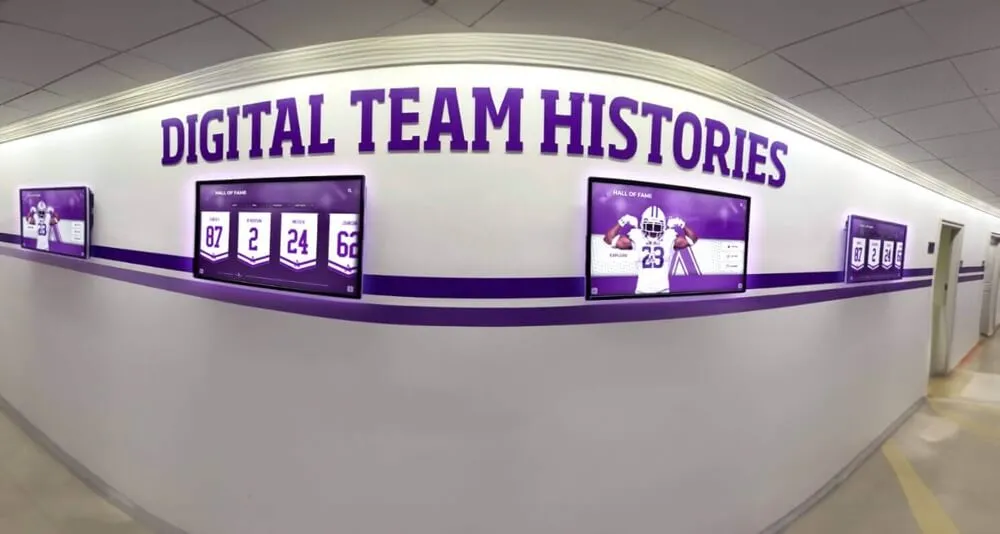
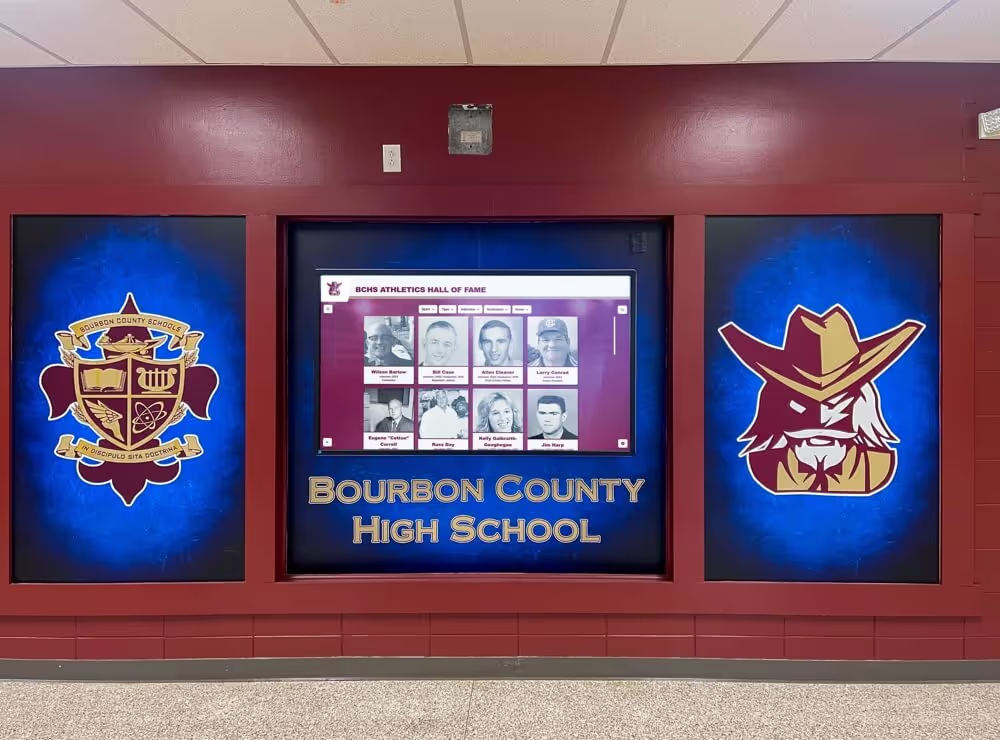
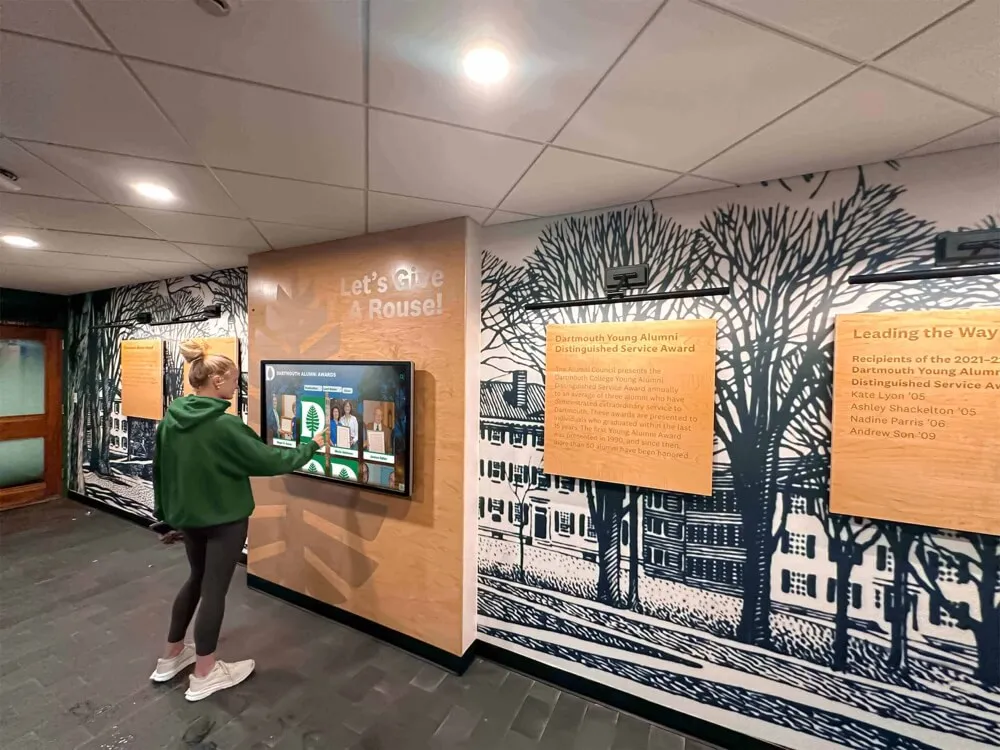
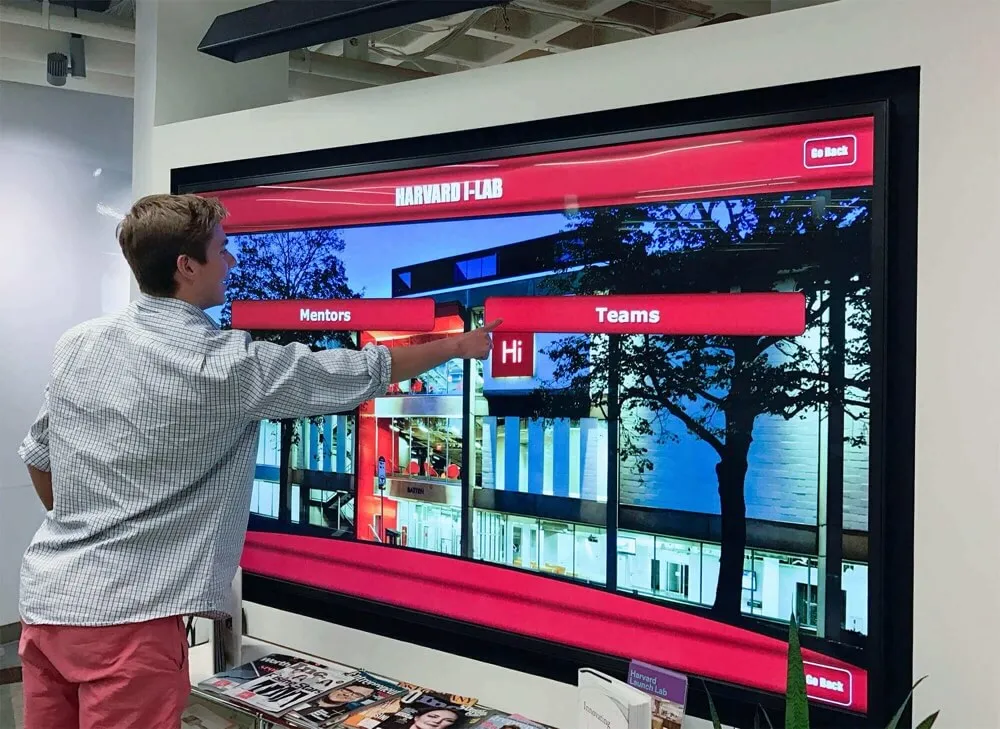
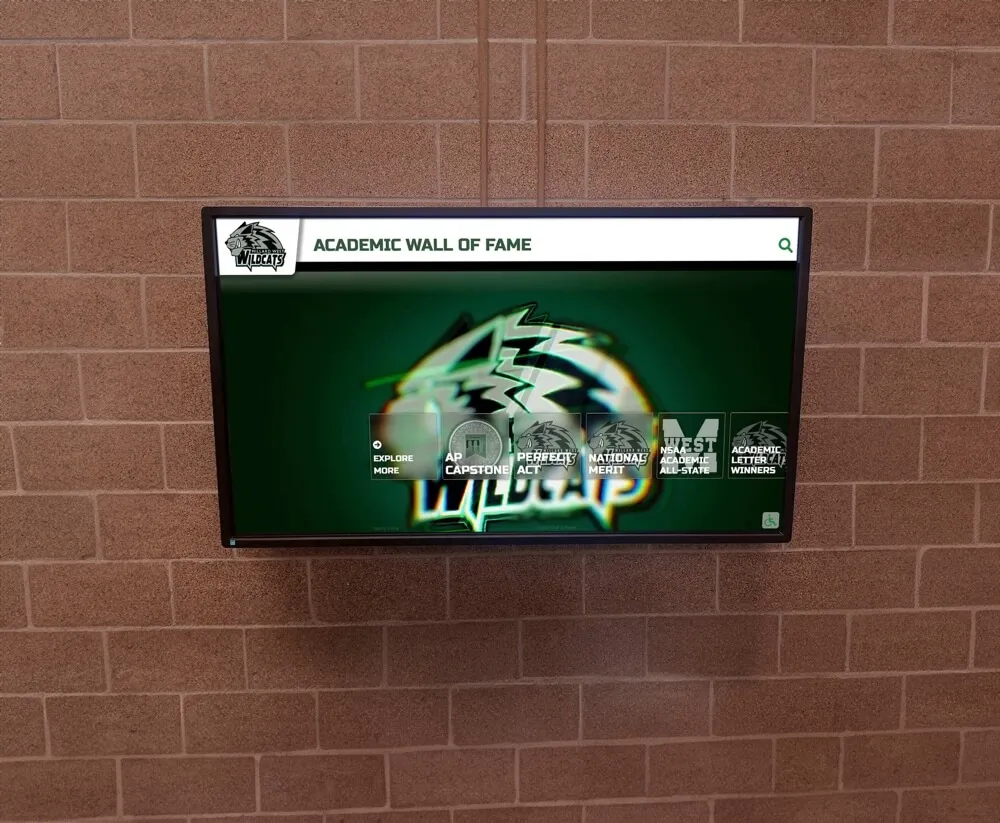
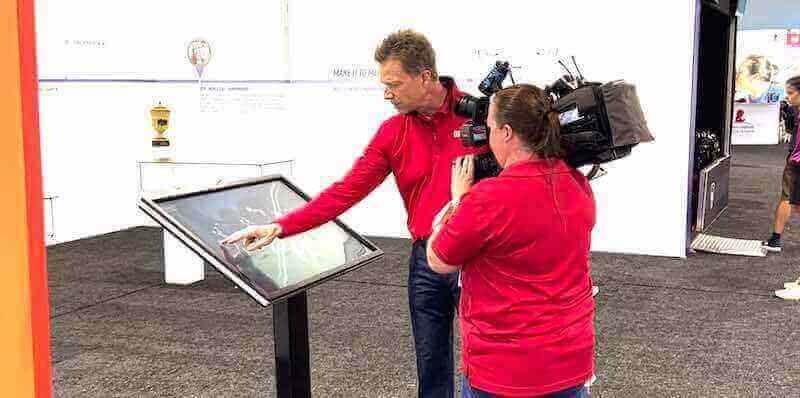
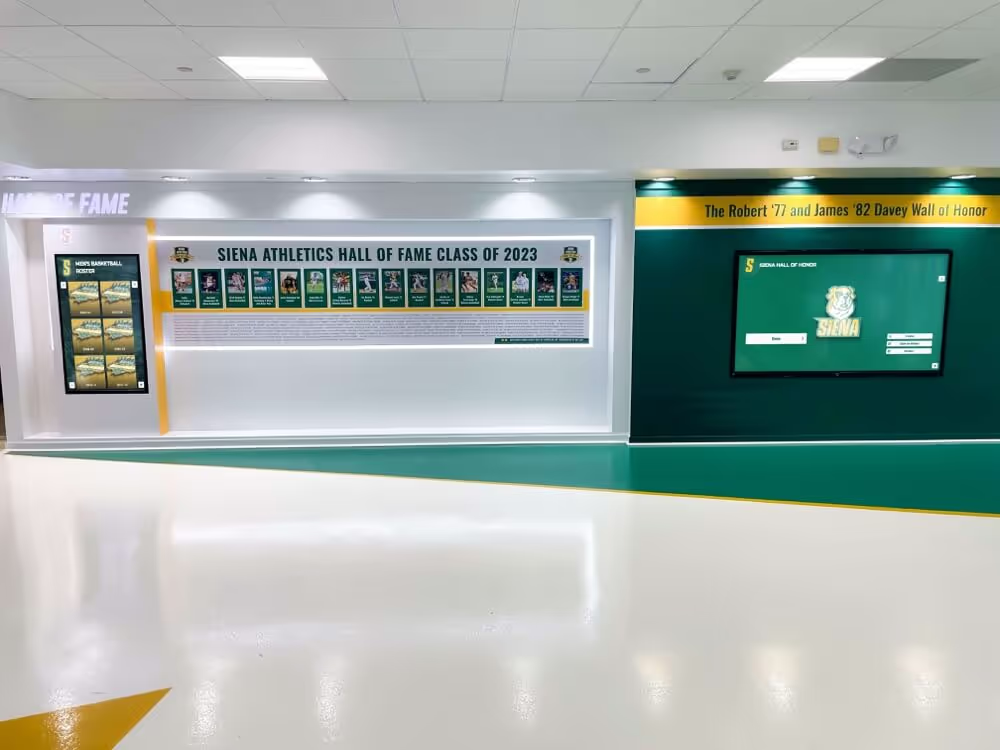
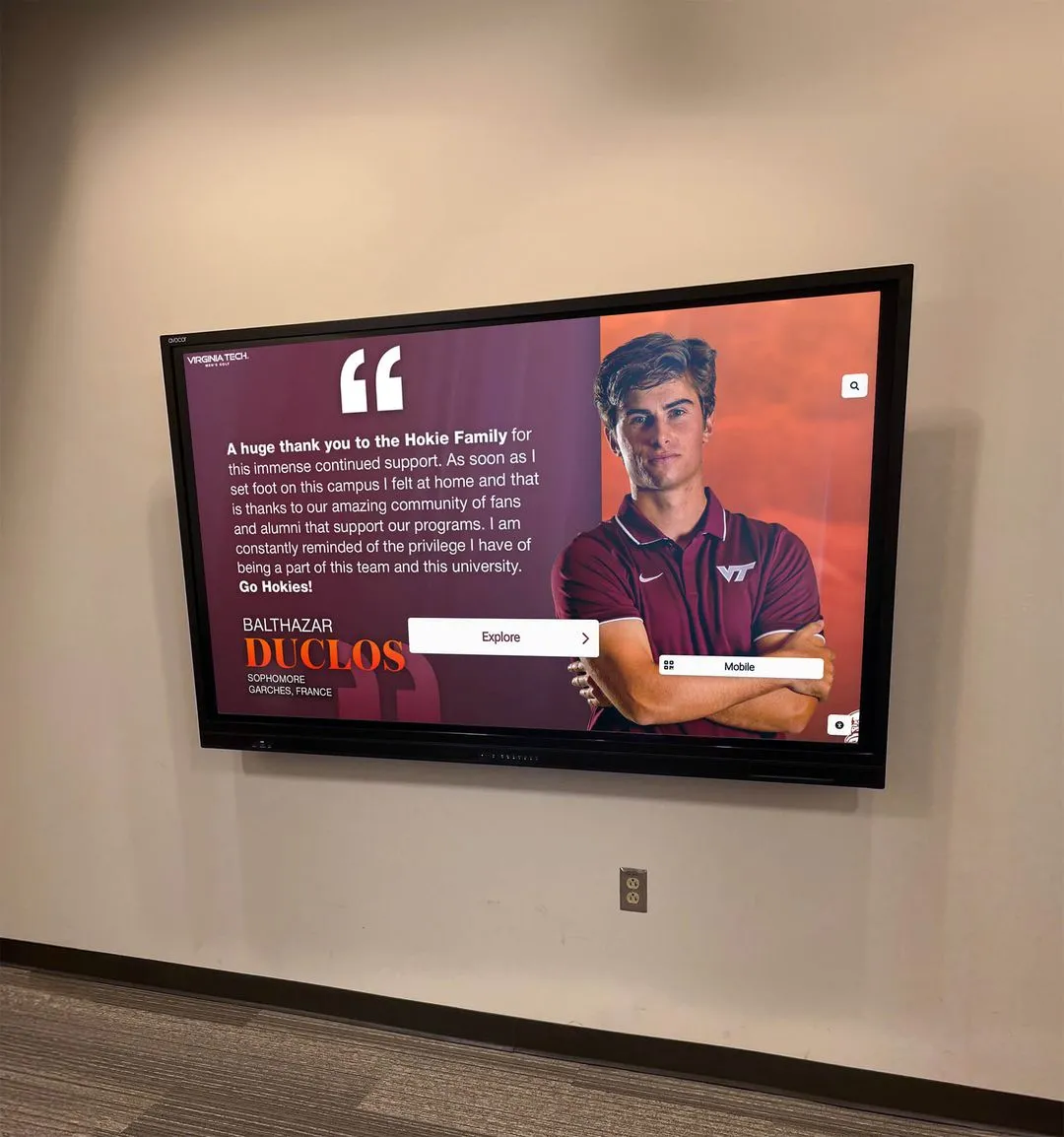
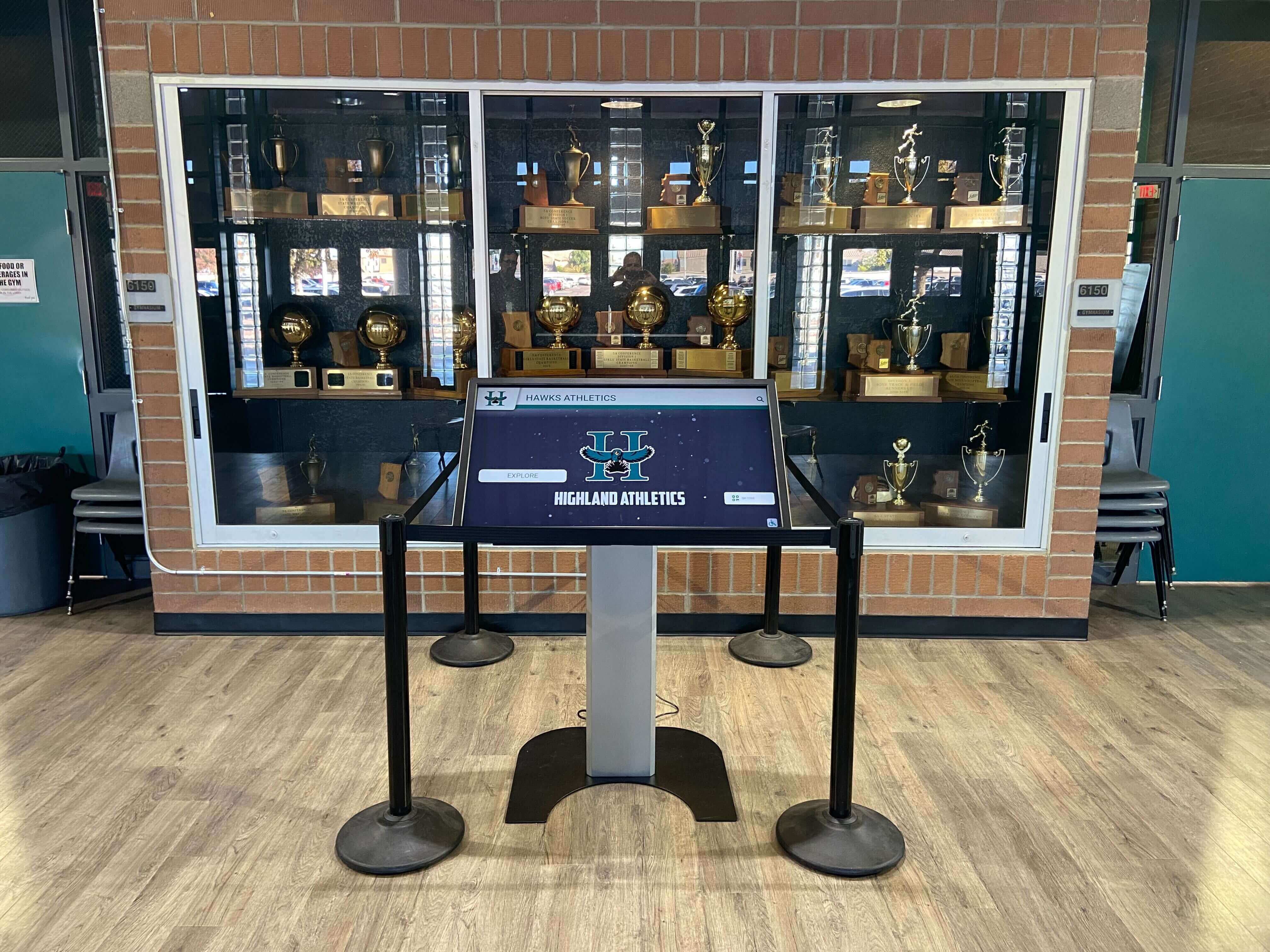
Permanent digital recognition displays anchor every sponsorship conversation—sponsors want to know their name will last beyond a single meet
Why Gymnastics Programs Need Structured Fundraising
Gymnastics carries some of the highest per-athlete costs in high school athletics. Coaching, equipment maintenance, mat replacement, choreography fees, competition travel, and leotards add up quickly—and most school district budgets provide only a fraction of what programs actually need. Booster clubs fill the gap, but they can only do so reliably when fundraising is treated as a system rather than a series of one-off asks.
The Financial Landscape
The average high school gymnastics program spends between $15,000 and $40,000 annually on operating expenses beyond what the school district covers. Key cost drivers include:
- Apparatus maintenance and replacement: Balance beams, uneven bars, vaulting tables, and floor exercise springs require regular inspection and periodic replacement
- Competition entry fees and travel: Regional and state qualifying meets multiply quickly for a team of 10–15 athletes
- Coaching and specialty instruction: Many programs supplement their head coach with choreographers, skills coaches, or strength and conditioning staff
- Uniforms and warm-up gear: Leotards, team warm-ups, and practice wear represent a recurring annual expense
- Meet hosting costs: Judges’ fees, equipment setup, printing, and volunteer coordination for home meets
Without a structured booster club fundraising program, coaches spend time chasing individual donations instead of developing athletes. A clear fundraising system—built around sponsorships, recognition displays, and consistent follow-up—lets the booster club handle revenue so coaches can focus on the gym floor.
Meet-Day Sponsor Packages That Deliver Real Value
The home meet is the most valuable fundraising asset a gymnastics booster club controls. A well-attended invitational draws parents, athletes, and community members from multiple schools—exactly the audience local businesses want to reach. The mistake most clubs make is offering informal “banner deals” without a defined package that explains what sponsors receive and for how long.
A written sponsorship menu converts casual interest into signed agreements. It also makes year-over-year renewal conversations straightforward: you’re not renegotiating from scratch, you’re reviewing whether the sponsor wants to stay at the same tier or move up.
Sample Meet-Day Sponsor Package Structure
The following tiers provide a starting framework. Adjust dollar amounts to reflect your local market and the number of home meets your program hosts annually.
| Package | Annual Investment | Meet-Day Visibility | Facility Recognition | Digital Recognition |
|---|---|---|---|---|
| Platinum | $2,500+ | Sponsor banner in gym, PA announcement every session, table or booth display area | Named listing on permanent donor wall or display | Featured profile with logo on digital athletic display; inclusion in any touchscreen kiosk donor section |
| Gold | $1,000–$2,499 | Sponsor banner in gym, PA announcement once per meet | Name on recognition board in athletic hallway | Logo and name on digital display; updated each season |
| Silver | $500–$999 | Sponsor banner in gym | Name on printed recognition board | Name listing on digital display |
| Bronze | $250–$499 | Name in printed event program for all home meets | Name on program board | Name in digital supporter section |
| Community Friend | Up to $249 | Name in event program | — | Name in general supporter feed |
Two principles that protect this structure:
- Visibility should be proportional and public. A Gold sponsor who sees a Bronze-level banner next to their own Gold banner will not renew. Tier separation must be visible to the audience at meets, not just to the treasurer.
- Facility recognition outlasts any single meet. A digital display in the athletic hallway or a lobby recognition board means a sponsor’s name is visible to students, parents, and visitors all year—not just on three Saturdays in January. This dramatically increases the perceived value of higher tiers and justifies asking for more.
Programs looking to understand how schools build lasting recognition programs for athletic and academic supporters will find that the same framework—tiered visibility, permanent display, annual renewal—applies across sports.
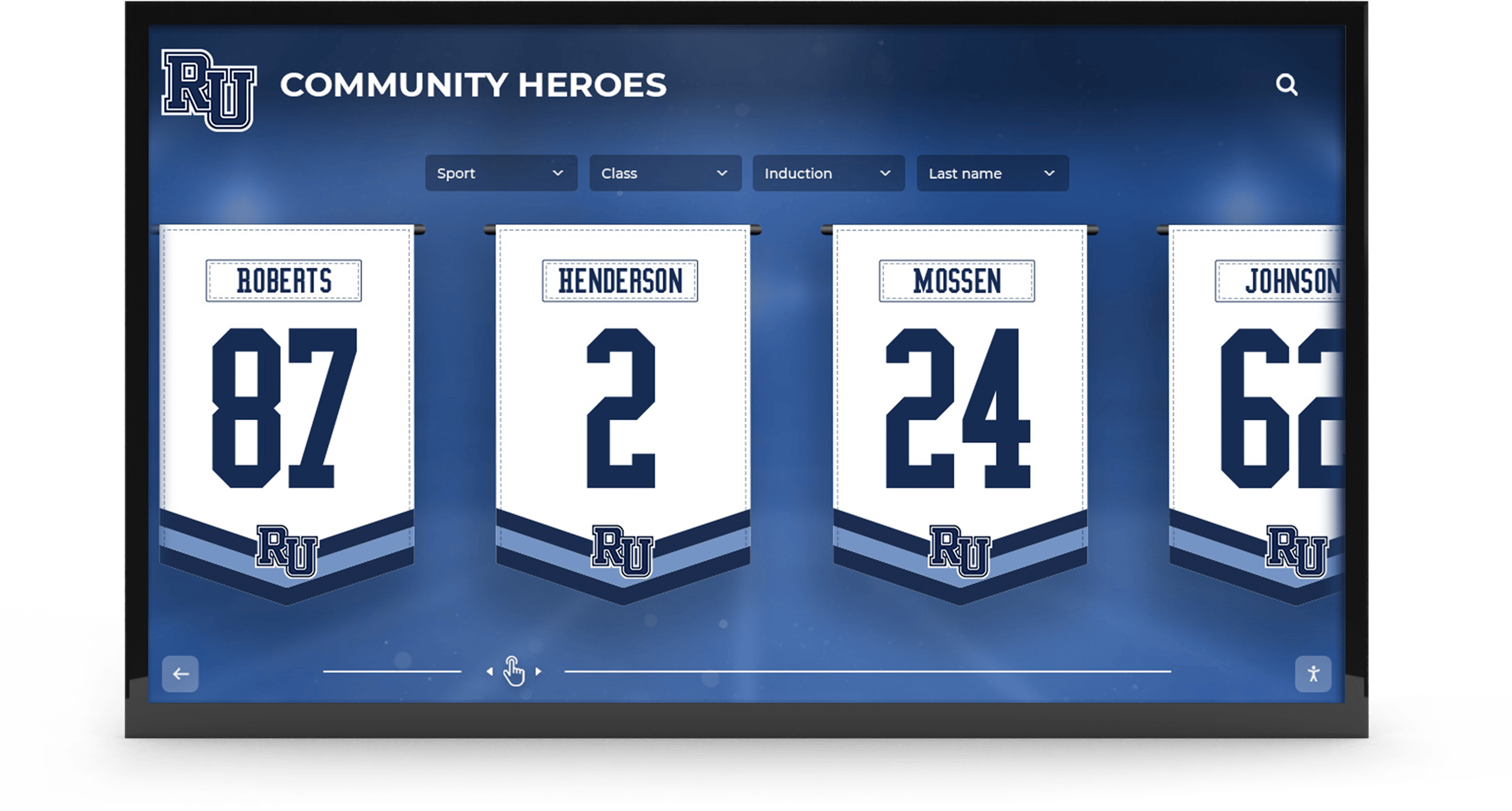
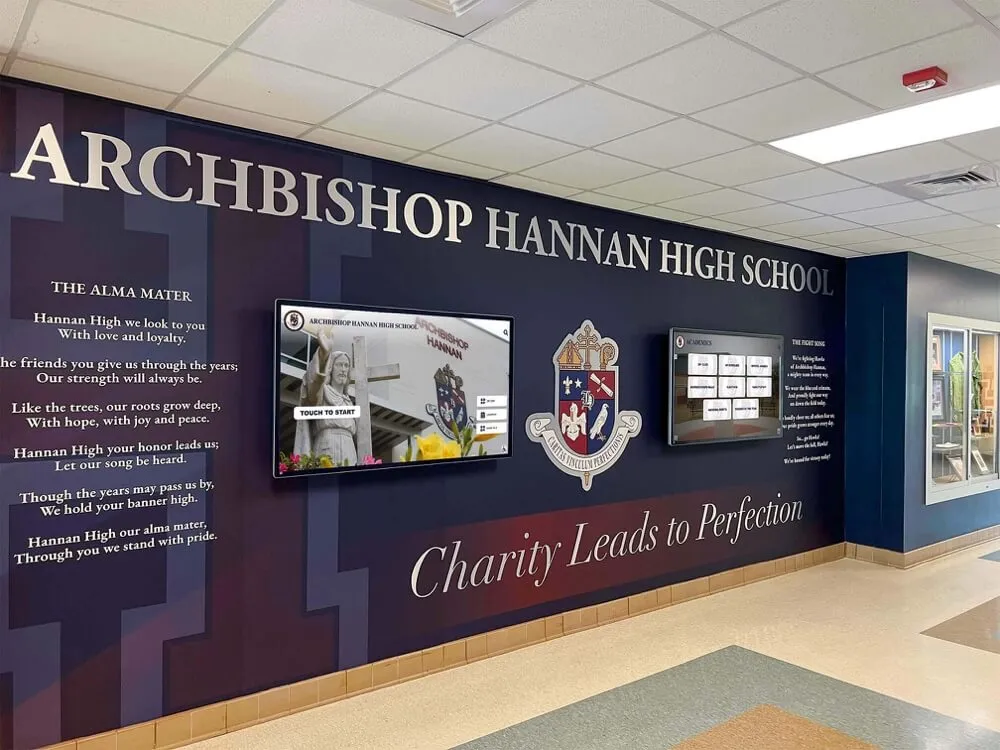
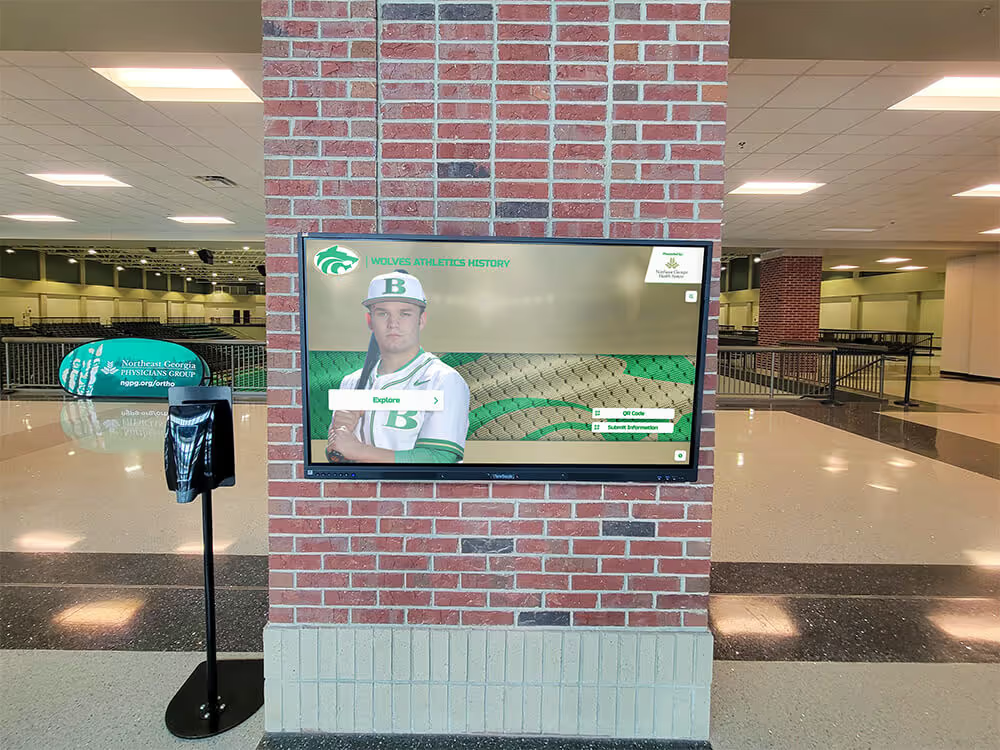
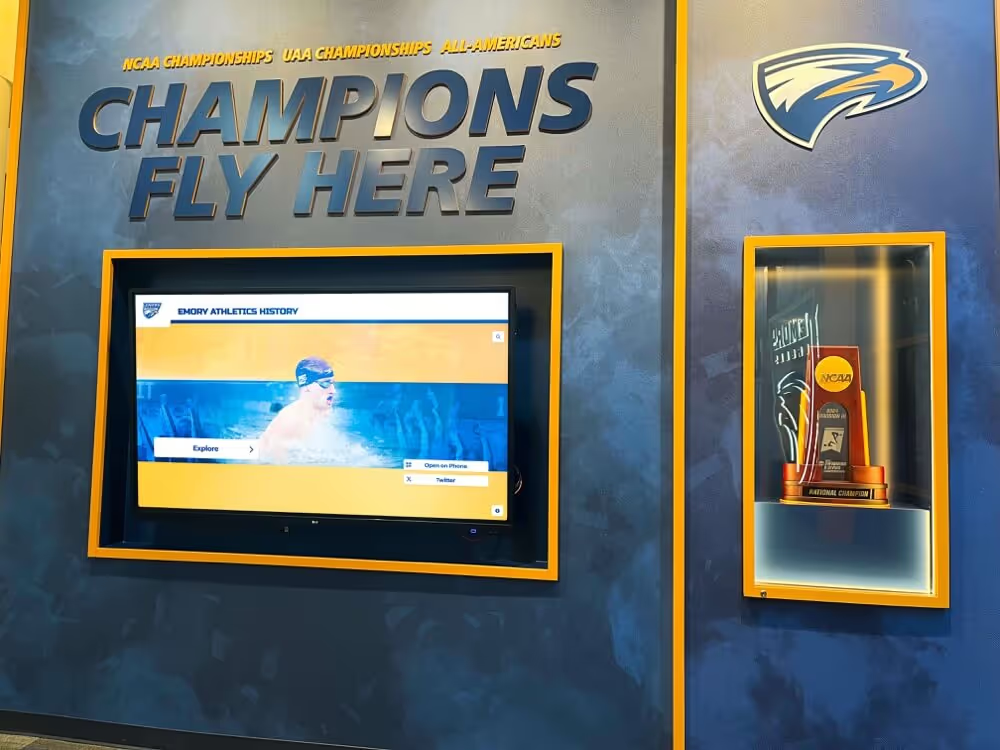
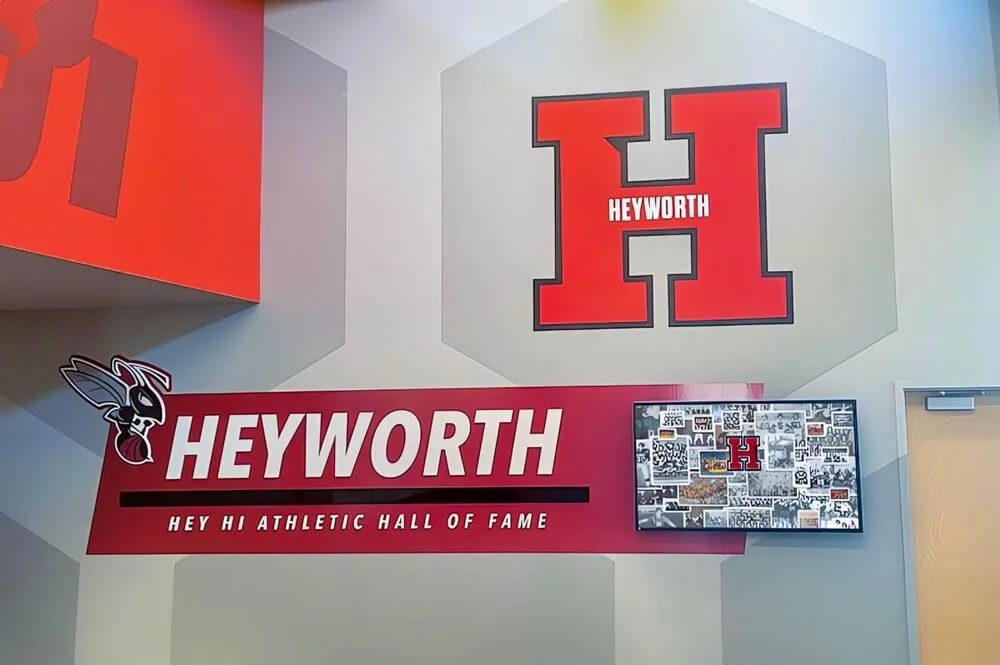
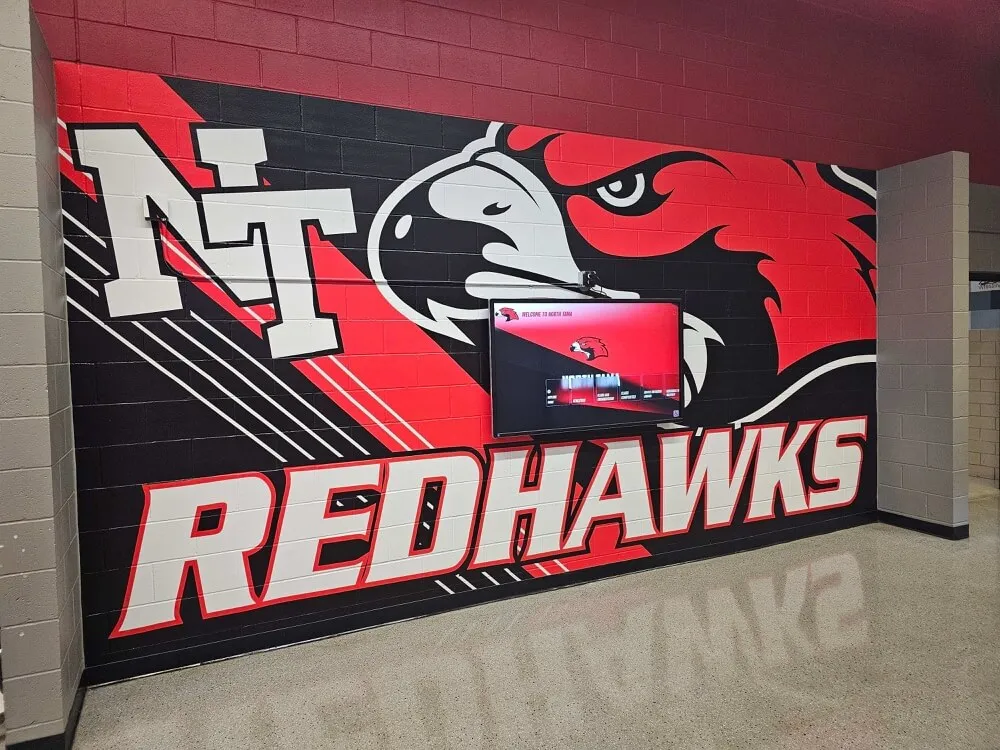
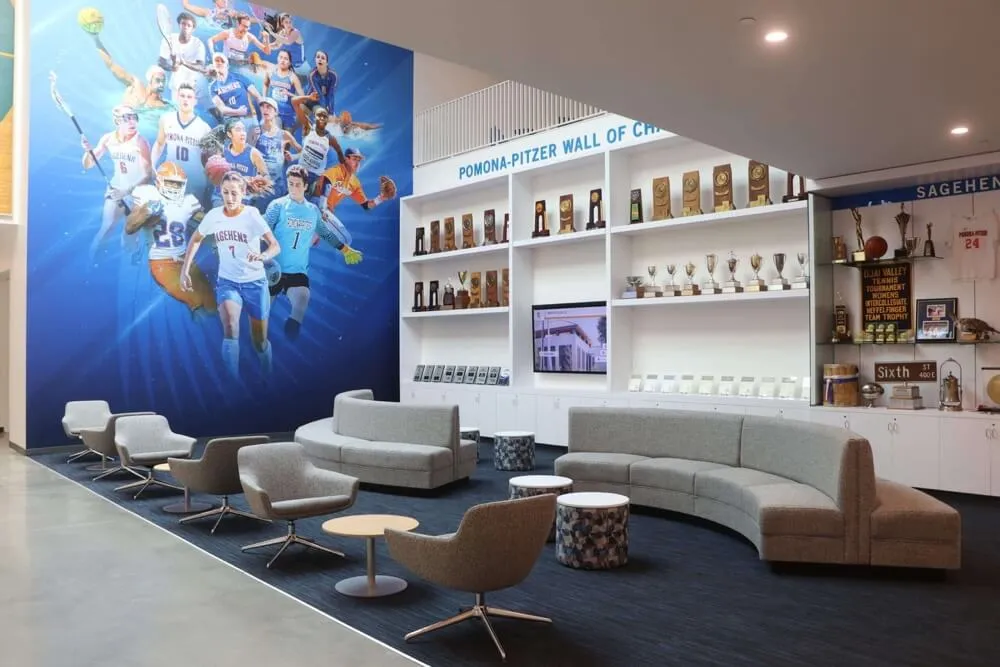
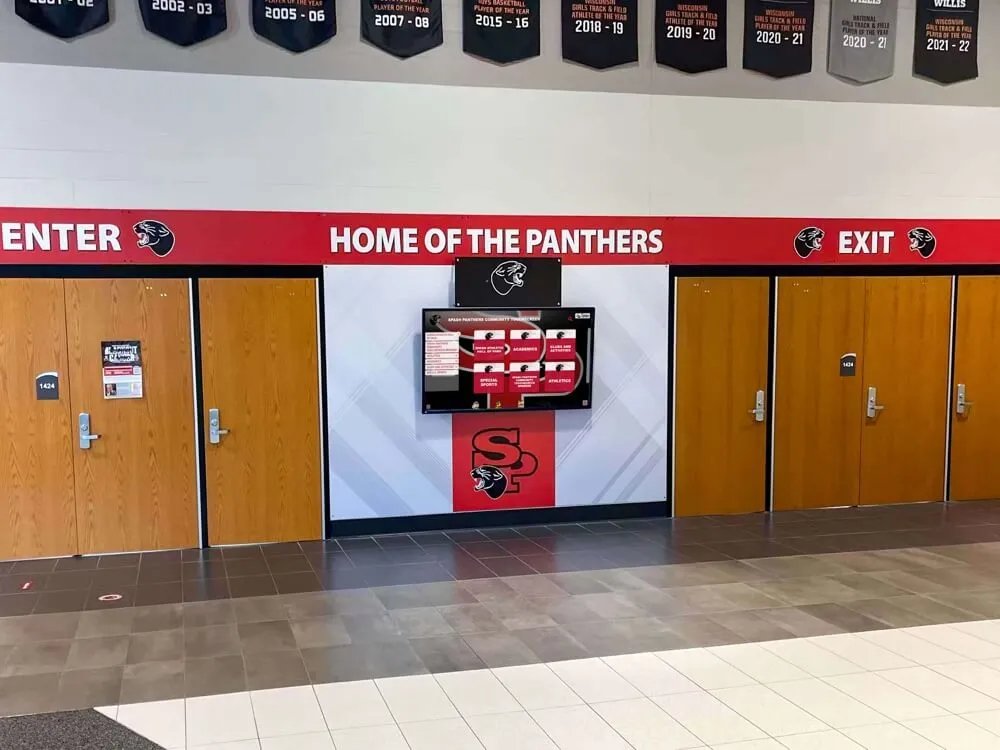
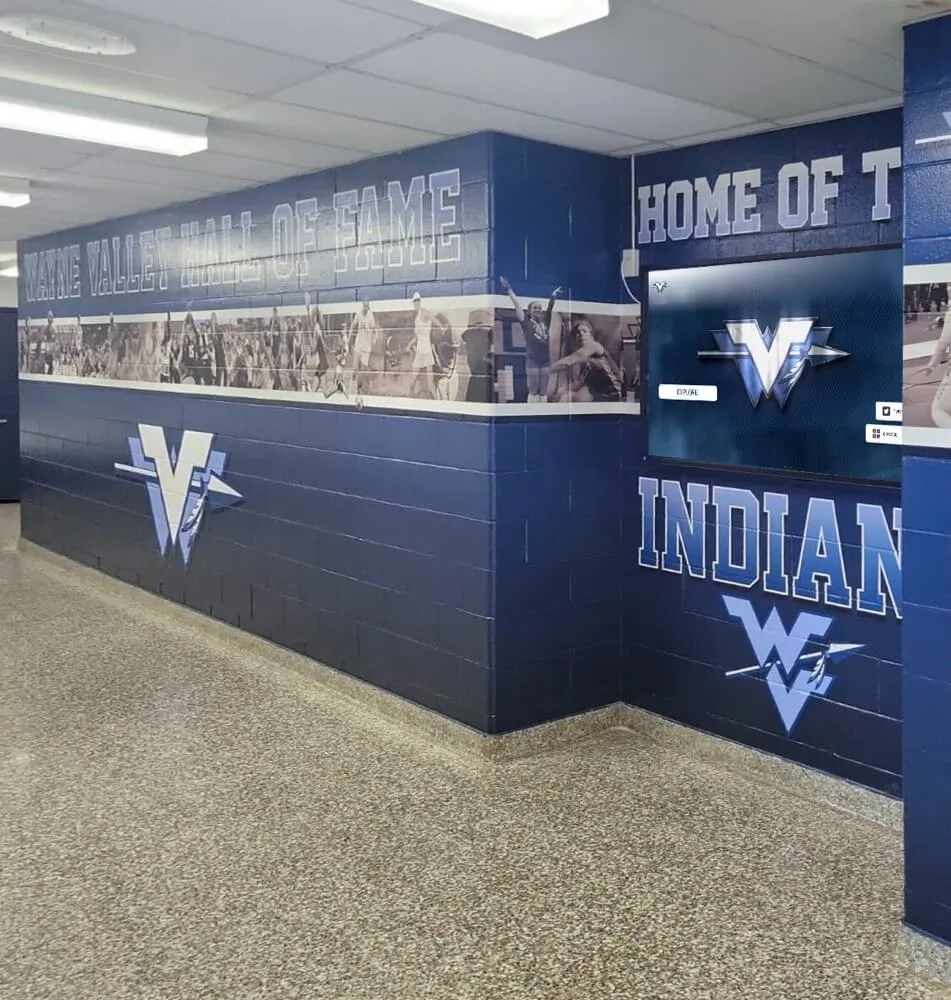
Meet-day banners are the entry point; permanent digital displays are what sponsors remember when the renewal conversation happens in the spring
Recruiting Sponsors Before the Season Starts
The strongest gymnastics booster club sponsorship programs sign commitments in September or October, before the competitive season begins in December. That timeline gives the club time to produce banners, update displays, and include sponsor names in all printed materials.
Outreach should be personal and brief:
- Identify 20–30 local businesses within your school’s community: restaurants, law firms, medical practices, gyms, real estate offices, insurance agencies, and home services businesses with disposable marketing budgets
- Send a one-page sponsorship menu with tier names, investment levels, and a bullet list of exactly what each tier receives at meets and on facility displays
- Follow up with a phone call or in-person visit within two weeks of sending the package—most booster club fundraising asks get lost in email without a follow-up touch
- Use an existing board member’s business relationship wherever possible; warm introductions convert at dramatically higher rates than cold outreach
Many programs report that 60–70% of their first-year sponsors renew if the initial experience meets expectations. This means the acquisition conversation is only half the work—the follow-up system (covered below) is what determines long-term revenue.
Donor Display Ideas for Gymnastics Programs
Recognition displays serve two purposes for gymnastics booster clubs: they honor the donors and sponsors who have already given, and they make it easier to recruit new ones. When a prospective sponsor walks through your athletic hallway and sees named recognition boards or a digital display, the fundraising conversation is already partially complete.
Physical Recognition Options
Recognition boards and banner displays are the most common starting point for programs with limited budgets. A professionally printed board listing sponsor names by tier, mounted in a prominent location near the gym entrance, costs relatively little and provides year-round visibility.
Trophy cases with sponsor plaques work well for programs that already have an athletic display case. Adding a framed sponsor recognition panel alongside trophies and team photos signals that sponsors are considered part of the program’s identity—not just a revenue source.
Named equipment or facility elements work when a single donor is willing to give at a higher level. A “Presented by [Business Name]” banner over the floor exercise area or a named warmup room creates lasting association between a business and the program.
Digital Donor Displays
Digital displays represent the highest-impact recognition investment a gymnastics booster club can make. Unlike static boards, digital displays can accommodate unlimited entries, update automatically as new sponsors are added, and integrate visual content—logos, athlete photos, team histories, and giving level categories—into a single cohesive experience.
Programs exploring hall of fame tools for athletics and donor recognition consistently identify digital displays as the format that generates the strongest sponsor interest, because they offer something physical plaques cannot: visibility that grows with the program rather than requiring replacement as names change.
For gymnastics programs specifically, a digital display in the athletic hallway or gym lobby can simultaneously:
- List current-year sponsors by tier with logos
- Showcase team records, championship history, and athlete milestones
- Display a rotating gallery of meet photos and competition highlights
- Include a donor recognition section honoring cumulative multi-year contributors
- Feature a dedicated sponsor recognition loop that plays during events and open gym nights
This multi-purpose functionality means the display investment is not solely dependent on the booster club budget—it serves the athletic department as a whole, which often makes it easier to secure partial school district funding or a larger anchor donation.
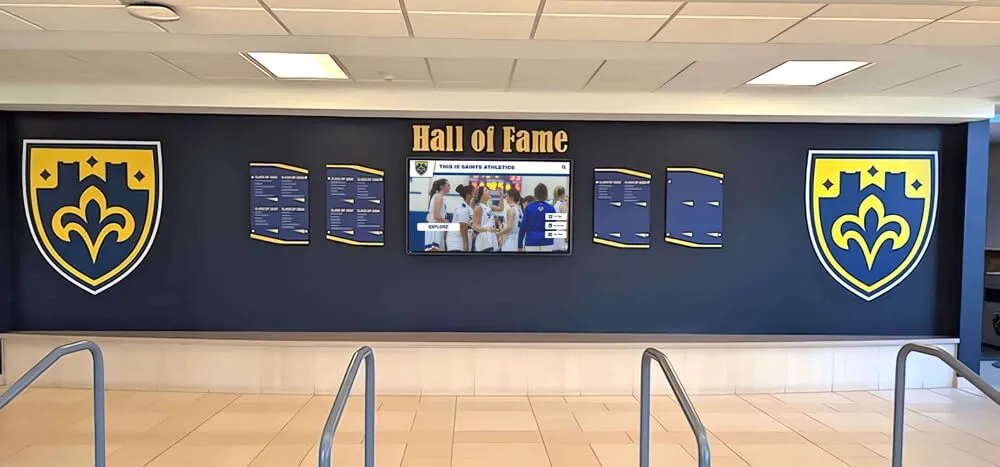
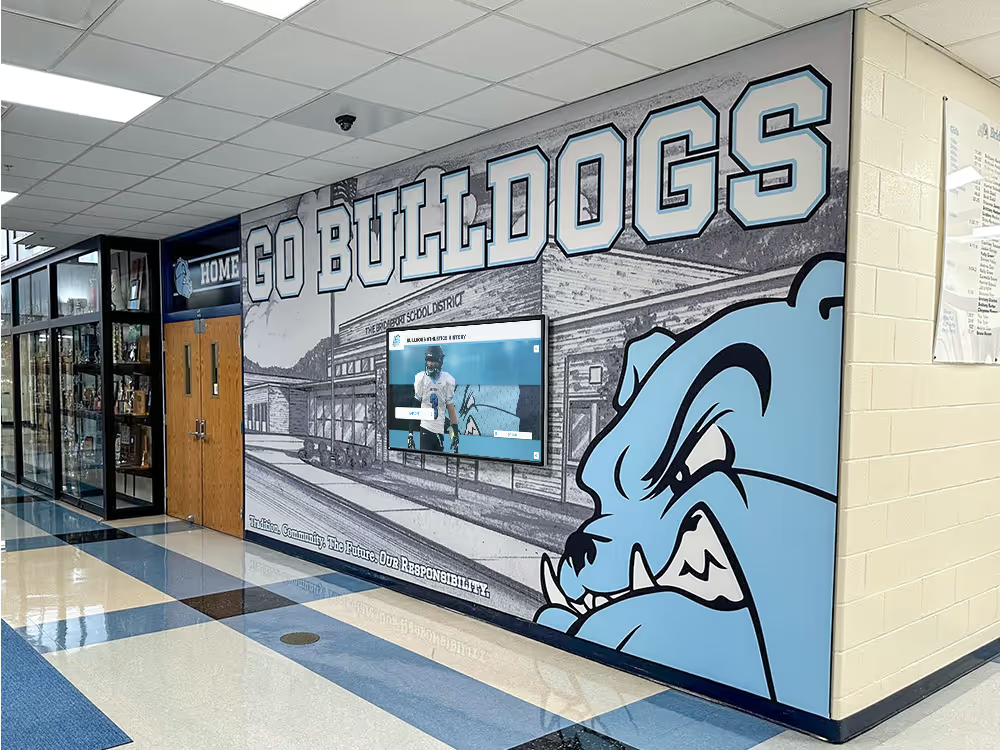
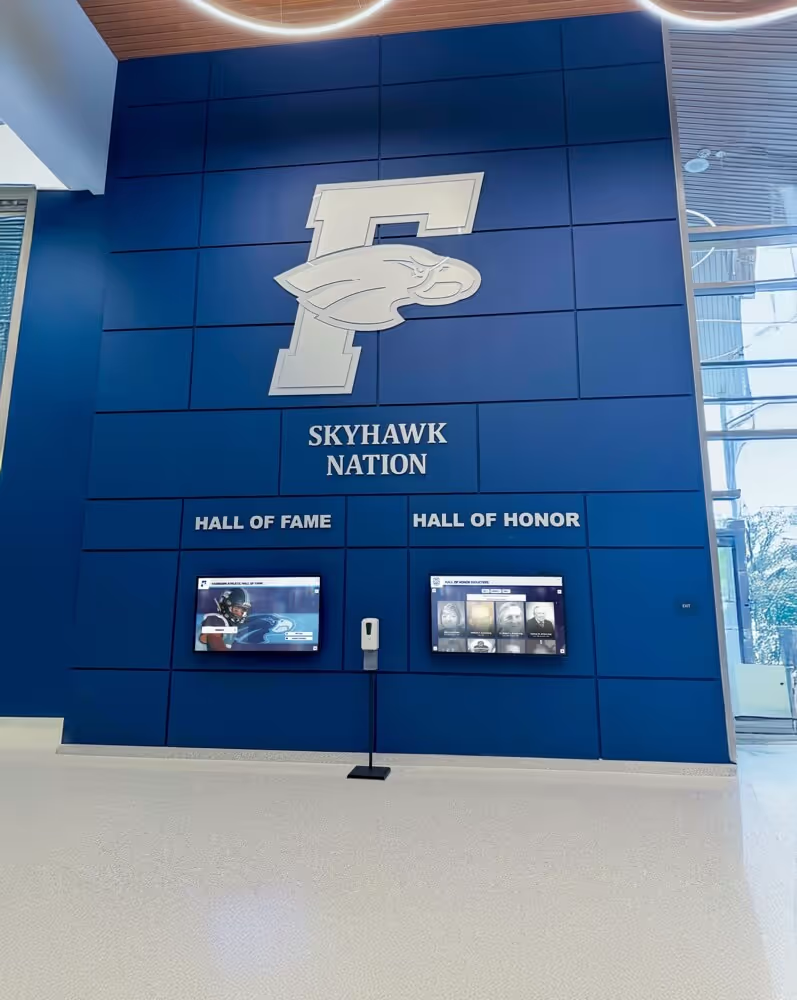
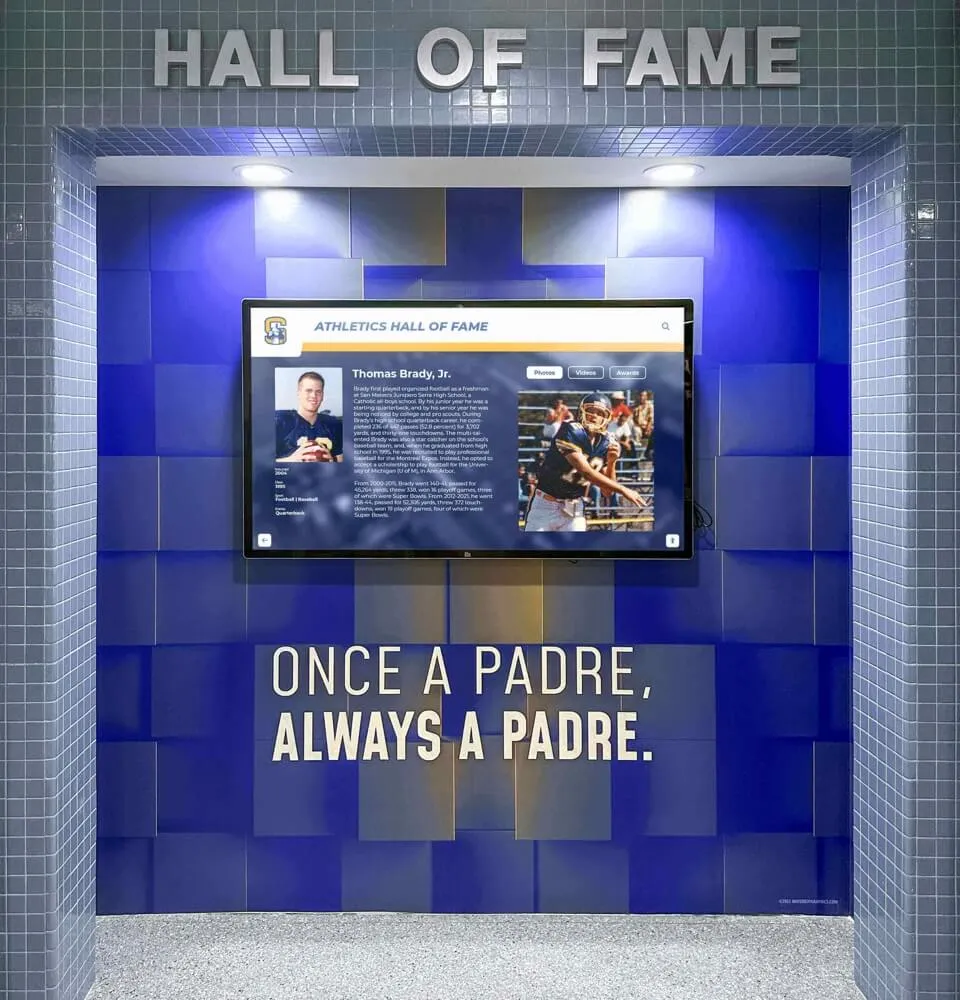
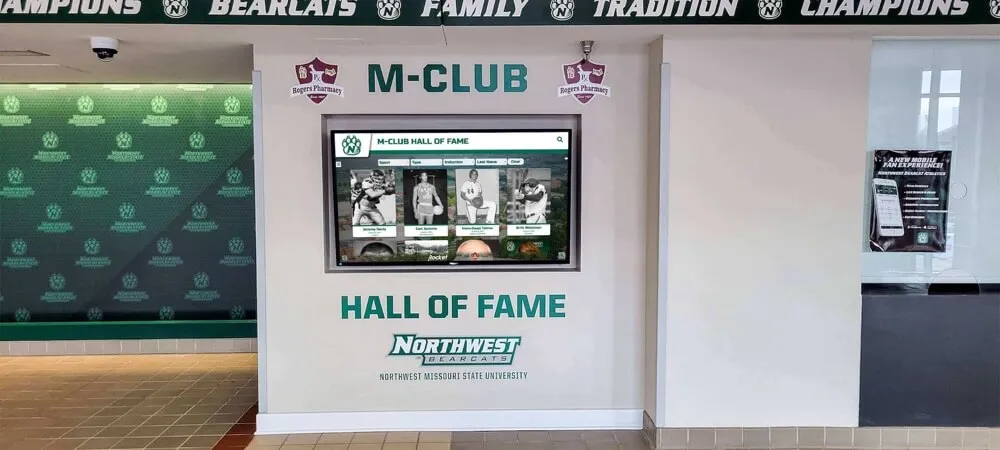
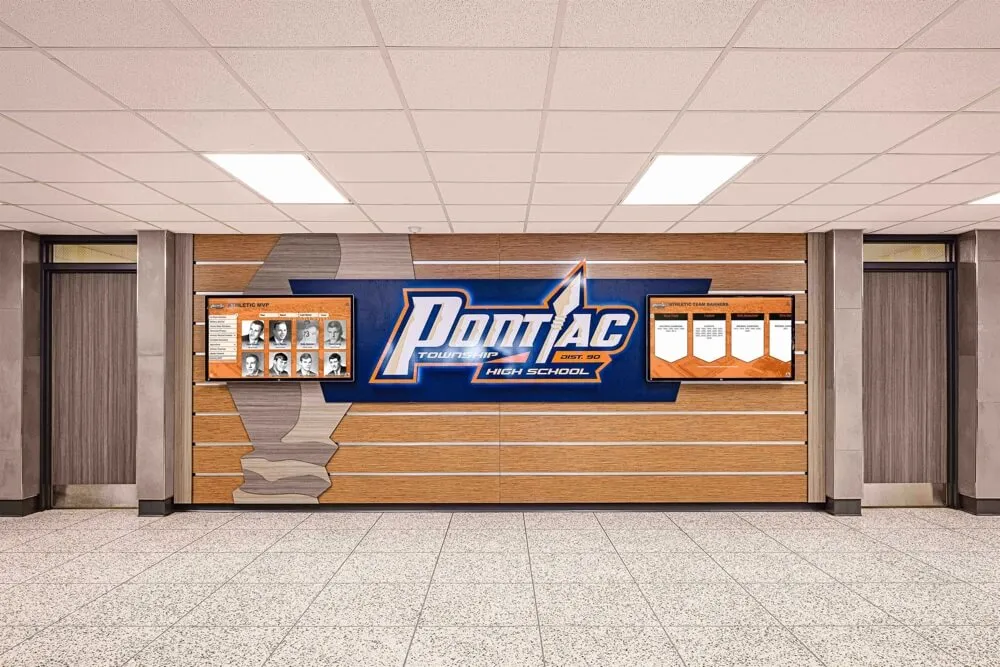
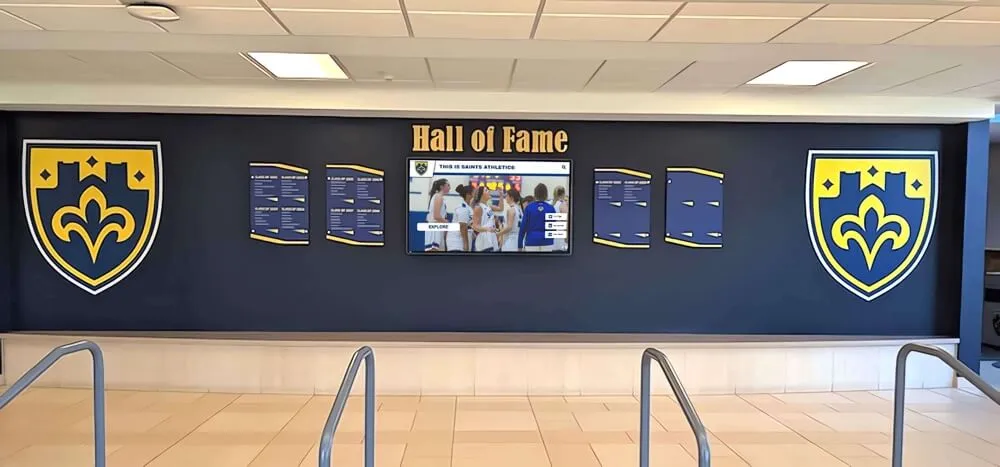
Combined physical and digital recognition displays give sponsors something tangible to show colleagues while providing the program with flexible, updatable content
Schools that have implemented digital displays as part of their day-to-day school recognition workflow report that the system becomes self-reinforcing: sponsors see their recognition displayed prominently, share photos with their networks, and become informal ambassadors for the booster club.
Where to Locate Donor Displays
Location determines visibility—the most common mistake is placing a recognition display where program families already congregate (inside the gym) rather than where general school traffic flows (main entrance, athletic hallway, lobby). The goal is for a prospective sponsor visiting the school for any reason to encounter the display without specifically seeking it out.
Effective placement options:
- Main athletic entrance or lobby: Captures all athletic visitors across every sport
- Gymnasium hallway or vestibule: Captures everyone entering for events without requiring gym access
- Athletic director’s office or hallway adjacent to it: Positions the display directly in donor-facing conversations
- School main entrance or welcome center: Maximizes exposure to all school visitors, including non-athletic families
Thank-You Follow-Up That Converts One-Time Sponsors Into Multi-Year Partners
The most common reason gymnastics booster club sponsors do not renew is not the investment amount—it is that they never received confirmation their recognition was actually delivered. A banner was supposed to go up; they are not sure it did. Their name was supposed to be in the program; they never got a copy. The follow-up system exists to close that gap.
The Recognition Fulfillment Log
Every sponsor and donor should have a corresponding fulfillment record that tracks each recognition deliverable as it is completed. A spreadsheet works for most clubs; what matters is that the record exists and is updated before the season ends.
| Sponsor / Donor | Package | Banner Installed | Program Listed | Display Updated | PA Script Confirmed | Thank-You Sent | Renewal Outreach Date |
|---|---|---|---|---|---|---|---|
| Example Business A | Platinum | ✓ | ✓ | ✓ | ✓ | ✓ | April 15 |
| Example Business B | Gold | ✓ | ✓ | ✓ | Pending | ✓ | April 15 |
| Example Business C | Silver | ✓ | ✓ | In progress | N/A | Sent | April 30 |
| Example Family D | Community Friend | N/A | ✓ | ✓ | N/A | ✓ | May 1 |
This table does two things: it prevents recognition commitments from being forgotten mid-season, and it creates a documented record you can reference during the renewal conversation. When you call a Gold sponsor in April and say “last year we installed your banner at three meets, updated your digital display profile, and listed your name in all six programs,” the renewal ask is substantiated by evidence rather than memory.
Programs interested in how schools manage multi-year contributor records across sports will find useful parallels in how institutions approach how schools define, display, and preserve student honors—the same principle of systematic, permanent record-keeping applies to donor and sponsor recognition.
Timing the Thank-You Sequence
Thank-you communications should follow a defined sequence rather than a single end-of-season message:
Within 48 hours of receiving a signed commitment: Send a written acknowledgment confirming the sponsor’s package, investment amount, and a timeline for when each deliverable will be completed. This sets expectations and establishes accountability.
After the first home meet: Send a brief follow-up—email or text with a photo—showing the sponsor’s banner installed and visible. Include the program page where their name appears. Most sponsors have never received this level of confirmation; it stands out.
Midseason check-in: A brief email (three to five sentences) noting the program’s meet results and reconfirming that recognition is on track. This is not a fundraising ask—it is a relationship touch.
End-of-season summary: A one-page letter (physical mail, not just email) summarizing what the program accomplished, what the sponsor’s investment helped fund, and an invitation to renew for next year. Include a photo of the full team or a highlight from the season.
Renewal outreach in spring: A personal call or meeting to present next year’s sponsorship options. Reference the fulfillment record, mention any recognition upgrades in the new season, and offer a multi-year option at a modest discount to reduce annual renegotiation.
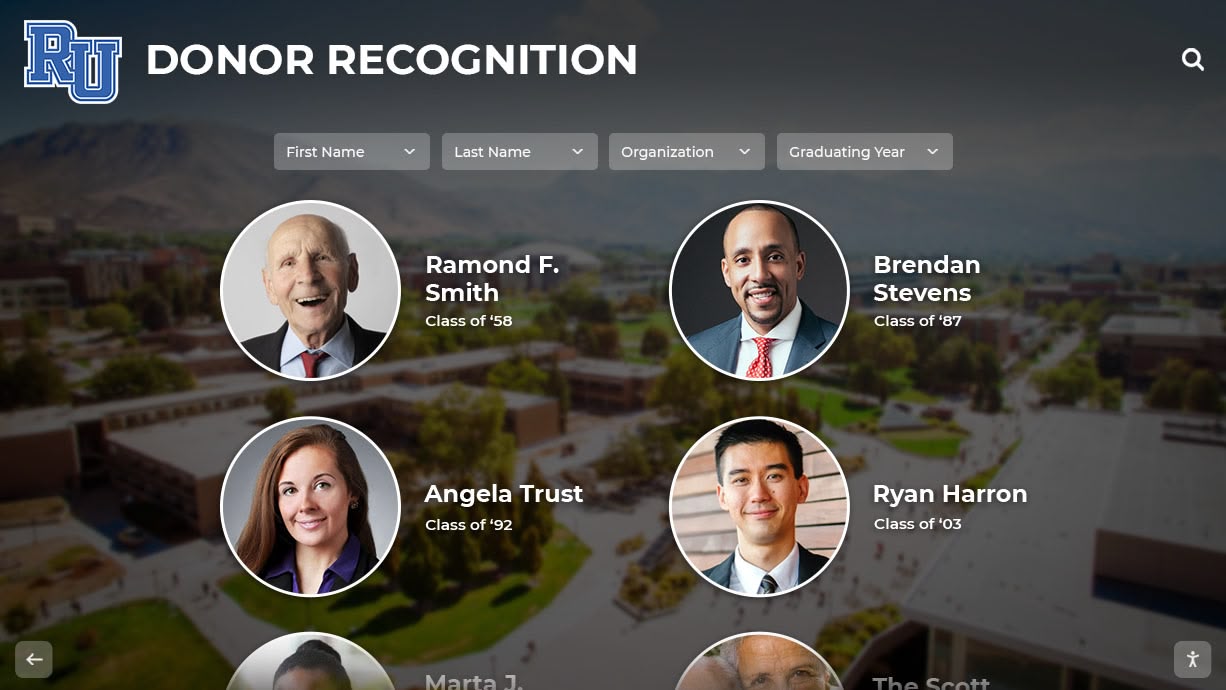
Systematic follow-up and permanent recognition create the visible proof of impact that converts one-season sponsors into long-term program partners
Additional Gymnastics Booster Club Fundraising Ideas
Sponsorships form the revenue backbone, but a diversified fundraising calendar reduces financial risk and engages families who prefer participation over business-style giving.
Meet-Day Revenue Streams
Home meets create built-in fundraising opportunities beyond sponsorship:
Concessions and merchandise: Gymnastics meets attract families from multiple schools. A concession stand with school-branded merchandise, spirit items, and food generates meaningful revenue from a captured audience. Consider selling meet programs with sponsor recognition included as both a revenue stream and a sponsor fulfillment vehicle.
Photography packages: Many gymnastics families pay for professional meet photos. A booster club that organizes and sells photography packages—rather than leaving this to independent photographers—can capture $500–$2,000 per large invitational.
Raffle drawings: A silent raffle with donated prizes from local businesses generates revenue while giving those businesses additional meet-day visibility, which can function as a preview of formal sponsorship benefits for businesses not yet in your program.
Skill-Building Events
Gymnastics clinics for youth programs: A Saturday clinic taught by your varsity gymnasts introduces recreational gymnasts to your program while generating registration fees ($25–$60 per participant). Clinics of 20–40 participants generate $500–$2,400 per event with modest overhead.
Tumbling and skills workshops: Targeted workshops for cheerleaders, dancers, and beginning gymnasts fill a community need while introducing new families to your booster club. These events also create natural visibility for digital displays and recognition boards if held at your facility.
Digital and Online Fundraising
Crowdfunding campaigns tied to specific goals: A campaign to fund a specific equipment purchase—replacement floor exercise springs, a new vault table, or updated scoreboard equipment—performs better than a generic “support our team” ask when the goal is concrete and the cost is transparent.
Spirit wear with online fulfillment: Print-on-demand platforms eliminate inventory risk while enabling year-round sales. Design annually to maintain freshness and create purchase urgency among families who want updated team gear each season.
For additional ideas on recognizing athlete accomplishments within a structured fundraising program, creative youth sports awards ideas can help booster clubs design end-of-season recognition events that double as donor engagement opportunities.
How Digital Recognition Strengthens Every Fundraising Ask
A donor recognition display is not a reward for sponsors who have already given—it is a fundraising tool that makes every future ask easier. When a booster club president meets with a prospective Gold sponsor, the conversation is fundamentally different if they can show a photo of an existing Gold sponsor’s profile on the athletic hallway display versus describing it abstractly.
This is why programs that invest in permanent recognition infrastructure—whether a physical recognition board or a fully interactive touchscreen display—report higher sponsorship conversion rates and more consistent renewals. The display does part of the sales work continuously.
What permanent recognition demonstrates to prospects:
- The program is professionally managed and takes commitments seriously
- Prior sponsors received what they were promised (visible proof)
- The investment will be recognized publicly, not quietly
- The program has longevity—it is not disappearing after this season
What the absence of recognition communicates:
- Uncertainty about whether commitments will be honored
- No visible difference between a $250 gift and a $2,500 gift
- No institutional memory if booster club leadership changes
- Transactional relationships rather than community partnerships
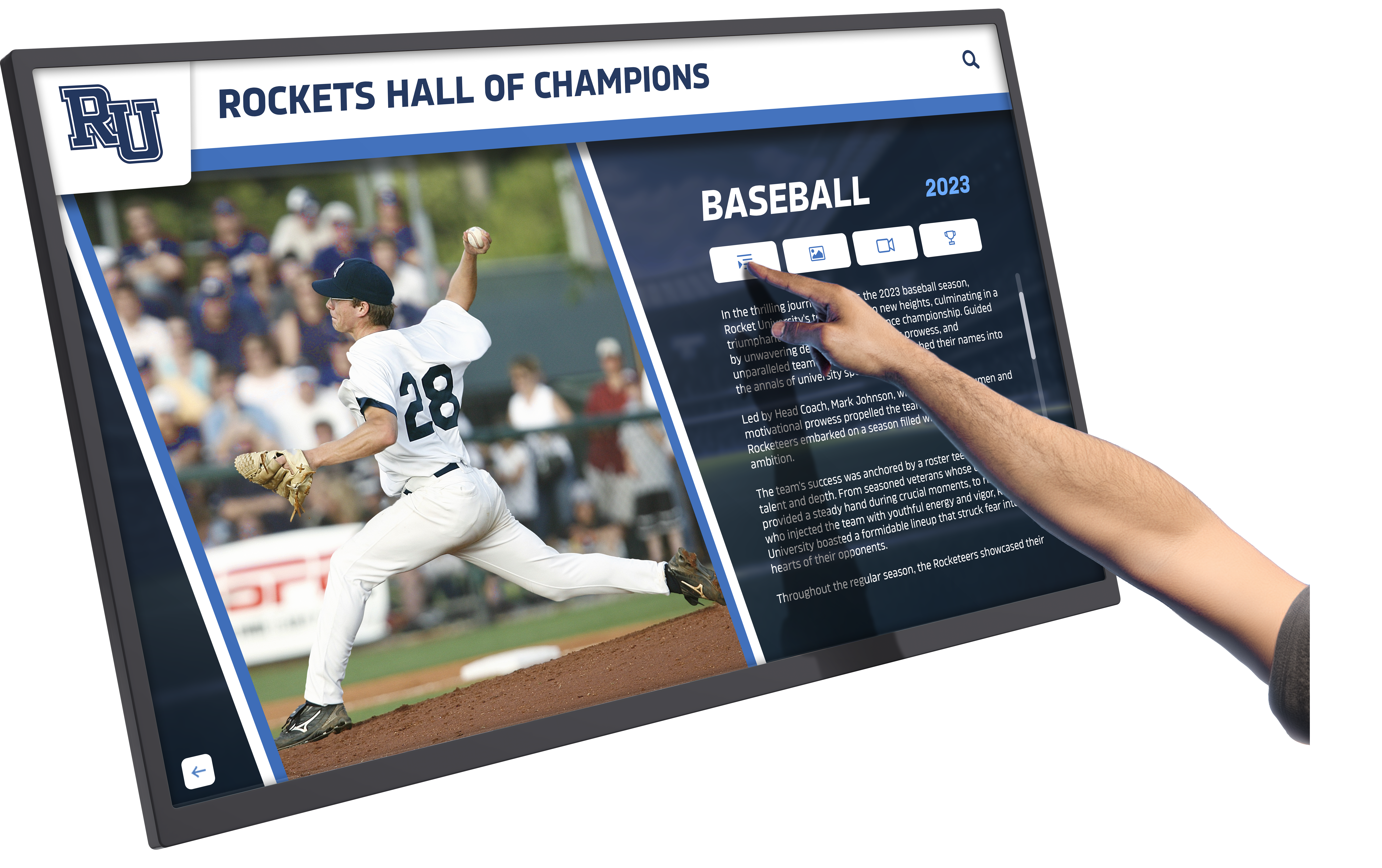
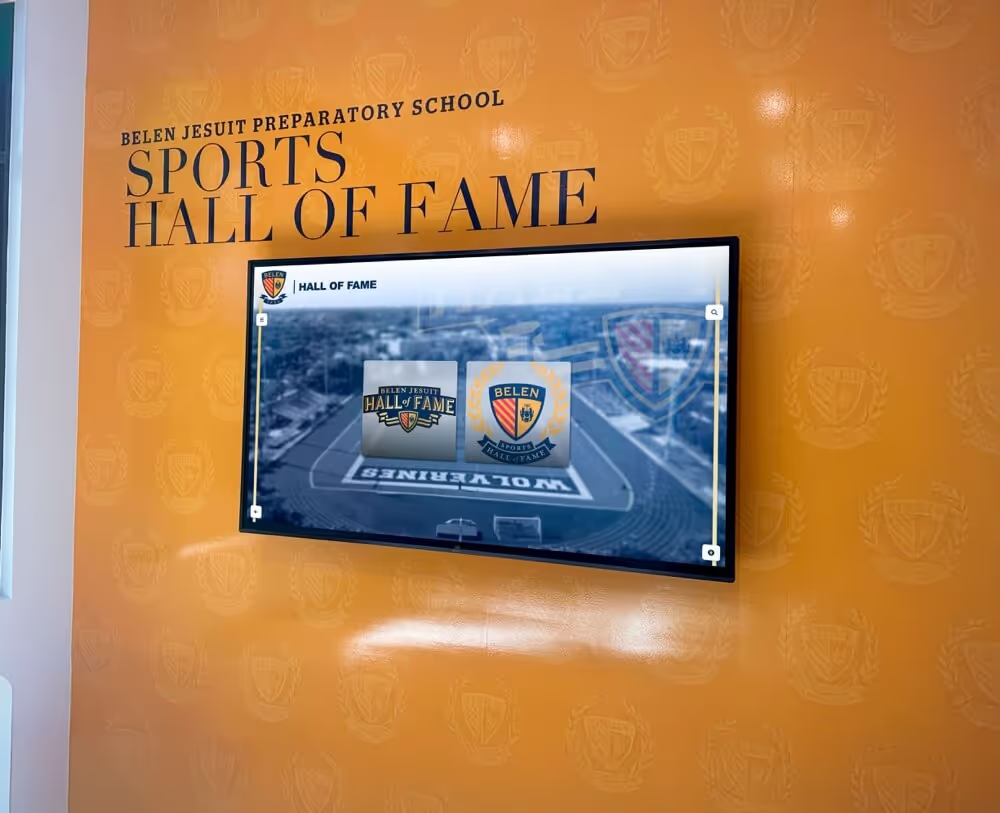
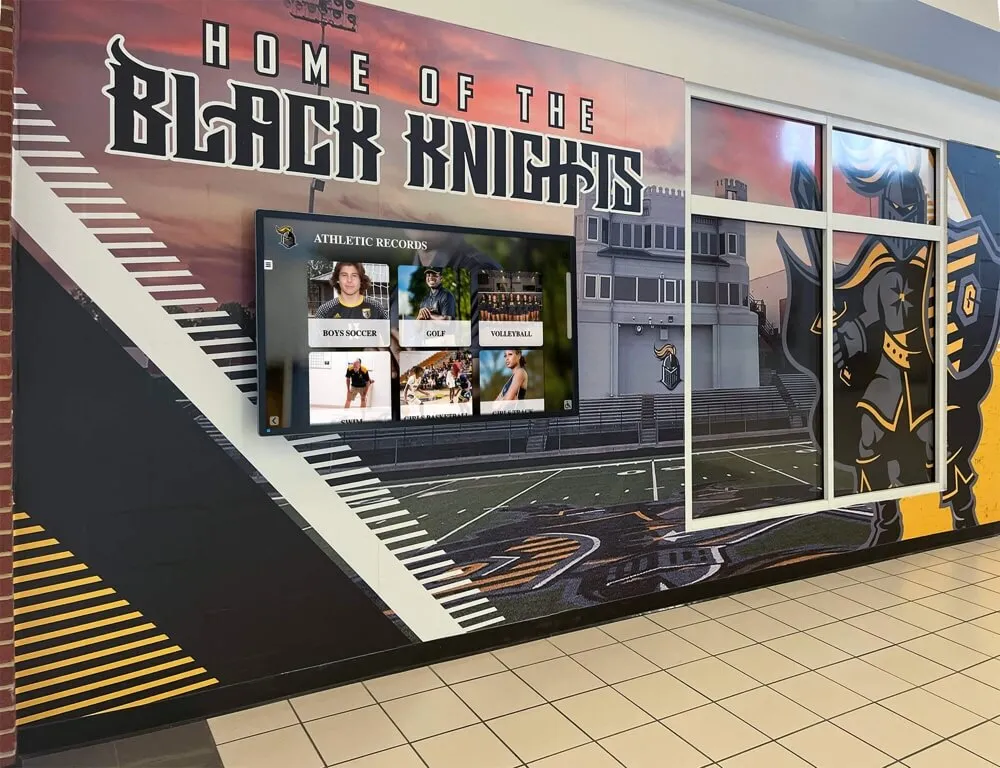
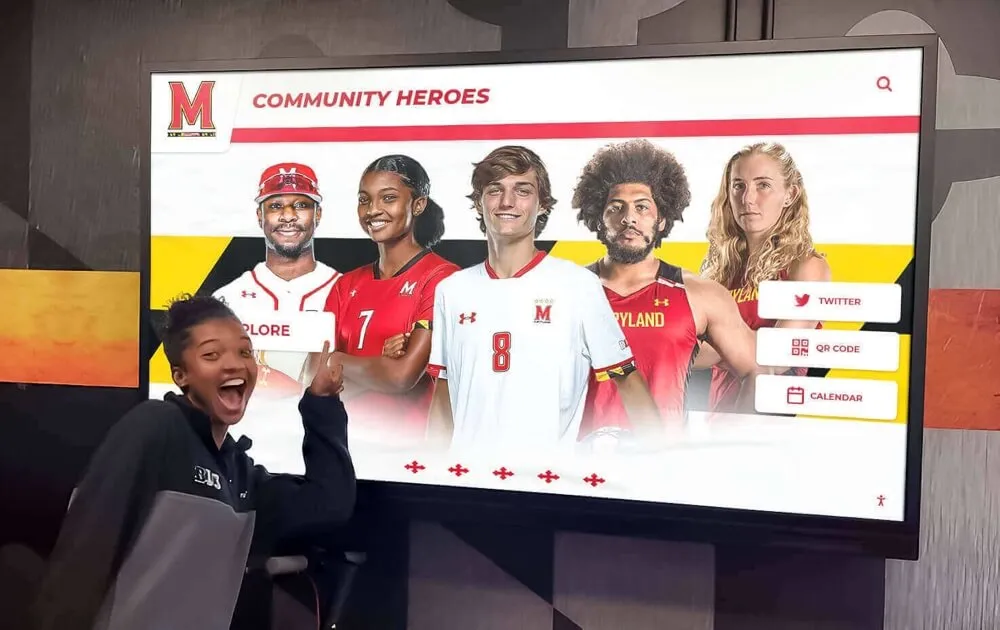
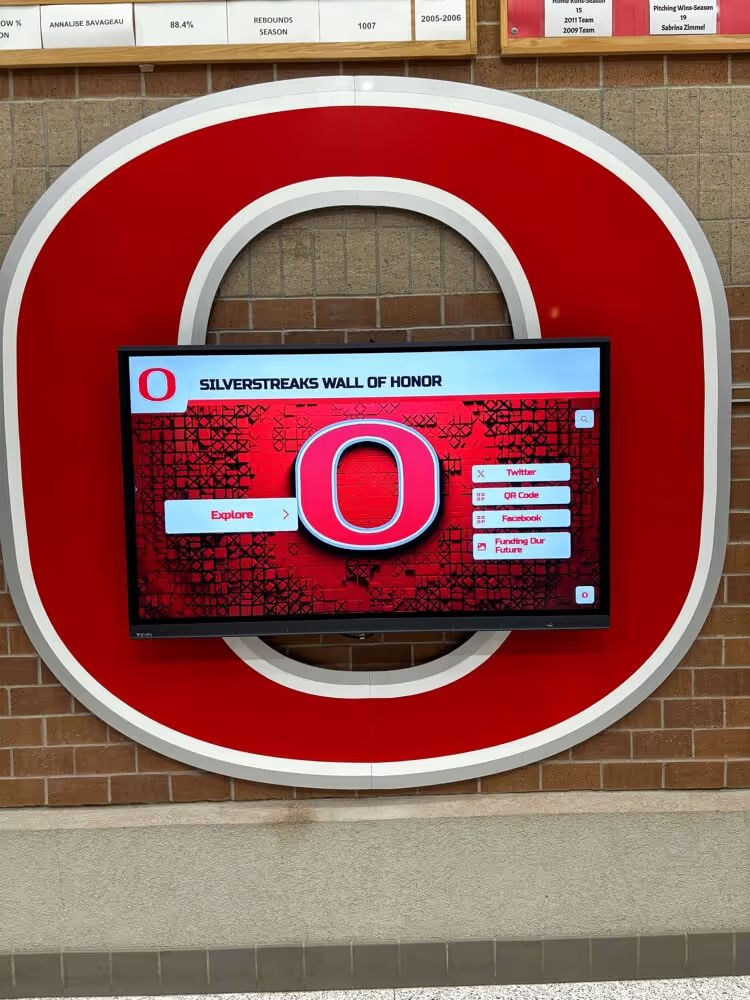
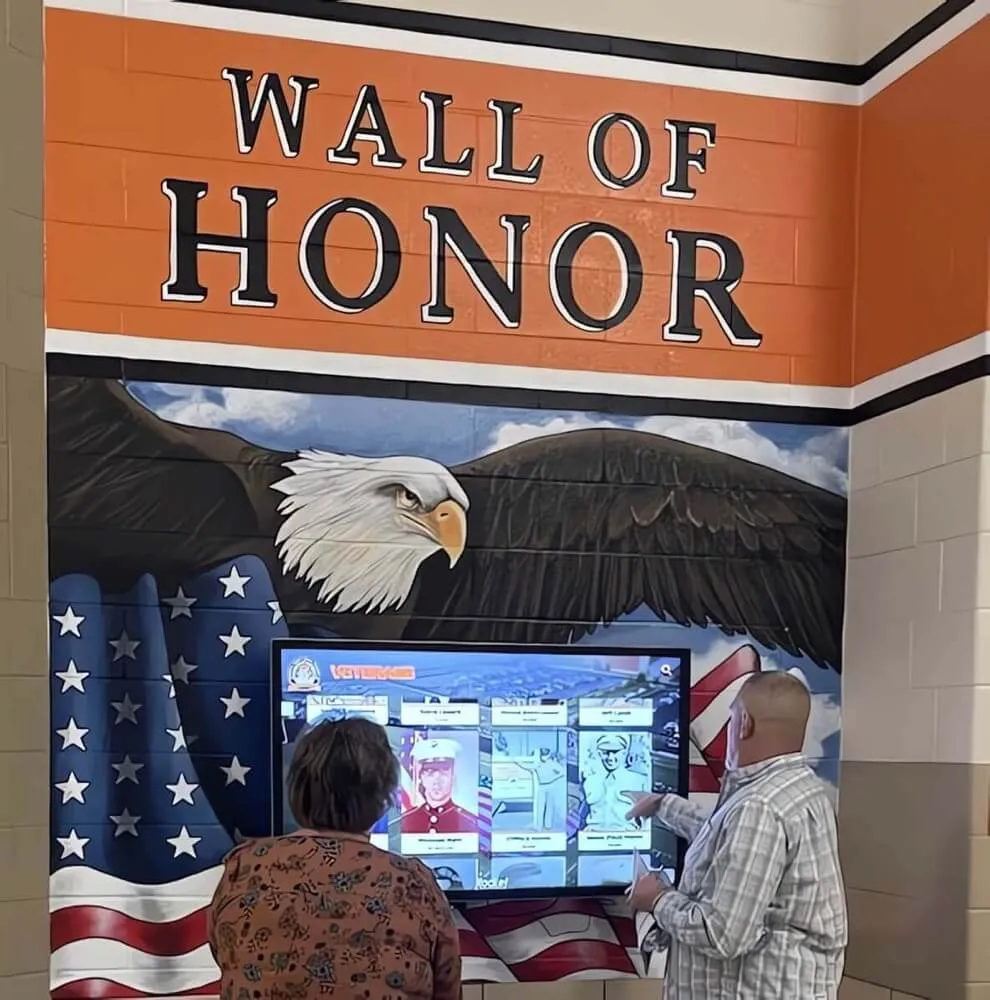
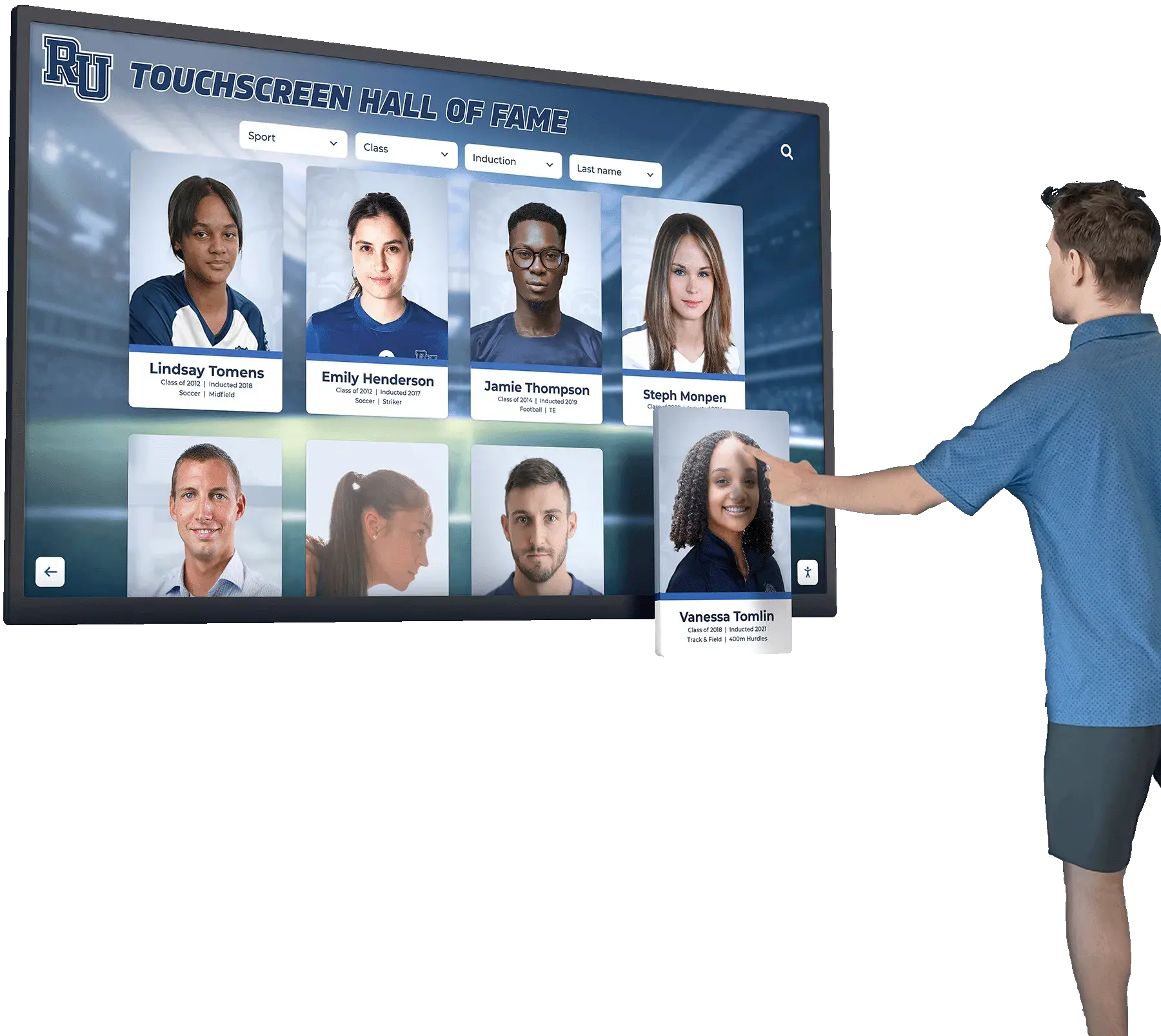
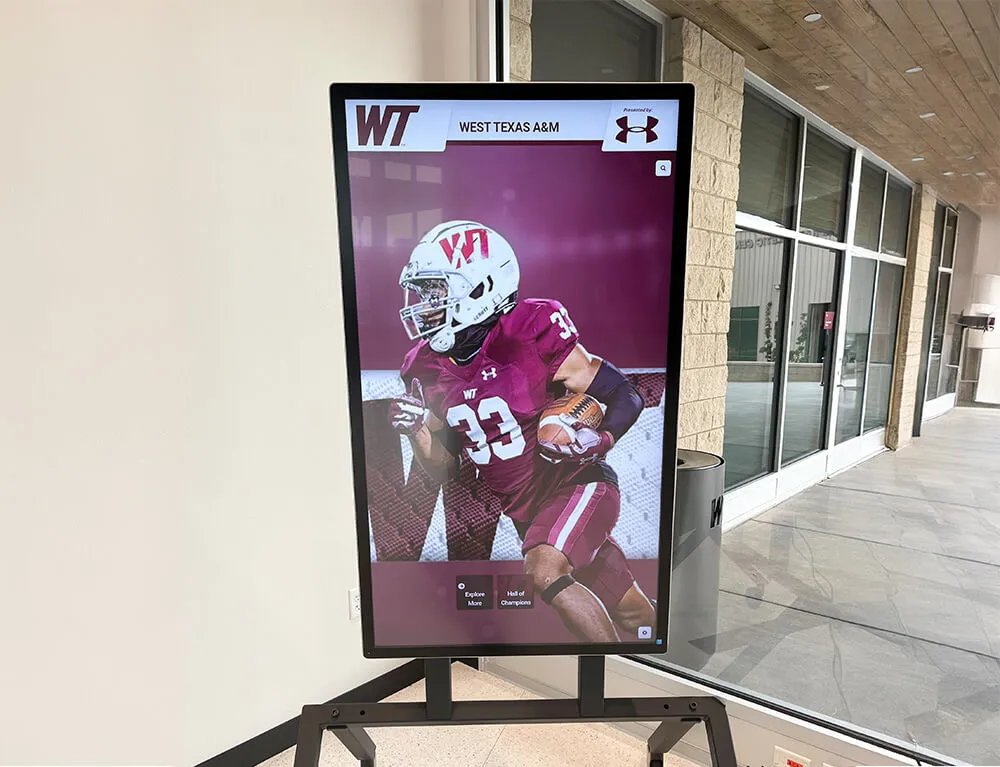
Interactive displays let sponsors see exactly how their recognition appears—increasing confidence in the investment and accelerating renewal decisions
Programs building toward a digital display can start with a simple static recognition board and photograph it systematically to use in sponsorship presentations. The photograph becomes the proof point. Over time, that investment in documentation builds the case for a more sophisticated permanent display that does the same work automatically.
Schools exploring comprehensive recognition approaches for both athletic and academic programs will find useful context in how institutions approach showcasing top programs in a digital recognition environment—the principles of systematic display and consistent updating apply equally to donor recognition and athletic achievement.
For programs ready to evaluate their full recognition infrastructure, resources on hall of fame recognition tools for athletics and donors provide a useful framework for comparing options across display formats, cost levels, and content management requirements.
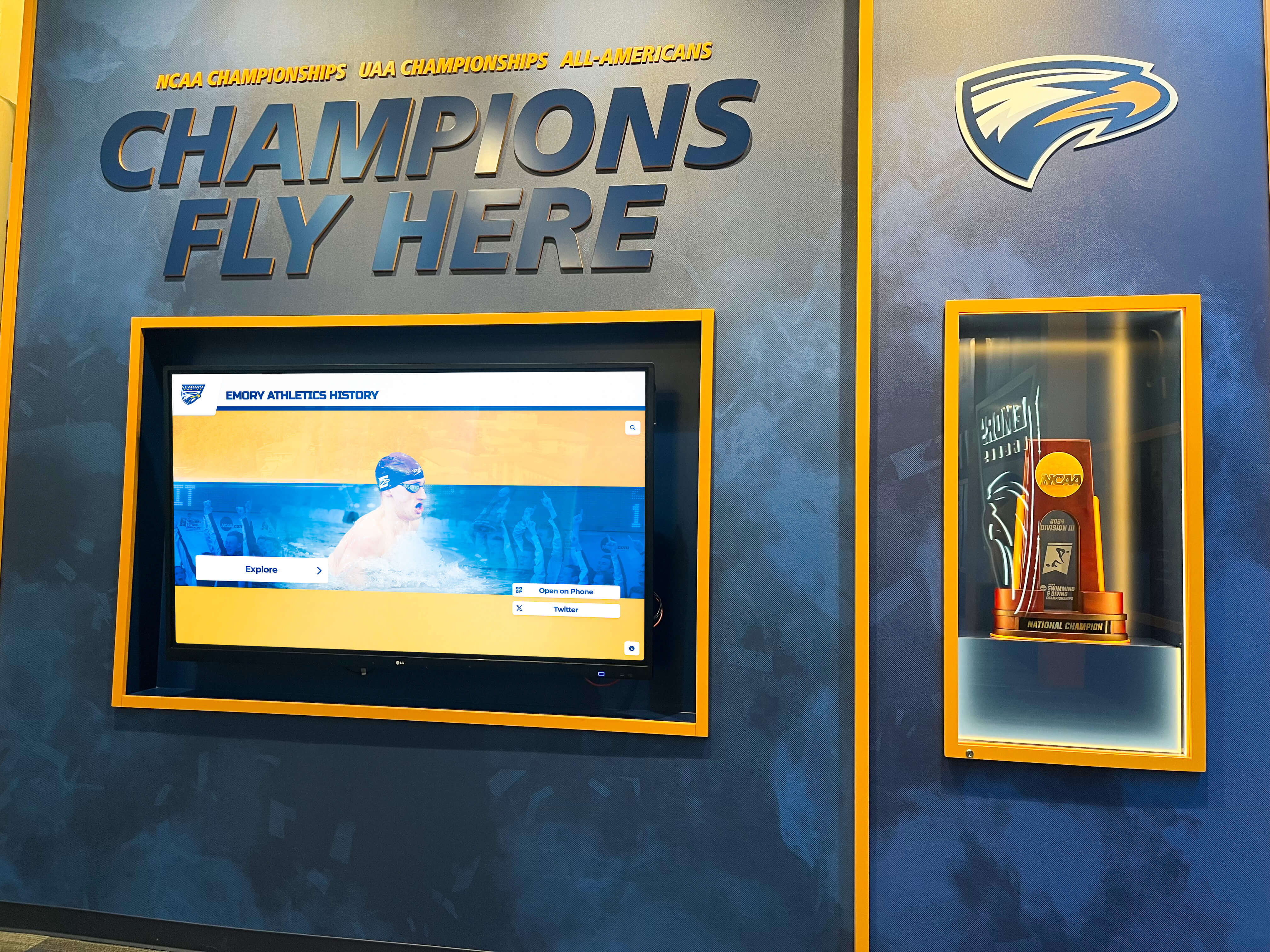
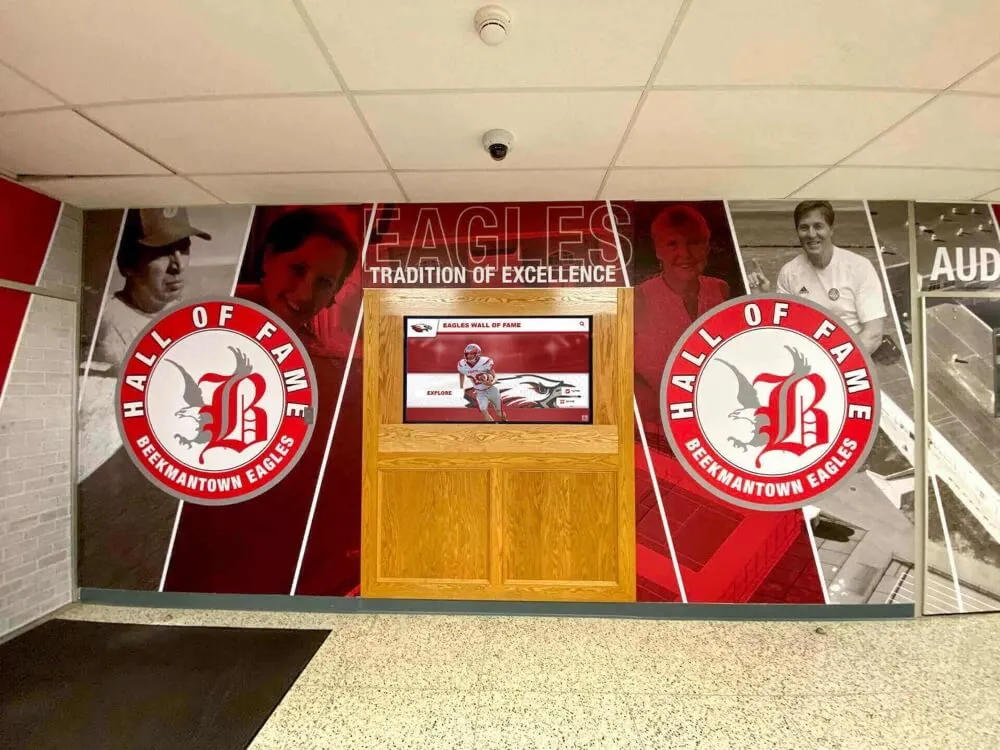
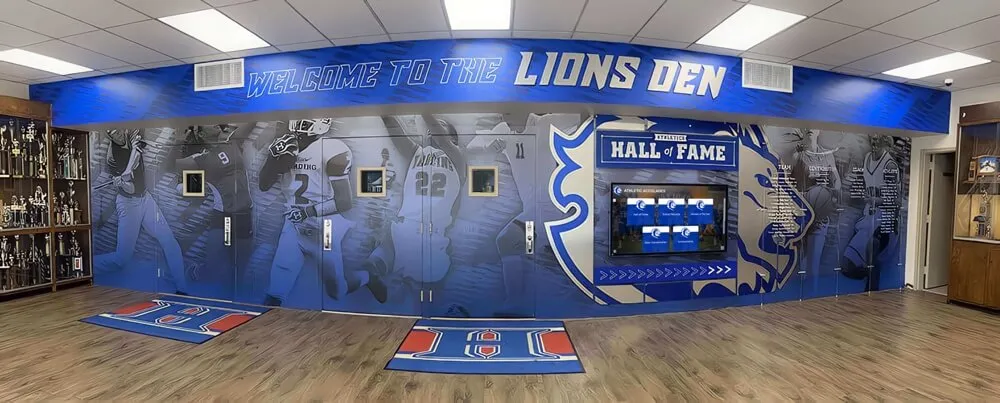
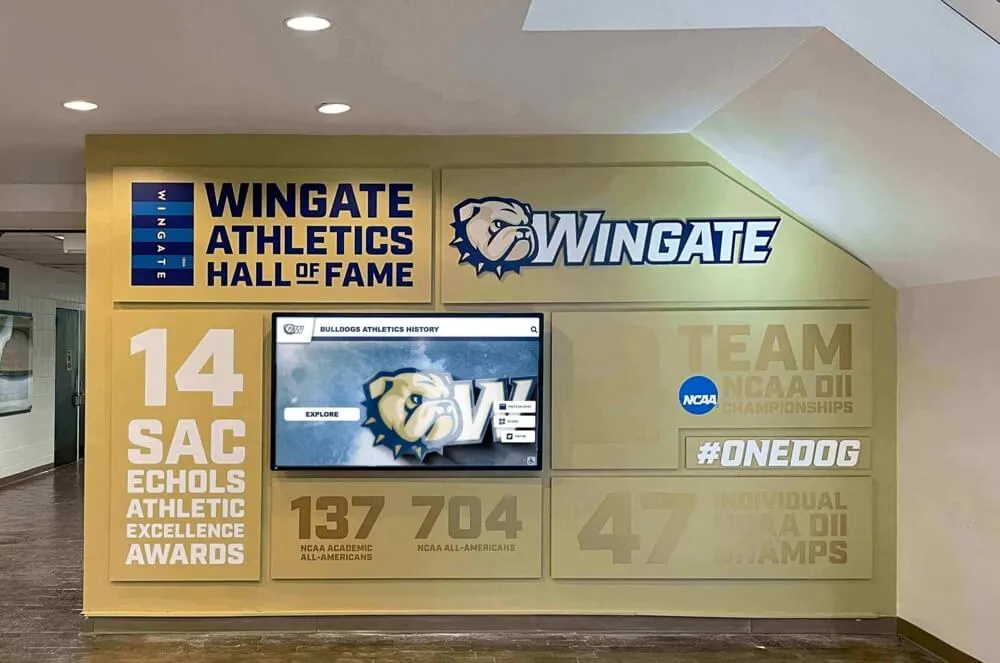
A well-built recognition wall communicates program pride to every visitor—sponsors who see this become donors who want their name alongside a tradition of excellence
The booster clubs that sustain strong fundraising year over year are not the ones with the most creative one-off events. They are the ones that have built systems: a written sponsorship menu, a digital recognition display, and a follow-up sequence that makes every sponsor feel seen, confirmed, and invited back. If you are ready to explore how a permanent digital display could anchor your gymnastics program’s fundraising approach, schedule a demo with Rocket Alumni Solutions to see how interactive touchscreen recognition works in athletic hallways and lobby spaces.
Frequently Asked Questions About Gymnastics Booster Club Fundraising
What are the best gymnastics booster club fundraising ideas for programs just starting out?
How much should a gymnastics booster club charge for meet-day sponsorships?
What should a gymnastics booster club include in a sponsor thank-you letter?
How can a gymnastics booster club use donor displays to improve fundraising results?
What gymnastics fundraising ideas work best for raising money quickly before a major competition?
Building a Fundraising System That Lasts
The most sustainable gymnastics booster club fundraising ideas share a common structure: a clear ask, a permanent recognition display, and a systematic follow-up that documents delivery and invites renewal. When those three elements are in place, fundraising becomes a repeatable process rather than an annual scramble.
Meet-day sponsorship packages give local businesses a tangible reason to invest. Donor displays—whether a simple recognition board or a fully interactive digital system—transform that investment into visible, lasting recognition that reinforces the value of giving. And a documented follow-up sequence converts the first-year experience into a multi-year relationship.
Programs at every budget level can implement this framework. Start with a written sponsorship menu and a recognition board, document every fulfillment step, and follow up personally before your renewal window. As your program grows, the recognition infrastructure can grow with it—from printed boards to digital displays, from single-sport recognition to a full athletic hall of honor.
When your gymnastics program is ready to see how a digital recognition display could anchor your sponsor conversations and donor follow-up workflow, schedule a free demo with Rocket Alumni Solutions. Interactive touchscreen displays built for athletic programs—sized for any screen, managed from the cloud, and designed to accommodate unlimited donors and sponsors—can transform how sponsors experience your recognition investment and how your community sees your program’s commitment to honoring those who make it possible.
For additional context on building recognition programs that complement athletic fundraising, explore how institutions approach creative youth sports awards and recognition planning and award display programs that recognize student-athlete achievement—the underlying frameworks for meaningful, lasting recognition apply across every level of athletic programming.