



Game program ads are paid advertisement placements purchased by local businesses inside printed game-day programs distributed at school athletic events. When designed and priced well, a game program becomes a self-funding publication that covers its printing costs, generates net revenue for the athletic department, and delivers genuine marketing value to the businesses that advertise in it. When structured poorly, it becomes a low-value booklet that sponsors pay for once and quietly decline to renew.
This guide covers how to lay out a game program to maximize ad sales, how to price ad space at every size tier, and how to connect print recognition to the broader sponsor strategy that actually drives renewal.
For a local business owner deciding whether to place a half-page ad in a school’s basketball game program, the calculation is simple: does the visibility justify the cost? Athletic directors and booster clubs that answer that question clearly — with specific audience numbers, visible proof of placement, and a recognition package that extends beyond the printed page — build sponsorship programs that grow. Those that hand businesses a program and move on to the next ask rarely see the same names on the sponsor roster two seasons in a row.

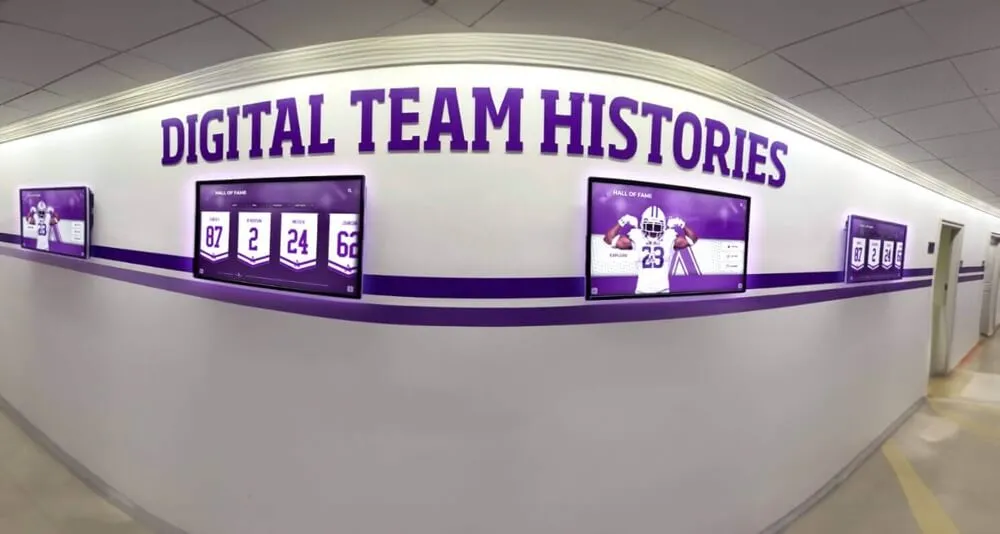
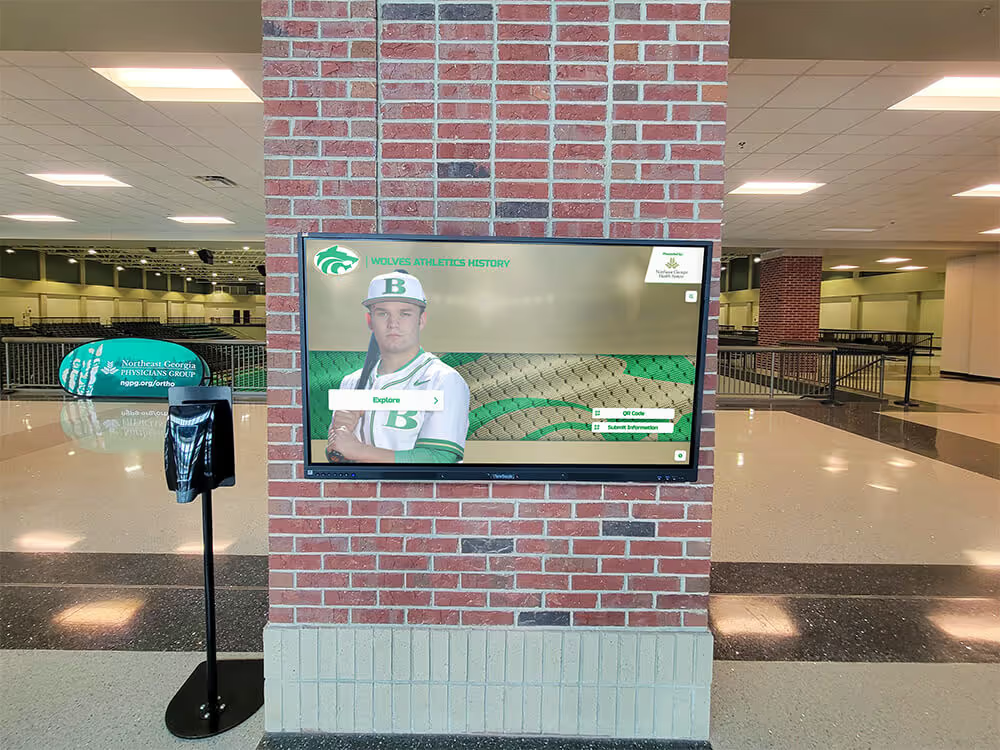
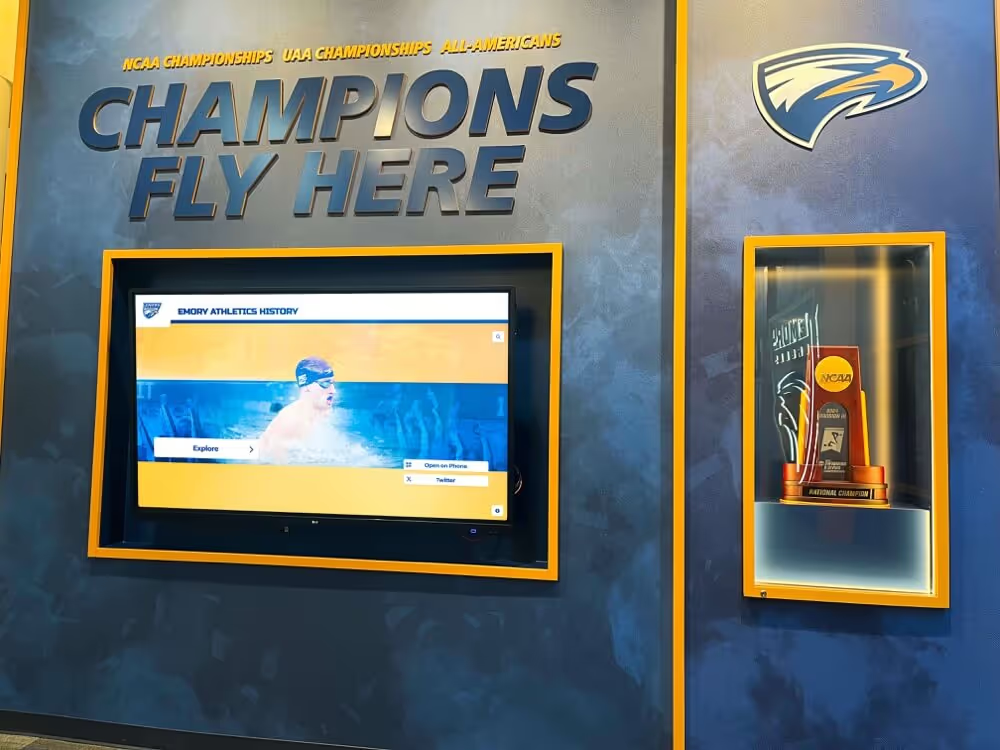
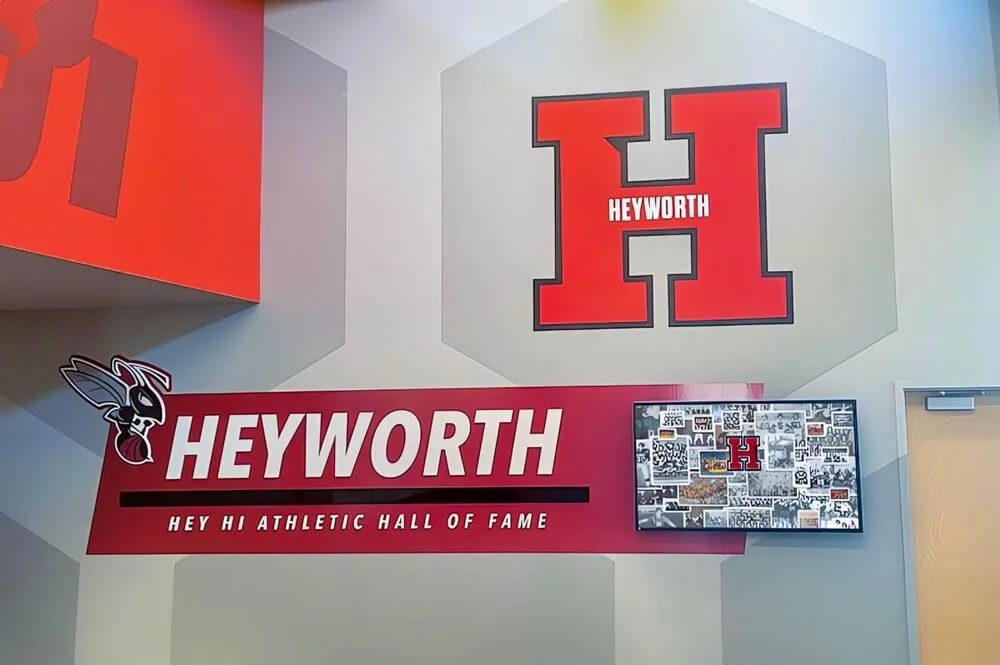
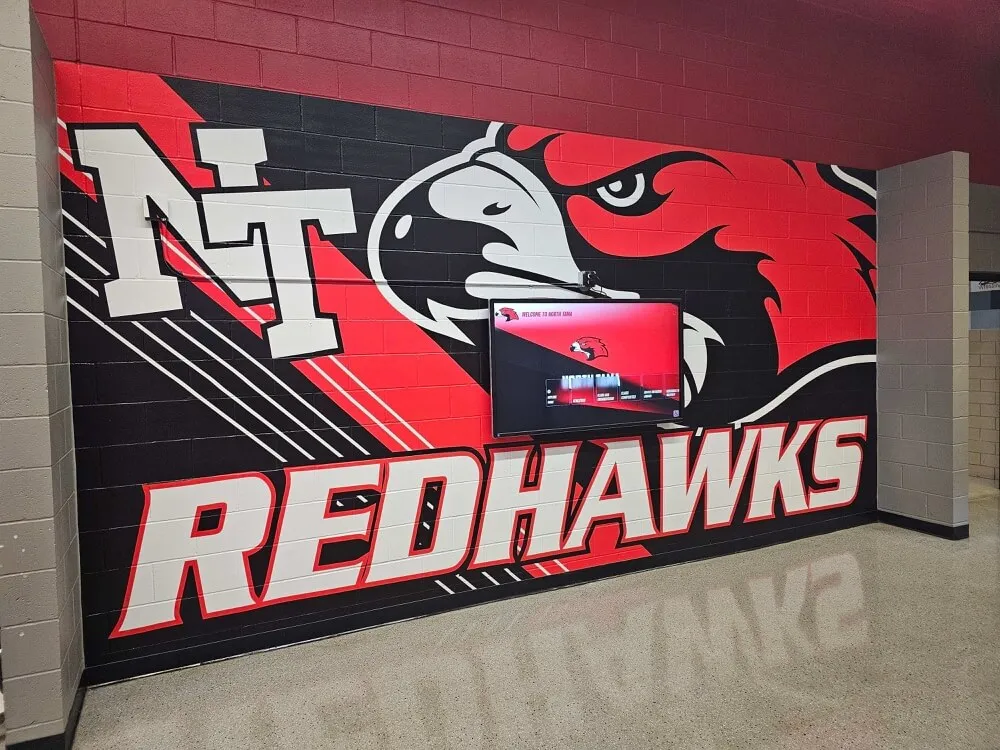
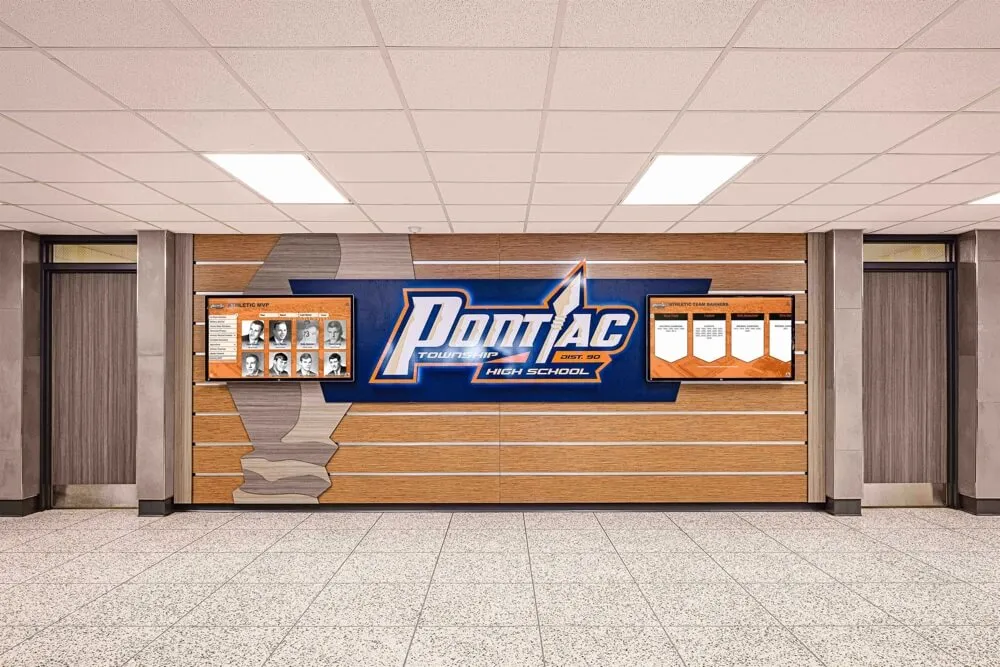
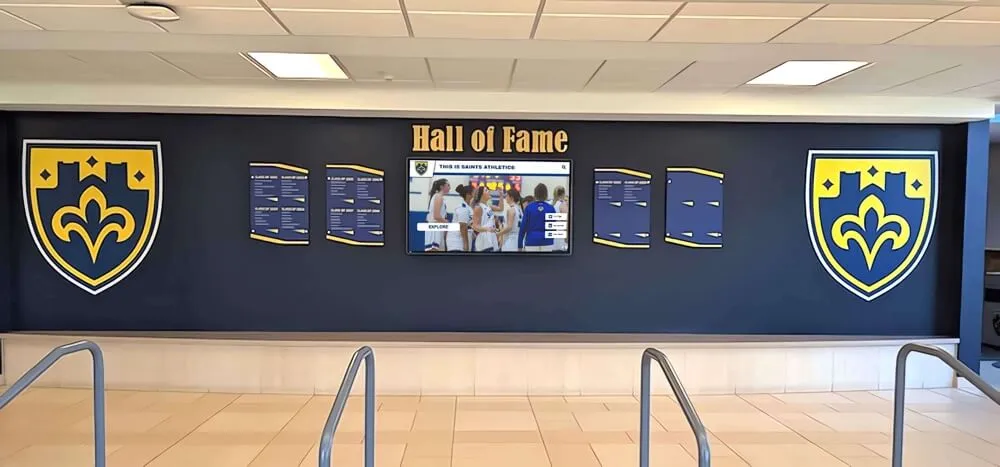
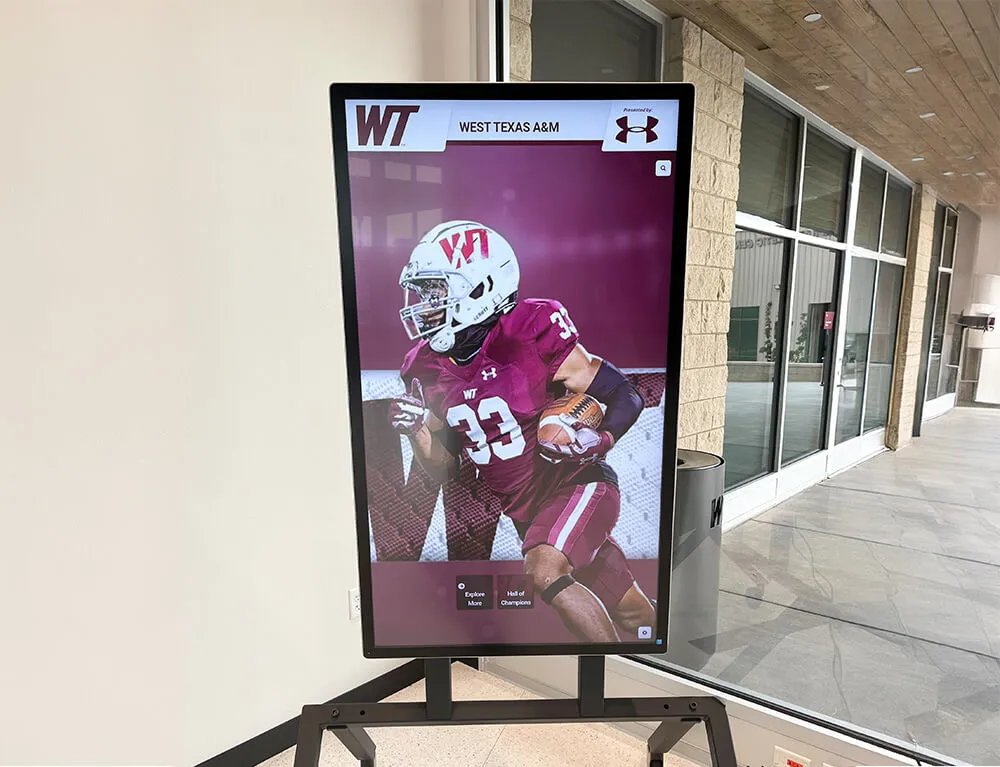
Schools that pair game program ads with facility digital display recognition give sponsors multiple visibility channels — print at the event and digital year-round
What Are Game Program Ads?
Game program ads are paid advertisement placements purchased by local businesses, alumni supporters, and community organizations inside game-day programs — printed publications distributed to fans at athletic events. A typical game program includes team rosters, season schedules, coaching staff introductions, and sponsor advertisements in a range of sizes.
The short answer: Game program ads give local businesses paid visibility in front of a captive audience of athletic event attendees — typically families, alumni, community members, and students — in exchange for revenue that helps the school cover printing costs and generate net income for the athletic program.
Most school athletic programs offer ad sizes ranging from business card through full page, with pricing tied to ad size, program circulation, and event attendance. Programs that frame these ads as a genuine community marketing opportunity — rather than a favor to the school — consistently outperform those that treat ad sales as an afterthought.
Game Program Ad Layout: Standard Sizes and Formats
A game program layout determines which ad sizes are physically possible and how much of the program’s visual real estate is allocated to sponsors versus content. The most effective layouts balance strong content (rosters, schedules, and team information that fans actually want) with clearly designated ad zones that feel valuable — not squeezed in.
Common Ad Sizes for School Athletic Programs
Most school game programs use a standard 8.5×11 inch page format, which creates a predictable ad sizing framework built on half-page and quarter-page grids. Here are the most common sizes:
| Ad Size | Dimensions (approx.) | Page Position | Best Fit For |
|---|---|---|---|
| Full Page | 8.5 × 11 in | Back cover, inside covers, standalone pages | Title sponsors, premium advertisers |
| Half Page (horizontal) | 8.5 × 5.5 in | Bottom of content pages, standalone | Major sponsors, established businesses |
| Half Page (vertical) | 4.25 × 11 in | Side column on content pages | Service businesses, ongoing sponsors |
| Quarter Page | 4.25 × 5.5 in | Interior content pages | Local retailers, professionals |
| Business Card (1/8 page) | 3.5 × 2 in | Grouped listings page | Community supporters, small businesses |
| Inside/Outside Back Cover | 8.5 × 11 in (premium) | High-traffic covers | Exclusive title sponsors only |
The back cover commands the highest visibility because it is the page fans see when they set the program down — and the first they flip to when picking it back up. Inside covers (inside front and inside back) are the next most visible positions and typically justify a 20–40% premium over standard full-page interior placements.
A Practical 16-Page Game Program Layout
A layout that maximizes ad value has a clear structure: high-interest content pages interspersed with strategically placed ads, with premium positions reserved for the highest-paying sponsors.
A functional layout for a 16-page game program:
- Cover: School and event branding; title sponsor logo
- Page 2 (inside front cover): Title sponsor full-page ad
- Pages 3–5: Visiting team roster, game schedule, coaches’ welcome
- Page 6: Half-page ad (Gold tier) combined with content
- Pages 7–9: Home team roster, season record, player profiles
- Page 10: Half-page ad (Gold tier) combined with content
- Pages 11–12: Quarter-page ad grid (Silver tier sponsors)
- Pages 13–14: Business card listings (community supporters)
- Page 15: Season schedule (fans retain this; place a sponsor logo here)
- Page 16 (back cover): Premium full-page ad (Title or exclusive Gold tier)
The season schedule page warrants special attention: it is the page most fans keep and refer to throughout the season. Placing a sponsor’s name or logo near the schedule — or designing the schedule as a combined schedule-plus-sponsor-message layout — extends that ad’s effective life well beyond a single game.
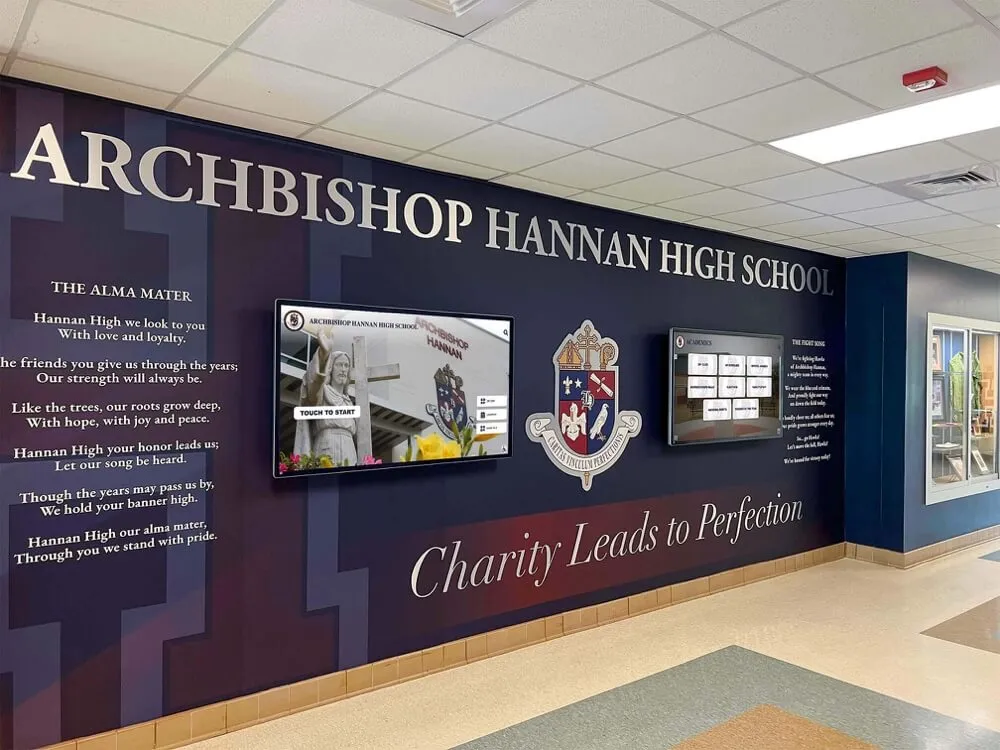
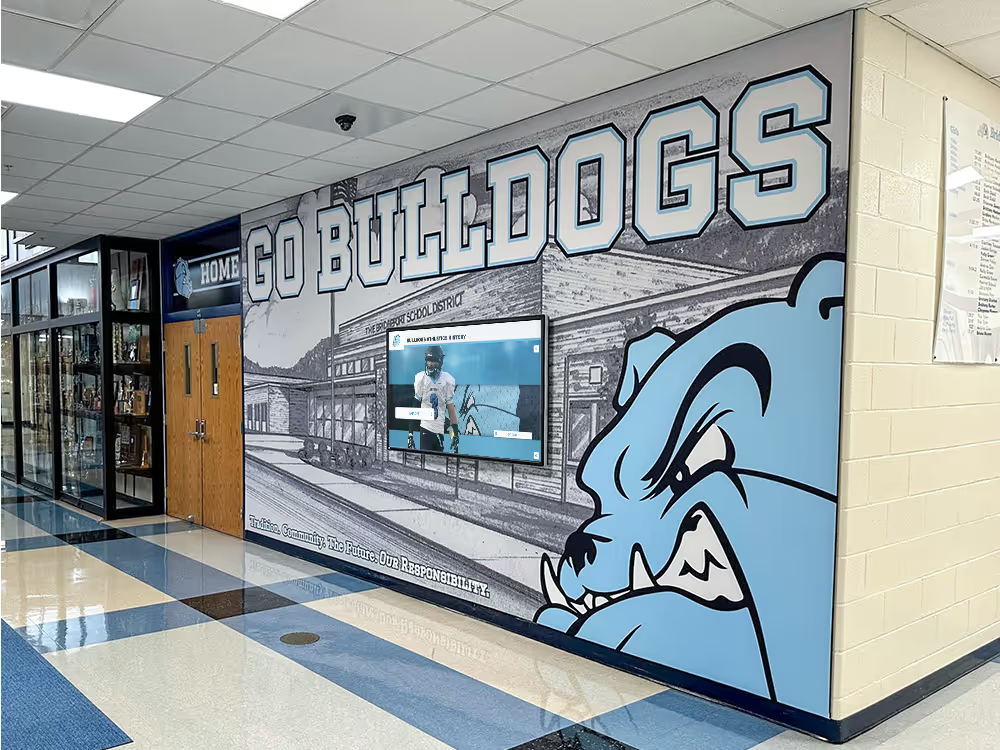
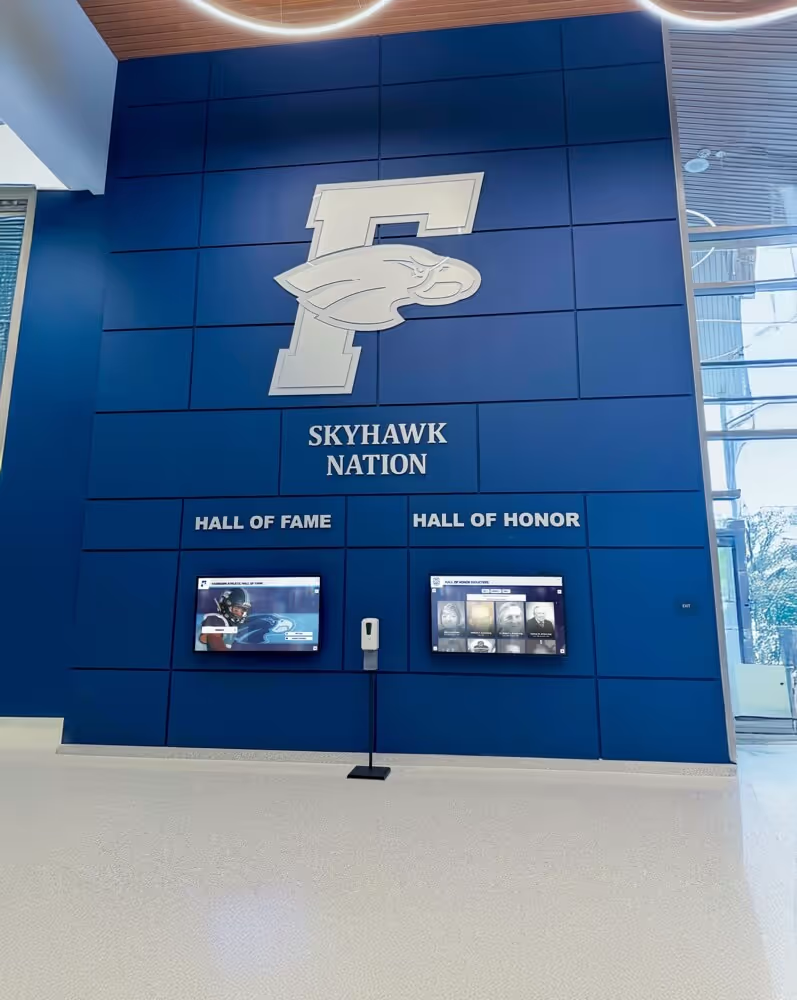
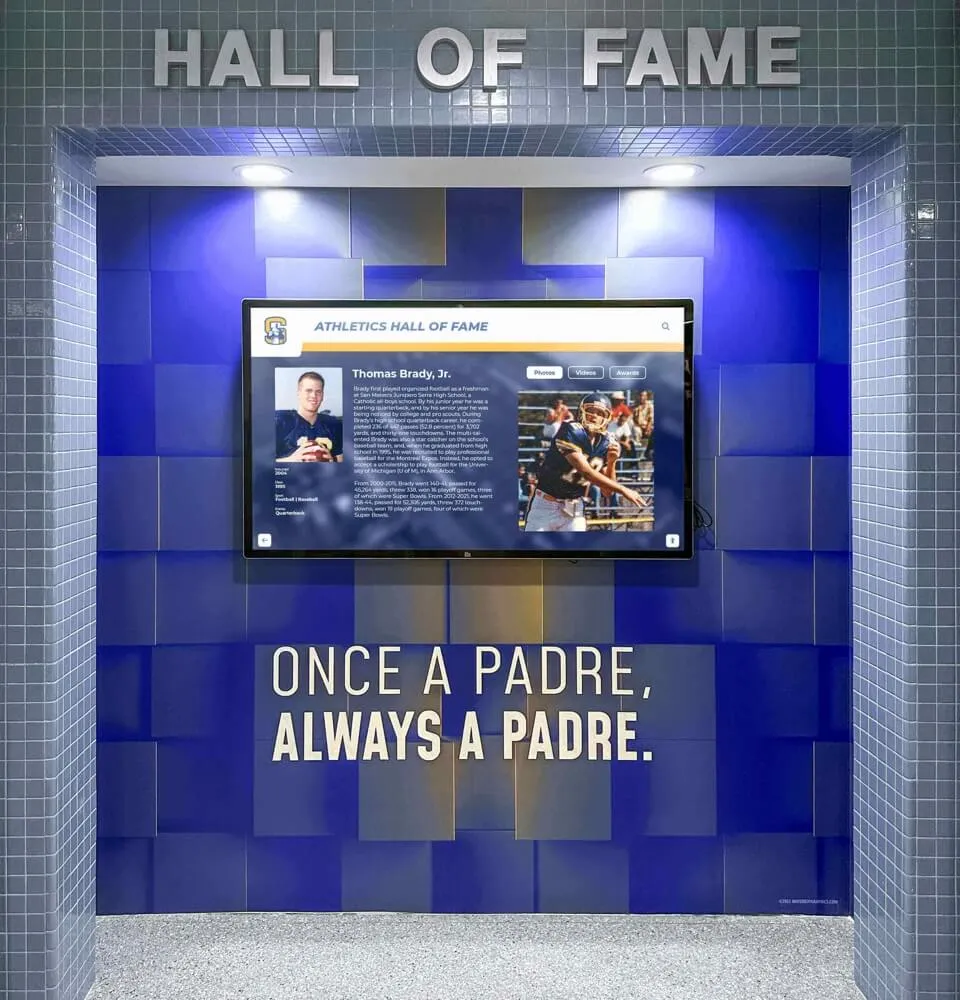
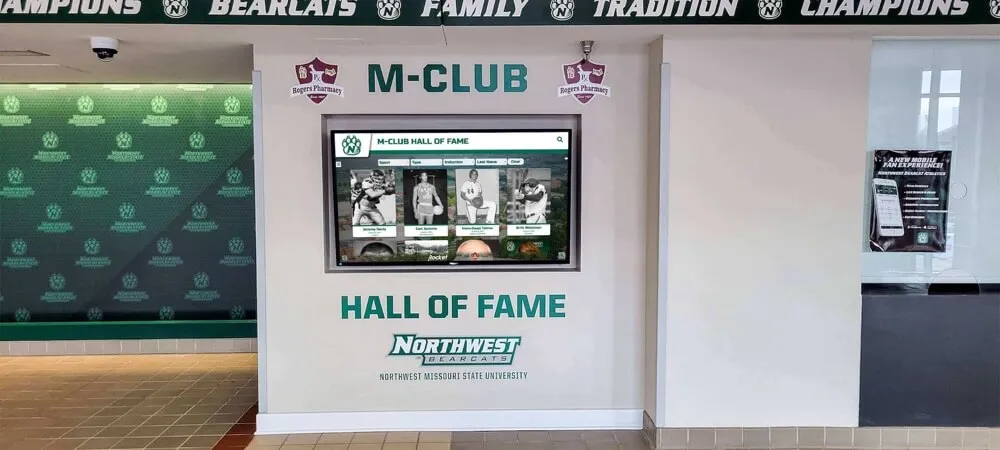
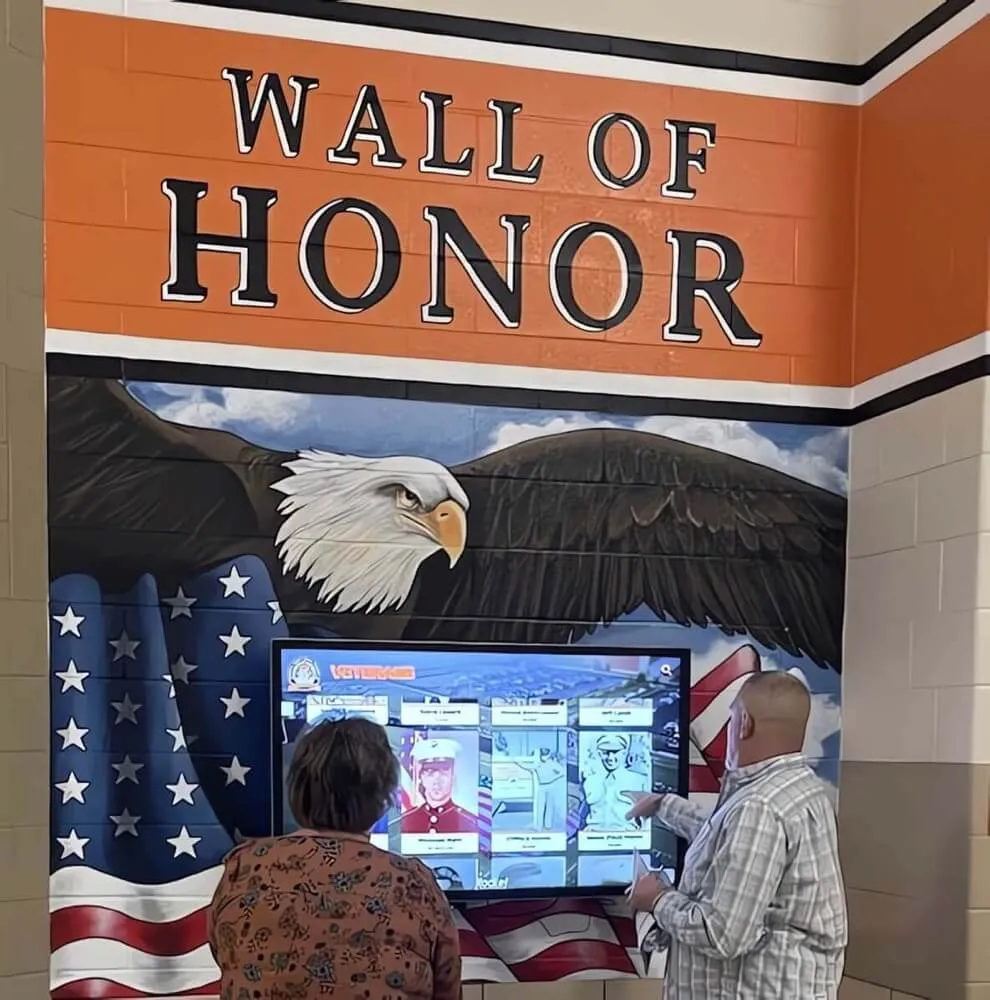
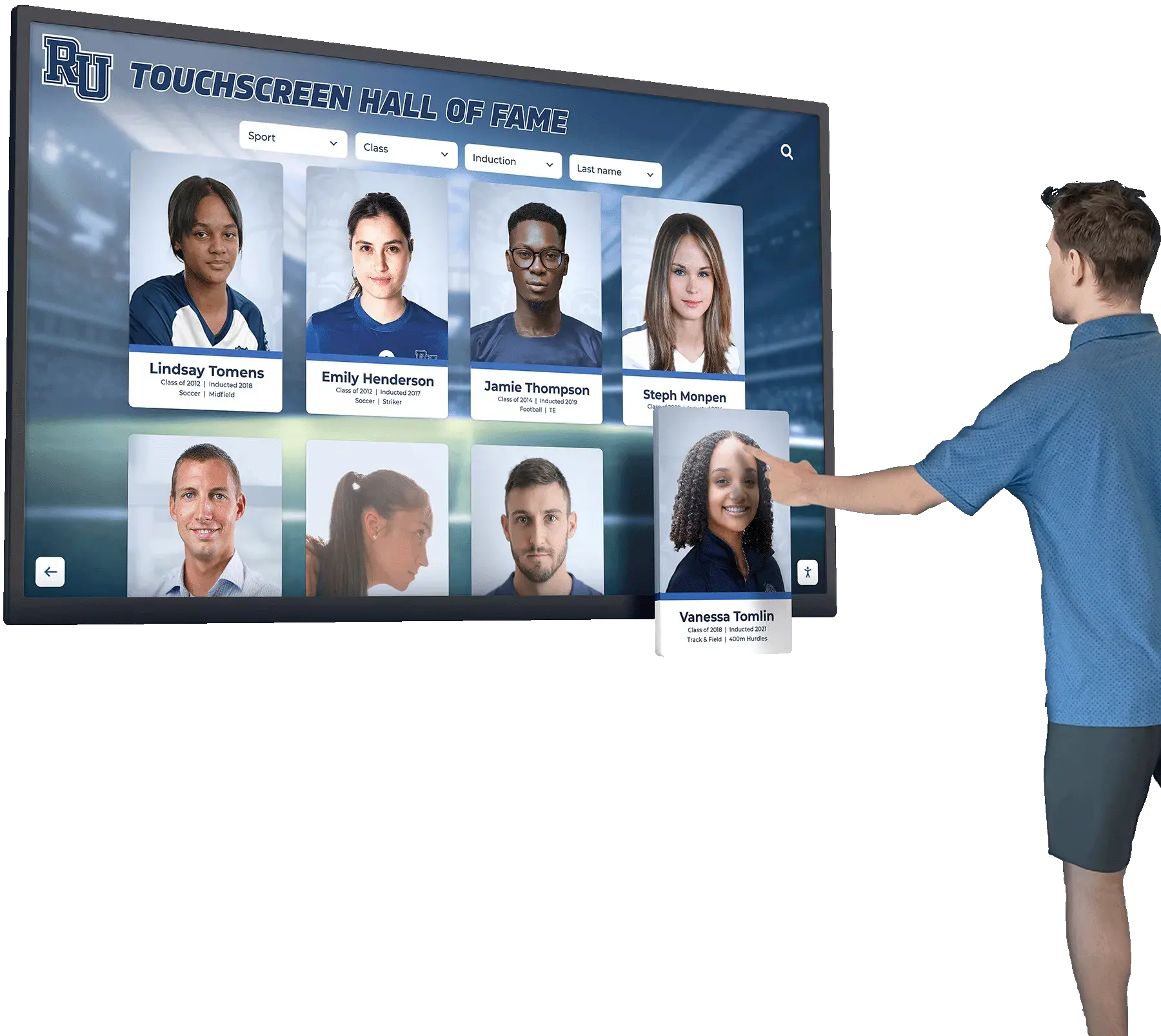
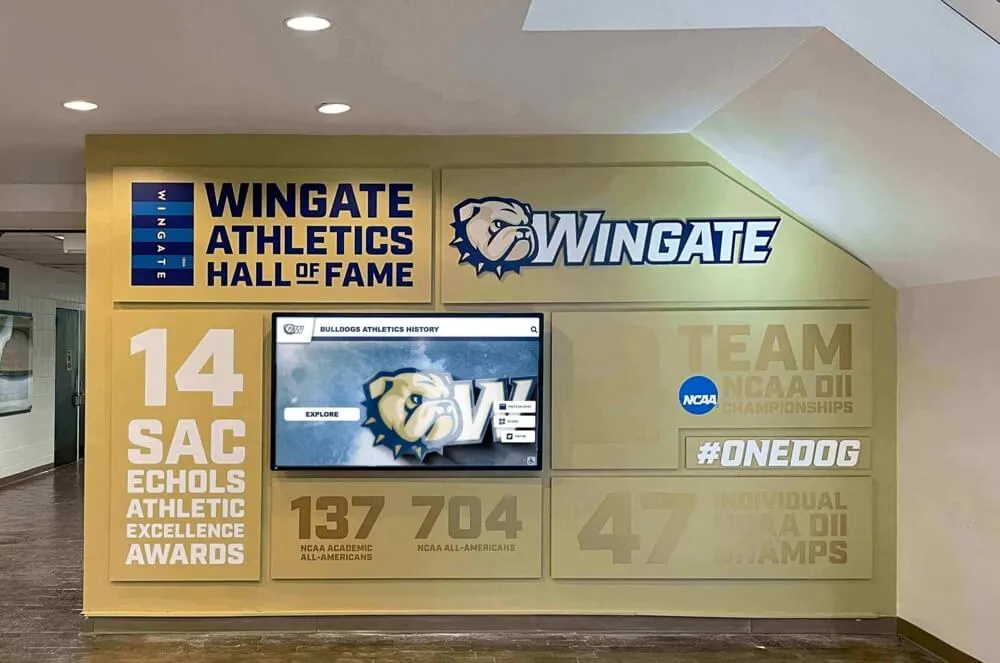
Sponsor recognition that links the game program to facility displays gives advertisers multiple visible touchpoints — from the printed page to the walls of the athletic facility
Pricing Game Program Ad Space
Pricing game program ad space is one of the areas where most schools either leave money on the table or lose sponsors by charging rates that feel arbitrary. Effective pricing is tied to two variables: the program’s circulation (how many copies are printed and distributed) and the estimated attendance at events where the program is distributed.
A Starting Framework for Ad Pricing
These baseline price ranges assume a typical high school program circulation of 300–1,500 copies per game. Adjust up or down based on your actual print run, attendance, and local market:
| Ad Size | Low Range | Mid Range | High Range |
|---|---|---|---|
| Full Page Interior | $150 | $300 | $500+ |
| Inside/Outside Cover | $300 | $500 | $800+ |
| Half Page | $100 | $175 | $300 |
| Quarter Page | $60 | $100 | $175 |
| Business Card (1/8 page) | $25 | $50 | $75 |
For programs distributed at multiple events — one master program used across an entire basketball season rather than a per-game edition — bundle the seasonal rate at a 15–25% discount compared to the per-game price multiplied by event count. A program distributed at 12 home games that charges $300 per game for full-page ads would price a season-long full-page placement at approximately $2,100–$2,700 rather than the arithmetic $3,600.
Season Packages Versus Per-Game Ads
Most booster clubs find season-long packages easier to sell and administer than per-game ad purchases. A business that commits to a full-season package appears in every program, which increases total impressions and simplifies administrative overhead. The primary trade-off is that season packages require a single program usable across all home events, which limits the ability to include event-specific content like individual game matchup details.
Schools that want to balance both approaches often produce a season-long program master with a removable insert for each specific game — the insert carries game-specific content while the main program (and its ads) stays consistent throughout the season.
Connecting ad pricing to a broader sponsorship tier structure creates a natural upsell path: a business that purchases a half-page game program ad can be offered a Gold sponsorship tier that bundles the program ad with additional recognition at events and on digital displays. This bundling increases average sponsor revenue per business and gives the school more flexibility to offer differentiated recognition.
For athletic programs building out a complete sponsor recognition inventory, reviewing how hall of fame tools and recognition displays function in athletic environments surfaces the full range of recognition options that can be bundled alongside game program ad purchases.
Designing Game Program Ads That Sponsors Want to Buy
The format and production quality of a game program directly affects how much sponsors are willing to pay. A professionally designed, well-printed publication signals that the school treats sponsor recognition seriously — and that the ad dollars spent will appear in a booklet fans actually read.
Design Guidelines for Program Ad Zones
Standardize ad zones across pages. Sponsors are more likely to commit when placement is predictable. A program with consistent ad positions — bottom of content pages, inside back cover, dedicated sponsor listing page — is easier to sell because the sponsor can visualize exactly where their ad will appear.
Use a clear bleed or margin specification. Establish whether your design allows full-bleed ads or requires a consistent white margin, and communicate this in the ad submission guidelines you send to sponsors. Inconsistency here causes costly reprints.
Request print-ready files in writing. A sponsor’s logo at screen resolution (72 dpi) produces a blurry printed ad. Build an ad submission checklist that requests files at 300 dpi minimum, in PDF, EPS, or AI format with embedded fonts. A blurry ad is not just embarrassing — it gives the sponsor a legitimate reason to question the value of renewing.
Offer a simple design template. Many local businesses — particularly those new to print advertising — do not have a ready-made layout for a half-page program slot. Providing a template or a referral to a local print shop that can design to your specifications removes a barrier to purchase and reduces last-minute production problems.
Schools that want to understand how print program recognition integrates with broader athletic and academic recognition systems can find useful frameworks in guides to academic recognition programs — the principles of structured, visible, and documented recognition apply whether the medium is print or display.
Game Program Ad Pitfalls to Avoid
Several common mistakes consistently undermine game program ad revenue:
Pricing based on need rather than value. Setting a full-page ad at $500 because the program needs to raise $3,000 for new uniforms — rather than because a full-page ad in a 1,000-copy program genuinely delivers that value — creates sponsor skepticism. Price based on what you are offering, not what you need.
Too many ad size options. Programs with seven or eight different sizes create decision paralysis for sponsors and production complexity for designers. Three to four options (full page, half page, quarter page, business card) cover nearly every need.
Collecting artwork late. A sponsor who misses the design deadline either produces a blank space in the program or delays printing. Set a firm artwork deadline two to three weeks before the first event and hold it.
No fulfillment documentation. A sponsor who paid for a quarter-page ad should receive confirmation that their ad appeared — ideally a photo of the printed program open to their page, sent with a season-end thank-you. This one step is among the highest-leverage activities for improving renewal rates at any program size.
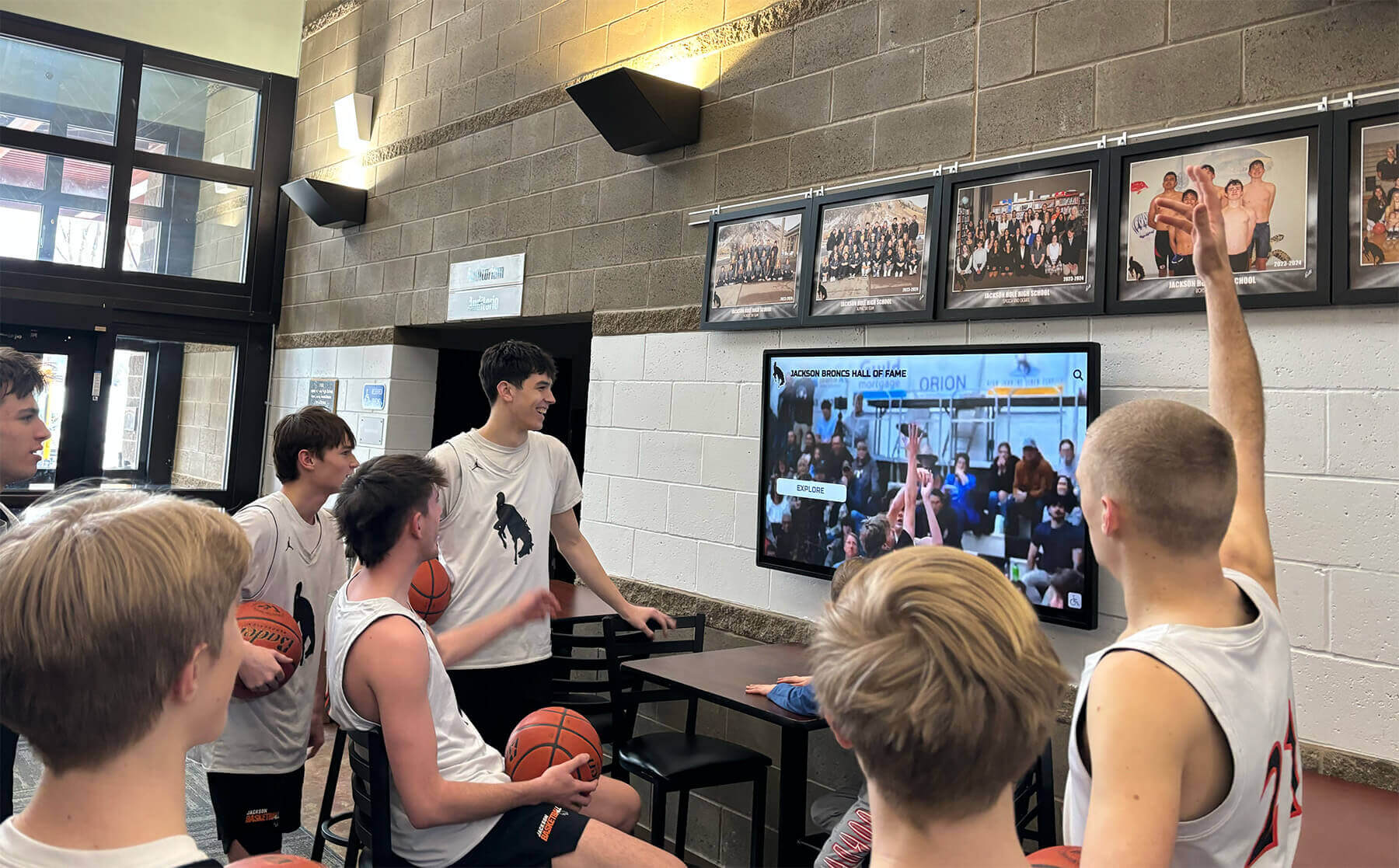
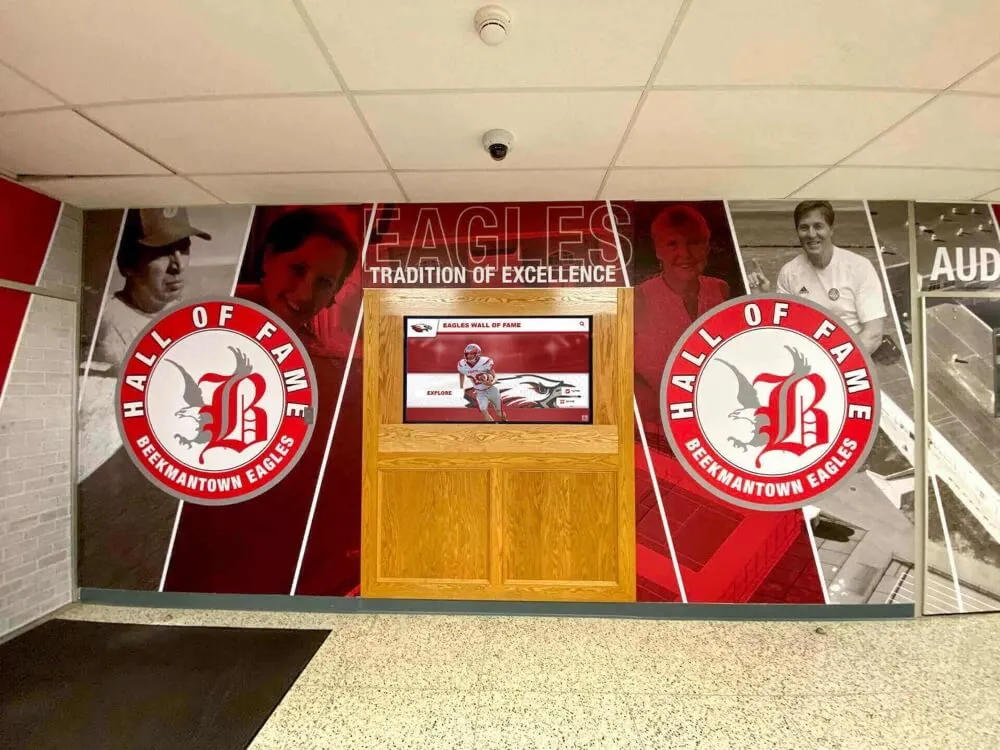
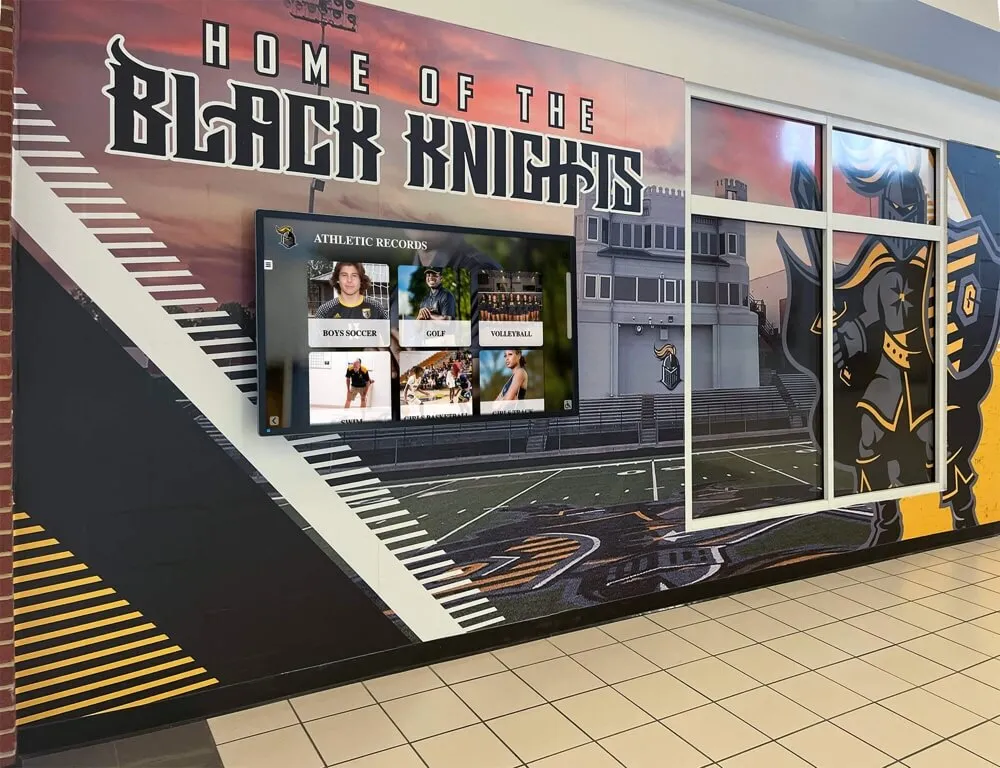
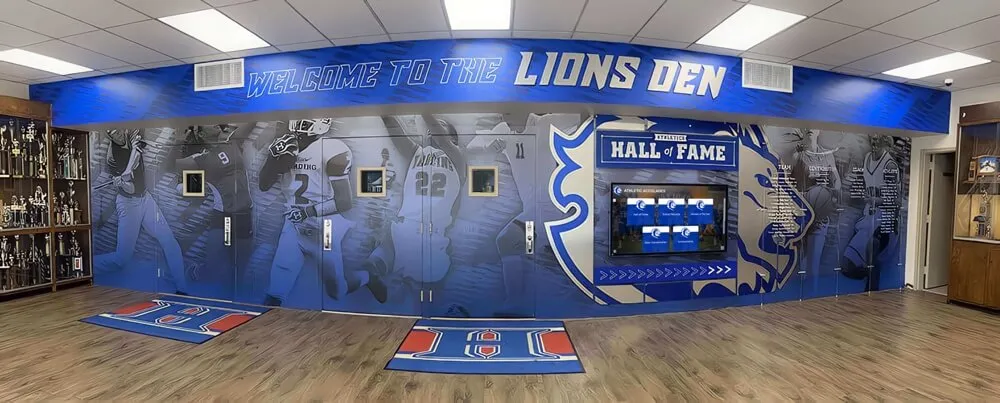
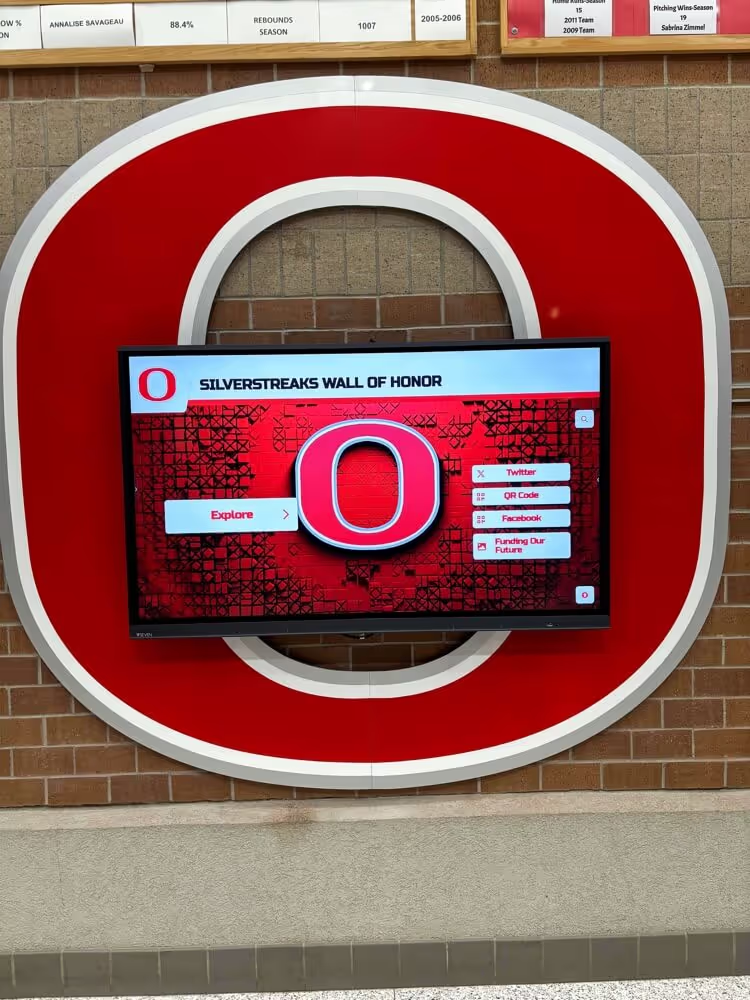
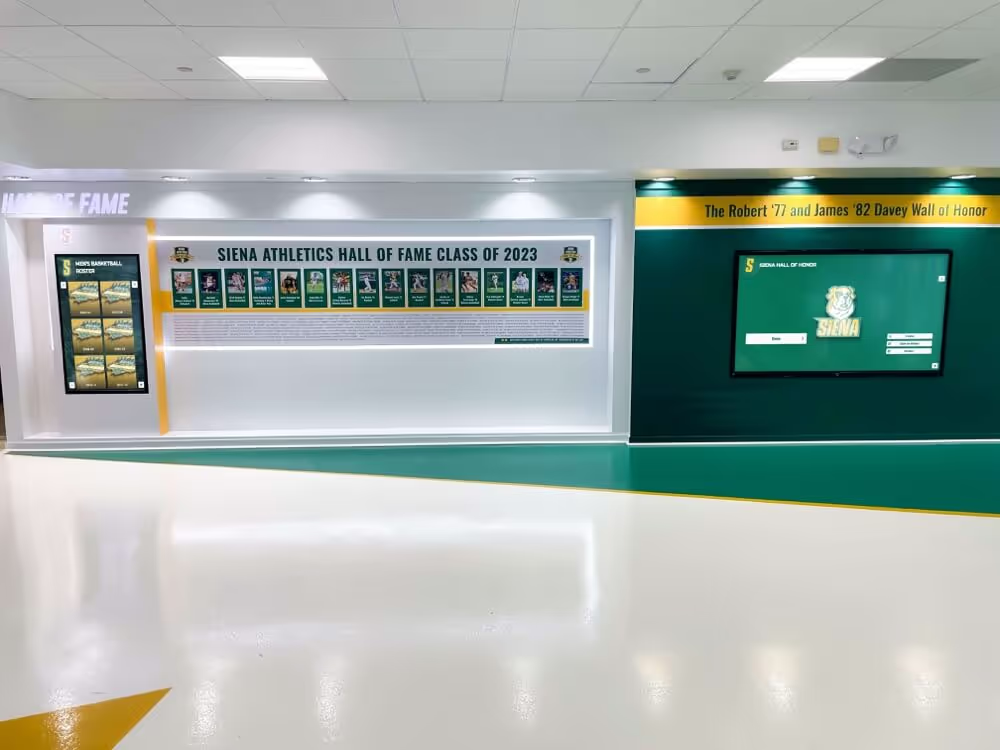
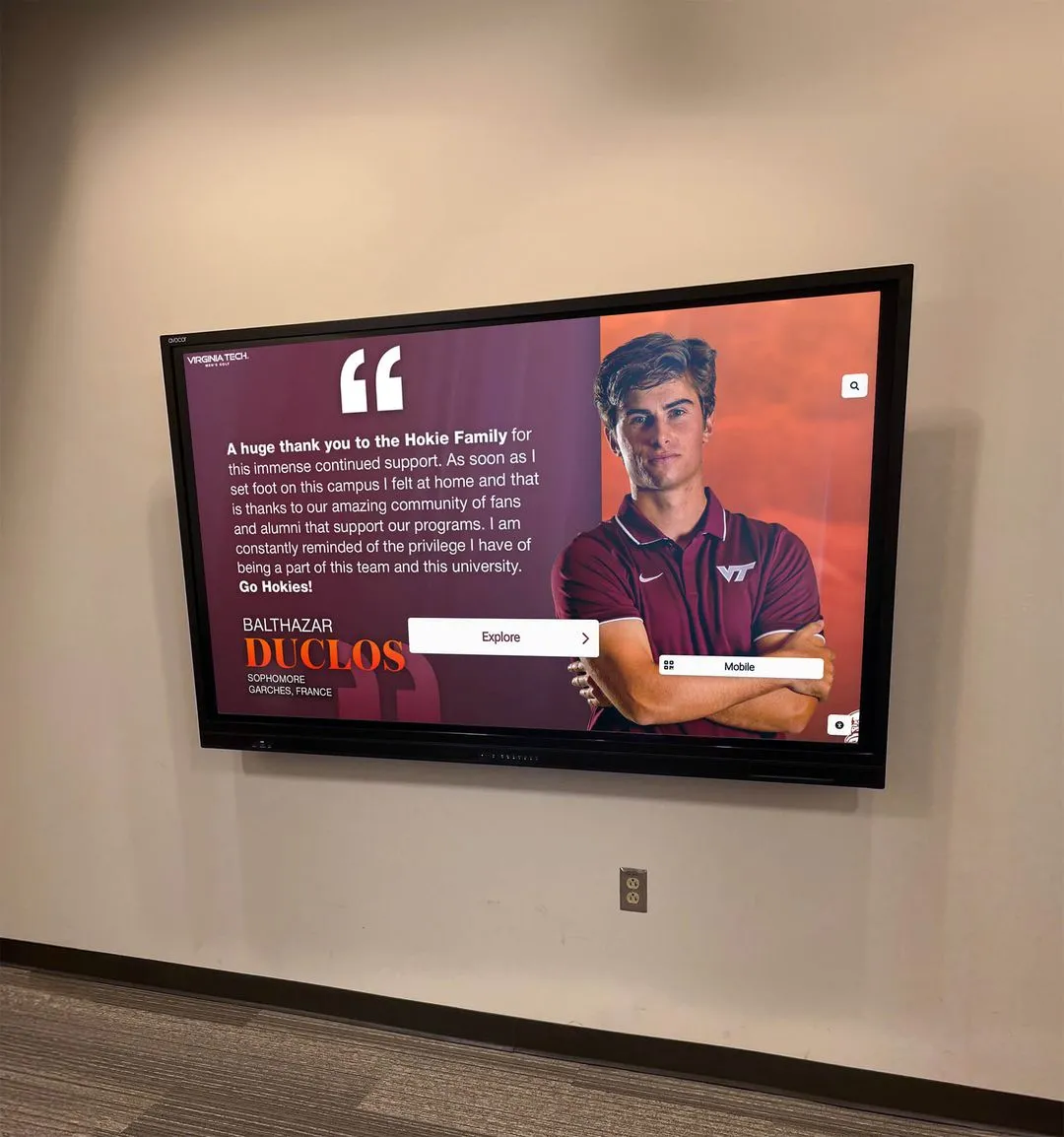
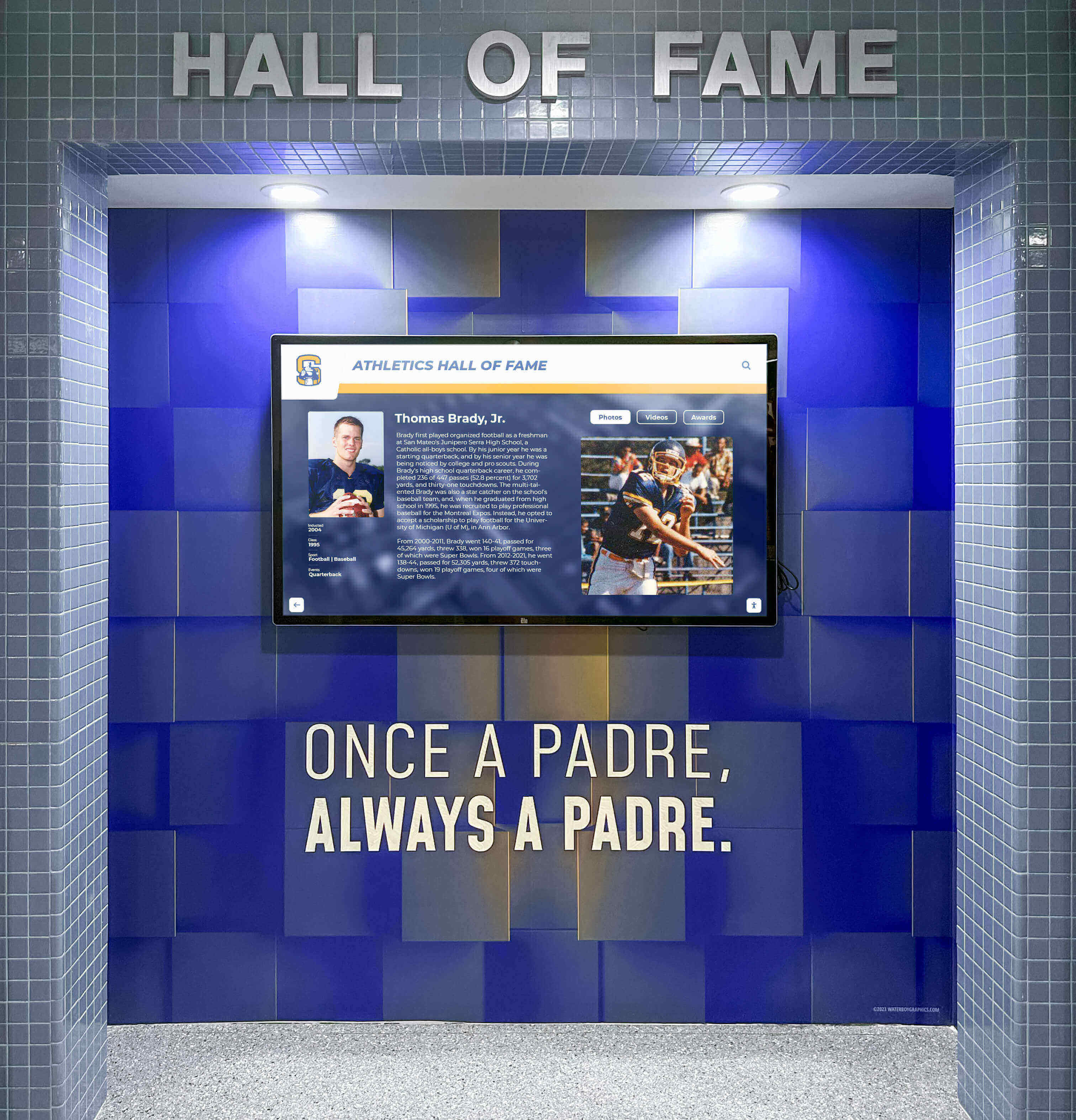
Athletic lobbies with digital displays extend game program ad recognition beyond the printed page — giving sponsors year-round visibility in the same facility environment where events are held
Connecting Game Program Ads to Year-Round Sponsor Recognition
The most important limitation of game program advertising is rarely mentioned in the sales pitch: printed programs are distributed at events and then largely forgotten. A fan might keep the schedule page; the ad section rarely survives the season. A sponsor who paid $300 for a half-page ad seen by 600 people at a November game received real value — but that value evaporated the moment the program was recycled.
Schools that build strong, renewable sponsorship programs treat the game program ad as one component of a recognition package, not the whole offering. Pairing program ad purchases with facility recognition — a digital display rotation, a sponsor board in the lobby, public acknowledgment at events — creates a recognition experience that outlasts any single printed issue.
How Digital Displays Extend Program Ad Value
A school with a digital display in the athletic lobby or corridor can offer sponsors something no printed program delivers: persistent, year-round visibility that is active every day the facility is open, not just on event nights. According to the Digital Signage Federation, digital displays in active public spaces can reach upwards of 70% of people who pass by — a significantly higher capture rate than static signage or print materials competing for attention in event environments.
When a game program ad is paired with a digital display rotation, the sponsor’s brand appears:
- In the printed program at every home game (300–1,500 impressions per game)
- On the facility digital screen daily during the school year (student, staff, and visitor impressions every weekday)
- In any lobby touchscreen sponsor profile the school maintains year-round
That combination of print-plus-digital recognition is meaningfully harder to walk away from at renewal time than a program ad in isolation.
For schools evaluating how digital displays work alongside print recognition, reviewing what a school digital display looks like in daily practice provides a practical picture of how screens fit into the life of an athletic facility — and how sponsor recognition integrates naturally into that environment.
Schools with hall of fame programs or athletic award traditions can extend sponsor recognition into those contexts as well. Understanding the best hall of fame recognition tools for athletics and donors reveals how digital recognition platforms create environments where sponsor acknowledgment sits alongside athlete recognition — increasing the perceived prestige of the sponsor relationship beyond advertising.
For athletic programs running year-end banquets or student recognition events, connecting game program advertisers to youth sports recognition approaches creates opportunities to acknowledge sponsors publicly in contexts that reinforce their community investment — not just their advertising purchase.
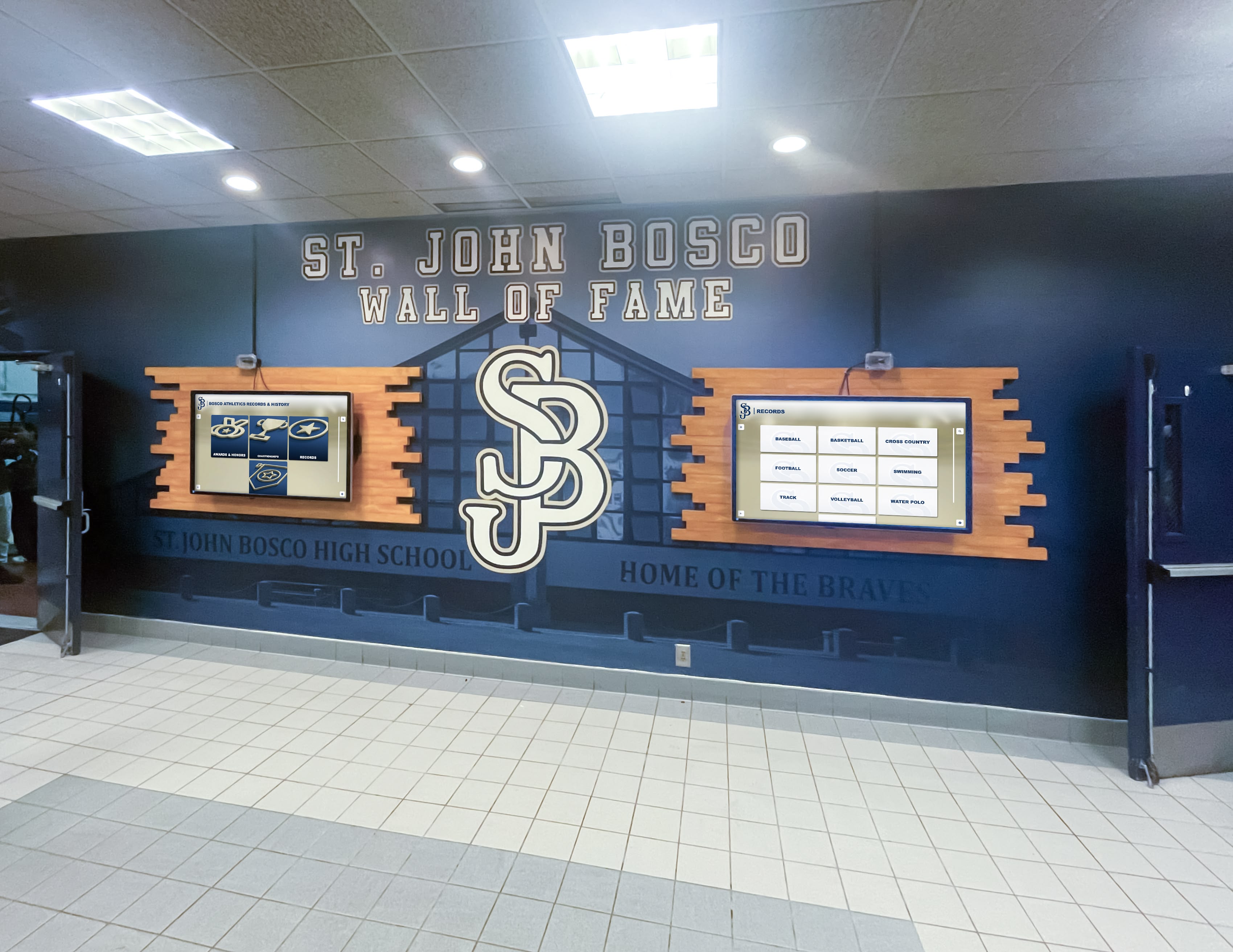
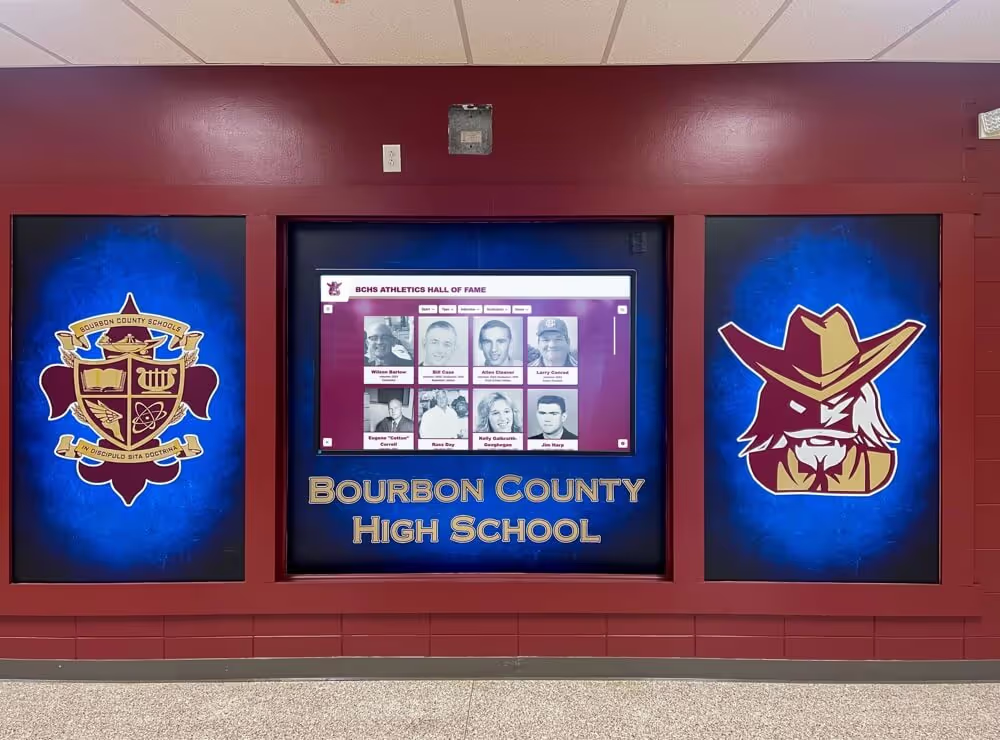
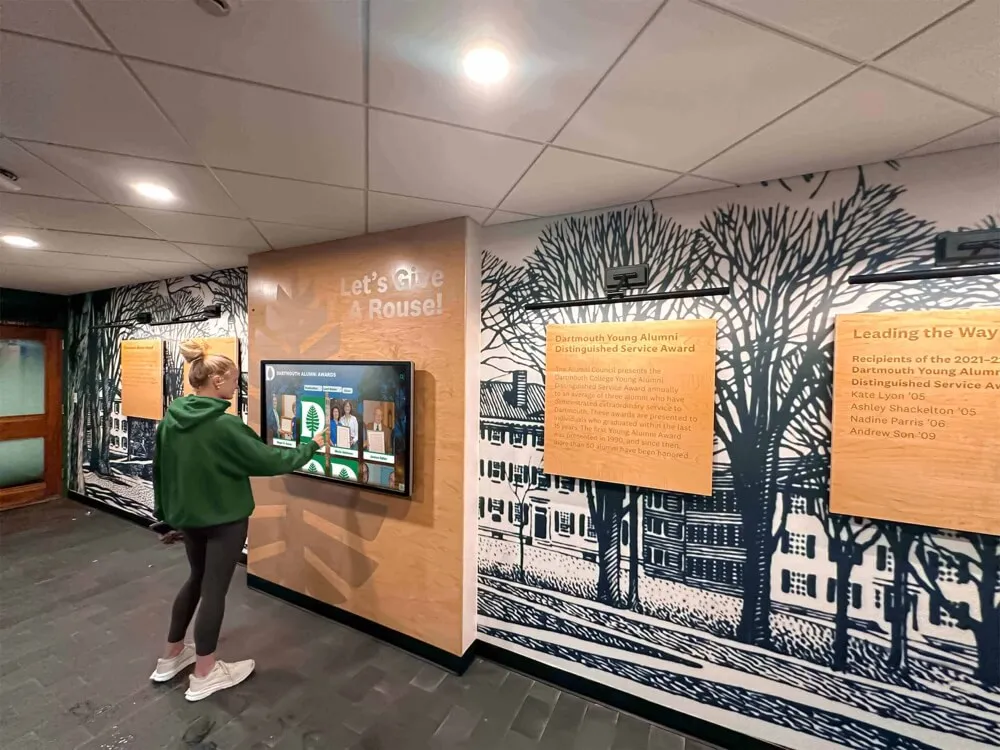
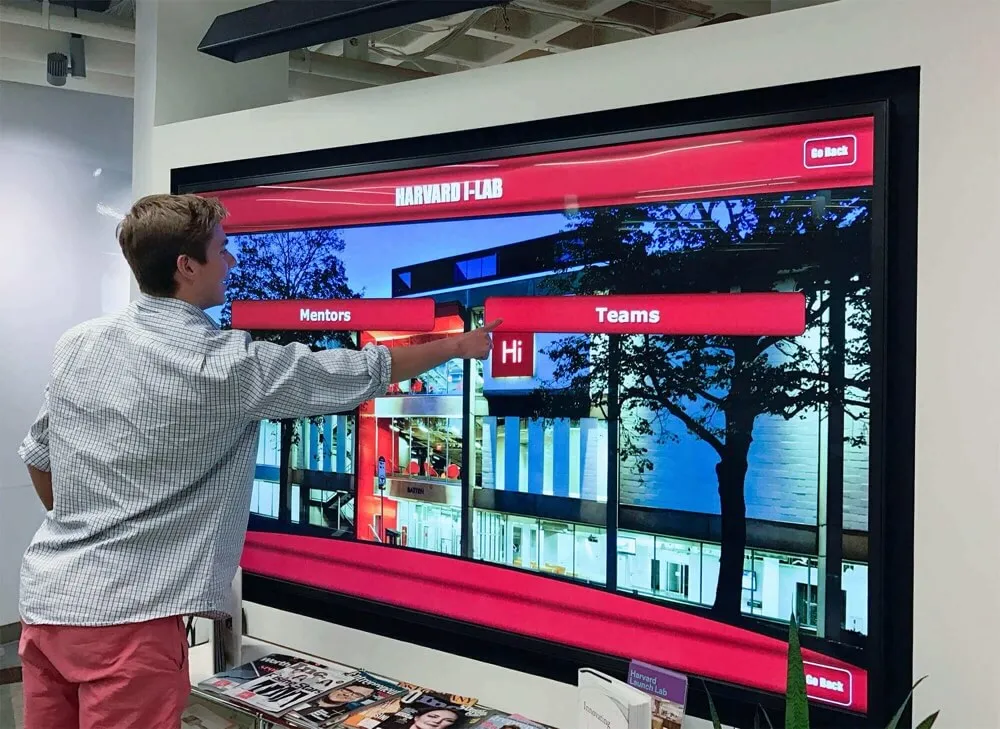
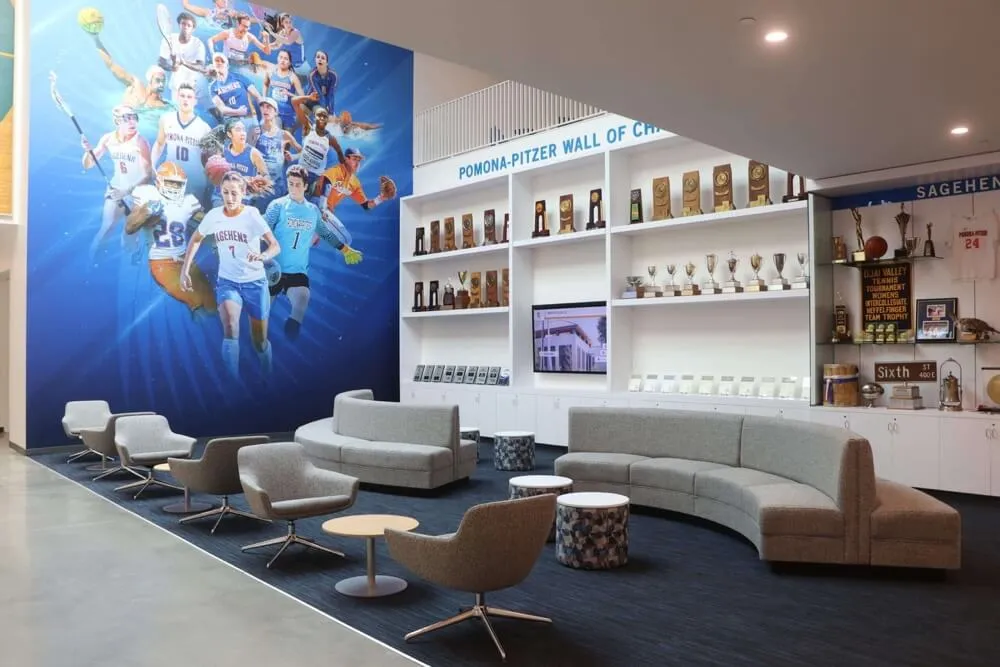
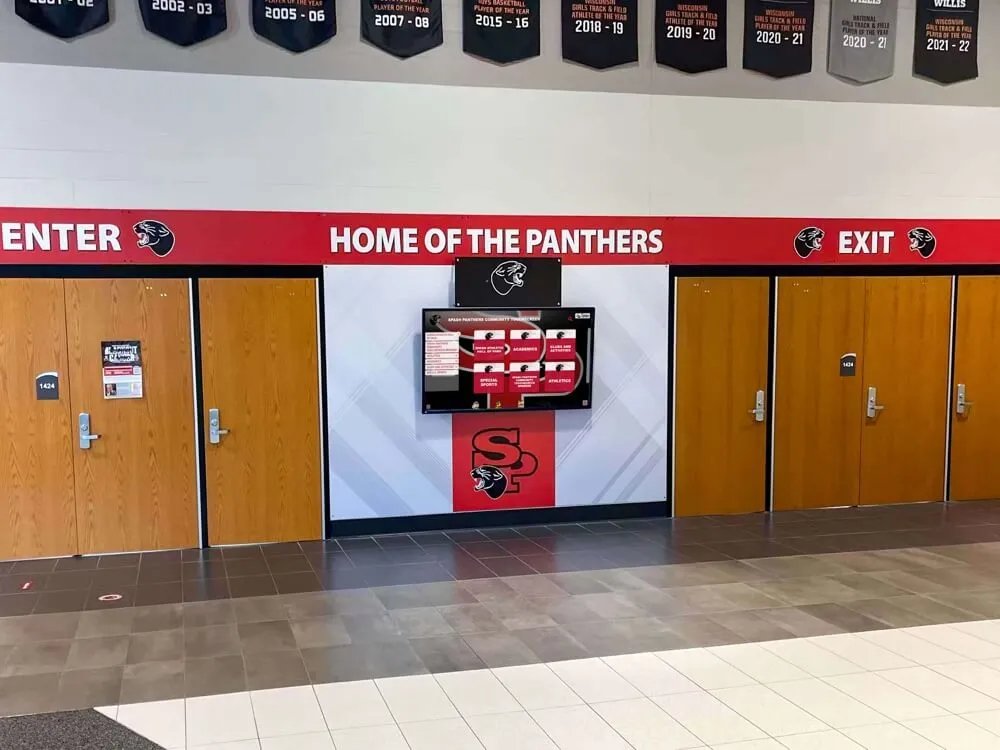
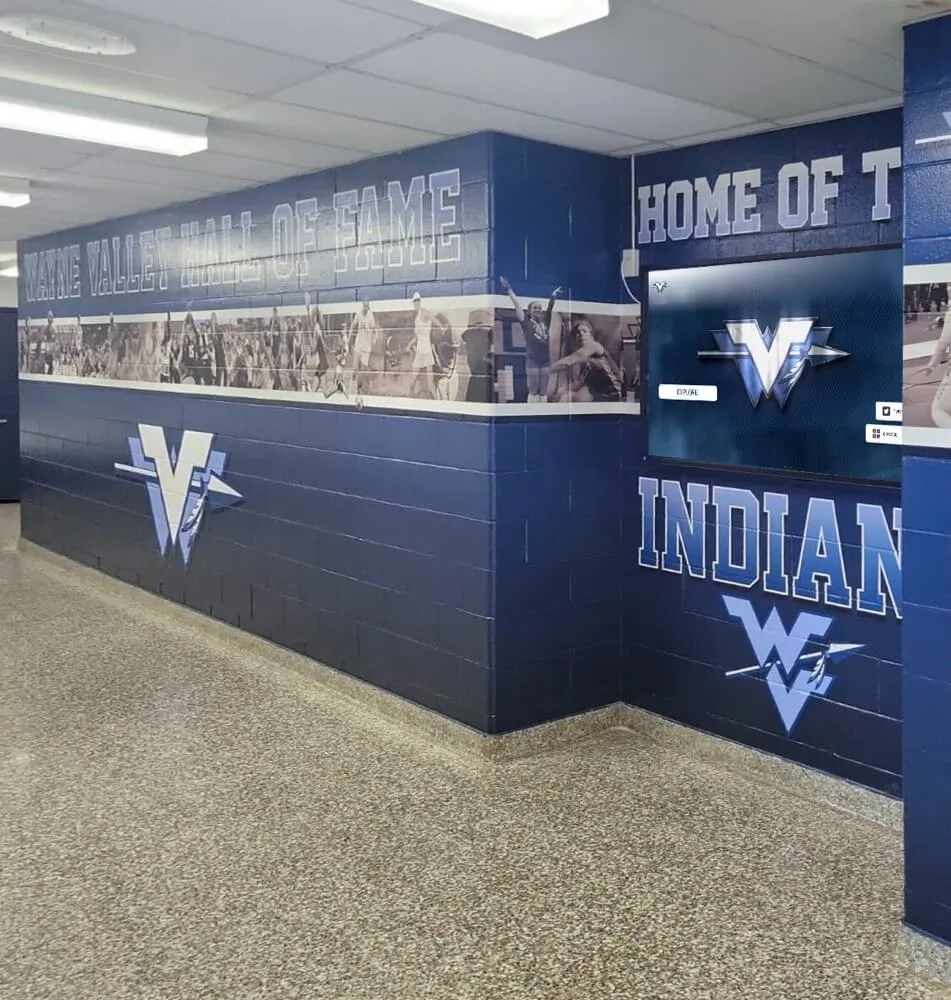
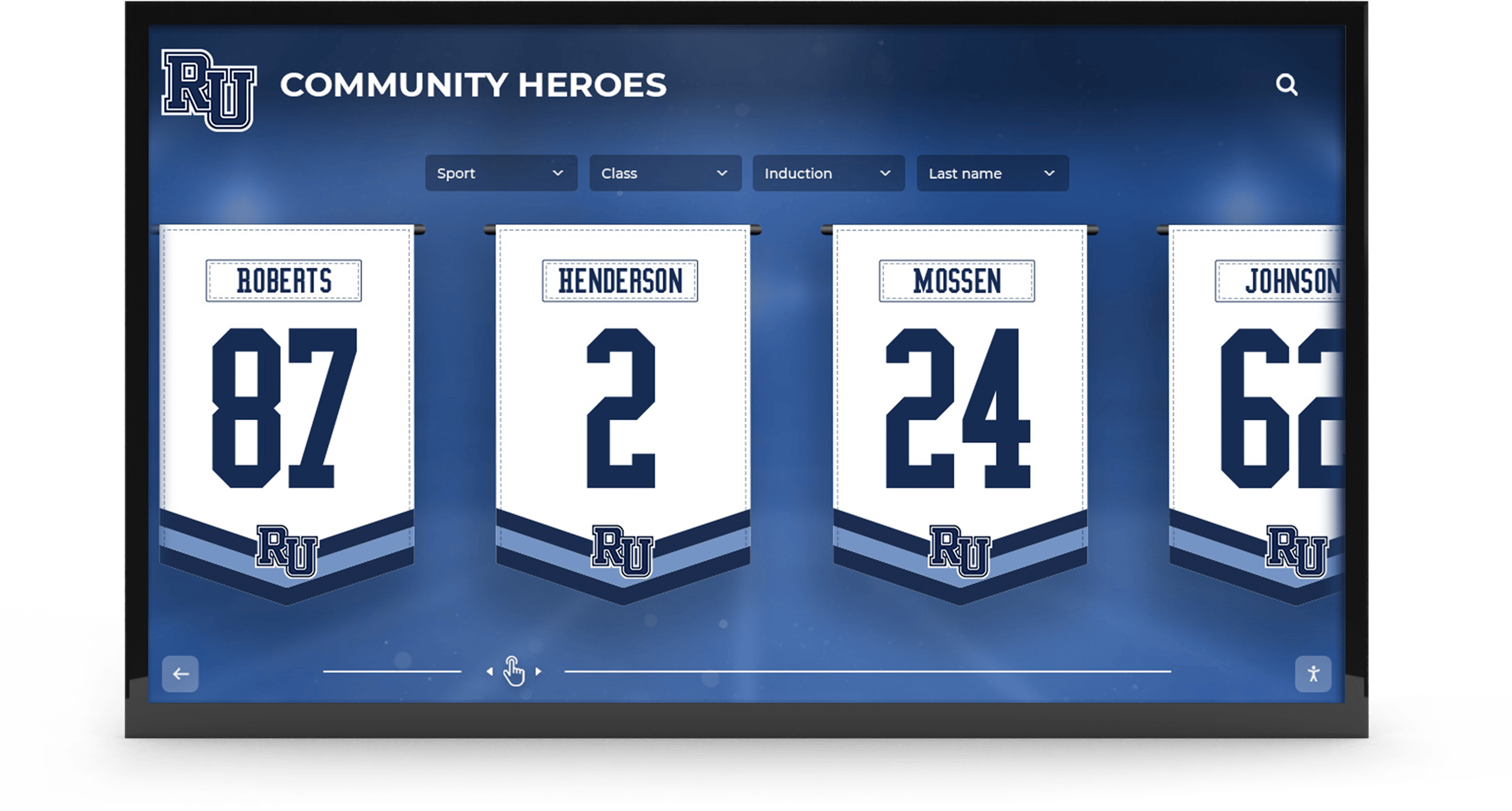
Facility recognition systems that include sponsor names alongside athlete and program honors create environments where business supporters feel part of the school's legacy — not just purchasers of advertising space
Building a Written Game Program Advertising Policy
A written advertising policy protects the school, sets clear expectations for sponsors, and makes the program easier to administer consistently across staff and seasons. Key elements to document:
Eligibility guidelines. Most schools prohibit ads from businesses that conflict with school values (alcohol, tobacco, gambling) or from competitors of existing title sponsors. State eligibility criteria explicitly so ineligible inquiries can be declined without awkwardness.
Pricing schedule. Post the pricing schedule with each ad size, dimensions, and cost. Make it easy for interested businesses to self-select a tier without negotiation.
Artwork requirements. Minimum resolution (300 dpi), accepted file formats (PDF, EPS, AI, high-resolution PNG), and the firm submission deadline.
Approval process. Define who reviews ad content before it appears in print and the timeline for that review. For schools affiliated with public districts, this may involve administrator sign-off.
Payment terms. Collect payment with the signed agreement rather than after the event. Per-event payment terms common in commercial advertising rarely work for school booster programs.
Renewal terms. Returning sponsors who renew before a specified date retain their placement position. Priority renewal for existing advertisers is one of the most effective retention incentives a program can offer.
Cancellation policy. If a sponsor cancels after the artwork deadline, payment is non-refundable. State this clearly in the agreement to avoid disputes.
A clear policy document distributed at the time of solicitation communicates organizational competence — and that makes businesses more confident in committing, not less.
For schools thinking about how print sponsor recognition at events connects to longer-term recognition culture, the principles behind high school academic achievement recognition translate directly to athletic sponsorship: structured, documented, and treated as a genuine honor rather than a transactional exchange.
Ready to Give Game Program Sponsors Year-Round Visibility?
Rocket Alumni Solutions builds interactive digital recognition systems for school athletic facilities — giving programs a professional platform to extend game program ad recognition beyond the printed page. Sponsors see their acknowledgment every day the facility is open, not just on game nights.
Explore Digital Sponsor Recognition OptionsFrequently Asked Questions About Game Program Ads
What are game program ads?
Game program ads are paid advertisement placements purchased by local businesses and community organizations inside printed game-day programs distributed at school athletic events. They provide local businesses with paid visibility in front of event attendees — typically families, alumni, students, and community members — in exchange for revenue that covers the school’s program printing costs and generates net income for the athletic program. Standard sizes include full page, half page, quarter page, and business card (1/8 page), with pricing based on ad size and program circulation.
How much should a school charge for game program advertising?
Game program ad pricing should reflect circulation size and event attendance. For typical high school programs printing 300–1,500 copies per game, standard ranges are: business card $25–$75, quarter page $60–$175, half page $100–$300, full page interior $150–$500, and inside/outside cover placements $300–$800+. Programs distributed across multiple events should bundle the seasonal rate with a 15–25% discount from the per-game price multiplied by event count. Cover positions (back cover, inside covers) typically command a 20–40% premium over standard interior full-page rates.
What sizes do game program ads come in?
Standard game program ad sizes for school athletic programs in 8.5×11 inch format include: full page (8.5×11 in), horizontal half page (8.5×5.5 in), vertical half page (4.25×11 in), quarter page (4.25×5.5 in), and business card or 1/8 page (approximately 3.5×2 in). Cover positions (inside front, inside back, back cover) are full-page premium placements that command higher rates. Most programs offer three to four standard sizes to minimize production complexity and avoid decision paralysis for sponsors.
How do schools get local businesses to buy game program ads?
Schools generate game program ad sales most effectively through direct, personalized outreach to businesses whose customer base overlaps with athletic event attendees — family-oriented businesses, local restaurants, healthcare providers, home services companies, and alumni-owned businesses near the school. The pitch should lead with audience numbers (estimated seasonal attendances), not the school’s financial need. Offering a tiered menu of ad sizes with clear pricing, a simple artwork submission process, and proof-of-fulfillment documentation (a photo of the printed program showing their ad) makes the purchase decision easier and significantly improves renewal rates.
How can schools make game program sponsor recognition last beyond the event?
Schools extend game program sponsor recognition beyond the printed page by pairing program ad purchases with facility-based recognition: digital display rotation in the athletic lobby or corridor, placement on a sponsor recognition board, and acknowledgment at events through PA announcements. Digital displays are particularly effective because they run year-round — every day the facility is open — delivering sponsor impressions throughout the school year compared to the 300–1,500 event-night impressions a printed program delivers. A season-end fulfillment summary with attendance data and a photo of the program’s ad page is the single highest-leverage step most programs can take to improve renewal rates.
Turning Game Program Ads Into a Sustainable Revenue Source
A school athletic program that treats its game program as a professionally managed publication — with consistent pricing, a clear ad menu, documented fulfillment, and a complement of digital recognition that extends sponsor visibility beyond the printed page — can generate meaningful, renewable revenue from local businesses year after year.
The programs that succeed long-term are not necessarily the ones with the most wins or the largest schools. They are the ones whose sponsors can see exactly what they are getting, receive proof of delivery, and are approached for renewal with documented return on investment rather than a new fundraising ask.
Game program ads are a starting point. Combined with facility digital recognition, event acknowledgment, and year-round sponsor presence in the athletic environment, they become the visible anchor of a partnership that grows with each season.
Extend Sponsor Recognition Far Beyond the Printed Program
Rocket Alumni Solutions builds digital recognition displays for school athletic facilities — giving game program advertisers year-round visibility that no printed publication can match. Interactive touchscreens, digital sponsor walls, and lobby display systems keep community partners recognized every day the facility is open.
Request a Demo of Digital Sponsor Recognition