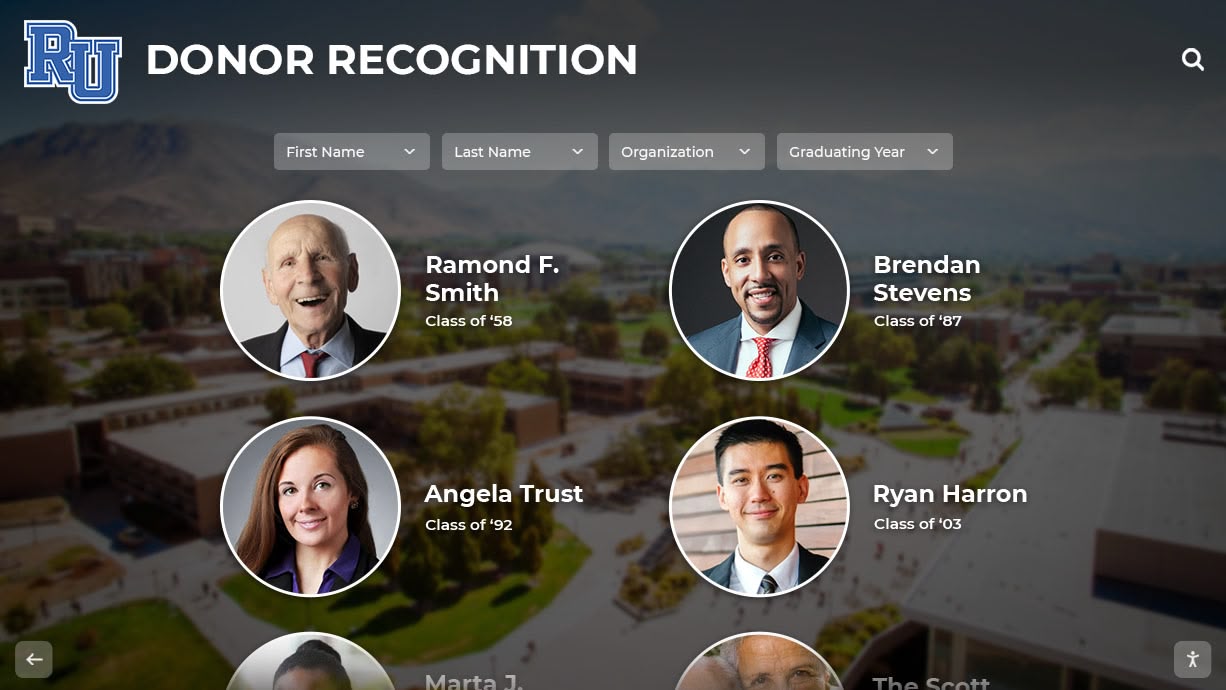




Schools and universities seeking meaningful ways to honor their most generous supporters face a critical decision: how to create donor recognition displays that appropriately celebrate philanthropy while inspiring continued giving from existing contributors and motivating new donors to join established communities of supporters. Outdated approaches featuring cluttered brass plaques or neglected donor boards hidden in forgotten hallways fail to deliver the emotional impact that drives sustained fundraising success.
The most effective donor wall ideas balance visual prominence with authentic gratitude, combining strategic placement in high-traffic locations with thoughtful design elements that honor individual contributors while showcasing collective community impact. Modern educational institutions are moving beyond one-size-fits-all recognition toward creative approaches that reflect institutional character, accommodate diverse giving levels, and create memorable experiences that strengthen donor relationships for decades.
This comprehensive guide explores thirty proven donor wall ideas educational institutions successfully implement, from traditional approaches with contemporary updates to cutting-edge digital solutions that transform recognition into engagement. You’ll discover strategies for every budget, space constraint, and institutional culture—plus practical insights into what makes recognition displays truly inspire continued philanthropic support.
Meaningful donor recognition serves dual purposes: acknowledging existing contributions with appropriate gratitude while creating aspirational environments that inspire prospective donors to envision themselves among honored supporters. The most successful donor walls achieve both objectives through strategic design choices aligned with institutional values and donor preferences.

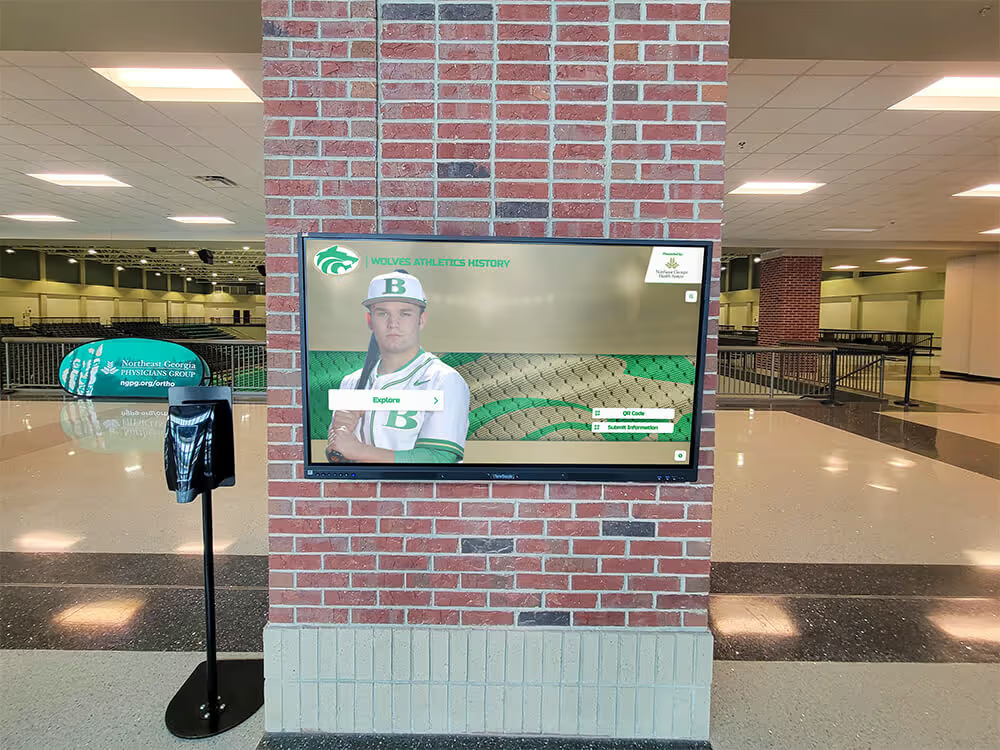
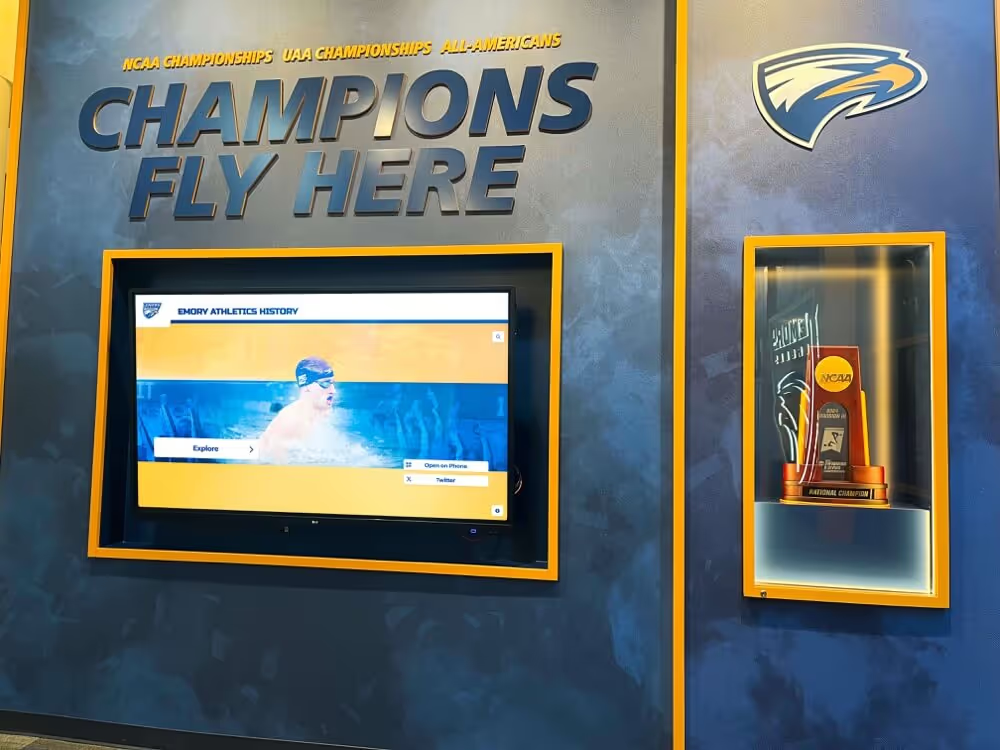
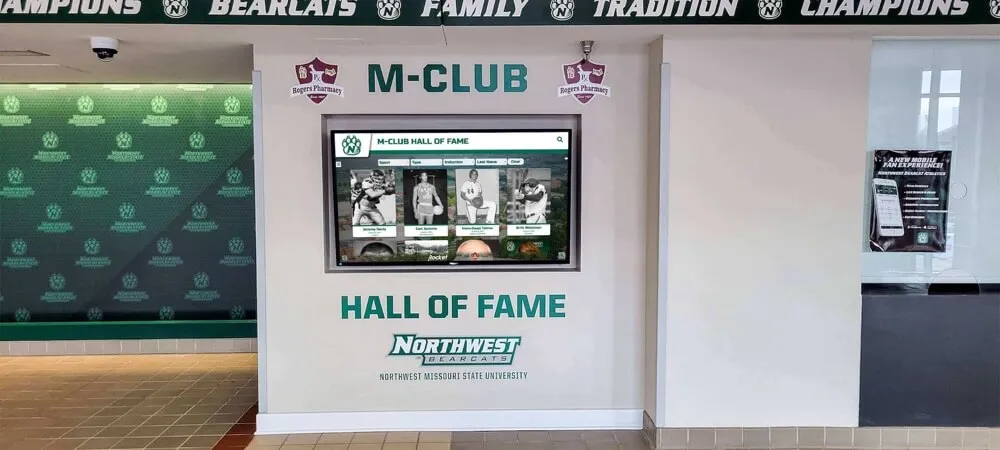
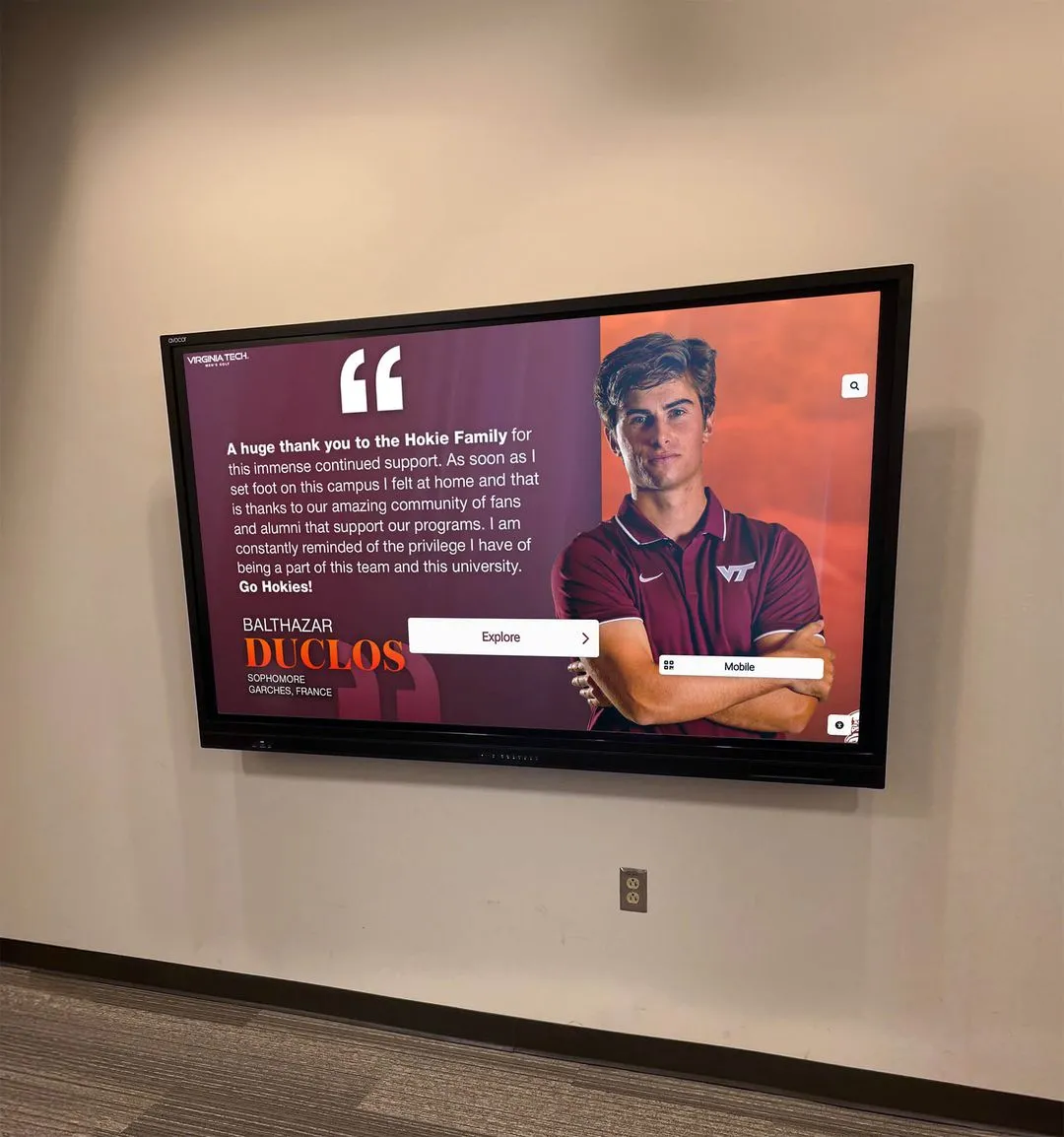
Effective donor walls combine prominent placement with thoughtful design that honors contributions while inspiring future giving
Traditional Donor Wall Ideas with Contemporary Updates
Classic recognition approaches remain popular when executed with modern materials, professional design, and strategic enhancements that elevate familiar formats beyond generic implementations.
1. Tiered Bronze Plaque Recognition System
Multi-level bronze plaque walls organize donors into giving society tiers with visually distinct plaque sizes reflecting contribution ranges. Leadership donors receive prominent large-format plaques positioned at eye level, while supporting donors appear in smaller formats creating visual hierarchy that honors every contributor appropriately. Contemporary implementations use museum-quality mounting systems with precise alignment and incorporate architectural lighting that adds prestige while ensuring visibility in varied conditions.
2. Engraved Marble or Granite Recognition Walls
Natural stone donor walls create permanent, prestigious recognition with inherent durability and timeless aesthetic appeal. Polished granite or marble panels featuring laser-engraved donor names provide elegant acknowledgment that never fades, chips, or discolors. Leading institutions position stone recognition walls in main building lobbies or campaign-specific facilities, with annual additions accommodated through modular panel systems allowing seamless expansion as donor communities grow.
3. Donor Brick Pavers and Walkways
Engraved brick pathways enable broad participation recognition at accessible price points while creating functional landscaping elements. Schools install donor brick walkways connecting parking areas to main entrances, surrounding athletic facilities, or creating courtyards where families gather. Individual 4x8 or 8x8 inch bricks feature donor names or brief messages, with contribution levels sometimes indicated through brick size variations or special positioning within pathway designs.
4. Architectural Naming Opportunities Wall
Dedicated displays showcasing major donor naming gifts for buildings, rooms, scholarships, and programs create aspirational recognition environments. These walls typically combine professional architectural photography of named spaces with donor acknowledgment plaques and impact statements explaining how contributions support institutional missions. The format proves particularly effective during capital campaigns, demonstrating available naming opportunities while celebrating leadership philanthropy already committed.
5. Glass Etching and Frosted Glass Recognition
Architectural glass installations featuring etched or sandblasted donor recognition add sophisticated elegance while maximizing natural light. Floor-to-ceiling glass walls positioned in lobby areas display donor names through precision etching techniques, creating subtle yet prestigious acknowledgment visible from both sides. This approach works especially well in contemporary campus architecture emphasizing transparency and light, with donor recognition integrated seamlessly into building design rather than appearing as afterthought additions.
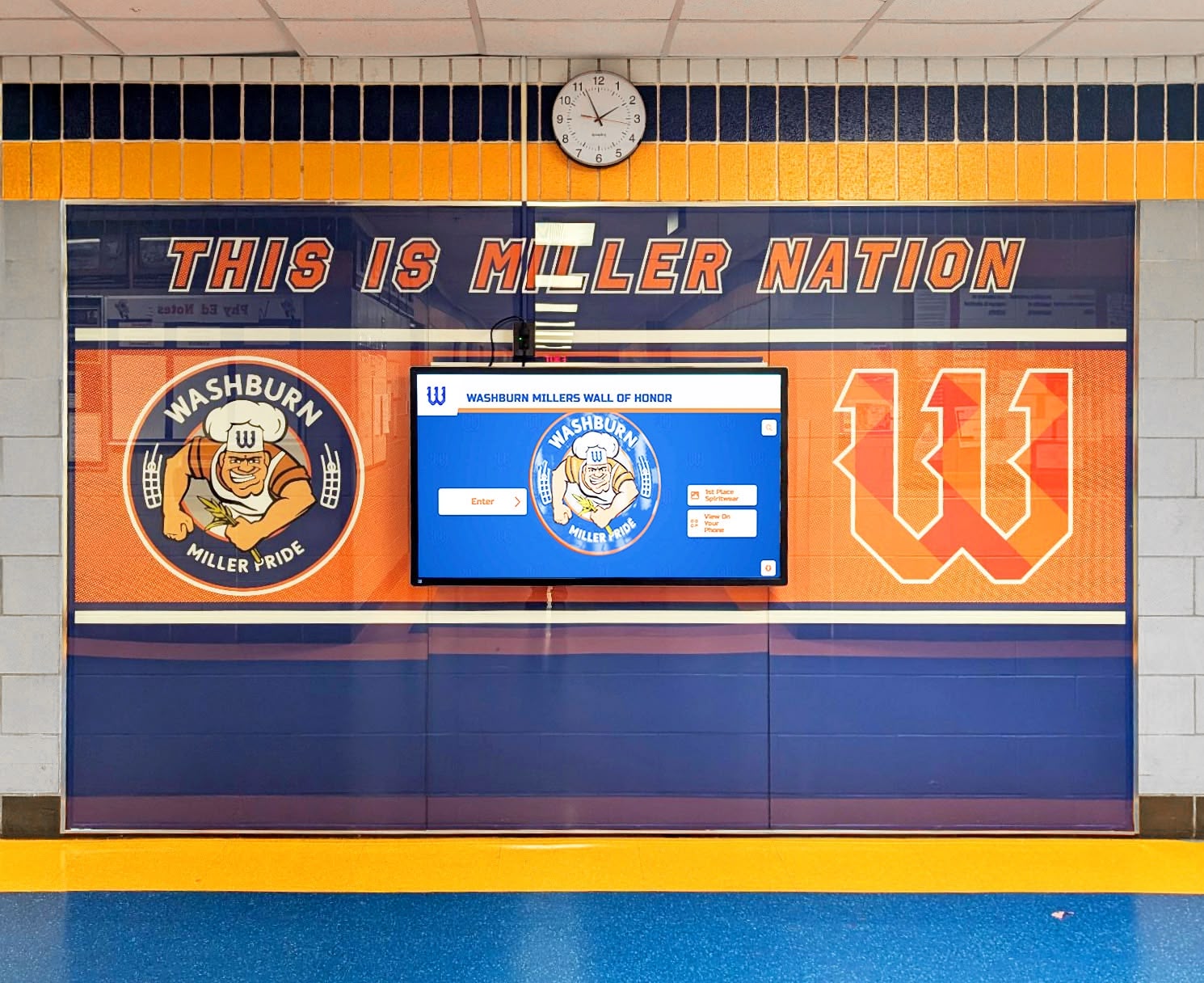
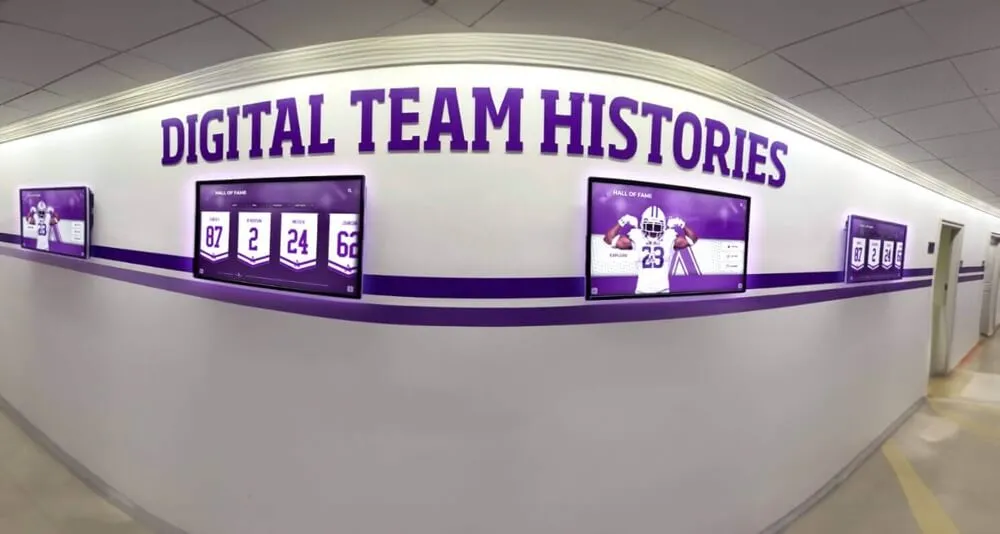
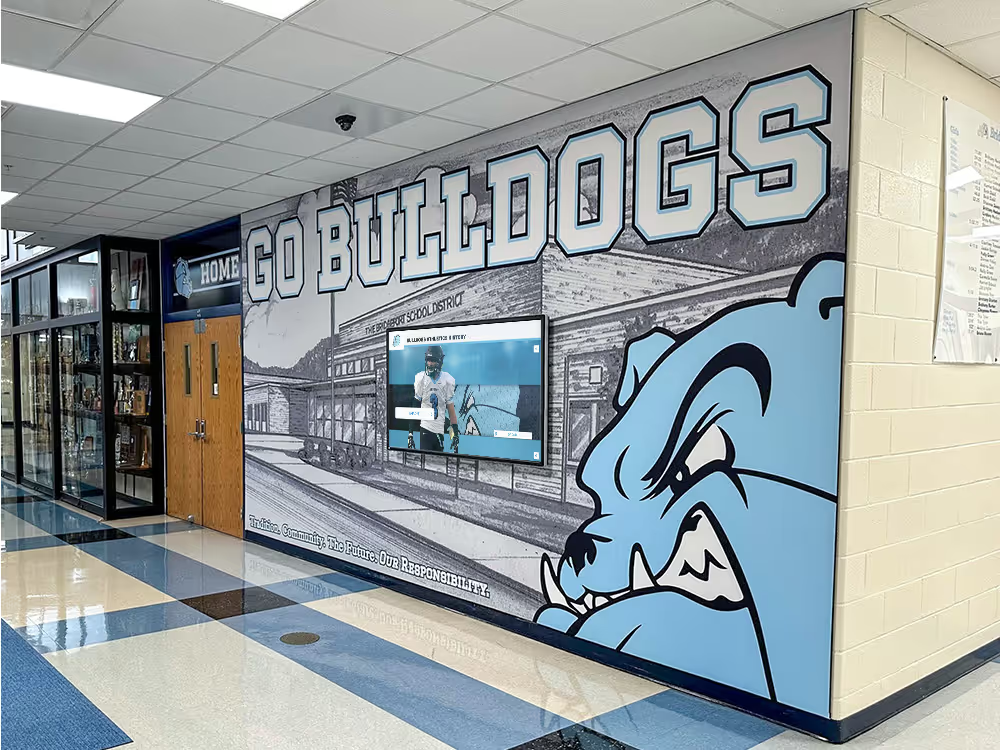
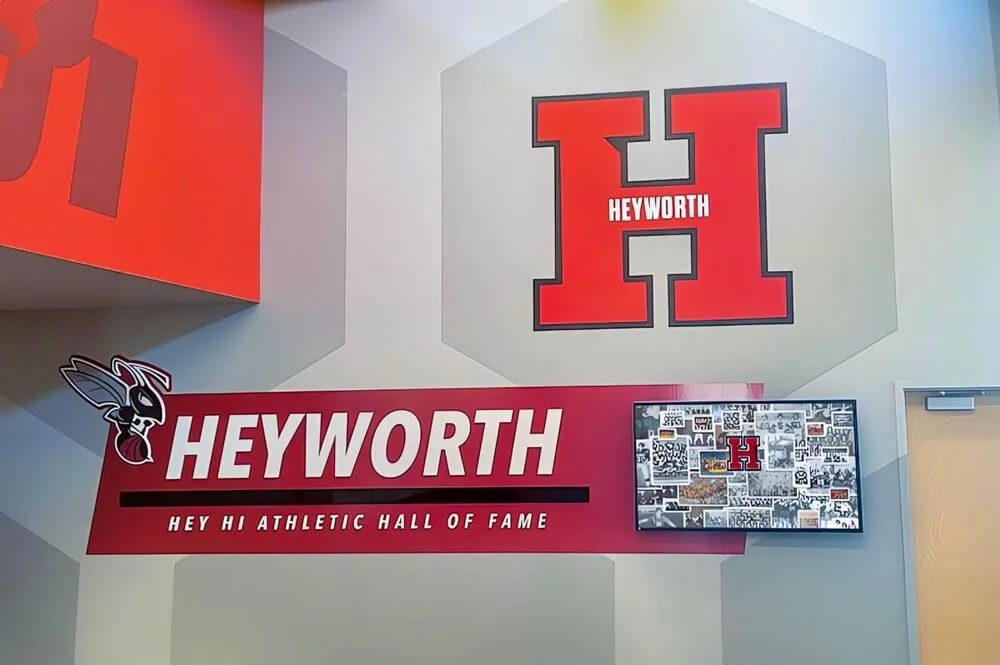
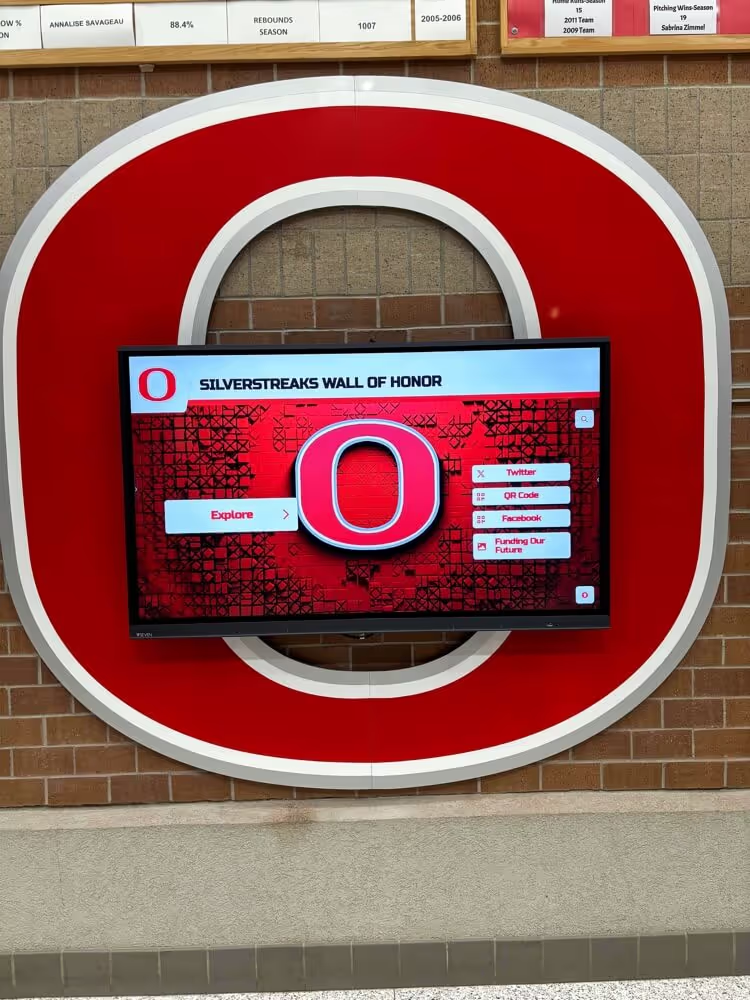
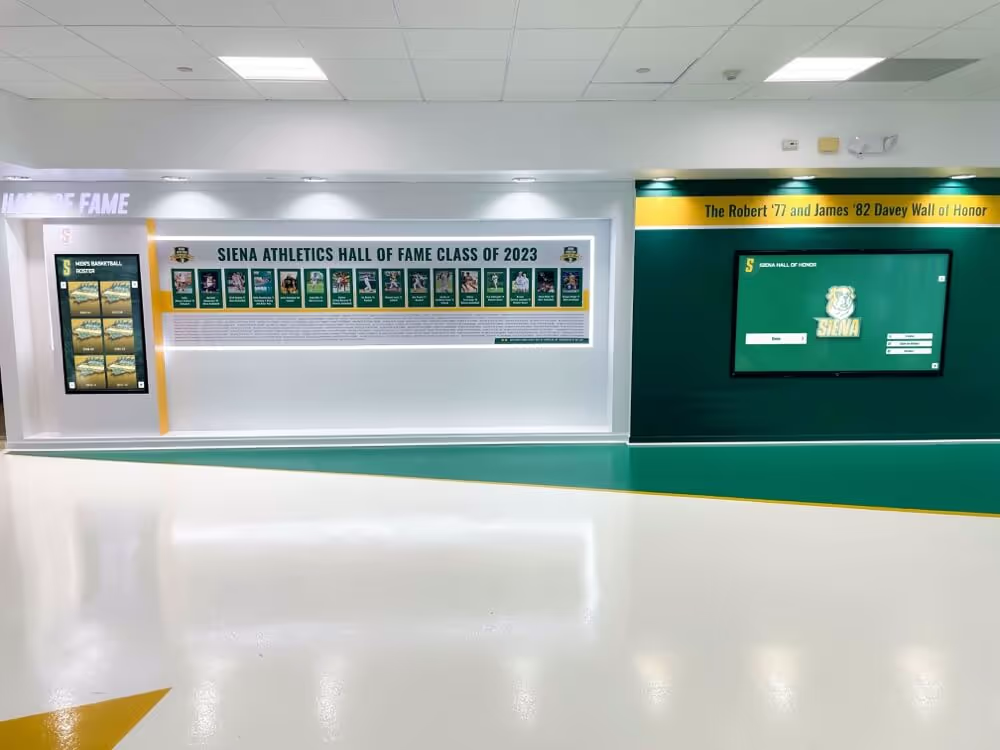
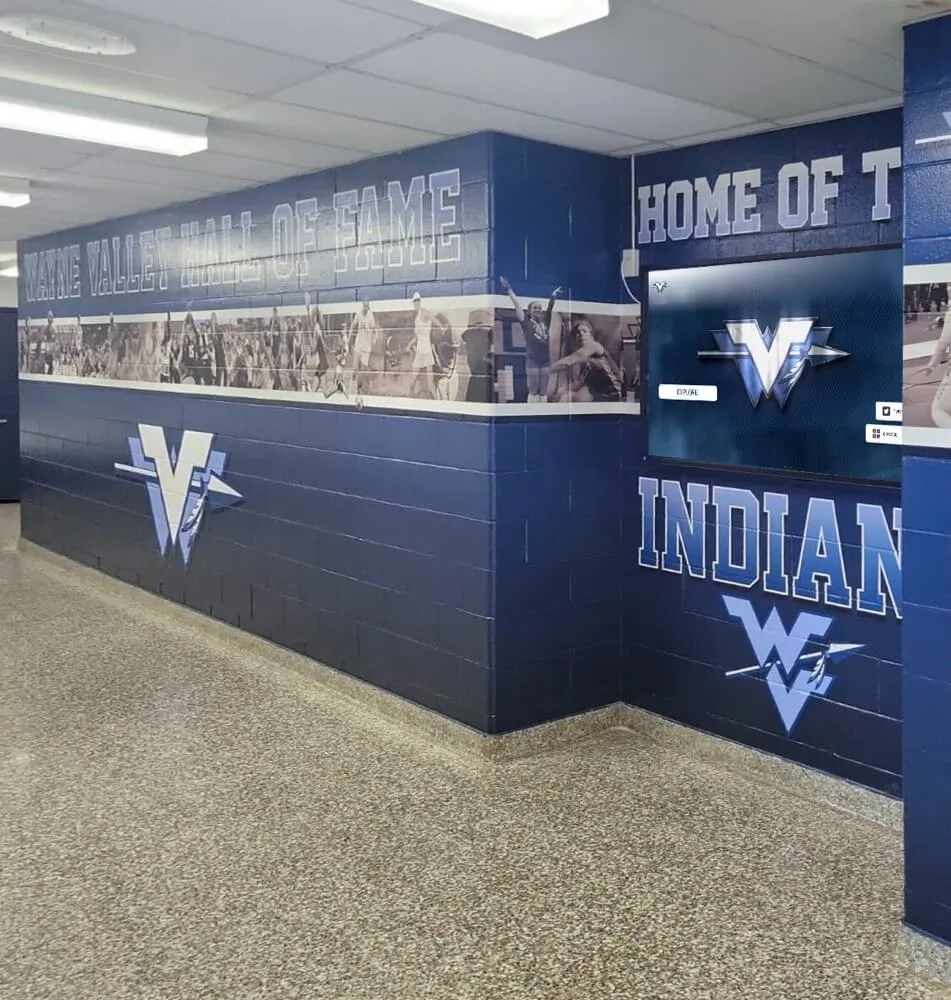
Strategic hallway placement ensures donor recognition reaches maximum visibility while honoring supporters in high-traffic campus areas
Interactive Digital Donor Wall Solutions
Technology-enhanced recognition displays eliminate capacity constraints while creating engaging experiences that static plaques cannot match. Schools implementing digital donor recognition platforms report increased donor engagement and easier maintenance compared to traditional materials.
6. Touchscreen Interactive Donor Directory
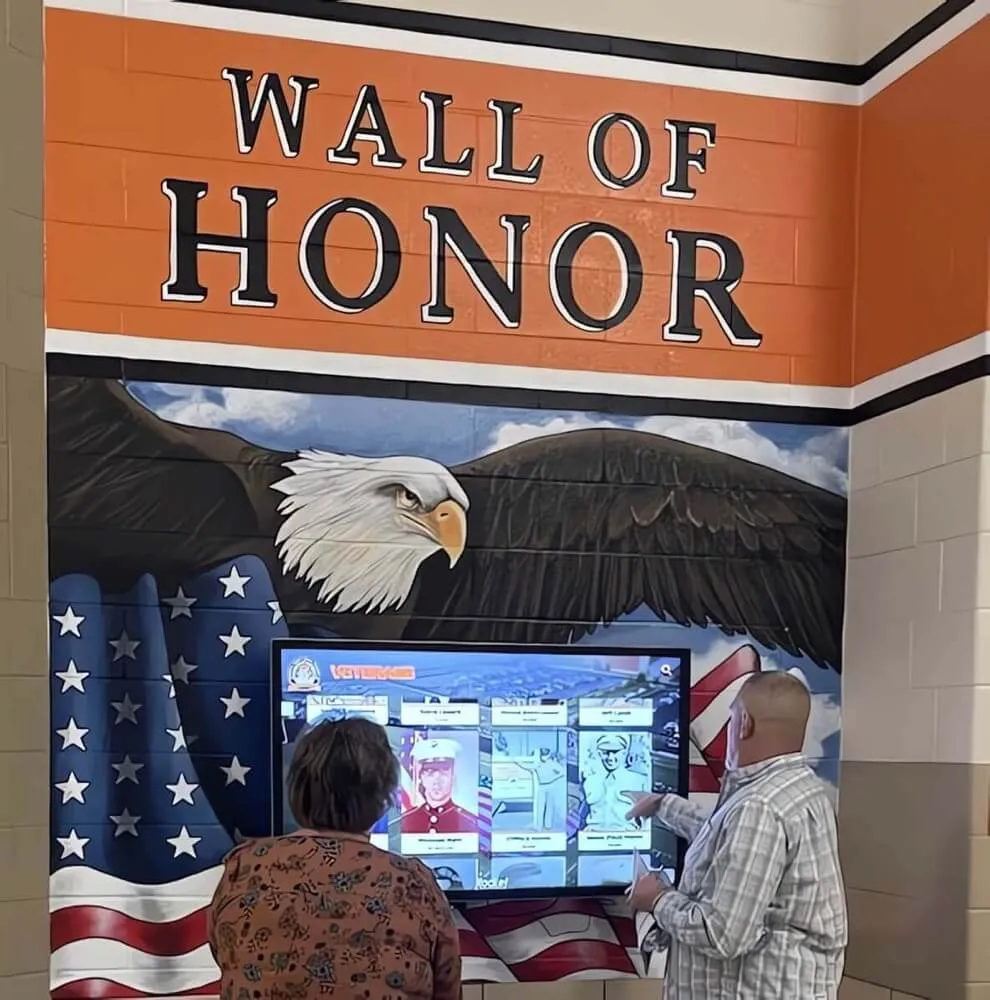
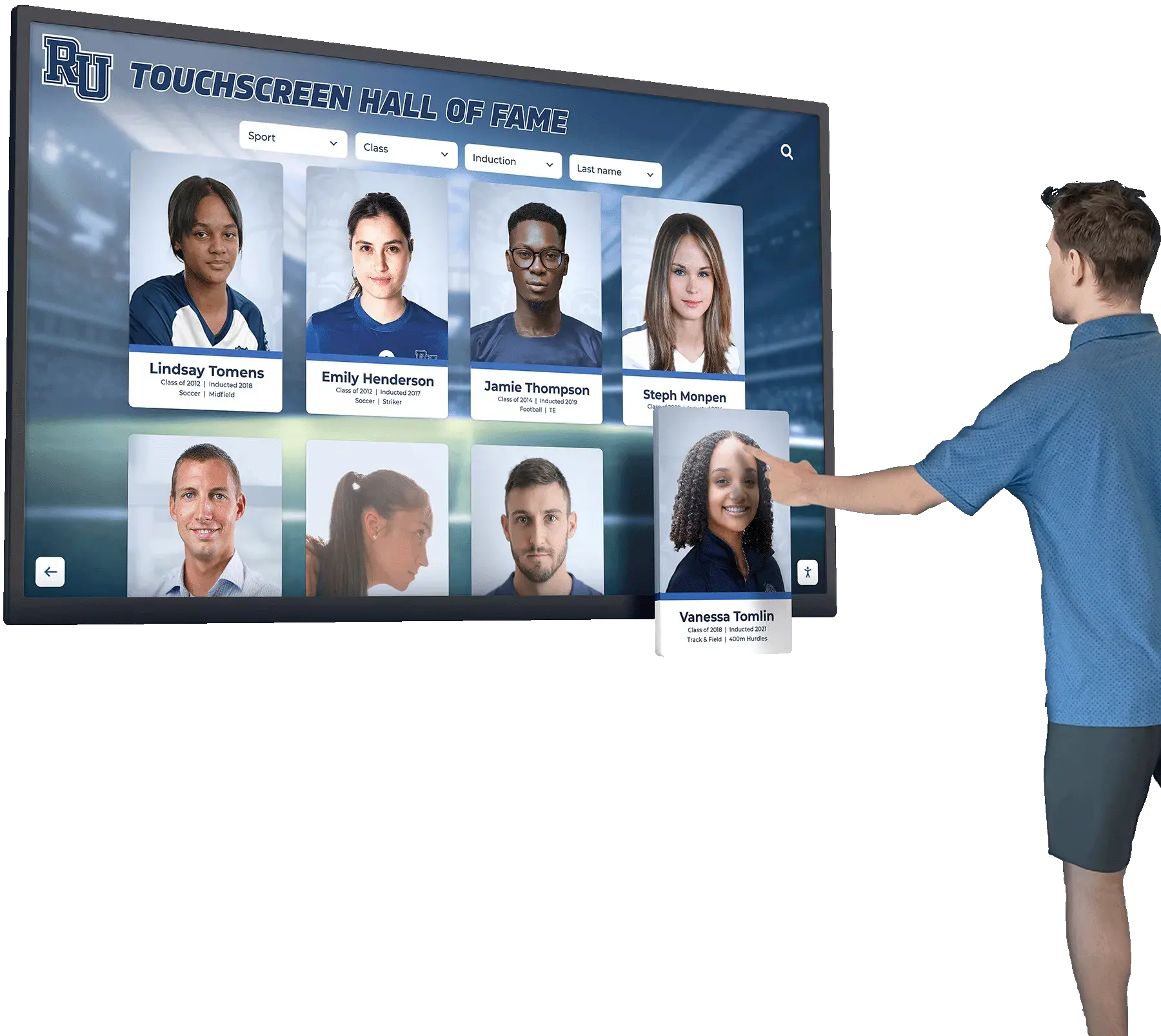
Large-format touchscreen displays positioned in main lobbies enable visitors to search comprehensive donor databases, explore giving level categories, and discover detailed donor profiles impossible to accommodate on physical plaques. Interactive displays accommodate thousands of contributors without additional hardware investment, eliminate production delays for new donor additions, and create memorable discovery moments when supporters find their recognition while attending campus events.
7. Digital Display with Scrolling Donor Recognition
Commercial-grade digital screens featuring rotating donor acknowledgment provide dynamic recognition in space-constrained environments. Content management systems enable administrators to create visually compelling donor presentations incorporating photographs, contribution impact statements, and campaign progress updates alongside individual donor names. Schools often position these displays in athletic facilities, performing arts centers, or academic buildings where benefactor support directly connects to visible spaces and programs.
8. Video Wall Donor Storytelling Display
Multi-screen video walls combine donor recognition with philanthropic impact stories, creating emotional connections between contributions and educational outcomes. These installations feature donor testimonial videos explaining giving motivations, student success stories made possible through scholarship support, and facility tour content showcasing physical improvements that donations funded. The multimedia approach proves especially effective with younger alumni and prospective donors who expect experiences reflecting contemporary digital environments.
9. Interactive Campaign Thermometer with Donor Recognition
Large-format digital displays tracking fundraising campaign progress in real-time while acknowledging individual contributors create urgency and momentum during active solicitation periods. Interactive elements allow visitors to explore campaign components, review naming opportunities still available, and browse leadership donor profiles. Progress visualization through thermometer graphics, percentage-to-goal displays, and countdown timers motivates participation by demonstrating community momentum toward shared objectives.
10. Mobile-Responsive Online Donor Wall
Web-based donor recognition platforms extend acknowledgment beyond physical campus boundaries to reach supporters who contributed remotely or live too distant for regular campus visits. Online donor walls feature searchable directories, individual donor profile pages with photographs and giving histories, and social sharing capabilities enabling contributors to celebrate their philanthropy with personal networks. Mobile optimization ensures accessibility across device types, particularly important given many donors initially discover recognition through smartphone access after receiving email communications linking to online displays.
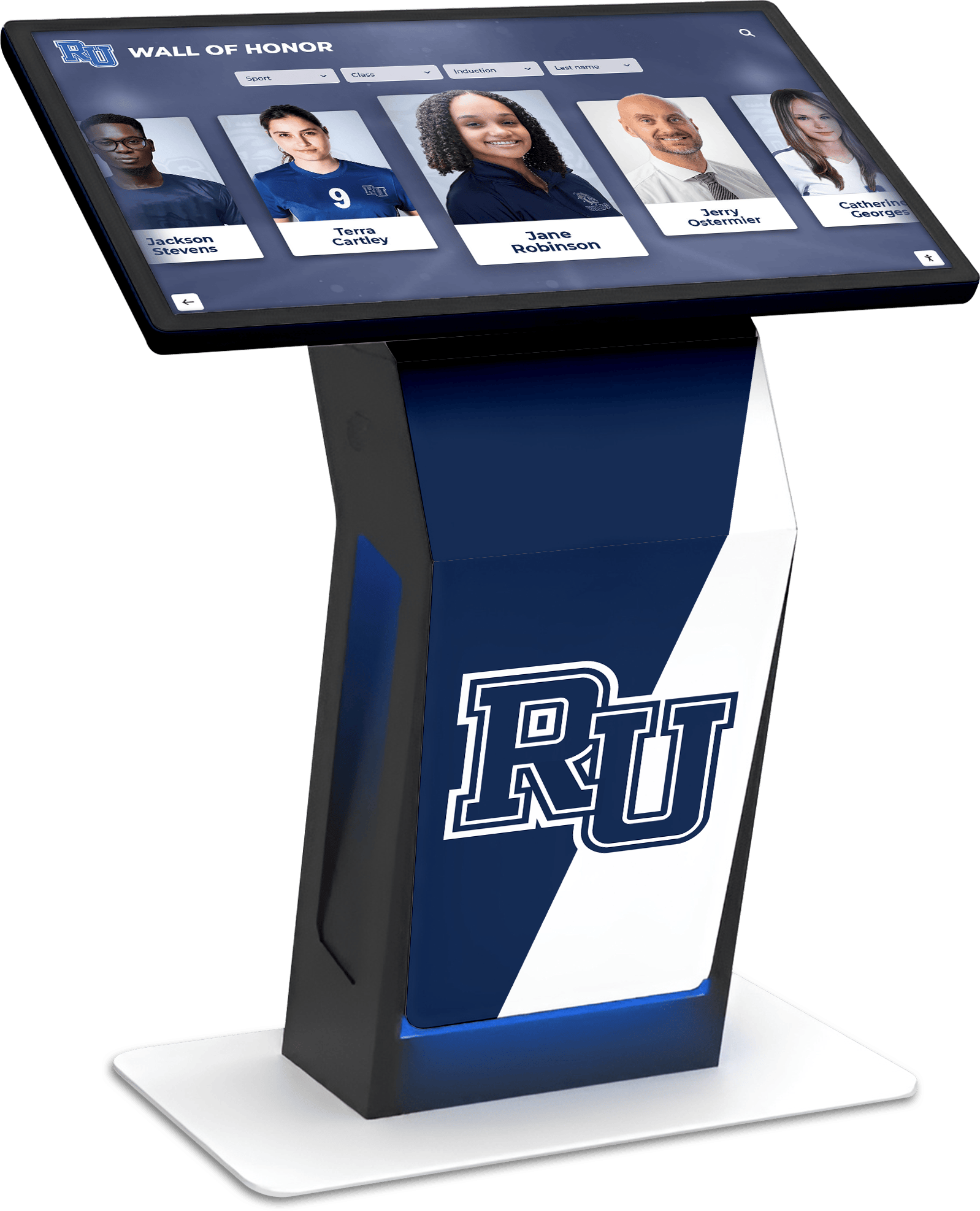
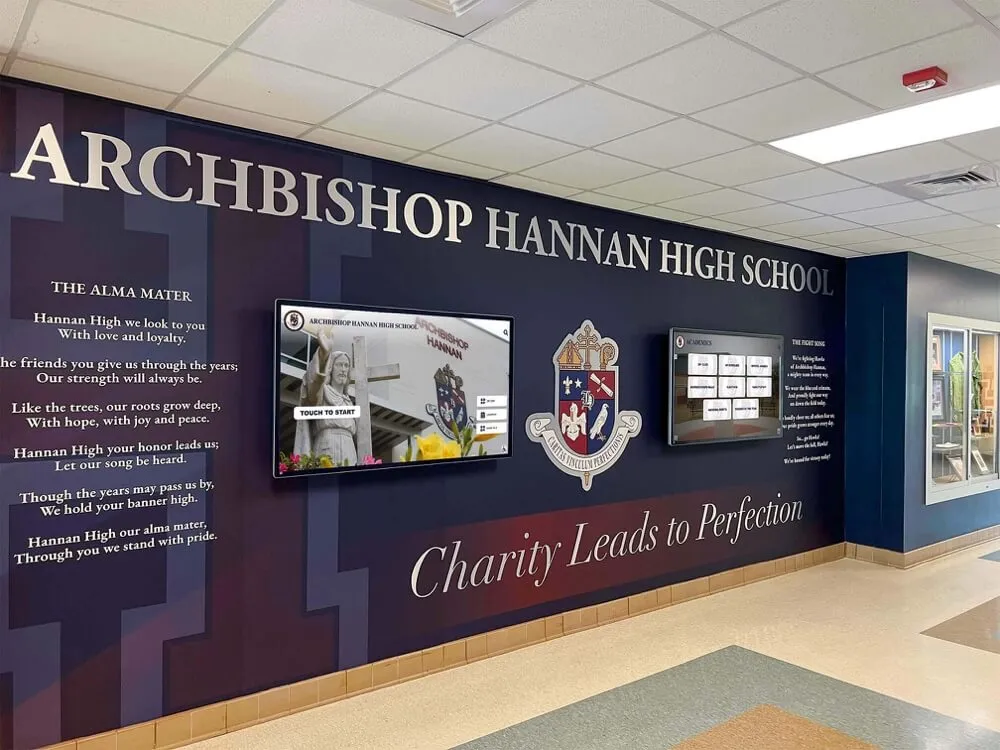
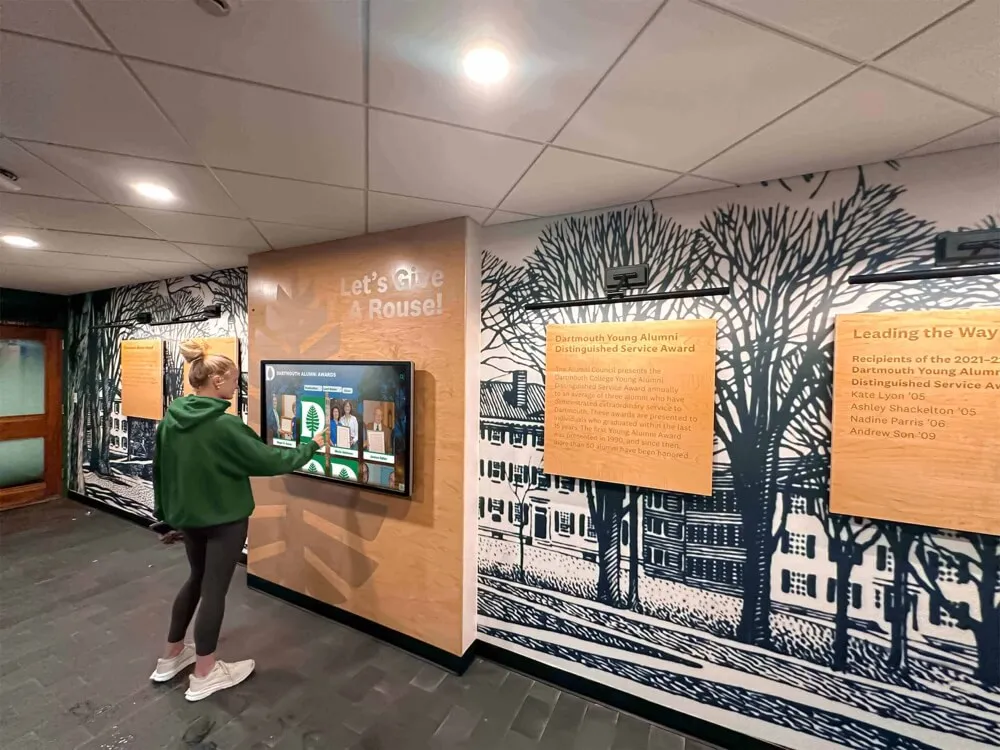
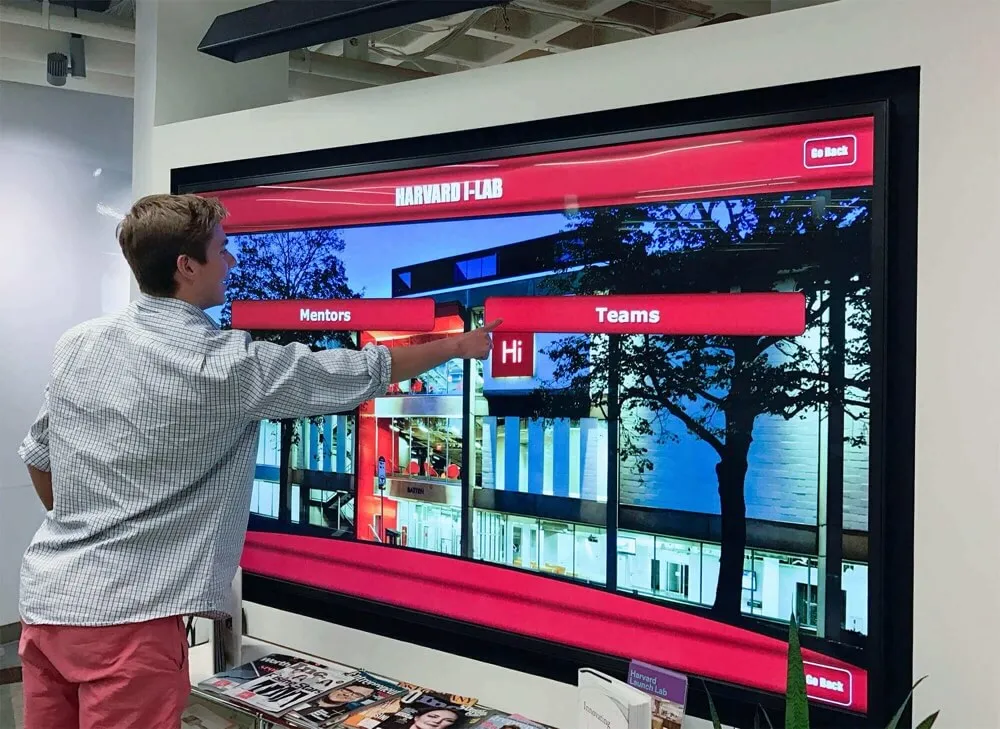
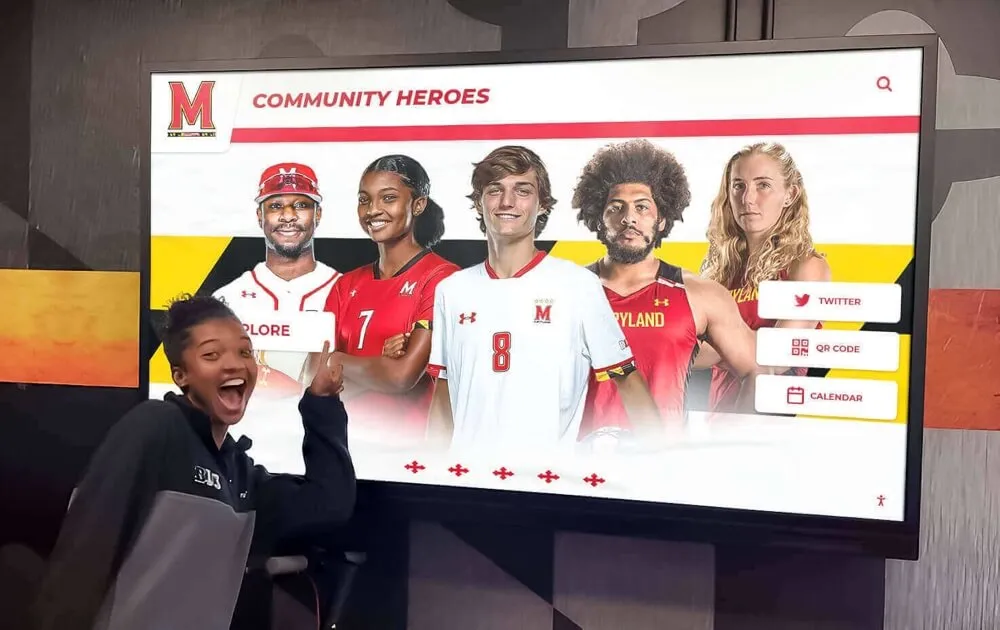
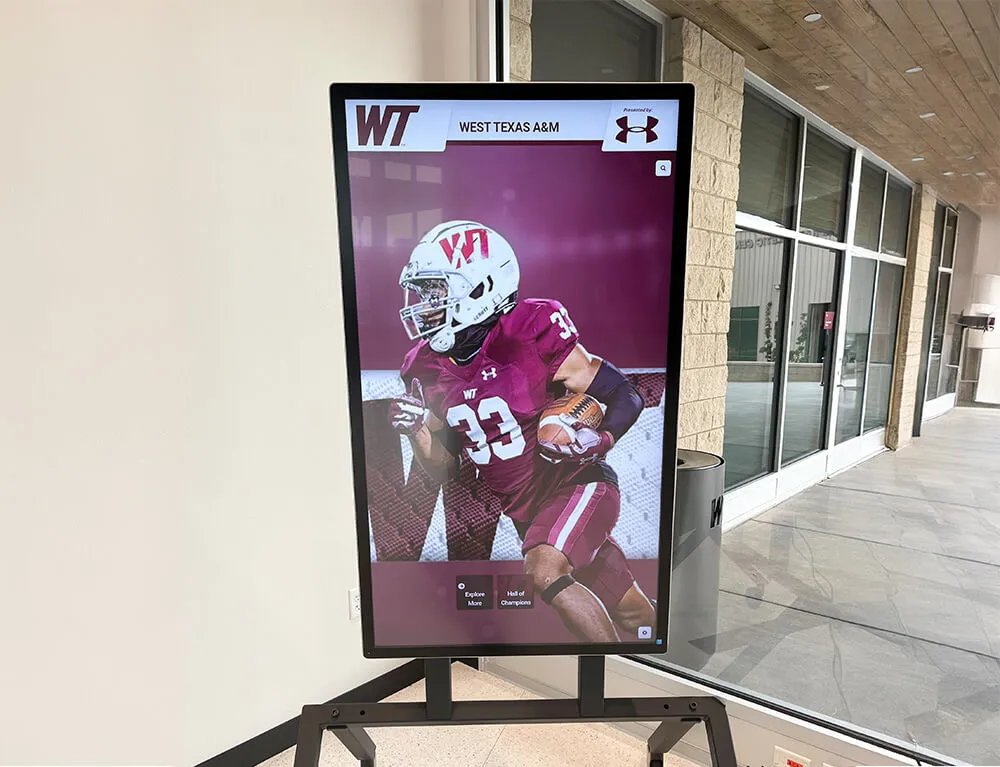
Interactive touchscreen displays enable donors to explore comprehensive recognition databases while creating engaging discovery experiences
Creative and Artistic Donor Recognition Approaches
Institutions seeking distinctive recognition that reflects unique campus character often implement custom artistic solutions integrating donor acknowledgment with environmental aesthetics.
11. Custom Mural with Integrated Donor Recognition
Commissioned artwork celebrating institutional history, academic excellence, or community values incorporates donor recognition into cohesive visual narratives. Artists create murals depicting campus scenes, historical milestones, or symbolic representations of educational missions, with donor names elegantly integrated into design elements rather than appearing as separate plaque installations. This approach transforms donor recognition from utilitarian necessity into meaningful artistic expression aligned with campus culture.
12. Sculpture Garden with Donor-Funded Art Installations
Outdoor sculpture gardens featuring donor-funded art pieces create beautiful campus environments while acknowledging philanthropic support. Each sculpture installation includes discrete recognition plaques identifying commissioning donors, with comprehensive garden signage acknowledging collective support enabling the overall project. Gardens serve dual purposes as contemplative campus spaces and recognition environments where donors proudly bring visiting family members and friends.
13. Donor Recognition Integrated into Library Stacks or Study Spaces
Academic libraries create distinctive donor recognition by naming individual study carrels, reading rooms, or book stack ranges after contributors. Small plaques affixed to carrel desks or positioned at stack entrances acknowledge donors while emphasizing the direct connection between philanthropic support and student learning environments. This approach enables participation recognition at accessible giving levels while creating numerous naming opportunities throughout library facilities.
14. Athletic Recognition Walls Combining Donors and Achievements
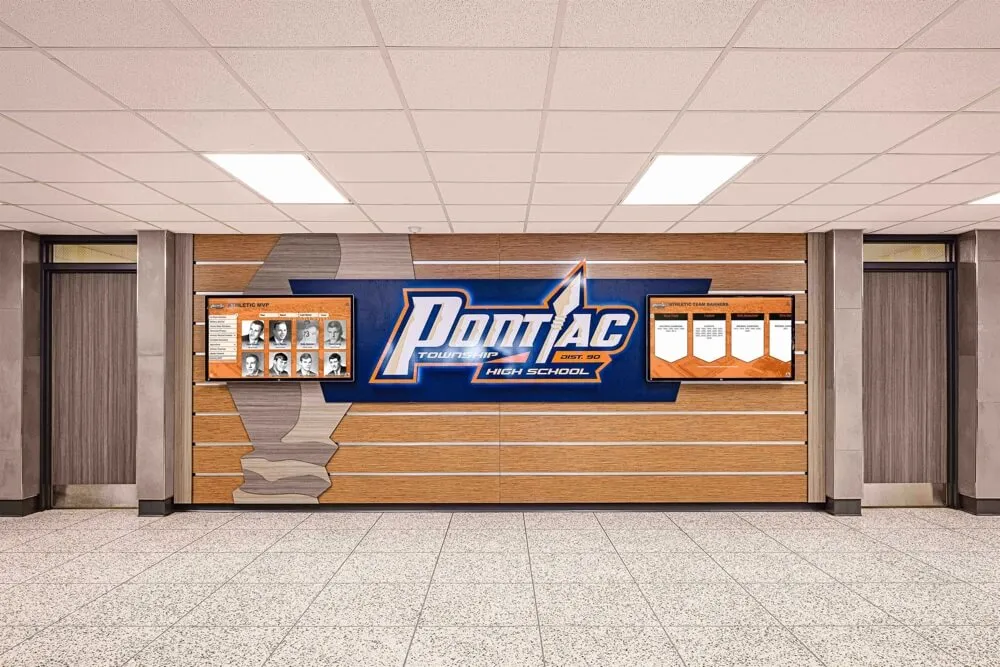
Athletic facilities position donor recognition alongside competitive achievement displays, creating aspirational environments connecting philanthropic support with team success. Comprehensive walls feature championship banners, record-breaking athlete profiles, and coaching legacy acknowledgments alongside donor names funding facility improvements, equipment purchases, or scholarship programs. The integrated approach demonstrates tangible impact of donations while celebrating athletic tradition. Similar concepts apply to professional athlete recognition displays honoring career achievements.
15. Musical Note or School Mascot Shaped Recognition Displays
Custom-fabricated donor walls designed in distinctive institutional shapes create memorable visual impact while reinforcing campus identity. Performing arts facilities position recognition displays shaped like musical notes or instruments, athletic complexes feature mascot silhouettes containing donor names, and specialized programs create custom shapes reflecting academic disciplines. Shaped displays work especially well for campaign-specific recognition where distinctive design reinforces fundraising themes.
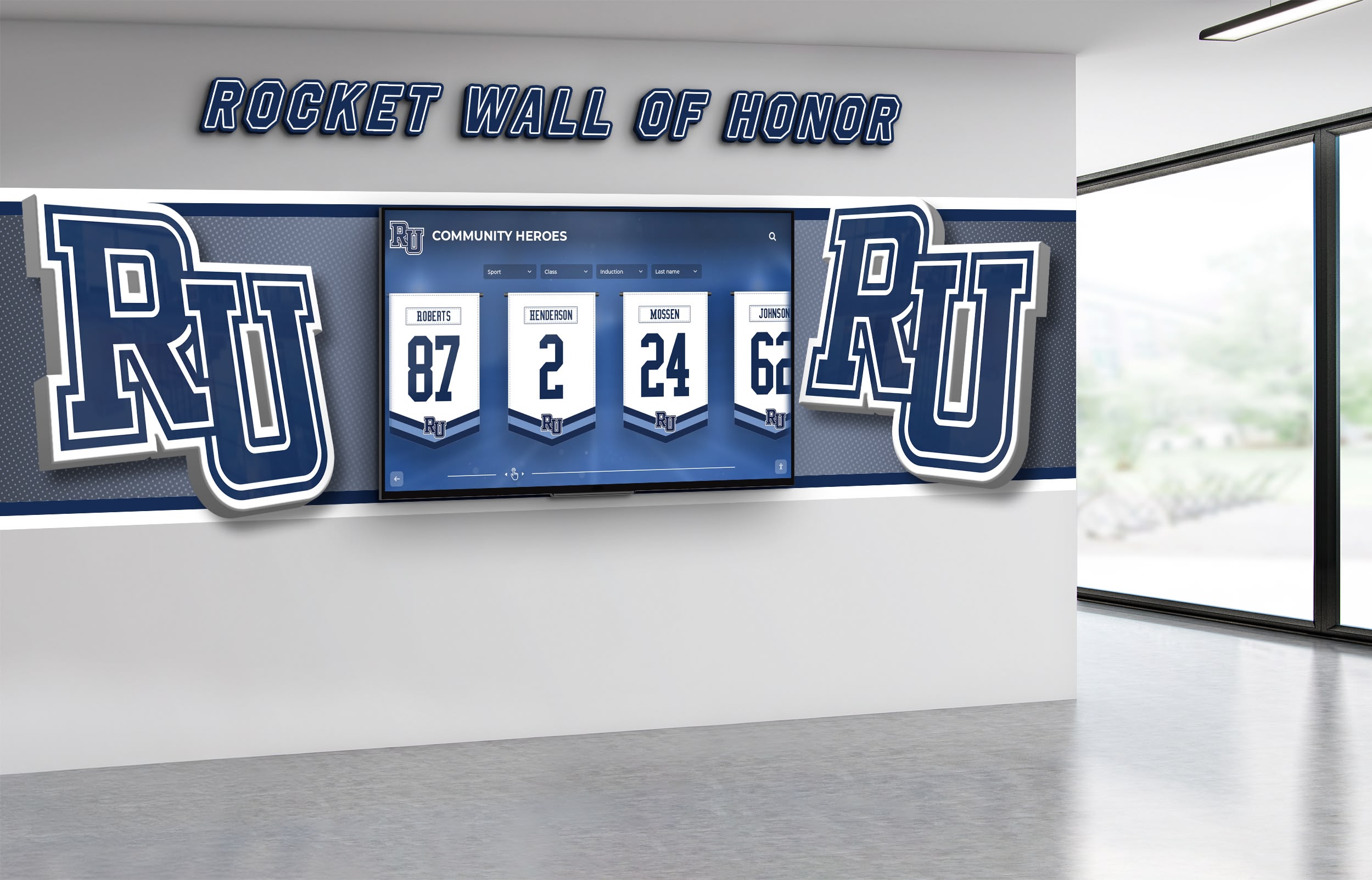
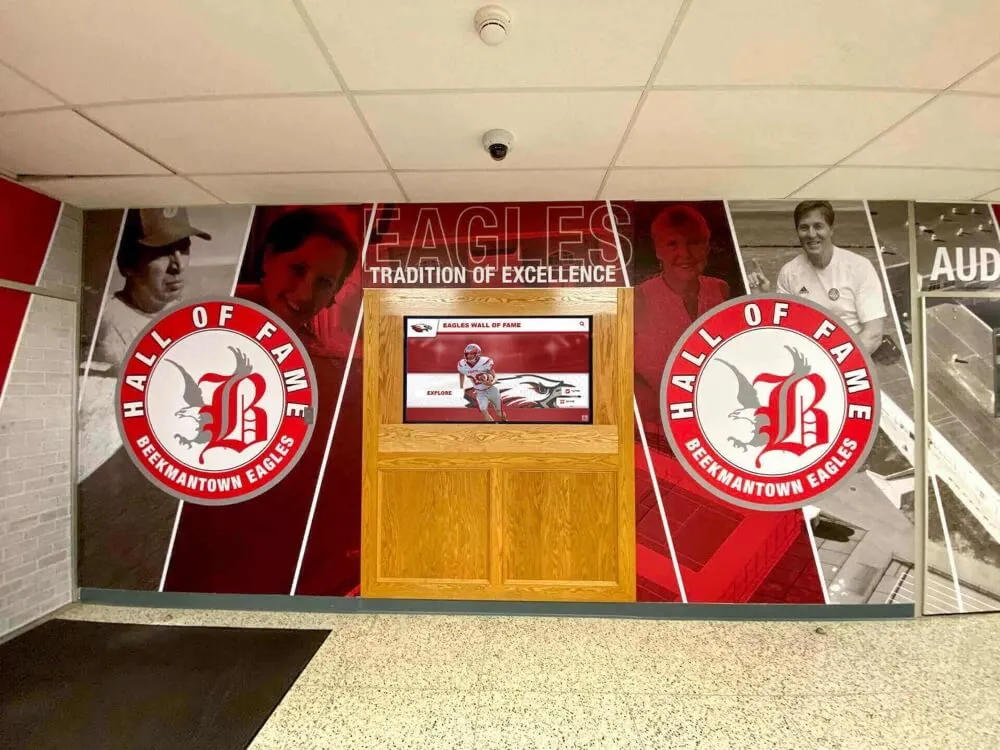
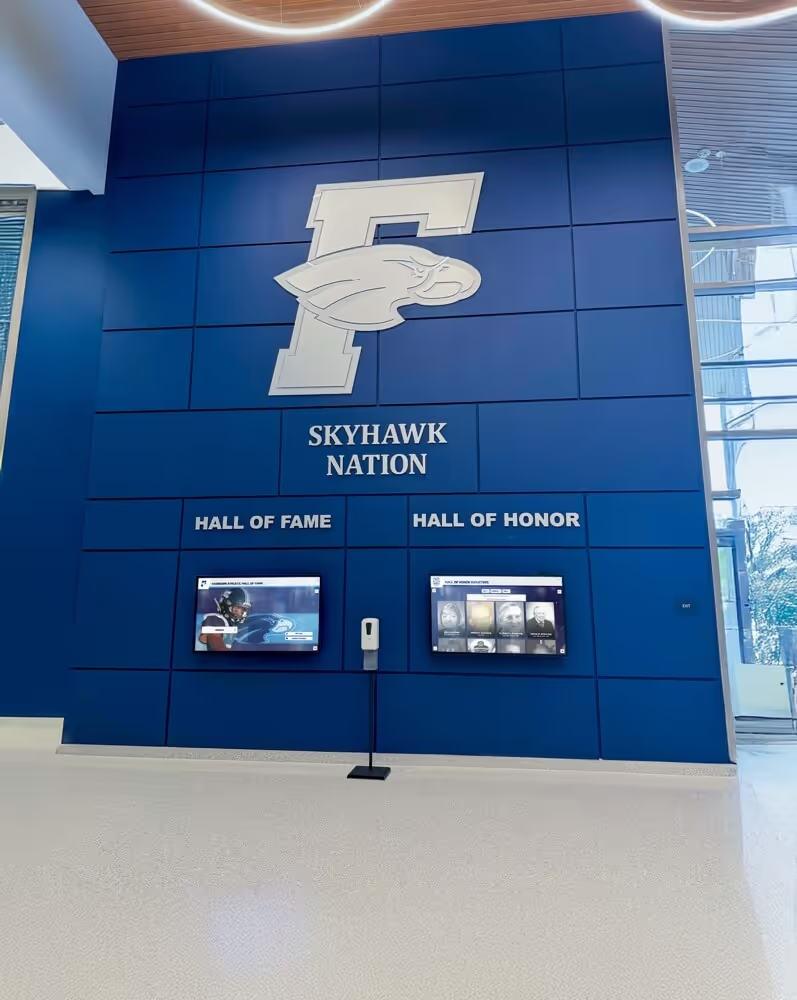
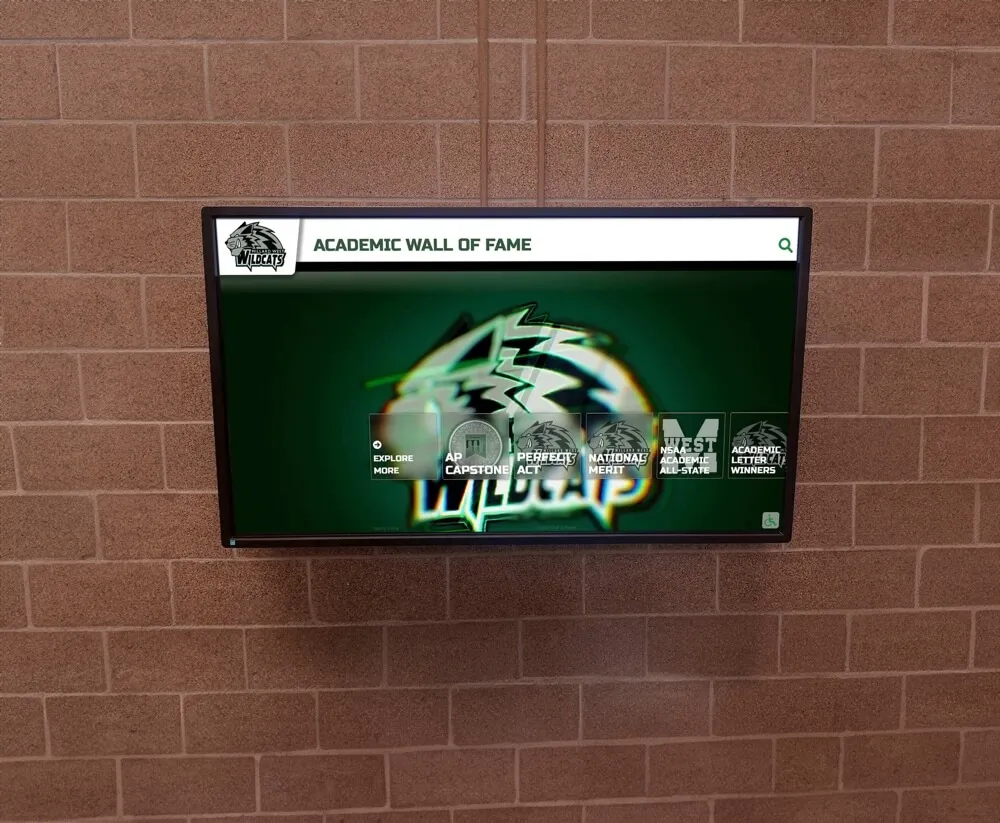
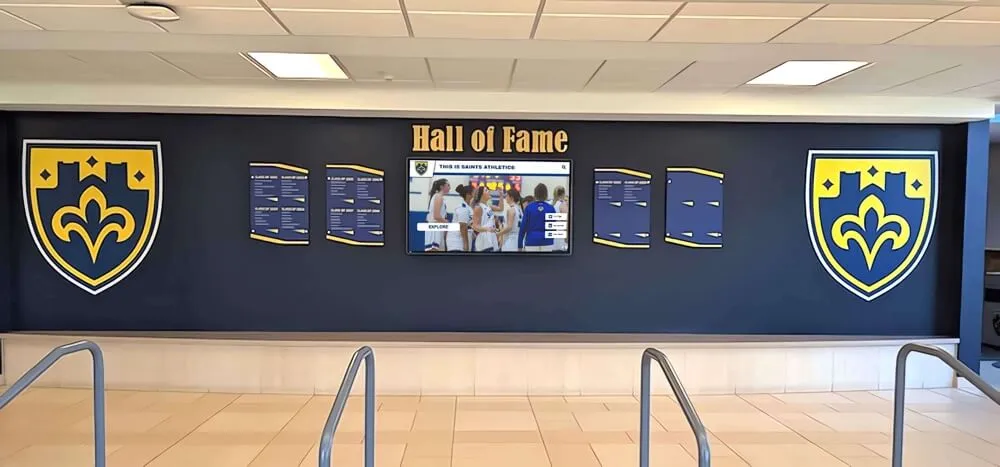
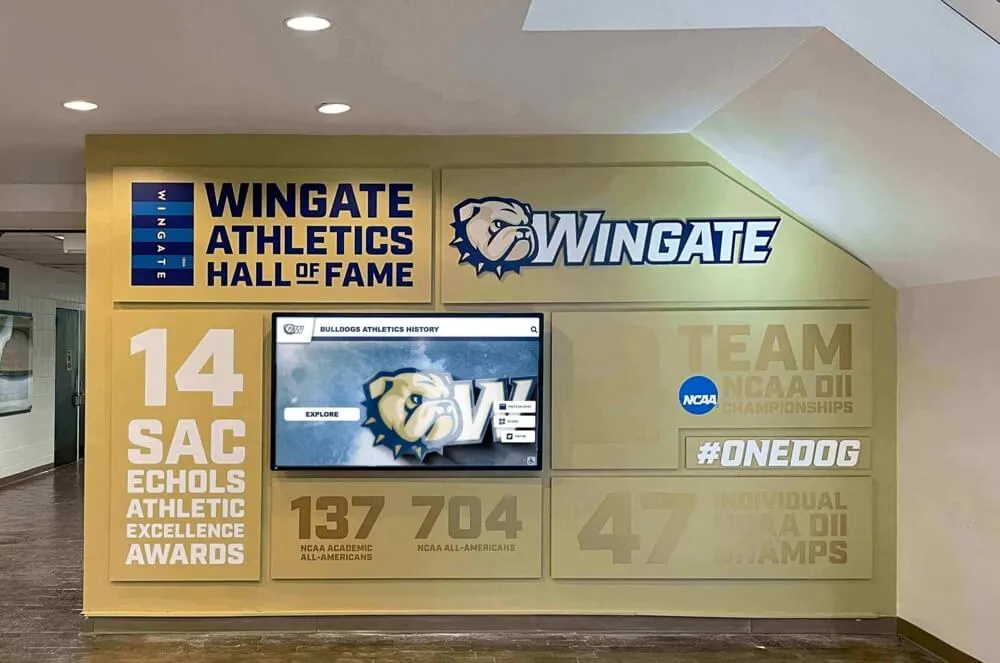
Lobby installations combining multiple recognition elements create comprehensive donor acknowledgment environments in prominent campus locations
Recognition Society and Giving Level Displays
Organizing donors into named societies and clearly defined giving tiers creates aspirational recognition environments while simplifying ongoing wall management as donor communities grow.
16. Heritage Society Legacy Giving Recognition
Dedicated displays honoring planned gift commitments and estate pledges acknowledge donors making ultimate philanthropic statements through bequests and legacy arrangements. Heritage society walls typically feature premium materials and prominent positioning reflecting the significance of planned gifts, with content explaining how legacy support sustains institutional missions for future generations. Recognition often includes donor photographs and personal statements about giving motivations, creating emotional connections that inspire others to consider similar commitments.
17. Annual Fund Giving Circles by Participation Level
Circular or concentric display designs organize annual fund donors into visually distinct giving level categories. Center circles feature leadership annual donors, with surrounding rings acknowledging supporting participation levels, creating visual representations of donor communities united in collective support. Digital versions enable donors to “move up” between circles as cumulative giving increases, adding gamification elements that motivate continued participation growth.
18. Founder’s Circle and Leadership Donor Showcase
Dedicated recognition areas exclusively honoring top-tier donors create prestigious acknowledgment environments for leadership gifts warranting special distinction. Founder’s circle displays typically incorporate premium materials like backlit onyx panels, museum-quality framing, or custom millwork installations unavailable in general donor recognition areas. Limited membership capacity adds exclusivity that appeals to major gift prospects while appropriately honoring transformational contributions.
19. Multi-Year Consecutive Giving Recognition
Loyalty-focused displays acknowledge sustained giving commitment rather than one-time contribution amounts, creating inclusive recognition valuing long-term relationship building. Consecutive giving walls track annual participation streaks, with visual elements like ascending steps, growing trees, or milestone markers celebrating 5, 10, 15, and 20+ year giving records. This approach particularly resonates with alumni donors who may lack capacity for major gifts but demonstrate unwavering institutional loyalty through consistent annual participation.
20. Corporate and Foundation Partner Recognition Wall
Separate displays acknowledging corporate sponsors and foundation grants create appropriate business-to-business recognition distinct from individual donor acknowledgment. Corporate walls feature company logos alongside donor names, with content emphasizing partnership language and community investment themes resonating with business audiences. Strategic positioning in board rooms, athletic facilities where corporate hospitality occurs, or main entrances where business visitors enter campus maximizes visibility with target audiences.
Hybrid and Multi-Format Recognition Strategies
Comprehensive donor recognition programs often combine multiple approaches, creating layered acknowledgment systems honoring diverse donor preferences while maximizing engagement across contribution levels.
21. Permanent Plaques with Digital Supplemental Content
Leading institutions combine traditional bronze or granite plaques for major donors with adjacent digital displays providing expanded donor stories, impact videos, and campaign updates. Physical plaques deliver permanence and prestige that certain donors expect, while digital supplements add storytelling capacity and engagement impossible with static materials. QR codes on physical plaques link to extended online content, creating seamless connections between physical and digital recognition environments.
22. Donor Tree Combining Artistic Elements with Individual Leaves
Sculptural tree installations feature metal or wood trunk structures with individual “leaves” acknowledging donors. Schools fabricate leaves in various sizes reflecting giving levels, with donors’ names engraved on individual leaf elements attached to branches. The living growth metaphor visually represents how collective philanthropy nurtures institutional development, while modular leaf additions accommodate growing donor communities without architectural modifications. This approach proves especially popular for campaign-specific recognition and memorial giving programs.
23. Donor Timeline Wall Showing Giving History Chronologically
Historical displays organizing donor recognition chronologically demonstrate multi-generational philanthropic tradition while celebrating current supporters. Timeline walls feature decade markers with donor names positioned at contribution dates, creating visual narratives of institutional development enabled through sustained community support. Historical photographs and milestone markers add context, connecting philanthropy with visible campus evolution that donations funded.
24. Interior Window Donor Recognition Between Spaces
Glass partitions between rooms or hallway-to-office separations provide distinctive donor recognition opportunities while maximizing natural light flow. Vinyl graphics, etched glass applications, or digitally printed interlayers between glass panes display donor names visible from both sides, creating dual-purpose installations that satisfy building code requirements while acknowledging philanthropic support. The approach works particularly well in contemporary facilities emphasizing transparency and light.
25. Donor Recognition Integrated into Campus Wayfinding Signage
Multi-purpose signage systems combine directional information with donor acknowledgment, creating functional campus navigation while honoring facility benefactors. Building entrance signs include donor names funding construction or major renovations, directional markers acknowledge program sponsors, and room identification signage recognizes space naming donors. Integrated approaches reduce signage proliferation while ensuring donor visibility at every building touchpoint. Similar principles apply to comprehensive campus signage and branding programs managing institutional identity.
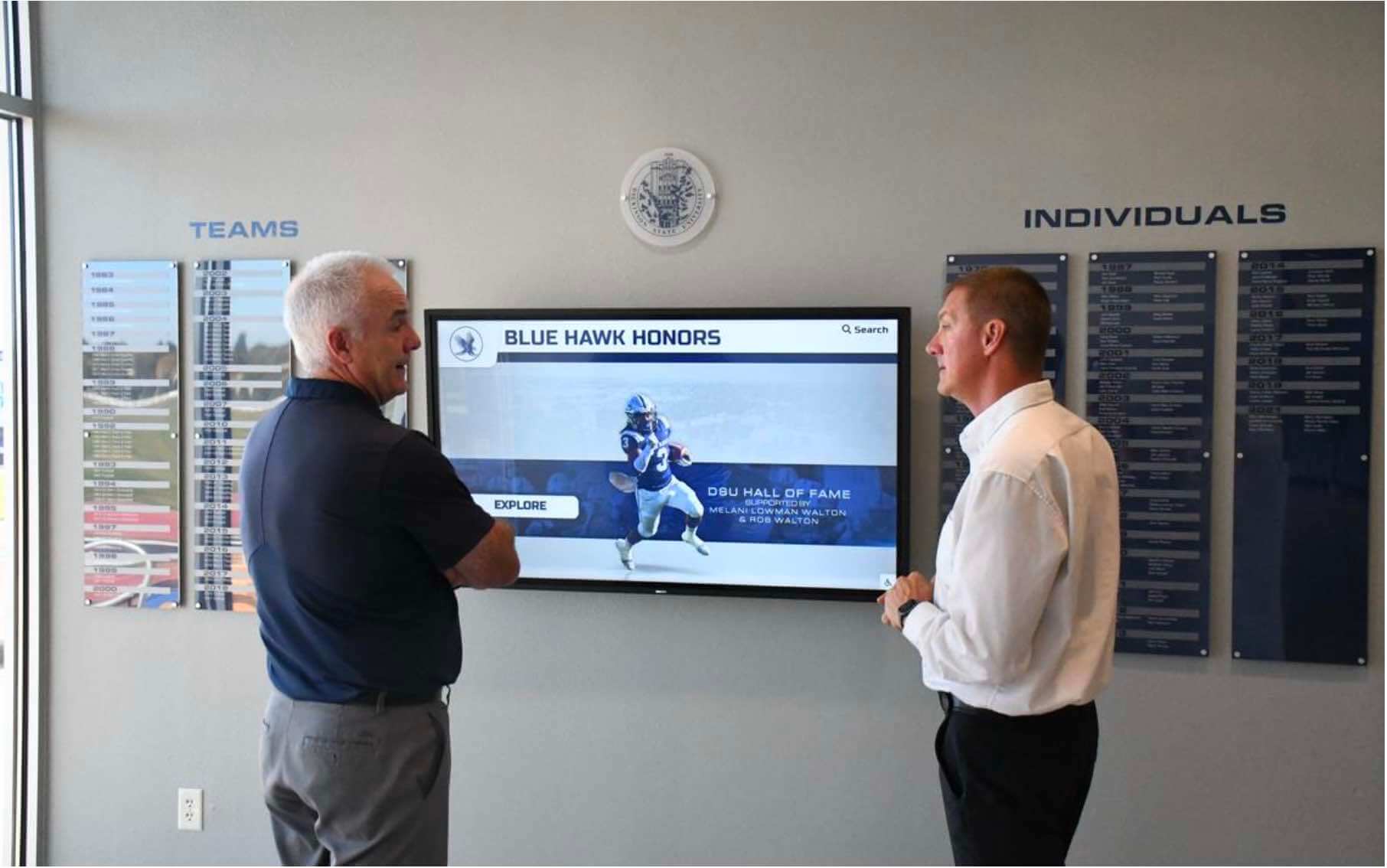
Interactive displays create engagement opportunities during campus visits, alumni reunions, and special events when supporters discover their recognition
Specialized Recognition for Unique Campaign Types
Specific fundraising initiatives often benefit from customized donor recognition approaches aligned with campaign themes and objectives rather than generic institutional displays.
26. Athletic Facility Locker Room Recognition for Player Family Donors
Customized locker assignments acknowledging player family donations create meaningful recognition within spaces where athletes spend significant time. Individual locker plaques note families funding specific positions, with comprehensive team rosters displayed in locker room common areas. This approach enables participation-level giving across entire team rosters while creating emotional connections for athletes seeing daily reminders of family support. The concept extends to other specialized spaces like band rooms, theater dressing areas, or academic lab environments. Similar recognition strategies appear in athletic banquet planning celebrating team achievements.
27. Scholarship Donor Recognition with Student Success Stories
Dedicated displays connecting scholarship donors with recipient success stories create emotional impact demonstrating tangible outcomes from educational philanthropy. Recognition walls feature donor names alongside profiles of scholarship recipients they supported, including academic achievements, career outcomes, and testimonials about transformational educational opportunities made possible through donor generosity. These narrative-driven displays prove especially effective inspiring continued scholarship giving while acknowledging existing donors meaningfully.
28. Capital Campaign Recognition with Building Progress Timeline
Construction project donor walls incorporate architectural renderings, progress photography, and completion milestone tracking alongside contributor acknowledgment. Campaign-specific recognition creates urgency during active solicitation periods by visualizing project advancement, with digital updates showing construction phases as they complete. Post-campaign, these installations become historical records documenting transformation projects and honoring supporters who made developments possible.
29. Endowment Recognition Showing Long-Term Impact Projections
Specialized displays acknowledging endowment contributions emphasize perpetual impact rather than one-time use, appealing to donors seeking lasting institutional influence. Recognition content includes endowment fund balances, annual distribution amounts supporting specific programs, and long-term impact projections demonstrating how today’s gifts will benefit students decades into the future. Financial visualization helps donors understand endowment mechanics while appreciating their contributions’ sustained significance.
30. Memorial and Tribute Giving Recognition Gardens
Outdoor recognition gardens honoring memorial gifts and tribute donations provide contemplative spaces where donor families gather while creating beautiful campus environments. Individual trees, plantings, or bench installations include discrete plaques acknowledging honorees and contributing families, with comprehensive garden signage explaining memorial program details. These spaces serve dual purposes as campus amenities and recognition environments, particularly meaningful for supporters commemorating loved ones through educational philanthropy. Outdoor recognition concepts also appear in creative donor wall designs addressing similar objectives.
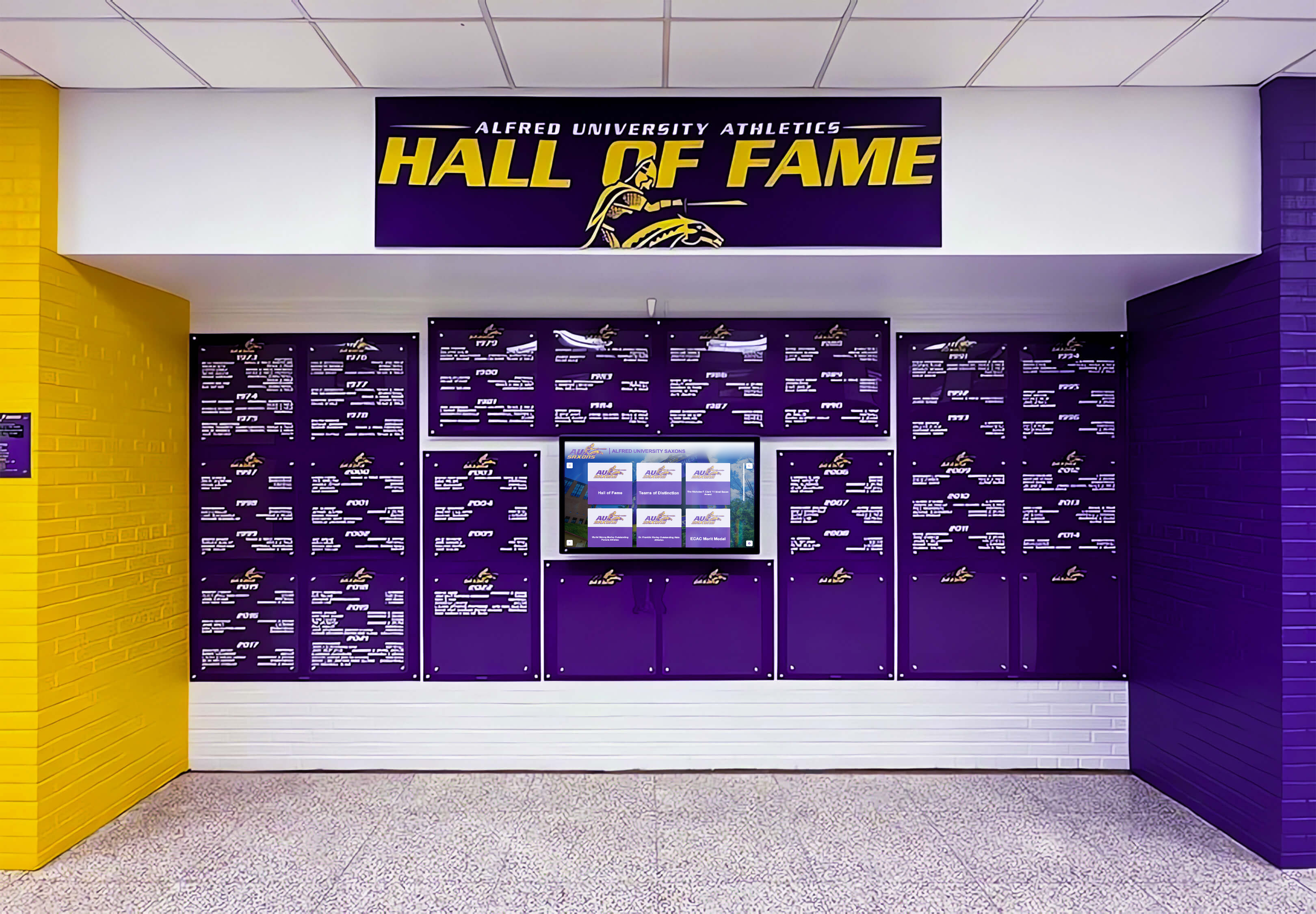
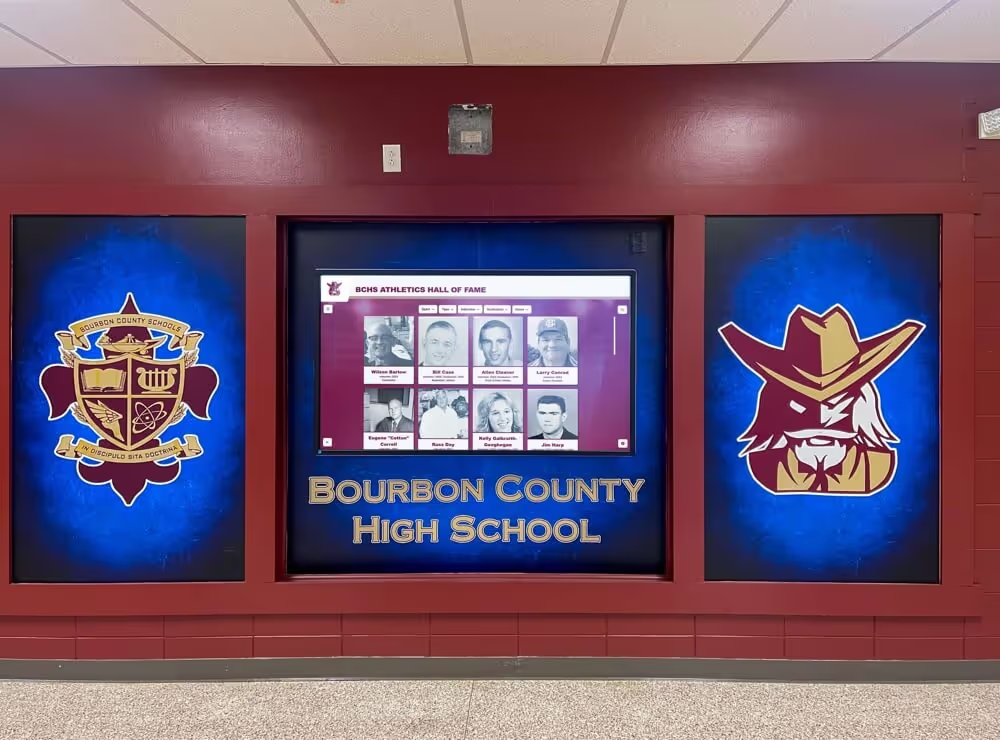
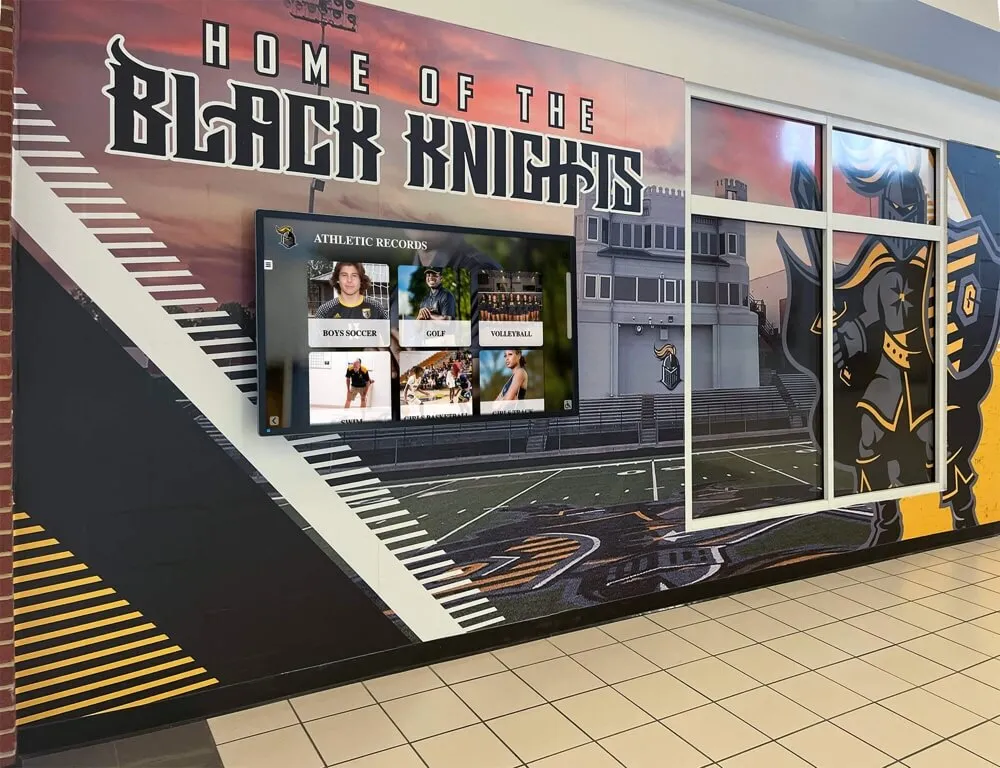
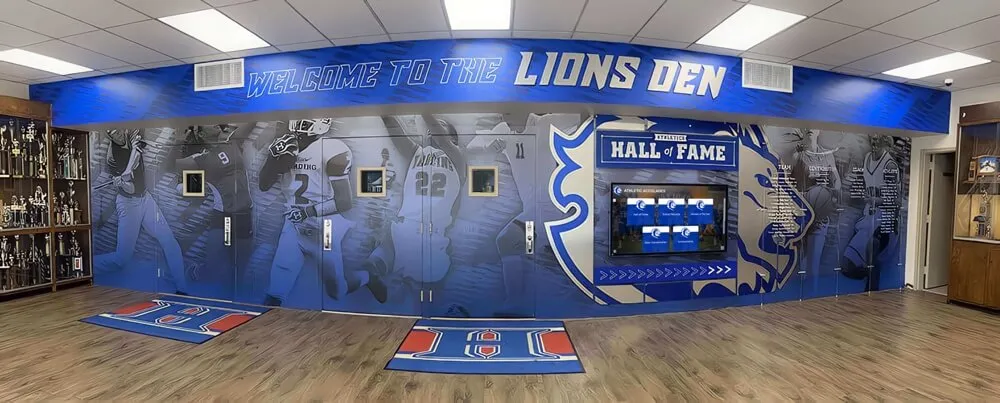
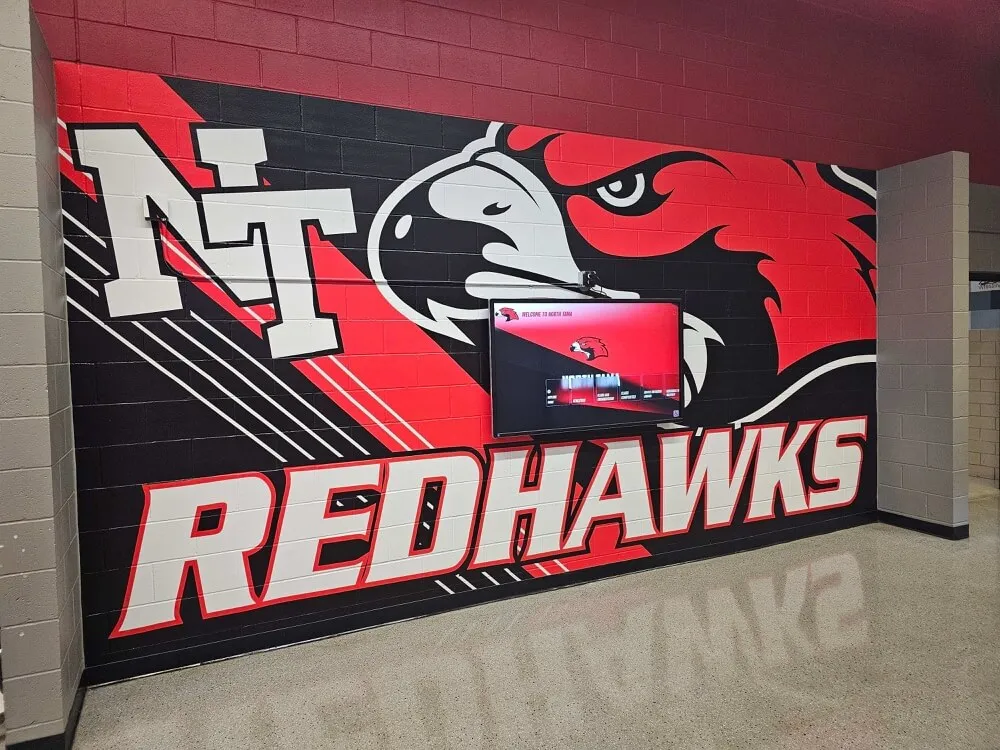
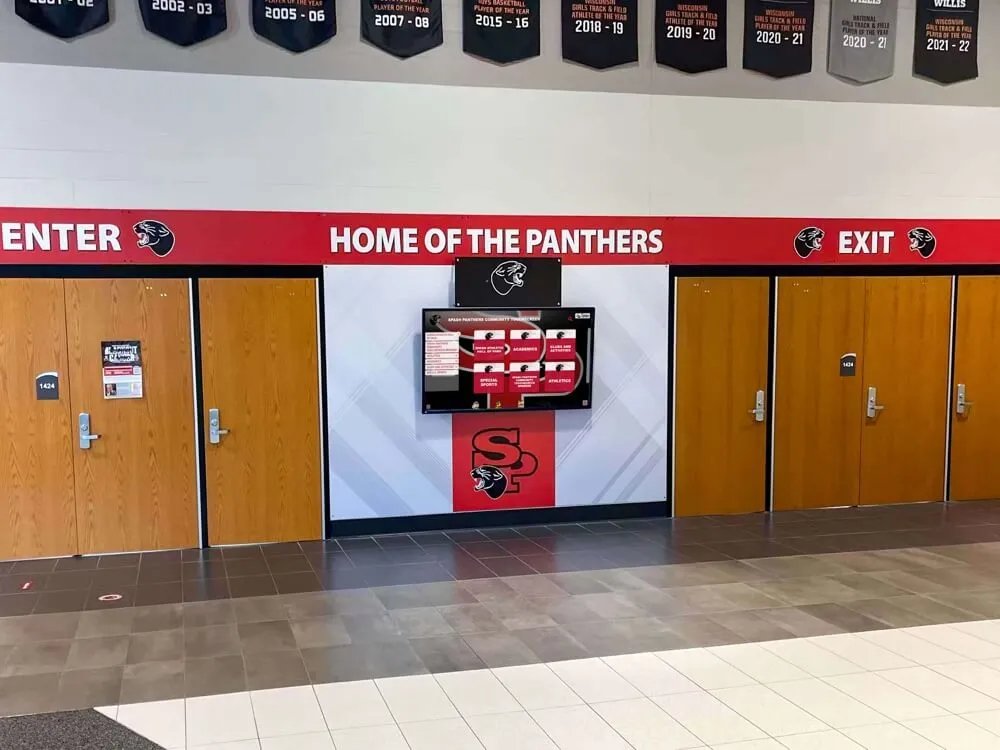
Athletic facility donor walls often incorporate school colors and branding elements while honoring both donors and competitive achievements
Selecting the Right Donor Wall Ideas for Your Institution
Choosing among available donor wall ideas requires evaluating multiple factors beyond aesthetic preferences, including budget constraints, available space, donor demographics, institutional culture, and long-term maintenance capabilities.
Budget and Cost Considerations
Donor recognition budgets typically allocate 5-10% of total capital campaign goals or major gift amounts to acknowledgment expenses, though percentages vary based on recognition scope and chosen approaches. Traditional bronze plaques range from $300-800 per individual plaque depending on size and mounting complexity, while comprehensive stone or metal wall installations run $15,000-50,000+ for complete systems. Digital donor walls typically require $8,000-25,000 initial hardware investment for commercial-grade displays and mounting systems, plus $1,200-3,600 annual software subscription fees for content management platforms.
Budget-conscious institutions often implement phased recognition strategies, starting with foundational displays acknowledging leadership donors through premium materials while planning subsequent expansion incorporating additional giving levels as campaign proceeds. This approach ensures visible recognition exists early in campaigns while preserving resources for comprehensive completion as donor communities grow.
Space and Location Optimization
Effective donor recognition requires strategic placement in high-traffic areas where maximum community members encounter acknowledgment regularly, not relegated to back hallways or forgotten corners suggesting donor support lacks importance. Ideal locations include main building lobbies that visitors pass through daily, athletic facility entrances where game attendees gather, performing arts center lobbies serving pre-show congregation areas, and student union spaces central to campus life.
Available space dimensions constrain recognition format options. Expansive lobby walls accommodate comprehensive stone or metal plaque installations, while space-limited areas benefit from vertical digital displays maximizing acknowledgment capacity within minimal footprints. Institutions with severely constrained physical space increasingly implement online donor walls extending recognition beyond architectural limitations entirely.
Donor Demographic and Preference Alignment
Successful donor recognition reflects contributor preferences rather than institutional assumptions about appropriate acknowledgment. Traditional donors often expect permanent physical plaques delivering tangible recognition permanence, while younger alumni and digitally-native supporters embrace interactive technology platforms enabling social sharing and mobile access.
Comprehensive programs survey existing major donors about recognition preferences before finalizing approaches, asking specific questions about desired acknowledgment formats, publicity comfort levels, and feature priorities. This donor-centric research prevents expensive recognition installations that fail to resonate with intended audiences while demonstrating genuine appreciation for supporter input in stewardship decisions.
Maintenance and Update Requirements
Long-term donor wall effectiveness requires considering ongoing maintenance demands and update processes as contributor communities grow. Traditional materials like bronze and granite require minimal maintenance beyond periodic cleaning but involve production delays and installation costs when adding new donors. Digital platforms enable instant updates through cloud-based content management but require technical support for software troubleshooting and periodic hardware refresh as display technology evolves.
Schools should establish clear internal processes defining who manages recognition updates, what documentation they require before adding new donors, and what timeline governs implementation after contributions process. Well-defined systems prevent recognition backlogs that undermine stewardship effectiveness when donors wait months or years for promised acknowledgment.
Technology Integration and Future Flexibility
Forward-thinking institutions evaluate how donor recognition integrates with broader campus technology ecosystems rather than implementing isolated standalone systems. Digital donor walls leveraging existing network infrastructure, single sign-on authentication for content management, and integration with fundraising databases reduce total cost of ownership while simplifying ongoing administration.
Future flexibility proves equally important—recognition solutions should accommodate predictable growth through modular expansion capabilities rather than requiring complete replacement when donor communities exceed initial capacity estimates. Schools experiencing enrollment growth, launching ambitious alumni engagement initiatives, or implementing new fundraising programs should prioritize scalable recognition infrastructure supporting multi-decade service lives. Similar considerations apply when schools implement touchscreen display technology for other campus purposes.
Implementing Donor Wall Ideas That Inspire Continued Giving
Effective donor recognition extends beyond acknowledging past contributions to actively inspiring future giving through strategic design choices, storytelling approaches, and stewardship integration that strengthens donor relationships over decades.
Creating Aspirational Recognition Environments
The most effective donor walls create aspirational environments where prospective donors envision themselves among honored supporters, motivating giving decisions through positive peer influence and community belonging. Visual design strategies achieving this objective include prominent positioning ensuring maximum visibility rather than hidden placement suggesting donations lack importance, professional presentation quality matching donor contribution significance, and organized giving level hierarchies helping prospects identify appropriate participation tiers matching personal capacity.
Recognition content emphasizing collective community impact rather than individual accomplishment appeals to donors motivated by educational mission support rather than personal recognition seeking. Impact statements explaining how donor contributions fund specific programs, support student success outcomes, or enable facility improvements create meaning beyond name acknowledgment alone.
Storytelling Through Donor Profiles and Impact Narratives
Contemporary donor recognition increasingly incorporates narrative elements transforming acknowledgment from simple name lists into compelling stories about philanthropic motivations and contribution impacts. Enhanced digital donor profiles include donor photographs creating personal connections, brief biographical information providing context about donor relationships with institutions, personal giving statements explaining why contributors support specific programs or overall educational missions, and impact metrics demonstrating measurable outcomes enabled through donations.
These storytelling elements prove especially valuable inspiring prospective donors who lack previous giving histories or deep institutional connections. Reading why similar community members chose to contribute and understanding tangible impacts resulting from donations helps prospects overcome giving hesitation while identifying personally meaningful contribution opportunities.
Integration with Ongoing Stewardship Programs
Donor recognition represents one component within comprehensive stewardship systems maintaining long-term contributor relationships rather than standalone acknowledgment exercises. Leading advancement offices integrate recognition wall unveilings into donor appreciation events, creating ceremonial moments celebrating new installations while strengthening emotional connections between supporters and institutions. Recognition displays inform content for donor newsletters highlighting recently added contributors, social media posts celebrating milestone giving achievements, and thank-you communications reinforcing public acknowledgment.
Digital donor walls enable ongoing engagement through features like anniversary notifications reminding donors of giving history milestones, birthday recognition creating personal touchpoints beyond transactional donation processing, and customizable donor profile management allowing contributors to update photographs and biographical information maintaining current, accurate representation. These sustained interactions transform one-time recognition installations into continuous relationship-building tools supporting long-term fundraising success. Schools implementing comprehensive recognition programs often benefit from donor stewardship strategies building lasting connections.
Accessibility and Inclusive Design Principles
Modern donor recognition should accommodate all community members through accessible design meeting ADA requirements and universal design principles. Digital displays require positioning at appropriate heights for wheelchair users, touch interface elements sized for easy selection, and text sized for visibility across vision abilities. Audio description capabilities assist visually impaired visitors, while closed captioning supports video content for hearing-impaired audiences.
Physical installations consider wheelchair approach clearances, tactile elements enabling haptic exploration for visually impaired visitors, and lighting that accommodates photosensitive conditions. Inclusive design benefits all users while ensuring recognition environments welcome entire institutional communities regardless of physical abilities. Similar accessibility considerations apply to comprehensive digital display compliance requirements.
Transform Your Donor Recognition with Modern Display Solutions
Selecting and implementing effective donor wall ideas requires balancing traditional acknowledgment expectations with contemporary engagement opportunities, creating recognition environments honoring every contribution level while inspiring continued philanthropic support for educational missions. Whether your institution prioritizes timeless bronze plaques, cutting-edge interactive displays, or hybrid approaches combining multiple recognition formats, the most successful implementations reflect authentic gratitude aligned with institutional values and donor preferences.
Educational institutions ready to transform donor recognition beyond forgotten hallway plaques into engaging acknowledgment environments that celebrate community philanthropy while supporting ongoing fundraising success should explore comprehensive solutions purpose-built for schools and universities. Rocket Alumni Solutions specializes in interactive touchscreen donor recognition systems eliminating capacity constraints, enabling instant updates without production delays, and creating memorable discovery experiences that strengthen donor relationships for decades—all through intuitive cloud-based platforms requiring zero technical expertise to manage.
Discover how modern donor recognition technology can honor your most generous supporters while inspiring the next generation of philanthropic leaders supporting your educational mission.