



Walk into the average high school gymnasium lobby and the mismatch is obvious: a championship banner wall stretching back three decades, a booster club that raised $80,000 last year for field renovations, a naming sponsor on the scoreboard — and a donor recognition system that amounts to a typed list in a glass-fronted case no one has updated since 2019. The problem is not a lack of gratitude. The problem is choosing the wrong donor recognition wall companies for what athletic facilities actually need.
Selecting a recognition vendor for an athletic environment is meaningfully different from ordering plaques for a school lobby or conference room. Athletic spaces see heavy traffic from athletes, coaches, parents, and visiting teams. Recognition must hold up aesthetically alongside championship displays and team murals, accommodate seasonal sponsors who rotate each year alongside lifetime donor communities, and ideally grow without triggering a new fabrication order every time a booster family upgrades their giving level. The right vendor understands all of this. Many do not.
This guide gives athletic directors, advancement professionals, booster club leaders, and facilities managers a structured framework for evaluating donor recognition wall companies — covering vendor categories, an evaluation checklist, a digital vs. static comparison, and the questions that reveal which vendors are genuinely built for athletic environments.
Athletic programs that approach vendor selection with a clear criteria framework discover meaningful differences between companies that market to schools generically and vendors that have built products and processes around the specific operational realities of athletic giving. The investment in structured evaluation pays off through installations that honor booster communities effectively, scale with program growth, and remain operationally manageable for development staff over multi-year periods.

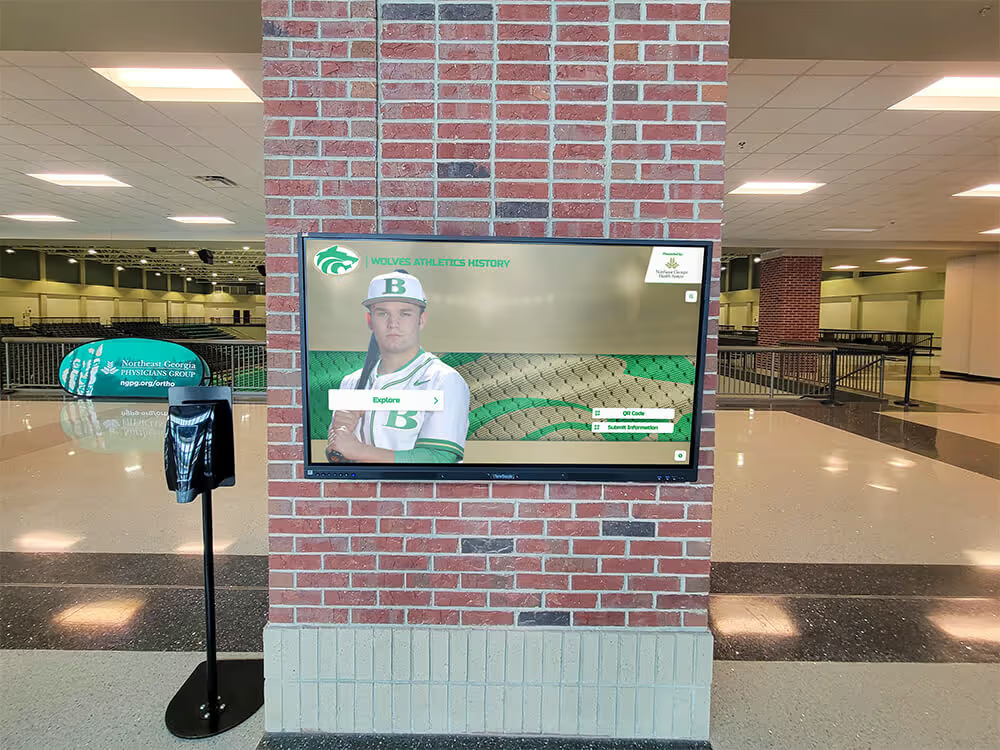
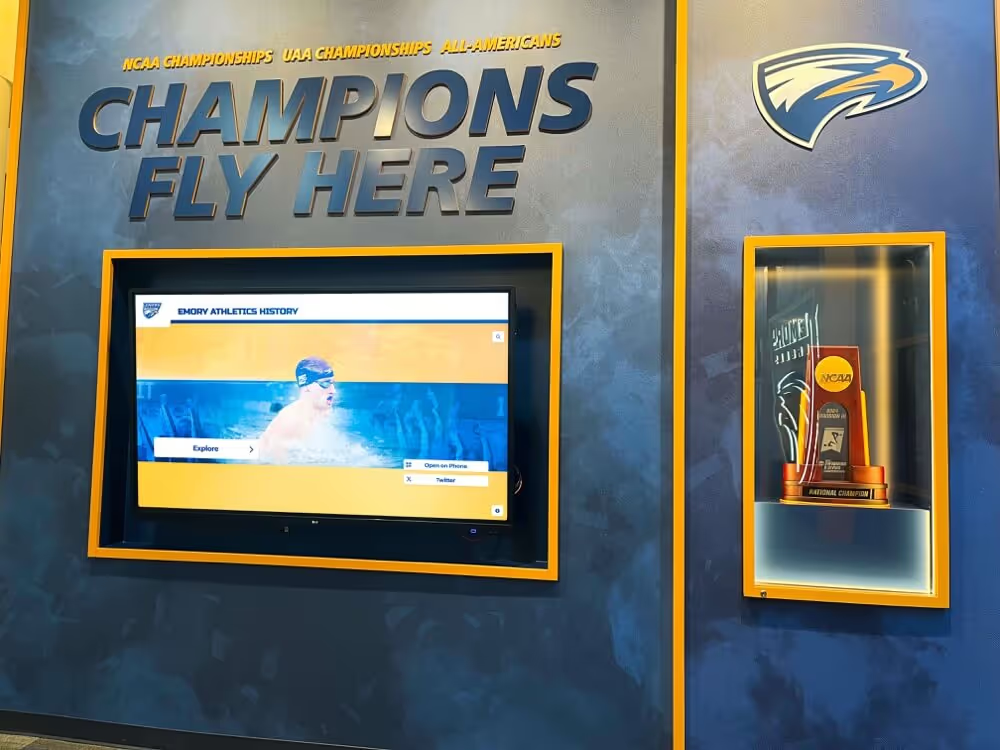
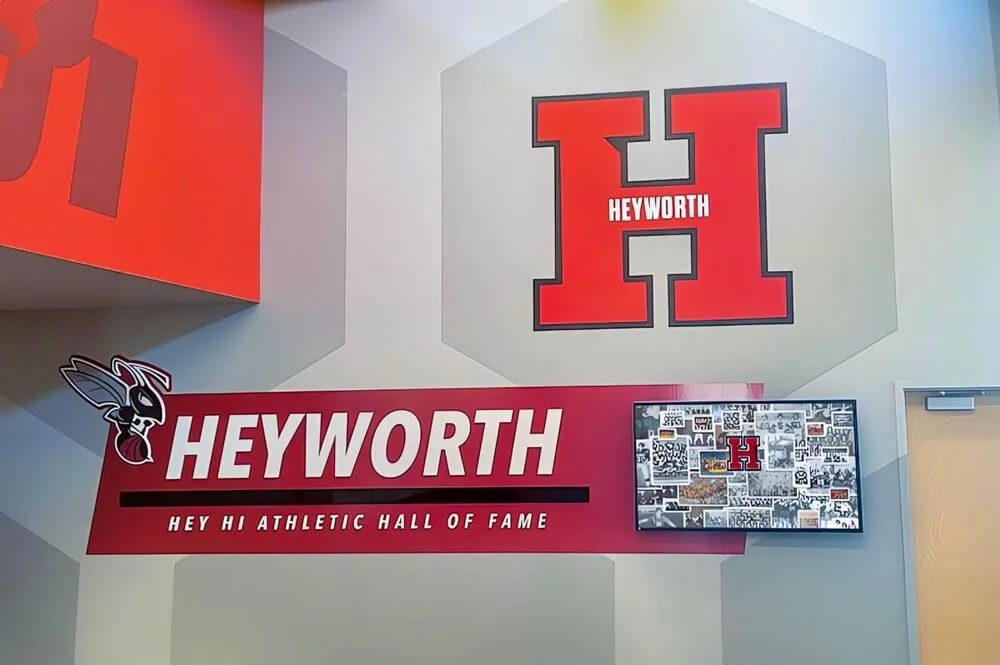
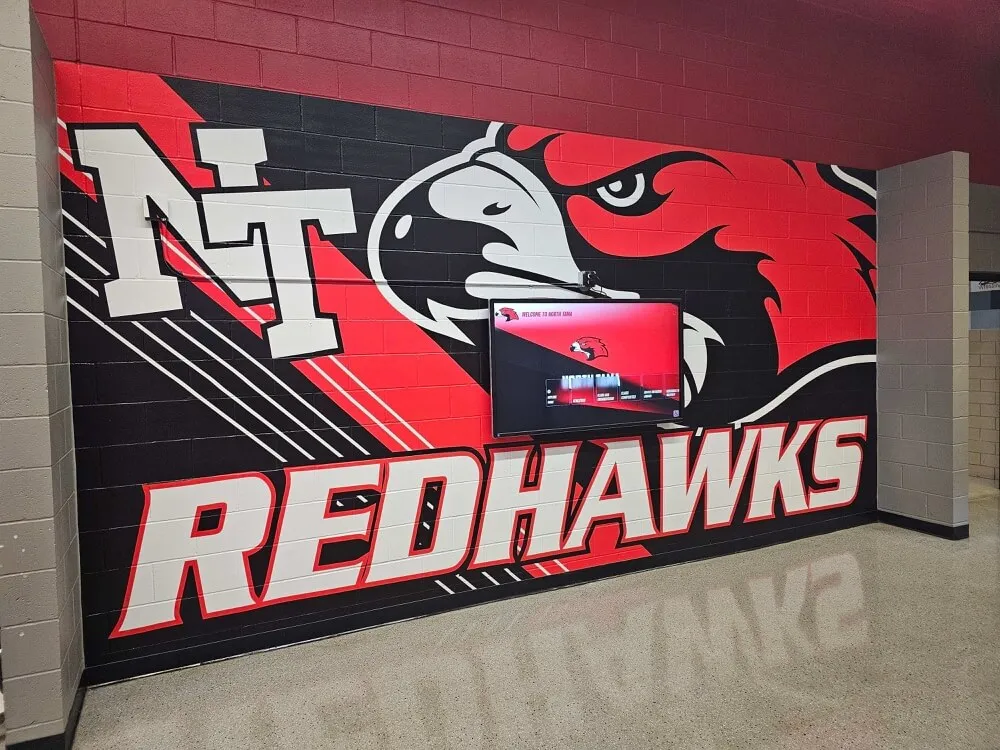
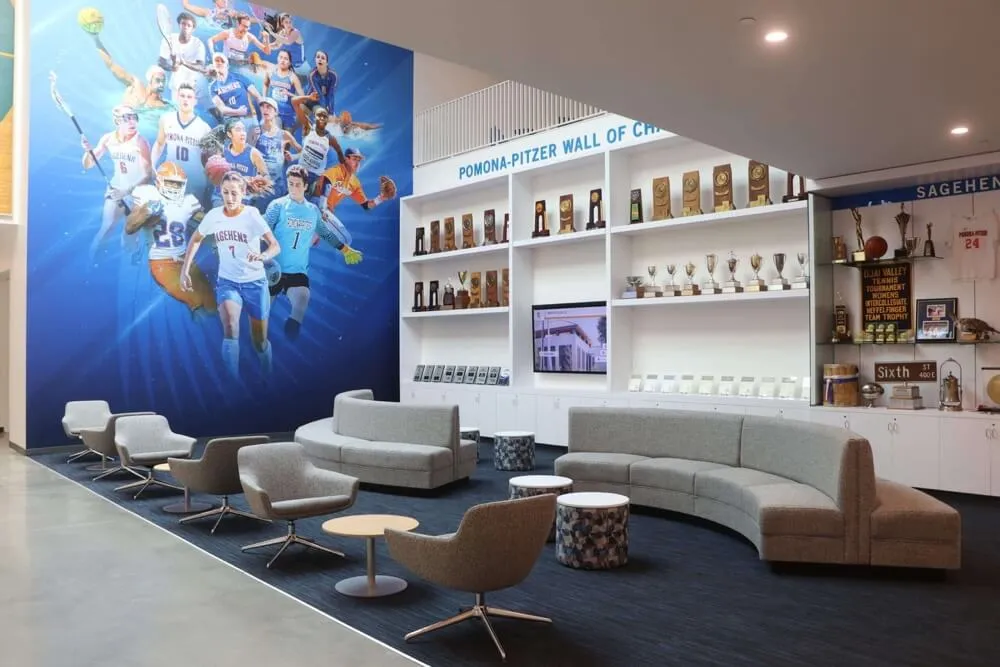
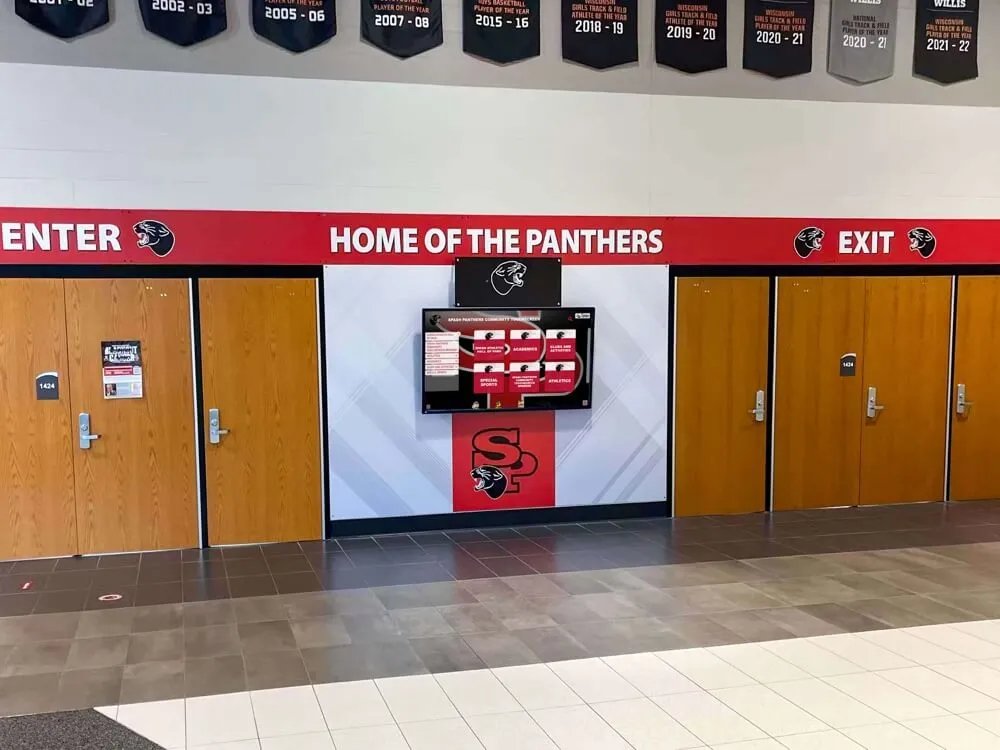
Athletic facility donor recognition must integrate with existing hall of fame displays, championship banners, and team branding — vendor experience in athletic environments matters significantly
What Makes Athletic Facility Donor Recognition Different
Athletic facilities impose requirements on donor recognition walls that don’t apply in academic or administrative settings, and donor recognition wall companies with primarily general-market experience frequently underestimate them.
Audience and context specificity. Athletic recognition spaces are visited primarily by athletes, coaches, families attending events, and the booster community — people with direct stakes in program outcomes. Recognition that uses institutional language appropriate for a development office lobby lands flat in a gymnasium corridor. Vendors who understand athletic culture build displays that feel native to competitive environments.
Visual integration with athletic environments. Athletic facilities feature team murals, mascot graphics, championship displays, and record boards in team colors. Donor recognition installations that ignore this visual environment look added-on rather than integrated. Companies that have designed athletic recognition spaces repeatedly bring design sensibility and material choices that work within these environments.
Seasonal and permanent recognition categories. Most athletic programs juggle two types of recognition simultaneously: permanent donors (booster families committed for years or decades) and seasonal sponsors (businesses or families who fund specific seasons, events, or equipment purchases with annual renewal cycles). These two categories have fundamentally different operational requirements. Permanent donors need accurate, lasting acknowledgment. Seasonal sponsors need display windows with defined expiration dates and renewal workflows. Vendors that conflate these categories create ongoing administrative headaches.
Recognition that scales with booster growth. Active booster programs add donors every year. A system that requires a new fabrication order for each addition becomes costly and time-consuming as programs grow. Evaluating vendor scalability — specifically whether capacity is truly unlimited or whether growth triggers additional costs — is critical for programs with active annual giving programs.
Four Vendor Categories in the Donor Recognition Wall Market
Donor recognition wall companies fall into four broad categories, each with distinct strengths and limitations for athletic facility contexts.
Category 1: Trophy, Plaque, and Engraving Specialists
These companies produce physical recognition materials — engraved bronze plaques, acrylic panels, shield nameplates, donor trees, and laser-etched panels. Most offer customization for team colors and school crests and have experience producing athletic recognition systems.
Best for: Programs with small, stable donor rosters (under 75 annual additions), limited ongoing update needs, and clear donor preferences for tangible, permanent materials. Traditional installations suit naming opportunities — a plaque acknowledging a specific capital gift to a permanent facility — more naturally than dynamic annual recognition programs.
Key limitation: Every new donor, corrected engraving, or giving-level upgrade requires a new production order. At $200–$500 per unit, programs adding 30 donors annually generate $6,000–$15,000 in recurring recognition production costs before installation labor.
Category 2: General Digital Signage Companies
These broad-market vendors offer commercial screens and content management platforms designed for corporate, retail, and hospitality environments. Schools adapt these platforms for donor recognition, but significant customization is typically required to achieve athletic-specific content types.
Best for: Programs with strong internal design capabilities willing to build and maintain custom recognition templates on a general-purpose platform.
Key limitation: General signage platforms are not built for donor recognition workflows — bulk donor import, giving tier management, touchscreen search interfaces, and athletic-specific content types require custom development that often exceeds the initial cost savings of choosing a lower-priced general platform.
Category 3: Education-Focused Digital Recognition Platforms
Purpose-built for K-12 and collegiate recognition, these platforms combine commercial-grade touchscreen hardware with specialized software designed around school recognition workflows: donor profiles, hall of fame inductees, team records, letter-winner rosters, and achievement galleries. Content management is built for development and advancement staff without requiring IT expertise.
Best for: Programs seeking a complete athletic recognition solution — donor acknowledgment, hall of fame, championship history, and seasonal sponsor display — managed through a single content system. These vendors understand school advancement contexts and provide implementation experience specific to athletic environments. Comprehensive overviews of the best hall of fame tools for athletics, donors, and program history help frame what fully-featured athletic recognition platforms can deliver.
Key limitation: Higher initial investment than general signage or traditional plaque vendors. Requires reliable network connectivity for cloud-based content management.
Category 4: Custom Architectural and Fabrication Firms
High-end design and fabrication firms create one-of-a-kind recognition environments — custom metalwork, architectural glass, dimensional typographic walls, and bespoke display systems designed specifically for each space by architects or interior designers.
Best for: Major capital campaigns with significant budgets for signature recognition installations at flagship athletic facilities. These installations communicate institutional prominence and are designed to last 20–30 years.
Key limitation: Highest cost, longest production timelines (6–18 months), and zero update flexibility after installation. Every change requires a new custom fabrication order.
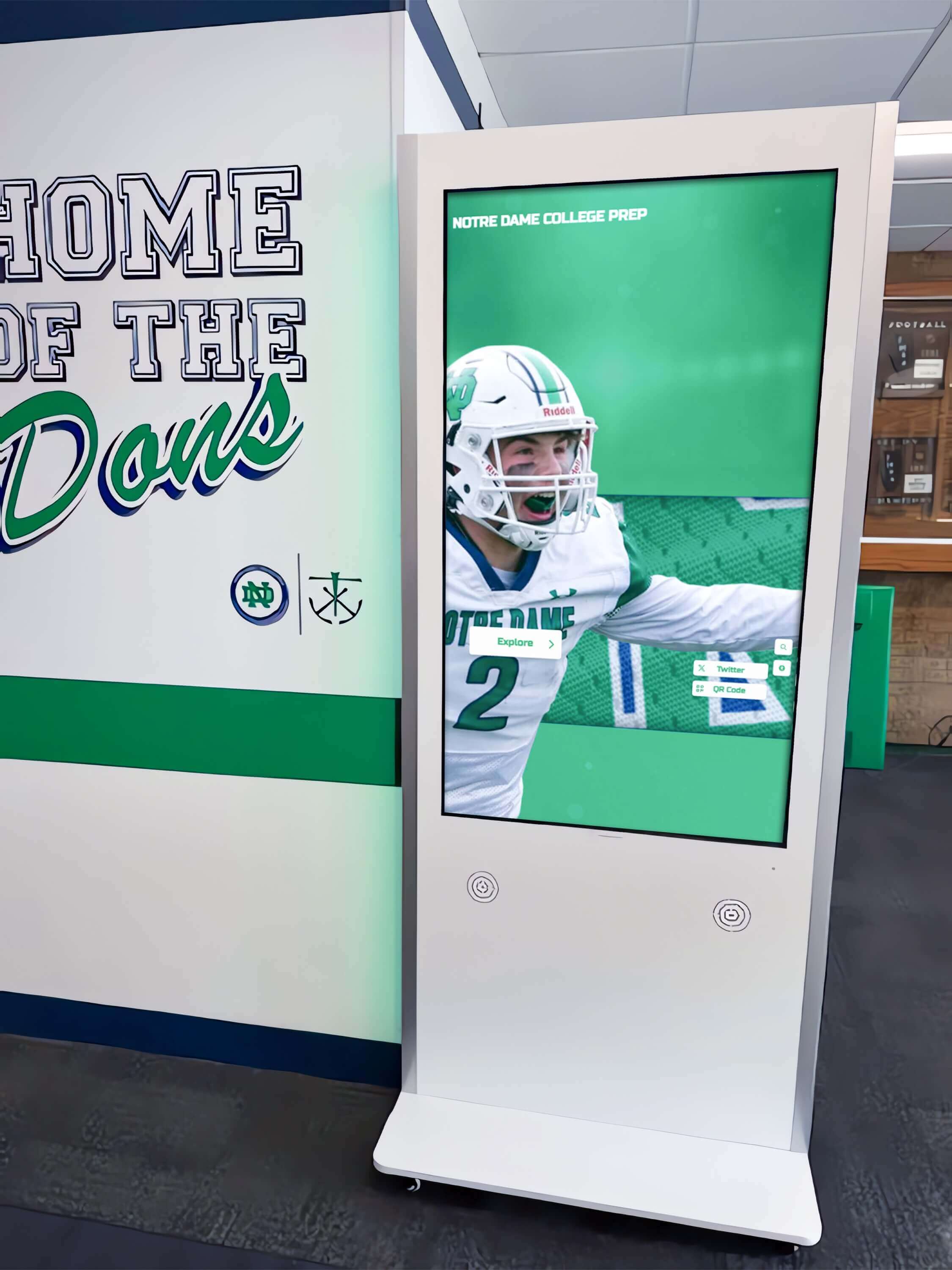
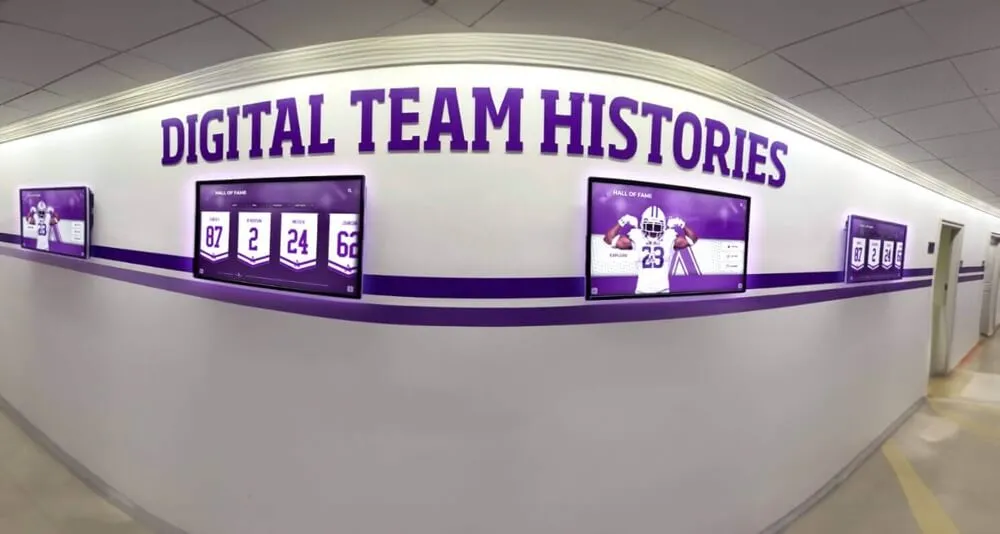
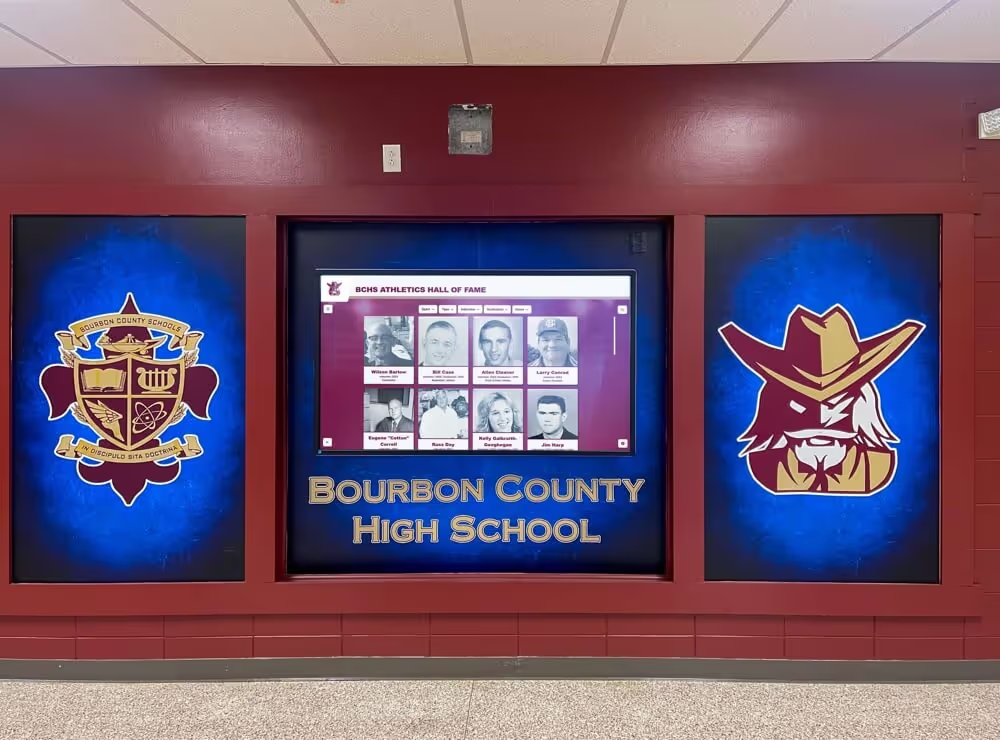
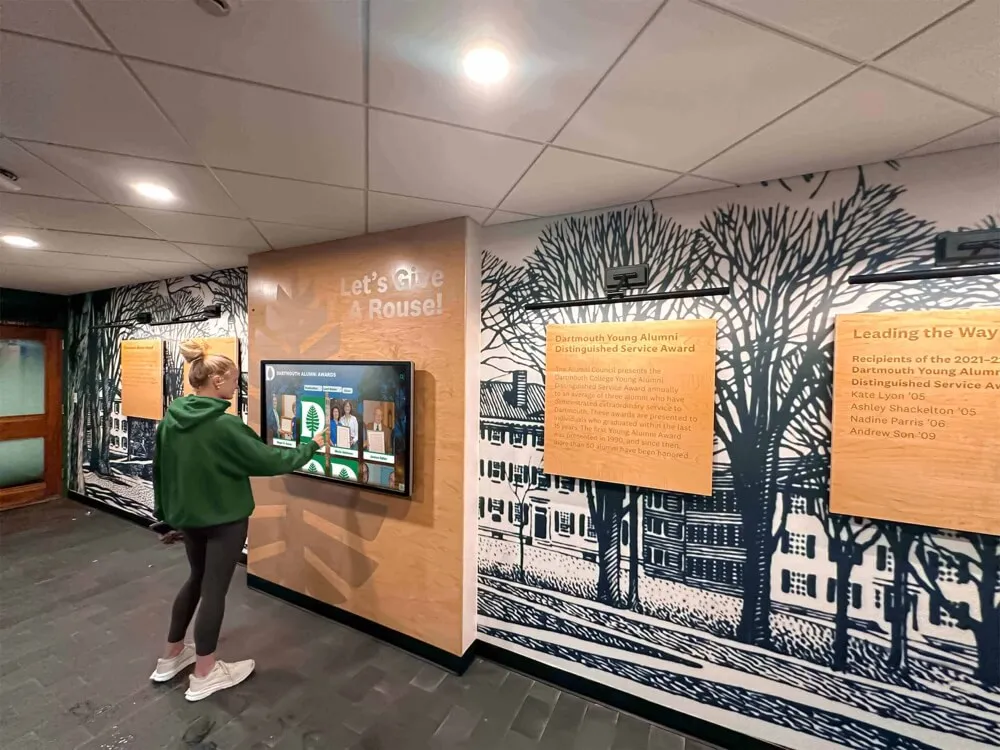
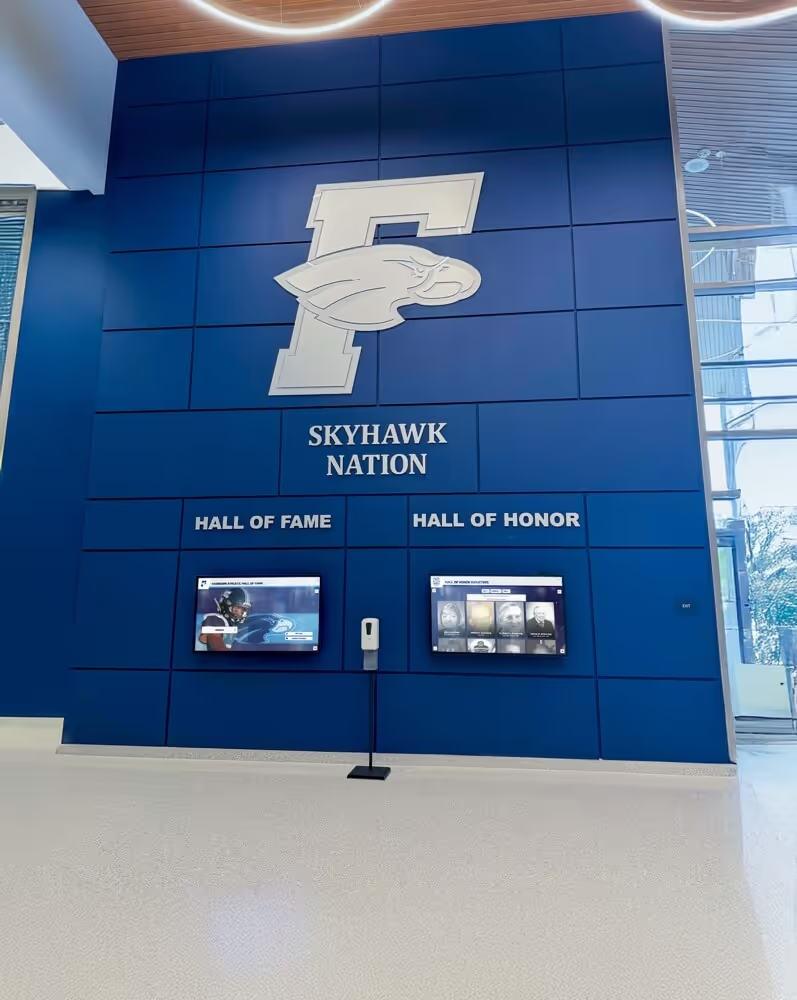
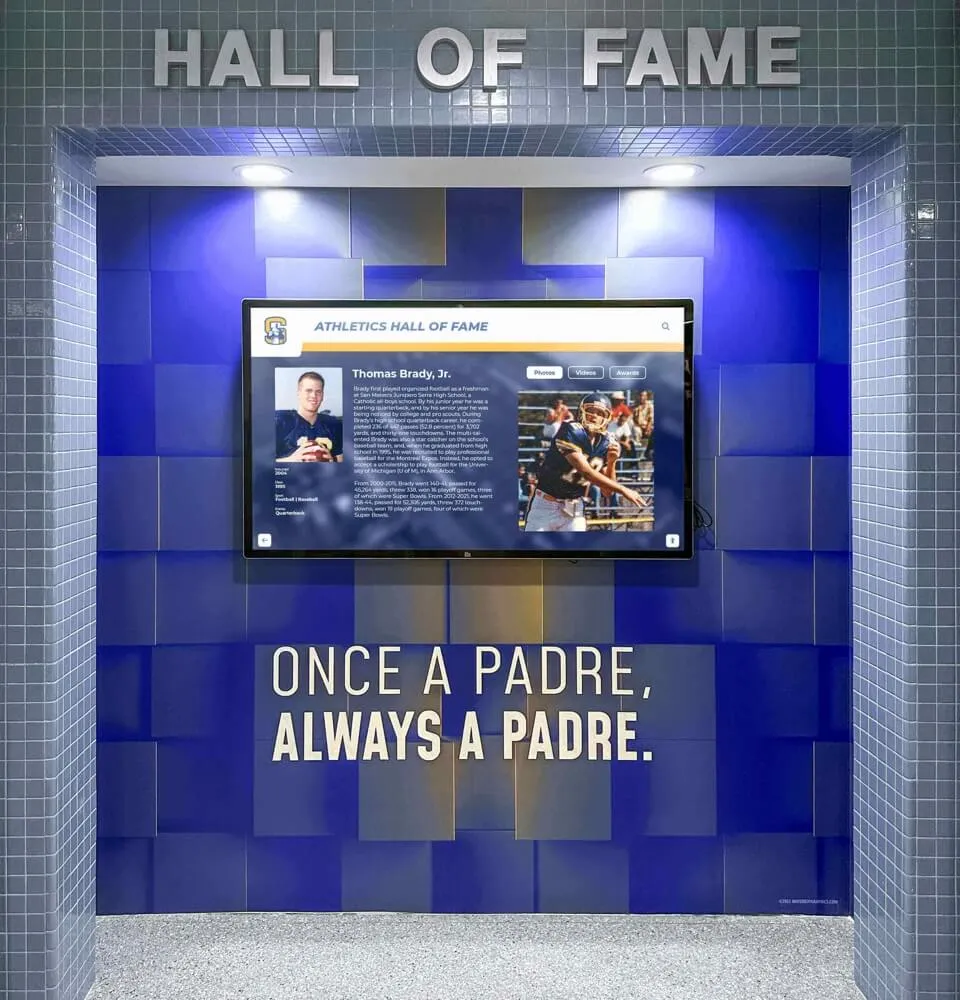
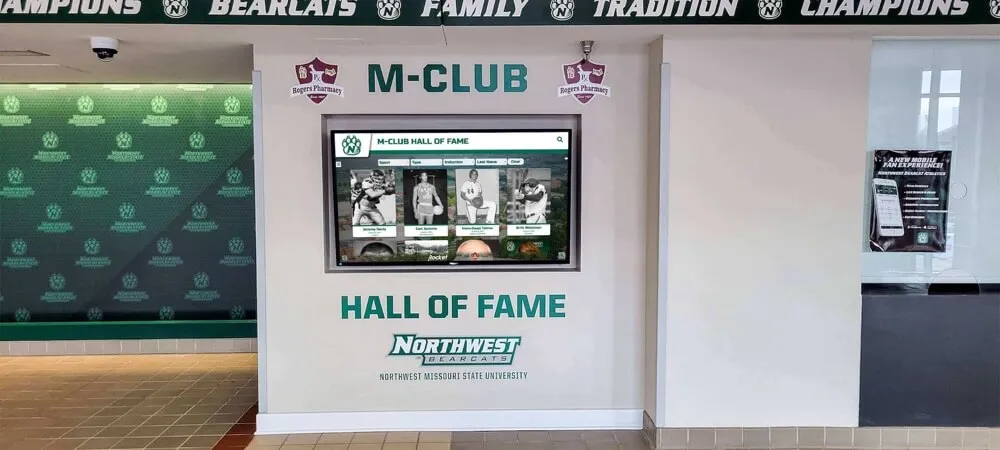
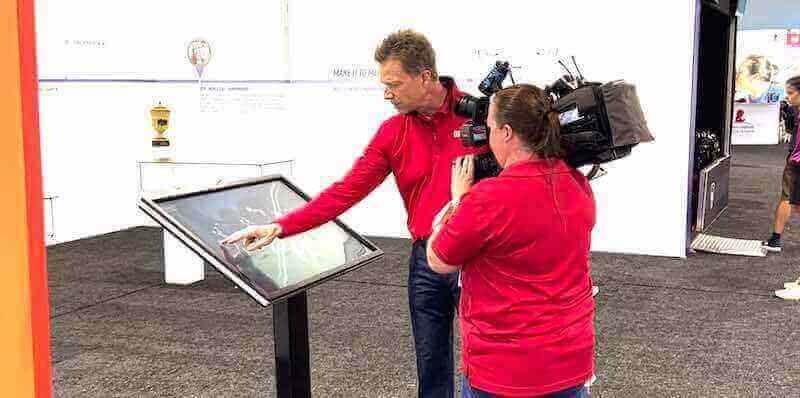
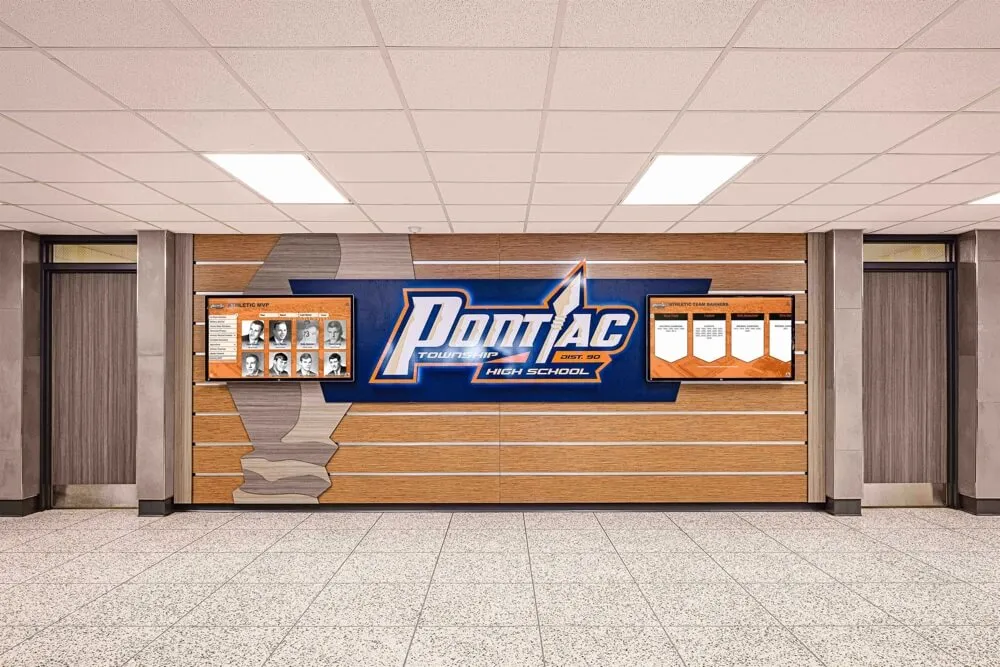
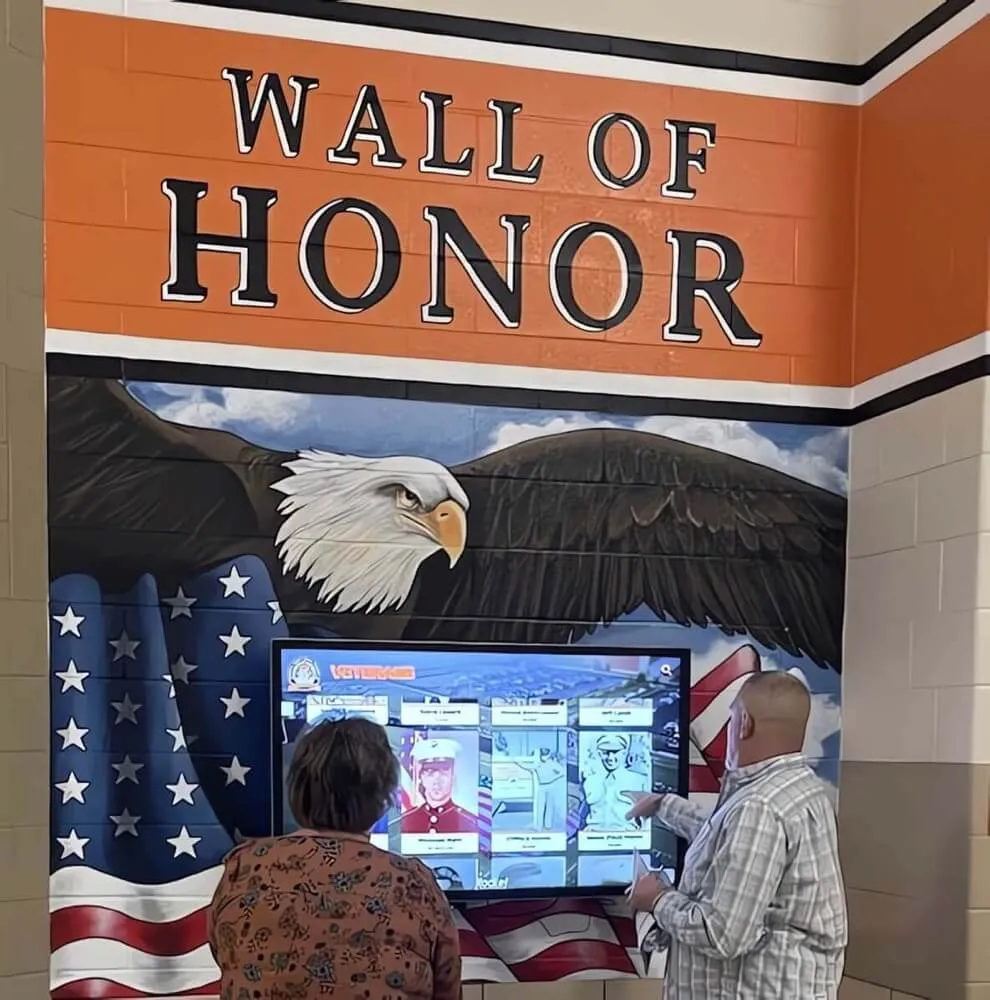
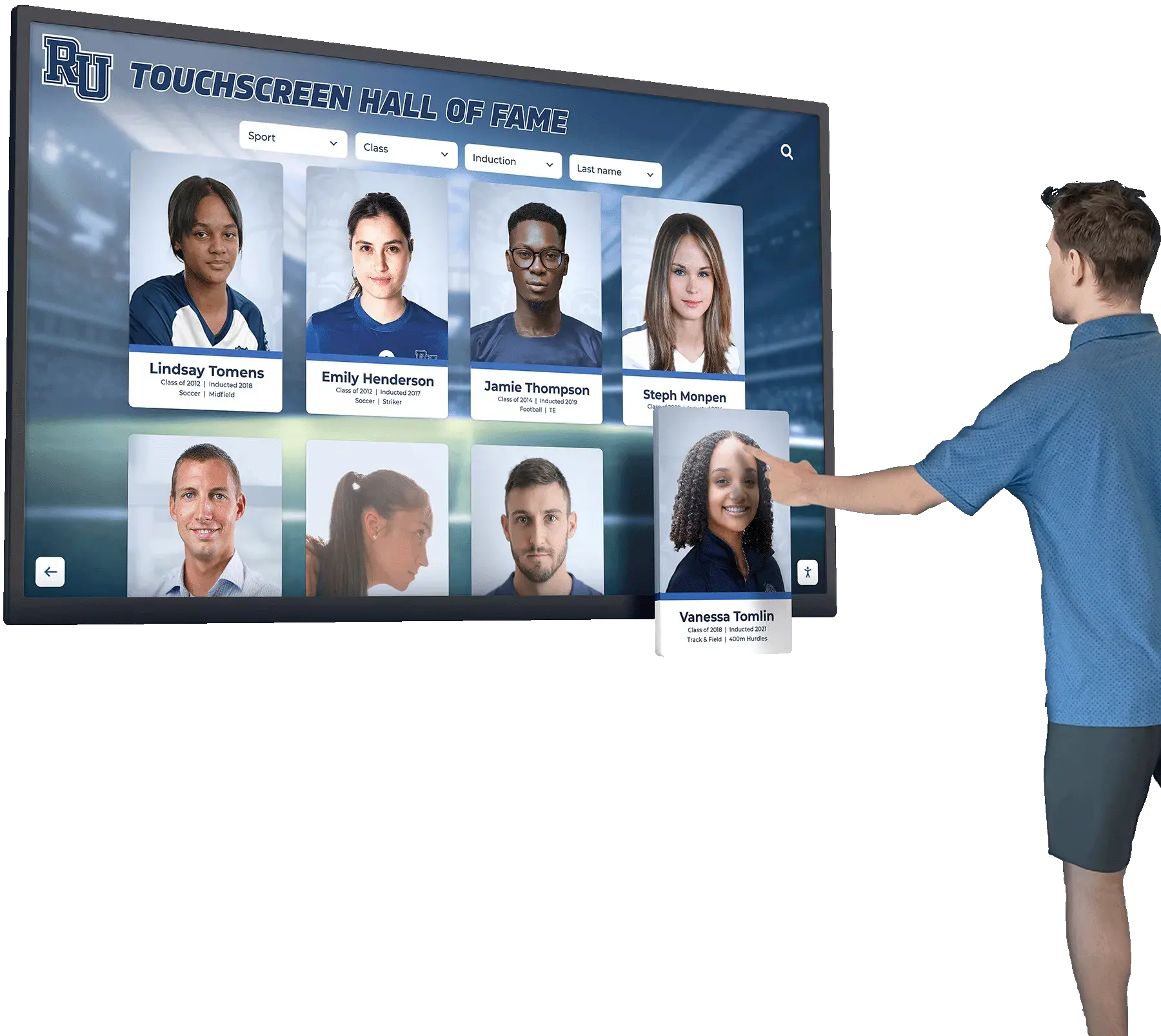
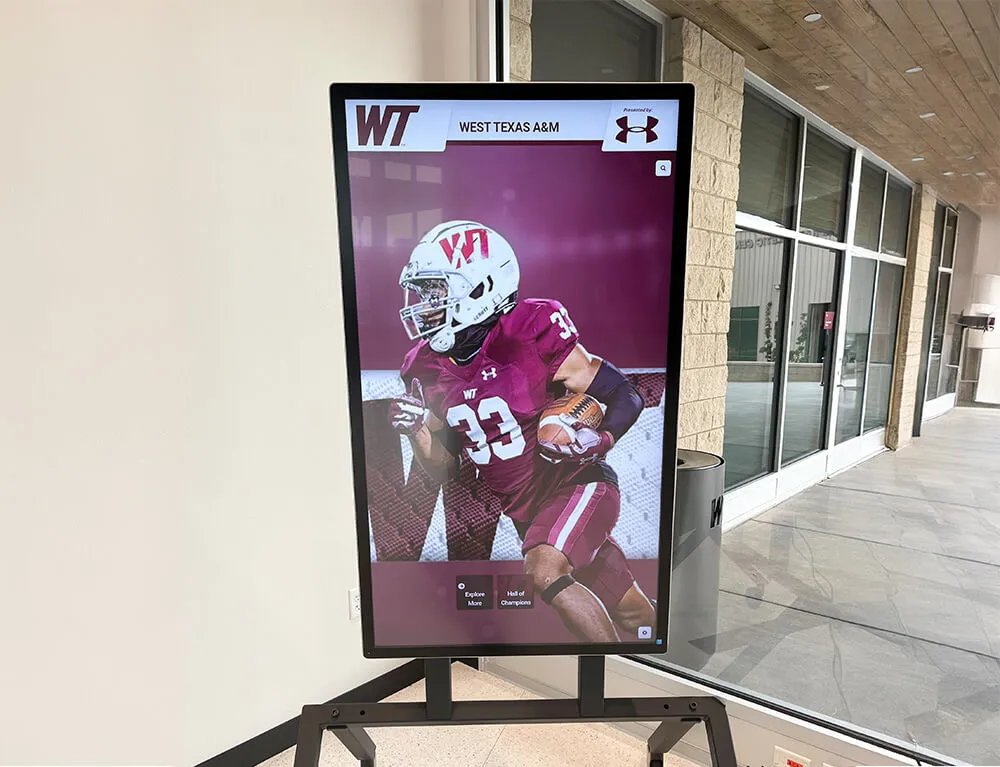
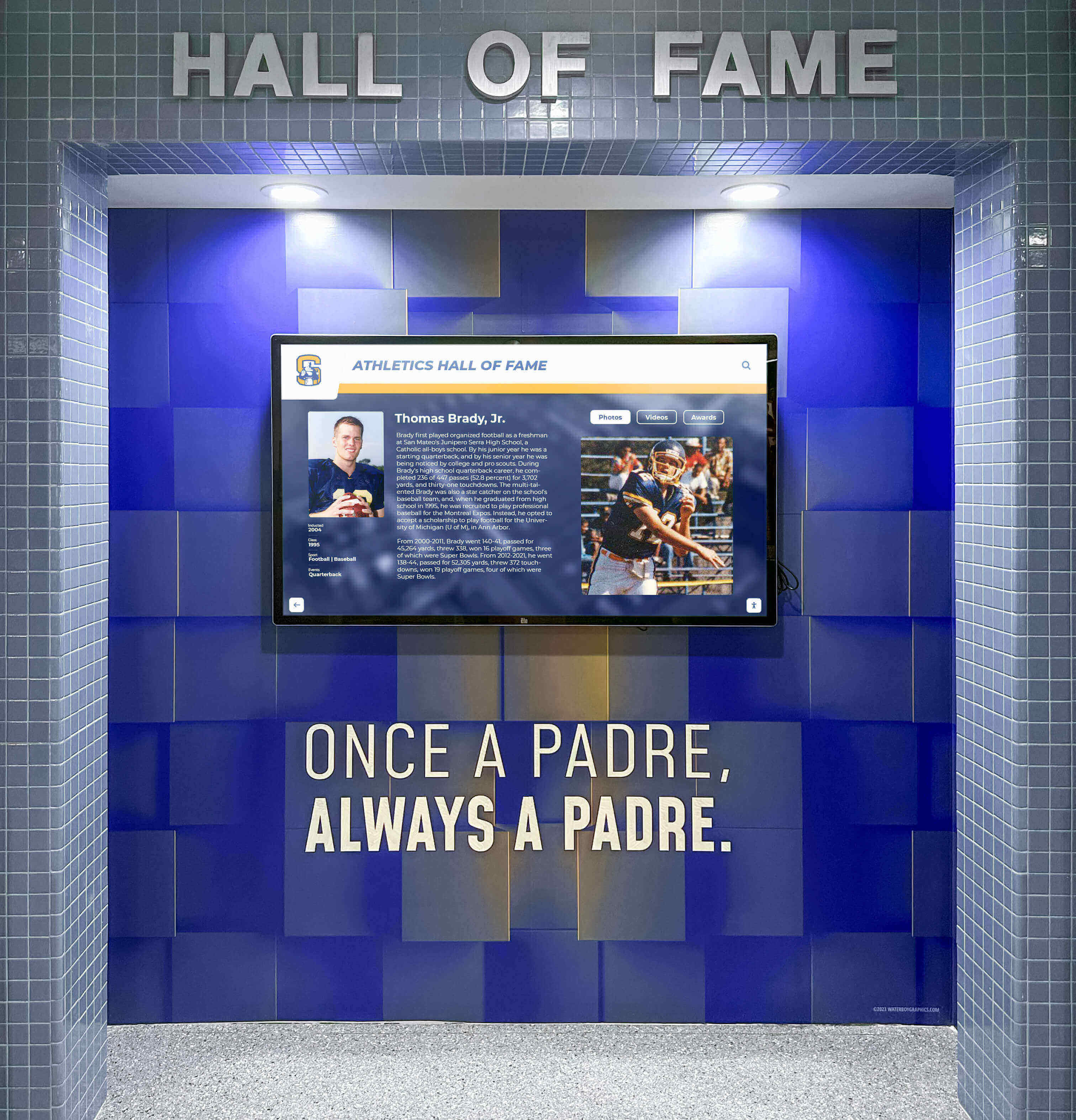
Interactive touchscreen displays let visitors search donor recognition by name, sport, or giving level — a significant advantage for athletic communities with large booster rosters
Vendor Evaluation Checklist for Athletic Departments
When requesting proposals from donor recognition wall companies, evaluate each against these criteria specific to athletic facility contexts. The checklist below distinguishes vendors genuinely built for athletics from those adapting general products.
Athletic-Specific Content Capabilities
- Pre-built athletic content types — Does the platform natively support donor recognition profiles, hall of fame inductees, letter-winner rosters, team championships, and program records? Or does each content type require custom development?
- Seasonal sponsor management — Can the system display current season sponsors with defined expiration dates and renewal workflows, separate from permanent donor recognition?
- Auto-updating records integration — Can athletic records, team histories, and achievement data update automatically when connected to school data sources, or does every change require manual entry?
- Touchscreen donor search — Do visitors search by name, sport, graduation year, or giving level through a touchscreen interface? Or is content presented in a fixed display format only?
- Unlimited donor capacity — Does the system accommodate unlimited profiles without per-donor fees? Or does pricing scale with recognition volume?
- Team branding integration — Can displays incorporate school colors, mascot graphics, and team logos natively? Or does custom branding require additional design charges?
Hardware and Facility Requirements
- Environmental durability — Is the hardware rated for the temperature variations, humidity, and traffic typical of athletic facilities, including gymnasiums, fieldhouses, and natatoriums?
- Installation configurations — Does the vendor offer wall-mounted, kiosk, recessed, and free-standing configurations appropriate for different athletic facility spaces?
- ADA compliance — Does the installation meet ADA mounting height requirements (touchscreen center 15–48 inches from floor) and WCAG 2.1 AA digital accessibility standards?
- Commercial-grade hardware — Is the display rated for 16–24 hours of daily operation, or is it consumer-grade hardware with limited operational-hour ratings?
Vendor Experience and Support
- Athletic program references — Can the vendor provide references from athletic directors or advancement staff at comparable schools with active booster programs?
- Implementation timeline — What is the realistic timeline from signed contract to operational installation? Does it align with your planned campaign launch or facility calendar?
- Content migration support — Does the vendor assist with importing existing donor data from spreadsheets or fundraising databases?
- Training and ongoing support — What training is provided for development staff? What support is included in annual service agreements? Is training available for new staff added after initial deployment?
- Hardware warranty — What is the warranty period and hardware replacement policy for commercial-grade displays?
Financial Due Diligence
- Complete 5-year cost projection — Has the vendor provided a total cost model covering hardware, software licensing, support, and projected content updates over a 5-year period?
- Per-donor cost model — Is capacity truly unlimited, or does recognition volume eventually trigger additional costs?
- Traditional vs. digital breakeven modeling — Has the vendor modeled the point at which digital recognition delivers lower total cost than continuous traditional plaque production for your projected donor growth rate?
Digital vs. Static: Side-by-Side Comparison for Athletic Facilities
The choice between static and digital systems is the most consequential vendor decision athletic programs make. This comparison focuses on the dimensions most relevant to athletic facility contexts.
| Criterion | Static / Traditional | Digital Interactive |
|---|---|---|
| Initial installed cost | $5,000–$15,000 | $12,000–$25,000 |
| Per-donor addition cost | $200–$500 per unit | $0 (cloud content update) |
| Update lead time | 3–6 weeks | Minutes (remote update) |
| Donor capacity | Limited by wall space | Unlimited |
| Seasonal sponsor rotation | New plaques each cycle | Automatic expiration/renewal |
| Touchscreen search | Not available | Yes — name, sport, year, tier |
| Athletic records integration | Static; requires new production | Can update automatically |
| Multimedia donor profiles | Name and tier only | Photos, impact stories, video |
| 10-year cost (75 donors/year) | $170,000–$240,000+ | $30,000–$55,000 |
| Environmental durability | High (no electronics) | High with commercial hardware |
| Team branding | Custom colors available | Full logo and color integration |
The 10-year cost comparison reflects a consistent financial reality: programs adding donors steadily find digital systems significantly less expensive than static alternatives once cumulative plaque production costs are honestly modeled. Reviews of top hall of fame recognition tools for school athletic programs reveal similar cost dynamics across recognition display categories — static systems appear less expensive initially but accumulate costs rapidly as programs grow.
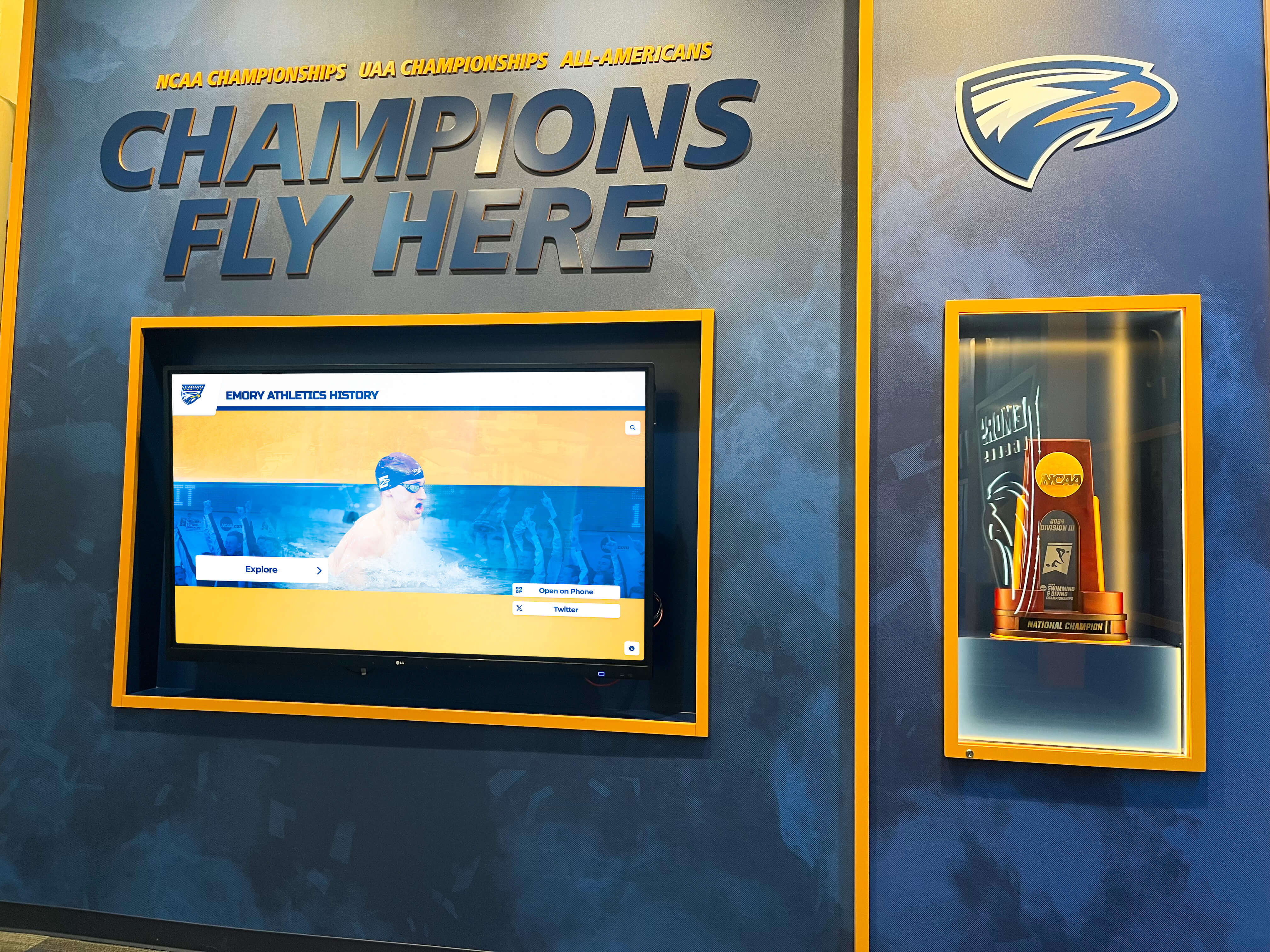
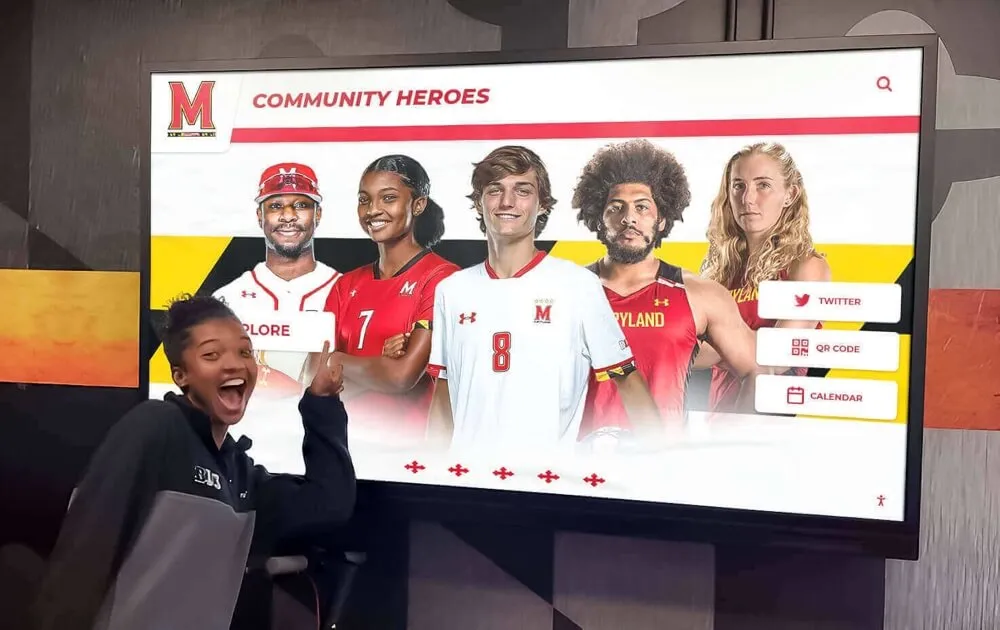
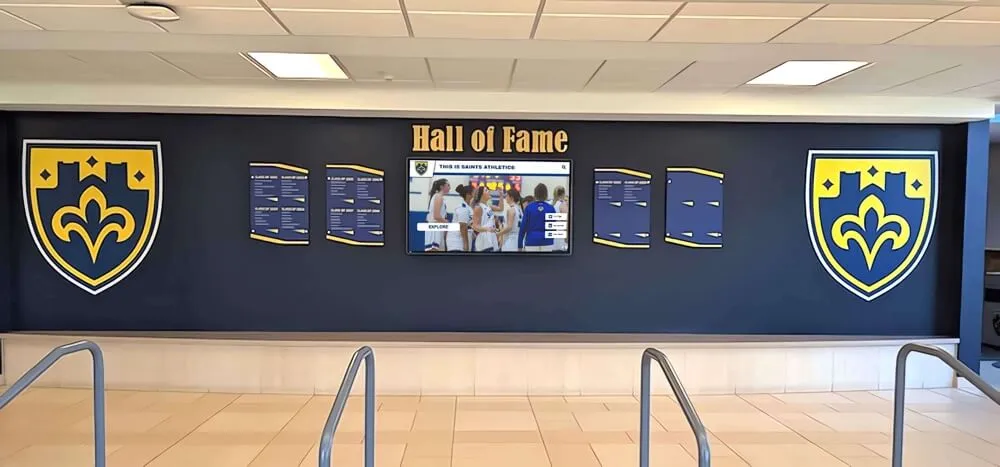
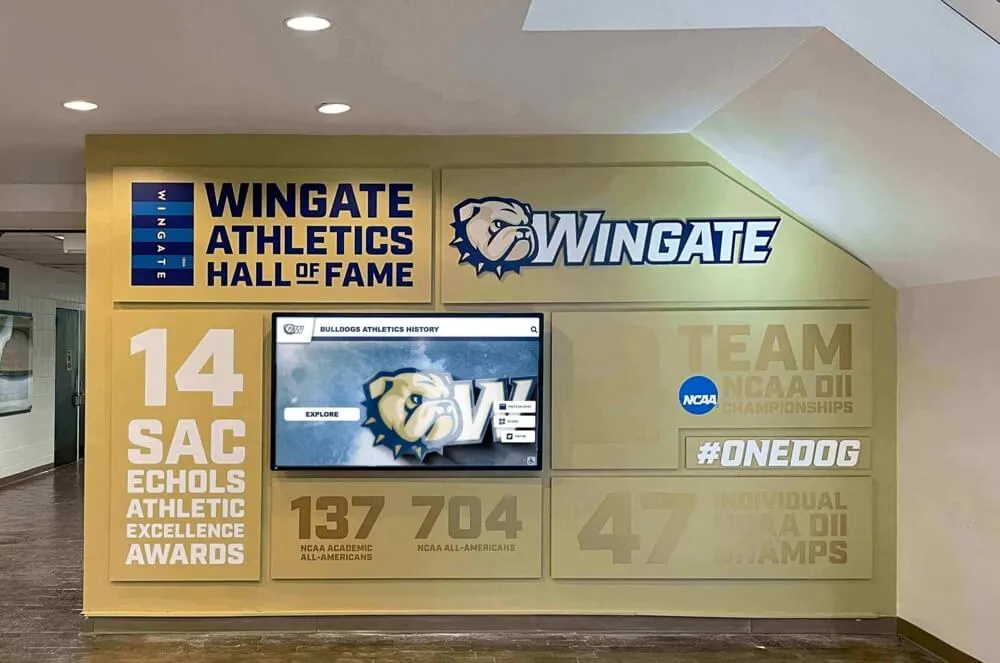
Athletic recognition walls often combine championship acknowledgment with donor recognition — digital platforms handle this content integration natively through a single management interface
Featured Vendor: Rocket Alumni Solutions
Among donor recognition wall companies purpose-built for school athletic environments, Rocket Alumni Solutions offers a combination of interactive display technology, athletic-specific content types, and cloud-based management designed for school advancement teams rather than IT departments.
The platform supports donor recognition alongside athletics hall of fame inductees, letter-winner rosters, team championships, program history, and record boards — all managed through a single content system and displayed on commercial-grade touchscreens in athletic facilities. Booster families, alumni, and visitors search by donor name, filter by sport or graduation year, and explore rich profiles incorporating photographs and personal narratives that static plaques cannot accommodate.
For athletic departments running seasonal sponsor programs — a distinctive operational challenge most general vendors handle poorly — Rocket Alumni Solutions supports dedicated sponsor display panels with rotation schedules, contract expiration dates, and renewal workflows. Programs exploring how leading schools structure combined hall of fame and donor recognition installations can review hall of fame tools for athletic programs and donors to understand how integrated platforms compare to single-purpose solutions.
Installations span K-12 and collegiate athletic facilities, providing references from athletic directors and development offices at schools with active booster programs. Content management requires no coding expertise — development staff and athletic administrators update recognition displays remotely from any device through a browser-based interface.
Want to see how the platform handles your specific athletic facility and donor program? Request a personalized demonstration from Rocket Alumni Solutions to explore how donor recognition, hall of fame displays, and seasonal sponsor acknowledgment work in a single integrated system.
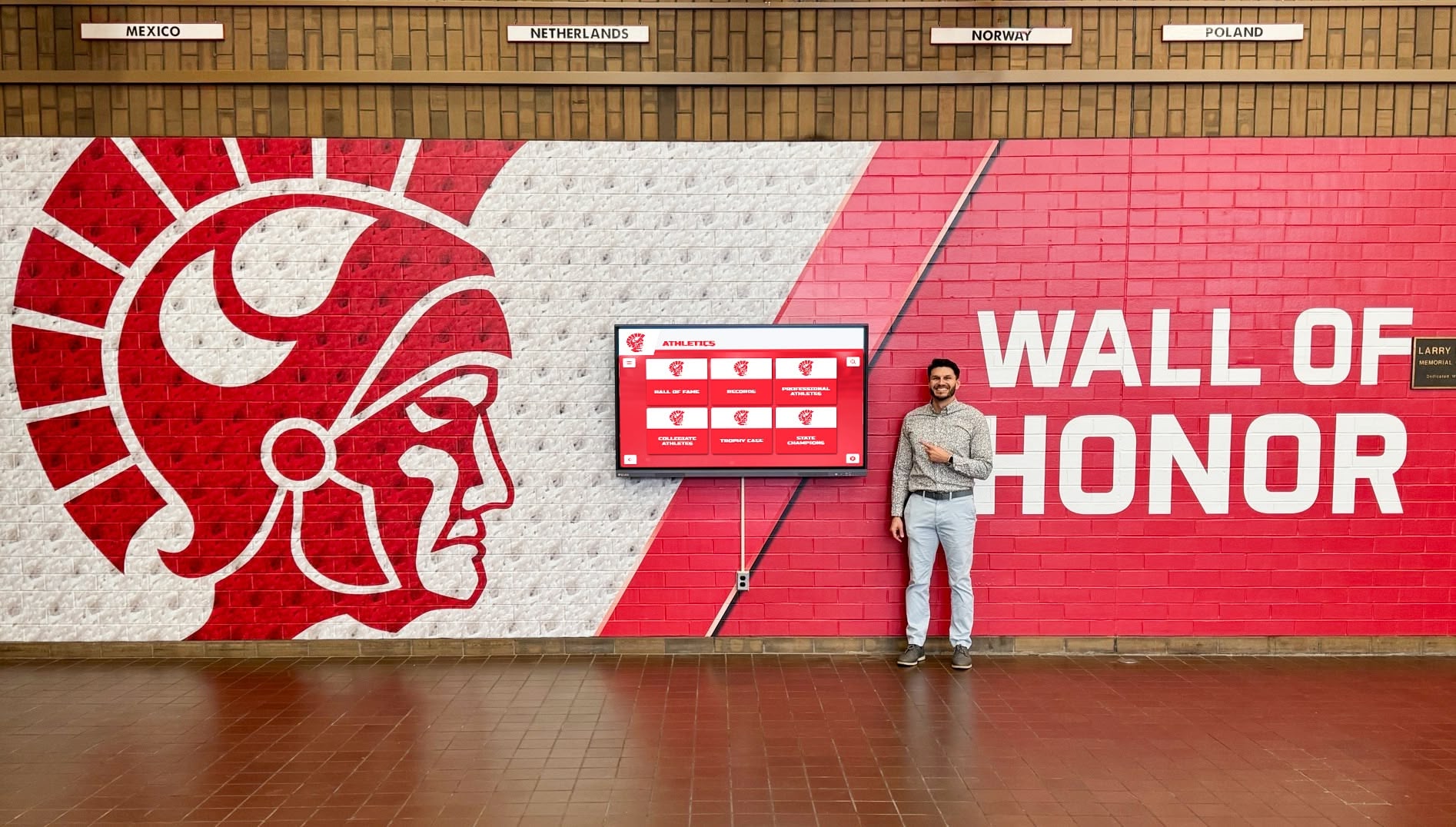
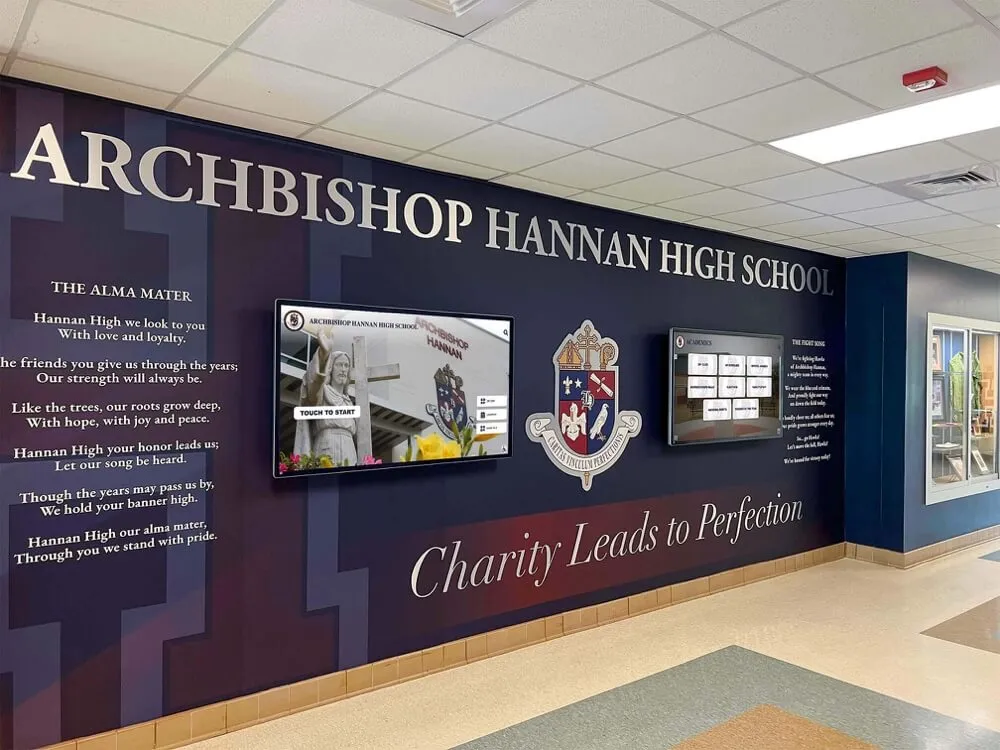
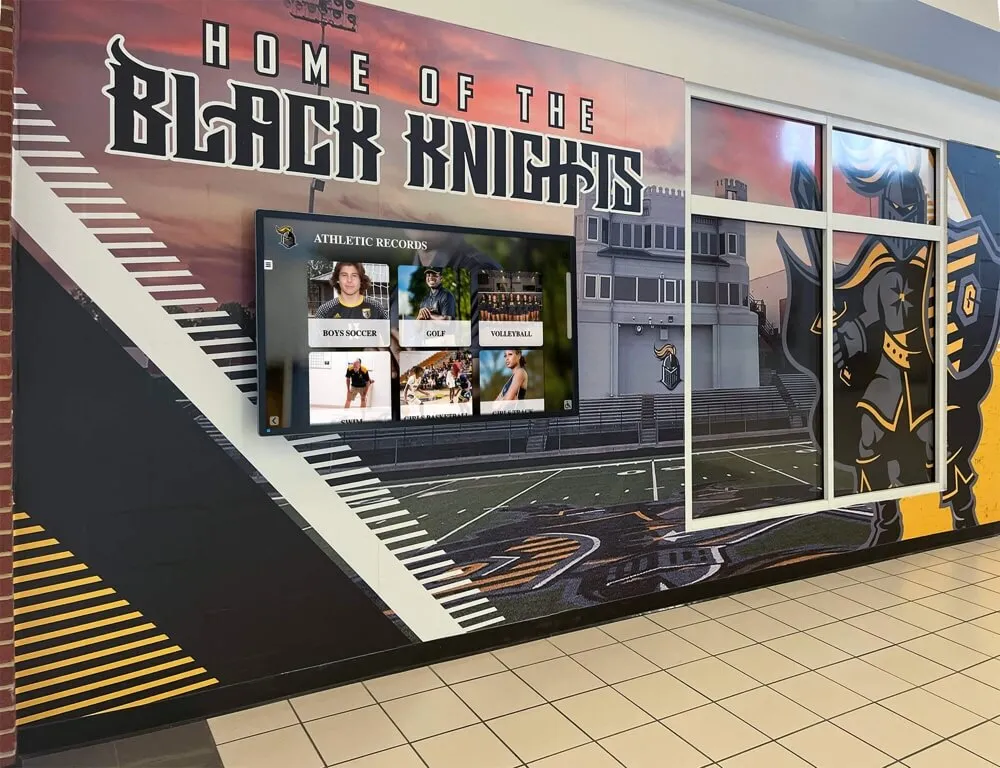
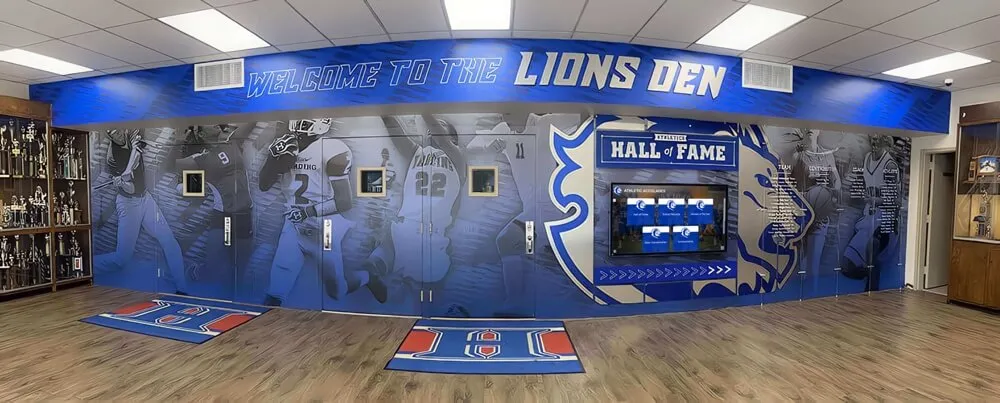
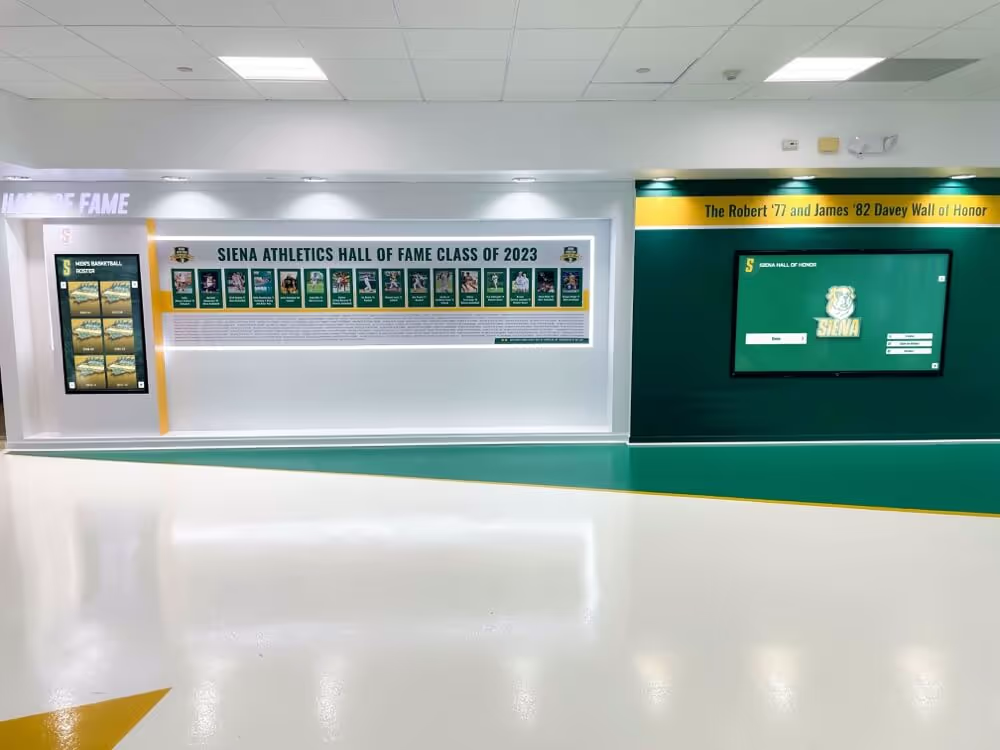
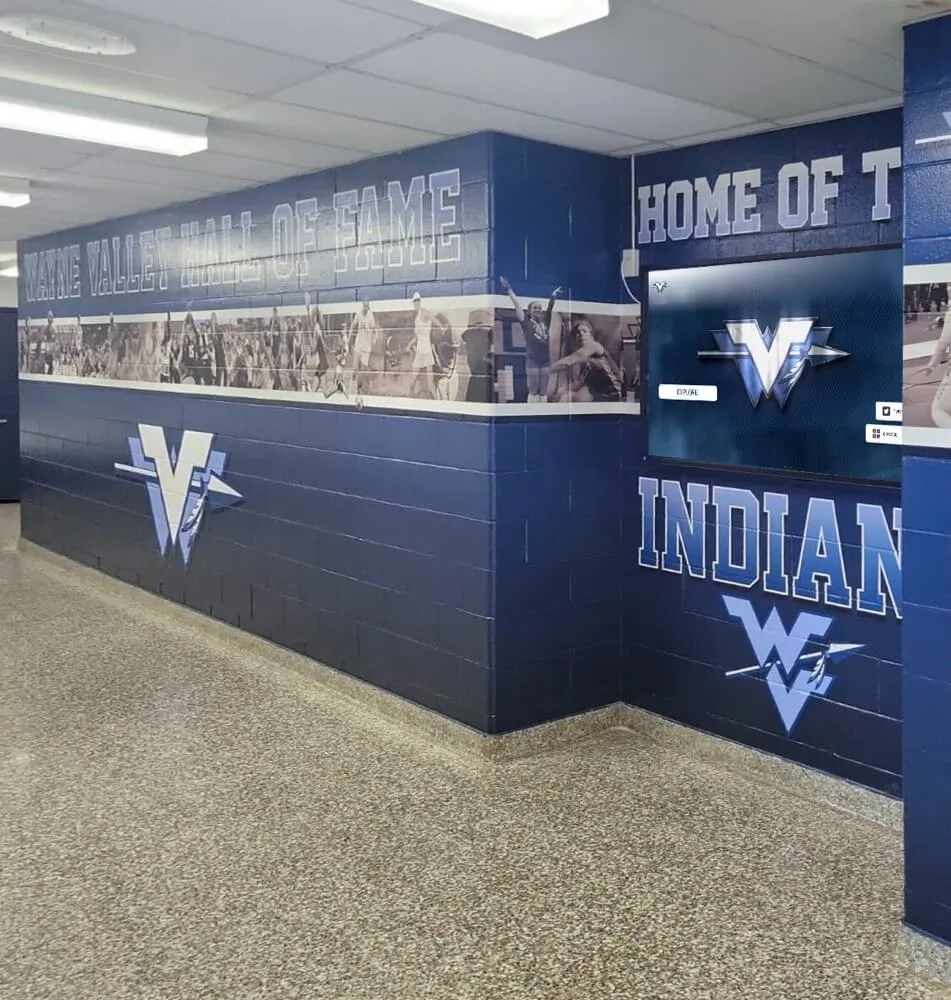
Integrated donor recognition walls blend team identity with supporter acknowledgment — vendors with athletic facility experience deliver installations that feel native to competitive sports environments
Key Questions to Ask Every Vendor
Beyond the evaluation checklist, these open-ended questions reveal meaningful differences in vendor approach and alignment with athletic program realities.
“Walk me through how a development staff member adds a new booster donor to the display.”
This question reveals actual content management workflow, not the polished version from a sales demonstration. Simple, intuitive workflows indicate platforms designed for non-technical advancement staff. Multi-step processes requiring IT involvement signal systems built primarily for technical administrators.
“How does your system handle seasonal sponsors differently from lifetime donor recognition?”
Athletic programs need to clearly distinguish annual sponsors from permanent recognition donors. Vendors without a clear answer here likely haven’t designed their systems around athletic operational realities — this is a dealbreaker question for programs with active sponsorship programs.
“What happens when a donor’s giving level changes or they want a profile update?”
This tests update workflow simplicity and cost. Digital vendor answers should describe immediate remote updates at no additional cost. Traditional vendor answers describe new production orders with lead times and per-unit costs. The honest answer to this question often shifts the financial comparison more than any upfront pricing discussion.
“Can you provide references from schools with comparable athletic programs and booster giving levels?”
References from comparable programs validate claimed capabilities in real-world athletic contexts. Vendors without relevant athletic references may be adapting general products rather than offering proven athletic-specific solutions. Always call references — sales demonstrations are curated; reference conversations reveal real operational experiences. Programs looking for additional context on athletic recognition programs can consult guides to youth sports awards and recognition approaches that frame donor recognition within broader program stewardship.
“What is your realistic timeline from signed contract to operational display?”
Honest timeline disclosure identifies vendors with proper project management. Timelines under four weeks for complex installations warrant follow-up questions. Timelines over 12 weeks may conflict with planned campaign launches or facility opening events. Ask specifically about content migration support and whether the quoted timeline assumes all donor data is ready at contract signing.
Implementation Planning for Athletic Facilities
Athletic facility donor recognition installations involve coordination across multiple stakeholders — facilities management, IT/network services, development and advancement offices, and booster club leadership. The vendor partners best suited to athletic programs provide structured project management support throughout implementation.
Pre-Installation Checklist
Facility assessment:
- Confirm mounting location structural support for display weight (55-inch: 40–60 lbs; 75-inch: 80–120 lbs)
- Verify proximity to electrical outlets (20-amp circuit recommended for larger commercial displays)
- Confirm WiFi signal strength or ethernet access at installation location
- Assess ambient lighting at different times of day and during evening events
- Verify ADA mounting compliance (touchscreen center 15–48 inches from floor for wheelchair access)
Content preparation:
- Compile complete donor database with names, giving levels, and recognition tier assignments
- Gather donor photographs from events, submitted headshots, or yearbook archives for alumni donors
- Document current season sponsors with display specifications and contract expiration dates
- Identify hall of fame inductees and program records to display alongside donor recognition
- Confirm donor privacy preferences — some supporters prefer not to be publicly listed
Vendor coordination:
- Confirm hardware delivery timeline and installation crew availability
- Schedule facilities staff support for installation date and any electrical or network work
- Plan staff training session for content management system
- Set a public launch date aligned with a donor event, booster meeting, or facility opening
Programs that prepare content concurrently with vendor selection — compiling donor data, gathering photographs, documenting sponsors — achieve faster operational launches and deliver better first-impression quality. Athletic programs planning broader recognition programs alongside donor wall installation can benefit from resources covering youth sports awards and recognition ideas to ensure donor recognition integrates coherently with other forms of athletic acknowledgment.
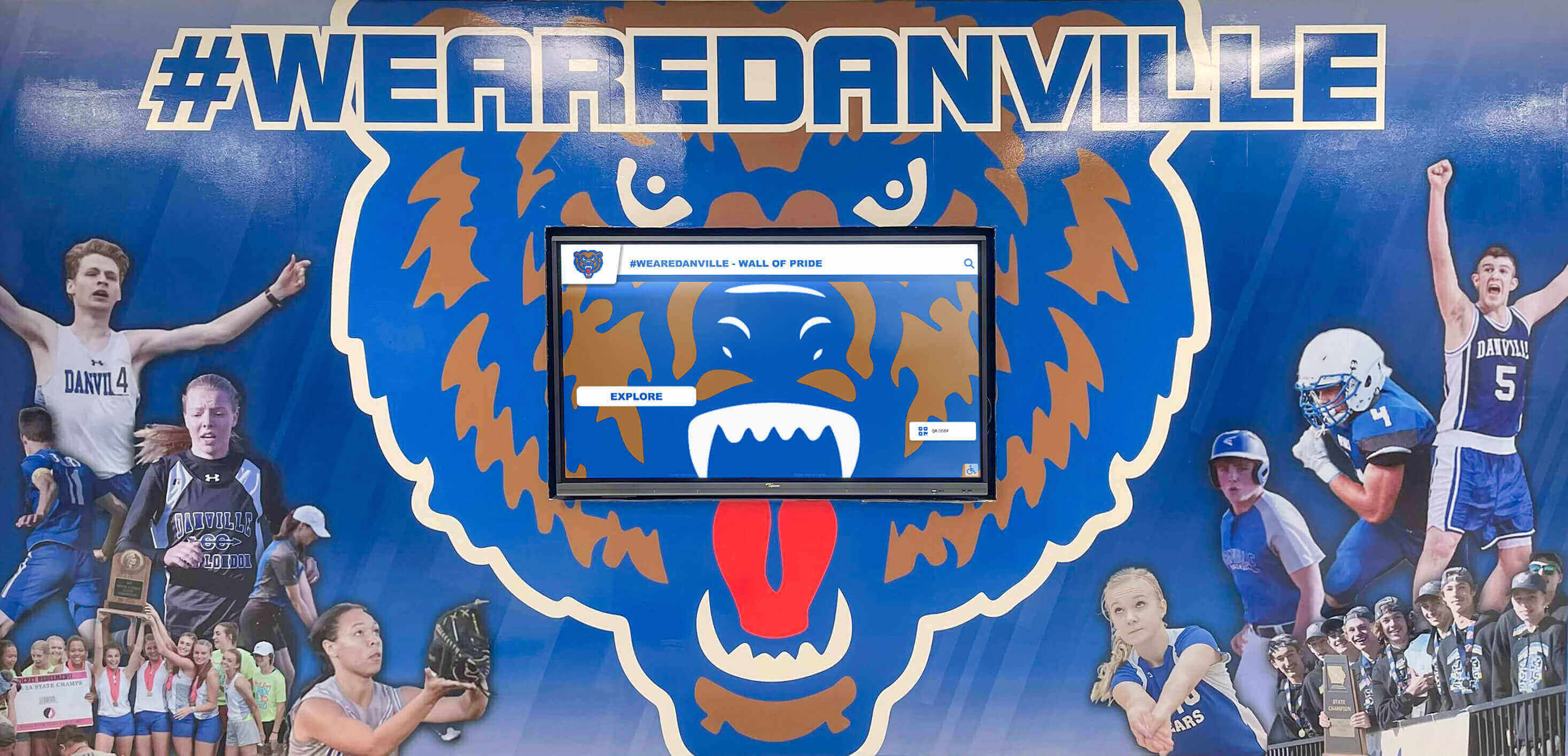
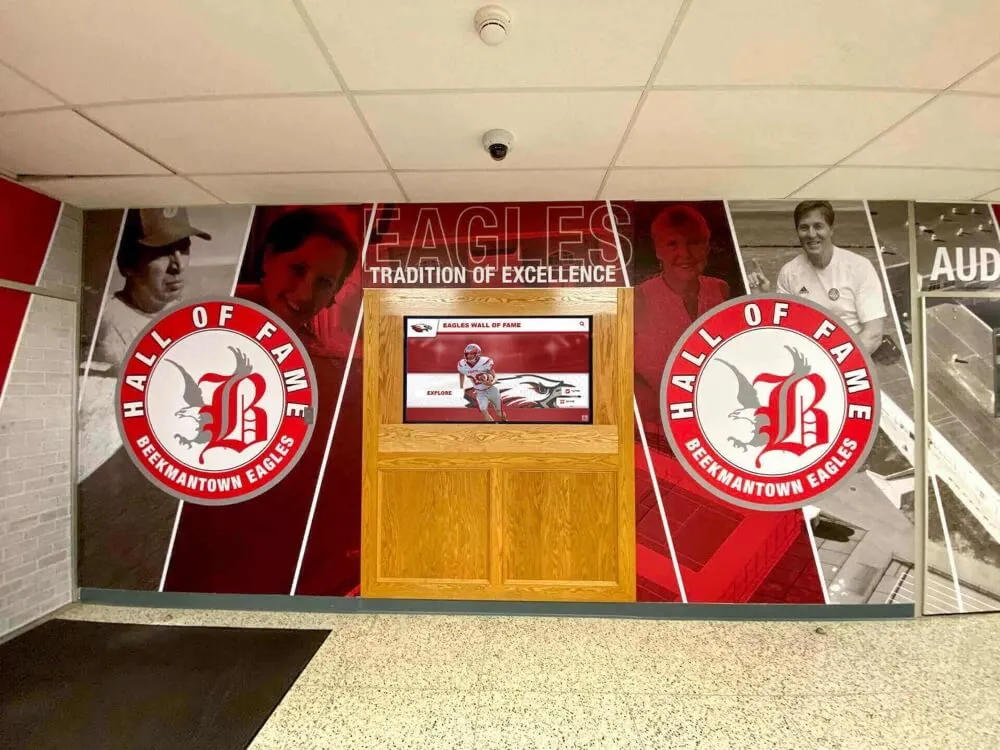
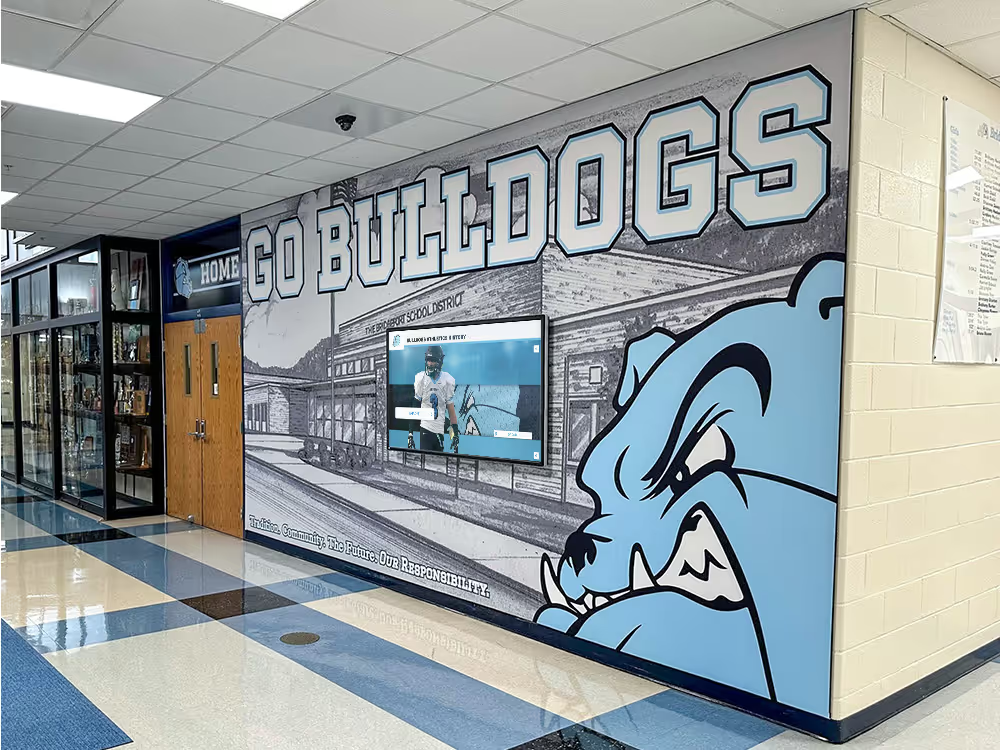
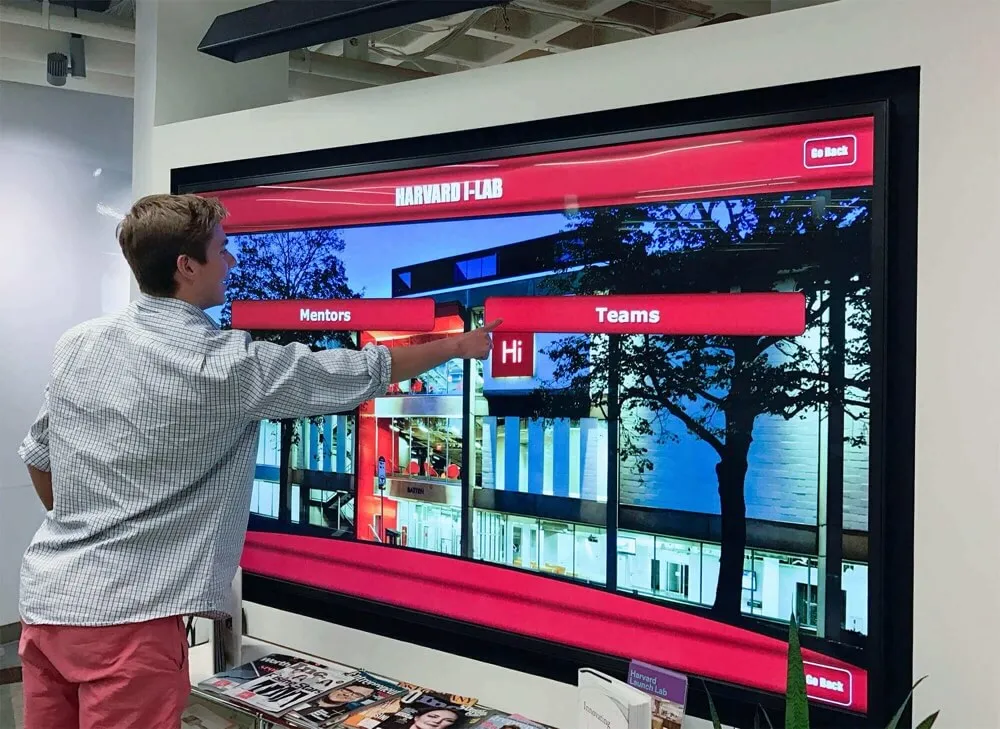
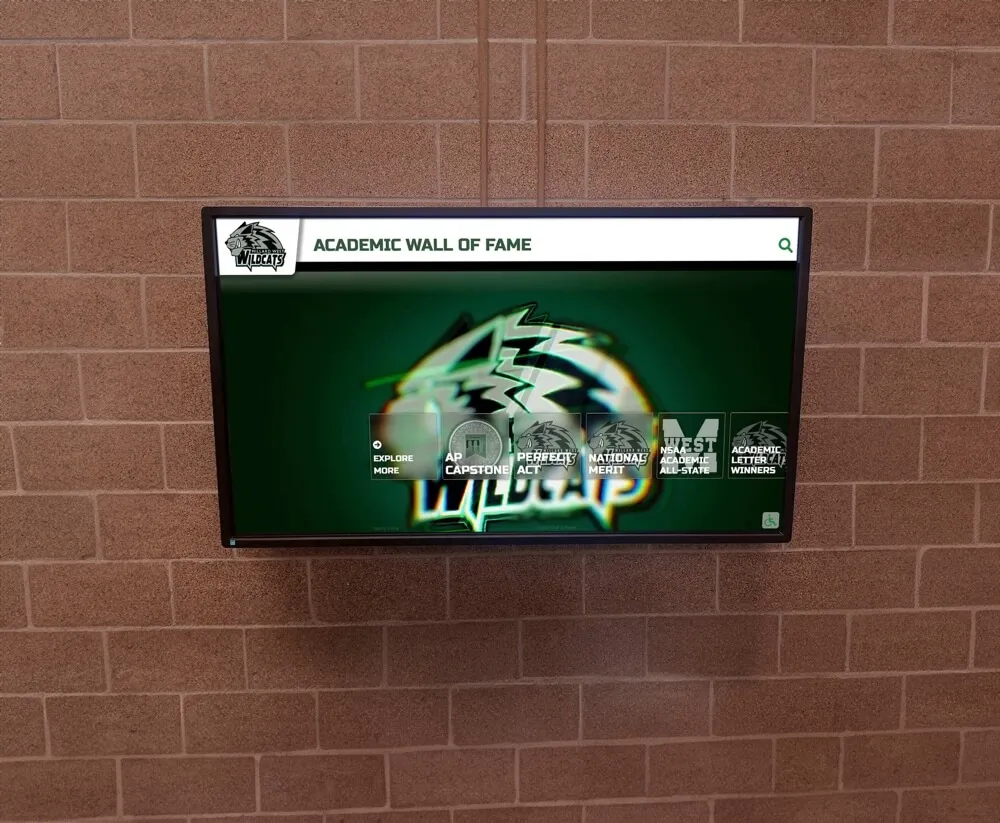
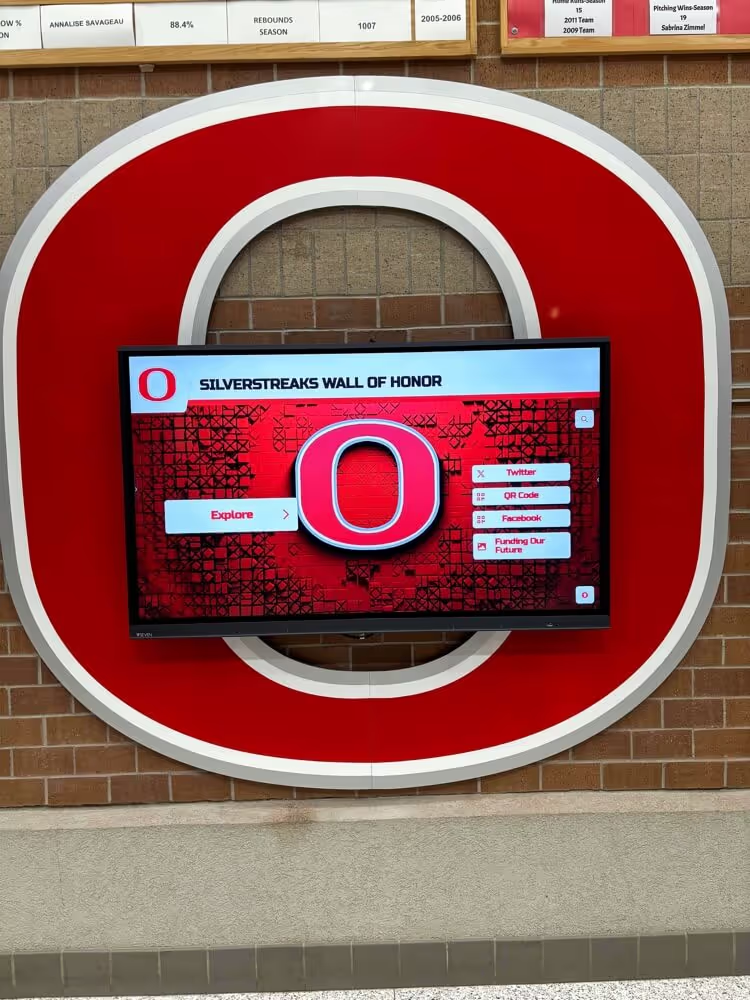
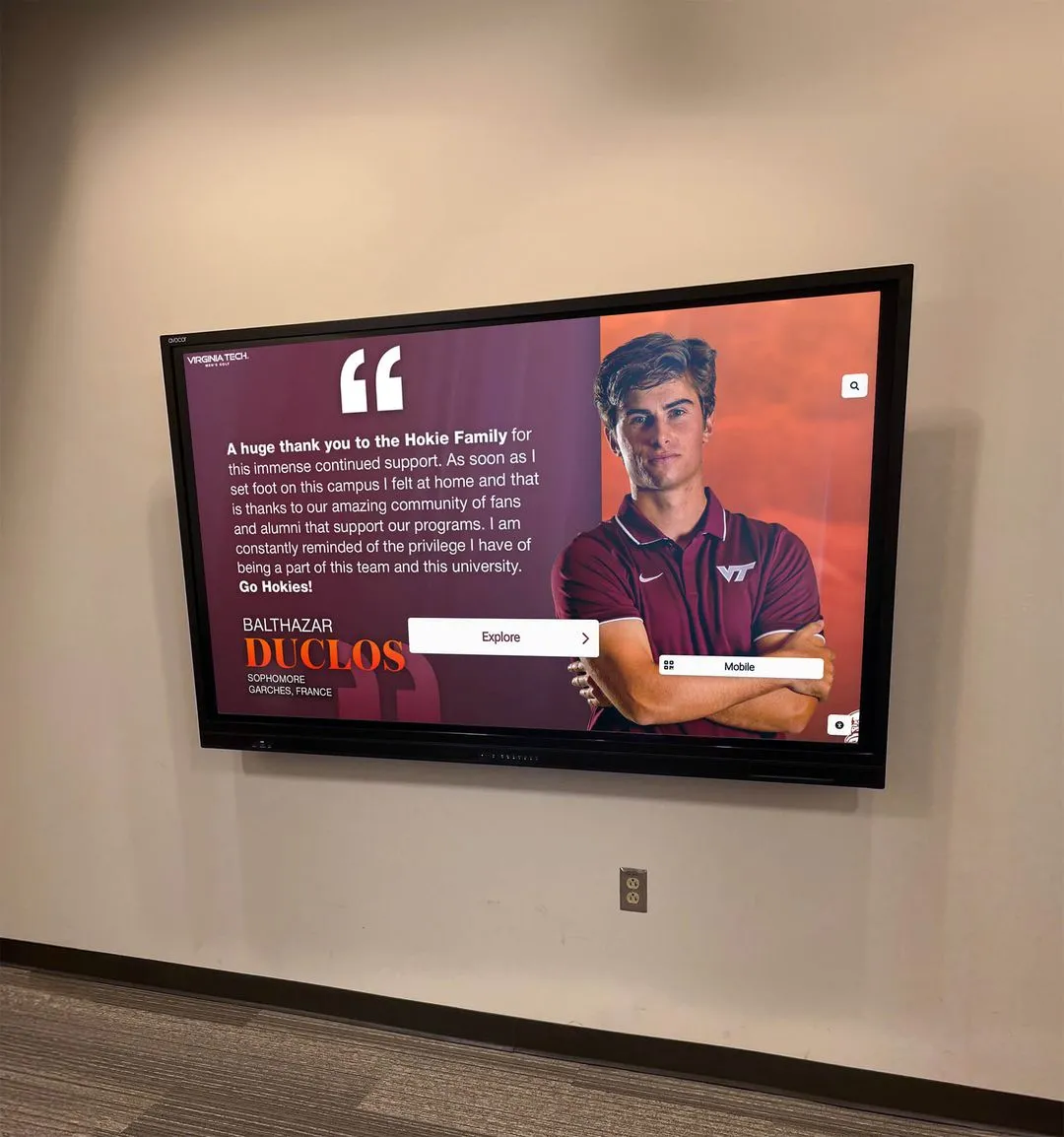
Athletic recognition installations that integrate digital displays with permanent mural elements create cohesive environments — vendor partners experienced in athletic facilities achieve this integration more reliably than general signage companies
Timing Considerations for Athletic Facilities
Athletic facility calendars impose constraints on installation scheduling that general donor recognition projects don’t face. Competition seasons bring high visitor traffic making installation disruptive; summer and preseason periods offer cleaner windows for hardware installation and content setup.
Programs planning installations around specific events — a homecoming celebration, a capital campaign public launch, a facility dedication — should add 4–6 weeks to standard vendor timelines as contingency for content preparation delays, facilities scheduling conflicts, or hardware shipping disruptions. Vendors with experience in athletic facility contexts understand these constraints and build them into project plans proactively.
Programs simultaneously exploring athletic awards and youth recognition programs alongside donor walls can reference guides to youth sports award programs and recognition ideas to ensure recognition investments across athletic programs are complementary and coherent.
Frequently Asked Questions
What does a donor recognition wall cost for a school athletic facility?
Costs vary significantly by format and scale. Traditional plaque systems typically cost $5,000–$15,000 for initial installation, with $200–$500 per donor addition as the program grows. Digital interactive systems range from $12,000–$25,000 for complete hardware, software, and installation, with annual software licensing of $1,200–$3,600 and no additional per-donor costs. Programs adding more than 20–30 donors annually generally find digital systems less expensive over 7–10 years once cumulative plaque production costs are accurately modeled. Hybrid systems combining physical architectural elements with digital displays typically range $15,000–$40,000 depending on scope.
How long does a donor recognition wall installation take in an athletic facility?
Standard digital donor recognition installations require 6–10 weeks from contract execution to operational launch, including hardware procurement, installation scheduling, content setup, and staff training. Traditional plaque systems vary — simple installations take 4–6 weeks while custom architectural installations require 6–18 months. Schools should plan for 2–3 months of lead time when targeting a specific event like homecoming, a capital campaign launch, or a facility opening. Summer installations are generally easier to schedule around competitive season calendars, and content preparation done concurrently with vendor selection can significantly shorten the operational launch timeline.
Can donor recognition wall systems auto-update when sponsors change each season?
Digital donor recognition platforms with cloud-based content management allow development staff to update seasonal sponsor displays immediately through a web interface — adding new sponsors, setting display expiration dates, and managing renewal cycles without ordering new physical materials. Some platforms allow staff to define contract expiration dates so sponsor displays automatically archive when a sponsorship period ends. Traditional plaque systems require ordering and installing new physical materials for every seasonal change, typically a 3–6 week cycle with associated per-unit production costs. This operational difference is one of the most significant practical advantages of digital platforms for programs with active annual sponsorship programs.
What should athletic programs look for in donor recognition wall companies specifically?
Athletic programs should prioritize vendors that offer pre-built athletic content types (donor tiers, hall of fame, letter-winners, records), experience designing in athletic facility environments with team branding integration, references from comparable school athletic programs, cloud-based content management accessible to non-technical advancement staff, and clear handling of seasonal sponsors distinct from permanent donors. General recognition vendors often lack athletic-specific content types and design experience, requiring custom development that adds cost and timeline. Reviewing a comparison of hall of fame tools for athletic programs helps identify vendors with proven athletic recognition capabilities.
Do digital donor recognition walls require IT staff support to operate?
Cloud-based digital donor recognition platforms are designed to operate without ongoing IT support after initial network connectivity setup. Content updates, donor profile management, sponsor rotation, and display configuration are managed through web browsers accessible from any internet-connected device — no local software installation or server maintenance required. Initial installation requires network connectivity (WiFi or ethernet) at the installation location, which may involve IT department coordination. Vendors providing cloud-based platforms handle software updates, security patches, and hosting remotely. Development staff and athletic administrators can manage content updates without IT involvement after a standard training session.
Choosing the Right Vendor for Your Athletic Program
Selecting among donor recognition wall companies is a consequential decision — the right vendor creates recognition that honors booster communities appropriately, scales with program growth, reflects athletic identity, and remains operationally manageable for development staff over years of use. The wrong vendor delivers installations that create ongoing expense, require administrative workarounds, and fail to serve the active booster communities that sustain competitive athletics.
Athletic departments approaching this decision with a structured evaluation framework — clear criteria, specific vendor questions, honest 5–10 year cost modeling, and reference conversations with comparable programs — consistently make better choices than programs that select primarily on upfront price or vendor familiarity.
For programs ready to explore interactive digital recognition purpose-built for athletic environments — combining donor acknowledgment, hall of fame displays, and seasonal sponsor recognition in a single system — schedule a personalized demonstration with Rocket Alumni Solutions to see how current athletic programs are using connected recognition walls to strengthen booster engagement and honor the communities that make competitive sports possible.