



A well-crafted donor plaque does something a thank-you letter never can: it places a supporter’s name permanently in the spaces that their generosity helped create. Walk through the lobby of nearly any well-funded school and you’ll find at least one—maybe a polished bronze panel near the gymnasium entrance, an engraved wall in the performing arts foyer, or a tiered listing outside the new STEM wing. These installations aren’t decorative afterthoughts. They are strategic stewardship tools that honor past donors, inspire prospective ones, and signal to every visitor that this institution takes philanthropy seriously.
Yet donor plaque programs are often under-designed. Schools choose materials by habit rather than intention, mount plaques wherever space is available rather than where visibility is highest, and fail to plan for growth—then scramble when a campaign adds forty new names to a wall with room for twenty. This guide walks through every phase of building a thoughtful donor plaque recognition program, from choosing materials and writing compelling dedication language to planning for digital expansion that keeps recognition systems current as school giving programs grow.
Donor recognition specialists consistently find that visible, well-designed acknowledgment increases long-term donor retention and year-over-year gift size. According to the Association of Fundraising Professionals (AFP), donors who feel meaningfully recognized give again at significantly higher rates than those who receive only transactional acknowledgment. Plaques, when done well, are among the most cost-effective stewardship investments a school can make.

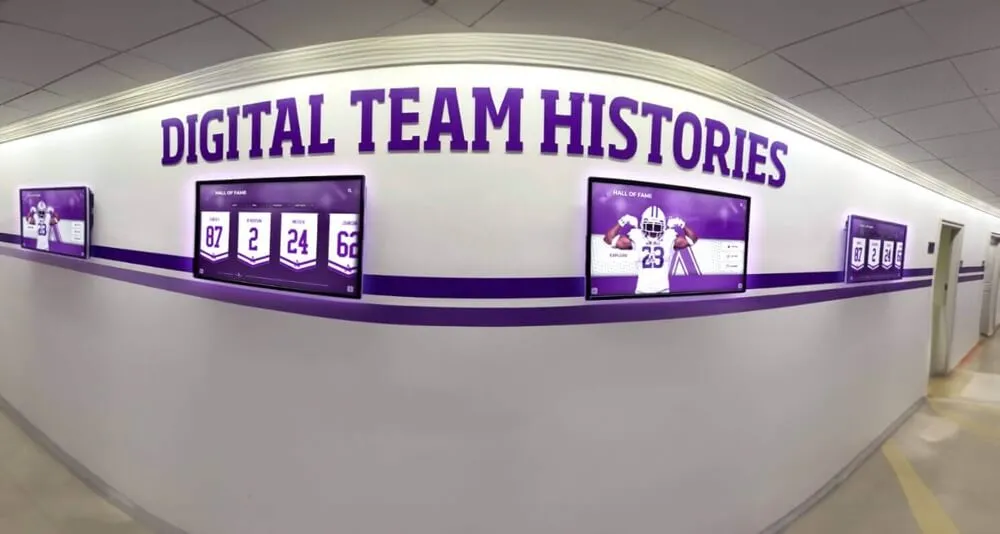
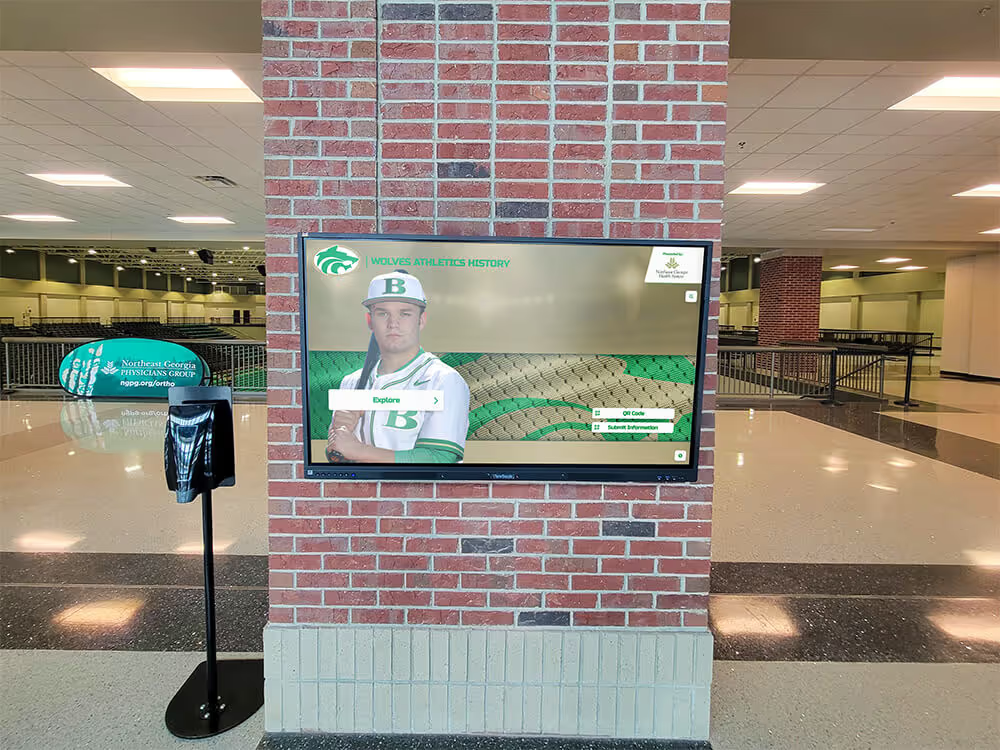
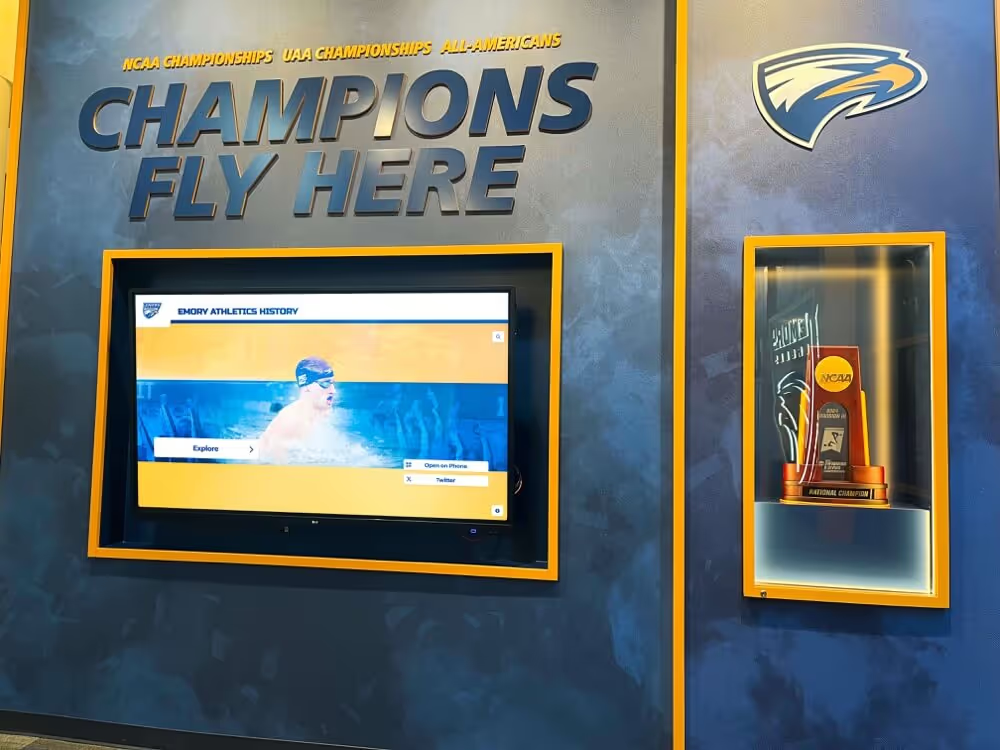
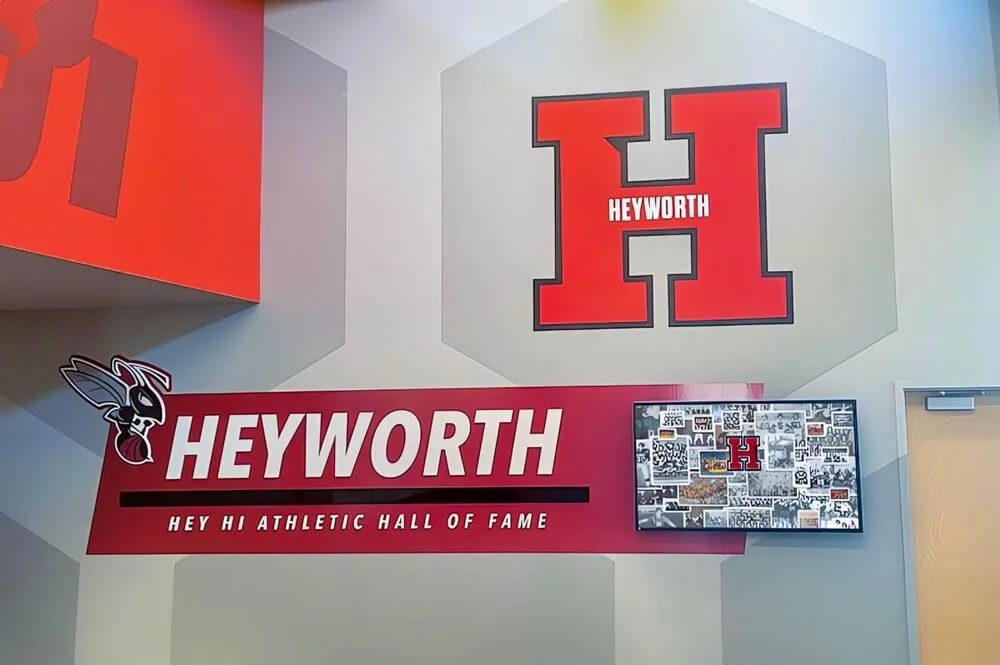
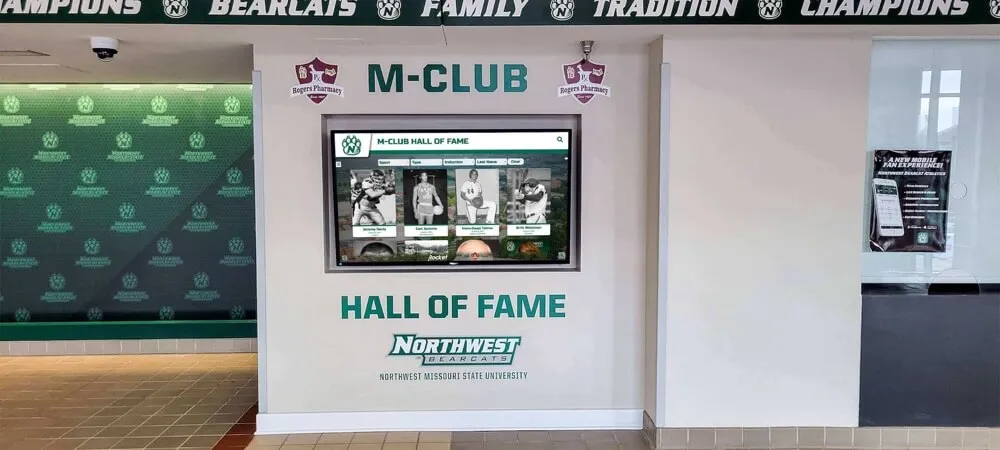
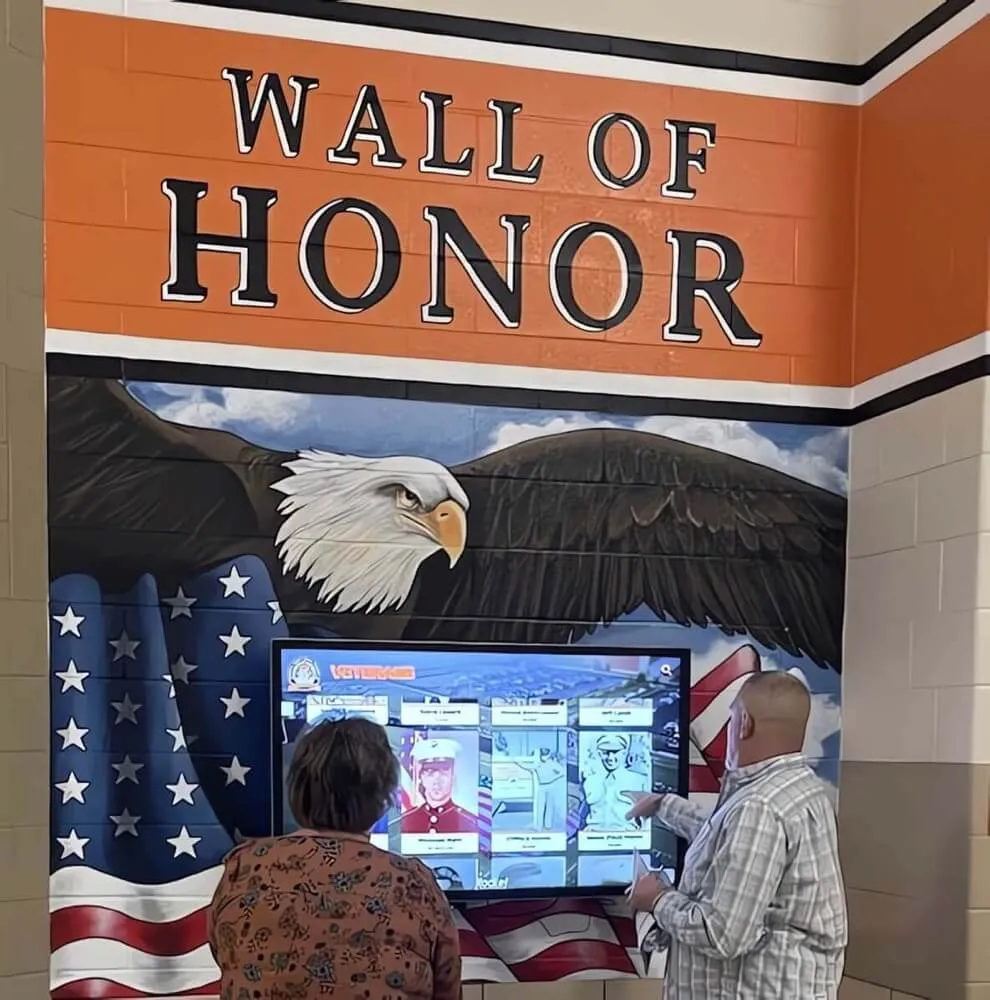
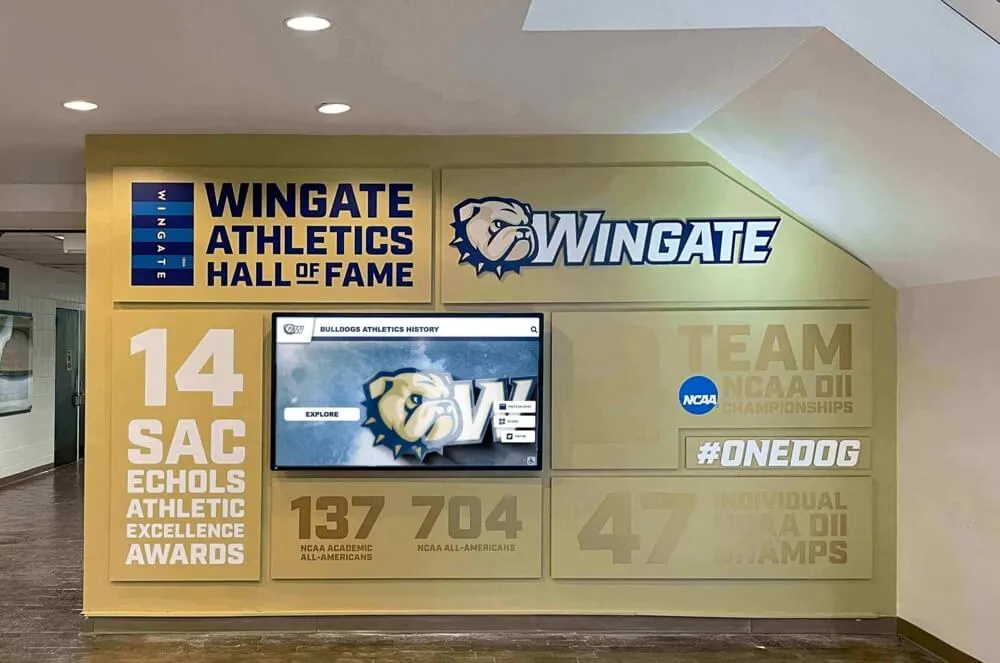
Prominent donor recognition in high-traffic areas creates lasting visibility that validates contributor generosity while inspiring future giving from the school community
Why Donor Plaques Are a Cornerstone of School Giving Programs
Schools run giving programs that blend capital campaigns, annual funds, athletic boosters, and endowment initiatives. Each type of gift deserves appropriate acknowledgment—and for significant contributions, a physical donor plaque remains the gold standard of recognition.
The Stewardship Case for Physical Recognition
Physical recognition fulfills a psychological need that digital notifications and email receipts do not. A donor who contributed $25,000 toward a new gymnasium experiences something fundamentally different when they see their name on polished bronze at the facility entrance versus receiving a PDF certificate. That permanence communicates institutional respect and signals to future visitors that the school honors the people who make its mission possible.
The Council for Advancement and Support of Education (CASE) notes in its donor stewardship resources that tangible recognition—specifically naming opportunities and physical plaques—correlates with multi-year giving commitments among major donors. Schools that formalize their plaque programs early in capital campaigns consistently close larger leadership gifts because donors understand what recognition they will receive in return for their investment.
Plaque Recognition Supports Multiple Stewardship Goals
- Validates donor decisions by creating permanent, visible acknowledgment
- Builds philanthropic culture by normalizing generosity among students and families
- Preserves institutional memory of who funded specific facilities across decades
- Creates conversation starting points during facility tours and donor events
- Establishes recognition precedents that guide future campaign gift negotiations
Schools developing comprehensive recognition ecosystems—including donor plaques, interactive digital kiosk displays, and lobby installations—find that layered approaches honor the full spectrum of donor expectations across different demographics and giving levels.
How Plaques Integrate Into Broader Giving Programs
A donor plaque program should not exist in isolation. The most effective school giving programs treat plaques as one component within a tiered recognition architecture:
| Giving Level | Primary Recognition | Supplemental Recognition |
|---|---|---|
| $1,000 – $9,999 | Annual honor roll listing | Certificate, thank-you event |
| $10,000 – $49,999 | Donor wall panel or plaque | Named equipment, event sponsorship |
| $50,000 – $99,999 | Room dedication plaque | Digital recognition profile |
| $100,000+ | Building or wing naming | Dedicated event, major plaque installation |
This tiered structure ensures every donor feels appropriately acknowledged while reserving the most prominent recognition—large architectural plaques—for leadership gifts that genuinely transform facilities.
Types of Donor Plaques for Schools
The category “donor plaque” encompasses a wide range of products, from modest door plaques to large-scale donor walls that anchor entire lobby renovations. Understanding the options helps development directors match recognition format to gift level and facility context.
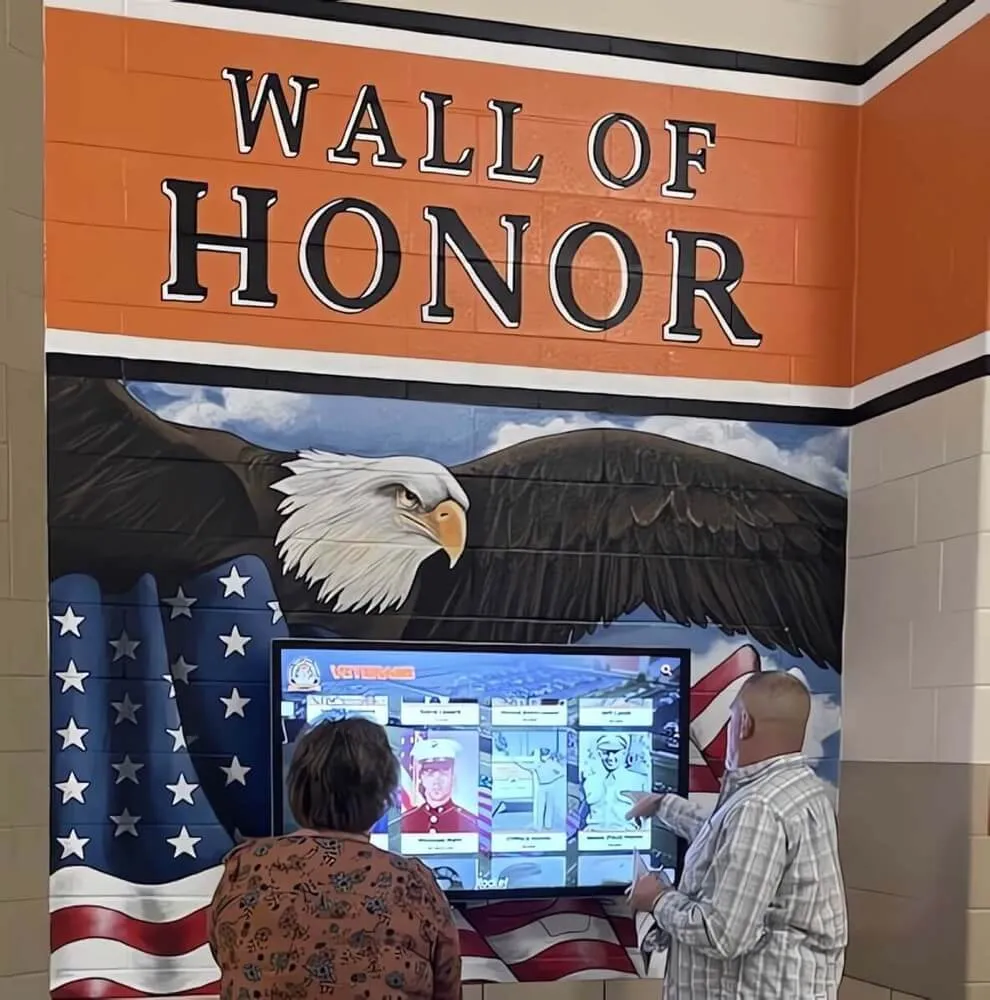
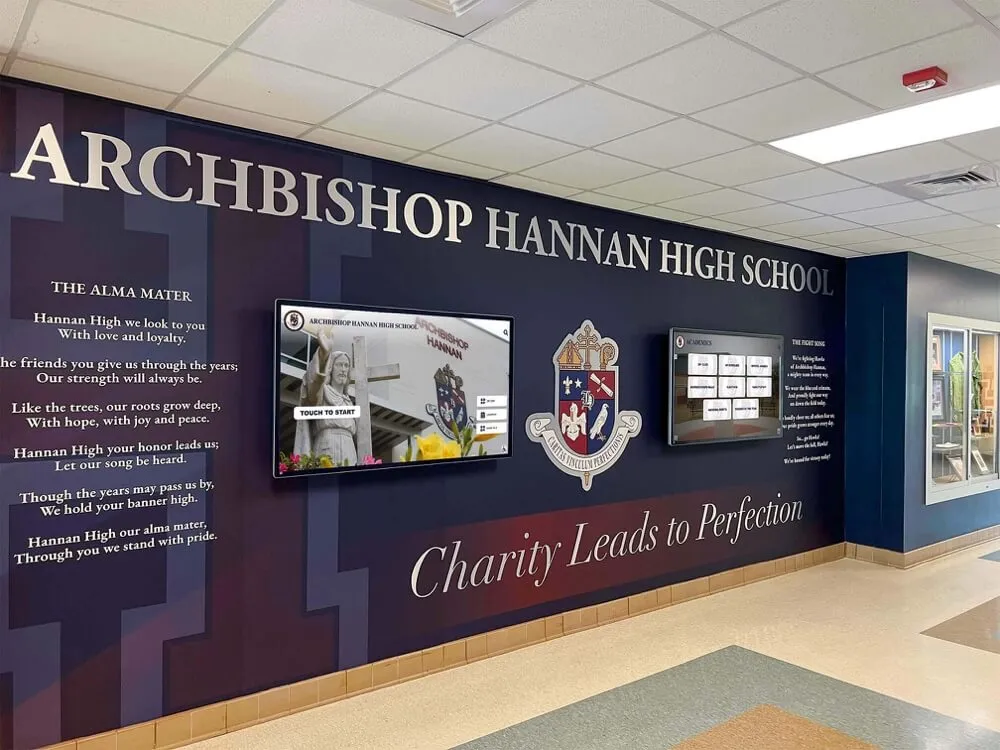
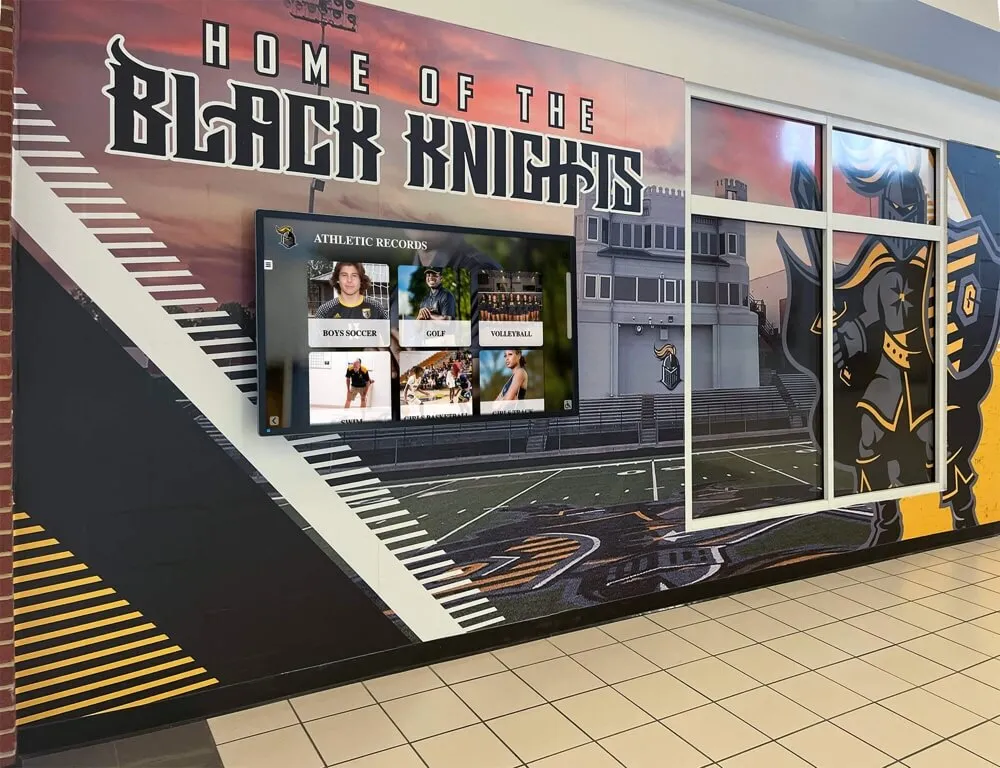
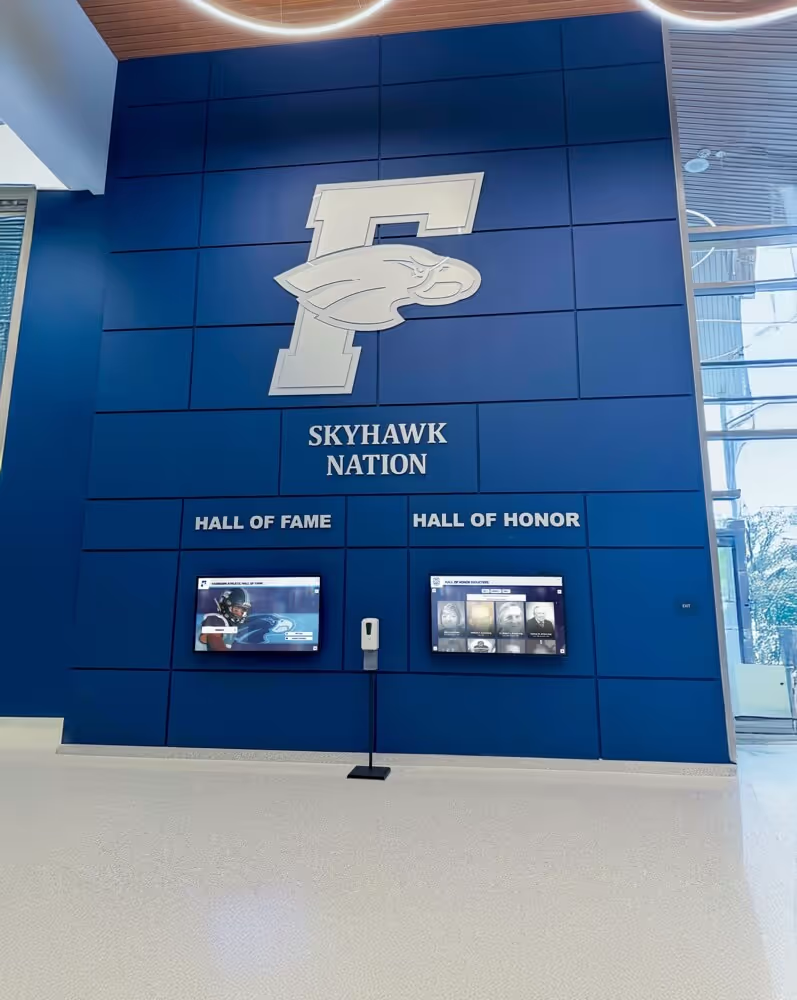
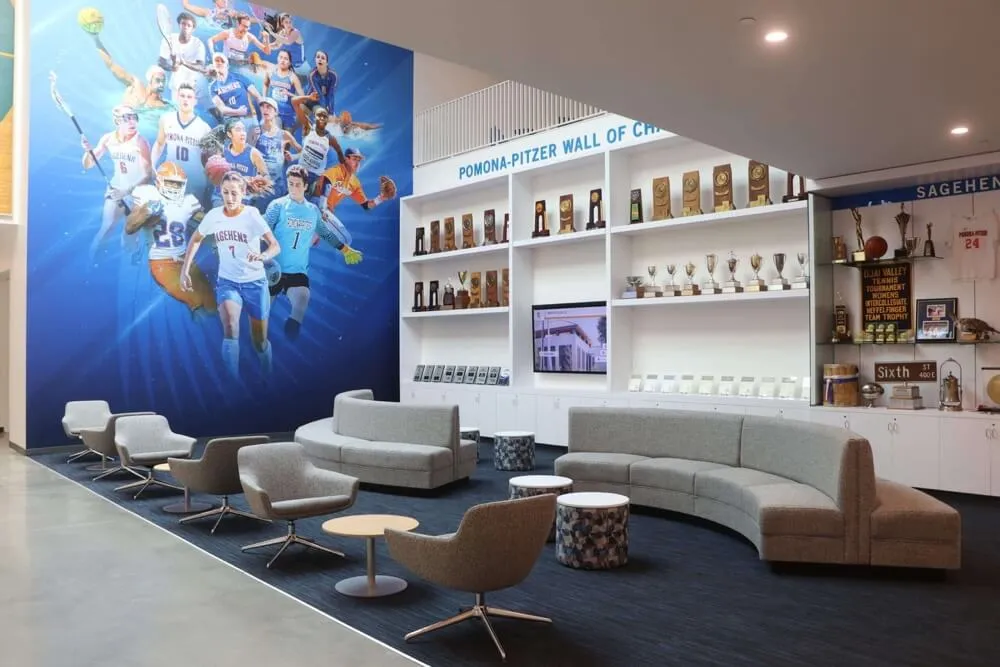
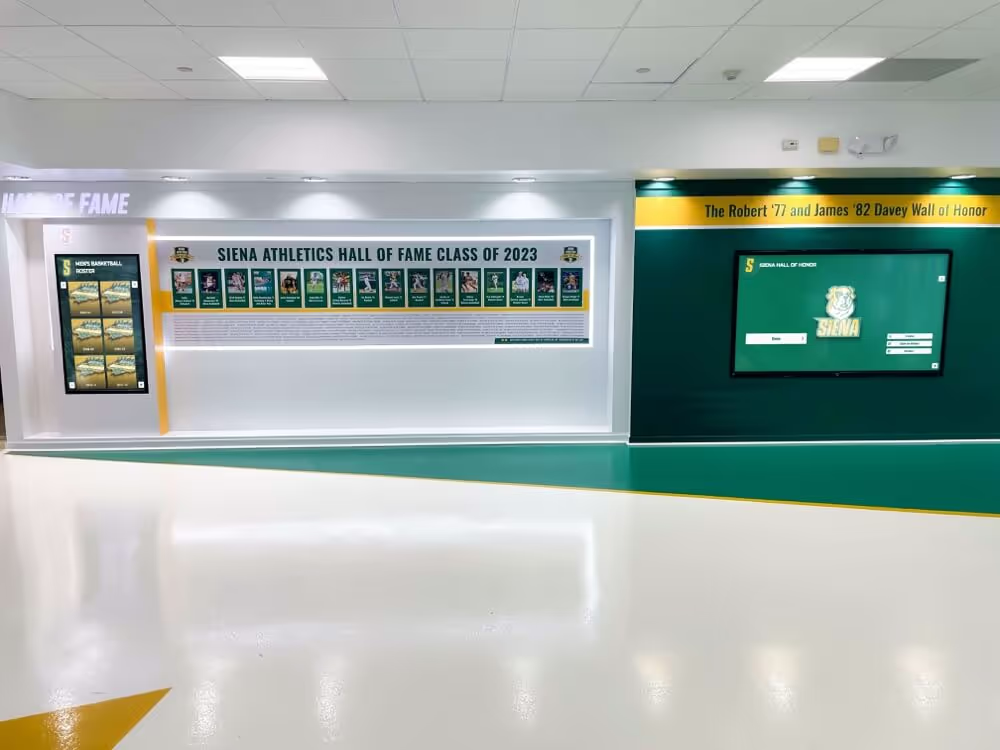
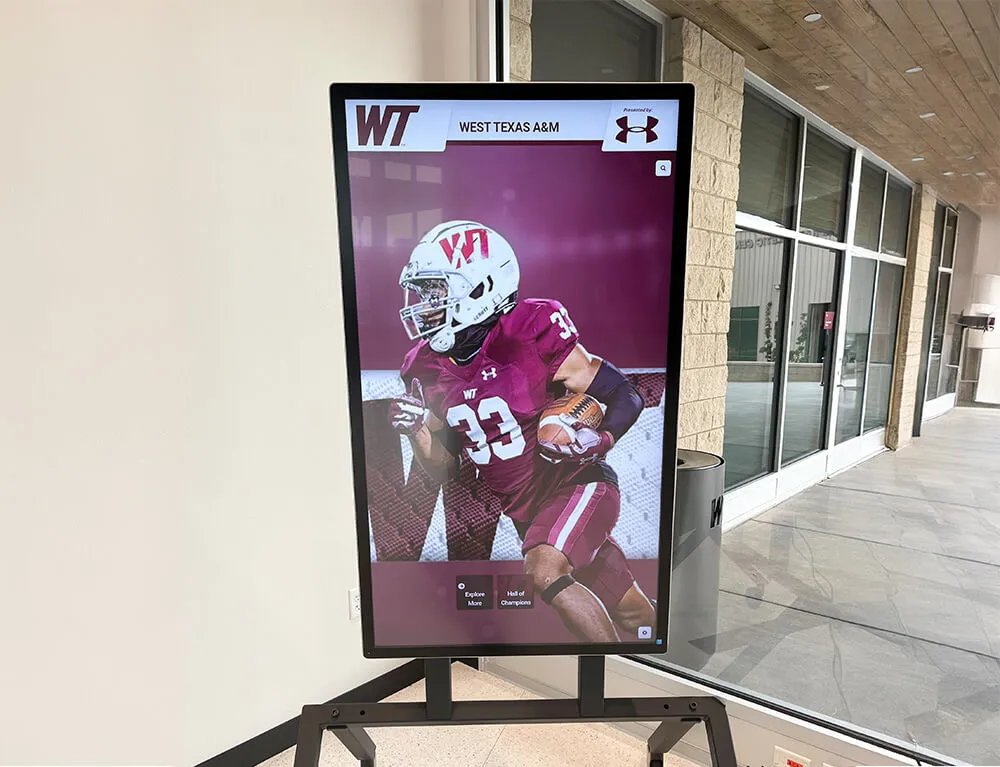
Contemporary recognition installations often blend traditional naming elements with visual branding and interactive technology to create compelling lobby focal points
Traditional Metal Plaques
Bronze, brass, and cast aluminum remain the most common donor plaque materials in educational settings, and for good reason: they communicate permanence, withstand decades of use, and match the formal aesthetic most donors associate with meaningful recognition.
Bronze Donor Plaques
Bronze is the prestige standard for major gift recognition. Its warm brown patina reads as institutional, serious, and lasting—qualities that resonate with donors making transformational gifts. Bronze plaques are appropriate for:
- Building or wing dedications
- Capital campaign leadership recognition
- Memorial tributes honoring deceased alumni or faculty
- Athletic facility naming opportunities
Typical costs for professionally fabricated bronze plaques range from $800–$3,500 depending on size, letter depth, and mounting method. Larger donor walls with multiple panels may run $8,000–$25,000 for custom installations.
Brass Plaques
Brass offers a brighter, more golden appearance than bronze while sharing similar durability for interior applications. Many schools use brass for room dedications, equipment recognition, and mid-tier donor programs where a prestigious finish is desired at lower cost than bronze.
Aluminum Plaques
Powder-coated aluminum provides excellent durability at a fraction of bronze or brass pricing, making it practical for schools managing large annual fund donor lists or athletic booster recognition programs with many contributors at modest gift levels. Modern finishes can mimic the appearance of bronze, allowing visual consistency across tiered plaque programs.
Engraved Stone and Architectural Materials
Granite, limestone, and slate provide architectural permanence for major building dedications, particularly in facilities where the building materials themselves are stone or brick. Stone plaques integrate naturally with classical or collegiate Gothic architecture and carry strong associations with permanence and prestige.
Stone is most appropriate for:
- Outdoor dedications at building entrances
- Campus landmarks like amphitheaters, courtyards, or memorials
- Situations where extreme weather durability is required
Costs for custom stone plaques run $1,500–$6,000 for standard installations, with larger architectural elements reaching $15,000+.
Donor Recognition Walls: Expanded Plaque Systems
For schools with multiple donors to recognize within a single campaign or giving program, a donor recognition wall provides more impactful display than scattered individual plaques. These systems typically feature:
- A central architectural panel or frame establishing the wall’s visual identity
- Individual donor panels organized by giving tier or recognition society
- Branded elements incorporating school colors, mascots, or institutional crest
- Room for future additions without disrupting the existing installation
Donor recognition walls work particularly well in gymnasium lobbies, performing arts centers, and administrative building entrances where high visibility justifies the larger installation investment.
Schools planning foyer or lobby renovations should consider welcoming institutional space design principles that coordinate donor recognition with overall lobby aesthetics rather than treating plaques as isolated additions.
Writing Effective Donor Plaque Wording
The language on a donor plaque matters more than schools often realize. Wording that feels formulaic or overly formal can undercut the recognition’s emotional impact, while wording that is overly casual may not convey the significance of the contribution.
Core Elements of Strong Plaque Language
Every effective donor plaque includes these foundational elements, though order and phrasing varies:
- The honoree’s name — full legal name or preferred designation (family name, organization name)
- The nature of recognition — dedication, gift, memorial tribute, or naming honor
- Connection to the facility or program — what the gift made possible
- The date — year of dedication or completion
Wording Examples by Occasion
Building Dedication
The [Family Name] Athletic Center
Dedicated in Recognition of [Full Name]
Whose Vision and Generosity Made This Facility Possible
[Year]
Room or Space Dedication
The [Name] Science Laboratory
In Honor of [Donor Name], Class of [Year]
For a Lifetime of Commitment to [School Name]
Dedicated [Year]
Memorial Tribute
In Memory of [Name]
[Years of Life or Service]
Whose Love for [School Name] Continues
Through This Space
Wording Pitfalls to Avoid
- Excessive length — plaque text longer than 30 words loses impact; trim ruthlessly
- Jargon and acronyms — future visitors may not recognize internal abbreviations
- Ambiguous phrasing — “in appreciation of” without context leaves viewers guessing about what the donor actually did
- Missing dates — undated plaques lose historical value within a single generation
Strategic Placement: Where Donor Plaques Belong
Even the highest-quality donor plaque fails to achieve its stewardship objectives if mounted somewhere rarely seen. Visibility drives recognition value—a plaque seen by 500 people per week creates measurably more goodwill than an identical plaque viewed by 20.
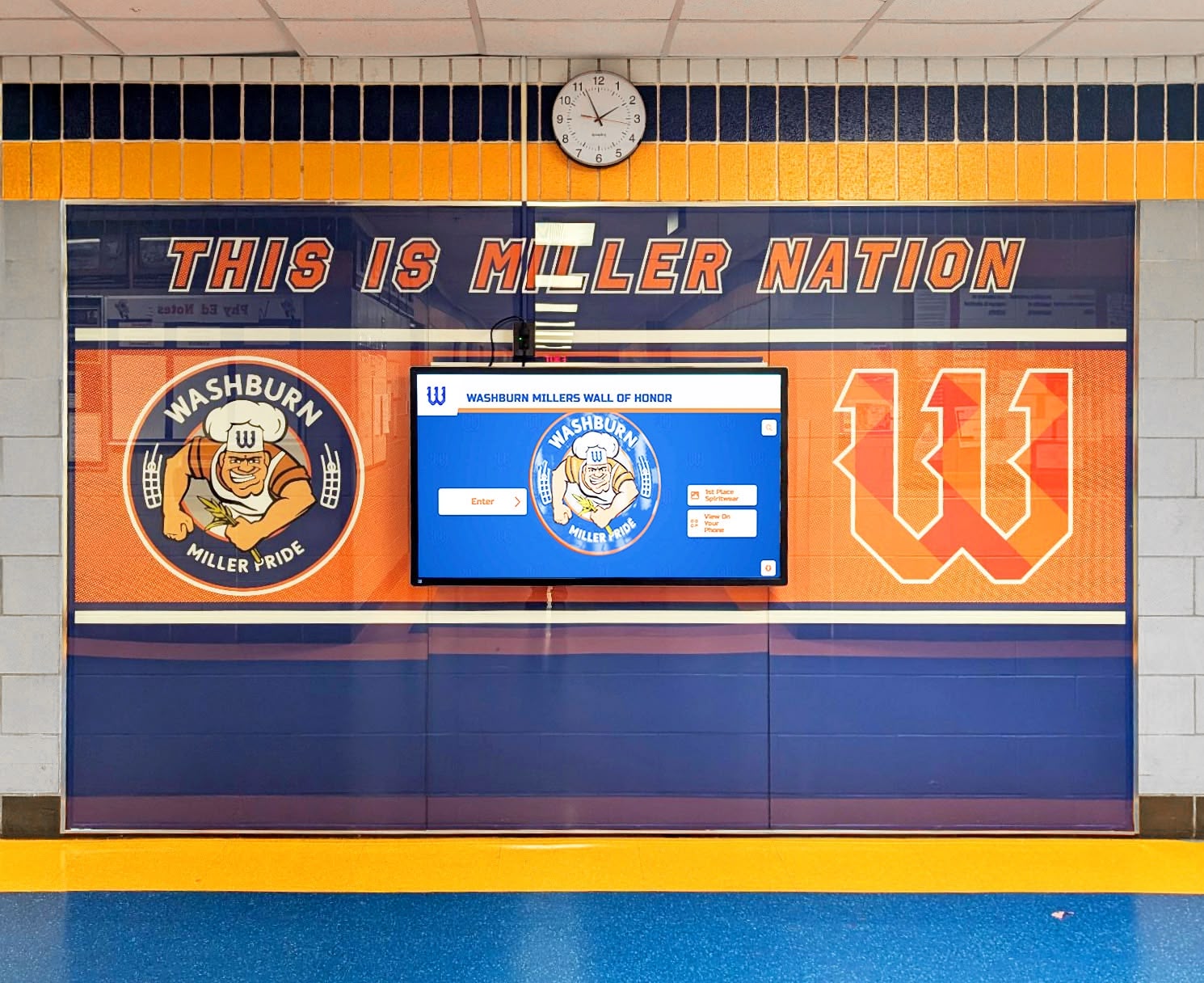
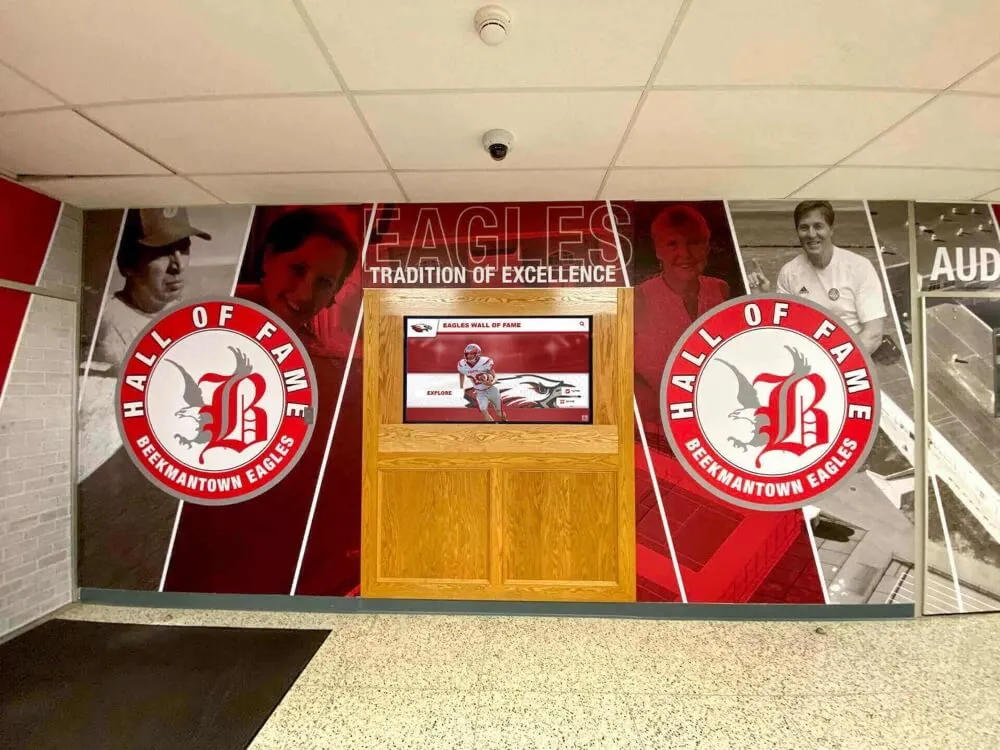
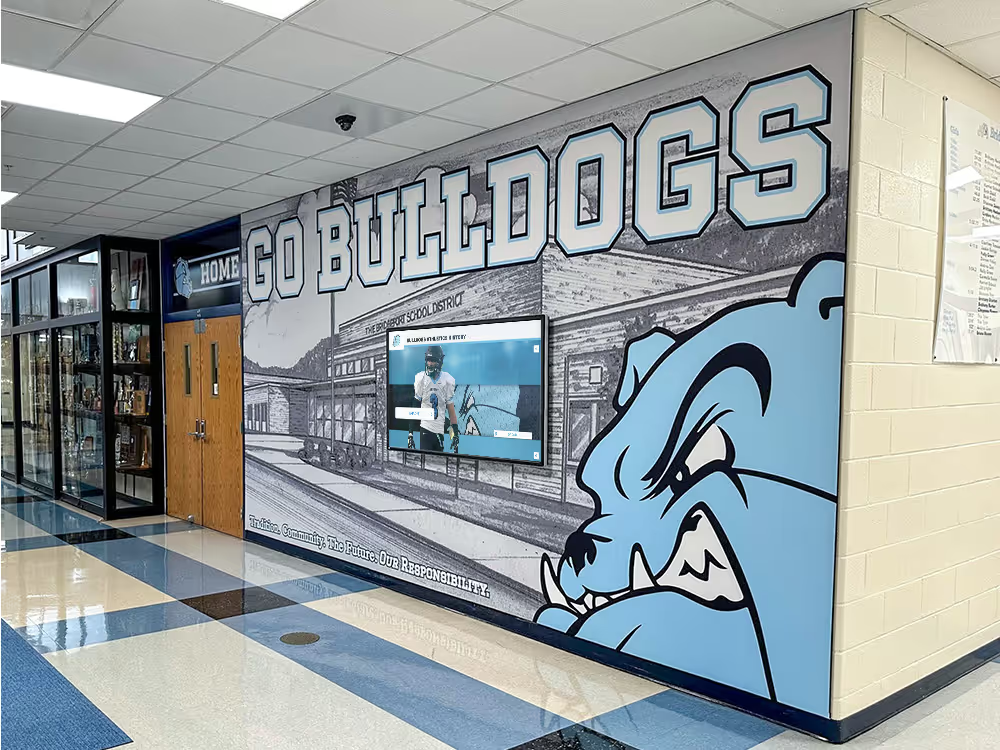
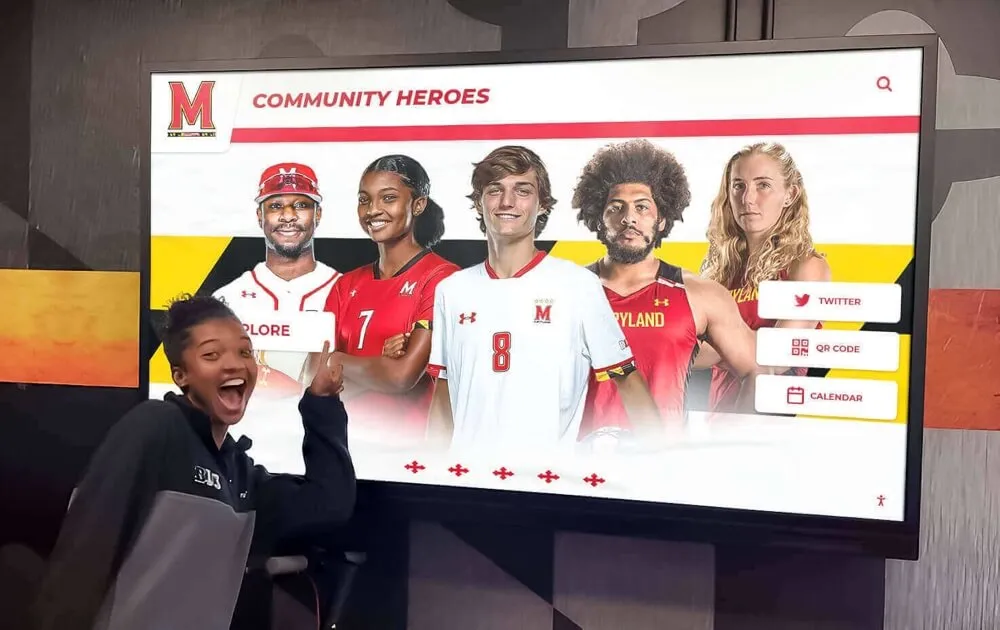
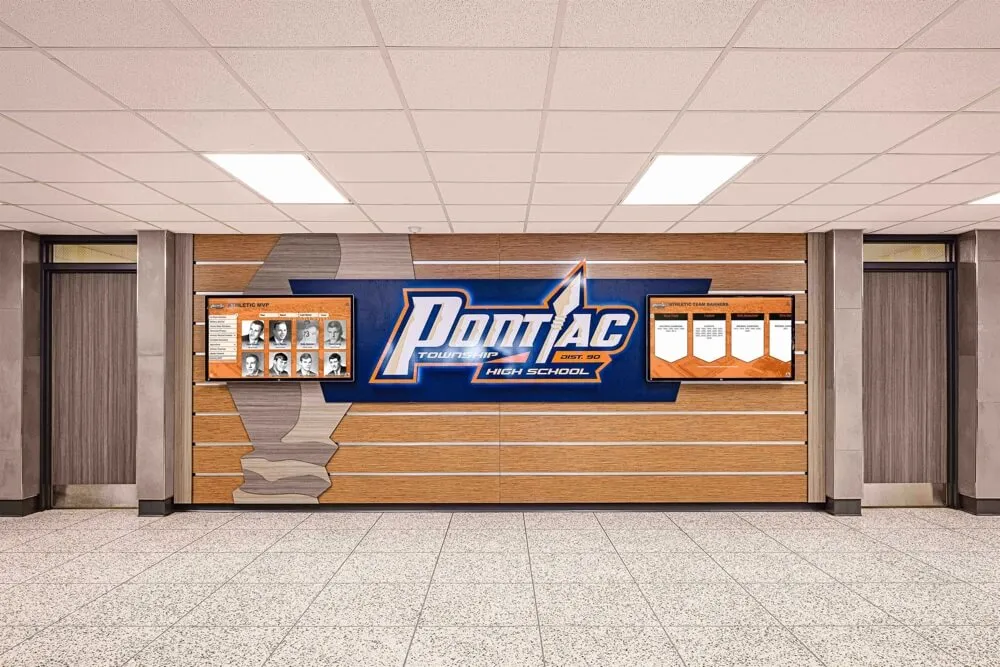
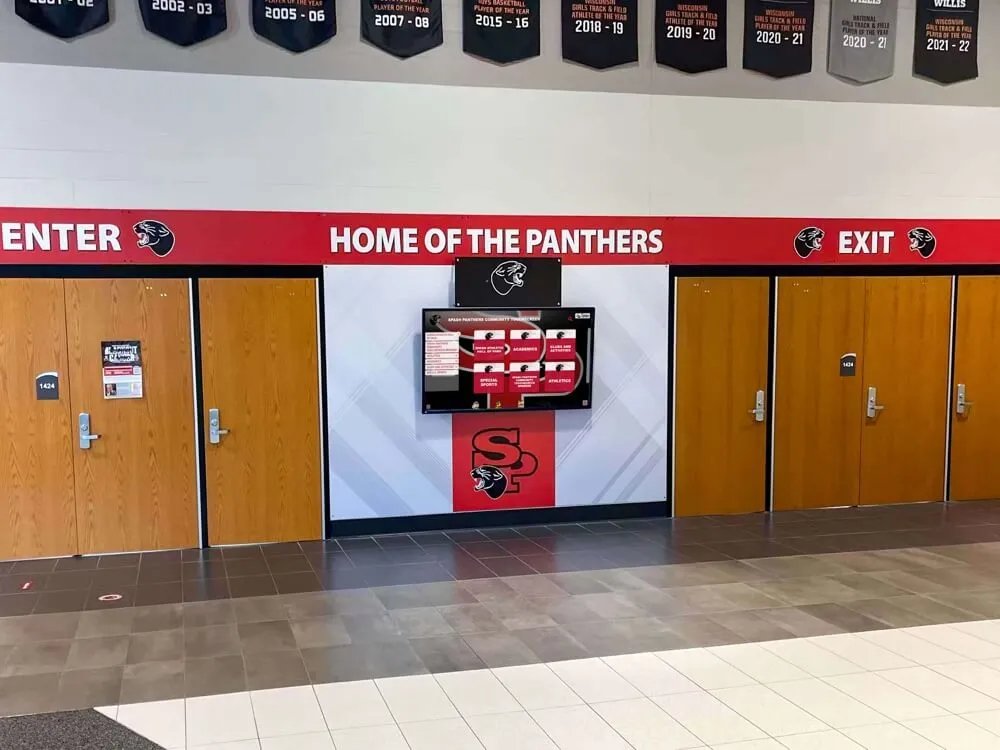
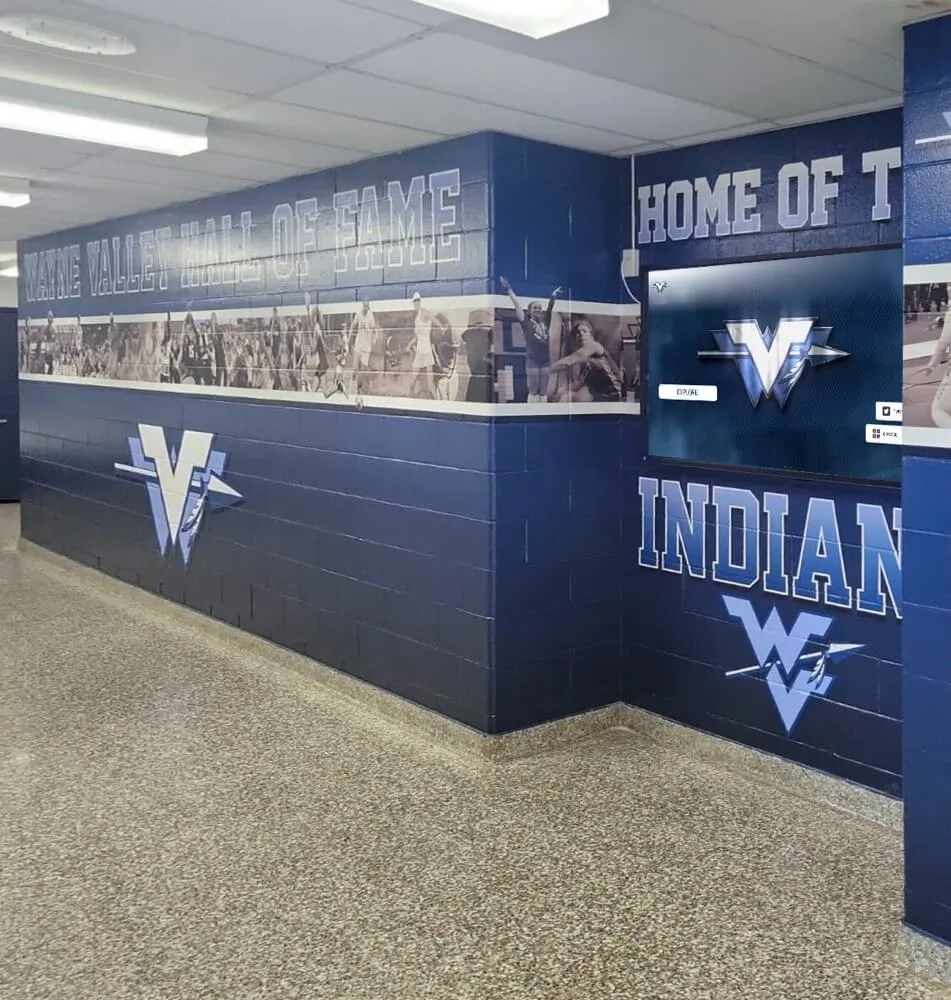
Hallway placement ensures donor recognition reaches maximum foot traffic while contributing to school identity and community pride throughout daily facility use
High-Traffic Zones for Maximum Donor Visibility
Building and Facility Entrances
The threshold of a named building or facility is the natural location for its dedication plaque. Visitors experience recognition at the moment most connected to the donor’s gift—entering the space they funded. Entrance plaques should be:
- Mounted at eye level (center of plaque at 60–66 inches from floor)
- Positioned near primary doors without blocking circulation
- Illuminated with dedicated accent lighting for evening visibility
Lobby and Common Areas
Lobbies serve as natural gathering points where families wait during events, visitors orient themselves to facilities, and students pass multiple times daily. Comprehensive donor recognition walls belong here, where sustained daily exposure reinforces stewardship and creates social proof of community philanthropy.
Athletic Facility Entryways
Well-attended athletic competitions bring hundreds to thousands of visitors through gymnasium, fieldhouse, and stadium entrances—creating exceptional visibility for donor recognition. Athletic donors whose names appear prominently at these entries experience tangible validation of their investment during every home contest. Organizations implementing digital service awards programs for coaches and staff often position similar recognition near athletic donor plaques to reinforce the community of contributors supporting school programs.
Placement Mistakes That Undermine Recognition
- Above 7 feet: Text becomes difficult to read and visitors rarely look up in corridors
- Behind furniture or displays: Storage areas or bulletin boards placed near plaques block sight lines
- Near restrooms: This inadvertent placement can diminish perceived prestige
- Outdoor without weather protection: Without overhang coverage, bronze and brass plaques suffer accelerated weathering in northern climates
Planning for Growth: Scalable Donor Plaque Systems
One of the most common problems in school donor plaque programs is failure to plan for future additions. A recognition wall designed for a 50-name capital campaign quickly becomes a design problem when the school launches its next campaign—or simply continues adding annual major donors.
Design Scalability Into Every Installation
- Leave blank space within recognition wall frames to accommodate future panels
- Specify matching materials and finishes with vendors for future additions
- Document fabricator specifications, material grades, and surface treatments
- Establish size standards for each tier so future plaques match existing installations visually
Schools that have worked through digital wall mount display planning for nonprofits recognize that front-loaded planning prevents costly retrofits within a few years of initial installation.
When to Transition From Physical Plaques to Hybrid Systems
Physical plaques serve major donors exceptionally well but present challenges at scale. Schools with growing annual fund programs, athletic booster programs, and multi-campaign histories often reach points where:
- Wall space for new plaques is exhausted
- Per-plaque fabrication costs make comprehensive recognition financially unsustainable
- Donors at mid-level gift tiers deserve recognition but don’t warrant full bronze plaques
- Alumni giving programs generate hundreds of smaller contributions worth acknowledging
This is where hybrid recognition systems—combining traditional plaques for top-tier donors with interactive digital displays for broader recognition—solve multiple problems simultaneously.
Digital Donor Plaques: The Future of School Giving Recognition
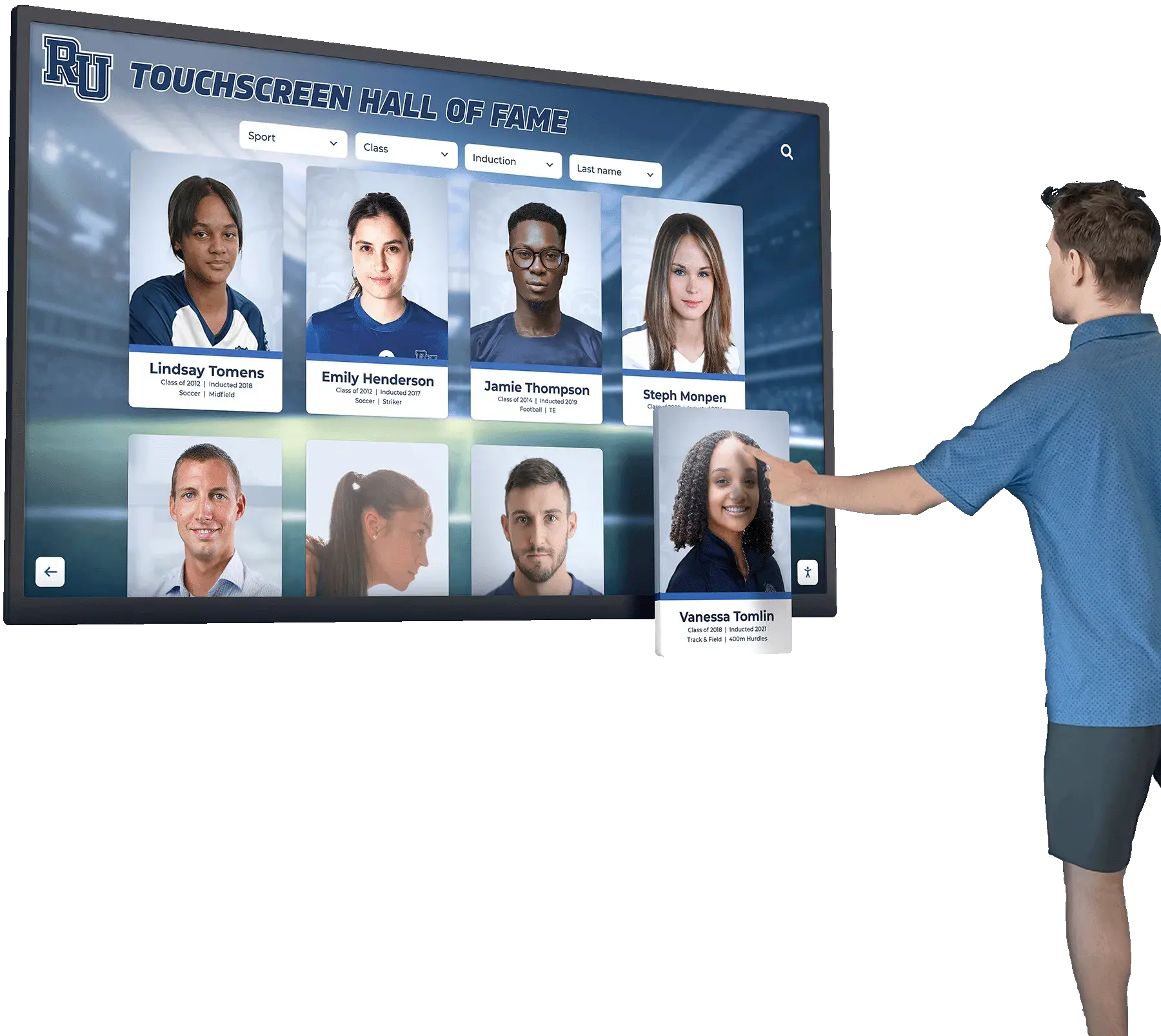
Interactive digital recognition displays function as digital donor plaques capable of honoring unlimited supporters, enabling multimedia storytelling, and updating instantly as new gifts close. For schools managing active giving programs across multiple campaigns and constituencies, digital systems address capacity and cost limitations that physical plaques inherently face.
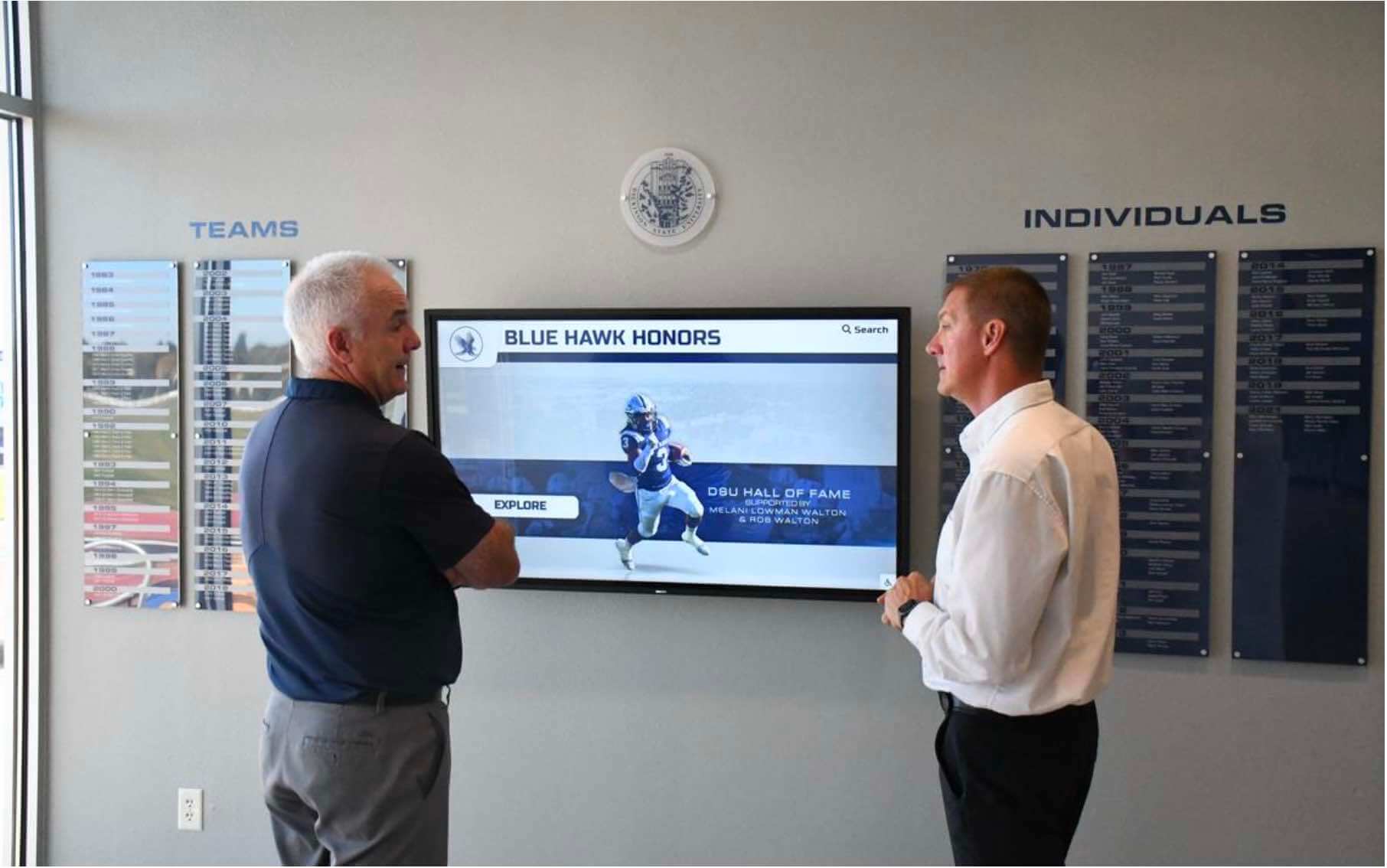
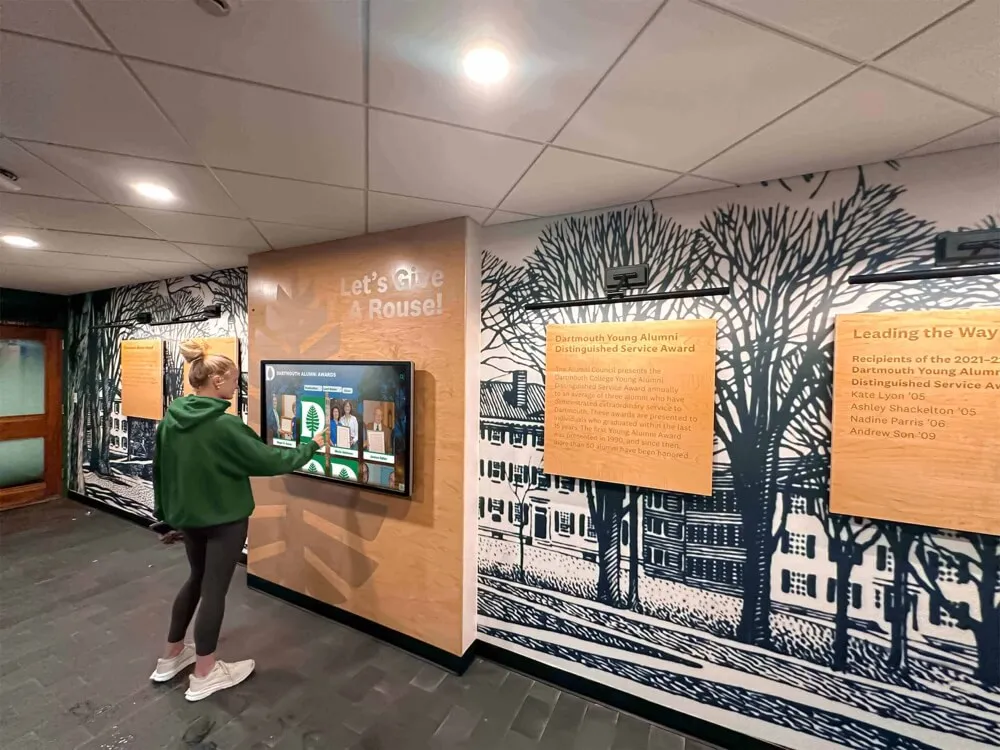
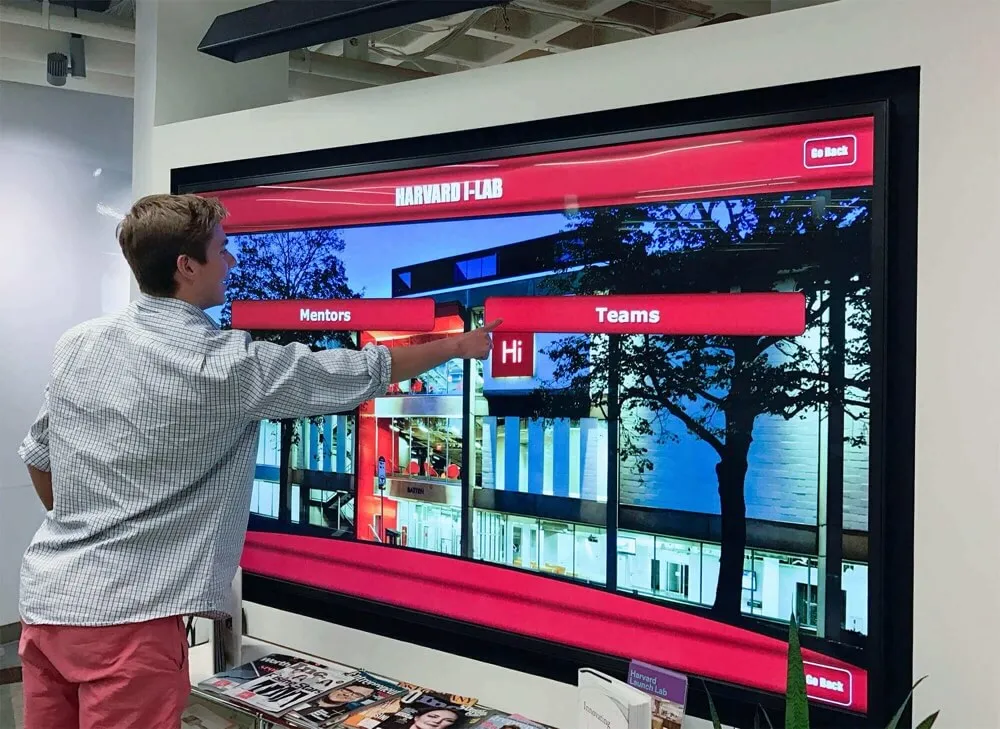
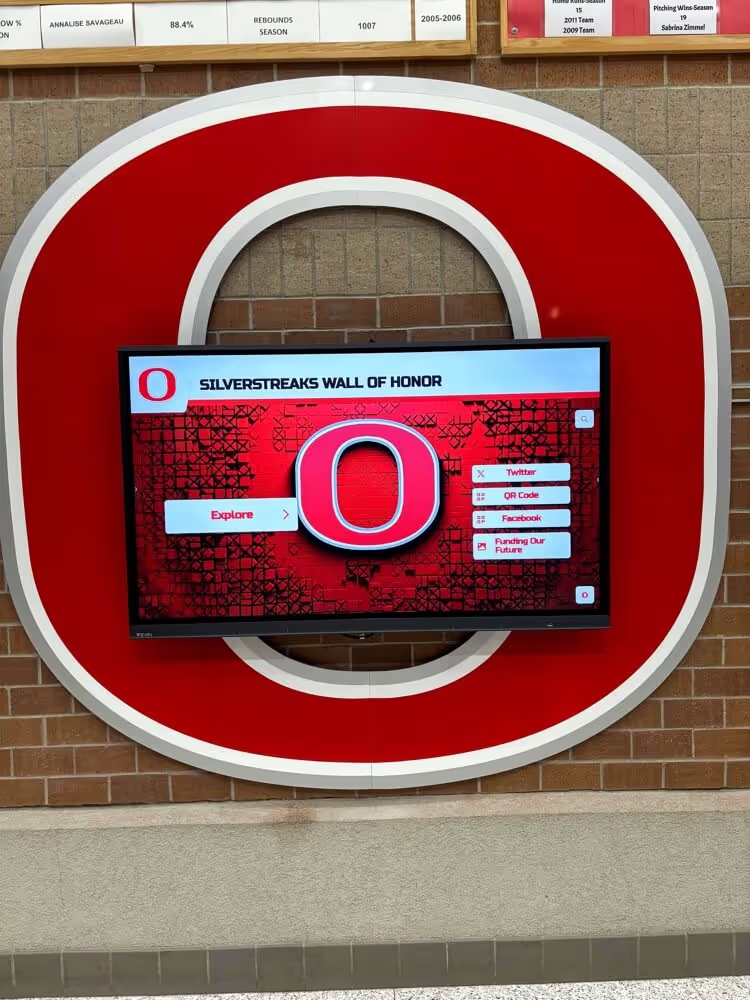
Interactive digital displays invite active exploration rather than passive viewing, deepening engagement with donor recognition content across student, family, and community visitors
What Digital Donor Recognition Adds That Plaques Cannot
Unlimited Capacity
A touchscreen display recognizes 50 or 50,000 donors with equal visual quality. There is no wall space constraint, no fabrication cost per name, and no need to redesign existing installations when campaigns exceed projected donor counts.
Rich Multimedia Storytelling
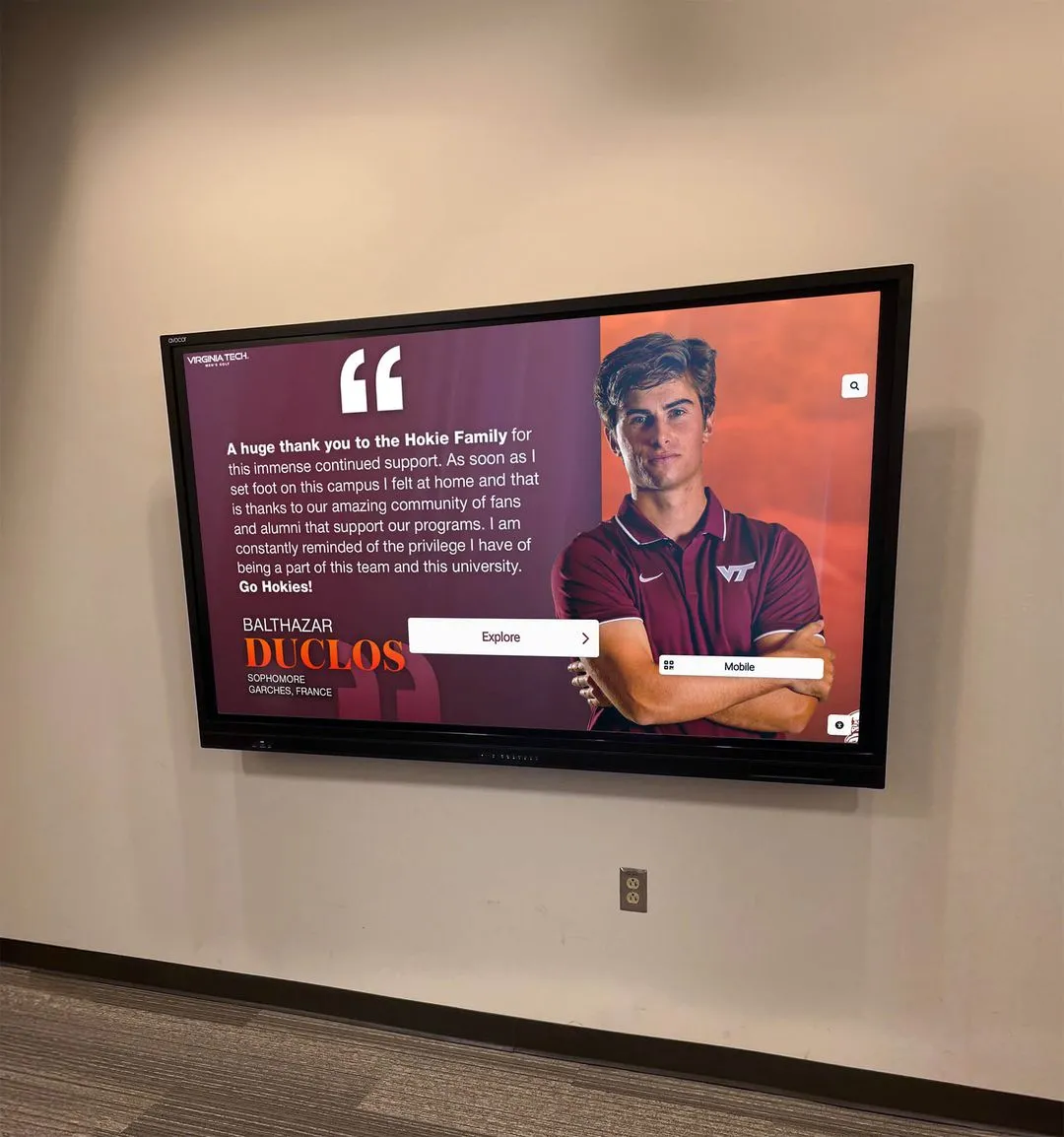
Digital recognition profiles can include donor photographs, personal statements about giving motivations, video testimonials, and impact narratives documenting what specific gifts accomplished. This depth of acknowledgment is impossible within the physical space constraints of any plaque.
Immediate Updates
New gifts can be recognized within hours rather than the weeks or months required for plaque fabrication and installation. Real-time recognition is particularly valuable during active campaigns where donors appreciate timely acknowledgment.
Search and Navigation
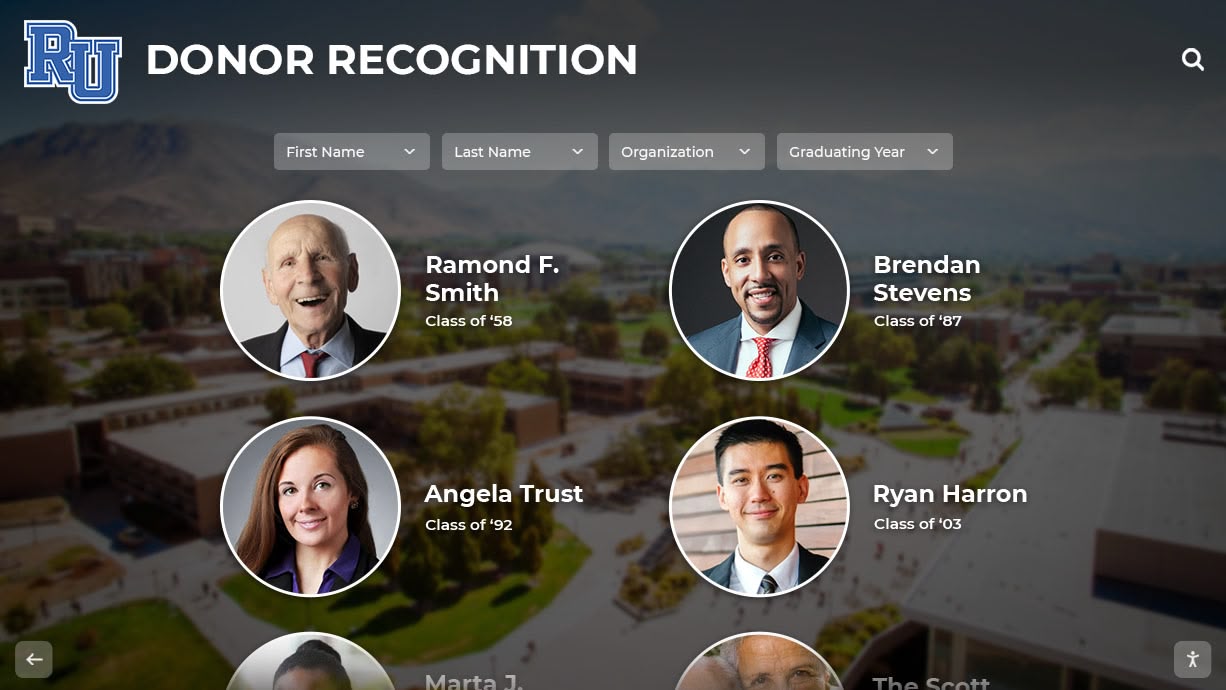
Visitors can search for specific donors, browse by recognition tier, or filter by campaign focus—creating personalized exploration experiences that static plaques cannot offer. Schools implementing touchscreen kiosk systems for school lobbies consistently report higher visitor engagement with recognition content compared to traditional plaque walls.
Physical and Digital: A Hybrid Strategy
The most effective approach for established school giving programs combines traditional donor plaques for major contributors with digital recognition for the broader donor community:
- Top-tier donors ($50,000+): Named facility with architectural plaque, prominent digital feature profile
- Mid-level donors ($10,000–$49,999): Room dedication plaque plus digital recognition
- Annual and booster donors (under $10,000): Digital recognition with photo, statement, and giving history
This hybrid model honors donor preferences across generations—older alumni often value tangible plaque recognition, while younger donors appreciate interactive digital profiles shareable on social media. Organizations comparing physical and digital hybrid donor display options find that hybrid systems serve diverse donor communities more effectively than either approach alone.
Budget Planning for School Donor Plaque Programs
Recognition programs succeed only when they are financially sustainable over the long term. Schools should plan recognition budgets as part of campaign development—not as an afterthought after gift totals are secured.
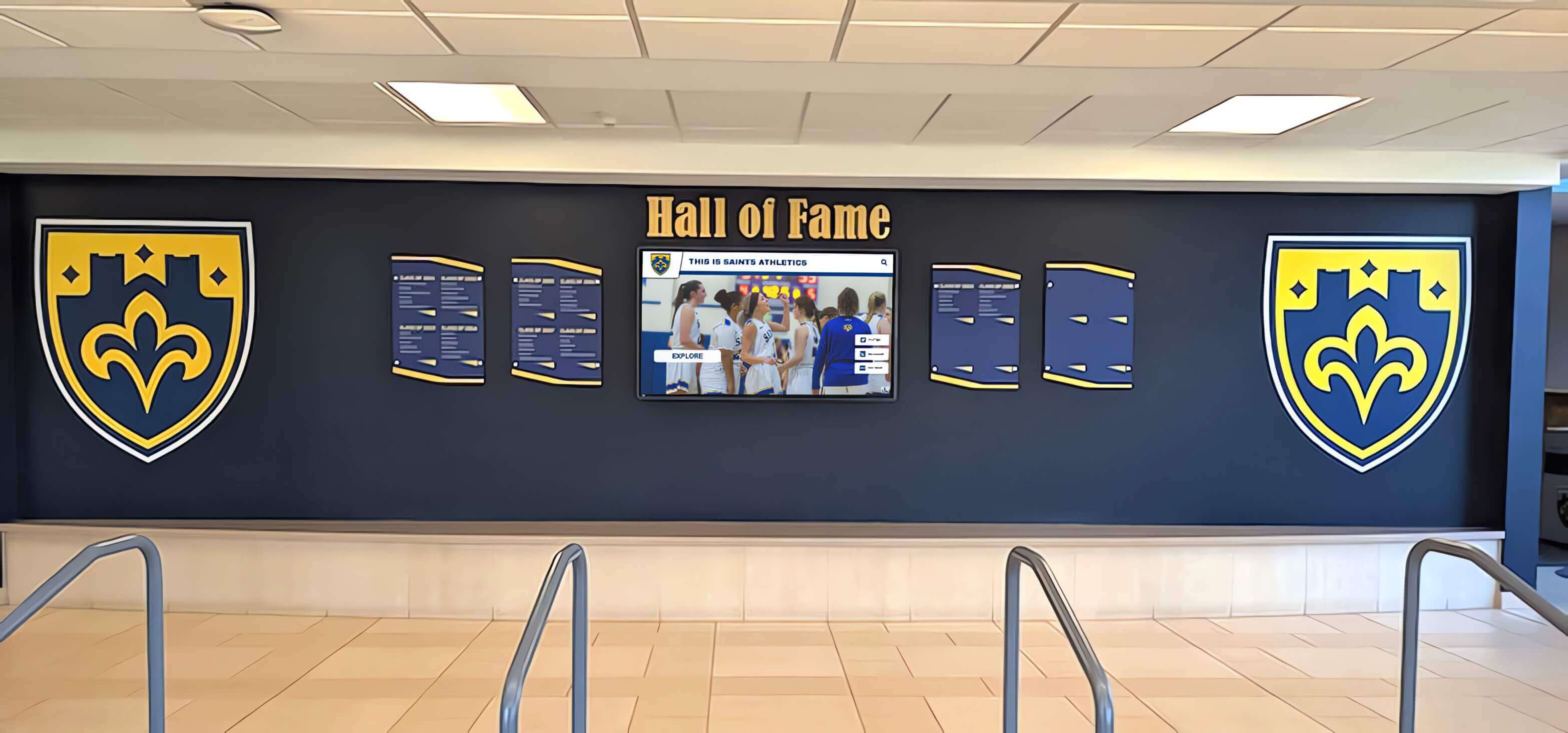
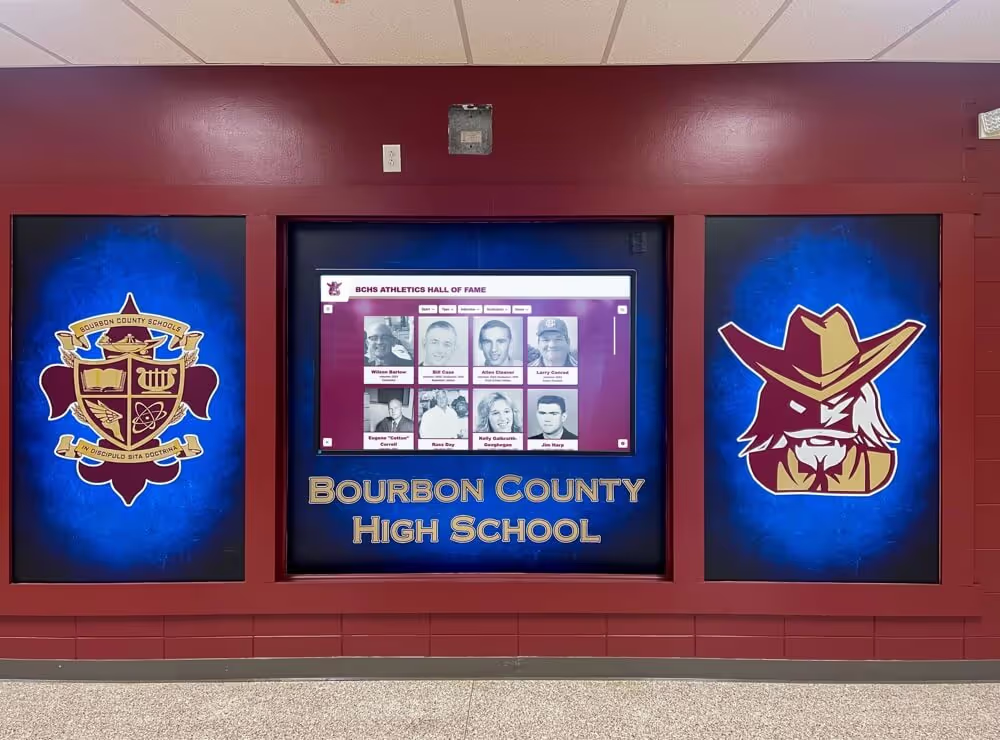
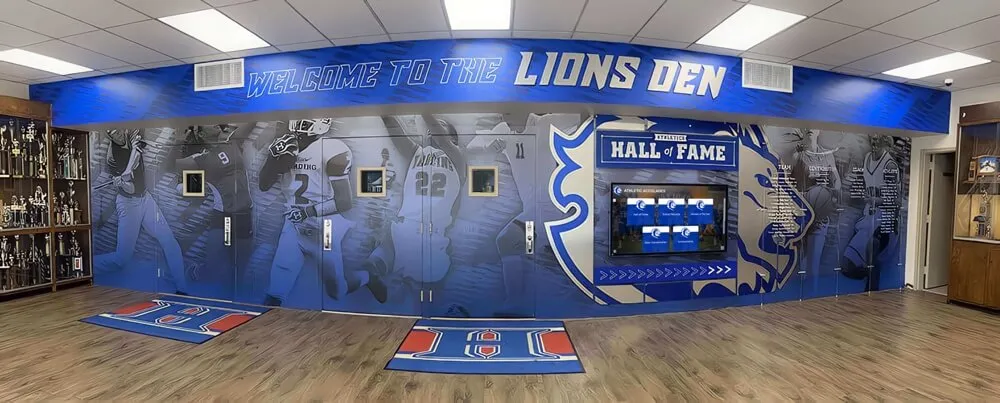
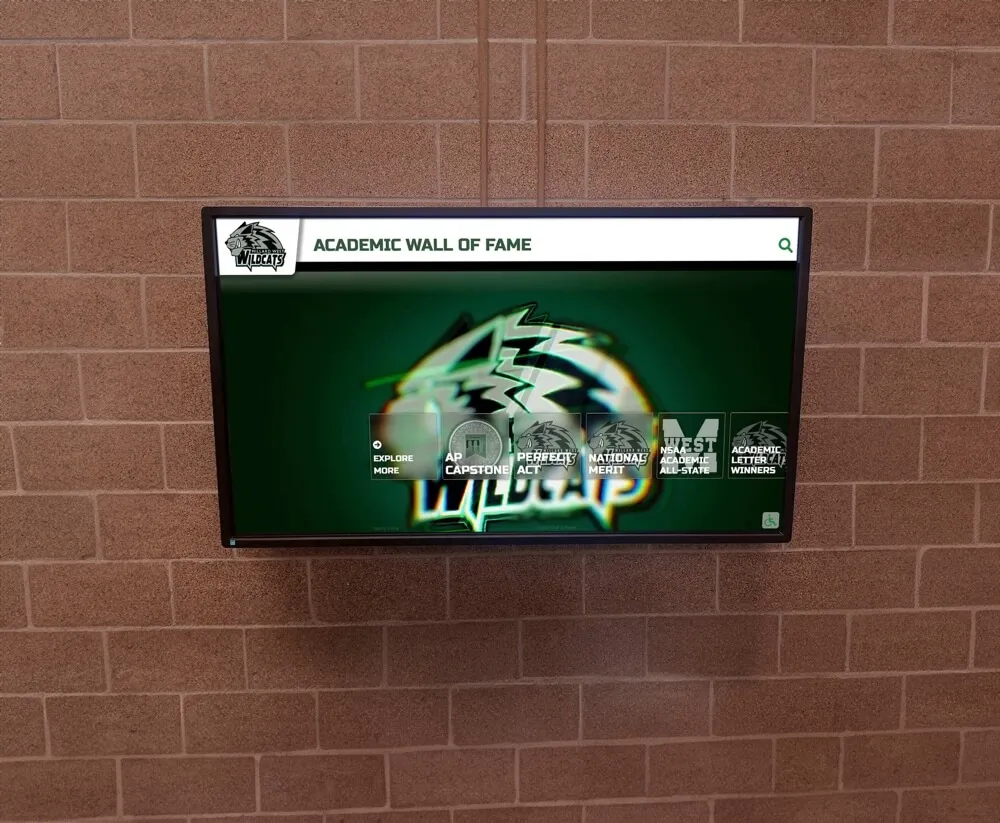
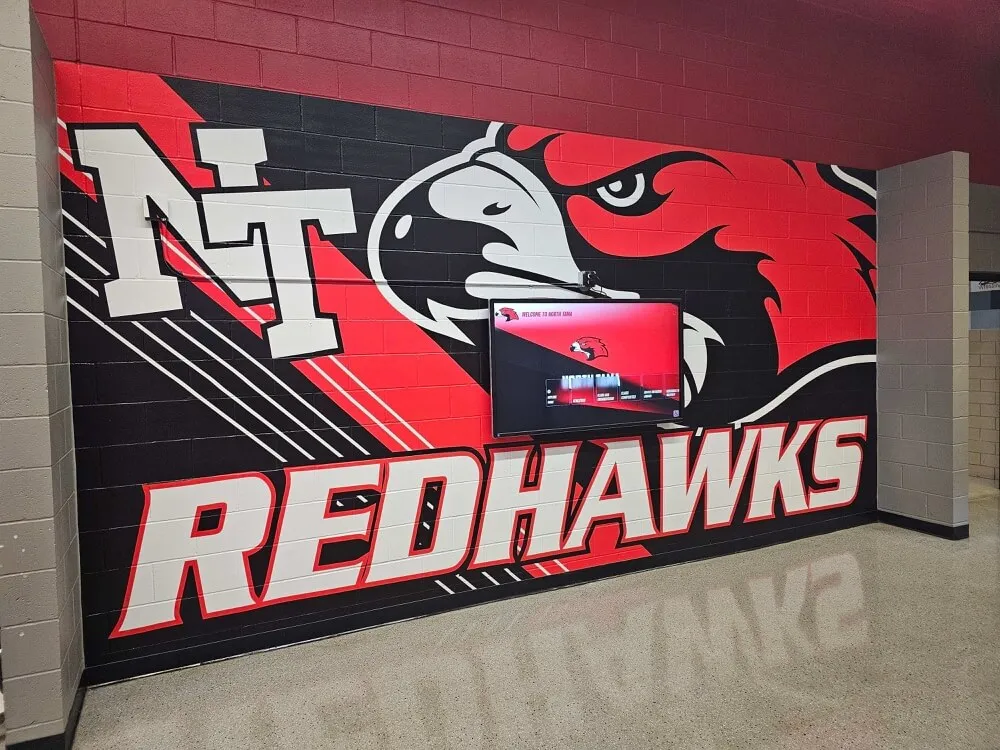
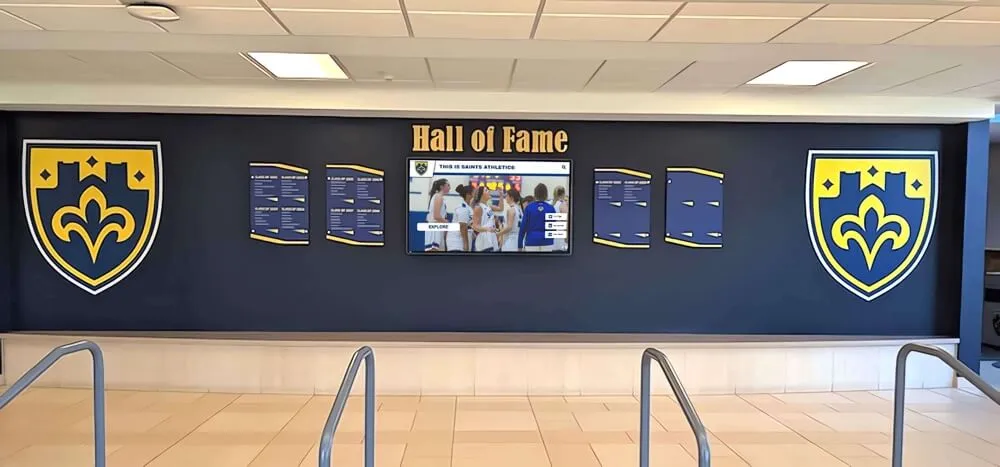
Cohesive recognition walls combine institutional branding elements with individual acknowledgment to create compelling lobby focal points that honor donors across multiple campaigns
Estimated Costs for Common Donor Plaque Installations
| Installation Type | Typical Cost Range |
|---|---|
| Small interior plaque (8"×12", aluminum) | $250–$500 |
| Mid-size interior plaque (18"×24", bronze/brass) | $800–$1,800 |
| Large architectural plaque (30"×36", bronze) | $2,000–$4,500 |
| Custom donor recognition wall (20–50 names) | $8,000–$20,000 |
| Digital touchscreen recognition system | $10,000–$30,000 |
| Hybrid physical + digital installation | $20,000–$50,000 |
Industry practice recommends allocating 1–3% of gift amounts toward recognition costs, treating acknowledgment as a stewardship investment rather than an expense to minimize.
Long-Term Cost Considerations
Physical donor plaques have low ongoing costs once installed—periodic cleaning and occasional additions are the primary expenses. However, physical systems accumulate fabrication costs that become significant over time:
- Each new plaque for an individual donor: $250–$800
- Recognition wall expansion panel: $1,500–$4,000
- Reinstallation after facility renovation: often $5,000–$15,000
Digital systems typically charge annual software licensing ($1,500–$4,000 per year) with minimal per-donor cost after initial implementation. For schools adding 20–50 donors annually, digital platforms often become cost-effective within 3–5 years compared to continuous physical plaque fabrication. Schools researching lobby display solutions for nonprofits and schools benefit from vendors offering implementation support alongside the technology itself.
Donor Plaque Programs and Broader Community Impact
A well-maintained donor plaque program creates ripple effects beyond direct donor stewardship. When students see names of community members, local businesses, and alumni honored throughout their school facilities, philanthropy becomes a normal and valued part of institutional culture—not an extraordinary act by exceptional individuals.
This normalization effect is documented in nonprofit development research: institutions with visible, prominent donor recognition programs experience higher rates of participation across giving levels compared to institutions that limit acknowledgment to private correspondence. Public libraries with comprehensive digital archives have applied similar recognition principles in community facilities with measurable impact on community giving participation.
Schools exploring the full potential of STEM recognition programs and academic achievement walls often find that displaying student outcomes alongside donor acknowledgment creates powerful narrative connections—showing exactly what philanthropic investments produce for the school community.

Exterior digital displays bring donor recognition visibility to community members approaching school facilities, extending acknowledgment reach beyond interior spaces
Frequently Asked Questions About School Donor Plaques
What is the best material for a school donor plaque?
Bronze is the traditional choice for major gift recognition due to its permanence, prestige, and patina development over time. For interior installations at mid-tier giving levels, brass provides a similar appearance at lower cost. Aluminum is appropriate for programs with many donors at modest gift levels, particularly when matching bronze-appearance finishes are used for visual consistency. Schools committed to long-term programs should specify commercial-grade materials from the outset—economy options that fade or corrode within a decade ultimately cost more than quality materials installed correctly.
How much should schools budget for donor plaque programs?
A practical benchmark is 1–3% of gift values directed toward recognition costs. A $500,000 capital campaign should allocate $5,000–$15,000 for recognition infrastructure including plaques, recognition walls, and any digital components. This investment returns value through improved donor retention, larger subsequent gifts, and enhanced recruitment of new major donors who see how previous contributors are honored.
When should a school add a digital display to supplement physical donor plaques?
Digital recognition becomes compelling when physical plaque programs face capacity constraints (wall space exhausted), per-donor fabrication costs become significant at scale, or the school wants to provide richer storytelling—photos, videos, personal statements—that physical plaques cannot accommodate. Most schools find the transition point arrives when annual fund donors, athletic boosters, and mid-level campaign contributors all warrant recognition but physical plaque costs make comprehensive acknowledgment unsustainable.
How should donor plaque wording be approved?
Development best practices recommend a three-party approval process: school administration approves wording for institutional appropriateness, the gift officer verifies accuracy and alignment with campaign materials, and the donor or donor family approves the final text before fabrication. Obtaining written approval prevents errors that require costly plaque replacement and demonstrates respect for how donors wish to be recognized. Establish a wording review timeline—typically 2–3 weeks—in donor recognition agreements so fabrication deadlines remain achievable.
Can existing donor plaques be incorporated into digital recognition systems?
Yes. Many digital recognition platforms allow importing existing donor data and supplementing physical plaque acknowledgment with digital profiles, photographs, and impact stories. This approach extends the reach of recognition already in place while adding engagement depth that static plaques alone cannot provide. Schools undertaking building renovations often use the transition as an opportunity to introduce digital recognition that preserves historical plaque information digitally even when physical installations are relocated or temporarily removed. Consulting with touchscreen building directory and display specialists helps schools design seamless transitions between physical and digital recognition systems.
Conclusion: Building a Donor Plaque Program That Honors the Full Giving Journey
A thoughtful donor plaque program is one of the highest-return investments in a school’s development infrastructure. It honors major contributors with the permanence and visibility their generosity deserves, builds a culture of giving visible to every student and family passing through school facilities, and creates institutional memory that preserves philanthropic history across decades of leadership and student generations.
The most effective programs plan for growth from the beginning—choosing scalable systems that accommodate new campaigns without disrupting existing recognition, selecting materials that will represent donors with dignity for 20–30 years, and building in the flexibility to add digital components when physical plaque programs reach natural capacity limits. Schools that treat donor recognition as a strategic stewardship tool rather than an administrative checkbox consistently see the engagement, retention, and giving progression that justify the investment.
Transform Your School's Donor Recognition Program
Rocket Alumni Solutions designs interactive touchscreen recognition systems that complement traditional donor plaques with unlimited digital capacity, rich multimedia storytelling, and cloud-based management built specifically for school giving programs. Honor every supporter—from building naming donors to annual fund participants—through engaging recognition that inspires continued generosity and strengthens your fundraising foundation.
Explore Digital Donor Recognition Solutions