



A donor impact report is a structured communication that shows supporters exactly what their gift accomplished—who benefited, what changed, and how the school moved forward because of their generosity. For schools and universities, sending clear impact reports after gifts, campaigns, and naming projects is the single most reliable way to turn a one-time donor into a multi-year partner.
The Fundraising Effectiveness Project’s 2023 research found that overall nonprofit donor retention sits at roughly 42–45%, meaning most first-time donors never give again. Schools that systematically share documented outcomes—through written reports, visual displays, or digital recognition—consistently outperform this average by maintaining ongoing proof that gifts actually matter. This guide covers what to include, when to send it, and how to make the impact visible long after a campaign closes.
Advancement teams that wait until the next annual appeal to reconnect with donors are leaving retention on the table. A thoughtful donor impact report closes the loop, builds trust, and begins the next relationship cycle before a gift has time to fade from memory.

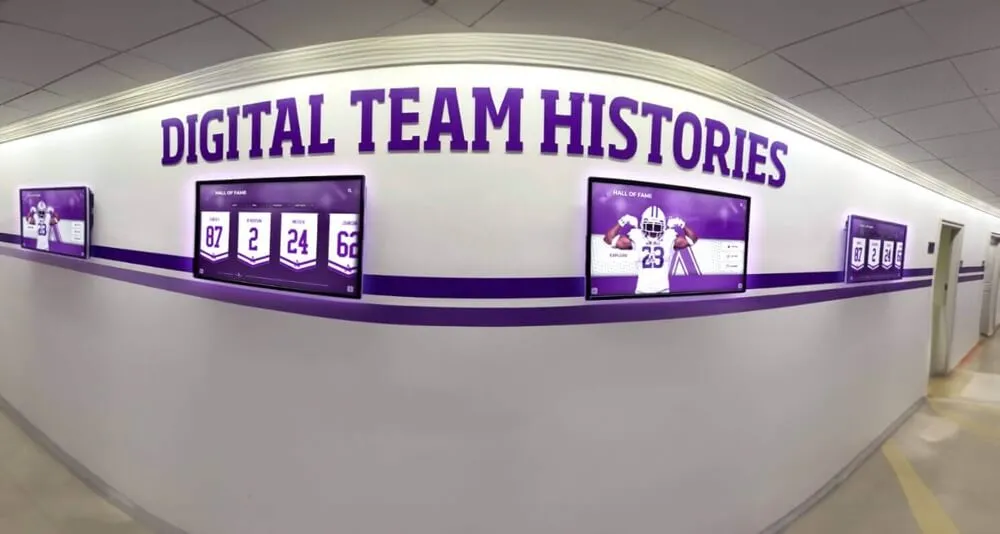
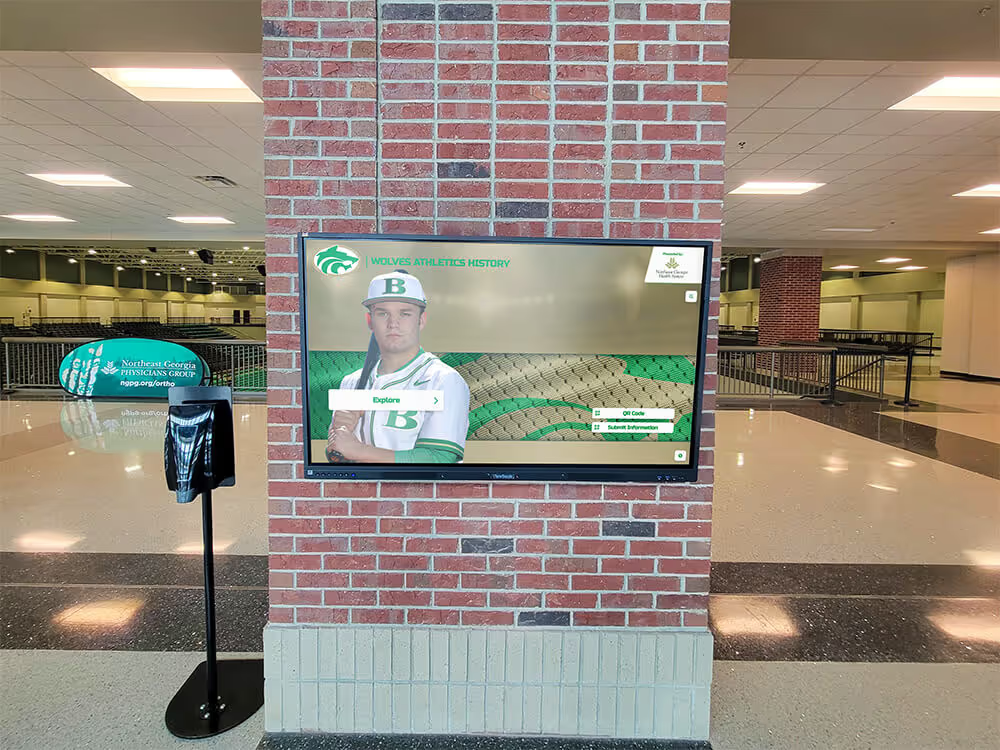
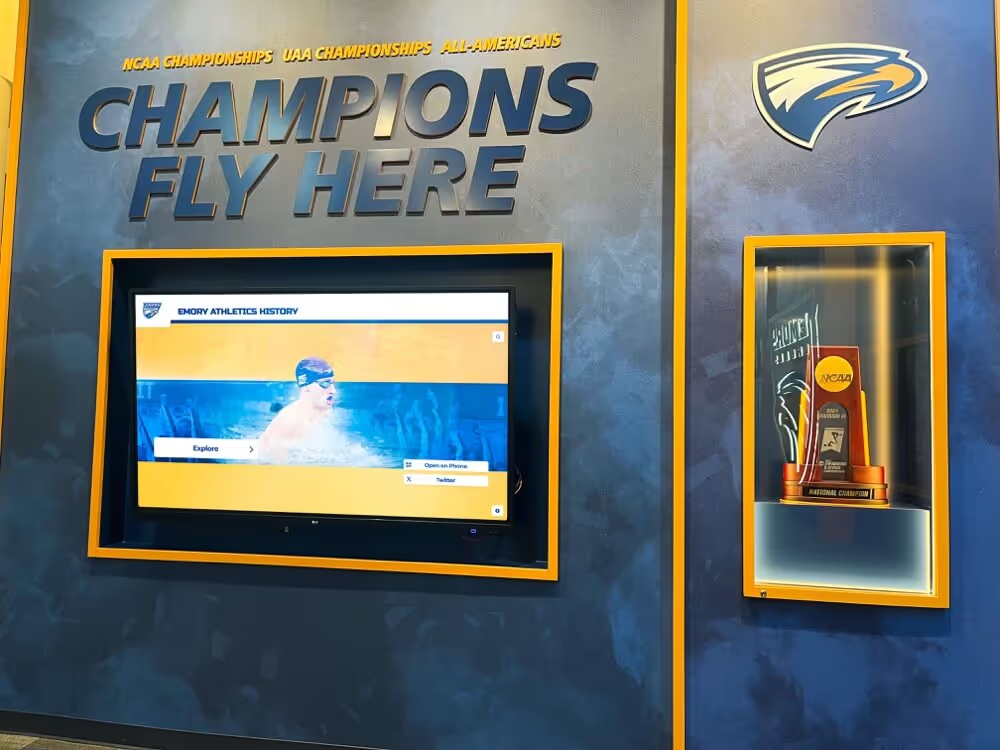
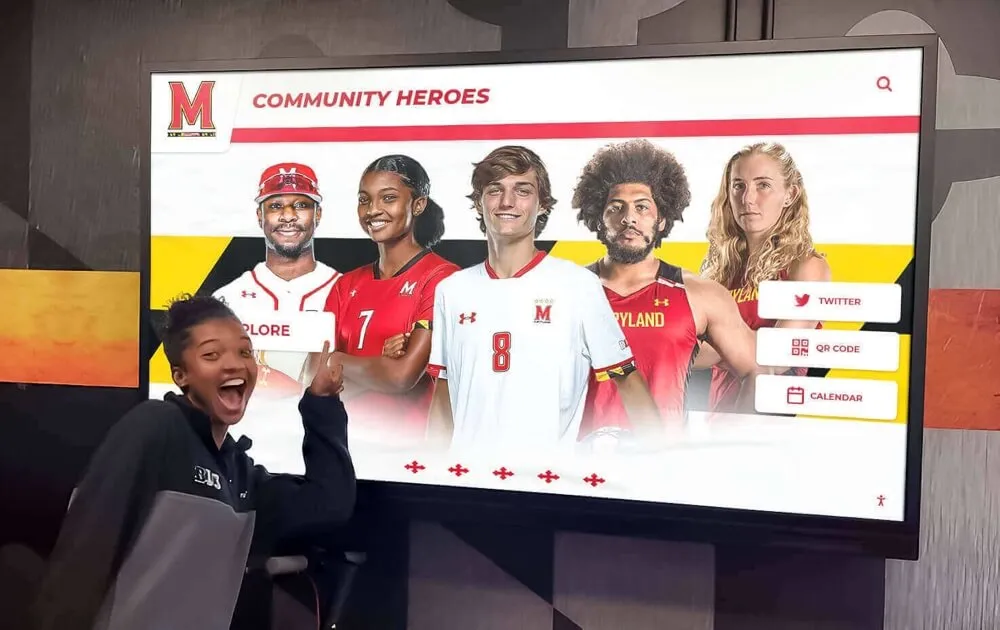
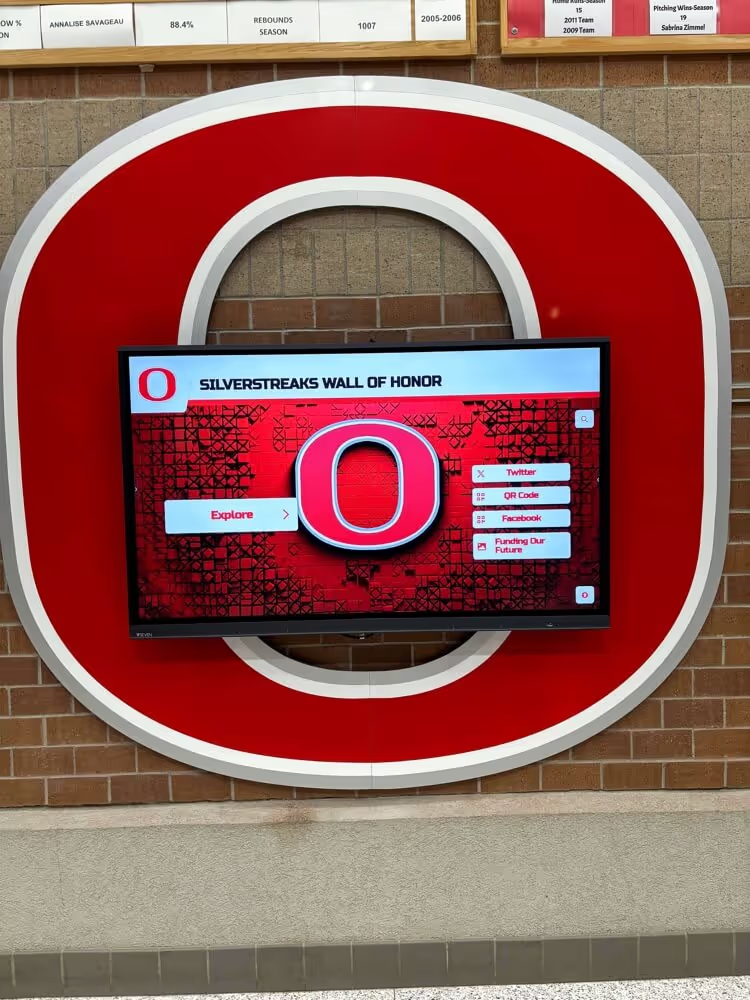
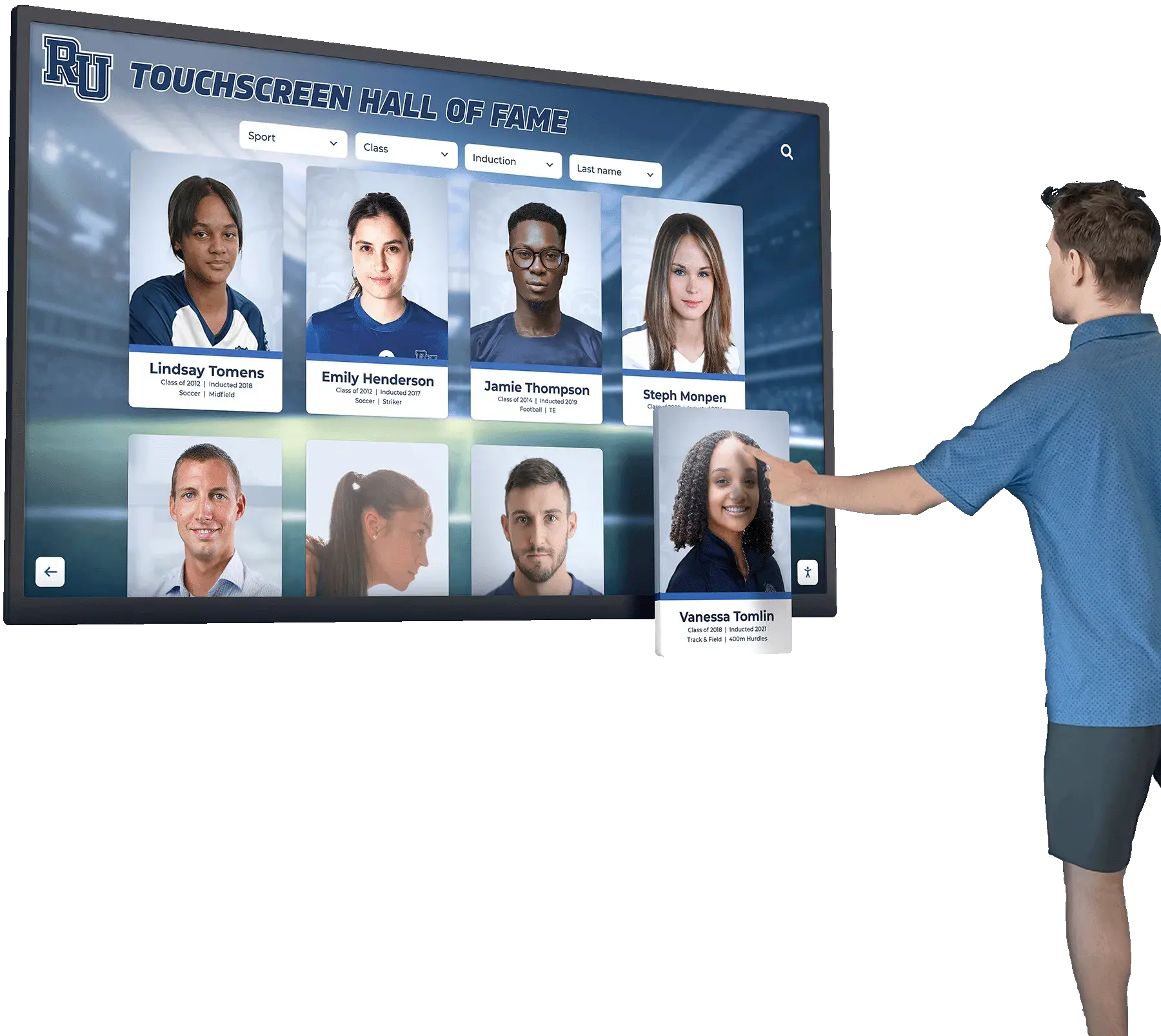
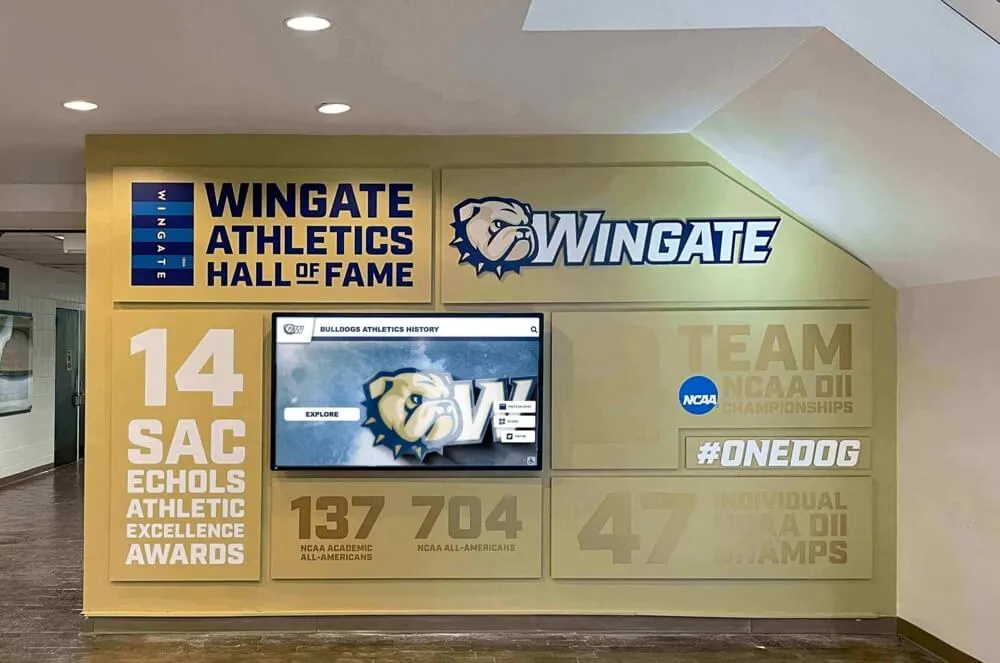
Recognizing donors by name alongside specific outcomes creates a permanent record of the relationship between gift and impact
What Is a Donor Impact Report?
A donor impact report is more than a thank-you letter. It documents the concrete results of a gift: the scholarship recipient’s name and field of study, the square footage of the renovated gymnasium, the number of students served by a new science lab, or the specific athletic program milestone a naming gift made possible.
The term overlaps with several related formats—stewardship reports, impact statements, giving society updates, and naming gift anniversary letters—but all share the same core function: bridging the gap between what a donor gave and what that giving produced. Strong impact reports answer three questions a donor privately asks after every gift: Did it work? Did anyone notice? Does it still matter?
What Schools Should Include in a Donor Impact Report
Not every report needs every element, but the most effective ones share a common anatomy. Tailor the depth to the gift size and relationship stage, and always prioritize specificity over generic appreciation.
1. The Specific Outcome Tied to This Gift
Name the outcome directly in the opening paragraph. Avoid vague phrases like “your support helps students.” Instead: “Your $25,000 gift fully funded the Ramirez Family Scholarship for the 2025–26 academic year, awarded to a first-generation sophomore majoring in biomedical engineering.”
Specificity signals accountability and earns trust faster than any amount of warm language.
2. Beneficiaries and Recipients
Whenever privacy allows, name who benefited. Scholarship donors want to know a real student received the award. Facility donors want to see a photo of students in the space they funded. Naming gift donors want to know community members interact daily with the space bearing their family’s name.
Schools with scholarship programs should consider including a brief, permission-approved note or summary from the recipient—not a fabricated testimonial, but a factual account of the recipient’s background and field of study.
3. Quantifiable Metrics
Numbers give donors a concrete handle on scale. Useful metrics for school impact reports include:
- Number of scholarship recipients per year
- Square footage of renovated or new space
- Student enrollment in funded programs
- Equipment units purchased (computers, instruments, athletic gear)
- Hours of use per week for a named facility
- Matching gift dollars unlocked by a lead gift
Even rough figures are more powerful than adjectives. “Hundreds of students” is weaker than “412 students used the renovated fitness center in its first semester.”
4. Photos and Visual Documentation
Visual evidence is essential. According to CASE (Council for Advancement and Support of Education), major gift donors who receive photographic documentation of their gift’s impact report significantly higher satisfaction with the institution’s stewardship practices.
Include at least one photo per report. Ideal subjects include:
- The physical space (before/after when applicable)
- Students or staff using funded equipment or facilities
- Signage, plaques, or recognition displays bearing the donor’s name
- Events held in a named space
- Award ceremonies where scholarship recipients are recognized

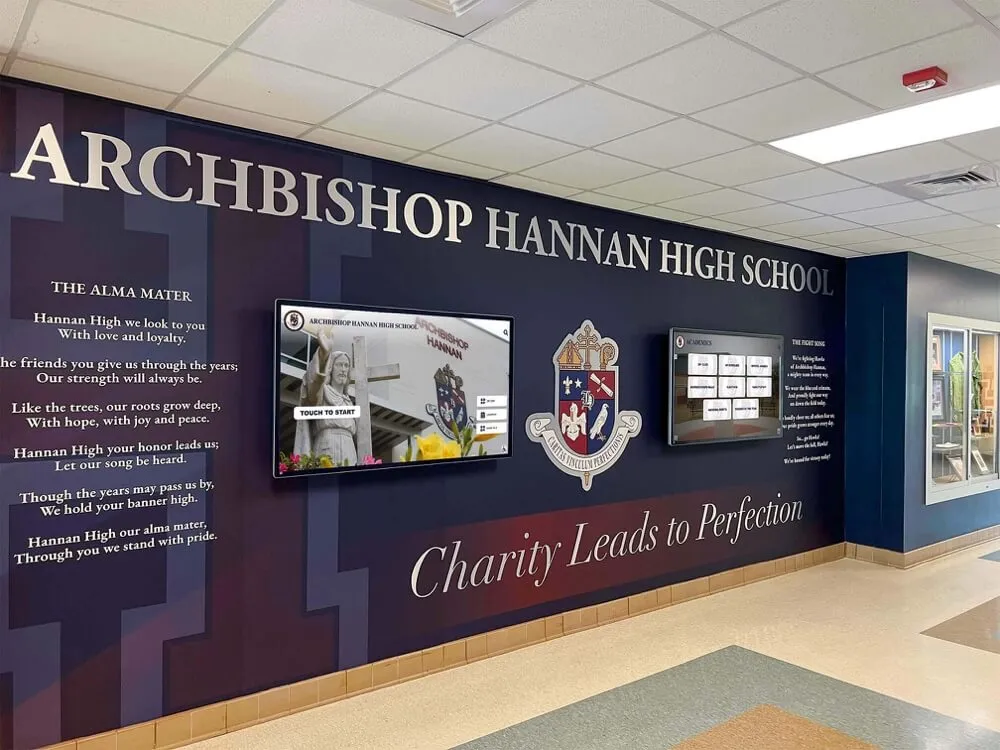
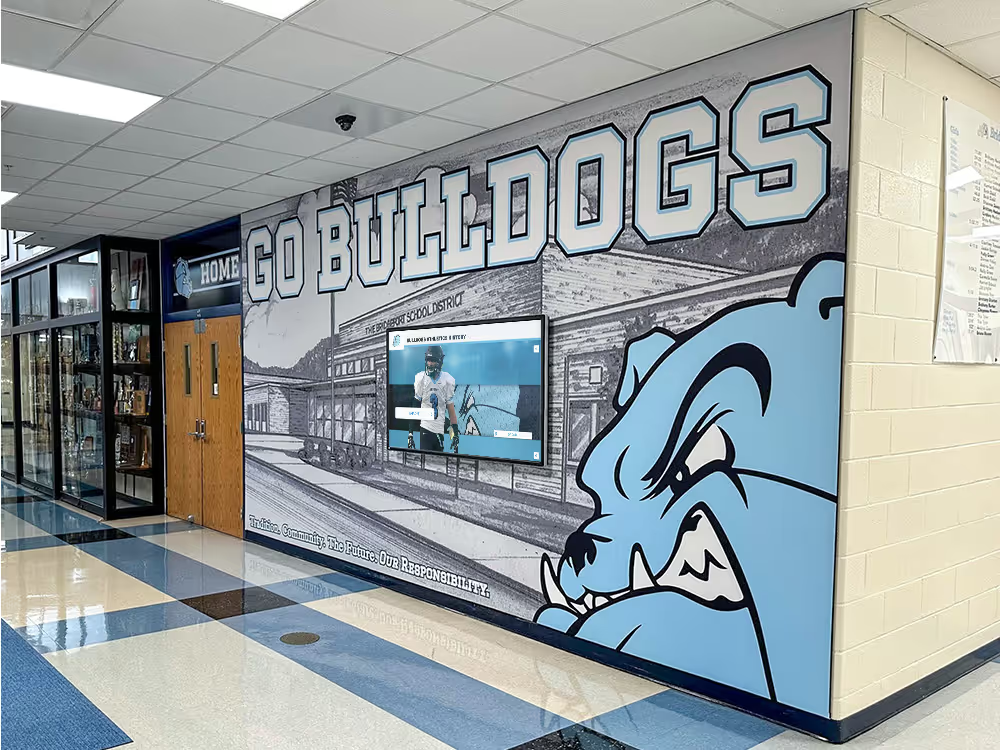
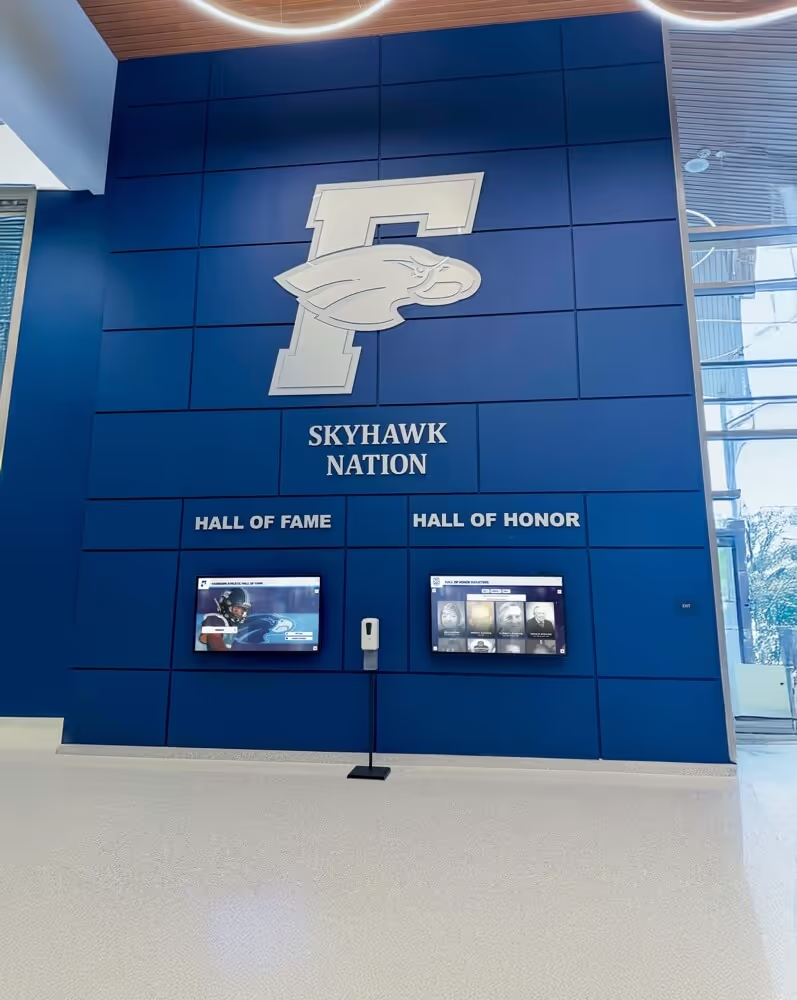
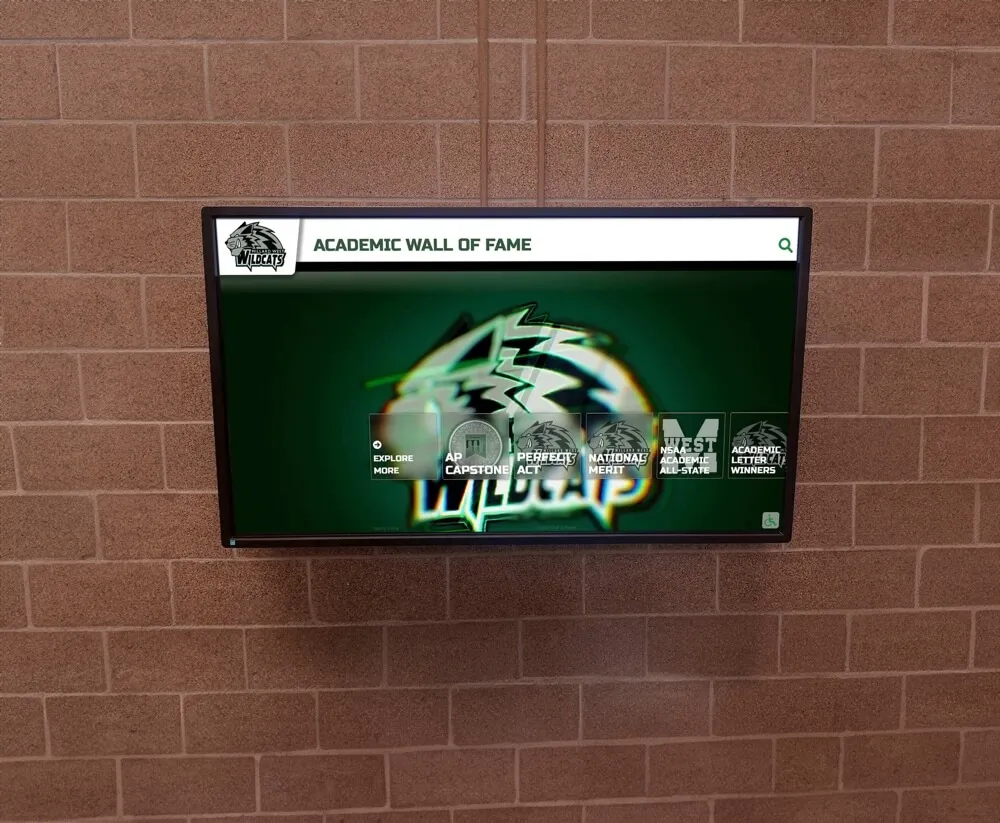
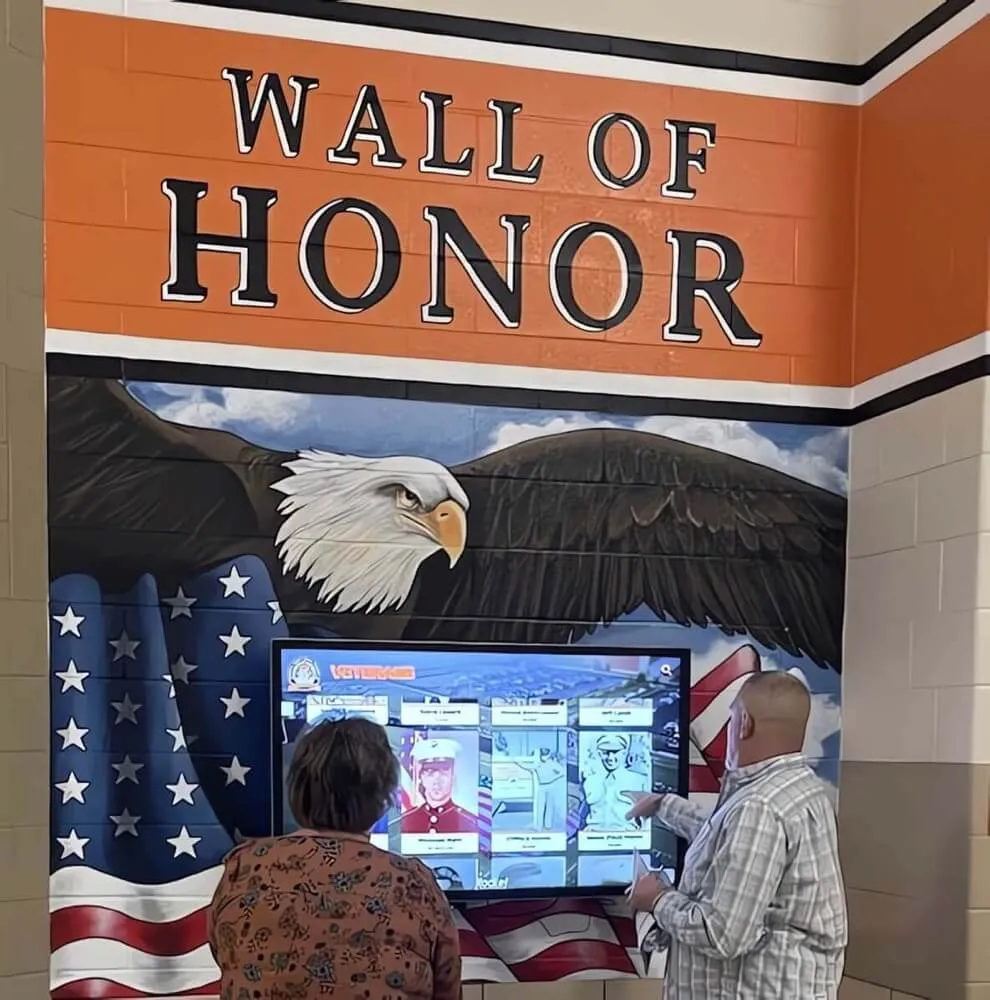
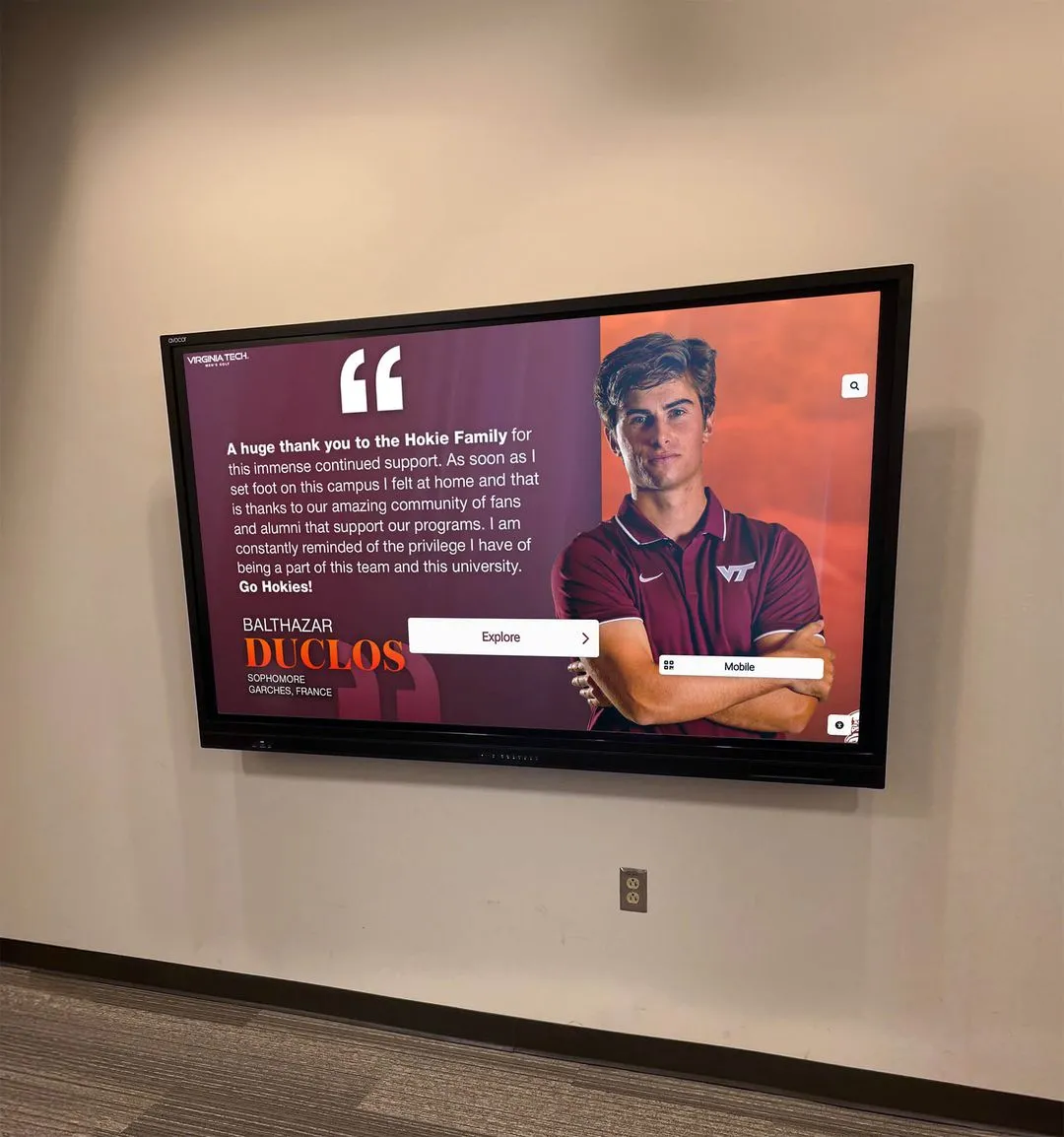
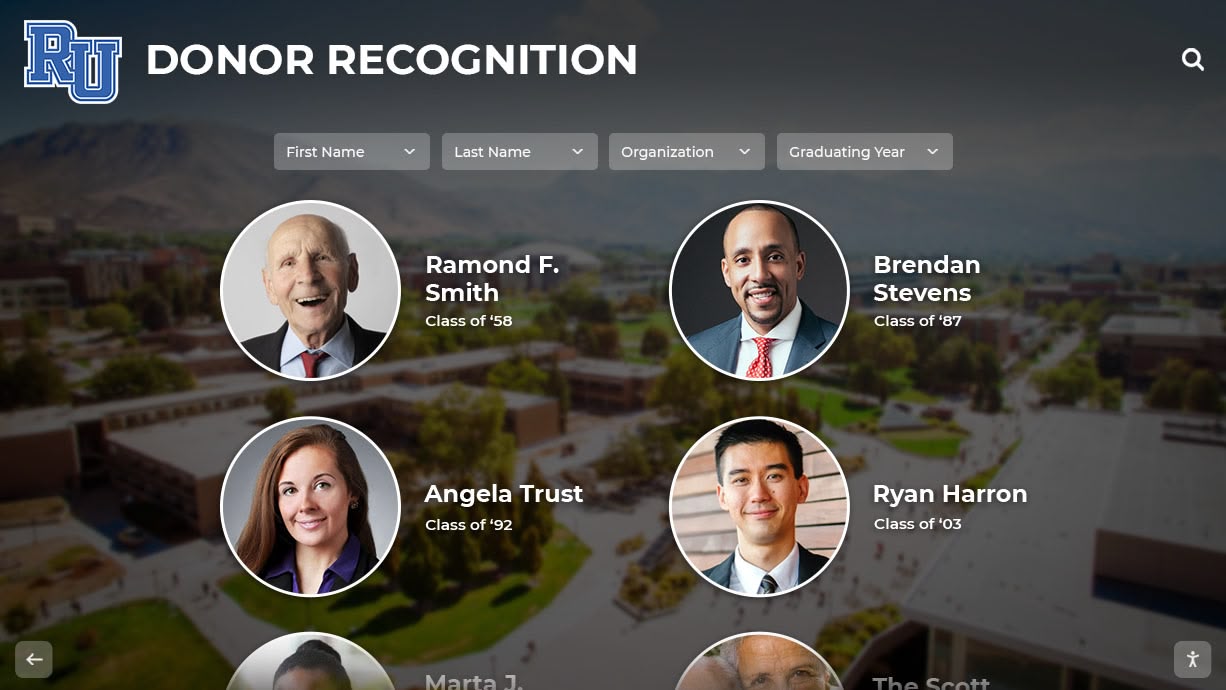
Digital academic recognition displays let schools document and share donor impact with every visitor who walks through the building
5. Acknowledgment of the Donor’s Specific Motivation
When advancement staff have relationship notes or recorded giving history, reference the donor’s stated motivation. A donor who gave in memory of a parent deserves a report that acknowledges that connection explicitly. A proud alumnus who funded an athletic award responds differently than a corporate partner who funded a classroom.
Personalization at this level doesn’t require AI or automation—it requires that gift officers document conversations and that stewardship staff read those notes before drafting reports.
6. A Forward-Looking Statement
Close each report with a brief look ahead. This plants the seed for the next relationship cycle without asking for money directly. Effective forward-looking language sounds like: “The Ramirez Family Scholarship committee will begin reviewing applications for the 2026–27 award in September. We’ll share another update when the next recipient is named.”
This keeps donors in the story even when they’re not currently being asked for anything.
Reporting After Different Gift Types
Different gifts require different report formats, timelines, and levels of detail. The table below outlines common school gift scenarios and what each report should cover.
| Gift Type | Report Timing | Must-Include Elements |
|---|---|---|
| Named scholarship | Within 60 days of award, then annually | Recipient profile, field of study, GPA if available, photo |
| Capital campaign pledge | At campaign close + annually during pledge period | Campaign totals, project milestones, construction/renovation photos |
| Naming gift (facility) | Year 1 dedication + every 3–5 years thereafter | Usage metrics, events held, signage photos, condition updates |
| Annual fund gift | Within 30 days + year-end summary | Aggregate outcomes, program highlights, enrollment data |
| Equipment/program gift | At delivery/launch + 6 months later | Student access numbers, staff testimonials (real), usage frequency |
| Endowment gift | Annually at fiscal year close | Distribution amount, fund balance, beneficiary program update |
Schools that treat naming gift stewardship as a permanent, recurring obligation—not a one-time dedication ceremony—build the strongest long-term relationships with major donors. A family whose name is on a building for 25 years should receive meaningful updates throughout that time, not just a plaque and silence.
Stewardship Report Examples by Scenario
After a Capital Campaign
A post-campaign donor impact report should acknowledge the full community of supporters while making each individual feel their piece mattered. Effective capital campaign reports include:
- Final campaign total vs. goal (with percentage achieved)
- Number of donors at each giving tier
- Key facility or program milestones completed
- How the campaign result changes the school’s future capacity
- Recognition listing by giving level (printed and digital)
For major campaign donors, a personalized letter from the head of school or president should accompany the broader campaign summary. That letter should name their specific pledge and tie it to a specific outcome within the larger project.
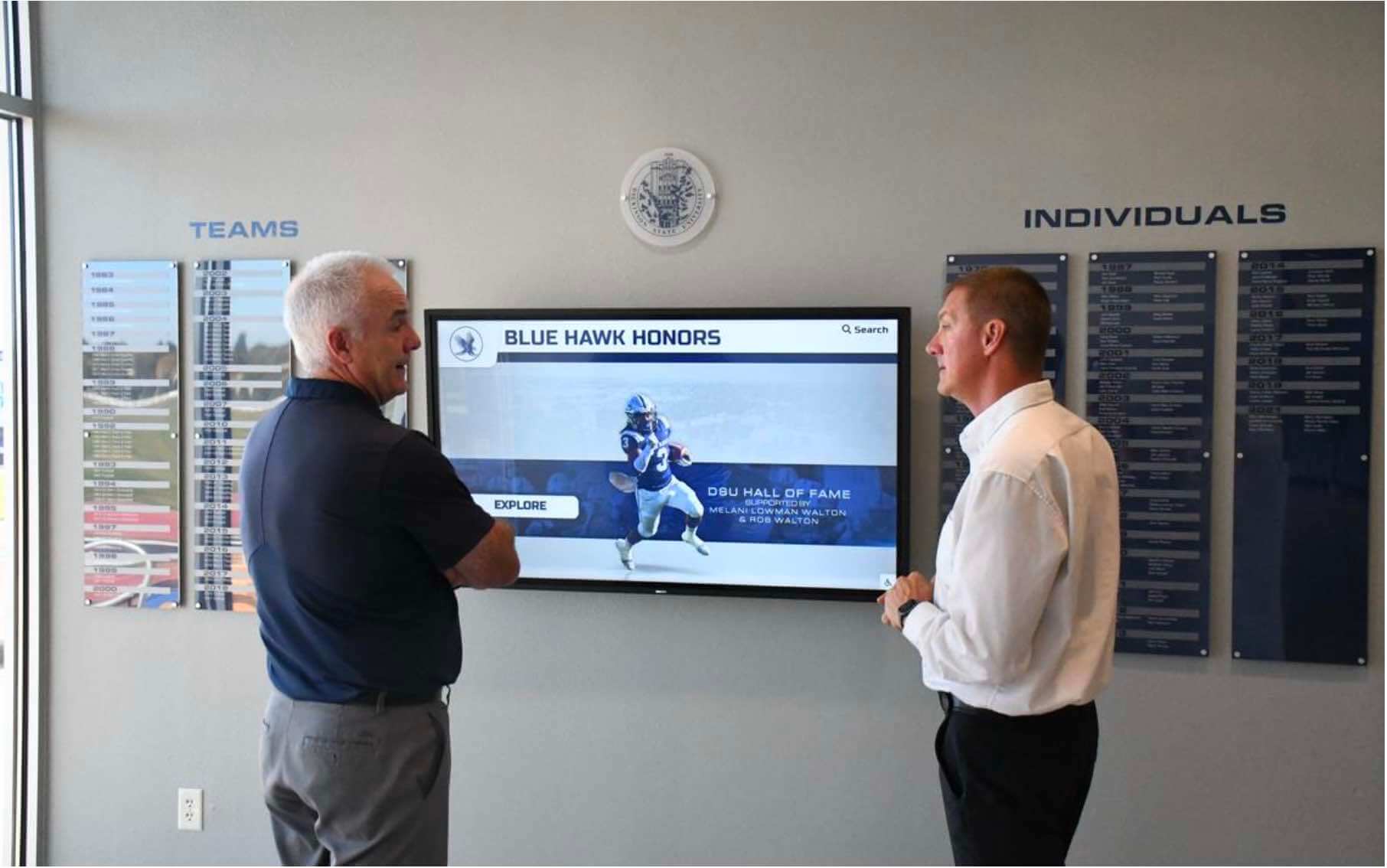
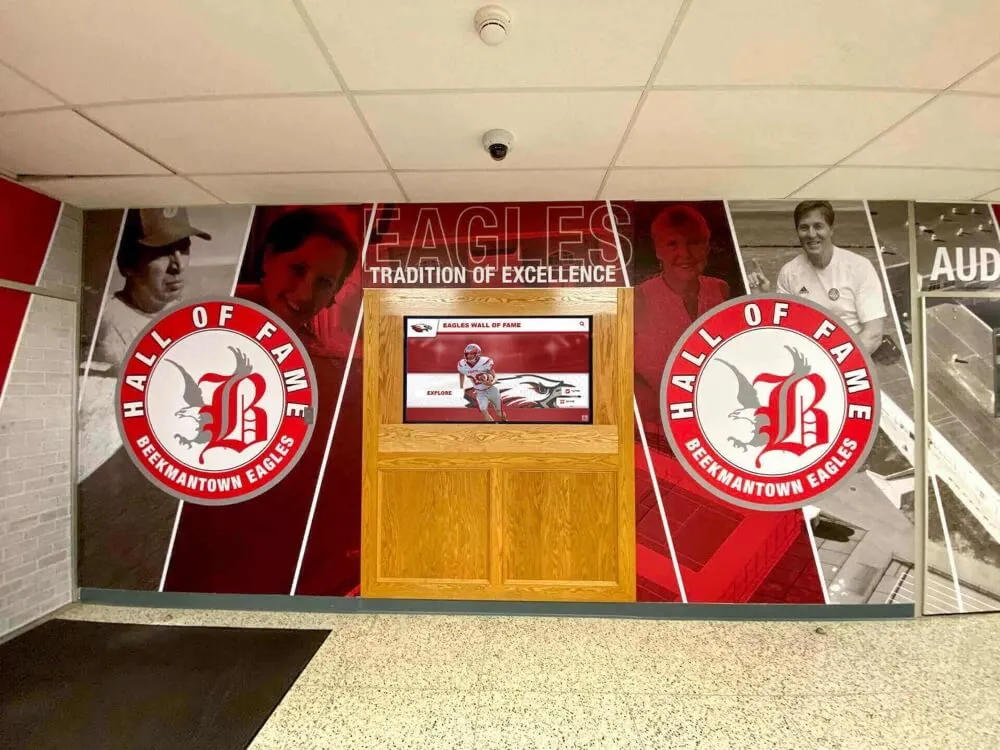
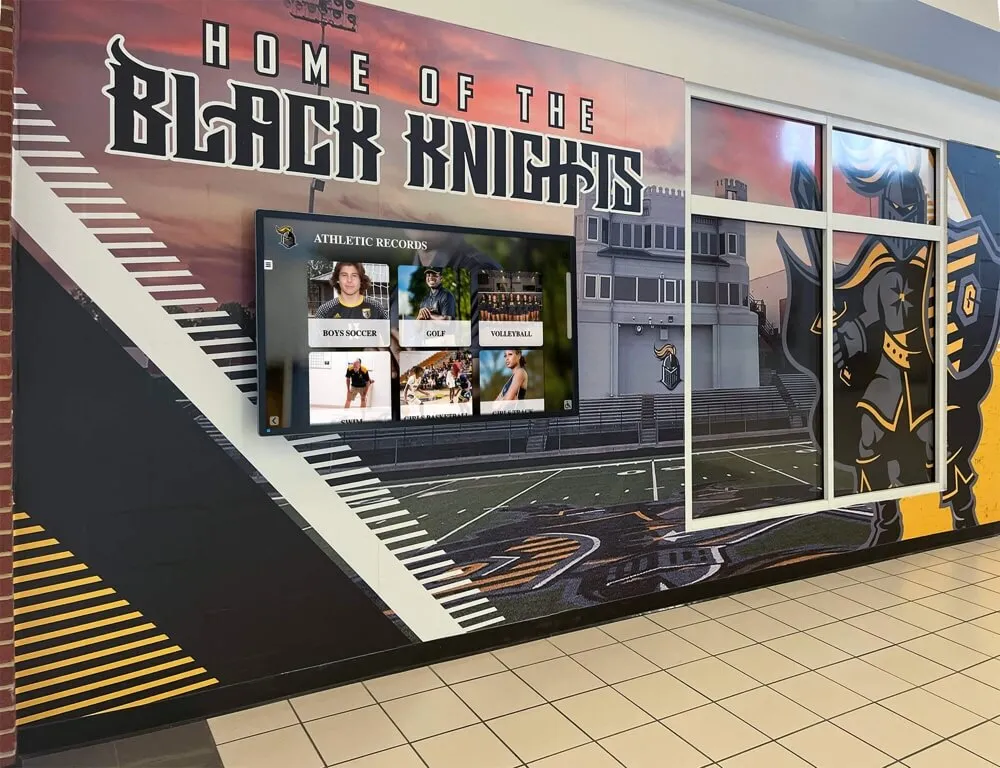
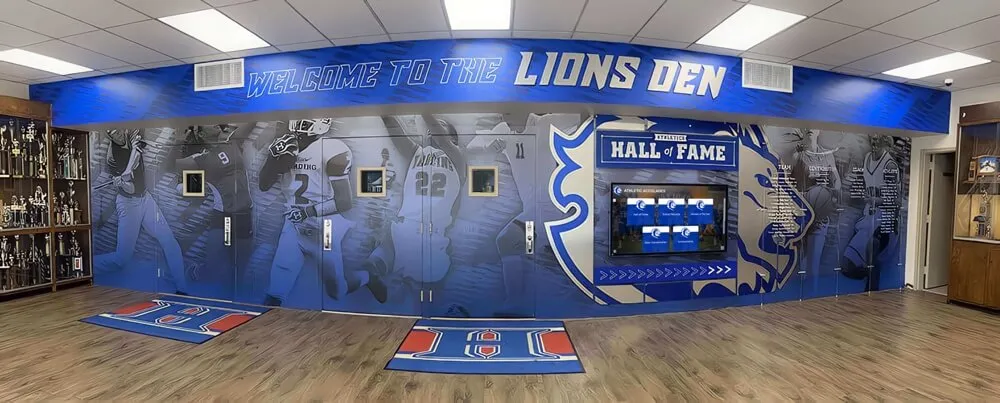
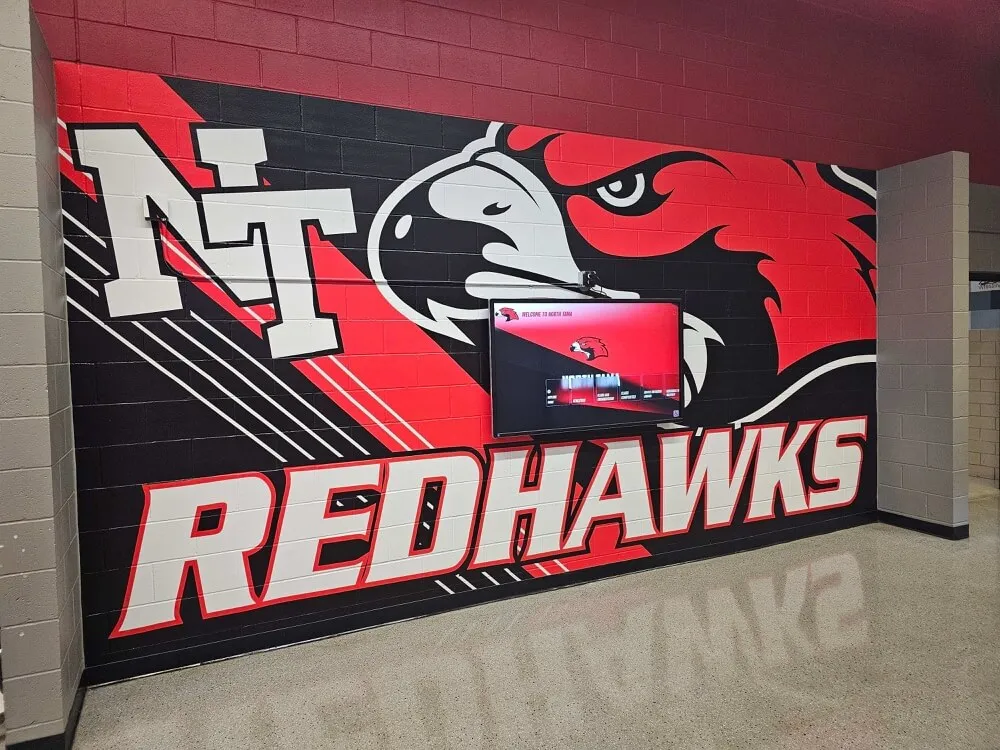
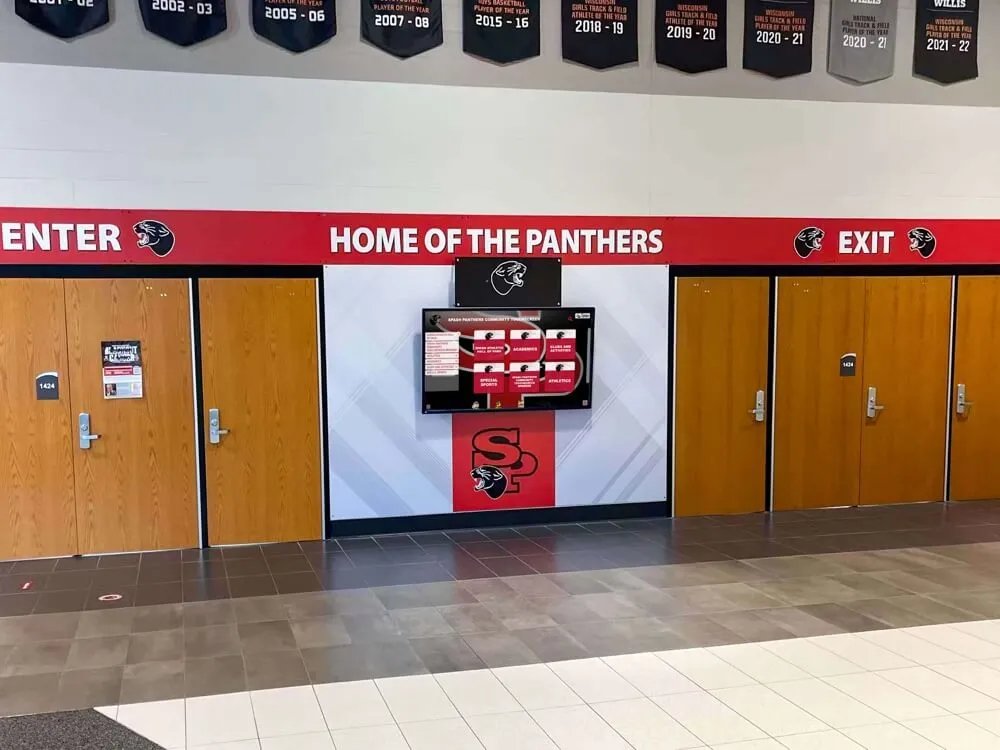
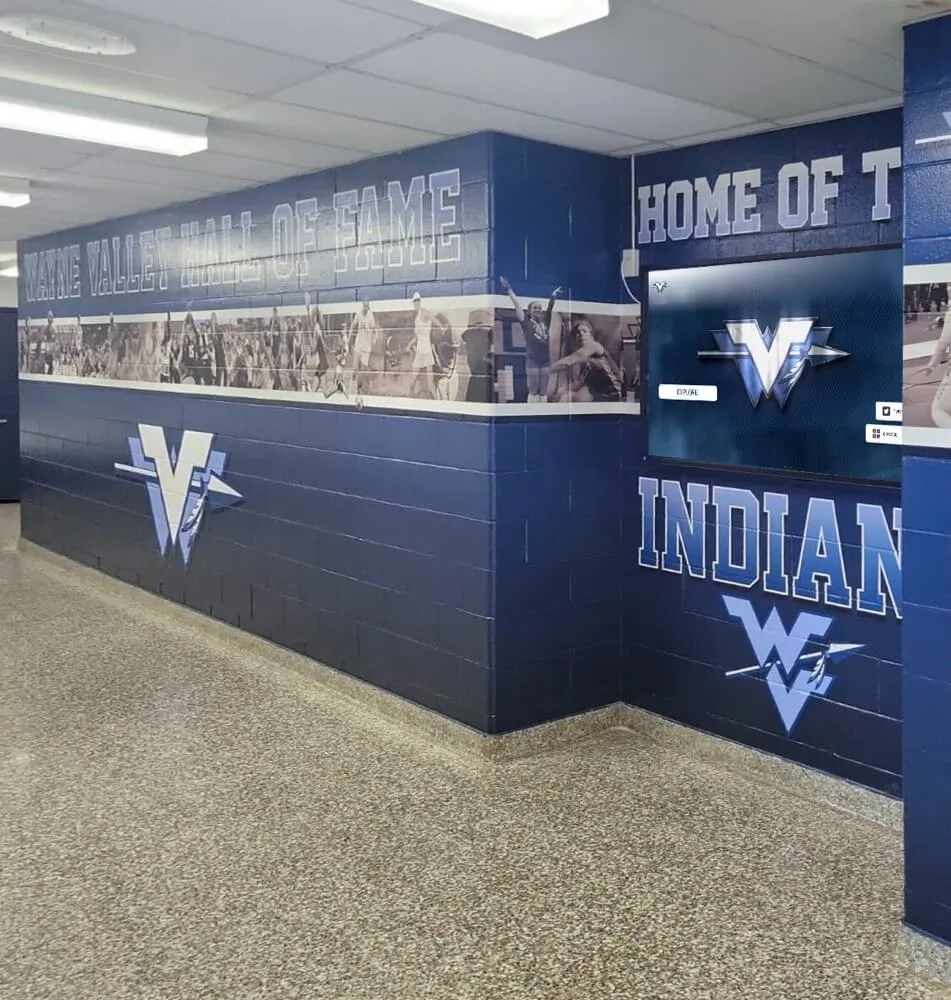
High-traffic donor recognition displays extend campaign stewardship beyond the printed report and into daily school life
After a Naming Gift
Naming gift stewardship is a long-term obligation. The initial report should document the dedication event and first-year usage data. Subsequent reports—sent every three to five years depending on gift size and relationship—should revisit the space’s current condition, how it’s used, and any notable events or accomplishments that happened within it.
Schools that pair written naming gift updates with a visible, well-maintained recognition display reinforce the permanence of the honor. A touchscreen recognition wall that displays the donor family’s name alongside current usage statistics does more ongoing stewardship work than any annual letter could accomplish alone.
Rocket Alumni Solutions builds interactive digital recognition systems that display donor names, gift histories, and named space information in a format visible to students, staff, and visitors every day—turning the building itself into a living stewardship report.
After an Annual Fund Drive
Annual fund donors often receive the least personalized stewardship, yet they represent the largest segment of a school’s donor file. A brief but specific annual fund impact report—a single page or a short email with three concrete outcomes—performs far better than a generic thank-you that could have been sent to anyone.
The most effective annual fund stewardship reports tell the story of one specific program or initiative funded by the annual fund in aggregate. A school that uses annual fund dollars to support financial aid should pick one specific student story (with permission) and let that story carry the report.
Making Donor Impact Visible Year-Round
A printed or emailed impact report is a touchpoint. A permanent recognition display is ongoing infrastructure. The most effective school stewardship programs use both.
Digital donor recognition walls and interactive touchscreen kiosks placed in lobbies, hallways, and athletic facilities let schools communicate donor impact to every person who walks through the building—not just the donors themselves. When a prospective student and their family see a beautifully maintained recognition display, it signals institutional care and organizational culture. When a current donor visits campus and sees their name on a display alongside their gift’s outcomes, the stewardship happens without any staff member needing to be in the room.
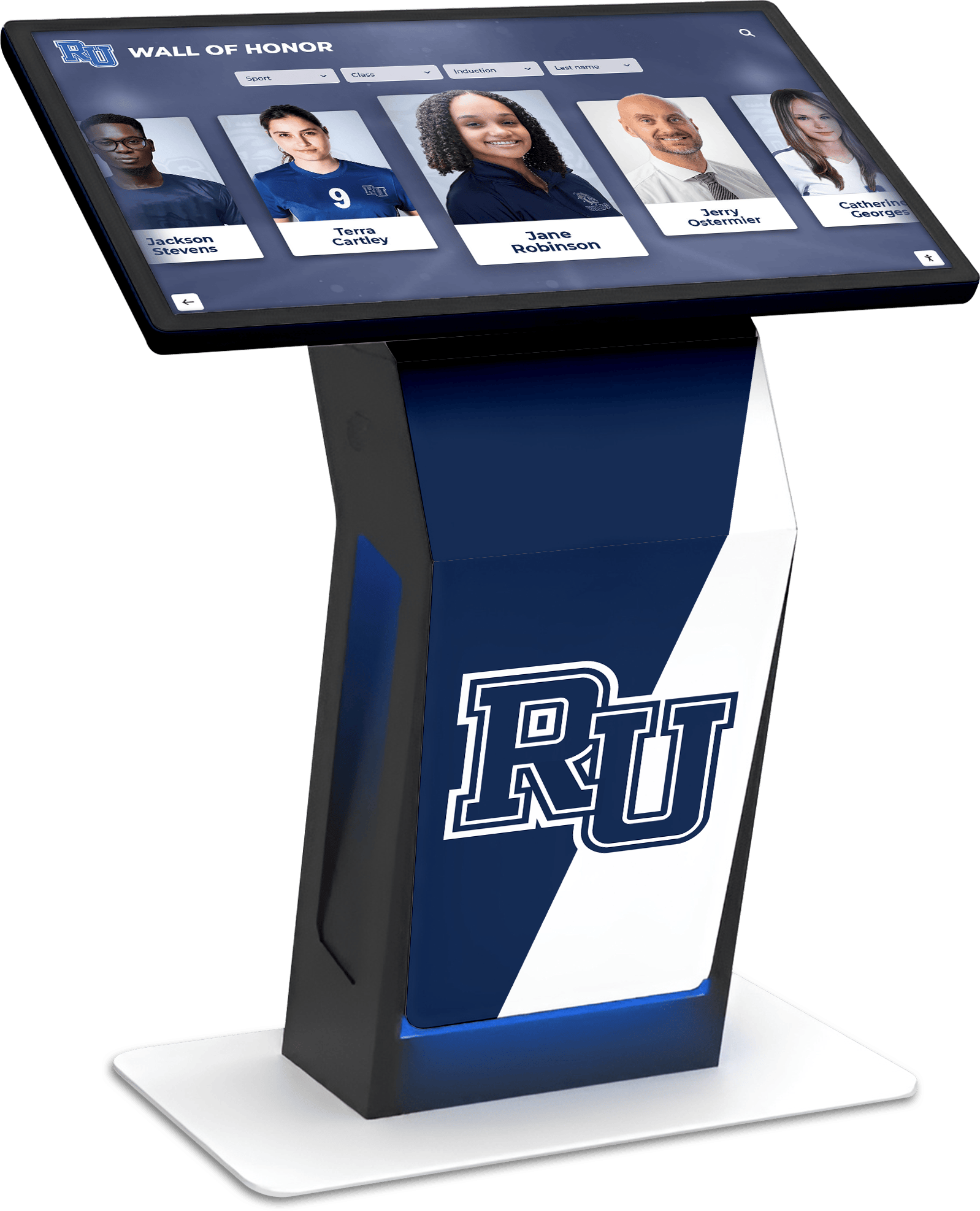
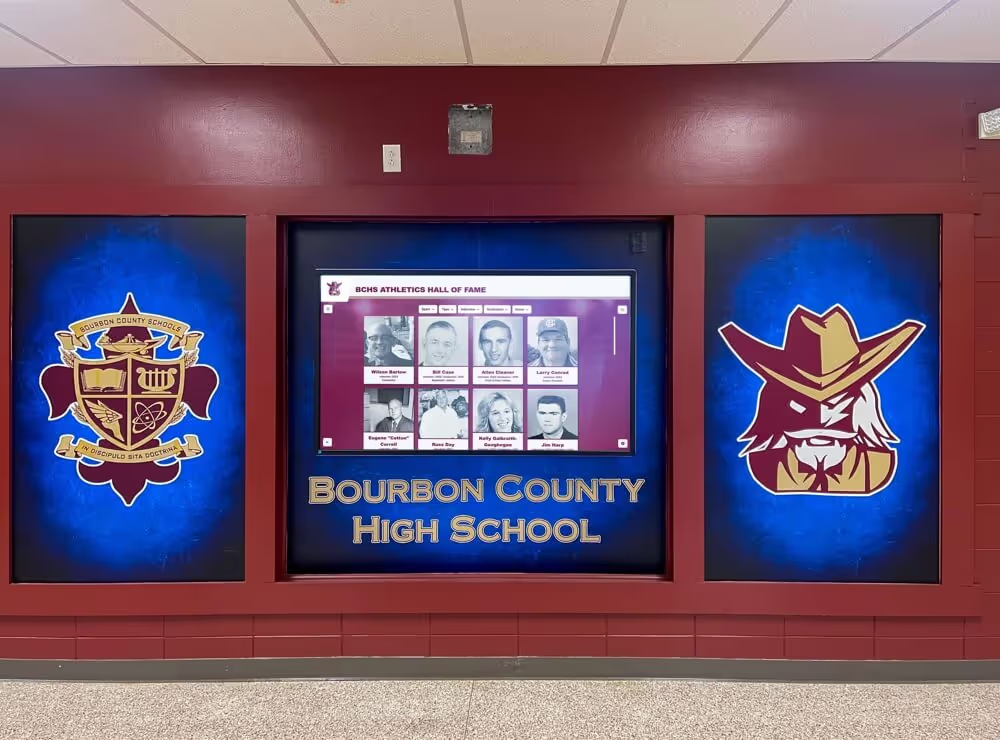
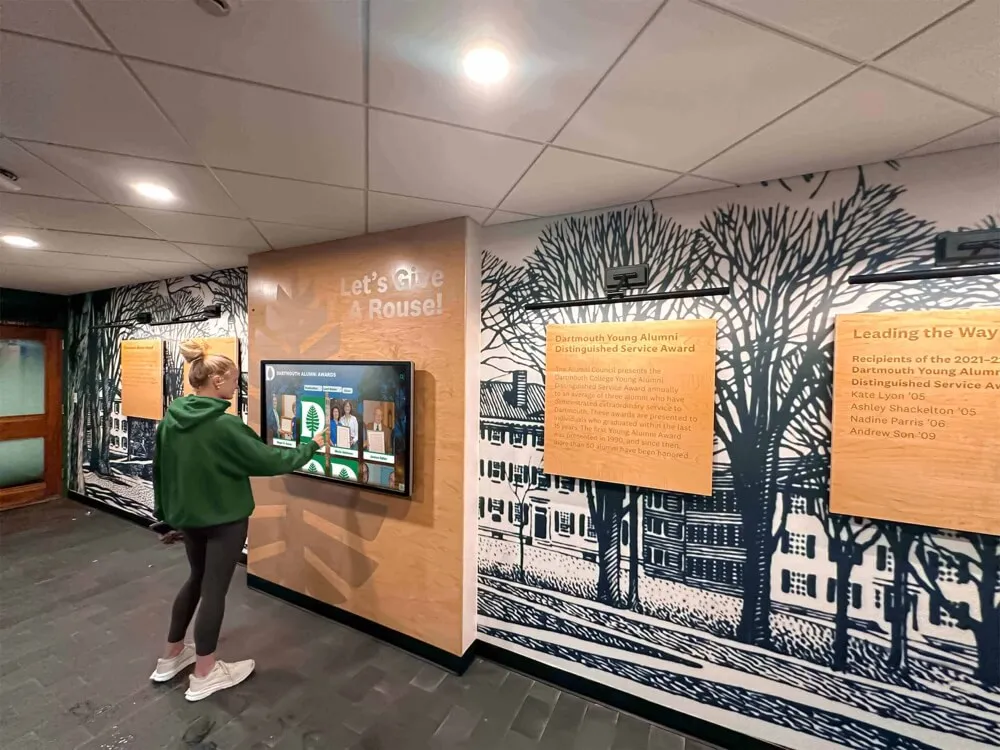
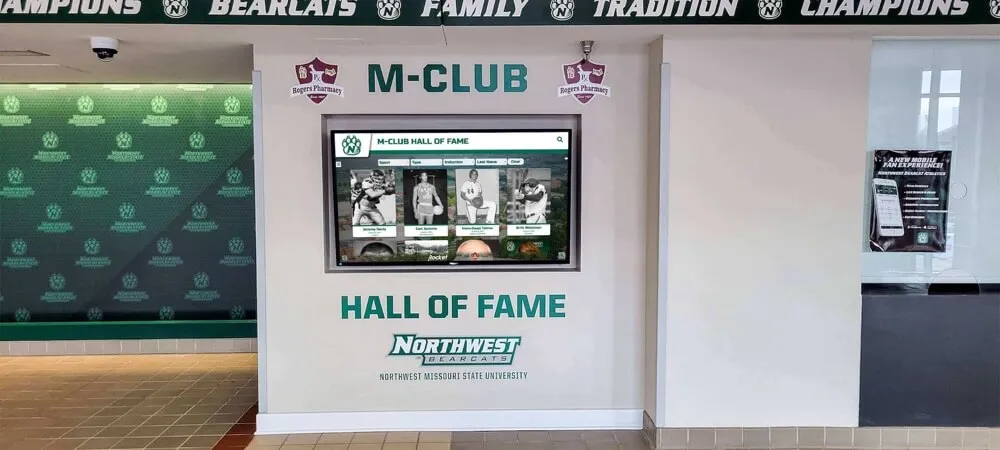
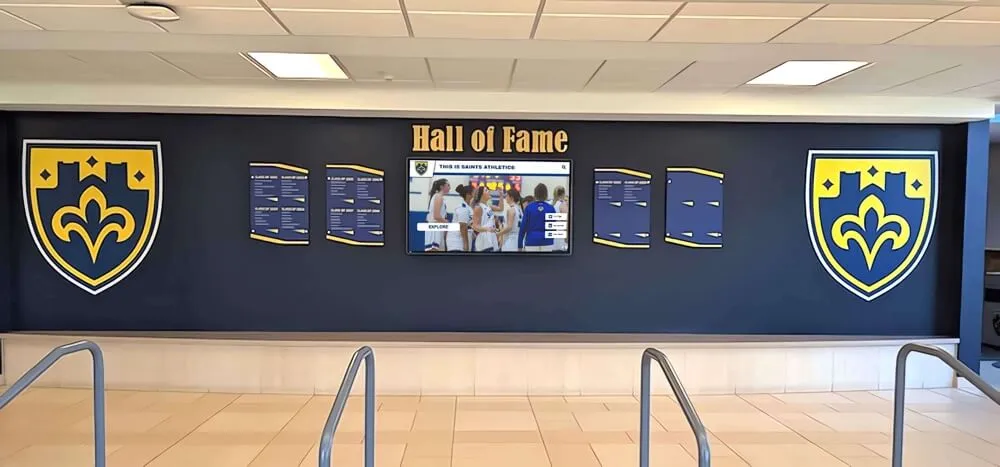
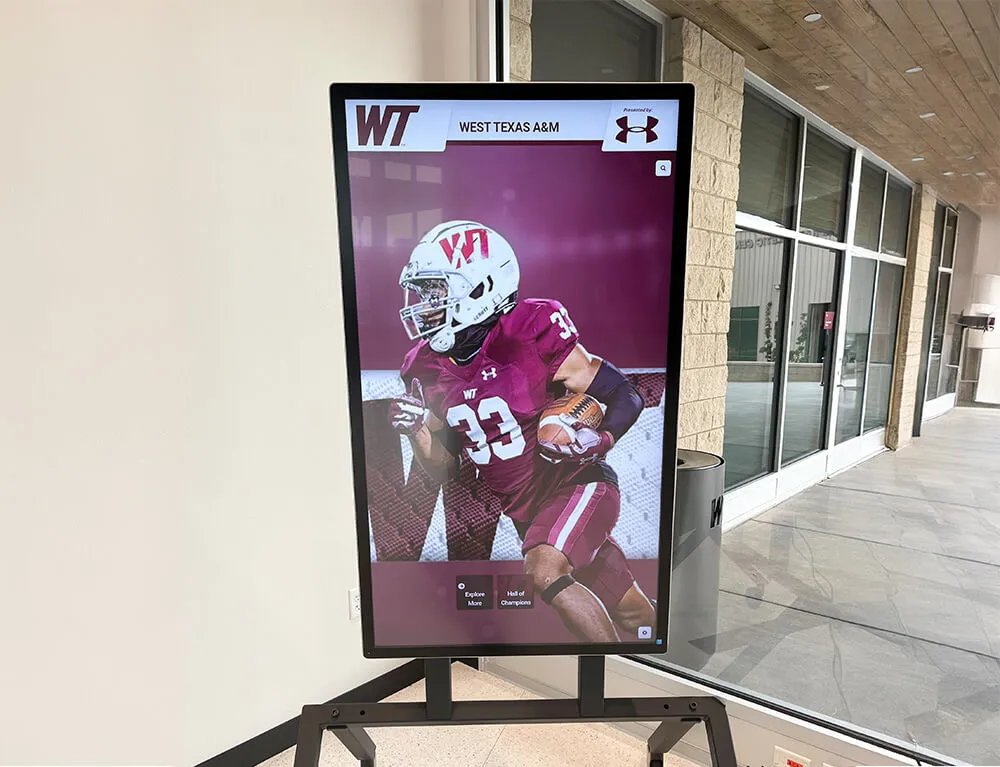
Touchscreen recognition kiosks extend impact reporting beyond the printed document and into the daily experience of campus life
Schools using digital recognition systems can update content remotely—adding new scholarship recipients, refreshing usage statistics, or highlighting recent campaign milestones—without the cost and delay of printed plaques. This keeps the display accurate and current, which itself communicates ongoing institutional attention to donor relationships.
For schools developing their stewardship infrastructure, see our guides on building an individual donor stewardship program and creative donor recognition walls for complementary strategies.
Distributing Your Donor Impact Report
The format of delivery matters. Consider the following distribution channels based on donor segment:
Mailed printed report — Best for major gift donors ($10,000+), naming gift families, and donors who are older or less digitally engaged. A physical, high-quality print report signals effort and importance.
Personalized email with PDF attachment — Effective for mid-level annual fund donors and campaign participants. Keep the email body brief (three to four sentences) and let the report document carry the detail.
Password-protected online report portal — Used by larger universities for endowment and named scholarship donors; allows real-time updates and multi-year archiving.
Campus recognition display — Not a substitute for written reports, but a powerful complement. Ensures ongoing visibility of donor impact in shared physical spaces.
Donor appreciation events — Annual report presentations at stewardship events create a natural distribution moment. See our guide on donor appreciation event ideas for how to structure these moments effectively.
Schools with robust alumni relations programs often integrate impact reports into broader alumni communications, using alumni relations software to segment audiences and personalize delivery at scale.

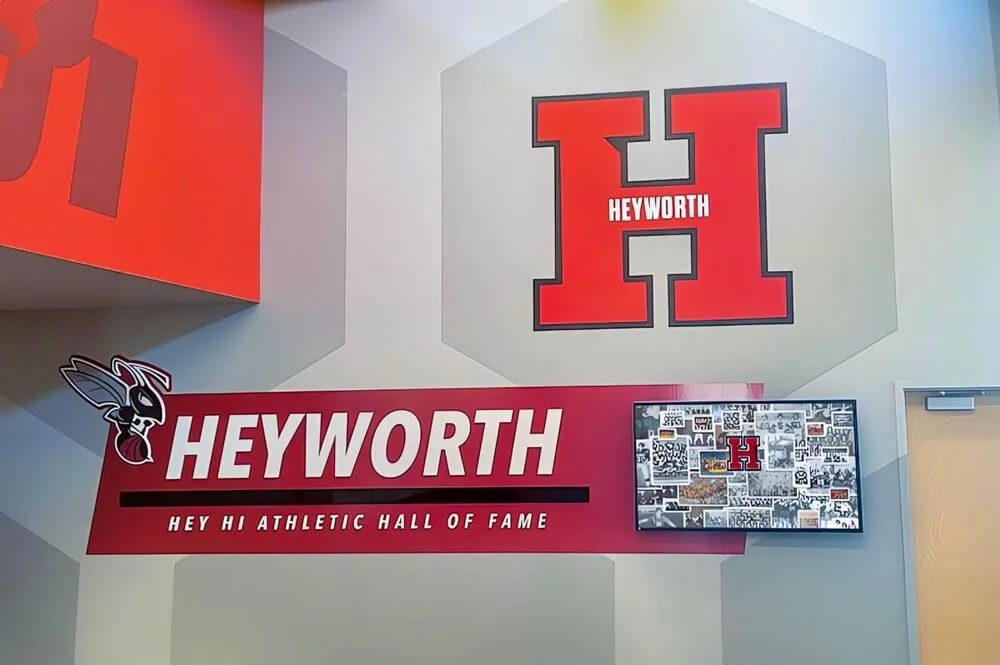
Permanent donor recognition displays serve as a visible, ongoing complement to printed and digital impact reports
Common Mistakes Schools Make in Donor Impact Reports
Avoiding these pitfalls will significantly improve how donors receive and respond to stewardship communication:
- Generic language: “Your gift supports our mission” tells a donor nothing. Replace with specific, named outcomes.
- Late reporting: Sending an impact report 18 months after a gift closes misses the emotional window. Target 30–60 days for annual fund gifts, within 90 days for major gifts.
- No visuals: Text-only reports underperform. Even one high-quality photo dramatically increases engagement.
- Skipping lapsed donors: Donors who stopped giving often stopped because they never saw their impact. A well-executed impact report sent to lapsed donors is one of the highest-ROI reactivation strategies available.
- Confusing stewardship with solicitation: An impact report should never include a donation ask. Its sole purpose is to close the loop on a prior gift. The next appeal comes later, separately, after the relationship is reinforced.
For schools building their first formal stewardship program, review our guide on digital donor recognition displays to understand how technology can support the long-term visibility component of impact reporting.
Turn Impact Reports into Lasting Recognition
Printed reports close the loop. Permanent recognition displays keep donor impact visible for years. If your school is ready to build a recognition system that works alongside your stewardship program—and tells the story of giving every day without staff intervention—Rocket Alumni Solutions designs custom digital donor recognition walls and touchscreen systems for schools and universities nationwide.
Explore options at touchhalloffame.us or learn about digital recognition walls built specifically for educational institutions.
Frequently Asked Questions
What is a donor impact report for schools?
A donor impact report is a structured document that shows a supporter exactly what their gift accomplished—naming specific beneficiaries, quantifiable outcomes, and visual evidence of the gift's effect. For schools, common formats include scholarship recipient updates, named facility usage reports, and post-campaign summaries. The goal is to close the loop between gift and result, which drives donor retention and future giving.
How often should schools send donor impact reports?
Timing depends on gift type. Annual fund donors should receive an impact report within 30–60 days of their gift and a year-end summary of aggregate outcomes. Major gift and named scholarship donors should receive annual reports tied to the academic year. Naming gift donors should receive updates at dedication, then every three to five years with usage metrics and space condition information.
What are good stewardship report examples for schools?
Strong stewardship report examples include: a one-page scholarship stewardship letter naming the recipient and their academic program; a post-campaign report showing final totals, donor honor roll, and facility milestone photos; a naming gift anniversary letter with updated space usage statistics and event highlights; and an annual fund impact summary showing aggregate program outcomes funded by unrestricted giving. Each should include at least one photo and avoid asking for a new gift.
Should a donor impact report include a donation ask?
No. A donor impact report is a stewardship communication, not a solicitation. Its purpose is to close the loop on a prior gift and reinforce the relationship. Including a donation ask in an impact report conflates stewardship with fundraising and undermines the trust the report is meant to build. Send the next appeal separately, after the impact report has had time to land.
How can schools make donor impact visible beyond a printed report?
Permanent digital recognition displays—touchscreen kiosks, LED donor walls, and interactive recognition systems—extend impact reporting into the daily life of the school. Placed in lobbies, hallways, and athletic facilities, these displays show donor names, named spaces, giving histories, and recognition content to students, staff, families, and visitors every day. Schools like those served by Rocket Alumni Solutions use these systems to complement written reports with year-round visible recognition that reinforces donor relationships without ongoing staff effort.
Conclusion
An effective donor impact report does more than express gratitude—it provides evidence, builds accountability, and makes donors feel like genuine partners in the school’s mission. Whether the gift funded a scholarship, named a facility, or contributed to a capital campaign, the formula is the same: be specific, be timely, be visual, and make the outcome personal.
Schools that build systematic, gift-type-appropriate stewardship report programs consistently outperform peers on donor retention, gift upgrade rates, and long-term relationship depth. Pair those written communications with permanent digital recognition displays, and the impact becomes something donors—and the entire school community—can see every time they walk through the building.
For more on building lasting donor recognition infrastructure, explore our resources on digital donor recognition walls and recognition display systems for schools.