



Schools, universities, athletic programs, and organizations seeking to honor achievements face a persistent challenge: traditional hall of fame displays with static plaques and framed photos quickly reach capacity, require expensive updates for new inductees, and fail to engage modern audiences accustomed to interactive digital experiences. Intent: Compare recognition display technologies to determine the most scalable, engaging solution for celebrating achievements and inspiring communities.
Digital hall of fame displays represent the evolution of recognition technology, transforming how institutions celebrate excellence by replacing physical limitations with unlimited capacity, static presentations with rich multimedia storytelling, and passive viewing with interactive touchscreen experiences that connect visitors emotionally with honorees and organizational history. Unlike traditional trophy cases constrained by physical space and aging photographs that fade over time, digital solutions accommodate thousands of inductees, feature high-resolution images and videos, enable searchable directories, and update remotely through cloud-based content management requiring no technical expertise.
This comprehensive guide explores how digital hall of fame technology works, the display capabilities and software features that differentiate modern solutions from traditional approaches, implementation considerations for successful installations, and proven strategies that maximize community engagement while addressing accessibility requirements, budget constraints, and long-term content management needs.
Organizations implementing digital hall of fame displays report eliminating space constraints that previously limited annual inductions, reducing long-term costs associated with continuous plaque production and trophy case expansion, and creating engagement opportunities impossible with static displays—searchable athlete databases, detailed achievement stories with game footage and statistics, and interactive experiences that visitors remember and share on social media.

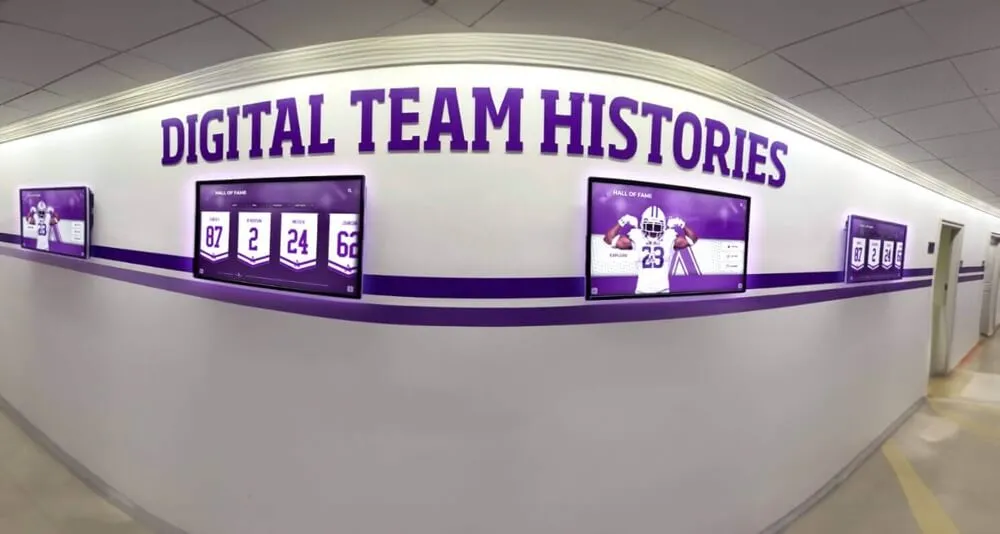
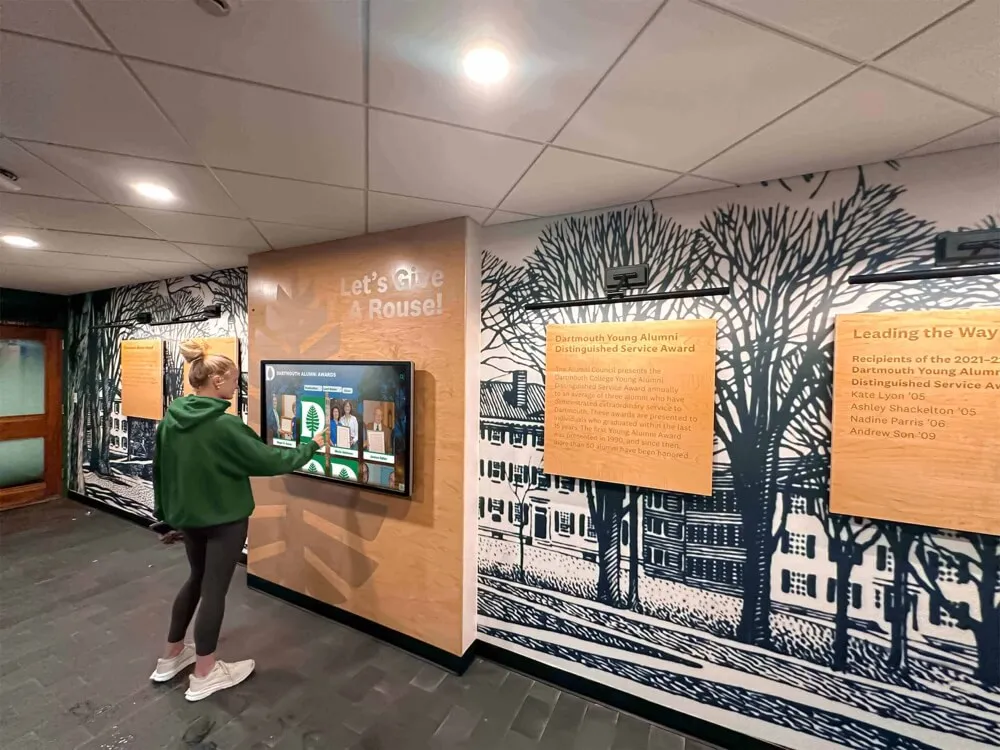
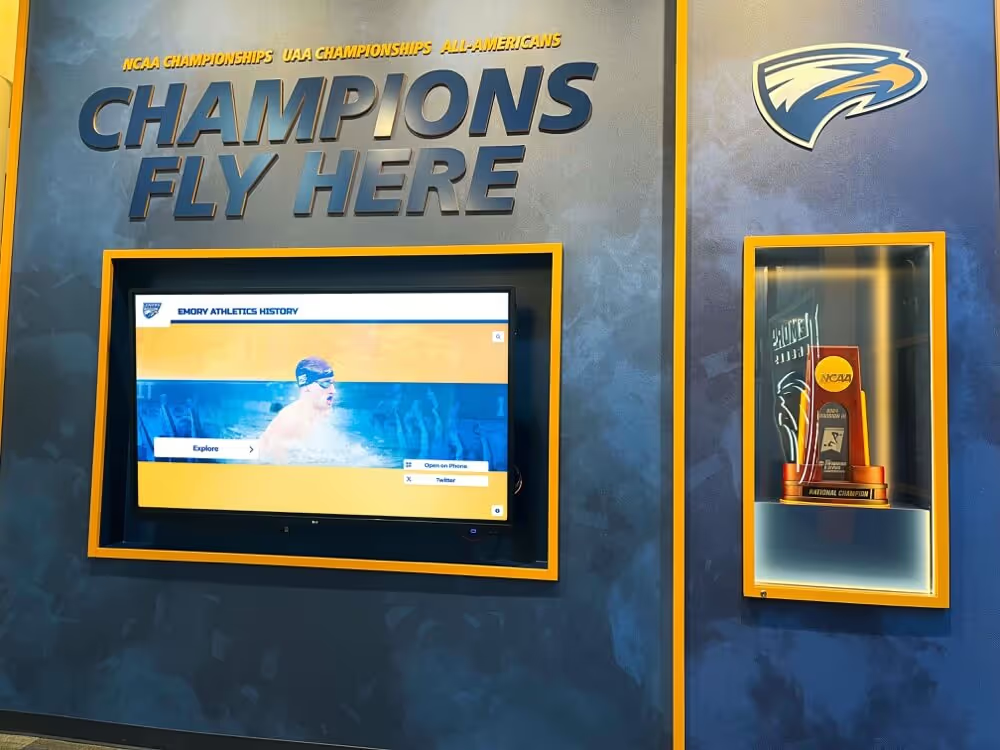
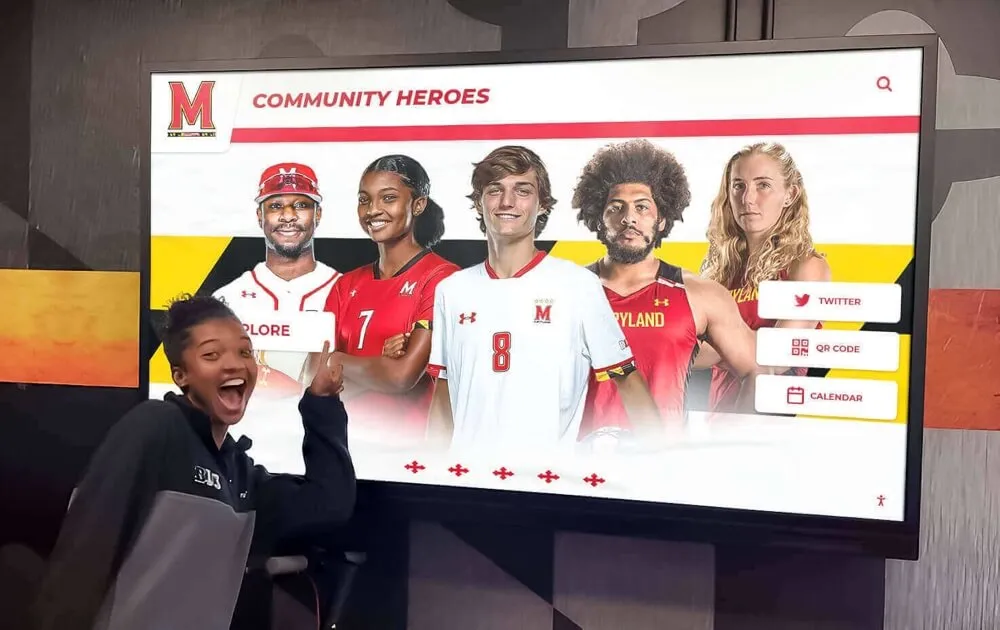
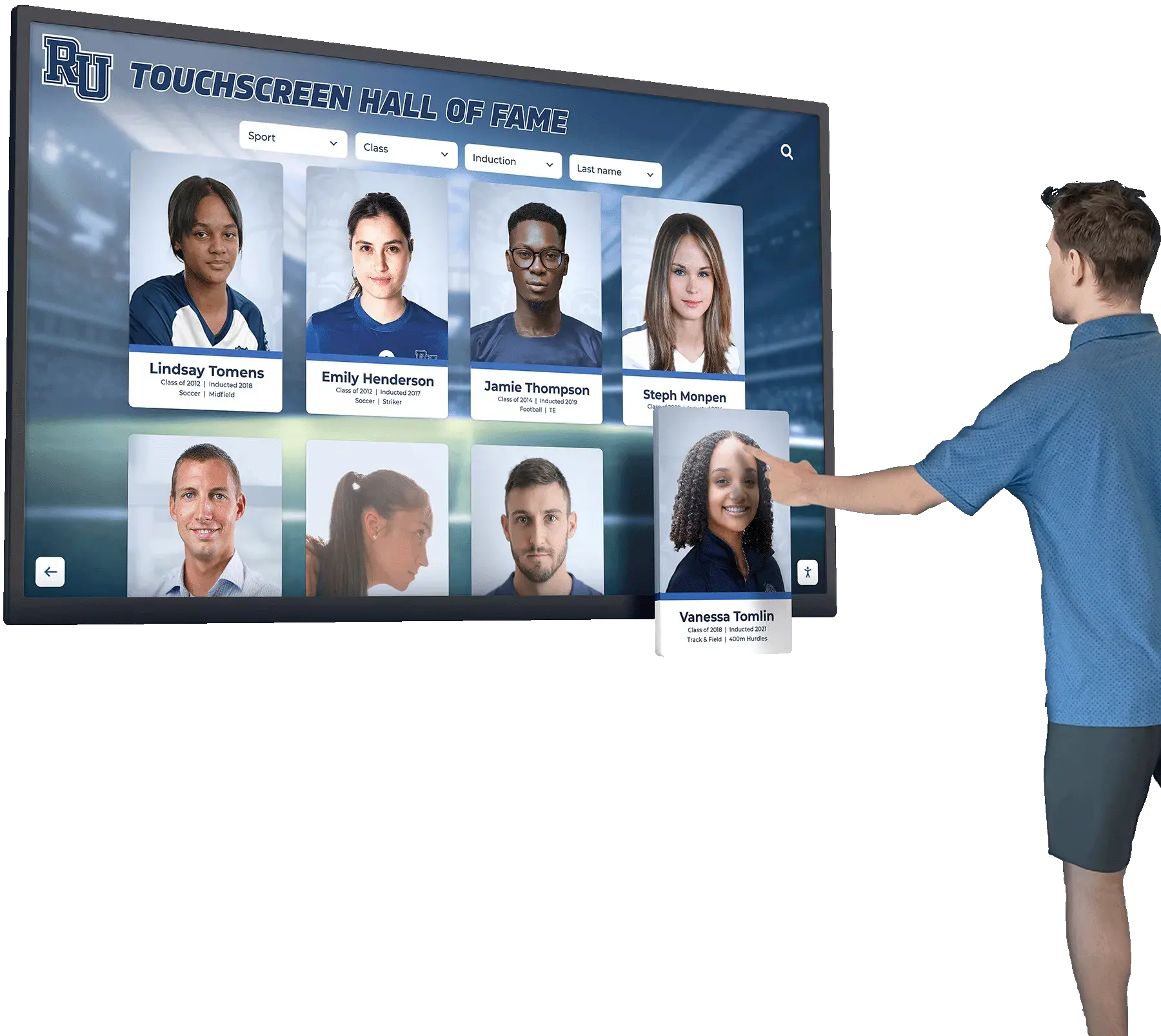
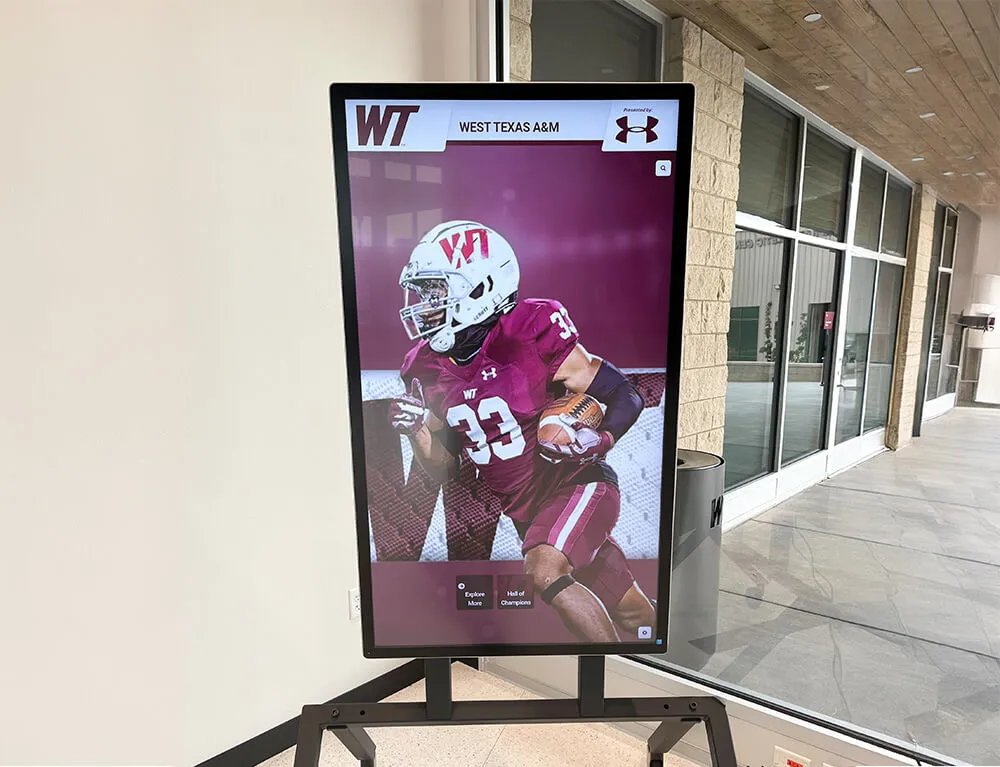
Digital hall of fame displays create interactive experiences where visitors explore achievements through intuitive touchscreen technology
Understanding Digital Hall of Fame Technology
Digital hall of fame displays combine commercial-grade touchscreen hardware with specialized recognition software to create interactive experiences accessible through both physical kiosks and mobile devices. The technology architecture consists of three core components: display hardware capable of continuous operation in high-traffic environments, content management software enabling remote updates by non-technical staff, and network infrastructure supporting cloud-based content delivery and database integration.
According to a 2025 Education Technology Association report, 67% of schools investing in digital recognition technology cite unlimited capacity and remote content management as the primary advantages over traditional trophy cases, while 82% report increased community engagement with historical achievements when visitors can search, filter, and explore inductee information interactively.
Core Technology Components
Display Hardware Specifications
Digital hall of fame installations utilize commercial-grade touchscreen displays ranging from 43-inch compact units suitable for hallway alcoves to 86-inch large-format screens dominating athletic facility lobbies and entrance corridors. Unlike consumer televisions that fail under continuous operation, commercial displays feature enhanced brightness levels (400-700 nits) ensuring visibility under gymnasium lighting, extended duty cycles rated for 16-24 hour daily operation, and VESA mounting compatibility supporting secure wall installation or floor-standing kiosk configurations.
Touchscreen overlays employ projected capacitive technology providing responsive multi-touch interaction familiar to anyone using smartphones or tablets. Organizations implementing digital recognition should specify displays with anti-glare treatments reducing reflections under fluorescent or LED overhead lighting, wide viewing angles (178° horizontal and vertical) ensuring readability from various positions, and commercial warranty coverage protecting multi-year investments against panel failure and touch response degradation.
Display orientation flexibility supports both portrait and landscape mounting matched to available wall space and content design preferences. Portrait orientation maximizes vertical scrolling for athlete rosters and individual profiles, while landscape formats better accommodate team photos, game footage, and championship banners. Similar considerations apply when schools evaluate interactive touchscreen technology for small facilities, balancing display size with space constraints and budget realities.
Content Management Software Platforms
Cloud-based hall of fame software enables authorized administrators—athletic directors, coaches, development staff, or designated volunteers—to update recognition content remotely through web browsers from any internet-connected device. Professional platforms provide intuitive content editors allowing drag-and-drop photo uploads, inductee profile creation through guided forms, and achievement organization using visual interfaces requiring no coding, design skills, or technical training.
Advanced content management systems offer scheduled publishing for induction ceremony coordination, approval workflows ensuring accuracy before public display, version history tracking changes for accountability, and multi-user access with role-based permissions controlling who can edit specific content sections. These capabilities enable efficient content management by busy administrators while maintaining quality standards and preventing unauthorized changes.
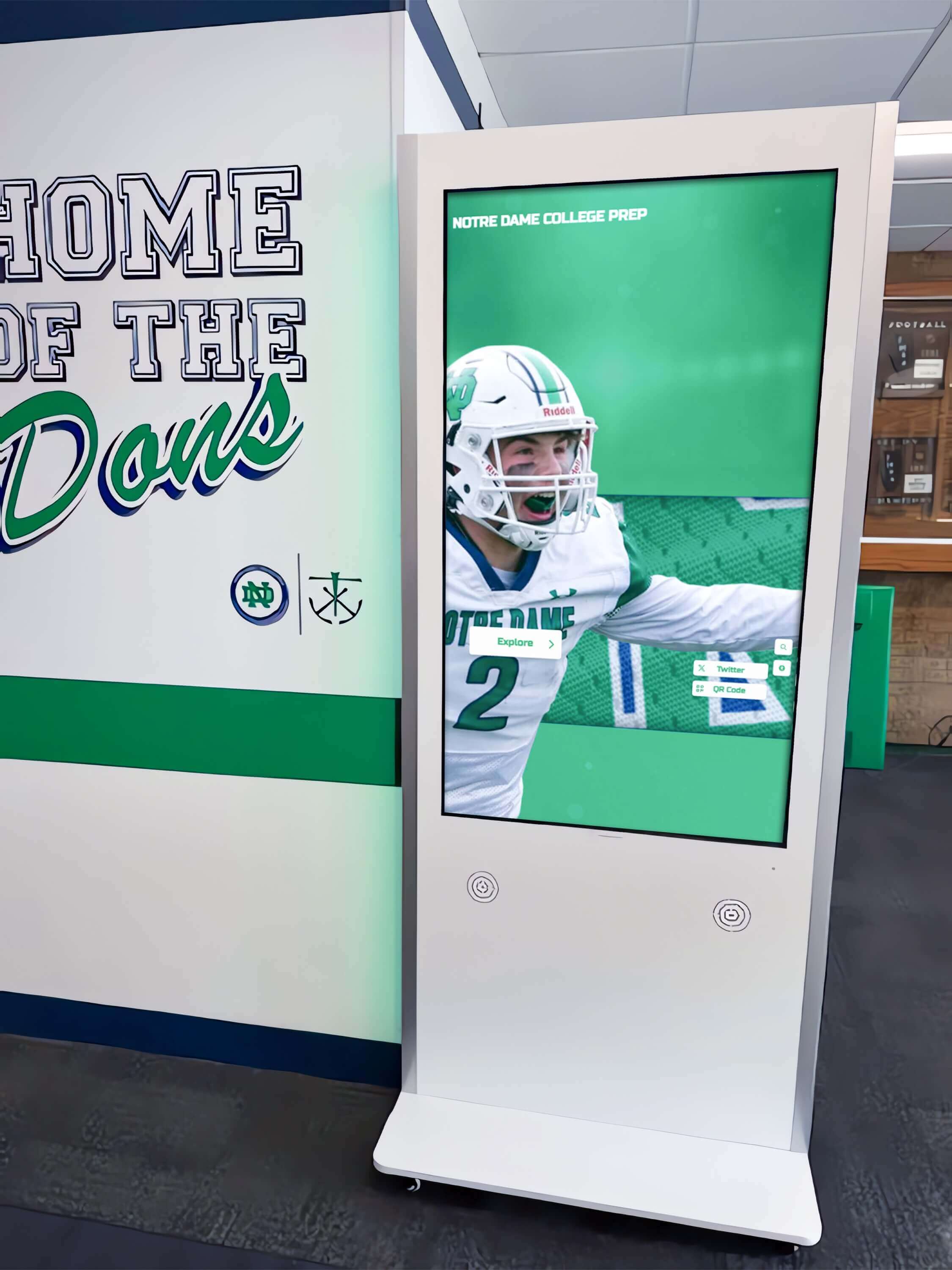
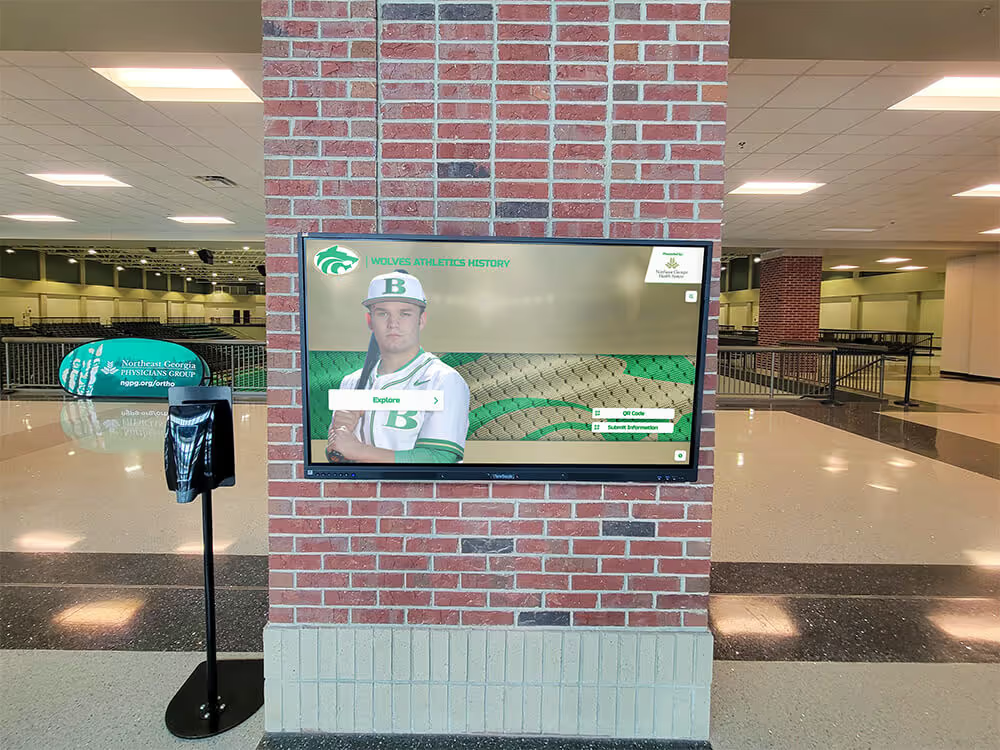
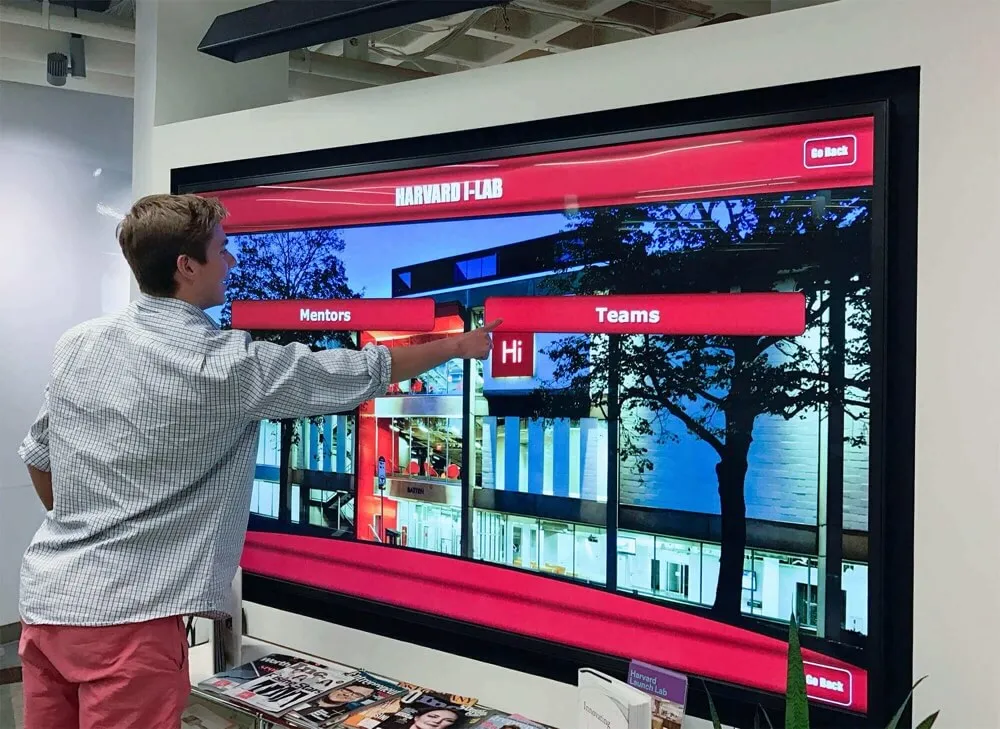
Floor-standing kiosks provide accessible, prominent hall of fame displays in high-traffic hallway locations
Network Infrastructure and Integration
Digital displays require reliable network connectivity supporting content delivery and enabling remote management. Most installations utilize existing organizational WiFi or ethernet infrastructure, with displays connecting to cloud-based content servers that push updates automatically without IT intervention. Network requirements remain modest—typical bandwidth needs fall below standard video streaming demands since content updates asynchronously rather than requiring constant live data transmission.
Progressive digital hall of fame platforms offer integration capabilities connecting with student information systems, athletic management software, and alumni databases. Automated integration reduces manual data entry, minimizes transcription errors, and enables synchronized updates as new achievements occur. Organizations should evaluate integration options during vendor selection, understanding whether connections require custom development or leverage pre-built integrations reducing implementation complexity and ongoing maintenance.
Key Features of Modern Digital Hall of Fame Displays
Sophisticated digital recognition systems incorporate specialized features addressing hall of fame needs while creating engagement experiences that differentiate interactive technology from traditional static alternatives.
Unlimited Capacity and Scalable Recognition
The most transformative advantage of digital hall of fame displays is unlimited inductee capacity unconstrained by physical space limitations. While traditional trophy cases accommodate dozens or perhaps hundreds of honorees before exhausting available space, digital systems store thousands of records without requiring additional hardware investment or facility expansion. Organizations experiencing annual inductions simply add new profiles through content management systems without installation costs, construction disruptions, or delays waiting for plaque production.
This scalability particularly benefits athletic programs with long histories spanning multiple decades and hundreds of standout athletes, championship teams, and coaching legends. Programs adding 10-20 new hall of fame members annually operate sustainably with digital recognition, whereas equivalent traditional display expansion would require continuous capital investment in new trophy cases, mounting hardware, and renovation projects. Over 15-20 year periods, this capacity advantage typically delivers substantial cost savings offsetting higher initial digital display investment.
Research published in the Journal of Educational Facilities Planning found that schools implementing digital recognition displays reduced long-term recognition costs by an average of 43% compared to traditional trophy case expansion over 10-year periods, while simultaneously accommodating 3.2 times more honorees in the same physical footprint.
Rich Inductee Profiles with Multimedia Storytelling
Digital platforms enable comprehensive inductee profiles incorporating elements impossible with traditional recognition: high-resolution photographs capturing athletes in competition, detailed achievement narratives explaining significance and context, career statistics and records documenting excellence, video highlights showcasing memorable performances, and personal statements from honorees reflecting on their experiences. These rich profiles transform name plaques into compelling human stories that inspire current students and visiting alumni.
Inductee Profile Content Options
- Action photography from competitive events and championship moments
- Career statistics, records, and achievement timelines
- Team rosters and championship season summaries
- Video highlights of significant performances and memorable plays
- Personal reflections and interview content from inductees
- Post-graduation accomplishments and professional achievements
- Coaching records, tenure information, and program impact
- Historical context connecting achievements to program traditions
Organizations implementing storytelling-rich recognition report stronger emotional connections between current students and program history, increased alumni engagement with achievement archives, and enhanced recruitment conversations where coaches reference compelling inductee profiles during family visits. The storytelling capability particularly resonates with younger audiences who value authentic narratives and visual media over text-heavy descriptions.
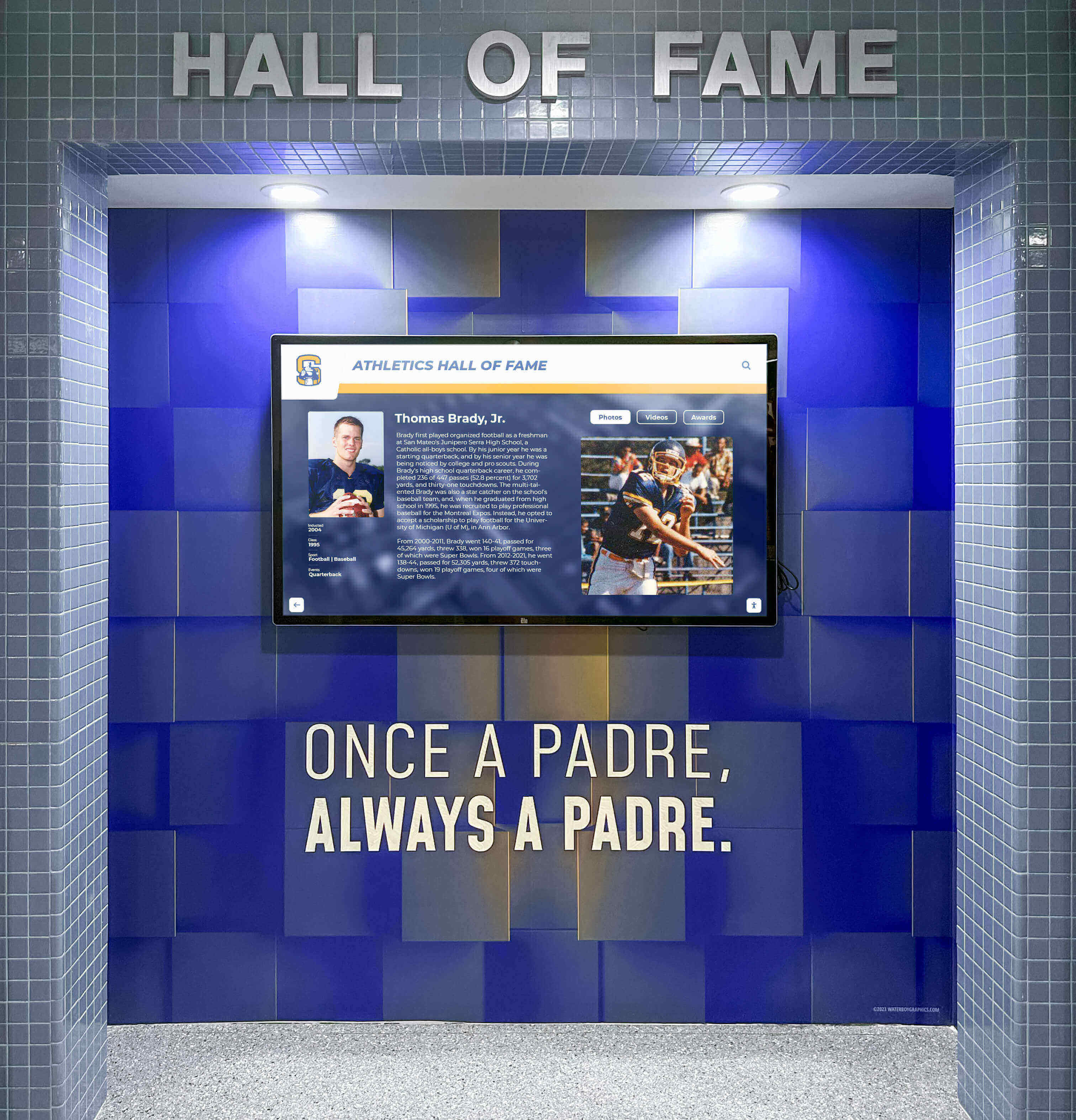
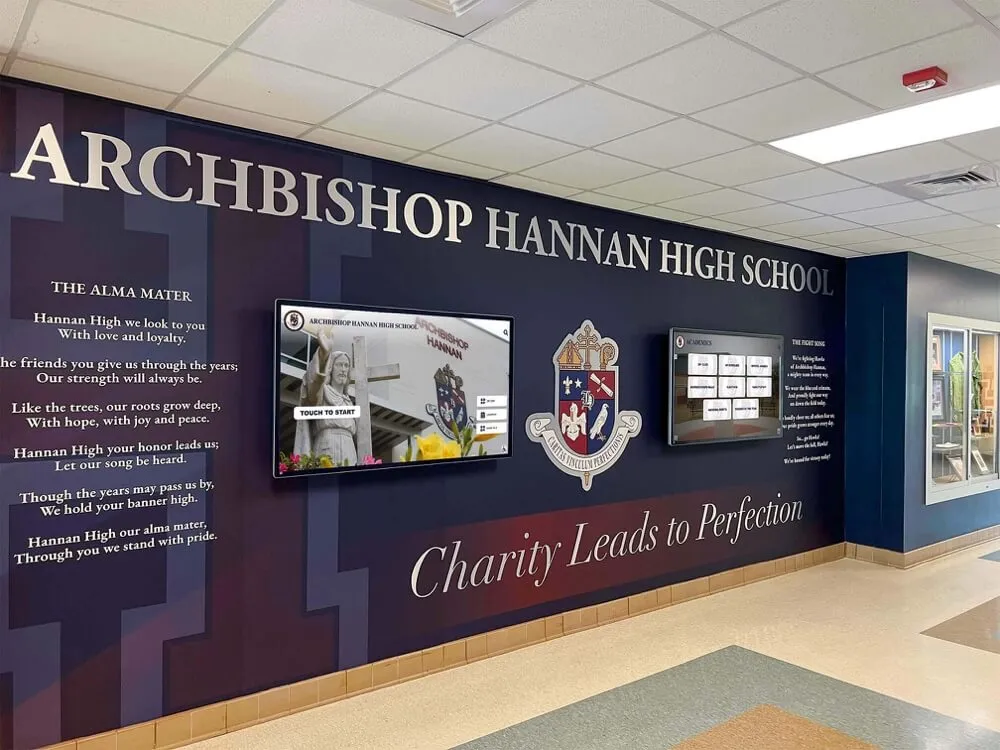
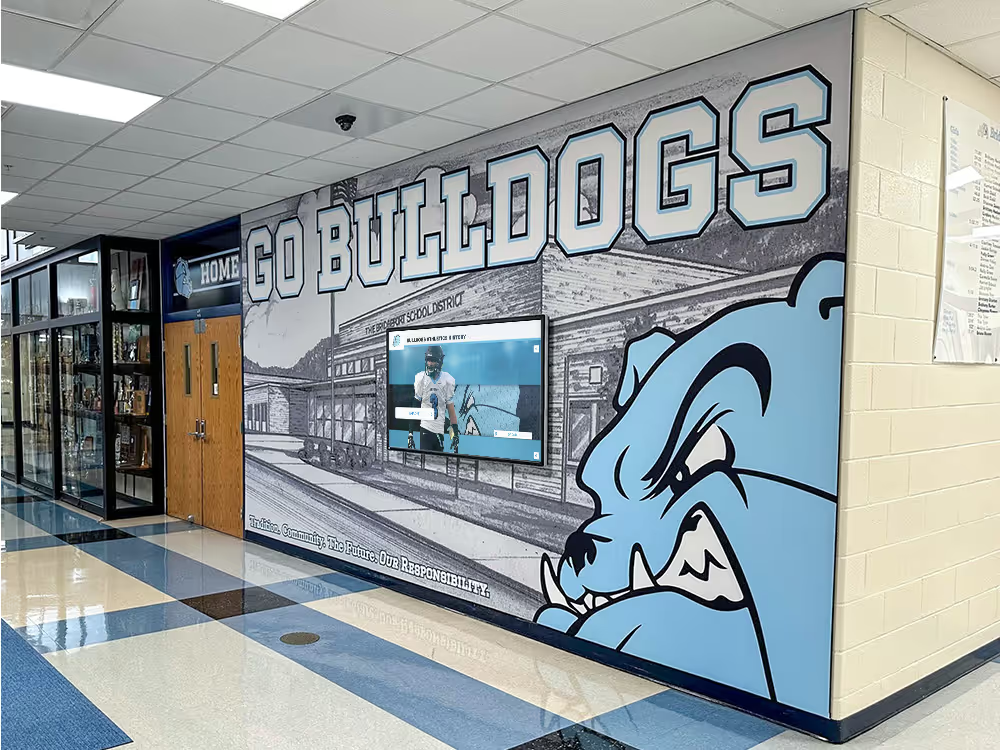
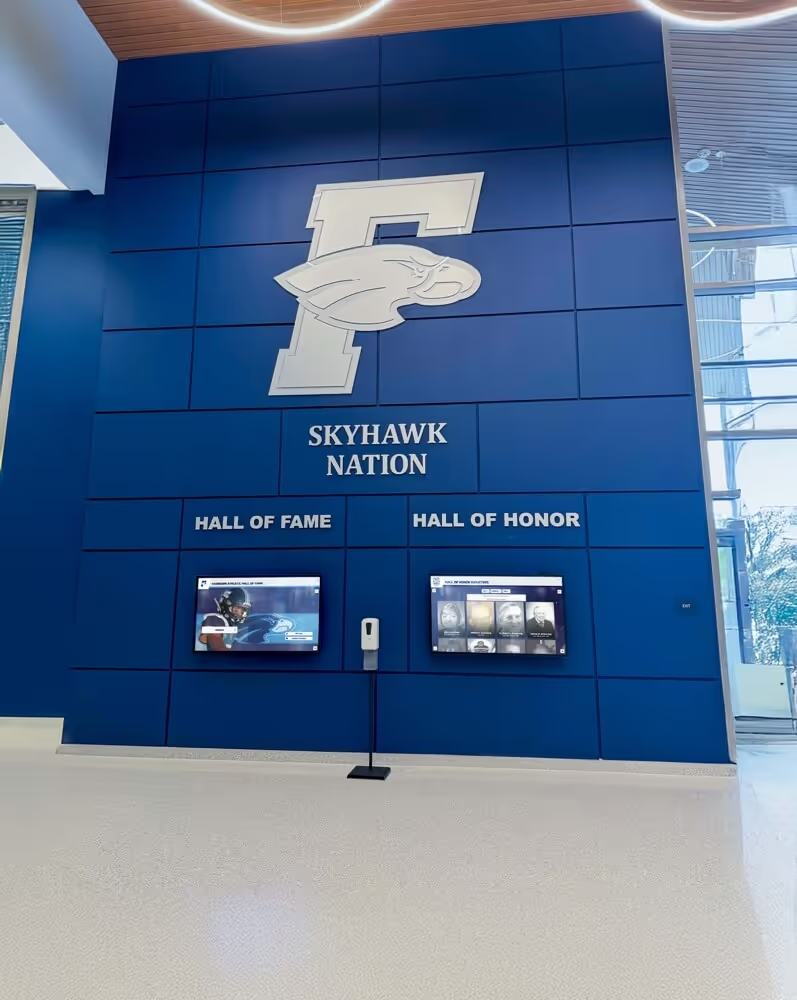
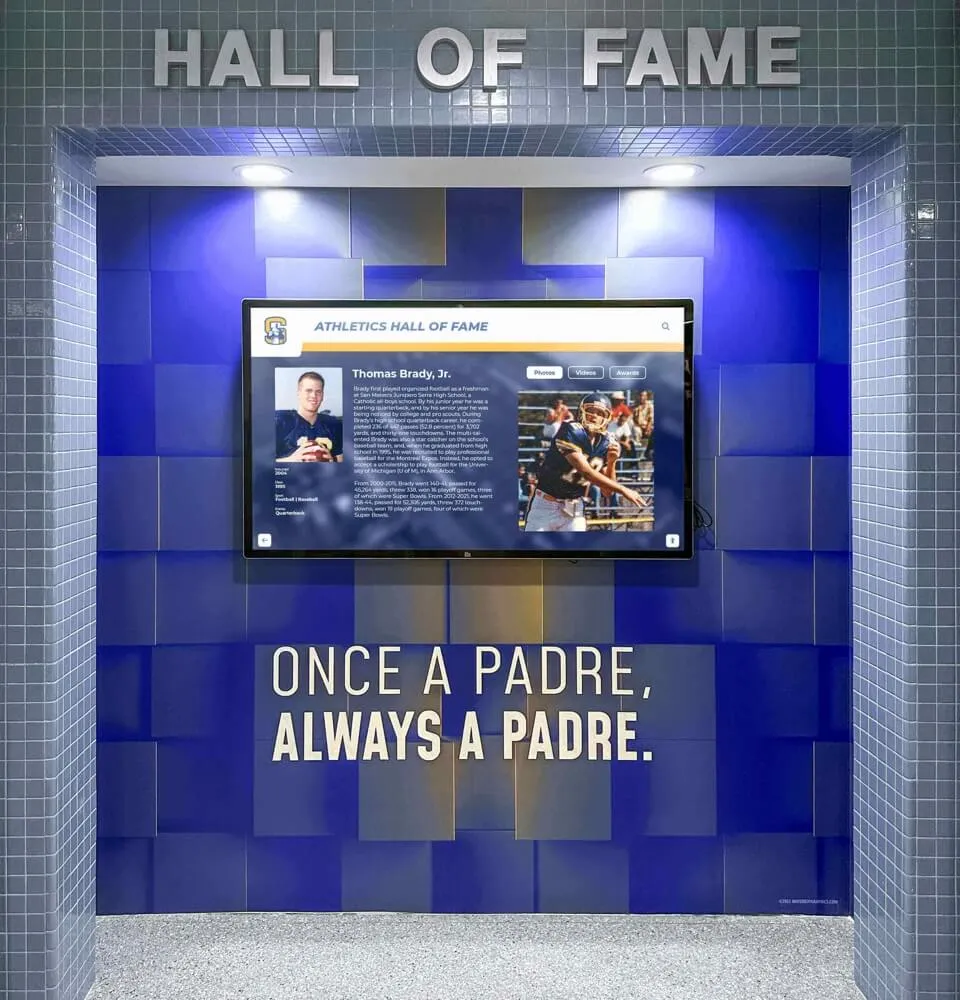
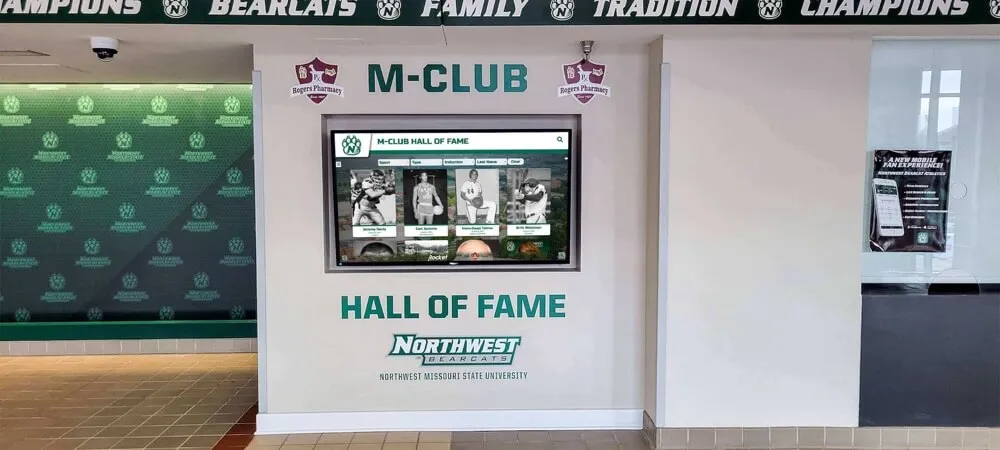
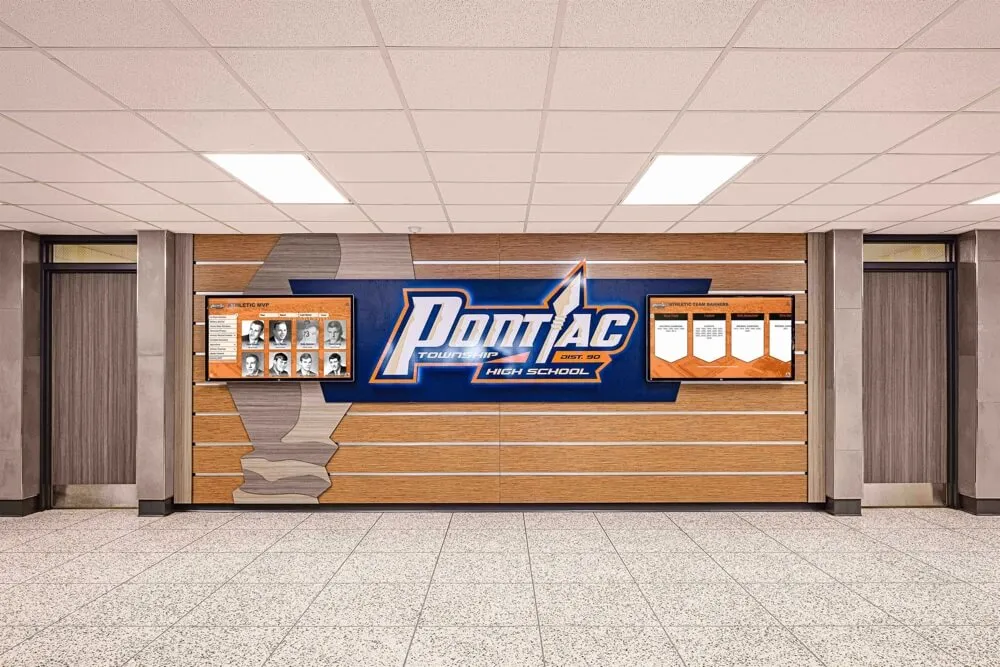
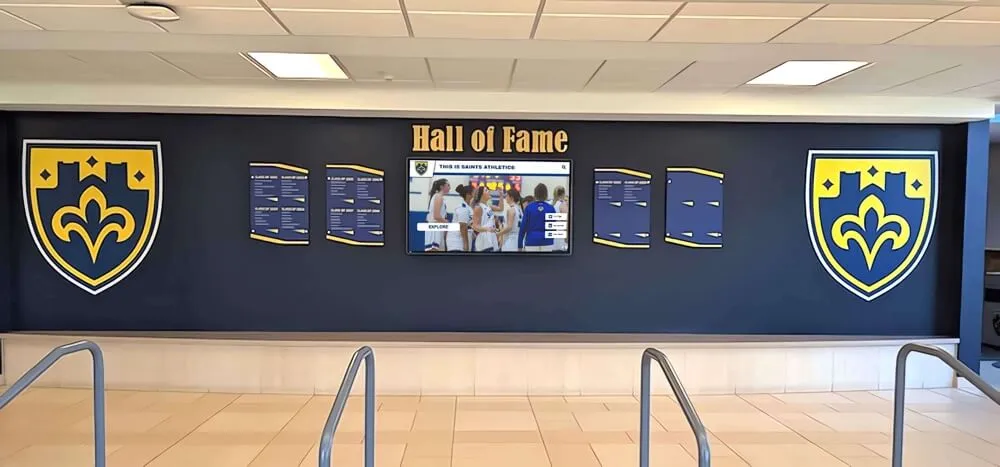
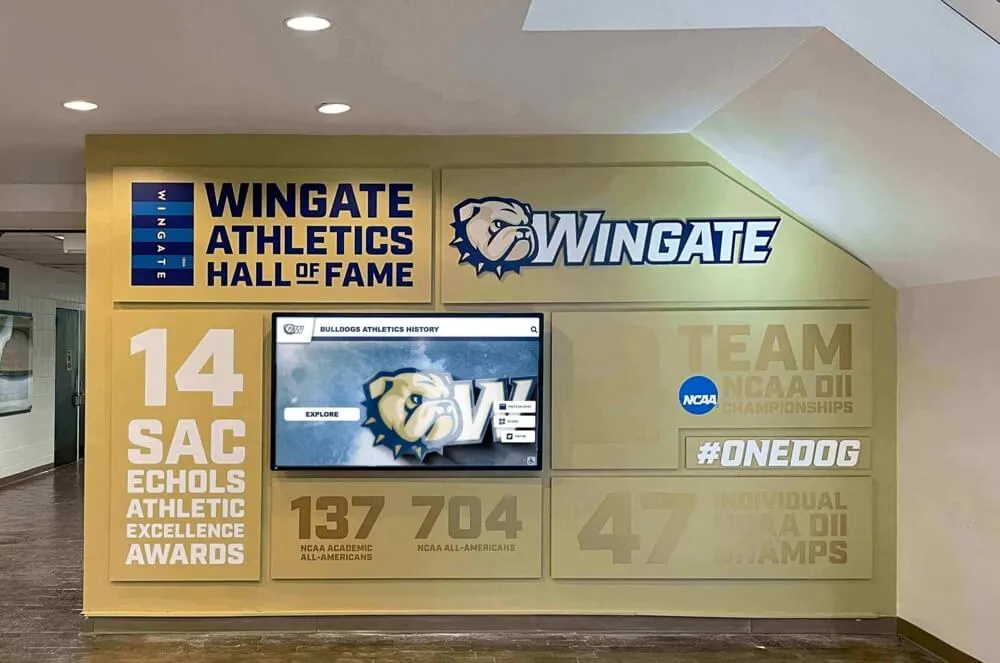
Wall-mounted displays integrate seamlessly with existing athletic facility architecture while providing dynamic recognition
Interactive Search and Exploration Features
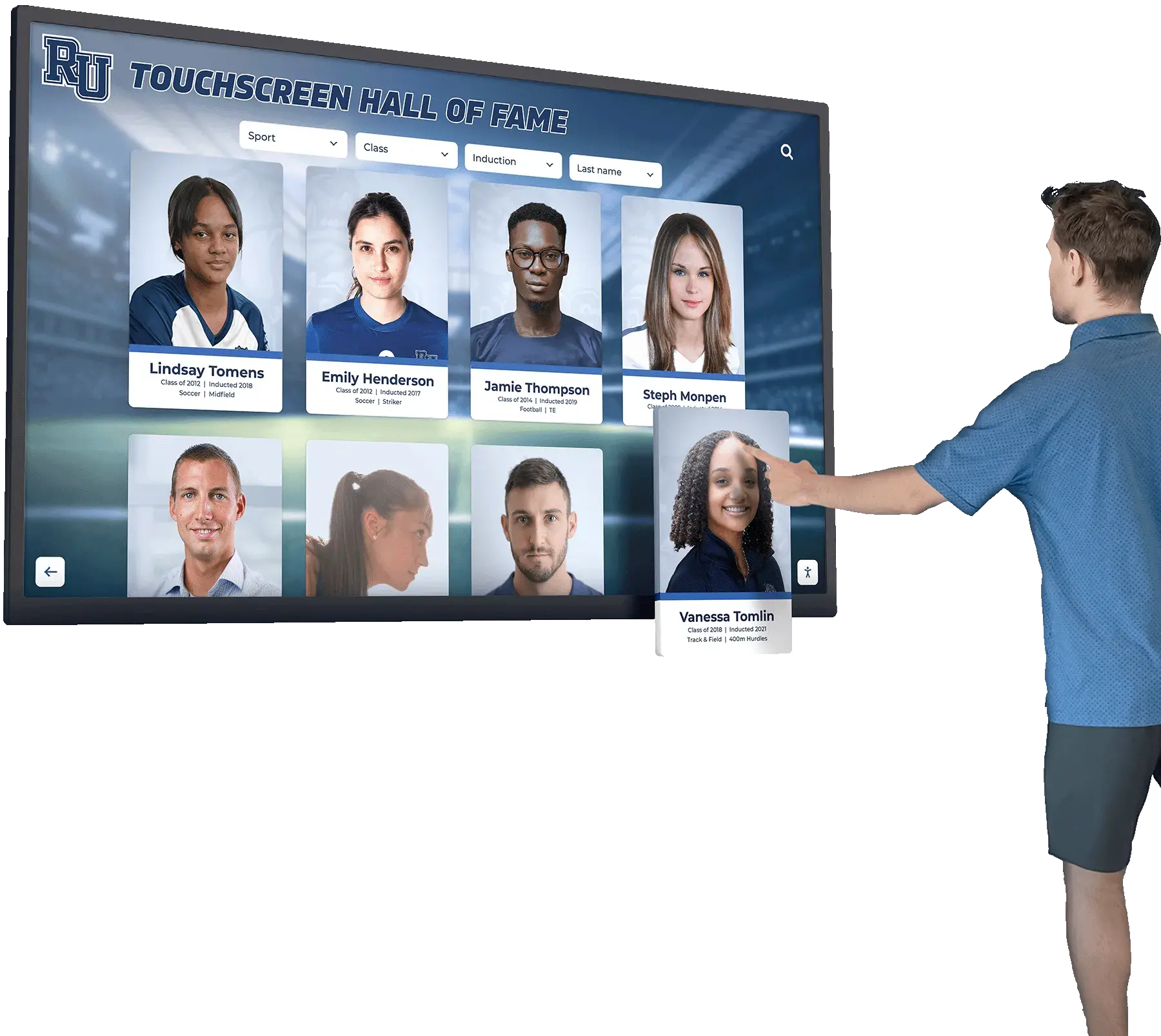
Touchscreen technology enables active exploration rather than passive viewing. Visitors search inductee directories by name, filter by sport or achievement category, browse by induction year, or explore alphabetically through intuitive interfaces requiring no instruction. This interactivity creates personal discovery moments when students find family members, community members locate former classmates, or visiting alumni explore teammates and competitors from their era.
Interactive Functionality Examples
- Real-time name search with autocomplete suggestions
- Sport and achievement category filtering
- Induction year timeline navigation
- Team roster browsing by championship season
- Record holder lists by event and achievement type
- Random inductee spotlight rotation featuring diverse profiles
- QR code generation enabling mobile access to detailed information
- Social sharing capabilities allowing visitors to share discoveries
Search functionality proves particularly valuable for organizations with extensive hall of fame rosters where locating specific individuals among hundreds of inductees would prove difficult with traditional alphabetical lists. Alumni returning for reunions can find their recognition immediately, enhancing satisfaction while creating conversation starters and photo opportunities. Similar interactive capabilities enhance recognition programs when schools implement creative award presentations celebrating diverse achievements beyond traditional athletic excellence.
Mobile Integration and Remote Access
Advanced digital hall of fame platforms extend beyond physical displays through mobile-responsive websites and QR code integration enabling smartphone access. Visitors scan QR codes displayed on kiosks to access complete inductee databases on personal devices, browse detailed profiles unavailable on public displays for privacy reasons, and share discoveries with friends and family through social media or messaging apps.
Mobile access proves particularly valuable during events when multiple visitors want simultaneous access to hall of fame information, preventing crowds around single touchscreen displays. Alumni can explore achievements from home, parents can share student-athlete recognition with extended family, and recruiters can review program history remotely. This extended access amplifies recognition impact beyond physical facility visitors while creating additional touchpoints strengthening community connections.
Comparing Digital Hall of Fame Displays to Traditional Recognition
Understanding the fundamental differences between digital and traditional recognition approaches helps organizations make informed investment decisions aligned with long-term goals, budget realities, and community engagement priorities.
Space Efficiency and Capacity Considerations
Traditional trophy cases consume substantial wall space while accommodating limited numbers of plaques, trophies, and framed photographs. Schools with 50+ year athletic histories often dedicate entire hallway sections to recognition displays that still fail to accommodate all deserving honorees, forcing difficult decisions about who receives visible recognition versus storage in archives.
Digital displays occupy single wall-mounted screens or compact floor kiosks while providing unlimited digital capacity. A single 55-inch touchscreen replaces 20-30 feet of traditional trophy case wall space while accommodating exponentially more inductees through searchable databases. This space efficiency enables recognition in facilities with limited hallway footage while preserving architectural flexibility for future needs.
Organizations implementing digital solutions redirect reclaimed wall space toward student work displays, donor recognition, wayfinding signage, or simply clean architectural design enhancing facility aesthetics. The space savings particularly benefit schools undergoing renovations where every square foot carries cost implications and design trade-offs.
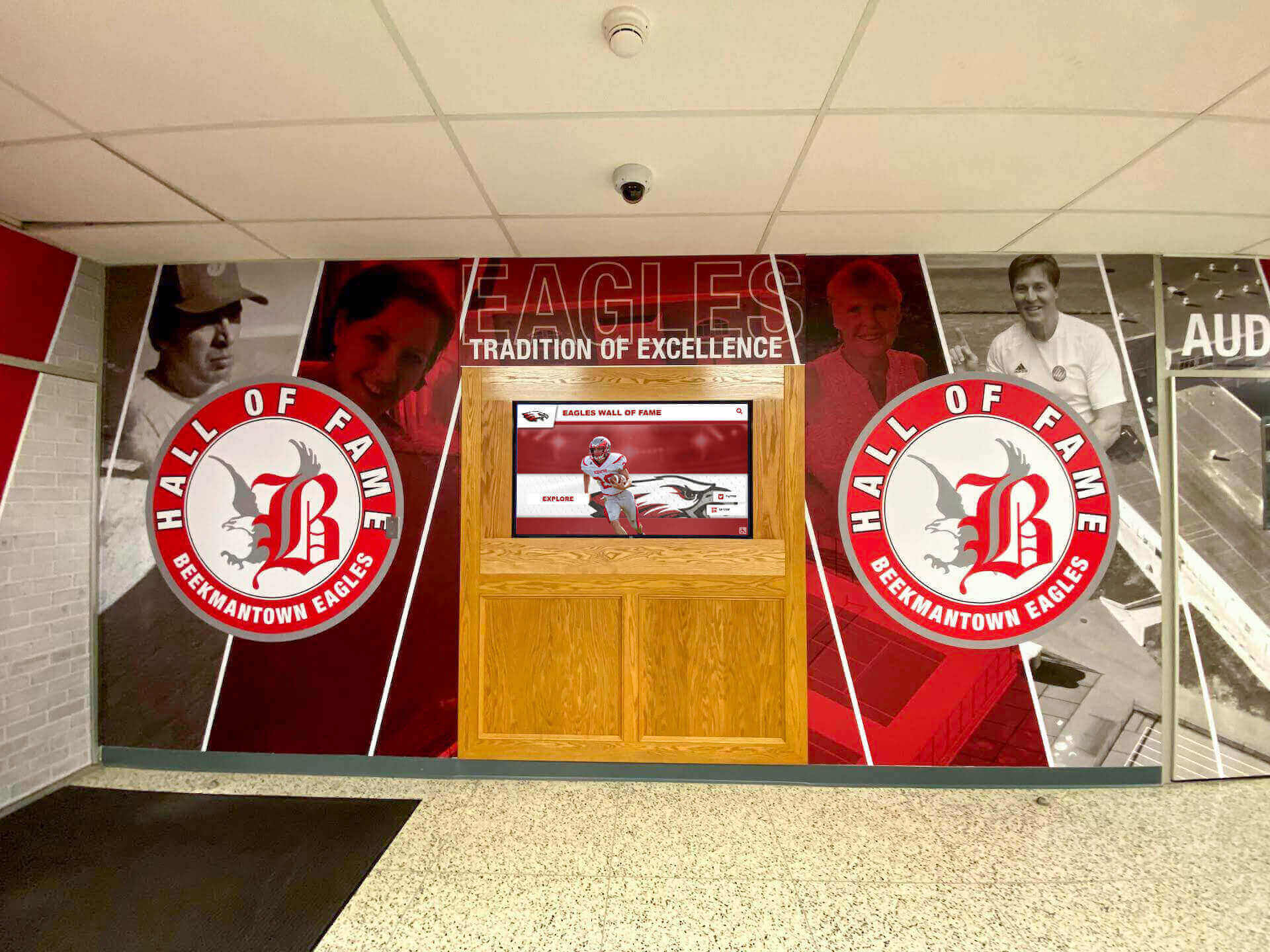
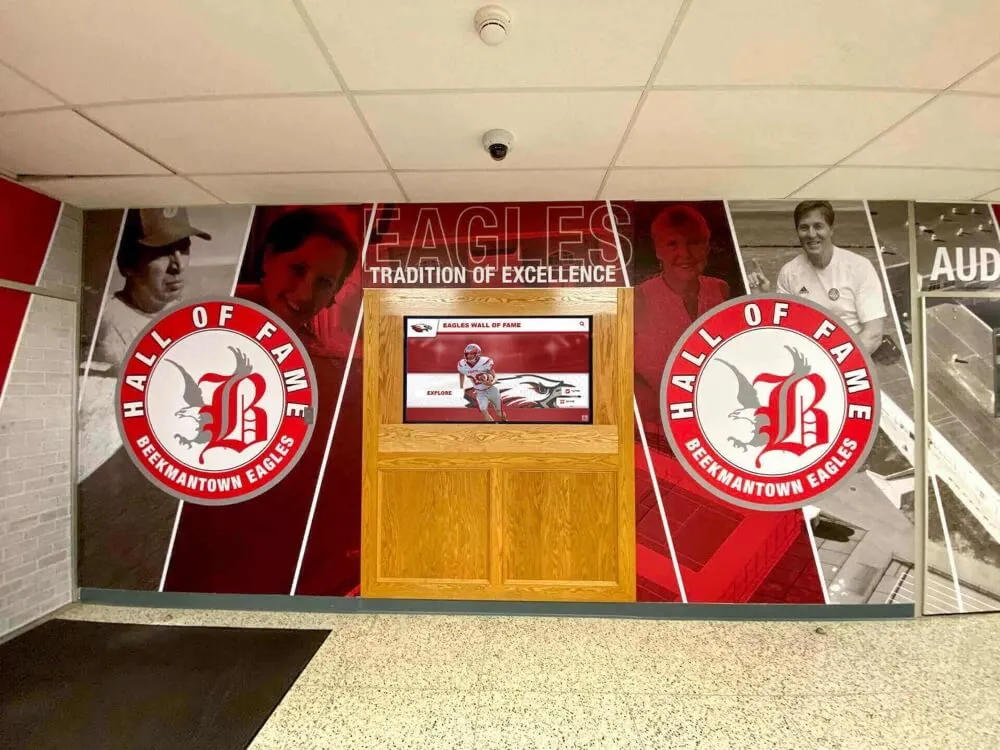
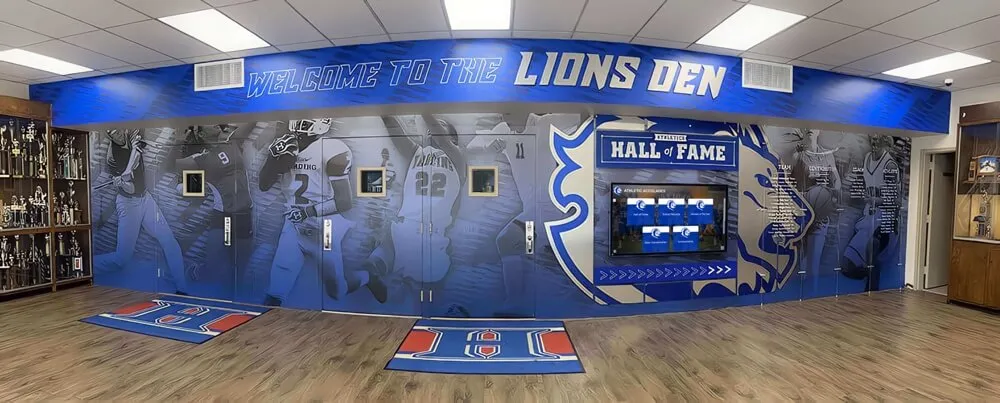
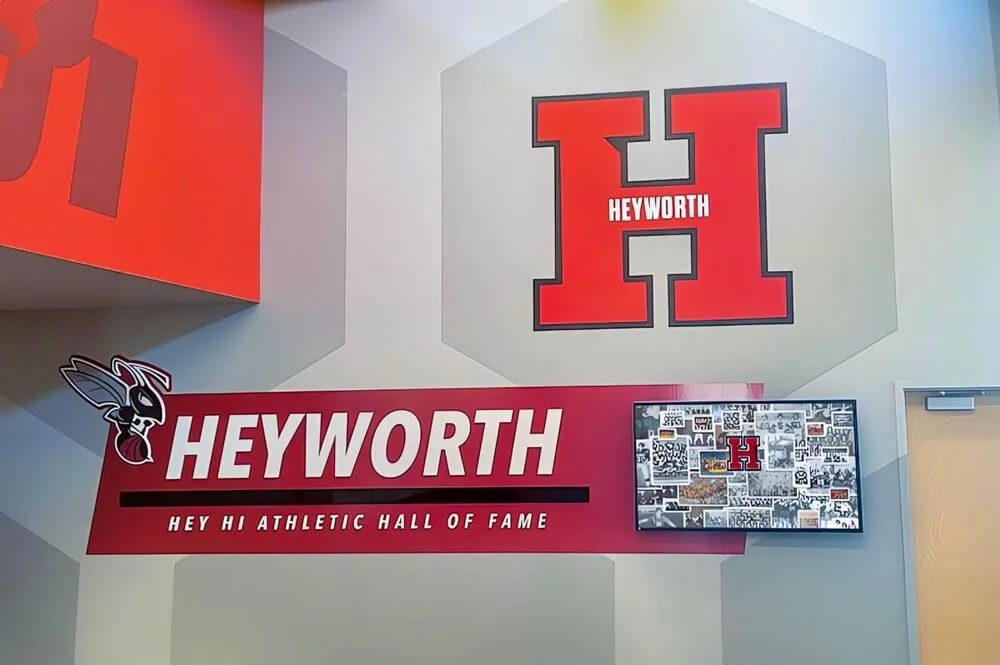
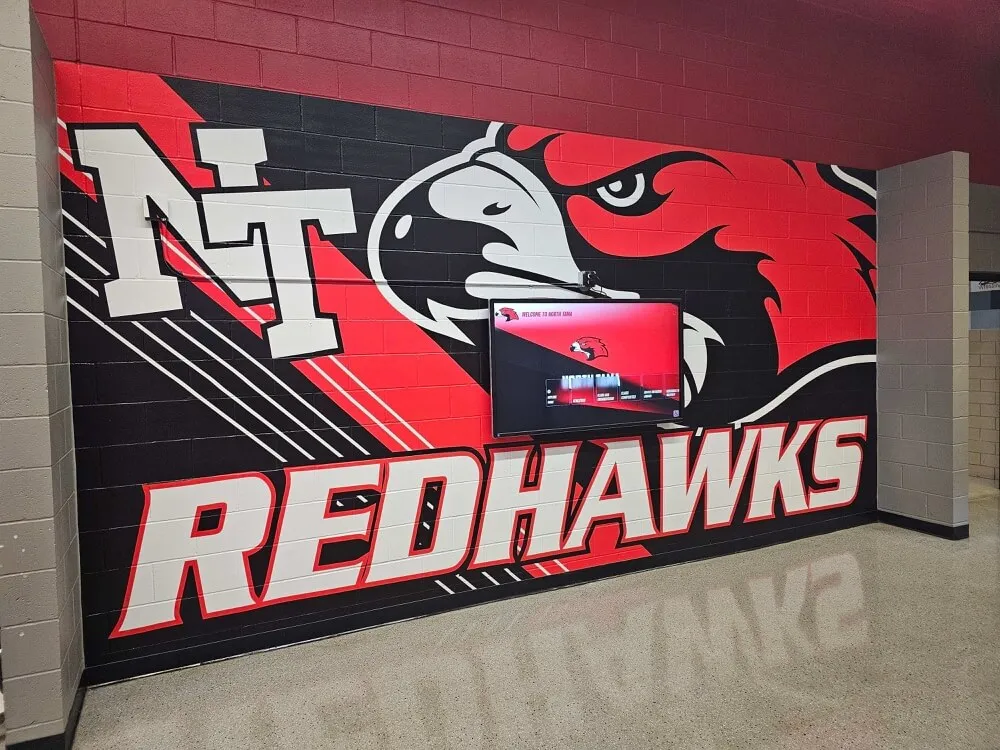
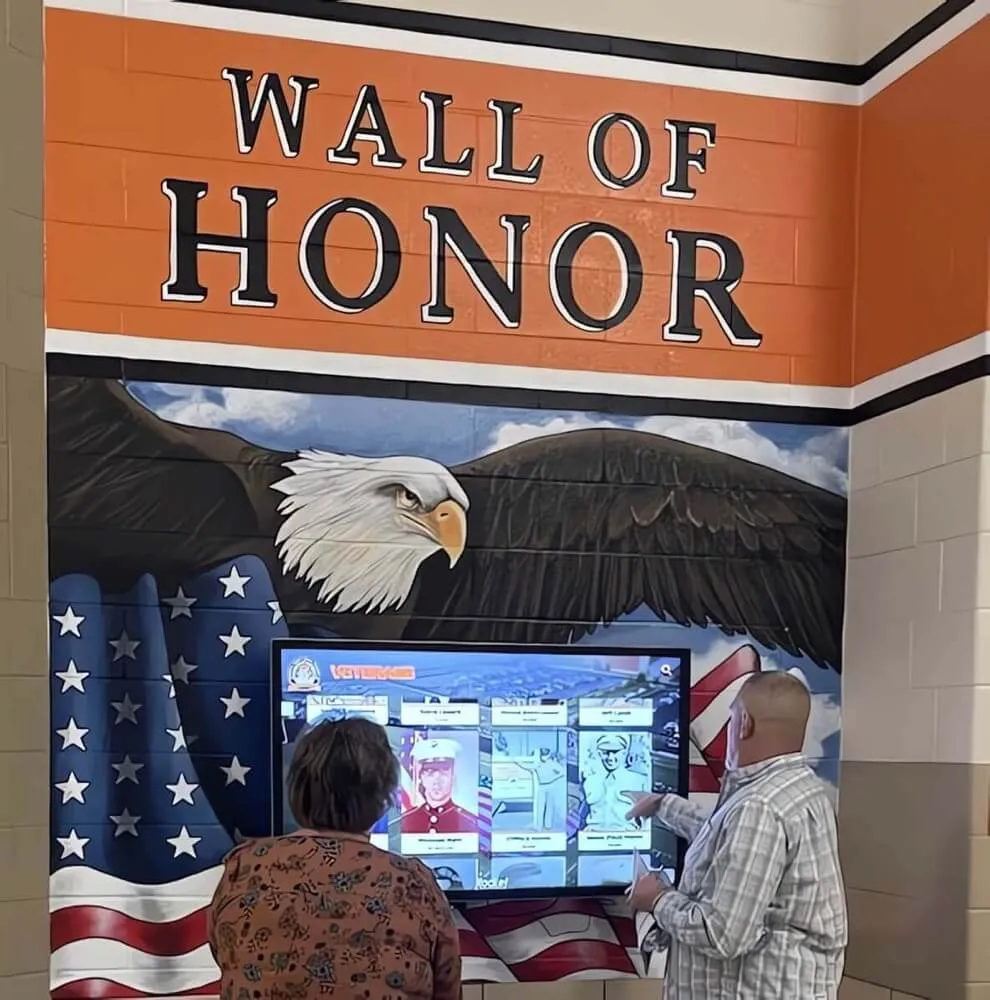
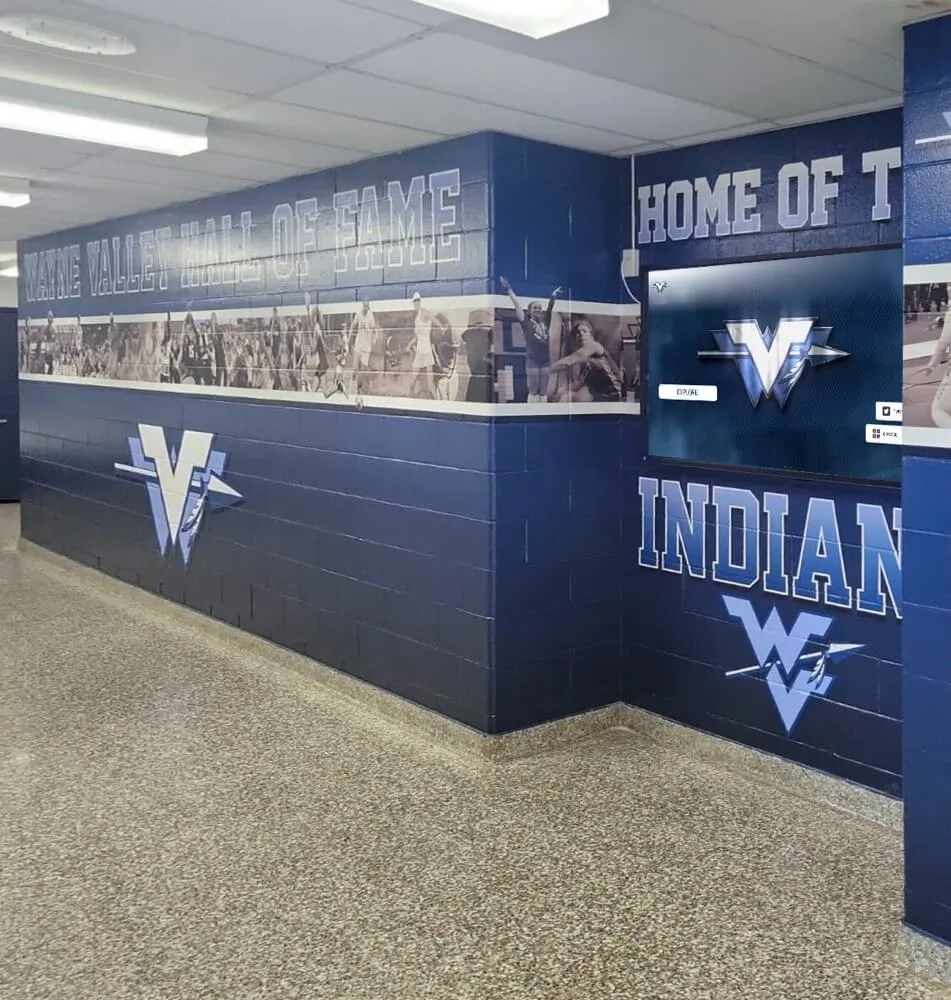
Digital displays integrate with architectural murals creating prominent recognition that combines traditional design with modern technology
Content Update Flexibility and Long-Term Costs
Traditional recognition requires physical updates for each new inductee—ordering plaques, scheduling installation, and often rearranging existing displays to accommodate additions. These incremental costs compound over years and decades, with plaque production, engraving, and installation labor totaling hundreds or thousands of dollars annually depending on program size and induction frequency.
Digital systems update through content management interfaces at zero marginal cost per inductee. Athletic directors upload photos, enter achievement information, and publish new profiles in minutes from office computers or home laptops. Annual induction ceremonies add dozens of honorees without budget impact, encouraging inclusive recognition celebrating broader achievement spectrums beyond traditional narrow criteria.
Long-term cost modeling consistently favors digital solutions for active programs adding regular inductees. While initial display investment exceeds traditional trophy case costs, elimination of ongoing plaque expenses creates break-even points within 3-5 years for most programs, with subsequent decades delivering substantial cumulative savings while accommodating unlimited growth.
Engagement Quality and Visitor Experience
Traditional displays create passive viewing experiences where visitors read plaques, view static photographs, and move along hallways. Engagement remains limited to visual scanning with minimal interaction or deeper exploration of achievements and personal stories behind recognition.
Digital hall of fame displays create active exploration experiences where visitors touch screens, search for specific individuals, filter by categories of personal interest, and discover unexpected connections to honorees. Interactive engagement increases dwell time, improves information retention, and creates memorable experiences visitors associate with organizational excellence and tradition. Schools notice increased family engagement during events when relatives gather around displays exploring achievements and sharing stories prompted by profile content.
The engagement advantage particularly benefits organizations seeking to inspire current students through historical excellence. When students can search for mentors, explore achievements in their specific sports or activities, and discover personal connections to program legends, recognition becomes relevant and motivational rather than distant history they walk past without noticing.
Implementation Considerations for Digital Hall of Fame Projects
Successful digital hall of fame implementation requires thoughtful planning addressing technical requirements, content development strategies, and organizational change management ensuring smooth transitions and sustained engagement.
Display Location and Mounting Options
Strategic placement maximizes visibility and community engagement. High-traffic locations including main entrance lobbies, athletic facility corridors, cafeteria commons areas, and event spaces ensure regular exposure to students, staff, visitors, and families attending competitions and ceremonies. Visibility during recruitment visits, alumni reunions, and community events amplifies recognition impact while showcasing organizational investment in celebrating excellence.
Mounting options include wall-mounted installations creating sleek, space-efficient displays, floor-standing kiosks providing accessible touchscreen interaction without wall modification requirements, and integrated architectural installations combining digital displays with commemorative murals, donor recognition, or branded environmental graphics. Selection depends on available space, architectural constraints, budget parameters, and aesthetic preferences.
Organizations should consider accessibility compliance during placement planning. Schools designing athletic spaces increasingly integrate digital recognition into comprehensive facility planning ensuring compliant mounting heights, approach clearances, and operational reach ranges meeting ADA requirements for public accommodations.
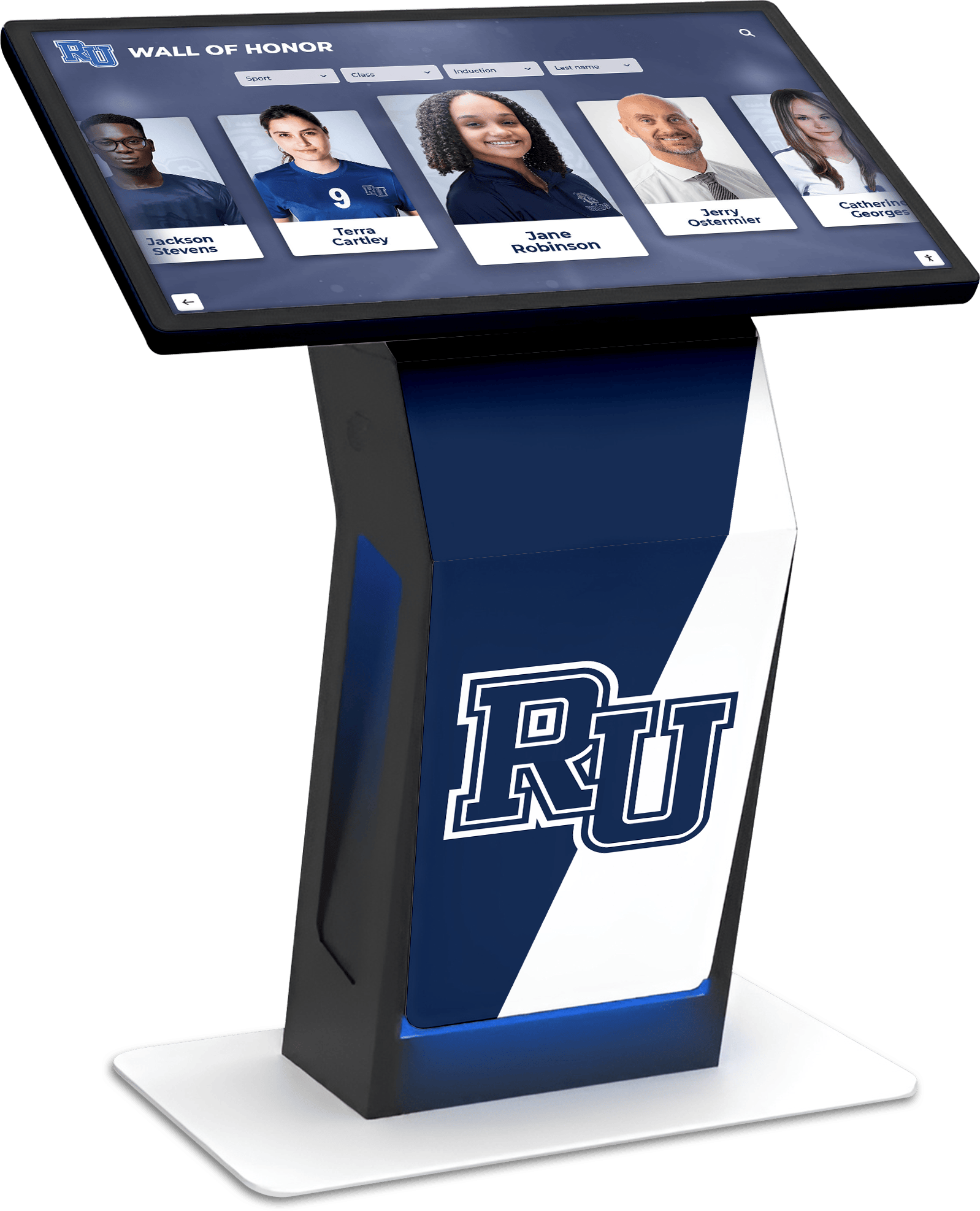
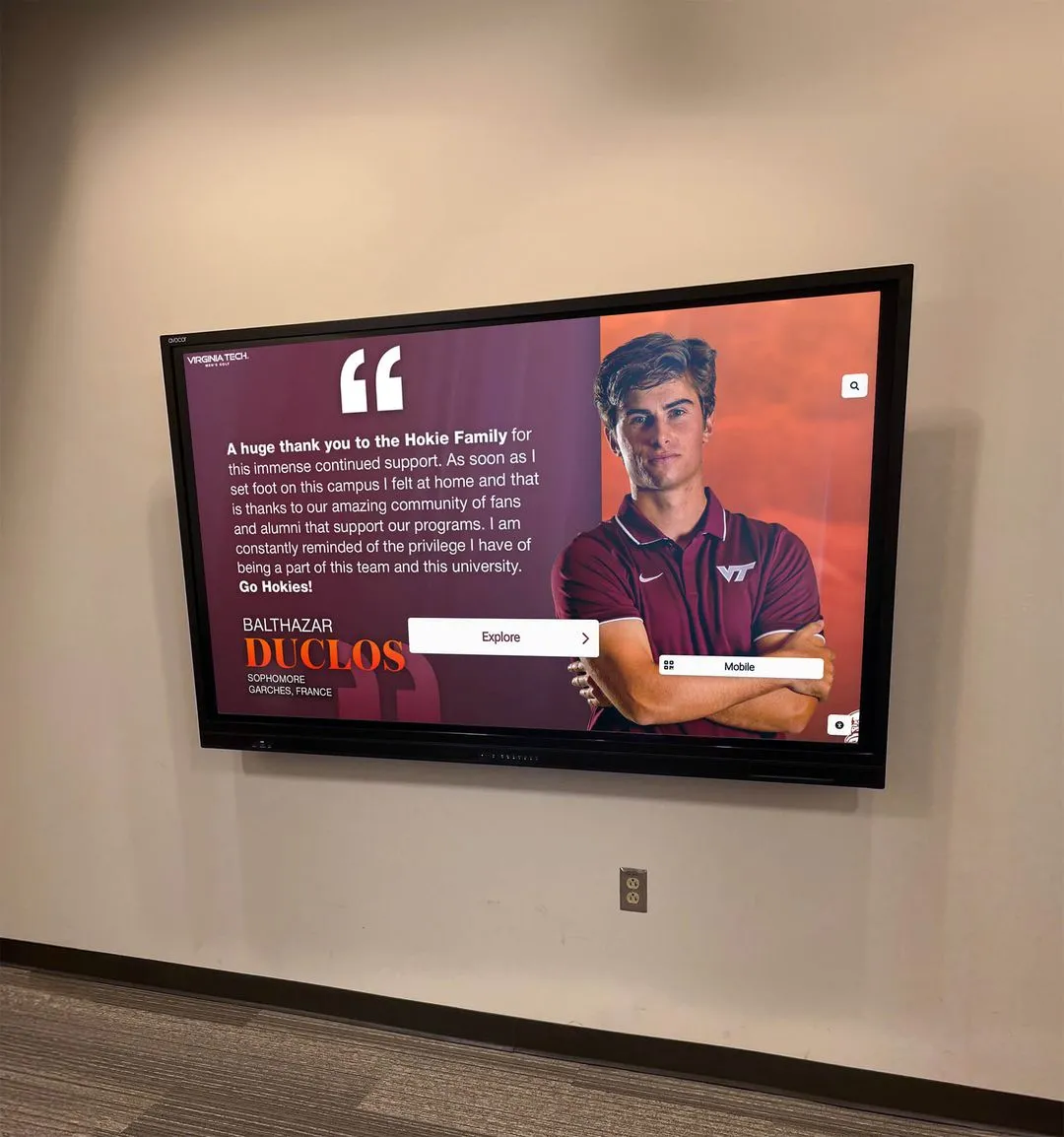
Floor-standing touchscreen kiosks provide accessible, prominent recognition while requiring no wall modification
Content Development and Migration Strategies
Launching digital hall of fame displays requires initial content development populating databases with inductee profiles, achievement information, photos, and supplementary media. Organizations with extensive existing recognition face decisions about digital migration scope—whether to digitize complete historical archives or focus initially on recent inductees with readily available digital content.
Content Development Approaches
- Complete historical migration digitizing all existing plaques and archives
- Phased migration starting with recent 10-20 years of inductees
- Current-forward approach digitizing new inductees while gradually backfilling history
- Collaborative crowdsourcing engaging alumni to contribute photos and stories
- Yearbook and archive scanning converting historical photos to digital format
- Oral history projects capturing inductee reflections and memories
Progressive content development enables earlier launch dates while avoiding project delays from comprehensive historical research. Schools can deploy displays with 50-100 well-developed profiles while continuing background work digitizing decades of additional inductees, gradually expanding databases over months and years. This iterative approach also distributes content development workload across multiple academic years rather than overwhelming administrators during single implementation periods.
Software Selection and Vendor Evaluation
Digital hall of fame software selection significantly impacts long-term satisfaction, content management efficiency, and total cost of ownership. Organizations should evaluate platforms against specific criteria ensuring alignment with technical capabilities, administrative workflows, and budget constraints.
Software Evaluation Criteria
- Content management interface usability for non-technical administrators
- Media storage capacity and file size limitations for photos and videos
- Mobile responsive design quality and smartphone user experience
- Customization options for branding, colors, and layout preferences
- Multi-user support and role-based permission configurations
- Search and filtering functionality depth and performance
- Integration capabilities with existing databases and systems
- Update frequency for feature enhancements and security patches
- Technical support responsiveness and training resource availability
- Pricing structure including ongoing subscription costs and upgrade fees
Organizations should request demonstration accounts enabling hands-on evaluation of content management interfaces before purchase commitments. Testing actual workflows—uploading photos, creating profiles, publishing content, searching databases—reveals usability characteristics impossible to assess through vendor presentations alone. Similar evaluation rigor should apply when selecting touchscreen software platforms ensuring compatibility with organizational hardware and IT environments.
Budget Planning and Funding Considerations
Digital hall of fame project budgets encompass display hardware, software licensing, installation labor, initial content development, and ongoing support costs. Understanding complete investment requirements enables realistic fundraising targets and prevents budget surprises during implementation.
Budget Components
- Commercial touchscreen display hardware ($2,000-$8,000 depending on size)
- Floor kiosk enclosure or wall mounting hardware ($500-$3,000)
- Digital hall of fame software licensing ($1,000-$5,000 annual subscription)
- Installation labor and electrical work ($500-$2,000)
- Initial content development and photo scanning ($1,000-$5,000)
- Network connectivity upgrades if required ($0-$2,000)
- Training and implementation support ($500-$1,500)
- Ongoing content management and media storage ($0-$1,000 annually)
Schools and organizations often fund digital hall of fame projects through capital campaigns, booster club contributions, memorial giving opportunities, or operating budget allocations. Framing projects as technology modernization investments that celebrate community history while providing unlimited future capacity resonates with donors seeking lasting impact. Some programs incorporate hall of fame displays into larger facility renovation projects combining recognition technology with architectural improvements and athletic award presentations creating comprehensive celebration ecosystems.
Best Practices for Digital Hall of Fame Content Management
Sustained engagement and community value require ongoing content management ensuring information remains current, profiles showcase quality storytelling, and displays reflect organizational excellence and attention to detail.
Establishing Content Standards and Templates
Consistent profile quality requires documented standards guiding content creation. Organizations should develop templates specifying required information fields, optional elements, photo specifications, and narrative voice ensuring professional presentation across all inductees regardless of who creates content.
Content Standard Components
- Required biographical information (name, graduation year, sport/activity)
- Achievement summary format and length guidelines
- Statistical information categories and presentation format
- Photo requirements (resolution, orientation, file format)
- Video content specifications (length, format, resolution)
- Quote attribution and approval processes
- Historical accuracy verification procedures
- Privacy considerations and content permissions
Templates streamline content creation for administrators while ensuring inductees receive comparable recognition quality regardless of induction timing. Standards also facilitate delegation—athletic directors can assign profile creation to assistant coaches, volunteer coordinators, or student assistants confident that guidelines ensure acceptable quality without requiring intensive review cycles.
Maintaining Photo and Media Quality
Visual content quality directly impacts visitor engagement and organizational brand perception. Blurry photographs, poor lighting, inconsistent cropping, and low-resolution images undermine professional presentation and diminish recognition impact. Organizations should establish media standards ensuring all visual content meets minimum quality thresholds.
Media Quality Guidelines
- Minimum photo resolution (1920x1080 pixels or higher)
- Preferred aspect ratios matching display orientation
- Color correction and exposure adjustment standards
- Cropping guidelines emphasizing subject prominence
- Consistent photo style (color vs. black-and-white for historical content)
- Video resolution requirements (1080p minimum for modern content)
- Audio quality standards for interviews and testimonials
- File format specifications optimized for display rendering
Schools digitizing historical content from yearbooks, newspaper clippings, and family photo contributions should invest in quality scanning at 300+ DPI resolution preserving archival detail for digital display. While initial scanning requires time investment, resulting digital assets serve recognition needs for decades while preserving fragile physical materials from handling deterioration.
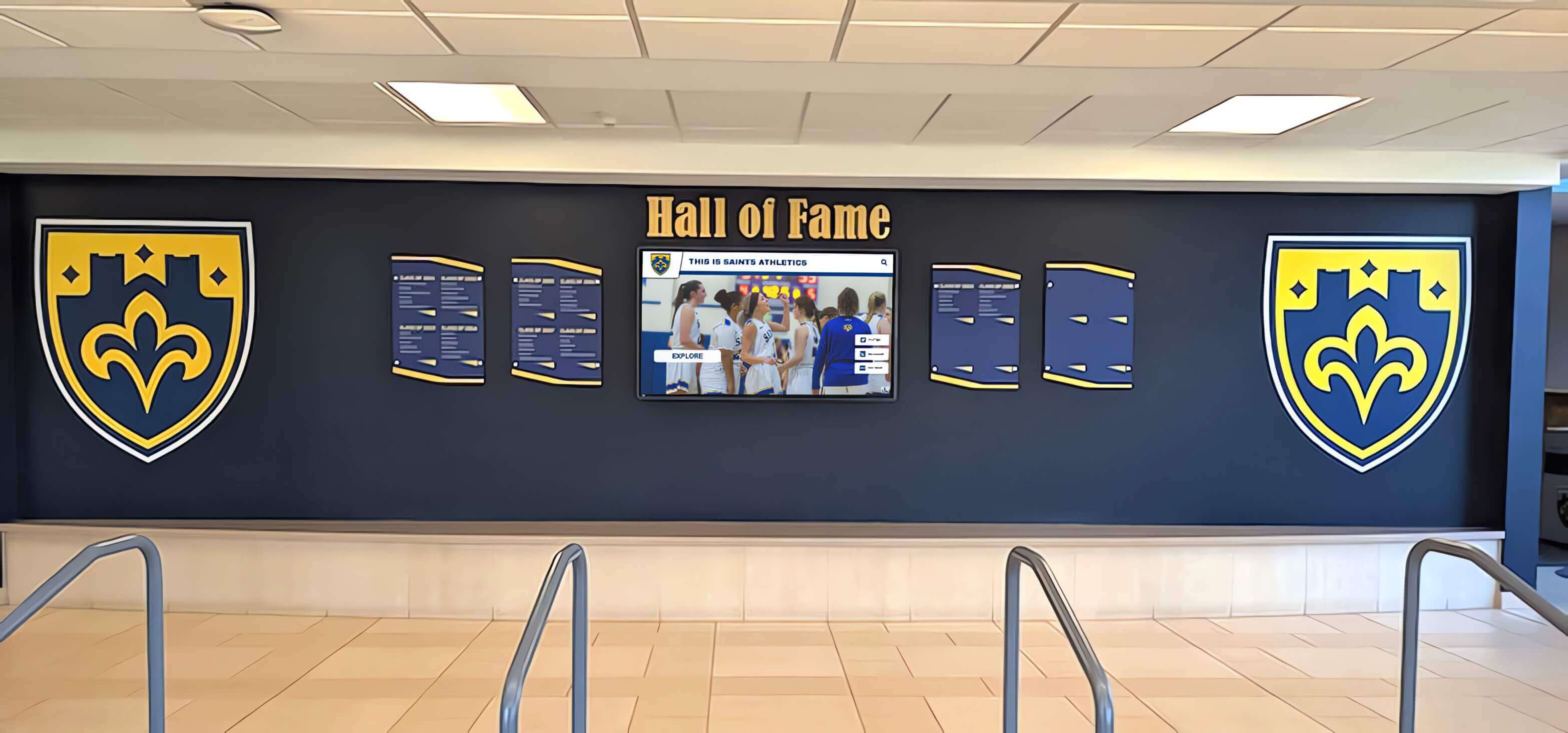
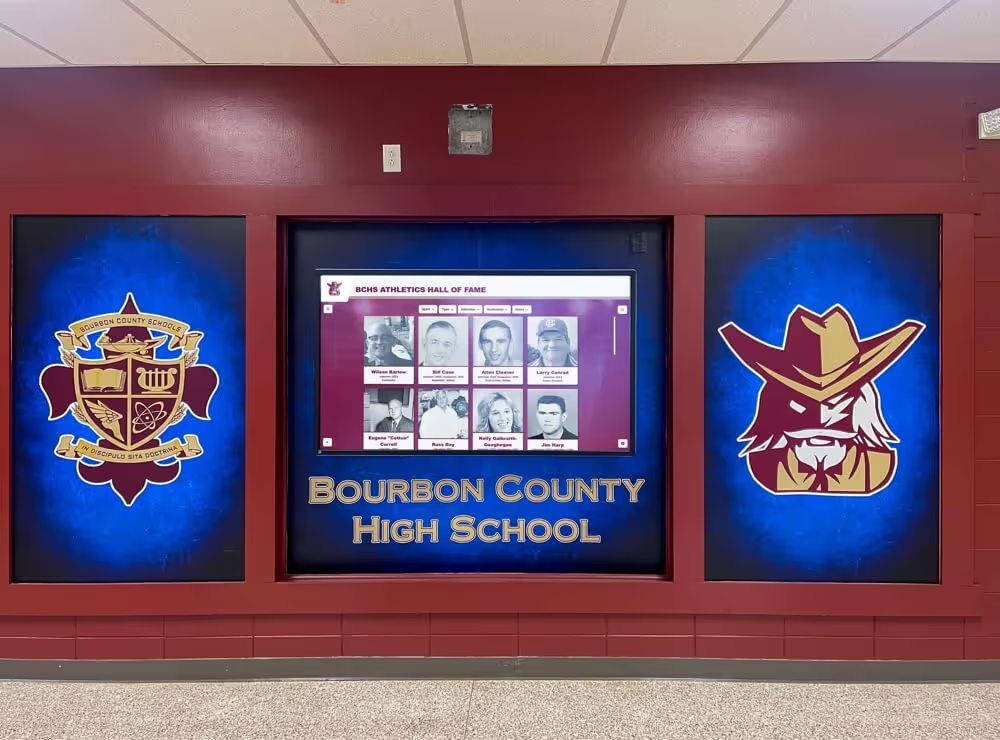
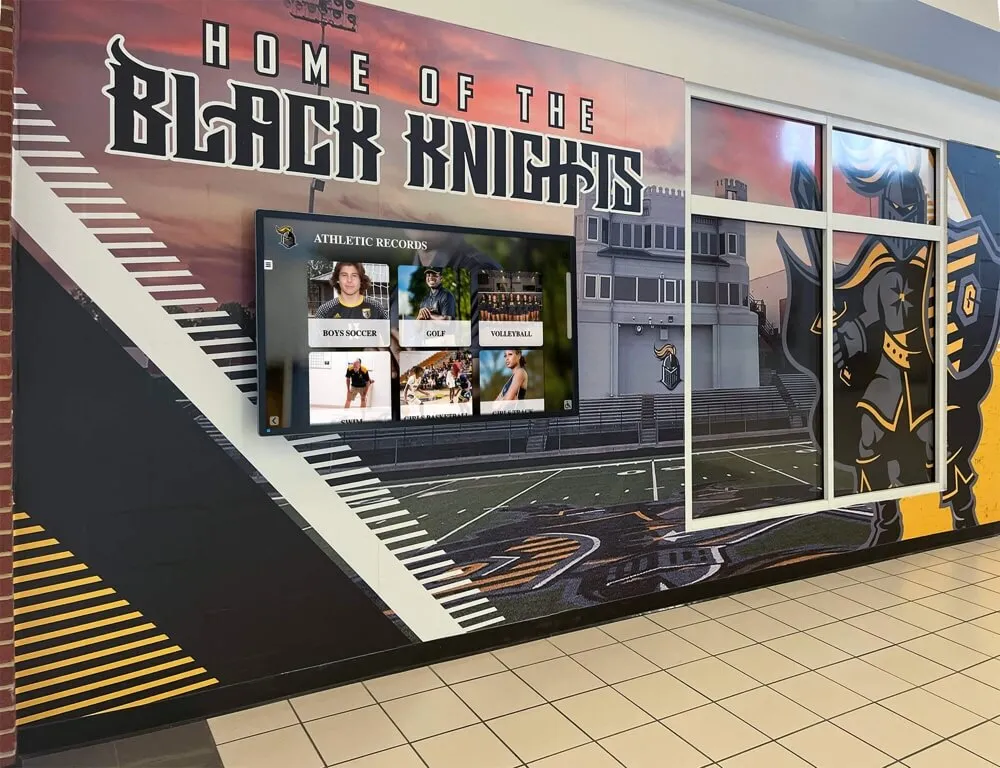
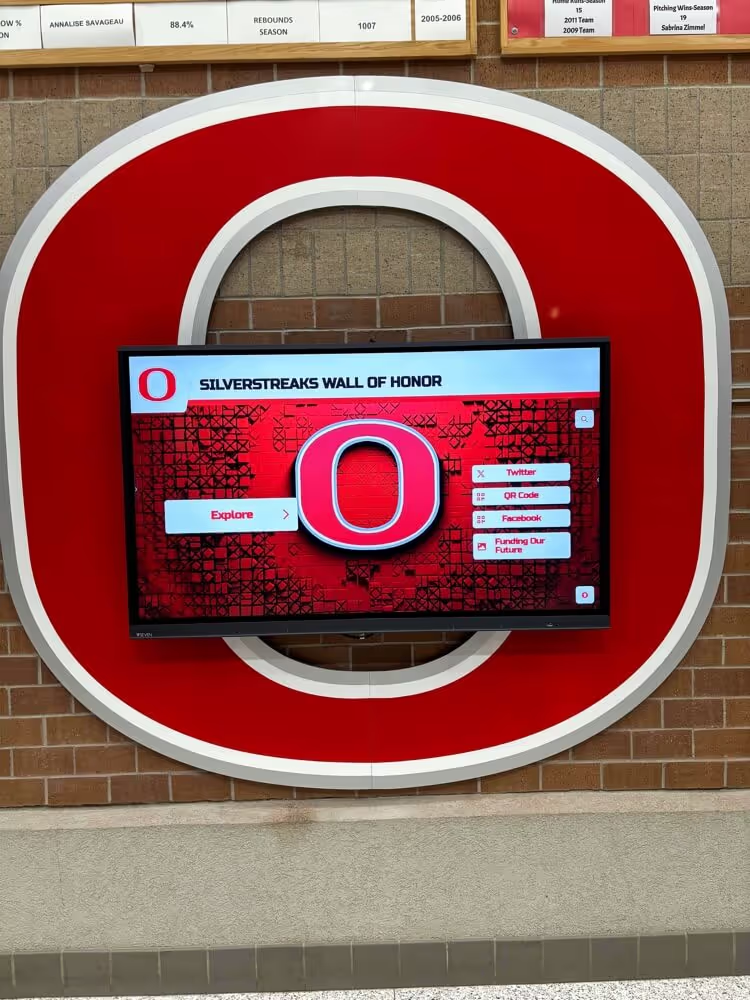
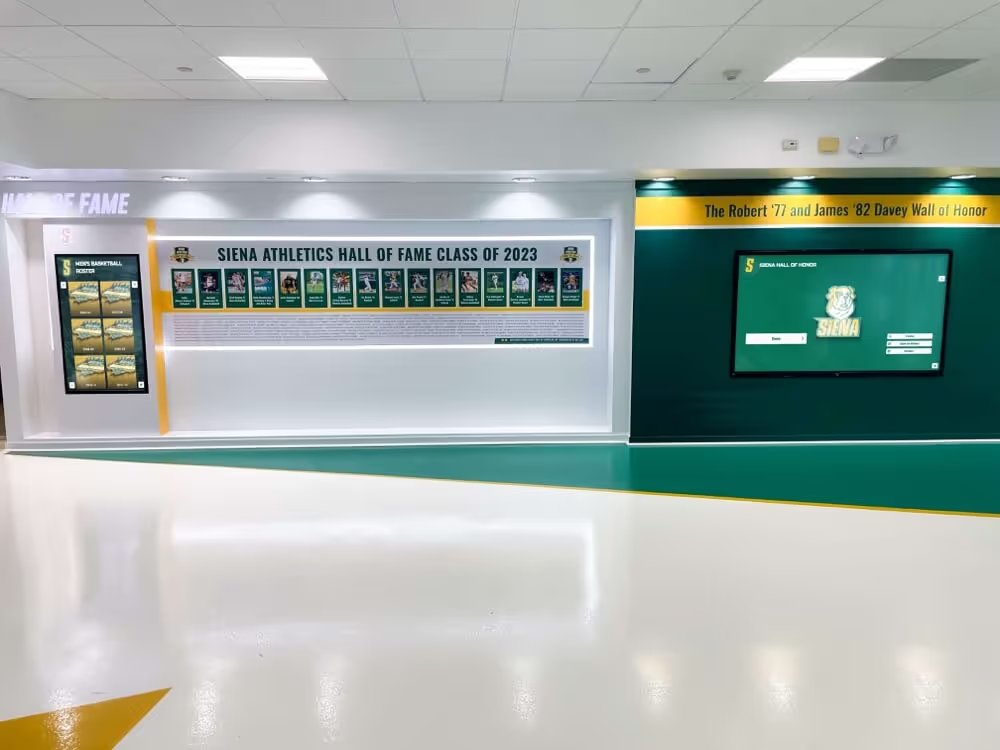
Integrated displays combine traditional design elements with modern digital technology creating visually cohesive recognition
Updating Content and Celebrating New Inductees
Annual induction ceremonies provide natural milestones for content updates and community engagement. Organizations should coordinate digital display updates with ceremony timing, publishing new inductee profiles during events to create immediate visibility and celebration moments.
Update Timing Strategies
- Pre-ceremony publication enabling inductee preview and family sharing
- Live publication during ceremonies creating dramatic reveal moments
- Post-ceremony updates allowing professional photo integration
- Seasonal updates aligned with sport schedules and championships
- Anniversary recognitions celebrating milestone induction years
- Achievement updates as records fall and new accomplishments occur
- Obituary updates honoring deceased inductees with memorial tributes
- Supplementary content additions as new photos and stories emerge
Regular content updates demonstrate active stewardship and organizational commitment to recognition programs. Displays featuring only historical content without ongoing additions signal stagnation and declining institutional investment, undermining community engagement and inductee satisfaction. Schools maintaining fresh, current content sustain interest and regular display interaction from students, staff, and visitors.
Accessibility and Inclusion Considerations
Digital hall of fame displays must serve diverse audiences including visitors with disabilities, ensuring equitable access to recognition information and interactive features through thoughtful design and inclusive content strategies.
ADA Compliance and Physical Accessibility
Touchscreen displays installed in public facilities must meet Americans with Disabilities Act (ADA) requirements for accessible design. Key considerations include mounting height ensuring reach ranges accommodate wheelchair users, approach clearances providing adequate maneuvering space, operational force requirements for touch interaction, and visual presentation supporting users with limited vision.
ADA Compliance Requirements
- Mounting height placing primary interactive elements within 15-48 inch reach ranges
- Forward approach providing minimum 30x48 inch clear floor space
- Touch target size meeting minimum 0.5 inch dimension requirements
- Color contrast ratios meeting WCAG 2.1 AA standards for text legibility
- Alternative access methods for users unable to operate touchscreens
- Audio description capabilities for visually impaired visitors
- Closed captioning for video content supporting hearing-impaired access
- Adjustable text size options accommodating low vision users
Organizations should consult accessibility specialists during design phases ensuring compliant installations avoiding costly post-installation modifications. Accessibility features benefit all users—larger touch targets improve interaction for young children and elderly visitors, high contrast displays enhance readability under varied lighting, and text size adjustments accommodate diverse vision capabilities across age ranges.
Inclusive Content Representation
Hall of fame content should reflect diverse achievement categories, demographic representation, and recognition criteria celebrating excellence across multiple dimensions rather than narrow traditional definitions of athletic success.
Inclusion Strategies
- Multiple achievement categories beyond competitive athletics
- Academic excellence and scholarship recognition
- Community service and leadership achievement celebration
- Support role recognition including managers, trainers, and statisticians
- Coaching and administrative contributor acknowledgment
- Volunteer and booster leader appreciation
- Female athlete representation reflecting Title IX equity
- Diverse sport coverage including non-revenue and emerging programs
Inclusive recognition strengthens community engagement by demonstrating that achievement comes in many forms and all contributors deserve celebration. When students see diverse pathways to recognition—not just star quarterbacks and basketball scorers—they feel valued and inspired to pursue their own excellence. Similar inclusive approaches enhance other recognition initiatives when organizations implement graduation celebrations honoring milestones across educational experiences.
Integration with Other Recognition Programs
Digital hall of fame displays often serve as centerpiece technology supporting broader recognition ecosystems including donor acknowledgment, academic achievement celebration, and community appreciation initiatives.
Combined Athletic and Academic Recognition
Schools implementing comprehensive recognition technology can feature multiple content categories within single displays—athletic hall of fame profiles alongside academic honor rolls, scholarship recipients, and distinguished alumni. This integration maximizes display investment value while reinforcing organizational commitment to celebrating diverse excellence.
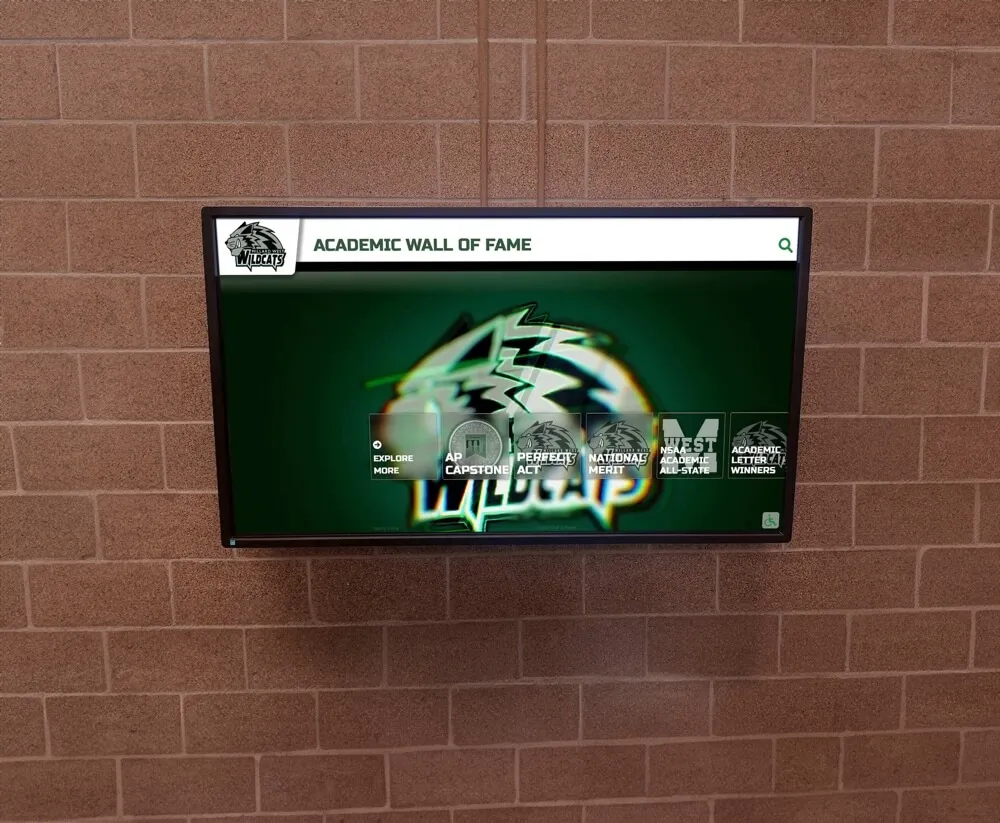
Tabbed interfaces, search filters, and category browsing enable visitors to explore specific recognition types of personal interest while discovering unexpected achievements in other categories. Combined displays also simplify content management by centralizing recognition responsibilities within single administrative workflows rather than maintaining separate systems for different achievement types.
Donor Recognition Integration
Organizations operating both hall of fame recognition and donor displays can leverage common technology platforms delivering consistent user experiences across recognition contexts. Athletic facilities might feature hall of fame inductees on lobby displays while adjacent screens acknowledge capital campaign donors, facility naming gift contributors, and annual fund supporters.
Technology integration enables cost efficiencies through shared hardware, software licensing, and content management infrastructure. Common platforms also streamline administrator training—staff learning single content management systems rather than separate interfaces for different recognition purposes. Schools exploring modern donor recognition approaches discover similar platform advantages when unifying philanthropic and achievement celebration.
Event Integration and Special Showcases
Digital displays provide flexible platforms for temporary event recognition beyond permanent hall of fame content. Organizations can feature current season highlights during competitions, showcase senior night tributes during final home events, display championship team rosters during tournament runs, and present award recipient profiles during athletic banquets.
Event Integration Opportunities
- Senior night athlete spotlights with career highlights and statistics
- Current season team rosters and game schedules
- Championship celebration content during playoff runs
- Athletic banquet award presentations and recognition
- Homecoming week historical throwback content
- Reunion event content featuring specific graduation year classes
- Fundraising campaign progress updates and donor acknowledgment
- Community appreciation messages during special events
Scheduling features enable automatic content rotation between permanent hall of fame displays and temporary event showcases, maximizing display versatility without requiring constant manual intervention. Organizations implementing senior recognition traditions appreciate technology flexibility supporting both permanent recognition and special event celebration through common platforms.
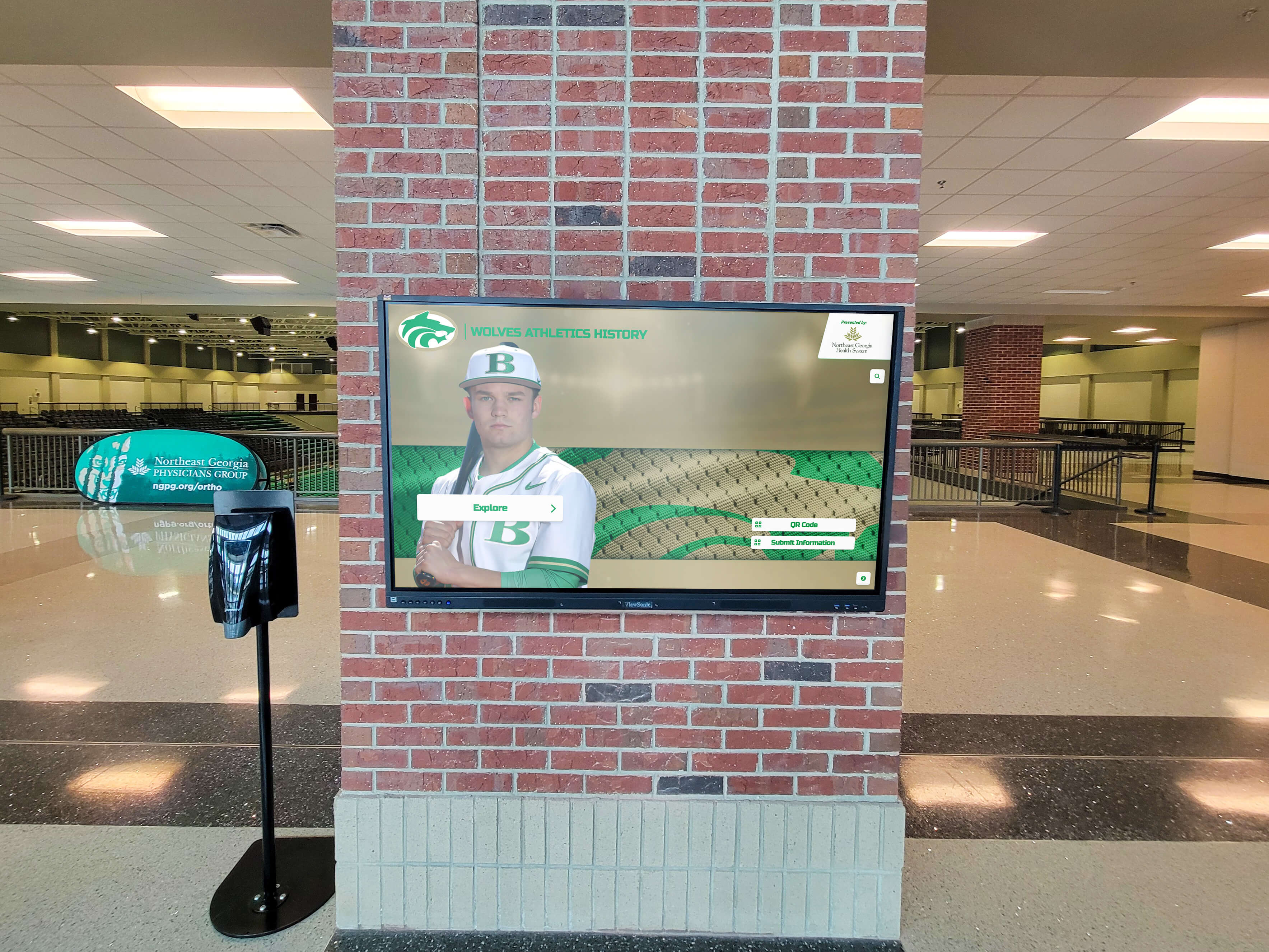
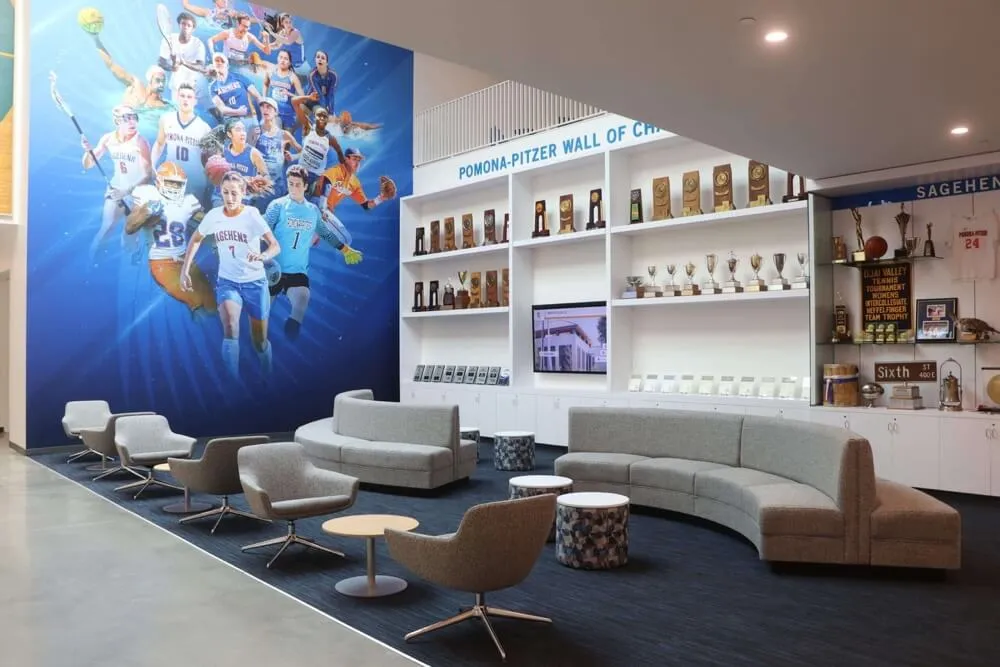
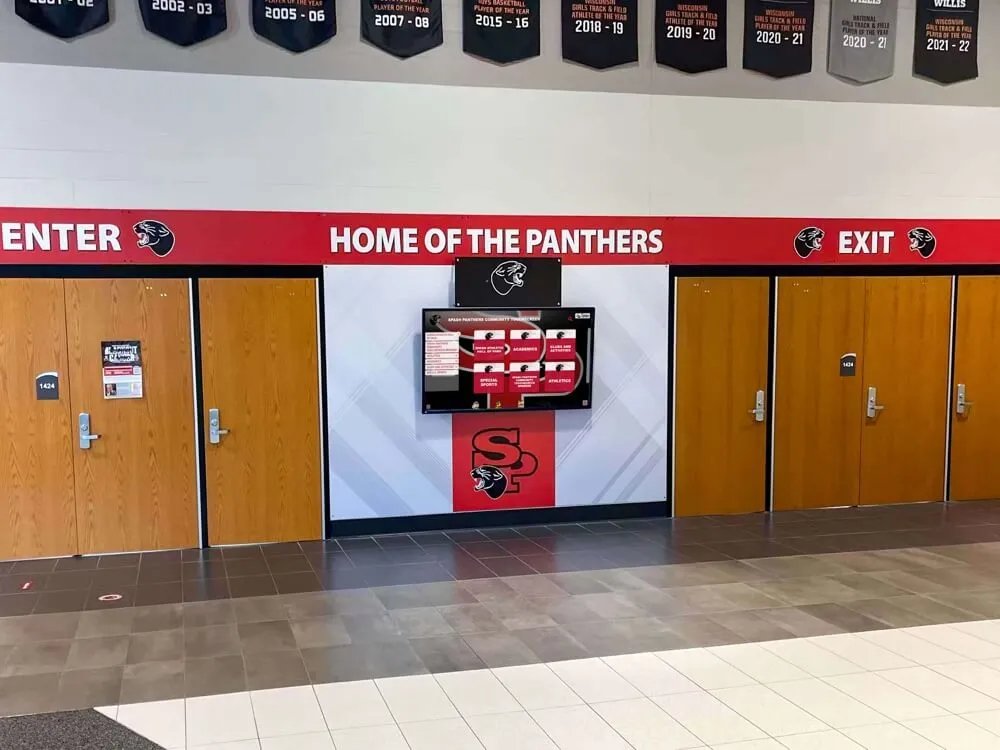
Architectural integration positions digital displays as prominent design elements within athletic facility lobbies
Technology Trends and Future Developments
Digital hall of fame technology continues evolving with emerging capabilities enhancing interactivity, storytelling richness, and administrative efficiency through artificial intelligence, augmented reality, and advanced data integration.
Artificial Intelligence and Automated Content Enhancement
AI-powered features increasingly support content management through automated photo enhancement, intelligent search capabilities, and content recommendation systems. Image recognition technology can automatically tag photos with athlete names, sport categories, and event types, reducing manual metadata entry while improving search accuracy.
Natural language processing enables conversational search where visitors ask questions in plain language—“Who holds the school rushing record?” or “Show me all inductees from the 1980s”—receiving direct answers rather than navigating hierarchical menus. AI-generated content summaries can create profile narratives from statistical databases, news archives, and interview transcripts, reducing administrator content development workload while maintaining consistent voice and quality.
Augmented Reality and Extended Experiences
Emerging augmented reality features enable smartphone users to access extended content overlays when viewing physical displays. Visitors point phones at touchscreen displays to access 360-degree venue tours, interactive statistics visualizations, or virtual trophy cases showing physical artifacts too valuable or fragile for public display.
AR features also support self-guided facility tours where visitors follow digital waypoints exploring different recognition displays, historical locations, and achievement milestones throughout buildings. These immersive experiences deepen engagement while providing flexible content delivery accommodating diverse visitor interests and available time.
Advanced Analytics and Engagement Measurement
Modern platforms incorporate analytics tracking visitor interaction patterns, content popularity, search trends, and engagement duration. Organizations gain insights about which inductees generate most interest, what sports or eras attract exploration, and how visitors navigate content hierarchies.
Analytics inform content development priorities—revealing gaps in historical coverage, identifying popular profile elements worth emphasizing in new inductees, and demonstrating return on recognition investment through measurable engagement metrics. Data-driven insights support continuous improvement ensuring displays remain relevant and valuable to communities they serve.
Frequently Asked Questions
How much does a digital hall of fame display cost?
Digital hall of fame display costs typically range from $5,000-$15,000 for complete installations including commercial touchscreen hardware ($2,000-$8,000), software licensing ($1,000-$5,000 annually), mounting or kiosk hardware ($500-$3,000), and installation labor ($500-$2,000). Initial content development adds $1,000-$5,000 depending on historical archive scope and digitization requirements. While higher than traditional trophy cases initially, digital solutions eliminate ongoing plaque costs, creating break-even within 3-5 years for programs adding regular inductees while providing unlimited future capacity.
Can digital hall of fame displays show unlimited inductees?
Yes, digital hall of fame platforms accommodate unlimited inductee profiles without hardware upgrades or physical space expansion. Unlike traditional trophy cases constrained by wall space and plaque capacity, digital systems store thousands of profiles in cloud-based databases accessible through searchable interfaces. Organizations add new inductees indefinitely by creating profiles through content management systems without installation costs, production delays, or display modifications. This unlimited scalability makes digital solutions ideal for organizations with long histories, large programs, or inclusive recognition criteria celebrating diverse achievements.
What happens if the display hardware fails or technology becomes outdated?
Quality commercial displays carry 3-5 year warranties protecting against hardware failure, with professional digital hall of fame providers offering technical support and replacement services. When displays eventually require replacement after 7-10+ years of continuous operation, cloud-based content management preserves all inductee profiles, photos, and achievement information independent of hardware. New display installations access existing databases immediately without content migration or redevelopment. This content preservation ensures recognition investments remain protected even as display technology evolves, unlike traditional plaques physically tied to original installation locations.
How do visitors with disabilities access digital hall of fame information?
Accessible digital hall of fame displays meet ADA compliance through mounting heights within reach ranges for wheelchair users (15-48 inches for primary interactive elements), adequate approach clearances (minimum 30x48 inch clear floor space), and WCAG 2.1 AA color contrast ensuring text legibility for visually impaired visitors. Advanced platforms offer text size adjustment, audio description capabilities, and mobile-responsive websites enabling smartphone access for users unable to operate touchscreens. QR code integration allows visitors to explore complete databases on personal devices using familiar assistive technology, ensuring equitable access to recognition information regardless of physical capabilities.
How long does it take to set up and launch a digital hall of fame display?
Digital hall of fame implementation timelines typically span 6-12 weeks from project approval to public launch. Hardware procurement and delivery requires 2-3 weeks, installation and configuration takes 1-2 weeks, and initial content development for 50-100 inductee profiles requires 4-8 weeks depending on available digital assets and historical archive organization. Organizations can accelerate launches by focusing initial content on recent inductees with readily available photos and information while gradually backfilling historical profiles over subsequent months. Phased approaches enable earlier deployment demonstrating value and building momentum while avoiding delays from comprehensive historical research.
Transform Your Recognition with Digital Hall of Fame Technology
Schools, universities, athletic programs, and organizations deserve recognition solutions that celebrate unlimited achievement, engage modern audiences through interactive storytelling, and provide sustainable long-term value without the space constraints and escalating costs of traditional trophy cases and plaque walls.
Digital hall of fame displays from Rocket Alumni Solutions combine commercial-grade touchscreen hardware with intuitive cloud-based content management software, creating engaging recognition experiences accessible to administrators, athletes, students, and communities. Our platforms accommodate unlimited inductees, feature searchable databases and rich multimedia profiles, meet ADA accessibility requirements, and provide remote content management requiring no technical expertise.
Over 600 schools, universities, and organizations across North America trust Rocket Alumni Solutions to power their digital recognition programs with proven technology delivering measurable engagement and sustainable operation. Our comprehensive implementation support includes content strategy consulting, migration assistance, administrator training, and ongoing technical support ensuring successful launches and long-term satisfaction.
Schedule your demo today to see how digital hall of fame technology can transform your recognition program, celebrate unlimited achievement, and create interactive experiences that inspire your community for generations to come.