



High school debate teams produce some of the most disciplined, articulate, and analytically sharp students in the building—yet their accomplishments are far too often honored only on a trophy shelf in a corner display case that few people stop to read. Debate team recognition ideas that genuinely reflect a program’s achievements communicate something important to the entire school community: that intellectual rigor, research skill, and the courage to stand and argue a case under pressure matter as much as athletic performance or academic grades. When schools invest in meaningful recognition for their speech and debate programs, they elevate the culture of the entire building.
This guide covers more than 20 concrete ideas for recognizing debate team members—from traditional awards and end-of-season banquets to year-round visibility strategies and permanent digital displays that give outstanding debaters the lasting recognition their work deserves.
For competitive debate teams, a state qualifier weekend represents months of preparation: hundreds of hours of case research, practice rounds, judge feedback, coaching sessions, and the mental discipline to argue both sides of complex policy and values questions under time pressure. The students who succeed in that environment deserve recognition systems that match the depth of their commitment.

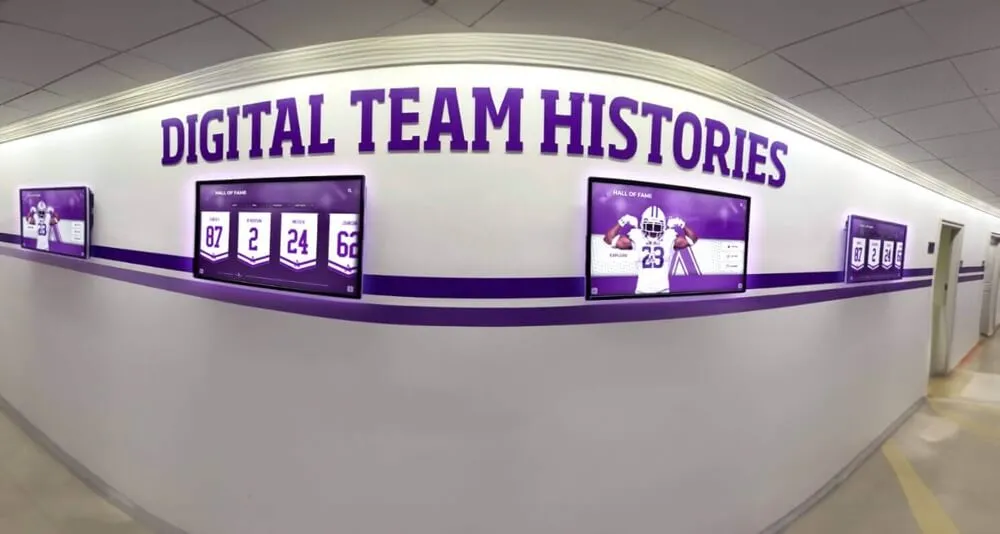
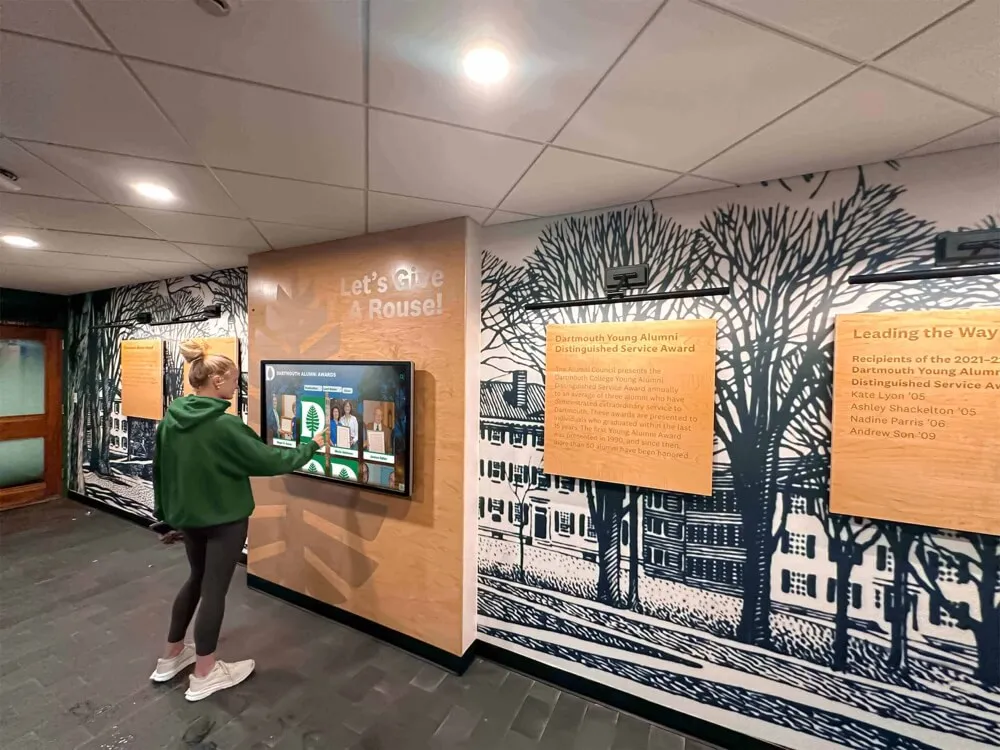
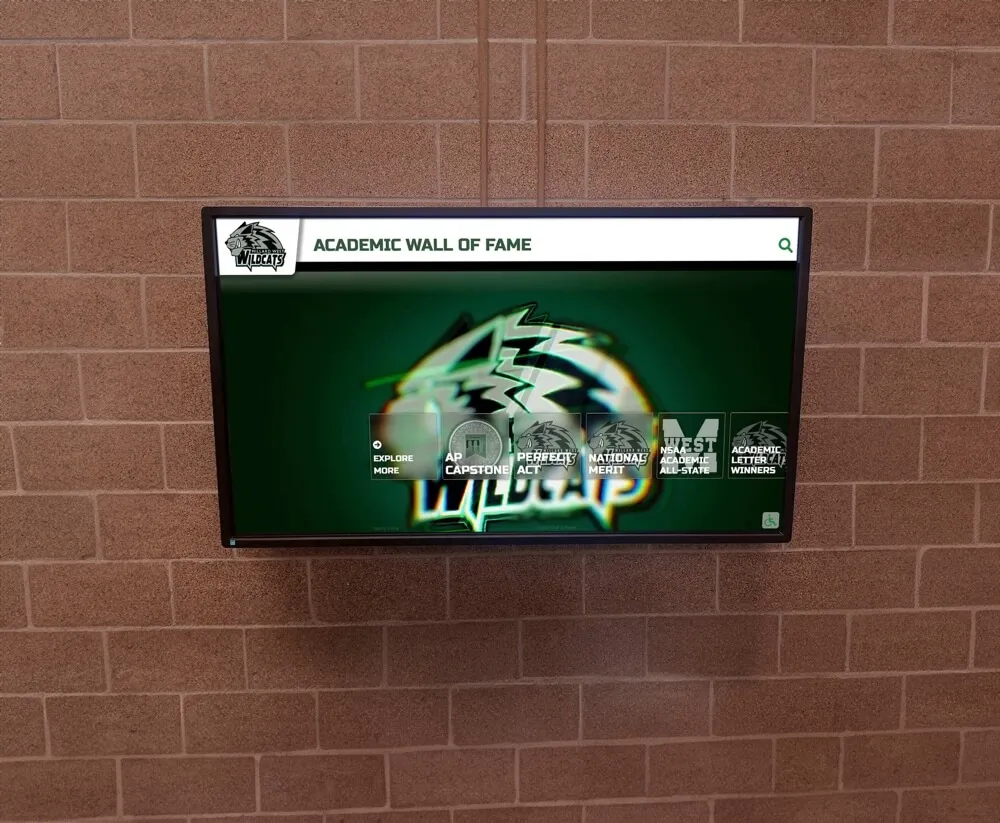
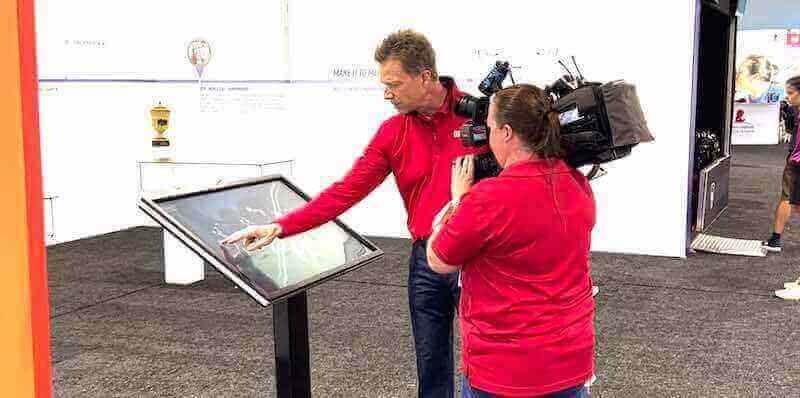
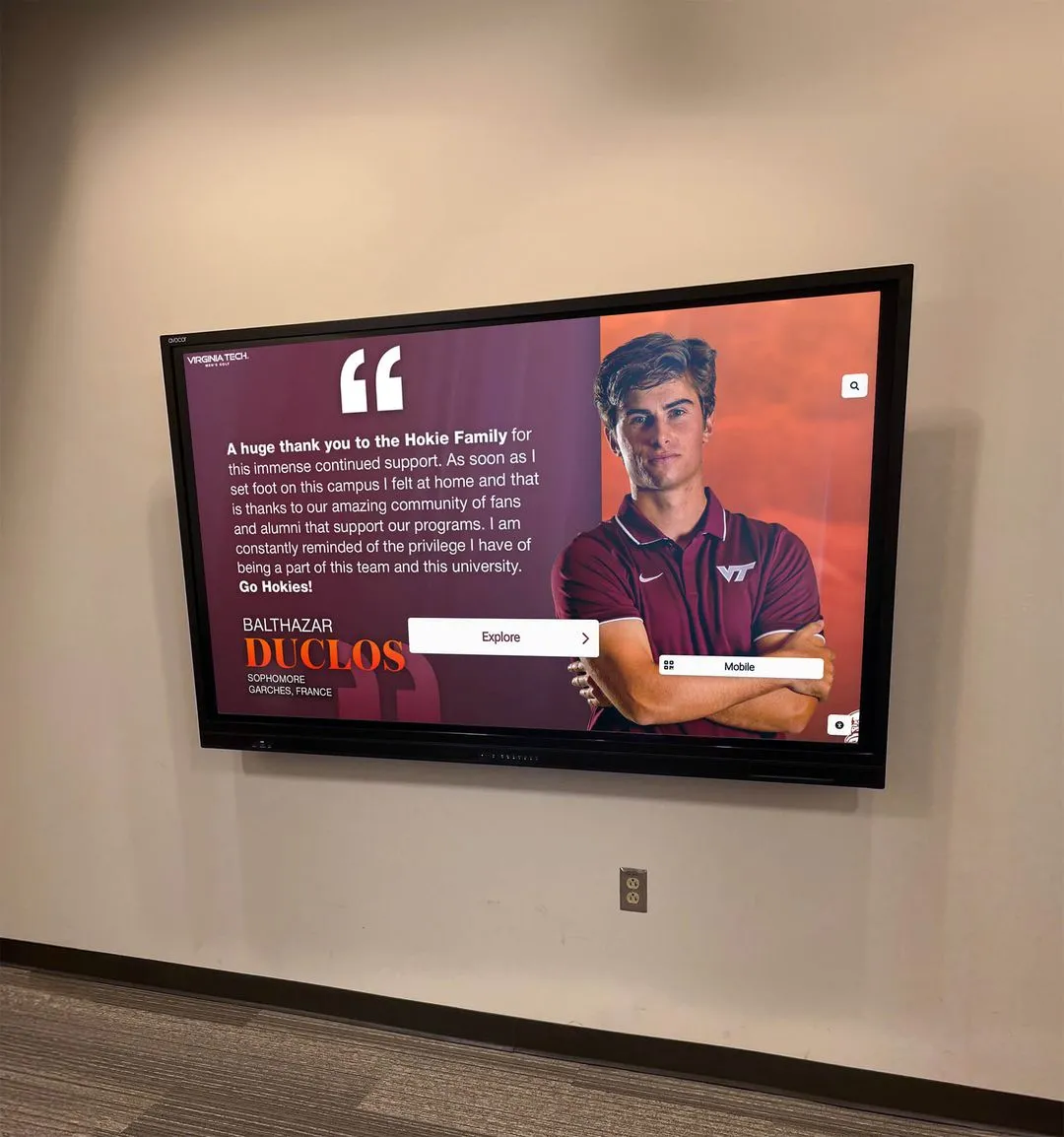
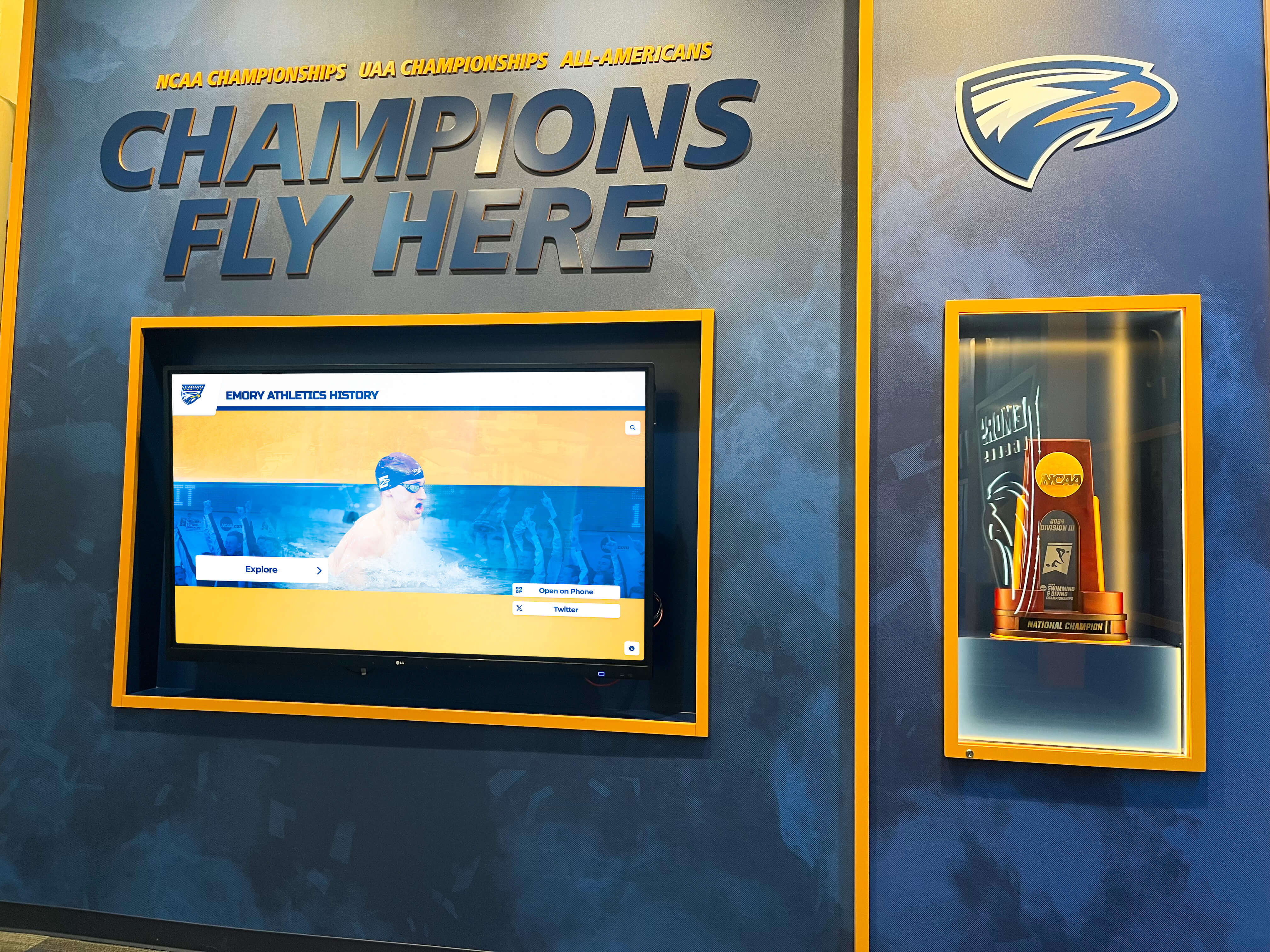
Permanent champions walls that document program history create the kind of lasting recognition that motivates current competitors and honors those who came before
Why Debate Team Recognition Matters
Speech and debate programs develop skills that translate directly into academic and professional success—research, critical thinking, public speaking, persuasion, and the ability to construct logical arguments under pressure. The National Speech and Debate Association (NSDA) serves more than 150,000 student members annually, making competitive speech and debate one of the largest academic extracurricular activities in U.S. high schools. Programs that compete seriously over multiple seasons accumulate trophies, state placements, national qualifications, and individual achievements that rival athletic programs in both volume and significance.
Programs that recognize these accomplishments publicly send clear signals about what their school values. A debate team that wins a state championship and receives the same visibility as a regional sports title tells students, families, and the broader community that intellectual achievement is not a secondary priority. Programs that fail to recognize their academic competitors often see attrition: talented students who feel invisible in the program’s public narrative quietly deprioritize competitive participation.
Well-designed recognition also serves as a recruitment tool. Prospective participants who see a robust history of recognized achievement are far more likely to join and commit to the hours of preparation that high-level debate requires.
Traditional Award and Trophy Recognition Ideas
The foundation of any recognition program for a debate team is the awards themselves. While digital solutions are transforming how schools display achievement, the physical award remains a meaningful symbol that students, families, and coaches value highly.
Individual Achievement Awards
Tournament-specific awards recognize performance at each competitive event throughout the season. These can range from certificates signed by the coaching staff to engraved plaques or trophies that students keep permanently. For a program with a robust tournament schedule, consider tiered awards: participation recognition for first-time competitors, achievement recognition for clearing preliminary rounds, and distinction recognition for finalists and champions.
Speaker awards honor individual performance separate from team success in Policy, Lincoln-Douglas, and Public Forum debate events. Top speaker recognition—often tracked by speaker points across a tournament—provides a category that pure win-loss records can miss.
Most Improved Award is one of the most motivationally powerful recognition categories in any competitive program. Identifying and publicly honoring the debater who showed the most measurable growth from the beginning of the season to the end reinforces a culture of development over pure outcome.
Novice recognition for first-year competitors who advance or show exceptional promise creates visible on-ramps into the recognition system that encourage new members to commit before they’ve developed the experience to compete for top awards.
Team and Event Awards
For programs that compete across multiple event formats—Lincoln-Douglas, Public Forum, Congressional Debate, World Schools, Extemporaneous Speaking, Original Oratory—event-specific recognition ensures that excellence in each discipline receives appropriate acknowledgment.
Partnership of the Year awards for consistently strong Public Forum or Policy pairings give partner-based events the recognition they deserve separate from individual performance.
NSDA Point Leaders recognition, organized around the NSDA’s national honor society point system, provides an additional framework for recognizing accumulated competitive achievement across a full career rather than just a single season. Programs that track and publicly display cumulative NSDA points give debaters a metric that grows throughout their high school years.
Physical Trophy and Plaque Options
When selecting physical awards, consider:
- Engraved plaques for wall mounting in classrooms or display cases
- Crystal or glass awards for distinguished achievement or state-level performance
- Custom medals for tournament finalists that students can display
- Framed certificates for academic recognition boards
- Personalized recognition items (custom pens, bookmarks, padfolios) that debaters actually use
The best physical awards align with the formality of the achievement they recognize. A regional qualifier certificate and a state champion trophy should feel meaningfully different in weight and presentation—the trophy conveys the full significance of the accomplishment.
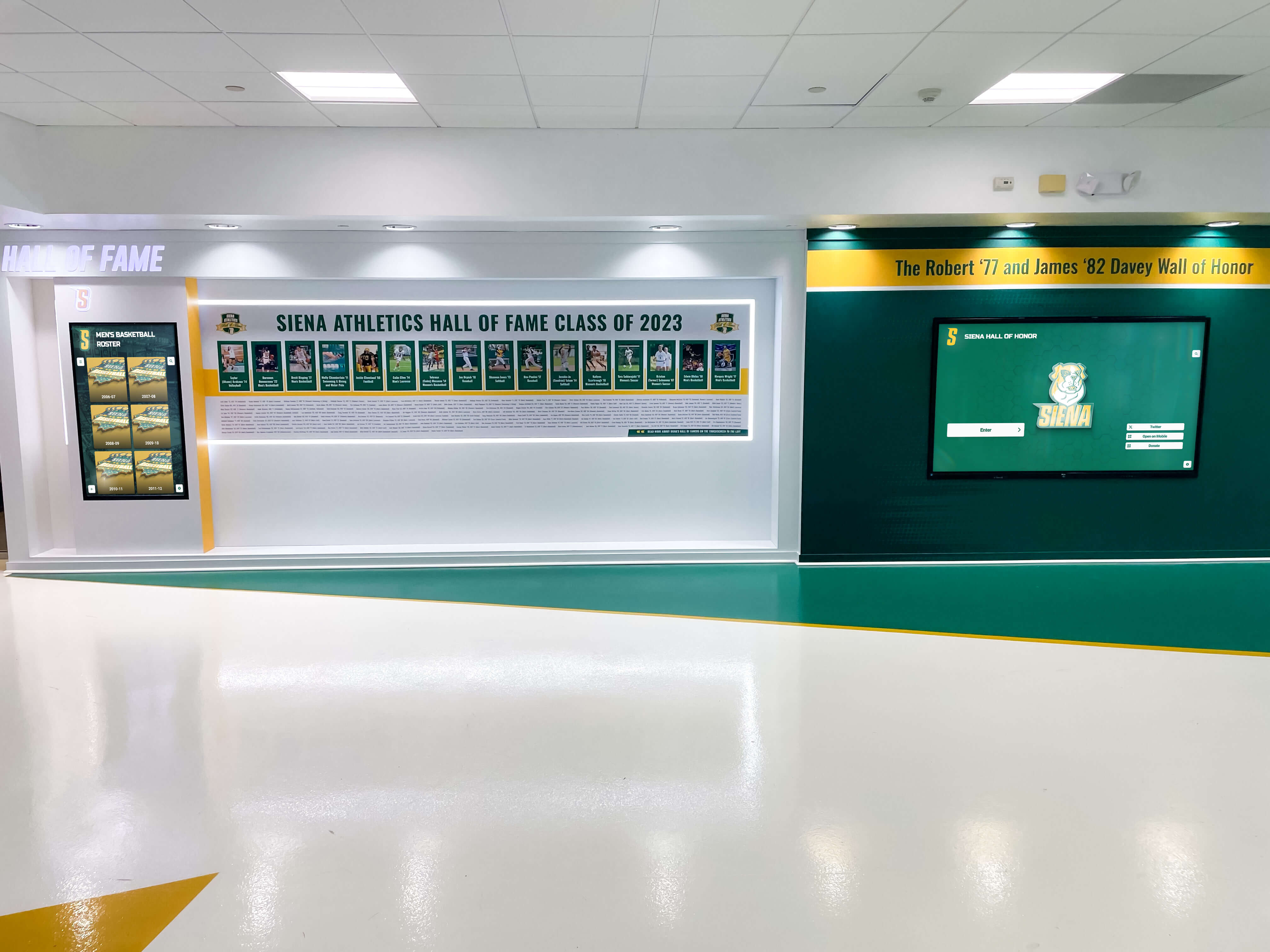
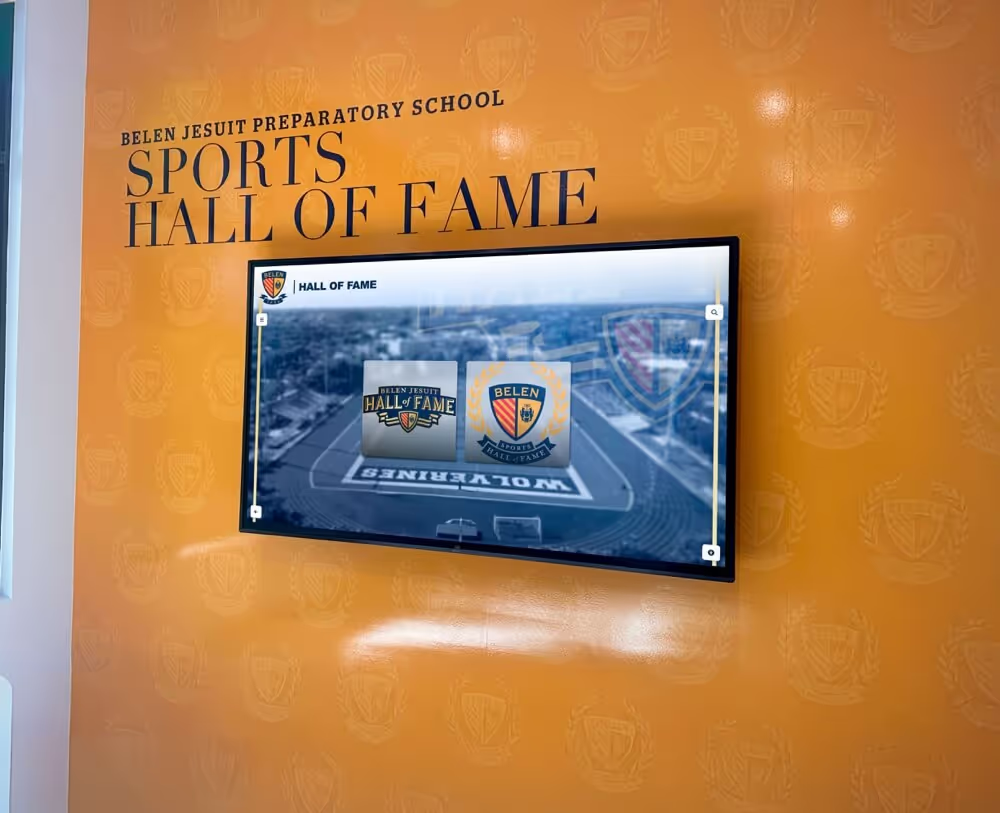
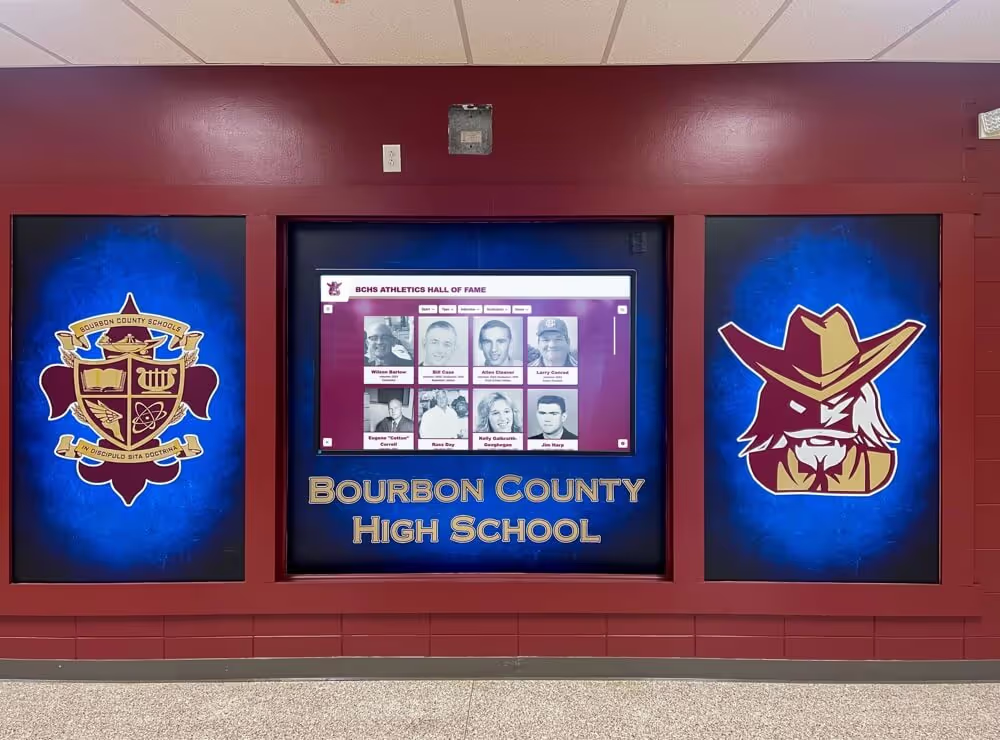
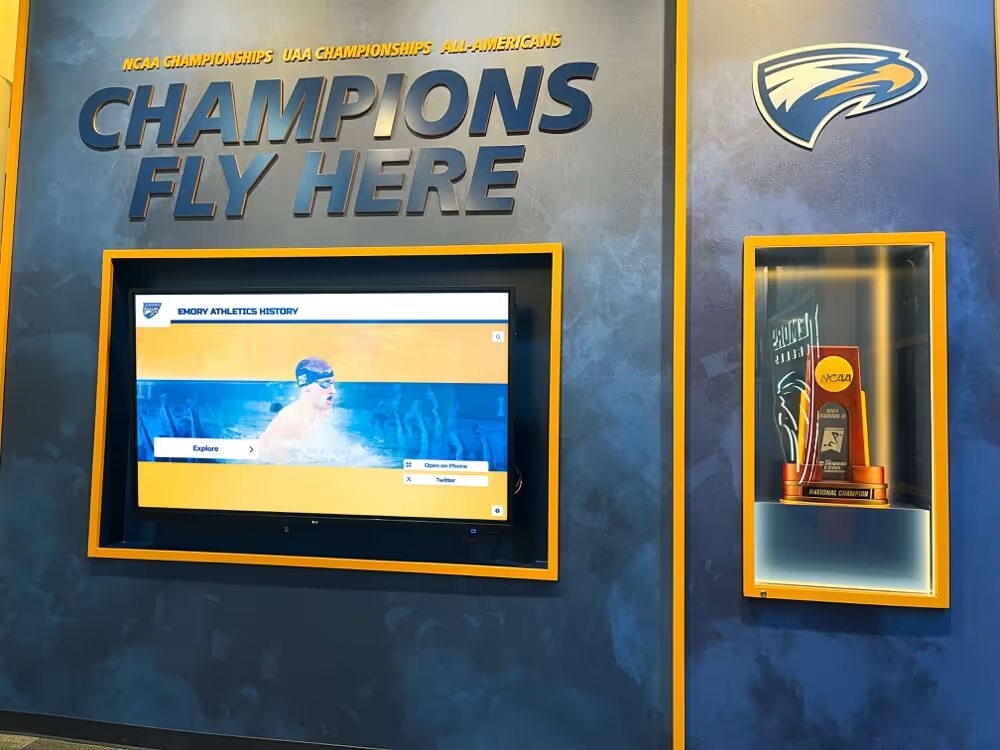
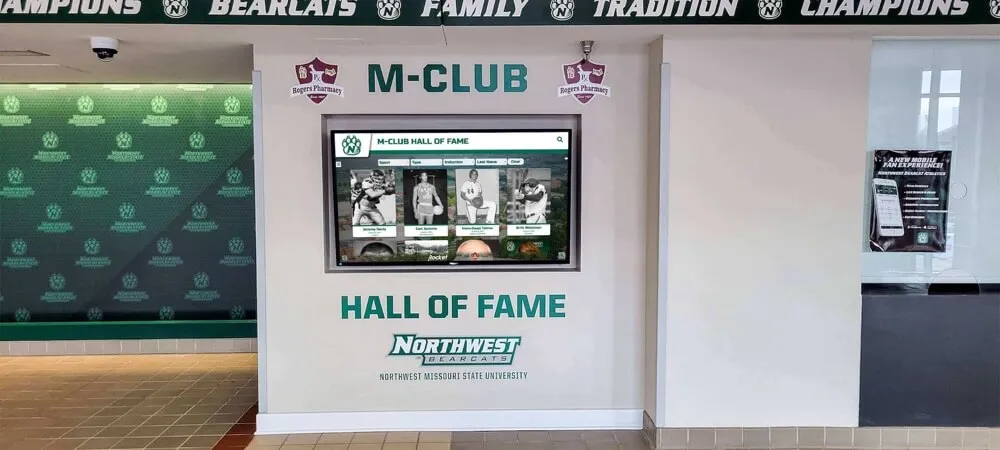
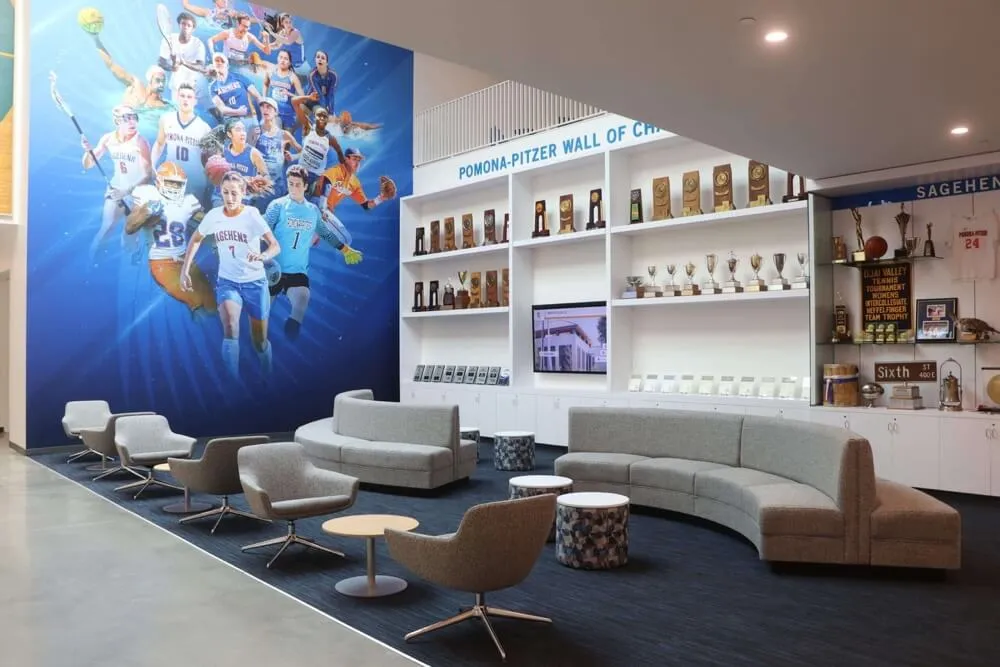
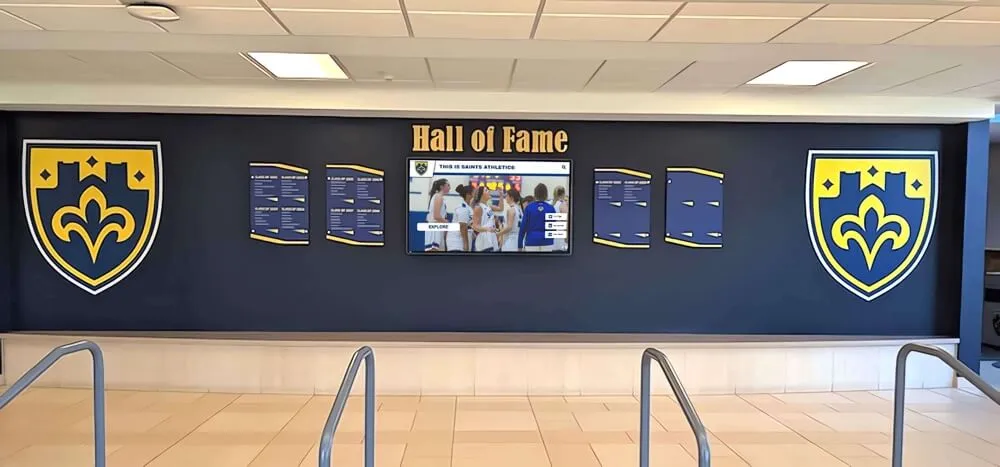
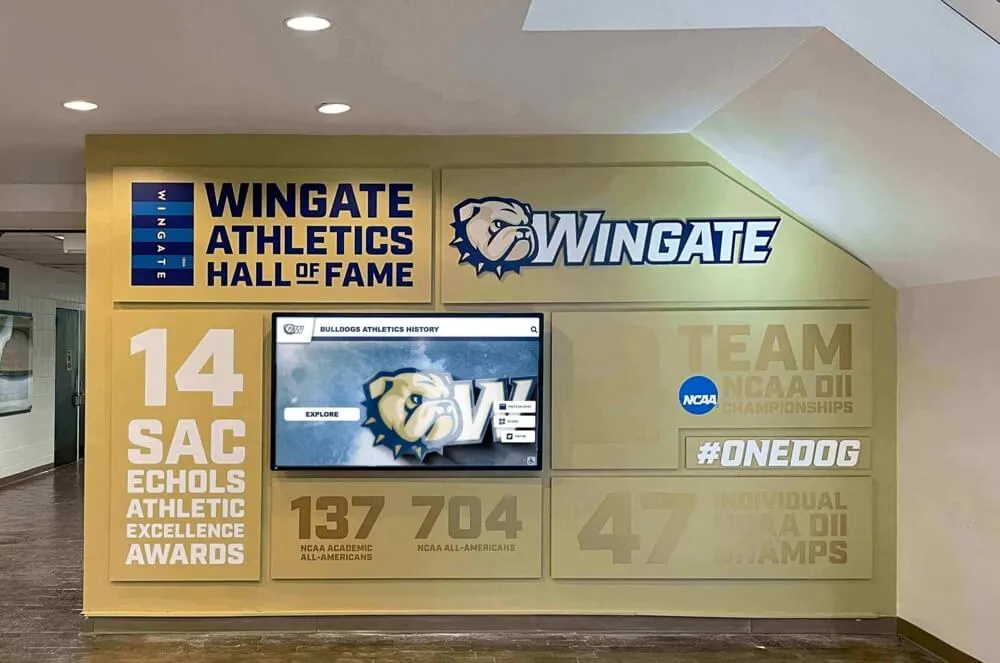
Hall of fame display walls create permanent records of program achievement that new competitors see throughout their time in the building
Banquet and Ceremony Recognition Ideas
Formal recognition events are among the most memorable experiences in a competitive program. A well-designed end-of-season banquet or awards ceremony gives coaching staff, the parent community, and school administration the opportunity to see what the team has accomplished—and to honor individual contributors with the ceremony their work deserves.
End-of-Season Banquet Structure
A debate team end-of-season banquet works best with a format that balances reflection, appreciation, and forward momentum. Consider organizing around these elements:
Season highlights presentation: A brief video or photo slideshow capturing tournament moments, team travel, coaching interactions, and competitive highlights gives the audience context for understanding what the team went through during the season.
Awards presentation: Structure this as the centerpiece of the event, with awards presented in ascending order of significance. Beginning with participation recognition and moving through achievement awards to championship honors maintains engagement and builds appropriately toward the season’s peaks.
Coach appreciation: Formal recognition of coaching staff—head coaches, assistant coaches, parent volunteers—validates the effort behind the program and often produces some of the most emotionally resonant moments of the evening.
Senior sendoff: Dedicated recognition for graduating seniors that goes beyond a plaque—a senior video tribute, brief remarks from teammates and coaches, or a personalized memory book—creates a ceremonial moment that honors the full arc of a competitive career.
For guidance on structuring a complete recognition event, resources on award ceremony planning for memorable student recognition events provide frameworks adaptable to academic competition programs of any size.
Seasonal Milestones Worth Celebrating
Don’t limit recognition to end-of-season events. Consider formally marking:
- First tournament of the season: Welcome new competitors with brief recognition at the opening meeting
- State qualifier announcements: Acknowledge qualifications publicly via school news, social media, and hallway displays as they occur during the season—not only at year’s end
- National qualifier milestone: If your program sends competitors to NSDA Nationals, treat this as a school-wide achievement worthy of an assembly mention or dedicated hallway display
- Program anniversary milestones: A program’s 10th, 25th, or 50th year of competition deserves dedicated recognition beyond the current season’s awards
Year-Round Recognition Strategies
Recognition confined to an annual banquet is significantly less effective than recognition woven throughout the competitive year. The most visible and motivationally effective programs build recognition into the daily and weekly rhythm of school life.
School Announcements and Communications
Morning announcement recognition is one of the highest-visibility, lowest-cost recognition methods available. A brief acknowledgment of a tournament result—“Congratulations to our debate team on qualifying three competitors for the state championship this weekend”—reaches the entire student body and takes thirty seconds of airtime.
School newsletter features that profile individual debaters, highlight season results, or preview upcoming competitions build broader community awareness of the program’s competitive presence throughout the school year.
Social media recognition via official school channels gives debate team achievements the same visual treatment as athletic results. A well-designed graphic post celebrating a state qualifier reaches families, community members, and prospective students simultaneously.
Hallway and Campus Visibility
Physical visibility in school hallways is one of the most powerful and underutilized recognition opportunities for debate programs. Consider:
Dedicated bulletin boards in high-traffic areas that display current-season results, upcoming tournament schedules, and individual competitor profiles
Championship banners mounted in appropriate spaces that document state titles or national appearances with the same permanence as athletic championship banners
Case displays and trophy cases organized specifically for debate team hardware, clearly labeled and updated after each tournament season
Looking at how end-of-year student recognition ideas can motivate and sustain programs provides additional frameworks for building year-round recognition that sustains momentum rather than peaking only at season’s end.
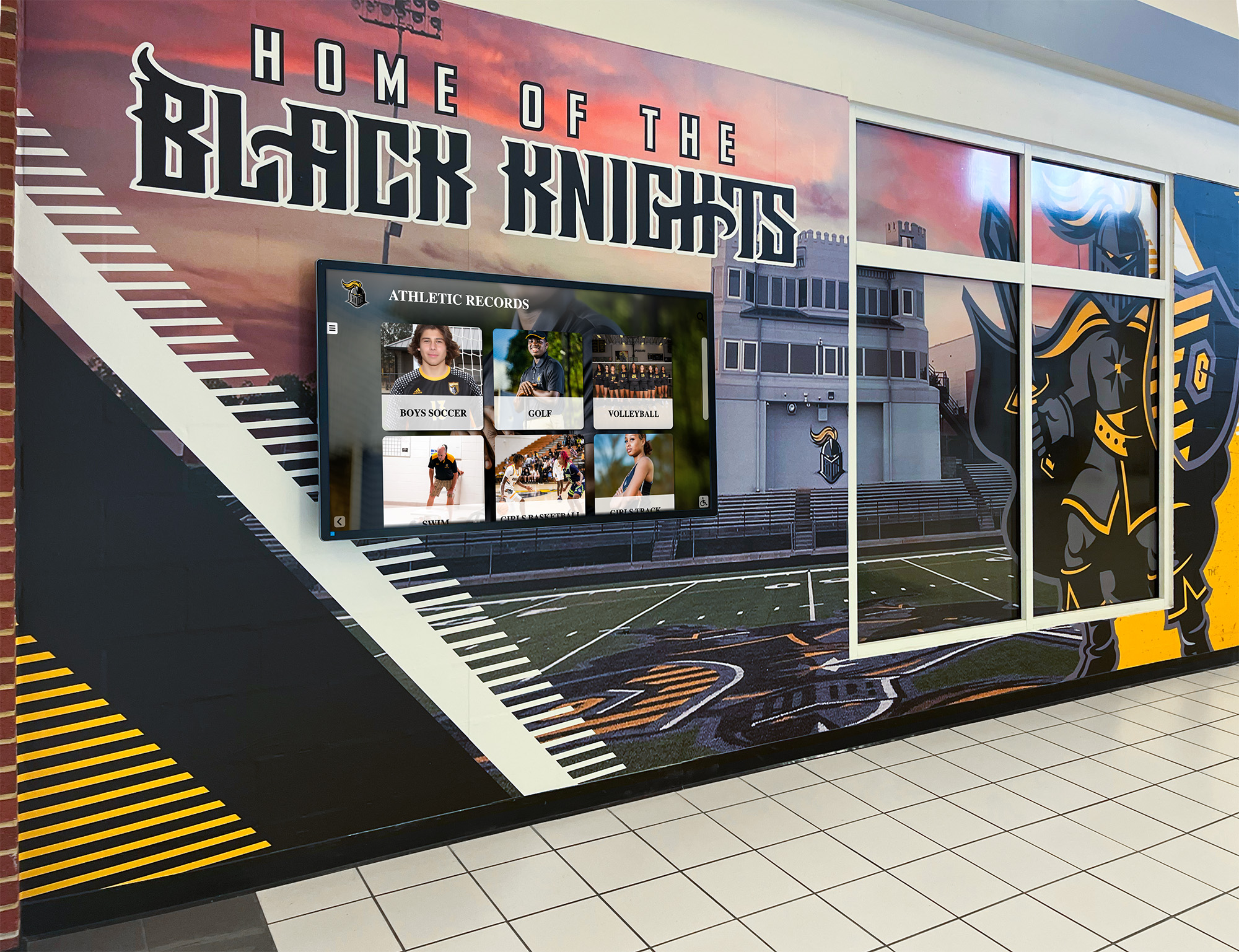
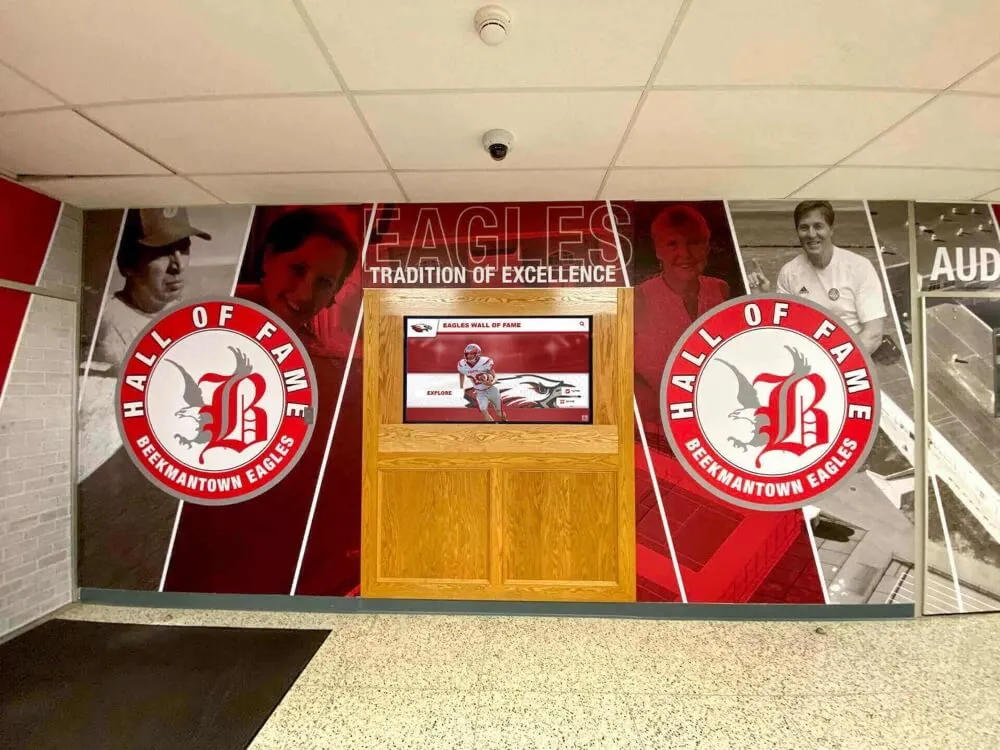
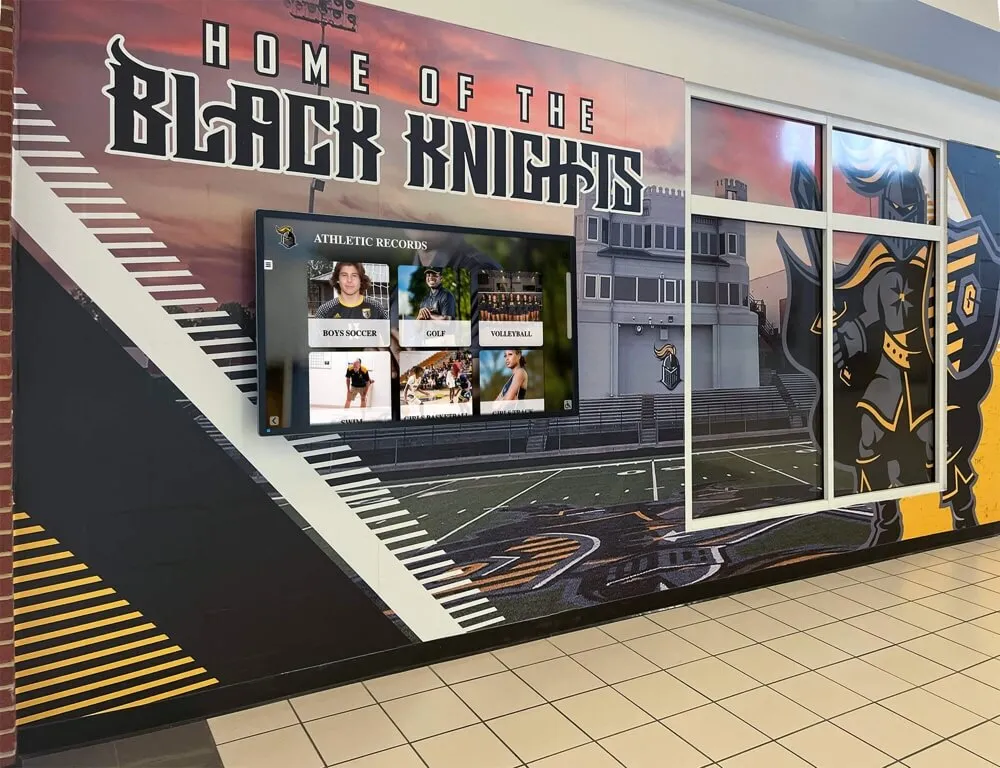
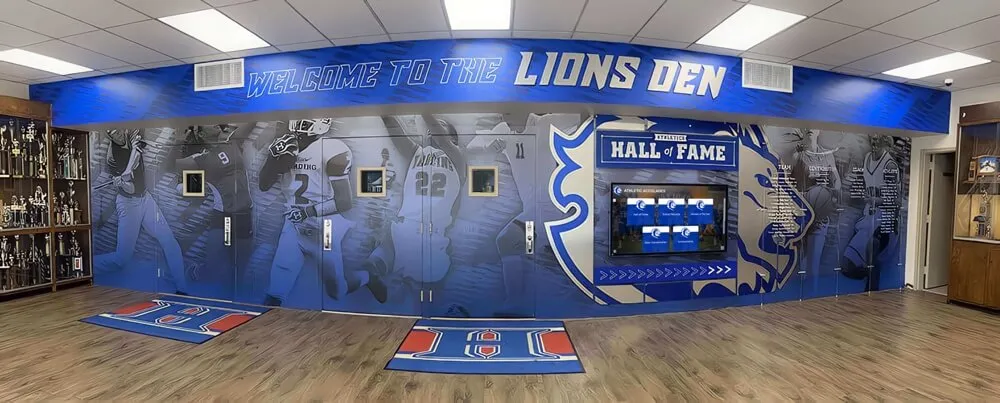
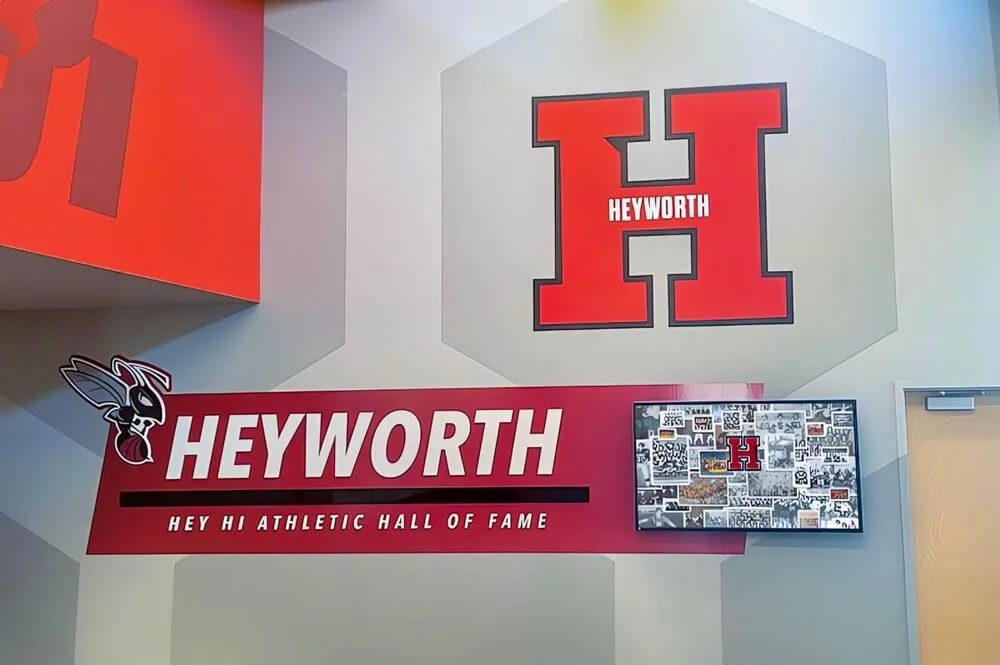
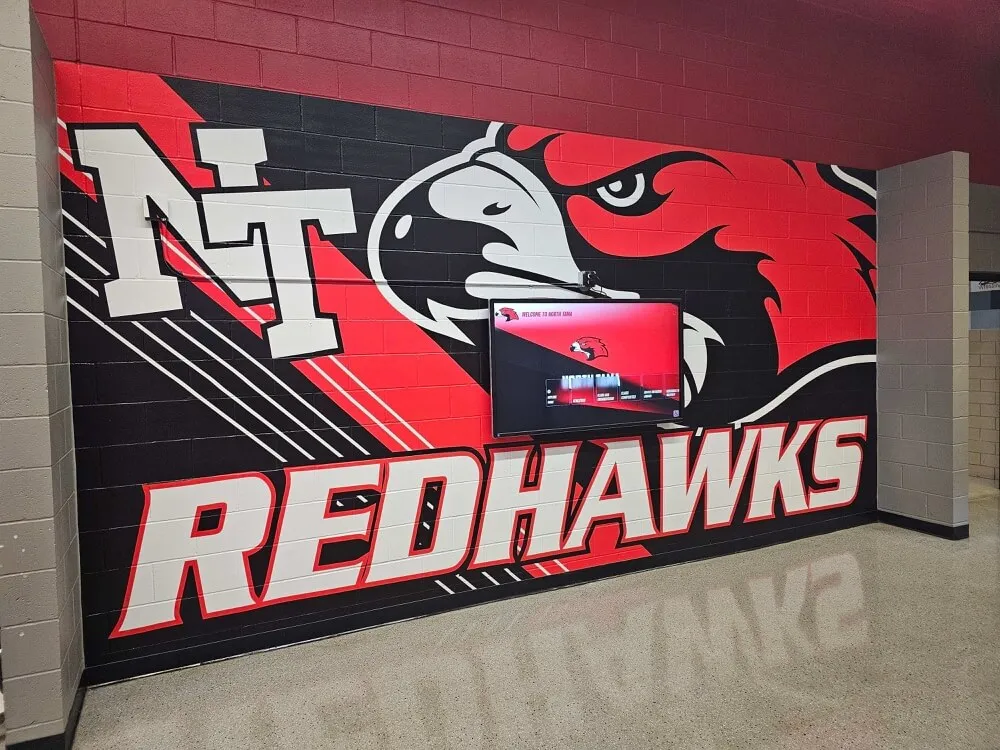
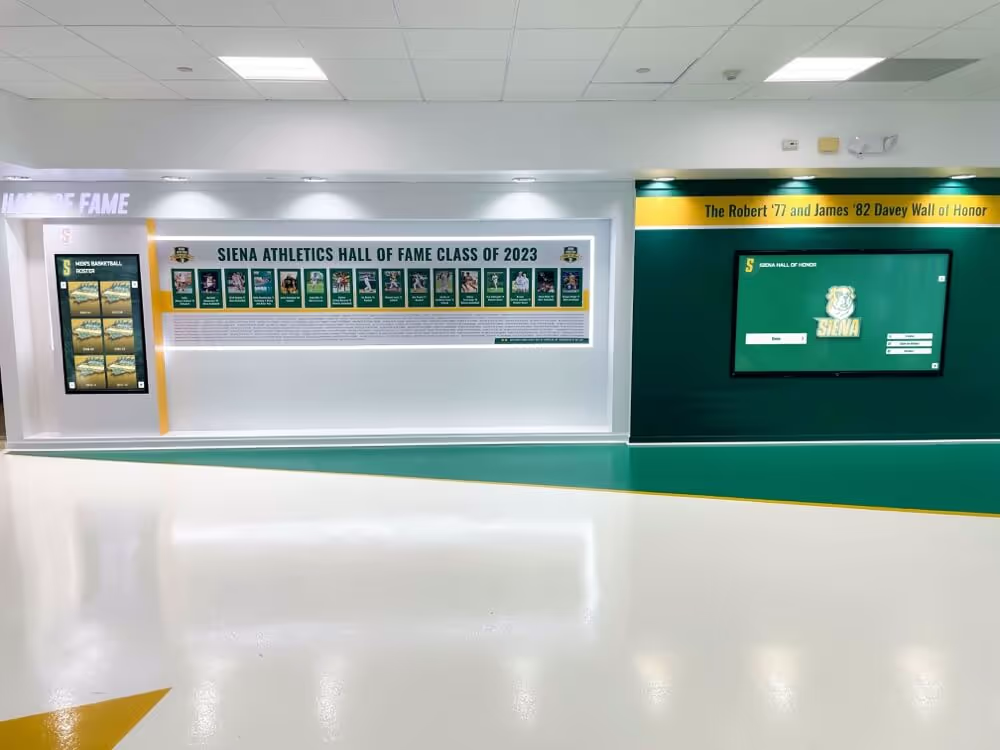
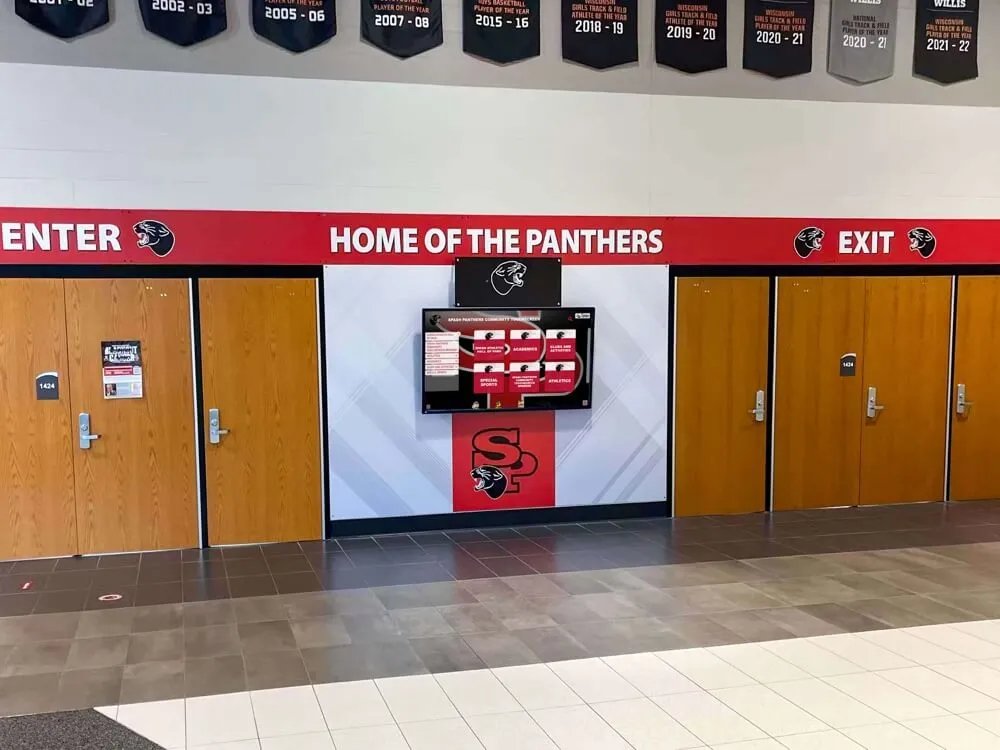
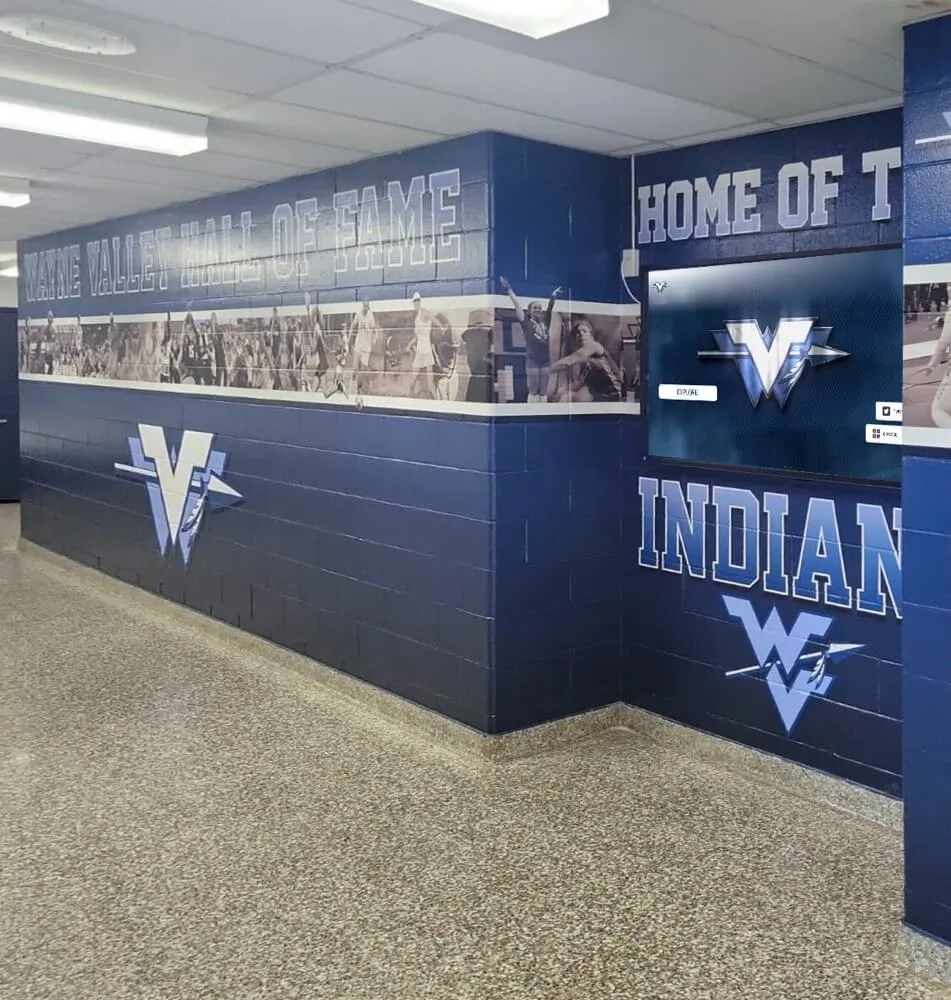
Integrated hallway displays that combine traditional murals with digital records give debate programs the same visible presence as athletic teams in the spaces students walk through every day
Academic Letter Awards for Debate Programs
One of the most impactful recognition ideas for high school debate programs is the implementation of academic letter awards—formal letter jackets, certificate letters, or cardigan letters—for competitive speech and debate participation and achievement. This category of recognition places debate team accomplishment on equal footing with varsity athletic achievement in a highly visible, personally meaningful way.
Programs that implement letter criteria for debate typically award letters based on a combination of:
- Accumulated NSDA points above a defined threshold
- State qualification or placement
- Season-long commitment including a minimum number of competitive tournaments
- Multi-year participation in the program
Schools that have formalized academic letter award programs for academic competition teams report that the award carries exceptional motivational weight—in part because it is visible on a daily basis (on jackets and sweaters) in a way that a trophy on a shelf cannot replicate.
Work with school administration and the activities director to establish letter criteria that are genuinely challenging—comparable in rigor to the criteria for athletic letters—to ensure the award maintains the prestige that makes it meaningful year after year.
Recognizing Diverse Contribution Types
A complete debate team recognition system acknowledges that competitive success is not the only form of contribution worth honoring. Programs that recognize only top finishers miss an opportunity to build the cohesive team culture that sustains long-term program success.
Non-Competitive Contributions
Program Service Award for the debater who has contributed most to the team’s culture, morale, and functioning—often not the strongest competitor, but an indispensable community builder whose investment the rest of the team notices.
Debate Coach Assistant recognition for upperclassmen who regularly support newer competitors with practice rounds, research assistance, or case feedback.
Research Excellence Award for the competitor who demonstrates exceptional analytical depth and case construction quality, independent of their win-loss record.
Community Engagement Award for programs that run public debate exhibitions, school board appearances, or community events where competitors practice their skills in service of the broader school community.
Recognizing Specific Event Excellence
For programs that compete across multiple event formats, separate recognition categories by discipline prevent one format from dominating the awards program:
- Lincoln-Douglas Debater of the Year
- Public Forum Partnership of the Year
- Congressional Debate Excellence Award
- Original Oratory Recognition
- Extemporaneous Speaking Achievement Award
- Dramatic or Humorous Interpretation Excellence
This structure ensures that competitors in formats with smaller competitive fields receive recognition within their specific discipline rather than being overshadowed by the volume of participants in larger events.
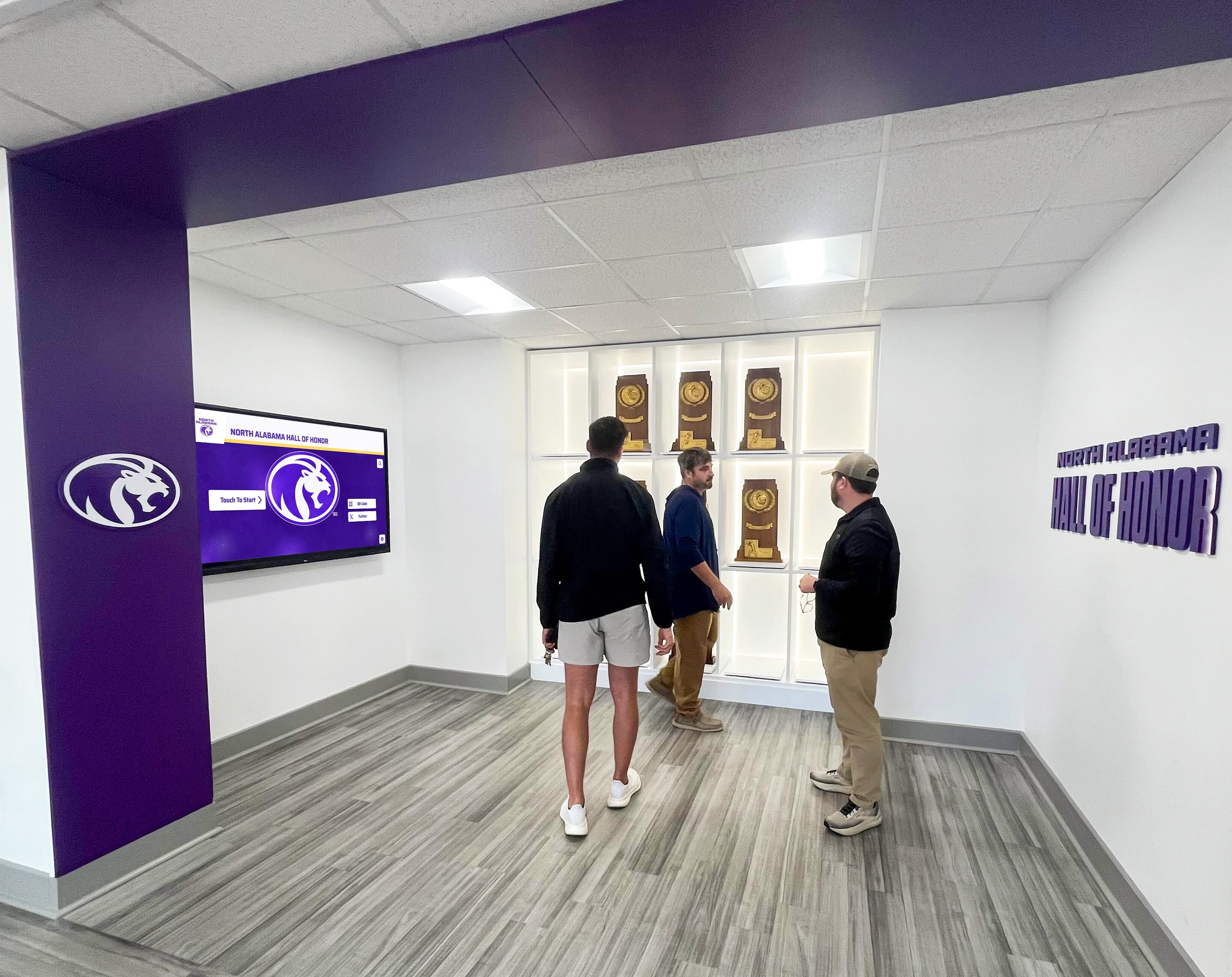
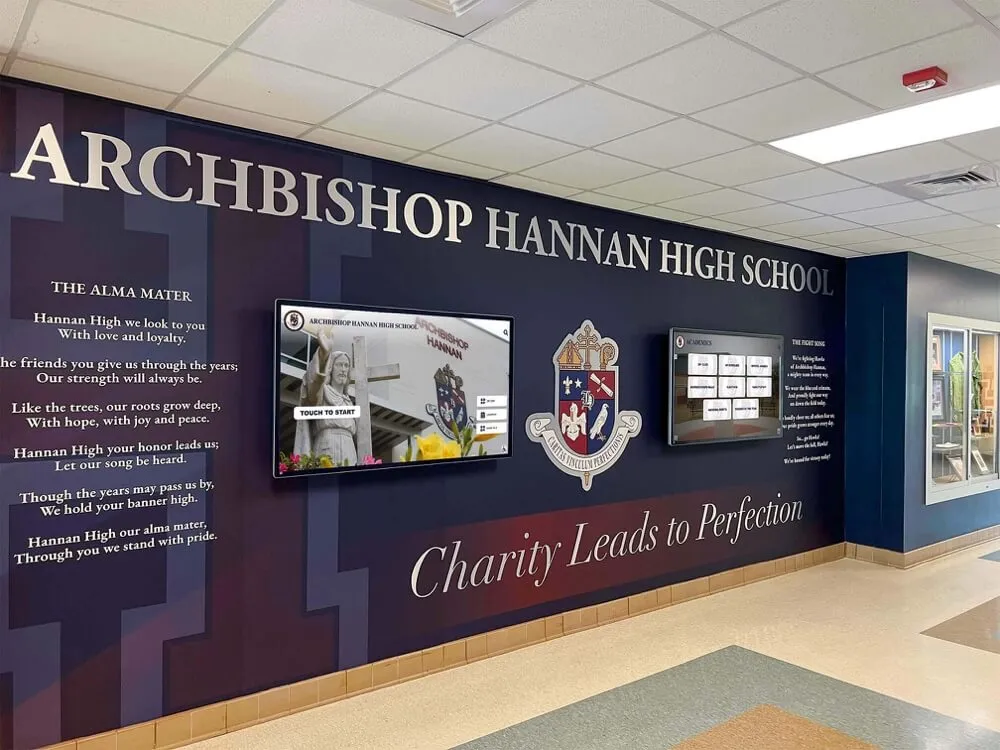
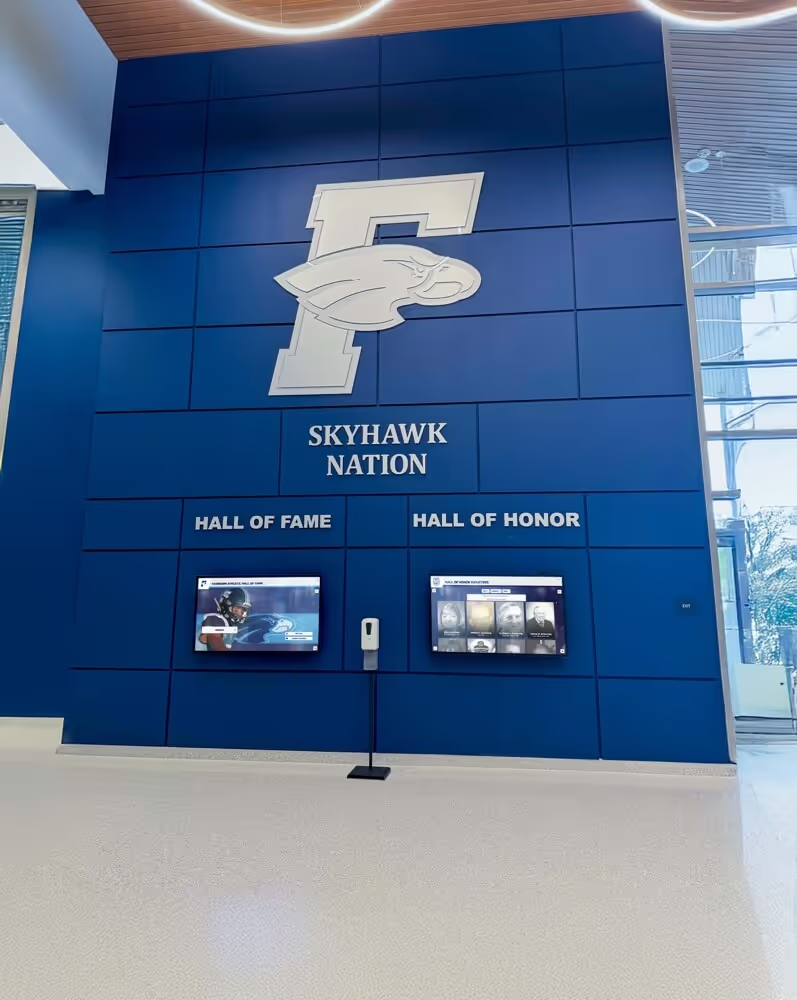
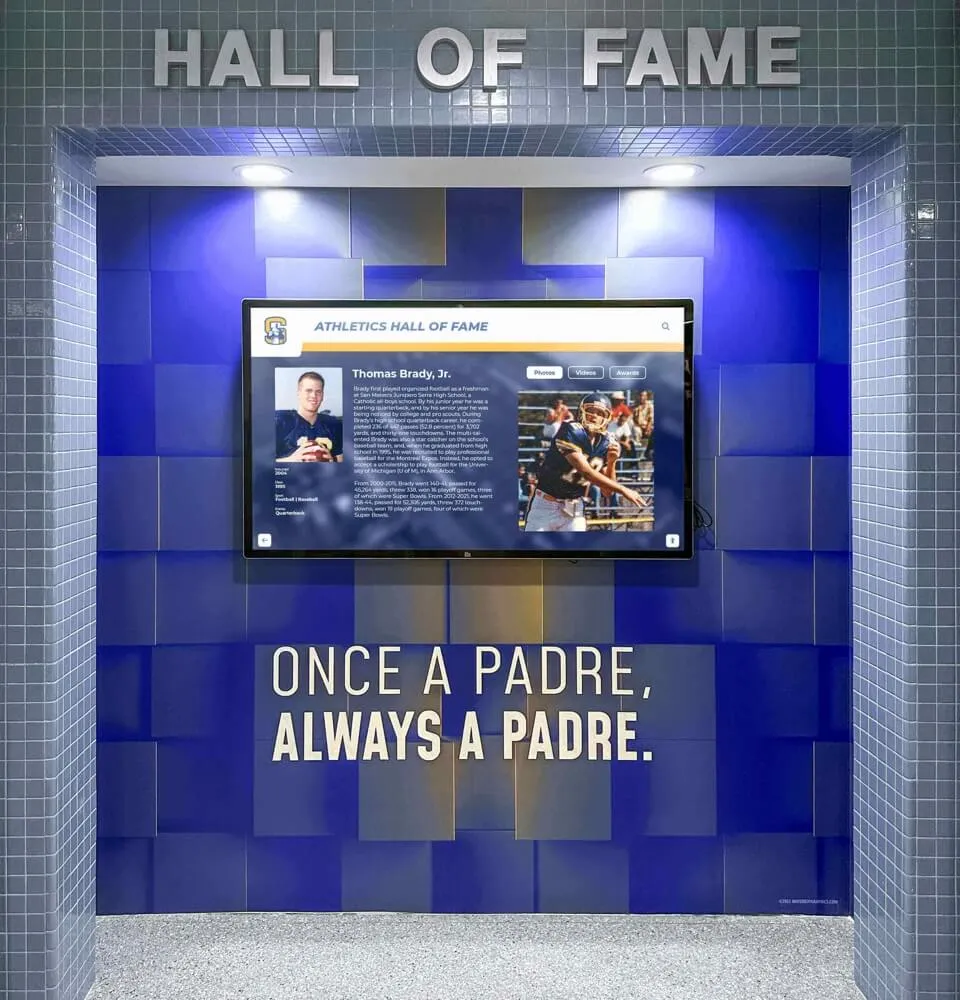
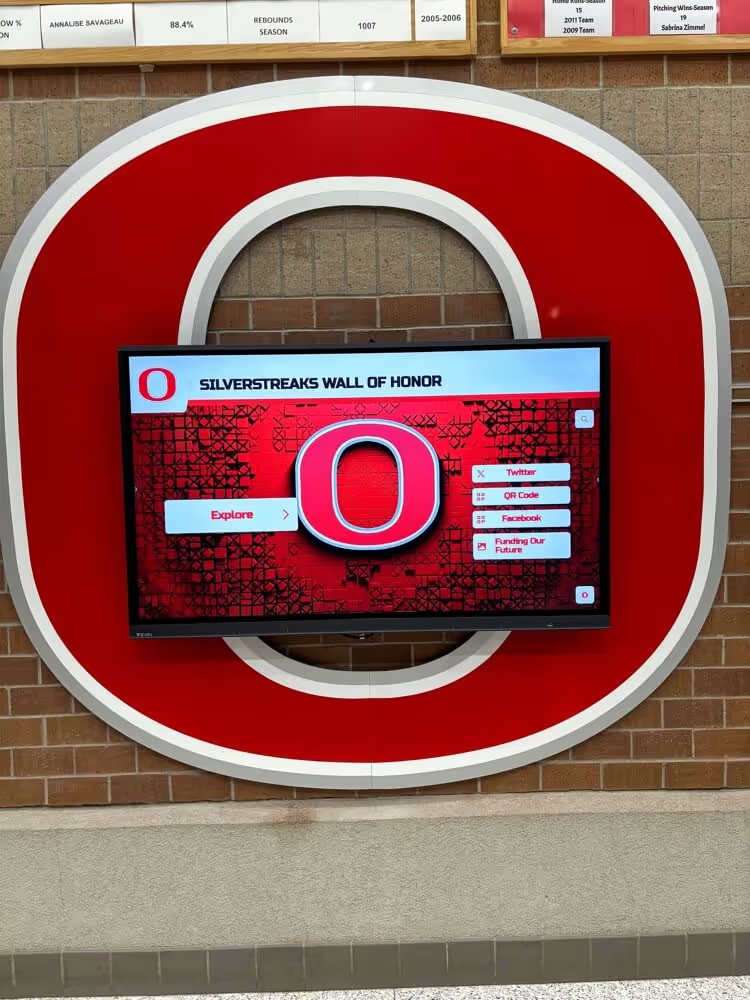
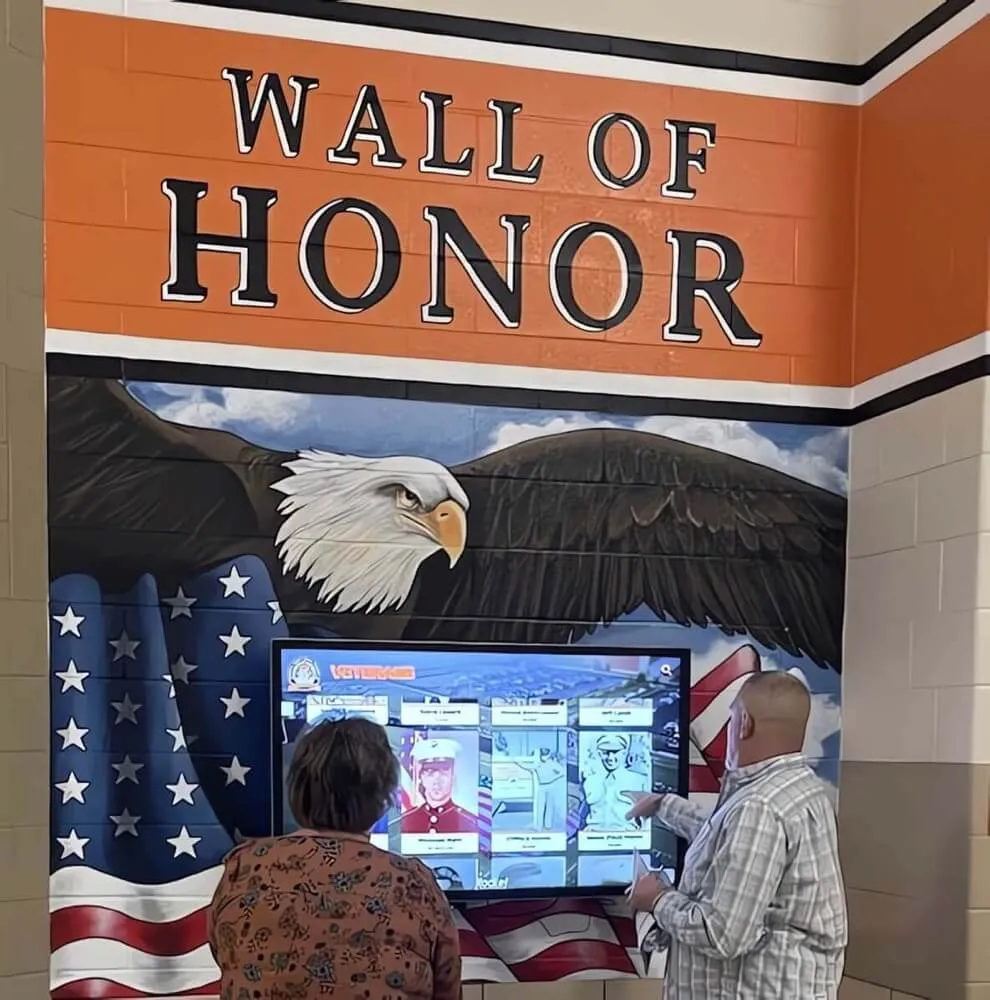
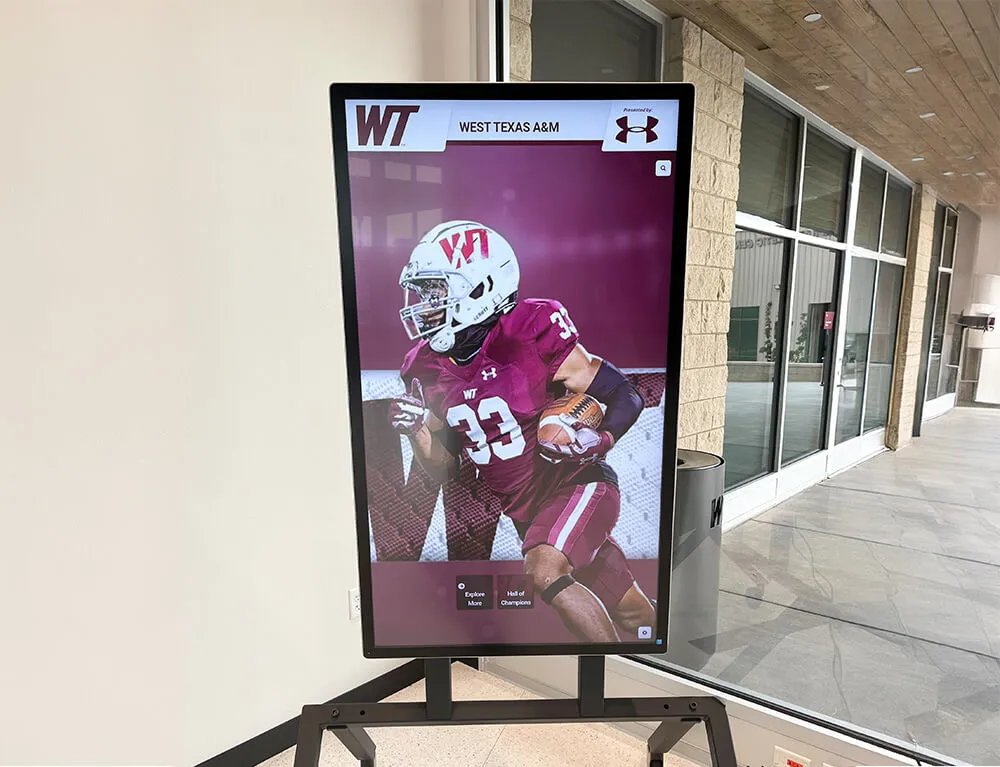
Dedicated hall of honor installations give programs a permanent home for recognition content that visitors actively engage with and explore rather than walk past
Digital Display Recognition for Debate Programs
The most forward-thinking high school debate programs are moving beyond static trophy cases and periodic bulletin board updates to implement digital display systems that bring program recognition to life in hallways, lobbies, and common spaces throughout the school.
Why Digital Recognition Transforms Debate Program Visibility
Static display cases have a structural limitation: they require physical updating, can only show what fits in the glass, and become visually stale within months of installation. A tournament season that adds dozens of individual recognitions, new competitive records, and hundreds of NSDA points quickly overwhelms a static display system.
Digital recognition systems solve this problem fundamentally. Platforms built for academic recognition can display:
- Season-by-season program history with searchable records by competitor, event, and tournament
- Individual competitor profiles with photos, NSDA points, tournament results, and personal statements
- Current season results updated after each tournament weekend
- Alumni recognition showing where former debaters have gone academically and professionally
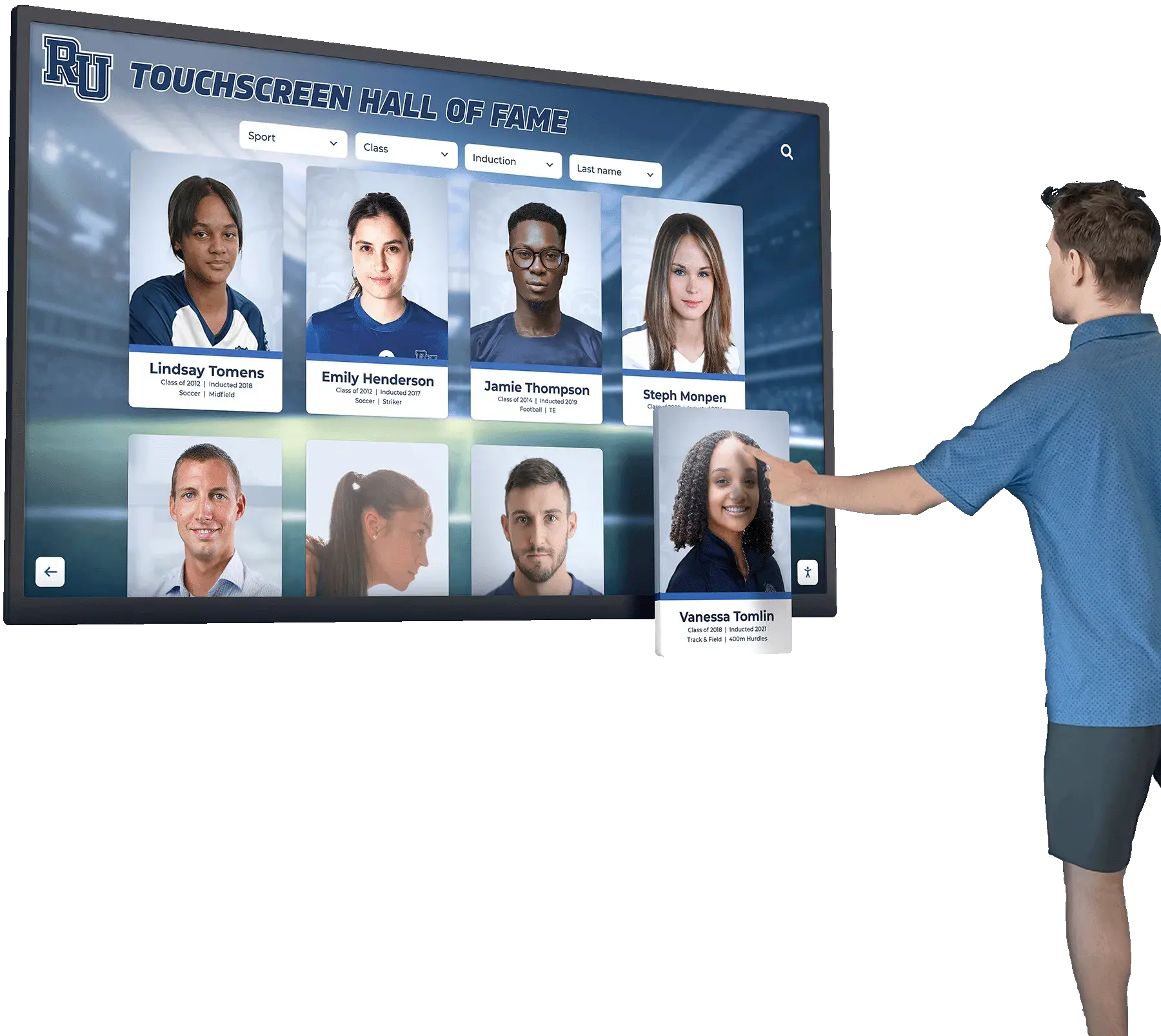
Touchscreen software designed for academic recognition gives programs the flexibility to display multiple recognition layers simultaneously—something no static case can accomplish. Students, families, and visitors can explore the program’s history interactively, searching for specific competitors or browsing by event type.
Digital Record Boards for Debate
Digital record boards designed for honor roll and academic achievement adapt naturally to debate team recognition. These systems maintain a continuously updated database of competitive records—tournament placements, speaker point highs, NSDA point leaders, state finalists—that updates automatically as new results are entered by program coordinators.
The practical advantage for a busy program: a coaching staff that previously spent hours updating a physical display case can shift that time to coaching. The digital system handles display management automatically, ensures records are never lost, and makes the full program history accessible to anyone who walks past.
Celebrating Academic Excellence Digitally
Schools that have invested in celebrating academic excellence digitally find that the investment changes how the entire school community perceives academic competition programs. When a debate team’s record of state titles and national qualifiers appears on the same high-quality interactive display that showcases athletic achievement, the implicit message to students, families, and prospective members is clear: this program is taken seriously by the institution.
For programs building this kind of recognition infrastructure from the ground up, comprehensive academic recognition program guides provide strategic frameworks for systems that serve speech and debate alongside other academic competition teams under a unified recognition umbrella.
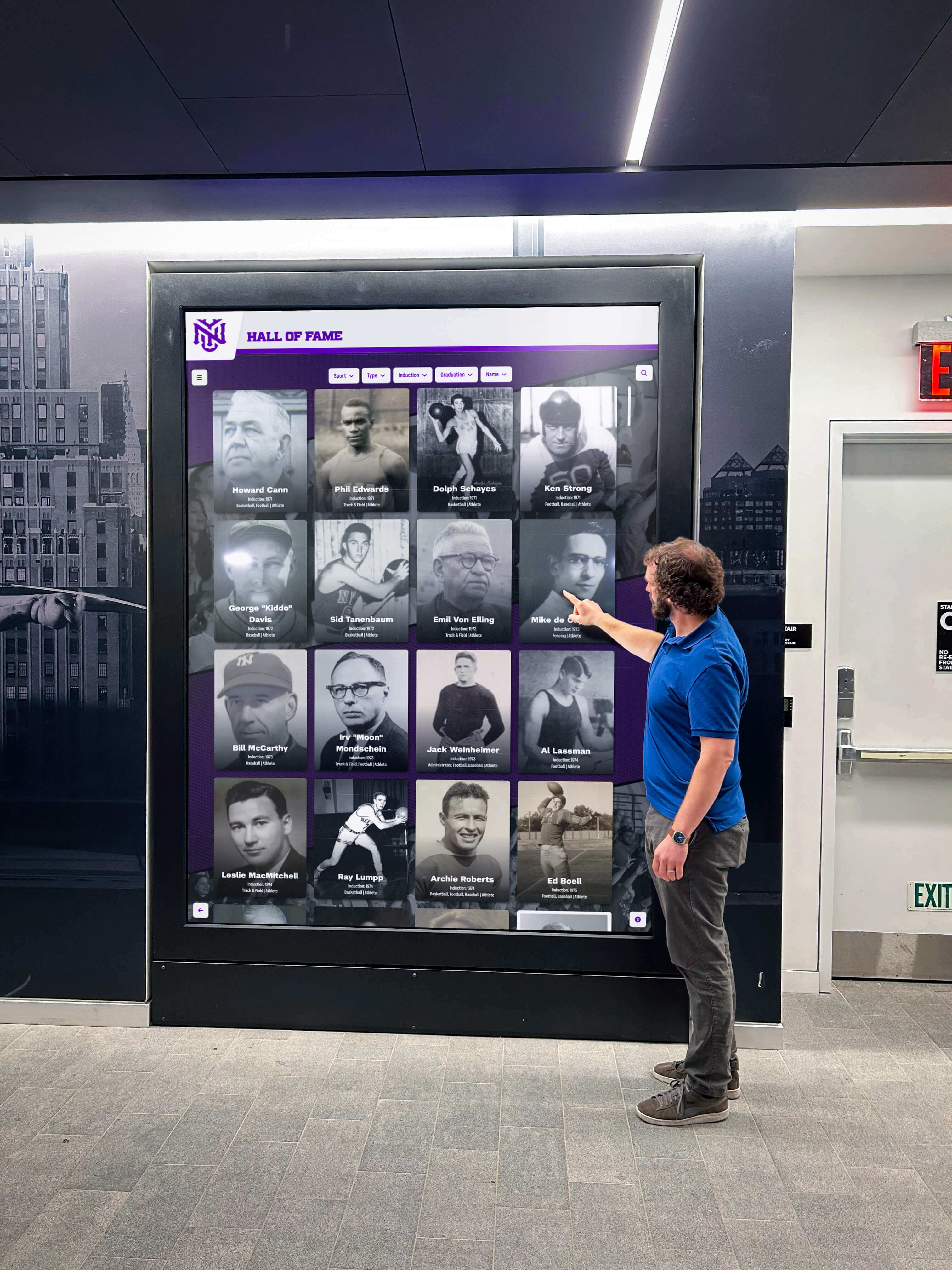
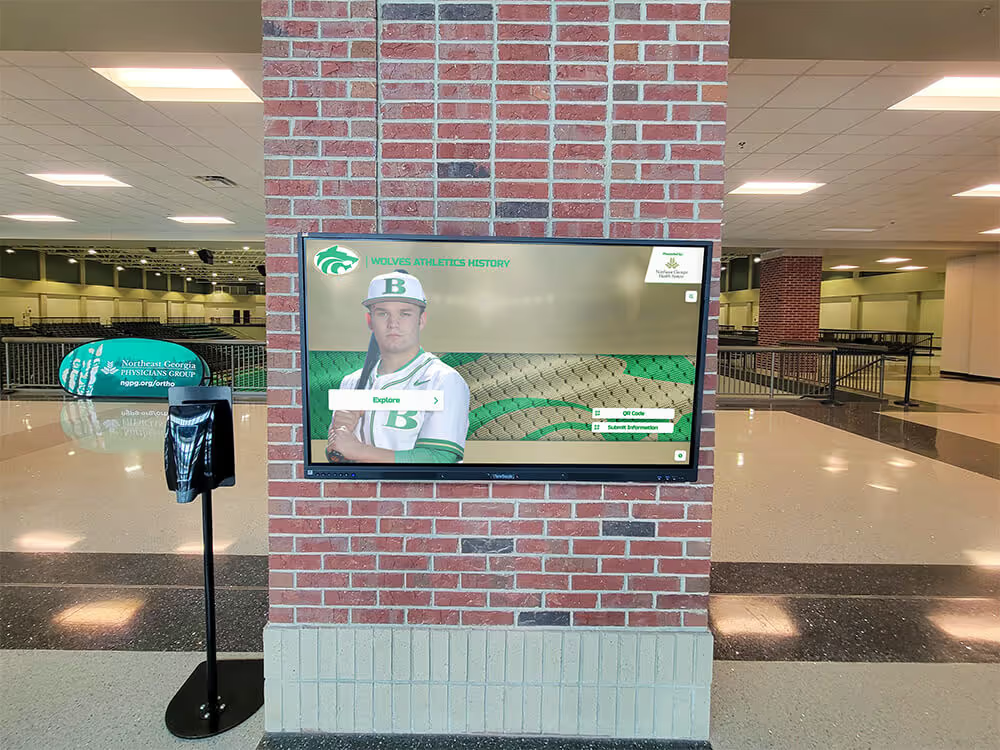
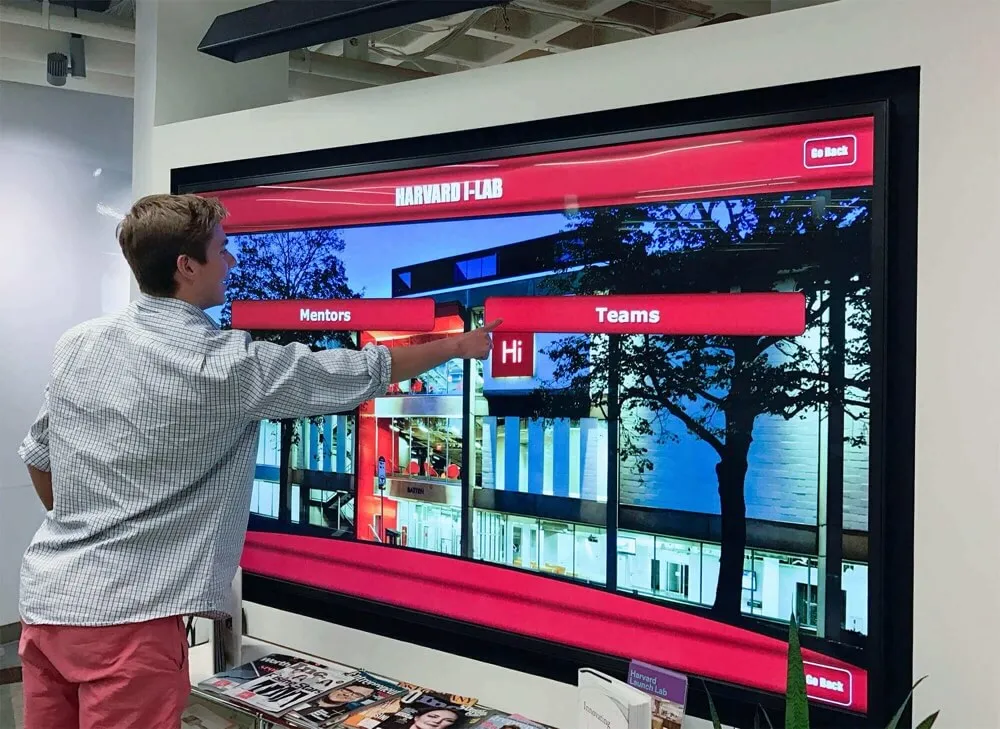
Interactive lobby displays invite visitors, prospective students, and families to explore a program's full recognition history in a way that static cases cannot support
Hall of Fame Recognition for Outstanding Debaters
For programs with significant competitive history, a formal hall of fame creates the highest tier of recognition—permanent, prestigious, and deliberately exclusive. A debate program hall of fame honors the competitors, coaches, and program builders whose contributions have shaped the program’s legacy across multiple generations.
Hall of Fame Criteria and Selection
Strong hall of fame criteria for a debate program typically include combinations of:
- State championship performance (finalist or champion)
- National qualification or placement at NSDA Nationals or equivalent
- Sustained excellence over multiple seasons rather than a single standout year
- Program contribution beyond competitive performance—coaching the next generation, serving as a program leader, or building the program’s competitive infrastructure
A selection committee that includes current coaching staff, program alumni, and a school administrator provides appropriate oversight and prevents any single perspective from dominating induction decisions.
Displaying Hall of Fame Inductees
Where and how a hall of fame is displayed determines how much work it does for the program’s culture and recruitment. Options range from dedicated physical display panels to integrated digital systems that make inductee profiles searchable and browsable.
Digital platforms for building virtual halls of fame show how the same infrastructure that tracks current students’ achievements can house a growing hall of fame. Inductee profiles can include photos, career highlights, and remarks from coaches who worked with them—creating a richer record than a nameplate on a wall allows.
How to Build a Debate Recognition Calendar
Recognition that happens only at season’s end is significantly less effective than recognition woven throughout the competitive year. A structured recognition calendar ensures that achievements are acknowledged promptly, publicly, and at the appropriate level of visibility.
Pre-season: Program launch recognition—welcoming new members, identifying returning competitors, previewing the season’s competitive goals
Early season (first tournaments): Prompt recognition of tournament results via announcements, social media, and bulletin board updates within 48 hours of results
Mid-season: Intermediate recognition for program milestones—NSDA point thresholds crossed, first state qualifiers, program records broken
State championship period: Maximum visibility—school assembly announcements, dedicated hallway displays, local media outreach, social media campaigns with photos and results
End-of-season: Formal banquet or awards ceremony, hall of fame announcements, senior recognition, review of the year’s accomplishments
Summer: Reconnect with program alumni, update displays with the completed season’s results, prepare for fall recruitment with recognition materials ready to show prospective members
For a comprehensive approach to scheduling school-wide recognition across the academic year, the school recognition days calendar and celebration ideas provides a useful framework for integrating debate recognition into the broader school recognition calendar alongside other academic and extracurricular programs.
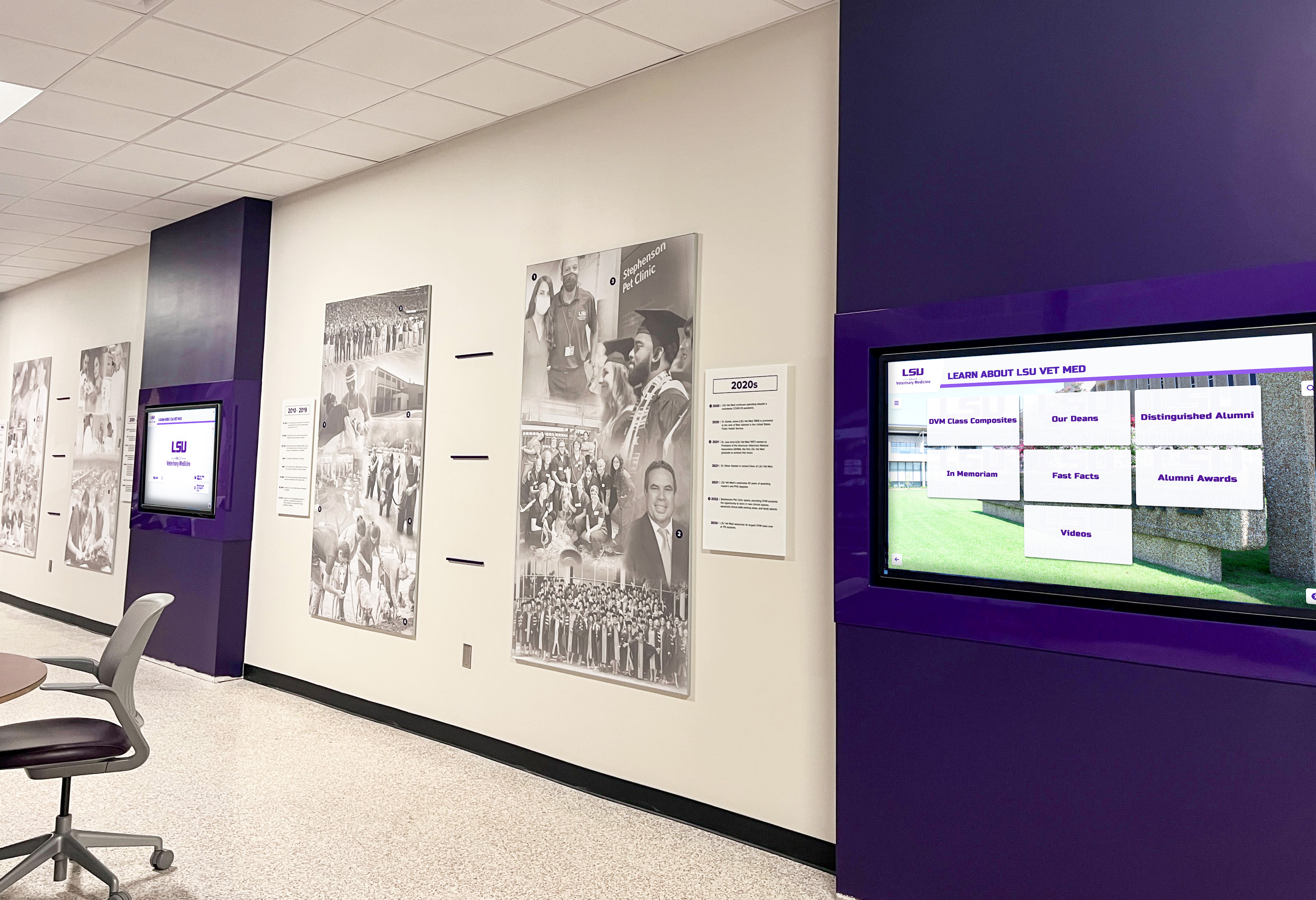
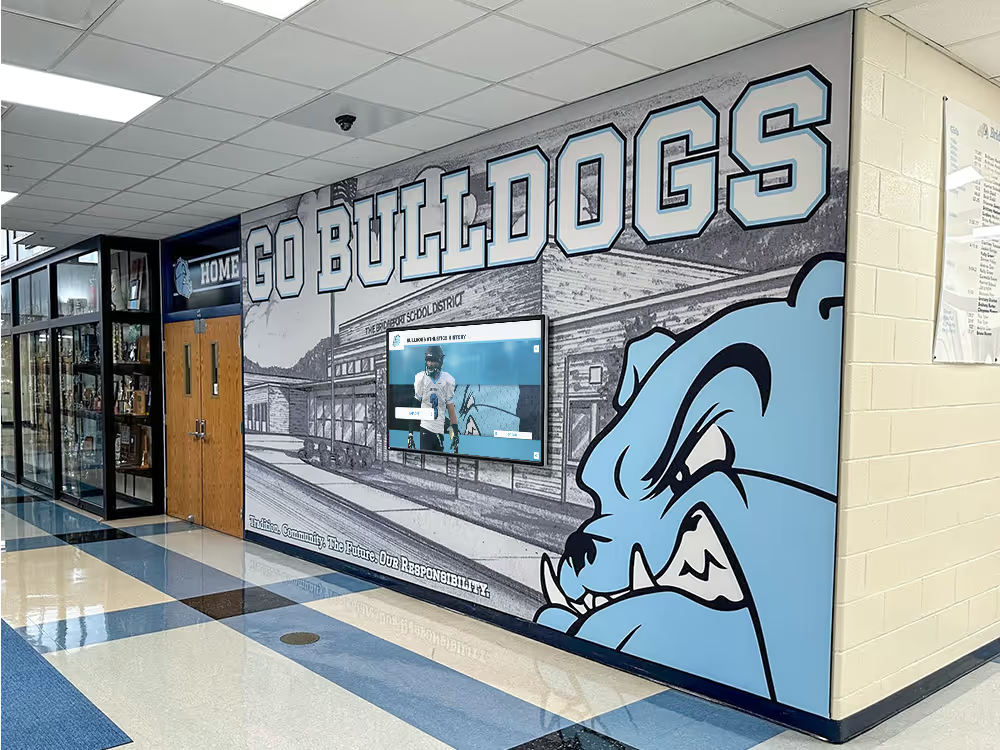
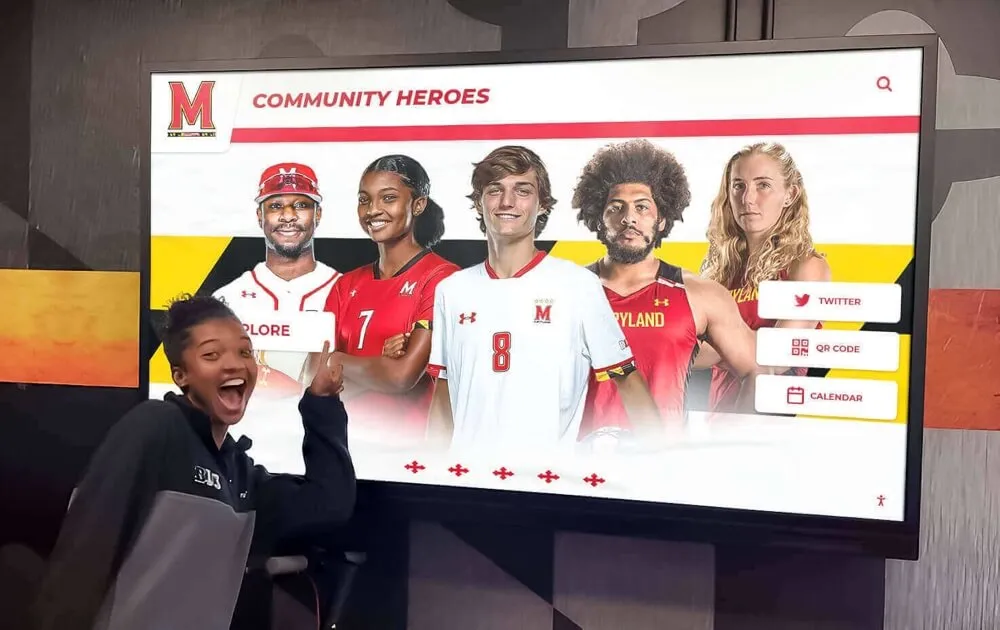
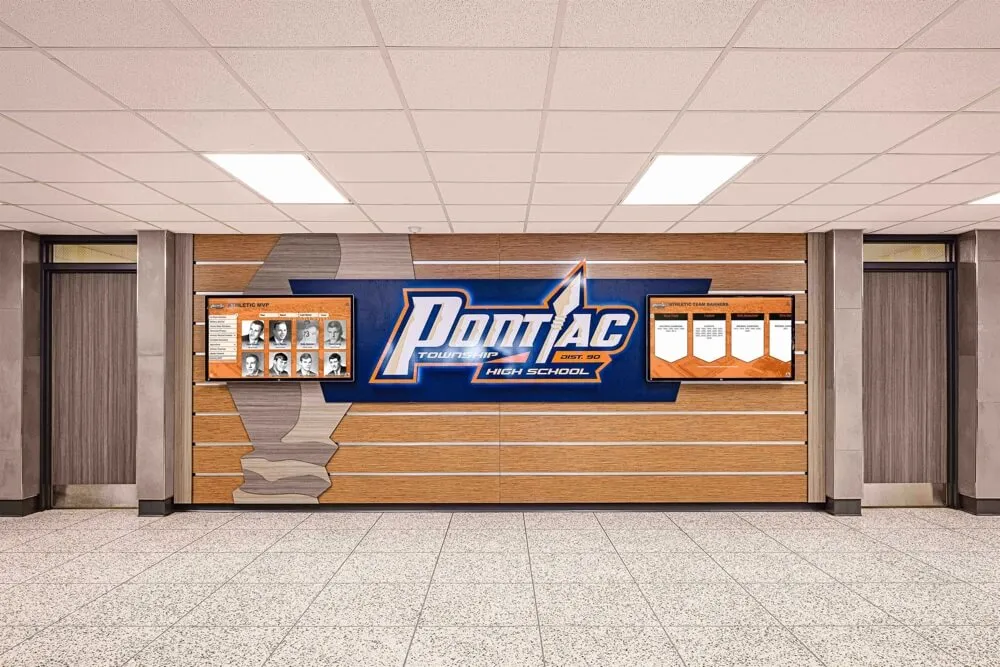
Hallway digital display systems transform corridors into active recognition environments that create visibility for academic programs throughout the school day
Recognition Infrastructure Built to Last
The most impactful recognition programs for debate teams don’t rely solely on banquets and social media posts. They invest in physical and digital infrastructure that creates permanent, visible presence for the program within the school building.
For programs exploring how modern interactive systems can house a complete competitive history, understanding how schools celebrate the highest academic honors shows the range of recognition infrastructure schools can build—from simple honor rolls to comprehensive digital systems that track multiple forms of student achievement simultaneously.
Rocket Alumni Solutions builds interactive digital recognition systems specifically designed for schools that want to honor academic competition programs, athletic programs, and student leaders with the same quality of recognition infrastructure. Their touchscreen hall of fame systems can display debate team inductees alongside other program achievers, creating a unified recognition environment that reflects the full scope of a school’s competitive and academic identity.
When recognition infrastructure matches the quality of the achievement being honored, students feel the institution’s respect in a way that a verbal acknowledgment at a banquet cannot replicate on its own.
Frequently Asked Questions
What are the best debate team recognition ideas for high school programs?
The most effective debate team recognition ideas combine multiple layers: formal end-of-season awards ceremonies, academic letter awards for qualified competitors, year-round announcement and social media recognition, physical trophy cases and championship banners, and—for programs with the history to support it—a debate hall of fame. Programs that build recognition into the daily rhythm of school life, rather than concentrating it only at a year-end banquet, see stronger motivation, better recruitment, and higher retention among competitive members.
How should schools recognize individual vs. team debate achievements?
Effective debate programs maintain separate recognition pathways for individual and team accomplishments. Individual recognition categories include top speaker awards, most improved competitor, event-specific honors (Lincoln-Douglas, Extemporaneous, Original Oratory), and NSDA point leader recognition. Team recognition addresses partner pairings in Public Forum and Policy debate, program-level tournament performance, and the collective achievement of qualifying multiple competitors for state or national competition. End-of-season banquets typically present both categories, with the team accomplishments contextualizing the individual honors.
Should debate teams give academic letter awards?
Yes—academic letter awards for speech and debate participation are among the most visible and motivationally powerful forms of recognition available to a high school program. Letters worn daily on jackets and cardigans communicate competitive achievement in a way that trophies on shelves cannot. Most programs establish letter criteria based on a combination of accumulated NSDA points, state qualification or placement, and sustained seasonal commitment. The criteria should be genuinely challenging—comparable in rigor to athletic letter standards—to maintain the award’s prestige.
How can schools use digital displays for debate team recognition?
Digital displays allow debate programs to maintain continuously updated records of competitive achievement without the maintenance burden of physical display cases. Interactive touchscreen systems can host full program histories, individual competitor profiles with NSDA points and tournament results, hall of fame inductee profiles, and current-season updates—all searchable and browsable by students, families, and visitors. Schools that have shifted to digital recognition platforms find that the program’s visibility increases substantially, since hallway touchscreens actively invite engagement in a way that static glass cases do not.
What should a debate team end-of-season banquet include?
A well-structured debate end-of-season banquet typically includes a season highlights presentation (video or slideshow of tournament memories, team moments, and competitive highlights), a formal awards ceremony progressing from participation recognition through achievement and championship honors, coach and parent volunteer appreciation, and a dedicated senior sendoff that honors graduating competitors with personalized recognition beyond a standard plaque. The order of the awards presentation matters: building from participation toward championship honors maintains audience engagement and gives every honored competitor their moment before the season’s peaks are celebrated.
Building a Lasting Recognition Culture in Your Debate Program
The debate team recognition ideas in this guide work best when treated as a system rather than a collection of individual initiatives. A school that implements end-of-year banquet awards, year-round announcement recognition, academic letter criteria, a digital display system, and a hall of fame is building a recognition culture—an environment in which competitive achievement is systematically noticed, celebrated, and permanently documented.
That culture serves everyone in the program: current competitors who feel seen and motivated, coaches whose investment is publicly acknowledged, alumni who maintain pride in a program they helped build, and prospective members who can walk past a hallway display and immediately understand what this team has accomplished and what they might accomplish by joining.
Schools looking to take that final step—building the permanent digital display infrastructure that gives a debate program its most visible, lasting recognition home—should explore what modern interactive systems can offer.
Give Your Debate Program the Recognition It Has Earned
Rocket Alumni Solutions builds interactive digital recognition systems for schools that want to honor academic competition programs, debate teams, and student achievers with the same quality of display infrastructure used for athletics. From touchscreen hall of fame kiosks to integrated academic recognition walls, our platforms create permanent, visible homes for program achievement.
Explore Digital Recognition Solutions