



A color guard banquet is more than a dinner at the end of a long season—it is the moment an entire program pauses to acknowledge what its members accomplished, the families who showed up to every competition, the boosters who funded new equipment, and the sponsors and donors who made none of it possible to overlook. For a color guard, where performance excellence depends on year-round investment in training, uniforms, flags, sabres, and travel, that donor and sponsor relationship is deeply practical: competitions happen because people and organizations wrote checks.
This guide covers every dimension of planning a meaningful color guard banquet—from award categories that honor performers at every level, to sponsor recognition strategies that keep supporters engaged season after season, to donor display ideas that transform a single evening of thanks into year-round institutional gratitude. Whether you are organizing a small high school winter guard banquet or a full marching band and color guard program celebration, these ideas will help you design an event that honors everyone who contributed to the season’s success.
Color guard programs occupy a unique space in school activity culture. They are simultaneously athletic—requiring strength, coordination, and conditioning—and artistic, demanding musicality, theatrical presence, and spatial awareness that most sports programs never develop. End-of-season recognition events need to reflect that dual identity, honoring competitive achievement while also celebrating artistry, growth, and the community of support that surrounds every guard.

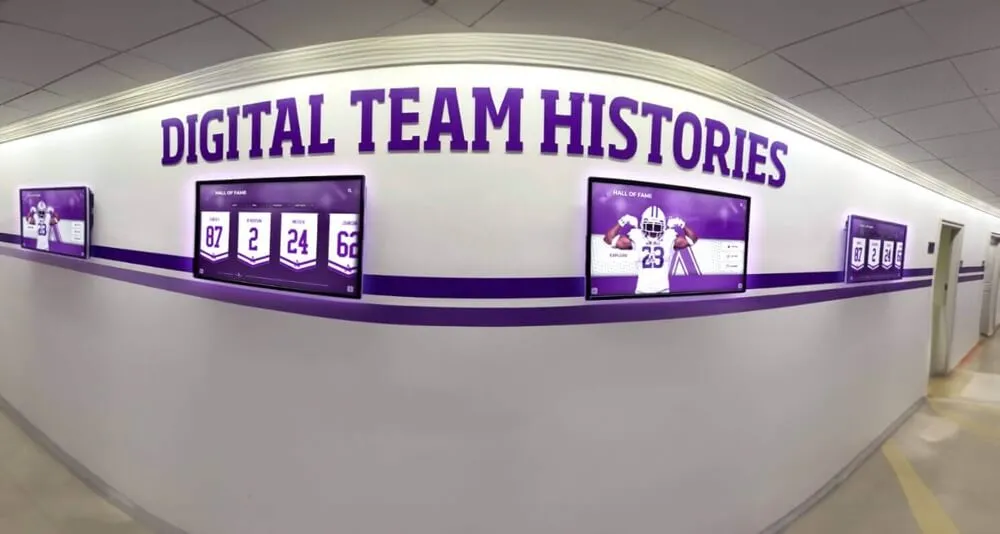
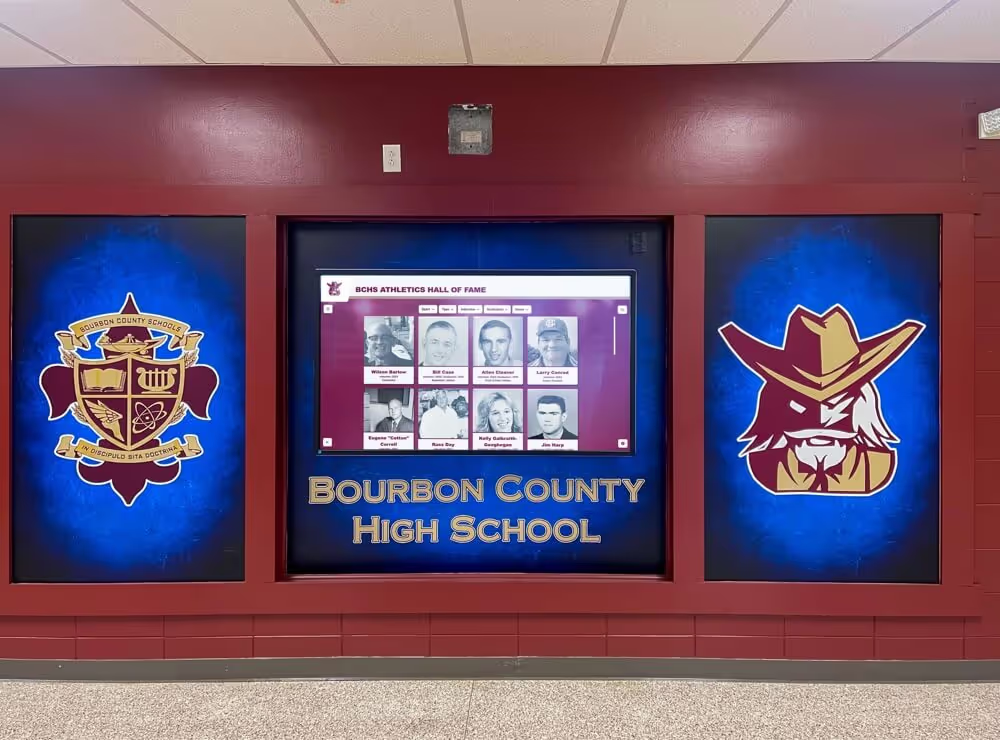
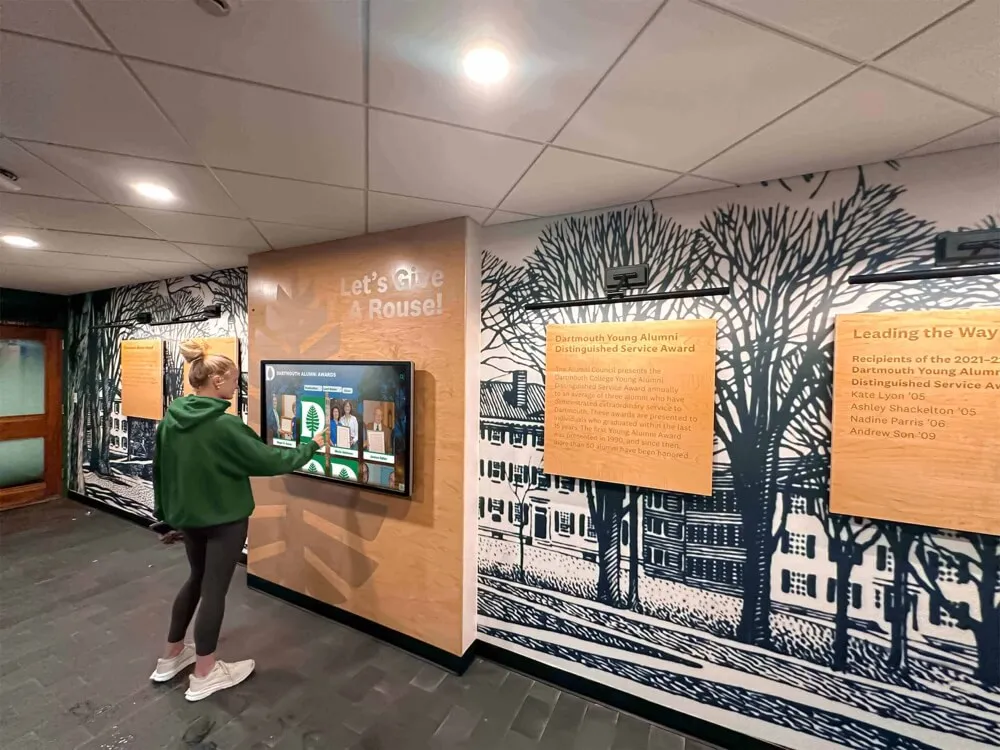
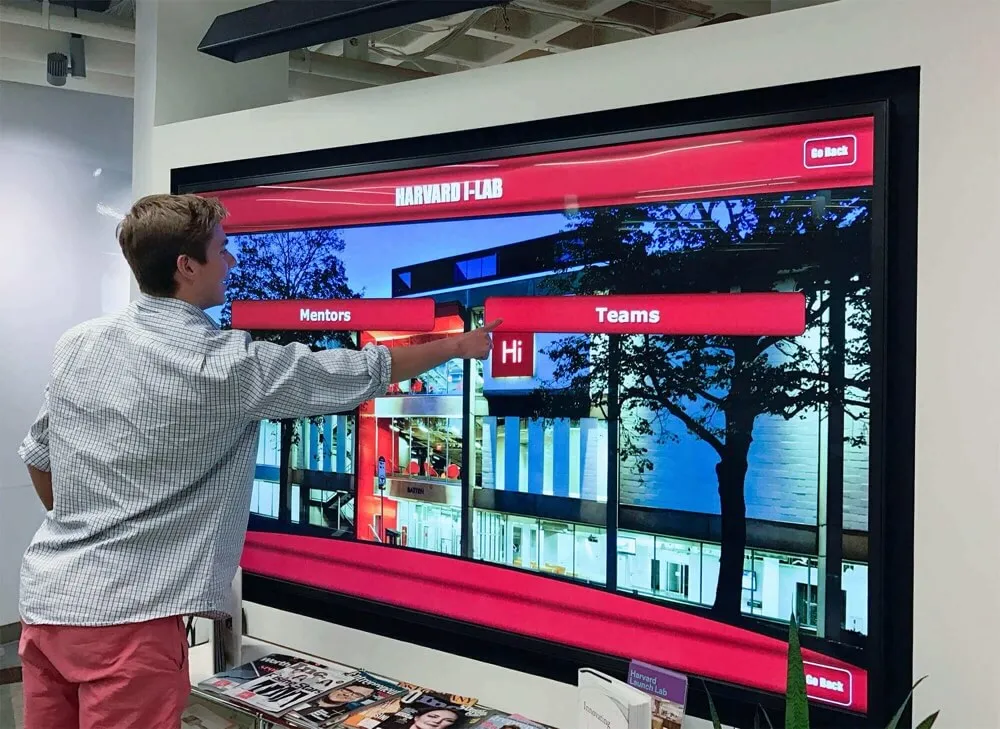
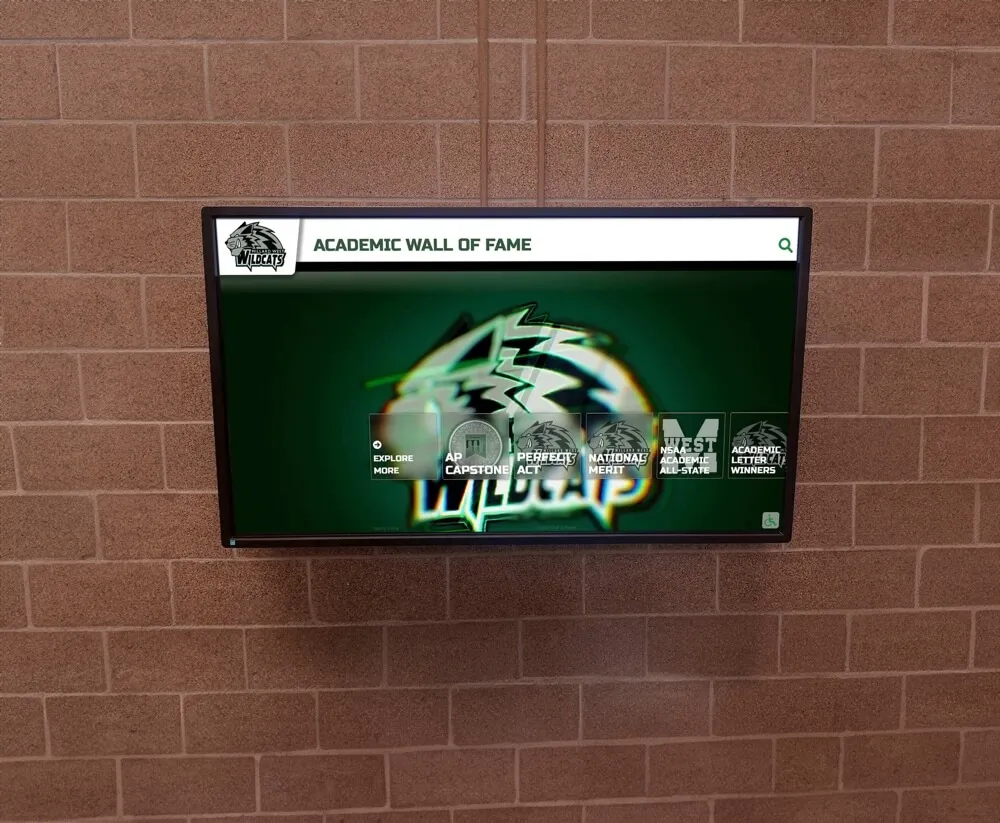
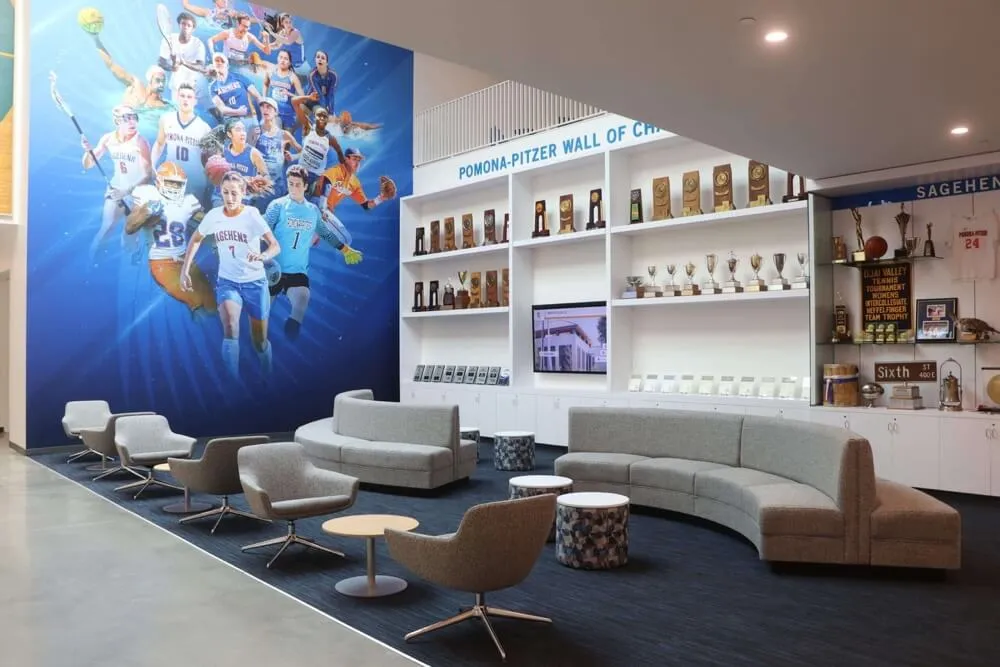
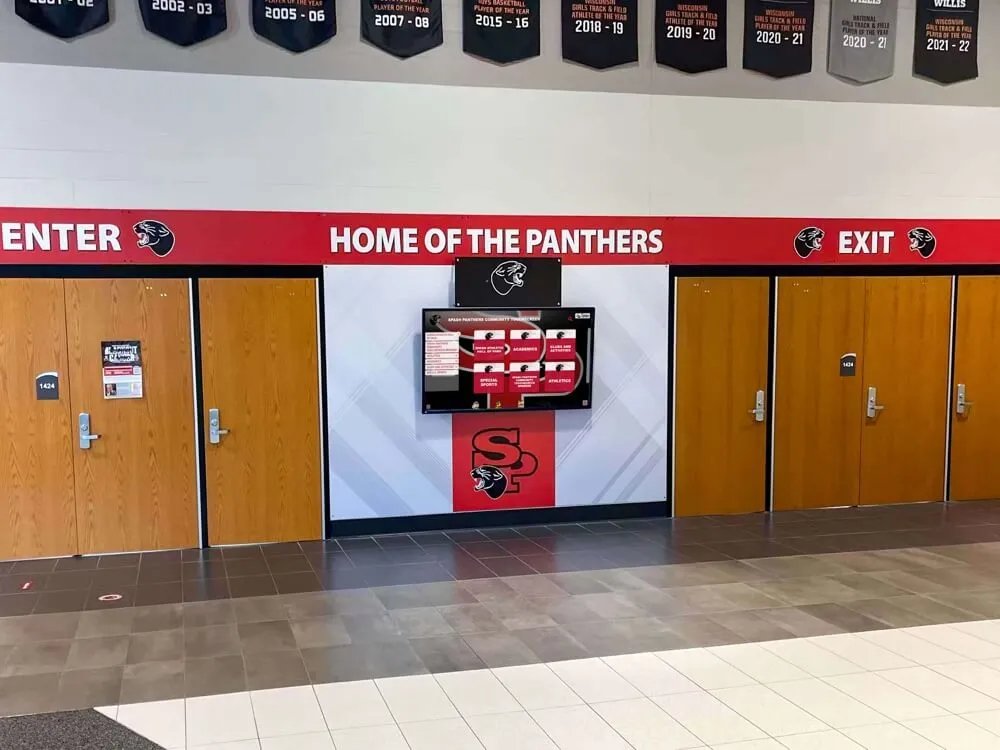
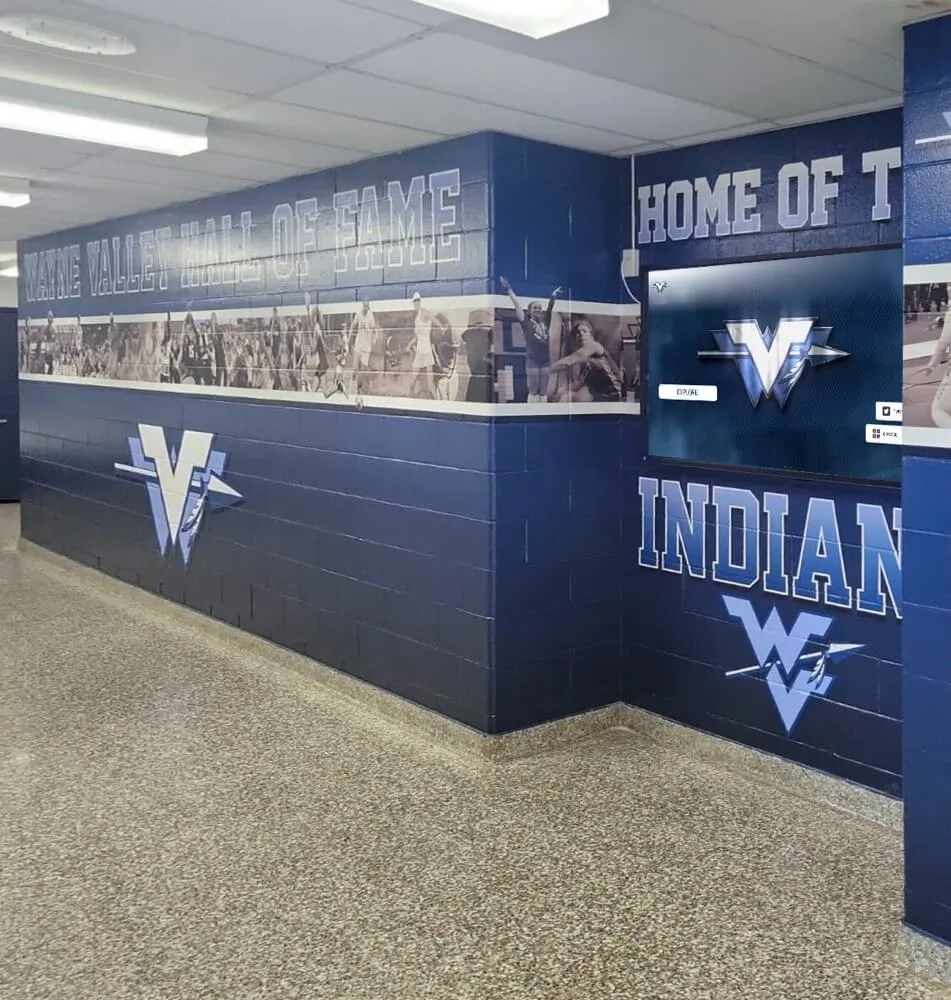
Schools increasingly use lobby displays that combine permanent institutional imagery with dynamic digital content—creating recognition environments that honor programs year-round, not only at seasonal banquets
Planning Your Color Guard Banquet
A successful color guard banquet doesn’t happen from a planning meeting held the week before. The details that make these events memorable—personalized awards, sponsor recognition programs, a meaningful slideshow, and proper donor acknowledgment—all require lead time to execute well.
Setting the Timeline
Most directors find that a six-to-eight-week planning window is the minimum needed for a banquet that feels intentional:
Eight weeks out:
- Confirm venue, date, and catering arrangements
- Begin collecting photo and video assets for slideshow
- Open nomination windows for peer-voted awards
- Reach out to sponsors confirming banquet attendance and recognition level
Six weeks out:
- Finalize award categories and recipient selection process
- Design or order physical awards (plaques, trophies, certificates)
- Contact donors about recognition display content (name spellings, giving levels)
- Begin building slideshow or season recap video
Four weeks out:
- Finalize award recipients through director and advisor review
- Confirm sponsor recognition graphics and signage
- Complete and test slideshow presentation
- Send formal invitations to families, sponsors, and major donors
Two weeks out:
- Rehearse ceremony flow and presenter assignments
- Confirm all physical awards are complete and accurate
- Arrange for donor display or recognition wall presentation if applicable
- Prepare remarks and individual award narratives
Banquet week:
- Set up sponsor recognition signage and donor display materials
- Do a complete technical rehearsal with slideshow and audio
- Confirm headcount for venue and catering
- Prepare any gift bags or take-home materials for recipients and sponsors
Choosing the Right Venue
Venue selection shapes every other element of your banquet planning. The right space:
- Provides adequate audio/visual capability for slideshow and announcements
- Allows clear sightlines from all seating to the presentation area
- Accommodates your full attendee count (members, families, sponsors, donors) with room to spare
- Fits within your program’s budget without consuming resources needed for equipment or travel
- Projects the right image for your program’s identity—a color guard program that competes at national championships deserves a venue that reflects that achievement level
Common venue options include school cafetorium or auditorium (budget-friendly, familiar, easily accessible), local banquet halls or community centers (more formal atmosphere), hotel event spaces (highest impression for elite programs with significant donor relationships), and restaurant private dining rooms (more intimate format for smaller guards).
Color Guard Award Categories
The most meaningful color guard banquets distribute recognition broadly. A ceremony that only acknowledges captains and seniors misses the essential contributors who make a high-performing guard possible: the member who improved the most, the veteran who quietly elevated every rehearsal, the section leader who stayed after practice to help struggling members.
Performance Achievement Awards
These awards recognize competitive and artistic excellence:
Most Valuable Performer (MVP) — The member whose consistent high performance at competitions most directly contributed to the team’s score. Unlike captain roles, which are leadership designations, MVP recognition is purely performance-based and can go to any member.
Outstanding Rifle Award — For the member who demonstrated exceptional technique, consistency, and artistry with rifle throughout the season. Rifle-specific awards acknowledge the distinct skill set that rifle work requires.
Outstanding Sabre Award — Recognizes the member who elevated the program’s sabre work with superior technique and expression. Given how demanding sabre is physically and technically, specific sabre recognition is meaningful.
Outstanding Flag Award — For the member whose flag work most consistently brought visual impact and technical precision across the season.
Best Overall Technique Award — Recognizes the performer who demonstrated the most consistent technical execution across all equipment types and movement vocabularies throughout the season.
Artistic Expression Award — For the performer whose interpretation, performance quality, and theatrical presence most enhanced the program’s overall effect. This award specifically honors the artistic dimension of color guard performance that adjudicators evaluate alongside technical precision.
Growth and Development Awards
These awards celebrate trajectory rather than endpoint achievement—often the most emotionally powerful recognition at a color guard banquet:
Most Improved Performer — Peer-nominated and director-confirmed recognition for the member who demonstrated the greatest growth from season start to finish. This award sends a powerful message: trajectory matters, and transformation is honored.
Rookie of the Year — For a first-year member who demonstrated exceptional commitment, rapid skill development, and positive contribution to program culture from the start. Recognizing standout newcomers strengthens retention and signals to younger students that your program rewards early investment.
Comeback Award — For a returning member who overcame injury, personal challenges, or a difficult prior season to perform at a higher level than expected. This recognition communicates that your program values resilience alongside raw talent.
Leadership and Character Awards
Leadership recognition at a color guard banquet should extend beyond formal captain roles to acknowledge the less visible forms of leadership that sustain a program’s culture:
Captain’s Award — Recognizes the captain or co-captains who led the guard through the season with excellence, professionalism, and care for their fellow members.
Veteran Leadership Award — For a multi-year member—not necessarily a captain—who used their experience to teach, encourage, and stabilize the group through difficult rehearsals and competitive pressure.
Unsung Hero Award — Peer-nominated recognition for the member who consistently showed up, worked hard, and contributed meaningfully without seeking credit or visibility. This award is often the most emotional moment of the ceremony.
Team Spirit Award — For the member whose positive attitude, energy in rehearsals, and genuine enthusiasm for the program lifted everyone around them regardless of individual performance level.
Dedication Award — Recognizes the member with the best attendance record, the most consistent rehearsal effort, and the strongest demonstrated commitment to the program’s demands across the full season.
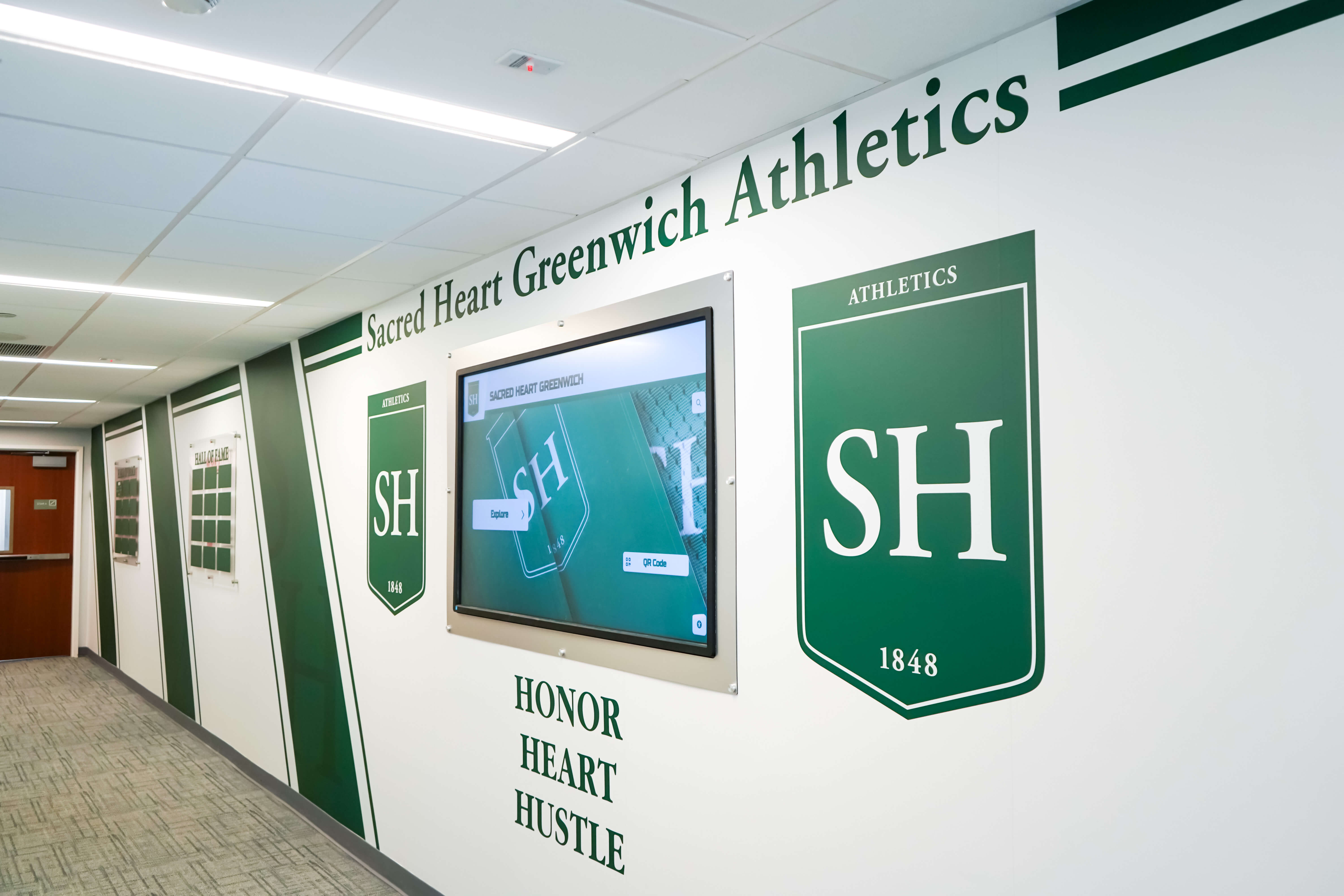
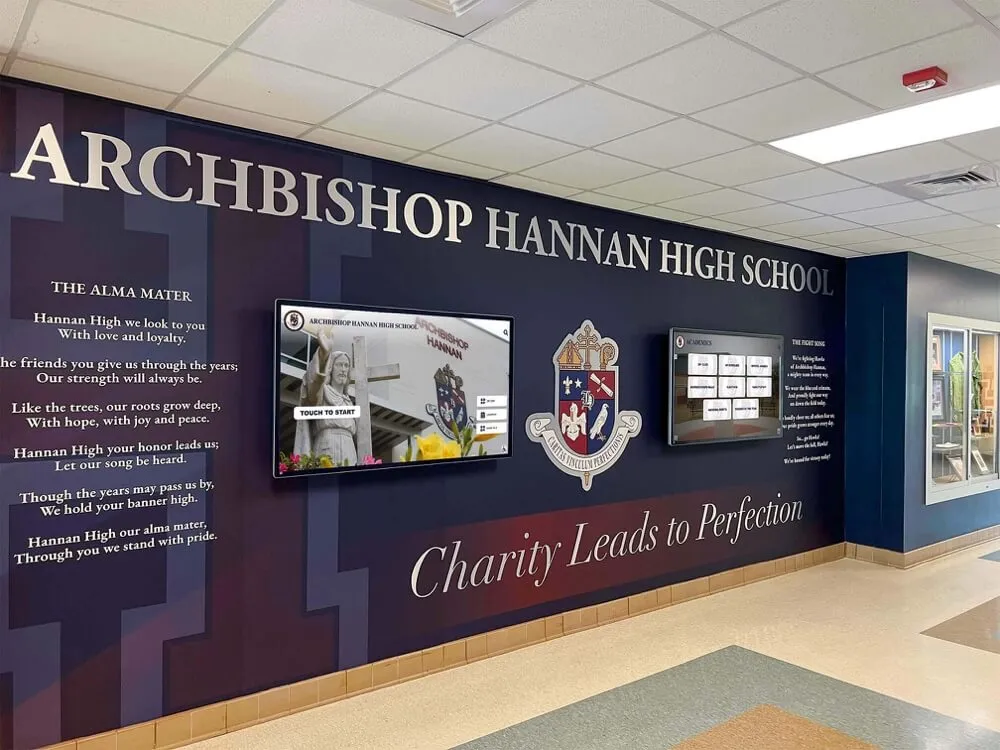
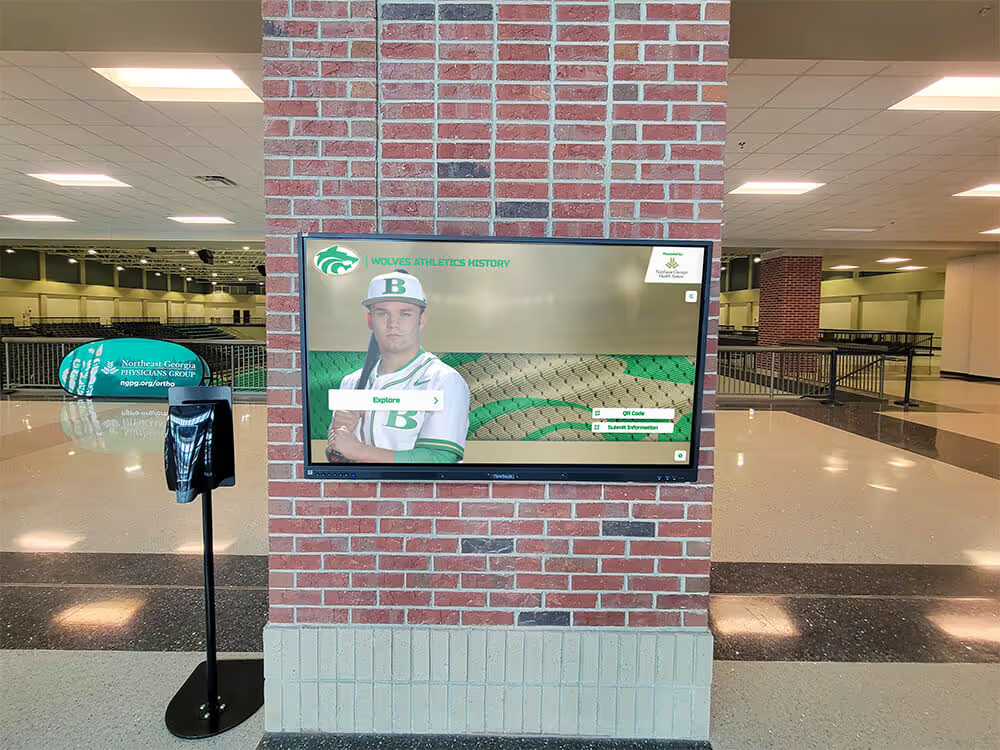
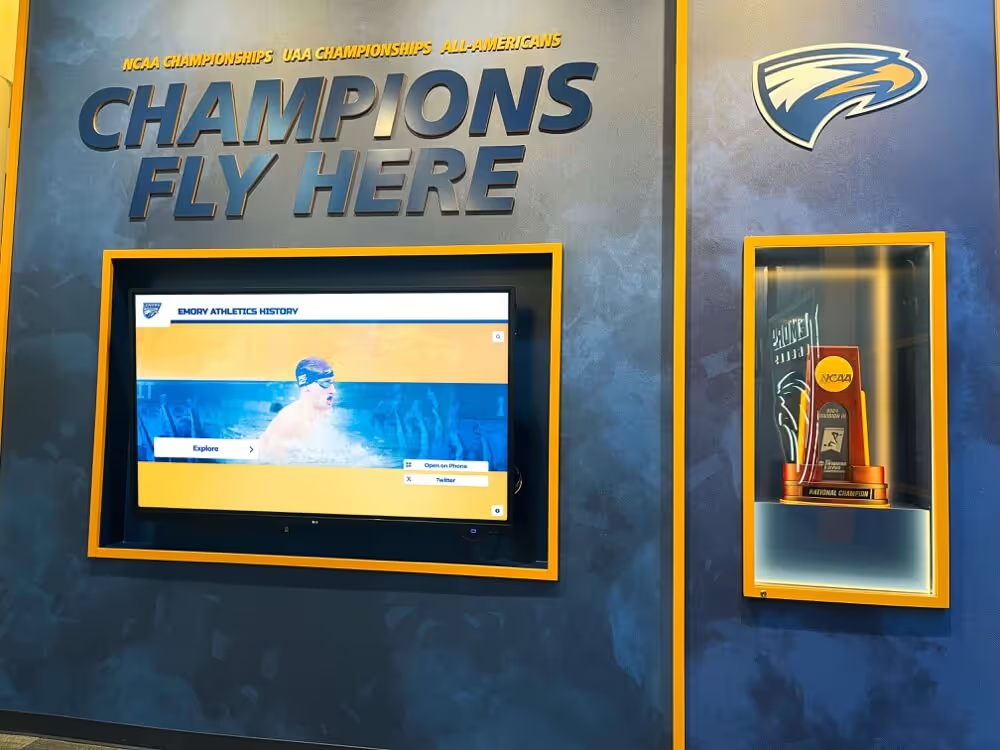
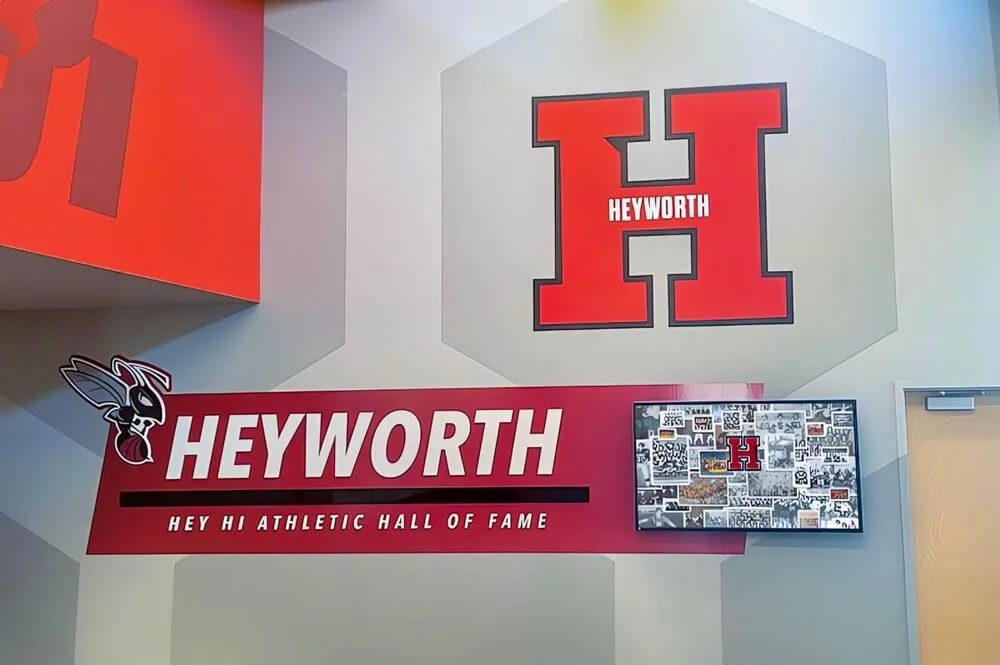
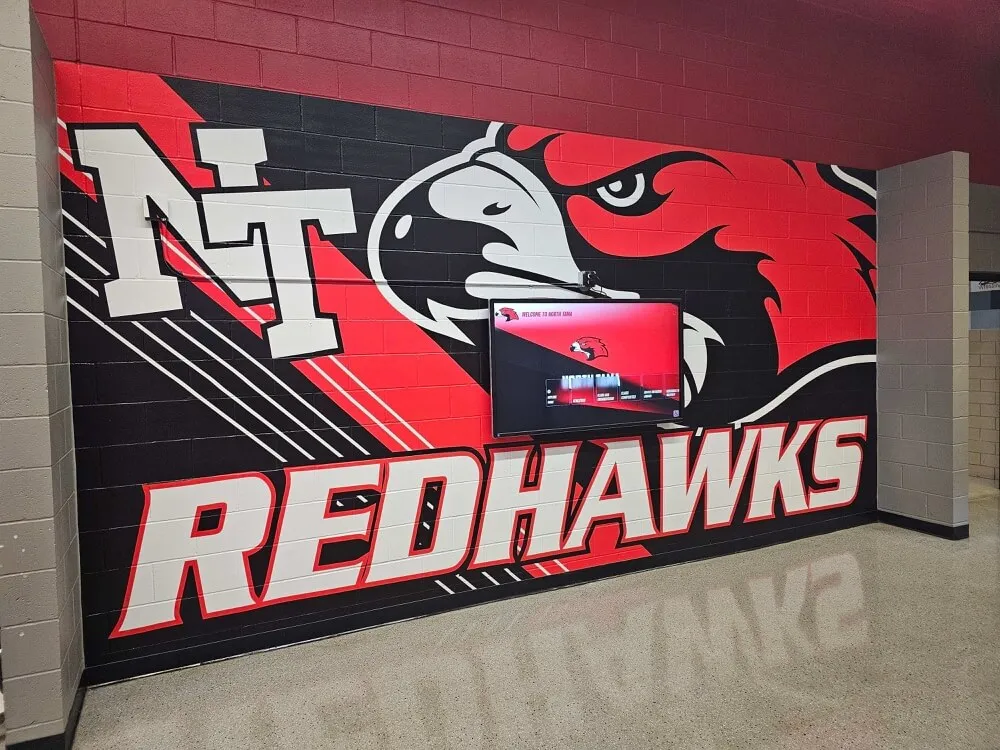
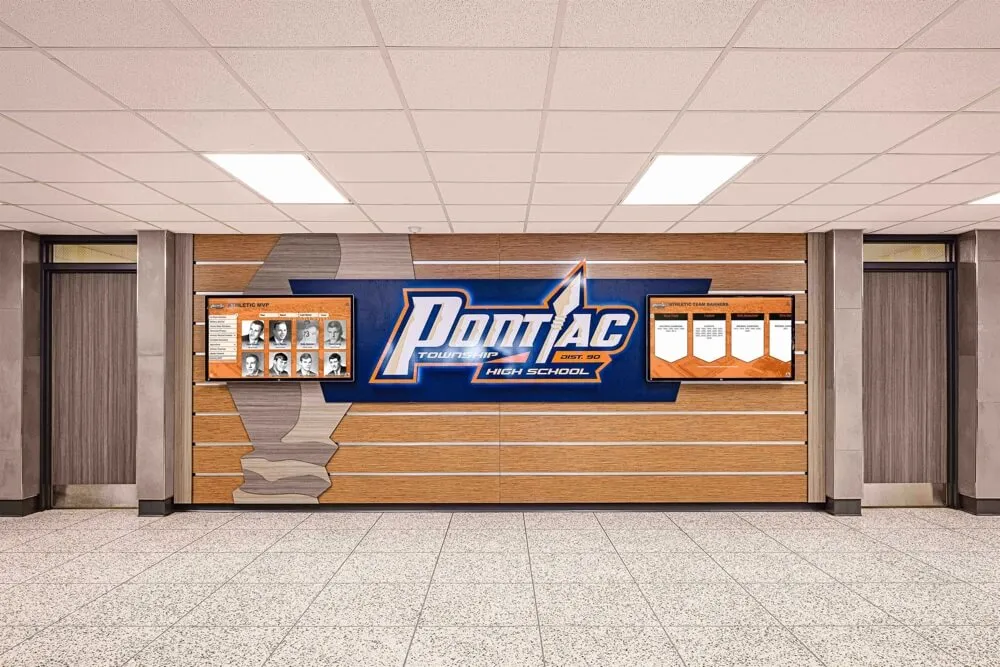
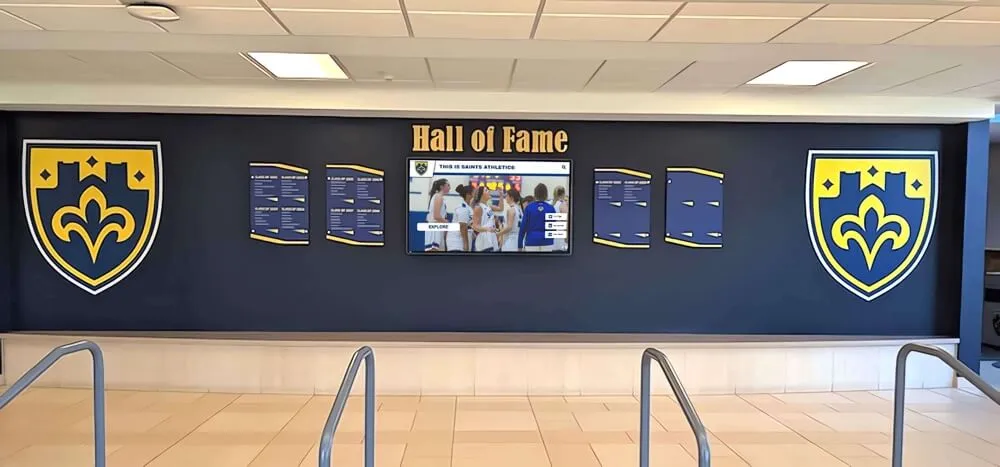
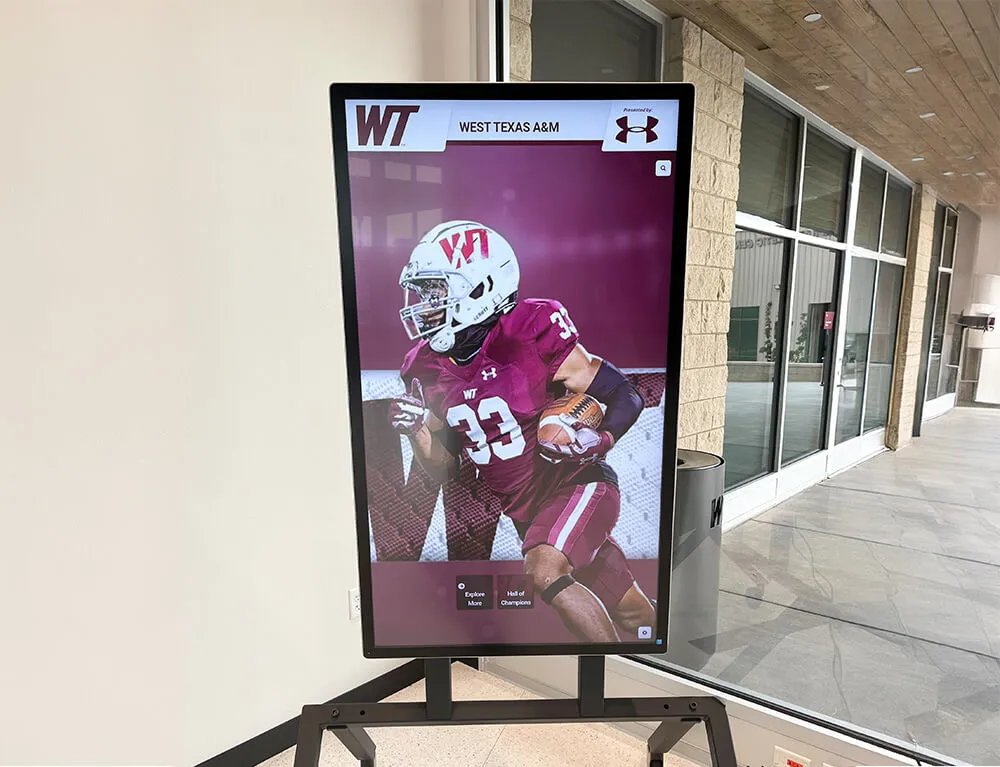
Shield and panel-based displays in school hallways create permanent recognition infrastructure that gives performing arts programs the same institutional visibility traditionally reserved for athletics
Director’s Award — At the director’s discretion, this award honors the member who best exemplified the program’s values, work ethic, and vision throughout the season. The most impactful Director’s Awards come with a brief, personal explanation of why this specific member earned recognition this year.
Senior Recognition
Color guard banquets should give seniors a dedicated moment that honors both their individual journey and their contribution to program legacy:
Senior Excellence Award — Given to each departing senior, this award acknowledges the full arc of their membership rather than any single season’s performance. Effective senior recognition includes specific remarks about what each senior contributed to program culture and what they will leave behind.
Four-Year Commitment Award — For seniors who were part of the program as freshmen, this award specifically honors the complete four-year journey. Recognizing the full arc from nervous newcomer to program veteran creates powerful emotional resonance at banquets.
For inspiration on how similar programs approach color guard awards night recognition for performers, captains, and veterans, resources developed specifically for color guard recognition document the award structures that programs across the country have found most meaningful.
Creative Award Names for Color Guard Programs
Standard award titles communicate the recognition category but not the identity of your program. Distinctive award names create tradition, build aspiration, and give your recognition program a personality that outlasts any single season.
For performance excellence: The Silk Award, The Velocity Award, The Air Award, The Precision Award, The Expression Award
For growth and development: The Phoenix Award, The Climb Award, The Emergence Award, The Journey Award, The Transformation Award
For leadership and character: The Anchor Award, The Compass Award, The Foundation Award, The Backbone Award, The North Star Award
For spirit and attitude: The Fire Award, The Light Award, The Pulse Award, The Energy Award, The Heart Award
For seniors: The Legacy Award, The Standard Award, The Torch Award, The Charter Award
Award names that persist year-to-year accumulate meaning as each new recipient adds to the lineage of who has held the honor. When an incoming freshman sees the names of past recipients on the Anchor Award displayed on a recognition board, they understand that earning it means joining a tradition—a very different experience than receiving a generic “Leadership Award.”
Understanding team recognition ideas that celebrate group achievement beyond individual performance provides frameworks that translate directly to color guard programs, where ensemble cohesion matters as much as individual skill.
Recognizing Sponsors at Your Color Guard Banquet
Color guard programs depend on sponsorships in ways that many other school activities do not. Uniform procurement—flags, costumes, rifles, sabres, poles—represents significant expenditure every season. Competition fees, transportation to regional and national events, equipment maintenance, choreography and design costs: a competitive color guard program’s operational budget requires community and business support that goes well beyond what activity fees typically cover.
The banquet represents your highest-visibility opportunity to convert a sponsor’s financial investment into lasting organizational loyalty. Sponsors who feel genuinely recognized—not just mentioned in passing at the end of a program—are dramatically more likely to renew and increase their support the following year.
Tiered Sponsor Recognition
Establishing formal sponsorship tiers with defined recognition benefits creates a clear structure that prospective sponsors can evaluate and that your banquet committee can execute consistently:
Presenting Sponsor (Highest Tier)
- Named as “Presenting Sponsor” in all banquet materials and communications
- Table reservation for sponsor representatives and guests
- Extended verbal acknowledgment during ceremony with personal remarks from director
- Custom sponsor recognition signage at entrance or featured location
- Program back-cover or featured placement
- Sponsor logo on season slideshow and recap video
- Year-round recognition on any permanent donor display
Gold Sponsor
- Table or seat reservation for sponsor representative
- Named acknowledgment during ceremony with brief remarks
- Program page featuring sponsor logo and description
- Sponsor logo included in slideshow
- Included in any permanent donor recognition display at sponsor level
Silver Sponsor
- Acknowledgment during ceremony
- Sponsor logo in program
- Listed in permanent donor display
Supporting Sponsor (Entry Tier)
- Listed by name in program
- Acknowledged collectively during ceremony
- Listed in permanent donor display at appropriate level
Making Sponsor Acknowledgment Personal
Generic sponsor recognition (“we’d like to thank our sponsors”) wastes the relationship-building opportunity that banquet acknowledgment represents. Effective sponsor recognition is specific:
- Name the owner or contact person by name when acknowledging a local business
- Describe what the sponsorship specifically funded (“ABC Auto Group’s support this year covered the cost of our new silk flags for championship season”)
- Have a student presenter—ideally one whose competition season was directly affected by the sponsorship—deliver the acknowledgment
- Present a commemorative item (framed program, customized plaque, group photo with autographs) that the sponsor can display at their business location
- Invite sponsor representatives to speak briefly if they wish to address the group
For guidance on structuring booster club and external donor recognition programs that sustain long-term supporter engagement, frameworks developed for athletic booster programs translate directly to performing arts contexts.

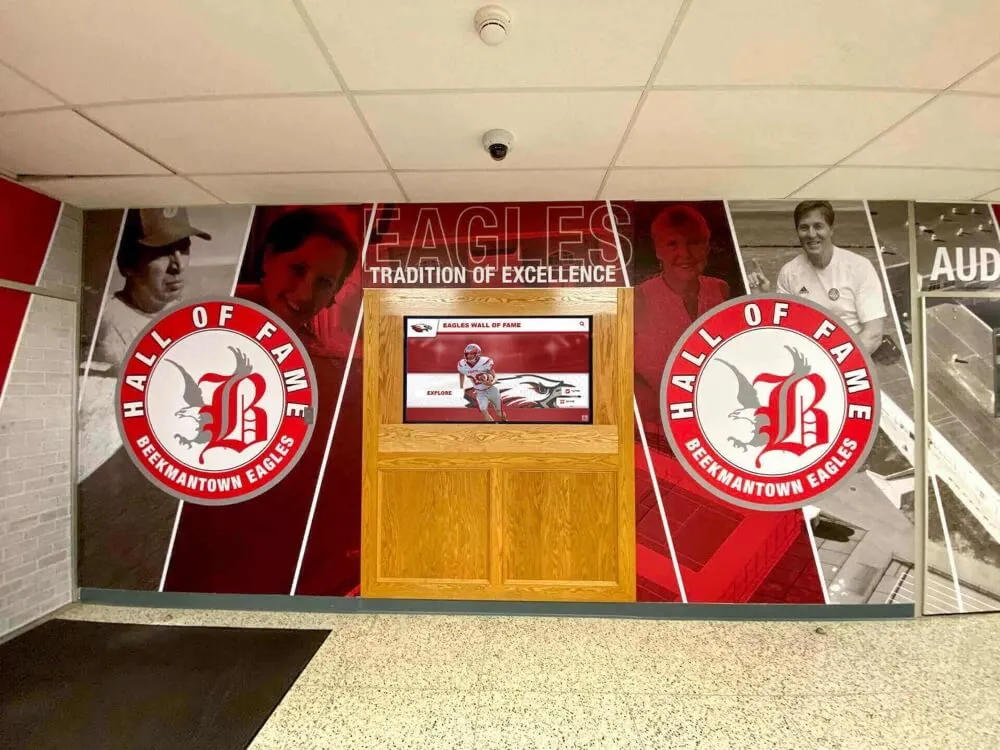
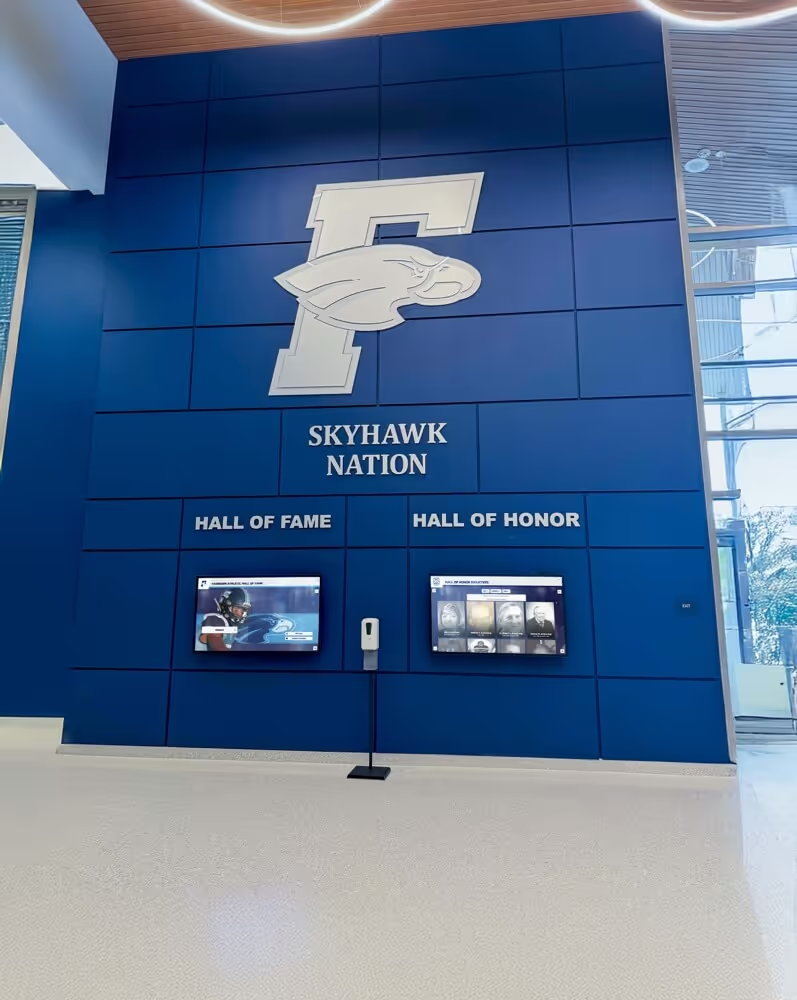
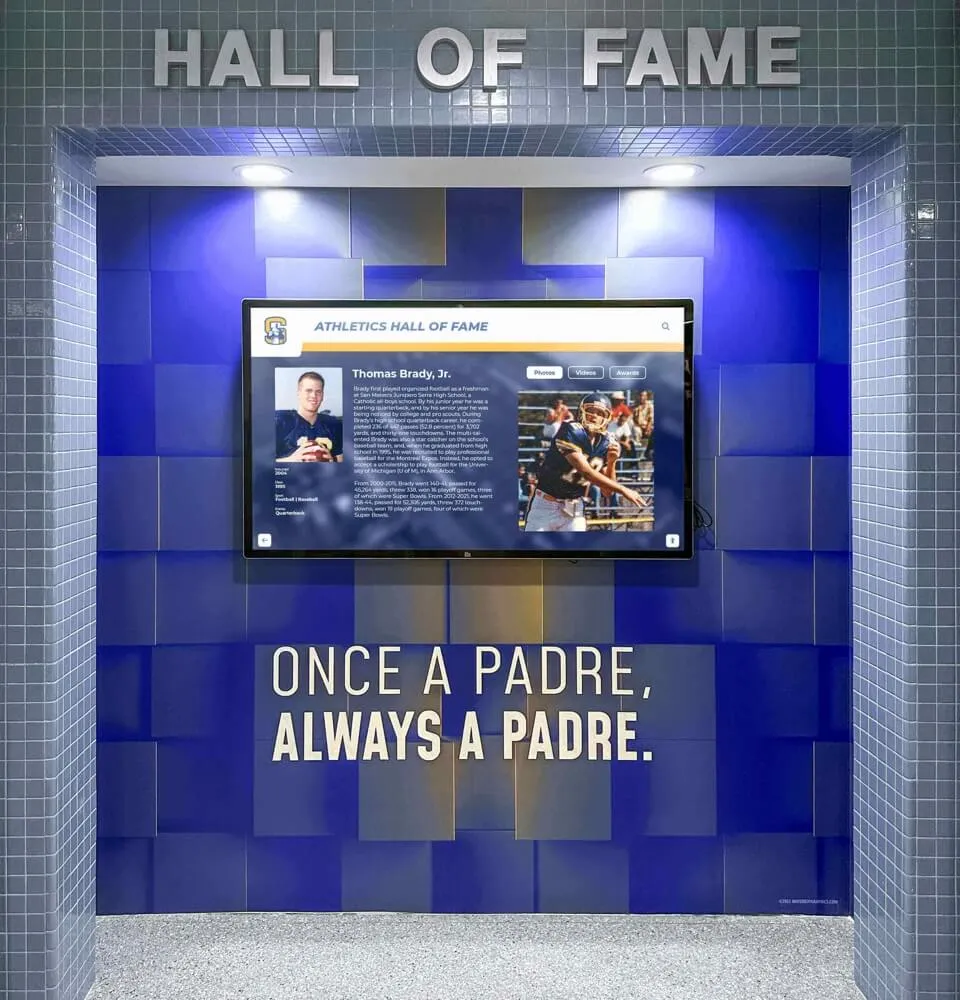
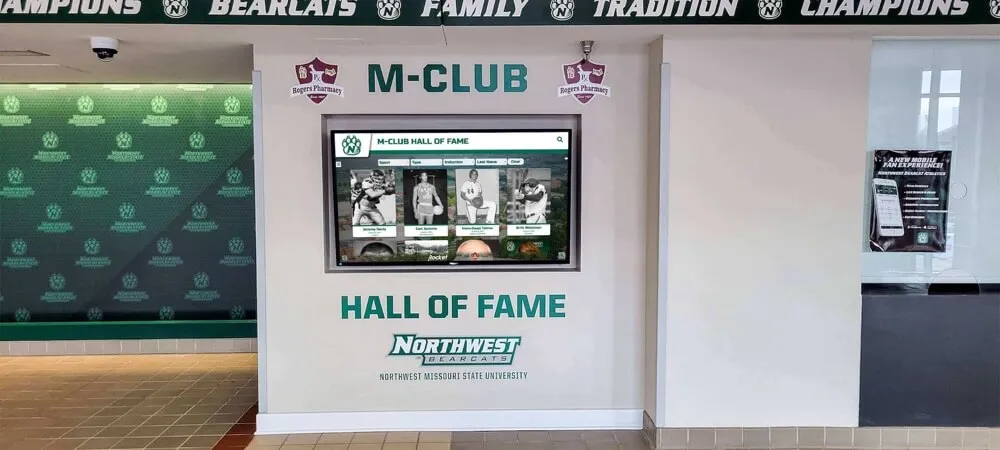
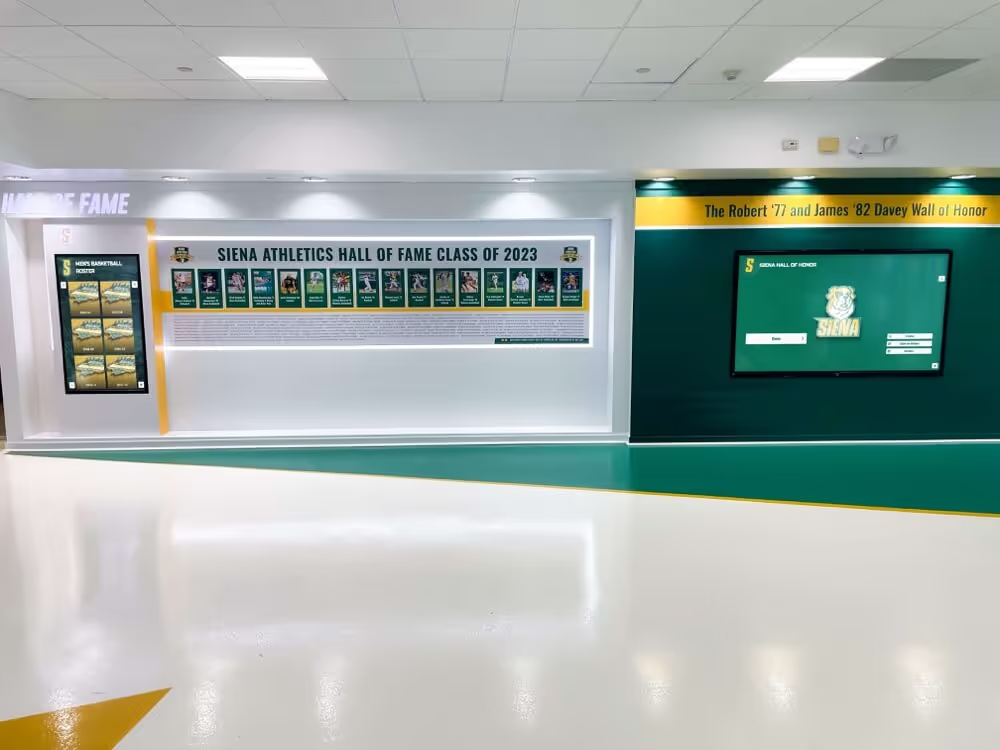
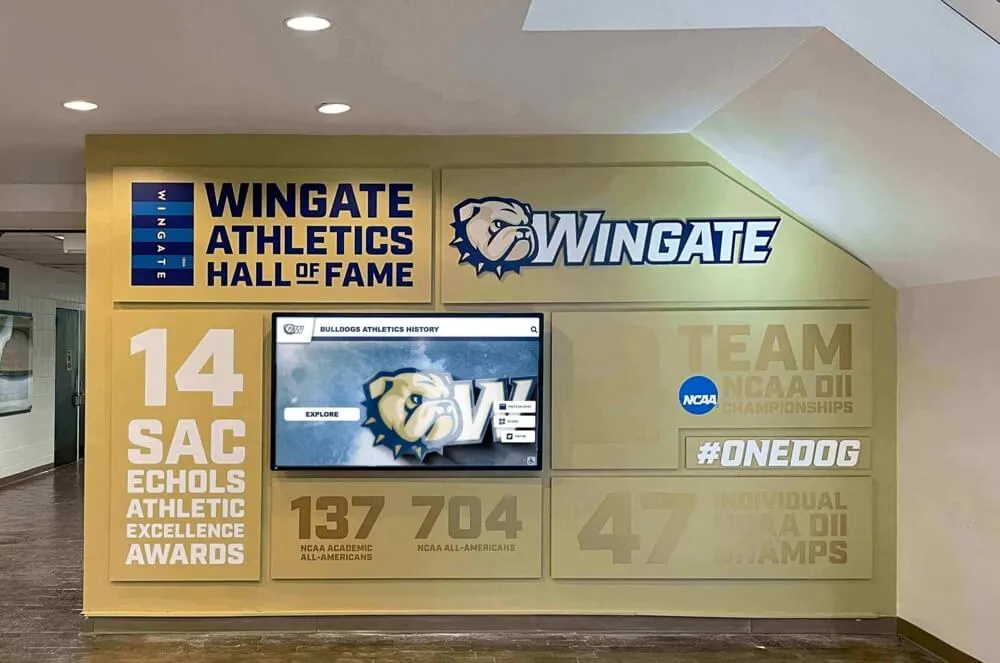
Permanent recognition walls that combine digital displays with engraved name plaques create the most durable form of donor acknowledgment—visible to students, families, and community members year-round
Donor Display Ideas for Color Guard Programs
The banquet evening is temporary; the recognition it inspires should not be. Donor displays translate a one-night celebration of financial support into year-round institutional acknowledgment. For color guard programs whose long-term health depends on sustaining donor relationships across multiple seasons and administrative transitions, building permanent recognition infrastructure is a strategic investment.
Physical Donor Recognition Options
Framed Donor Honor Roll
A professionally framed listing of all donors and sponsors, displayed prominently at the banquet and then relocated to a permanent home in the band room, hallway, or school lobby. Updated annually with new donors added, a multi-year honor roll creates a visual record of cumulative community investment. Key elements:
- Clear visual hierarchy distinguishing giving levels (size, color, or design treatment)
- Name accuracy verified with each donor before printing
- School or program branding that connects the display to your identity
- Space for annual additions without requiring complete redesign
Individual Donor Plaques
For major donors or named gift situations—a donor who funded a complete uniform set, a sponsor who underwrote a national championship trip—individual plaques provide a level of recognition proportional to the contribution. Effective plaques include the donor’s name, the specific gift or funding commitment, the season or year, and a brief description of what the gift made possible.
Sponsor Recognition Signage
Banner or display signage featuring sponsor logos, used at competitions and performances throughout the season, extends recognition well beyond the banquet. Seeing their logo at regional championships is more valuable to many sponsors than a mention in a printed program. Competition-season signage also demonstrates to competitors, judges, and peer programs that your organization has strong community backing.
Digital Donor Display Options
Digital donor displays offer capabilities that physical displays cannot match: they can be updated without reconstruction, incorporate photos and video, display layered information at different recognition levels, and be accessible at any time of year.
Touchscreen Donor Recognition Walls
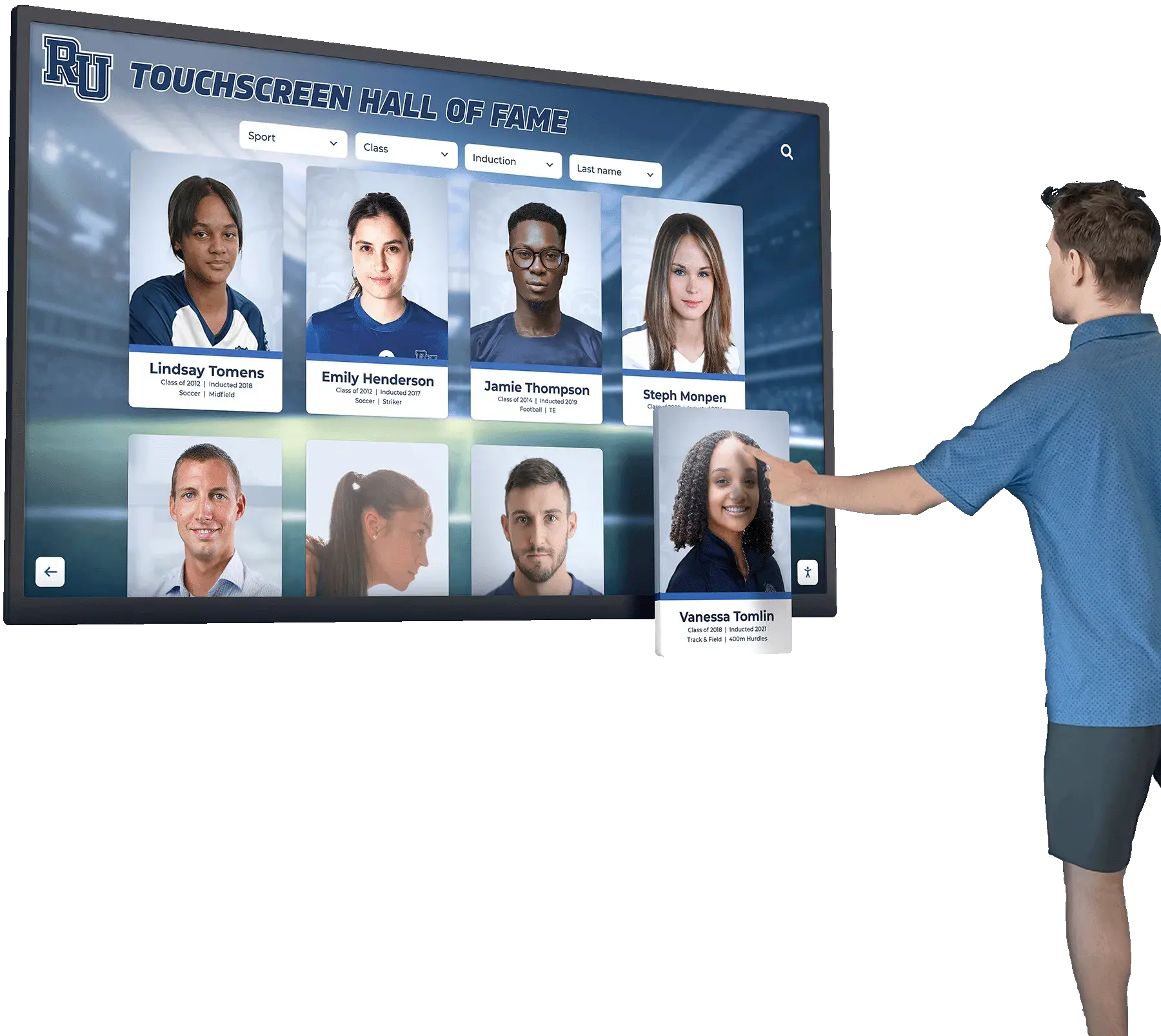
Interactive touchscreen systems installed in school hallways, lobbies, or performing arts facilities allow visitors to explore donor profiles, see giving histories, understand what specific contributions funded, and watch season recap content—all from a permanently installed display that requires no event to be operational.
For color guard programs, a touchscreen donor wall might feature:
- Sponsor profiles with logos, business descriptions, and contribution histories
- Photos from seasons made possible by donor support
- Video content from competitions featuring equipment or travel funded by specific donors
- A searchable donor directory organized by giving level and year
- Integration with the broader school recognition system honoring alumni, athletes, and academic achievers
Understanding how digital donor recognition walls function in school renovation and facility contexts illustrates how these systems serve dual purposes—honoring the donors who funded improvements while creating engaging recognition environments that benefit the entire school community.
Digital Donor Boards at Performances and Competitions
Portable or temporary digital displays used at home performances bring donor recognition to the audience watching your program in real time. Displaying sponsor logos, donor names, and brief acknowledgments on a screen near the entrance or competition warm-up area creates visibility with exactly the community whose support you are cultivating.
A comprehensive approach to donor recognition best practices covers the full range of display formats, naming conventions, tiering strategies, and relationship management approaches that translate directly to color guard program development contexts.
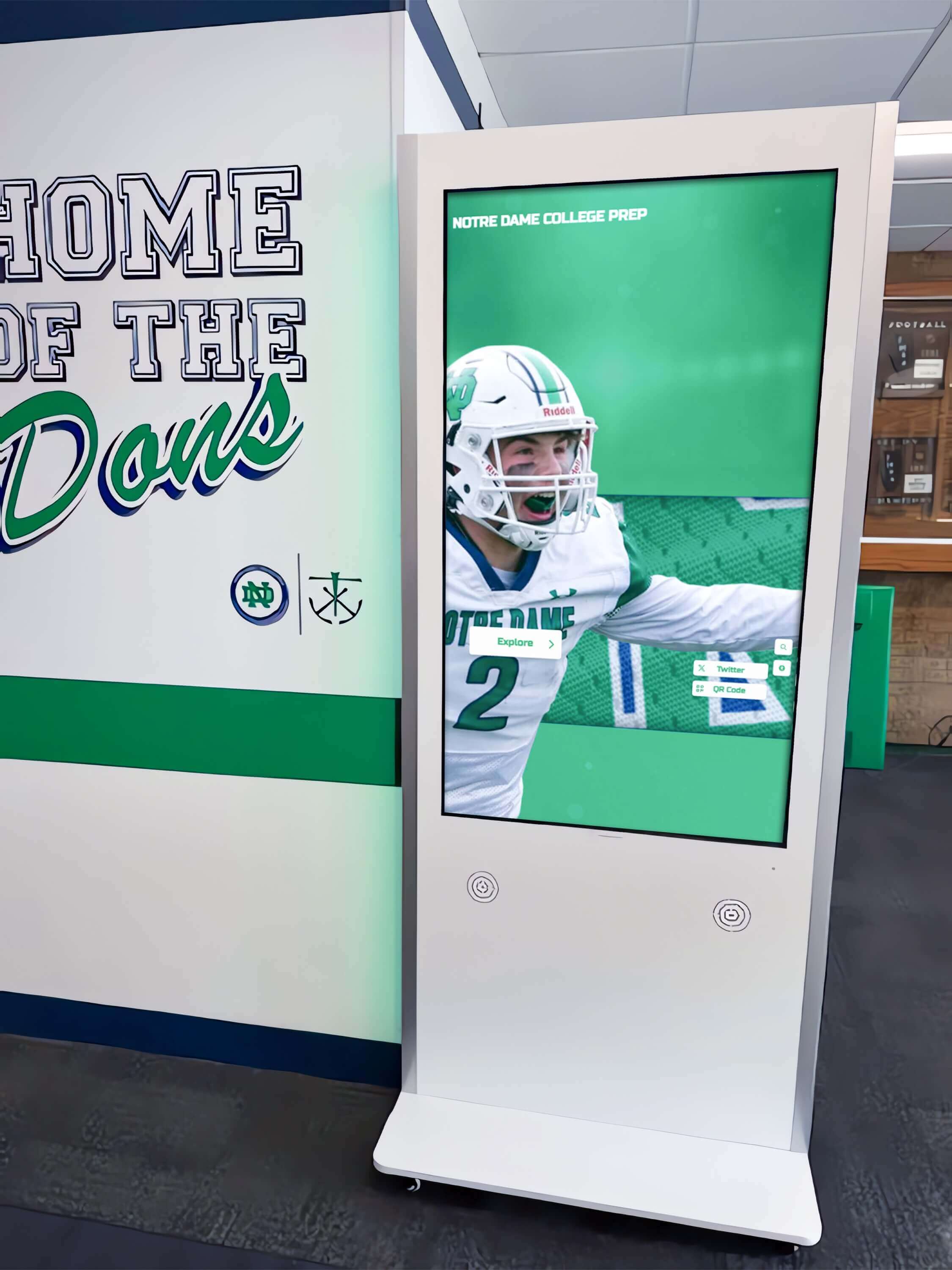
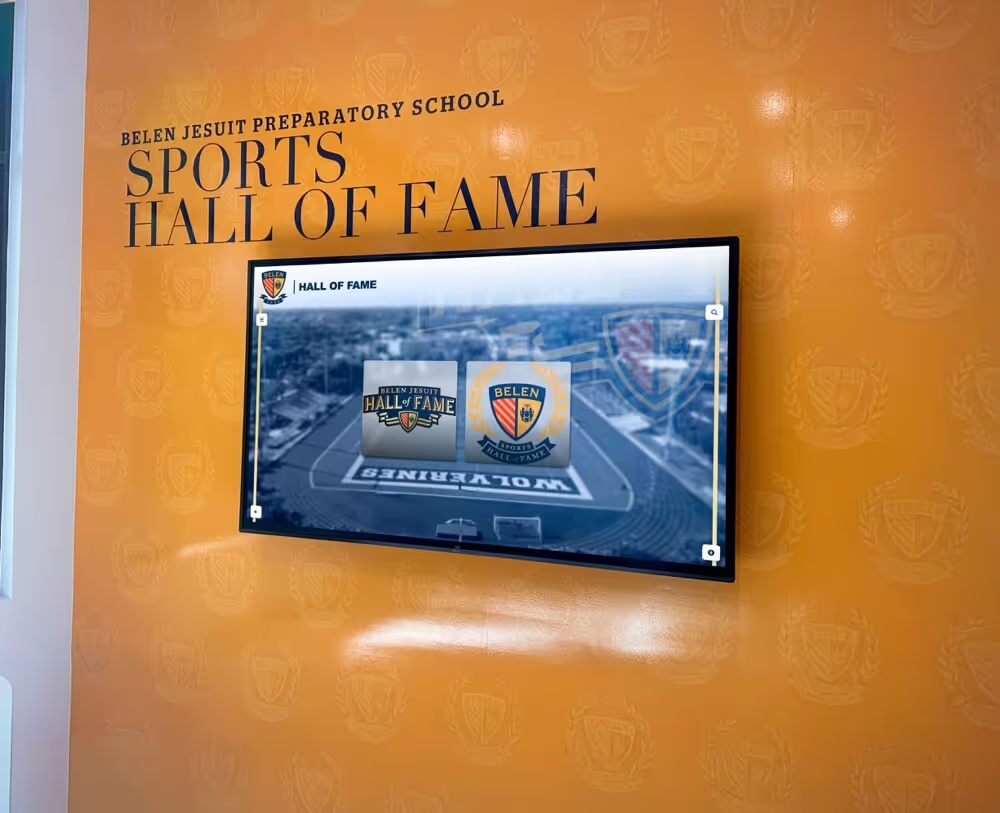
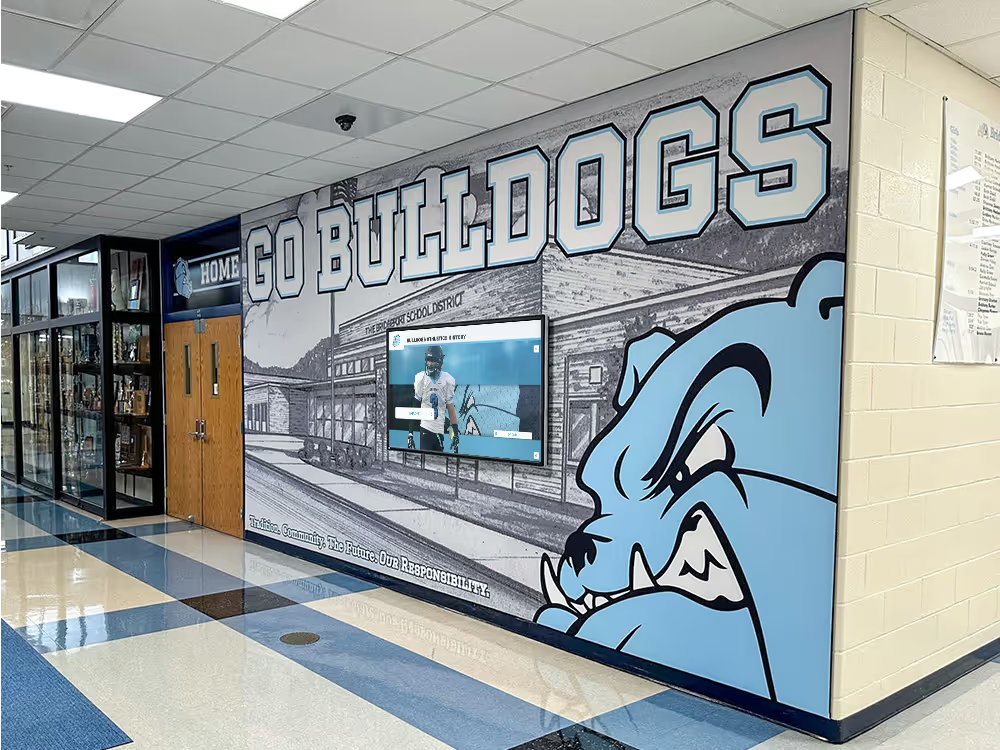
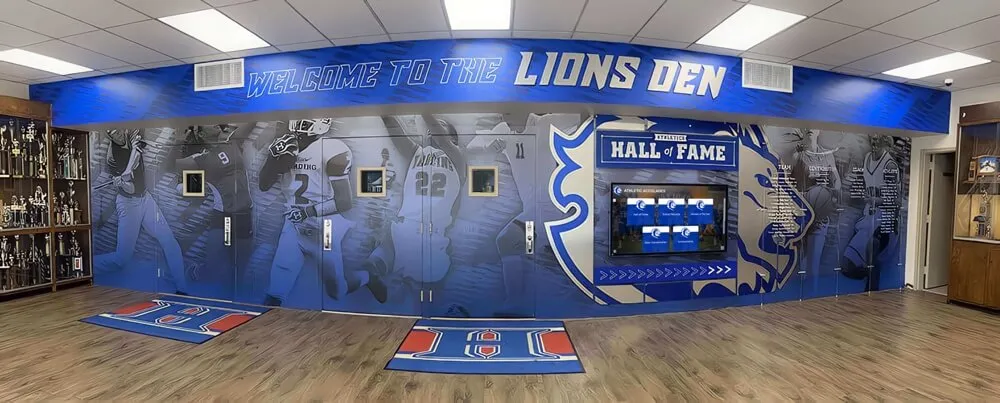
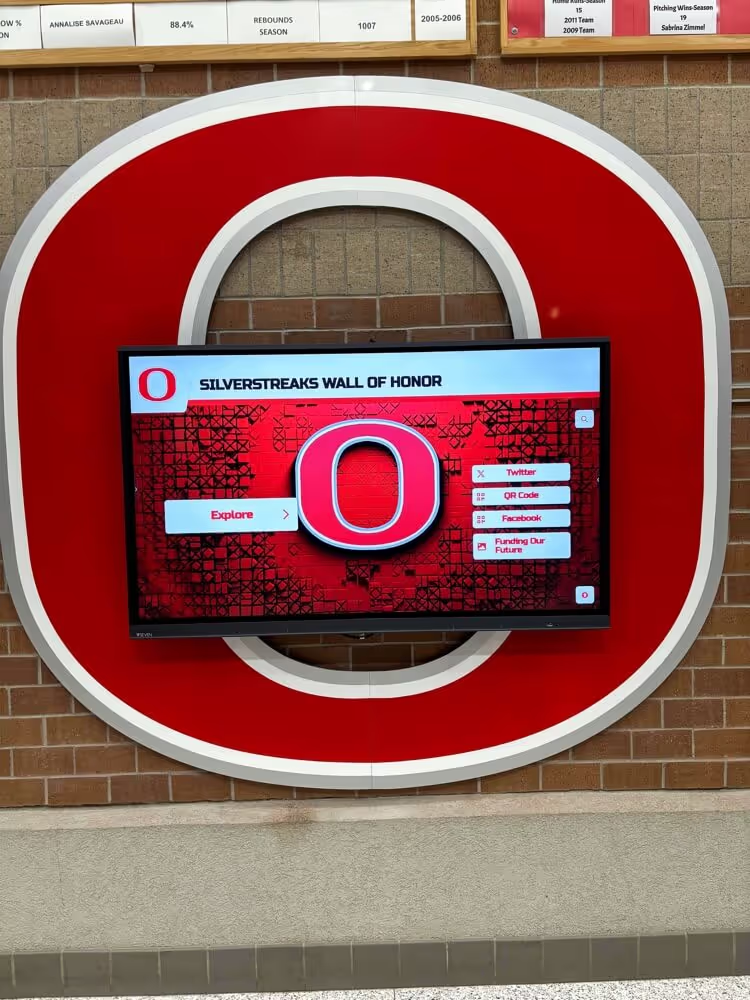
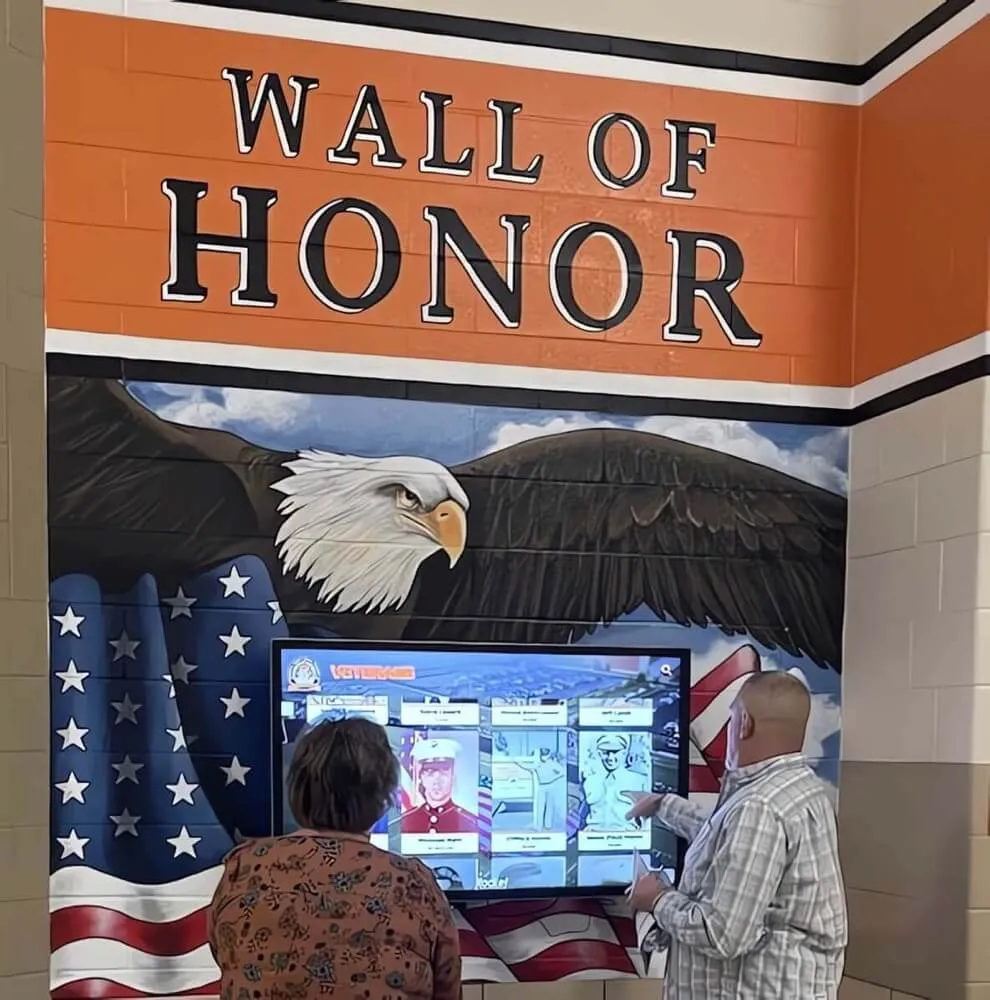
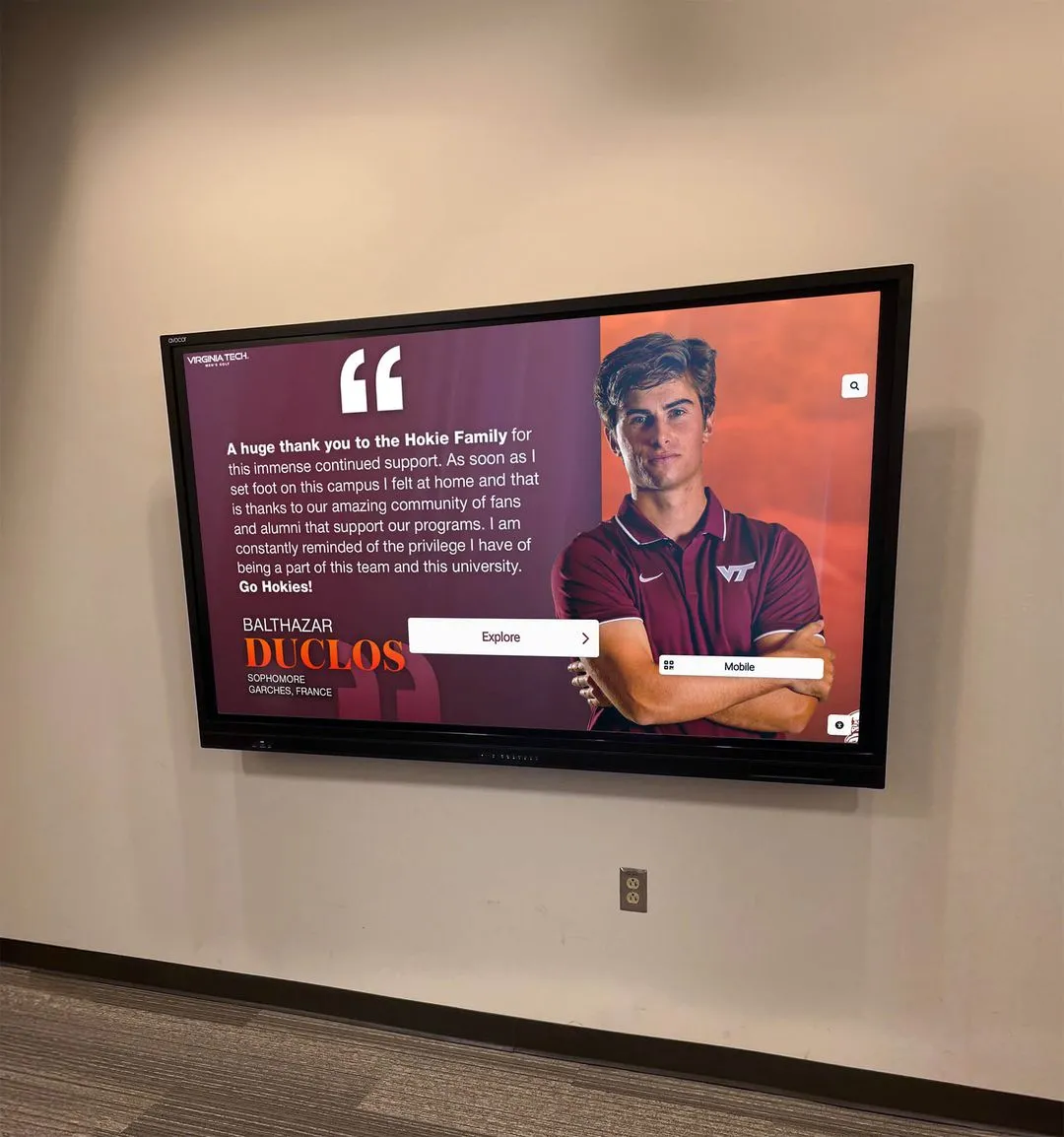
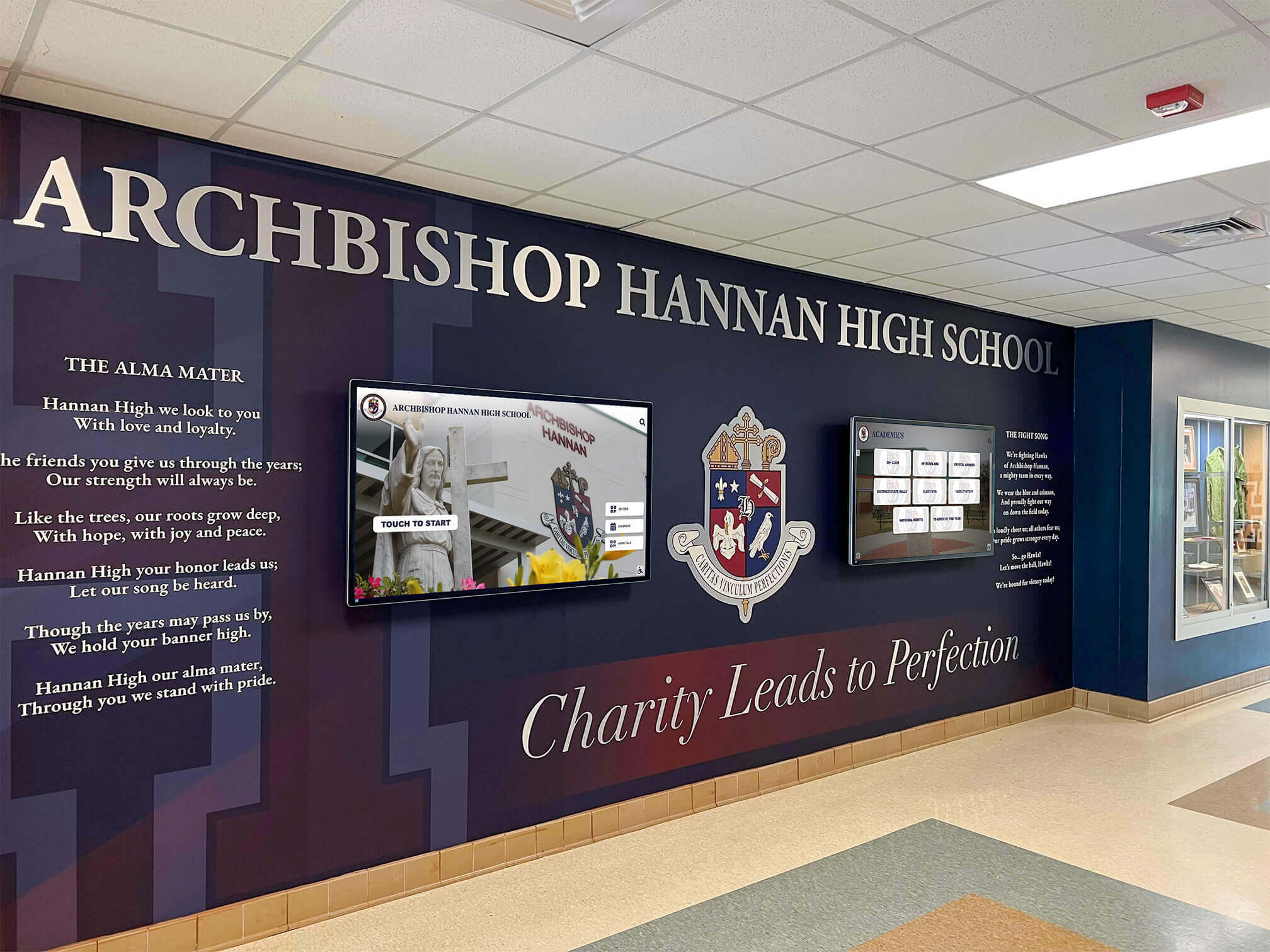
Interactive kiosks in school hallways create year-round recognition touchpoints where students, families, and community members can explore program history, donor contributions, and achievement highlights
Creating a Donor Wall That Lasts
The most strategically valuable donor recognition isn’t event-specific—it’s institutional. A well-designed donor wall in a prominent school location transforms donor recognition from an annual formality into a continuous expression of your program’s values and relationships.
Location choices:
- Main school lobby or entrance (maximum daily visibility)
- Performing arts center lobby or hallway (targeted visibility for your program’s audience)
- Band room or color guard rehearsal space (meaningful to members who see it daily)
- School administration building (visible to potential donors visiting campus)
Content to include:
- Individual donor and sponsor names at appropriate recognition levels
- Naming opportunities tied to specific equipment or program elements (“The [Donor Name] Color Guard Equipment Fund”)
- Annual giving totals by year, creating a visual record of program growth
- Photos from seasons made possible by donor support
- Brief narrative about what donor contributions have enabled
For schools exploring how recognition solutions build community belonging across athletic and performing arts programs, the same infrastructure that honors athletic donors creates compelling recognition environments for performing arts supporters.
Program Elements That Make the Banquet Memorable
Award announcements and donor recognition are the structural content of a color guard banquet, but the atmosphere around them determines whether the event feels routine or genuinely special.
Season Recap Slideshow
A well-constructed season slideshow is the emotional anchor of most color guard banquets. Unlike simple photo montages, effective color guard slideshows:
- Open with a powerful competition moment that immediately draws viewers into the season’s story
- Follow a narrative arc from early-season preparation through championship performance
- Include rehearsal footage and behind-the-scenes moments alongside competition clips
- Feature every member meaningfully—not just captains and front-line performers
- Acknowledge the sponsors, families, and donors whose support made the season possible
- Close with a senior tribute section that honors each departing member by name and contribution
The transition from slideshow to awards presentation is often the most emotionally loaded moment of the evening. Plan a brief pause after the slideshow closes before beginning the award ceremony—that silence allows the shared emotional experience to settle before shifting into individual recognition.
Senior Tributes
Beyond the formal Senior Excellence Awards, consider building a dedicated senior tribute segment into your color guard banquet program:
Letters from underclassmen — Collect brief written tributes from non-senior members for each departing senior. Having a younger member read their tribute to a senior creates genuine, unrehearsed emotion that scripted remarks rarely match.
Memorable moment compilation — For each senior, feature a 30-second compilation of their standout moments from across their years in the program. When a senior sees a moment from freshman year alongside their final competition performance, the growth is impossible to miss.
Parent and family acknowledgment — Many color guard programs have families who have supported multiple seasons of travel, late-night rehearsals, and competition weekends. Specifically acknowledging senior families—not just the seniors themselves—honors the full support system behind each departing member.
Programs that invest in thoughtful senior night recognition planning for their performers consistently report stronger alumni engagement and higher program pride long after participants graduate.
Banquet Themes and Décor
Color guard programs have natural visual identities—school colors, season-specific flag and costume designs, competition themes—that translate into meaningful banquet décor:
Season theme continuity: If your competitive show had a specific artistic theme, extend elements of that design language into the banquet environment. Members who lived inside that theme all season will recognize and appreciate the visual callback.
Equipment as décor: Flags, pole equipment, and practice silks can be incorporated into table centerpieces or display arrangements that celebrate the tools of the craft.
Competition photo display: Enlargements of professional competition photos, displayed throughout the venue, create a gallery environment that puts the season’s achievements visually in the room.
Signature color palette: Even simple décor—table linens, flowers, or balloon arrangements—in program colors reinforces visual identity throughout the evening.
Connecting the Banquet to Year-Round Recognition
The most sustainable color guard recognition programs don’t treat the banquet as an isolated annual event—they integrate it into a year-round recognition culture that keeps members engaged, donors appreciated, and program history visible throughout the school year.
Permanent Display in School Facilities
A dedicated color guard recognition space in the school’s performing arts corridor, band room, or lobby transforms the program’s achievements into year-round institutional presence. Effective permanent displays for color guard programs include:
- Annual competition results boards: Year, competition circuit, classification, and final placement for every season going back as far as records allow
- Captain and officer recognition: Photos and names of each year’s leadership, creating a visual leadership history
- Award recipient listings: Major award winners by year and category
- Milestone recognition: First state championship, first national circuit appearance, highest-ever finish, and other program milestones that mark the program’s evolution
For programs exploring how all-state and high-achievement musician recognition is handled in music education contexts, the frameworks for permanent achievement recognition apply directly to color guard programs that exist at the intersection of performing arts and athletic competition.
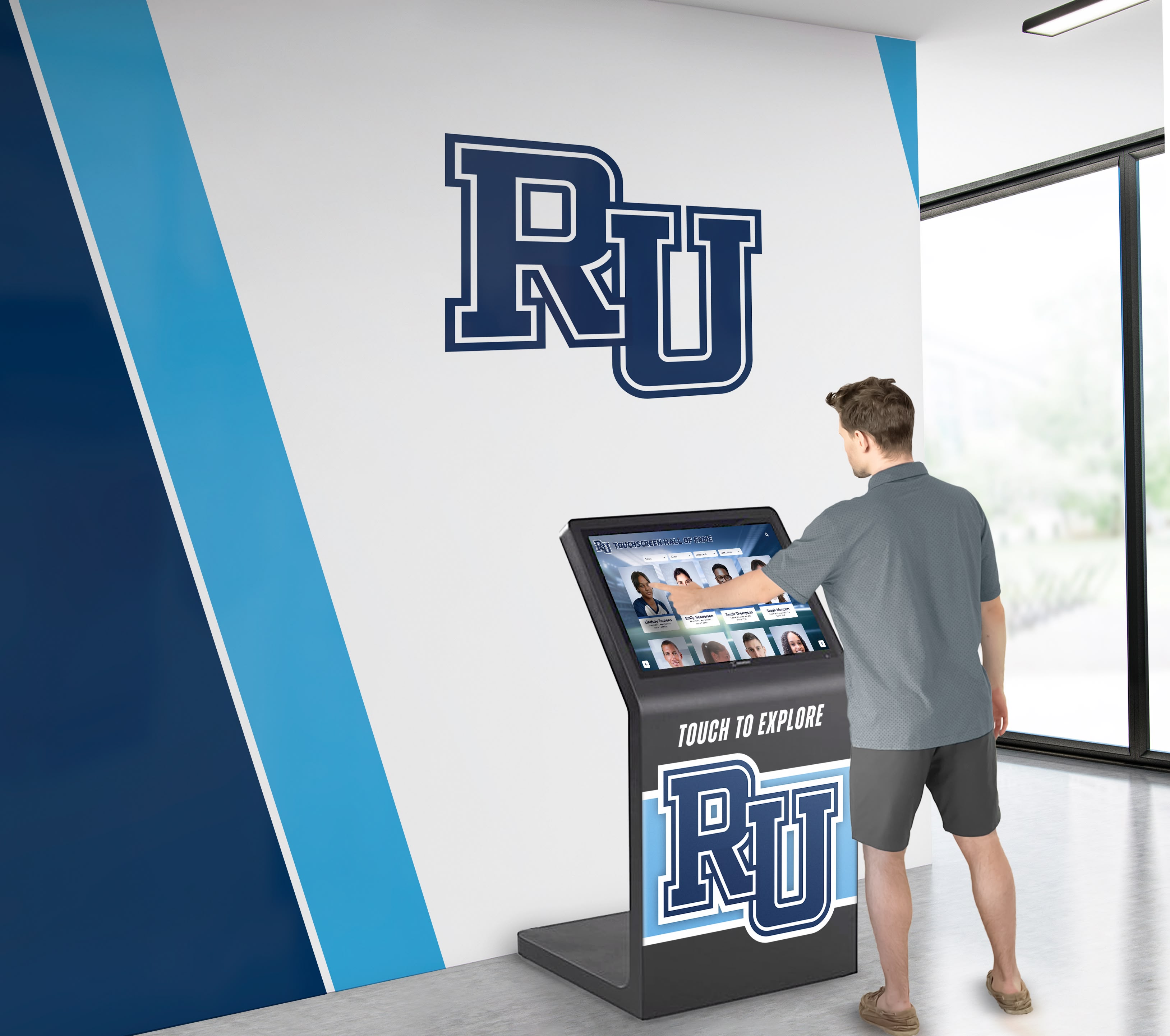
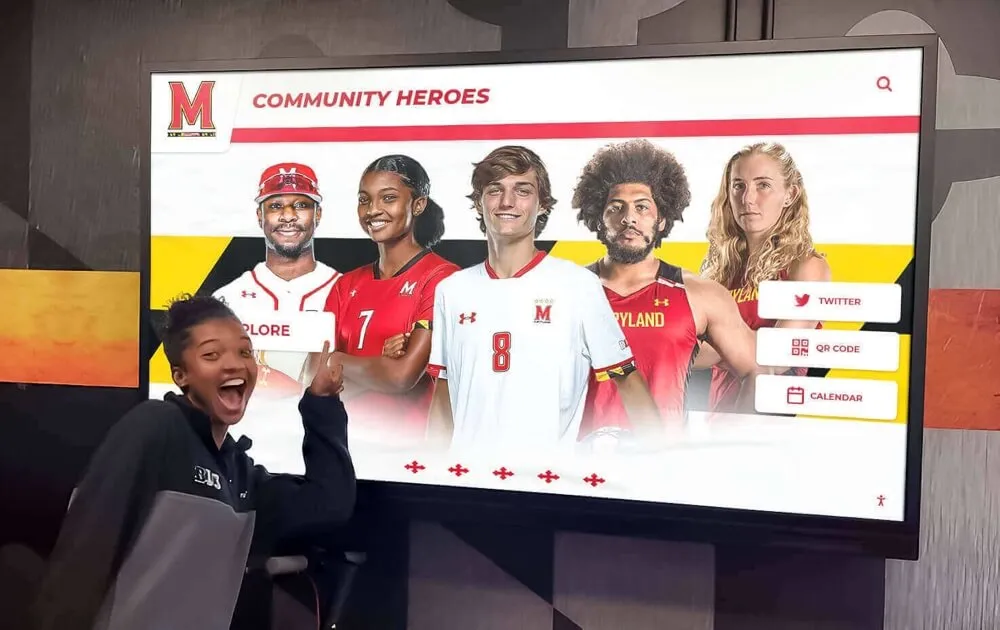
Interactive touchscreen kiosks transform static recognition displays into dynamic, searchable archives that allow visitors to explore program history, individual achievements, and donor contributions at any time
Digital Recognition Systems for Performing Arts
Modern schools are increasingly implementing digital recognition platforms that give performing arts programs the same institutional visibility long reserved for athletics. For color guard programs, these systems offer:
Searchable program history: Every season’s results, every captain class, every major award winner—searchable and browsable by visitors who didn’t follow the program in real time.
Donor and sponsor profiles: Business logos, giving histories, and descriptions of what contributions funded, creating a compelling case for new sponsors to join existing supporters.
Competition content integration: Photos, video, and written documentation from competitions give program history a richness that static display boards cannot achieve.
Connection to broader school recognition: A color guard program included in the school’s central digital recognition system—alongside athletic programs, academic honorees, and alumni—demonstrates that performing arts contribution is valued at an institutional level.
For schools developing their approach to visual identity and graphics for performing arts programs, the design considerations that make athletic recognition compelling apply equally to color guard programs—consistent visual identity reinforces recognition and builds familiarity with potential sponsors.
Building a Color Guard Alumni Network
Banquets that acknowledge alumni—inviting former members back, recognizing notable alumni accomplishments, and connecting current members with program history—build the long-term donor and advocate base that sustains programs across generational transitions.
Former color guard members often remain deeply connected to their program experiences long after graduation. A banquet culture that welcomes alumni creates:
- Potential future donors and sponsors with personal connections to the program
- Volunteer resources for equipment maintenance, choreography support, and program development
- Informal mentorship networks connecting current members with experienced former performers
- Advocacy capacity within the school community and among potential corporate sponsors
For programs exploring alumni recognition event ideas that sustain long-term community connections, the frameworks developed for athletic alumni programs translate naturally to performing arts contexts where alumni loyalty is equally strong.
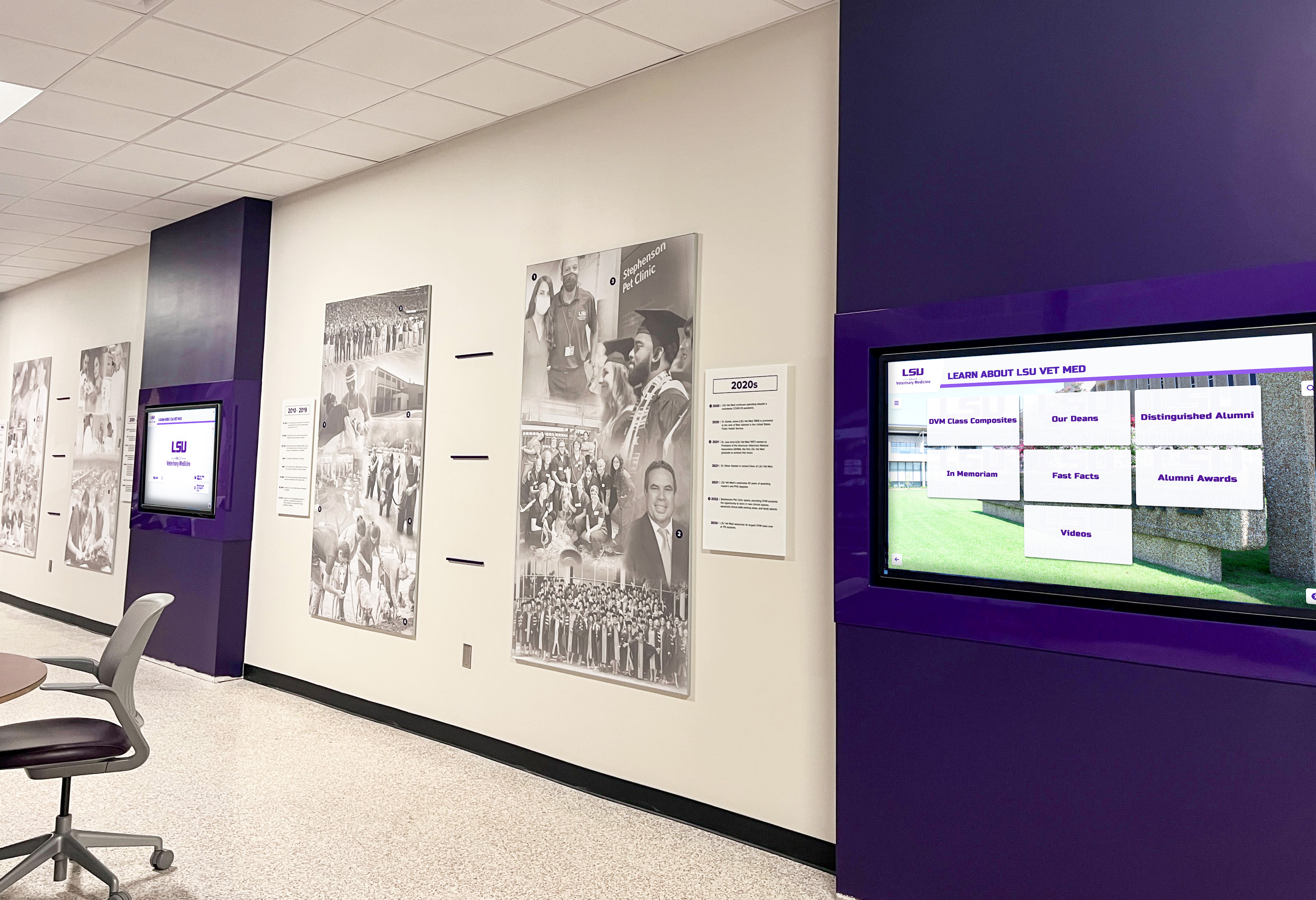
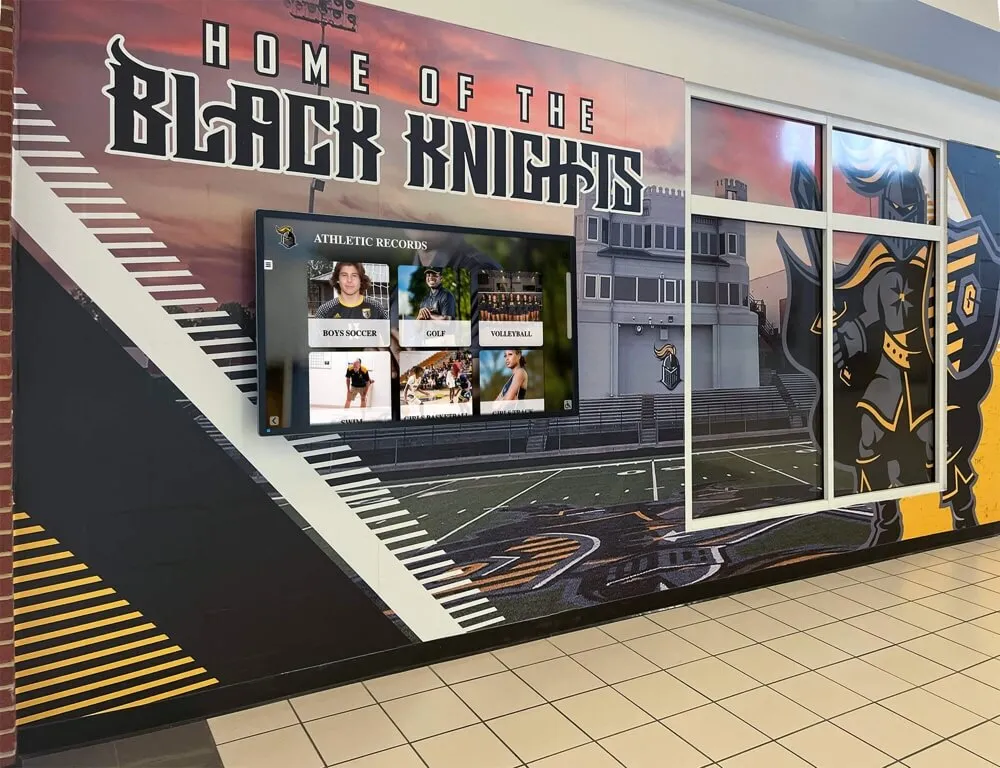
Multi-display hallway installations create immersive recognition environments where performing arts programs share institutional visibility with athletics—increasingly the standard in schools that value all forms of student achievement
Practical Checklist: Color Guard Banquet Planning
Use this checklist to track progress across the key planning areas:
Event Logistics
- Venue booked and deposit paid
- Date confirmed with school calendar and family availability
- Catering arranged (food service, dietary accommodations noted)
- Audio/visual equipment tested (projector/screen, microphone, slideshow system)
- Program printed or digital program created
- Invitations sent to members, families, sponsors, and donors
Awards and Recognition
- Award categories finalized
- Nomination process completed for peer-voted awards
- Director selections confirmed
- Physical awards (plaques, trophies, certificates) ordered and verified for accuracy
- Presenter assignments made for each award category
- Personal remarks prepared for each award recipient
Sponsor and Donor Recognition
- All sponsors confirmed on attendance list or sent communication
- Tiered recognition materials prepared (signage, program placement, verbal acknowledgment scripts)
- Commemorative items prepared for presenting sponsors
- Donor display or recognition wall content verified (name accuracy, giving levels)
- Permanent display updates planned for following week
Season Recap Slideshow
- Photos and video collected from all sources
- Content organized and edited
- Music selected and audio cleared
- Sponsor and donor acknowledgment slides included
- Senior tribute section complete
- Final version tested on presentation equipment
Frequently Asked Questions
What award categories should be included at a color guard banquet?
A color guard banquet should include performance excellence awards (MVP, outstanding equipment awards by type—rifle, sabre, flag—and artistic expression), growth and development awards (most improved, rookie of the year), leadership and character awards (unsung hero, team spirit, dedication, captain’s award), and senior recognition. Awards should be distributed broadly enough that significant contributors at every experience level receive acknowledgment—not only captains and top performers. The most memorable award categories often honor growth and character rather than purely competitive achievement.
How should sponsors be recognized at a color guard banquet?
Effective sponsor recognition at a color guard banquet goes beyond a generic group thank-you. Use a tiered structure with named presenting, gold, silver, and supporting sponsor levels, each with distinct recognition benefits. Make acknowledgment personal by naming specific sponsors’ contributions, having student members deliver acknowledgments, and presenting commemorative items sponsors can display at their locations. Extended verbal recognition for top-tier sponsors—including what their support specifically funded—builds the relationship quality that drives renewal and increased giving the following season.
What are the best donor display ideas for a color guard program?
Color guard programs benefit from both banquet-specific and permanent donor displays. For the banquet, framed donor honor rolls and sponsor recognition signage create event-appropriate recognition. For year-round impact, a permanent donor recognition wall in the school lobby, performing arts facility, or band room creates continuous visibility. Digital touchscreen displays offer the greatest flexibility—they can incorporate photos, videos, searchable donor profiles, and seasonal updates without physical reconstruction. The most effective donor displays use giving level tiers to create clear visual hierarchy, verify name accuracy with donors before display, and link specific gifts to the outcomes they made possible.
How far in advance should you plan a color guard banquet?
Six to eight weeks is the minimum practical planning window for a color guard banquet that feels intentional. Venue booking and catering arrangements often require the longest lead time and should be the first items confirmed. Award ordering typically requires two to four weeks depending on the type and level of customization. Sponsor communication should begin at least six weeks out to allow sponsors to confirm attendance and provide any materials needed for their recognition. Slideshow production and award selection can begin in parallel during the four-to-six-week window.
How can color guard programs recognize donors year-round beyond the annual banquet?
Year-round donor recognition for color guard programs can include: permanent recognition walls in school facilities visible to students and visitors throughout the year; sponsor logos on banners used at all home performances and competitions; digital displays in performing arts hallways or lobbies that showcase donor profiles and giving histories; social media acknowledgment when donations enable specific program elements; and alumni recognition events that honor longtime supporters. Connecting donor names to specific visible outcomes—naming a uniform set, equipment fund, or travel scholarship—creates recognition meaningful to donors while demonstrating to prospective supporters the concrete impact of their investment.
Building a Recognition Legacy for Your Color Guard Program
A color guard banquet done well does more than close out a season—it builds the institutional culture, donor relationships, and member loyalty that determine whether your program thrives across years and transitions. Members who receive genuine, specific recognition at year’s end are more likely to return as alumni supporters. Sponsors who feel their investment was publicly valued are dramatically more likely to renew. Donors who see their names on a permanent display understand their contribution is treated as an enduring institutional asset, not a one-time transaction.
The programs with the strongest color guard traditions are invariably ones where that tradition is visible: documented in permanent displays, celebrated in ceremonies that families attend, and woven into the school’s broader recognition culture. Building that tradition begins with a single, thoughtfully planned banquet—and grows over years into an institutional legacy that each new generation of performers inherits, honors, and adds to.
Create Permanent Donor Recognition for Your Color Guard Program
Rocket Alumni Solutions designs and installs interactive digital recognition systems that give color guard sponsors and donors lasting, visible recognition in school hallways and performing arts facilities—year-round, not just at the annual banquet. From touchscreen donor walls to integrated program achievement displays, we build systems that honor your supporters the way they deserve: permanently and prominently.
Explore Recognition Display Solutions