



The booster club treasurer is the steward of every financial promise the organization makes — and the person most responsible for ensuring sponsors and donors actually receive the recognition they were offered. Most treasurer guides focus narrowly on accounting software and bank reconciliation. This one goes further: the records that keep sponsor relationships intact, the systems that prevent recognition commitments from falling through the cracks, and the handoff documentation that protects the organization when a treasurer transitions out.
Whether you are stepping into the role for the first time or tightening up a system that has grown informally over several years, the frameworks here give you a practical starting point for tracking sponsor funds, maintaining donor records, and following through on recognition deliverables before they become problems.
Managing the finances of a booster club means managing more than a spreadsheet. Every sponsorship agreement is also a recognition commitment — a business is trading dollars for visibility, and the treasurer is often the only person who knows exactly what was promised, how much was received, and whether it was honored. Organizations that treat those commitments as financial obligations (not just thank-you notes) retain sponsors year after year.

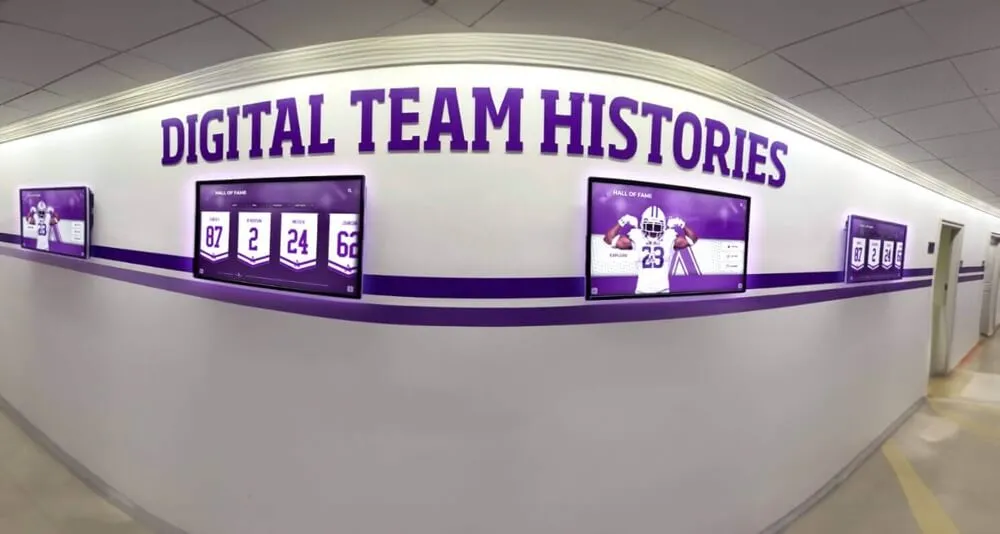
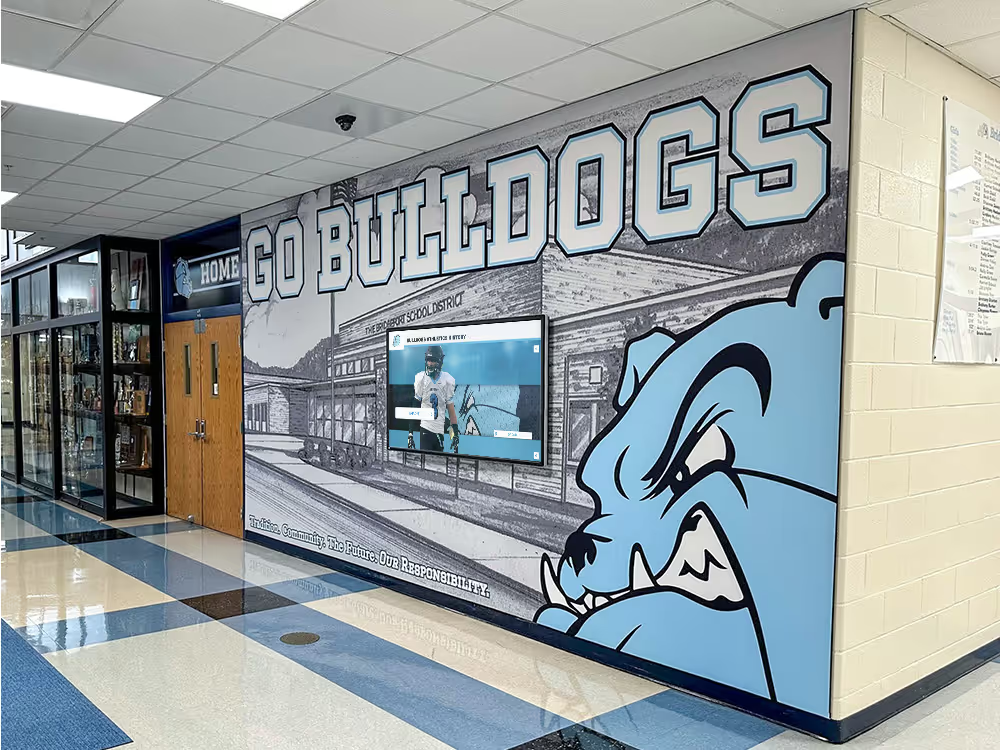
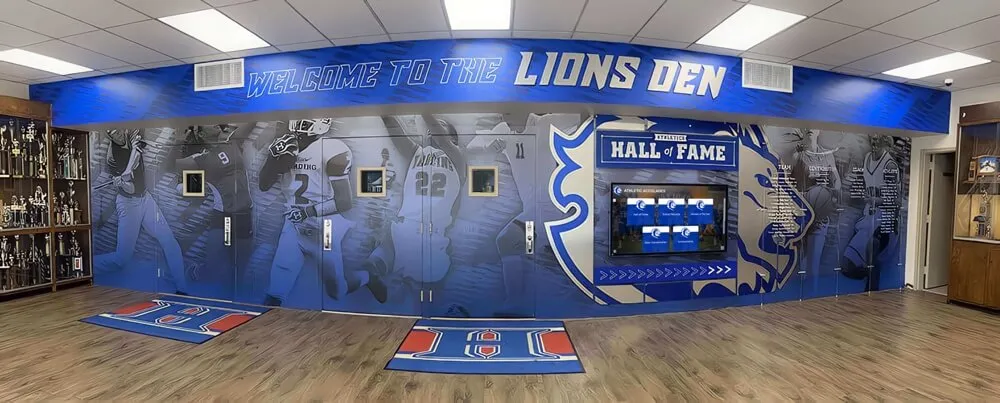
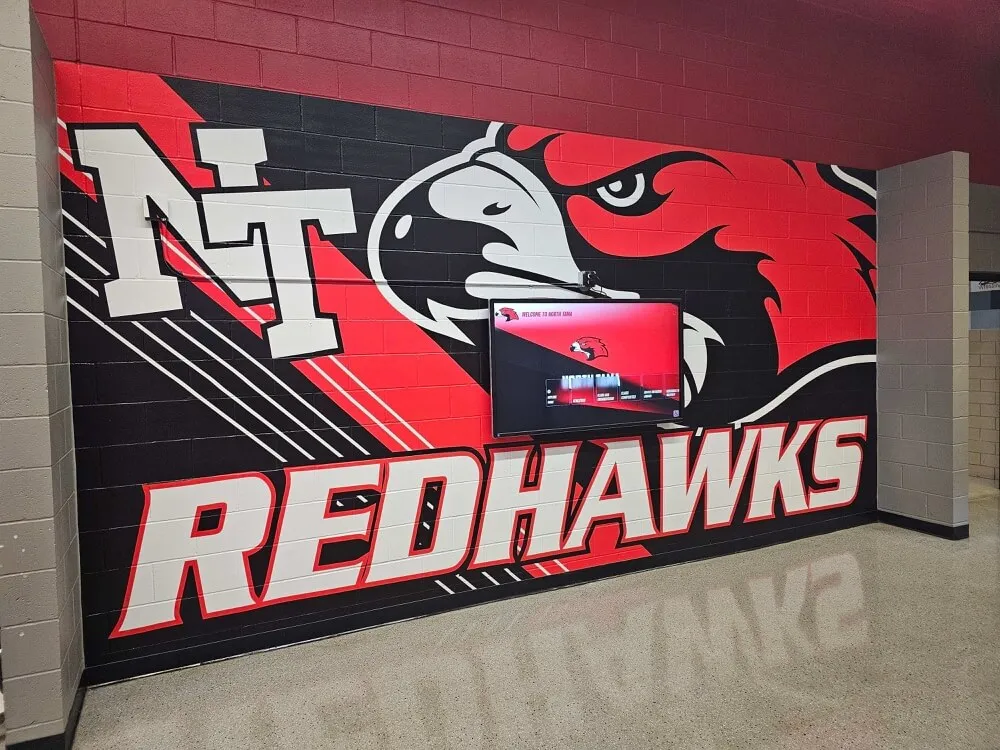
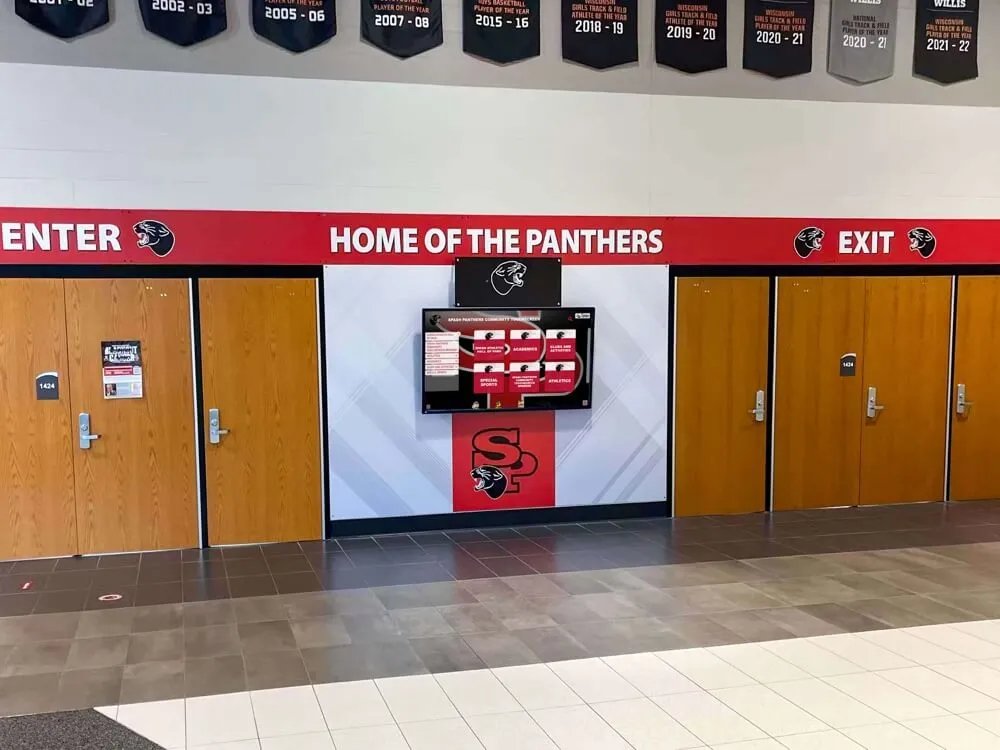
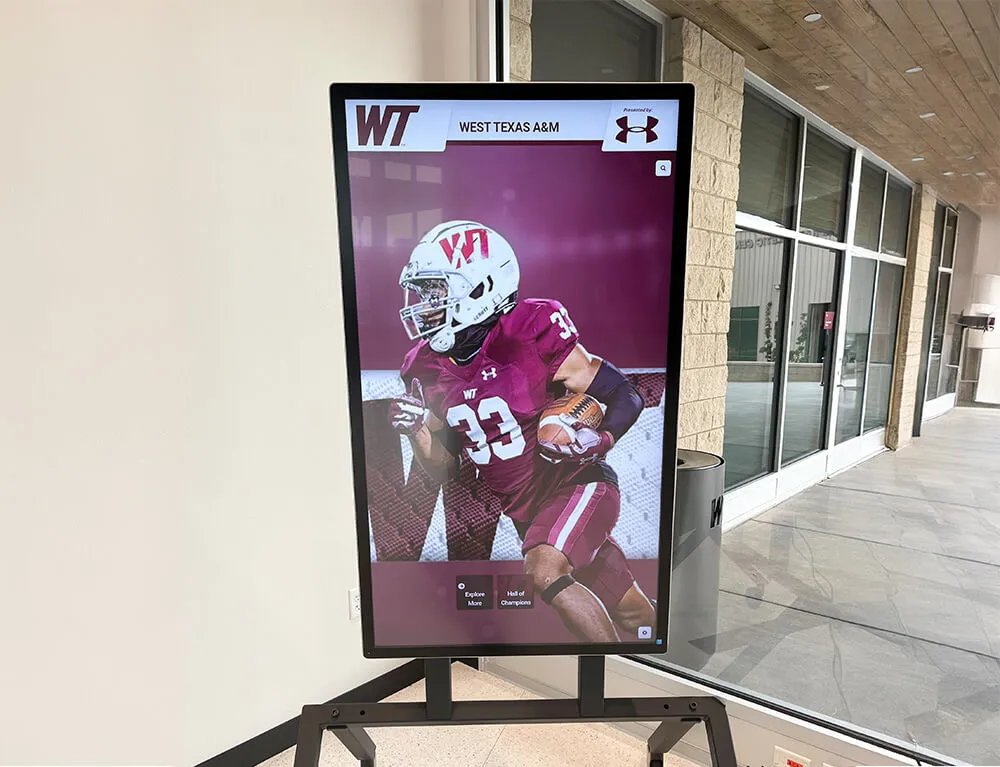
Permanent donor recognition displays give sponsors and contributors something tangible to point to — turning the treasurer's record-keeping into visible, lasting acknowledgment
The Booster Club Treasurer’s Core Responsibilities: A Checklist
The booster club treasurer role spans financial management, sponsor relations, and institutional record-keeping. The checklist below organizes those responsibilities into four areas so nothing falls through the cracks across a full fiscal year.
Financial Management
- Maintain the official bank account and reconcile monthly
- Collect and deposit all sponsorship payments, fundraising proceeds, and membership dues
- Pay approved invoices and reimburse authorized expenses with documentation
- Prepare financial reports for booster club meetings (income, expenses, reserve balance)
- File required state and federal reporting (Form 990-N or 990-EZ for most IRS-recognized clubs; state charitable registration if required)
- Coordinate with the school’s bookkeeper or athletic director on fund handling if club funds flow through the school district
Sponsor Fund Tracking
- Maintain a sponsor ledger separate from general operating income
- Record each sponsor’s committed amount, payment schedule (lump sum vs. installment), and actual receipt dates
- Flag overdue payments before the recognition period begins
- Document refund or adjustment terms if a sponsor reduces or cancels a commitment mid-season
Donor and Contribution Records
- Keep a complete donor log: name, contact information, contribution amount, date received, and any donor restrictions on use
- Retain copies of all donation acknowledgment letters (required for donor tax deduction documentation)
- Track cumulative giving by donor across multiple seasons — this is the data that enables meaningful “multi-year partner” recognition
- Store records in a location accessible to board officers, not only on a single personal device
Recognition Deliverables and Follow-Up
- Maintain a recognition fulfillment log tied directly to each sponsor and donor record
- Check off each promised recognition element (banner, program listing, PA announcement, digital display, plaque) as it is delivered
- Document delivery with photos or screenshots where possible
- Schedule a mid-season check-in and an end-of-season review for each sponsor tier
Tracking Sponsor Commitments: The Records That Prevent Problems
Sponsorship tracking is the area where booster clubs most often lose institutional memory. When a treasurer changes, the new person inherits a bank account but not always the knowledge of what each sponsor was promised.
A sponsor commitment record should hold six pieces of information: the sponsor name and primary contact, the committed amount, the payment status, the recognition package promised, the recognition elements delivered, and the renewal timeline. A simple spreadsheet or cloud-based form handles this for most clubs — the key is that every record must be updated before the season ends, not reconstructed from memory in April.
| Field | What to Record | Example |
|---|---|---|
| Sponsor name | Business legal name | Riverside Plumbing LLC |
| Primary contact | Name, email, phone | Jane Doe, jdoe@example.com |
| Commitment amount | Annual pledged total | $1,500 |
| Payment received | Date and amount | $1,500 received 9/5 |
| Recognition package | Tier name and deliverables | Gold: banner + program listing + PA |
| Fulfillment status | Each deliverable checked off | Banner: ✓ — Program: ✓ — PA: pending |
| Renewal target date | Date for next outreach | April 1 |
This level of detail is not busywork — it is the documentation that lets a business owner verify their investment was honored and lets the booster club make a confident renewal ask. Programs that track recognition deliverables this precisely retain sponsors at substantially higher rates than those that treat fulfillment as an informal courtesy.
For schools that offer named recognition elements — a “presented by” banner, a digital sponsor profile, or a named display — the record-keeping burden increases proportionally. Donor recognition boards for academic and athletic programs follow similar tracking principles: the gap between what was promised and what was delivered is the most common cause of donor attrition.
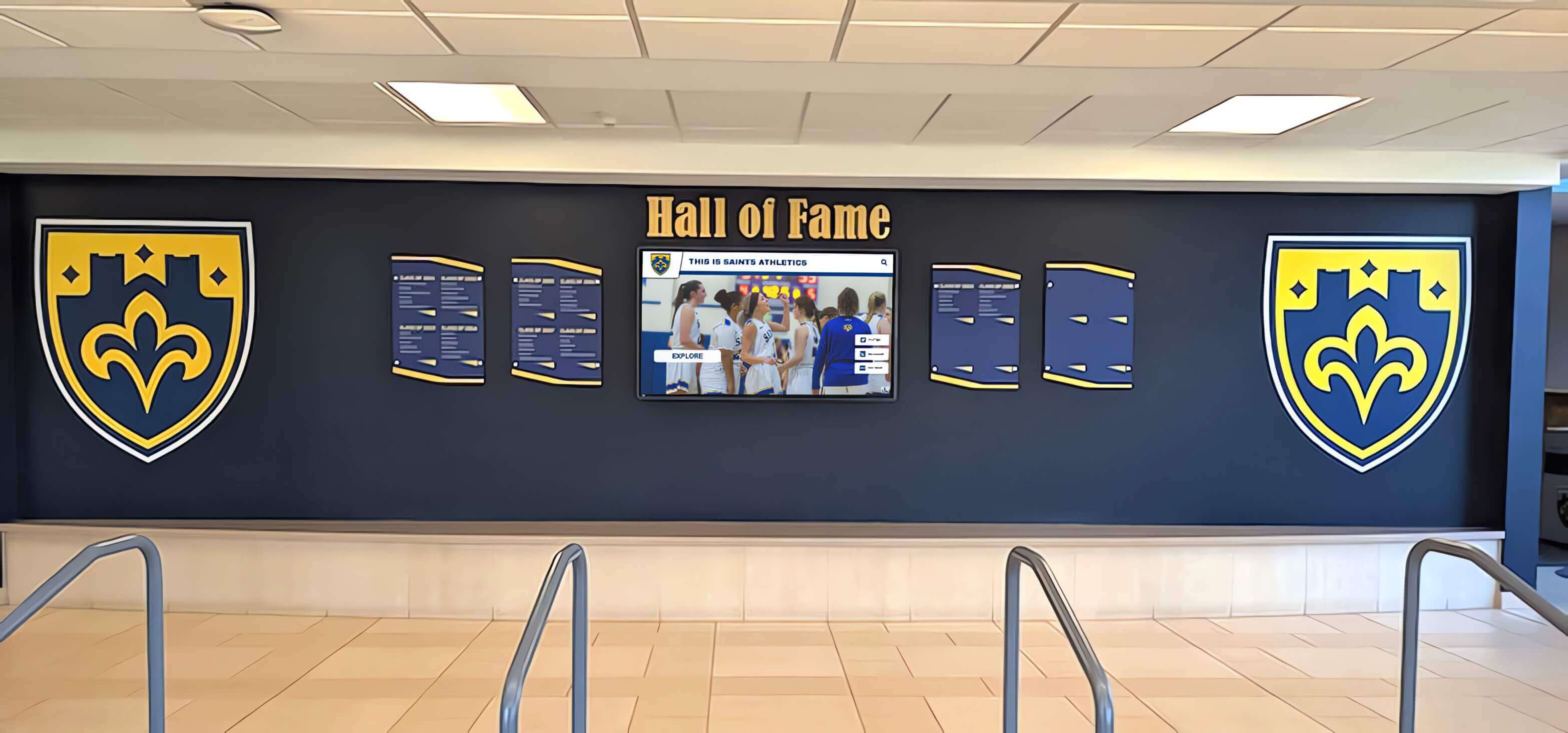
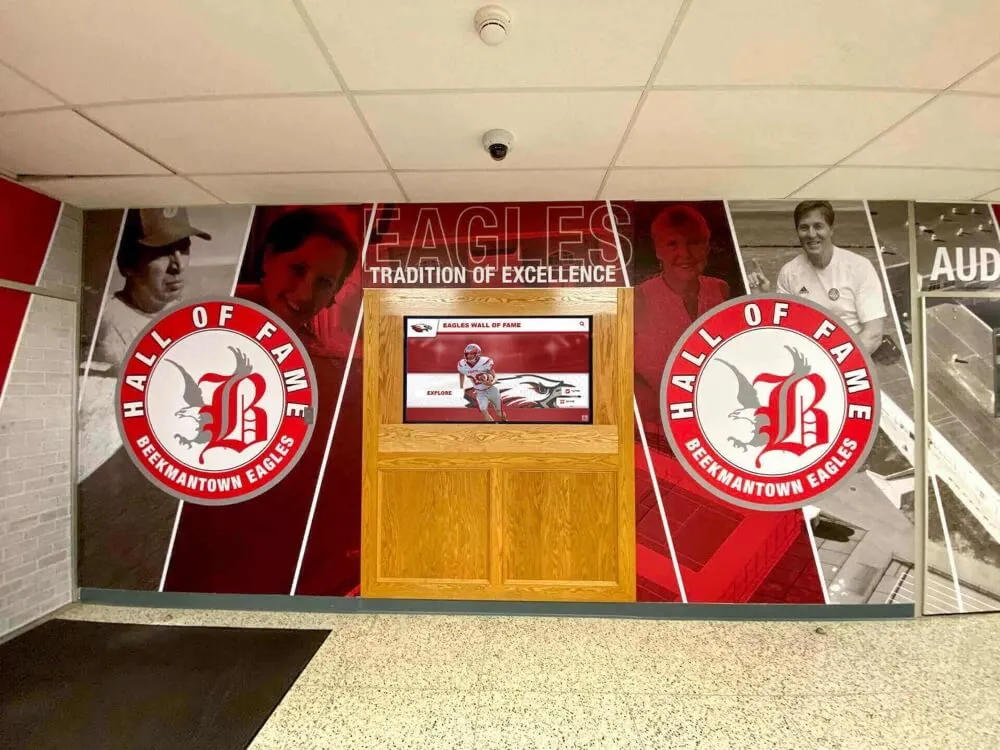
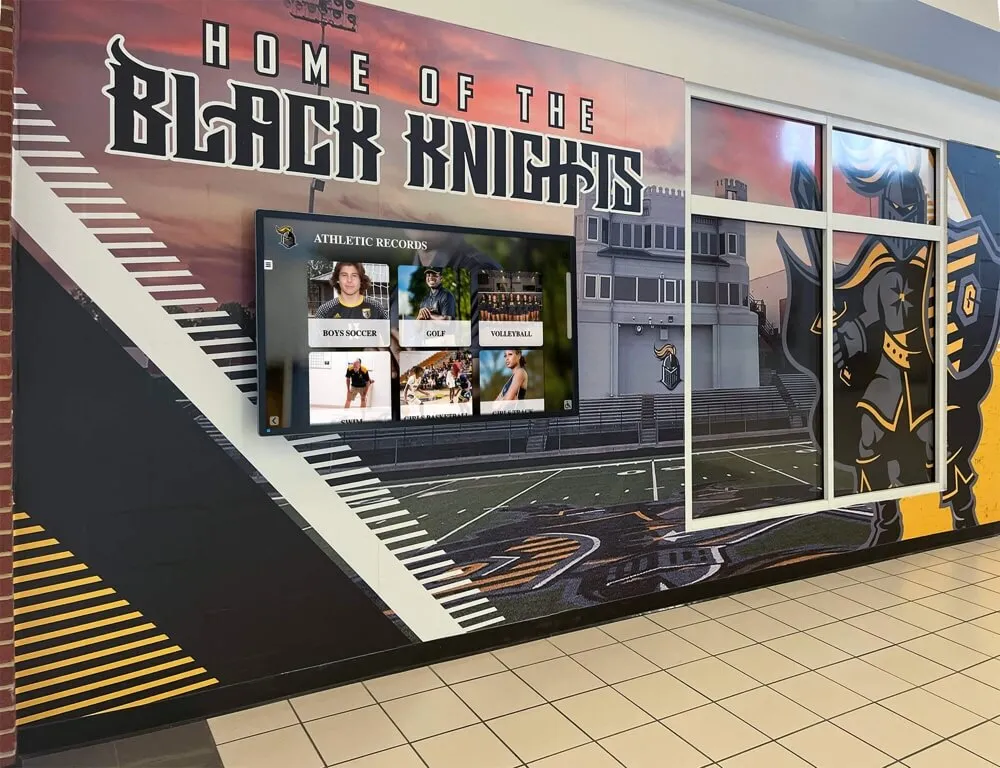
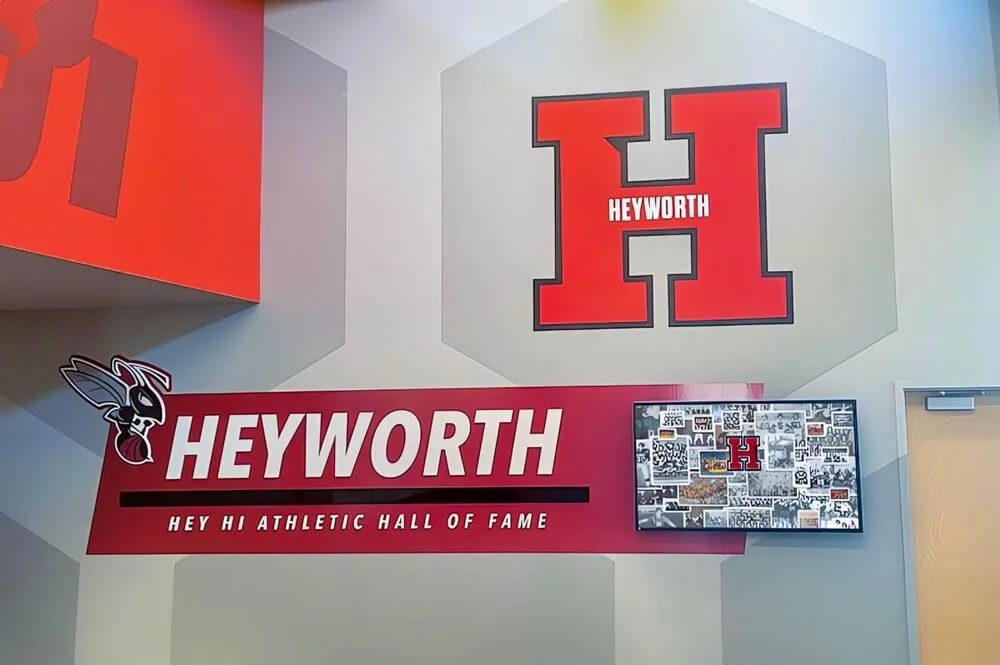
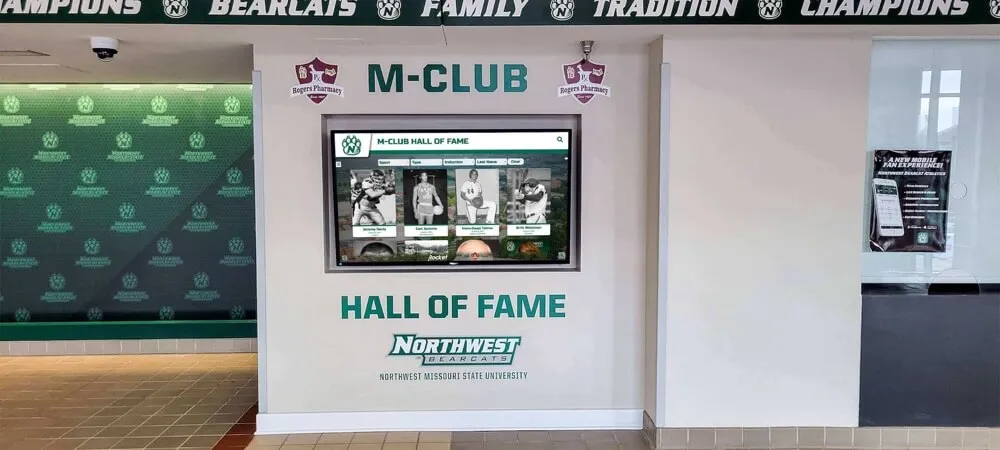
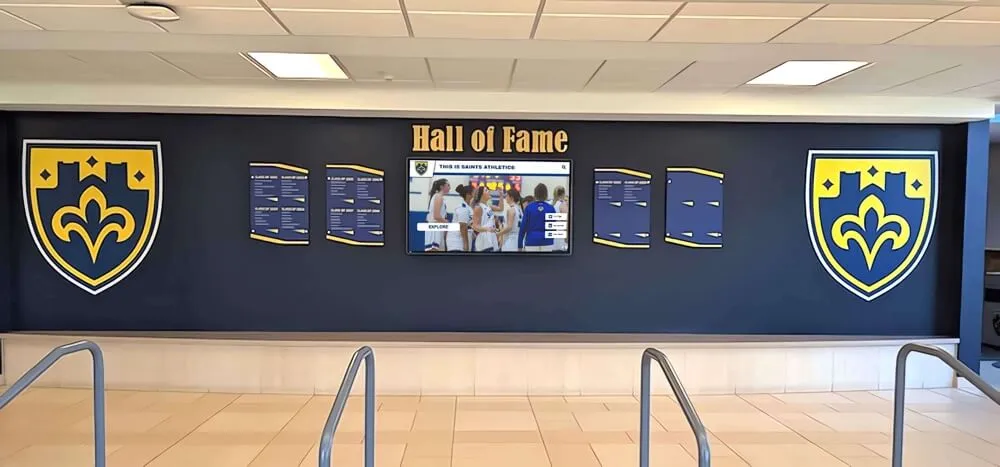
Recognition walls that combine physical elements with digital displays give the booster club treasurer a way to document delivery with a lasting visual record that sponsors can see in person
Maintaining Donor Records: What Every Booster Club Treasurer Needs to Track
Donors to a booster club are not the same as sponsors. A sponsor is a business trading visibility for funding; a donor is typically an individual — a parent, alumnus, or community member — making a contribution with no direct commercial interest. The record-keeping requirements differ accordingly.
The Donor Log
Every contribution received by the booster club should be logged with at minimum: the donor’s full name, mailing address, the date and amount of the gift, the fund or purpose it supports (general operations, equipment, scholarships), and whether any goods or services were exchanged in return (which affects the deductibility calculation). IRS rules require organizations to provide written acknowledgment for any contribution of $250 or more; for contributions below that threshold, the donor’s own receipt is sufficient.
Cumulative Giving Records
One of the highest-value tracking behaviors a booster club treasurer can adopt is recording cumulative giving across seasons. A parent who gives $150 in year one, $200 in year two, and $175 in year three is a three-year donor with $525 in total support — a relationship that warrants different recognition than a first-year contributor.
Cumulative giving records enable the kind of recognition most meaningful to long-term donors: acknowledgment that the organization has noticed and values a sustained relationship, not just the most recent transaction. Academic recognition programs model this principle clearly — the difference between recognizing a first-year honor student and a four-year honor student is not just sentiment, it is institutional memory that must be deliberately tracked.
Donor Restrictions and Designated Funds
When a donor restricts a gift — “for the athletic scholarship fund” or “for new equipment only” — that restriction is legally binding and must be documented alongside the standard contribution data. The booster club treasurer bears responsibility for ensuring restricted funds are used only as designated and that the donor receives documentation confirming their gift was applied appropriately.
Failing to honor donor restrictions is one of the most common causes of donor complaints and, in severe cases, regulatory attention. A simple notation in the donor log (“designated: equipment fund, verified by vote at 10/12 board meeting”) provides the paper trail needed if questions arise later.
Recognition Deliverables: Closing the Loop
Recognition follow-up is where many booster clubs quietly lose sponsors. A business signs a sponsorship agreement in the fall, receives a banner placement and a program listing, and by spring has not heard from the booster club since the season ended. When the renewal ask arrives the following fall, the business owner’s memory of the relationship is ambiguous at best.
The solution is a structured follow-up cycle tied directly to the recognition deliverables in the sponsor record.
The Recognition Delivery Checklist
For each sponsor tier, define the recognition elements explicitly and assign a delivery deadline. A banner must be hung before the first home event. A program listing must be confirmed with the printer before the print run. A PA announcement must be scripted and delivered at the first home event of each month. Digital display content must be submitted for review before the season starts.
Once each deliverable is complete, document it — with a date, and ideally with supporting evidence (a photo of the banner in place, a screenshot of the digital display, a note from the PA operator). This documentation serves two purposes: it lets the treasurer report confidently to the board that recognition commitments were fulfilled, and it gives the business owner something concrete to reference during the renewal conversation.
Building recognition checkpoints into the program calendar — the same way high school awards ceremony planning builds event milestones into the school year — helps ensure recognition review happens during the season, not only after it ends.
End-of-Season Recognition Review
Before the season closes, conduct a recognition review for every sponsor. The questions are simple: Was everything promised actually delivered? Did any sponsor not receive an element they paid for? If so, what is the makeup or credit?
This review is also the time to photograph all recognition in place — the sponsor’s banner in its actual location, the display board showing their name, the digital screen running their recognition content. These images become the proof-of-performance documentation that makes renewal conversations substantially easier.
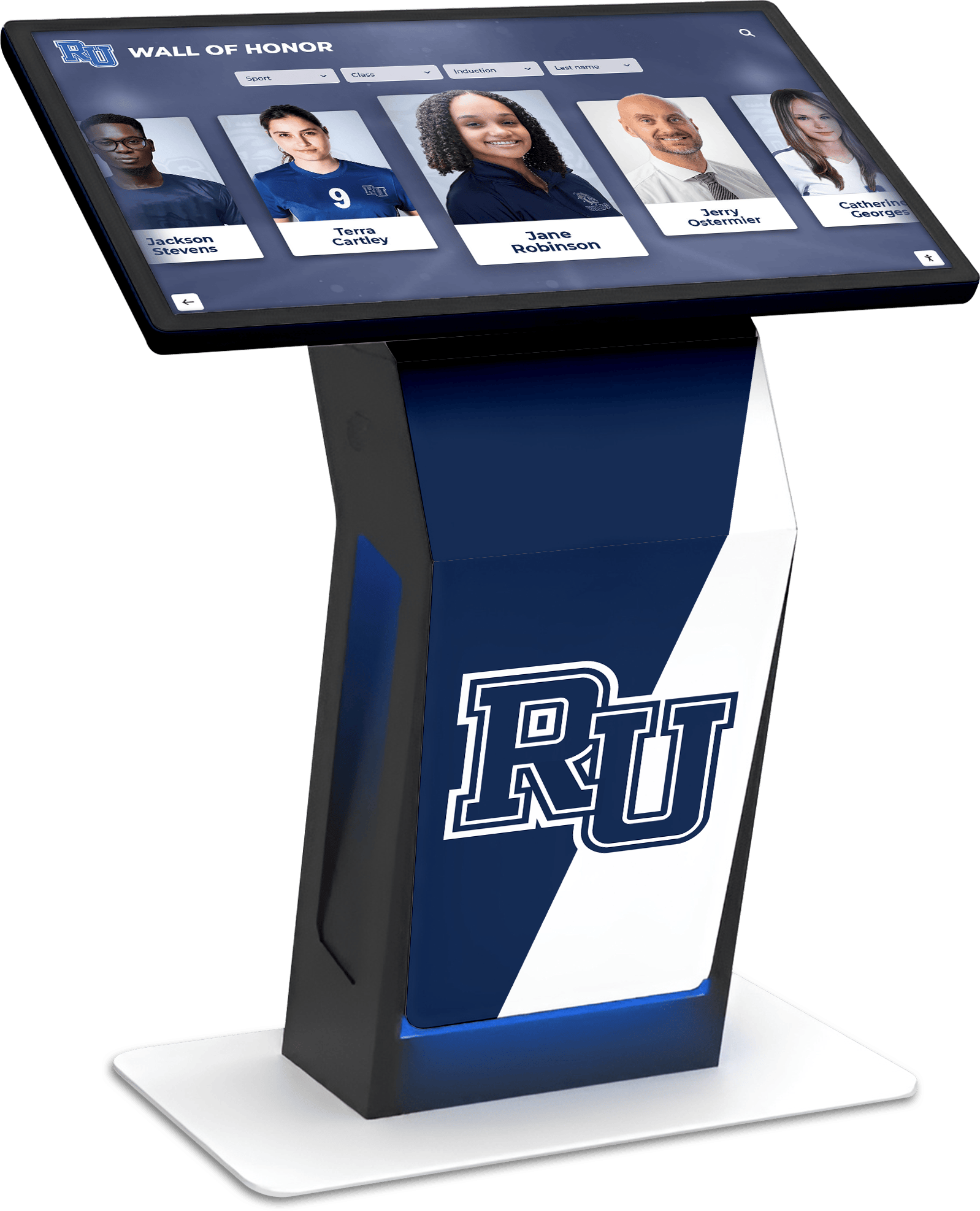
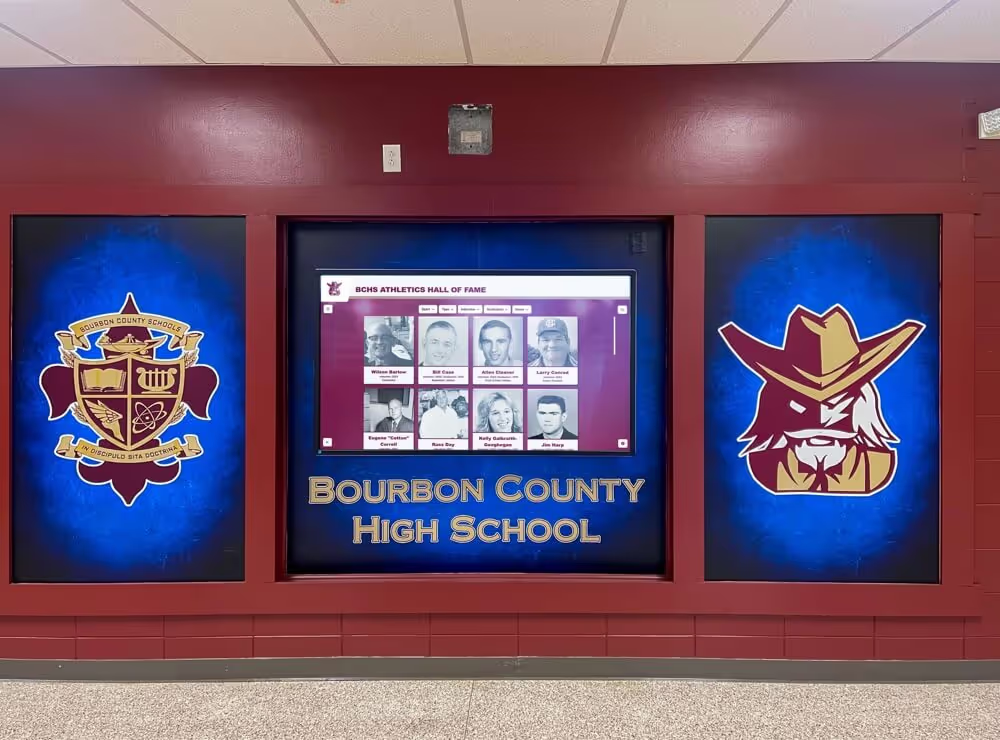
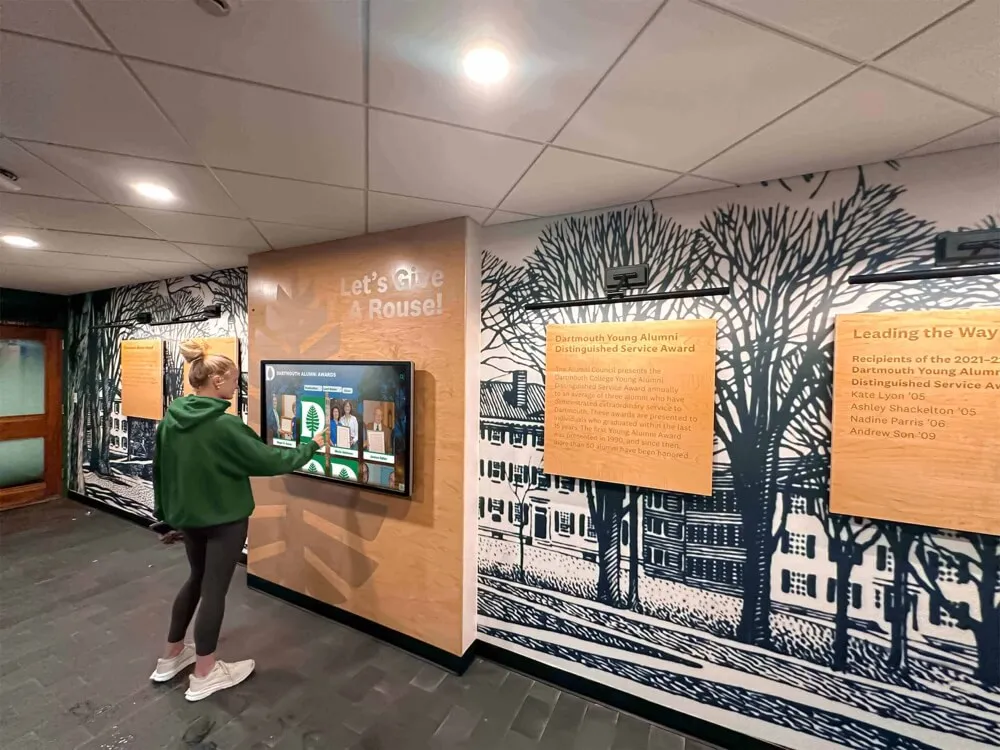
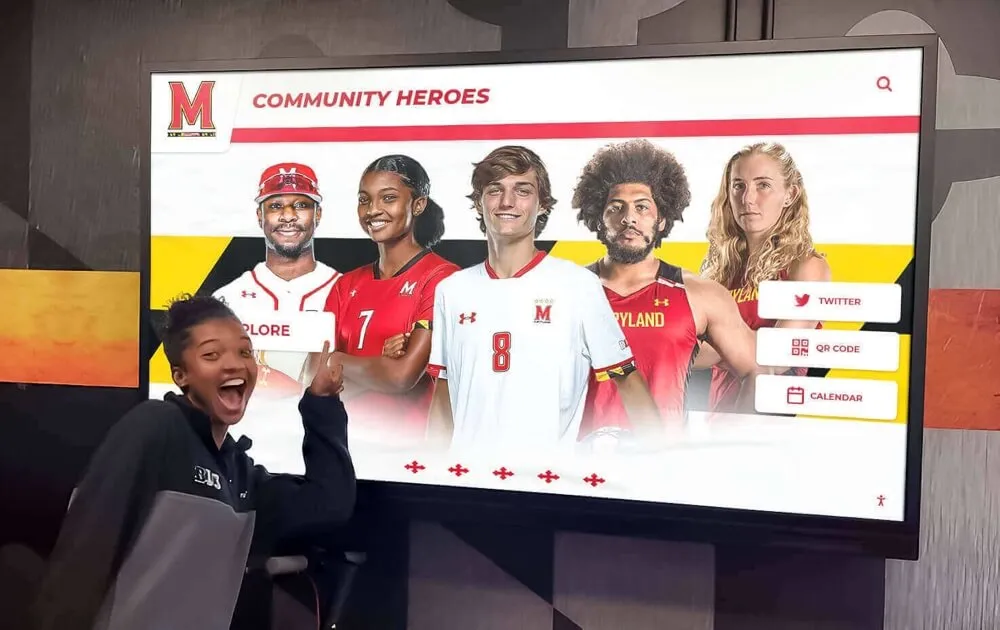
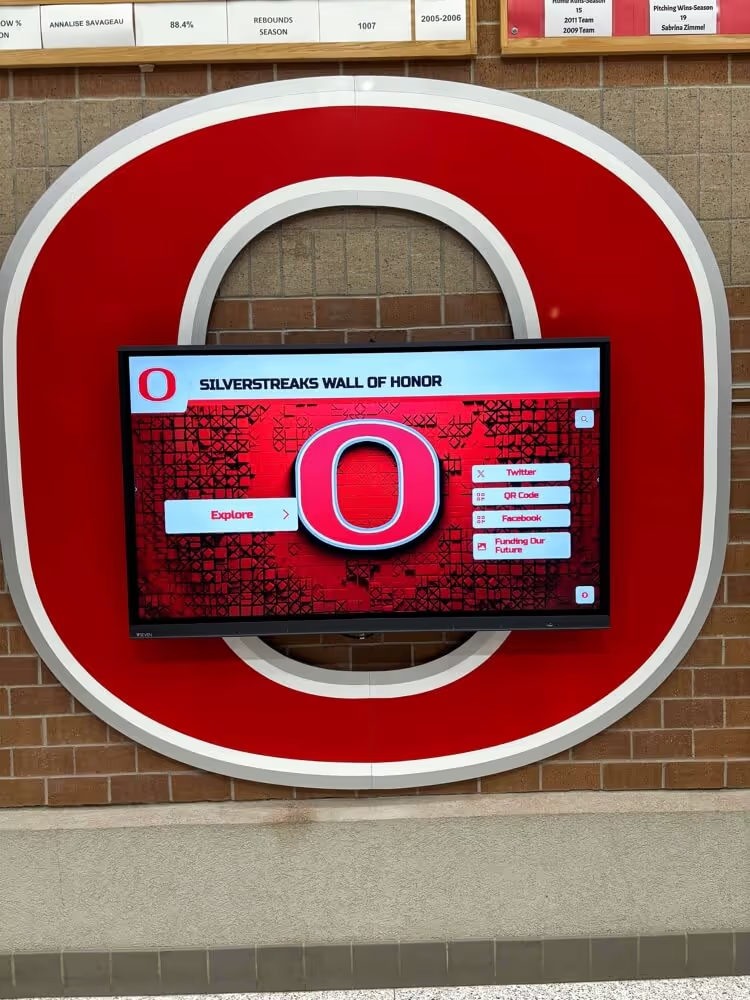
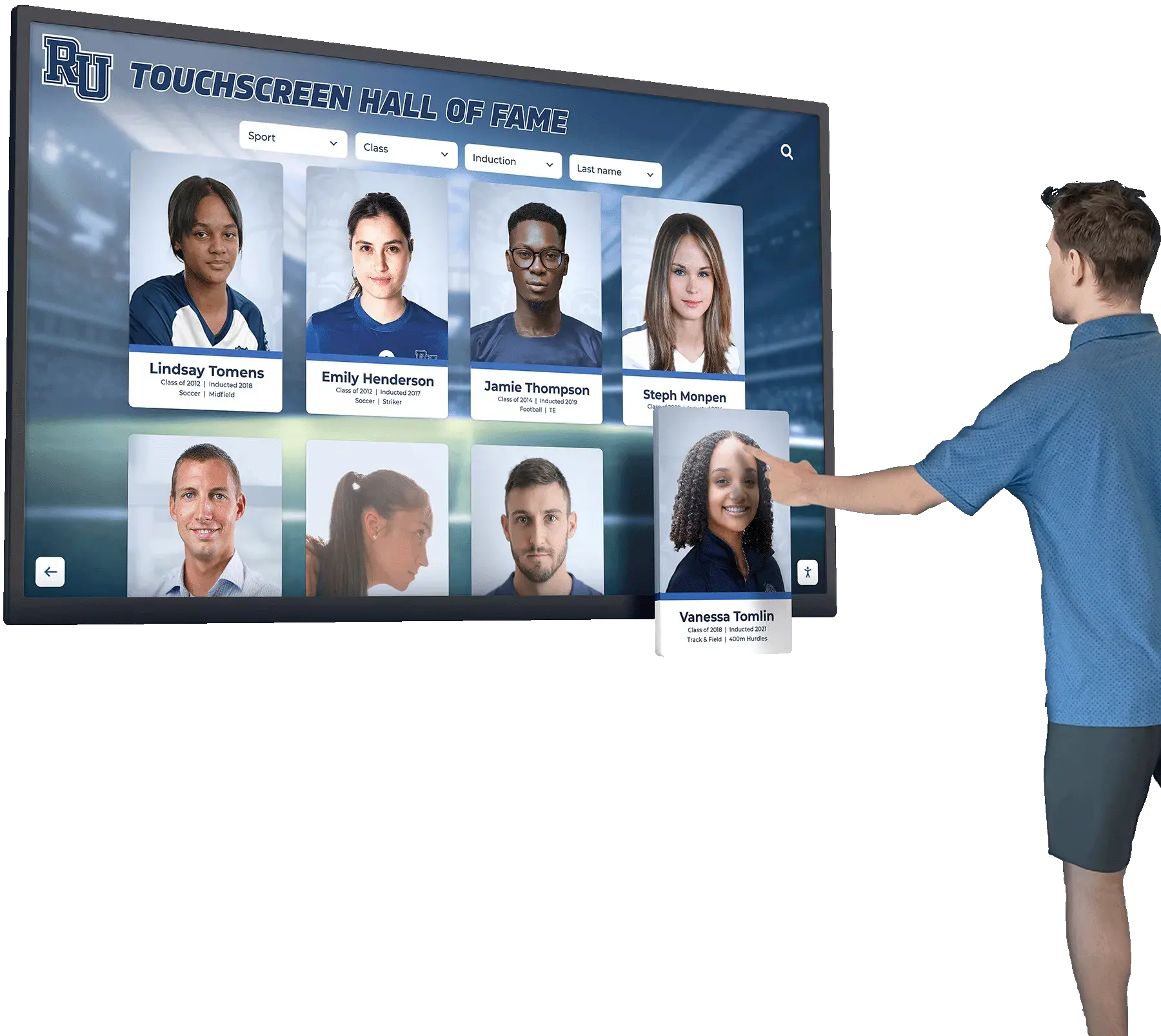
Digital recognition systems create a built-in documentation trail — when a sponsor's name appears in the display record, the treasurer has both a fulfillment confirmation and a renewal conversation asset
Preparing Handoff Notes: What the Incoming Treasurer Needs
One of the most overlooked responsibilities of a departing booster club treasurer is preparing structured documentation for their successor. Without intentional handoff notes, institutional knowledge about sponsor histories, donor preferences, and recognition commitments disappears with the person who held the role.
What Handoff Notes Should Cover
A thorough handoff package for a booster club treasurer includes:
- Financial account access: Bank account details, login credentials (in secure format), signature card update requirements, and any pending transactions or outstanding invoices
- Sponsor roster with history: Not just names and amounts, but which sponsors have been with the program for multiple years, which had concerns last season, and which are up for renewal imminently
- Donor records location: Where the donor log lives (cloud folder, local file, accounting software), how it is organized, and who else has access
- Outstanding recognition commitments: Any recognition elements from the current season that have not yet been delivered — particularly mid-year commitments that roll into the following year
- Vendor contacts: Printer, banner supplier, digital display vendor, awards company — the vendors who know the program’s setup and can help a new treasurer move quickly
- Recurring deadlines: Program print deadline, IRS filing deadline, state registration renewal, annual audit if applicable
- Relationship context: Which sponsors are at risk of not renewing, which donors have expressed interest in increasing their support, which relationships require a personal touch from leadership
The principle mirrors any organizational transition: what a newcomer needs is not just the current state of the accounts, but the context required to make good decisions without re-learning everything from scratch. Athletic director transition checklists follow the same logic — the most successful transitions are the ones where the outgoing leader treats documentation as a professional obligation, not an afterthought.
Structuring the Handoff Meeting
A handoff is more effective as a meeting than as a document drop. Walk the incoming treasurer through each section of the handoff notes, explain the context that is not obvious from the records alone, and introduce them to key vendor contacts before the transition is complete. A one-hour handoff meeting at the start of the new year is worth more than weeks of catch-up emails.
How Digital Recognition Systems Support the Treasurer’s Work
For booster clubs formalizing their sponsor and donor recognition programs, digital display systems offer practical advantages that go beyond aesthetics. They reduce the recognition fulfillment burden by centralizing what would otherwise be scattered across banners, programs, scoreboard slides, and lobby displays.
When a sponsor’s recognition is managed through a digital wall or interactive display, the treasurer can verify that the content is live from anywhere with a cloud login — no need to visit the facility to confirm a banner is still hanging. Updates to sponsor rosters, new donor acknowledgments, and recognition tier changes can be made quickly without fabrication lead times. Digital signage for school athletic recognition platforms typically include content management tools that keep a record of what was published and when — exactly the documentation the treasurer needs for the fulfillment log.
For programs with growing donor rosters, alumni legacy digital walls demonstrate how schools create permanent, searchable records of every donor relationship — the kind of institutional memory that survives treasurer transitions because it lives in a system, not in a single person’s files.
From the treasurer’s perspective, a digital recognition system is not just a display. It is a record-keeping tool that bridges the gap between financial tracking (who gave what) and recognition fulfillment (who was publicly acknowledged, and how). When evaluating digital signage software for school programs, the operational benefits for the treasurer role are easy to understate: less manual verification, automatic content logs, and a permanent archive that the next treasurer can access from day one.
See How Digital Recognition Works for Booster Club Programs
Rocket Alumni Solutions builds donor recognition displays for school athletic programs — giving sponsors and donors visible, lasting acknowledgment that the booster club treasurer can verify and document. A demo shows what your specific facility could look like.
Request a Demo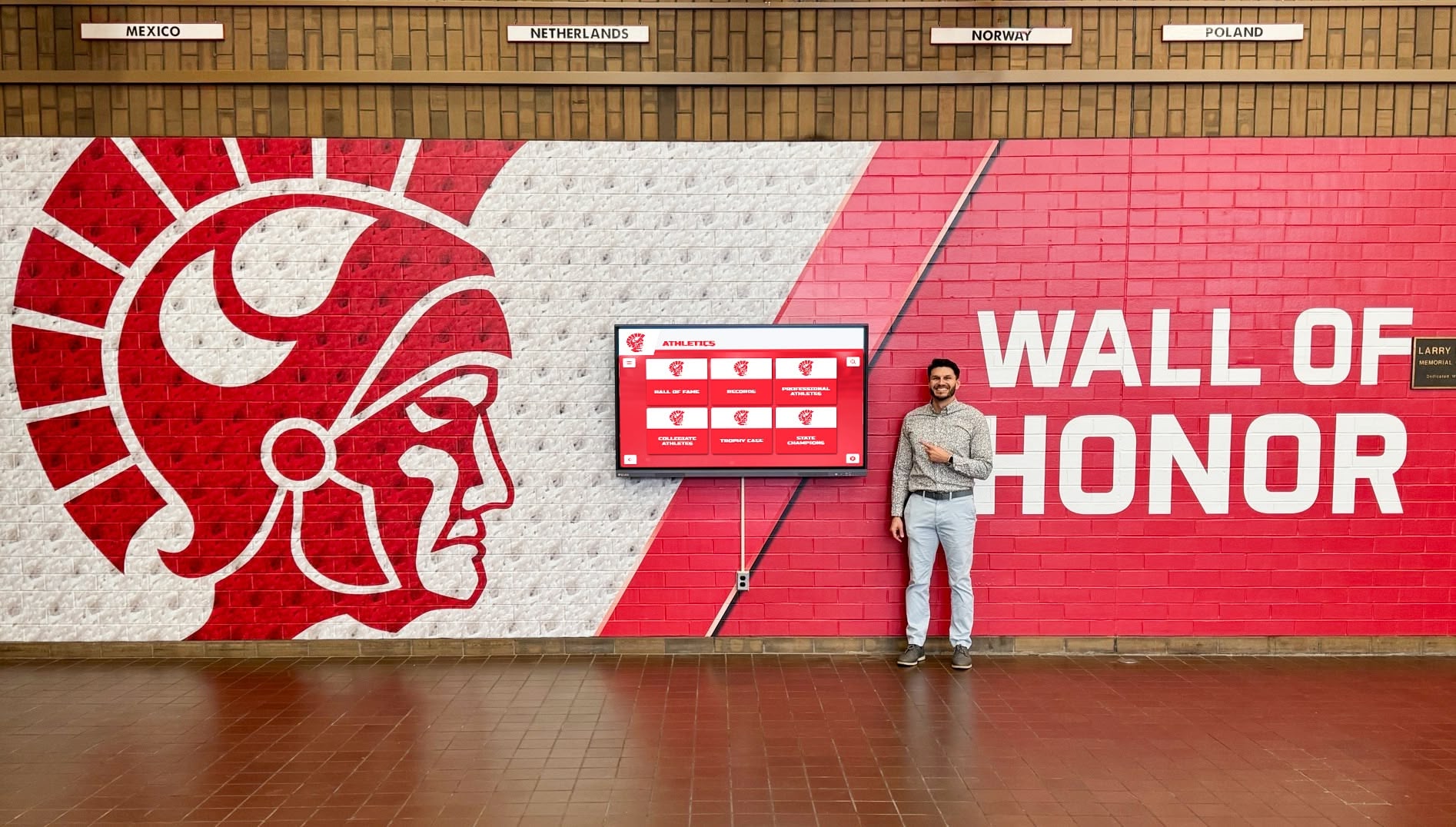
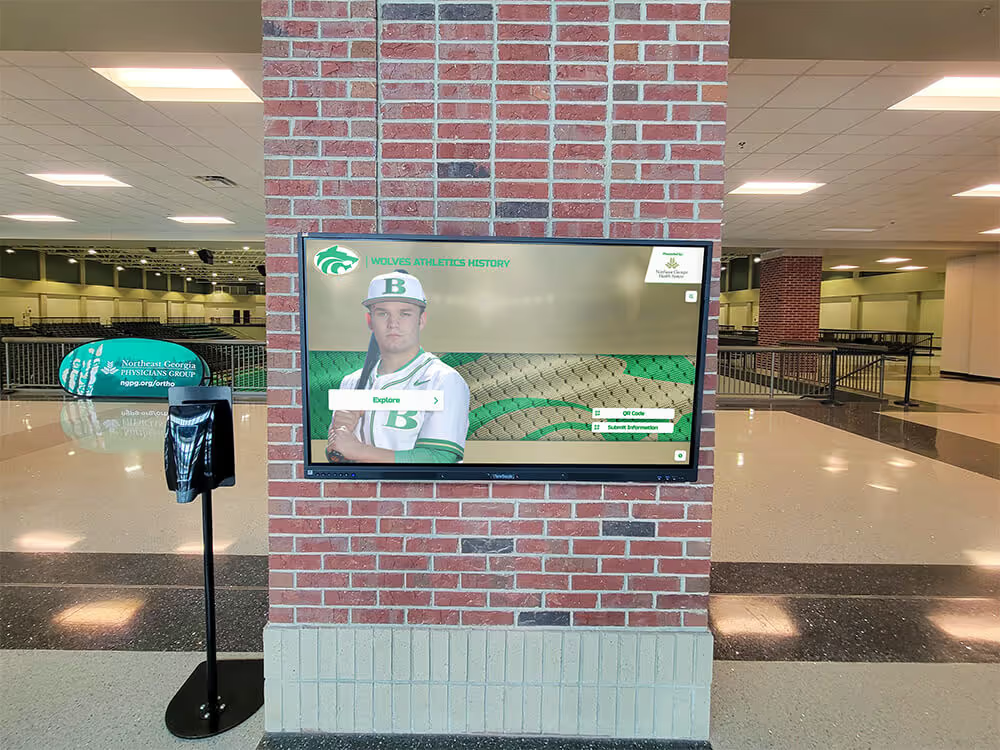
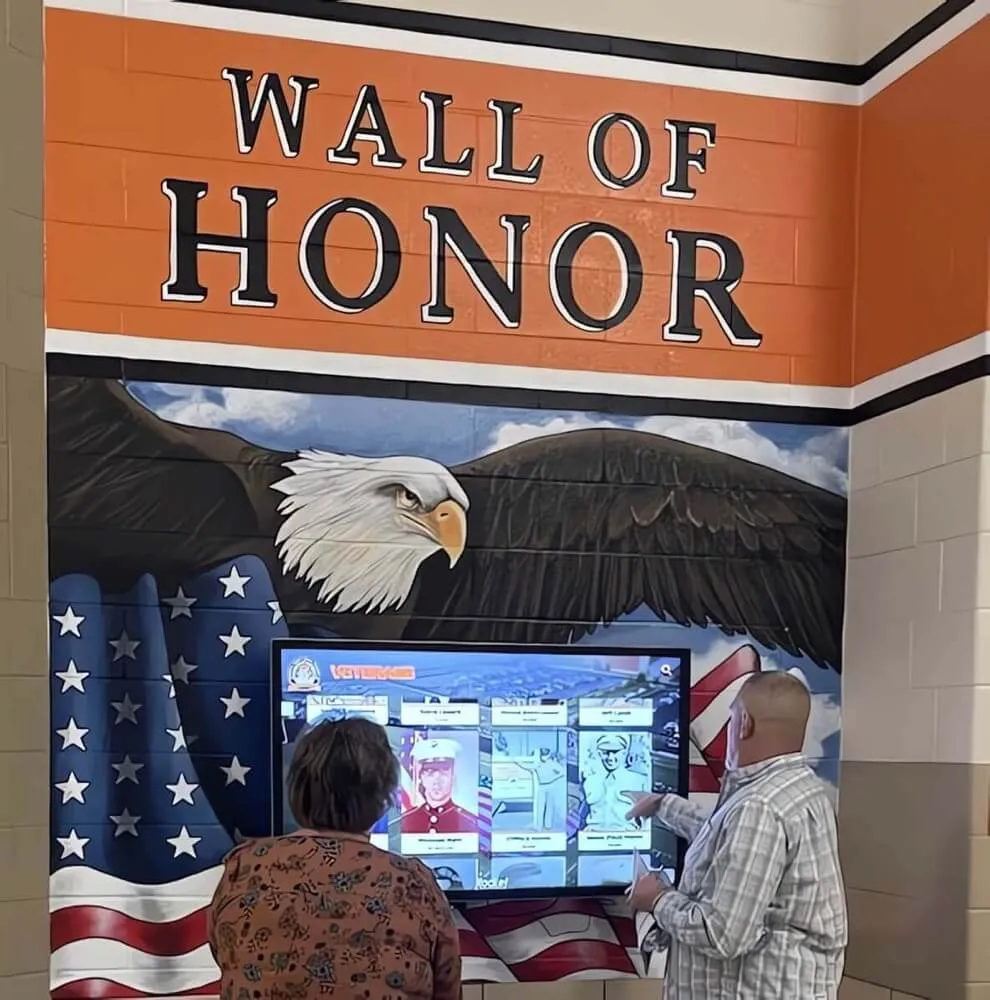
Permanent digital recognition walls create the kind of institutional memory that survives treasurer transitions — every sponsor and donor relationship is visible and documented in one place
Frequently Asked Questions About the Booster Club Treasurer Role
What financial records is a booster club treasurer required to keep?
A booster club treasurer should maintain records of all income and expenses, bank statements, deposit records, invoices, reimbursement documentation, and written acknowledgment letters for all contributions of $250 or more. For IRS-recognized organizations (501(c)(3) or similar), records must support the annual Form 990 or 990-N filing. State-level charitable registration requirements vary; check your state’s requirements annually. Best practice is to retain financial records for at least seven years.
How should a booster club treasurer track sponsor recognition commitments?
Maintain a sponsor fulfillment log separate from the general ledger. For each sponsor, record the recognition package promised, the delivery deadline for each element, the actual delivery date, and documentation (photos or screenshots) confirming delivery. Review the log mid-season and at season end. This documentation serves as proof of performance during renewal conversations and prevents disputed fulfillment claims.
What should a booster club treasurer include in a transition handoff?
A thorough treasurer handoff covers financial account access, the complete sponsor roster with history and renewal timelines, the donor log location and access instructions, any outstanding recognition commitments, vendor contacts, recurring deadlines, and contextual notes on key relationships. Walk the incoming treasurer through the documentation in person if possible — written records alone rarely convey the judgment calls that come with multi-year sponsor relationships.
Do booster clubs need to track donor records separately from sponsor records?
Yes. Donors (individuals contributing without a commercial interest) and sponsors (businesses receiving recognition in exchange for funding) have different record-keeping requirements. Donor records must support IRS acknowledgment letters and track any donor-restricted fund usage. Sponsor records must document the recognition agreement, payment received, and fulfillment status. Mixing the two in a single ledger makes it harder to generate accurate reports for either type of relationship.
How can digital displays help a booster club treasurer manage recognition records?
Digital recognition display platforms typically include cloud-based content management tools that log what was published, when, and for how long. For a booster club treasurer, this creates an automatic fulfillment record — when a sponsor’s name or logo appears in the digital display, the system timestamps the recognition. This replaces manual documentation with a built-in audit trail and makes it easier to demonstrate fulfillment during renewal conversations or board reporting.

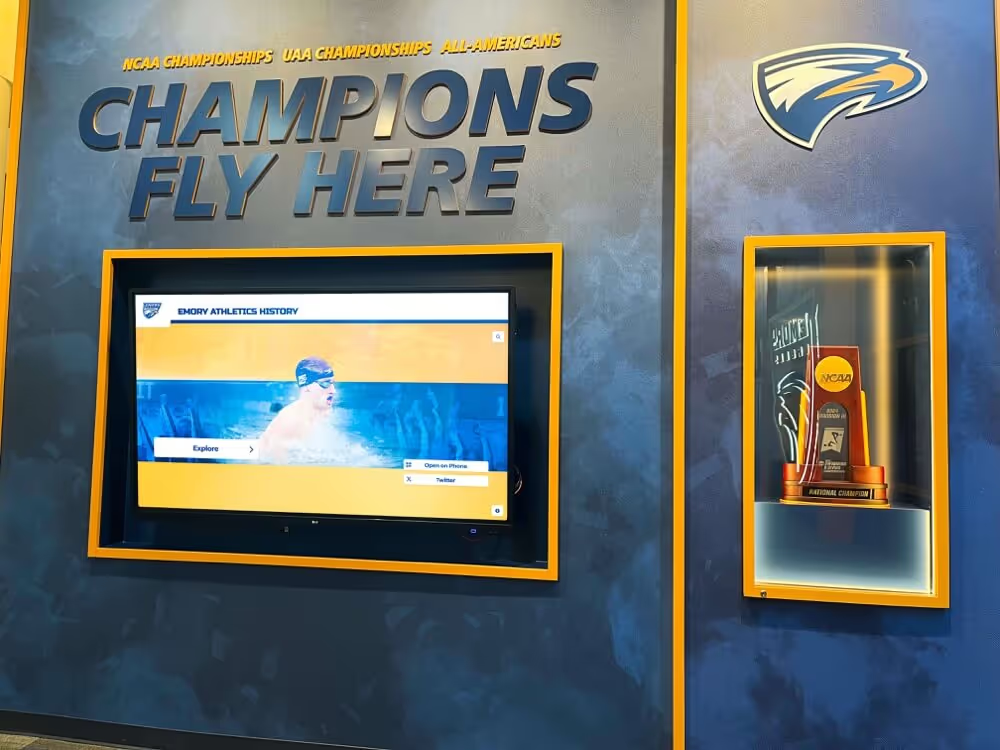
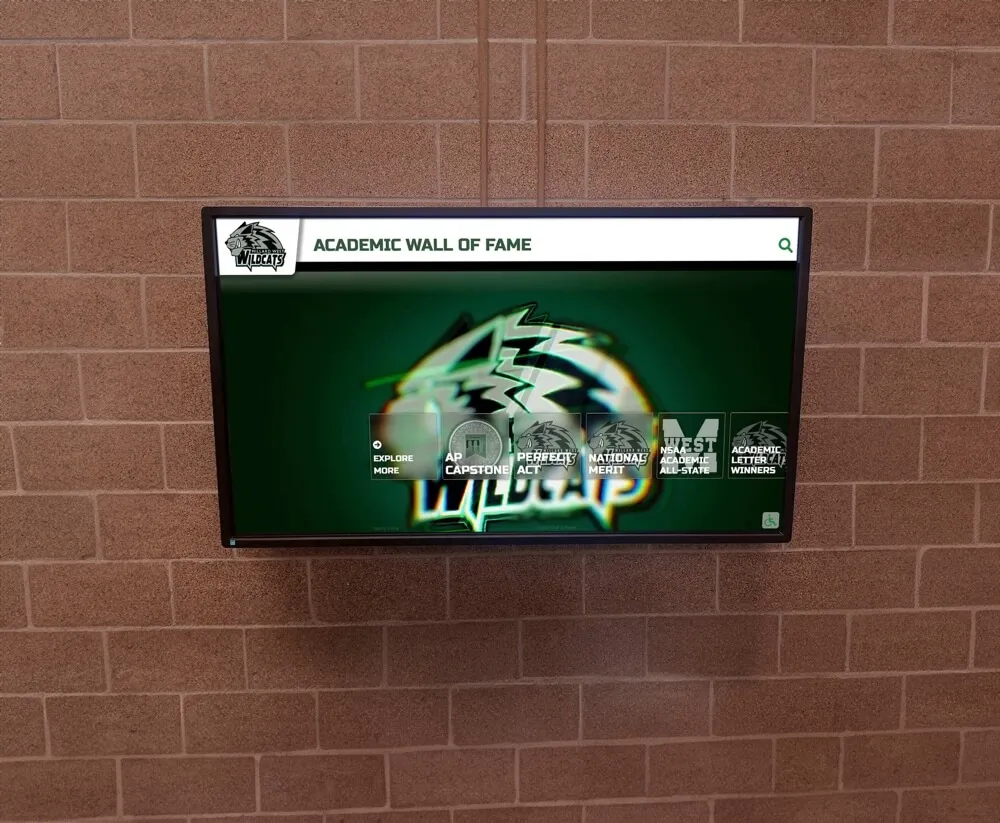
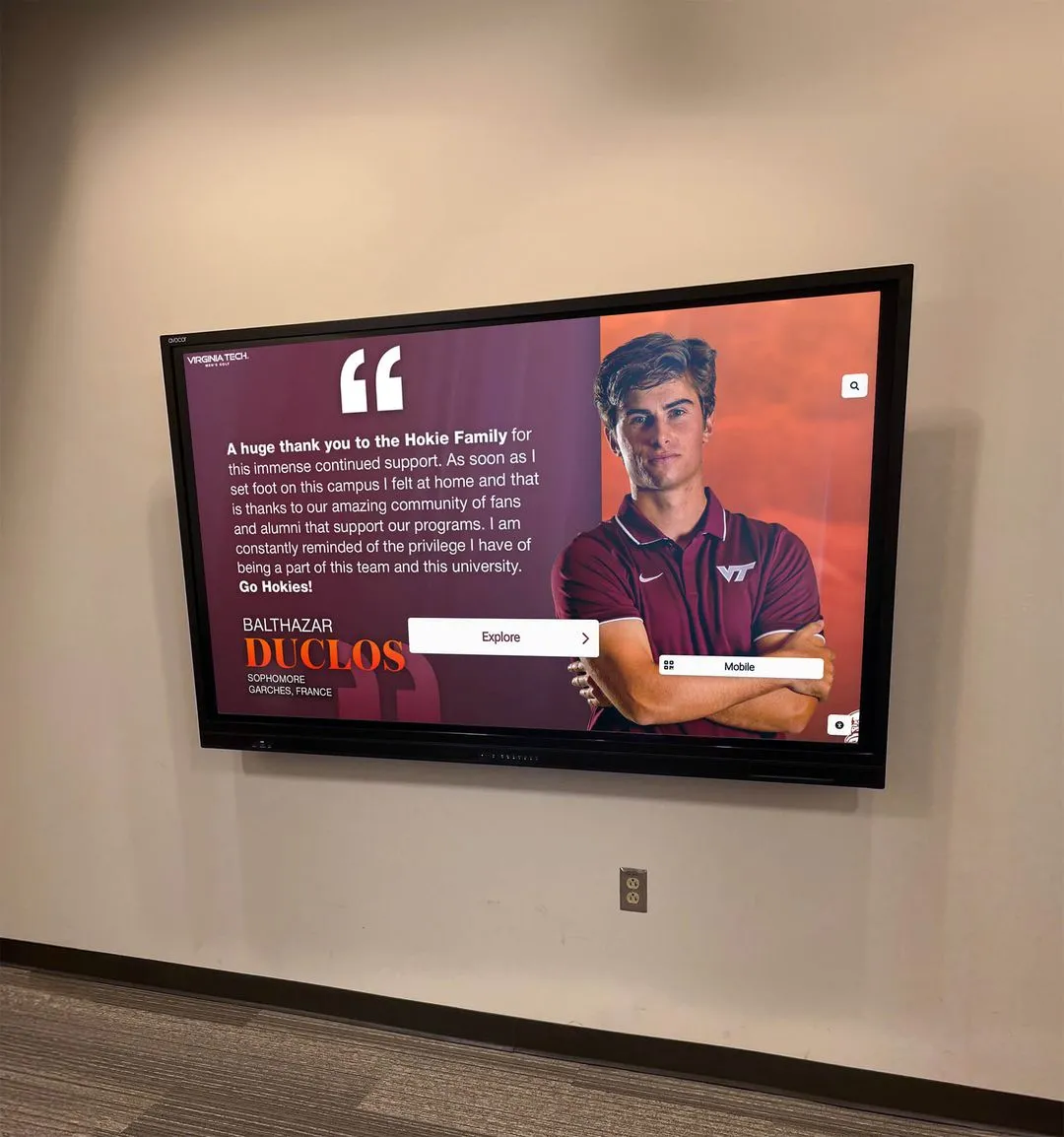
Digital recognition displays create permanent records of every sponsor and donor acknowledgment — giving the booster club treasurer documentation that survives the annual leadership transition
Putting It Together: A Treasurer’s Recognition Calendar
The most effective booster club treasurers build recognition into the annual calendar the same way they build financial deadlines — not as an afterthought at season end, but as a series of checkpoints that mirror the sponsorship cycle.
A practical recognition calendar runs like this: before the season, confirm the sponsor roster, verify payment receipts, and submit recognition content to all relevant display systems. At the first home event, verify banner placement, program listings, and PA acknowledgments. Mid-season, conduct a fulfillment review against the recognition log. At season end, photograph all recognition in place, complete the fulfillment documentation, and begin renewal outreach with the proof-of-performance package ready. Before the leadership transition, compile the handoff notes and schedule the incoming treasurer walkthrough.
That cycle — commit, deliver, document, renew, and transfer — is what separates booster clubs with strong long-term sponsor relationships from those rebuilding their roster every fall. The records the booster club treasurer keeps are not administrative overhead; they are the institutional memory that makes sustainable sponsor and donor relationships possible.
Give Your Sponsors Recognition They Can See All Year
Rocket Alumni Solutions builds digital donor recognition displays for school booster clubs and athletic programs — making sponsor acknowledgment visible, permanent, and easy for the treasurer to document. Request a demo to see what your program's recognition could look like on a custom display.
Request a Recognition Display Demo