



Intent: research
A booster club restricted funds policy is a written governance document that defines how the organization accepts, records, segregates, approves spending from, and reports on gifts designated for a specific purpose. When a donor contributes funds earmarked for a new scoreboard, a family establishes a named scholarship in an athlete’s memory, or a local business sponsors the installation of a digital recognition display, each gift carries an intent the organization is obligated to honor. Without a formal policy, restricted funds are routinely commingled with unrestricted operating money, recognition commitments go untracked, and the organization cannot demonstrate to donors, school administrators, or auditors that designated gifts were spent as directed.
This guide covers what a restricted funds policy must contain, how to build one in seven documented steps, and how the discipline it creates connects directly to accurate, lasting recognition for every donor whose gift was designated for a named purpose.
Not legal or financial advice: This guide describes commonly used practices for educational purposes only. Your organization’s specific requirements depend on your school district structure, state nonprofit regulations, and any requirements set by your school’s governing body. Consult a licensed CPA, attorney, or your school district’s finance office before establishing or revising financial policies.
A sound booster club restricted funds policy creates a documented chain of custody for every designated gift — from the moment donor intent is recorded to the day recognition is installed, displayed, or awarded. Organizations that manage restricted funds without a written policy find themselves unable to answer basic questions: Where did the scoreboard fund balance go? Who approved the spending? Was the donor’s recognition ever completed?

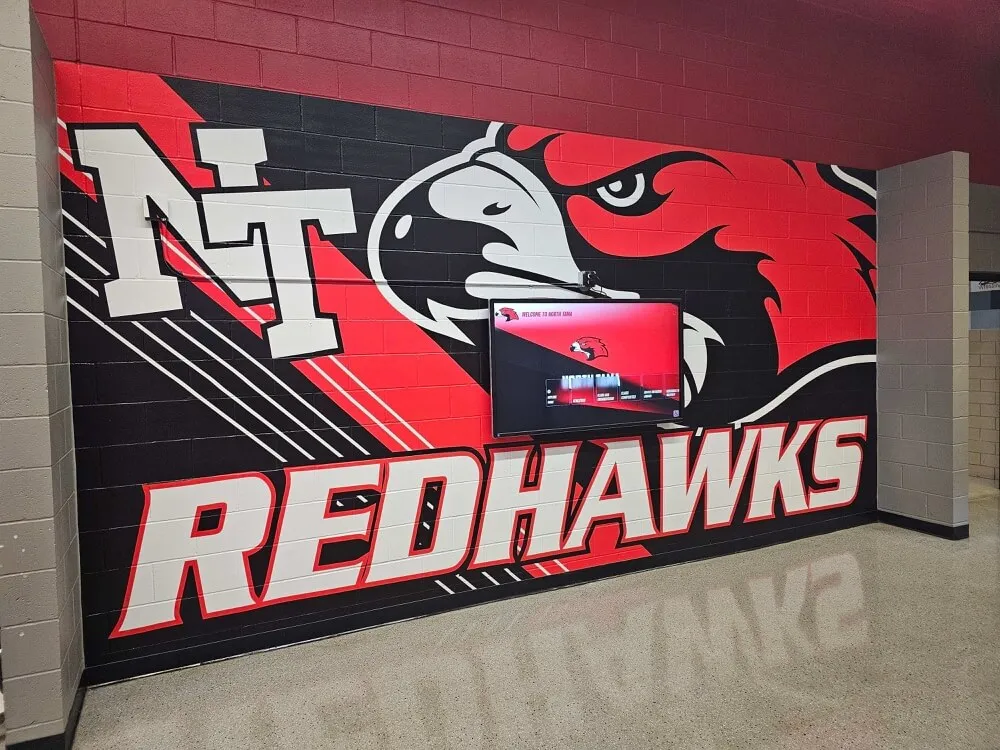
Every name on a recognition wall or donor display represents a gift that arrived with a stated purpose — a booster club restricted funds policy ensures that purpose is documented at receipt and traceable all the way to the recognition that honors it
What Is a Booster Club Restricted Funds Policy?
A booster club restricted funds policy is a written document that specifies how the organization handles money that arrives with a donor-stated purpose. Unlike unrestricted contributions — which the board may allocate freely to any approved program expense — restricted funds must be used only for the purpose the donor specified when making the gift. The policy creates the institutional structure that enforces this separation across leadership transitions, audit cycles, and the complexity of a busy athletic season.
The policy addresses six core questions:
- What qualifies as a restricted fund?
- How does the organization document donor intent at the point of receipt?
- How are restricted balances tracked separately from unrestricted operating funds?
- Who has authority to approve spending from restricted accounts?
- How does the board monitor and report on restricted fund balances?
- When and how is a restricted fund considered fulfilled and closed?
A policy that answers all six questions consistently across every gift, every season, and every leadership team protects the organization’s credibility with donors, satisfies school administrators’ oversight requirements, and creates the documentation a recognition program depends on to deliver what was promised.
Why Restricted Funds Require a Separate Policy
Restricted and unrestricted funds look identical in a bank account — they are both cash. The distinction is entirely documental. Without a policy that enforces separate tracking from the moment of receipt, restricted gifts silently become operating revenue. The funds get spent on routine program expenses. The recognition commitment tied to the gift is never recorded. When the donor later asks about progress on the project their gift was meant to fund, the organization has no documented record to share.
The risk compounds at leadership transitions. A treasurer who understood which funds were restricted and what recognition commitments they supported may leave without documenting that knowledge. The incoming officer sees a bank balance, not a map of obligations. Restricted gifts that were never formally recorded become impossible to reconstruct. Donors who gave with a specific purpose in mind receive either silence or a recognition the organization cannot verify it earned the right to display.
Programs that invest in permanent recognition infrastructure — digital donor walls, record boards, interactive hall of fame displays — depend on this documentation discipline from the very beginning. Those assets exist because donors gave with a purpose. Confirming that the purpose was honored requires records that trace from the original gift letter or pledge form to the recognition now visible in the facility.
For context on how digital time capsule display solutions for schools preserve donor and institutional history across decades, those systems are most effective when the financial records that funded them are as organized as the stories they tell.

Named recognition assets depend on an unbroken paper trail — from the donor's original designation, through fund segregation and spending approval, to the day the name was permanently displayed
Core Components of a Booster Club Restricted Funds Policy
1. Definitions: Restricted, Temporarily Restricted, and Unrestricted
The policy must define its own terms before it can enforce them. At minimum, a restricted funds policy should distinguish:
- Unrestricted funds: Contributions with no stated purpose, which the board may allocate to any approved program expense
- Temporarily restricted funds: Contributions designated for a specific purpose or time period — for example, a gift to fund a specific facility improvement, recognition installation, or annual scholarship award
- Permanently restricted funds: Contributions where the principal must be preserved in perpetuity — for example, an endowed scholarship where only investment income may be spent (uncommon but possible in some school foundation structures)
Most booster club restricted gifts fall into the temporarily restricted category. The policy should specify this clearly so officers know when they are handling restricted money and what documentation applies.
2. Acceptance Procedures and Donor Intent Documentation
Every restricted gift should be accepted through a documented process that captures donor intent before the money is deposited. The acceptance record should include:
- Donor name and contact information
- Gift amount and date received
- Payment method
- Stated designated purpose — quoted directly from the donor’s written instructions, pledge form, or gift letter
- Any conditions or timeline requirements attached to the gift
- Written acknowledgment issued to the donor confirming the designated use
Verbal agreements about restricted use are not sufficient documentation. A donor who says at a booster event that they want their contribution applied to a new recognition display has stated an intent — but unless that intent is captured in writing before the deposit is made, the organization has no enforceable record. Structured recognition programs documented in academic recognition program guides for schools demonstrate how institutions track named awards and scholarships from initial gift through annual execution — the same discipline a booster club’s restricted funds policy must enforce for athletic program gifts.
3. Fund Segregation and Accounting
Restricted funds must be tracked separately from unrestricted operating funds. This does not necessarily require a separate bank account for every restricted gift — though some organizations choose that approach — but it does require that accounting records clearly identify each restricted balance, its designated purpose, and every transaction affecting it.
At minimum, the treasurer should maintain:
- A restricted fund register listing each active fund, its original gift amount, the purpose stated at receipt, all deposits, all approved expenditures, and the current balance
- A sub-account or fund code in the accounting system that tags every transaction associated with a restricted gift
- A quarterly reconciliation confirming accounting balances match bank records and no restricted funds have been inadvertently spent for unrestricted purposes
4. Spending Authorization
Restricted funds should require a formal authorization step before any expenditure is approved. The policy should specify:
- Who must approve restricted fund expenditures — typically the treasurer and at least one other officer such as the president or a board designee
- What documentation must accompany a spending request — a vendor invoice, project description, and confirmation the expenditure matches the fund’s stated purpose
- What happens when a proposed expenditure does not clearly match the fund’s purpose — who decides, what process is followed, and whether written donor consent is required to modify the use
The authorization step prevents a well-meaning officer from covering a general program expense from a restricted account because the unrestricted balance happened to run low. The policy makes that shortcut structurally impossible by requiring written approval tied to the fund’s designated purpose.
5. Recognition Fulfillment Tracking
For restricted gifts that carry a recognition commitment — a named scholarship, a sponsored display installation, a named seating section or facility element — the policy must establish how fulfillment is tracked and documented.
Fulfillment documentation should include:
- A description of the recognition asset funded by the gift
- The date recognition was implemented, installed, or awarded
- Evidence of completion — a photograph of the installed display, a screenshot of the digital recognition listing, a copy of the award certificate or program listing
- The name under which recognition was recorded, matching the donor’s stated preference
This documentation serves two purposes: it closes the fulfillment record for accounting purposes, and it provides the evidence the organization needs when demonstrating to donors that their intent was honored. Recognition assets that are properly documented — whether as named scholarships, achievements on a basketball record board honoring contributors to the program, or interactive displays in the facility lobby — give donors and sponsors direct, verifiable confirmation that the organization delivered.
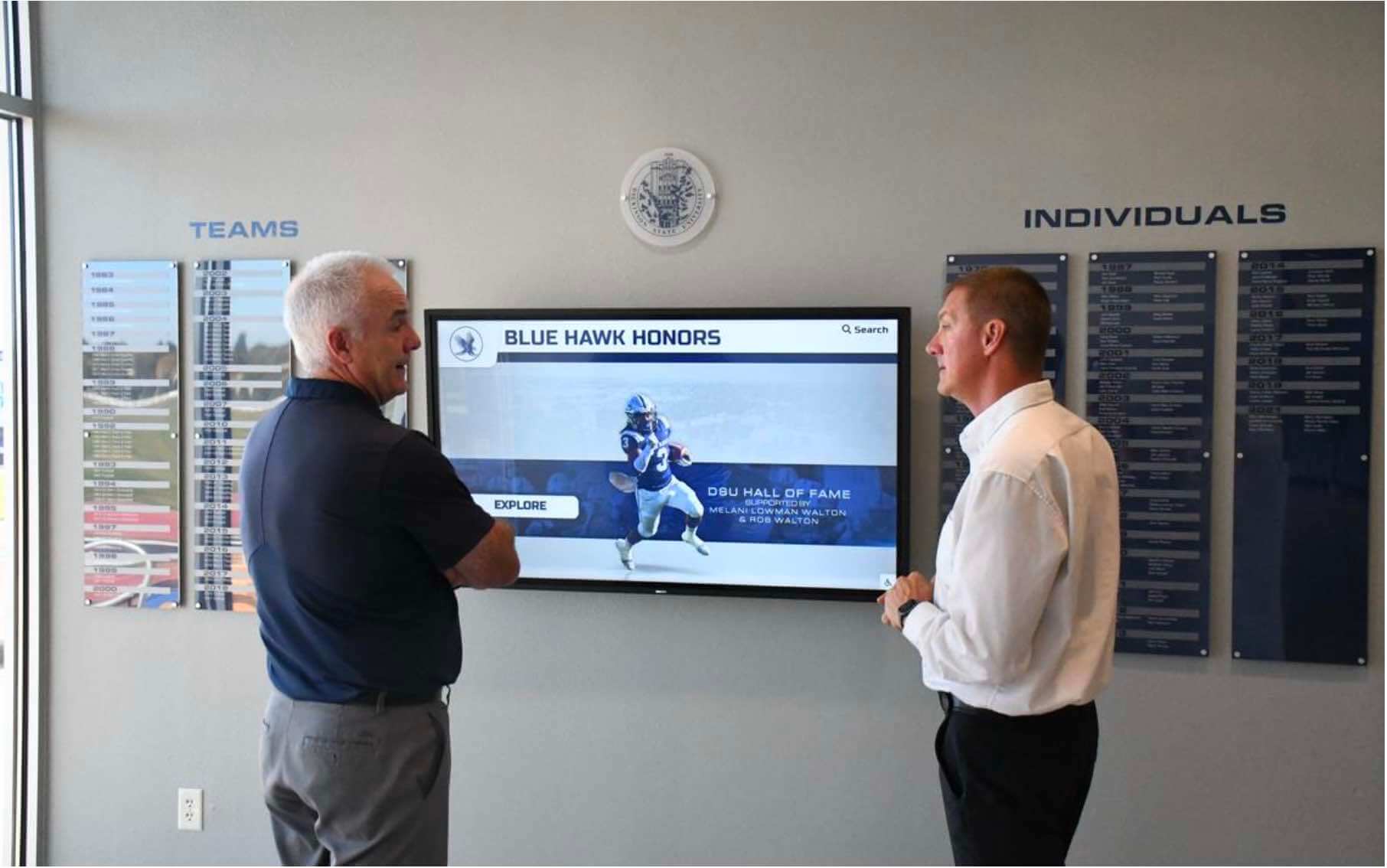
Viewing a finished recognition display is the final step in a chain that begins with documented donor intent — a restricted funds policy creates that chain and ensures every link can be verified
6. Board Reporting Requirements
The board should receive a restricted fund summary at each regular meeting — not only at year-end. The summary should cover:
- Each active restricted fund and its current balance
- Expenditures made from restricted funds since the last report
- Pending recognition fulfillments and their expected completion dates
- Any restricted funds that have been fully expended and are ready to close
Regular reporting keeps the full board informed and creates a continuous record of how restricted funds are being managed. It also ensures that a single officer’s absence or transition cannot leave the organization without visibility into outstanding commitments.
7. Fund Closure
When a restricted gift’s purpose has been fully accomplished — the equipment was purchased, the recognition display was installed, the scholarship was awarded — the fund should be formally closed. The closure record should include:
- Confirmation that all designated funds were spent for the stated purpose
- Final accounting reconciliation
- Fulfillment documentation as described in component 5
- Date of formal closure, approved by the board or treasurer
Closed fund records should be retained for the same period as other financial records — typically three to seven years depending on state requirements and IRS guidance for tax-exempt organizations.
Seven Steps to Track a Restricted Gift From Receipt to Recognition
The following sequence describes how a well-implemented restricted funds policy handles a single restricted gift from initial contact to final recognition. Organizations can use this as a workflow template for every designated gift the booster club accepts.
Receive and document donor intent. When a restricted gift arrives — by check, wire transfer, or online payment — record the donor’s stated purpose in writing before the deposit is made. If the gift arrived without written instructions, contact the donor to confirm the designation before depositing.
Issue a written acknowledgment. Send the donor written confirmation of receipt including the gift amount and the designated purpose. This acknowledgment serves as both the donor’s tax record and the organization’s formal acceptance of the restriction.
Open or update the restricted fund register. Create or update the entry in the restricted fund register with the gift amount, designated purpose, and receipt date. Tag the deposit in the accounting system with the fund’s designated code.
Segregate from operating funds. Ensure the restricted amount is tracked as a distinct balance in your accounting records. If your organization uses a single bank account, use fund codes or sub-accounts in your accounting software to maintain the separation without requiring a separate account.
Complete the spending authorization process before disbursement. When the time comes to spend from the restricted fund — purchasing equipment, contracting an installation, awarding a scholarship — complete the written authorization process specified in your policy before any payment is issued.
Document fulfillment. When the restricted purpose is accomplished, document completion with evidence. For recognition-linked gifts, this means photographing the installed asset, archiving the digital recognition listing, or preserving the award records and program materials.
Close the fund and retain records. After fulfillment, formally close the fund in your accounting system, record the closure date, and file all related documents in your retained records archive.
Programs that have built recognition infrastructure — school award programs that celebrate student and athlete achievement, or athletic programs where football helmet award sticker traditions honor donor-supported team accomplishments — find that this seven-step sequence is exactly what allows them to maintain the connection between a donor’s original intent and the recognition visible in the facility years later.
Restricted Funds Policy: Core Components Checklist
The table below covers the core elements a booster club restricted funds policy should address. Organizations can use it to audit an existing policy or build a new one from the ground up.
| Policy Component | Required Elements |
|---|---|
| Definitions | Clear distinction between restricted, temporarily restricted, and unrestricted funds |
| Acceptance procedures | Written documentation of donor intent at point of receipt; formal gift acknowledgment issued |
| Fund register | Active register tracking each restricted fund, purpose, deposits, expenditures, and balance |
| Accounting segregation | Fund codes or sub-accounts separating restricted from unrestricted operating balances |
| Spending authorization | Written approval required before any restricted fund disbursement; approvers named |
| Recognition fulfillment log | Evidence of completion documented for all recognition commitments |
| Board reporting | Regular restricted fund summary reviewed at each board meeting |
| Fund closure process | Formal closure with reconciliation, fulfillment documentation, and board approval |
| Record retention | Restricted fund records retained for minimum required period (typically 3–7 years) |
| Officer transition protocol | All restricted fund records and outstanding obligations transferred in writing at leadership transitions |

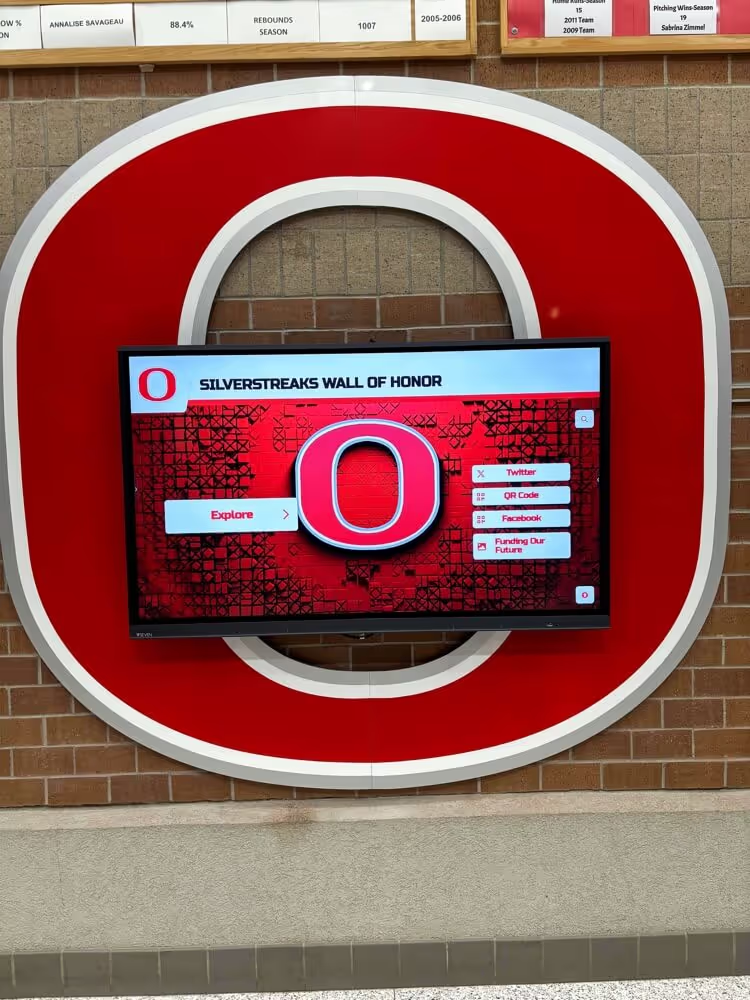
The recognition shields, plaques, and digital displays visible in a school facility lobby represent completed restricted fund cycles — gifts received, segregated, approved, spent, and documented from acceptance through installation
How a Restricted Funds Policy Connects to Recognition Infrastructure
The relationship between a restricted funds policy and a booster club’s recognition program is direct: every named display, every scholarship award, every sponsored facility element visible in your school today was funded by a gift that arrived with a stated purpose. The policy is what ensures that purpose was honored and that the organization can prove it was.
Recognition infrastructure — digital hall of fame displays, interactive donor walls, named scholarship programs, record boards — depends on an unbroken chain of documentation from the original gift letter to the final installation. When that chain is complete, donors who see their name on a display or read a scholarship announcement have objective evidence that the organization they trusted delivered. When the chain is broken, recognition becomes an unprovable assertion.
The governance frameworks that support long-term recognition programs — including athletic hall of fame deaccession policies that determine how recognition assets are maintained and updated across decades — all share the same underlying requirement: someone must maintain the records. A restricted funds policy creates the structured habit that makes that maintenance possible across every leadership transition and every fiscal year.
The same habits of documentation that enforce donor intent on the financial side support the accuracy of recognition programs. Officers who are rigorous about recording what a gift was for, who approved the spending, and when fulfillment occurred are the same officers who can confidently tell a donor, a school administrator, or an incoming board member exactly what their contribution built and exactly where their name is displayed.

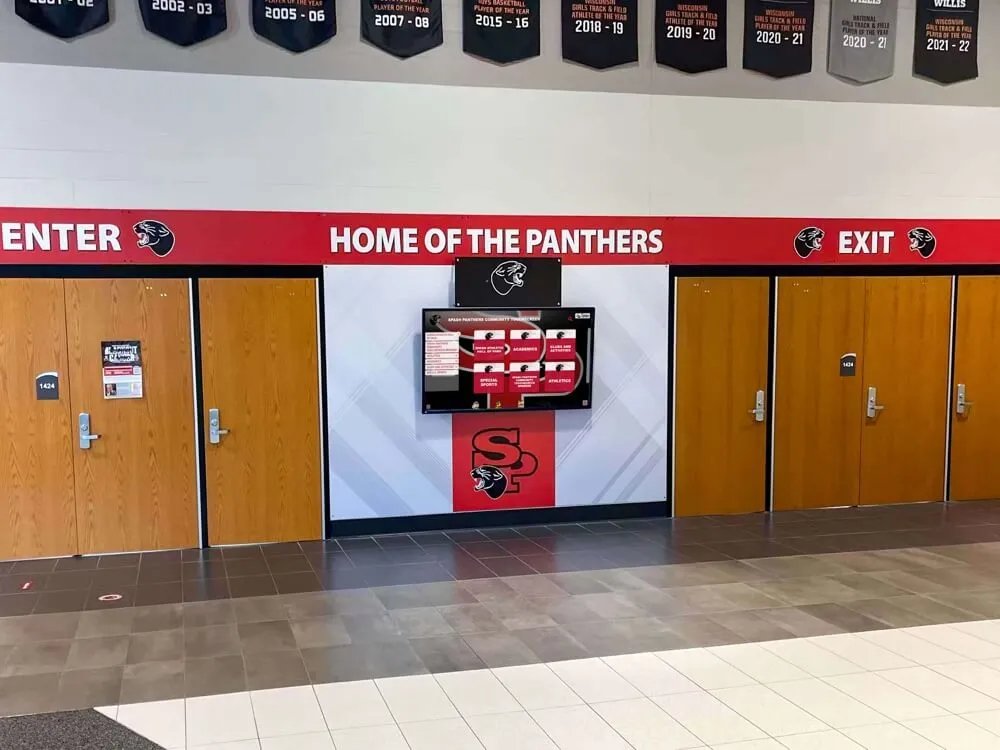
Interactive recognition kiosks in school hallways are funded by gifts that arrived with a designated purpose — a restricted funds policy is the governance document that ensures each gift reaches the recognition that honors it
Frequently Asked Questions
What is a restricted fund in a booster club?
A restricted fund in a booster club is money contributed by a donor for a specific stated purpose that the organization is obligated to honor. The restriction is set by the donor at the time of the gift — not by the board. Common examples include donations designated for equipment purchases, named scholarships, facility improvements, or recognition installations such as digital displays or record boards. Restricted funds may only be spent for their designated purpose and must be tracked separately from the organization’s unrestricted operating income.
How should a booster club track restricted funds?
A booster club should track restricted funds using a written fund register that lists each restricted gift, its designated purpose, all deposits, all approved expenditures, and the current balance. The register should be reconciled against bank records at least quarterly. Accounting software that supports fund codes or sub-accounts simplifies the process by tagging every transaction with the restricted fund it applies to. The fund register should be reviewed by the full board at each regular meeting so that all officers are aware of outstanding obligations and remaining balances.
Can a booster club spend restricted funds for a different purpose?
A booster club generally cannot redirect restricted funds to a different purpose without the donor’s explicit written consent. The restriction is established by the donor’s intent at the time of the gift, not by the organization’s preferences at the time of spending. If the original purpose becomes impossible or impractical — for example, if a planned facility improvement is cancelled — the organization should contact the donor in writing to request a modification before spending the funds for any alternative purpose. Consult a CPA or attorney familiar with your state’s nonprofit regulations for guidance specific to your situation.
What happens to restricted fund records when a booster club treasurer transitions?
When a treasurer transitions out of the role, all restricted fund documentation should be formally transferred to the incoming officer as part of a written handoff package. The package should include the current fund register, copies of original gift acknowledgment letters and donor correspondence, records of expenditures made from each fund, fulfillment documentation for completed recognition commitments, and a summary of any outstanding obligations. A restricted funds policy should include an explicit transition protocol so this handoff is standard practice — not dependent on the departing officer’s initiative.
Why does documenting donor intent matter for recognition programs?
Documenting donor intent matters for recognition programs because every named recognition asset — a scholarship, a digital display, a sponsored facility element — represents a commitment the organization made when it accepted the gift. If the organization cannot demonstrate that restricted funds were spent as the donor intended, recognition loses its credibility: the organization is thanking donors for support it cannot verify was used appropriately. Documented intent, paired with documented fulfillment, creates the complete record that allows a recognition program to grow in credibility across seasons, donors, and leadership transitions.
Building a Recognition Program That Honors Every Donor’s Intent
A booster club restricted funds policy is ultimately about credibility. It is the document that allows your organization to make a promise to a donor — “your gift will be used for this purpose, and you will see your name recognized because of it” — and prove, with documented records, that the promise was kept. Organizations that treat restricted fund documentation as a compliance formality discover it is actually the foundation of their recognition program: the chain that runs from gift letter to fund register to fulfillment documentation to the name now visible on a display, a scholarship announcement, or a permanently installed recognition asset.
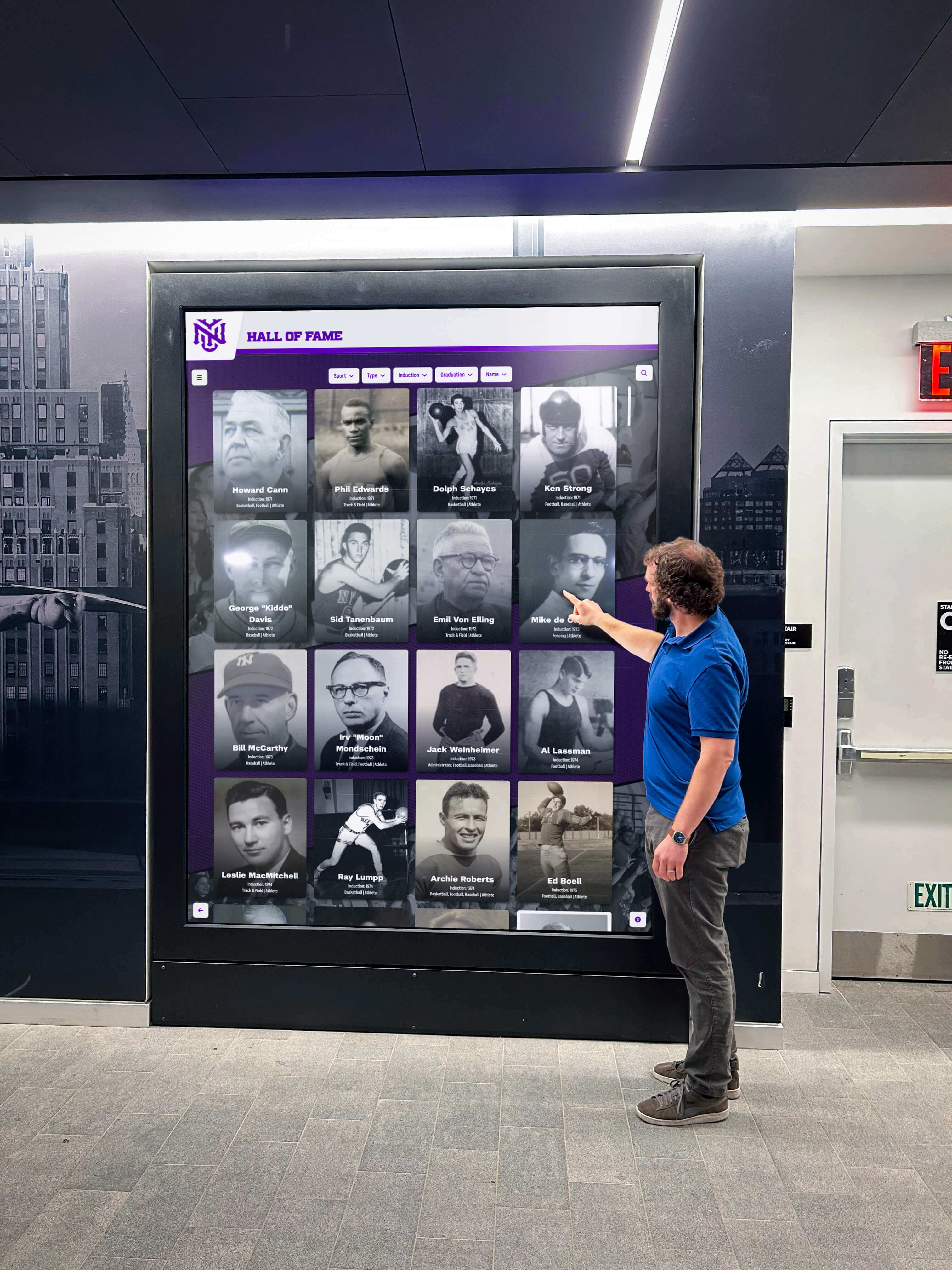
Every name and recognition element visible on an interactive display represents a completed restricted fund cycle — documented acceptance, segregated tracking, authorized spending, and verified fulfillment that a restricted funds policy made possible
See How a Digital Recognition Display Honors Restricted Donor Gifts
Rocket Alumni Solutions builds interactive digital recognition displays for school athletic programs — giving booster clubs a permanent, visible platform to honor the donors whose restricted gifts funded equipment, scholarships, and facility improvements. Schedule a demo to see what your facility could look like.
Schedule Your Recognition Display Demo