



A booster club reserve policy defines how much unrestricted cash your organization holds as a financial cushion and which specific obligations — sponsor deliverables, awards, banners, and long-term recognition display costs — that cushion must be sized to protect. Most booster clubs set reserves informally, if at all. The result is that recognition commitments made to sponsors and donors become exposed whenever a revenue shortfall, a leadership transition, or an unexpected expense interrupts the normal operating cycle.
A written reserve policy with a defined calculation method prevents that exposure. It gives school administrators, athletic directors, and incoming officers a documented framework that does not depend on any single person’s memory or judgment.
Not legal or financial advice: This guide describes commonly used reserve-policy practices for educational purposes only. Your organization’s specific requirements depend on your school district structure, state nonprofit regulations, and your school’s governing body. Consult a licensed CPA or your school district’s finance office before establishing or revising financial policies.
Building a reserve policy for a booster club means answering two questions: how much is enough to hold, and what specific costs does that reserve need to cover? The second question is the one most organizations skip — and it is the one that determines whether the reserve actually protects the program when it matters.

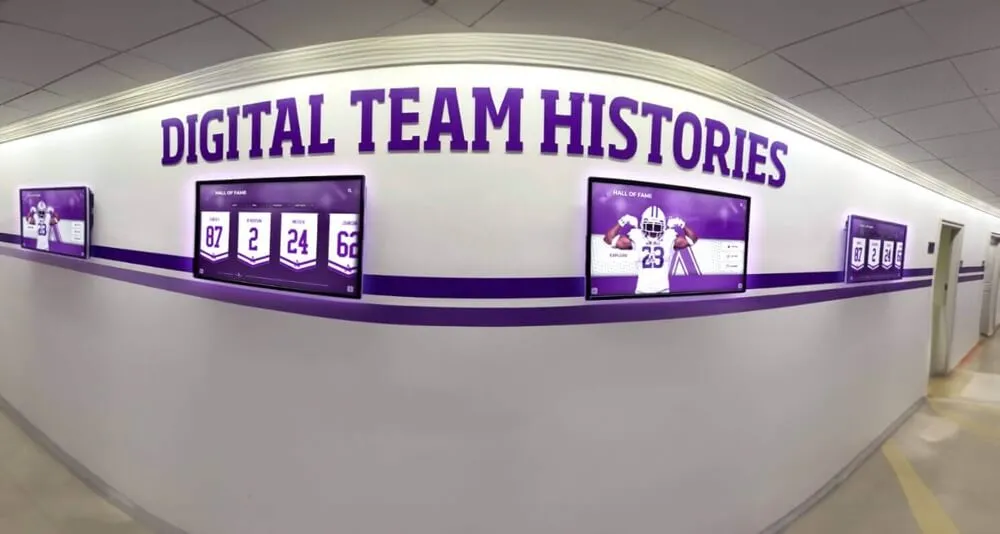
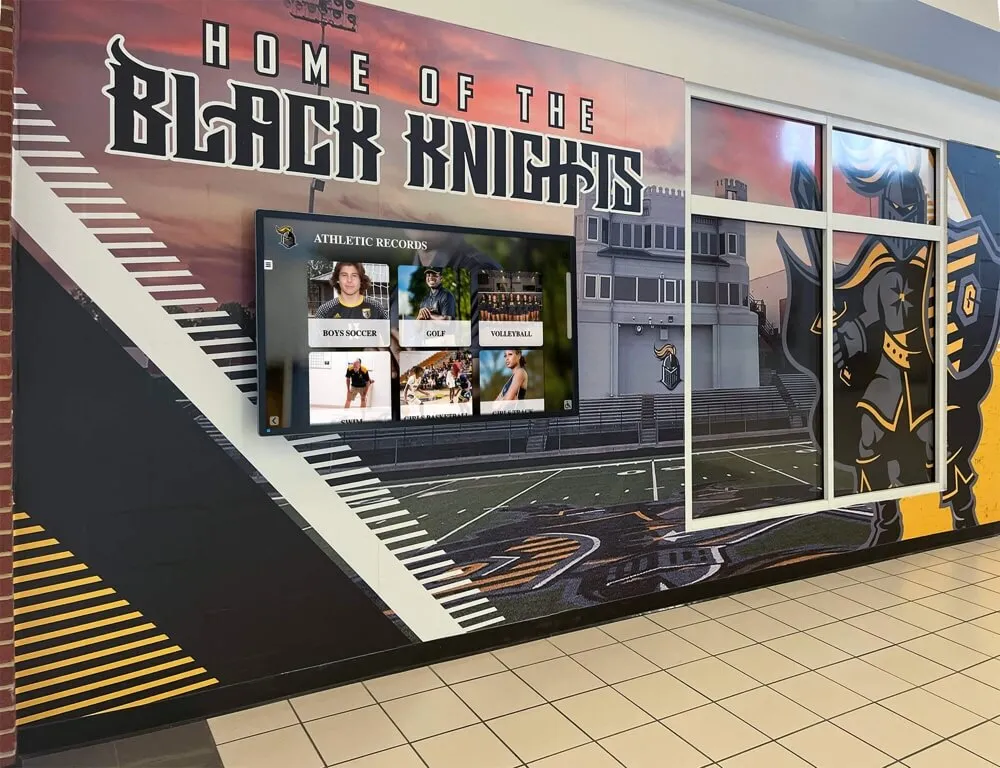
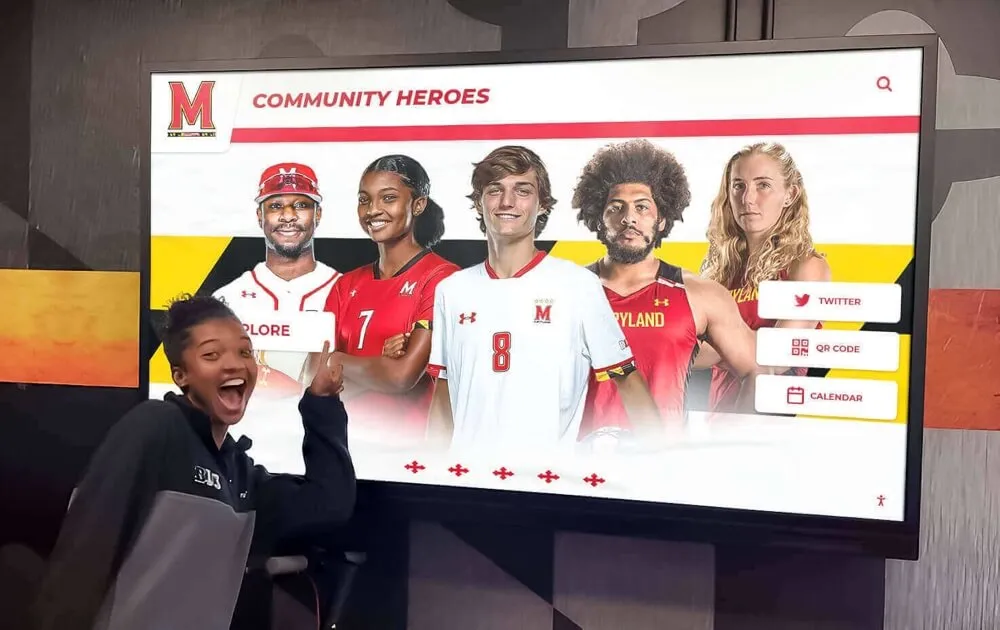
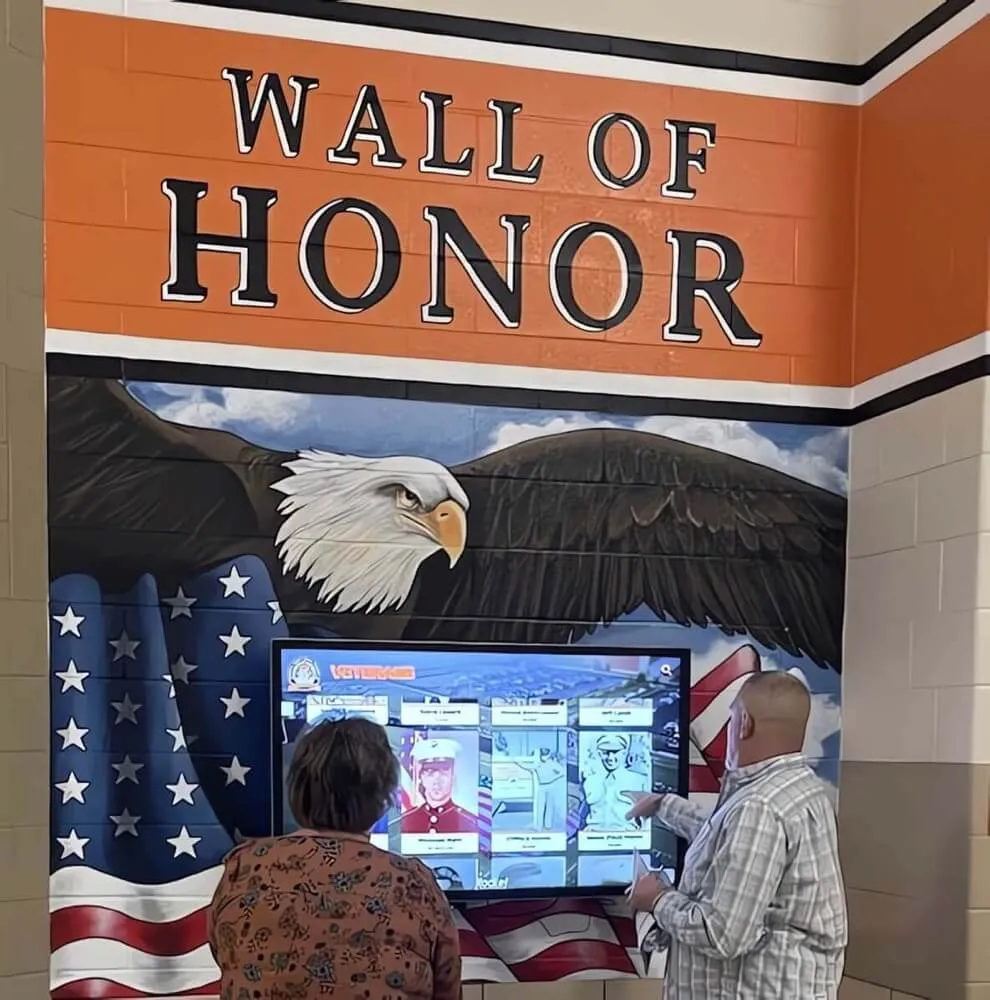
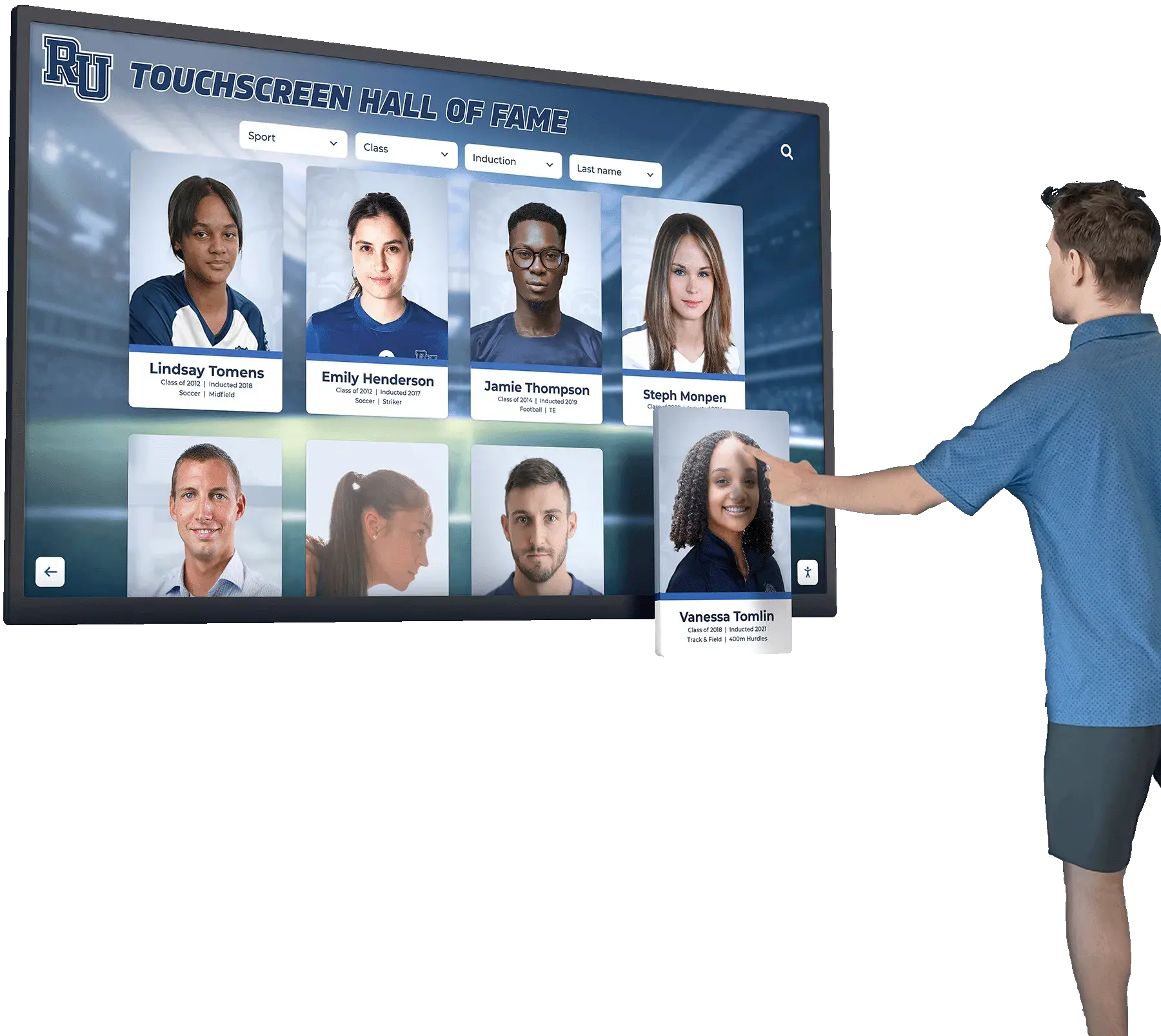
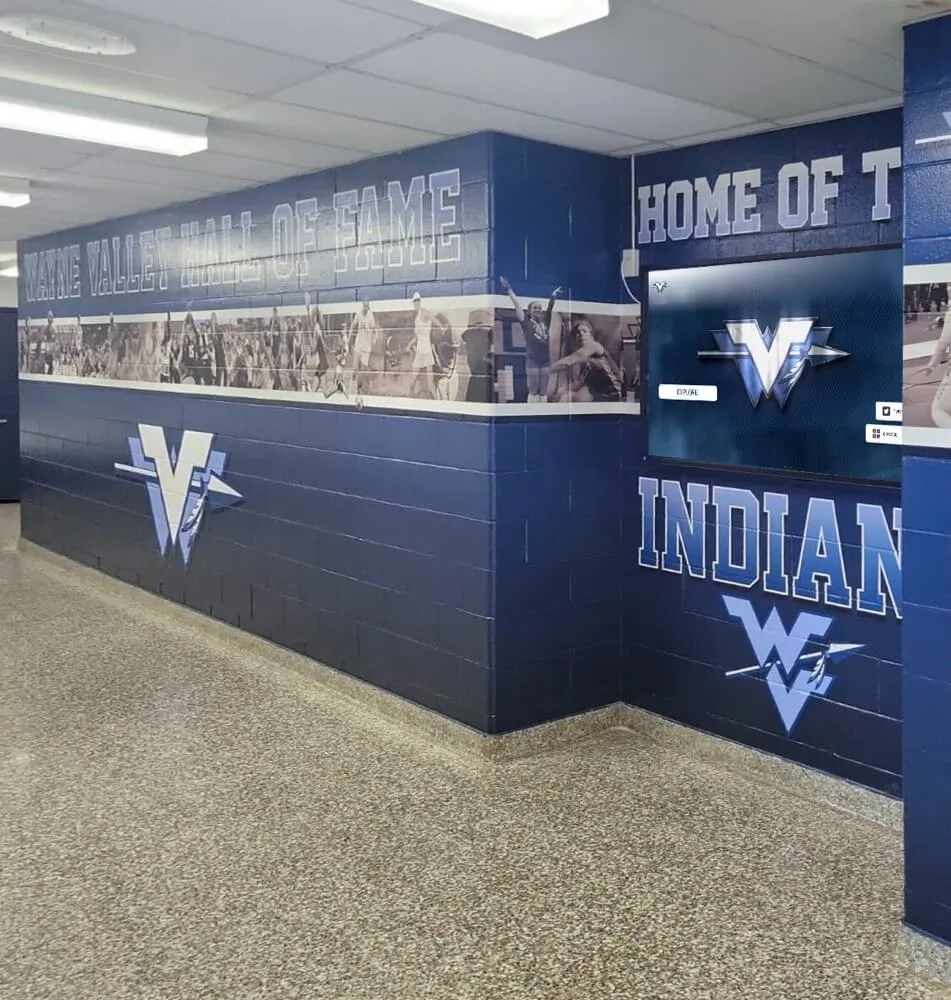
Digital recognition displays are among the multi-season recognition obligations that a booster club reserve policy must explicitly protect — they represent ongoing costs that extend beyond a single fundraising cycle
What Is a Booster Club Reserve Policy?
A booster club reserve policy is a written document that specifies how much unrestricted cash the organization maintains in reserve, how that target is calculated, what the funds may be used for, and under what circumstances the board may draw on them. The policy transforms the abstract idea of “keeping some money in the bank” into a defined, defensible standard that any officer or auditor can understand and verify.
The reserve is distinct from the operating budget. Operating funds are allocated to specific program expenses — uniforms, events, equipment, recognition materials. Reserve funds are held as a cushion that protects the organization’s ability to fulfill commitments when revenue is delayed, falls short, or does not arrive at all. Without a reserve, the first shortfall becomes an immediate program problem.
According to guidance published by the National Council of Nonprofits, healthy nonprofit organizations typically maintain reserves covering three to six months of operating expenses. That standard translates directly to school booster clubs: an organization spending $60,000 per year on program operations should hold a reserve of roughly $15,000 to $30,000. The actual target depends on the specific recognition obligations the organization has made — and those obligations vary significantly from one program to another.
How to Calculate Your Reserve Target: A Four-Step Method
The following method gives booster club officers a structured way to set a reserve target that reflects actual obligations. Complete each step using figures from your most recent fiscal year or current operating budget.
Step 1: Calculate three months of core operating expenses.
Add up the fixed and semi-fixed expenses your organization must pay regardless of revenue: insurance premiums, any lease or facility fees, required state or federal filings, minimum technology subscriptions, and any expenses with contracted payment schedules. Divide your annual total by four to get a three-month baseline. This baseline is the floor — the minimum your reserve must cover before recognition obligations are added.
Step 2: Inventory your recognition obligations for the current season.
List every recognition commitment your organization has made for the current season: sponsor banners and their production and installation costs, program advertising placements, digital display content, PA announcements, award plaques or trophies, and any ceremony costs. Total the cost of fulfilling every one of those commitments from reserve if sponsorship revenue did not arrive on schedule. This figure represents the recognition exposure your reserve must absorb during the season.
Step 3: Add multi-year recognition liabilities.
Identify any recognition obligations that extend beyond one season. A sponsor who purchased a three-year banner placement, a hall of fame inductee whose installation has been budgeted, a digital display with an annual software subscription, or a named award funded through a designated contribution — each creates a forward liability that your reserve needs to partially cover. Add a proportional annual share of each multi-year liability to your reserve target.
Step 4: Set the reserve floor and ceiling.
The floor is the total of Steps 1, 2, and 3. The ceiling is typically 150 percent of the floor — enough to provide a meaningful buffer without leaving operational funds unnecessarily idle. State the floor and ceiling as specific dollar amounts or as a defined formula in the policy document. The board reviews whether actual reserves fall within that range at each fiscal year end and acts if they do not.
A practical example: a booster club with $48,000 in annual operating expenses ($12,000 for Step 1), $12,000 in current-season recognition commitments (Step 2), and $6,000 in multi-year recognition liabilities (Step 3) calculates a reserve floor of $30,000 and a ceiling of $45,000. The board’s documented goal is to hold between $30,000 and $45,000 in unrestricted reserve at year end.
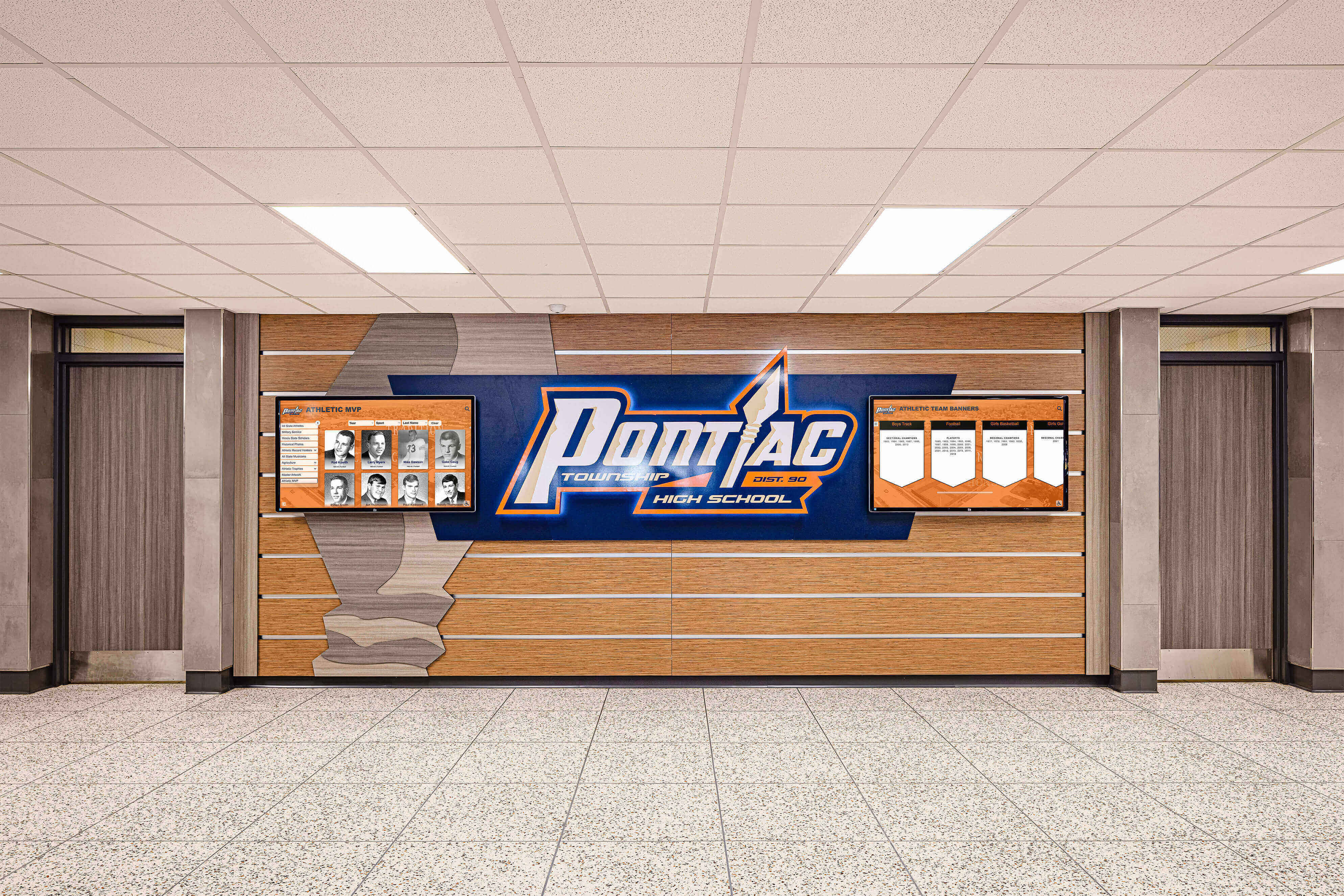
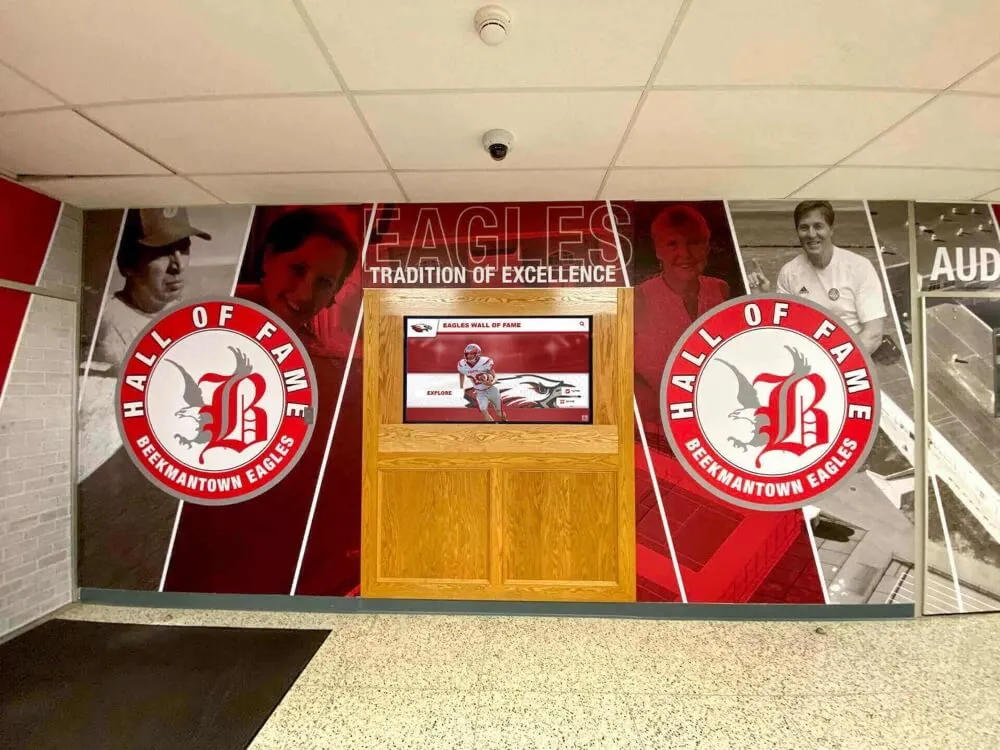
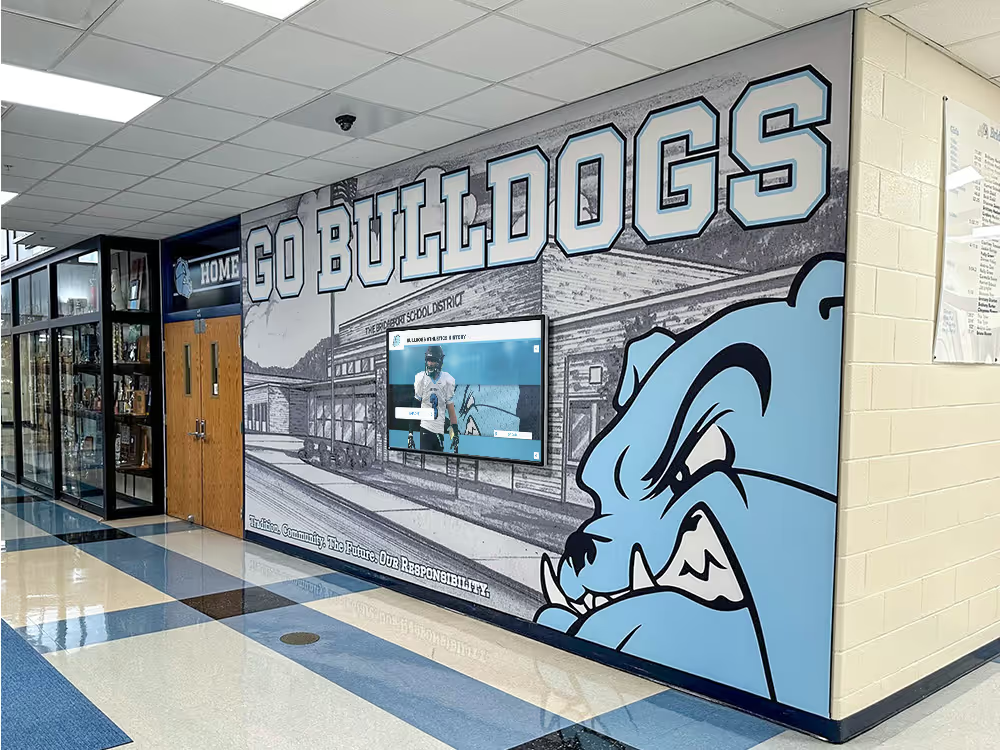
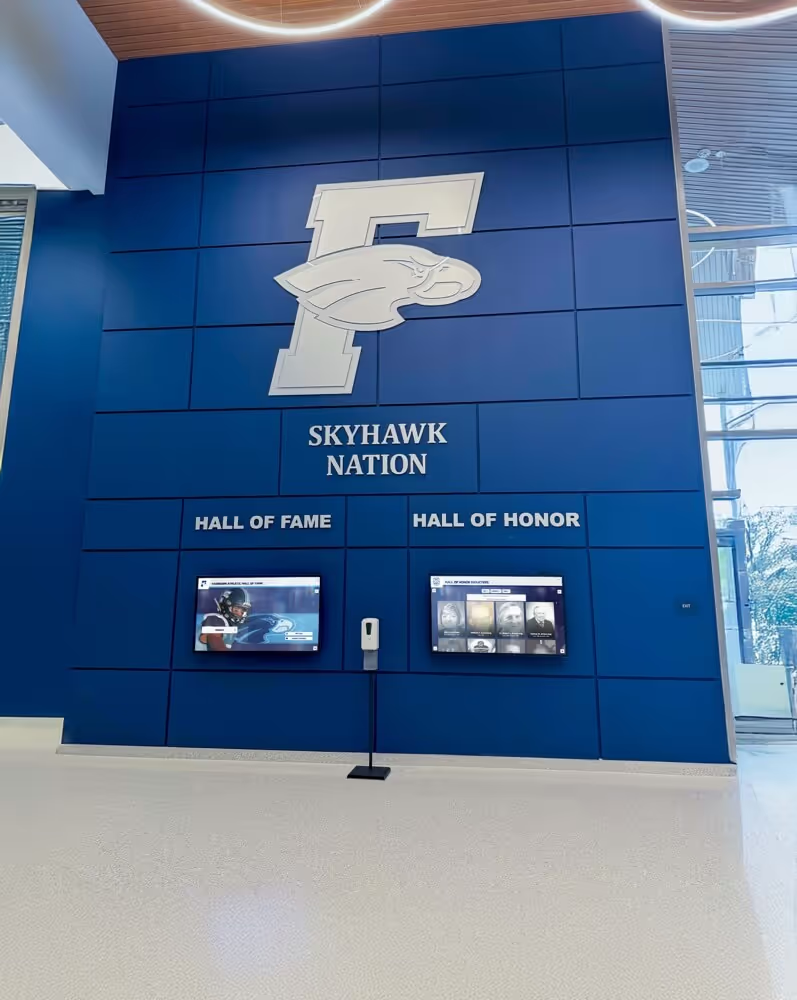
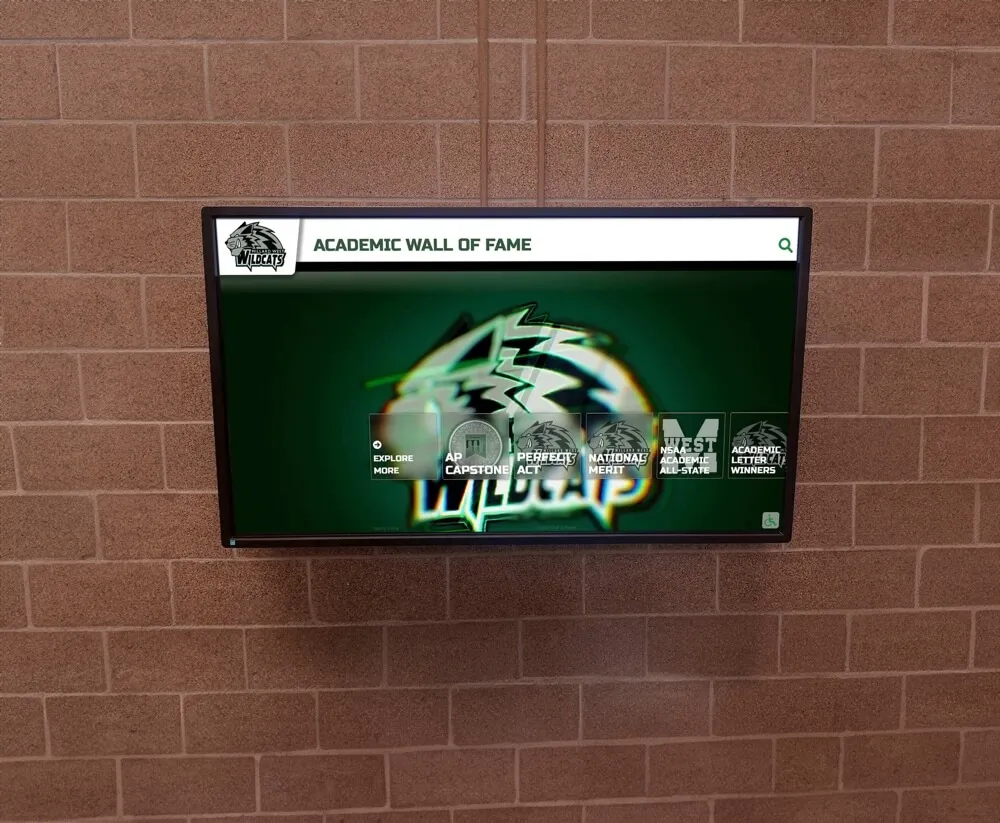
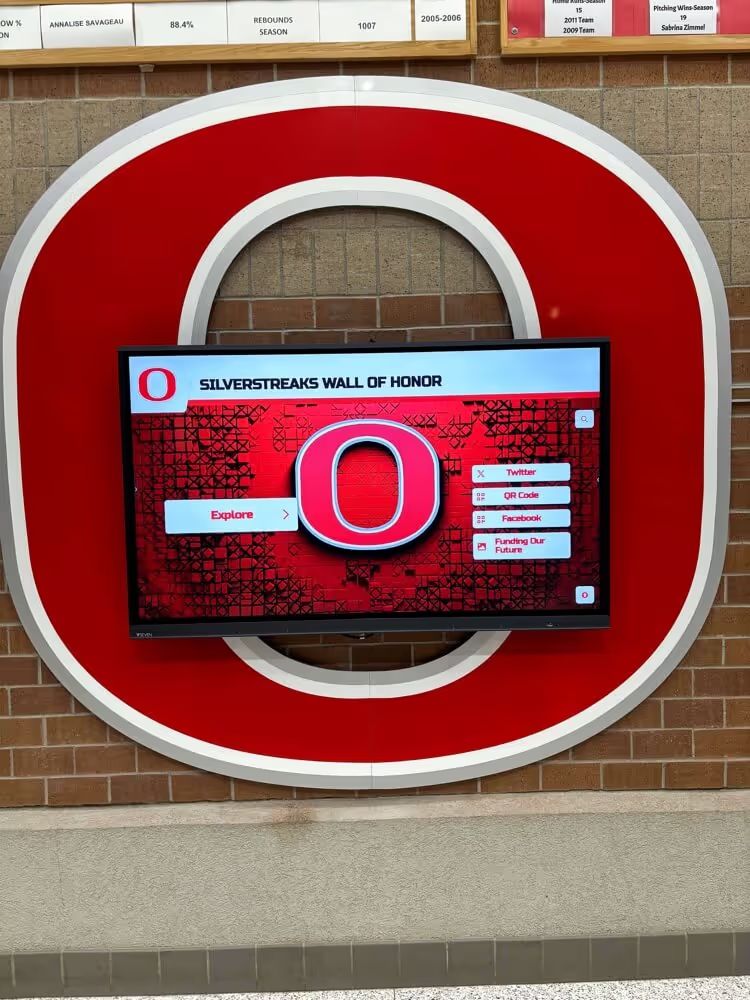
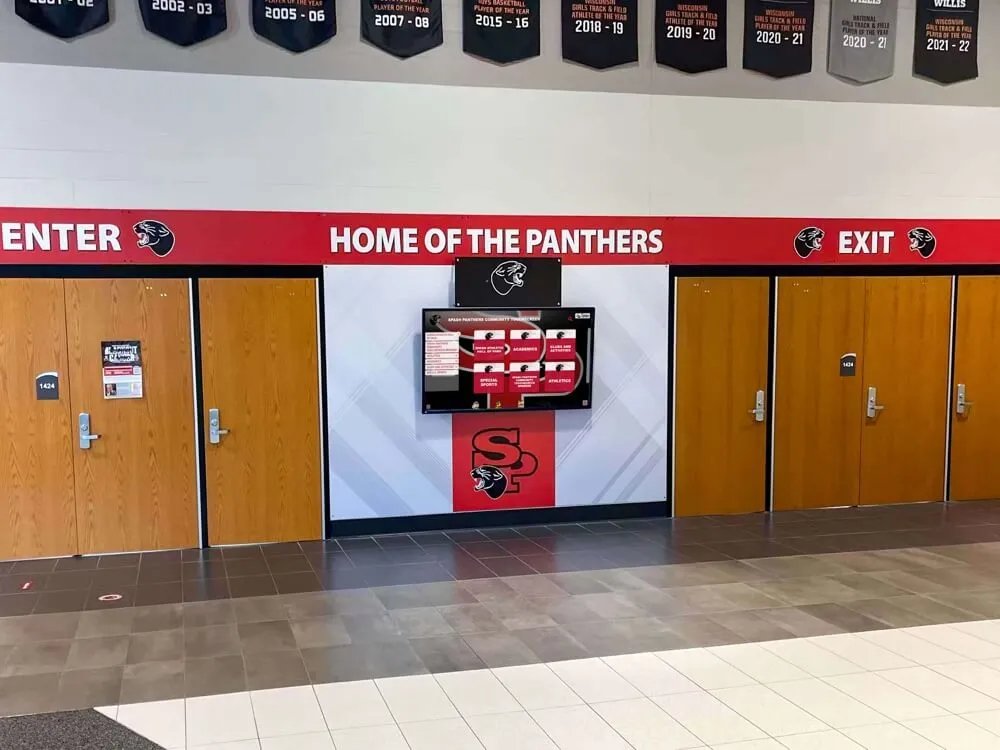
Athletic honor boards and identity displays represent funded program commitments — a reserve policy's Step 2 inventory captures these costs explicitly so the organization is never forced to choose between honoring a commitment and covering an operating gap
Recognition Costs That Drive Reserve Requirements
The four-step calculation works only if the organization has accurately inventoried its recognition costs. This is where most booster clubs underestimate their exposure — partly because recognition costs are spread across multiple budget lines, and partly because long-term obligations are easy to treat as a future officer’s problem until they come due.
Sponsor Fulfillment Costs
Sponsor recognition is the most immediate recognition liability in most reserve calculations. When a business commits $1,500 for a Gold sponsor tier, that commitment includes a banner, a digital display rotation, program advertising, and PA announcements at defined events. If the sponsor’s payment is delayed until mid-season — or if the organization experiences a cashflow gap before the season opens — recognition fulfillment still needs to happen on time. A sponsor who paid for a banner placement in September does not accept April delivery without consequence.
The reserve must be sufficient to front-load recognition delivery without depending on current-year revenue. Organizations that treat sponsorship revenue as the source for recognition costs rather than the reserve create a structural fragility: if any sponsor is late or reduces their commitment, recognition delivery falls behind, and relationships that took years to build become strained.
Exploring digital showcase boards for athletic booster programs illustrates how recognition technology commitments are structured — programs that install digital boards create multi-season visibility obligations that the reserve must be sized to cover independent of any single year’s revenue cycle.
Awards, Banners, and Print Materials
Physical recognition materials — award plaques, trophies, letter jackets, banners, and end-of-year ceremony materials — represent a predictable category of cost that should flow through the reserve calculation every year. These costs are typically known well in advance: the awards banquet happens every spring, varsity letter jackets are ordered in January, and senior recognition materials are prepared in April.
The reserve covers these costs in the event that the fundraising cycle that was supposed to fund them underperforms. A booster club that raises 80 percent of its revenue goal during a difficult year still owes student athletes the recognition they earned. A reserve policy that explicitly includes awards and ceremony costs prevents the board from having to make painful mid-season decisions about commitments to athletes and families.
The IRS Form 990-EZ, Part I, requires reporting of program expenses by category. For booster clubs filing as 501(c)(3) organizations, recognition program expenses reported as program service accomplishments signal the scope of the commitment the organization has made — which is precisely what the reserve should be sized to protect.
Digital Recognition Displays: The Multi-Season Cost
Digital recognition displays are among the recognition costs most commonly underestimated in reserve planning, because the initial installation may appear to be a one-time capital expenditure while the ongoing software subscription, content management, and periodic hardware maintenance create a recurring annual cost that extends across seasons and leadership changes.
A program that installs a touchscreen recognition display in the athletic lobby commits to maintaining that display, keeping sponsor and donor content current, and managing content updates across officer transitions. That commitment does not expire at the end of the first season. The best touchscreen hall of fame options for school programs illustrate the range of ongoing commitments that come with recognition technology — including software licensing, support agreements, and periodic content refresh cycles that the reserve policy must explicitly address.
The reserve calculation under Step 3 should include at least one year’s worth of any ongoing digital display subscription, maintenance, or content management costs. If the program has a multi-year software agreement, the reserve should reflect the organization’s annual pro-rated share of that obligation so that no leadership transition can interrupt service or payment.
Hall of Fame and Athletic History Displays
Programs that maintain an athletic hall of fame or a permanent athletic history display carry a distinct category of long-term recognition liability. Each year’s induction class requires photography standards, profile production, and physical or digital installation — costs that are partially predictable but often not formally inventoried.
Athletic hall of fame photo requirements and inductee profile production clarify the specific costs associated with each induction: standardized photography, image formatting, profile writing, and display installation. When a booster club funds these costs, the reserve policy needs a line that reflects the average annual induction cost so the organization can sustain the program independent of any single year’s fundraising result.
Athletic history displays that span decades represent institutional memory worth protecting — and the organizations that protect them most reliably are the ones with reserve policies that explicitly mention the ongoing maintenance and update costs for those installations. The display is the visible commitment; the reserve is the financial backing that keeps it current.
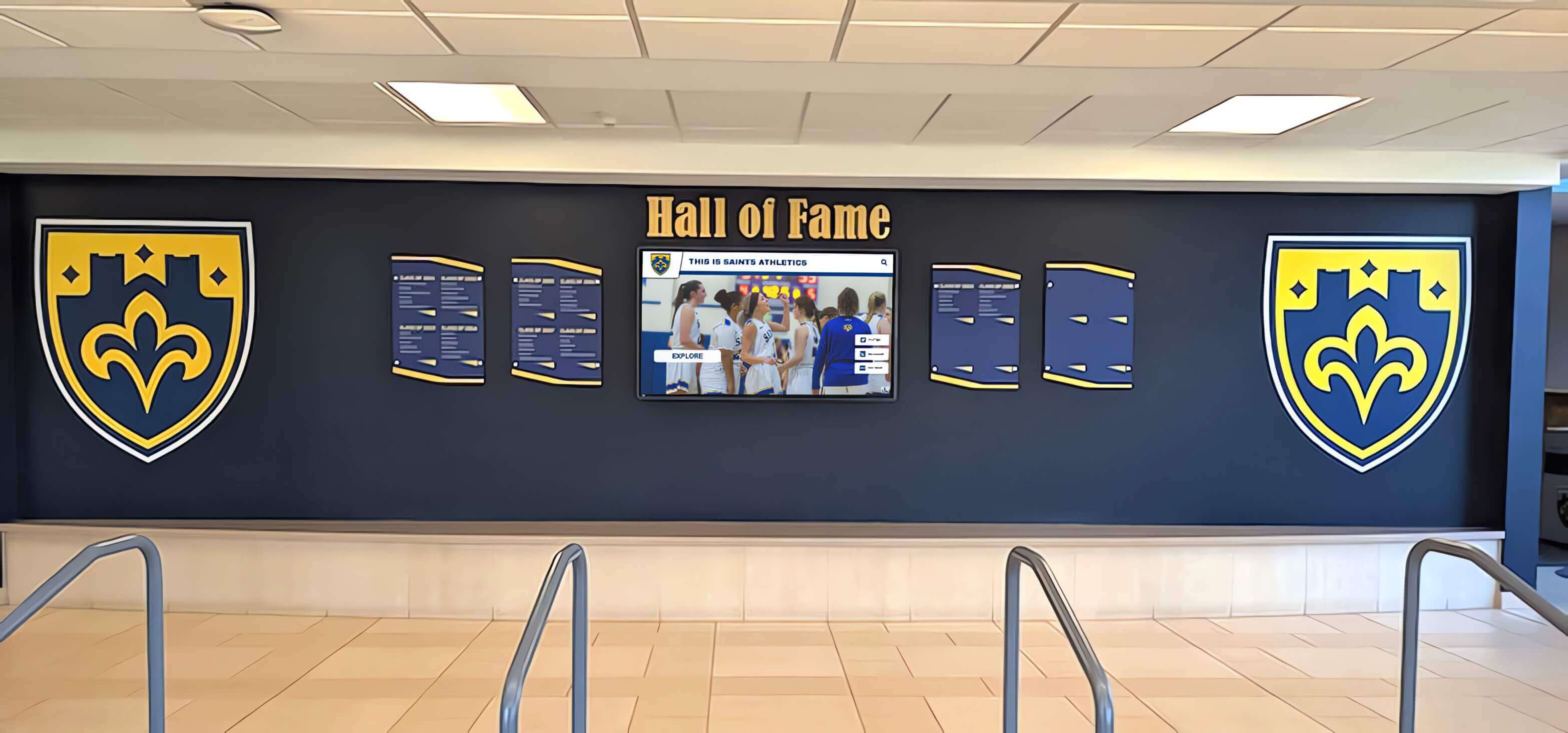
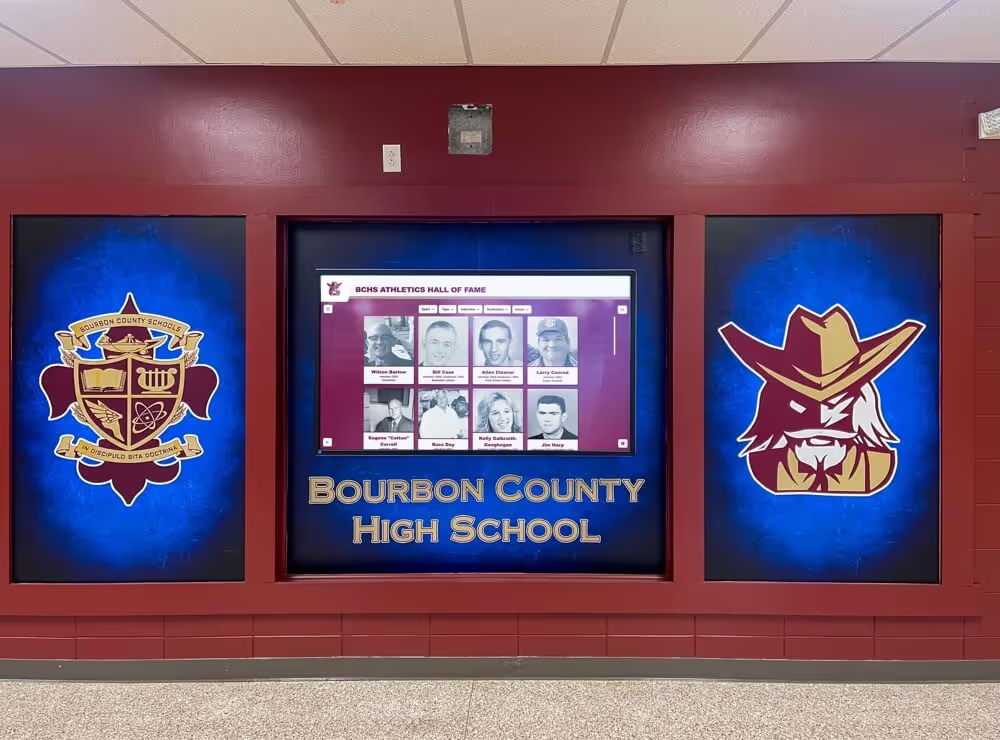
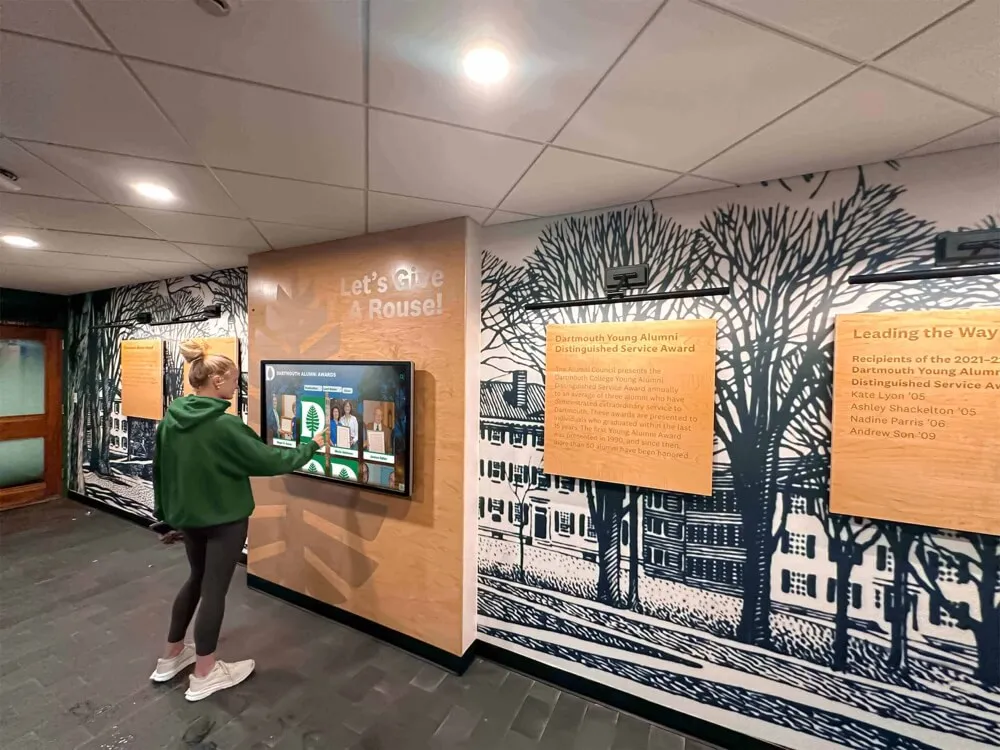
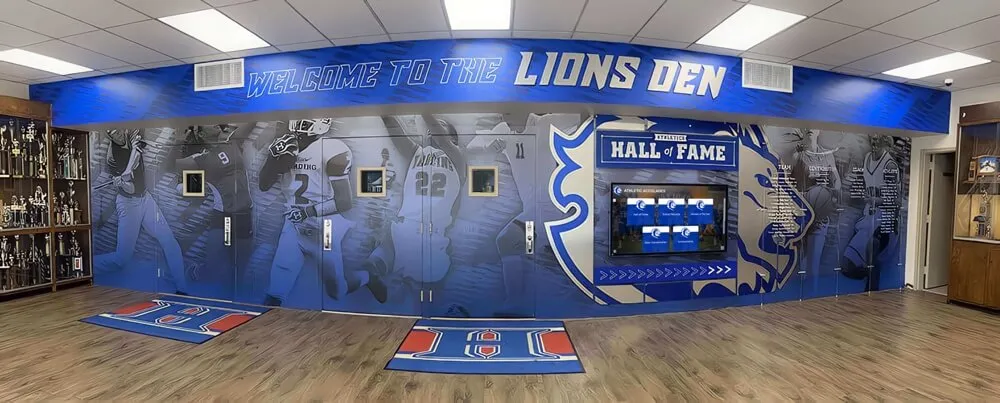
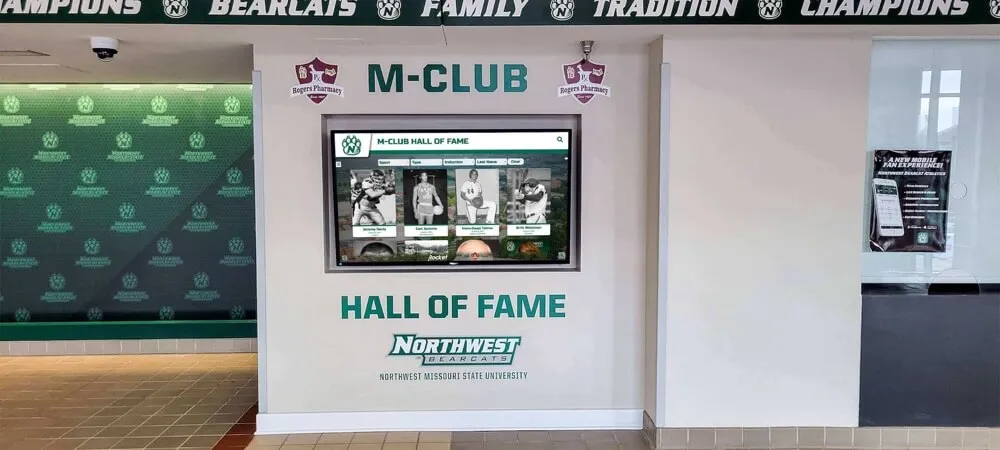
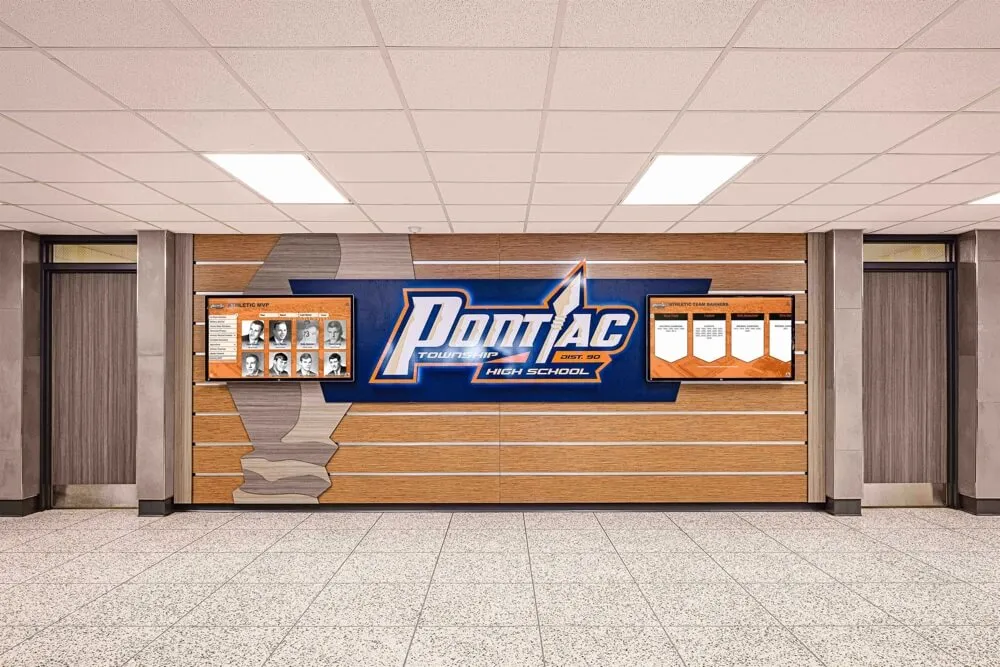
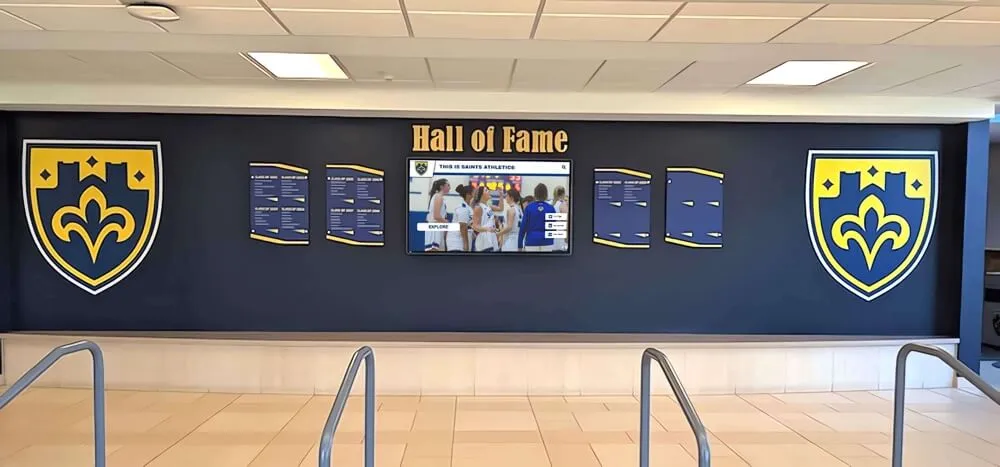
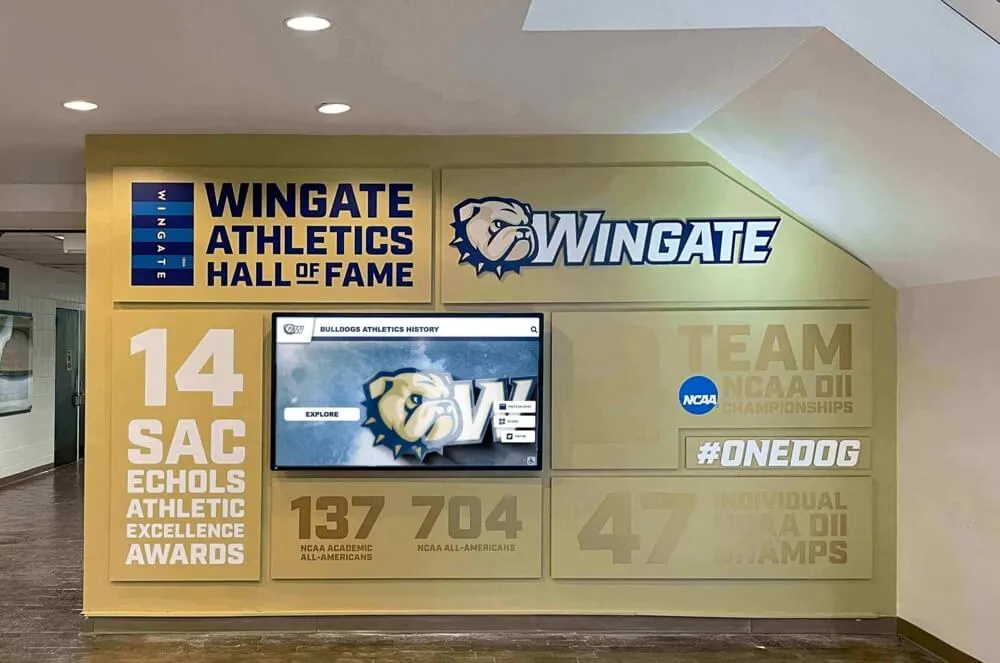
Recognition lobbies combining physical and digital elements represent multi-layer costs — the reserve policy must cover not just initial installation but ongoing maintenance, software subscriptions, and the annual content updates that keep the display current and credible
Setting Minimum and Maximum Reserve Thresholds
A reserve policy without defined thresholds is not a policy — it is an aspiration. The board needs a minimum (below which action is required) and a maximum (above which excess funds should be directed to program spending rather than accumulated indefinitely).
The Minimum Threshold
The minimum reserve threshold is the floor calculated in Step 4: three months of core operating expenses plus current-season recognition commitments plus a proportional share of multi-year liabilities. If the reserve falls below this floor, the policy should trigger a defined response: the board is notified at the next meeting, the treasurer prepares a recovery plan, and discretionary spending is suspended until the reserve returns to minimum.
A written minimum threshold prevents the gradual erosion of reserves that happens when officers treat the reserve as a convenient source for routine expenses. When the threshold is defined and the trigger is automatic, the board acts before the reserve is depleted — not after the recognition commitments have already been missed.
The Maximum Threshold
The maximum reserve threshold prevents unnecessary accumulation. Booster clubs that consistently hold large reserves beyond their defined ceiling are retaining funds that could be supporting athletes, recognition programs, and the school community more directly. A maximum of 150 percent of the floor is a reasonable ceiling for most programs.
When reserves exceed the ceiling at fiscal year end, the policy should direct the board to plan specific uses: expanded recognition programming, a capital investment in display technology, scholarship funding, or pre-payment of the following year’s recognition commitments. Directing surplus reserves to pre-fund recognition commitments — paying the coming year’s digital display subscription or pre-ordering award materials — reduces the following year’s Step 2 and Step 3 totals and demonstrates to the school community that accumulated funds are serving the program.
Annual Review
The reserve policy should be reviewed annually, before the budget for the coming season is finalized. Each year’s review updates the Step 2 and Step 3 calculations based on actual commitments made, compares actual reserve balances to the floor and ceiling, and notes any multi-year liabilities approaching their due dates.
Programs managing growing recognition events may find their Step 2 totals increasing over time as the program matures. Athletic alumni reunion planning guides for school programs show how event-based recognition commitments compound: each reunion creates new recognition materials, new display installations, and new archival costs that persist beyond the event itself and must be reflected in the reserve calculation going forward.
Protecting Long-Term Recognition Obligations
The most common failure mode in booster club reserve planning is not a shortage of funds — it is a failure to identify and document long-term recognition obligations before they come due. A three-season sponsor agreement, a permanent hall of fame installation, or a digital display contract all create liabilities that future officers must honor even if they were not party to the original commitment.
The reserve policy protects those obligations by naming them explicitly. The policy document should include an appendix or reference to a recognition obligations inventory that lists every multi-year commitment the organization has made, the estimated annual cost, and the year through which the commitment runs. This inventory is updated at each annual review and forms the basis for the Step 3 calculation.
When a new treasurer or president takes office, the recognition obligations inventory is one of the first documents they receive. It gives them a complete picture of what the organization has promised — to sponsors, to donors, to award recipients, and to the school community — so they can manage the reserve with full knowledge of its purpose rather than discovering liabilities mid-season.
All-time records recognition guides for athletic programs demonstrate the scale of commitment that comes with permanent recognition: when a program commits to displaying all-time record holders, that commitment spans decades and creates an ongoing maintenance obligation that the reserve must partially fund each year the display operates.
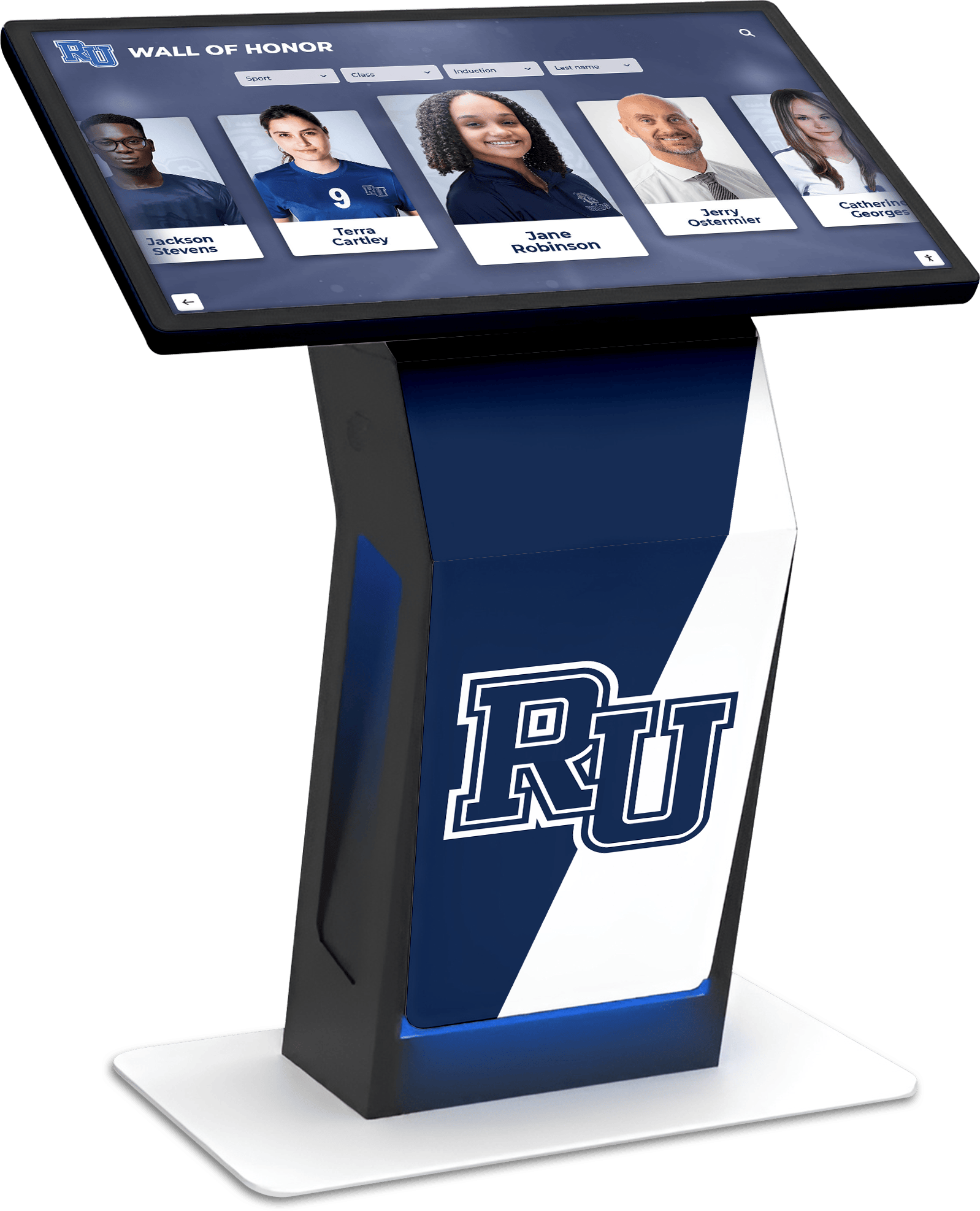
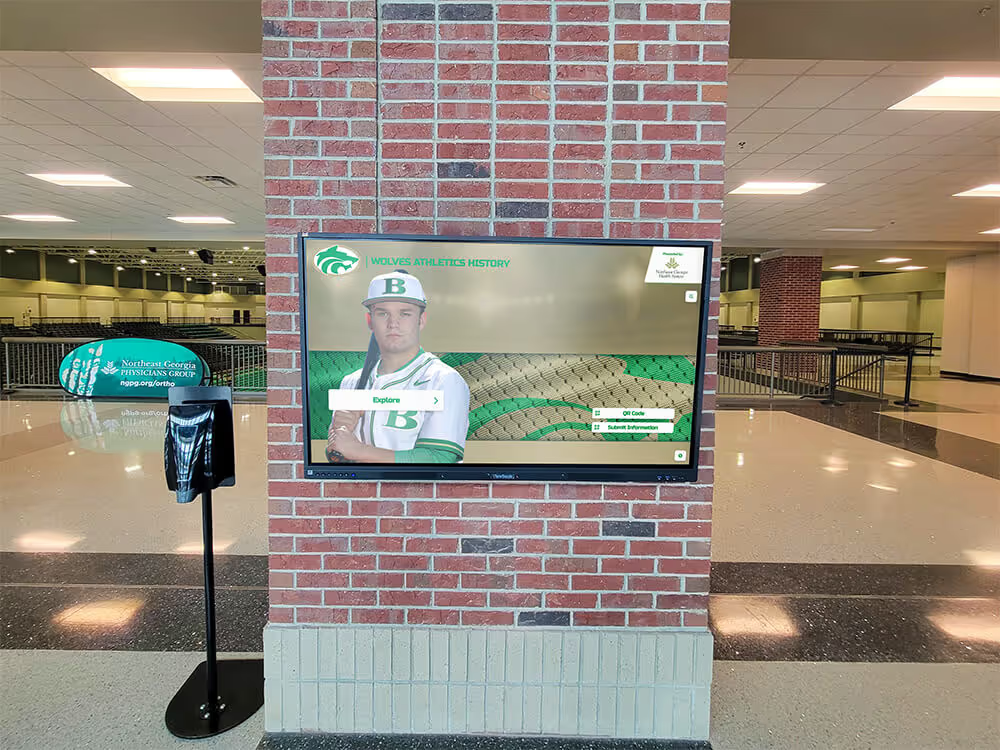
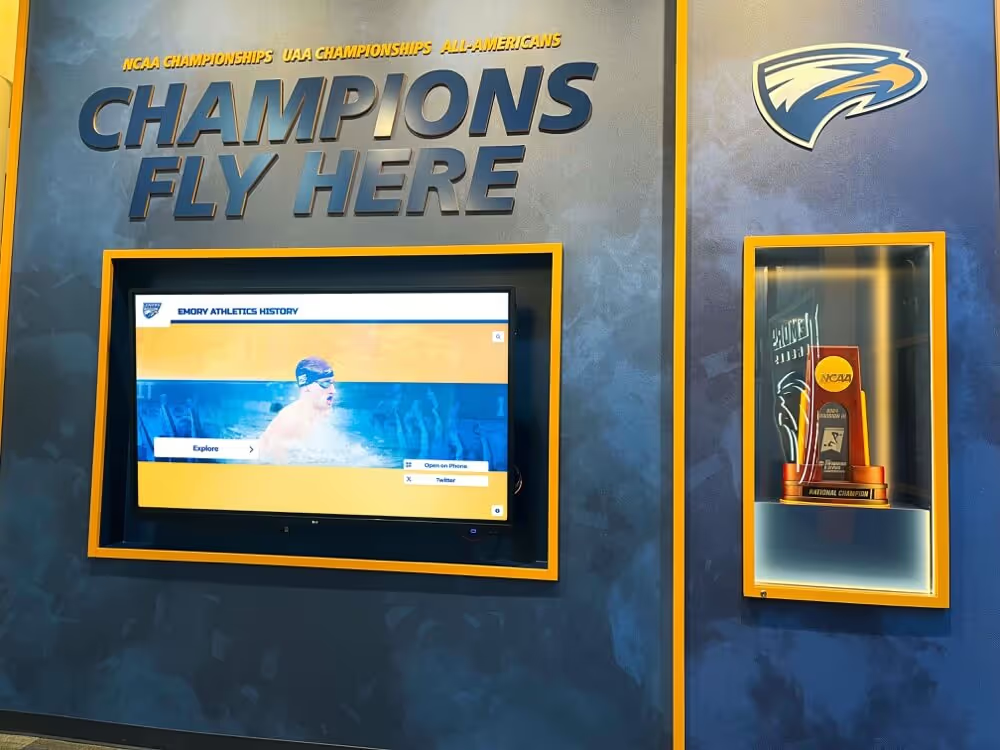
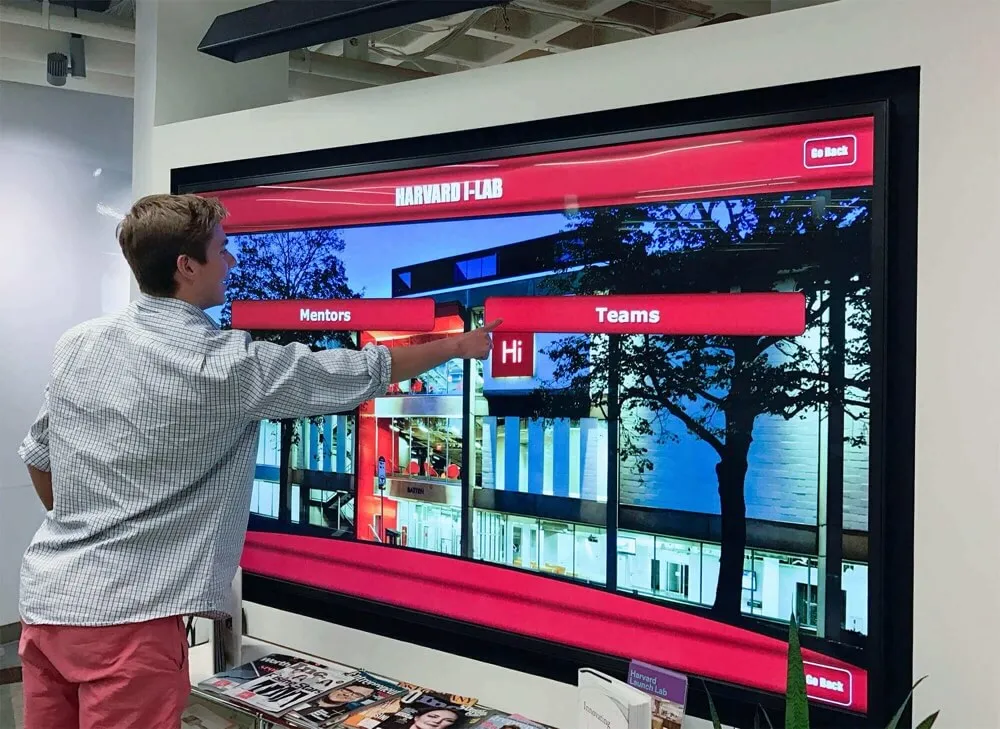
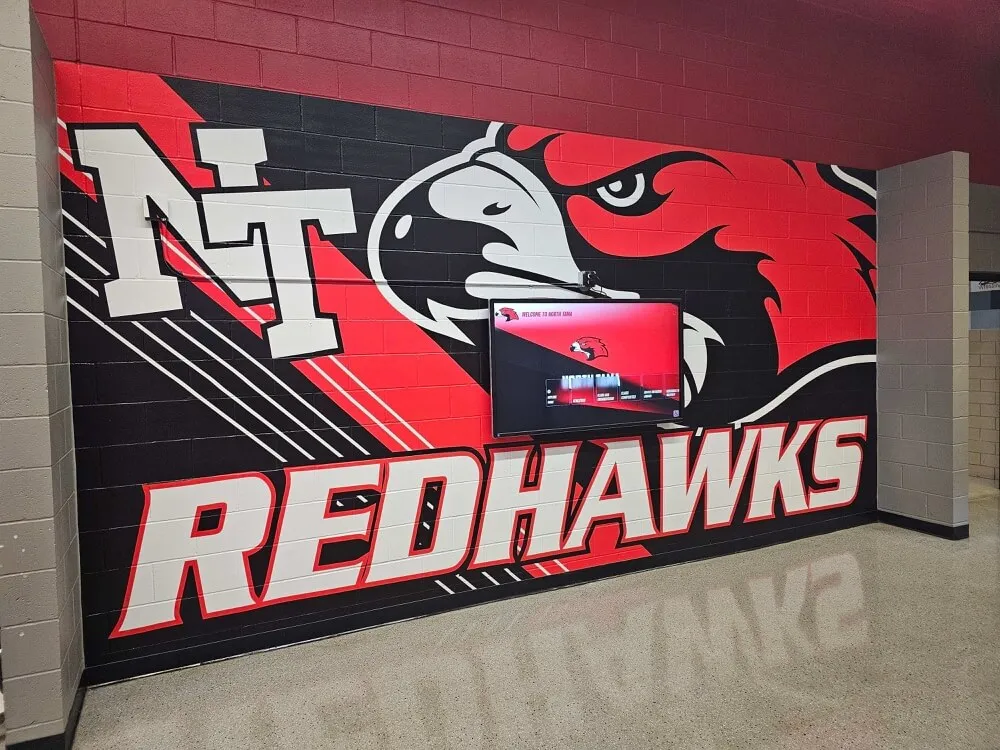
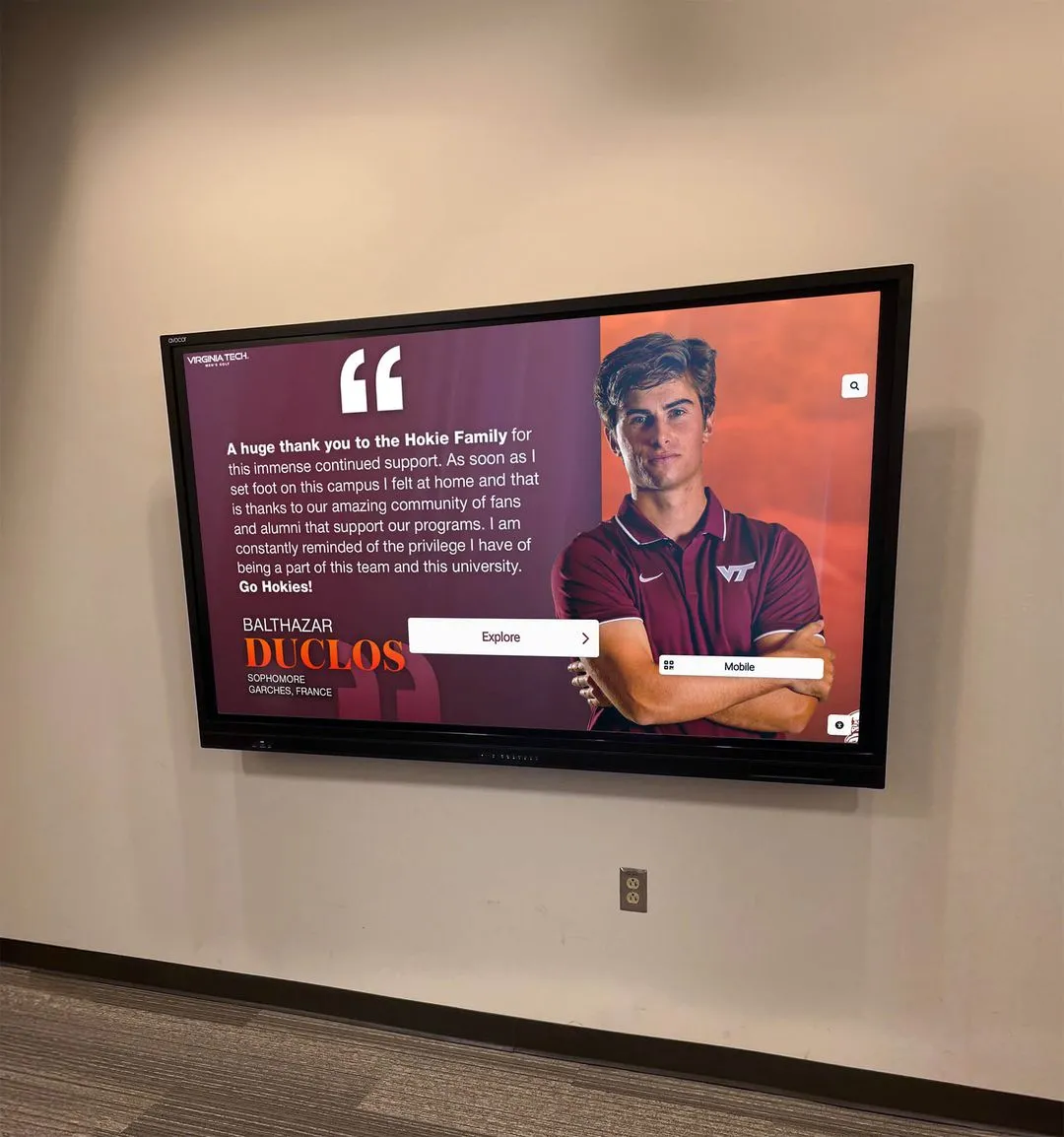
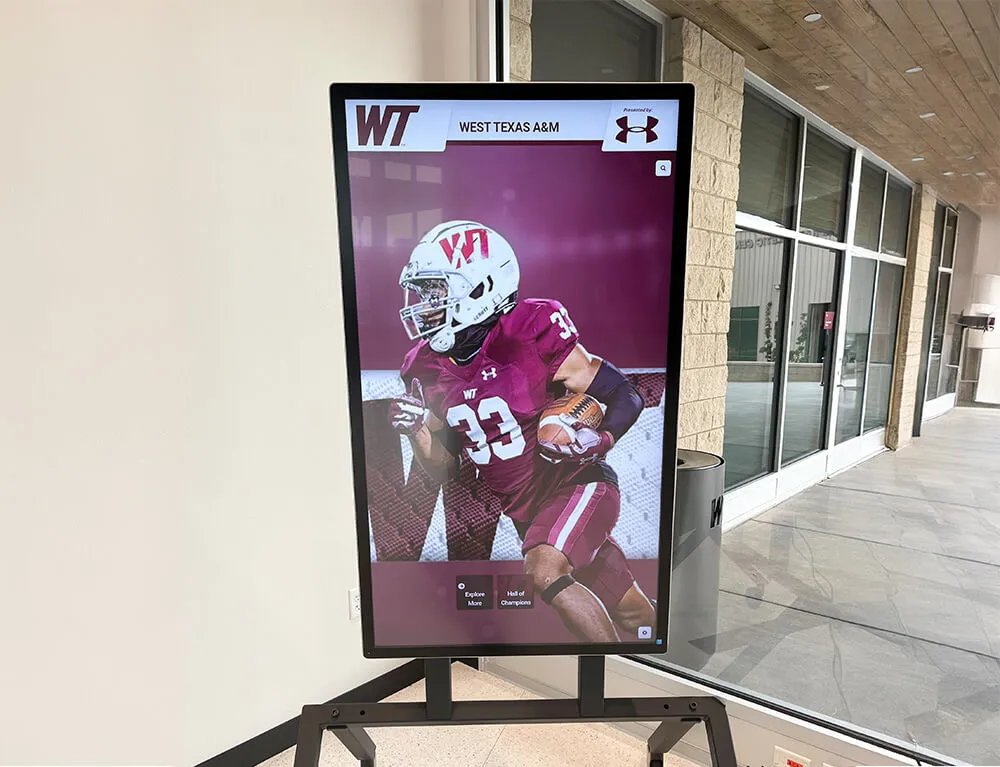
Digital recognition kiosks represent exactly the kind of long-term obligation that the Step 3 calculation addresses — annual software subscriptions, content updates, and hardware maintenance costs that extend well beyond the initial installation season
Booster Club Reserve Policy: Quick-Reference Checklist
Use this checklist when building or auditing a reserve policy. A policy that addresses every item creates a complete, defensible framework for reserve management across leadership transitions.
Policy Document Elements
| Element | Requirement |
|---|---|
| Reserve definition | Policy defines what counts as reserve (unrestricted cash, specific accounts) |
| Calculation method | Step-by-step method documented and referenced in policy |
| Floor and ceiling | Specific dollar range or formula stated, not just a general principle |
| Trigger for action | Policy specifies what happens if reserves fall below floor |
| Surplus direction | Policy specifies how surplus reserves are allocated |
| Annual review | Policy requires review at each fiscal year end |
| Board approval for draws | Any reserve draw requires a board vote documented in meeting minutes |
Recognition Obligations Inventory
| Obligation Type | Policy Requirement |
|---|---|
| Current-season sponsor fulfillment | Costs inventoried under Step 2 each year |
| Awards and ceremonies | Annual estimate included in Step 2 |
| Digital display subscriptions | Annual cost in Step 3 with multi-year contract term noted |
| Hall of fame maintenance | Annual induction and maintenance costs in Step 3 |
| Multi-year sponsor agreements | Proportional annual cost in Step 3 for each active agreement |
| Named award endowments | Funding mechanism and annual payout documented separately |
Governance Controls
| Control | Policy Requirement |
|---|---|
| Treasurer report | Reserve balance reported at every regular board meeting |
| Year-end reconciliation | Actual balance compared to floor and ceiling at fiscal year end |
| Officer transition | Incoming officers receive policy and recognition obligations inventory |
| Obligations inventory update | Updated before each annual review with new or modified commitments |
Frequently Asked Questions
What is a booster club reserve policy?
A booster club reserve policy is a written document that defines how much unrestricted cash the organization holds as a financial cushion, how that target is calculated, what the reserve funds may be used for, and the process required to draw on them. The policy establishes a floor — the minimum the reserve must not fall below — and a ceiling — the maximum beyond which surplus should be redirected to program spending. A written policy makes reserve management consistent across officer transitions and gives school administrators and auditors a documented standard to reference.
How much should a booster club keep in reserve?
Most guidance for nonprofit organizations, including the National Council of Nonprofits, recommends holding reserves covering three to six months of core operating expenses. For a booster club, the reserve target should be three months of operating expenses plus the full cost of current-season recognition commitments — sponsor fulfillment, awards, banners, and ceremonies — plus a proportional share of any multi-year recognition liabilities such as digital display subscriptions or hall of fame maintenance. A ceiling of 150 percent of that total is a practical upper bound for most programs. Specific amounts depend on the organization’s revenue cycle, recognition obligations, and board risk tolerance.
What recognition costs should a booster club reserve cover?
A booster club reserve should be sized to cover current-season recognition commitments — sponsor banners, program advertising, digital display content, PA announcements, award plaques, and ceremony costs — without depending on current-year revenue to fund them. For programs with multi-year recognition obligations such as digital display subscriptions, hall of fame maintenance, multi-year sponsor agreements, or permanent athletic history installations, the reserve should include a proportional annual share of each obligation. The goal is that recognition commitments can be honored even if fundraising underperforms in any given year.
How does a digital recognition display affect the reserve calculation?
A digital recognition display creates a recurring annual cost — software subscription, content management, and periodic hardware maintenance — that extends across multiple seasons and leadership transitions. The reserve calculation should include the annual subscription or maintenance cost as a Step 3 multi-year liability, with the full annual amount included in the reserve floor each year the agreement is active. If the display operates under a multi-year software contract, the reserve should reflect the organization’s pro-rated annual share so that no single officer transition can interrupt service or payment.
When should a booster club draw on its reserve?
A booster club should draw on its reserve only when operating revenue is insufficient to cover a specific, board-approved commitment — not to cover routine discretionary spending or to address expenses that were not included in the annual budget. Reserve draws should require a board vote documented in meeting minutes and should specify the amount, purpose, and repayment plan. Common legitimate draws include fulfilling recognition commitments when sponsorship revenue is delayed, covering emergency equipment repair or facility costs, or bridging a cashflow gap at the start of the season before fundraising revenue arrives.
Building a Reserve Policy That Protects Your Program and Your Commitments
A booster club reserve policy earns its value when the first difficult season arrives — a year when a major sponsor does not renew, a fundraising event underperforms, or a key officer transitions out mid-year. Organizations with a written reserve policy and a documented recognition obligations inventory navigate those moments without compromising the commitments they have made. Organizations without one discover the gap at exactly the moment when addressing it is hardest.
The four-step calculation in this guide gives any booster club officer a practical starting point. The checklist confirms that the policy document addresses every element needed for governance and audit purposes. The recognition obligations inventory — the specific list of commitments the reserve is protecting — is the piece that makes the reserve purposeful rather than merely precautionary.
For programs that have invested in digital recognition displays, interactive hall of fame systems, or permanent athletic history installations, the reserve policy is also a statement of institutional commitment: the organization has planned for the multi-year cost of recognition technology, not just the first season of use. That planning is what gives sponsors, donors, school administrators, and the board confidence that the program’s recognition commitments will be honored across leadership changes and revenue cycles.

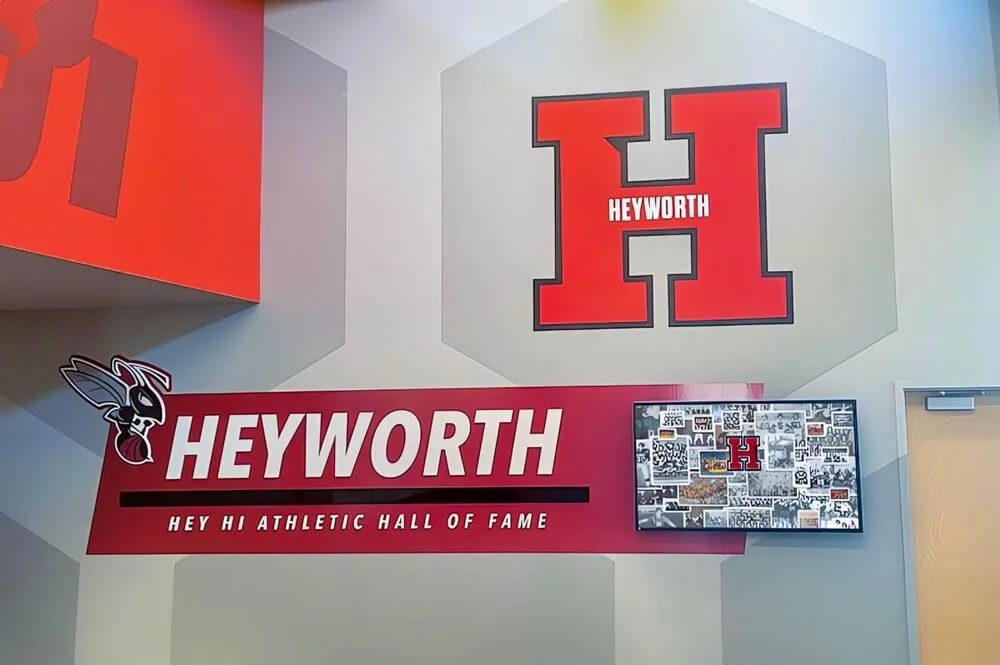
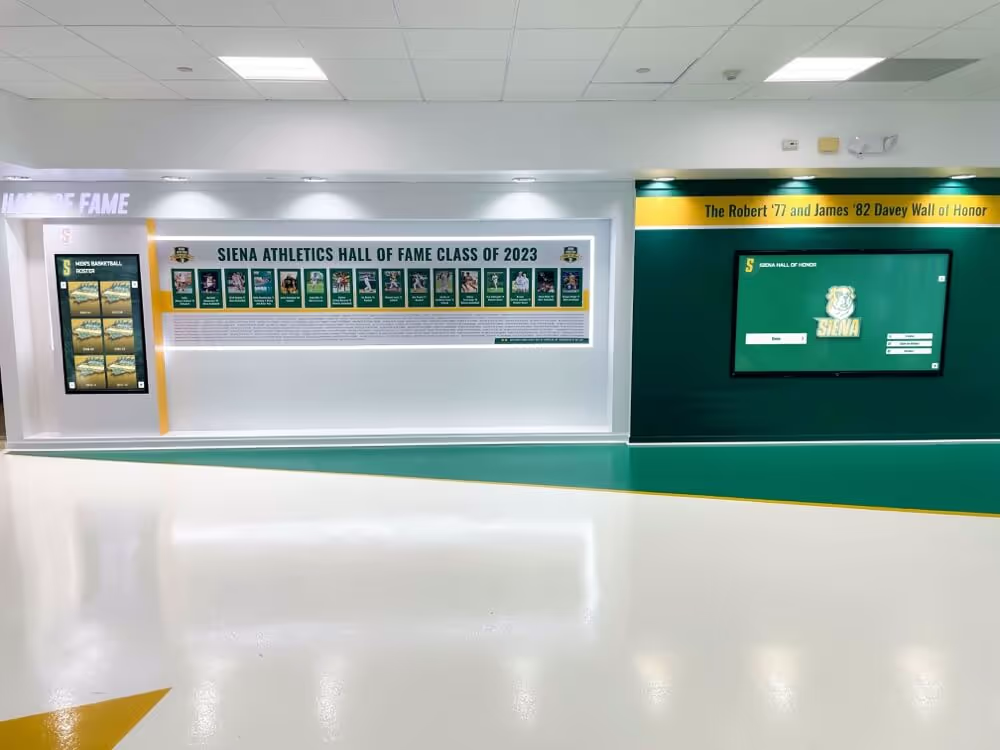
Permanent recognition displays installed by booster clubs represent multi-season commitments that require the financial backing of a formal reserve policy — not just installation funding, but ongoing content management and maintenance across the display's operational life
See What a Permanent Recognition Display Looks Like for Your Program
Rocket Alumni Solutions builds interactive digital recognition displays for school athletic programs and booster clubs — giving sponsors and donors visible, lasting acknowledgment that survives leadership transitions and reflects the commitments your organization has planned and funded. Schedule a demo to see what your facility could look like.
Schedule Your Recognition Display Demo