



A booster club recurring payment review is a structured audit of every subscription, software license, membership fee, automatically renewing service charge, and platform access fee the organization pays — comparing each active charge against current usage, board authorization records, and program need to identify unused services, duplicate subscriptions, and charges that survived officer transitions without anyone reviewing whether they should continue. Most volunteer-led athletic organizations accumulate recurring charges gradually: a fundraising platform added during one season, a cloud design tool a volunteer set up and never cancelled, a storage subscription from an event that ended two years ago, and a second scheduling app that overlaps with one the current board already uses. Without a scheduled review process, each of these charges renews automatically, diverting funds that could otherwise support student athletes, recognition programs, and facility improvements. This guide explains how to find and eliminate unnecessary recurring charges, who owns the review for each subscription category, and how clean recurring payment controls connect to the recognition commitments your program makes to donors and sponsors.
Not legal or financial advice: This guide describes commonly used financial control practices for educational purposes only. Your organization’s specific requirements depend on your school district structure, state nonprofit regulations, and any financial controls required by your school’s governing body. Consult a licensed CPA or your school district’s finance office before establishing or revising financial control procedures.
Recurring charges are uniquely difficult to control in a volunteer organization because they require no ongoing action to continue — they simply happen, month after month or year after year, until someone deliberately cancels them. In contrast, a check disbursement requires an active decision at each payment cycle. A recurring charge requires only one decision at the point of setup, and if that decision is never reviewed, the charge continues indefinitely regardless of whether the service still serves the organization.
For most booster clubs, the problem compounds with leadership turnover. A treasurer who set up five subscriptions three years ago is long gone; the incoming treasurer inherited the bank account but not the passwords, the account names, or any documentation explaining what each charge is for. A booster club recurring payment review replaces that uncertainty with a complete, verified inventory of what the organization is paying, why each charge exists, and who is responsible for managing it going forward.

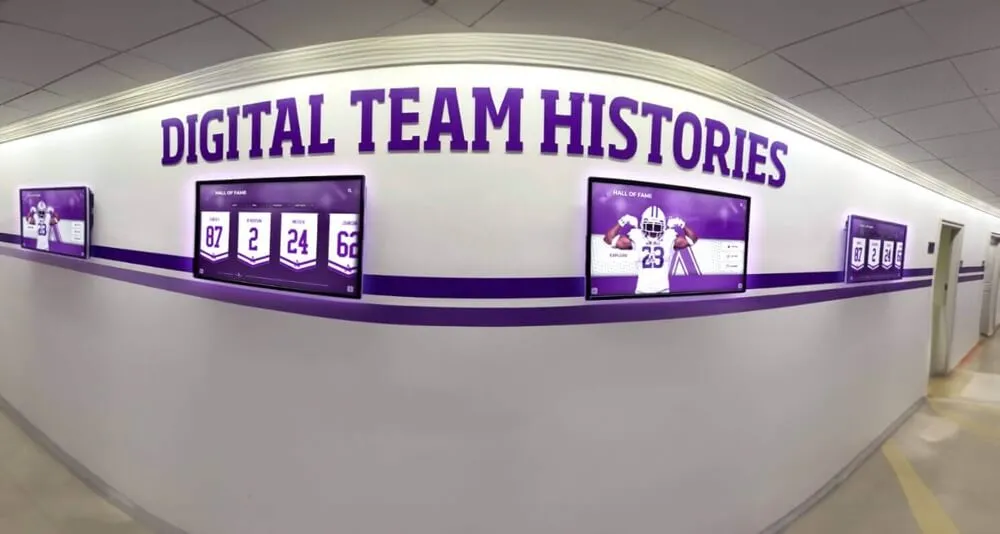
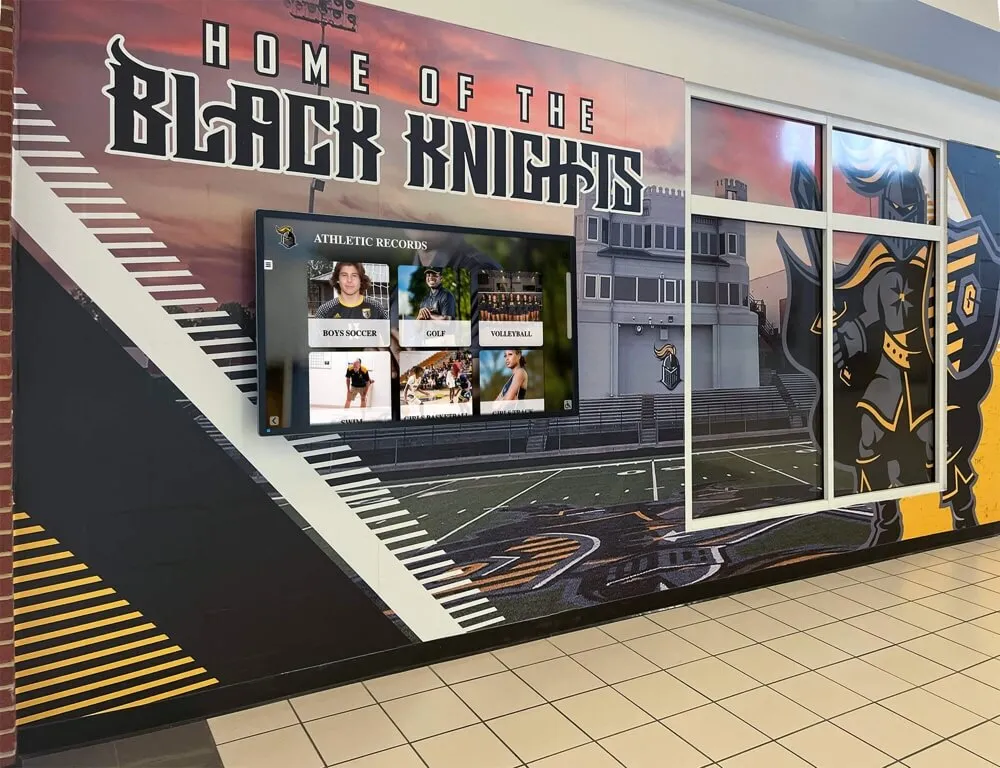
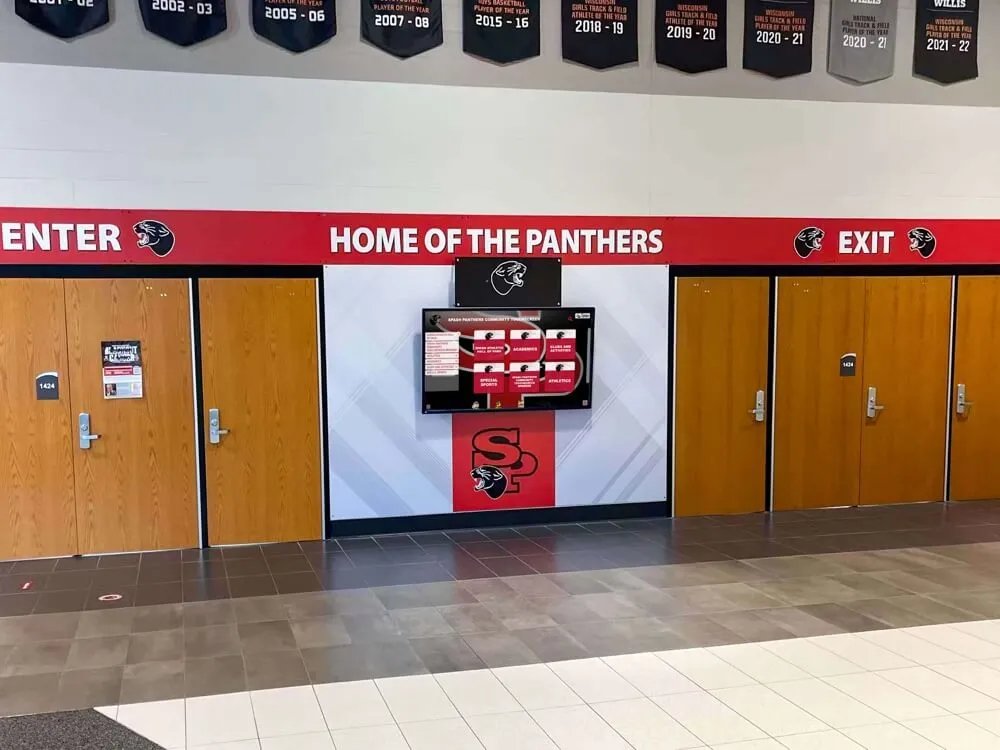
Recognition programs depend on platform subscriptions, software services, and vendor relationships that can persist unreviewed across leadership transitions — a recurring payment review identifies what is being paid, confirms what is still needed, and documents who owns each service going forward
What Is a Booster Club Recurring Payment Review?
A booster club recurring payment review is a periodic audit — ideally conducted annually at the fiscal year opening — that produces a complete inventory of every charge the organization pays on a recurring basis, matched against board authorization records and confirmed against current usage. The review answers four questions for each active charge:
- Is this charge authorized? Was it approved by the board, or was it set up informally without documented authorization?
- Is this service still in use? Does someone in the current organization actively use this platform, tool, or service?
- Is this a duplicate? Does another active subscription already cover what this service provides?
- Does the plan level match actual usage? Is the organization paying for a premium tier it does not need, when a lower tier or free version would suffice?
Any charge that cannot be answered “yes” to questions 1 and 2, or that is duplicated by another active service, is a candidate for cancellation or downgrade. The goal is not to eliminate all subscriptions — digital tools, fundraising platforms, communication services, and recognition software all serve legitimate purposes. The goal is to ensure every recurring charge the organization pays is authorized, used, and appropriately sized for the organization’s actual needs.
Why Recurring Charges Accumulate in Booster Clubs
Three conditions make recurring charge accumulation nearly inevitable in volunteer-run athletic organizations.
Fragmented setup responsibility. When different officers set up different services over different seasons, no single person has a complete view of what the organization is paying for. The treasurer manages the bank account and sees the charges, but may not know what each charge is for or who holds the login credentials. The volunteer who set up a graphic design subscription graduated and can no longer be reached. The account for an event ticketing platform is tied to a personal email address that no longer receives organizational correspondence.
No cancellation trigger at transition. When a board member leaves, there is typically a handoff of physical assets — the debit card, the checkbook, the cash box. There is rarely a structured handoff of digital access: platform login credentials, software accounts, cloud storage access, and subscription management. Services that were set up by outgoing officers often continue billing with no one in the current organization aware they exist.
Automatic renewal defaults. Most software-as-a-service platforms and subscription tools default to automatic renewal. A service that was useful for one season renews at the next billing date regardless of whether anyone in the organization needs it. The charge appears on the bank statement, is categorized as “software” or “services,” and is reconciled without investigation because the amount is familiar from prior months.
According to research from subscription management firm Recurly, the average business loses 5 to 10 percent of its recurring subscription spend to services that are unused or duplicated within a single year — and organizations with frequent staff or leadership turnover tend toward the higher end of that range. For a booster club with $1,500 in annual recurring platform charges, that represents $75 to $150 per year in services that could be redirected to athletic programs or recognition investments.
Common Recurring Payment Categories in Booster Clubs
A complete booster club recurring payment review covers every service category below. Some booster clubs will have no subscriptions in certain categories; others may have multiple. The review should start by identifying all active charges in the bank statements for the past twelve months, then categorizing each one.
| Category | Common Examples | Typical Billing Cycle |
|---|---|---|
| Fundraising platforms | Online giving pages, crowdfunding tools, spirit wear storefronts | Monthly or annual |
| Communication tools | Email newsletter platforms, mass texting services, group messaging apps | Monthly |
| Cloud storage | File storage for photos, video, event archives | Monthly |
| Accounting software | Bookkeeping platforms, receipt tracking tools | Monthly or annual |
| Design and content tools | Graphic design subscriptions, video editing software, print templates | Monthly |
| Event and registration tools | Registration management, ticketing platforms, scheduling apps | Per-event or monthly |
| Social media scheduling | Content scheduling tools, analytics dashboards | Monthly |
| Website hosting or builders | Organizational website hosting, domain renewals | Annual |
| Recognition and display software | Hall of fame platforms, digital display content management | Annual |
| Membership databases | Alumni databases, volunteer management tools | Annual |
| Payment processing accounts | Merchant accounts, payment gateway fees | Monthly base + per-transaction |
Each category should be reviewed separately because different officers typically own different categories, and the authorization and usage verification steps differ by category.
How to Conduct a Booster Club Recurring Payment Review
A booster club recurring payment review follows six steps. For most organizations, the complete process takes three to five hours if bank statements and authorization records are accessible. Organizations completing their first review may take longer — the initial inventory step often surfaces surprises.
Step 1: Build the Complete Recurring Charge Inventory
Pull twelve months of bank statements and payment processor transaction reports. Review every line item for charges that appear more than once, filtering for monthly and annual patterns. Common indicators of recurring charges include:
- The same dollar amount from the same merchant appearing on the same date each month
- Annual charges from software vendors or domain registrars
- Small charges from unfamiliar merchant names that recur consistently — these are often trial subscriptions that converted to paid plans
Create a spreadsheet with one row per recurring charge, capturing the merchant name, charge amount, billing frequency (monthly or annual), the date range the charge has been active, and the name of the officer or volunteer who set up the account if known.
Do not rely on what the current treasurer already knows about the subscriptions. The inventory must come from the bank statements — the authoritative record of what has actually been paid — not from memory or prior documentation that may be incomplete.
Programs that have adopted school history software or digital archiving tools to preserve athletic records and program histories will find those tools in the recognition software category during the inventory step. Confirming that these tools are authorized, in active use, and at the correct plan tier is part of the same review process as every other recurring charge.
Step 2: Verify Board Authorization for Each Active Charge
For every recurring charge identified in Step 1, locate the board authorization record. Acceptable authorization records include:
| Charge Type | Expected Authorization Record |
|---|---|
| Platform or software subscription | Board meeting minutes recording the vote to adopt the service |
| Annual membership or dues | Board vote; membership agreement on file |
| Website hosting or domain | Board vote; service agreement on file |
| Event-specific tools | Board vote or documented officer approval at or above the policy threshold |
| Recognition software | Board vote; signed service agreement or written quote |
Any charge with no corresponding authorization record should be flagged for investigation. The treasurer and president should jointly determine whether the service was approved informally and the record is missing — in which case the board can ratify the relationship retroactively and create the missing record — or whether the service was never discussed by the board and should be evaluated before the next renewal date.
This step frequently surfaces charges that were set up entirely outside the board’s knowledge: a volunteer who set up a graphic design subscription on the organization’s debit card without realizing board approval was required, or a former officer who signed up for a service during a busy event season and never mentioned it at a meeting. Neither scenario implies bad intent, but both represent a control gap that the authorization verification step is designed to find.
For programs with active event calendars — including those that run fundraising events, booster banquets, and community recognition ceremonies described in resources covering booster club events and community-building — event-driven tool subscriptions are particularly prone to this pattern: a platform is set up for one event, the event passes, and the subscription continues without the board realizing it is still active.
Step 3: Confirm Active Usage for Each Subscription
Authorization confirms that the board approved a service at some point. Usage verification confirms that the service is actually being used today. The two questions are independent: a platform can be fully authorized and completely unused, and a platform can be actively used without the board having formally approved it.
For each active subscription, verify usage by:
- Logging in to the platform and checking last-login dates, last-published content, or last-exported data
- Asking the current officer responsible for that service area whether they use the platform in their current role
- Reviewing whether the service’s functionality has been replaced by another tool already in use
| Usage Status | Recommended Action |
|---|---|
| Actively used by current officers | Retain; verify plan tier matches actual usage level |
| Was used by prior officers; unclear if current officers use it | Interview current officers; if no active user, cancel at next renewal |
| Not logged in for 6+ months | Cancel at next renewal unless a specific upcoming need justifies retention |
| Duplicate of another active service | Cancel the higher-cost or lower-functionality duplicate (see Step 4) |
| Trial that converted without authorization | Cancel immediately; request refund for any unauthorized billing period |
Usage verification is also the step that surfaces plan-tier mismatches. An organization paying for a premium tier of an email platform that supports 50,000 contacts — when the organization’s mailing list has 400 members — is paying for capacity it does not need. Downgrading to a tier appropriate for the organization’s actual usage is a legitimate outcome of the review that does not require cancelling the service entirely.
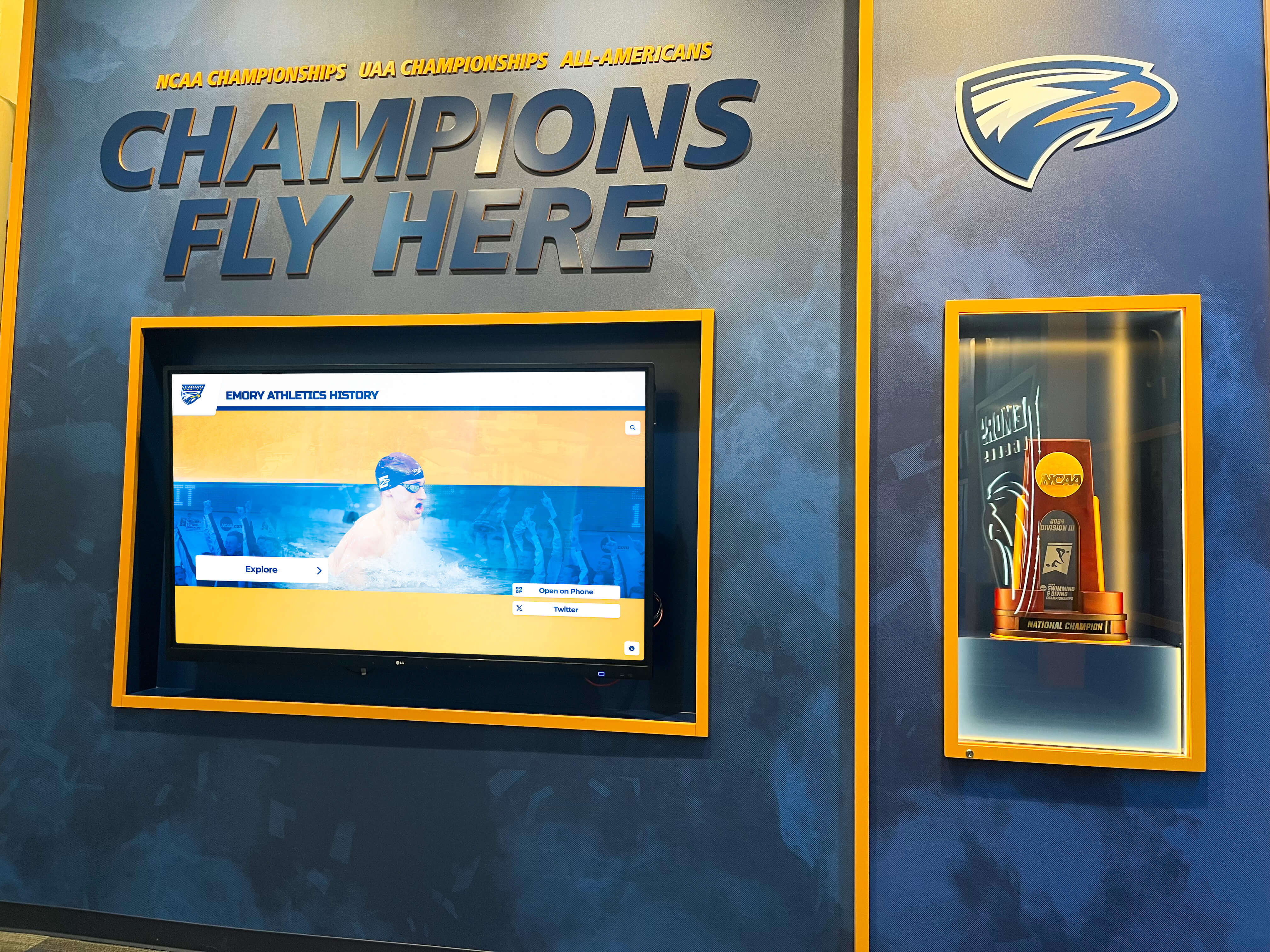
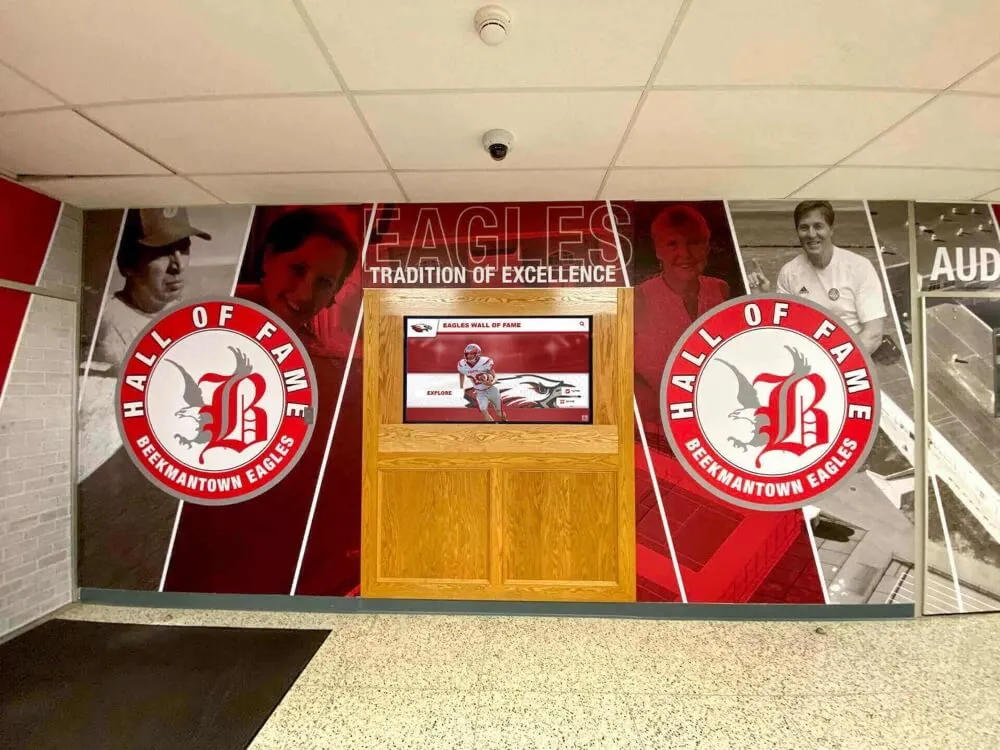
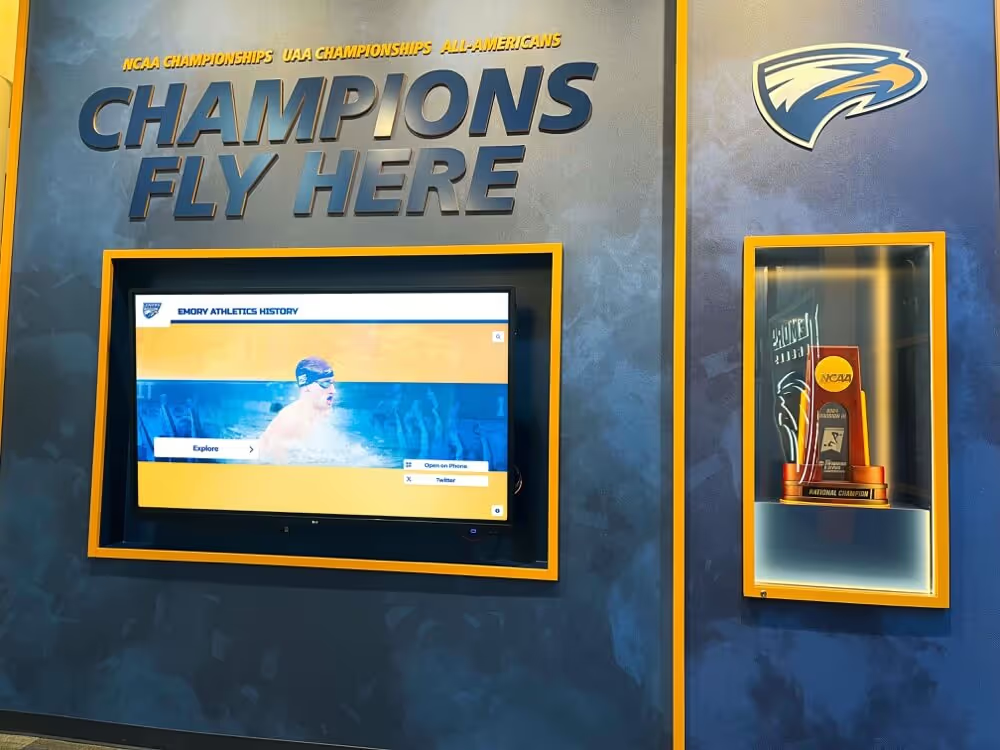
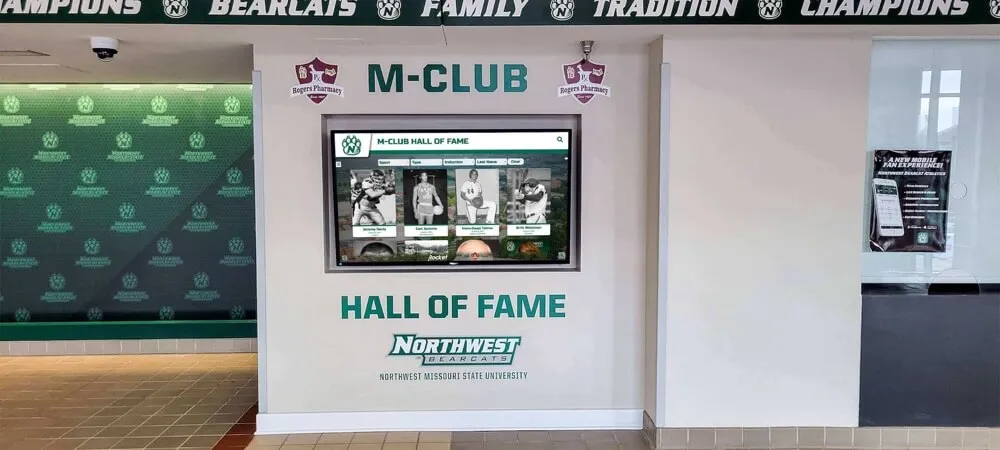
Recognition platforms that display athletic history and honor champions across seasons require subscription management as disciplined as the records they preserve — a recurring payment review confirms that every active tool is used, authorized, and priced at the right tier for the organization's actual needs
Step 4: Flag Duplicate Services
Duplicate subscriptions — two active platforms that provide the same core functionality — are common in organizations that have grown across multiple officer generations. Each incoming leadership team may have adopted the tool they were familiar with without fully inventorying what was already in place.
Common duplication patterns in booster clubs include:
- Two email marketing platforms (one used by the current communications chair, one set up by a prior chair and never cancelled)
- Two cloud storage services (the organizational Google Drive account and a Dropbox paid plan from an event two seasons ago)
- Two event registration tools (a general platform and a sport-specific one adopted for a single event and never reviewed since)
- Two graphic design subscriptions (one for the organization and one tied to a personal account that was used for organization purposes)
When duplicate services are identified, the review should evaluate which tool to retain based on current active usage, cost, and the preferences of the officers who will continue managing the service. The secondary tool should be cancelled at its next renewal date, and any files or records stored exclusively in that platform should be migrated to the retained service before cancellation.
Accurate record-keeping across platform transitions is the same discipline that applies to hall of fame correction and update policies — when a platform changes, the records it held must transfer completely, with no gaps that would make the organization’s historical data inaccessible to future officers.
Step 5: Cancel or Downgrade Unused and Overlapping Charges
Cancellation and downgrade should happen at the next renewal date for most services, not immediately mid-cycle. Cancelling mid-cycle typically forfeits the remaining prepaid term without a refund; waiting for the renewal date recovers the full billing cycle’s value before the service ends.
For each service being cancelled or downgraded:
- Document the decision — record in the vendor management log or meeting minutes which service was cancelled or downgraded, the date of the decision, and the officer who initiated the action
- Download or export data before cancelling — retrieve any files, contacts, event records, or other organizational data stored in the platform before access ends
- Confirm cancellation — log in at the renewal date to verify the subscription did not auto-renew; check the subsequent bank statement to confirm no charge appeared
- Update the recurring payment inventory — remove the cancelled service from the active charge list and note the cancellation date in the record
Many platforms make cancellation intentionally difficult, requiring multiple confirmation steps or routing the cancellation request through customer service rather than self-service. Documentation of the cancellation request — a confirmation email, a screenshot of the cancellation confirmation screen — provides evidence that the organization acted in good faith if the service bills again after the cancellation request was submitted.
Step 6: Document the Review and Set a Recurring Review Cadence
The completed review should produce a documented output: a current recurring charge inventory showing every active subscription, its authorization record, its current usage status, and the officer responsible for managing each service. This inventory is presented to the board at the annual financial review, with the board formally acknowledging it in meeting minutes.
More importantly, the review should establish a recurring cadence so that the inventory stays current between formal reviews. The most effective maintenance approaches include:
- Annual review at fiscal year opening, when the incoming treasurer receives the full recurring charge inventory as part of the transition
- Triggered review at officer transition, covering any service the departing officer managed or set up
- Pre-renewal review for annual charges, where the responsible officer confirms the service should continue before the annual billing date rather than allowing automatic renewal by default
Setting calendar reminders for each annual subscription’s renewal date — with a 30-day lead time — gives the responsible officer time to evaluate whether the service should continue before the charge clears.
Recurring Payment Owner Matrix: Who Manages Each Subscription Category
A recurring payment owner matrix assigns responsibility for each subscription category to a specific officer or role. When every officer knows which subscriptions they own, the renewal review, credential management, and cancellation responsibility are clear without requiring a separate investigation each time.
The matrix below reflects a typical booster club board structure. Adjust the role assignments to match your organization’s specific officer titles and committee structure.
| Subscription Category | Primary Owner | Backup Owner | Review Trigger |
|---|---|---|---|
| Fundraising platforms | Treasurer | President | Annual + before each campaign |
| Email and communication tools | Communications Chair or Secretary | Treasurer | Annual |
| Cloud storage | Secretary or Treasurer | President | Annual + at officer transition |
| Accounting software | Treasurer | President | Annual |
| Design and content tools | Communications Chair | Secretary | Annual |
| Event and registration tools | Events Chair | Treasurer | Before each event + annual |
| Social media scheduling | Communications Chair | Secretary | Annual |
| Website and domain | President or Webmaster | Secretary | Annual (30 days before renewal) |
| Recognition and display software | President or Programs Chair | Treasurer | Annual |
| Membership and alumni databases | Secretary | President | Annual |
| Payment processing accounts | Treasurer | President | Monthly (fee verification) + annual |
The primary owner is responsible for logging in to the service, confirming active usage, and initiating the renewal or cancellation decision before each billing date. The backup owner holds the login credentials as an emergency contact in case the primary owner is unavailable at renewal time. Neither the primary nor the backup should be the sole holder of login credentials — the credentials should also be stored in the organization’s shared password manager or credential vault.
For programs that coordinate alumni engagement events and class reunions, the platforms associated with event management and alumni outreach belong in the event and communication categories. Resources covering class reunion planning and alumni gathering strategies illustrate the kinds of event coordination tools that commonly appear in booster club technology stacks without appearing in any formal subscription inventory until a recurring payment review surfaces them.
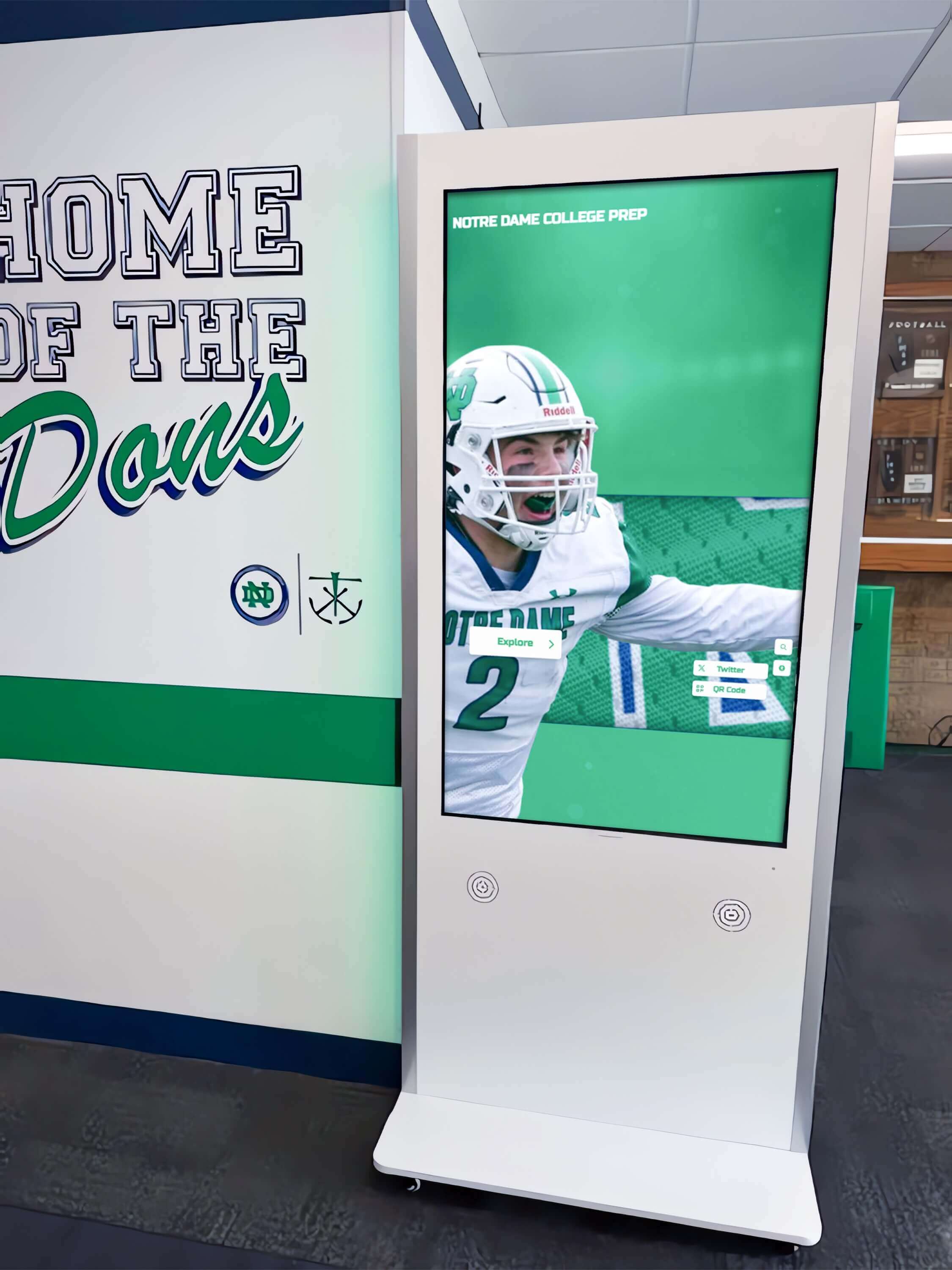
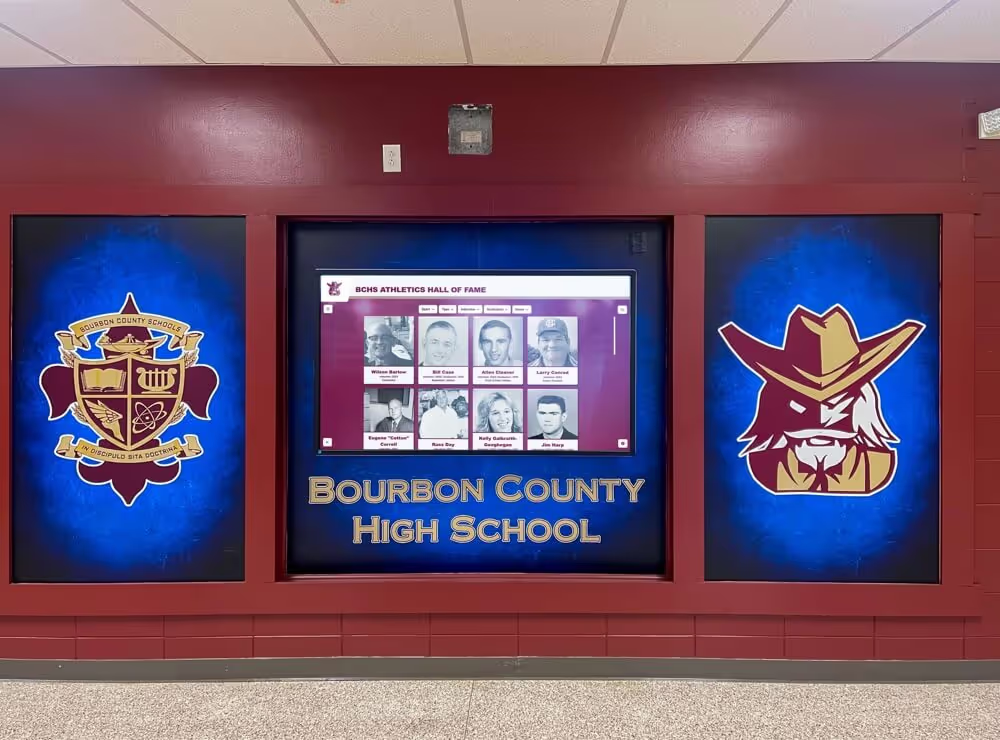
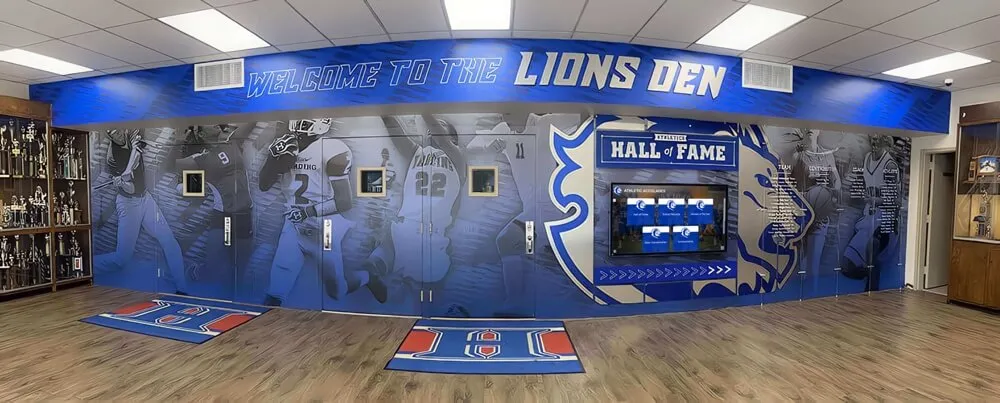
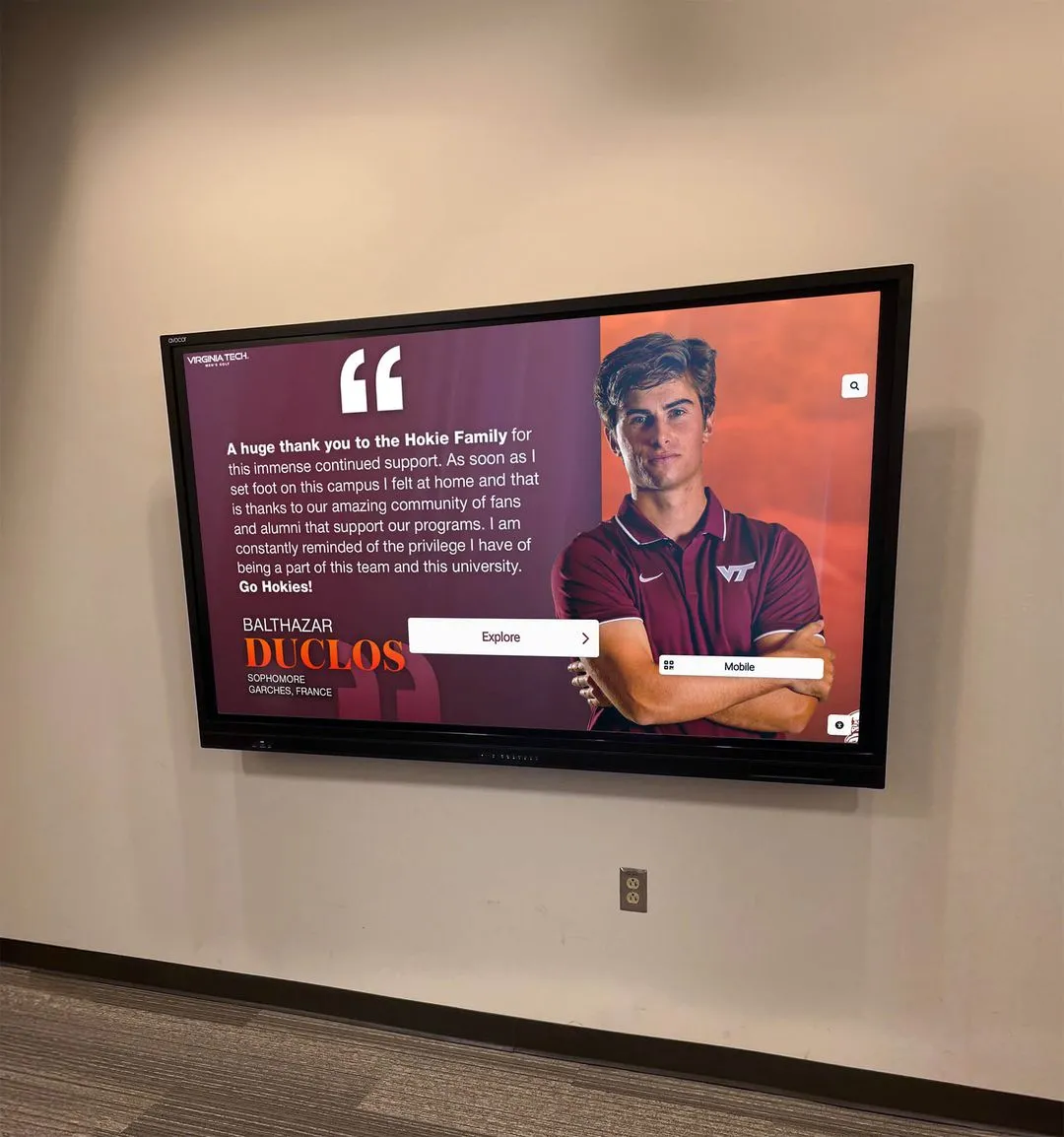
Digital recognition kiosks and interactive display platforms are among the subscription tools whose ownership, authorization, and usage should be verified in an annual recurring payment review — and whose continued investment is most easily justified when the display connects donor and sponsor recognition to the athletic history it commemorates
Connecting Subscription Audits to Recognition Program Continuity
Booster clubs with active recognition programs — digital donor walls, athletic hall of fame displays, sponsor recognition screens, scholarship tracking tools — maintain subscriptions that are directly tied to commitments made to sponsors and donors. A recurring payment review is not only a cost-control measure for these programs: it is a continuity check that confirms recognition platforms and display tools remain active, authorized, and properly managed across every leadership transition.
When a sponsor agreement specifies that recognition will be delivered through a digital display or a named online platform, and that platform’s subscription lapses because no one in the current organization realized it was under review, the recognition obligation cannot be fulfilled through the promised channel. The organization may be able to recover access by renewing the subscription after the fact, but the lapse represents a gap in the recognition delivery that a more disciplined review process would have prevented.
Digital display technology that supports athletic history and recognition — including the kinds of interactive touchscreen systems described in analyses of digital hall of fame technology and AI-enhanced recognition research — represents a subscription category where continuity is particularly important. A platform that goes dark because its subscription lapsed during an officer transition takes the recognition it hosts offline at the same time — potentially affecting the donor acknowledgment and sponsor deliverables the organization has committed to.
The same applies to interactive display systems used in school facilities for informational and community engagement purposes. Schools that have invested in digital recognition infrastructure expect those systems to remain operational regardless of booster club leadership transitions. A recurring payment review that confirms every recognition-related subscription is properly owned, authorized, and funded protects that continuity.
For programs that include athletic awards and recognition banquets as part of their annual calendar — including events that use digital tools for award certificate design and reusable recognition materials — the event coordination and design tool subscriptions that support those events should be verified annually against actual upcoming event plans. A subscription that was essential for last year’s banquet may be unnecessary if the current board plans to use a different format.
Programs that have invested in dedicated recognition infrastructure — such as an athletic hall of fame display or a donor recognition wall — often maintain platform subscriptions for content management, remote updates, and display scheduling. These subscriptions, like touchscreen award systems for competitive sports programs, represent ongoing operational commitments whose ownership and renewal dates belong in the recurring payment owner matrix, not in an informal understanding that depends on a specific officer’s institutional memory.

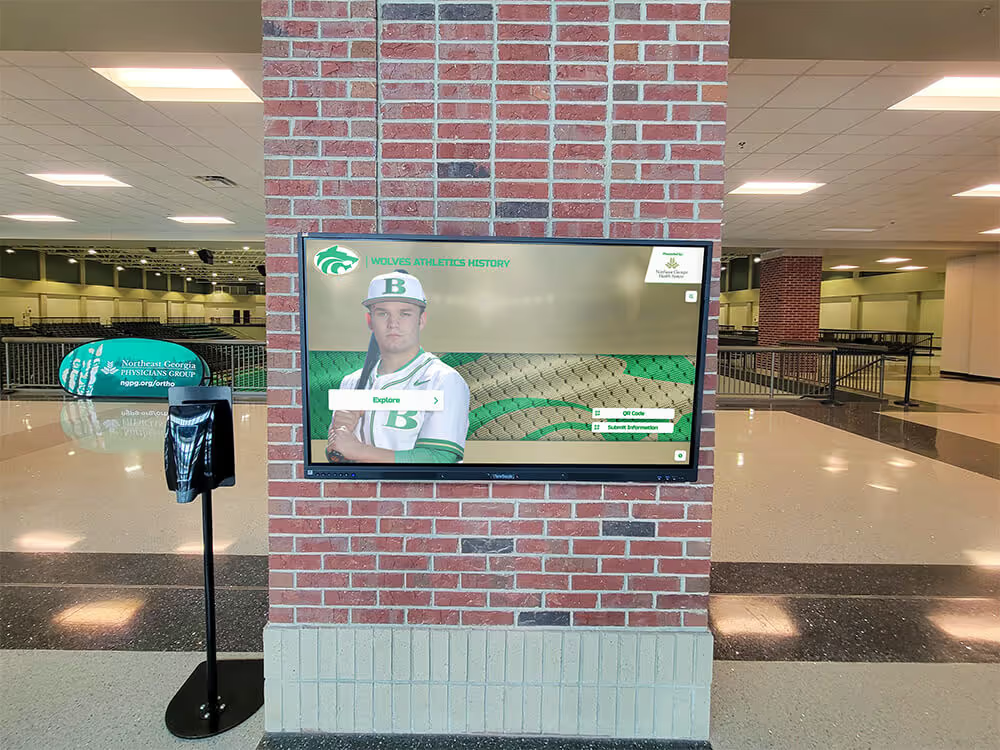
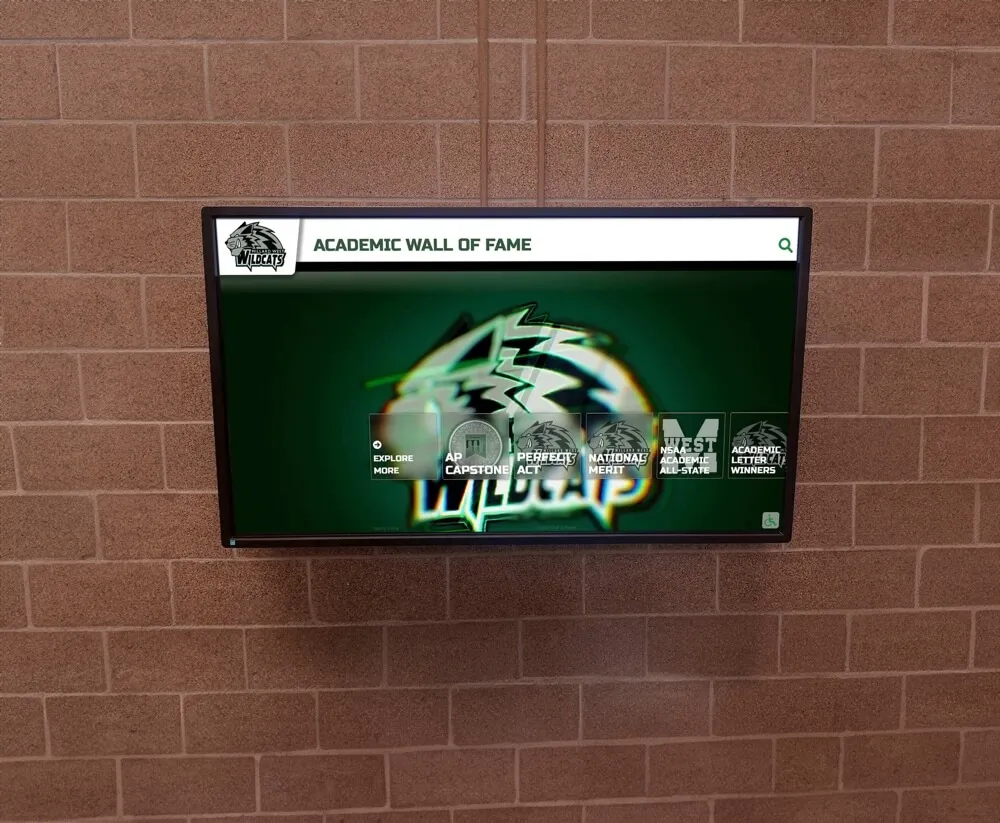
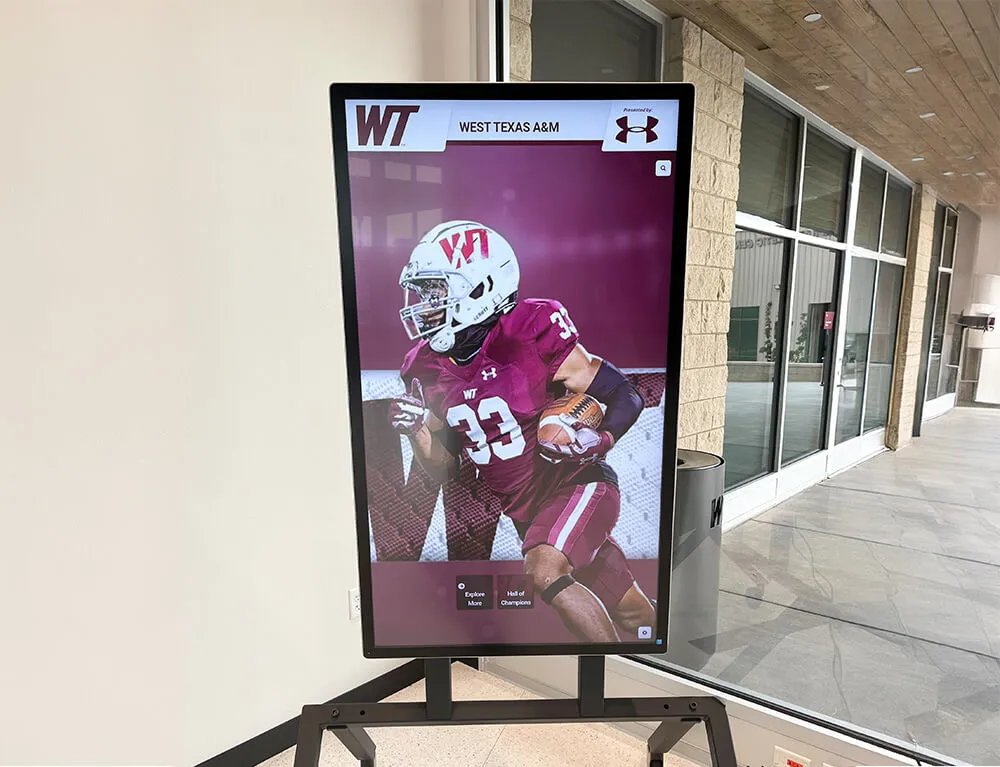
Every interactive recognition display depends on a platform subscription that must be authorized, owned, and reviewed annually — a recurring payment review confirms that the tools supporting recognition programs remain active across leadership transitions without gaps or lapses
Booster Club Recurring Payment Review: Quick Reference Checklist
| Step | Action | Owner | Output |
|---|---|---|---|
| 1. Build inventory | Pull 12 months of bank statements; identify all recurring charges | Treasurer | Complete recurring charge list with amounts and frequency |
| 2. Verify authorization | Match each charge to board minutes or approval record | Treasurer + President | Authorization status log; flag unauthorized charges |
| 3. Confirm usage | Log in to each platform; confirm active use by current officers | Each subscription owner | Usage status per charge; flag unused services |
| 4. Identify duplicates | Compare platforms for overlapping functionality | Treasurer | Duplicate service list; cancellation recommendation |
| 5. Cancel or downgrade | Cancel at next renewal; export data before access ends | Subscription owner | Cancellation confirmations; updated inventory |
| 6. Document and assign | Update owner matrix; present results to board | Treasurer | Board-acknowledged review; updated owner matrix |
Between annual reviews, every officer with a subscription in their portfolio should receive a renewal reminder 30 days before each annual billing date, confirm the service should continue, and document that confirmation in the subscription log.
Frequently Asked Questions
What is a booster club recurring payment review?
A booster club recurring payment review is a structured annual audit of every subscription, software license, membership fee, and automatically renewing service charge the organization pays — comparing each active charge against board authorization records and current usage to identify unused services, unauthorized charges, duplicate subscriptions, and plan-tier mismatches. The review produces a complete, verified inventory of what the organization is paying on a recurring basis, who is responsible for each service, and which charges should be cancelled or downgraded before the next renewal date. It is typically conducted at the fiscal year opening when the incoming treasurer is being oriented to the organization’s financial accounts.
How do booster clubs end up paying for unused subscriptions?
Unused subscriptions accumulate in booster clubs primarily through three mechanisms: services set up by outgoing officers who never cancelled them at transition, trial subscriptions that converted to paid plans without the board’s knowledge, and event-driven tools adopted for a single season’s use that continued billing after the event passed. Because most software subscriptions default to automatic renewal, no action is required for a charge to continue — the service simply renews, and the charge appears on the bank statement alongside legitimately active services until someone specifically investigates it. Leadership turnover compounds the problem by creating gaps in institutional memory about which services exist and who set them up.
How often should a booster club review its recurring payments?
A formal recurring payment review should be conducted at least once per fiscal year — ideally at the fiscal year opening when the incoming treasurer is assuming responsibility for the organization’s financial accounts. Between annual reviews, a lighter-touch maintenance process should be in place: each subscription owner receives a 30-day advance reminder before any annual renewal date and confirms whether the service should continue before the charge clears. Officer transitions should also trigger a targeted review of any subscriptions the departing officer managed, regardless of where those subscriptions fall in the annual review calendar.
What is a recurring payment owner matrix for a booster club?
A recurring payment owner matrix is a documented table that assigns responsibility for each subscription category to a specific officer role — identifying the primary owner who manages renewal decisions and credential access, a backup owner who holds access credentials in case the primary owner is unavailable, and the review trigger that prompts an active usage confirmation before each renewal. The matrix is maintained as a living document, updated at each annual review and at every officer transition. Its purpose is to ensure that no subscription renewal happens by default, with no current officer aware it was approaching — every billing date has an owner who is expected to confirm or cancel in advance.
What should a booster club do before cancelling a subscription?
Before cancelling any subscription, the responsible officer should export or download all organizational data stored in the platform — contacts, event records, financial reports, design assets, archive files, or any other content the organization has created within the service. Access ends at cancellation, and data that has not been exported before the account closes may be unrecoverable. After exporting data, cancellations should be timed to the renewal date rather than mid-cycle, since most platforms do not refund unused prepaid time. The cancellation confirmation should be saved — a confirmation email or screenshot — and the charge should be verified absent from the following month’s bank statement to confirm the cancellation was processed successfully.
Protect Every Dollar Your Program Raises by Reviewing What It Pays Every Year
A booster club recurring payment review is the most direct way to close the control gap that automatic renewal creates in volunteer-led organizations. The six-step process described in this guide — building a complete charge inventory, verifying board authorization, confirming active usage, identifying duplicates, cancelling or downgrading what no longer serves the organization, and documenting the results with a clear owner matrix — gives any incoming treasurer the structure to take control of the organization’s recurring commitments from day one.
The same discipline that eliminates unused subscriptions also protects the recognition commitments that give booster fundraising its purpose. Programs that can demonstrate that every platform subscription is authorized, actively used, properly owned, and annually reviewed are the programs that sponsors and donors trust with multi-year recognition relationships. When a donor sees their name on a digital display that works every day, and a sponsor sees their acknowledgment on a platform that has never gone dark because of a billing oversight, the financial discipline behind those outcomes is what made the recognition possible.
Programs ready to connect their financial governance to a visible, lasting recognition platform — one that can be managed remotely, updated across leadership transitions, and audited as fulfillment evidence for every sponsor agreement — can see what an interactive digital recognition display looks like for their school.
Turn Financial Discipline Into Visible Recognition
Rocket Alumni Solutions builds interactive digital recognition systems for school athletic programs — giving booster clubs a permanent platform for donor acknowledgment, sponsor recognition, hall of fame histories, and athletic records that can be updated remotely and managed through every leadership transition without losing continuity. Request a demo to see what a custom recognition display looks like for your school.
Schedule a Recognition Display Demo