



A reliable booster club meeting agenda template does more than keep meetings on schedule — it institutionalizes the sponsor recognition tasks that most programs handle inconsistently. Sponsor logos that never got updated, donor acknowledgments that were discussed but never assigned, display content that rotated out months ago and was never replaced: these failures rarely happen because a booster club stopped caring. They happen because no one put the review on the agenda. This guide provides a ready-to-use agenda template and a monthly sponsor recognition checklist your officers can pull out at every meeting to make sure nothing slips.
Booster club meetings run on volunteer time, which means every minute wasted on unstructured discussion is a minute that could have been spent confirming that a sponsor’s logo is actually live on the facility screen. The programs with the strongest sponsor retention rates are almost always the ones with the most disciplined meeting structure — not because they spend more time on administration, but because they spend time on the right administration.

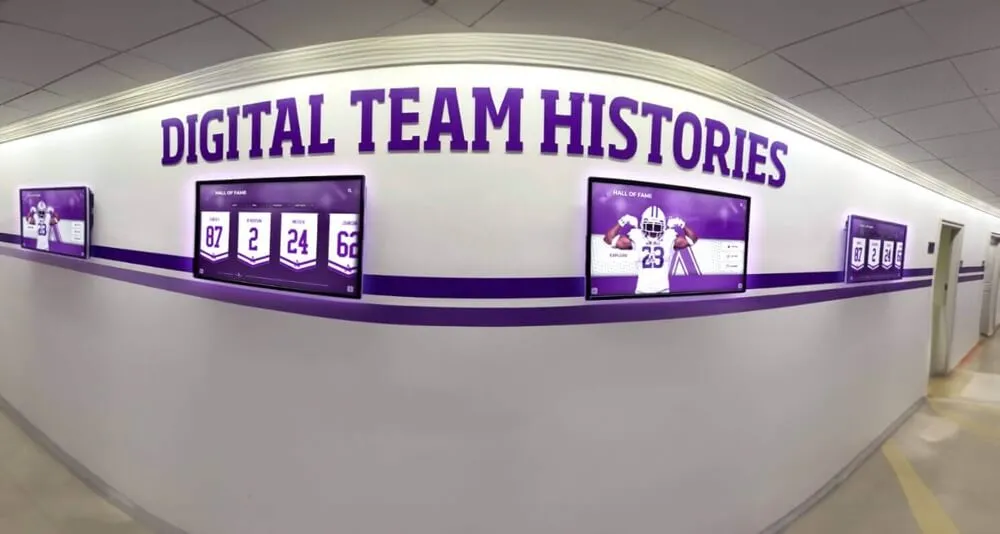
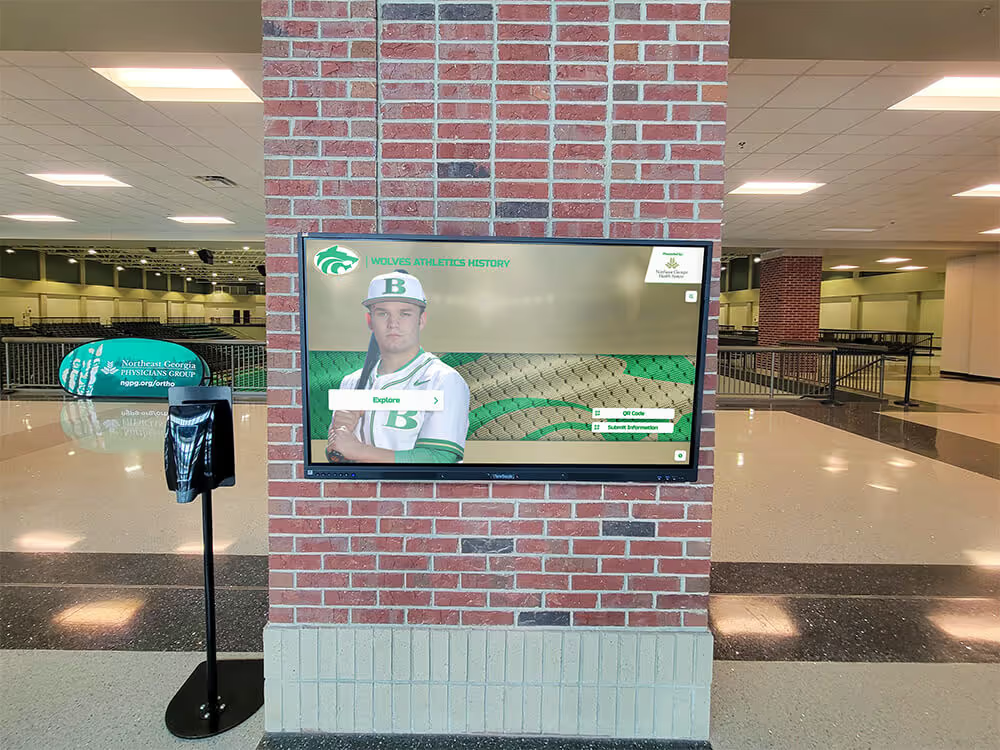
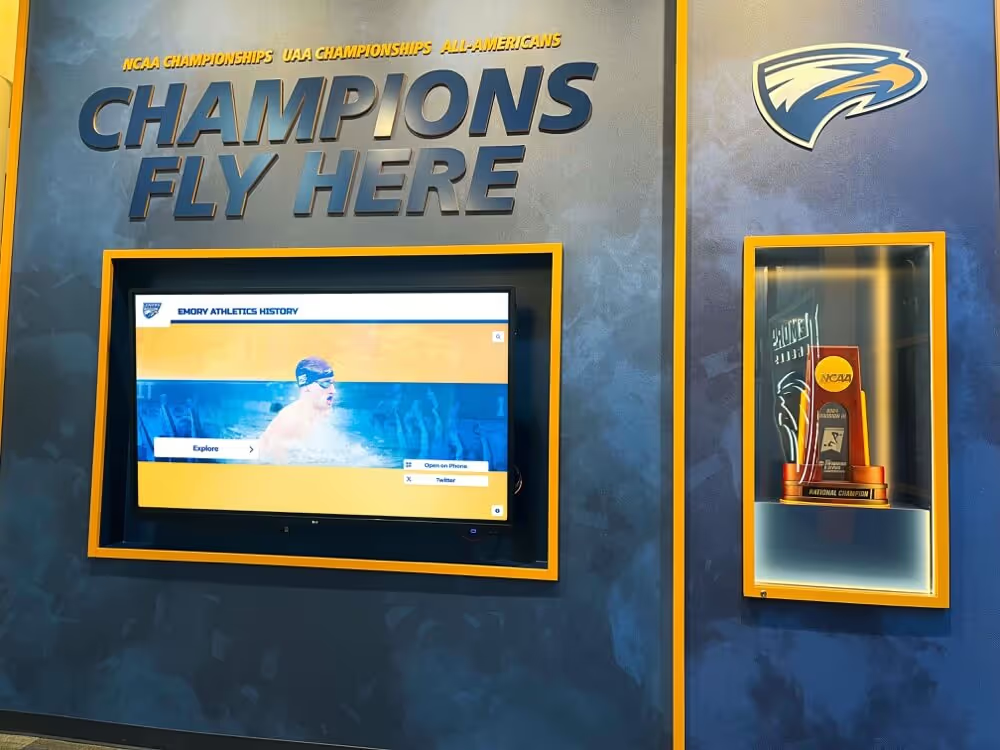
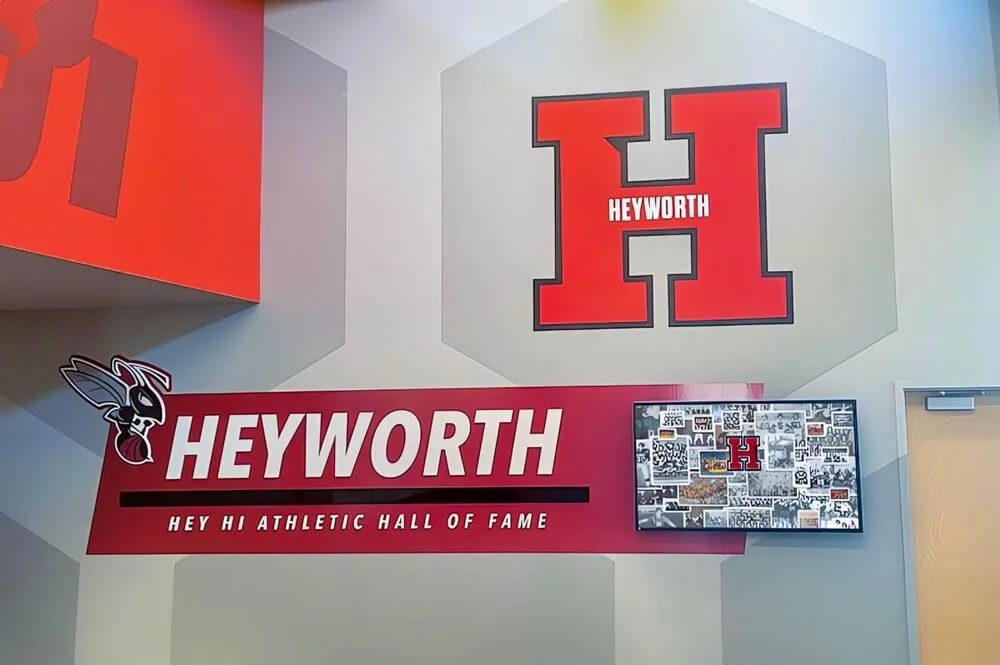
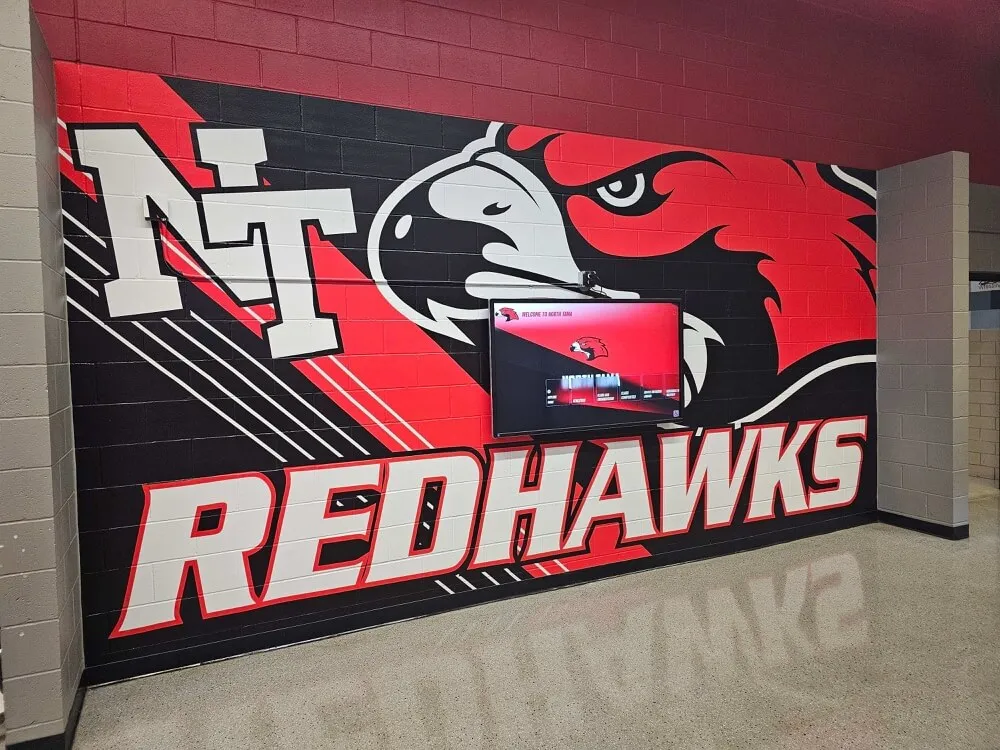
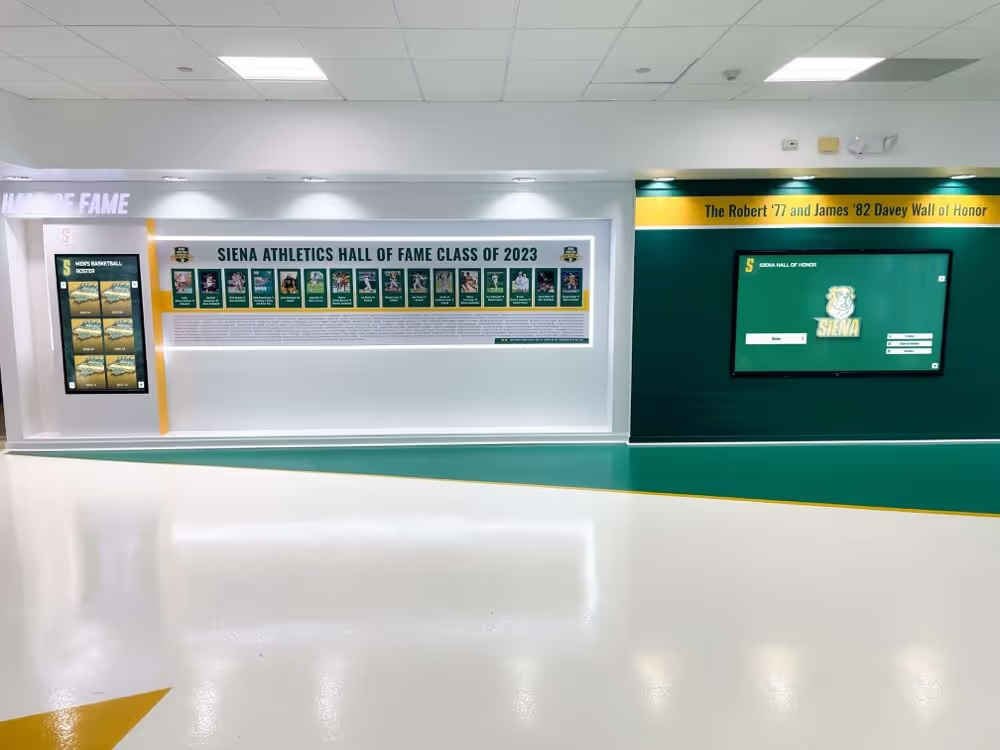
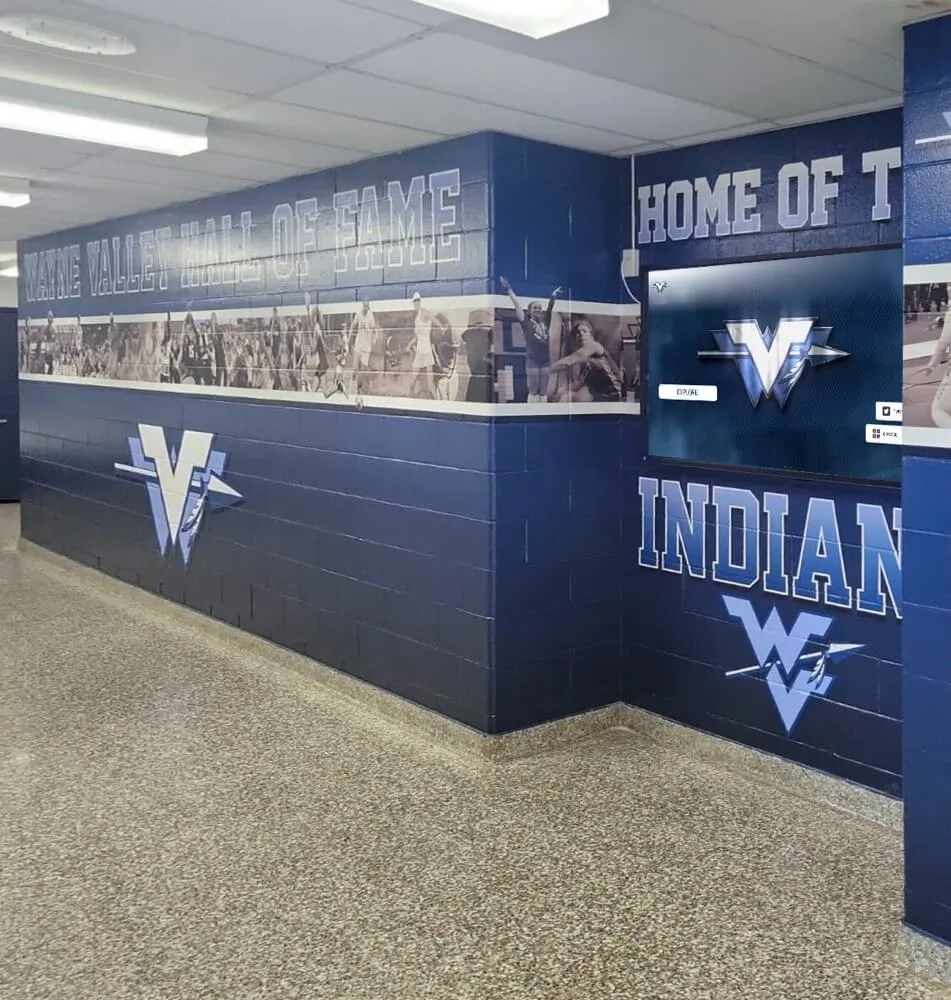
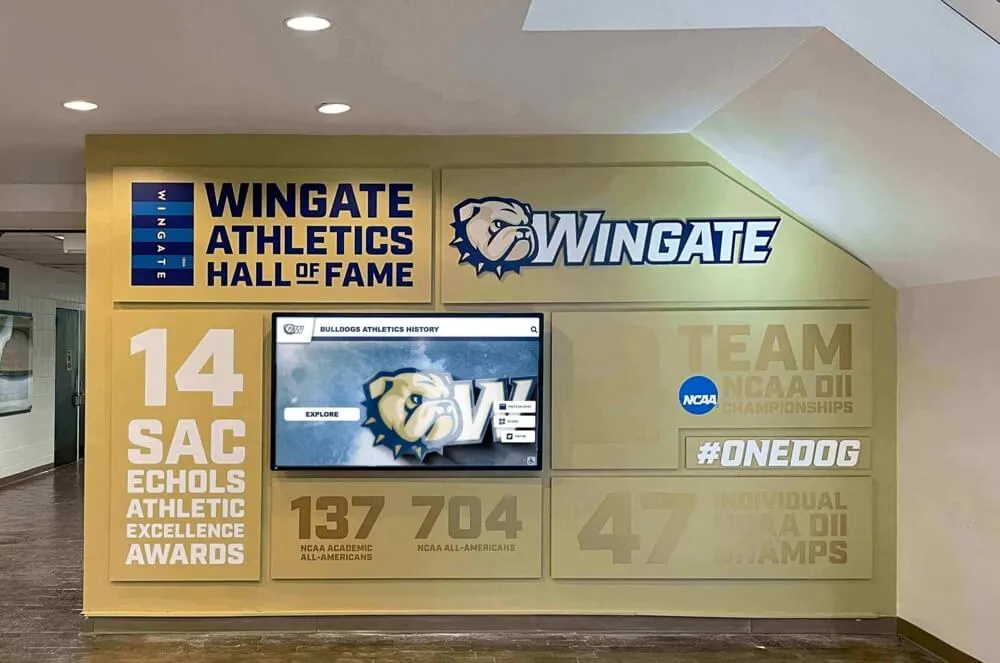
Sponsor recognition that lives in the facility environment needs a standing review slot on the booster club meeting agenda — visible displays only stay current if someone is accountable for checking them monthly
The Complete Booster Club Meeting Agenda Template
The template below is designed for a standard 60-to-90-minute monthly booster club meeting. Copy it, adapt the timing to your program’s needs, and treat the sponsor recognition section as non-negotiable. The items marked with a star (★) are the ones most commonly skipped — and most commonly responsible for sponsor attrition.
| Agenda Item | Owner | Time |
|---|---|---|
| 1. Call to Order and Quorum | President | 2 min |
| 2. Approval of Previous Meeting Minutes | Secretary | 3 min |
| 3. Treasurer’s Report | Treasurer | 8 min |
| — Income vs. budget YTD | ||
| — Sponsor payments received / outstanding | ||
| — Donor fund balances | ||
| 4. Athletic Director Update | AD or Liaison | 10 min |
| — Season schedule changes or updates | ||
| — Facility or staffing news relevant to recognition | ||
| 5. ★ Monthly Sponsor Recognition Review | Sponsor Coordinator | 15 min |
| — Logo and display content status | ||
| — Banners and signage condition check | ||
| — Digital display rotation confirmation | ||
| — Outstanding acknowledgment letters | ||
| — Renewal pipeline review | ||
| 6. ★ Donor Acknowledgment Status | Treasurer or Secretary | 8 min |
| — New donors since last meeting | ||
| — Thank-you letters sent / outstanding | ||
| — Recognition display update requests | ||
| 7. Fundraising and Events Update | VP Events | 10 min |
| — Upcoming events and assignments | ||
| — Revenue tracking against season goal | ||
| 8. Committee Reports (as needed) | Committee Chairs | 10 min |
| 9. Old Business | President | 5 min |
| 10. New Business | All | 5 min |
| 11. Action Item Review | Secretary | 3 min |
| — Confirm owner and deadline for every item | ||
| 12. Adjournment | President | 1 min |
Every action item generated at the meeting should leave the room with a specific owner and a specific deadline — not “someone will check on the banner” but “Marcus will photograph the gym banner and confirm it is still in place by Friday.” The Secretary’s job in item 11 is to read every action item back before adjournment and confirm the owner acknowledged it.
Why Sponsor Recognition Belongs on Every Meeting Agenda
Sponsor recognition is not a once-a-year task. It is a continuous fulfillment obligation — and the gap between what was promised in a sponsorship agreement and what actually happens is almost always discovered at exactly the wrong time: when the sponsor calls to ask about their logo, or when the renewal ask arrives and the business owner has no memory of being recognized.
Building a standing sponsor recognition review into the monthly booster club meeting agenda converts that fulfillment obligation from a background concern into an active, assigned responsibility. According to the Association of Fundraising Professionals, donor retention rates for organizations with formal stewardship practices run 20 to 30 percent higher than those with informal follow-up — a gap that applies equally to corporate sponsors and individual donors.
For programs developing or strengthening their overall recognition approach, the framework for academic recognition programs at the K-12 level provides useful structural principles — the same systematic tracking and visibility standards that govern academic award programs apply directly to athletic sponsor recognition, where consistency is equally essential to credibility.
The Monthly Sponsor Recognition Checklist
The checklist below is designed to be completed by the Sponsor Recognition Coordinator or equivalent officer before each monthly meeting, with status reported and action items assigned during item 5 of the agenda. Maintain a running copy in a shared folder accessible to all officers.
Display and Signage Review
| Item | Status | Owner | Due |
|---|---|---|---|
| All sponsor logos are current (no outdated businesses) | |||
| Digital display rotation is confirmed active | |||
| Rotation includes all contracted sponsors at correct frequency | |||
| Gymnasium banners are clean, properly installed, and undamaged | |||
| Outdoor venue banners are in place and undamaged | |||
| Lobby display panels reflect current sponsor roster | |||
| Any new sponsors have been added to all display types |
Acknowledgment and Communication
| Item | Status | Owner | Due |
|---|---|---|---|
| New sponsor agreements signed this month: thank-you letter sent? | |||
| New individual donors this month: acknowledgment sent? | |||
| Mid-season check-in calls completed for premium-tier sponsors? | |||
| Any sponsor who reported a concern — followed up? | |||
| Social media mentions posted per agreement schedule? | |||
| Newsletter features published per agreement schedule? |
Renewal Pipeline
| Item | Status | Owner | Due |
|---|---|---|---|
| Sponsors with agreements expiring within 60 days identified? | |||
| Renewal conversations initiated for 60-day pipeline? | |||
| Season-end fulfillment documentation started for expiring sponsors? | |||
| Photos of recognition in place collected for renewal packages? |
Running this checklist before each meeting means the Sponsor Recognition Coordinator arrives with a status report rather than a list of open questions. The meeting discussion focuses on resolving exceptions and assigning remediation — not discovering problems that should have been caught weeks earlier.
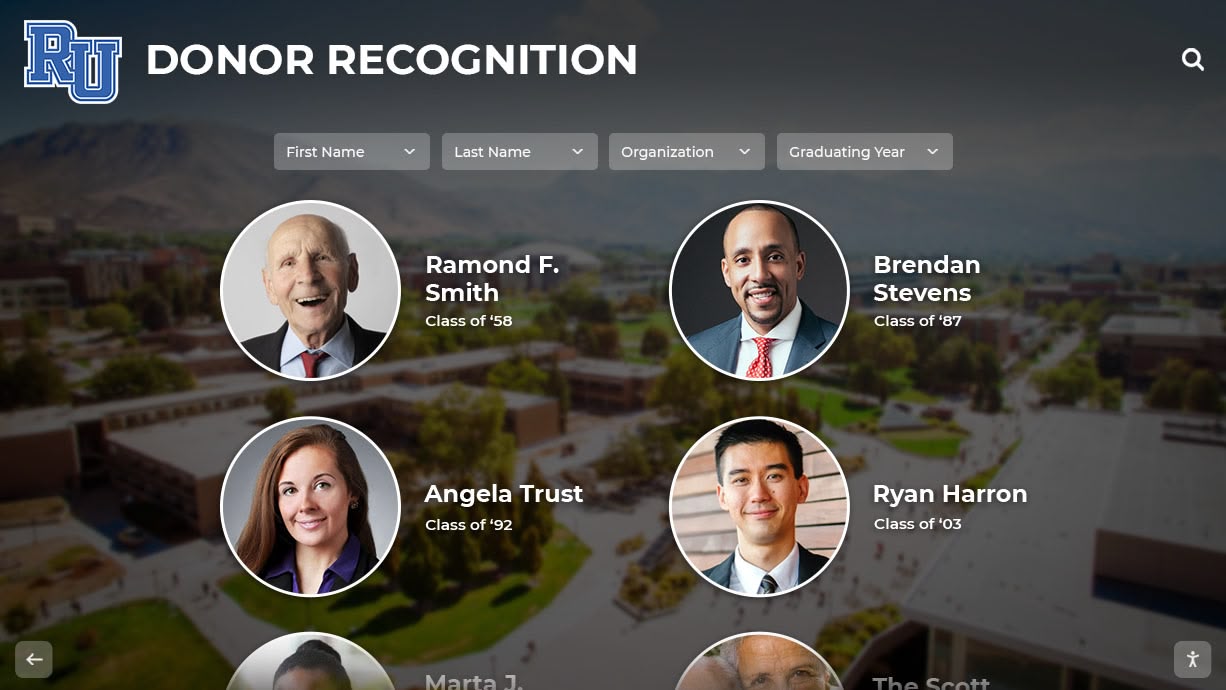
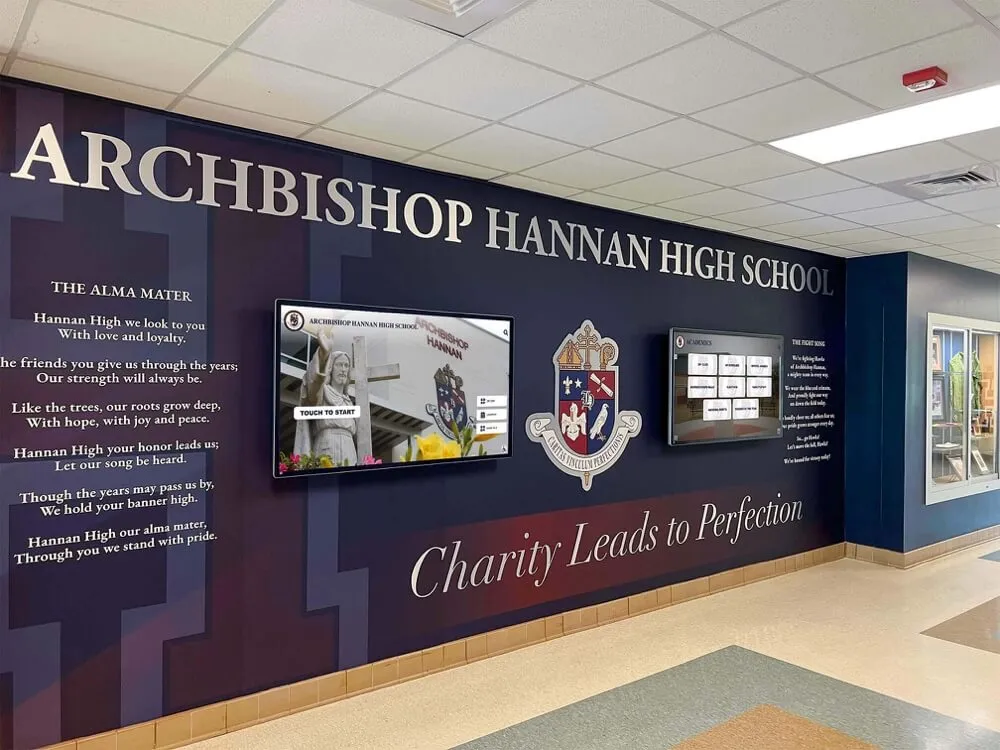
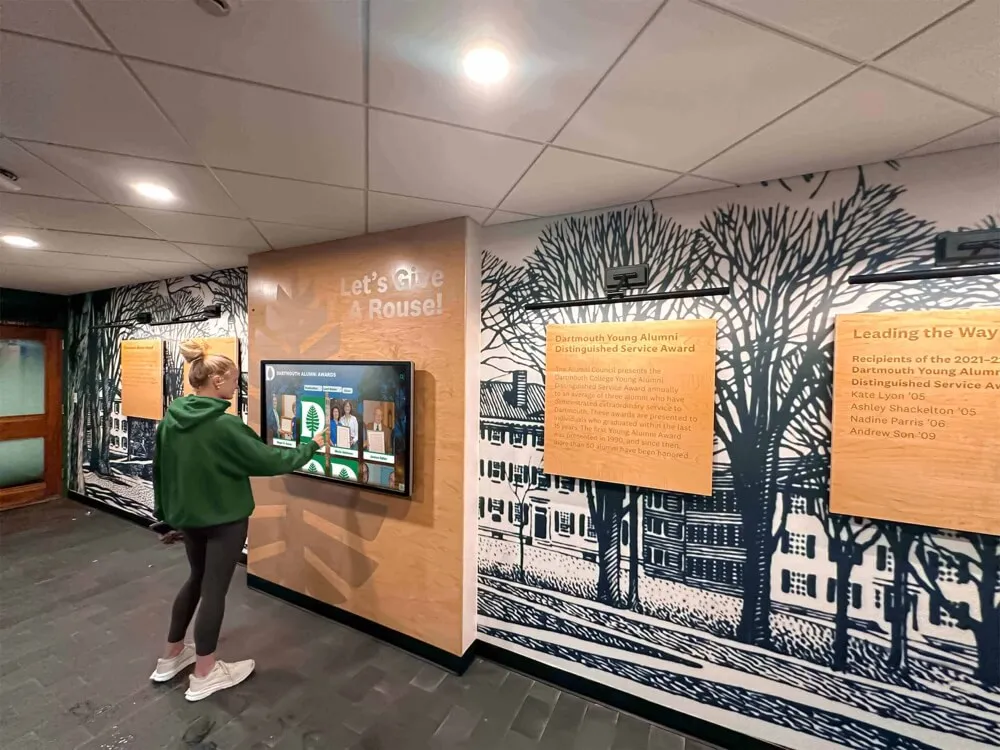
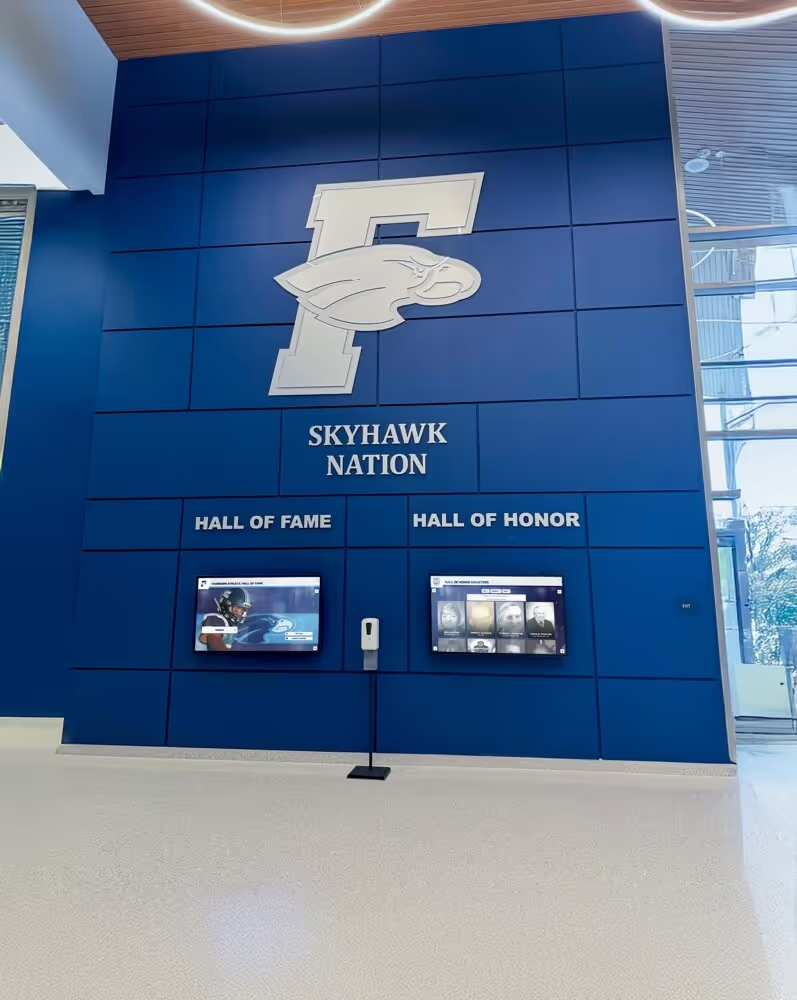
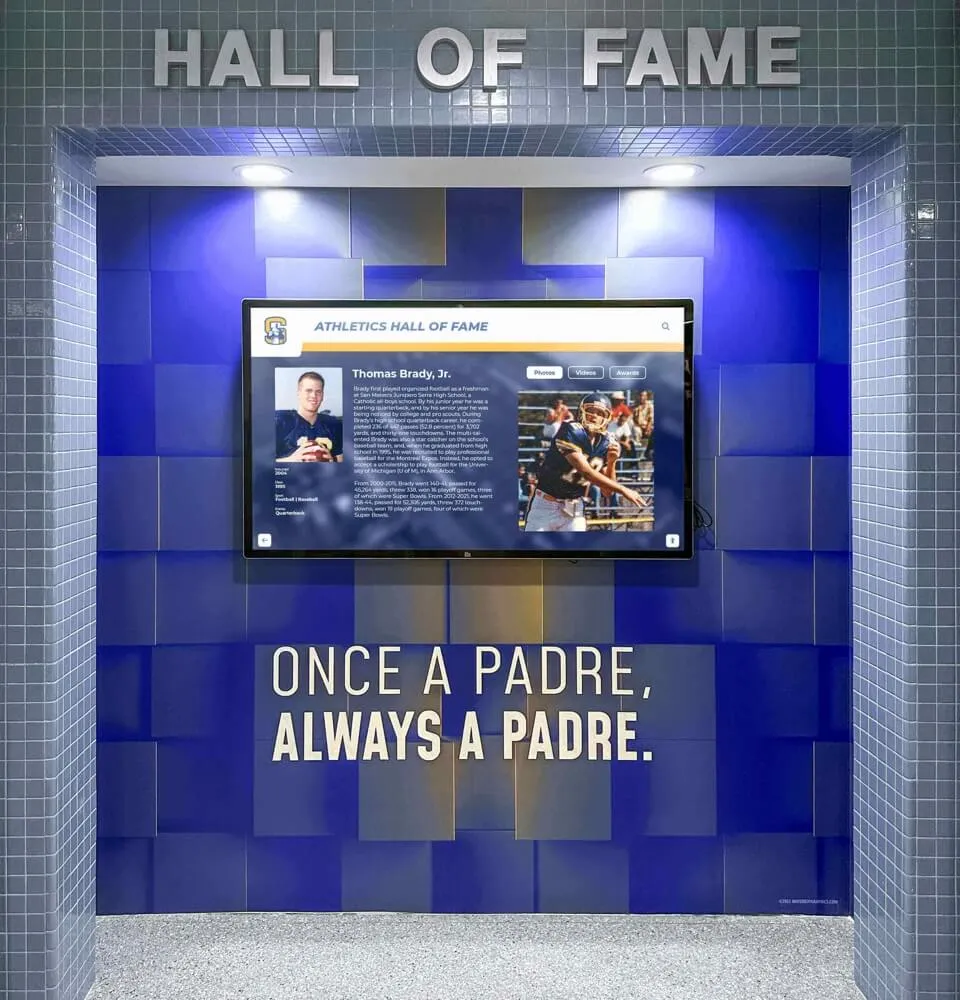
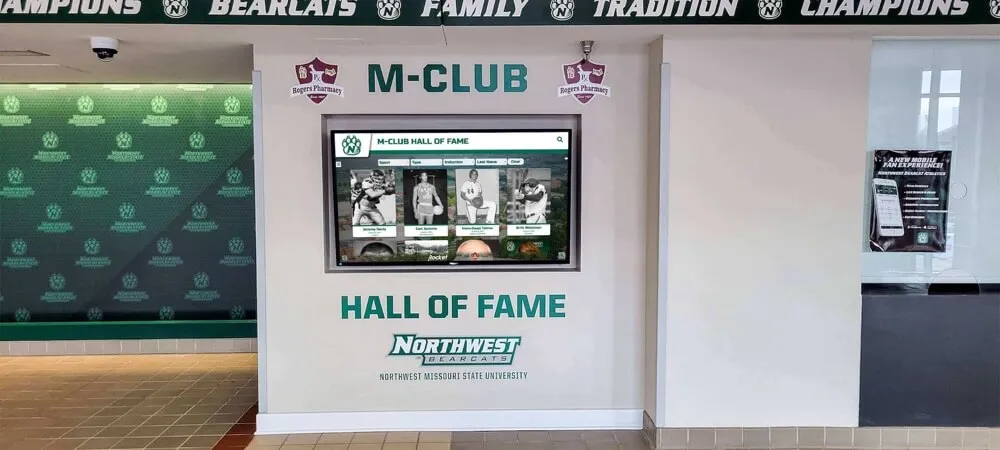
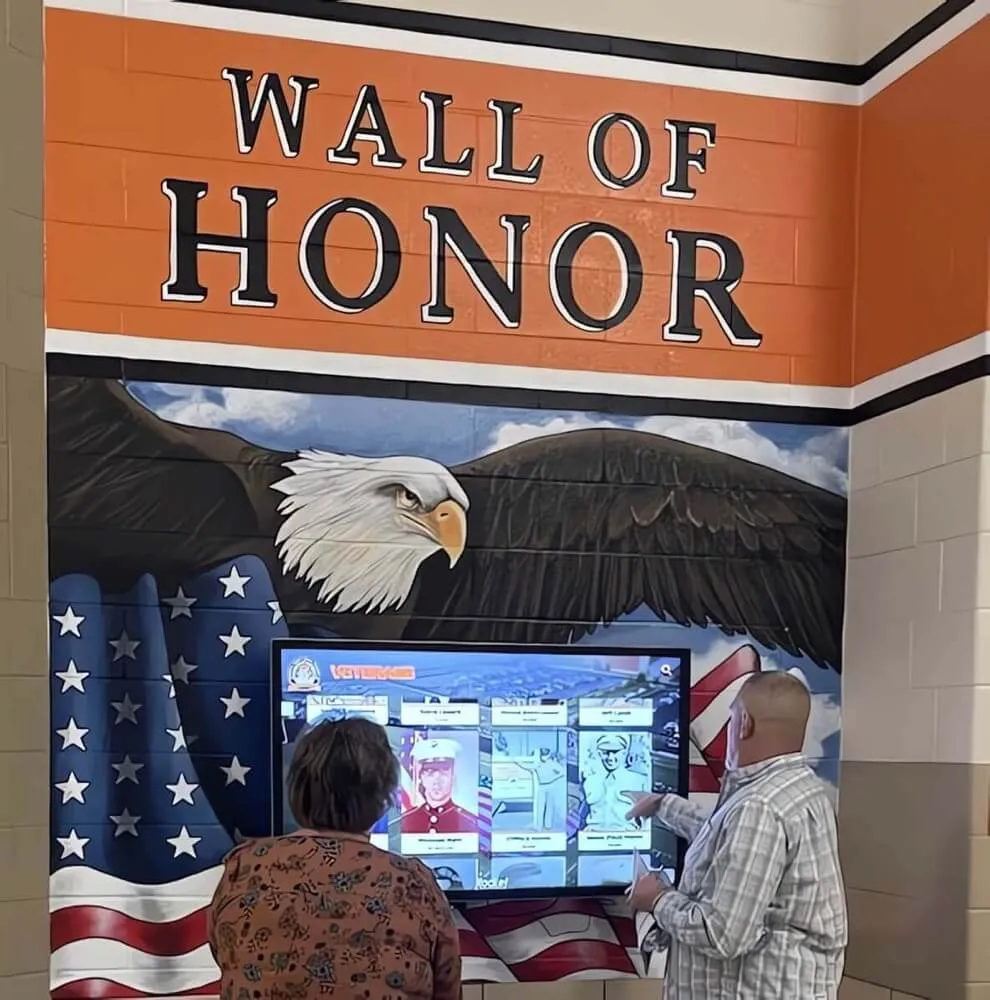
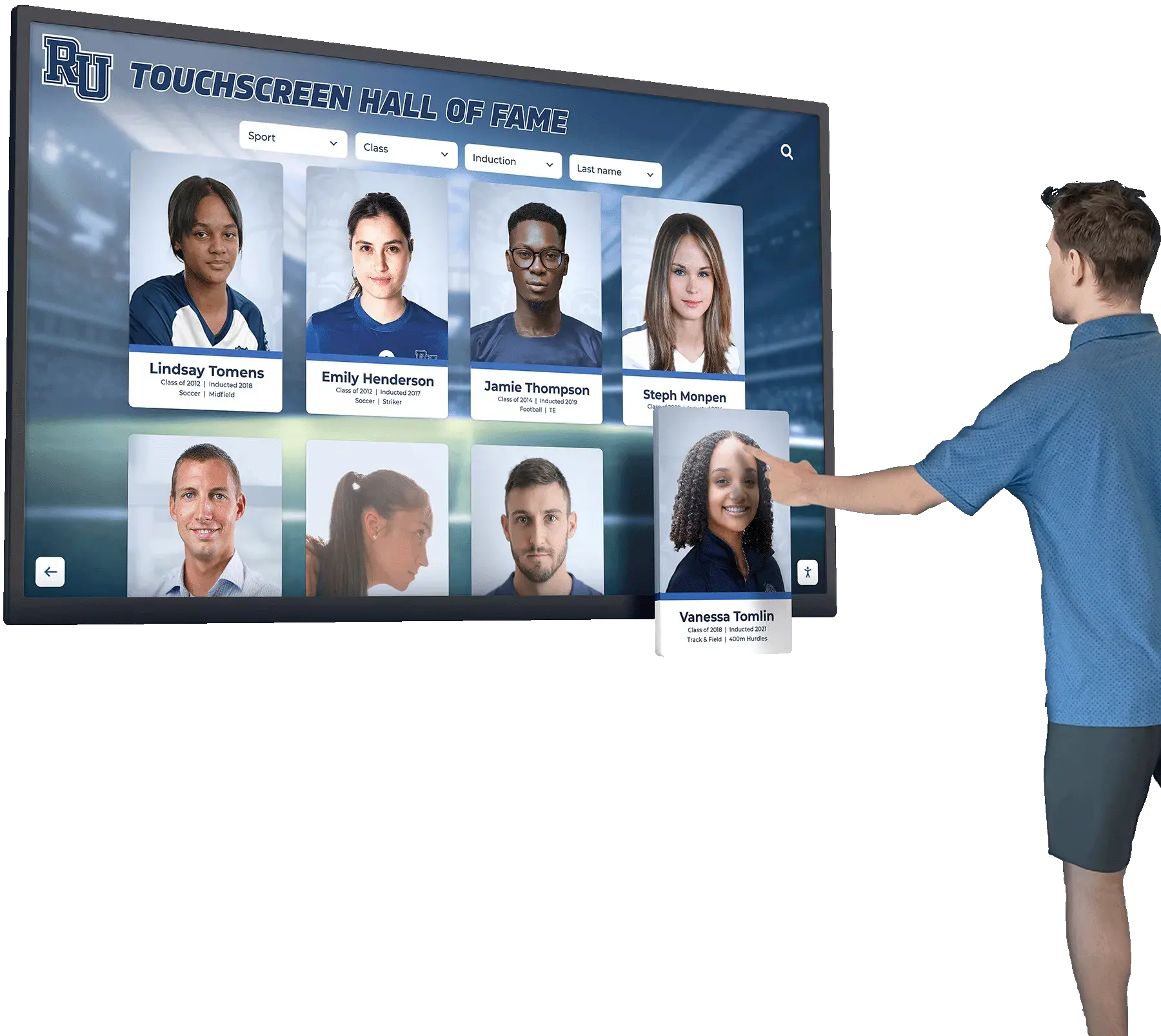
Formal recognition infrastructure — whether alumni portrait walls or sponsor display panels — stays current only when someone checks it on a regular schedule. Monthly agenda reviews create that accountability
Sponsor Recognition Display Updates as a Standing Agenda Item
Of all the items in the monthly sponsor recognition review, display content updates are the most frequently neglected — and the most visible to sponsors. A sponsor who visits the facility and finds their logo displayed alongside three businesses that are no longer in existence has an accurate and damaging impression of the program’s attention to detail.
Digital display systems make updates faster and easier than printed materials, but they still require someone to initiate the change. The monthly agenda item creates that trigger. Before the meeting, the Sponsor Recognition Coordinator should pull up the current display content — either by visiting the facility or logging into the content management system remotely — and compare the active roster against the current sponsor agreement list.
Updates that require action include:
- New sponsors added: Logo and content should be live within one week of agreement signing, not at the start of the next season.
- Sponsor tier changes: A business that upgraded from Bronze to Silver should see their recognition level change promptly, not at the next printing cycle.
- Sponsor non-renewals: Logos for businesses that did not renew should be removed before the new season begins, not left in rotation as a goodwill gesture that can confuse new sponsors about what their tier actually includes.
- Business rebranding: Sponsors who change their logo, name, or contact information should have their display assets updated when the change occurs.
Understanding how digital recognition environments are actually used day to day helps officers appreciate why currency matters. A day in the life of a school digital display illustrates the range of audiences who encounter facility screens — athletes before practice, families arriving for events, prospective students on tours, and community members attending evening programs. Outdated recognition content in that environment sends a message the program did not intend.
Make Sponsor Recognition Visible Year-Round
Rocket Alumni Solutions builds interactive digital recognition systems for school athletic facilities — giving booster clubs a centralized platform to keep sponsor logos, donor acknowledgments, and recognition displays current between monthly reviews. A demo shows what your facility could look like.
See Recognition Display SolutionsManaging the Recognition Workflow Between Meetings
Monthly meetings are checkpoints, not the only moments when recognition work happens. The agenda template works best when it is paired with a lightweight between-meeting workflow that routes time-sensitive items to the right person without waiting for the next scheduled gathering.
Three categories of items cannot wait for the next monthly meeting:
New sponsor agreements. When a business signs a sponsorship agreement, the welcome letter should go out within five business days and the display assets should be submitted for setup within two weeks. A sponsor who waits two months to see their logo on the facility screen because the monthly meeting had not come around yet loses confidence in the program’s follow-through before the relationship properly begins.
Sponsor complaints or concerns. Any communication from a sponsor expressing dissatisfaction — a banner that was not installed, a logo that was not included in the printed program, a PA acknowledgment that was missed — should trigger an immediate response, not a discussion at the next meeting. The Sponsor Recognition Coordinator should have standing authority to initiate remediation without waiting for board approval.
End-of-season documentation. When a sport’s season concludes, the fulfillment documentation for that sport’s sponsors should begin immediately — photographs of recognition in place, attendance data, summary of deliverables completed. This documentation is time-sensitive because the evidence (a banner still hanging, a digital screen still showing the sponsor’s content) is most accessible right after the season ends.
For programs managing complex sponsor relationships across multiple sports, understanding youth sports awards structures and recognition frameworks provides useful reference for building the recognition differentiation that makes sponsor tier systems feel meaningful — and worth tracking at the level of detail the monthly checklist requires.
Structuring the Treasurer’s Report for Sponsor Visibility
The standard treasurer’s report covers income, expenses, and fund balances. For booster clubs with active sponsorship programs, it should also include a brief sponsor payment status summary — not a full accounting of every agreement, but enough visibility for the board to know which sponsors are paid in full, which are on payment schedules, and which are overdue.
A one-page sponsor payment summary structured as follows keeps the treasurer’s report focused:
| Sponsor | Agreement Amount | Received | Balance | Status |
|---|---|---|---|---|
| ABC Auto — Gold | $2,500 | $2,500 | $0 | Paid in full |
| Downtown Grill — Silver | $1,200 | $600 | $600 | Payment 2 due Nov 1 |
| Riverside Dental — Bronze | $500 | $0 | $500 | Invoice sent; follow-up needed |
This summary serves two purposes: it lets the board confirm that recognition is being delivered only to sponsors who are actually in good standing (or at least on an agreed payment schedule), and it identifies collection issues early enough to address them before the season is half over and the recognition has already been delivered in full.
The recognition implications of payment status matter more than they appear. A sponsor listed on the facility display who has not yet paid — and may not pay — is a documentation problem the treasurer needs to flag. A sponsor who paid in full and is not yet visible on any recognition platform is a fulfillment problem the Sponsor Recognition Coordinator needs to resolve. The monthly treasurer’s report keeps both issues visible to the full board.
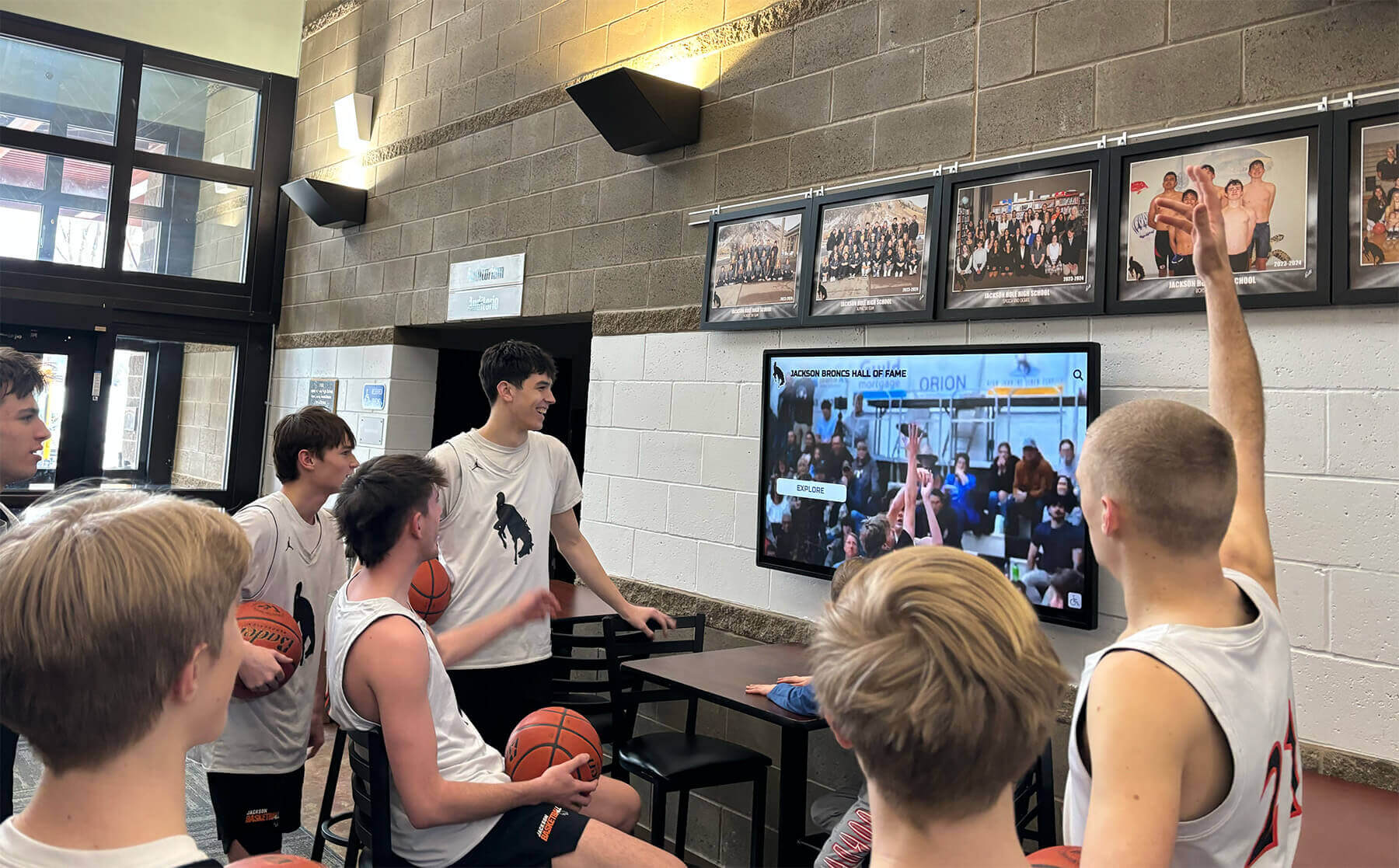
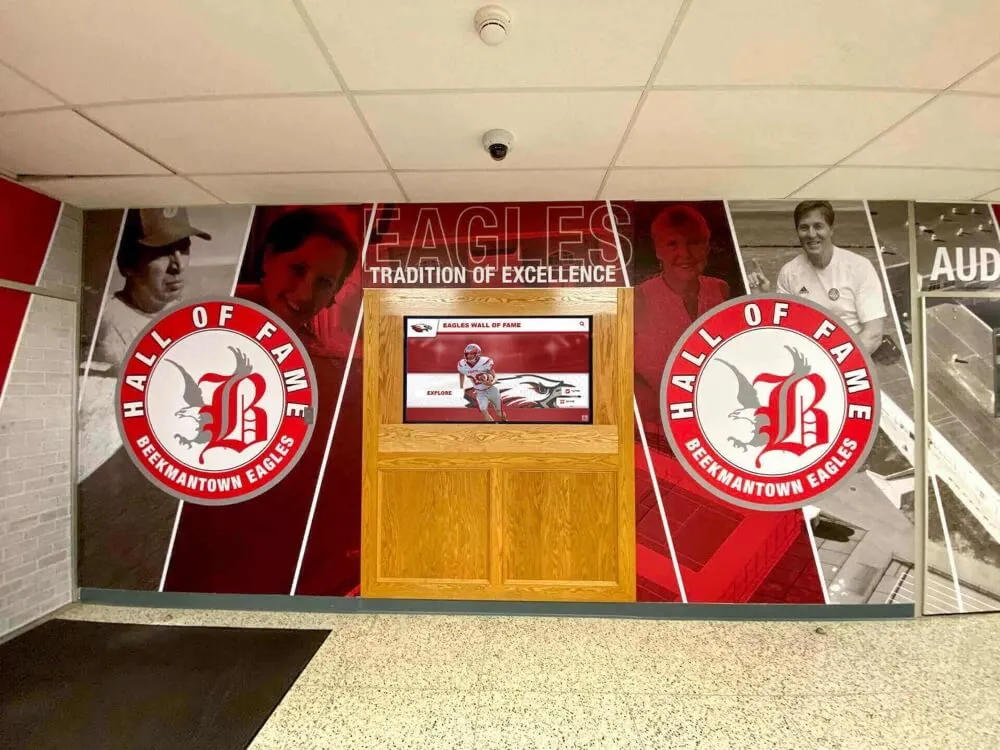
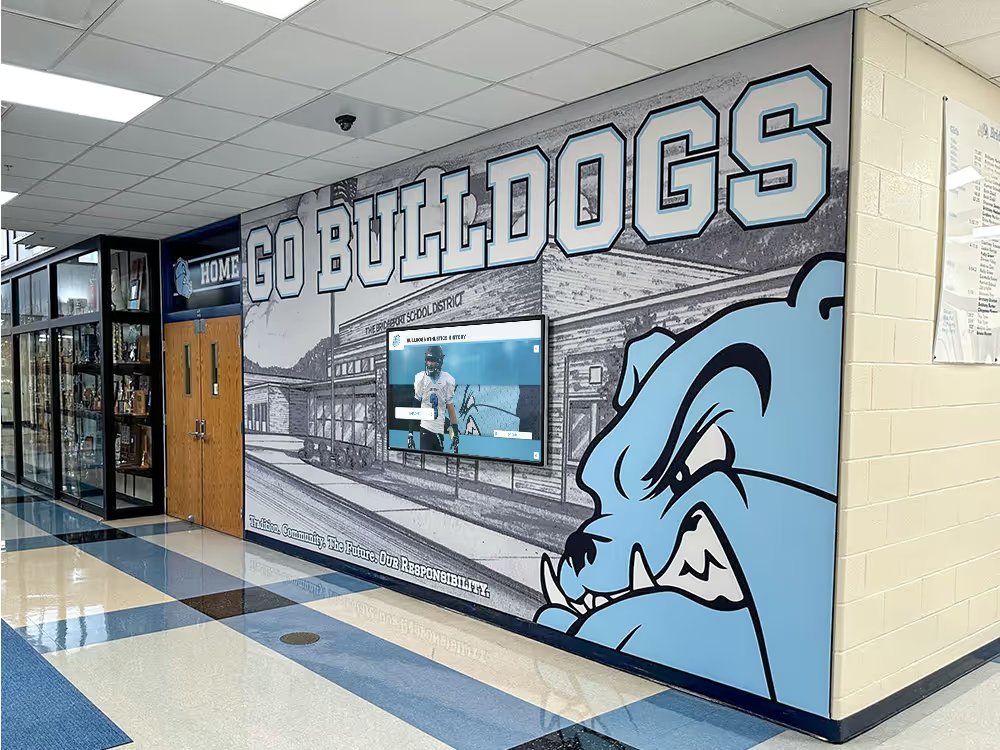
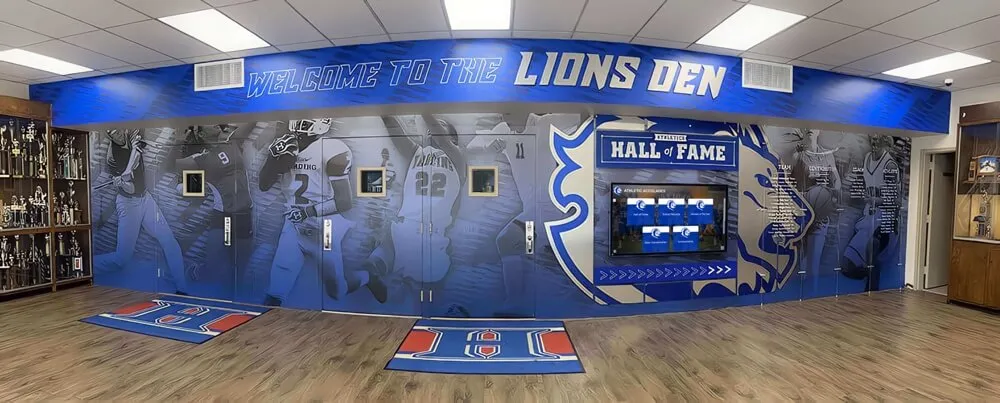
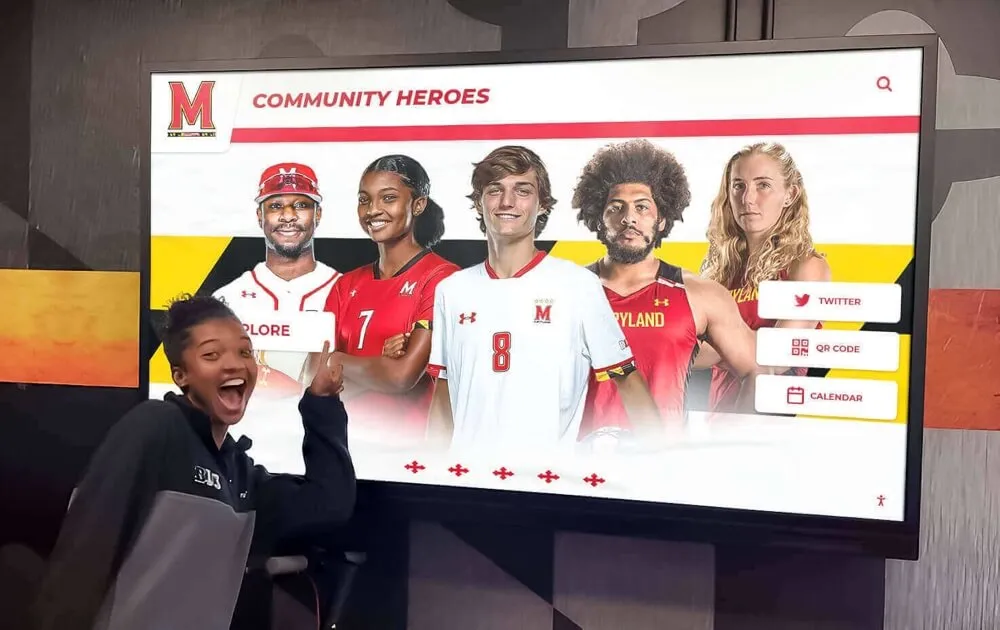
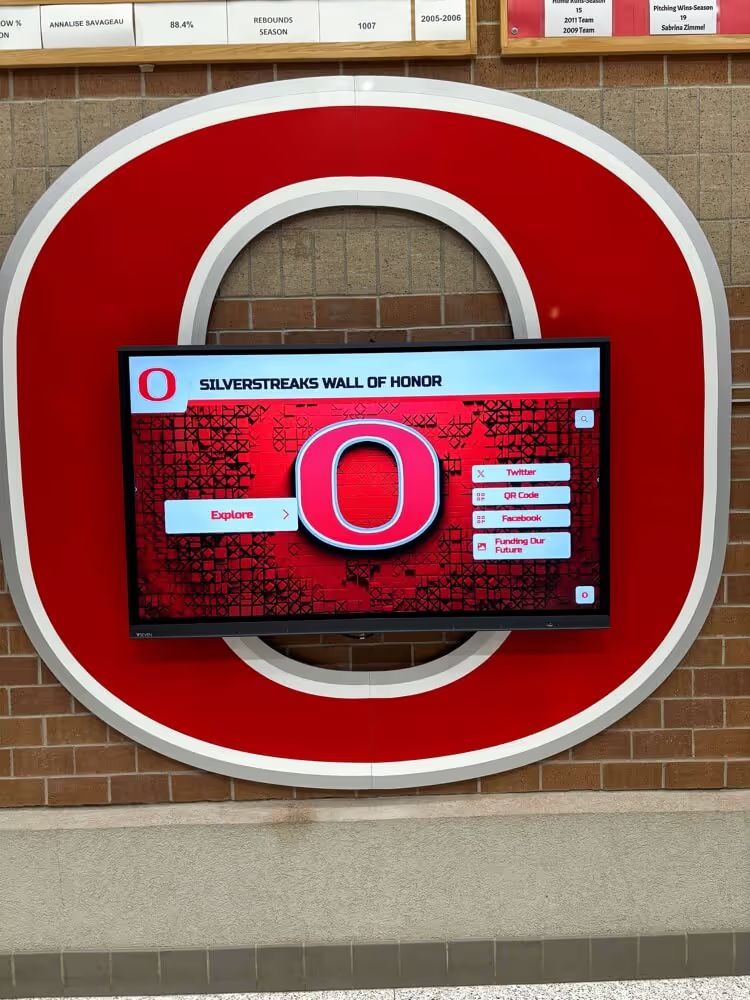
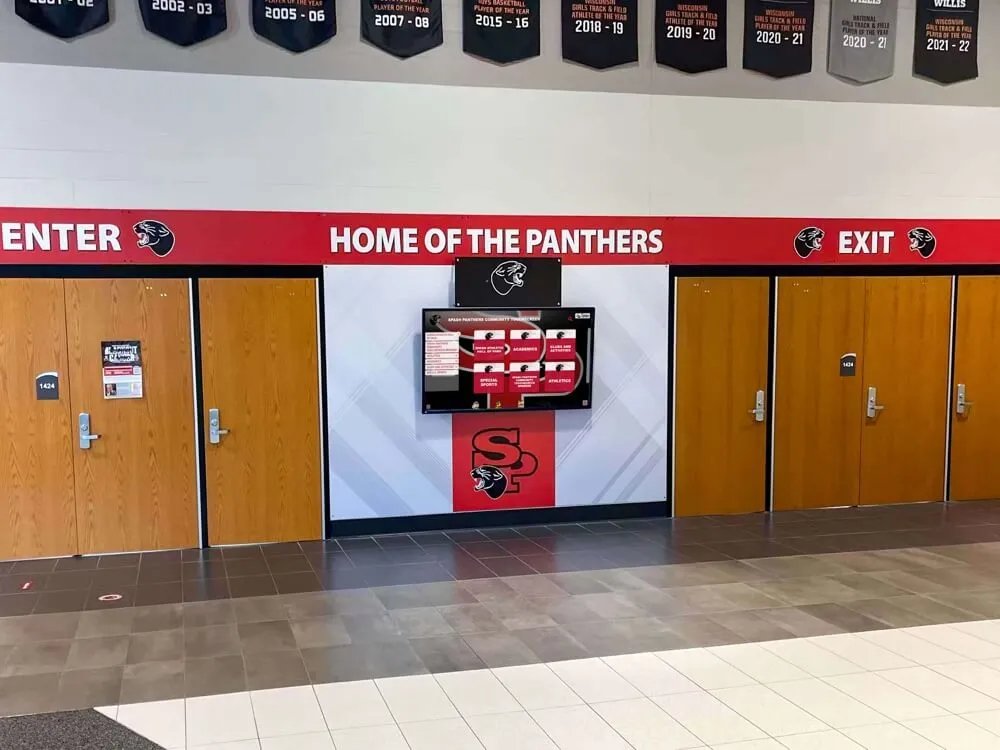
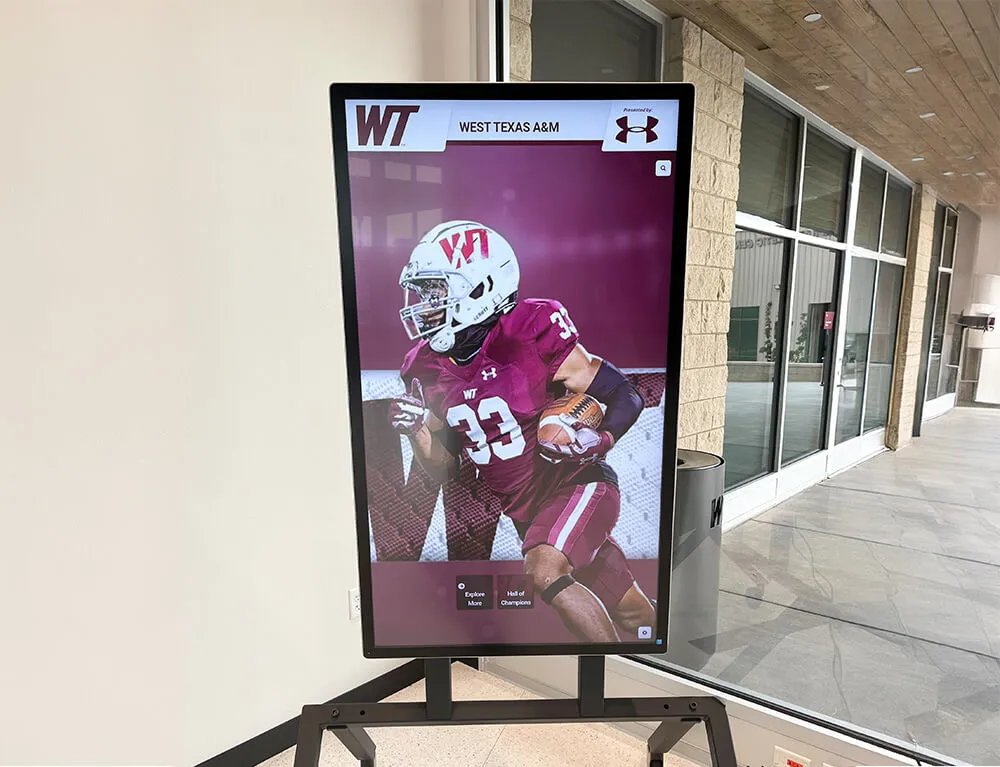
Athletic lobby screens are high-traffic recognition environments — keeping sponsor content current on these displays requires the kind of monthly accountability that only a structured agenda can provide
Donor Acknowledgment: A Separate Agenda Item That Often Gets Merged
Individual donor acknowledgment and corporate sponsor recognition are related but distinct — and collapsing them into a single agenda item is one of the most common ways they both get shortchanged. The two groups have different timelines, different communication needs, and different documentation requirements.
Individual donors need prompt written acknowledgment (ideally within a week of receipt), clear documentation of any fund restrictions, and — for cumulative contributors — recognition that the organization has noticed their sustained support. Corporate sponsors need delivery confirmation, mid-season relationship touches, and end-of-season fulfillment documentation. Running them on the same track means one set of requirements consistently crowds out the other.
Treating donor acknowledgment as a separate agenda item — item 6 in the template above — creates parallel accountability. The person responsible for donor acknowledgments arrives at the meeting with a status report, not a combined update that buries the individual donor relationships inside the sponsor pipeline.
For programs building out the recognition structures that make acknowledgment feel substantive — not just a legal compliance exercise — reviewing academic achievement award frameworks at the high school level provides useful reference for the recognition language and permanence standards that make individual contributors feel genuinely valued rather than administratively processed.
Building the Agenda Into Leadership Transitions
One of the most consistent sources of sponsor relationship damage in booster clubs is the annual leadership transition, when a new president or treasurer takes over and the institutional knowledge about sponsor histories, recognition commitments, and renewal timelines does not transfer. A structured meeting agenda mitigates this risk by creating a documented record of what was reviewed, what was assigned, and what was completed at every monthly meeting.
When meeting minutes consistently reflect the sponsor recognition review items — logos checked, outstanding acknowledgments assigned, renewal pipeline reviewed — the incoming officer has a timeline of the program’s recognition activity going back multiple years. That record is worth more than any handoff conversation, because it reflects what actually happened, not what the departing officer remembers.
For programs formalizing their leadership transition processes, the athletic director transition plan framework covers the same institutional knowledge transfer challenge at the administrative level — the same principles of documentation, assignment accountability, and timeline visibility apply directly to booster club officer transitions, where the stakes for sponsor relationships are equally high.
The connection between meeting structure and institutional memory extends to the recognition displays themselves. Programs that maintain digital hall of fame and recognition systems through platform-level archives create a record of every recognition change — who was added, when, and at what tier — that persists through leadership transitions independent of whether meeting minutes were well-kept. The combination of structured meeting records and a digital recognition platform creates the most durable institutional memory available to a volunteer-led booster club.
The Action Item Log: How Monthly Accountability Compounds
The agenda template includes a dedicated item 11 for action item review before adjournment. This is not procedural courtesy — it is the mechanism that converts meeting discussion into actual delivery.
An action item log maintained by the Secretary should carry every open item forward from meeting to meeting until it is explicitly closed. A banner installation assigned to the facilities coordinator in October should still be in the log in November if it has not been confirmed complete. An outstanding thank-you letter assigned to the president should remain visible at every meeting until the letter is confirmed sent and logged.
Sponsors can tell when a program has this kind of discipline. Not because they see the meeting minutes — they do not — but because their recognition commitments are fulfilled on time, their concerns are addressed promptly, and their renewal conversations reference specific deliverables that were actually completed. That track record is built one action item at a time, compounded over twelve monthly meetings and multiple seasons.
For programs looking to connect recognition quality to longer-term relationship outcomes, exploring how academic awards and recognition preserve institutional identity over time illustrates why the consistent tracking of recognition delivery — meeting by meeting, season by season — is not just operational hygiene but the foundation of a program’s long-term reputation with the community it depends on for support.
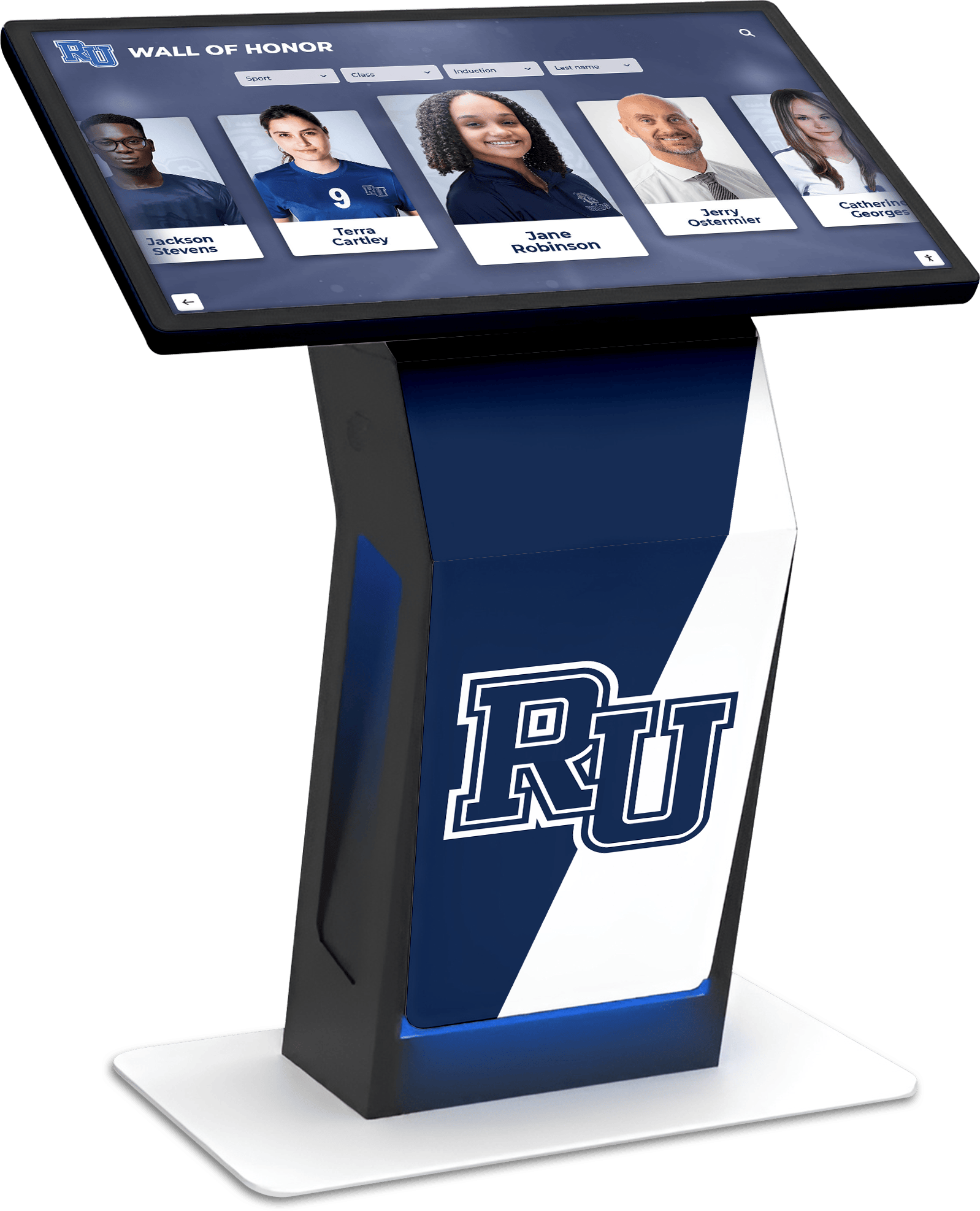
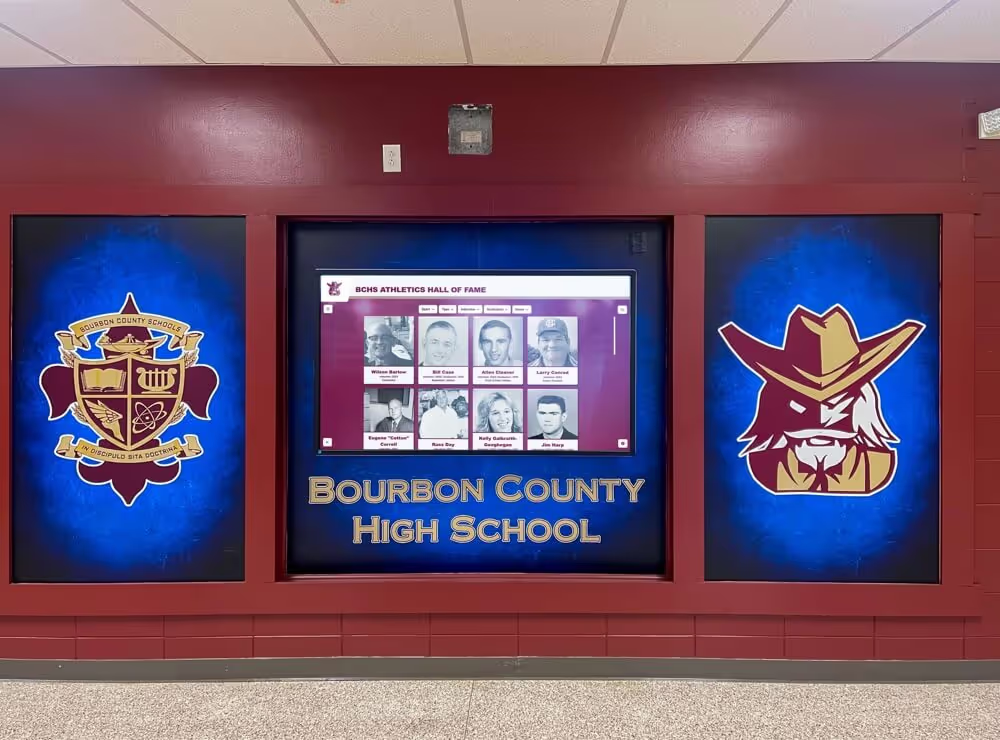
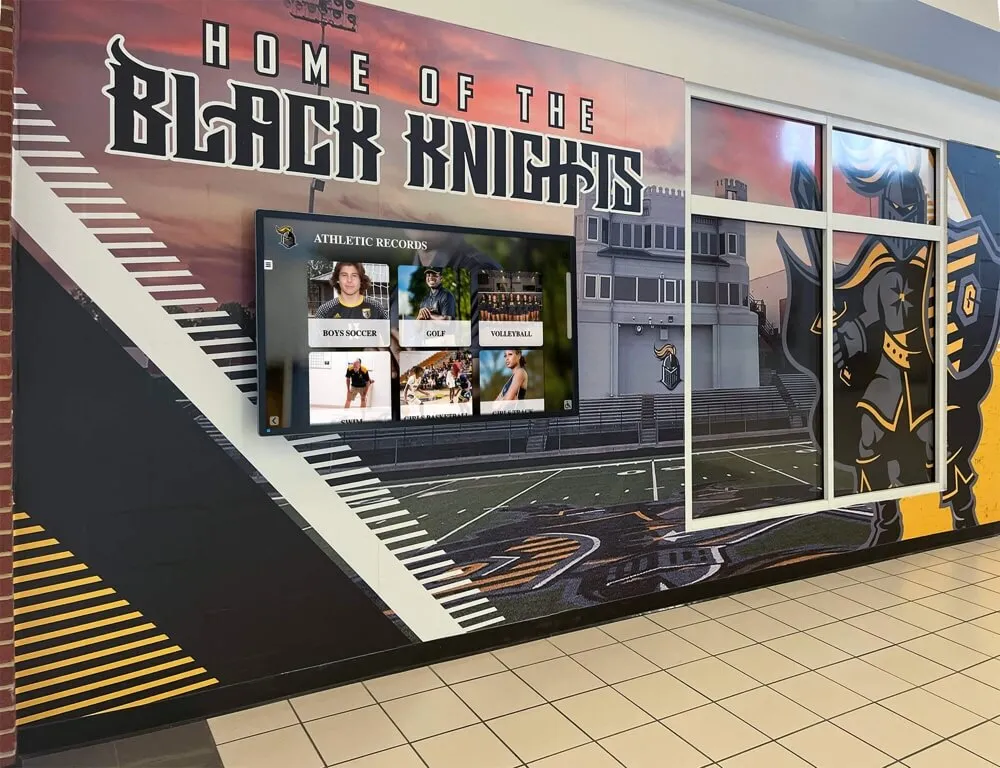
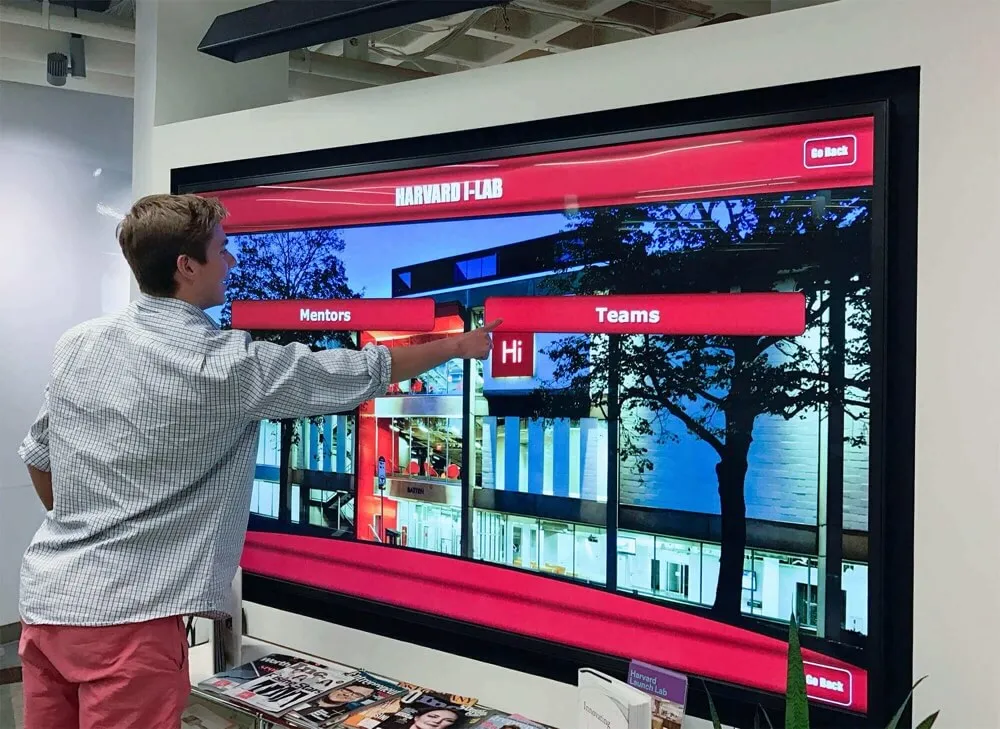
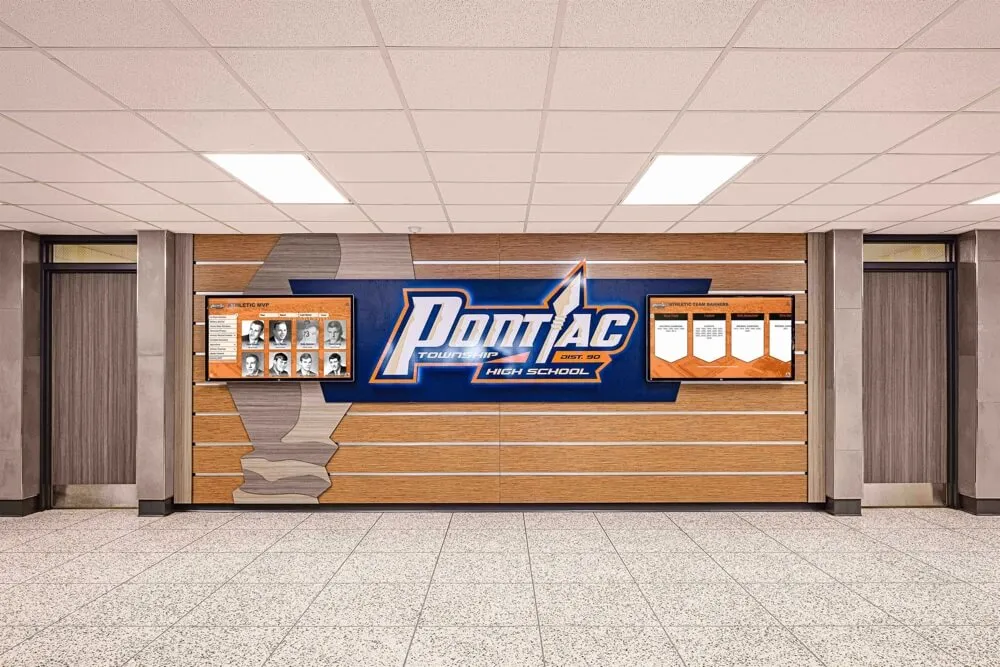
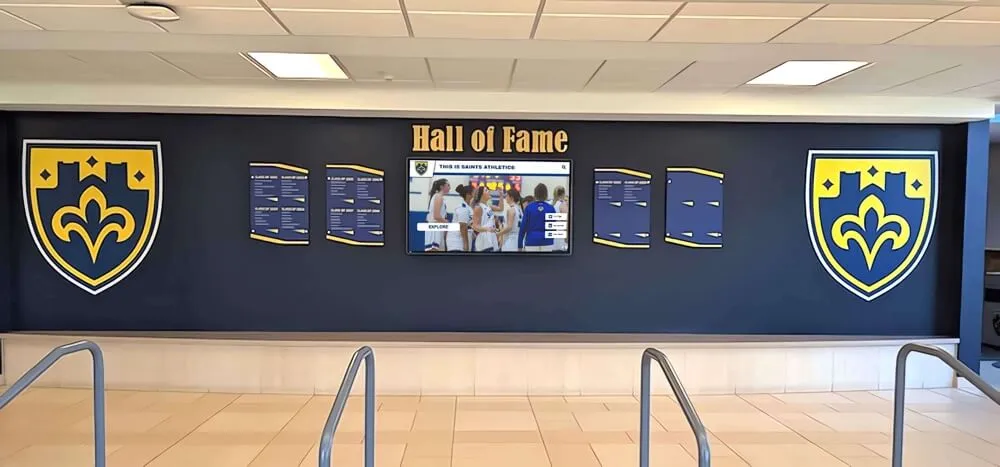
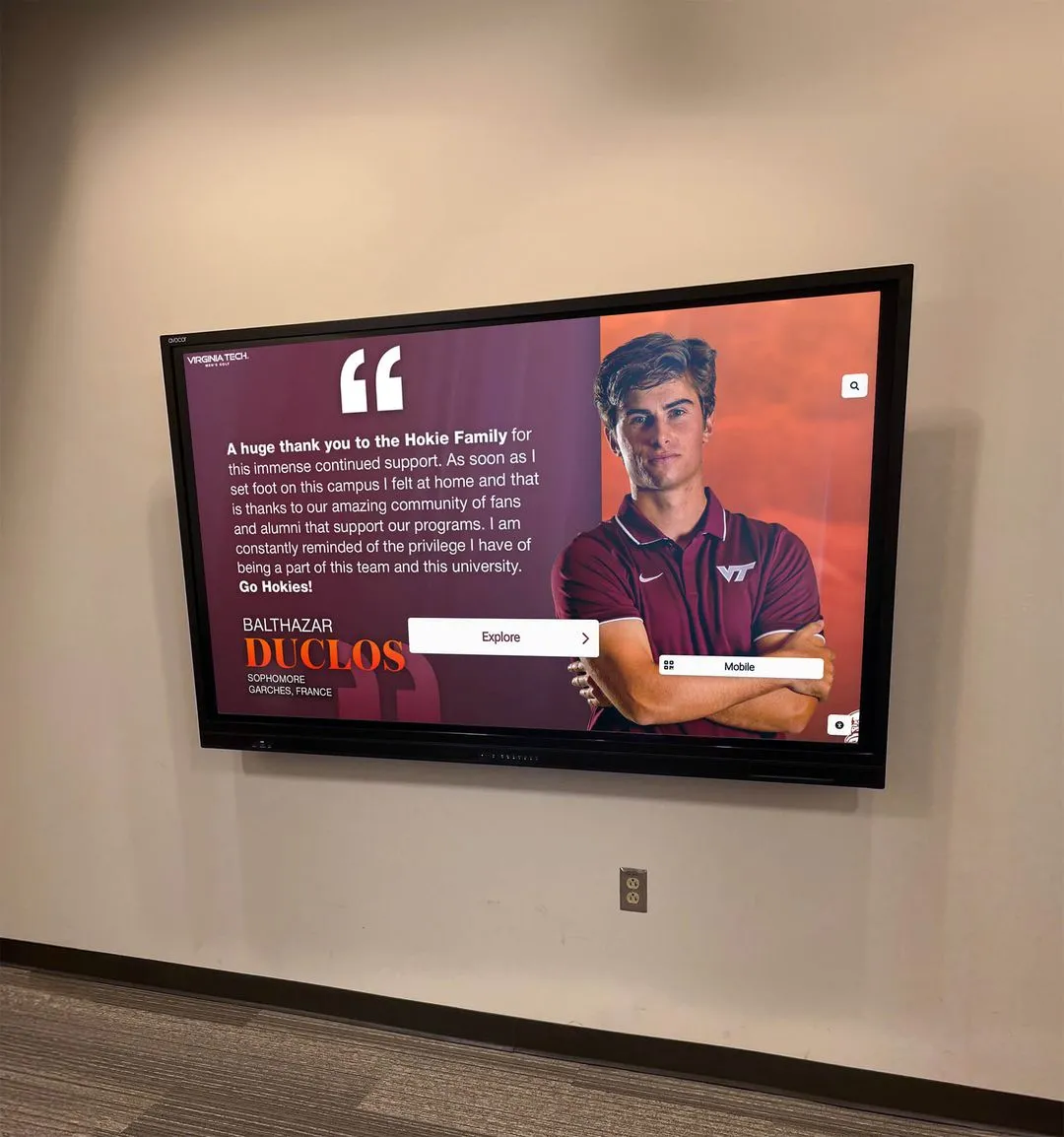
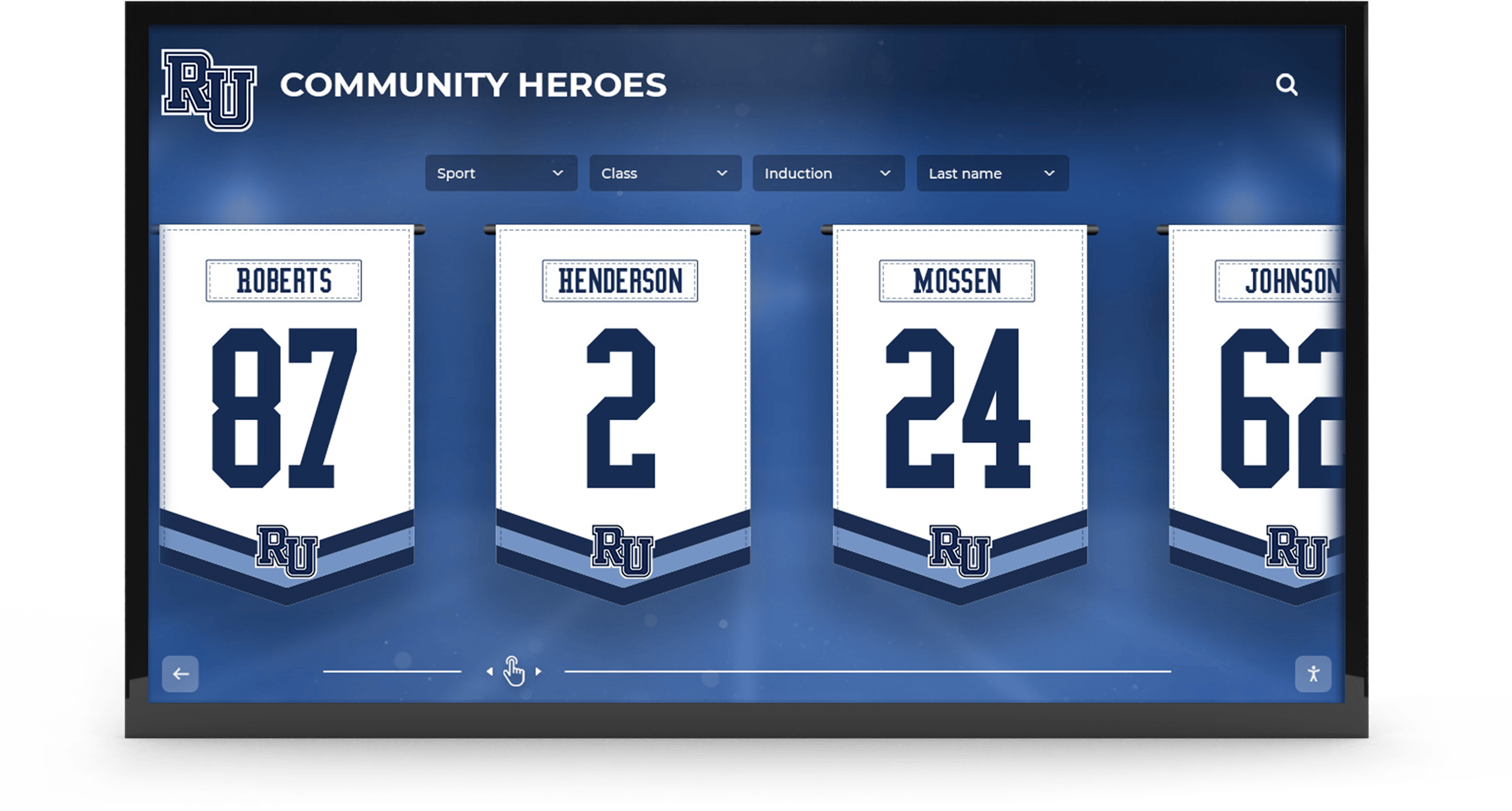
Digital recognition systems give booster clubs a platform they can verify remotely — officers can confirm sponsor content is live before the monthly meeting, showing up with status rather than questions
Frequently Asked Questions About Booster Club Meeting Agenda Templates
What should be on a booster club meeting agenda template?
A complete booster club meeting agenda template should include: call to order and quorum confirmation, approval of previous minutes, treasurer’s report (with sponsor payment status), athletic director update, monthly sponsor recognition review, donor acknowledgment status, fundraising and events update, committee reports, old business, new business, action item review, and adjournment. The sponsor recognition review and donor acknowledgment items are the most commonly omitted and the most consequential for sponsor retention — they should be treated as non-negotiable standing agenda items at every monthly meeting.
How often should a booster club review sponsor recognition?
Booster clubs should review sponsor recognition status at every monthly meeting as a standing agenda item. The review should cover digital display rotation status, banner and signage condition, outstanding acknowledgment letters, and the renewal pipeline for agreements expiring within 60 days. Time-sensitive items — new sponsor onboarding, sponsor complaints, and end-of-season documentation — cannot wait for the monthly meeting and should be handled within five business days of the triggering event.
What is the monthly sponsor recognition checklist for booster clubs?
The monthly sponsor recognition checklist for booster clubs covers three areas: display and signage review (confirming logos are current, digital rotation is active, banners are in good condition, new sponsors have been added to all display types), acknowledgment and communication review (confirming thank-you letters were sent for new agreements, mid-season check-ins are complete, social media posts and newsletter features were published per agreement), and renewal pipeline review (identifying agreements expiring within 60 days, initiating renewal conversations, and beginning end-of-season fulfillment documentation). The checklist should be completed before each monthly meeting so the coordinator arrives with a status report.
How do digital display systems support booster club meeting accountability?
Digital recognition display systems support booster club meeting accountability by giving the Sponsor Recognition Coordinator a way to verify display content remotely before each monthly meeting — without requiring a facility visit. Most cloud-based content management platforms log what content is active, when it was last updated, and which sponsors are included in the current rotation. This creates a built-in documentation trail that officers can reference during the monthly review and share with sponsors as proof-of-delivery during renewal conversations.
How should booster clubs track action items from monthly meetings?
Every action item from a booster club meeting should be recorded with a specific owner and a specific deadline before adjournment. The Secretary should maintain a running action item log that carries incomplete items forward to the next meeting, making unresolved items visible to the full board. Reviewing the open action item log at the start of old business (or as a dedicated agenda item) ensures that sponsor recognition commitments, outstanding letters, and display update requests remain accountable until they are explicitly completed and logged.
A Monthly Agenda Is the Simplest Sponsor Retention Tool Available
The booster clubs with the most consistent sponsor renewal rates are not necessarily the ones with the largest budgets or the most elaborate recognition programs. They are the ones that review sponsor recognition at every meeting, assign every action item to a specific person, and arrive at each renewal conversation with documentation of exactly what was delivered.
The meeting agenda template and monthly checklist in this guide do not require new software, additional staff, or a larger budget. They require a standing commitment to treating sponsor recognition as a tracked obligation rather than a well-intentioned background task. That commitment, sustained across twelve monthly meetings and multiple seasons, compounds into the kind of institutional reliability that sponsors choose to support year after year.
Give Your Sponsors Recognition They Can See All Year
Rocket Alumni Solutions builds interactive digital recognition systems for school athletic programs and booster clubs — giving your team a centralized platform to manage sponsor logos, donor acknowledgments, and display updates between monthly meetings. See what your facility's recognition environment could look like.
Schedule a Demo