



Booster club insurance covers the gap between what a school’s general liability policy protects and the specific risks that a parent-run organization takes on when it fundraises, manages equipment, employs volunteers, and administers recognition programs for athletes. Most booster clubs operate under the assumption that the school’s coverage extends to them — and most of the time, that assumption is incorrect. A booster club that holds bake sales, rents bounce houses, accepts donated scoreboards, signs contracts with vendors, and places sponsor banners in a gymnasium is running an independent organization with independent liability exposure.
This guide is structured as a decision framework: which coverage categories apply to school athletic booster programs, what each one protects, and how sound coverage decisions connect to the records your program keeps for recognition, sponsorship, and donor stewardship.
Not legal or insurance advice: This guide describes commonly available insurance coverage categories for educational reference only. Your organization’s specific needs depend on your state, school district structure, organizational status, and existing coverage. Consult a licensed insurance professional or your school district’s risk manager before purchasing or modifying any coverage.
Choosing the right booster club insurance means understanding the distinct risks that come with running an athletic support organization — and recognizing that recognition assets, sponsor agreements, and donated equipment all carry insurance implications that most programs overlook until something goes wrong.

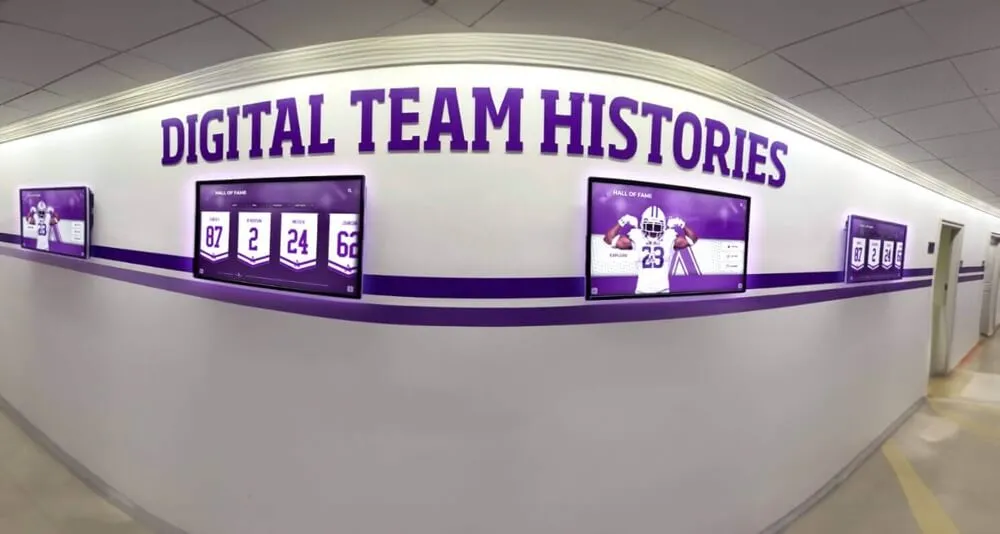
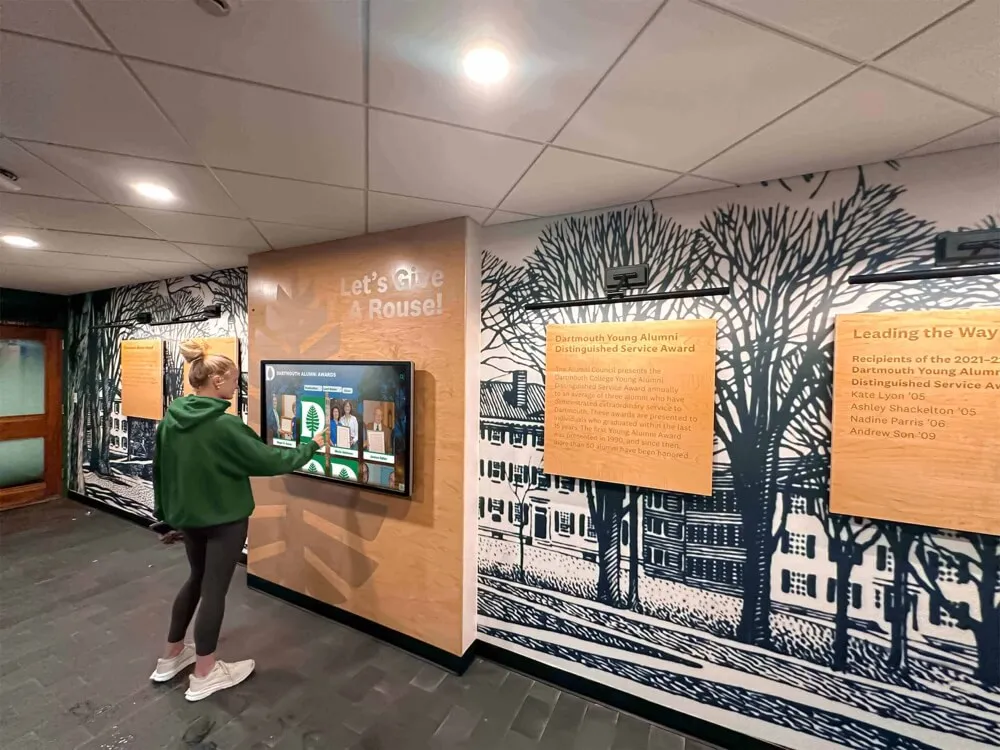
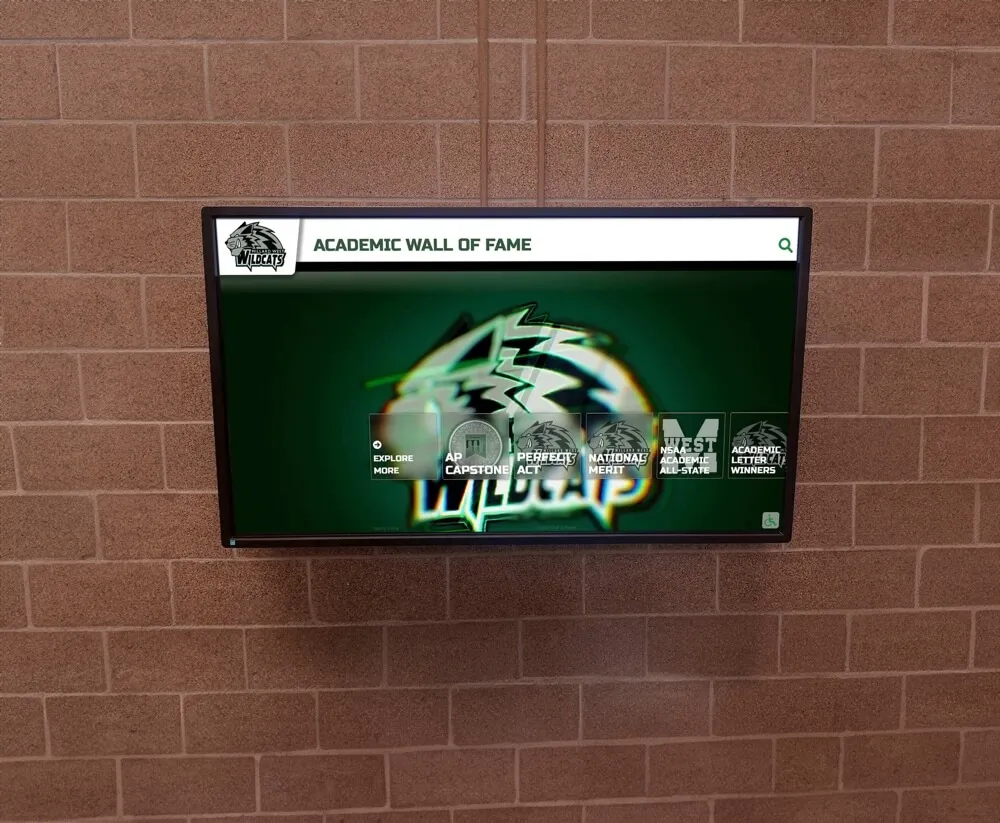
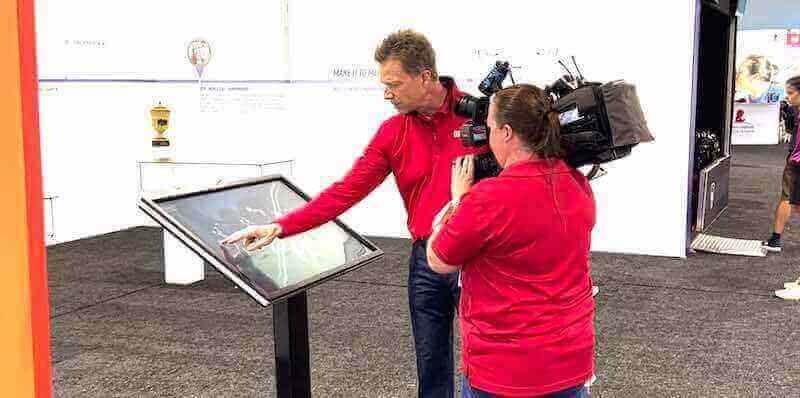
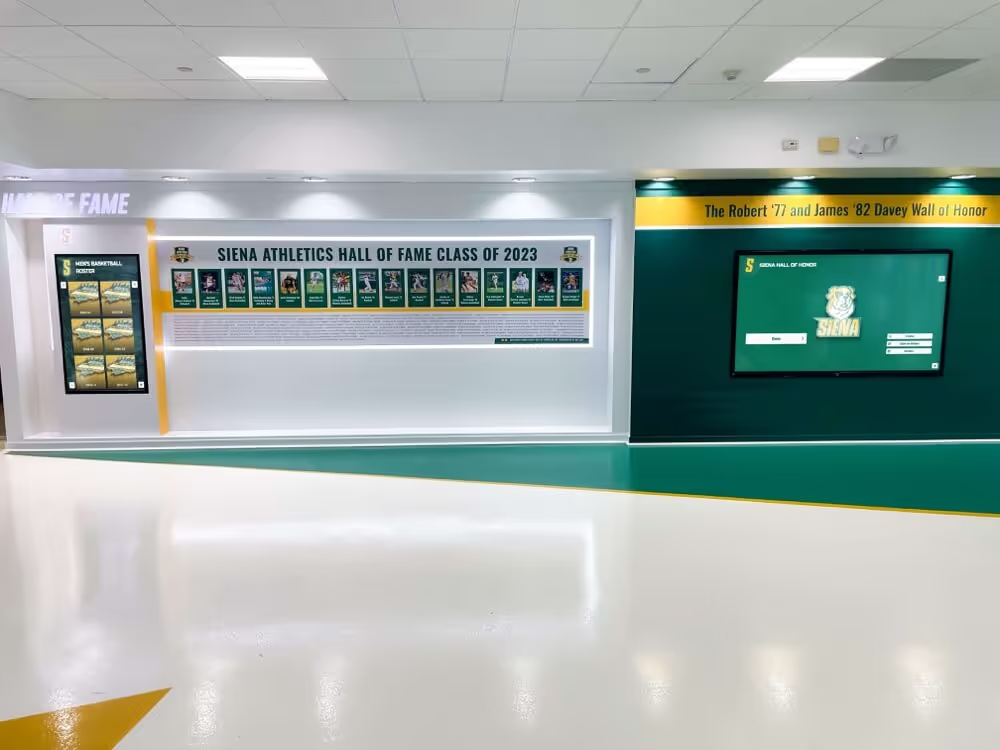
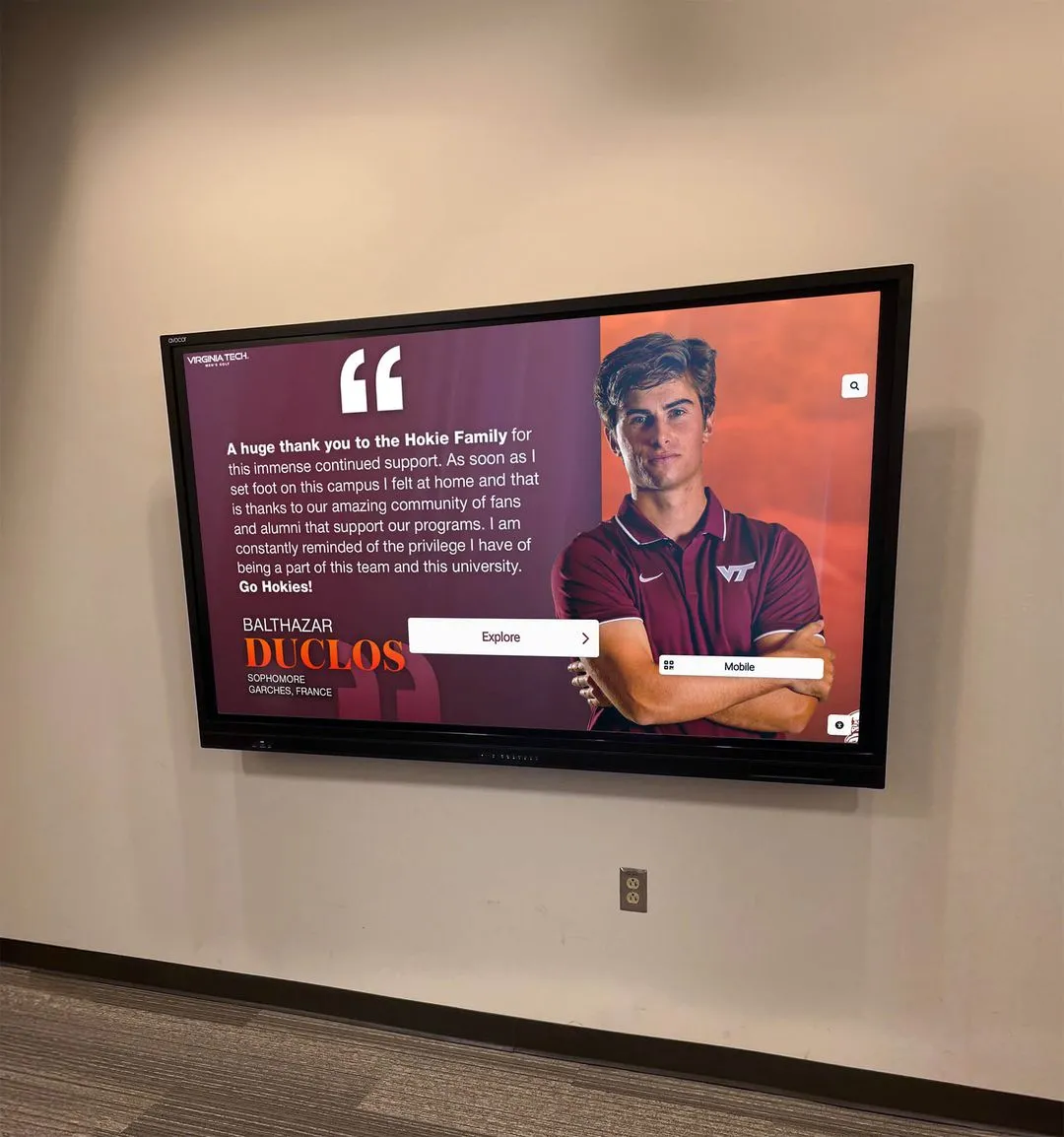
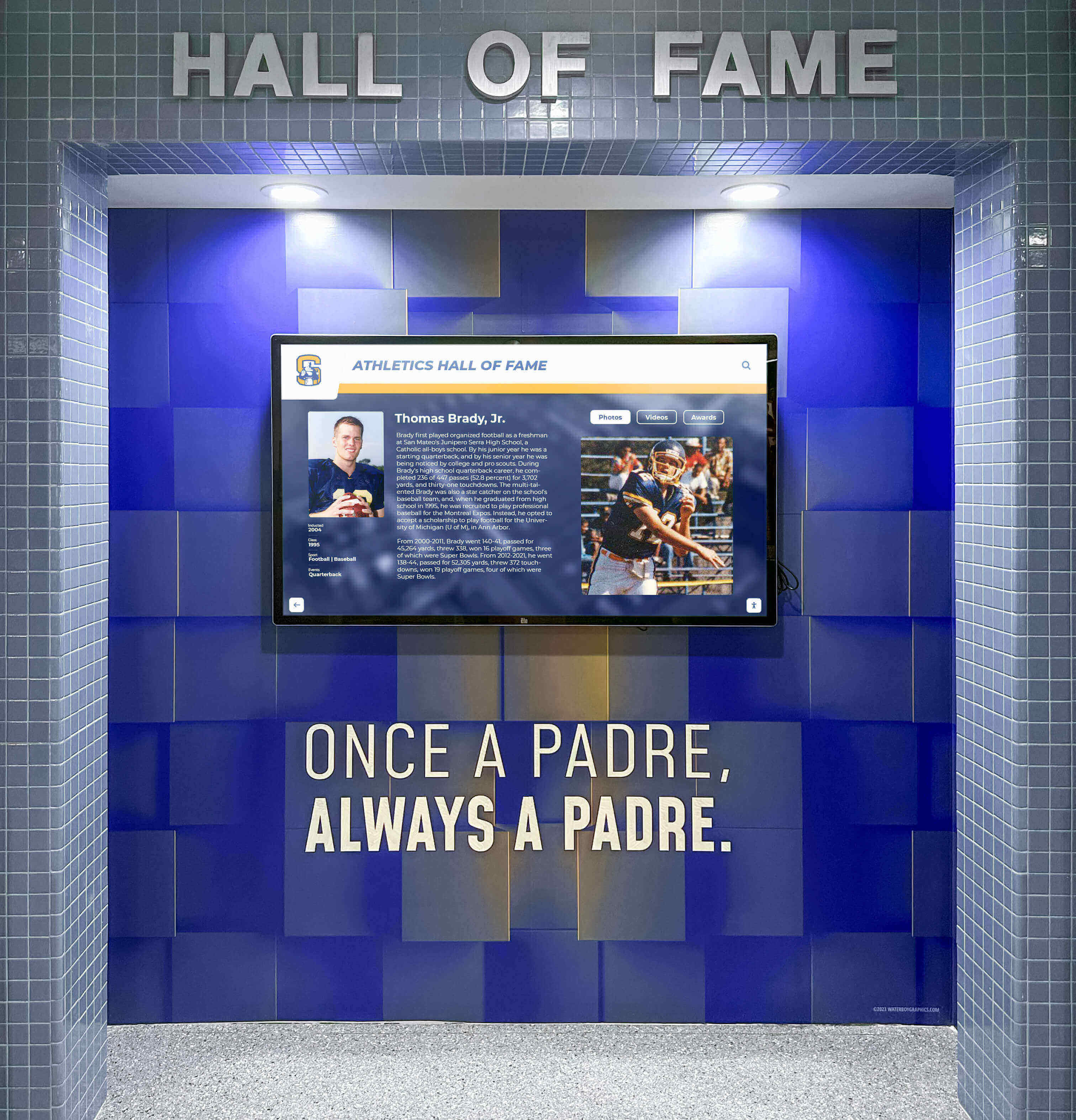
School athletics facilities house recognition assets and sponsor-funded equipment — understanding how booster club insurance covers these assets is a governance responsibility for athletic directors and booster club boards
What Booster Club Insurance Actually Covers (and What It Doesn’t)
Booster club insurance fills coverage gaps that standard school district policies typically leave open. School district general liability usually covers activities within the official scope of school programs — it does not automatically extend to a separately organized booster club running a fundraising carnival, managing donated equipment, or engaging contractors for facility improvements.
The most important threshold question before reviewing coverage options is organizational: Is your booster club incorporated as a nonprofit? Does it hold its own EIN? Does it maintain its own bank accounts and sign contracts in its own name? The more independently your booster club operates, the more independently it needs to be insured.
Four coverage categories account for the majority of booster club risk exposure:
- General liability — bodily injury and property damage arising from booster club activities
- Event liability — specific coverage for fundraising events, especially those involving amusement equipment, food service, or large crowds
- Property and inland marine — physical assets the booster club owns, stores, or is contractually responsible for
- Directors and officers (D&O) — protection for board members against claims arising from governance decisions
Each category has its own risk profile and its own decision checklist.
Coverage Checklist: The Four Core Categories
The checklist below is organized by coverage type. Programs can use it to assess whether each category applies to their current operations and whether existing coverage adequately addresses the exposure.
General Liability
| Coverage Element | Applies? | Currently Covered? |
|---|---|---|
| Bodily injury at booster-run events | Yes / No | Yes / No / Unknown |
| Property damage caused by volunteers | Yes / No | Yes / No / Unknown |
| Products liability (food sales, merchandise) | Yes / No | Yes / No / Unknown |
| Completed operations (post-event liability) | Yes / No | Yes / No / Unknown |
| Contractual liability (vendor agreements) | Yes / No | Yes / No / Unknown |
| Additional insured status for school district | Yes / No | Yes / No / Unknown |
Most general liability policies for booster clubs start at $1 million per occurrence / $2 million aggregate. According to the Nonprofit Risk Management Center, booster clubs that run events with attendance over 500 or that involve amusement equipment typically need higher limits or event-specific riders.
Event Liability
| Coverage Element | Applies? | Currently Covered? |
|---|---|---|
| Carnival rides or inflatable equipment | Yes / No | Yes / No / Unknown |
| Food service (concessions, bake sales) | Yes / No | Yes / No / Unknown |
| Alcohol service (adult events) | Yes / No | Yes / No / Unknown |
| Third-party performer or contractor injury | Yes / No | Yes / No / Unknown |
| Event cancellation (weather, unforeseen cause) | Yes / No | Yes / No / Unknown |
| Ticket sales and cash handling liability | Yes / No | Yes / No / Unknown |
Event liability is often purchased as a rider or separate policy for individual fundraising events. The key question is whether your general liability policy covers “special events” and what equipment exclusions apply. Bounce houses, dunk tanks, and amusement equipment frequently require a separate endorsement or a standalone certificate.
Property and Inland Marine
| Coverage Element | Applies? | Currently Covered? |
|---|---|---|
| Booster-owned equipment (scoreboards, timing systems) | Yes / No | Yes / No / Unknown |
| Donated equipment held in booster name | Yes / No | Yes / No / Unknown |
| Sponsor-furnished banners and display assets | Yes / No | Yes / No / Unknown |
| Equipment transported to away events | Yes / No | Yes / No / Unknown |
| Digital display hardware (if booster-owned) | Yes / No | Yes / No / Unknown |
| Storage unit contents | Yes / No | Yes / No / Unknown |
Inland marine coverage extends property protection to assets that move — equipment transported to away games, banners stored off-site, or cameras and recording equipment that travel with the team. Standard property policies cover assets at a fixed location; inland marine fills the gap for assets in transit.
Directors and Officers (D&O)
| Coverage Element | Applies? | Currently Covered? |
|---|---|---|
| Claims against board members for governance decisions | Yes / No | Yes / No / Unknown |
| Employment practices claims (if booster hires staff) | Yes / No | Yes / No / Unknown |
| Breach of fiduciary duty allegations | Yes / No | Yes / No / Unknown |
| Misuse of funds allegations | Yes / No | Yes / No / Unknown |
| Defense costs for covered claims | Yes / No | Yes / No / Unknown |
D&O coverage protects the individuals serving on the booster club board from personal financial liability arising from governance decisions. Without it, a board member accused of misappropriating funds — even without merit — may face personal legal costs to defend themselves. The National Council of Nonprofits recommends D&O coverage for any nonprofit with an active board making significant financial and operational decisions.
Fundraising Events: Where Booster Club Risk Concentrates
The majority of booster club insurance claims arise from fundraising events, not from ongoing operations. Events combine variables that amplify risk: temporary venues, volunteer workforces without formal safety training, rented amusement equipment from third-party vendors, food service without professional food safety controls, and large numbers of families and children in an environment not purpose-built for the activity.
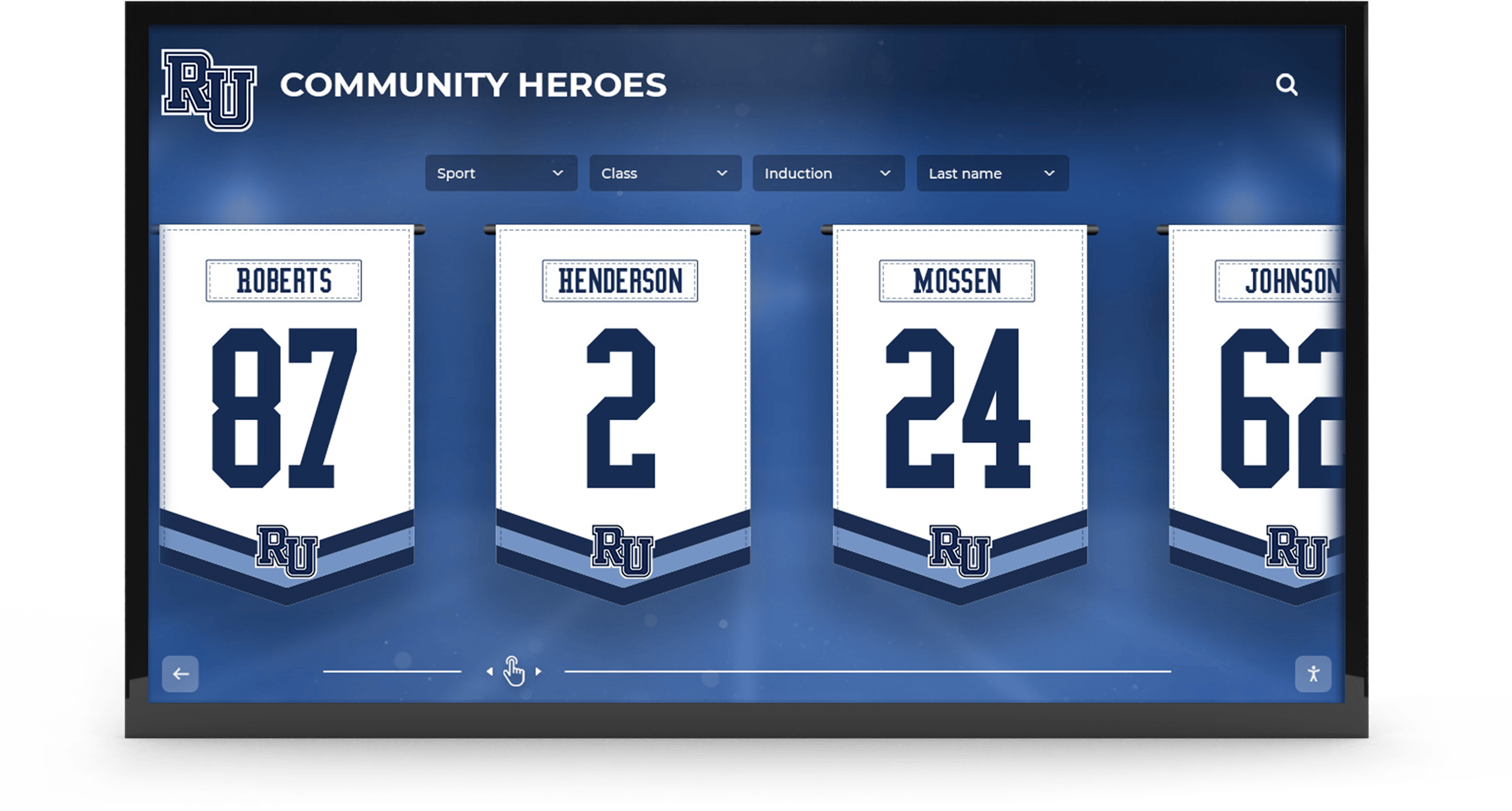
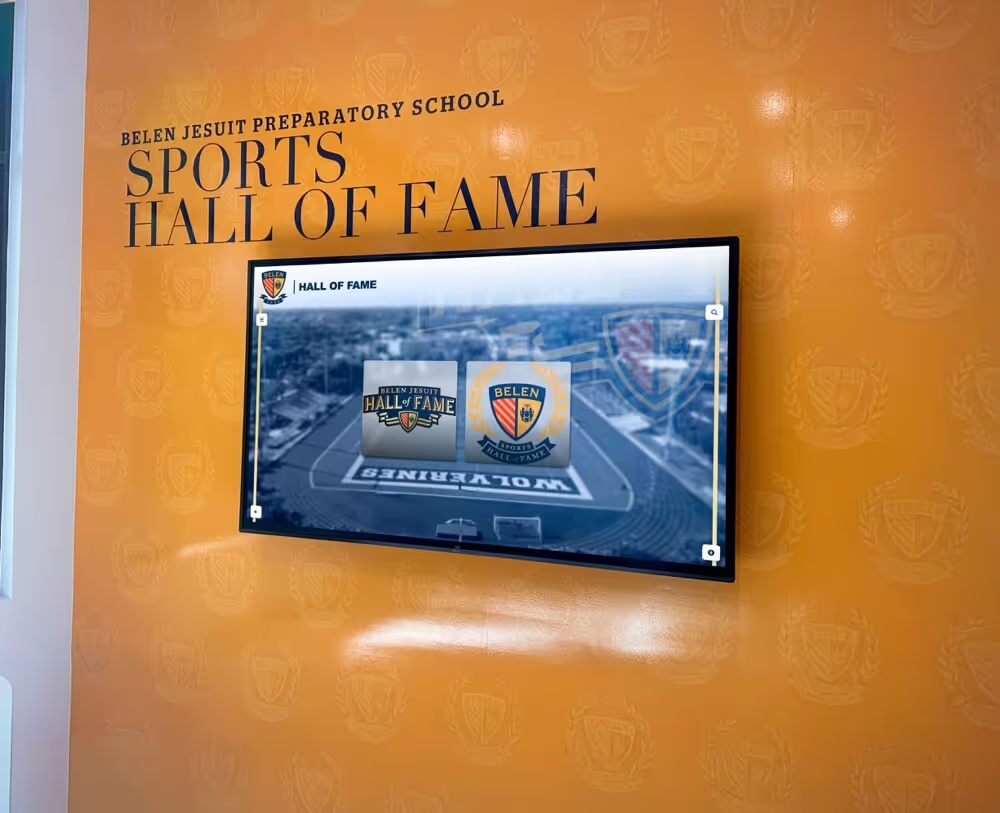
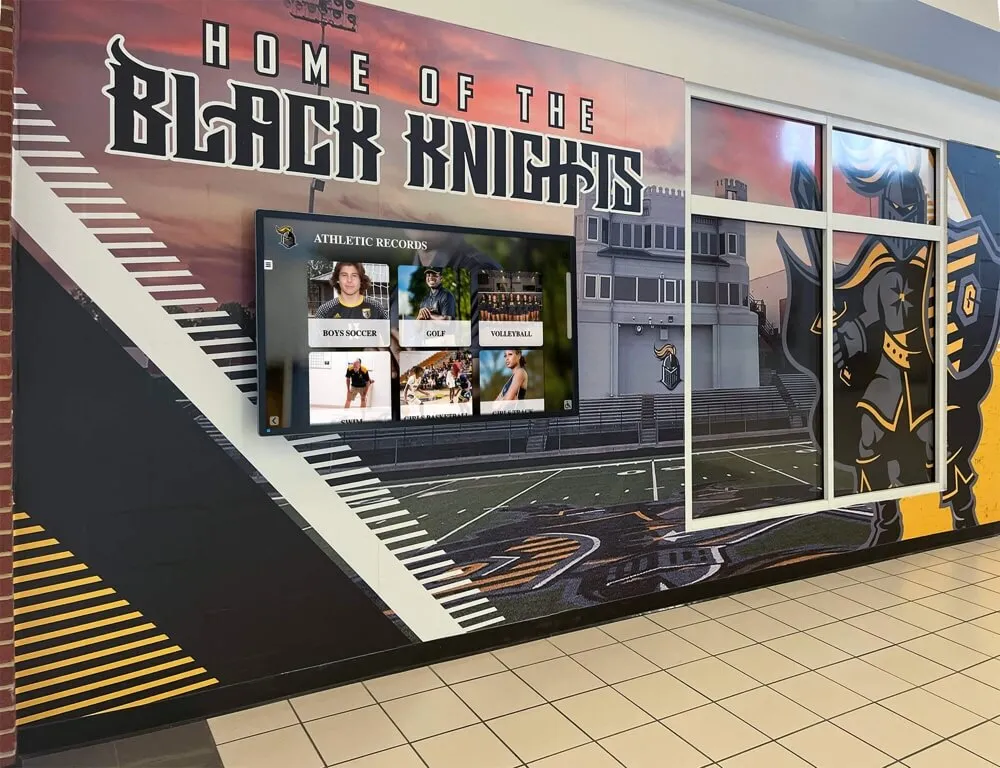
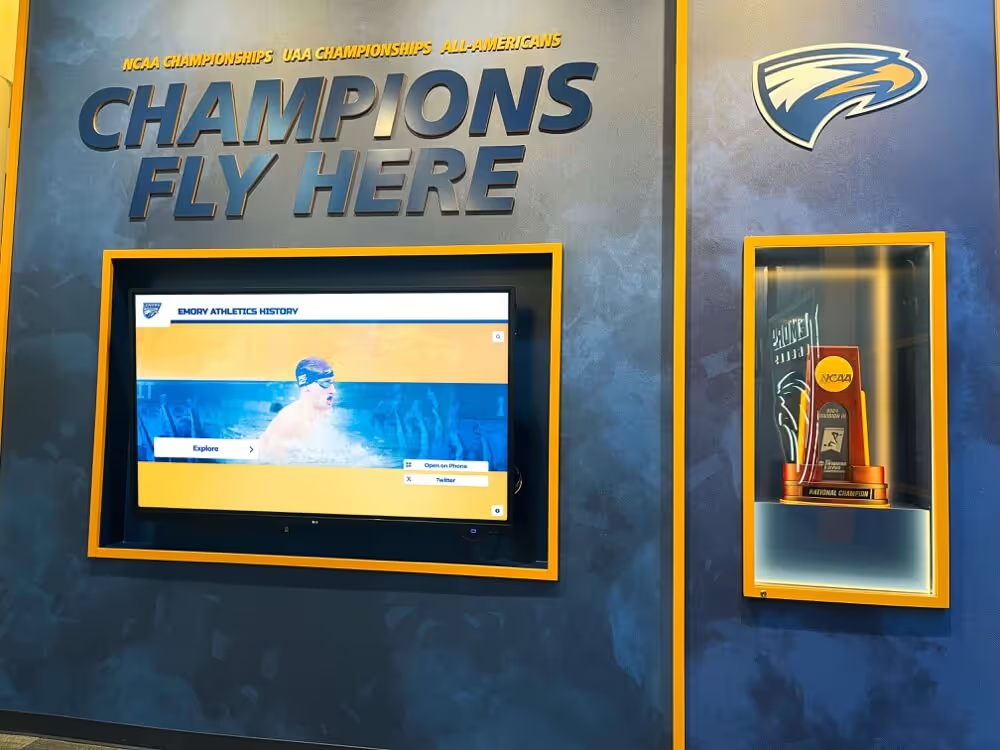
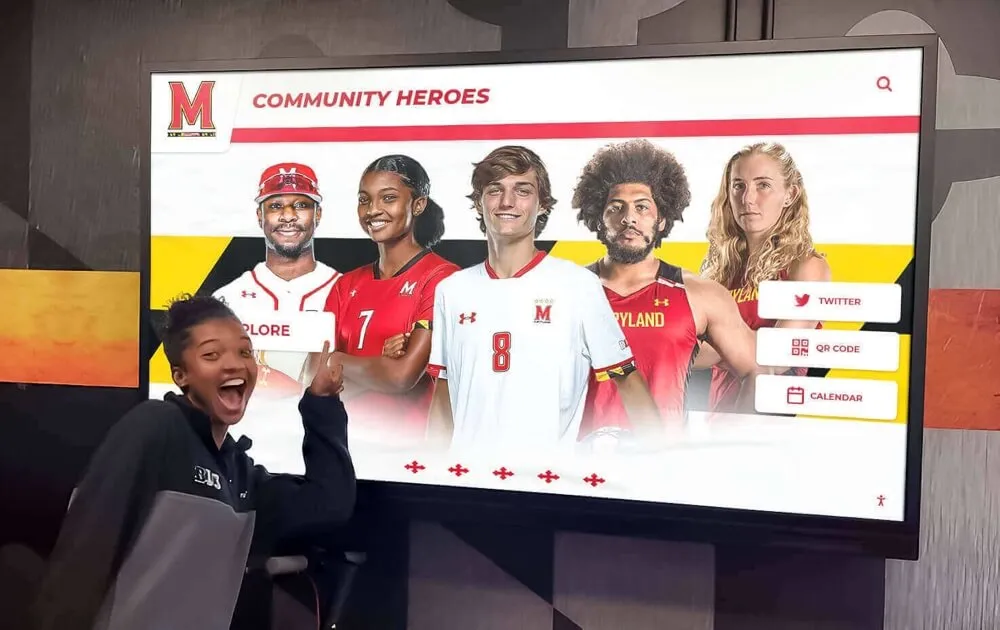
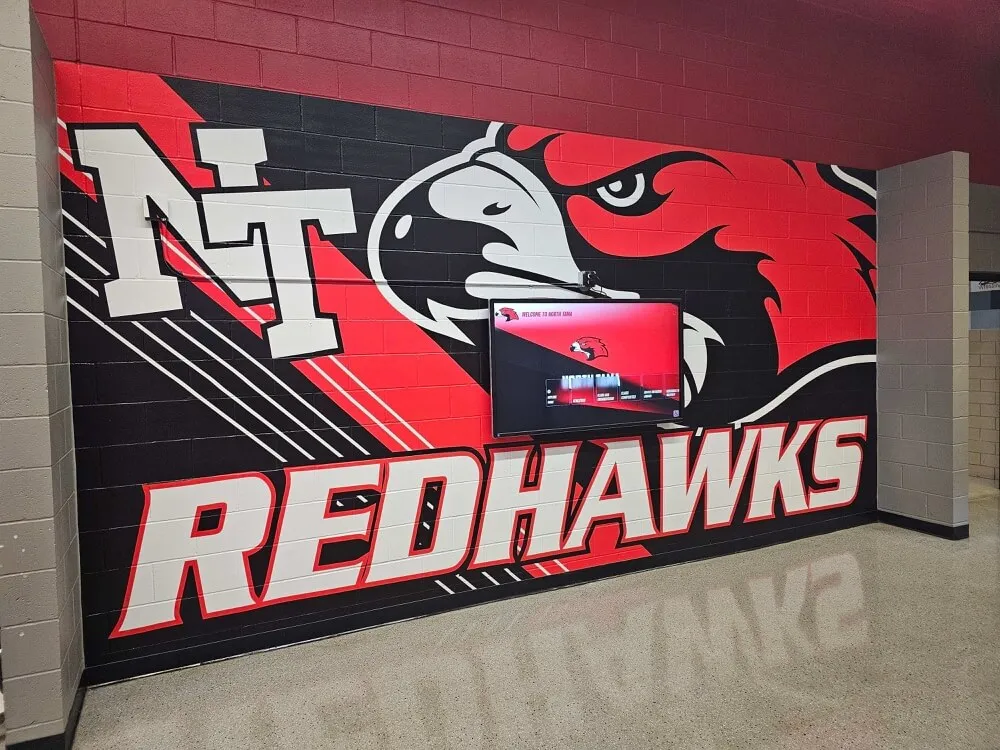
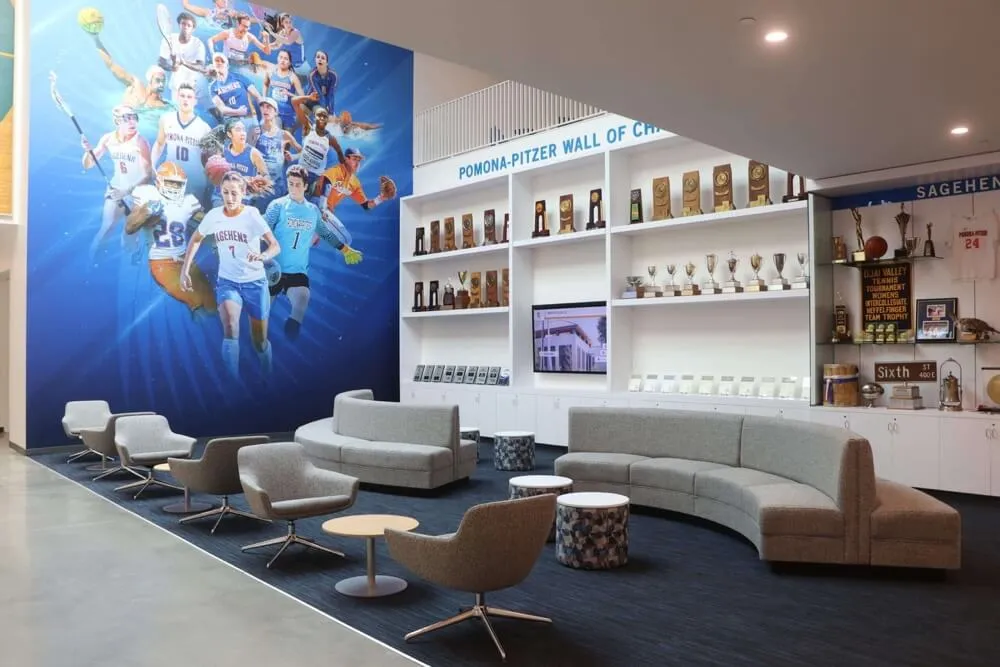
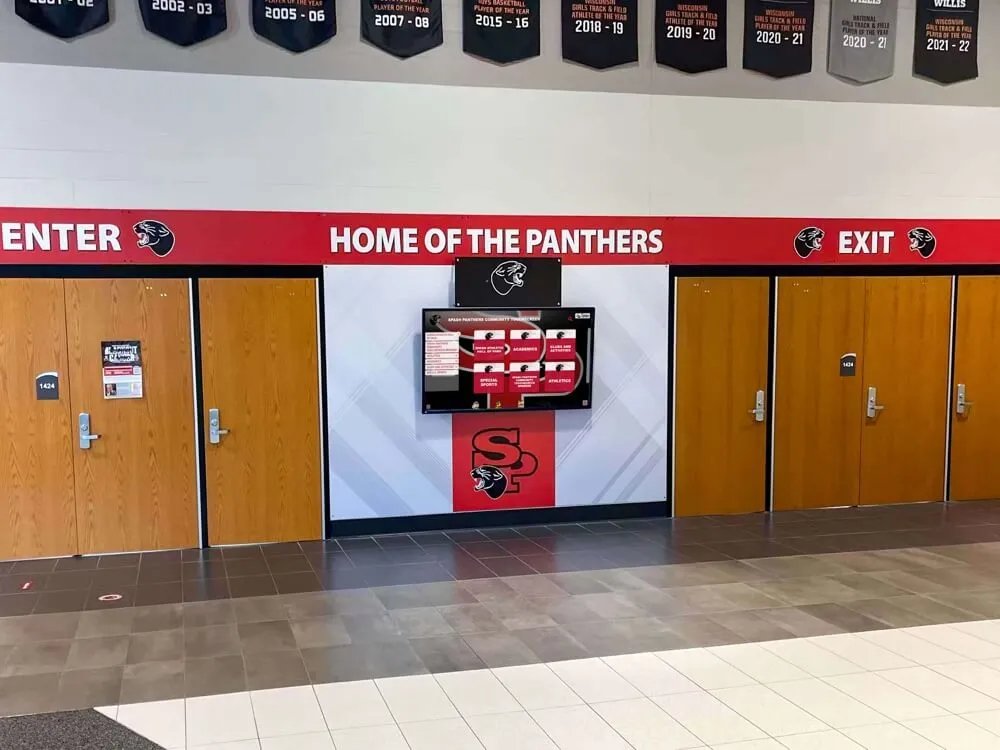
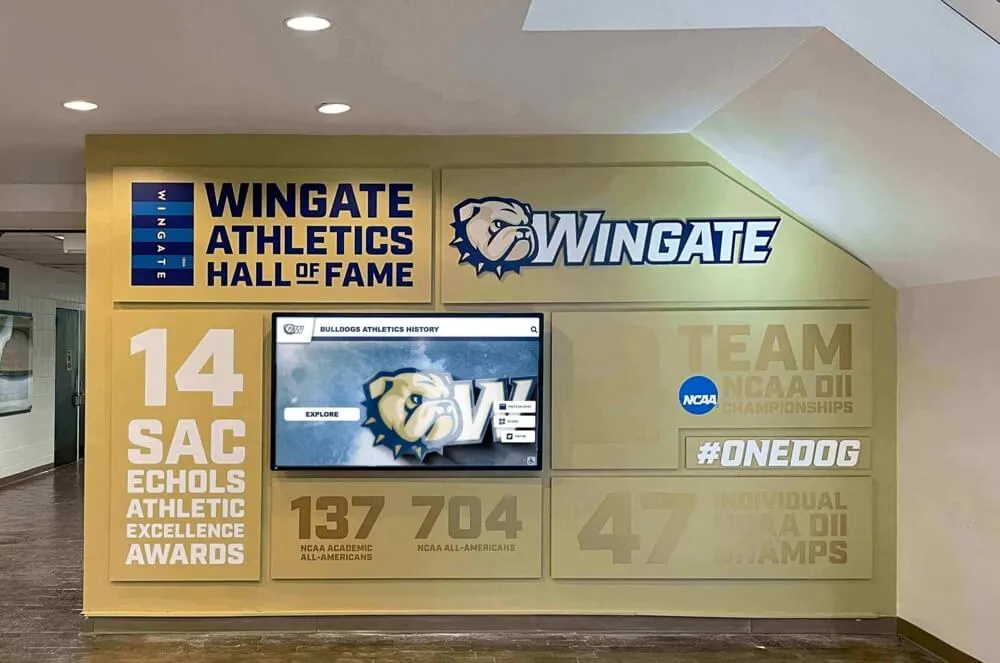
Recognition displays and sponsor assets installed in athletic facilities are a routine part of booster club programs — and a governance consideration for insurance coverage, property documentation, and sponsor contract review
Before any fundraising event that involves amusement equipment, large gatherings, or third-party contractors, the booster club should complete the following steps:
- Verify vendor insurance. Any contractor or equipment rental company should carry their own general liability coverage and provide a certificate of insurance naming the booster club as an additional insured.
- Review your policy’s event exclusions. Some general liability policies explicitly exclude amusement devices, alcohol service, or events with attendance above a defined threshold.
- Document the event setup. Photographs of equipment installation, safety signage, and crowd management structures protect the organization if a claim is filed weeks after the event.
- Confirm volunteer status under state law. Volunteers injured at a booster-run event may or may not be covered under a workers’ compensation equivalent, depending on state law and whether the booster club qualifies as an employer under applicable definitions.
- Review contracts before signing. Vendor contracts that shift liability to the booster club through indemnification clauses can expose the organization and its officers to claims the insurance policy may not cover.
Donated Equipment and Property: A Common Coverage Gap
One of the most frequently uncovered risks for booster clubs is donated equipment. A scoreboard donated by a local business, a timing system funded through a capital campaign, or a digital recognition display purchased with booster club funds represents a material asset — and one that may not appear on the school’s property insurance schedule if the booster club took title to it.
The coverage question turns on ownership:
- If the school district owns it: The district’s property coverage typically applies.
- If the booster club owns it: The booster club needs its own property coverage for that asset.
- If ownership is ambiguous: A genuine coverage gap exists that only becomes visible when a claim is filed.
Best practice is to document ownership formally in the original donation agreement or equipment transfer record — not to resolve it informally at the moment of acceptance. For booster clubs managing donated display equipment, scoreboards, or recognition infrastructure, a property inventory is both a governance necessity and an insurance foundation. That inventory should include: asset description, acquisition date, acquisition or appraised replacement value, current location, and ownership documentation.
This property inventory serves a parallel recognition purpose. A school that accepted a major equipment gift from a community partner deserves a recognition record that permanently acknowledges the contribution — not just a thank-you letter that disappears into a filing cabinet. Year-round donor stewardship for school development offices describes how schools build ongoing recognition infrastructure that transforms a single gift record into a lasting relationship — the same documentation that supports insurance claims also supports meaningful stewardship.
Recognition Assets and the Insurance Record
Recognition programs — athlete-of-the-week boards, athletic hall of fame displays, sponsor banner installations, and donor recognition walls — create a paper and digital trail that matters when a coverage question arises.
A sponsor who donated a digital display system and holds a recognition agreement with the booster club is a party to a contract. If that display is damaged, stolen, or destroyed, the insurance claim and replacement decision both depend on having:
- The original donation or purchase agreement specifying ownership
- The installation record (when, by whom, with what hardware)
- A current replacement value estimate
- The recognition agreement specifying what the sponsor was promised and for how long
Programs that document athletic recognition systematically — including the displays, banners, and physical infrastructure used to deliver recognition — are building the same documentation backbone that supports insurance coverage, sponsor accountability, and institutional memory. Athlete-of-the-week recognition programs at the high school level demonstrate how documentation of recognition activity creates a record that outlasts individual leadership transitions.
When booster clubs evaluate recognition infrastructure as a category, the same governance questions that apply to equipment donations apply to display systems: Who owns it? What is its current replacement value? What sponsor recognition obligations are tied to it? What happens if it is damaged or destroyed?
Sponsor Agreements and Coverage Obligations
Sponsor agreements create obligations in both directions. A business writes a check; the booster club commits to specific deliverables — banners, program ads, PA announcements, digital display rotations. When those deliverables involve physical assets installed in a public venue, the agreement implicitly raises coverage questions:
- If a banner falls and injures a spectator, the booster club’s general liability policy should respond — but only if banner installation was a covered activity under the policy terms.
- If a digital display screen is stolen or vandalized, coverage turns on who owns the hardware and whether the booster club’s property policy applies.
- If a vendor hired to install a display causes property damage, both the booster club’s contractual liability coverage and the vendor’s own policy come into play.
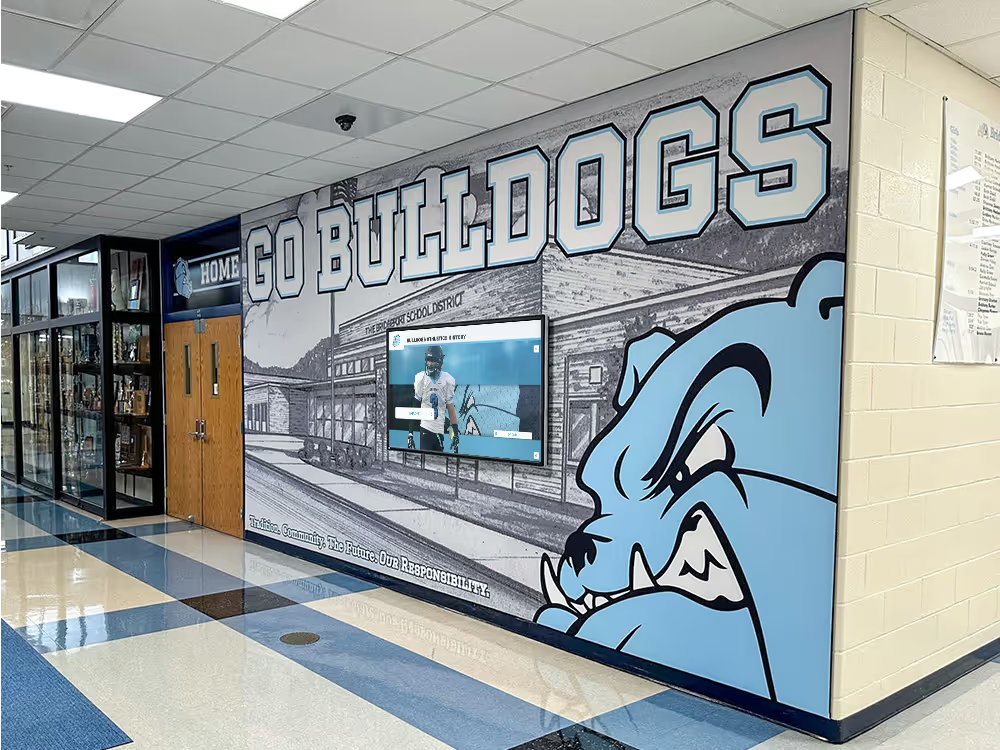
Well-designed school hallway signage and athletic recognition infrastructure involves installation planning that has risk management implications — not just aesthetic ones. Booster clubs managing active sponsor programs should review coverage annually with their insurance broker, asking specifically: Are sponsor-funded assets covered under our property policy? Does our general liability policy cover claims arising from sponsor asset installation?
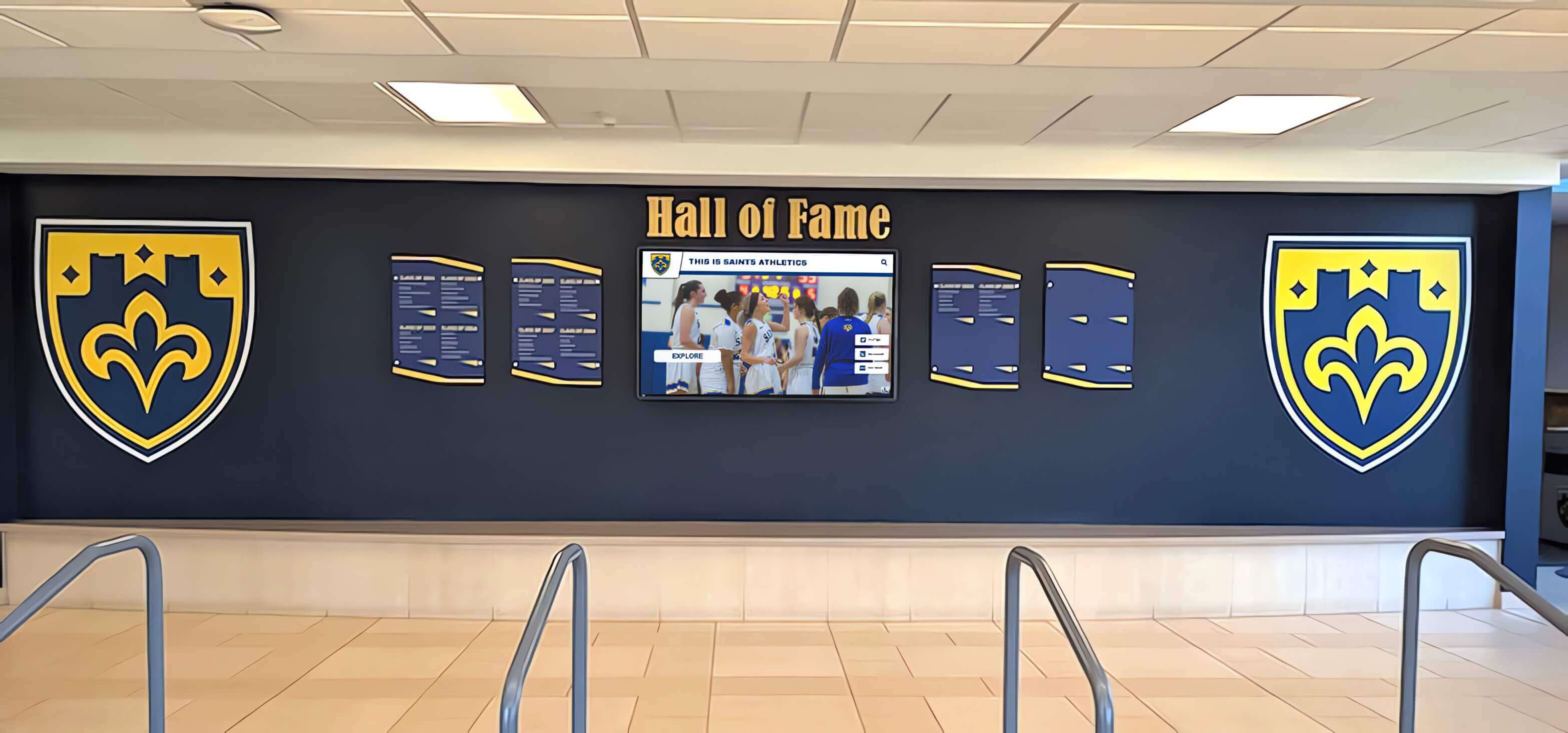
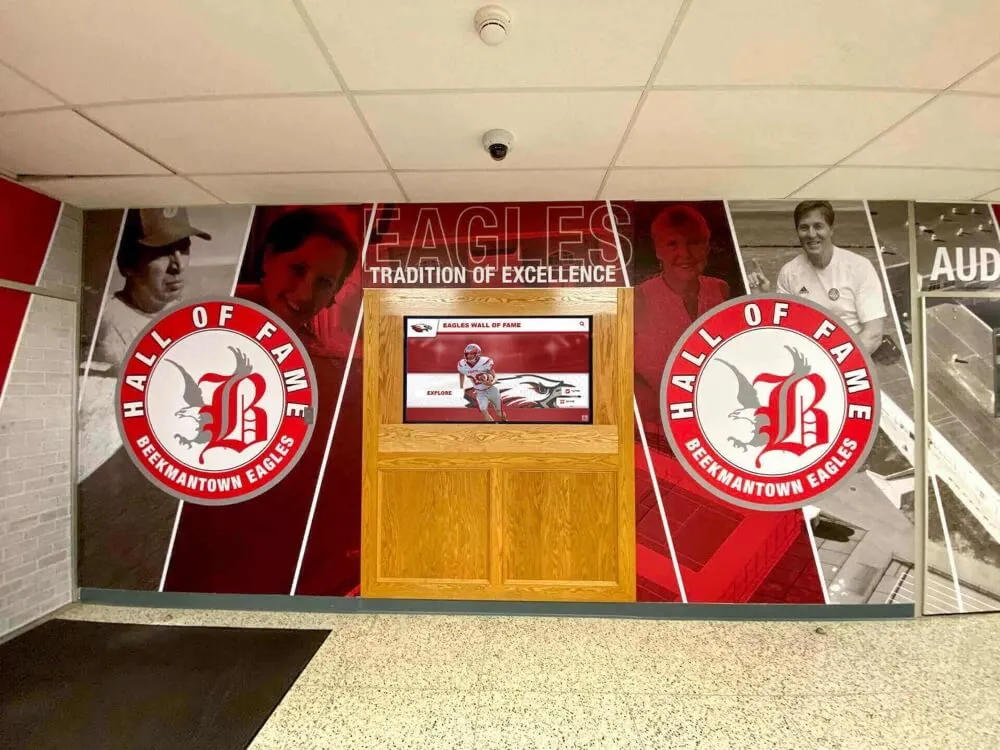
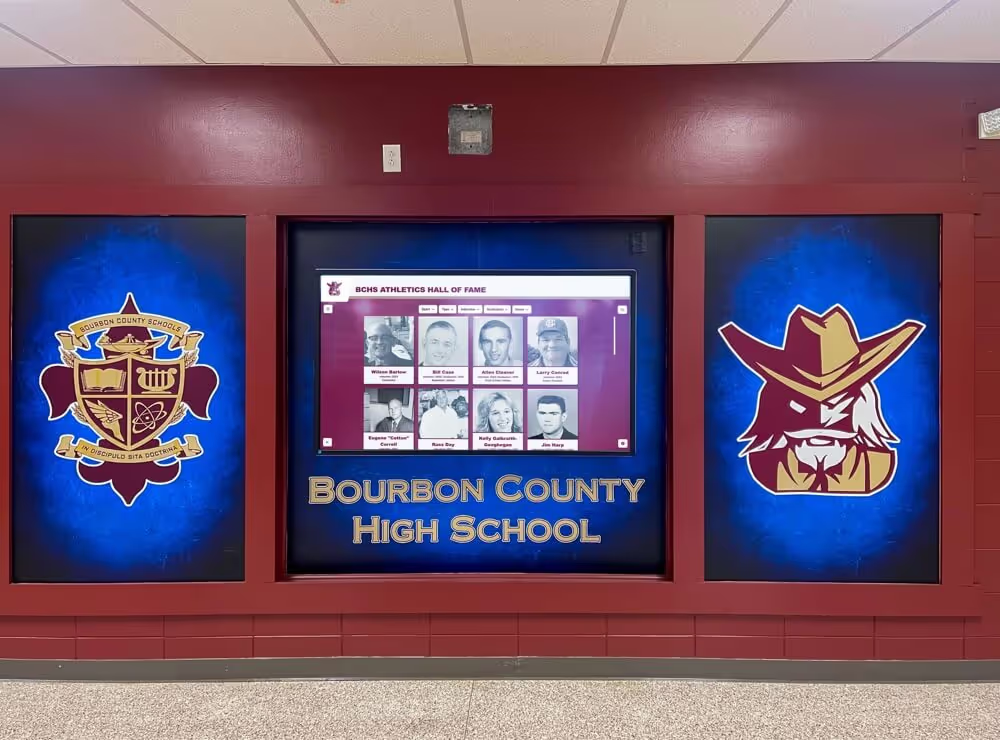
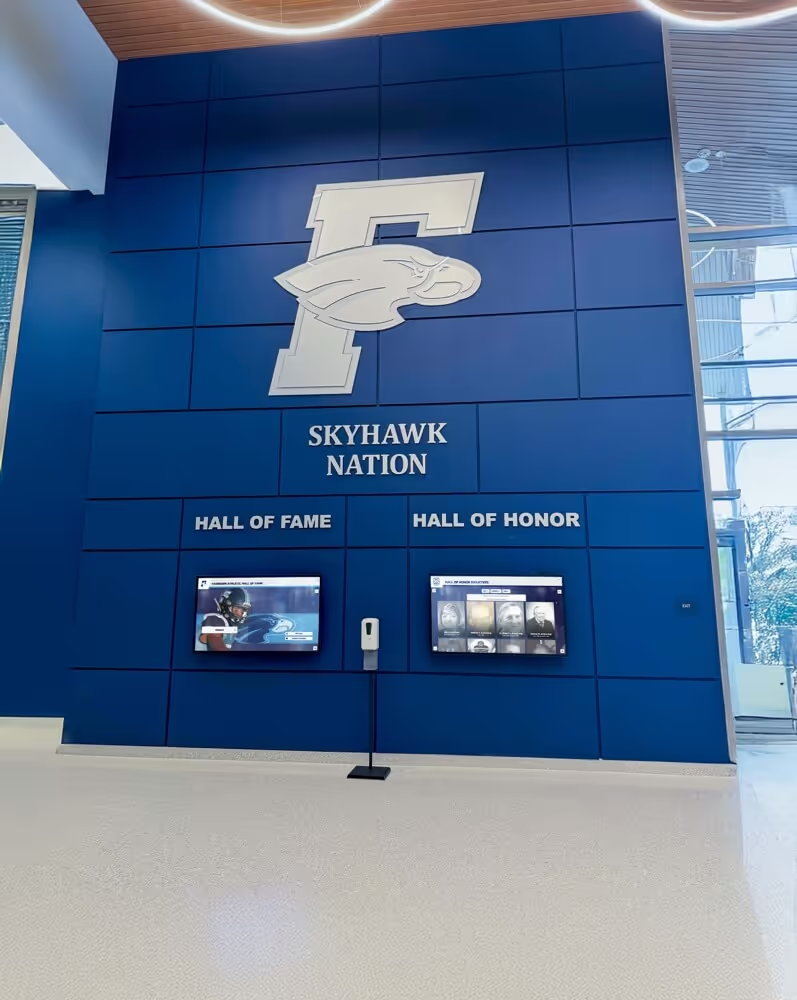
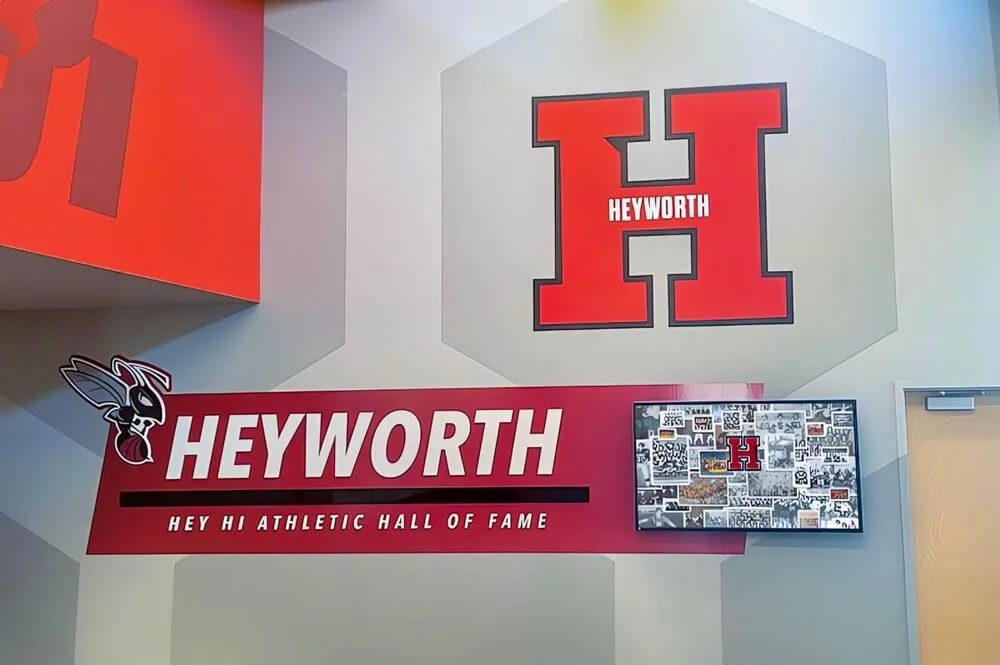
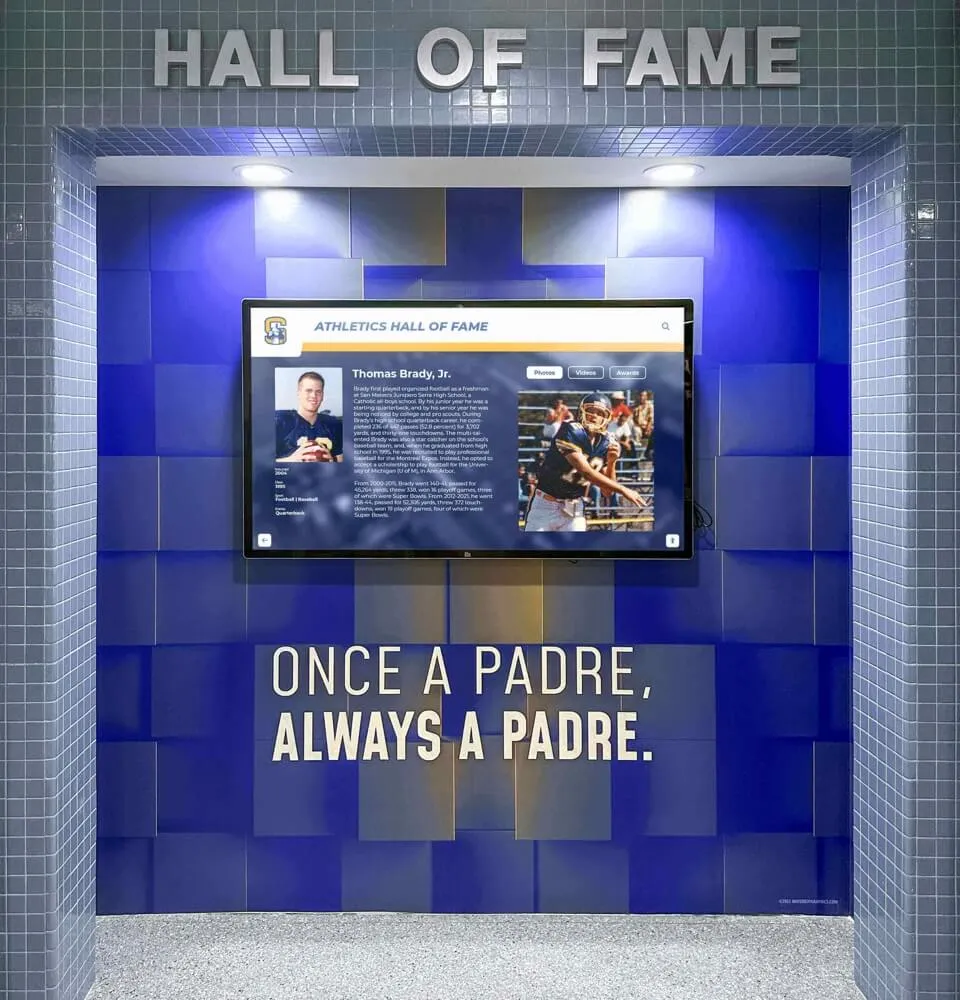
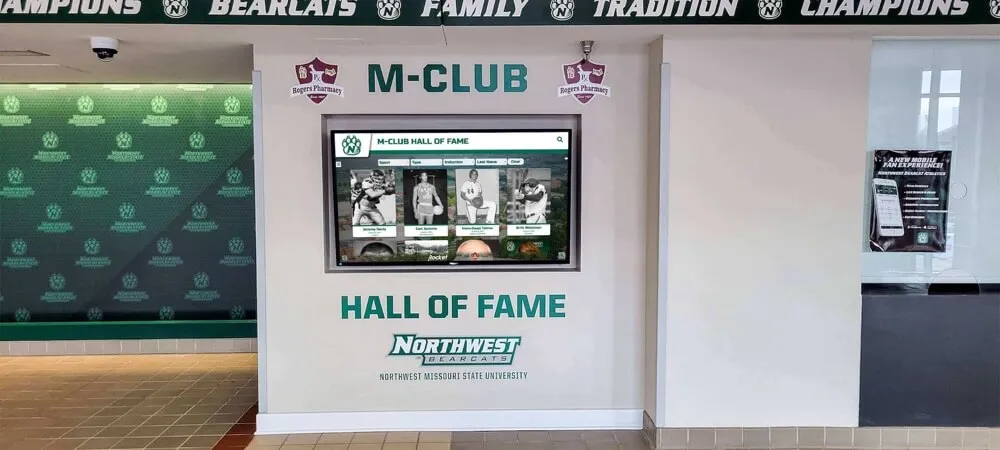
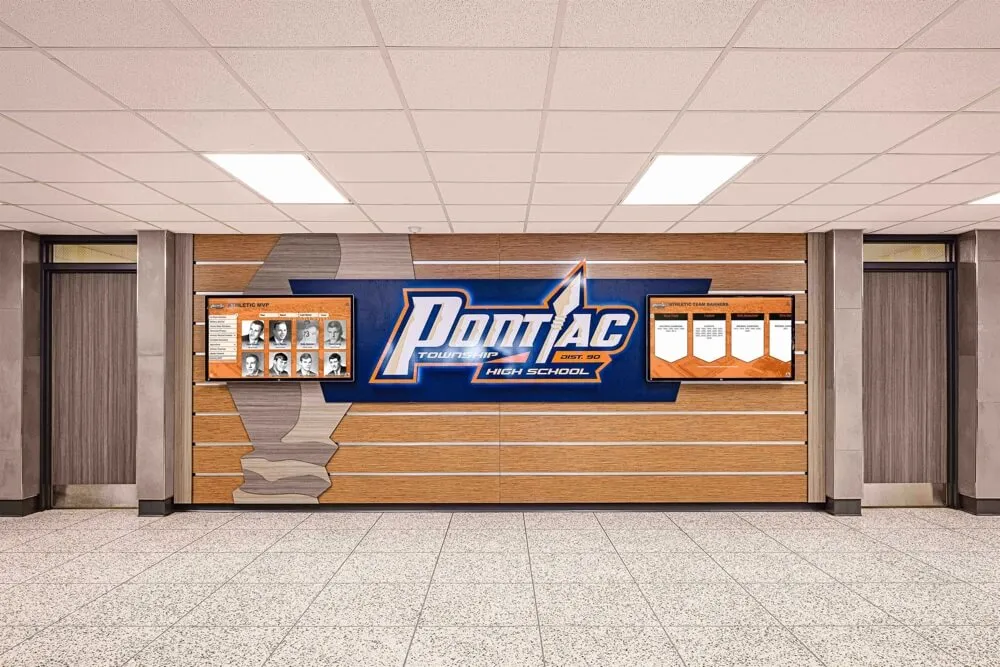
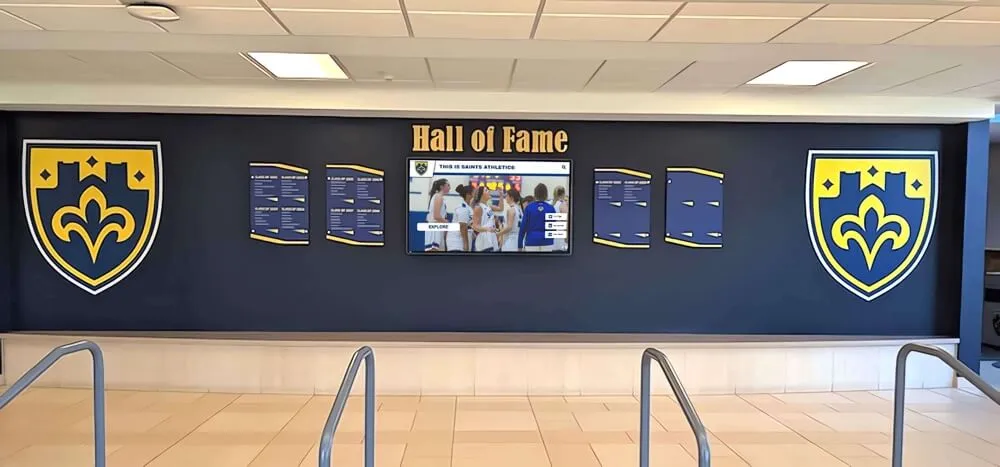
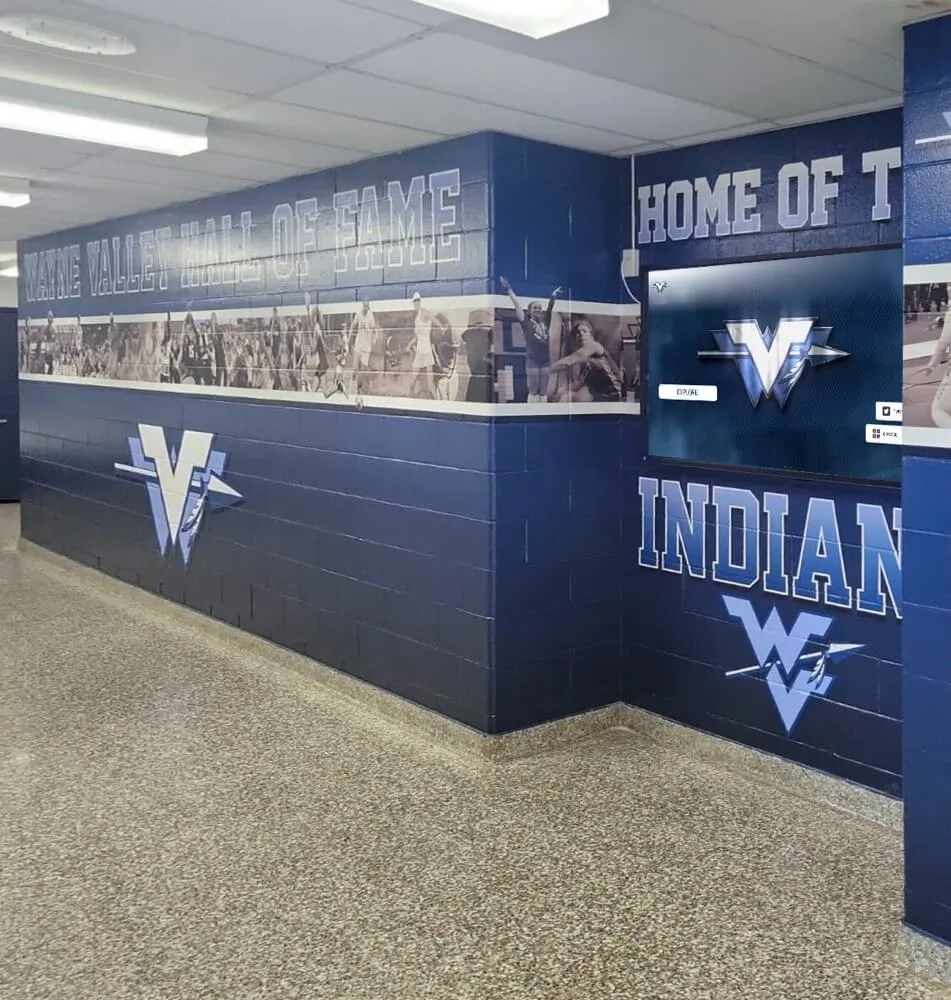
Athletic hall of fame installations represent both a recognition commitment and a property asset — booster clubs that fund or manage these installations need clarity on ownership, coverage, and replacement terms
Directors and Officers: Protecting the People Who Volunteer
Booster club board members are typically parents and community volunteers serving without compensation. D&O coverage protects them personally from claims arising out of their governance decisions — decisions about budget allocations, vendor contracts, sponsorship terms, and recognition program investments.
The risk is more real than most volunteers assume. A disgruntled sponsor who believes their recognition deliverables were not fulfilled may file a complaint against the booster club board. A parent who believes fundraising proceeds were mismanaged may allege breach of fiduciary duty. Even when claims are unfounded, the cost of a legal defense falls on the individual board members unless D&O coverage is in place.
According to the Nonprofit Risk Management Center, D&O claims against booster clubs and parent-teacher organizations arise more often than most volunteers expect, particularly when fundraising programs grow large enough to involve significant capital. The most common triggers are financial mismanagement allegations and governance disputes over spending priorities.
For programs that have grown to include digital recognition infrastructure, multi-sponsor programs, or significant capital investments — like an athletic hall of fame installation or a donor recognition display — D&O coverage becomes more important with scale, not less. The board members who approved those commitments should have protection if a future leadership transition brings those decisions under scrutiny.
Permanent tribute and memorial spaces in school environments raise the same governance questions: who approved the project, what does the school owe the community members who funded it, and how does the organization ensure those commitments survive leadership change?
Digital Display Systems: Insurance, Ownership, and Sponsor Obligations
Digital recognition systems — interactive touchscreen displays, sponsor recognition walls, athletic hall of fame installations — represent a category of booster club investment substantial enough to warrant explicit coverage review. A system that cost $15,000 to purchase and install is a material asset that belongs on someone’s property insurance schedule.
When a booster club is considering or currently managing a digital display investment, these are the five questions to answer before assuming coverage:
- Who holds title? Is the display owned by the booster club, the school district, or jointly? Title determines which organization’s policy applies.
- What is the current replacement value? Electronics depreciate quickly — confirm the policy reflects replacement cost rather than depreciated book value.
- Is it covered for theft, vandalism, and accidental damage? Not all property policies include all perils; review the exclusions section explicitly.
- What happens to sponsor recognition obligations if the display is destroyed? The sponsorship agreement should address force majeure and replacement timelines, not leave these questions to be negotiated after a loss.
- If the display is cloud-managed, where is the content stored? Data loss or service disruption may fall under a technology errors and omissions policy rather than a property policy.
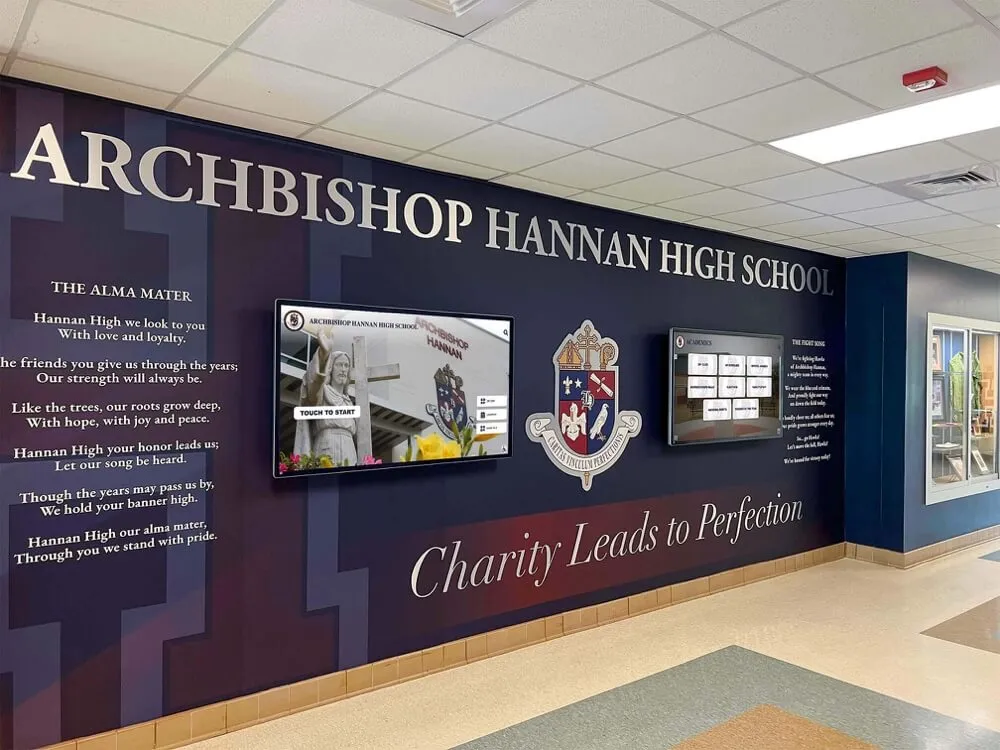
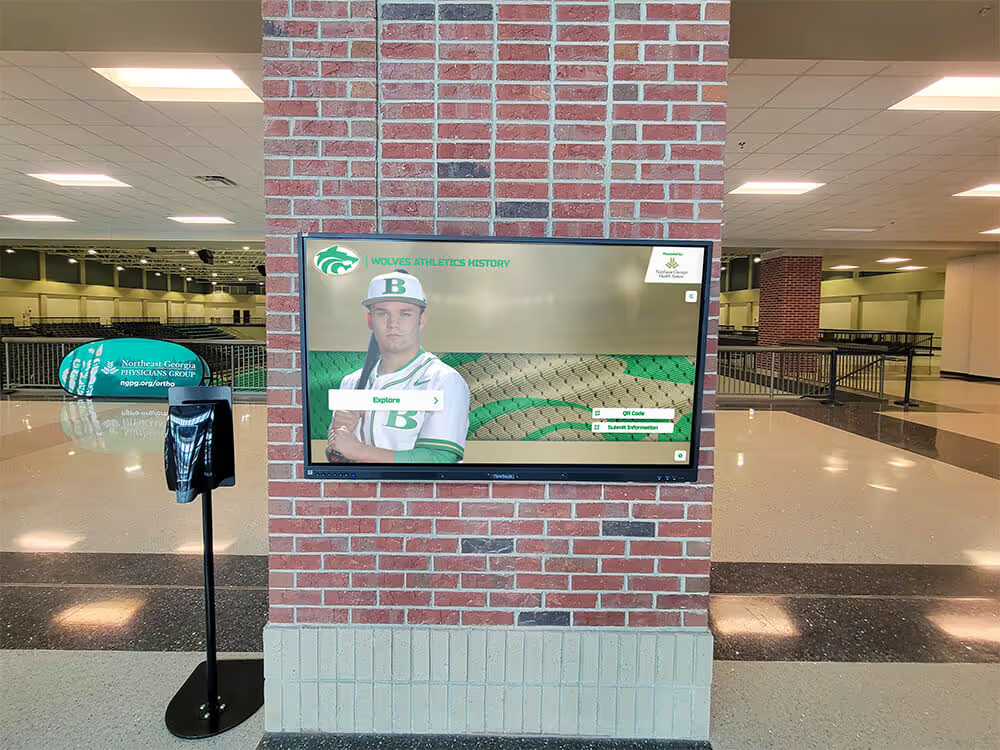
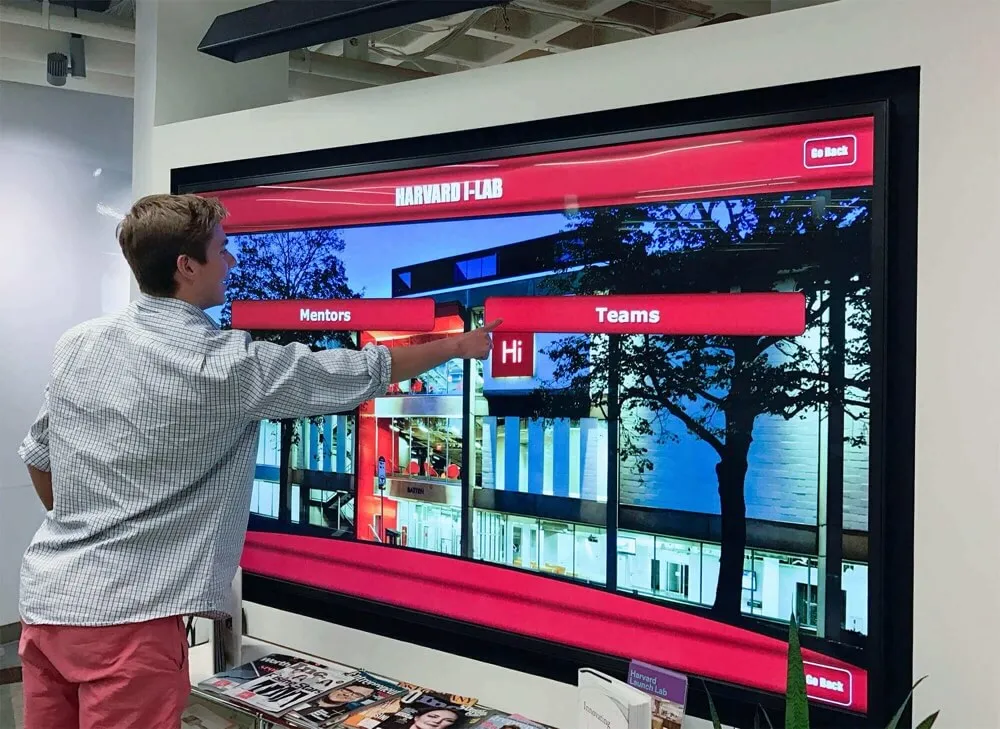
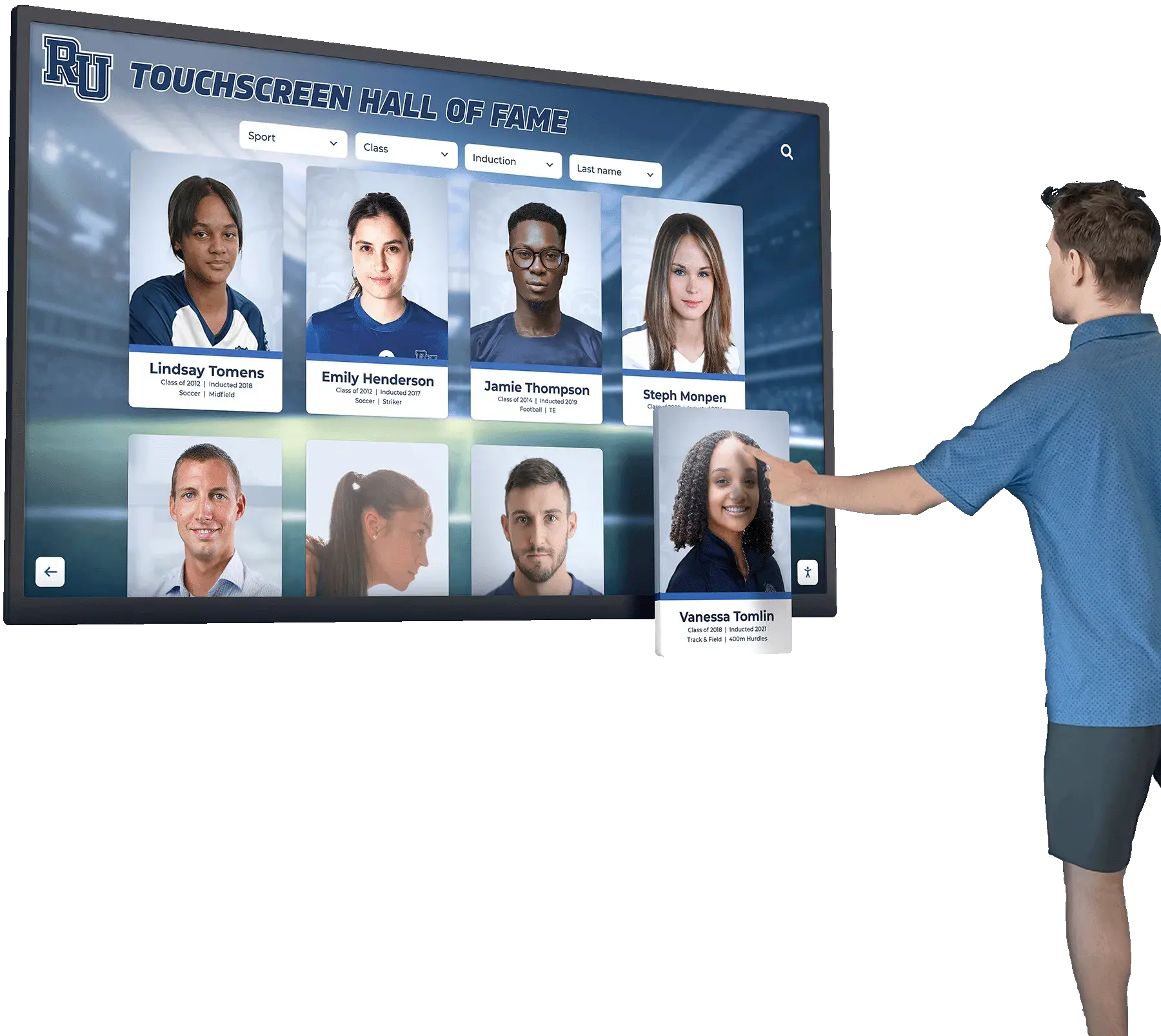
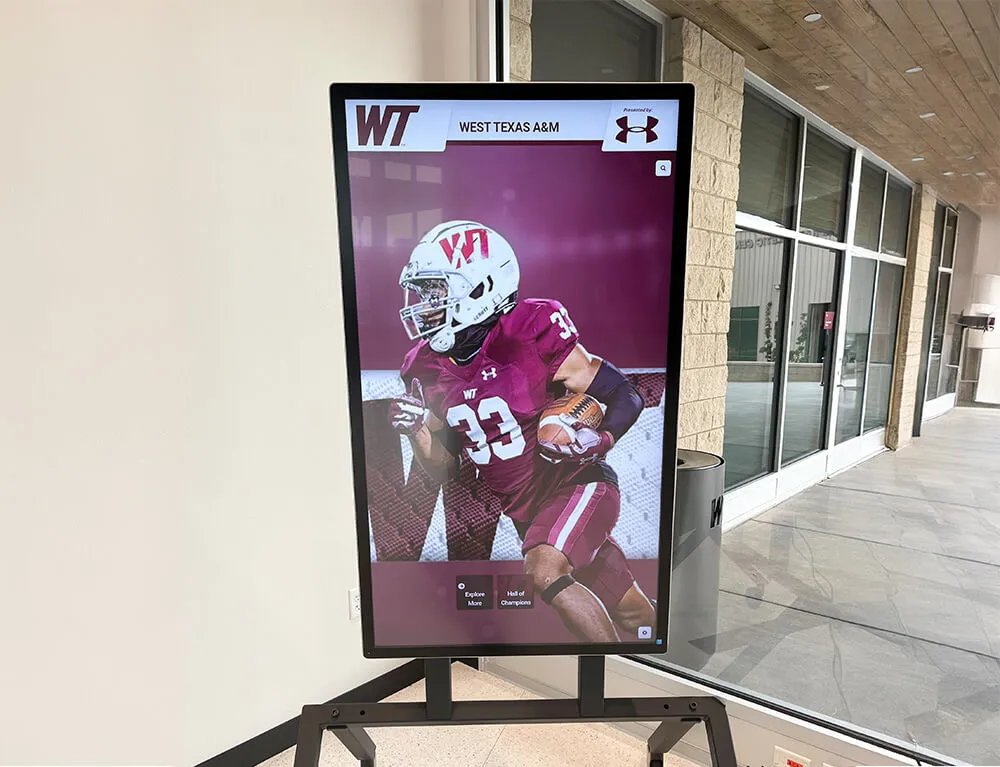
Interactive touchscreen installations in school lobbies are increasingly central to how schools present their identity and recognize contributors — which means continuity planning and coverage review are appropriate governance topics for both booster clubs and school administrators.
For programs that use recognition displays to preserve athletic records — team championships, individual honors, hall of fame inductees — the display system is a record-keeping asset as well as a physical one. Programs that preserve game artifacts like trophy pucks and tournament keepsakes apply the same institutional logic: physical artifacts and their display infrastructure are worth protecting because they carry the documentary history of the program, not just dollar value.
Frequently Asked Questions About Booster Club Insurance
Does a school district's insurance cover booster club activities?
In most cases, a school district’s general liability policy does not automatically extend to a separately organized booster club. If the booster club is incorporated as an independent nonprofit, holds its own bank accounts, and signs contracts in its own name, it is typically treated as a separate legal entity for insurance purposes. Some districts do extend coverage to affiliated parent organizations — the only way to confirm is to ask your district’s risk manager for a written determination. If the district’s coverage does not extend to the booster club, the organization needs its own policy.
What insurance does a booster club need for a fundraising event?
Fundraising events typically require general liability coverage that explicitly includes the event type. Events involving amusement equipment (bounce houses, carnival rides), food service, or alcohol service may require specific endorsements or separate event liability policies. Any third-party vendor providing equipment or services should carry their own liability coverage and name the booster club as an additional insured on their certificate. Booster clubs should review their policy’s exclusions and attendance thresholds before any event rather than assuming existing coverage extends to the specific activity.
Who is responsible if a sponsor's banner falls and injures someone?
Liability for a banner installation failure typically follows whoever was responsible for the installation and ongoing maintenance. If the booster club contracted for installation, organized the work using volunteers, or agreed to maintain banners under a sponsor agreement, the booster club’s general liability policy is the likely first line of coverage. The installer or vendor who performed the work may also share liability depending on the contract terms. Booster clubs should document all banner installations — installer name, date, hardware used — and obtain certificates of insurance from any outside vendor performing the work.
Does donated equipment need to be on a separate insurance policy?
Donated equipment needs to appear on a property insurance policy held by whoever legally owns it. If the booster club accepted a scoreboard, digital display, or other major equipment in its own name, that asset should be listed on the booster club’s property policy — not assumed to be covered under the school’s policy. Ownership should be clarified in the original donation agreement. If title transferred to the school district at acceptance, coverage responsibility transfers with it. Ambiguous ownership creates real coverage gaps that surface only when a claim is filed.
What records should booster clubs maintain for insurance purposes?
Booster clubs should maintain: a property inventory listing all owned equipment with acquisition dates and replacement values; copies of all vendor contracts and certificates of insurance received from contractors; event documentation including setup photographs, attendance records, and volunteer lists; copies of all sponsorship agreements specifying recognition deliverables; donation agreements for major equipment gifts; and board meeting minutes that document governance decisions about spending and risk. These records support insurance claims, protect officers in D&O disputes, and preserve the institutional knowledge needed when leadership transitions.
Insurance Records as the Foundation of Long-Term Recognition
Booster club insurance is a governance responsibility — but the documentation practices that support sound coverage decisions are the same practices that support year-round sponsor stewardship, donor recognition, and athletic program continuity. A property inventory that includes the school’s hall of fame displays, donated scoreboards, and sponsor-funded banners is simultaneously an asset schedule for insurance purposes and a recognition record for institutional memory.
Programs that document donated equipment, sponsorship agreements, and recognition commitments thoroughly are not just protected against insurance claims — they are building the infrastructure that makes recognition commitments durable. Recognition programs that honor sustained contributions across athletic and artistic programs depend on documentation that survives leadership transitions and preserves the memory of who contributed and how — the same documentation that makes a coverage claim defensible also makes a recognition program credible.
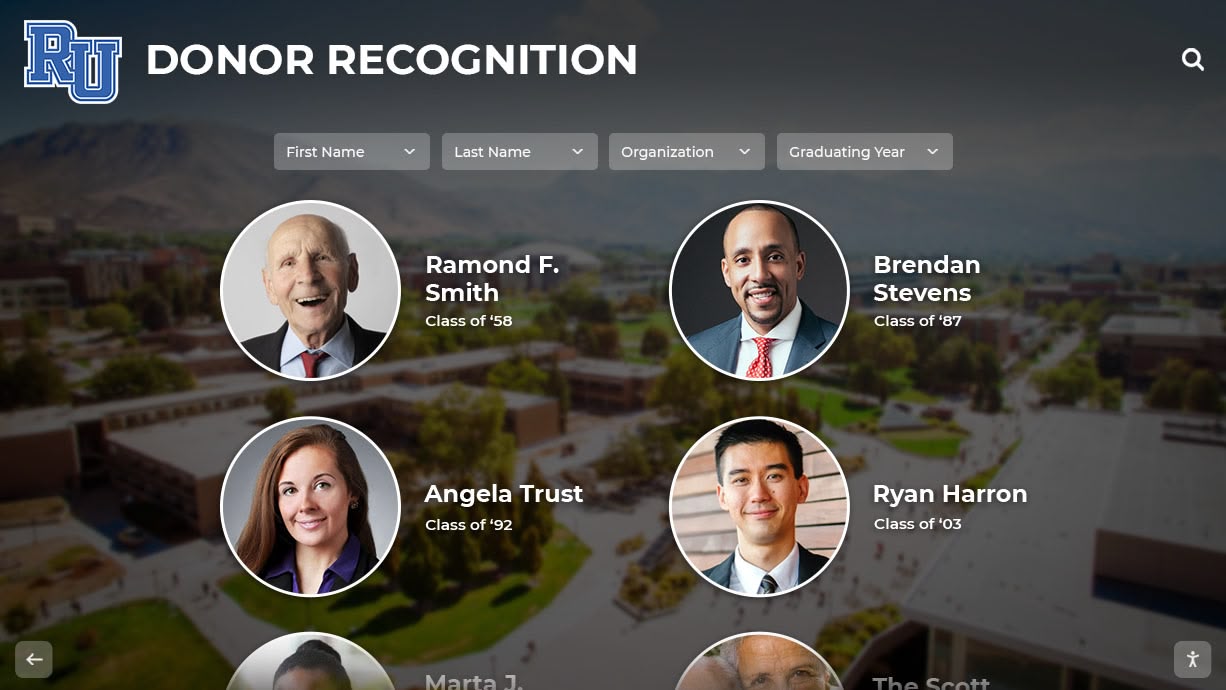
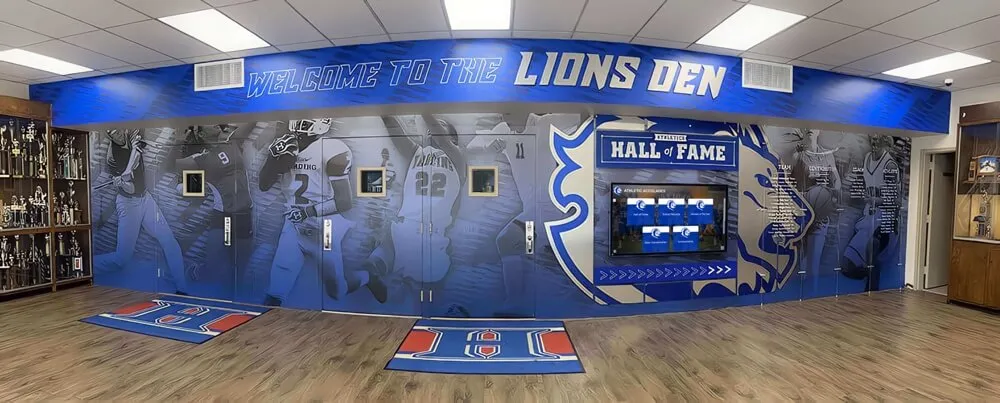
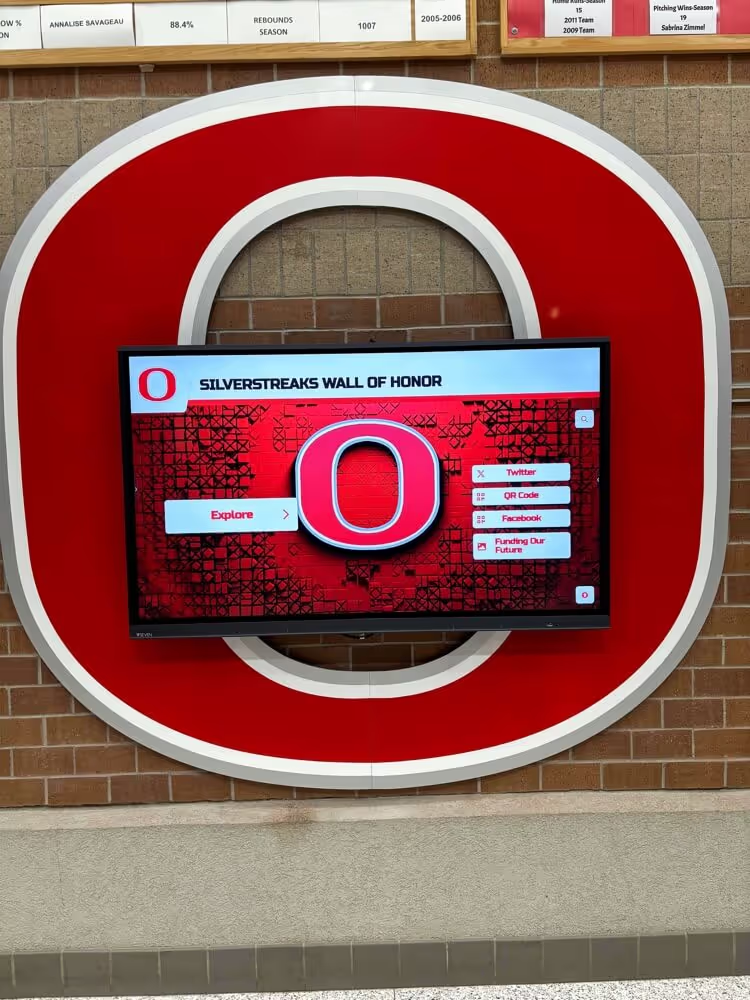
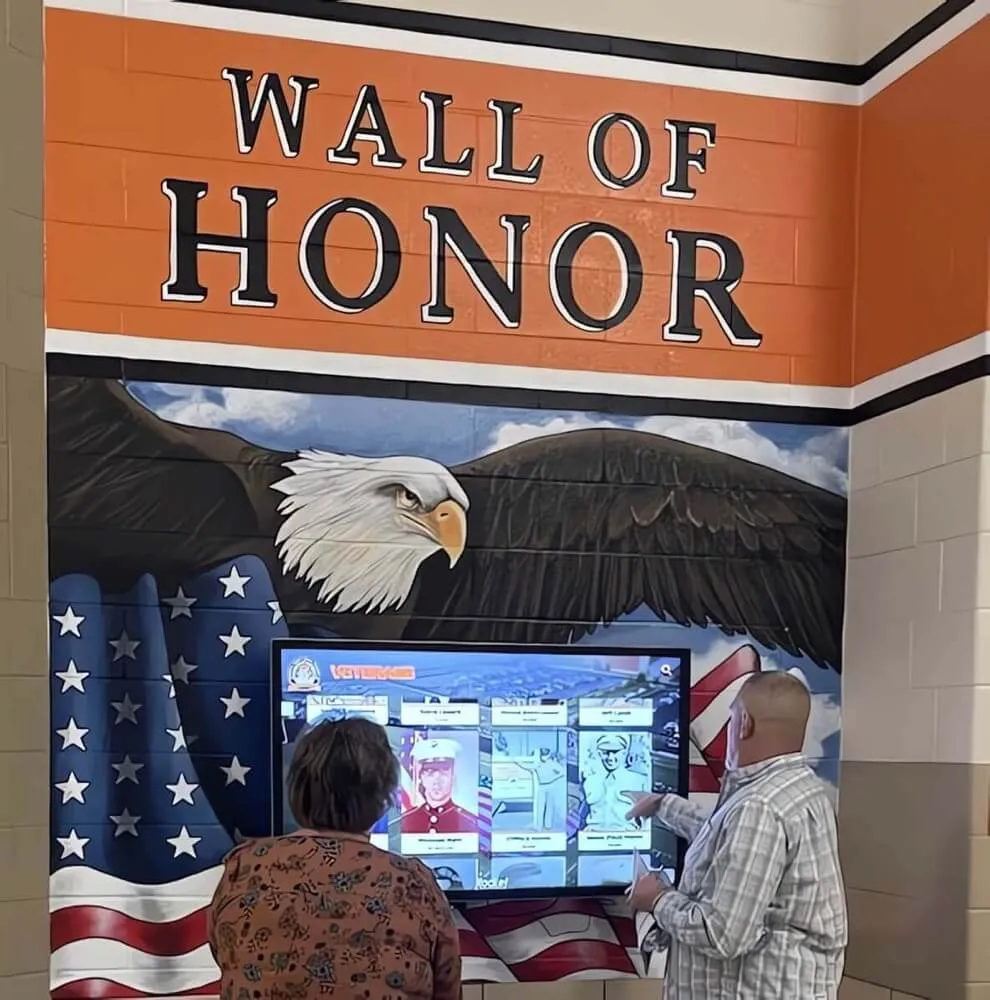
Permanent recognition infrastructure — whether a donor wall, a hall of fame display, or a sponsor recognition board — represents both a governance commitment and an asset that belongs on the organization's insurance schedule
For booster clubs that have grown to manage significant recognition assets — digital displays, named facilities, major sponsor installations — the combination of sound insurance coverage and thorough records documentation is what allows the organization to make and keep the promises that attract sponsors and donors season after season. Tools that help schools create sponsor and recognition graphics cost-effectively support the acknowledgment materials that connect sponsors to their commitments — and every graphic or display element produced contributes to the documentation record that supports both recognition and, when needed, coverage claims.
School archives that preserve athletic records, photographs, and program histories apply the same institutional logic: documentation created for recognition purposes becomes a governance asset when it captures the history of commitments made and honored. The records a booster club keeps to recognize athletes, acknowledge donors, and deliver on sponsor promises are the same records that protect the organization, its board, and the community trust it has earned.
Build Recognition Infrastructure That Documents What You've Promised
Rocket Alumni Solutions builds interactive digital recognition displays for school athletic programs — giving booster clubs a visible, permanent platform for sponsor acknowledgment, donor recognition, and athletic achievement that doubles as documentation for the commitments your program makes and keeps. Request a demo to see what your facility could look like.
Schedule a Recognition Display Demo