



A booster club grant closeout checklist is the structured sequence of tasks a treasurer and grant administrator complete after a funded project concludes: verifying deliverables, organizing every receipt and invoice, preparing the required financial and narrative reports, reconciling the grant account, and submitting the complete closeout package to the funder. Grant closeout is the final phase of any awarded grant — and it is also the phase programs most often handle informally. When closeout documentation is incomplete, organizations find themselves unable to account for how grant funds were used, ineligible for future awards from the same source, and unprepared for funder follow-up or audit. This guide walks through the complete booster club grant closeout process in seven documented steps, with checklist tables for each area and guidance on connecting proper closeout to the recognition programs many grants fund.
Not legal or financial advice: This guide describes commonly used practices for educational purposes only. Your organization’s specific requirements depend on your grant agreement terms, school district structure, state nonprofit regulations, and your funder’s policies. Consult a licensed CPA or your school district’s finance office before establishing or revising financial procedures.
Closing out a grant cleanly demonstrates to funders that your organization managed their investment with care. A booster club that submits an accurate, complete closeout package on time builds the kind of track record that makes future applications stronger — and gives incoming volunteers a documented record of what the grant funded and how the money was spent.

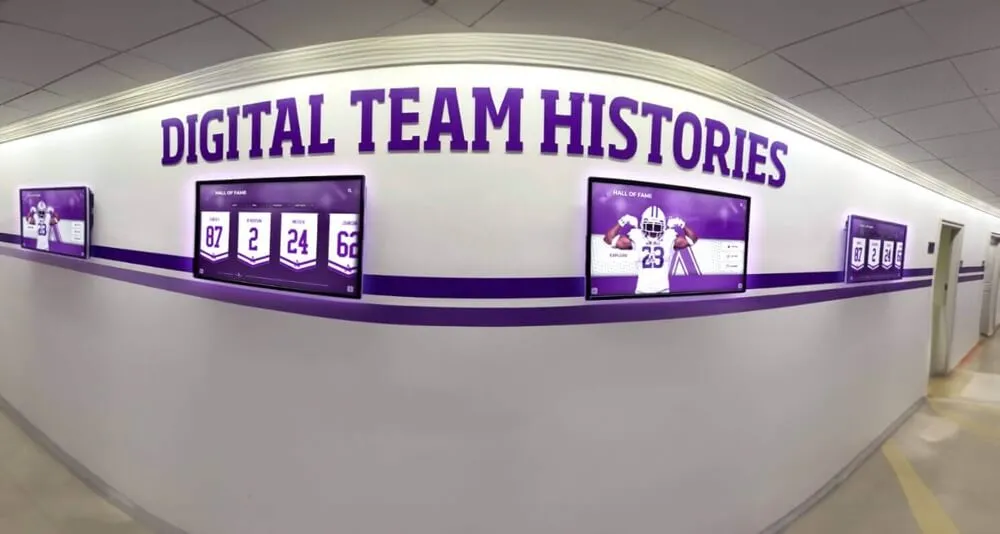
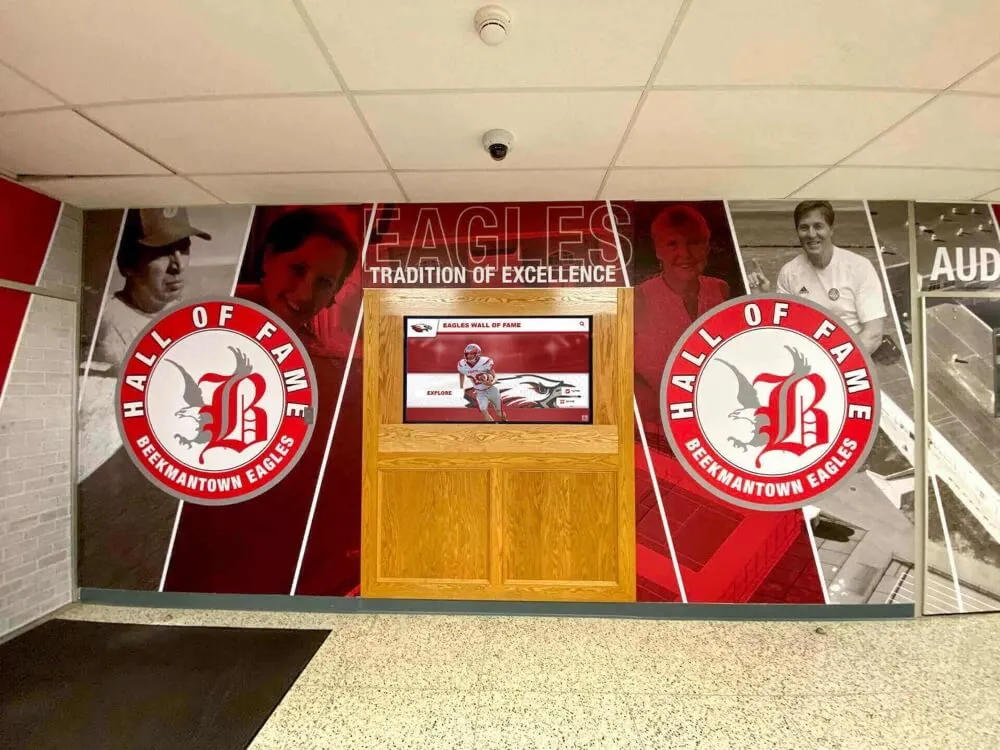
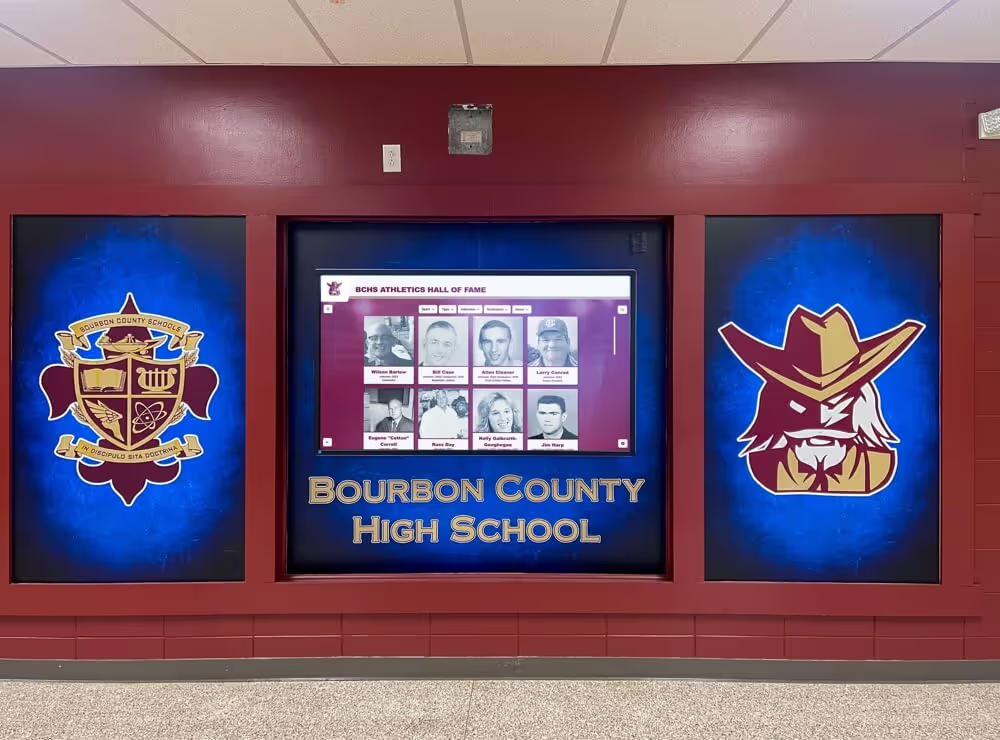
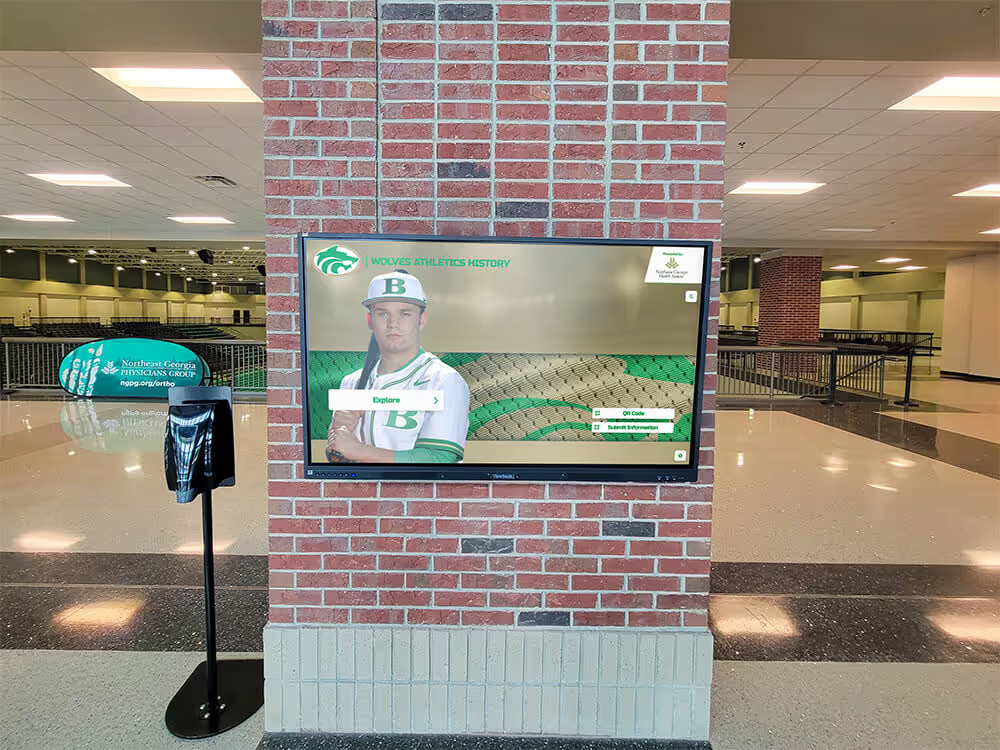
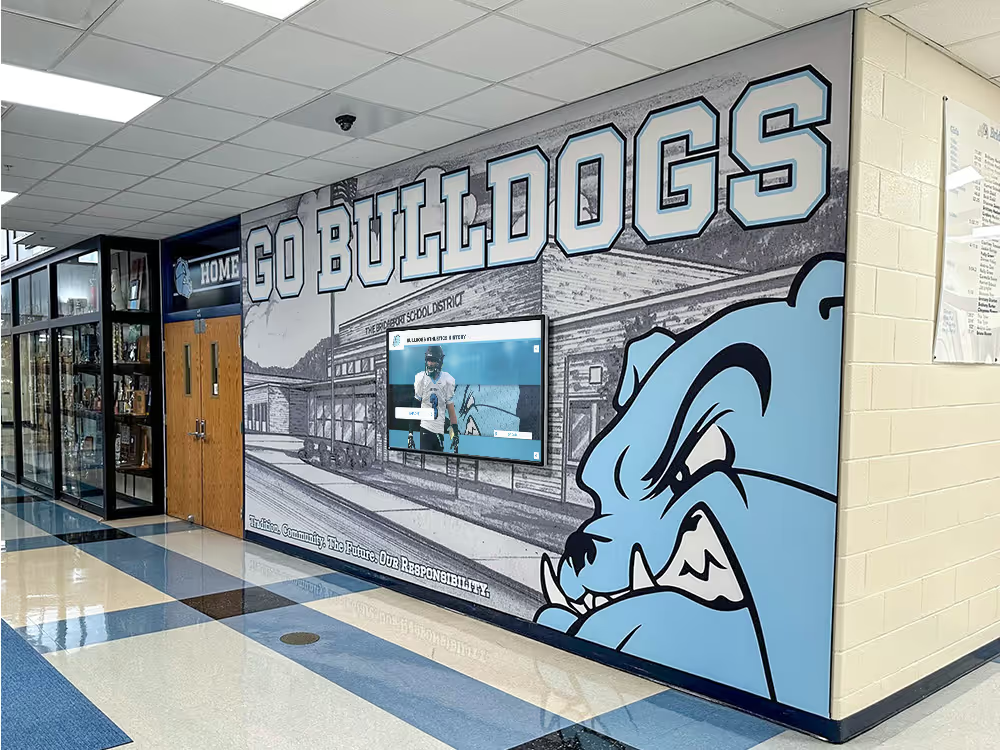
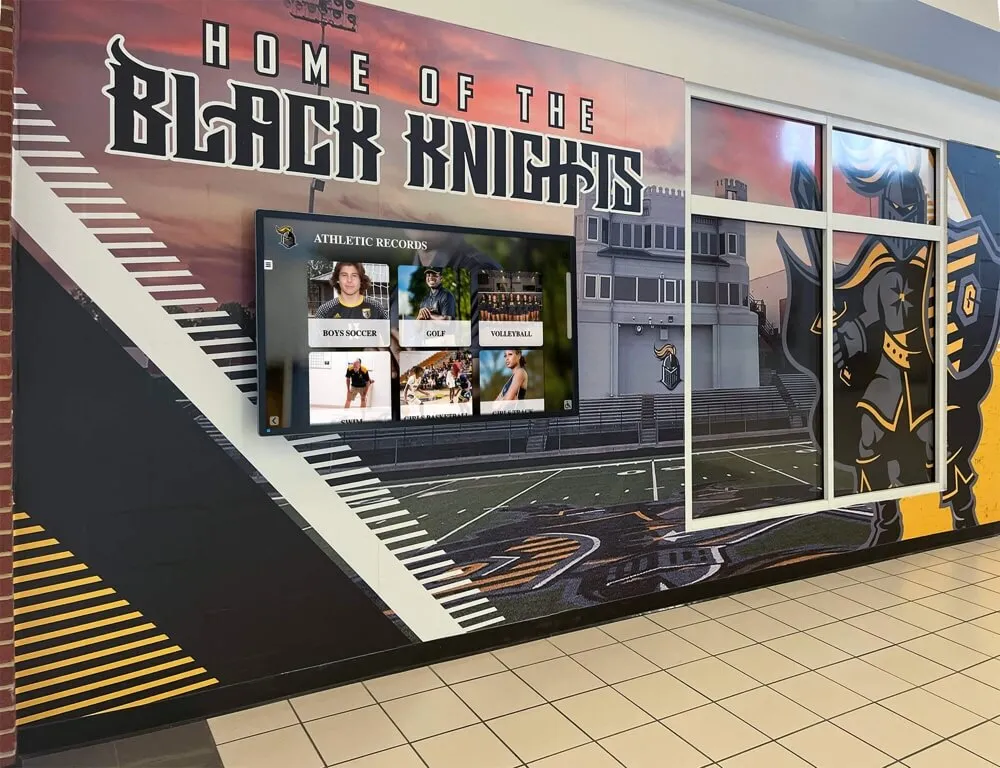
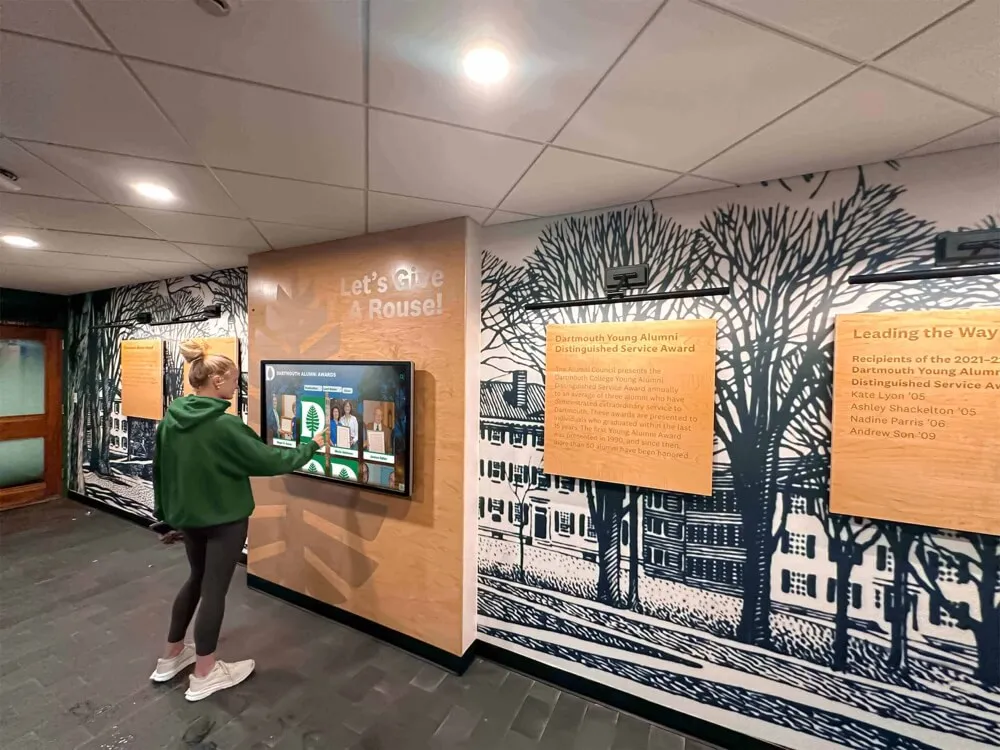
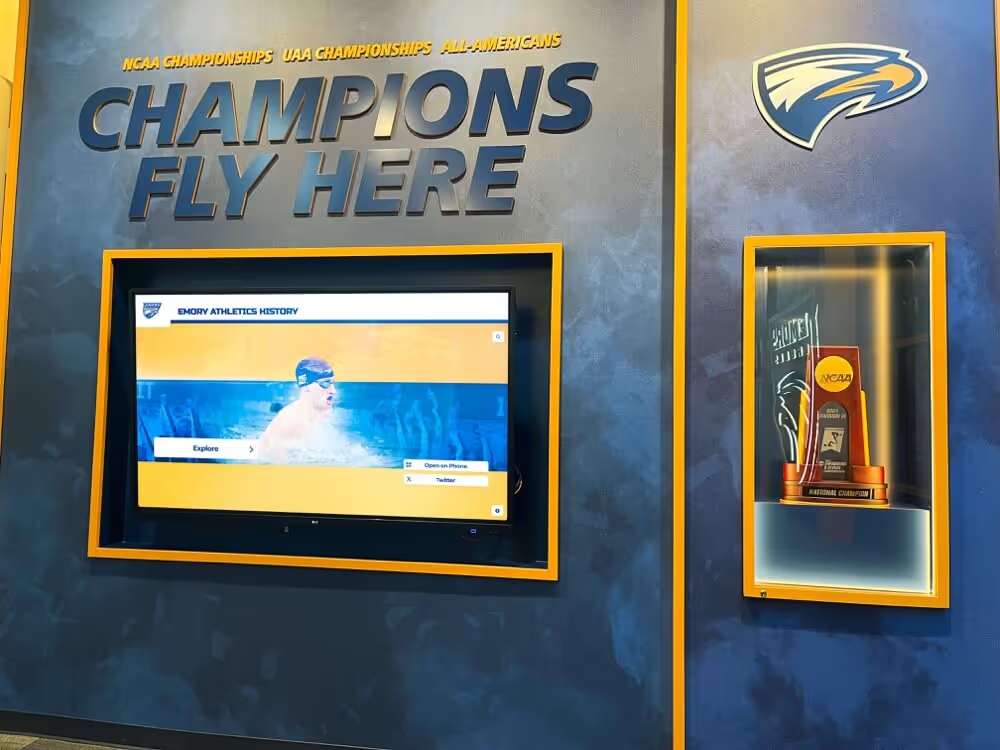
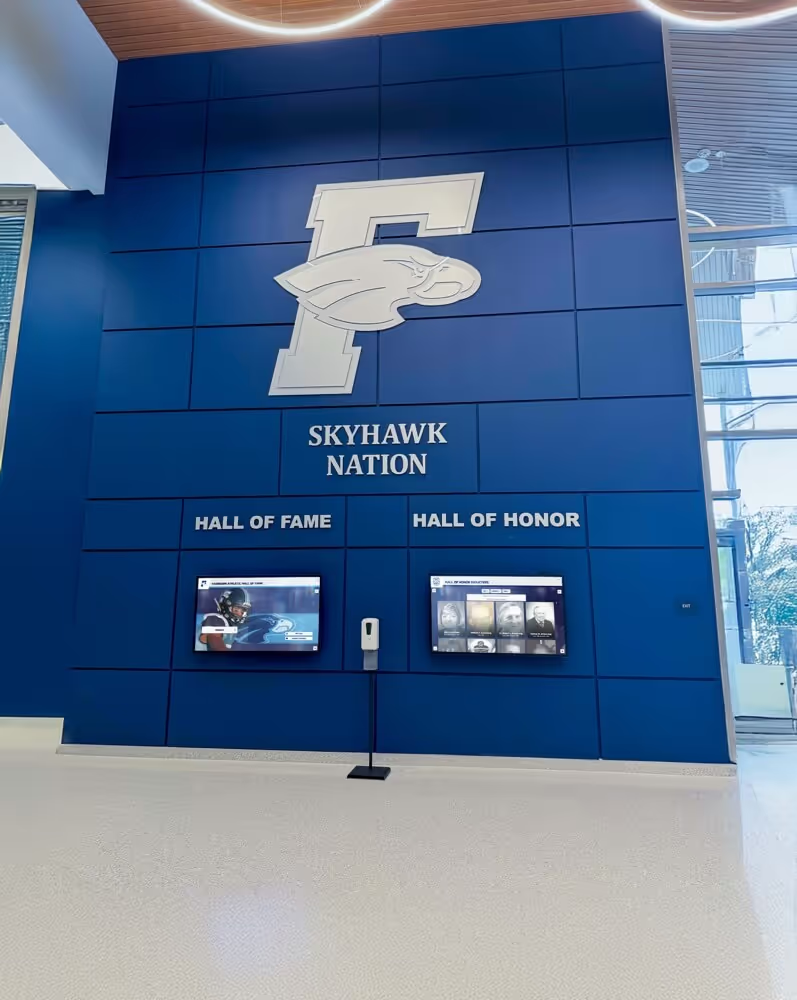
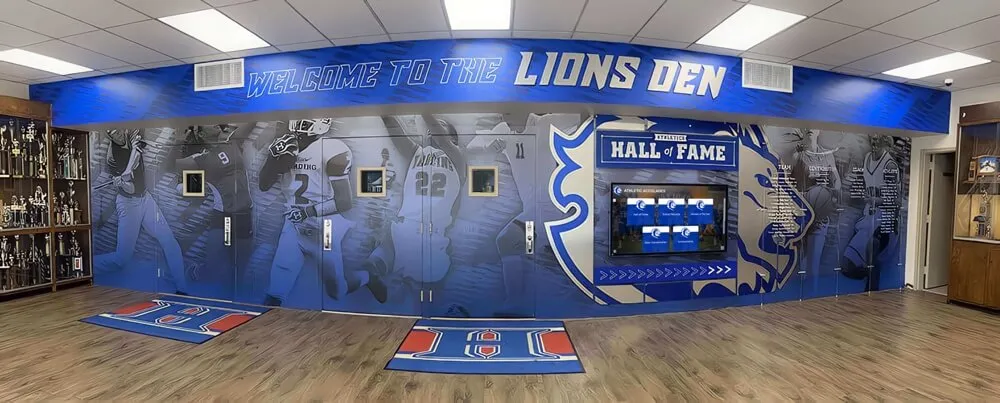
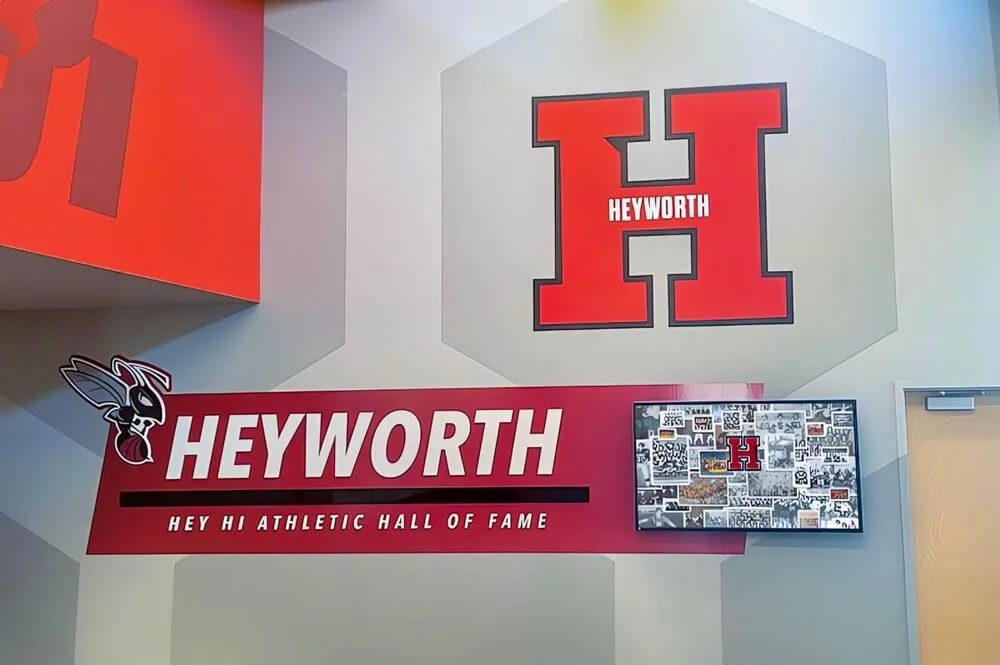
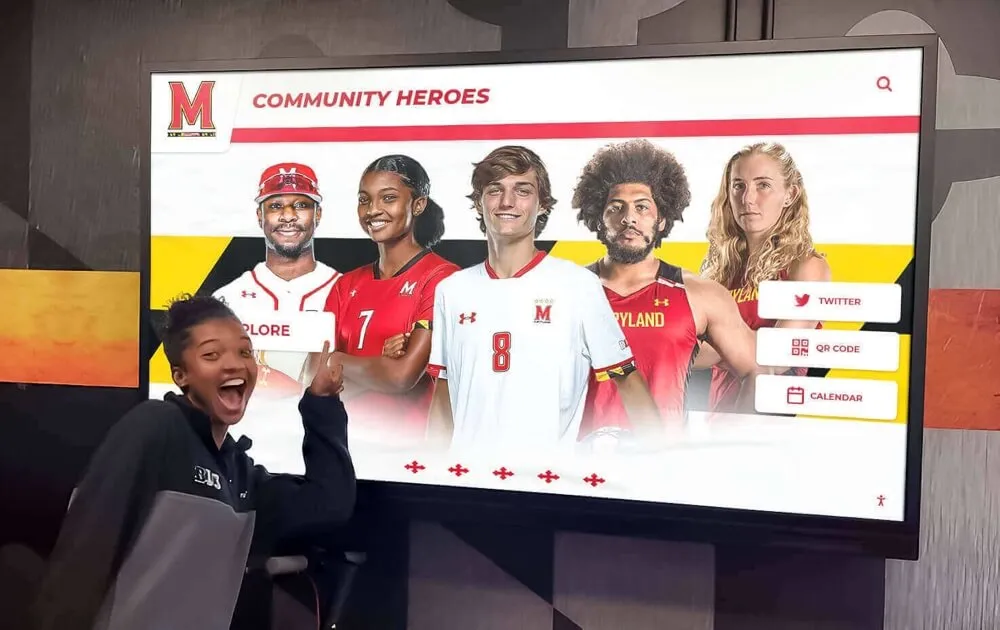
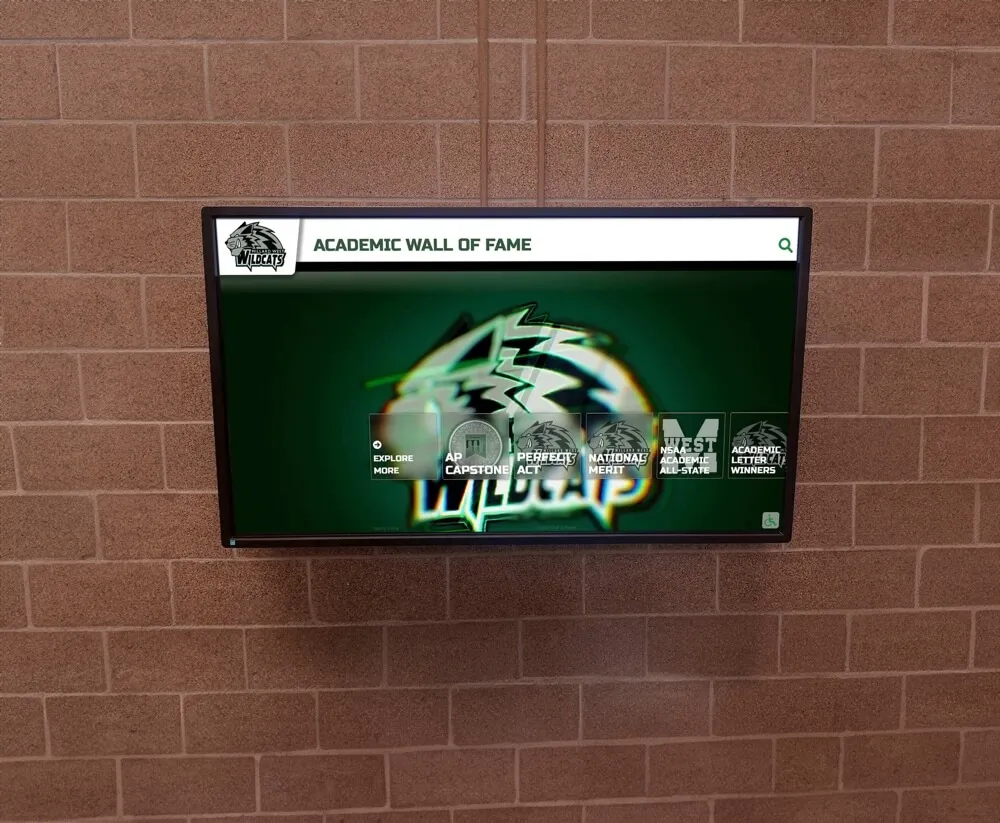
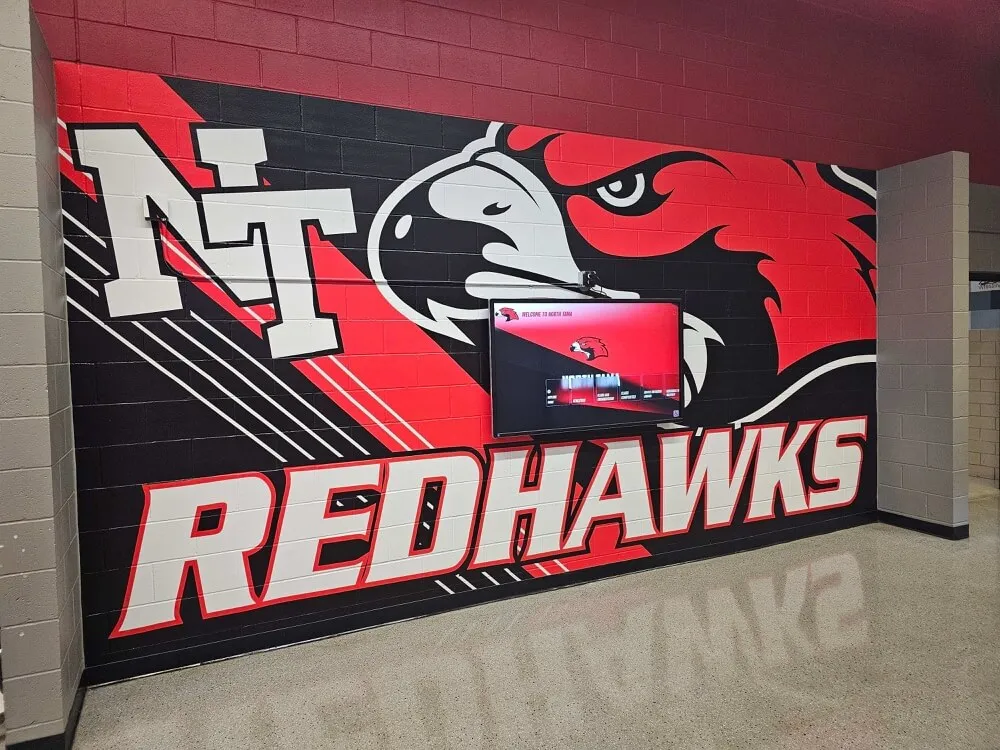
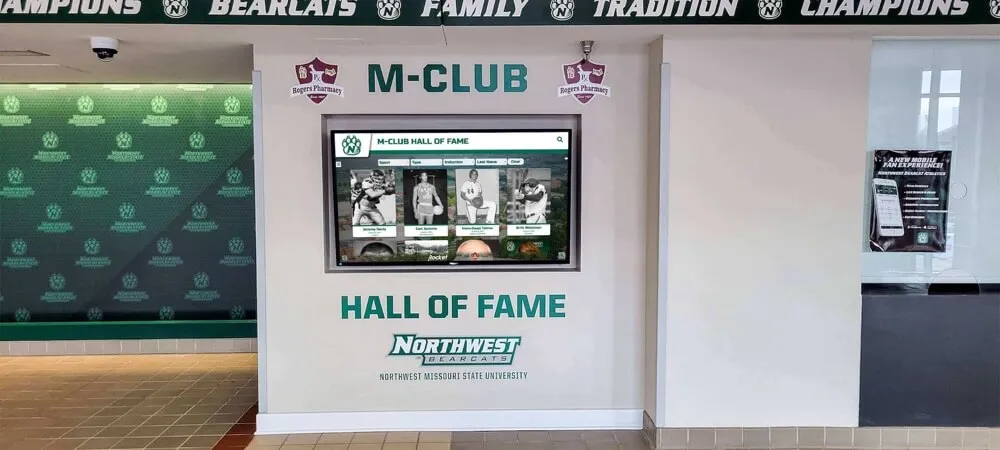
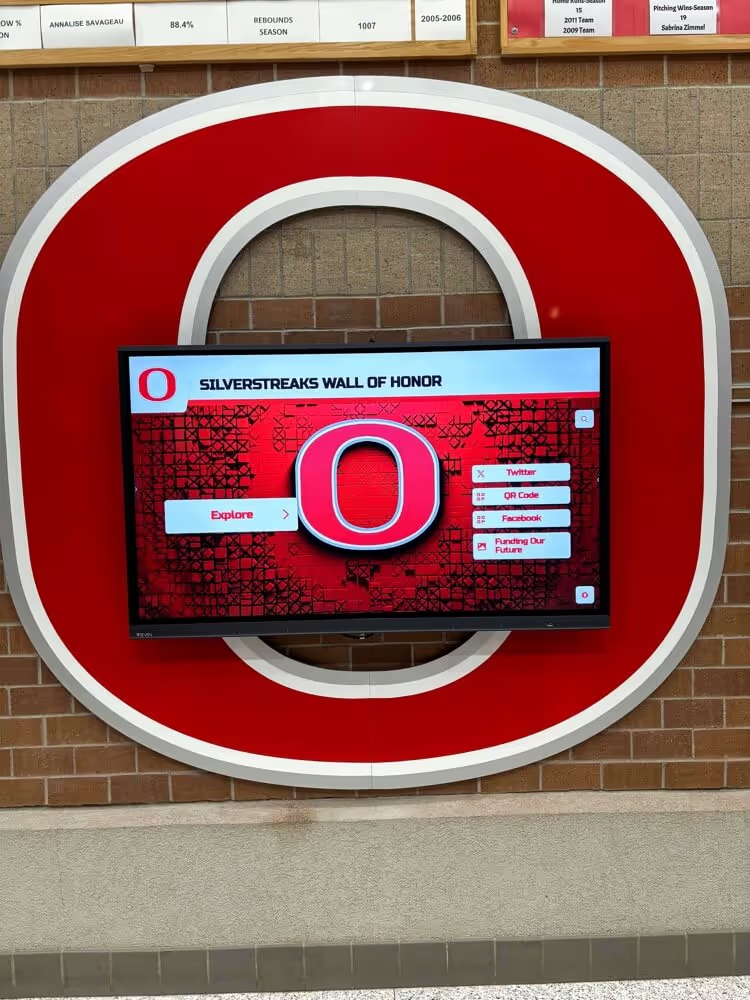
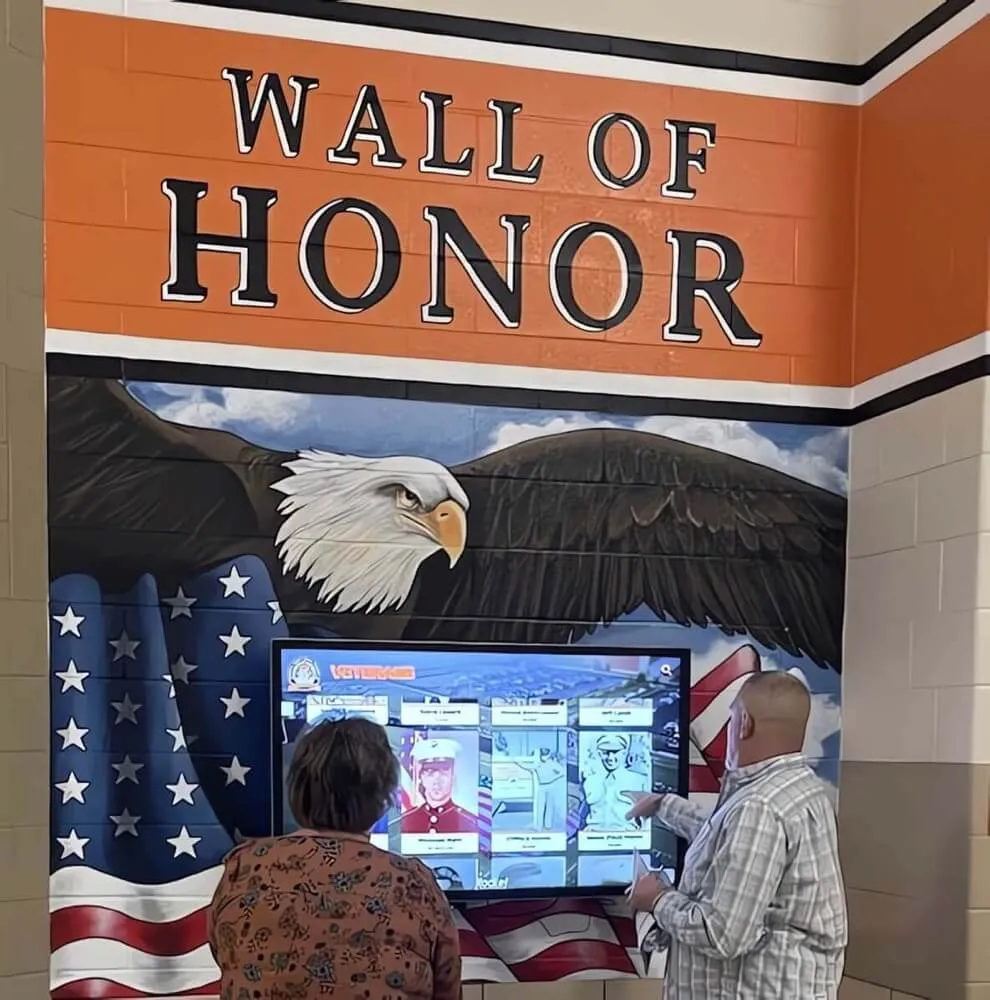
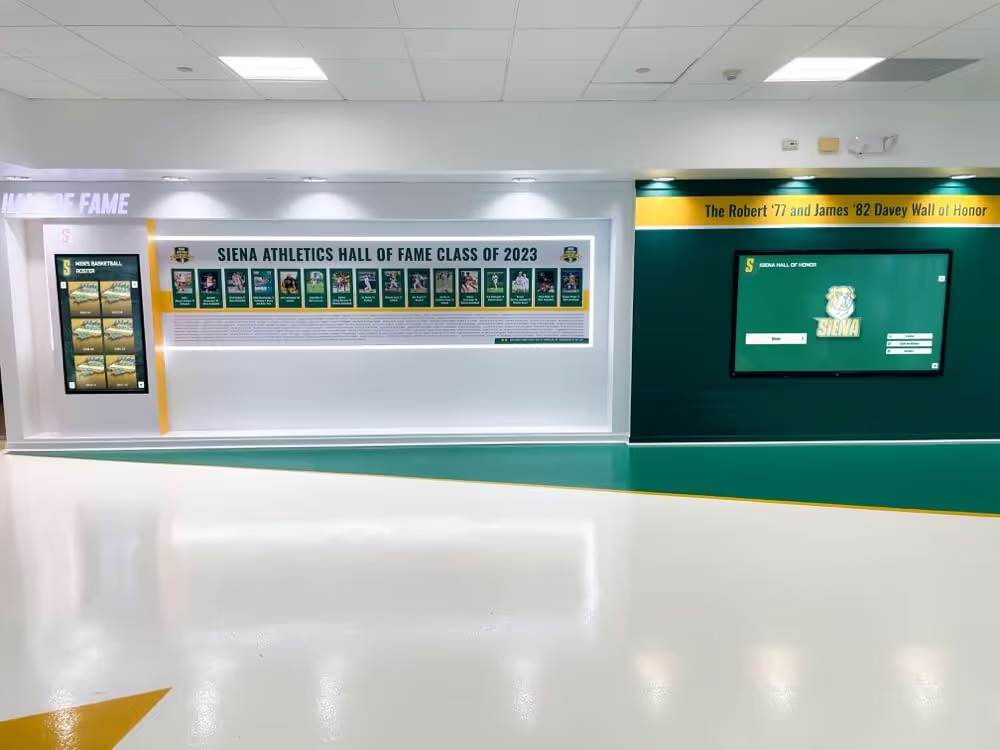
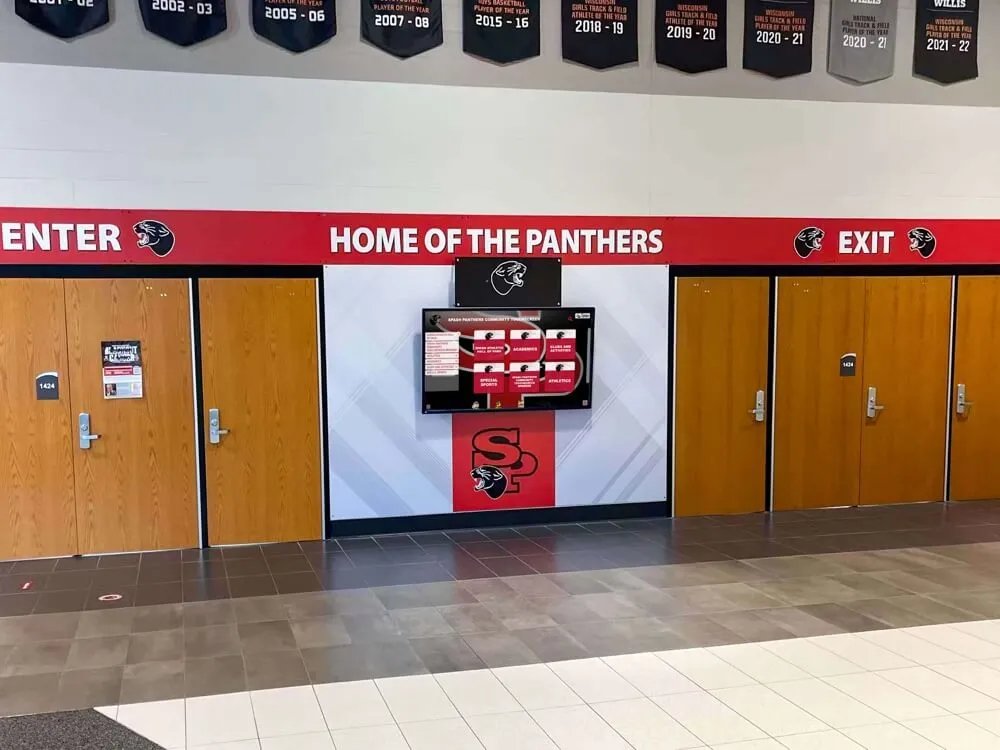
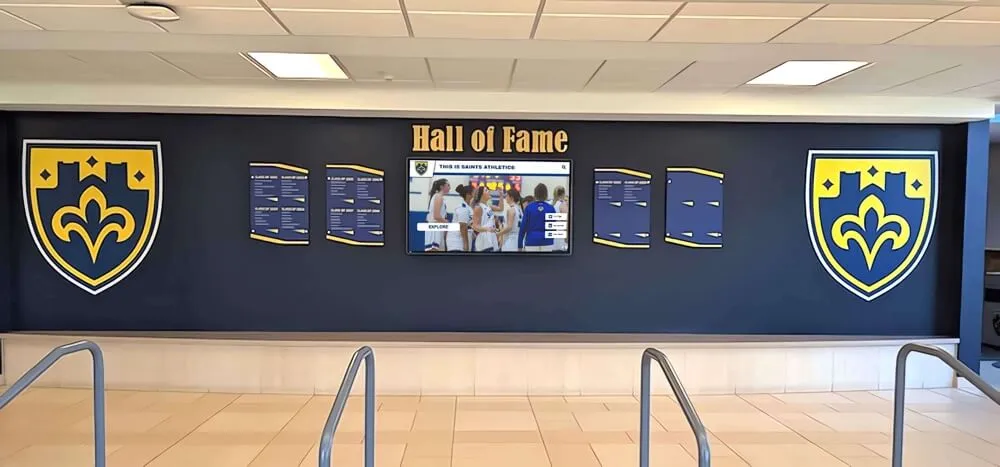
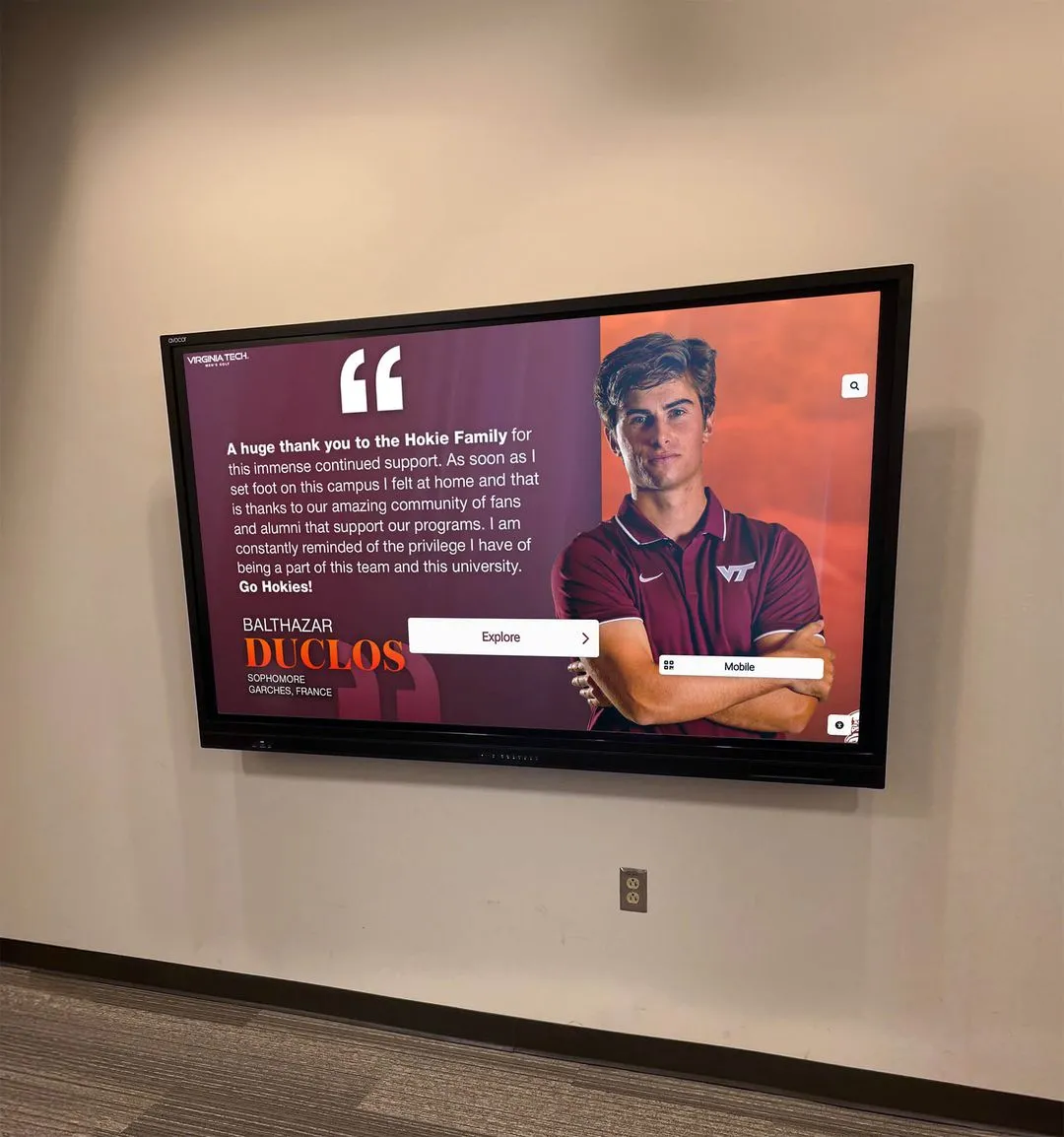
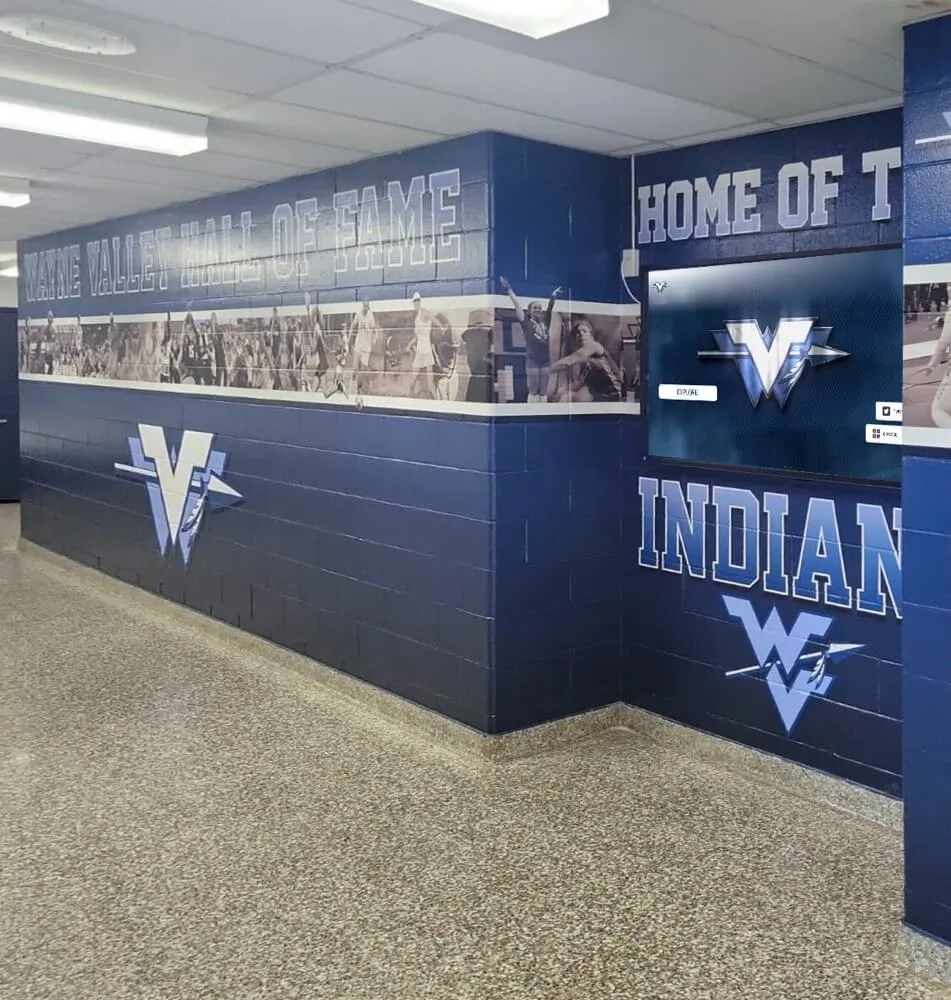
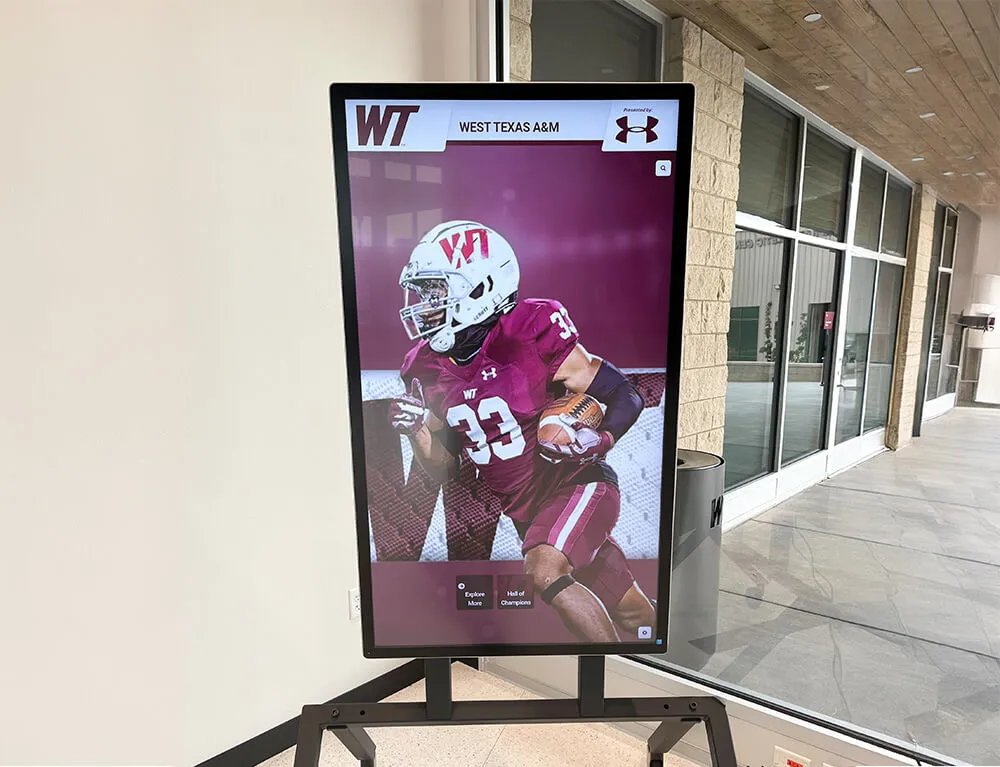
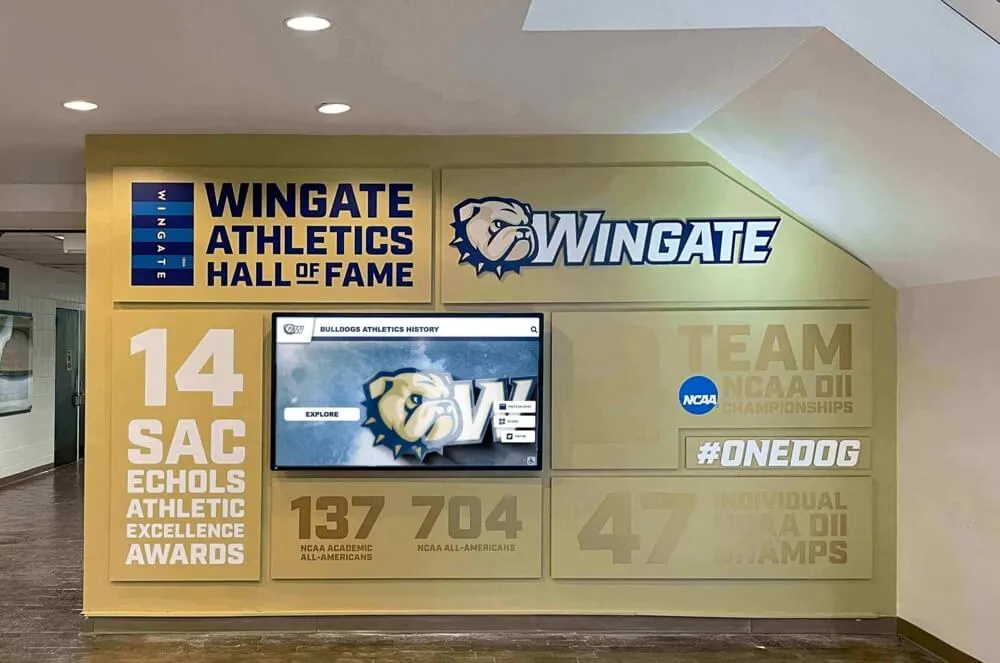
Recognition displays and athletic record boards funded by grants require closeout documentation that connects the original award to the installed asset — an accurate booster club grant closeout checklist is how programs demonstrate that connection to funders
What a Booster Club Grant Closeout Checklist Covers
A complete booster club grant closeout checklist addresses seven areas. Programs that skip any one of them risk funder follow-up requests, reimbursement clawbacks, or disqualification from future grants. Most funders require closeout documentation within 30 to 90 days of the grant period’s end date.
| Closeout Area | Core Tasks | Why It Matters |
|---|---|---|
| Deliverable verification | Confirm every project output specified in the grant agreement was completed | Establishes that the funded project was executed as promised |
| Receipt and invoice collection | Gather and organize all grant-related financial documents | Creates the audit trail behind every expenditure line |
| Final expenditure report | Prepare a budget-vs.-actual summary for each approved cost category | Documents how grant funds were allocated and spent |
| Narrative completion report | Write a summary describing outcomes and project impact | Required by most funders as part of the closeout package |
| Grant account reconciliation | Confirm internal records match bank statements for the grant period | Ensures the financial close is accurate before submission |
| Closeout package submission | Assemble and deliver all required documents to the funder | Formally closes the grant and releases any withheld funds |
| Archive and recognition update | Retain all records for the required period; update funder recognition | Preserves the grant record and honors acknowledgment commitments |
Each step below builds on the one before it. Deliverable verification must come first because the narrative report cannot be written until the organization can confirm what was accomplished, and the expenditure report cannot be finalized until all receipts are collected.
Step 1: Verify All Grant Deliverables Were Completed
The first task in any booster club grant closeout checklist is confirming that every deliverable specified in the grant agreement was fully completed before the project period ended. Most grant agreements include a scope of work that describes what the funded project will produce — equipment purchased, programs delivered, recognition installations completed, athletes served, or events held.
Review the original grant agreement section by section. For each deliverable, identify the evidence of completion: a purchase receipt, an installation photograph, an attendance log, an award certificate. If a deliverable was not completed, document why — and determine whether the grant agreement required prior notification to the funder before the project period closed.
Deliverable verification checklist:
| Deliverable | Evidence Required | Verified | Notes |
|---|---|---|---|
| Equipment purchased and placed in service | Purchase receipts, delivery confirmation | ||
| Facility or installation project completed | Installation photos, contractor invoice | ||
| Programs or events delivered | Attendance records, event summary | ||
| Athletes or students served | Participation log, headcount documentation | ||
| Recognition assets activated (displays, plaques, record boards) | Photo documentation, activation date | ||
| Any reporting milestones due mid-grant | Prior progress reports submitted and acknowledged |
Programs that used grant funds to build recognition infrastructure — digital displays, hall of fame installations, wall-of-honor kiosks — should include photographic evidence of the completed installation alongside the date the display was activated and made visible to the school community. Funders who invested in recognition projects want confirmation that the recognition is operational, not merely ordered.
Step 2: Collect and Categorize All Receipts and Invoices
Every dollar spent from grant funds must have a corresponding receipt or invoice on file. Grant closeout is often the last opportunity to collect documentation before volunteers move on, vendors purge old records, or digital receipts expire in an email inbox.
Organize receipts by the budget categories established in the original grant application. Most grant budgets specify approved expense categories — equipment, materials, personnel, professional services, facilities, programming — and the closeout report must reconcile actual spending against those approved categories. Spending in a category not approved in the original budget may require a written explanation or budget modification request to the funder, even if total spending was within the grant’s ceiling.
Receipt collection checklist:
| Task | Responsible | Completed |
|---|---|---|
| Collect all receipts for equipment and supply purchases | Treasurer | |
| Collect all invoices from vendors and contractors | Treasurer | |
| Collect records of any personnel costs (stipends, contracted services) | Treasurer + president | |
| Collect documentation for any indirect or administrative costs if approved | Treasurer | |
| Match each receipt to the corresponding approved budget line item | Treasurer | |
| Identify any expenditures lacking documentation and resolve before submission | Treasurer | |
| Scan or photograph all physical receipts for the digital archive | Treasurer |
Note any expenses that were initially paid from operating funds before grant reimbursement. These require both the original receipt and documentation of the reimbursement transaction to show the complete flow of funds.
Step 3: Prepare the Final Grant Expenditure Report
The final expenditure report is the financial core of the closeout package. It shows the funder, line by line, how the award was spent relative to the approved budget. Most funders provide a template for this report as part of their closeout requirements — if a template is available, use it exactly. If not, the report should mirror the structure of the original approved budget.
A complete final expenditure report includes:
- Budget column — The approved amount for each cost category from the grant agreement
- Actual column — The amount actually spent in each category, supported by collected receipts
- Variance column — The difference between budgeted and actual for each line
- Explanation column — A brief explanation for any variance exceeding 10 percent, or as the funder specifies
- Total row — Confirming that total expenditures do not exceed the grant award amount
- Unexpended balance — If total spending was less than the award, the unexpended balance must be reported and may need to be returned or applied through an approved reallocation request
Accuracy here is essential. Expenditure reports that do not match bank records, or that show spending in unapproved categories without explanation, generate funder inquiries that delay official closeout and can affect future eligibility.

Grant-funded recognition programs require expenditure reports that trace every dollar from the approved budget line to the installed display — accurate documentation is what allows a funder to confirm their investment produced the recognition they funded
Step 4: Write the Narrative Completion Report
Most funders require a narrative report alongside the financial documentation. The narrative describes what the project accomplished, how grant funds contributed to those accomplishments, and what impact the project had on the students, athletes, or community the program serves.
A strong narrative completion report:
- Opens with a brief restatement of the project’s goal as described in the original application
- Describes what was accomplished against each deliverable listed in the grant agreement
- Quantifies outcomes where possible: number of athletes served, events delivered, pieces of equipment placed in service, recognition installations completed and activated
- Notes any challenges or departures from the original plan and explains how they were managed
- Acknowledges the funder’s support and, where applicable, describes how the funder was recognized in the program’s communications, displays, or events
- Closes with a statement of the project’s lasting benefit to the program
The narrative does not need to be lengthy — two to four pages is typical for most booster club grant sizes — but every claim must be factual and documentable. Do not describe outcomes that were not achieved or attribute impact to the grant that cannot be verified.
Programs that used grant funds for governance foundation-building — formalizing bylaws, establishing financial controls, creating documentation systems — will find that the narrative reflects the structural improvements made. Understanding what foundational elements funders expect to see in place is covered in resources on how to start a booster club with proper governance structures, which outlines the organizational scaffolding that makes a program grant-ready and capable of accurate closeout reporting.
Step 5: Reconcile the Grant Account
Before the closeout package is submitted, the grant account must be fully reconciled — meaning the organization’s internal records must match bank or payment platform statements for the entire grant period. Reconciliation confirms that every deposit of grant funds appears in both records, every approved expenditure appears in both records, no grant funds were inadvertently spent for non-grant purposes, and the ending account balance matches what the expenditure report shows as unexpended.
Grant account reconciliation checklist:
| Task | Responsible | Completed |
|---|---|---|
| Obtain complete bank statements for the full grant period | Treasurer | |
| Compare internal grant ledger against bank statements transaction by transaction | Treasurer | |
| Identify any discrepancies and resolve each one before submitting the closeout package | Treasurer | |
| Confirm the ending bank balance matches the unexpended balance in the expenditure report | Treasurer | |
| Have a second officer review and sign off on the completed reconciliation | President or VP | |
| Document the date and scope of the reconciliation in the organization’s records | Treasurer |
The bank reconciliation process for a dedicated grant account follows the same principles as the general booster club bank reconciliation — comparing every transaction in the organization’s internal records against the bank’s statement and resolving every discrepancy before the period is closed. The booster club bank reconciliation checklist from Donors Wall provides a step-by-step account-matching process that applies directly to grant fund reconciliation for any dedicated grant account.
Step 6: Assemble and Submit the Closeout Package to the Funder
The closeout package is the complete set of documents the organization submits to formally close the grant. Most funders specify exactly what the package must include — review the grant agreement and any closeout instructions provided by the funder before assembling the submission.
A typical booster club grant closeout package includes:
- Completed closeout form or cover letter (using the funder’s template if one was provided)
- Final expenditure report with budget-vs.-actual data for each approved cost category
- Copies of receipts and invoices supporting each line of the expenditure report
- Narrative progress or completion report
- Signed reconciliation confirming the financial close
- Documentation of any unexpended balance and the organization’s plan for those funds
- Photographic or written evidence of deliverable completion
- Acknowledgment documentation showing how the funder was publicly credited
Submit the package by the deadline specified in the grant agreement. If that deadline cannot be met, contact the funder before it passes — most funders will grant a brief extension if requested in advance, but they are significantly less accommodating when the deadline passes without communication.
After submission, retain a complete copy of everything submitted, including the date and method of delivery. If the funder issues a formal closeout acceptance notice, file it immediately. That letter is the organization’s evidence that the grant was properly closed.
Step 7: Archive Grant Records and Update Donor Recognition
After the funder accepts the closeout package, the organization has two remaining obligations: retain all grant-related records for the required period, and update any recognition programs that acknowledge the grant funder’s support.
Recommended retention period: IRS guidance for tax-exempt organizations generally recommends retaining financial records for at least three years after filing the related annual information return. Many grant agreements specify their own retention requirement — commonly three to seven years. Use the longer of the two.
Grant records archive structure:
| Folder | Contents |
|---|---|
| Grant agreement | Original award letter, grant agreement, any approved amendments |
| Correspondence | All communications with the funder during the grant period |
| Financial records | Approved budget, final expenditure report, all receipts and invoices |
| Bank reconciliation | Reconciled statements for the full grant period |
| Narrative reports | Any progress reports submitted mid-grant, final completion report |
| Closeout package | Complete copy of what was submitted, funder acceptance notice |
| Recognition documentation | Photos or screenshots of funder acknowledgment in displays, programs, or communications |
The recognition documentation folder is where grant closeout and donor stewardship intersect directly. Many funders — foundations, community organizations, school district grant programs — expect programs they fund to acknowledge their support publicly. For booster clubs that used grant funds to build or expand recognition programs, that acknowledgment may live on a digital display, a record board, a banner, or the organization’s printed communications.
Confirming that funder acknowledgment is accurate and current is a closeout task, not an afterthought. Programs that invest in permanent recognition infrastructure find that the range of booster club ideas supporting school athletic programs frequently includes grant-funded projects where funder acknowledgment in the facility is part of the deliverable — and documenting that acknowledgment is part of a complete closeout.
For programs where grants funded athletic record boards, display installations, or hall of fame systems, the archive should document what was installed, when it was activated, and how the funder was credited on the display. The range of recognition assets athletic programs build — and the documentation discipline those assets require — is explored in resources on athletic booster club fundraising and recognition programs, which cover how organizations connect fundraising outcomes to permanent recognition in their facilities.
Programs that fund booster club activity through a combination of grants, fundraising events, and membership dues benefit from maintaining organized records across all revenue sources. A systematic approach to member documentation — using a booster club membership form template that captures the organizational data funders often request — strengthens both future grant applications and the program’s overall documentation credibility.
Grant-funded recognition projects often lead programs to expand their recognition infrastructure over time. Understanding the full range of recognition options that grants can support — from digital displays to award programs to hall of fame installations — helps treasurers and grant administrators describe future project potential accurately in new applications. The booster club fundraising ideas and recognition project overview from Digital Trophy Case illustrates the range of recognition investments athletic programs make, many of which are candidates for external grant support.
Programs looking to build a sustainable pipeline of grant funding alongside their fundraising programs will find that grant funding works best as a complement to a broader fundraising strategy. Resources covering athletic booster club fundraising strategies detail how schools combine event fundraising, sponsorships, and external grants to fund athletic programs and recognition projects across multiple seasons.
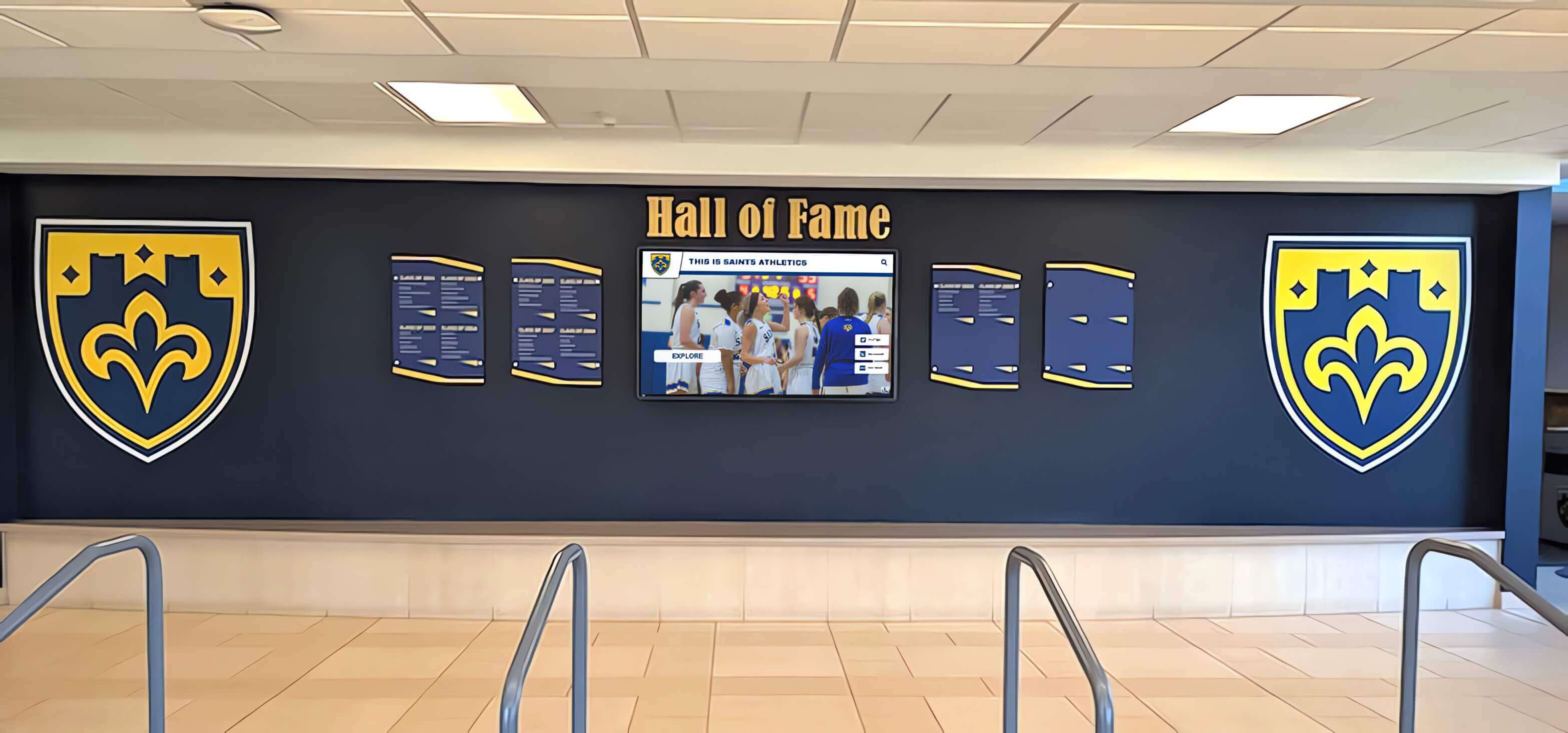
Recognizing grant funders in a permanent installation is often a grant deliverable itself — the closeout archive is where the program documents that acknowledgment was delivered and remains visible to athletes, families, and visitors
Frequently Asked Questions About the Booster Club Grant Closeout Checklist
What does a booster club grant closeout checklist include?
A complete booster club grant closeout checklist includes seven areas: deliverable verification (confirming every project output was completed as specified in the grant agreement), receipt and invoice collection organized by approved budget category, preparation of a final expenditure report showing budget versus actual spending, a narrative completion report describing project outcomes, bank account reconciliation for the full grant period, assembly and submission of the closeout package to the funder, and archiving of all grant records alongside an update to any funder recognition programs. Each area should be completed in sequence because the narrative report and expenditure report both depend on prior steps.
How long should a booster club keep grant records after closeout?
A booster club should retain grant records for the longer of two periods: the retention requirement specified in the grant agreement (typically three to seven years) or the IRS guidance for tax-exempt organizations, which generally recommends keeping financial records for at least three years after filing the related annual return. When the grant agreement and IRS guidance differ, use the longer period. All financial records, narrative reports, correspondence, and closeout package documentation should be preserved in an organized archive that future treasurers can access and interpret.
What financial documents are required for booster club grant closeout?
Most funders require the following financial documents for grant closeout: a final expenditure report showing actual spending against the approved budget for each cost category, copies of receipts and invoices supporting each expenditure line, a completed bank reconciliation confirming the organization’s internal records match bank statements for the full grant period, and documentation of any unexpended balance with the organization’s plan for those funds. Some funders also require a signed officer certification attesting to the accuracy of the financial report.
What happens if a booster club cannot account for all grant funds at closeout?
If a booster club cannot account for all grant funds at closeout — meaning expenditures do not match the award amount and a receipts gap exists — the organization should contact the funder before submitting the closeout package rather than submitting incomplete documentation. Most funders prefer to work through discrepancies proactively. Unaccounted funds may need to be returned, and the organization may be required to explain in writing how the discrepancy occurred. Submitting a closeout report with known inaccuracies creates a record that can affect eligibility for future awards and the organization’s credibility with the funder.
How does grant closeout connect to donor and funder recognition?
Grant closeout connects to donor and funder recognition because many grant agreements include recognition commitments — acknowledgment of the funder’s support in program communications, on installed displays, in event programs, or on recognition walls. Closeout documentation should verify that every acknowledgment commitment was fulfilled and include evidence: a photograph of the display showing the funder’s name or logo, a copy of the program listing, a screenshot of the digital recognition entry. Funders who see their support acknowledged accurately and permanently are more likely to consider future applications from the same organization.
Completing the Closeout Loop
A booster club grant closeout checklist is ultimately about honoring the full cycle of a funded project — from the commitment made in the grant application to the completed deliverables, the organized receipts, the reconciled account, and the submitted package that formally closes the relationship with the funder.
Programs that complete this process consistently build a track record of financial stewardship that strengthens future applications and protects their eligibility. Programs that treat closeout informally discover the gap when a funder follows up, when an audit is requested, or when an incoming treasurer finds a grant file that was never properly documented.
The seven steps in this guide — deliverable verification, receipt collection, expenditure reporting, narrative completion, reconciliation, package submission, and archiving — are not optional phases of a grant. They are the obligations the organization accepted when it accepted the award. Completing them fully closes the loop on every project the booster club has been trusted to deliver.
See How Digital Recognition Displays Honor Grant-Funded Programs
Rocket Alumni Solutions builds interactive recognition systems for school athletic programs — giving booster clubs a permanent, visible platform to acknowledge the funders, donors, and sponsors whose support made their programs possible. If your grant funded a recognition installation, a demo shows exactly what that looks like in your facility.
Schedule a Demo