



A booster club fraud prevention policy is a set of written controls that makes unauthorized or undetected misuse of athletics funds structurally difficult — not by assuming volunteers are dishonest, but by designing procedures that protect them and the organization simultaneously. When a single volunteer can collect money, record transactions, and authorize disbursements without any independent review, small errors and intentional misappropriations look identical until the damage is already done. A well-constructed policy separates those responsibilities, requires independent verification, and creates the documentation trail that school administrators, auditors, and sponsors need to trust that every dollar is accounted for.
This guide covers the four control categories that form the backbone of any effective booster club fraud prevention policy: segregation of duties, disbursement approval requirements, independent review practices, and designated fund controls. Each section includes practical guidance and connects financial accountability to the sponsor and donor recognition commitments that give those funds their purpose.
Not legal or financial advice: This guide describes commonly used internal control practices for educational purposes only. Your organization’s specific requirements depend on your school district structure, state nonprofit regulations, and any requirements set by your school’s governing body. Consult a licensed CPA, attorney, or your school district’s finance office before establishing or revising financial policies.
A booster club fraud prevention policy works because it makes problems visible before they grow. Volunteer-run organizations that handle significant funds across gate admissions, sponsorship agreements, concession sales, and fundraising events cannot rely on personal trust alone — they need procedural safeguards that produce records any successor, auditor, or administrator can review.

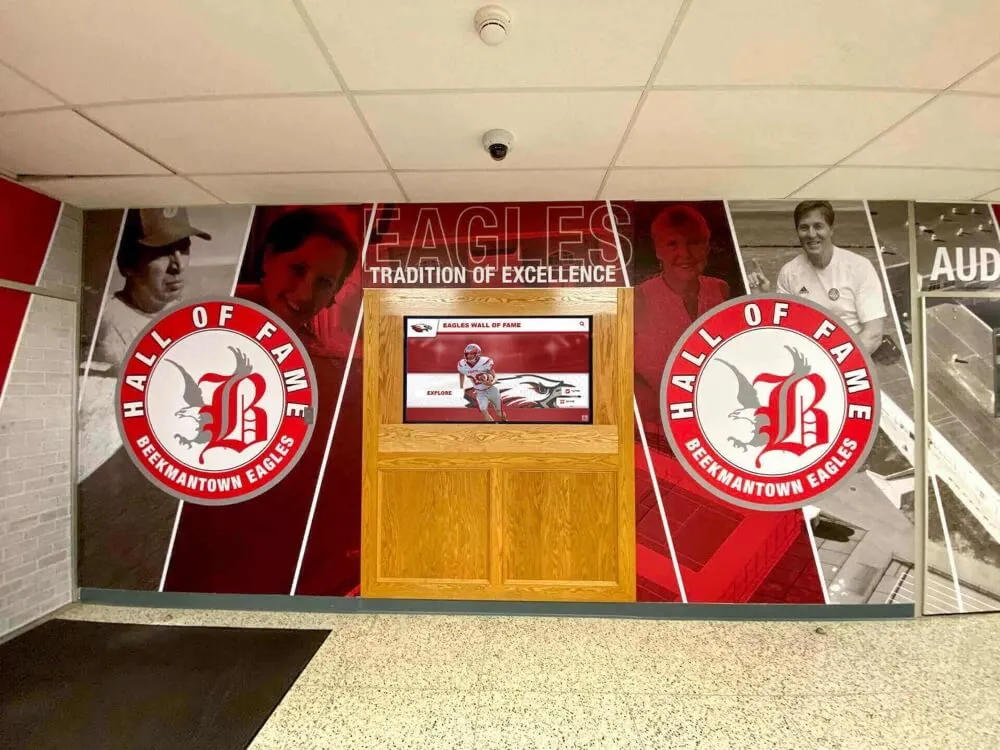
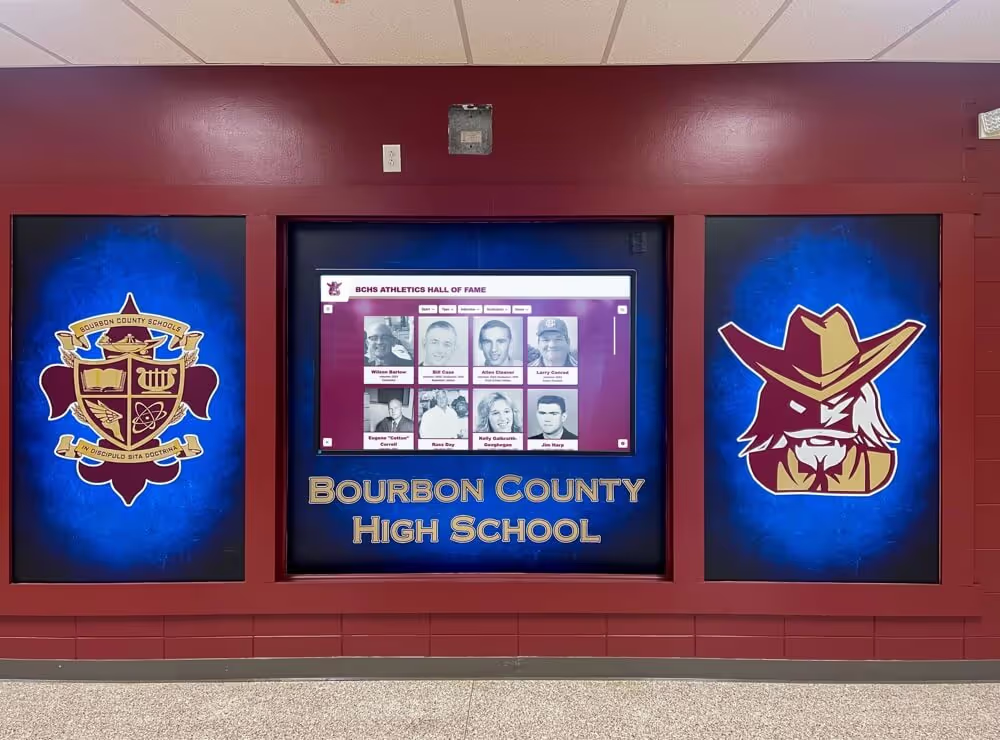
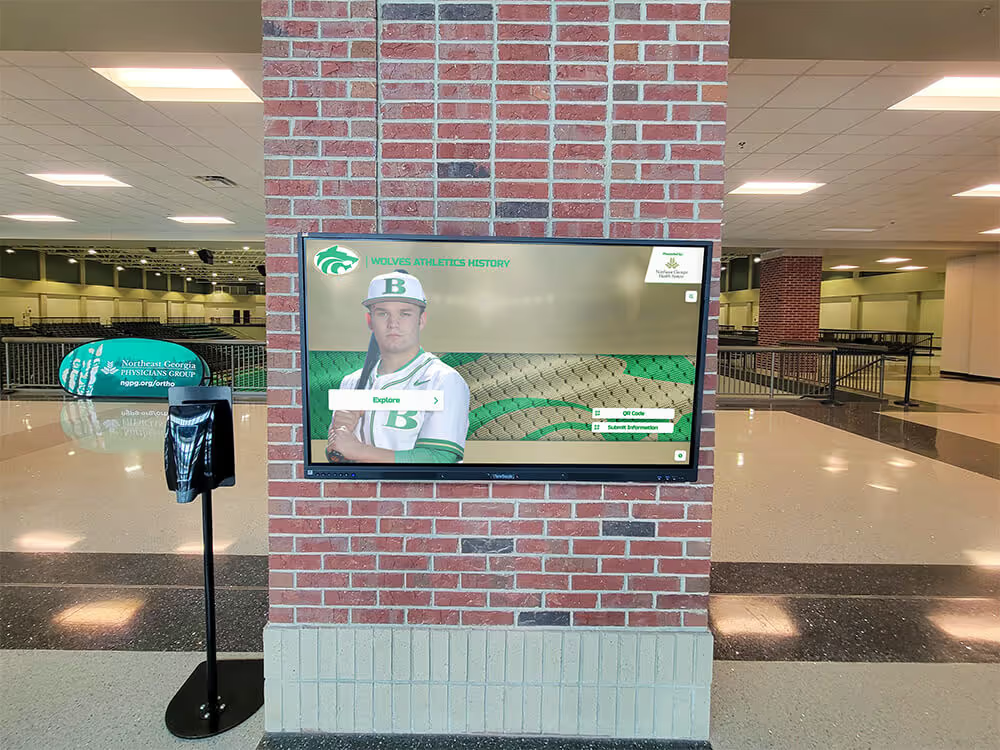
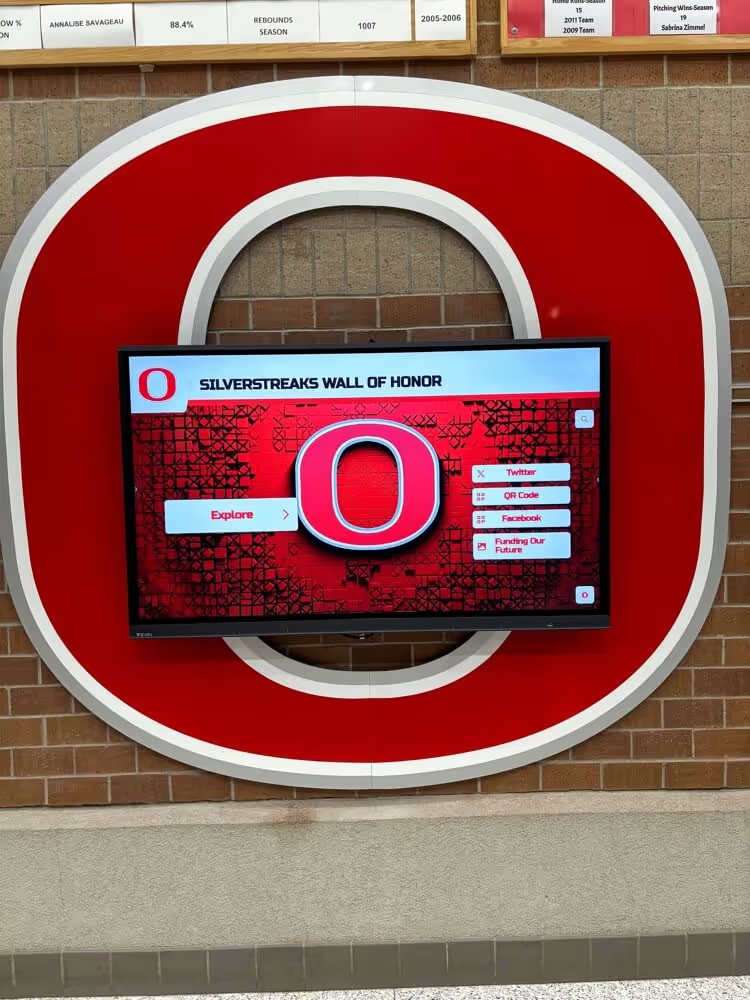
Recognition assets funded by booster programs — digital displays, hall of fame installations, sponsor banners — represent financial commitments that depend on sound internal controls from the moment donations and sponsorships are collected
What Is a Booster Club Fraud Prevention Policy?
A booster club fraud prevention policy is a written document that specifies how the organization separates financial responsibilities, authorizes and documents disbursements, reviews financial records independently, and handles designated or restricted funds. The policy applies to all money the organization handles — event cash, sponsorship payments, fundraising proceeds, membership dues, and any other income or expense.
The core principle behind every effective fraud prevention policy is that no single person should have unchecked control over a complete financial transaction. That principle — called segregation of duties — means the person who collects money is not the same person who records it, and neither of them is the person who authorizes how it is spent.
A written policy also protects individual volunteers. When an unexplained discrepancy arises, documented procedures identify exactly who was responsible for each step and what records should exist. Without that documentation, disputes become personal accusations rather than procedural questions.
Why Booster Clubs Are Vulnerable Without Formal Controls
Booster clubs face a specific set of structural vulnerabilities that formal internal controls address directly:
- High volunteer turnover: New officers may not know informal practices from previous years, creating gaps between stated policy and actual procedure.
- Cash-heavy events: Gate admissions, concession sales, and auction close-outs move significant cash across many hands in short periods, with limited time for verification.
- Limited board oversight: Volunteer boards often meet monthly. Between meetings, a single officer may make multiple financial decisions without real-time review.
- Informal trust-based culture: Booster clubs frequently rely on long-standing community members whose track records feel like sufficient safeguards — until circumstances change.
- School district exposure: Mismanagement of booster funds often creates reputational and compliance risk for the school itself, beyond the nonprofit organization.
Nonprofit governance best practices and school district audit findings consistently identify volunteer organizations as higher-risk for undetected financial mismanagement — not because volunteers are dishonest, but because the structural factors above reduce the chance that problems surface promptly. A written fraud prevention policy reduces the conditions under which mismanagement can persist undetected across multiple seasons.
For programs evaluating what strong recognition governance looks like alongside fraud controls, digital hall of fame tools used by school athletics programs offer a useful window into how accountability structures translate from financial records to permanent public recognition.
Segregation of Duties: The Core Structural Control
Segregation of duties is the single most important fraud prevention control for a volunteer-run booster club. It requires that no one person controls a transaction from start to finish — and it works even when the organization is small.
A practical segregation framework for a booster club divides financial functions across at least three roles:
| Function | Who Performs It | What It Prevents |
|---|---|---|
| Authorization | Board president or designated officer approves expenditures above a threshold | Unauthorized spending |
| Custody | Treasurer or designated alternate handles cash, deposits, and checks | Unsupervised access to funds |
| Recording | Financial secretary or second officer logs transactions in the ledger | Altered or falsified records |
In a small booster club where three separate roles are not always possible, compensating controls fill the gap: a second officer reviews and signs off on every transaction the treasurer records, even if they did not handle the underlying cash. The review itself — documented with a signature — creates the independent check that segregation of duties is designed to produce.
What Segregation of Duties Covers
A complete segregation policy addresses:
- Event cash: Two volunteers count and sign count sheets; neither deposits the funds alone
- Checks and electronic payments: No single officer can both authorize and execute a payment
- Bank reconciliation: The person who reconciles the bank statement does not also make deposits
- Sponsor payment intake: The person who receives a payment does not also post it to the ledger without review
- Petty cash: A designated custodian manages petty cash with a separate log reviewed by a second officer at defined intervals
The goal is not to create administrative burden — it is to ensure that any error or unauthorized action requires two people to go undetected, rather than one.

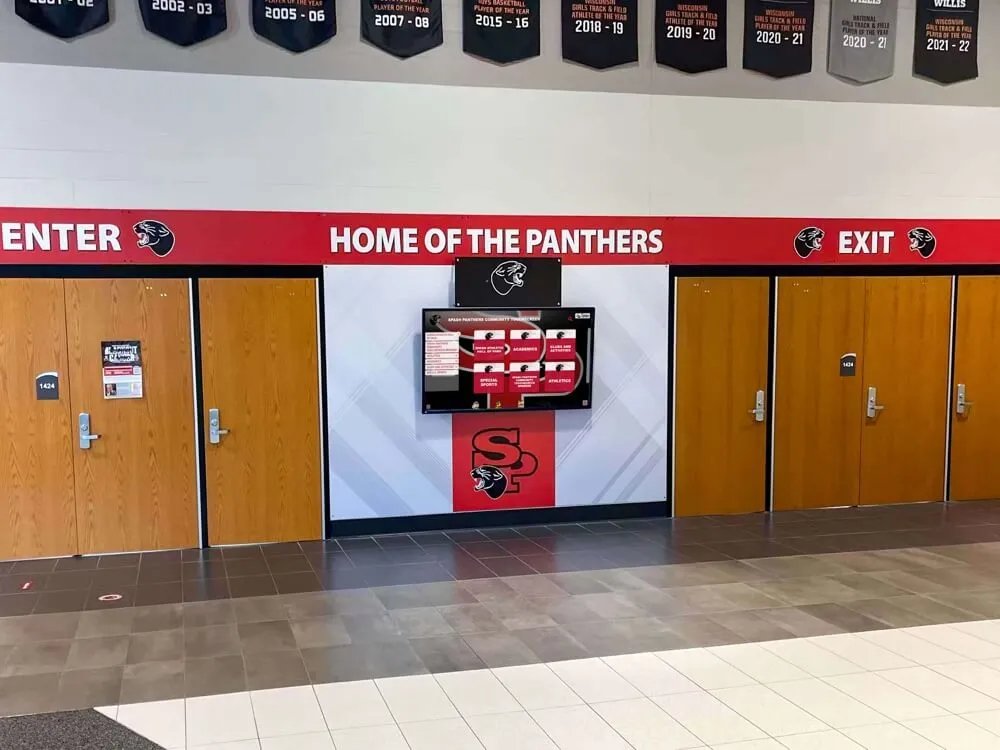
Athletic recognition boards in school hallways reflect financial commitments the booster organization made and honored — controls that separate financial functions make those commitments auditable from collection to installation
Disbursement Controls: Dual Signatures and Spending Approvals
Disbursement controls govern how money leaves the organization. They are the second major category in a booster club fraud prevention policy, and the area where most policy gaps become visible during audits.
Dual Signature Requirements
A dual signature requirement means that checks above a defined threshold — commonly $500 to $1,000, though the exact amount depends on organizational size and board decision — require two authorized signatures before they are valid. The dual signature requirement means that no single officer, including the treasurer or president, can unilaterally authorize a large expenditure.
Best practice for dual signature controls:
- Define the threshold in writing in the policy, not informally
- Name the authorized signatories by title (not individual names, which change with transitions)
- Ensure the two signatories are not co-signers on the same transactions they authorized
- Review and update the authorized signatory list at the start of each fiscal year
Pre-Approval for Expenditures
Beyond dual signatures, a disbursement control policy typically requires board approval for any expenditure above a defined threshold before the purchase is made — not just before the check is written. Common practice:
- Routine operating expenses (within budget line items): Treasurer approval sufficient
- Unbudgeted expenses above a threshold: Board vote required before commitment
- Capital or major purchases: Written board motion and recorded vote in meeting minutes
Every payment should be accompanied by supporting documentation: an invoice, receipt, or written reimbursement request. Payments without documentation are the most common audit finding in booster club reviews and the easiest control gap to close with a written policy.
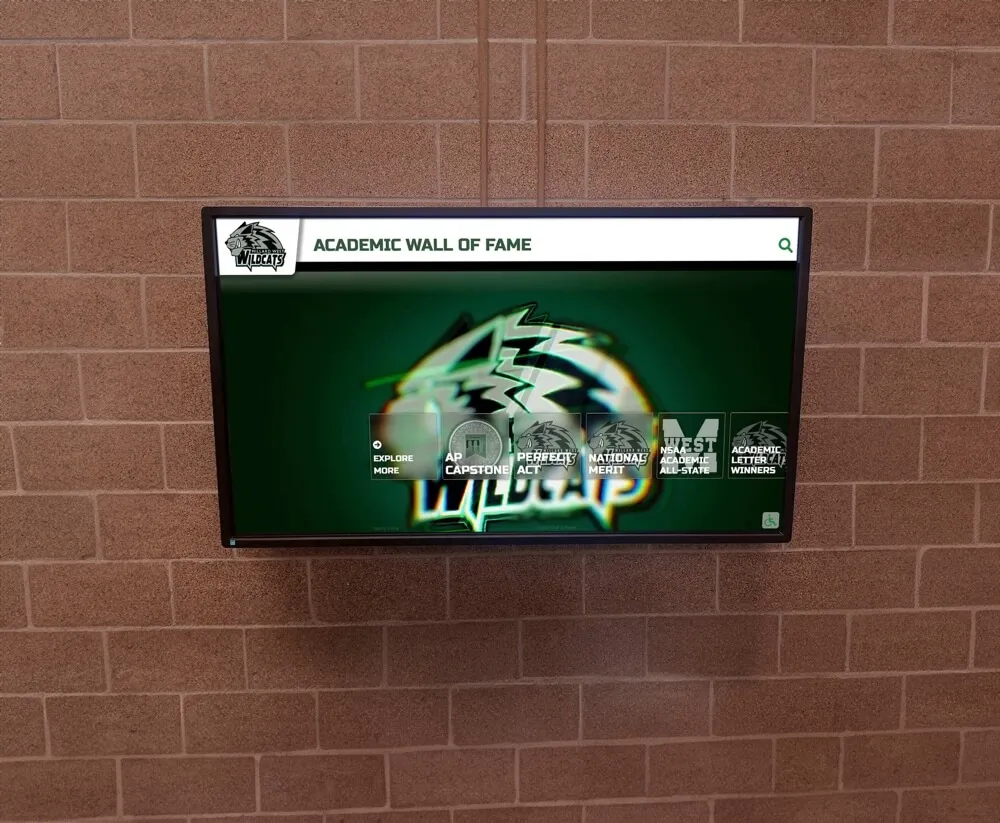
For programs that have built out recognition programs including named awards and academic recognition infrastructure, high school academic achievement award recognition practices reflect how documentation standards at the recognition level parallel the controls a strong disbursement policy requires.
Independent Review and Annual Audit Practices
Independent review is the control that catches what segregation of duties and dual signature requirements miss: systematic patterns, cumulative small discrepancies, and recording errors that appear legitimate in isolation.
Internal Review: Monthly and Annual
A monthly internal review compares the bank statement to the deposit log and expense records. The review should be performed by someone other than the person who prepared the records — ideally a board officer who is not the treasurer. The reviewer signs off on the reconciliation before it is considered closed.
An annual internal review goes further:
- Compare the full-year income total to the budget and prior-year actuals
- Verify that all sponsor payments received match the sponsor ledger entries
- Confirm that all restricted or designated funds were spent only for their stated purpose
- Check that all required tax filings (Form 990-N or 990-EZ) were completed and submitted
- Review whether all recognition commitments to sponsors and donors were fulfilled and documented
External Review and Compilation
For booster clubs managing large budgets, periodic external review by a CPA — a compilation or review engagement, not necessarily a full audit — provides independent verification that internal controls are functioning as written. External reviews also identify control gaps that internal reviewers may have normalized over time.
Many school districts now require annual financial reports from affiliated booster clubs. Some require independent review as a condition of the school district relationship. Check with your district’s finance office about specific requirements.
Data integrity considerations in digital hall of fame platforms surface similar principles: the systems organizations build to recognize donors and athletes are only as reliable as the records that feed them — and independent verification of those records is what keeps the recognition accurate over time.
Designated and Restricted Fund Controls
Sponsor and donor funds that come with specific conditions — for equipment, scholarships, named facilities, or particular programs — require a separate layer of control beyond general operating procedures.
Documenting the Designation at Receipt
The moment a restricted payment arrives, the restriction must be documented. A sponsor check designated for the athletic scholarship fund should be recorded in the ledger with the designation noted before the check is deposited. Retroactive designation — applied after the fact because the intended use has already been decided informally — does not meet the documentation standard required for restricted funds.
Designated fund controls include:
- Separate ledger tracking: Restricted funds are tracked in a separate column or account code, not combined with general operating income
- Spending verification: Every expenditure from a restricted fund is matched to the stated designation before it is approved
- Year-end balance reporting: Any unspent restricted funds are carried forward with the designation intact, not folded into general reserves
- Donor confirmation: When a donor places a restriction on a gift, written acknowledgment of the restriction is sent and retained
Sponsor Fund Tracking as a Fraud Control
Sponsor payments that carry recognition obligations are both financial transactions and contractual commitments. Tracking them separately serves dual purposes: it ensures the funds are spent appropriately, and it creates the documentation that proves recognition deliverables were honored.
A sponsor who paid for a named display element, a digital recognition slot, or a named scholarship fund should be able to trace their payment from receipt to recognition fulfillment through the organization’s records. That traceability is not just good donor relations — it is a fraud control that makes it structurally difficult to redirect designated funds without creating an obvious audit trail.
Recognition solutions for athletics, donors, and school history address how schools create lasting documentation of these commitments — the kind of permanent record that connects each sponsor’s investment to the recognition they were promised and received.

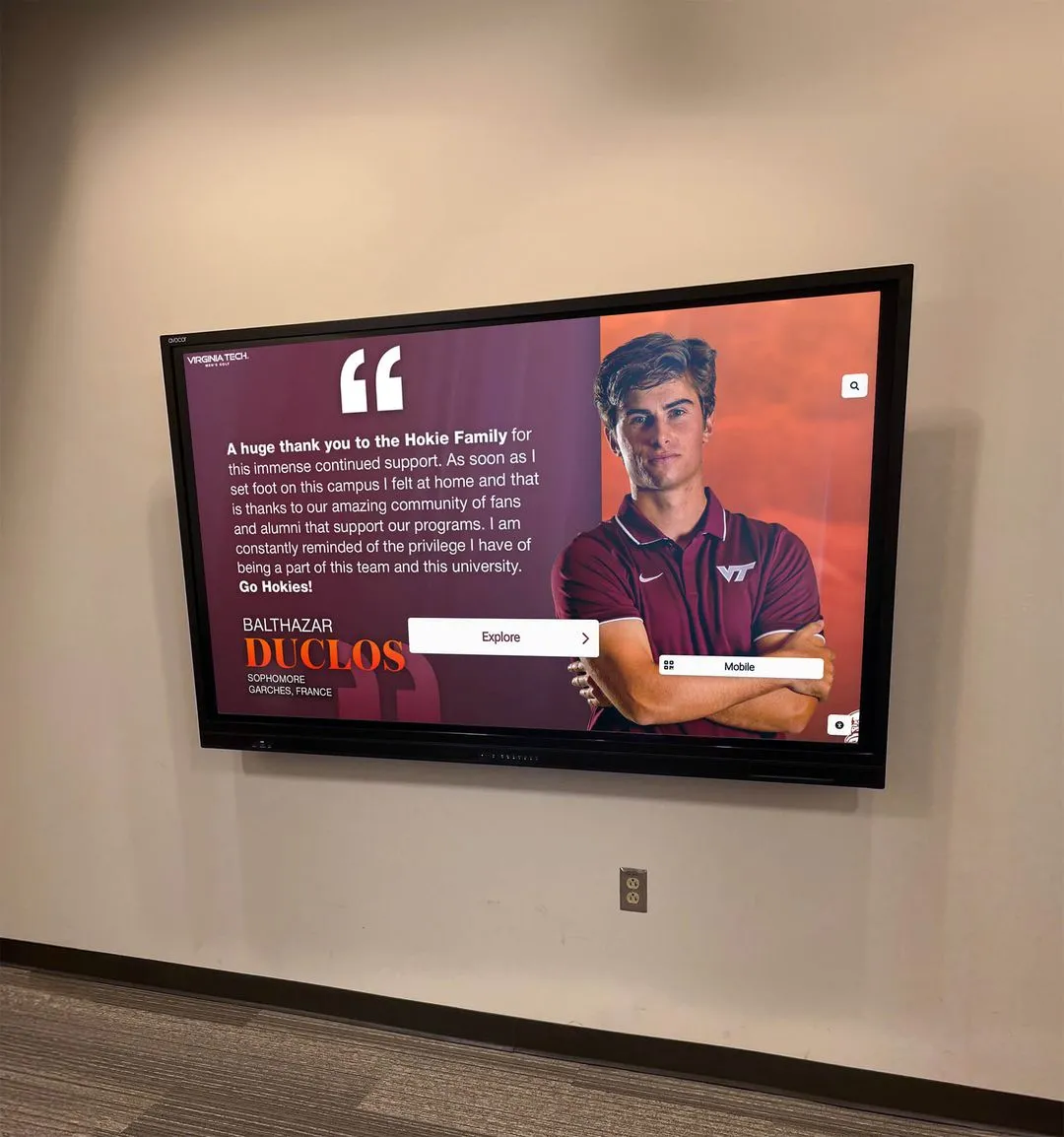
Digital recognition kiosks create timestamped records of every sponsor and donor acknowledgment — giving booster clubs documentation that proves both financial accountability and recognition fulfillment
Booster Club Fraud Prevention Policy: Controls Checklist
The checklist below covers the minimum controls a booster club fraud prevention policy should address. Organizations can use it to audit an existing policy or build a new one.
Segregation of Duties
| Control | Policy Requirement |
|---|---|
| Authorization separate from custody | Approver of expenditures does not also handle cash or make deposits |
| Custody separate from recording | Treasurer does not also post ledger entries without second-officer review |
| Bank reconciliation by non-depositor | Reconciliation performed by officer who did not make the deposits being reconciled |
| Two-person event cash counting | All event cash counted by two authorized volunteers; both sign count sheets |
| Petty cash custodian review | Petty cash log reviewed and verified by second officer at defined intervals |
Disbursement Controls
| Control | Policy Requirement |
|---|---|
| Dual signature threshold | Checks above defined threshold require two authorized officer signatures |
| Board pre-approval for unbudgeted spending | Unbudgeted expenditures above threshold require board vote before commitment |
| Supporting documentation required | Every payment matched to invoice, receipt, or written reimbursement request |
| Authorized signatory list updated annually | Signatories reviewed and confirmed at start of each fiscal year |
| No self-authorization | Officer who initiates a purchase does not also authorize the payment |
Independent Review
| Control | Policy Requirement |
|---|---|
| Monthly bank reconciliation by non-preparer | Reconciliation reviewed and signed by officer other than the treasurer |
| Annual internal review | Full-year income, expense, and restricted fund review before year-end close |
| External review or compilation | CPA-prepared review engagement at defined frequency (annually or biennially) |
| Board financial reporting | Treasurer presents reconciled financial report at each board meeting |
| Discrepancy investigation protocol | Any unresolved discrepancy formally investigated before reconciliation is closed |
Designated Fund Controls
| Control | Policy Requirement |
|---|---|
| Designation documented at receipt | Restriction noted in ledger before deposit is made |
| Separate tracking for restricted funds | Designated funds tracked separately from general operating income |
| Spending verified against designation | Every restricted fund expenditure matched to stated purpose before approval |
| Unspent funds carried forward | Restricted balances retained with designation intact; not folded into general reserves |
| Donor acknowledgment on file | Written confirmation of restriction sent to donor and retained in records |
How Recognition Systems and Financial Accountability Reinforce Each Other
The financial controls in a fraud prevention policy and the recognition commitments in a sponsorship agreement are not separate systems — they operate in sequence. A sponsor pays. The payment is documented with its designation. The funds are tracked through to their intended use. The recognition deliverables are fulfilled and documented. The fulfillment record supports the renewal conversation.
Every step in that chain depends on the documentation habits that a fraud prevention policy requires. Organizations that treat financial controls as compliance overhead and recognition fulfillment as an informal courtesy find that both systems eventually fail: money moves without a clear record, and recognition commitments fall behind without anyone tracking them systematically.
Programs that invest in permanent recognition infrastructure — digital hall of fame displays, athletic record boards, named facilities — create a visible extension of the financial commitments the organization has honored. Hall of fame tools for athletics and donor recognition demonstrate how schools use structured recognition to make the outcomes of their financial stewardship visible to the entire community.
When those recognition systems are built on top of financial records that meet the standards a fraud prevention policy requires, the result is institutional credibility that accumulates over time. Sponsors renew because they trust their investment was handled correctly. Donors give again because the organization demonstrates it honors commitments. School administrators support the booster program because its records are clean and auditable.
Touchscreen hall of fame tools for school programs and comprehensive tools for athletics, donor, and arts recognition both reflect the same underlying principle: recognition programs earn community trust by making their commitments visible and permanent — and that visibility is only meaningful when the financial controls behind it are sound.

Permanent digital recognition installations represent financial commitments that span multiple seasons — the same documentation standards that protect athletics funds also ensure the recognition those funds support is credible and lasting
Frequently Asked Questions
What should a booster club fraud prevention policy include?
A booster club fraud prevention policy should cover segregation of duties (separating authorization, custody, and recording functions), disbursement controls (dual signature requirements and board pre-approval thresholds), independent review procedures (monthly reconciliation by a non-preparer and annual internal review), and designated fund controls (documentation of restrictions at the point of receipt and separate tracking for restricted money). Each control should name the responsible officer by title, define any dollar thresholds, and specify the documentation that must accompany each financial step. The policy should be reviewed and approved by the full board annually.
How does segregation of duties prevent booster club fraud?
Segregation of duties prevents fraud by requiring that no single person controls a complete financial transaction. When the person who collects money is different from the person who records it, and neither of them is the person who authorizes how it is spent, misappropriation requires coordination between multiple individuals — which is structurally more difficult and more likely to surface during routine review. In a small booster club where full role separation is not always possible, a compensating control — a second officer reviewing and signing off on transactions they did not handle — achieves the same protective result.
What dual signature requirements should a booster club policy include?
A dual signature requirement should define a dollar threshold above which checks require two authorized officer signatures. The threshold is set by the board and documented in the policy — common ranges run from $500 to $1,000 depending on organizational size, though the specific amount is the board’s decision. The policy should name authorized signatories by title (not individual names, which change with transitions), confirm that a signatory may not sign a check they personally authorized, and require the authorized signatory list to be reviewed and updated at the start of each fiscal year.
How should a booster club handle restricted or designated sponsor funds?
Restricted sponsor funds must be documented at the point of receipt — the restriction is noted in the ledger before the check is deposited, not after. These funds should be tracked separately from general operating income using a designated column, account code, or fund class, and spent only for their stated purpose. Any unspent restricted balance at year-end is carried forward with the designation intact rather than folded into general reserves. Written confirmation of the restriction should be sent to the donor and retained on file. Commingling restricted and unrestricted funds, even temporarily, can create compliance problems that are difficult to reverse.
How often should a booster club conduct an independent financial review?
At minimum, the bank reconciliation should be reviewed monthly by an officer other than the treasurer — meaning the person who reconciles the statement did not also make the deposits being reconciled. An annual internal review covering the full fiscal year is a standard best practice, comparing income and expense totals to the approved budget and verifying that restricted funds were spent appropriately. For larger booster clubs, a CPA-prepared compilation or review engagement provides external independent verification at a frequency the board determines — annually is advisable for organizations managing significant budgets. Check with your school district’s finance office about any required reporting intervals.
Building a Booster Program That Earns and Keeps Community Trust
A booster club fraud prevention policy does not signal distrust — it signals professionalism. The organizations that build and follow formal controls protect individual volunteers from unfair accusations, give school administrators the confidence to support the program, and create the institutional credibility that sponsors and donors use when deciding whether to renew.
Every sponsorship agreement, every restricted gift, every event admission — each carries a downstream obligation the organization must fulfill. When financial controls are strong from the point of collection through to recognition delivery, the result is a program that earns community trust because it can demonstrate, with records, that it has honored every commitment it ever made.
See How Permanent Recognition Reflects Your Program's Integrity
Rocket Alumni Solutions builds interactive digital recognition displays for school athletic programs — giving booster clubs a visible, lasting platform for sponsor acknowledgment and donor recognition that reflects the financial commitments your organization has documented and honored. Schedule a demo to see what your facility could look like.
Schedule Your Recognition Display Demo