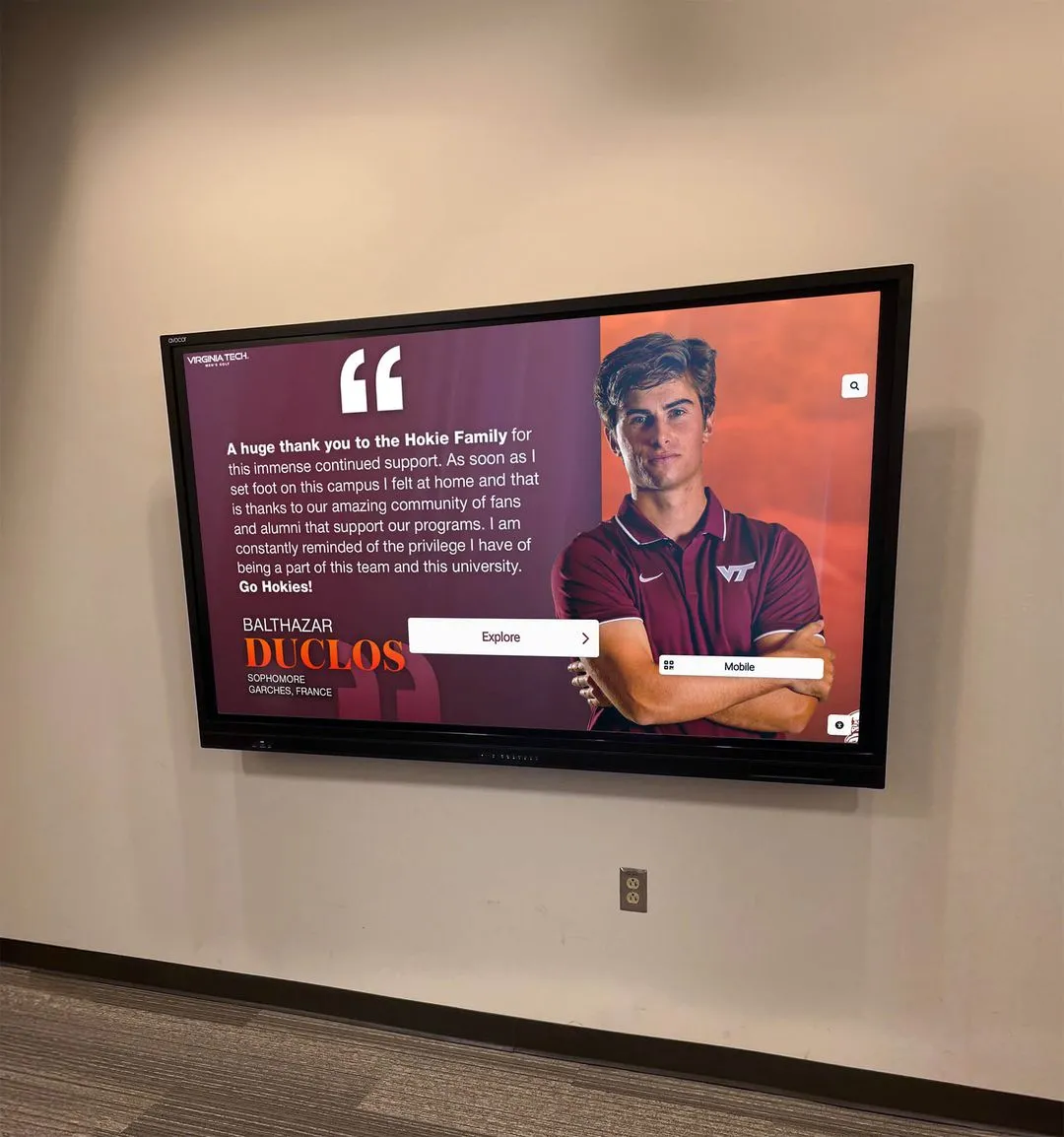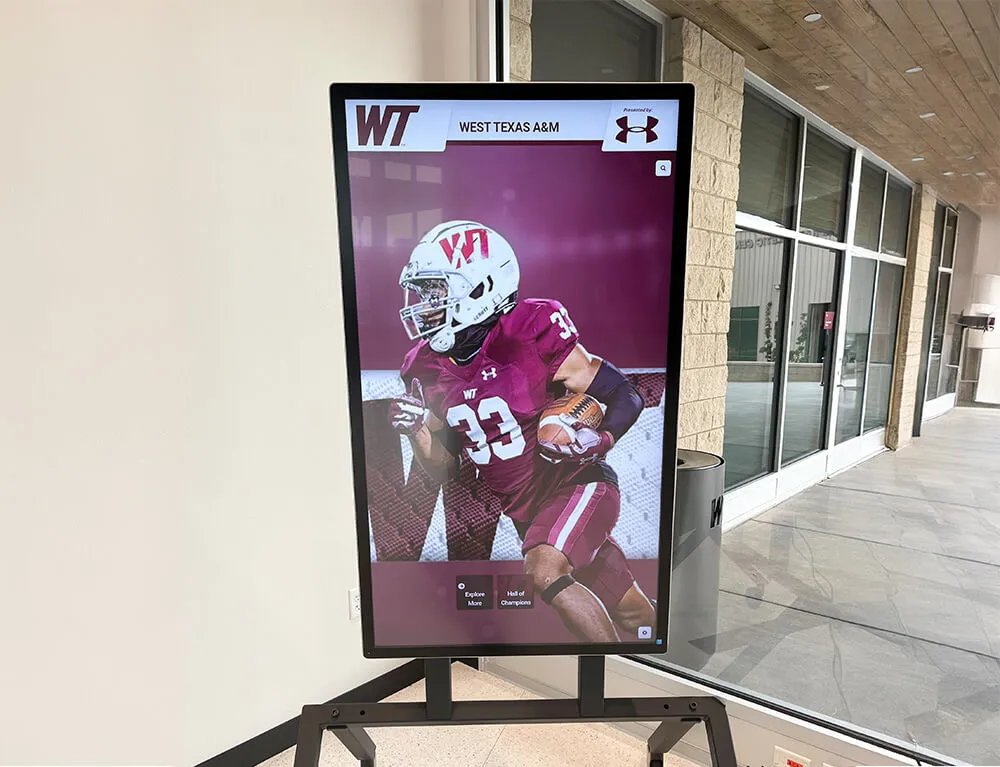




A booster club chart of accounts template gives the treasurer a numbered account structure that separates fundraising event revenue from sponsorship income, unrestricted donations from restricted gifts, and athletic equipment expenses from recognition and award costs — so every dollar flowing through the organization is recorded in a category that tells you not just what came in, but why it came in and what it was for. Most booster clubs start with a generic income-and-expense template borrowed from a household budget or a basic nonprofit example that was not designed for the specific revenue streams and recognition obligations of an athletic booster program. The result is a general ledger that passes an audit but cannot answer the questions a treasurer actually faces in October: how much did the title sponsor contribute, what did banner production cost, and is the recognition display subscription coming out of the right account?
This guide provides a complete chart of accounts template organized for athletic booster clubs — with account numbers, category breakdowns, and notes on how each section connects to the recognition commitments your program makes to sponsors, donors, and athletes.
Not legal or financial advice: This guide describes commonly used accounting structures for educational purposes only. Your organization’s specific requirements depend on your school district structure, state nonprofit regulations, and IRS classification. Consult a licensed CPA or your school district’s finance office before establishing your chart of accounts.
A booster club that organizes its chart of accounts around its actual revenue streams and obligations does more than keep clean books — it builds the financial infrastructure that makes recognition program management possible. When sponsorship income has its own account codes, the treasurer can pull a report at any point in the year showing exactly how much each tier contributed, whether restricted gifts remain unspent, and which expense categories are running over budget before the end of the season.

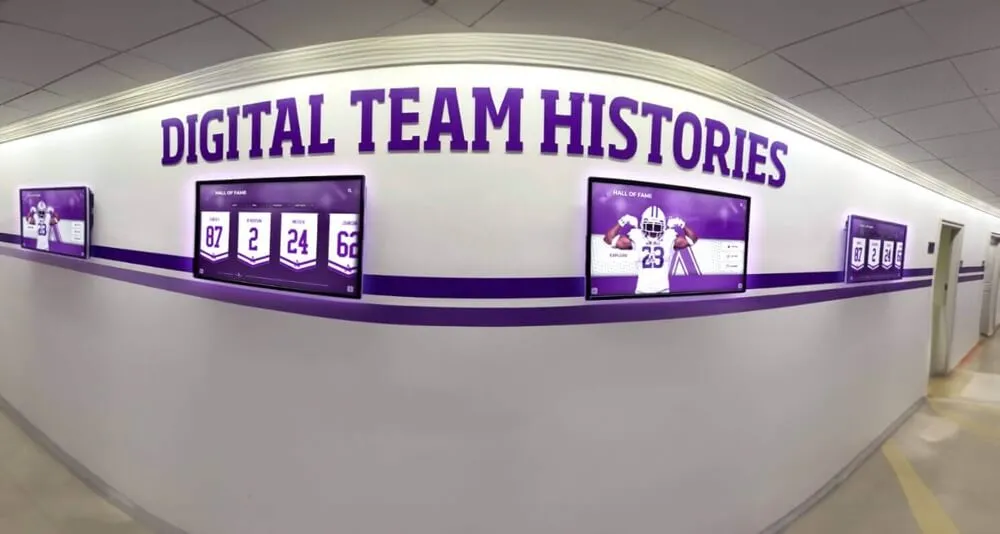
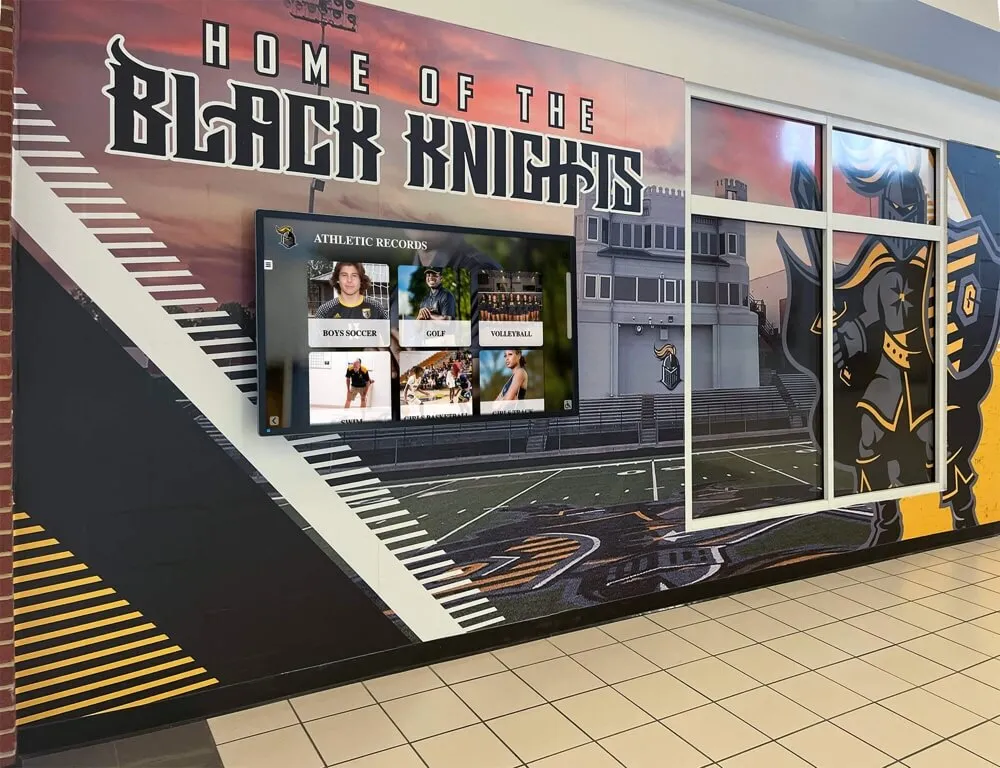
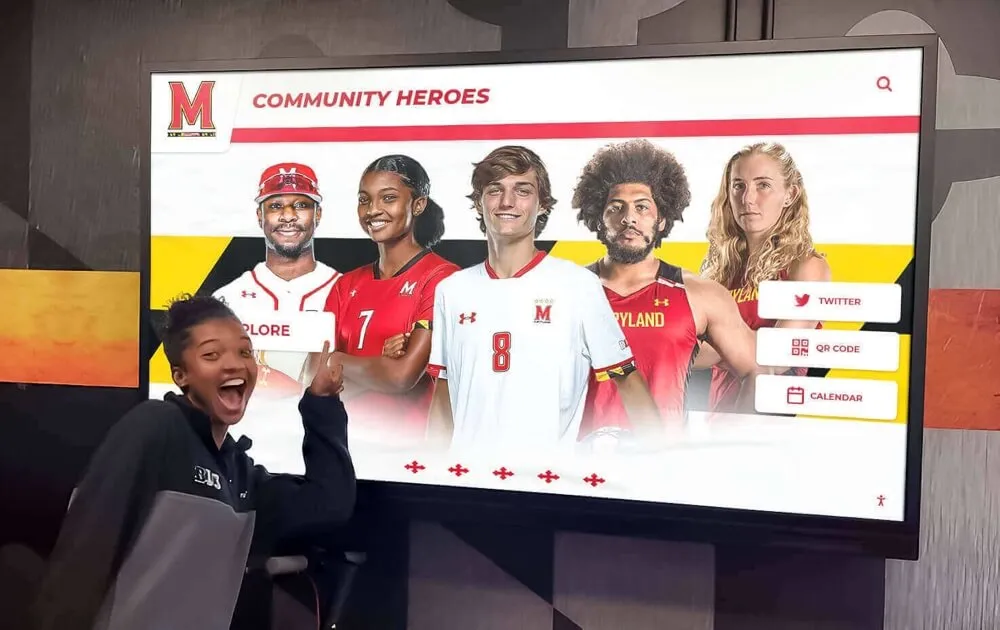
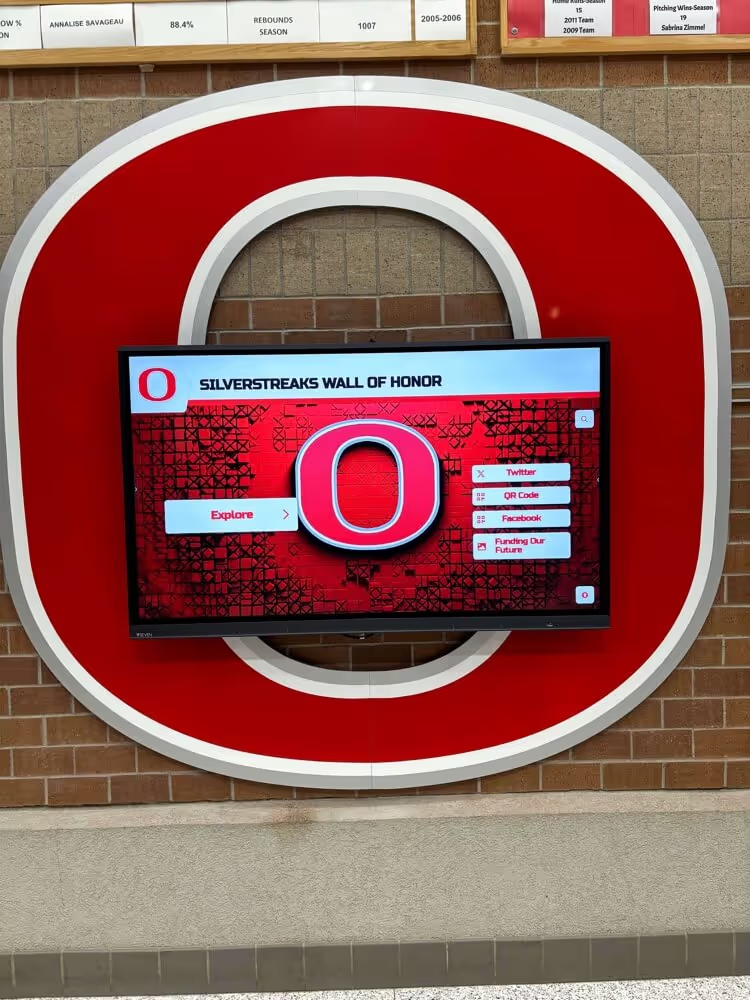
Donor and sponsor recognition programs like this one represent both an income stream and an expense obligation — a chart of accounts template designed for booster clubs separates those categories so neither gets lost in a general ledger
What Is a Booster Club Chart of Accounts?
A booster club chart of accounts is a numbered list of every account the organization uses to record financial transactions — income, expenses, assets, liabilities, and net assets — organized so that each type of transaction has a home that is distinct from every other type. It is the structural foundation of the general ledger, and every transaction the treasurer records is assigned to one account code in the chart.
The difference between a generic chart of accounts and one designed for an athletic booster club is specificity at the revenue and expense level. A booster club handles revenue streams that most nonprofits do not: concession sales tied to specific sports seasons, multi-tier sponsorship payments with recognition deliverables attached, in-kind contributions that need to be recorded at fair market value, and restricted gifts designated for specific athletes or programs. An account structure that lumps all of these into a single “Donations and Revenue” category cannot support the reporting a booster club treasurer actually needs.
Per the Financial Accounting Standards Board’s nonprofit accounting guidance (FASB ASC 958), organizations receiving restricted contributions must track them separately from unrestricted funds — a requirement that makes separate account codes for restricted versus unrestricted income not just useful, but necessary for organizations subject to that standard. Most athletic booster clubs filing an annual IRS Form 990 or Form 990-EZ benefit from an account structure aligned with those reporting requirements from the beginning of the fiscal year, not reconstructed after the fact at tax time.
Complete Booster Club Chart of Accounts Template
The template below uses a four-digit numbering system organized by account type. Copy and adapt these account codes to your accounting software or spreadsheet. Add sub-accounts (e.g., 4110, 4120) as needed for the level of detail your program requires.
Assets (1000–1999)
| Account Number | Account Name | Notes |
|---|---|---|
| 1000 | Checking Account | Primary operating account for all deposits and disbursements |
| 1010 | Savings / Money Market Account | Reserve funds; note any required minimum balance |
| 1020 | Petty Cash | Small cash on hand for event change and minor supplies |
| 1100 | Accounts Receivable — Sponsor Pledges | Sponsor commitments not yet received in cash |
| 1110 | Accounts Receivable — Donations Pledged | Donor pledges awaiting receipt |
| 1200 | Prepaid Expenses | Insurance or subscriptions paid in advance of the service period |
Liabilities (2000–2999)
| Account Number | Account Name | Notes |
|---|---|---|
| 2000 | Accounts Payable | Vendor invoices received but not yet paid |
| 2100 | Accrued Expenses | Obligations incurred but not yet invoiced by a vendor |
| 2200 | Deferred Revenue — Prepaid Sponsorships | Sponsor payments received before the recognition period begins |
| 2300 | Sales Tax Payable | Where applicable to merchandise or concession sales |
Net Assets (3000–3999)
| Account Number | Account Name | Notes |
|---|---|---|
| 3000 | Unrestricted Net Assets | Available for general program purposes |
| 3100 | Temporarily Restricted Net Assets | Donor-restricted funds pending expenditure for the designated purpose |
| 3200 | Permanently Restricted Net Assets | Endowments, if applicable to your organization |
| 3300 | Board-Designated Reserve Fund | Amounts the board has set aside for a specific future use |
Revenue (4000–4999)
| Account Number | Account Name | Notes |
|---|---|---|
| 4100 | Fundraising Event Revenue | All event-based income, recorded gross before expenses |
| 4110 | Concession Sales | Game-day food and beverage revenue |
| 4120 | Special Events (Auctions, Galas) | Event ticket sales and auction proceeds |
| 4130 | Merchandise Sales | Spirit wear, apparel, and program merchandise |
| 4140 | Online / Digital Fundraising | Crowdfunding, digital campaigns, and QR code donations |
| 4200 | Sponsorship Income | All business sponsor contributions |
| 4210 | Title / Presenting Sponsor | Top-tier single sponsor at the program level |
| 4220 | Gold / Platinum Tier Sponsors | Upper tier multi-year or high-value commitments |
| 4230 | Silver / General Sponsors | Mid-tier season sponsors |
| 4240 | Friend / Community Sponsors | Entry-level business recognition partners |
| 4250 | In-Kind Sponsorship — Fair Value | Goods or services contributed, recorded at fair market value |
| 4300 | Contributions and Donations | Gifts from individuals |
| 4310 | Unrestricted Donations | No conditions or restrictions attached by the donor |
| 4320 | Restricted Donations | Restricted to a specific program, athlete, or purpose |
| 4330 | Named Fund Contributions | Gifts establishing or adding to a named recognition fund |
| 4340 | Memorial / Tribute Gifts | Gifts made in honor or memory of an individual |
| 4400 | Membership Dues | Annual booster club membership payments |
| 4500 | Interest Income | Bank account interest earned |
| 4600 | Other Income | Miscellaneous income not otherwise classified |
Expenses (5000–5999)
| Account Number | Account Name | Notes |
|---|---|---|
| 5100 | Athletic Program Support | Direct financial support to the athletic program |
| 5110 | Equipment and Uniforms | Purchased or subsidized athletic equipment |
| 5120 | Travel and Transportation | Team travel, tournament fees, and lodging |
| 5130 | Entry Fees and Registration | Tournament and event registration costs |
| 5200 | Fundraising Expenses | Costs directly related to producing fundraising events |
| 5210 | Event Production Costs | Venue, equipment rental, and event infrastructure |
| 5220 | Concession Supplies | Food and beverage cost of goods for concession operations |
| 5230 | Merchandise Cost of Goods | Spirit wear and apparel purchased for resale |
| 5240 | Fundraising Technology | Platform fees, QR code tools, and online ticketing systems |
| 5300 | Sponsor Recognition and Fulfillment | All costs for delivering sponsor recognition commitments |
| 5310 | Banner and Signage Production | Printing and fabrication of sponsor banners |
| 5320 | Banner Installation | Labor and materials for hanging or mounting sponsor signage |
| 5330 | Print Program Advertising Production | Layout and print costs for game-day program sponsor ads |
| 5340 | Digital Display Content Production | Graphic design and animation for sponsor screen rotations |
| 5350 | Sponsor Acknowledgment Expenses | Thank-you letters, certificates, and appreciation event costs |
| 5400 | Donor and Athletic Recognition | Awards, trophies, hall of fame, and digital recognition costs |
| 5410 | Trophies and Awards | Physical trophies, plaques, and medals for athletic recognition |
| 5420 | Certificates and Printed Recognition | Certificates of achievement and academic award documents |
| 5430 | Hall of Fame Induction Expenses | Event costs, plaques, and ceremony for annual inductees |
| 5440 | Digital Recognition System | Annual subscription for interactive recognition display software |
| 5450 | Recognition Hardware | Screens, mounts, and media players for display infrastructure |
| 5460 | Academic Achievement Awards | Costs for academic recognition programs and ceremonies |
| 5500 | Scholarships | Scholarship disbursements to student athletes or scholars |
| 5510 | Athletic Scholarships | Disbursements tied to athletic criteria |
| 5520 | Academic Scholarships | Disbursements tied to academic criteria |
| 5600 | Administrative Expenses | Organizational overhead costs |
| 5610 | Bank and Payment Processing Fees | Checking account fees and credit card processing costs |
| 5620 | Insurance | General liability and directors and officers coverage |
| 5630 | Office Supplies | Paper, printing, and general administrative supplies |
| 5640 | Accounting and Bookkeeping Software | QuickBooks, Wave, or equivalent platform subscriptions |
| 5650 | Professional Services | CPA, legal, or financial consultant fees |
| 5660 | Filing Fees | State registration, IRS filing, or corporate renewal fees |
Fundraising Income: Separating Event Revenue Streams
Fundraising event revenue (accounts 4100–4140) works best when each revenue stream has its own account rather than a single combined total. A booster club that ran three large events in a season — a fall gala, a spring auction, and ongoing concession sales — has three distinct revenue profiles that need to be visible separately for planning, budget comparison, and future event decisions.
The most common mistake in fundraising revenue tracking is netting event proceeds — recording only the profit from an event rather than gross revenue and gross expenses separately. Recording gross income in 4100-series accounts and gross event costs in 5200-series accounts reveals the true scale of each event. A concession operation that grosses $4,000 and costs $2,400 looks very different from one that grosses $800 and costs $400, even if both show a $1,600 net — and that difference matters when planning staffing, inventory, and pricing for next season.
For online and digital fundraising (account 4140), many crowdfunding and peer-to-peer platforms charge a processing fee deducted before the organization receives funds. The full gross amount raised should be recorded as income in account 4140, with the platform fee recorded as an expense in account 5240. Recording only the net deposit misrepresents the full fundraising activity and can create reconciliation issues if the platform sends a year-end summary that differs from bank deposits.
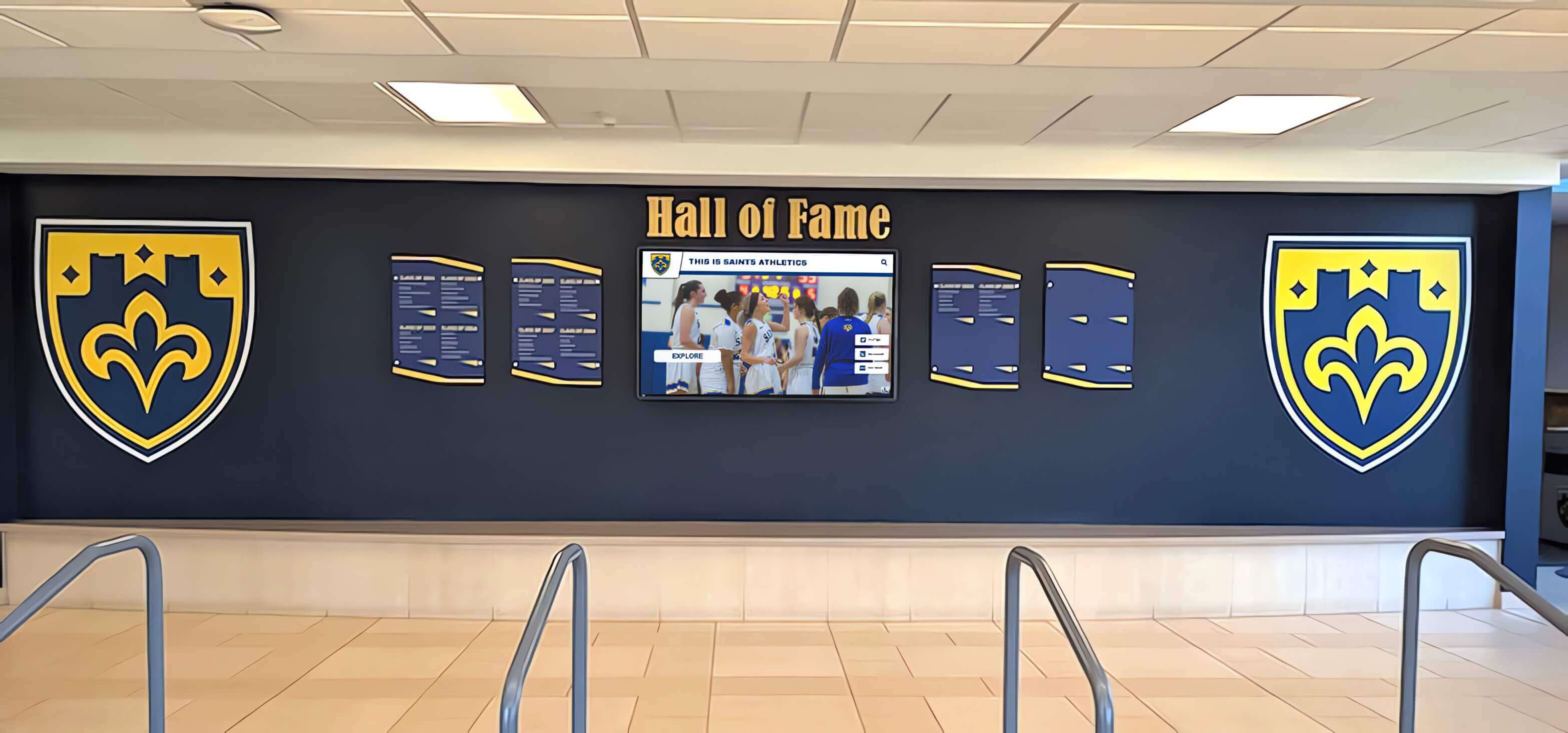
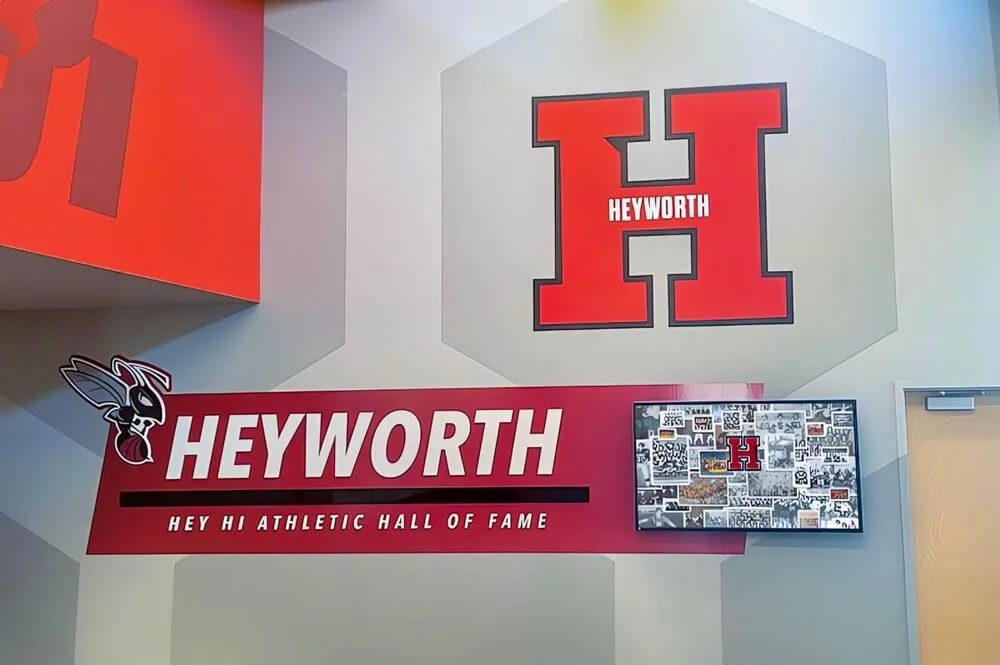
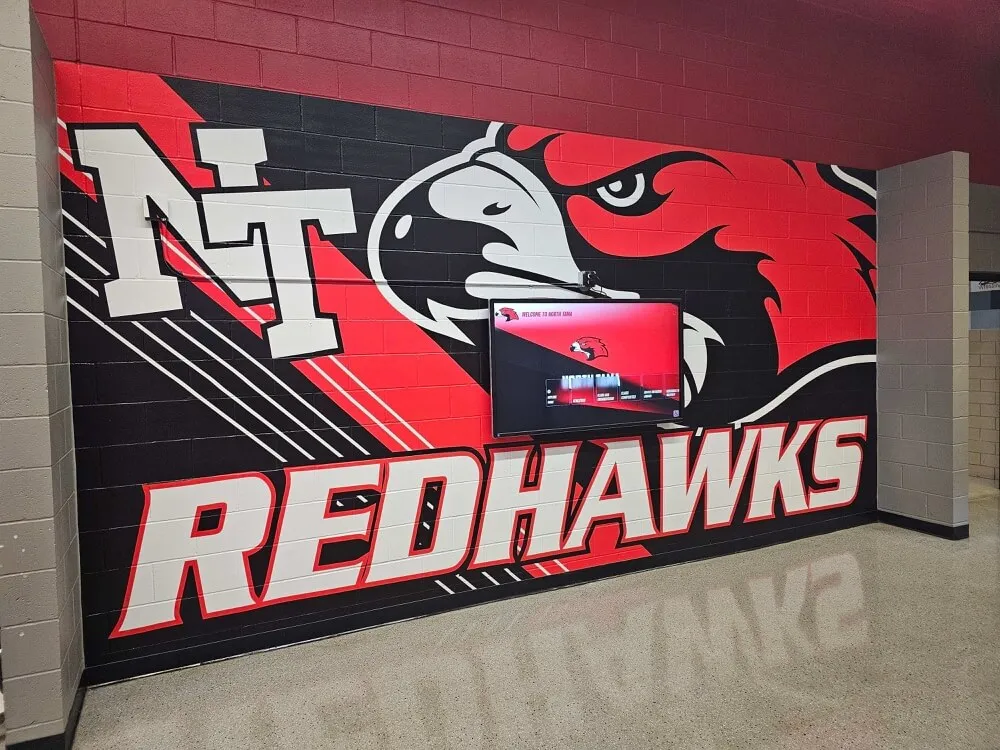
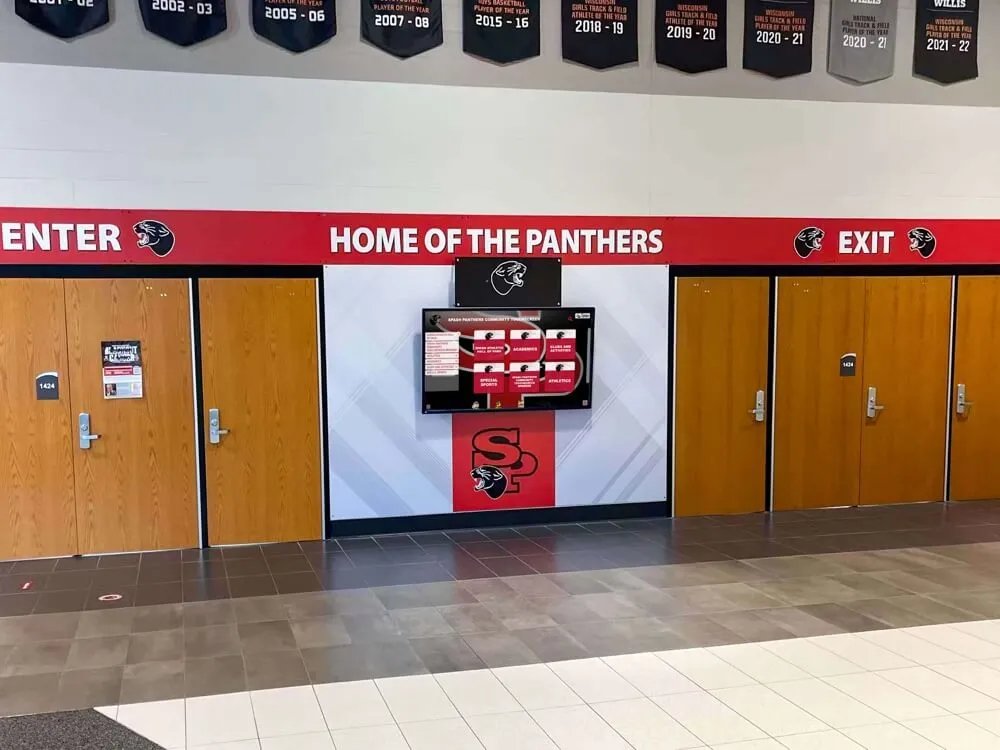
Recognition infrastructure like a shield wall or digital display creates entries in both the revenue and expense sections of the chart of accounts — income when a donor or sponsor funds an element, expense when it costs money to install, maintain, or update
Sponsorship Income: Account Codes by Tier
Sponsorship income (accounts 4200–4250) benefits most from account codes that mirror the sponsor tier structure your program uses. When every sponsor payment goes into a single “Sponsorship Income” account, the treasurer can tell you how much total sponsor revenue came in — but not how many title sponsors versus community-level sponsors contributed, whether the mix is shifting over time, or which tiers are growing.
Sub-accounts organized by tier (4210 for Title/Presenting, 4220 for Gold/Platinum, 4230 for Silver, 4240 for Friend/Community) produce reports that let you see year-over-year tier movement at a glance. If title sponsor revenue holds steady while mid-tier sponsor revenue declines three years running, that pattern is visible — and you can respond to it before the revenue base erodes.
In-kind sponsorship (account 4250) requires special handling. When a business contributes goods or services — printing, food supplies, equipment — rather than cash, the National Council of Nonprofits recommends recording both the income and the corresponding expense at fair market value. Account 4250 captures the fair value of the contribution as income; the corresponding expense goes into the appropriate expense account (5310 for printed banners, 5220 for food supplies). The net financial impact is zero, but both the asset received and the program benefit delivered are visible in the ledger.
Understanding how to manage alumni and donor data across program categories connects to alumni management software features that help schools track giving history and recognition milestones — the same kind of categorization that makes a chart of accounts useful for a booster club also makes a donor management system more actionable when it mirrors the account structure.
Donor Contributions: Separating Restricted from Unrestricted Gifts
The most important distinction in the 4300-series donation accounts is the separation of restricted from unrestricted contributions. FASB ASC 958-605 requires that contributions with donor-imposed conditions or restrictions be classified separately from unrestricted gifts — a standard that applies to most nonprofit booster clubs and makes accounts 4310 (unrestricted) and 4320 (restricted) a compliance requirement, not just a best practice.
A restricted gift might designate funds for a specific athlete’s award, a named scholarship fund, a new digital recognition display, or equipment for a particular team. These funds cannot be used for other purposes without the donor’s permission, and their balance should remain visible in a temporarily restricted net assets account (3100) until expended for the designated purpose. When the expense is incurred, both the restricted revenue and the matching expense are recorded, and the restricted net assets balance decreases accordingly.
Named fund contributions (account 4330) carry additional significance for recognition programs. When a donor establishes a named scholarship, a named award, or a named recognition element, their contribution typically funds both the recognition asset and an ongoing commitment. Tracking it in a dedicated account makes it possible to report to the donor on the balance, the use, and the recognition delivered in connection with their gift — which is exactly the kind of stewardship that encourages future named contributions.
Alumni spotlight programs that recognize donors at specific giving levels often connect to the named fund structure in ways that alumni spotlight program management guides address specifically: the recognition milestone triggers both a program action and, in well-organized booster clubs, an accounting entry that confirms the restricted fund was used for its intended purpose.

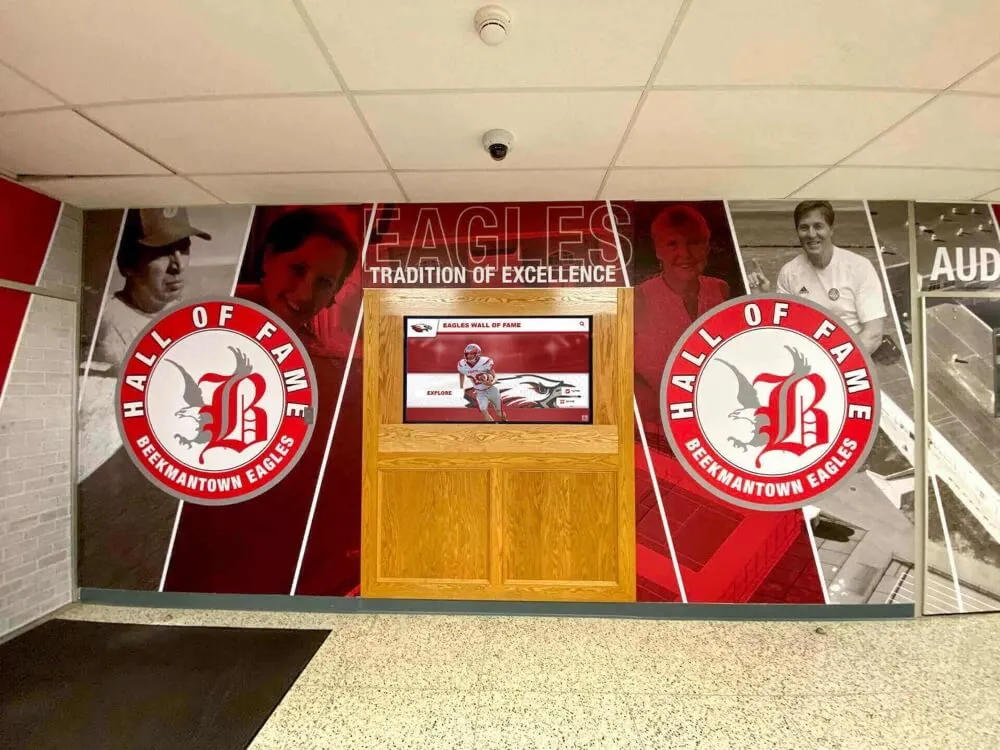
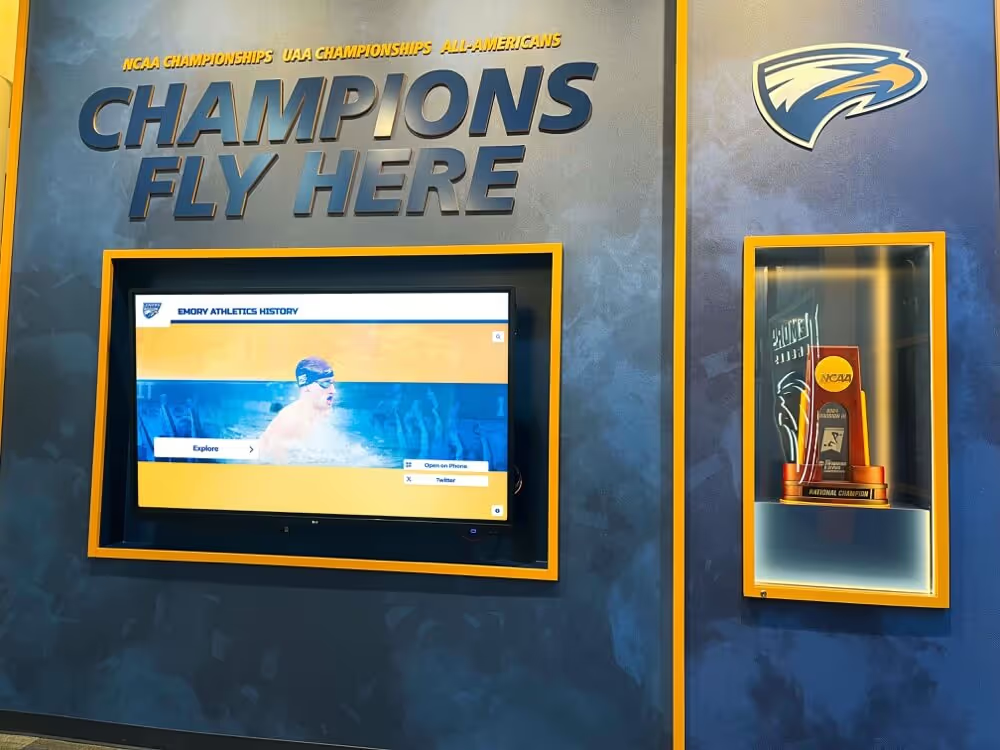
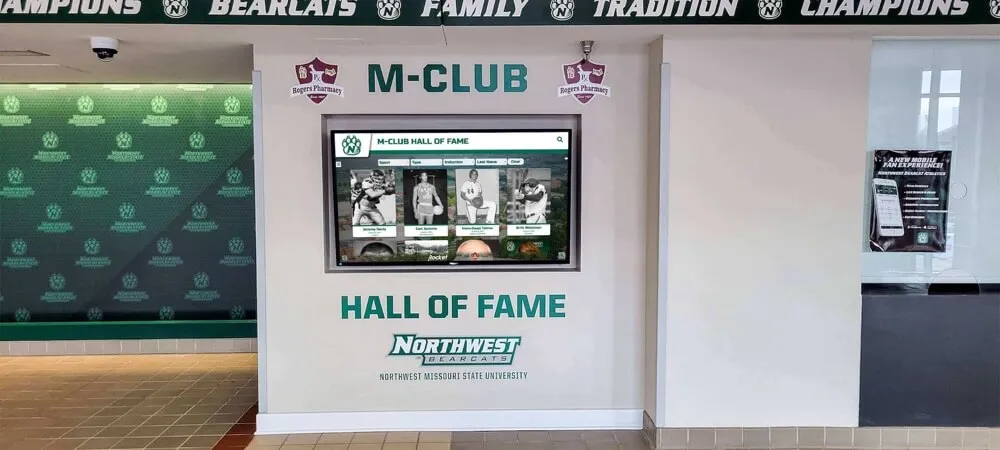
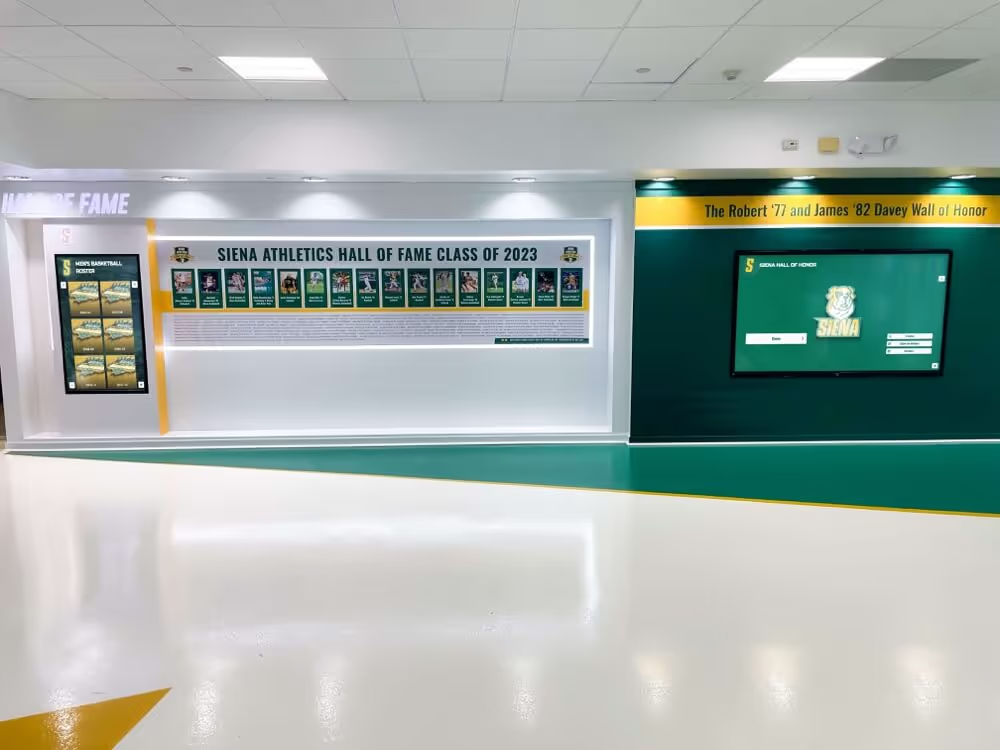
Physical recognition walls like this one generate both capital and recurring expenses — the hardware and installation costs go in account 5450, while the annual digital platform subscription belongs in account 5440
Sponsor Recognition and Fulfillment Expenses
The 5300-series accounts — sponsor recognition and fulfillment — are where most booster clubs have the least detail in their chart of accounts. Programs that record all sponsor fulfillment costs in a single “Sponsor Expenses” line cannot answer the question board members ask most often: of the money spent on sponsor recognition last year, how much went to banners, how much to digital content, and how much to the appreciation event?
Separating banner production (5310) from banner installation (5320) from digital display content (5340) reveals the true cost structure of the recognition program. For programs that have shifted toward digital sponsor recognition — adding screen rotations alongside or instead of physical banners — the digital content production cost can grow substantially in a way that a combined “sponsor expenses” line obscures entirely.
Account 5350 covers sponsor acknowledgment expenses that do not fit the physical or digital production categories: thank-you letter printing and postage, sponsor appreciation luncheon costs, and recognition certificates for end-of-season sponsor presentations. These are often treated as administrative costs in general expense accounts, which makes it impossible to calculate the true cost of sponsor stewardship — or to demonstrate to the board that stewardship investment drives renewal.
For programs building toward a more comprehensive year-round recognition approach, understanding how school athletic trophies and donor gift display cases work as permanent recognition infrastructure provides context for why separate account codes for display software subscriptions, hardware, and content production matter as programs invest more in permanent digital recognition rather than seasonal print materials.
Donor and Athletic Recognition Expenses
The 5400-series accounts cover the direct costs of recognizing athletes, students, and donors through trophies, awards, hall of fame ceremonies, and digital recognition systems. This section of the expense chart is often collapsed into a single line item — “awards and recognition” — that obscures the distinction between one-time physical awards and the recurring technology costs of operating a digital recognition platform.
Account 5440 (Digital Recognition System) covers the annual software subscription for platforms that display interactive athletic histories, hall of fame inductees, and donor recognition on in-facility screens. Account 5450 (Recognition Hardware) covers the capital costs — screens, mounts, and media players — that represent a one-time investment rather than a recurring expense. Keeping these in separate accounts makes it possible to distinguish annual operating costs from capital expenditures when presenting the budget to the board or the school administration.
For programs that recognize athletes with sport-specific award formats beyond standard trophies, basketball awards and team recognition ideas illustrate the range of award formats that might flow through account 5410 — from traditional trophies to custom recognition pieces that carry higher per-unit costs and warrant more granular tracking in the expense ledger.
Account 5460 (Academic Achievement Awards) separates recognition costs for academic programs — honor roll recognition, academic all-conference awards, or GPA-based achievement acknowledgments — from athletic recognition costs. This separation matters when the booster club jointly supports both athletic and academic recognition programs and needs to report costs by program type to the school administration or a grant funder. Organizations running formal academic award events benefit from reviewing how academic achievement award programs for high schools structure their recognition categories, since the same cost types that appear in a high school academic award program — physical awards, printed certificates, ceremony costs, and digital display elements — map directly to the 5410–5460 accounts in this template.
For organizations managing a recognition system that includes contributor or staff acknowledgment alongside athletic and donor programs, the account structure for employee and contributor recognition display programs offers parallel structure that can inform how booster clubs organize recognition expenses for non-athlete acknowledgment within the same general ledger.
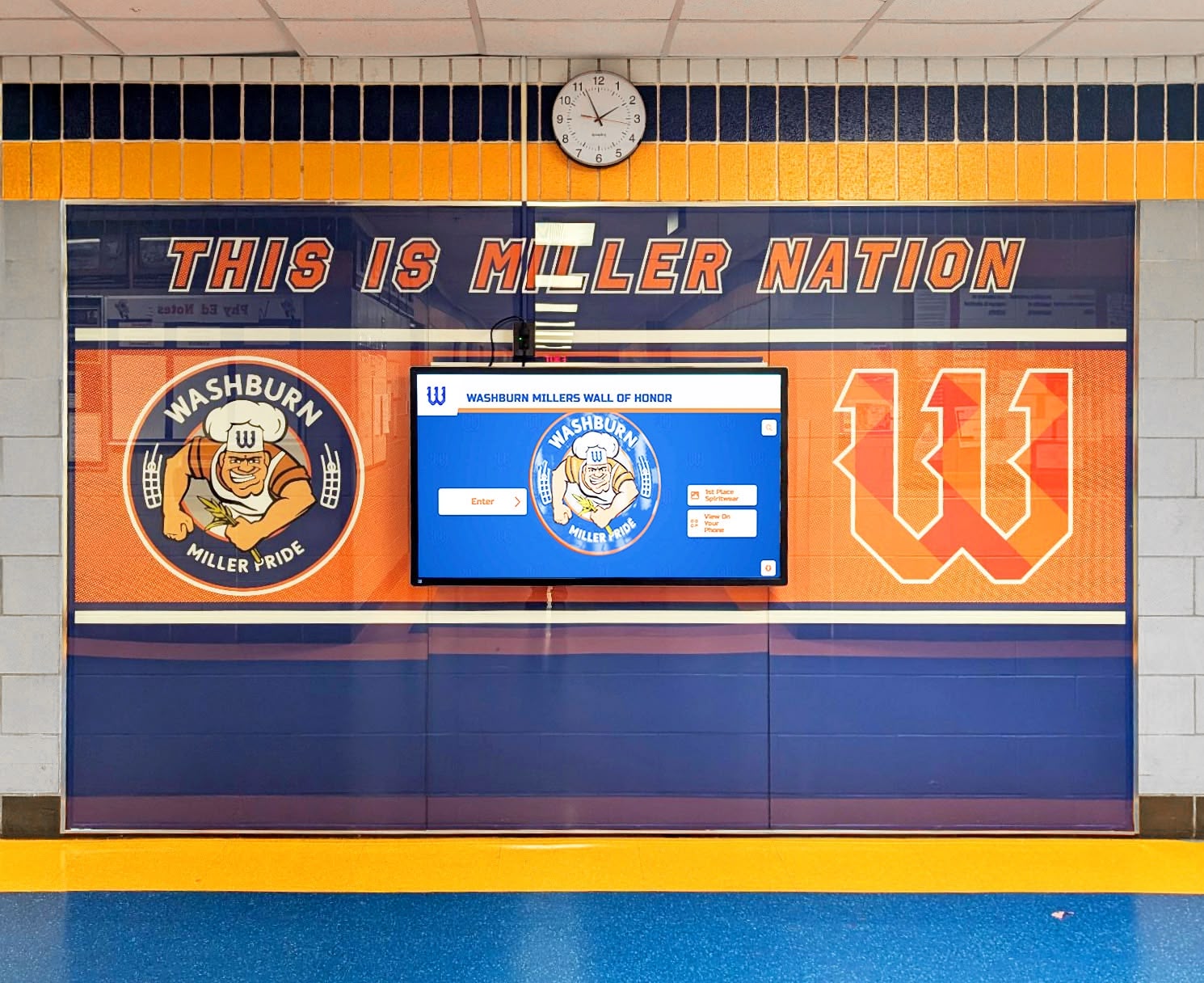
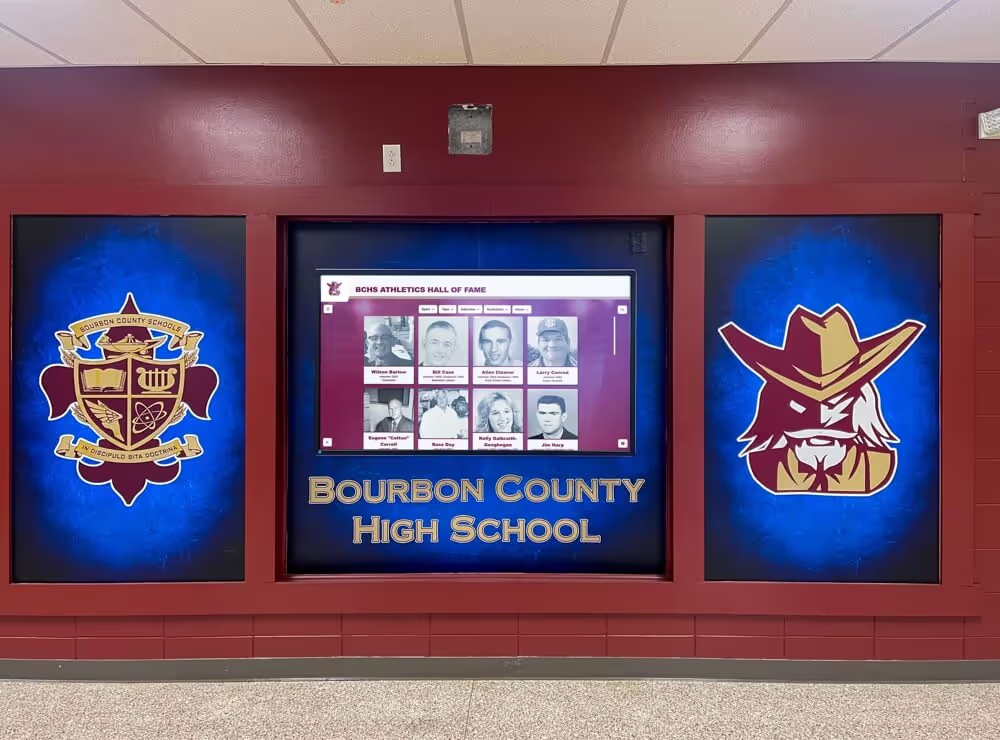
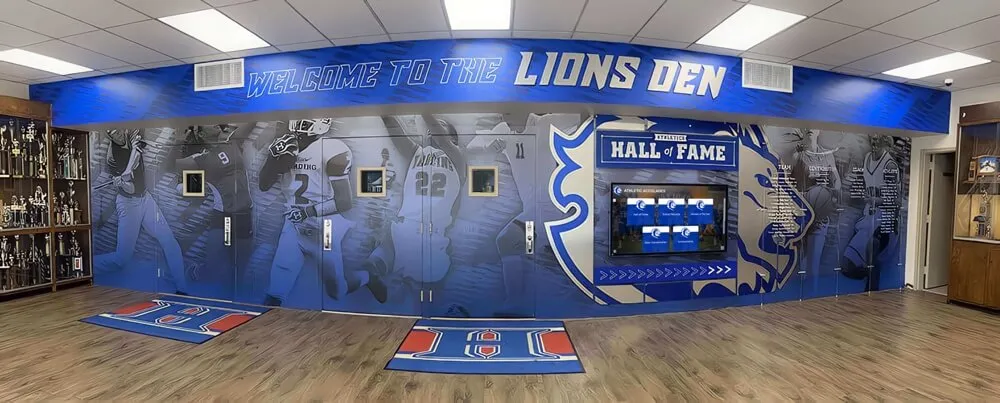
A digital wall of honor like this one involves multiple account categories: restricted donor contributions, hardware capital expenditure, annual software subscription, and content production costs — each belongs in a separate account code
Connecting the Chart of Accounts to Recognition Program Management
A chart of accounts is most useful when it reflects the actual structure of the programs the organization runs — not just the categories that make sense from an accounting theory perspective. For athletic booster clubs that operate formal recognition programs alongside fundraising and sponsorship activities, this means building the account structure around the recognition commitments that drive both income and expense.
The sponsorship income accounts (4210–4250) should match the tier names used in sponsor agreements. If your organization uses “Platinum,” “Gold,” “Silver,” and “Community” as tier names, those names belong in the account titles — not generic labels that require translation every time someone reads the ledger.
The recognition expense accounts (5300–5460) should align with the deliverables in sponsor and donor agreements. If the title sponsor agreement specifies a banner, a digital rotation, a game-day PA announcement, and an invitation to the annual recognition dinner, those four deliverables should each have an account code where their fulfillment costs are recorded. The connection between the agreement terms and the expense ledger is what makes it possible to demonstrate — to sponsors, to donors, to school administrators — that every commitment was honored and accounted for.
Board and leadership transitions are smoother when the chart of accounts is self-explanatory. An incoming treasurer who opens the books and finds account codes that correspond directly to the programs they are taking over can begin reporting with confidence. A chart of accounts that requires a verbal explanation from the departing treasurer is an institutional liability — because the departing treasurer may not be available when questions arise mid-season.

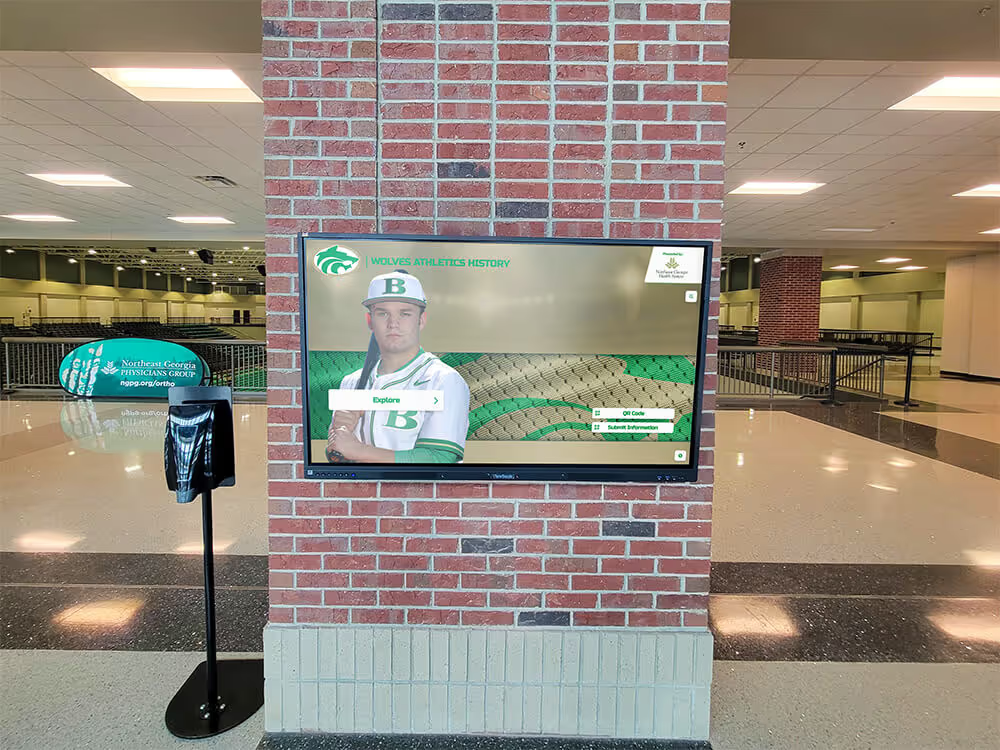
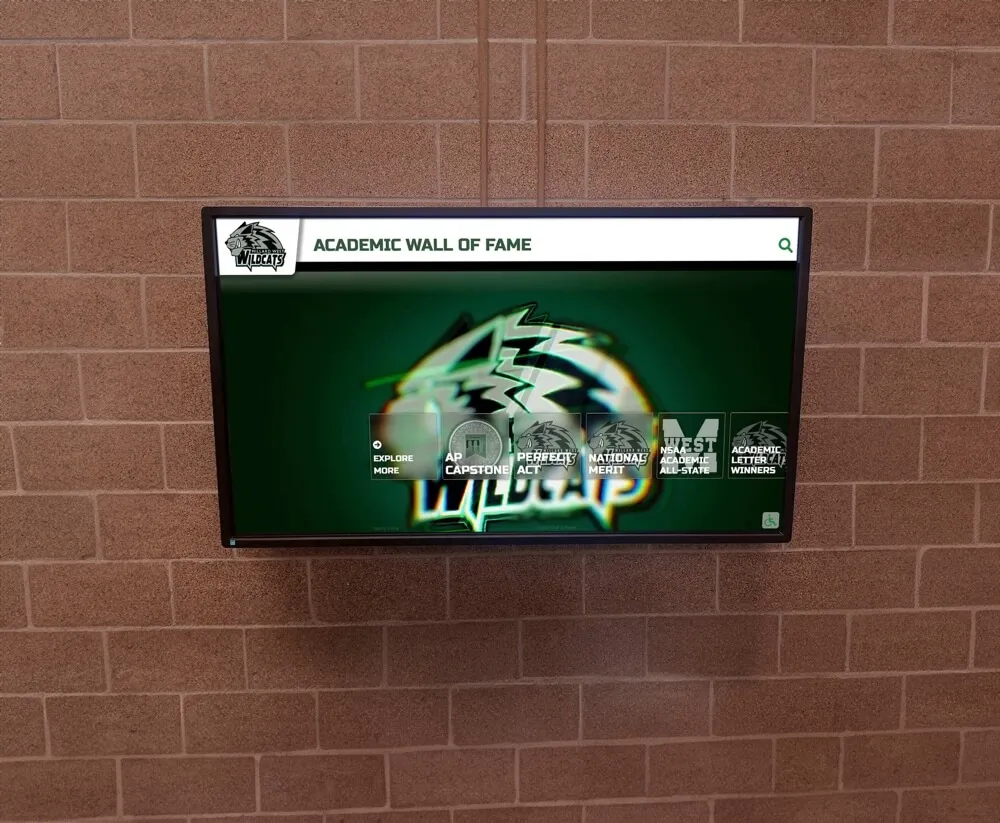
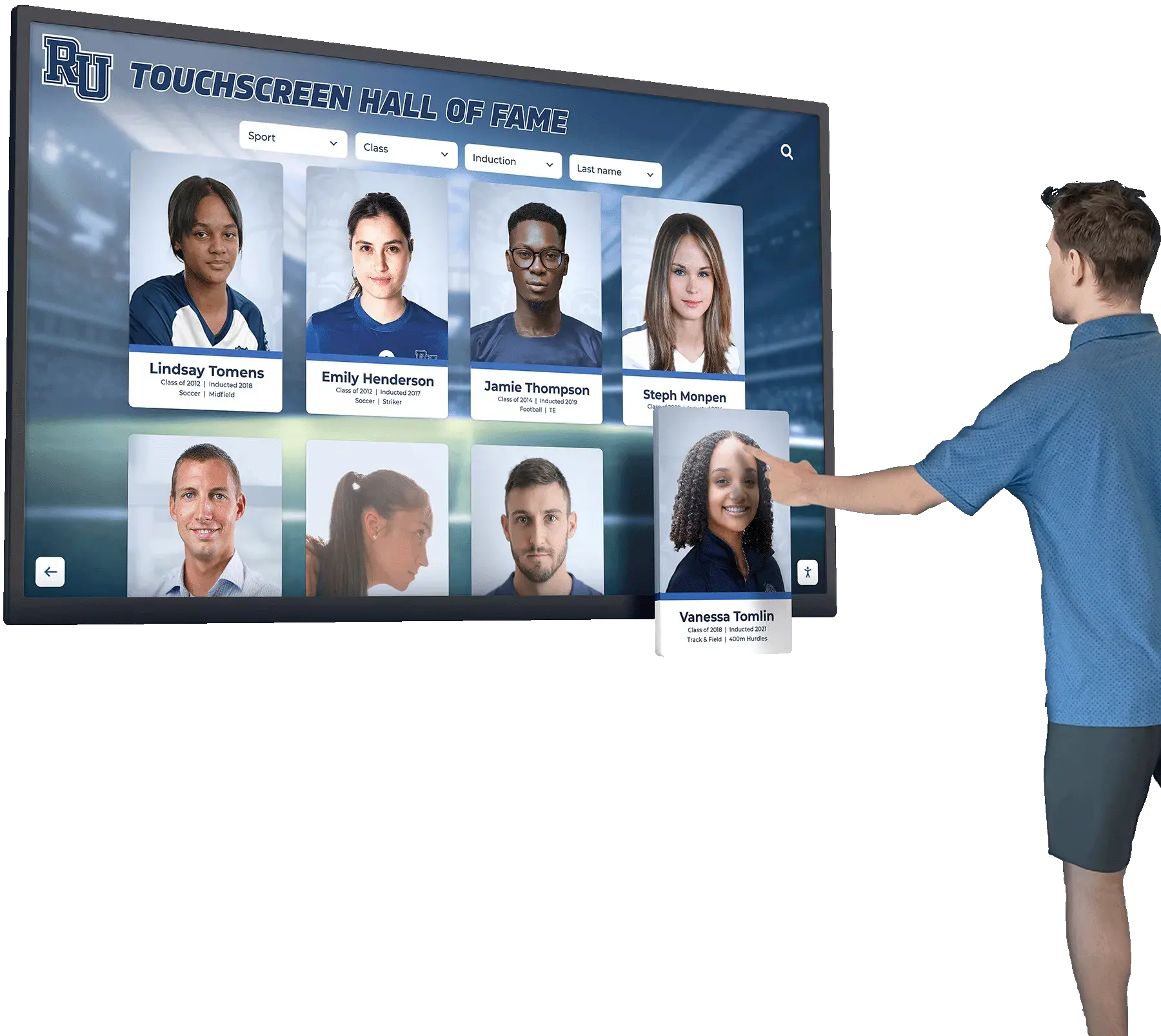
Academic recognition programs involving digital displays require the same multi-category account treatment as athletic recognition — separating the one-time hardware investment from recurring software costs and annual award production expenses
Frequently Asked Questions About the Booster Club Chart of Accounts Template
What accounts should a booster club chart of accounts include?
A complete booster club chart of accounts should include five account type categories: assets (checking, savings, accounts receivable for pledge tracking), liabilities (accounts payable and deferred revenue for prepaid sponsorships), net assets (unrestricted, temporarily restricted for donor-designated gifts, and board-designated reserves), revenue (fundraising events broken out by stream, sponsorship income by tier, donations separated by restriction status, membership dues, and interest), and expenses (athletic program support, fundraising costs, sponsor fulfillment by deliverable type, donor and athletic recognition including digital display subscriptions, scholarships, and administrative). Organizations filing a Form 990-EZ benefit from aligning their account structure with the return’s Part I revenue and expense categories from the start of the fiscal year.
How should a booster club separate restricted and unrestricted donations in its chart of accounts?
Restricted and unrestricted donations should be recorded in separate income accounts — one for unrestricted gifts available for any program purpose and one for restricted gifts designated by the donor for a specific program, athlete, scholarship, or recognition element. Per FASB ASC 958-605, contributions with donor-imposed restrictions must be classified separately from unrestricted contributions. The balance of unspent restricted funds flows to a temporarily restricted net assets account on the balance sheet and remains there until the funds are expended for the donor’s designated purpose. When the expense is incurred, both the restricted fund balance and the matching expense account are updated simultaneously.
What expense account should booster clubs use for digital recognition display subscriptions?
Digital recognition system subscriptions — the annual software fee for platforms that power interactive athletic history, hall of fame, and donor recognition displays — belong in a dedicated expense account separate from physical award costs and hardware purchases. Using a single “recognition” expense line for trophy purchases, digital platform subscriptions, and screen hardware obscures the true cost structure and makes it impossible to compare year-over-year technology costs independently of one-time award purchases. A three-account structure works well: one account for trophies, plaques, and physical awards; one for the annual digital recognition software subscription; and one for recognition hardware capital costs such as screens, mounts, and media players that represent one-time investments rather than recurring expenses.
How do booster clubs record in-kind sponsorships in their chart of accounts?
In-kind sponsorships — goods or services contributed by a business instead of cash — are recorded at fair market value as both income and expense. The income entry goes in an in-kind sponsorship account in the revenue section; the matching expense entry goes in the appropriate expense account for the goods or services received, such as printing supplies, food items, or equipment. The net financial impact is zero, but recording both sides accurately reflects the full scale of sponsor support and ensures the program’s operating costs are visible rather than hidden behind net contribution figures. Organizations should establish a written fair-value policy for in-kind contributions to ensure consistent recording across the fiscal year.
Should a booster club use separate accounts for each sponsor tier?
Yes — separate sub-accounts for each sponsorship tier give the treasurer and board a complete picture of the sponsor revenue mix without requiring manual sorting of transactions. Tier-specific accounts make it possible to compare the number and size of sponsors at each tier across years, identify whether the mix is shifting toward lower-value tiers, and calculate the true recognition cost per tier by comparing sponsor tier revenue against the fulfillment expenses associated with each tier’s deliverables. The account names should mirror the tier names in your sponsor agreements so that anyone reading the ledger can match an account code directly to the recognition commitments on file.
A Chart of Accounts That Grows with Your Program
A booster club chart of accounts template is not a static document — it should be reviewed at the start of each fiscal year against the programs the organization is actually running. New revenue streams warrant new accounts. New recognition deliverables in sponsor agreements warrant new expense sub-accounts. A scholarship program that did not exist two years ago should not be recorded in a catch-all “other expenses” category because the chart was never updated to include it.
The template above gives most athletic booster clubs a complete starting structure. Programs with simpler operations can collapse the sub-accounts — using a single 4100 account for all fundraising revenue rather than separating concessions, auctions, and merchandise. Programs with more complex sponsorship or recognition structures can add sub-accounts within any category to capture the level of detail their reporting requires.
What the template gives every booster club, regardless of size, is the structural separation that makes a general ledger useful: fundraising income visible on its own, sponsorship income visible by tier, restricted gifts tracked separately from unrestricted, and recognition expenses broken out from both general athletic support and administrative overhead. That separation is the difference between a ledger that tells you how much money came in and one that tells you whether your program is growing, which sponsors are most valuable, and whether your recognition commitments are being fulfilled within a budget you can defend to the school administration and the donors who make it possible.
See How Rocket Alumni Solutions Displays Your Recognition Program
Rocket Alumni Solutions builds interactive digital recognition systems for school athletic programs — giving booster clubs a permanent platform to display sponsor acknowledgment, donor recognition, hall of fame histories, and athletic records. Request a demo to see what your program's recognition could look like on a custom display that keeps every sponsor and donor acknowledgment visible year-round.
Schedule a Recognition Display Demo