



A booster club board orientation checklist is the single most effective tool a volunteer organization can use to prevent the annual leadership transition from erasing the institutional knowledge built over the previous year. Most booster clubs rotate officers every one to three years, and every rotation carries the same risk: the new treasurer does not know which sponsors have outstanding invoices, the incoming president does not know the history behind a naming gift, and no one can locate the password to the recognition display platform. This guide provides a complete orientation checklist organized for both outgoing and incoming officers — covering financial records, policy documents, sponsor and donor files, recognition displays, digital platform access, athletic history archives, and event records.
The programs that navigate leadership transitions most smoothly share one characteristic: they treat the handoff as a structured process, not an informal conversation. A departing president who hands over a binder and says “call me if you have questions” is relying on future cooperation that may never materialize. A departing president who follows a documented orientation checklist before leaving office gives the incoming team a complete, verified record of everything the organization owns, owes, and has committed to.

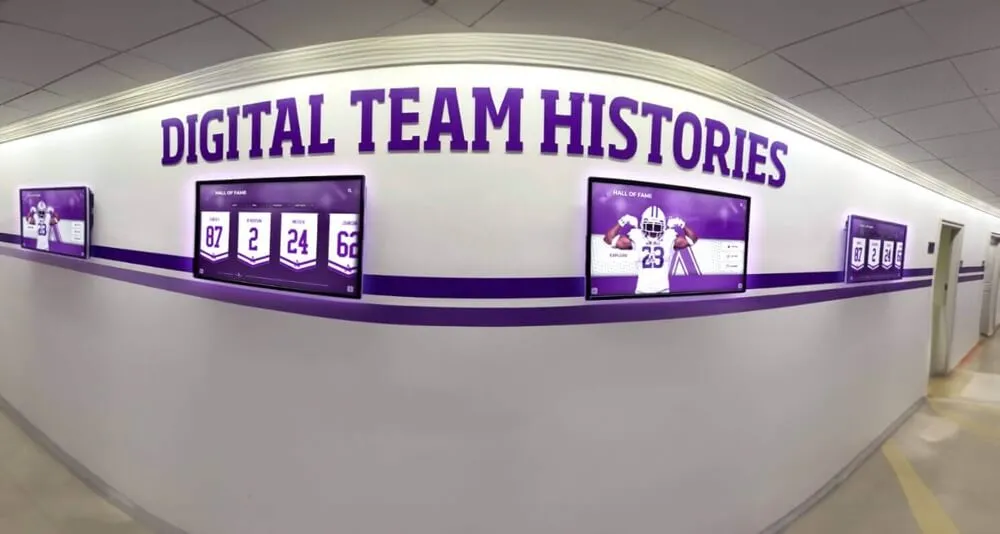
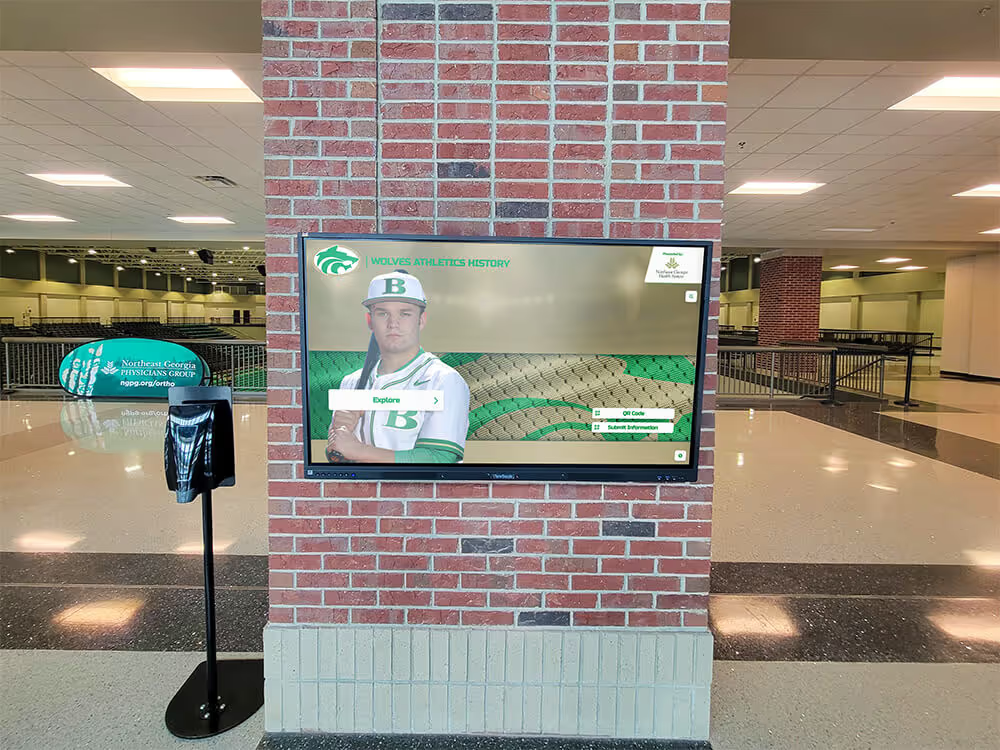
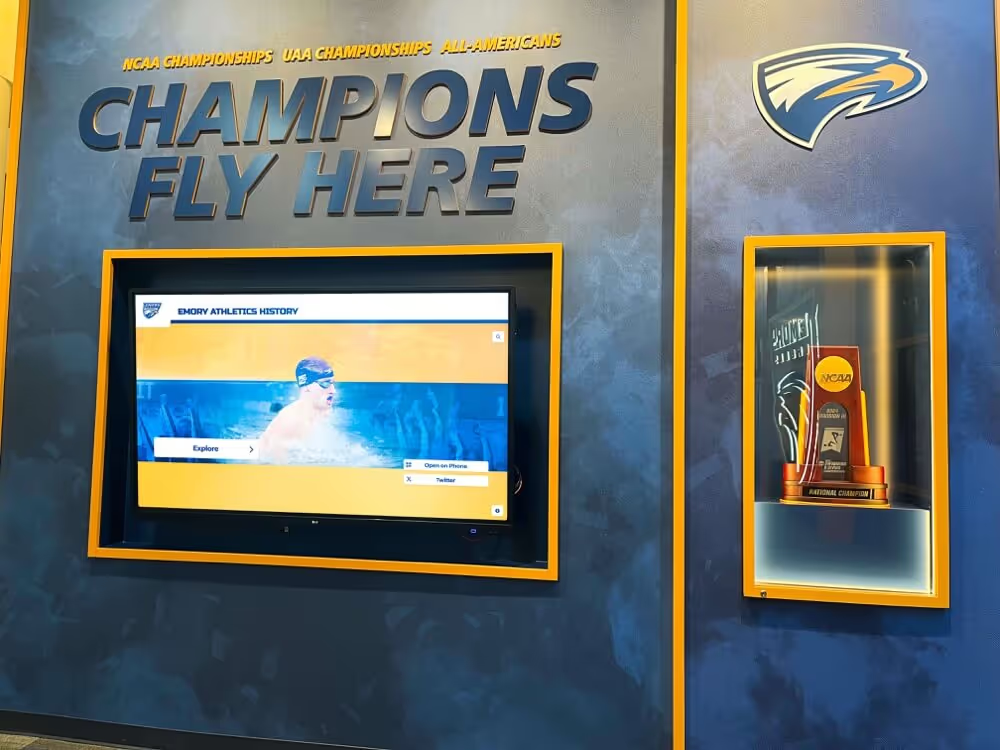
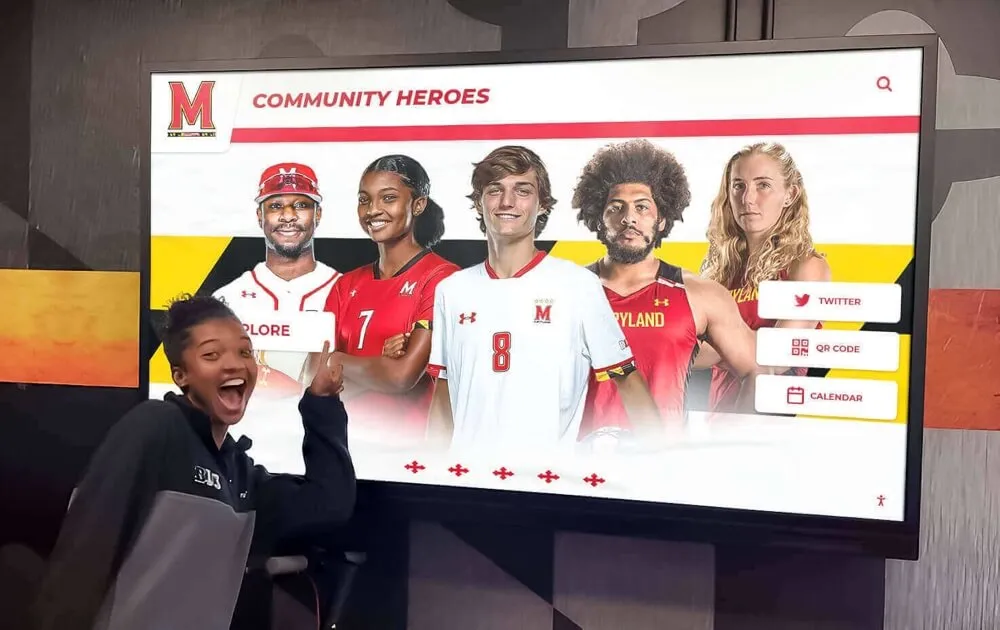
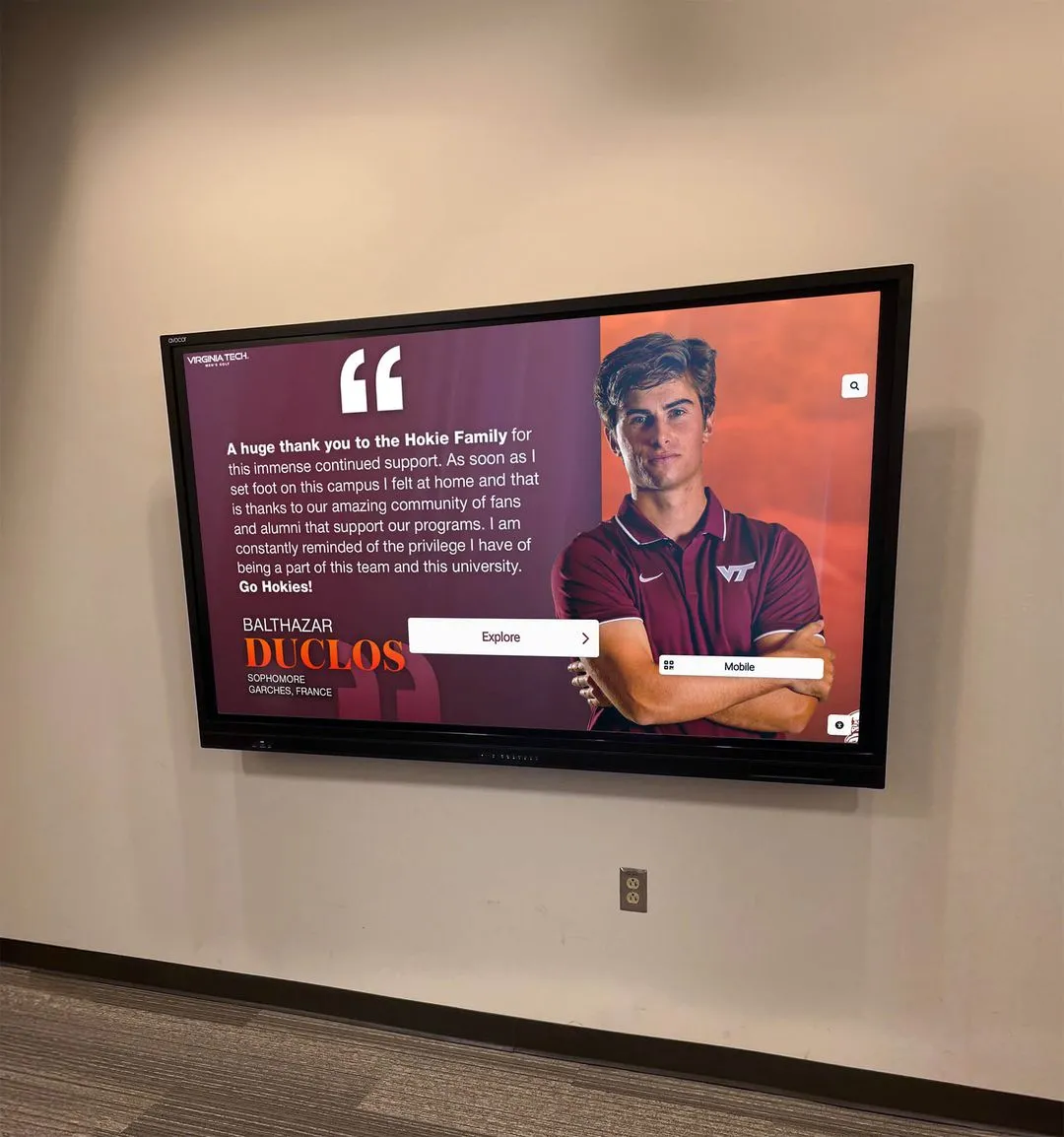
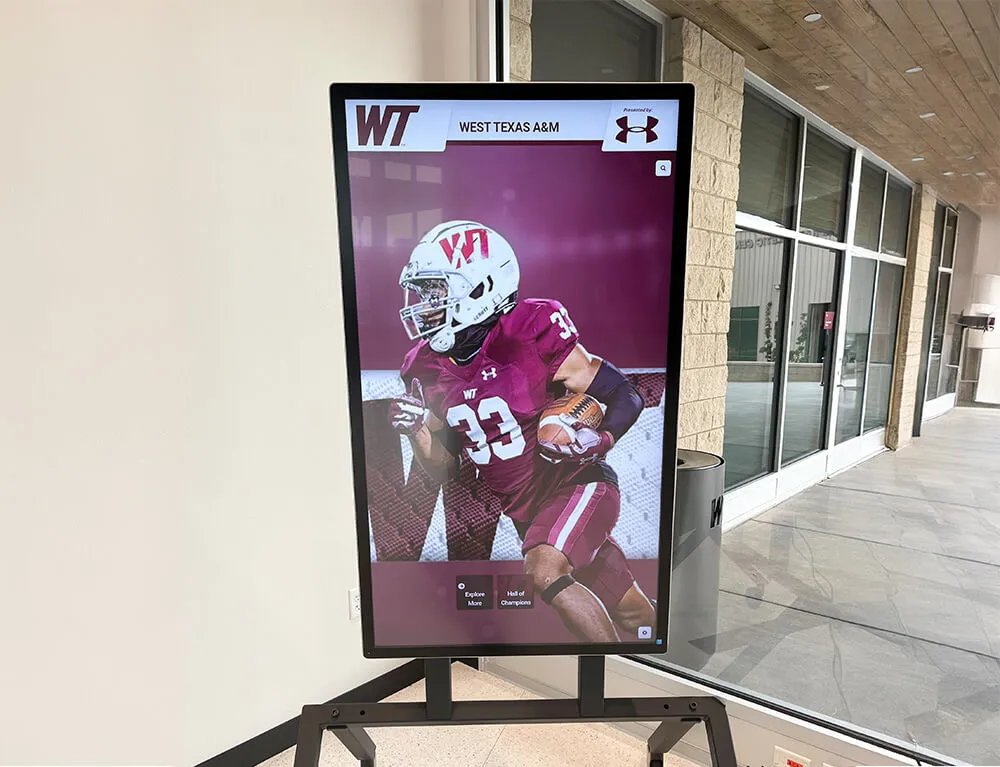
Digital recognition platforms require deliberate access handoffs during board transitions — an incoming officer without login credentials cannot verify or update sponsor and donor content until access is transferred
What a Complete Booster Club Board Orientation Covers
A well-designed orientation checklist addresses seven distinct domains. Programs that skip any one of them typically discover the gap at the worst possible moment — when a sponsor calls about their logo, when a donor asks about their fund, or when a school administrator requests a policy document that no one can produce.
| Domain | Why It Matters at Transition |
|---|---|
| Financial records and accounts | New treasurer needs full account history and signature authority before the old treasurer becomes unavailable |
| Policy documents | Incoming officers need to know what rules govern cash handling, reimbursements, investment, and governance |
| Sponsor files and agreements | Active contracts, payment status, and recognition obligations carry over to new leadership |
| Donor files and acknowledgment records | Restricted gifts, named funds, and multi-year commitments require continuity regardless of who holds office |
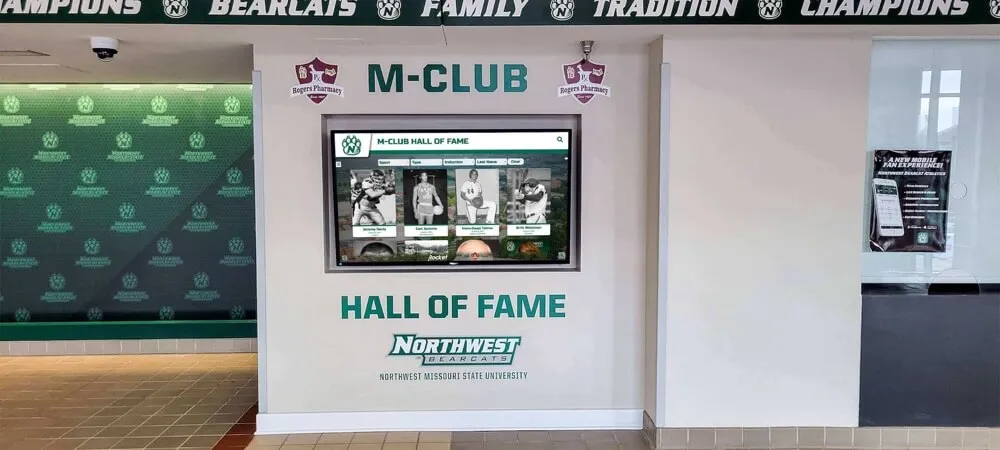
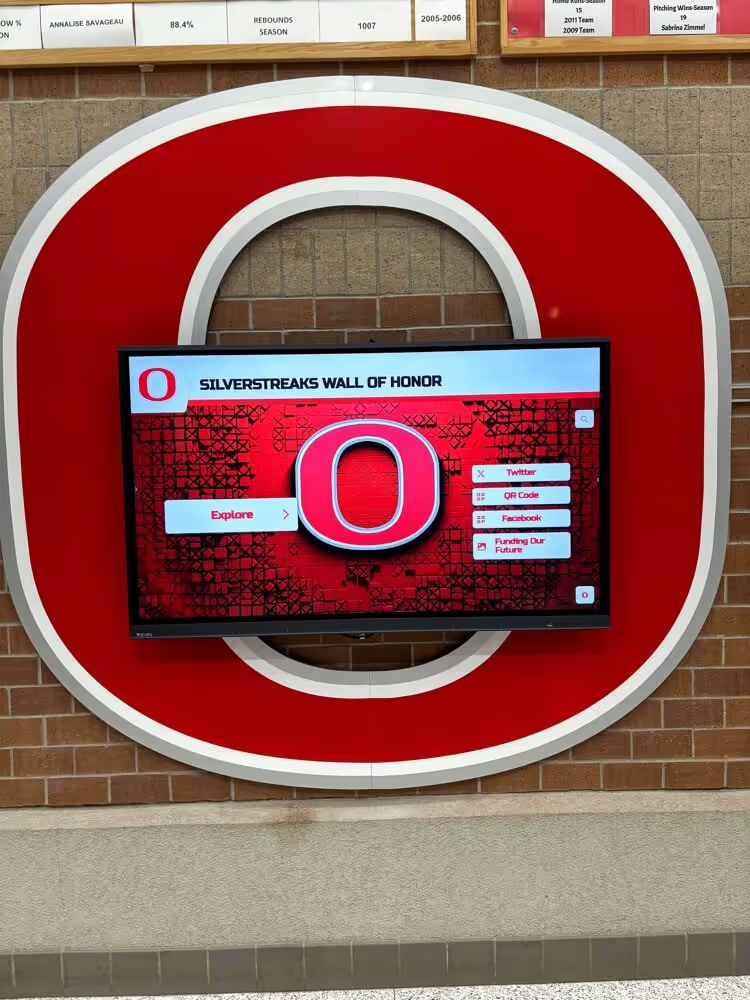
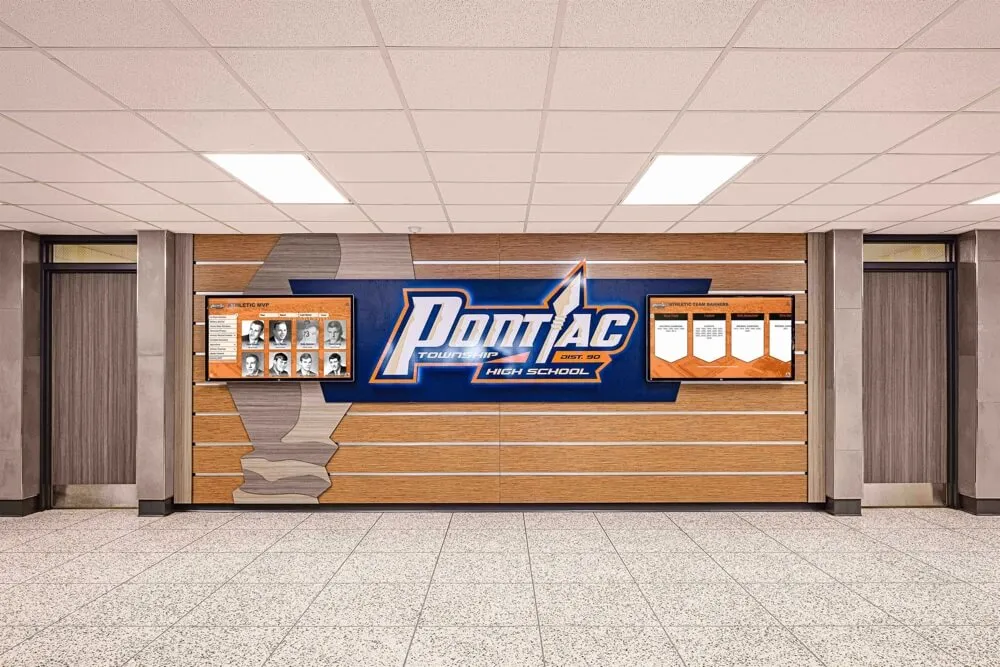
| Recognition displays and digital platforms | Platform credentials, content schedules, and display commitments need explicit transfer |
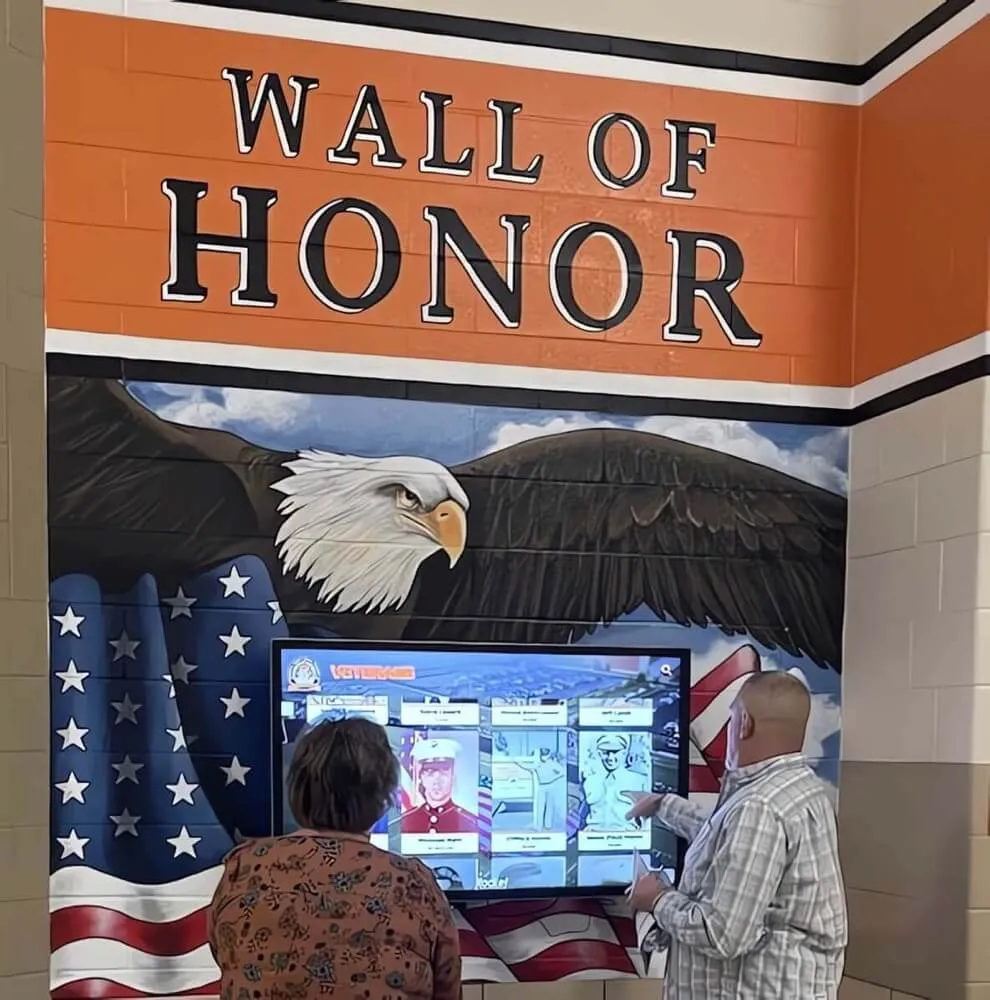
| Athletic history and archive access | Hall of fame records, retired numbers, championship histories, and award rosters are institutional assets |
| Event and fundraising records | Season results, vendor contacts, sponsor tie-ins, and event timelines inform next-year planning from day one |
The sections below provide a detailed checklist for each domain, structured for both the outgoing officer (what to prepare before leaving) and the incoming officer (what to confirm and complete within the first thirty days).
Outgoing Officer Orientation Checklist
The responsibility for a clean transition rests primarily with the departing board. The incoming team cannot find documents that were never organized, cannot access platforms that were never handed over, and cannot honor commitments that were never written down. The outgoing officer checklist below should be completed before the final meeting of the outgoing board — not after, when motivation and access both decline.
Financial Records Package
| Task | Deadline | Completed |
|---|---|---|
| Prepare a full account register for the fiscal year | 2 weeks before transition | |
| Confirm bank signature authority updated for incoming treasurer | Before final meeting | |
| Transfer all login credentials for online banking and payment platforms | Before final meeting | |
| Provide reconciled bank statements for the current and prior fiscal year | Before transition meeting | |
| Document all outstanding invoices (amounts owed to and owed by the organization) | Before transition meeting | |
| Compile a complete list of active sponsor payment schedules | Before transition meeting | |
| Transfer copies of all tax filings, 990 forms, and IRS determination letter | Before final meeting | |
| Document all restricted fund balances with the restriction terms | Before transition meeting |
Policy Documents and Governance Records
| Task | Deadline | Completed |
|---|---|---|
| Provide current bylaws and any amendments passed during the term | Before transition meeting | |
| Provide current cash handling, reimbursement, reserve, and investment policies | Before transition meeting | |
| Provide the most recent board meeting minutes (full year) | Before transition meeting | |
| Provide the current annual budget and year-to-date actuals | Before transition meeting | |
| Document any pending legal, insurance, or compliance matters | Before transition meeting | |
| Transfer insurance certificates and agent contact information | Before final meeting |
Sponsor and Donor Files
| Task | Deadline | Completed |
|---|---|---|
| Compile all active sponsorship agreements with payment status noted | Before transition meeting | |
| Document all recognition commitments in active sponsor agreements | Before transition meeting | |
| Identify sponsors whose agreements expire within 90 days | Before transition meeting | |
| Compile all donor files with fund type (unrestricted vs. restricted) noted | Before transition meeting | |
| Flag any named funds or endowed recognition programs with their governing terms | Before transition meeting | |
| Provide all donor acknowledgment records for the current fiscal year | Before transition meeting | |
| Transfer contact information for all current sponsors and major donors | Before final meeting |
Incoming Officer Orientation Checklist
Receiving the handoff package is not the same as completing orientation. Incoming officers should use the first thirty days of their term to verify, consolidate, and act on what was transferred — and to surface any gaps before they create problems.
First Week: Confirm Access and Review Critical Documents
Confirm bank account access. Log in to all financial platforms and verify that the outgoing officer’s access has been removed or your own access is confirmed active. Do not wait for a financial question to discover that a credential transfer was incomplete.
Review all active sponsor agreements. Read each agreement in full, not just the summary. Note the specific recognition commitments — logo placement, display rotation, PA announcements, social media mentions, newsletter features — and confirm they are currently being fulfilled.
Identify immediate renewal pipeline. Any sponsor agreement expiring within 60 days needs a renewal conversation initiated in your first week, not after you have settled in.
Confirm recognition display content. Visit the facility or log in to the display content management system and verify that current sponsor logos are active, up to date, and accurate. Outdated logos or missing sponsors discovered in week one are much easier to remediate than the same problem discovered by a sponsor six weeks later.
Confirm platform credential transfers. If the organization uses a digital recognition platform, a website CMS, a donor database, or any cloud-based tool, verify that login credentials transferred cleanly and that you can access all functions needed to manage recognition content.
First Thirty Days: Financial and Policy Review
| Task | Target Date | Completed |
|---|---|---|
| Meet with school’s athletic director to introduce yourself and review any school-side commitments | Week 1 | |
| Review cash handling, reimbursement, and investment policies in full | Week 2 | |
| Reconcile inherited account balances against the outgoing treasurer’s handoff documentation | Week 2 | |
| Confirm all outstanding invoices are entered in your tracking system | Week 2 | |
| Review donor fund balances and confirm restriction terms are documented | Week 2 | |
| Review the prior year’s event records and identify planning items for the current season | Week 3 | |
| Confirm that all donor acknowledgment obligations from the prior year were fulfilled | Week 3 | |
| Review the budget and identify any spending authority questions that need board discussion | Week 4 | |
| Confirm organization’s nonprofit status is current and document renewal dates | Week 4 |
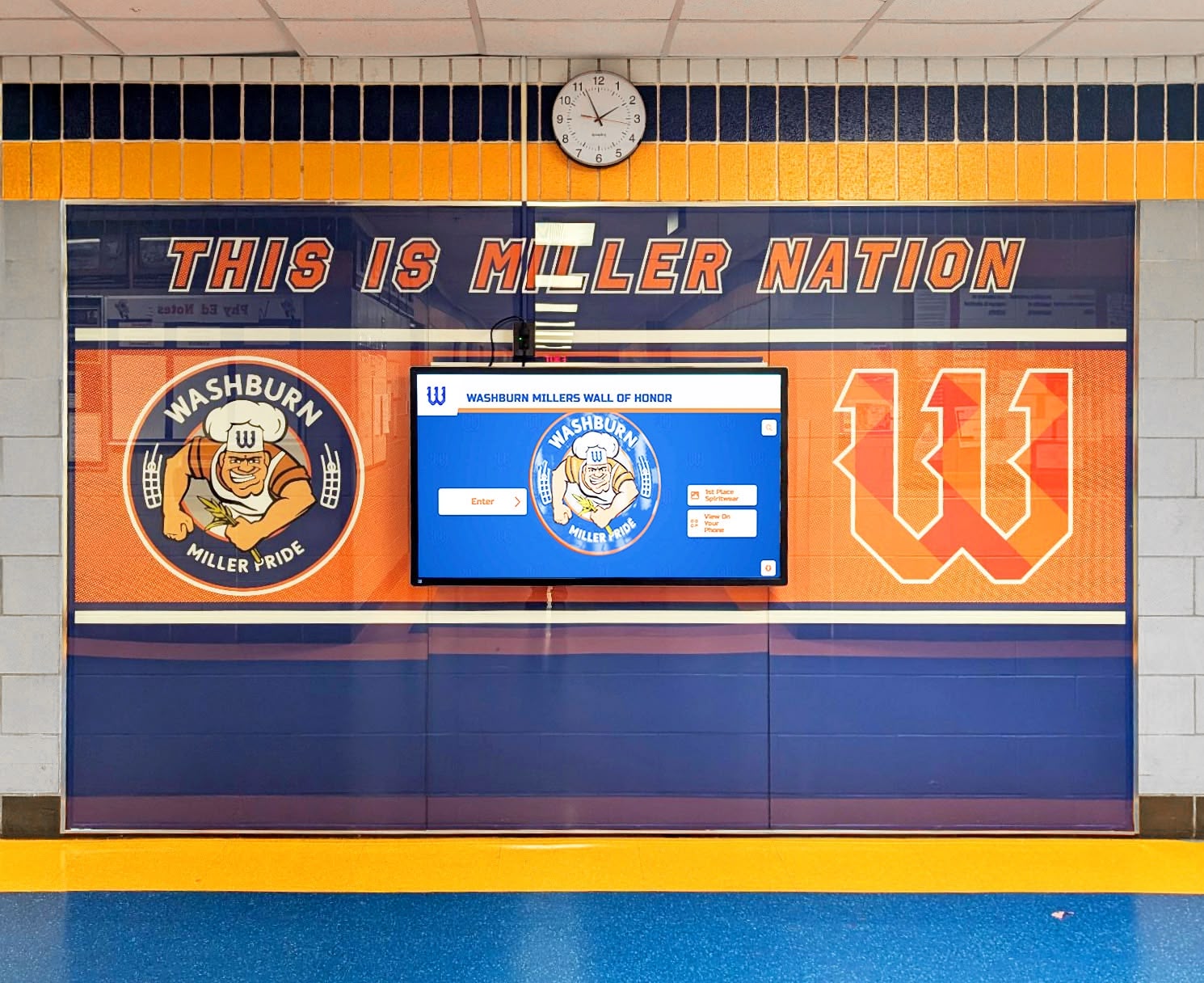
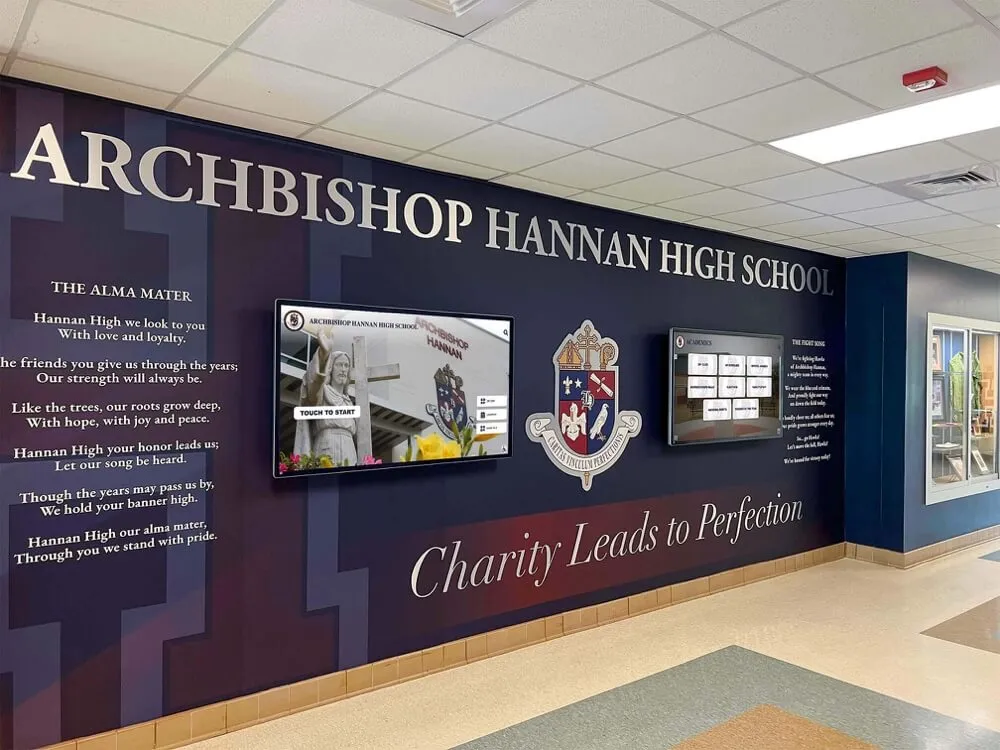
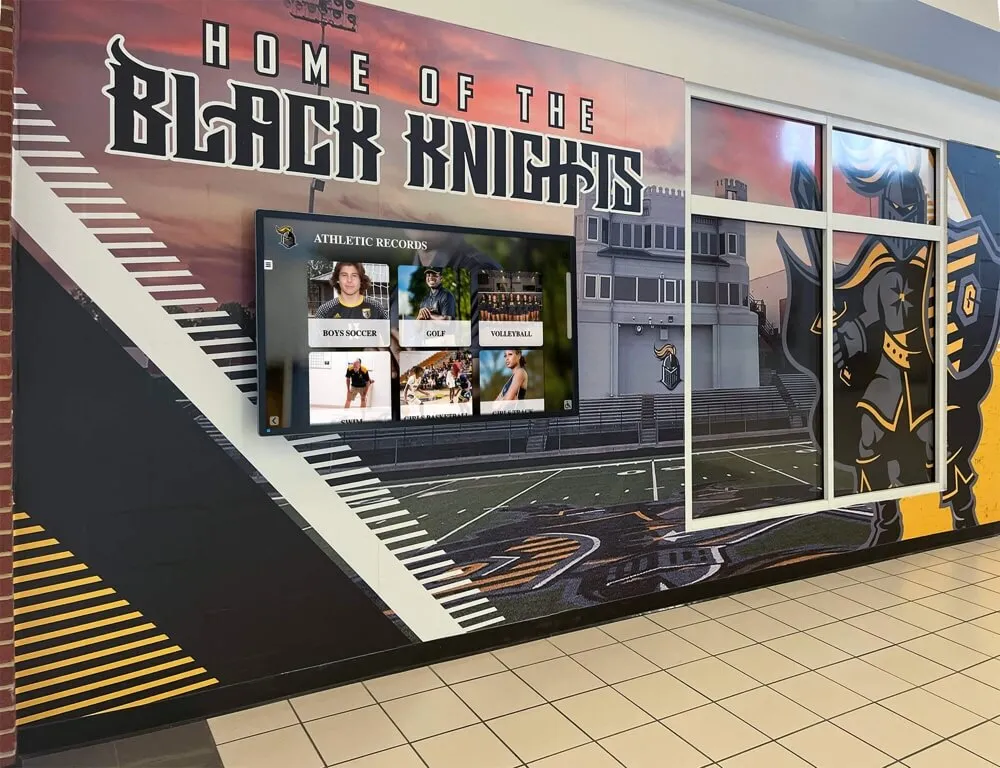
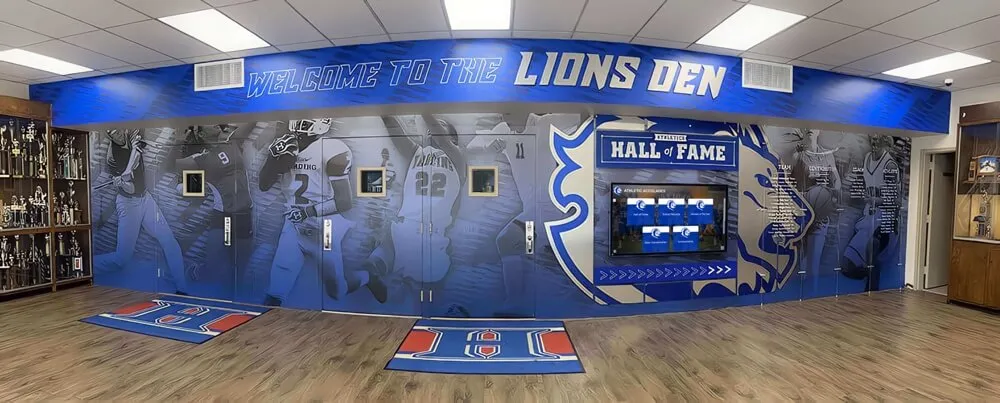
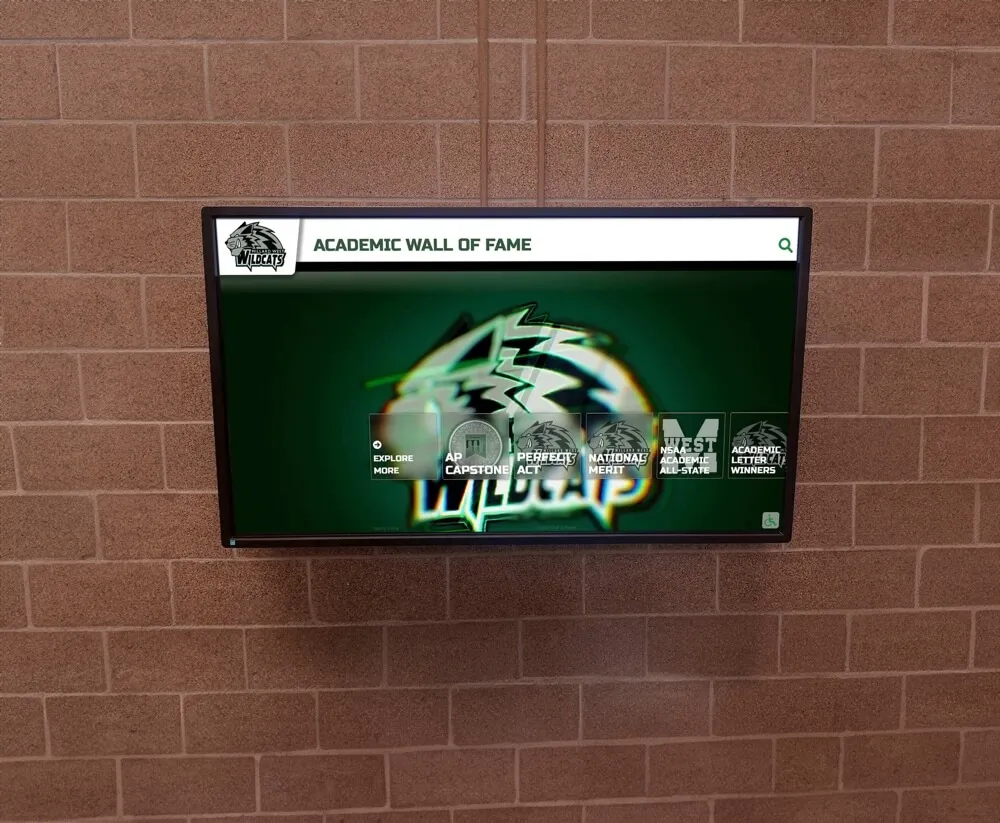
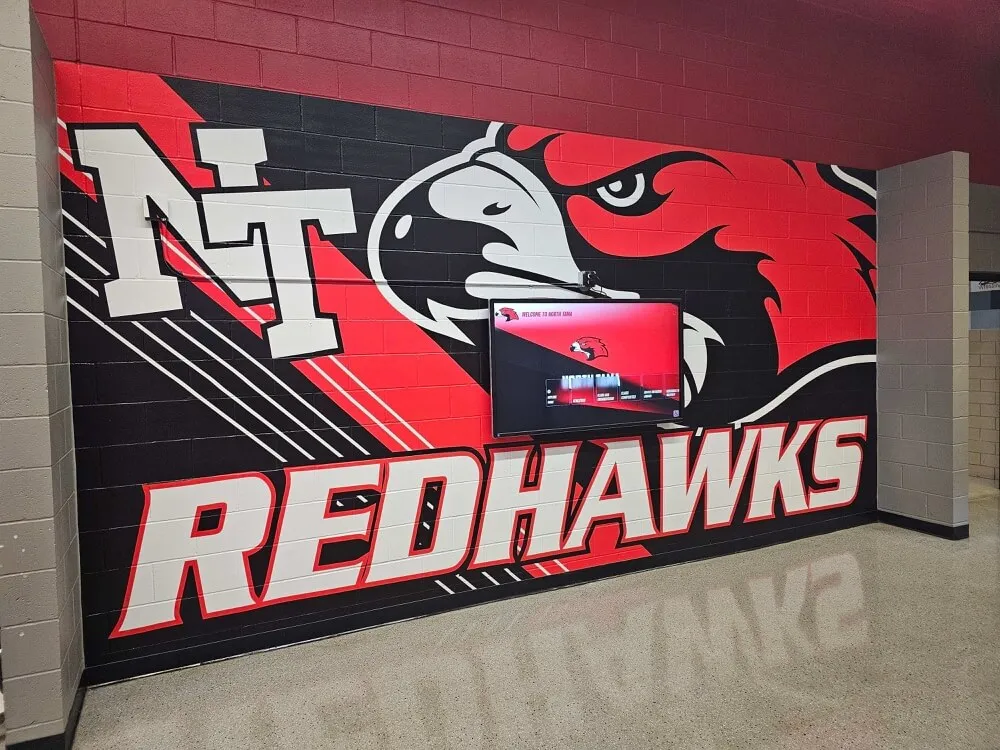
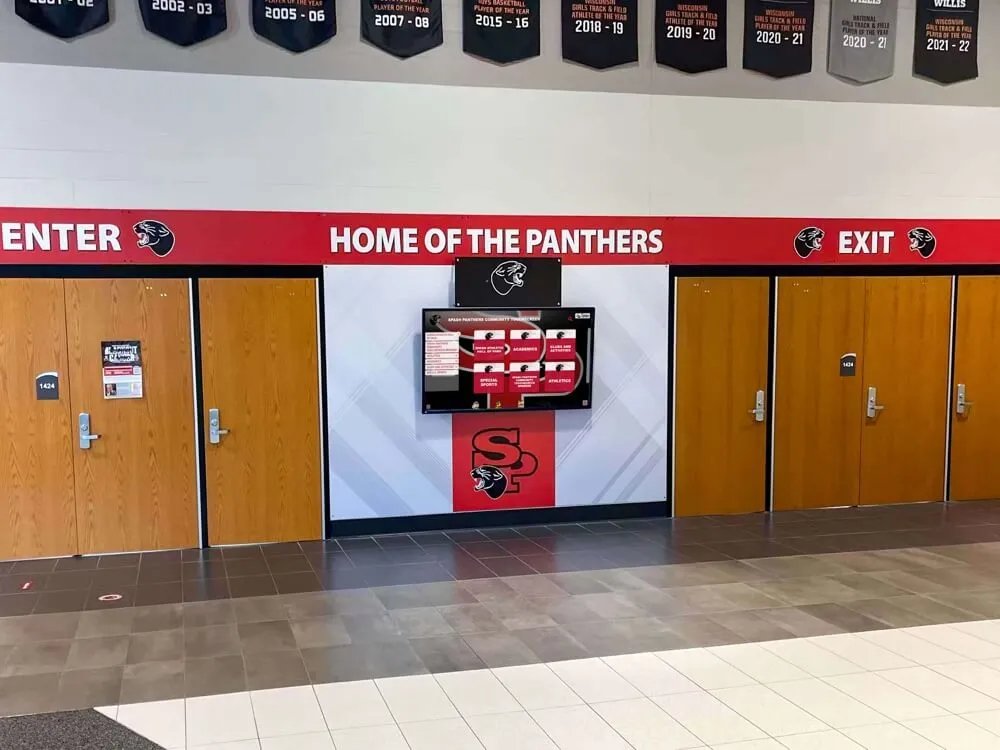
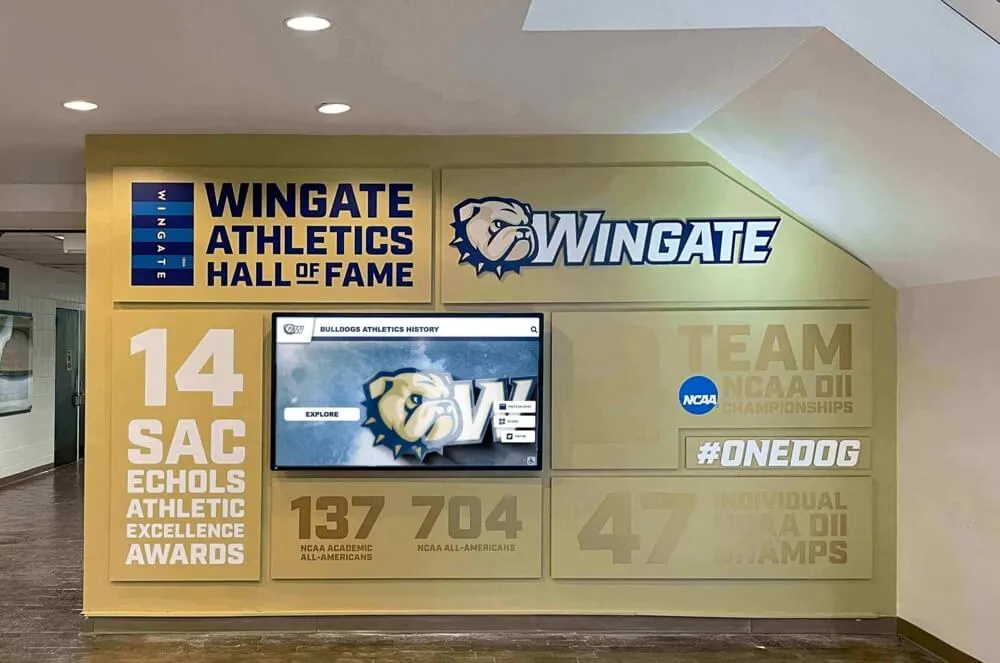
Recognition displays carry institutional history and active sponsor commitments — an incoming officer who does not verify display content in the first week may unknowingly let a fulfillment gap persist from the prior term
Recognition Display and Digital Platform Handoff
Recognition platforms deserve their own orientation category because they sit at the intersection of three different types of inherited obligation: sponsor fulfillment commitments, donor acknowledgment records, and athletic history archives. Incoming officers who treat platform access as an IT detail rather than a governance responsibility typically discover the gap when a sponsor notices their logo is missing or a donor’s name is misspelled on a display.
Platform Access Transfer Checklist
| Platform Type | Information to Transfer | Incoming Officer Action |
|---|---|---|
| Digital recognition display (facility screen) | Login credentials, content schedule, sponsor rotation settings | Verify login, audit current content against active agreement list |
| Donor database or CRM | Admin credentials, data export, field definitions for fund types | Verify access, confirm donor records are complete and current |
| Website CMS | Admin login, content update permissions, vendor support contact | Verify access, review any sponsor or recognition pages for accuracy |
| Social media accounts | Login credentials or admin role transfer, posting schedule | Verify access, review scheduled posts for sponsor commitments |
| Email accounts | Organization email credentials or forwarding setup | Verify incoming mail is routing correctly |
| Cloud storage | Shared folder access for all document categories | Confirm all folders are accessible and organized |
The organizations that manage recognition platform transitions most cleanly are the ones that maintain platform-level documentation — what content is live, when it was last updated, which sponsors are in active rotation. Programs exploring options for recognition display infrastructure that supports this kind of administrative continuity will find useful comparisons in resources like the 10 best hall of fame tools for athletics, donors, and arts history, which covers the range of digital platforms used for athletic and donor recognition — understanding the category helps incoming officers ask the right questions about the platforms they are inheriting.
Content Audit After Transition
Within the first week of taking office, the incoming officer responsible for recognition should complete a content audit of every active display platform:
- Verify sponsor roster accuracy. Every business listed in an active sponsor agreement should be visible in the display. Every business not in an active agreement should not be in the display.
- Verify donor roster accuracy. Named funds, endowed recognition programs, and cumulative giving acknowledgments should reflect current records.
- Verify athletic recognition accuracy. Hall of fame inductees, retired numbers, championship records, and award histories should match the organization’s archive.
- Identify pending updates. Any recognition content that was agreed to but not yet implemented — a new sponsor who signed but whose logo is not yet live, an inductee whose profile is not yet in the hall of fame system — should be flagged as an action item in the first meeting.
Athletic History and Hall of Fame Archive Transfer
Athletic history is among the most fragile institutional assets a booster club manages — not because it is financially sensitive, but because it is almost entirely irreplaceable. Championship photographs, retired number ceremonies, hall of fame induction records, and award histories exist in one copy, often maintained by a single long-tenured officer whose departure can mean the organization no longer knows who its own honorees are.
A sound orientation checklist for athletic history transfer should require:
A documented inventory of the archive. What physical records exist (photographs, trophies, plaques, programs) and where they are stored. What digital records exist (scanned photos, spreadsheets, database entries) and who has access.
A hall of fame roster. A complete, dated list of all inductees by sport and year, with induction criteria documented.
A retired numbers list. Every retired number, the athlete it honors, the year it was retired, and the ceremony record.
A championship records file. League, conference, and state championship results by sport and year, with any associated display commitments (trophy case maintenance, digital display features).
An award history. Athlete of the year, scholar-athlete, senior awards, and any endowed award with naming rights — who won, in what year, and what recognition commitment the award carries.
For programs thinking about how to make this kind of archive permanently accessible rather than dependent on any single officer’s memory, resources reviewing digital hall of fame tools for athletic programs describe the platforms that convert paper-based archives into searchable, updatable digital records — the kind of infrastructure that survives leadership transitions because it is stored in the platform rather than in a binder on someone’s shelf.

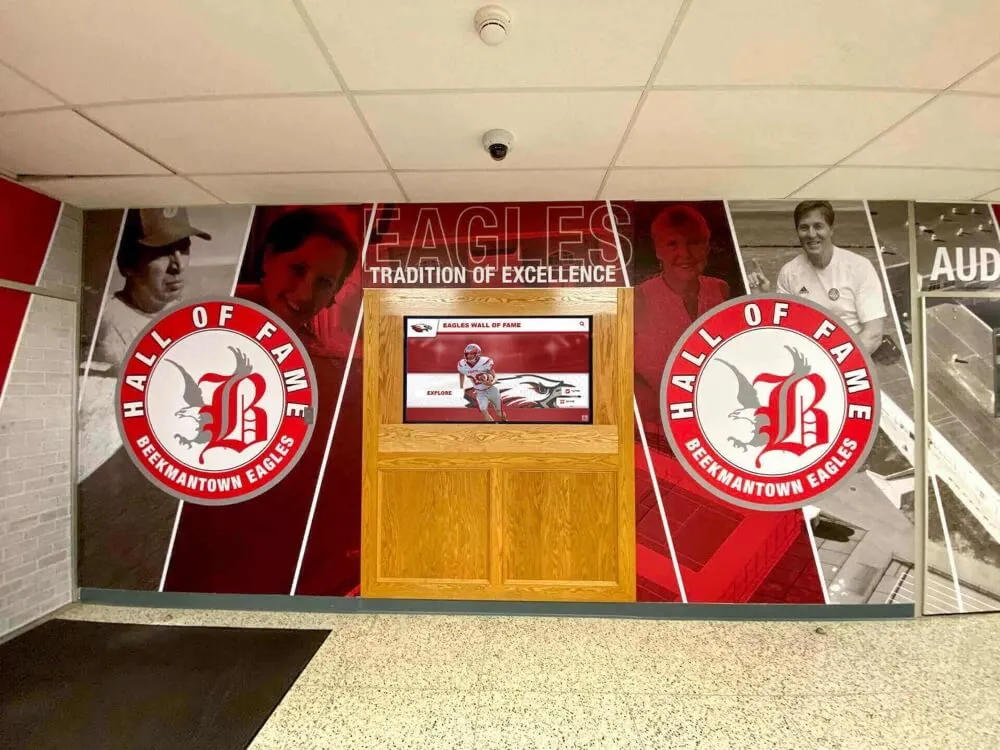
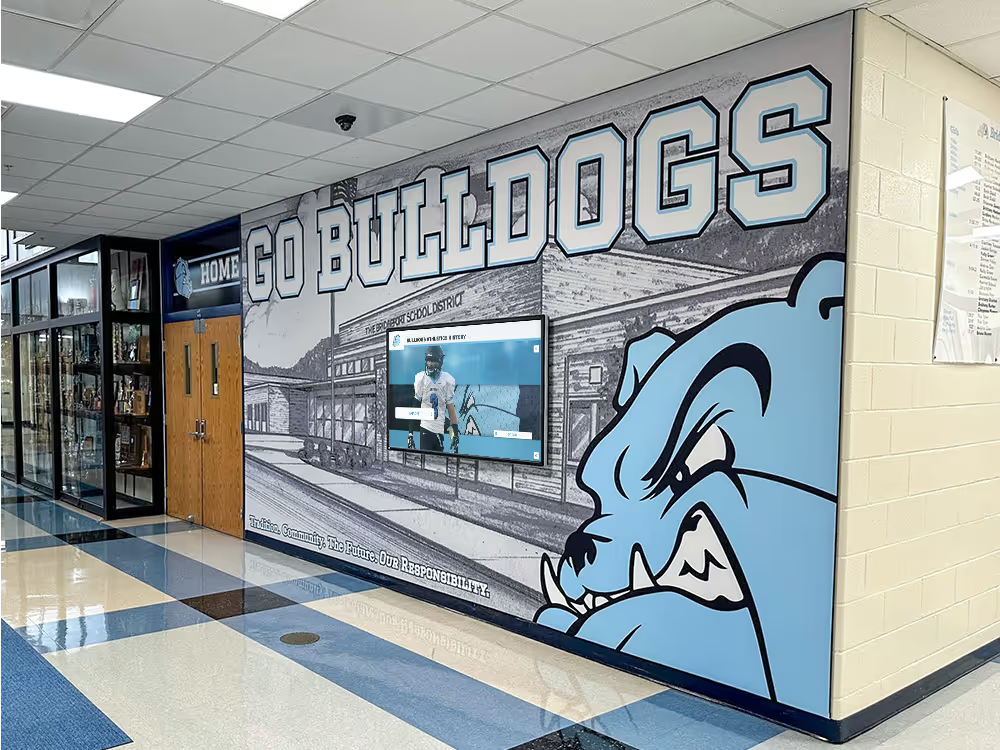
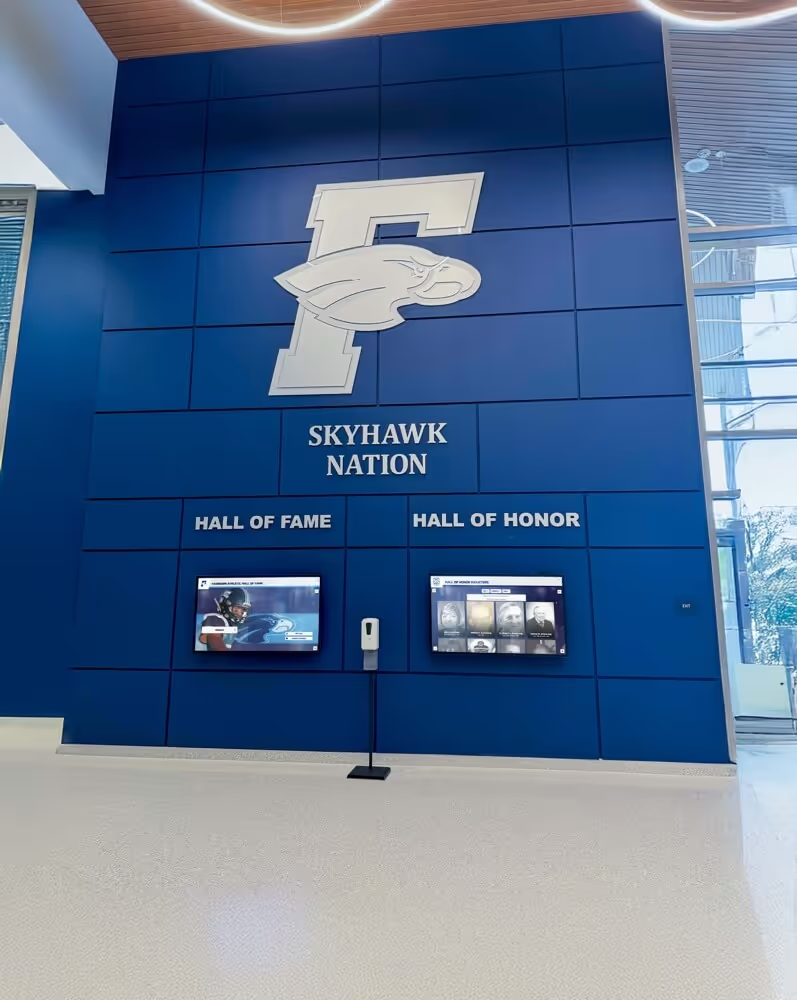
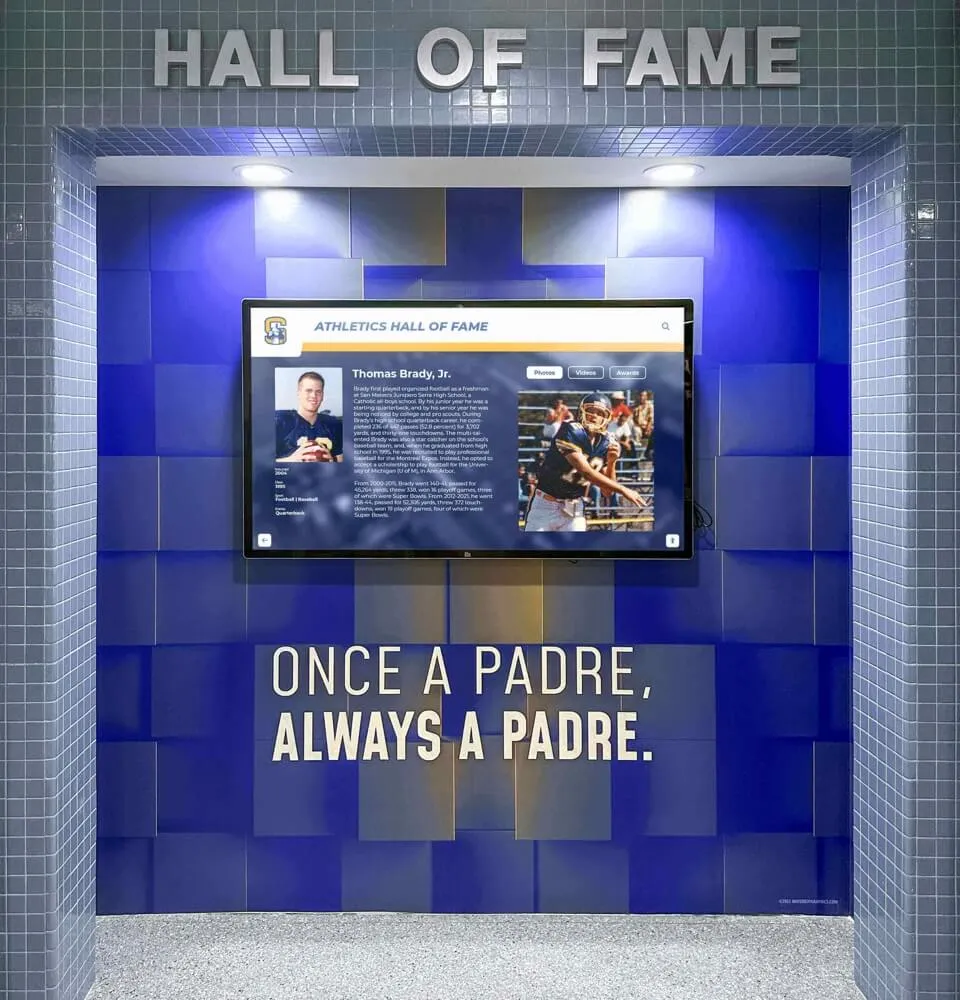
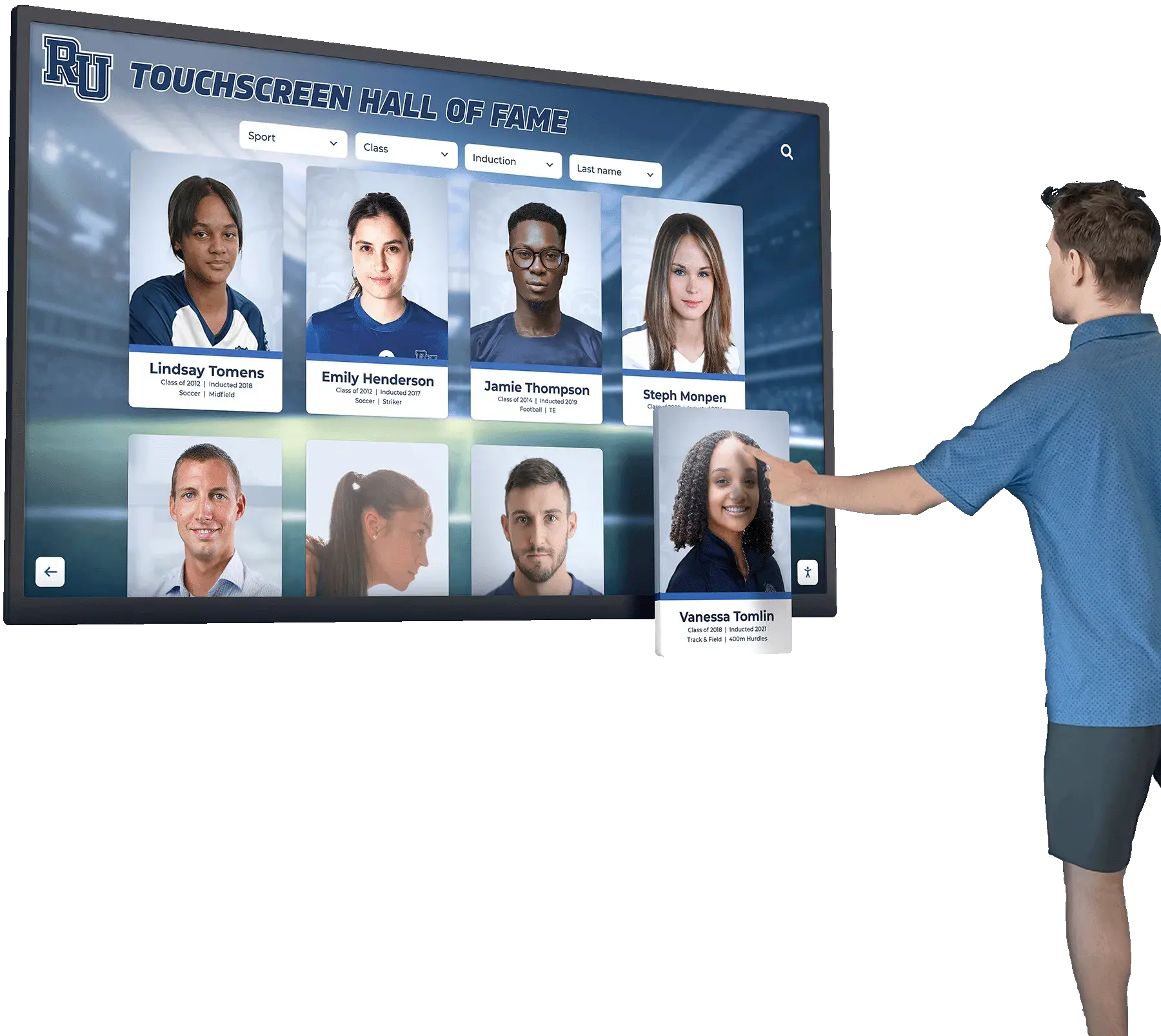
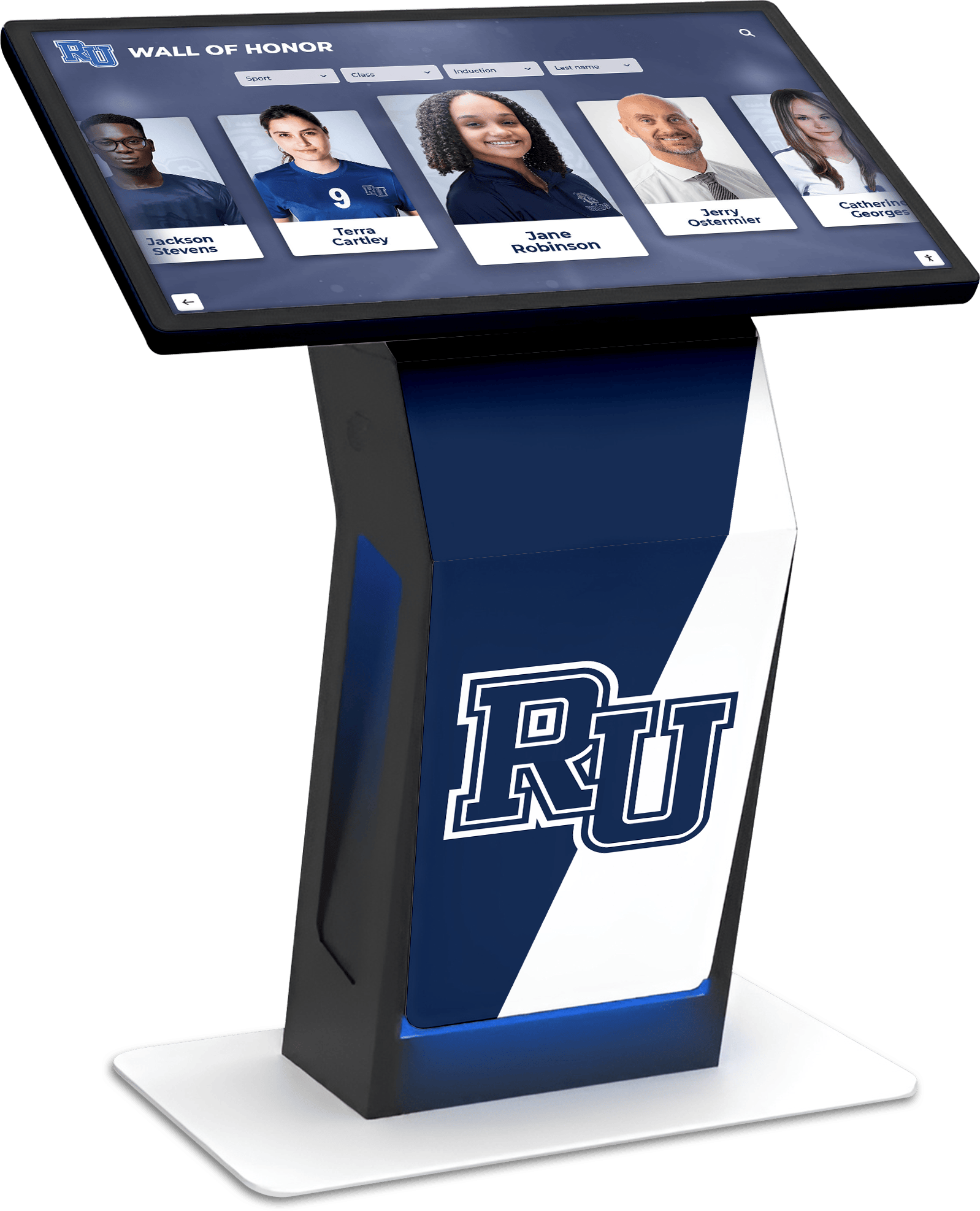
Digital hall of fame platforms preserve the athletic history that incoming officers need to inherit — a searchable archive accessible through a shared login is far more durable than a binder that leaves the building with the outgoing officer
Sponsor Knowledge Transfer: Beyond the File Folder
Sponsor files contain the formal record of what was agreed. Sponsor knowledge transfer requires capturing what is not in the file: the relationship context, the communication history, the renewal obstacles, and the recognition preferences that a sponsor expressed informally over months of interaction.
Outgoing officers who managed sponsor relationships should prepare a brief narrative summary for each significant sponsor before leaving office — not a formal document, but a one-paragraph note covering:
- Relationship tone: Is this sponsor a close community partner or a transactional advertiser? How do they prefer to be contacted?
- Recognition sensitivity: Does this sponsor care primarily about their logo placement, their PA announcements, their newsletter feature, or their social media mentions?
- Renewal history: Did they renew easily last year, or was there a negotiation? What was the sticking point?
- Outstanding commitments: Is there anything promised but not yet delivered — a banner placement that is scheduled for next season, a photo proof that was requested and not yet sent?
- Contact preference: Who at the business makes sponsorship decisions, and how do they prefer to be reached?
This context, combined with the formal agreement file, gives the incoming officer a foundation for the first sponsor renewal conversations rather than a cold start.
For context on the range of recognition commitments that sponsor agreements typically include — and the display infrastructure those commitments require — reviewing hall of fame and donor recognition platform options provides a useful orientation to what modern recognition systems can deliver, which informs how an incoming officer reads and interprets the commitments in inherited sponsor agreements.
See How Digital Recognition Platforms Support Leadership Continuity
Rocket Alumni Solutions builds interactive recognition systems for school athletic programs — giving incoming booster club officers a centralized platform where sponsor logos, donor acknowledgments, and athletic history are managed through a shared login rather than stored in any single person's files. A demo shows what that looks like for your program.
See Recognition Platform OptionsEvent and Fundraising Records Transfer
Event records answer the questions that incoming officers will inevitably ask when planning next year’s events: how much did we net, who were the volunteers, what vendors did we use, what sponsorships were tied to this event, and what went wrong that we should not repeat?
A complete event and fundraising records transfer should include:
| Record Type | What to Transfer | Format |
|---|---|---|
| Event financial summaries | Gross revenue, expenses, net for each event | Spreadsheet or PDF |
| Vendor contact list | Name, contact, pricing, and performance notes | Contact list with notes |
| Volunteer roster | Names and roles for each major event | Spreadsheet |
| Sponsor tie-ins | Which sponsors were specifically linked to which events | Notes in sponsor file |
| Event run sheets | Day-of timeline, setup requirements, close-out procedures | Document per event |
| Post-event notes | What worked, what did not, what to change next time | Written notes or email thread |
| Permit and insurance records | Any event-specific permits, certificates of insurance | Scanned documents |
Programs that maintain detailed event records discover a secondary benefit during orientation: the incoming officers can plan the current season’s events using last year’s actuals rather than starting from an estimate. A new fundraising chair who knows that last year’s golf outing netted $8,400, used three specific vendors, and required twelve volunteers can build a realistic plan for this year’s event in hours rather than weeks.
For programs that use event sponsorships to fund recognition infrastructure — digital displays, trophy cases, hall of fame programs — understanding how athletic recognition display platforms are evaluated and selected provides useful context for the incoming officer who is being asked to continue or expand a recognition program that a prior board committed to without fully documenting the implementation plan.
Building a Durable Transition Process Year Over Year
A single strong orientation cycle is not enough to build institutional resilience. The programs that maintain continuity through repeated leadership transitions are the ones that treat the orientation process as a standing institutional practice — one that improves each year, incorporates lessons from the previous transition, and is written into the organization’s operating procedures rather than left to the initiative of individual officers.
Practical steps for institutionalizing the orientation process:
Create a transition timeline in the bylaws. Specify when outgoing officers must complete their handoff documentation (two weeks before the final meeting is a reasonable standard) and when incoming officers must complete their access verification (within the first week of taking office). A timeline written into the bylaws is not subject to the outgoing officer’s schedule or the incoming officer’s urgency.
Maintain a standing transition document folder. A shared cloud folder, structured to match the orientation checklist domains, is a low-effort way to ensure documents accumulate in the right place throughout the year rather than being assembled in a rush before transition. The outgoing treasurer who adds documents to the folder as they are created throughout the year spends thirty minutes on transition preparation, not three days.
Build recognition platform documentation into regular operations. Every time content is updated on a recognition display — a new sponsor added, a donor acknowledgment updated, a hall of fame inductee added — the change should be logged in the shared folder with a date and description. Incoming officers inherit not just the current state of the display but a record of how it got there.
Debrief the transition. Within sixty days of the transition, the incoming board should meet briefly to identify what was missing from the handoff — not to assign blame, but to improve the checklist for next year. Every gap discovered during orientation is a gap that can be closed before the next transition.
For programs that want their recognition systems to function as a durable archive rather than a display that resets with each leadership change, resources covering digital recognition and hall of fame platform capabilities describe the features — searchable records, cloud-based access, administrative audit trails — that make a recognition platform an institutional asset rather than a point-in-time display.
The specific intersection of board transitions and recognition technology matters for another reason: programs that have invested in digital displays for sponsors and donors need incoming officers who understand what those commitments are and how to maintain them. A new officer who does not know the program uses a touchscreen donor wall may inadvertently let the platform lapse while fulfillment obligations to named donors continue.
For a broader view of how recognition tools are evaluated — including features that specifically support multi-year content management and administrative handoffs — the comparative resources at best-touchscreen.com covering hall of fame and recognition display tools cover the capabilities that distinguish platforms built for institutional use from simpler display-only solutions.
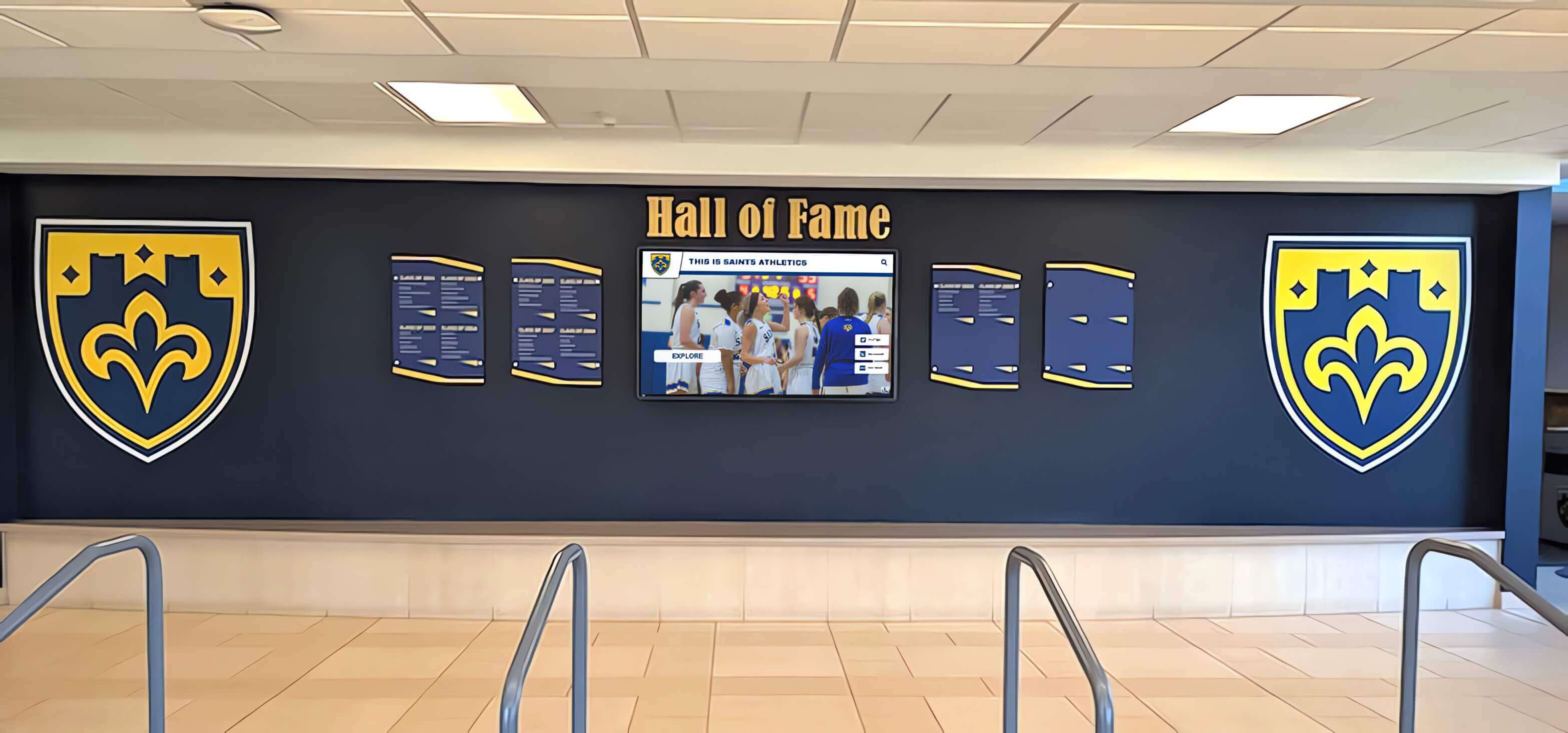
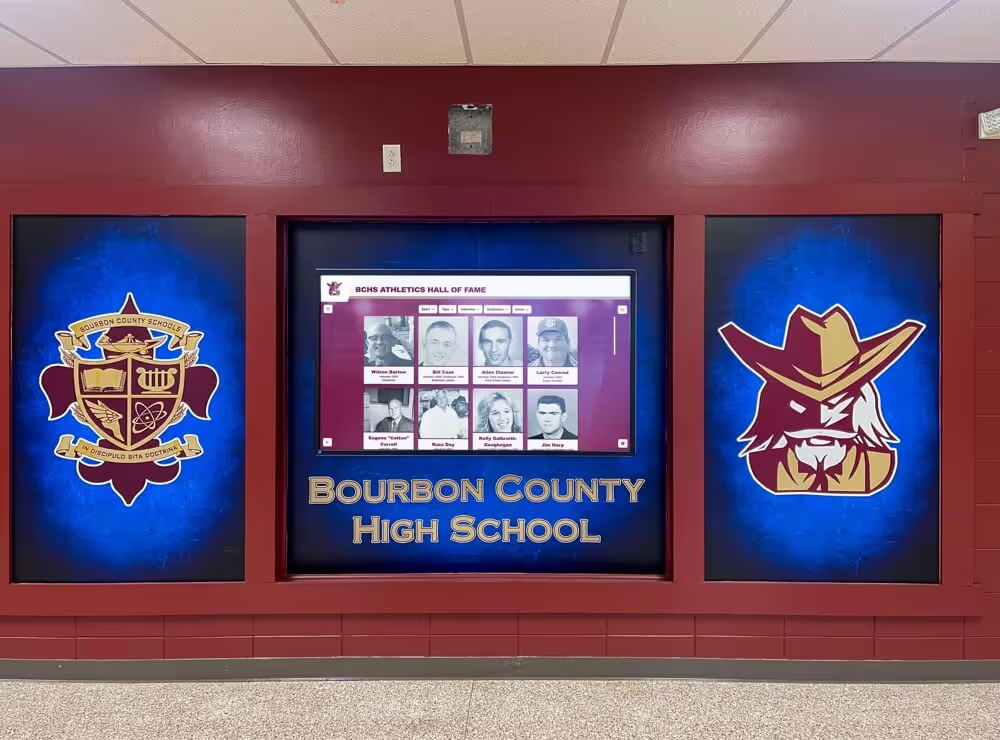
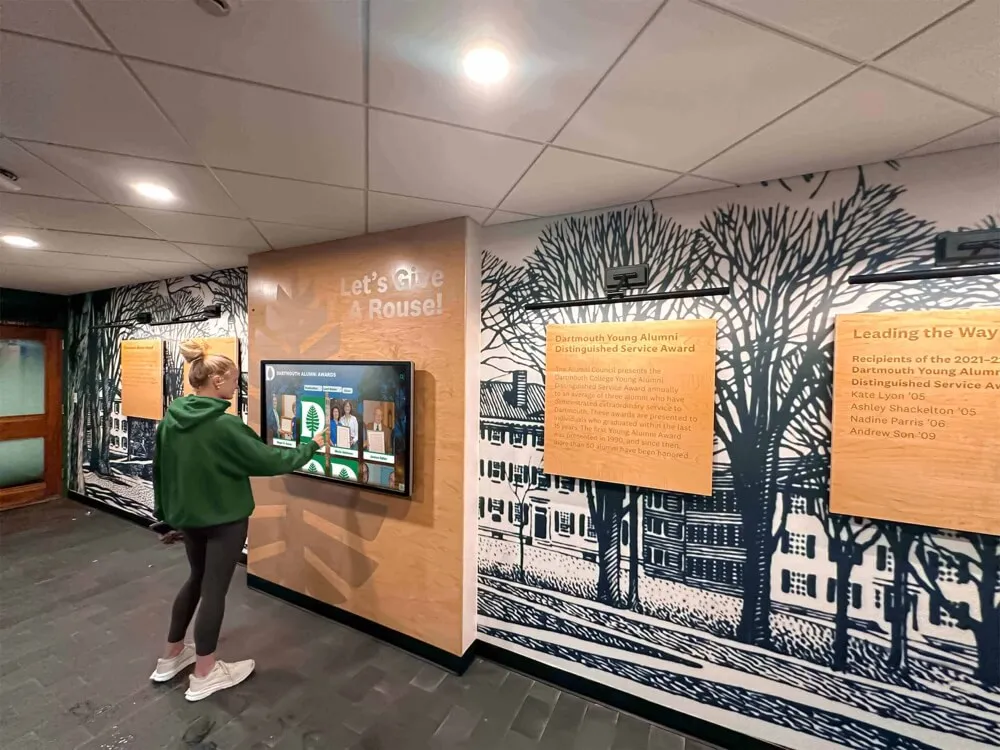
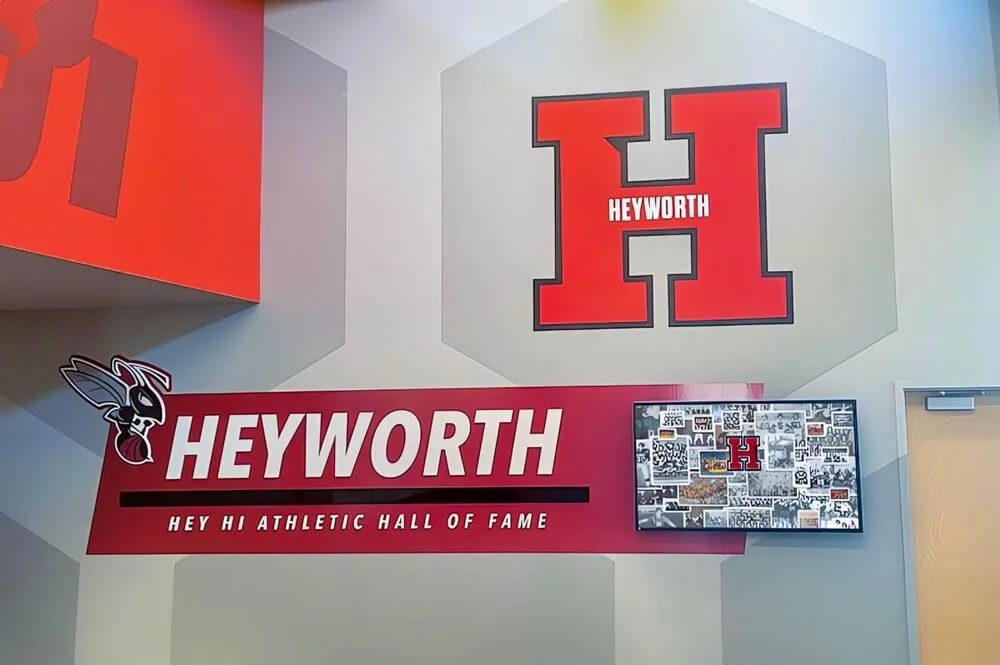
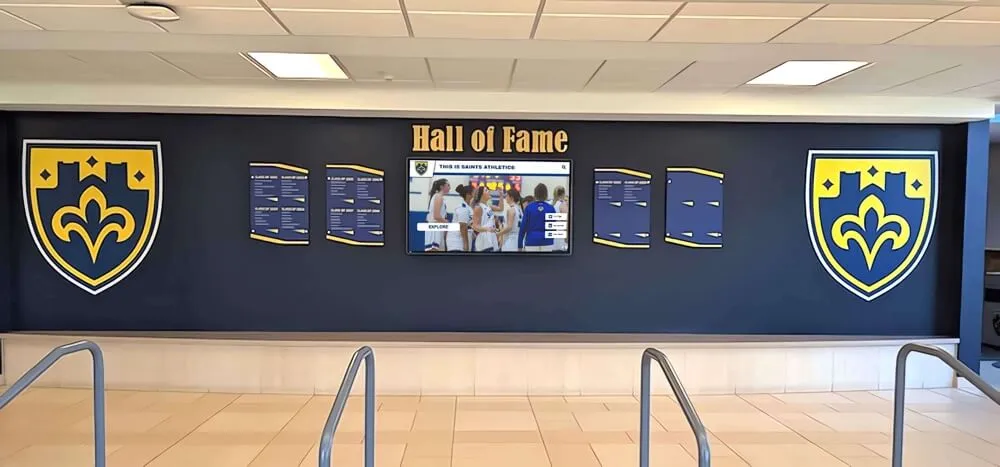
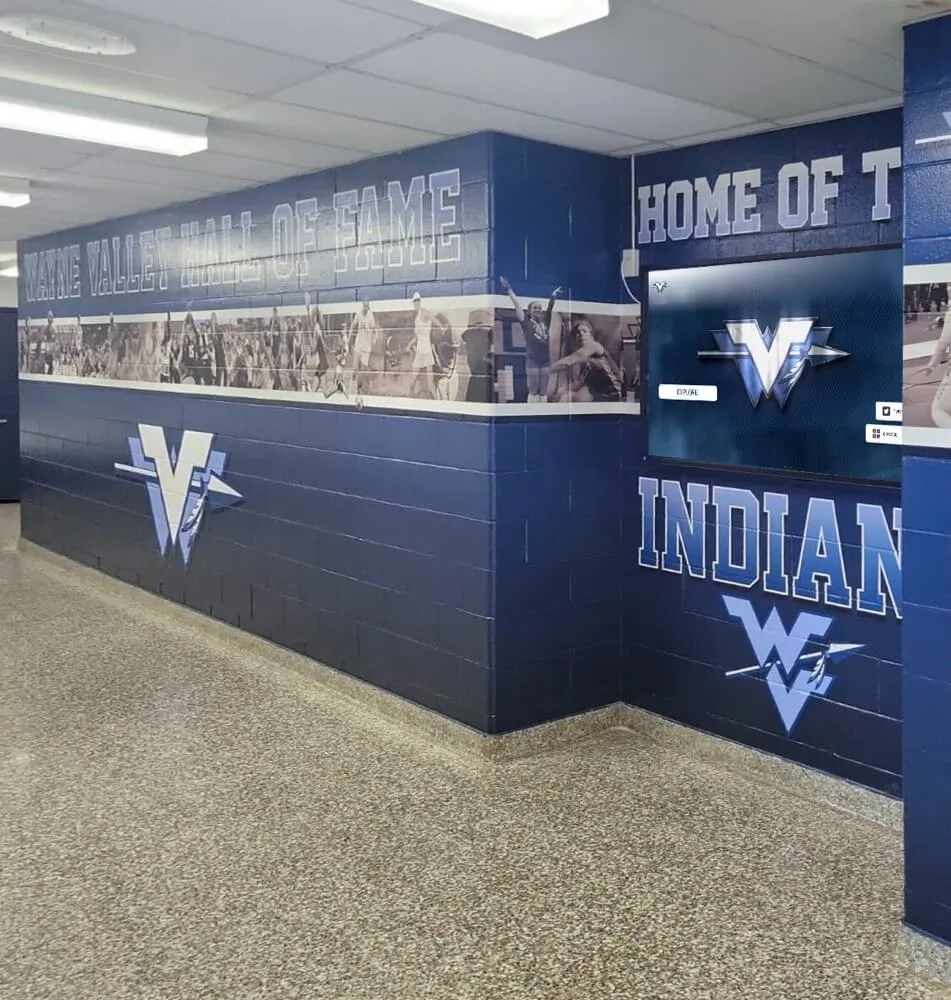
Hall of fame lobby displays represent multi-year institutional commitments — incoming board members inherit both the display and the obligations that keep it current, making a thorough orientation checklist essential
Frequently Asked Questions About Booster Club Board Orientation
What should a booster club board orientation checklist include?
A complete booster club board orientation checklist should cover seven domains: financial records and account access (bank accounts, reconciled statements, outstanding invoices), policy documents (bylaws, cash handling, reimbursement, and investment policies), sponsor files (active agreements, payment status, recognition commitments), donor files (restricted fund balances, acknowledgment records, named gift terms), recognition displays and digital platform credentials (login transfers, content audits), athletic history and hall of fame archives (inductee rosters, championship records, award histories), and event and fundraising records (net revenue summaries, vendor contacts, volunteer rosters). The checklist should be completed before the outgoing board’s final meeting, not after.
How do incoming booster club officers verify inherited sponsor commitments?
Incoming officers should read each active sponsor agreement in full during the first week of their term — not just review a summary. They should identify the specific recognition commitments in each agreement (logo placement, display rotation frequency, PA announcements, social media mentions, newsletter features), then verify that each commitment is currently being fulfilled by visiting the facility or logging into the recognition display platform. Any commitment that is not being fulfilled should be assigned as an action item at the first board meeting, along with a remediation deadline.
What is the biggest risk of a poor booster club leadership transition?
The most common and most damaging risk of a poor leadership transition is the loss of sponsor and donor relationship context — the informal knowledge about how a sponsor prefers to be contacted, what recognition they care about most, and what obstacles came up in the last renewal conversation. This context does not live in the formal file folder; it lives in the departing officer’s memory. When it is not captured and transferred, the incoming officer begins every sponsor relationship from a cold start, which extends the renewal timeline and increases attrition risk. The second most common risk is undetected fulfillment gaps — recognition commitments that were made but not completed, and that the incoming officer does not discover until the sponsor raises them.
How should booster clubs handle digital platform access during leadership transitions?
Digital platform access should be treated as a formal handoff item, not an afterthought. For each platform — recognition display CMS, donor database, website, social media, cloud storage — the outgoing officer should transfer login credentials or admin roles before the final board meeting, and the incoming officer should verify access within the first week of their term. Platforms that use individual logins rather than shared organization credentials are the most vulnerable during transitions, because the credential lives with the person rather than with the role. Programs that migrate to organization-level logins or administrator role systems avoid this recurring vulnerability.
How do booster clubs preserve athletic history and hall of fame records across leadership changes?
The most durable method for preserving athletic history through leadership transitions is to store it in a digital platform with organization-level access rather than in physical binders or personal files. Digital hall of fame and athletic history platforms maintain searchable records of inductees, championship histories, retired numbers, and award rosters that persist regardless of who holds office. Physical records should be scanned and stored in a shared cloud folder structured to match the orientation checklist. The organization should also maintain a written inventory of all physical archive materials — photographs, trophies, plaques — with a designated storage location that does not change with leadership.
A Checklist That Survives Every Transition
The booster club board orientation checklist in this guide is not a one-time project. It is a standing institutional process — one that the organization refines through each annual cycle, filling gaps identified in the previous transition and adding documentation for new platforms or programs as the organization grows.
Incoming officers who complete the full checklist in their first thirty days arrive at the first board meeting with a clear picture of what they inherited, what needs immediate attention, and what can be addressed on a normal timeline. Outgoing officers who prepare the full handoff package give the organization the continuity that the community — sponsors, donors, athletes, and families — depends on without knowing it exists.
The most visible evidence of a smooth leadership transition is not a completed checklist. It is a booster club that continues to honor its sponsor commitments, acknowledge its donors, maintain its recognition displays, and preserve its athletic history without interruption — because the institutional knowledge never left the building.
Make Your Recognition Program Transition-Proof
Rocket Alumni Solutions builds interactive digital recognition systems for school athletic programs — giving booster clubs a centralized platform where sponsor logos, donor acknowledgments, hall of fame records, and athletic history are managed through a shared organizational login. Incoming officers inherit a complete, current archive rather than a stack of binders. A demo shows what your program's recognition environment could look like.
Schedule a Demo