



A booster club bank account closure checklist is the step-by-step process a treasurer and board complete when permanently shutting down a bank account: obtaining a board vote, confirming signatory authority, reconciling the final balance, resolving any restricted funds, submitting the closure request to the bank, collecting the final account statement, and archiving all documentation for the required retention period. Properly closing an account — rather than simply abandoning it — prevents escheatment risk, removes former officer access to organizational funds, clears the organization’s financial records, and gives school administrators and auditors a documented accounting of every account the program has ever held. This guide covers every step in a format that works for any booster club account closure, whether the account served the general operating fund, a named scholarship, a capital campaign, or a sport-specific budget.
Not legal or financial advice: This guide describes commonly used practices for educational purposes only. Account closure requirements, restricted fund obligations, and escheatment timelines vary by state, financial institution, and nonprofit structure. Your organization’s specific obligations depend on applicable state law, your school district’s policies, and your grant or gift agreements. Consult a licensed CPA, attorney, or your school district’s finance office before establishing or revising financial procedures.
When a booster club closes an account informally — stops using it without completing the formal closure process — it creates ongoing governance risk. Former officers remain authorized signatories. The balance may be slowly consumed by maintenance fees or accumulate unnoticed. State unclaimed property statutes may eventually require the bank to report and remit funds to the state treasury, a recovery process that can take months and requires documentation the organization may no longer have. A completed booster club bank account closure checklist eliminates each of those risks with eight documented steps.

A booster club bank account closure touches more than just the bank — every scholarship, named award, or recognition program connected to the account must be updated when the account is formally closed, so the institutional record stays complete across leadership transitions
What the Booster Club Bank Account Closure Checklist Covers
A complete booster club bank account closure checklist addresses eight stages in sequence. Each stage depends on the one before it — fund transfers cannot be finalized until the balance is reconciled, and the bank cannot be contacted until the board has authorized the closure.
| Stage | Core Tasks | Why It Matters |
|---|---|---|
| 1. Board authorization | Vote to close, document in minutes with account details | Establishes legal authority for the closure |
| 2. Signatory verification | Confirm an active officer is authorized on the account | Prevents the bank from rejecting the closure request |
| 3. Final reconciliation | Match internal records to bank statements | Ensures the reported balance is accurate before funds are moved |
| 4. Restricted fund decisions | Review gift agreements, resolve restricted balances | Protects against donor disputes and policy violations |
| 5. Fund transfer or disbursal | Move remaining balance to the designated account | Zeroes out the account before closure request |
| 6. Closure request to the bank | Submit written or in-person closure request | Formally initiates the bank’s closure process |
| 7. Final statement collection | Obtain the statement confirming zero balance and account closure | Creates the permanent audit record |
| 8. Records update and archive | Update school liaison, internal inventory, and financial files | Completes the closure trail for audits and future officers |
Step 1: Obtain a Formal Board Vote to Close the Account
The first item on any booster club bank account closure checklist is a documented board vote. Account closure is a material financial decision — one that should never be made unilaterally by the treasurer alone. The board resolution to close an account should be recorded in board meeting minutes and should specify the account name (as the organization uses it internally), the financial institution, the last four digits of the account number, the approximate current balance, and the designation for any remaining funds.
Recording this level of detail in the minutes ensures that any future auditor, school liaison, or incoming officer can trace the closure back to a specific board decision. The minutes become one piece of the permanent closure record.
If the account being closed is connected to a named scholarship, a memorial fund, or any recognition program — an athletic award, a senior recognition endowment, a booster-funded hall of fame — note that connection in the resolution as well. Closing a financial account that supports a recognition program should trigger a parallel review of the recognition record, discussed in Step 8.
Step 2: Verify Signatory Authority Before Contacting the Bank
Before initiating contact with the financial institution, confirm that at least one current, active officer is an authorized signatory on the account being closed. This sounds straightforward, but it is a frequent failure point in booster club account closures: the person the board has authorized to close the account may not be the person the bank recognizes as a signatory.
If the account’s signatories are all former officers, the organization will need to complete a signatory update before the bank will accept a closure request from anyone currently in leadership. That update process typically requires a current copy of the organization’s bylaws, a board resolution naming the new authorized signatories with officer titles, government-issued identification for each new signatory, and in some cases in-person verification or notarized documentation.
Complete the signatory update first — then proceed with the closure. Attempting to close an account without resolving signatory authority is the single most common reason account closures stall or require multiple bank visits.
Step 3: Reconcile the Account Balance Before Moving Funds
Final reconciliation is required before any funds are transferred out of the account. The reconciliation confirms that the organization’s internal records — its general ledger, cash journal, or treasurer’s spreadsheet — match the bank’s records transaction by transaction for the full life of the account.
Final reconciliation checklist:
| Task | Responsible | Completed |
|---|---|---|
| Obtain the most recent complete bank statement | Treasurer | |
| Compare each transaction on the statement against internal records | Treasurer | |
| Identify and resolve any discrepancies before proceeding | Treasurer | |
| Confirm the ending balance in internal records matches the bank statement | Treasurer | |
| Have a second officer review and sign the reconciliation | President or VP | |
| Document the reconciliation date and outcome in writing | Treasurer |
Any discrepancy found during reconciliation — an uncleared check, a fee that was not recorded, an old deposit that appears in the bank records but not internally — must be resolved before funds are moved. Transferring a balance that has not been fully reconciled means carrying an unresolved discrepancy into the organization’s other accounts, where it becomes harder to trace and explain.

Reconciliation before closure ensures that every transaction — including recognition installation costs, scholarship disbursements, and vendor payments — is properly recorded before the account is zeroed and closed
Step 4: Resolve All Restricted Fund Decisions
Before transferring the remaining balance out of the account, the organization must determine whether any portion of that balance is subject to restrictions — donor gift agreements, grant award conditions, scholarship fund terms, or earmarked contributions from sponsors.
Restricted funds cannot simply be deposited into the general operating account as though they were unrestricted. Moving restricted funds incorrectly can breach a donor agreement, violate a grant award condition, or create a legal liability that follows the organization for years after the account is closed.
Common restricted fund scenarios:
- Named scholarship funds — Funds donated for a specific scholarship award may require that they be held in a designated account or applied only to the award they were given to support. If the scholarship is continuing, transfer to a designated continuation account. If the scholarship is ending, consult a qualified attorney about permissible uses.
- Memorial award funds — Contributions made in memory of a specific individual often come with expectation of continued recognition. Closing the account does not close the recognition obligation. The recipient history and award criteria need to be documented separately from the account.
- Grant-funded balances — If any portion of the account holds unexpended grant funds, the grant agreement controls what happens to those funds at closure. Most grants require unexpended balances to be returned to the funder or formally reallocated with prior written approval.
- Sponsor-directed contributions — Sponsors who designated their gifts for specific purposes — facility improvements, equipment purchases, display installations — retain an interest in how those funds are used.
Programs that maintain recognition infrastructure funded by designated contributions benefit from documenting the connection between the financial account and the recognition record. Academic history archiving programs at schools consistently show that the records connecting donor intent to institutional recognition are among the hardest to reconstruct after the fact — keeping them current at the time of account closure is far easier than recreating them later.
Step 5: Transfer Remaining Funds to the Designated Account
Once the balance is reconciled and restricted fund decisions are resolved, the remaining balance is transferred to the destination account specified in the board resolution. The transfer method depends on the financial institution and the amount involved:
- ACH transfer or wire — For larger balances, an electronic transfer to the designated account creates a documented transaction record in both accounts.
- Cashier’s check — Some banks issue a cashier’s check for the closing balance, made payable to the organization, which is then deposited into the designated account.
- Internal bank transfer — If both accounts are at the same institution, an internal transfer is typically the fastest option and generates an automatic record.
Obtain written confirmation of the transfer — whether a transaction receipt, a wire confirmation, or a copy of the cashier’s check — and file it with the closure documentation. This record shows that the balance was moved intentionally, in a specific amount, to a specific destination, on a specific date.
Recognition Transitions Happen Alongside Financial Ones
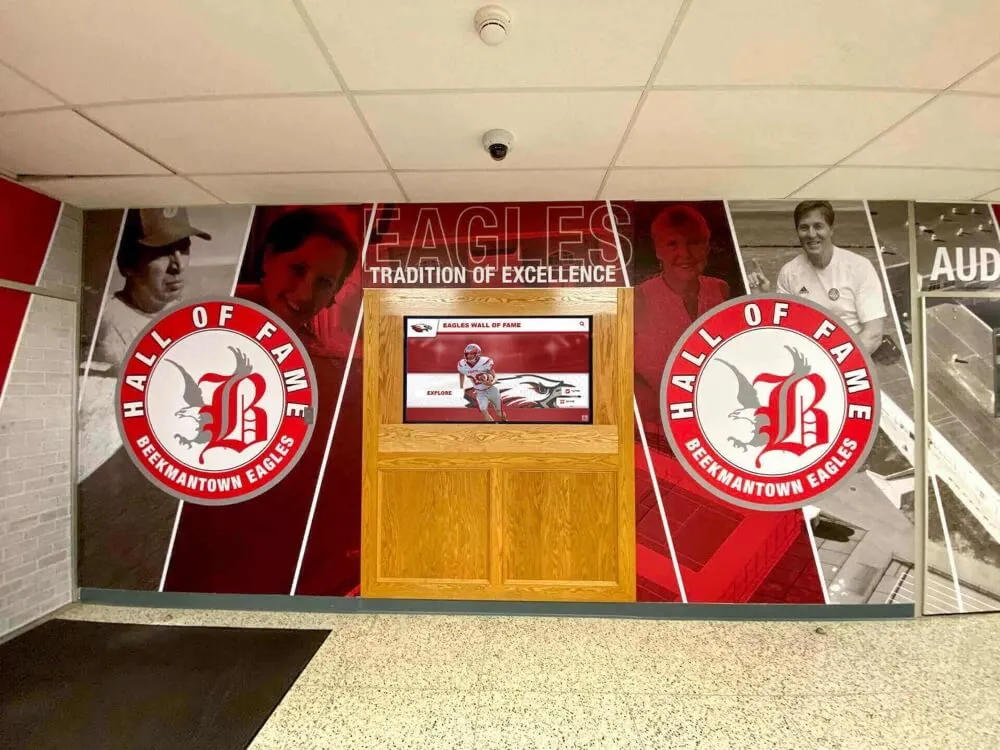
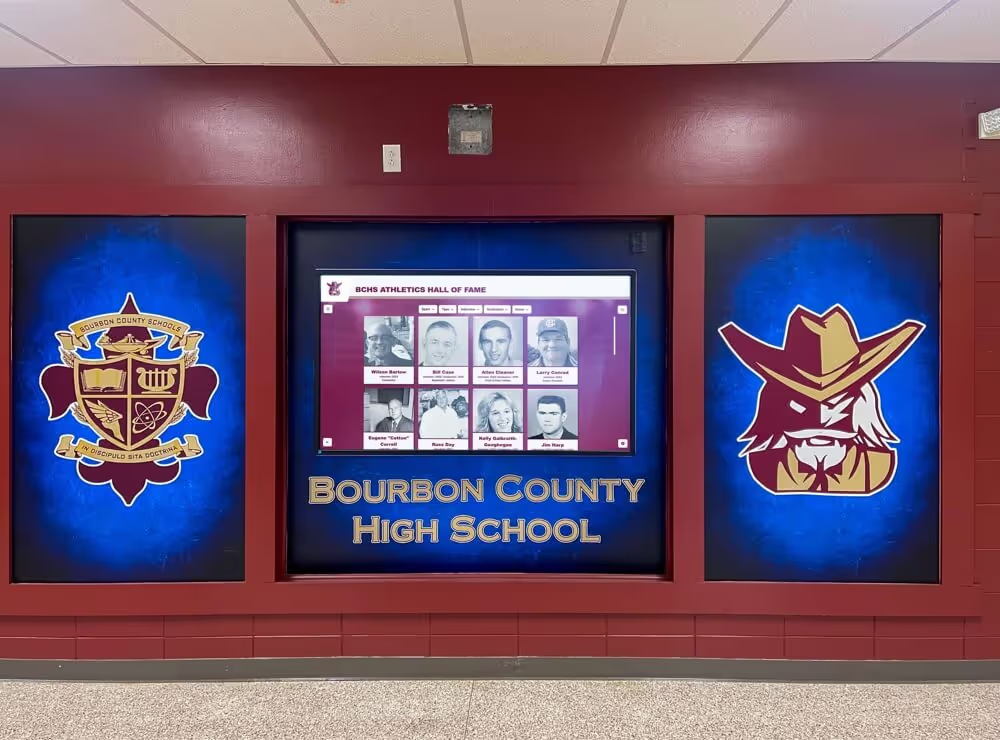
When a booster club closes an account tied to a scholarship, named award, or recognition program, the recognition archive needs to be updated at the same time. Rocket Alumni Solutions builds digital recognition systems for school athletic programs — giving organizations a durable, updatable platform for hall of fame records, named award histories, and sponsor acknowledgment that outlasts any single leadership cycle. See how it works for your facility.
Schedule a DemoStep 6: Submit the Formal Account Closure Request to the Bank
With the balance transferred to zero, the organization is ready to submit the formal closure request to the financial institution. Each bank has its own process — some accept written requests by mail or secure message, others require in-person closure, and some require both a written request and a final branch visit to confirm identity.
Documents typically required for booster club account closure:
| Document | Purpose | Who Provides |
|---|---|---|
| Written closure request letter | Formal notice that the account holder is requesting closure | Treasurer or president (authorized signatory) |
| Board resolution authorizing closure | Demonstrates organizational authority for the action | Board minutes (copy provided to bank) |
| Government-issued ID for authorized signatory | Identity verification | Signatory |
| Current organization bylaws (if requested) | Confirms current officer structure and authority | Treasurer |
| IRS determination letter or EIN documentation (if requested) | Confirms organizational identity for nonprofit accounts | Treasurer |
Request a written acknowledgment from the bank confirming that the closure request was received and is being processed. Some banks require a waiting period — typically 30 to 60 days — before the account is formally closed to allow any outstanding items to clear.
Step 7: Obtain the Final Account Statement and Closure Confirmation Letter
After the closure is processed, the organization must collect two documents from the bank: the final account statement and the formal account closure confirmation.
The final account statement shows the closing transaction history — the balance transfer, any final fees, and the zero balance. It is the organization’s auditable record that the account was properly zeroed before closure, not abandoned.
The closure confirmation letter (sometimes called a closure confirmation notice or account termination letter) is the bank’s official documentation that the account no longer exists. Not all banks issue this automatically — it may need to be requested specifically. File it alongside the final statement and the board resolution.
Closing a bank account and updating the recognition record are parallel tasks — organizations that treat both as part of the same transition maintain the institutional continuity that sponsors, donors, and school administrators expect
Step 8: Update School Liaison Documentation and Archive All Closure Records
The final stage of the booster club bank account closure checklist is a documentation update. Two parallel actions are required: notifying the school liaison (if applicable) and completing the organization’s own internal records.
School liaison notification: Many school districts require booster clubs to maintain an account inventory on file with the school or district. If your organization has that requirement, submit an updated account inventory following the closure. The update should reflect the account as closed, with the closure date and the destination of funds.
Internal records update: Update the organization’s account inventory worksheet by moving the closed account from the active list to a closed account log. The log entry should include: the account name, the financial institution, the account number (last four digits), the closure date, the final balance at closure, the destination of funds, and a reference to the board resolution that authorized the closure.
Recommended retention period for closure records: The IRS guidance for tax-exempt organizations generally recommends retaining financial records for at least three years after filing the related annual information return. Many school district and state nonprofit policies extend that to five to seven years. If the closed account held grant funds, the grant agreement may specify its own retention requirement — use the longest applicable period.
Final Records Archive Structure
| Folder | Contents | Minimum Retention |
|---|---|---|
| Board authorization | Resolution, board minutes page with vote | 7 years |
| Signatory documentation | Signatory update records, bank confirmation of signatory changes | 7 years |
| Final reconciliation | Reconciled statements, signed reconciliation worksheet | 7 years |
| Restricted fund decisions | Gift agreements reviewed, transfer or reallocation documentation | Permanent (if donor-restricted) |
| Fund transfer records | Wire confirmation, cashier’s check copy, transfer receipt | 7 years |
| Bank closure request | Written request copy, bank acknowledgment | 7 years |
| Final statement and closure letter | Bank-issued final statement, account closure confirmation | Permanent |
| School liaison update | Updated account inventory submitted to district | 7 years |
| Recognition records update | Documentation of any connected award, scholarship, or display record updates | Permanent (if recognition continues) |
Incoming officers who inherit organized financial records and recognition archives are better positioned to sustain donor relationships, scholarship programs, and recognition displays without reconstructing history from incomplete documentation
Connecting Account Closure to Recognition Programs
Many booster club bank accounts are connected — directly or indirectly — to recognition programs. A scholarship fund account supports a named award. A capital campaign account funded a digital hall of fame installation. A sport-specific account covered the production of an athletic record board or display.
When those accounts are closed, the recognition programs they supported do not disappear. The scholarship may continue under a new funding structure. The hall of fame or record board is still installed and visible. The athletes recognized on those displays expect their records to be maintained regardless of what happens to the account that paid for the installation.
Closing an account without updating the connected recognition record creates a documentation gap that compounds over time. Future officers will not know why the fund ended, who was last recognized, or how to locate the historical records for the award. Programs that invest in recognition infrastructure — particularly hall of fame display systems designed for long-term institutional use — find that recognition continuity depends as much on the accompanying documentation as it does on the display hardware itself.
For organizations looking to ensure that named awards and scholarship recognition remain visible and accurate across leadership transitions, academic award digital display programs demonstrate how recognition records can be maintained in formats that outlast any single account, officer, or organizational structure.
Senior recognition programs — including the awards and scholarship announcements that often coincide with year-end booster club financial activity — benefit from documentation that connects the financial decision (closing the fund) to the recognition outcome (updating the display or program listing). Senior class awards display guidance covers how schools maintain those recognition records in a format that remains accessible to families, administrators, and future program coordinators.
When a school closes a booster club account tied to a gymnasium improvement project or athletic facility enhancement, the recognition records for that project — donor acknowledgment plaques, sponsor recognition panels, facility dedication displays — should be reviewed and archived at the same time. Gymnasium design and athletic space recognition documentation covers how facilities programs maintain the institutional record of who contributed to athletic spaces, and that documentation should be preserved when the account that funded those contributions is closed.
Class reunion and recognition events tied to booster club funding also benefit from clean financial records at account closure. Class reunion awards and recognition documentation addresses how programs maintain multi-decade recognition archives — the same documentation discipline that closes a bank account cleanly also ensures the recognition history connected to that account survives the financial transition.
For programs where account closure coincides with a program discontinuation — a sport that was cut, a performing arts group that merged — the recognition records for that program’s alumni deserve the same care as the financial records. Color guard and performing arts senior night recognition and college football hall of fame program documentation illustrate how institutions preserve the athletic and program history that financial transitions might otherwise interrupt.

Donor and sponsor recognition that was funded by a now-closed booster club account must be documented and maintained — closure of the account does not end the acknowledgment obligation to the contributors whose gifts made the recognition possible
Frequently Asked Questions About the Booster Club Bank Account Closure Checklist
What does a booster club bank account closure checklist include?
A booster club bank account closure checklist includes eight stages: obtaining a formal board vote to close the account (documented in board minutes), verifying that a current officer is an authorized signatory on the account, reconciling the final account balance against bank statements, resolving any restricted fund decisions before moving funds, transferring the remaining balance to the designated account, submitting the formal closure request to the financial institution, collecting the final account statement and closure confirmation letter, and updating school liaison documentation while archiving all closure records for the required retention period. Each stage depends on completion of the one before it — reconciliation must precede fund transfers, and fund transfers must precede the bank closure request.
What board approval is required to close a booster club bank account?
Closing a booster club bank account requires a formal board vote, recorded in board meeting minutes with the account name, financial institution, last four digits of the account number, approximate balance at the time of the vote, and the designated destination for any remaining funds. The resolution should be passed before the organization contacts the bank. Most financial institutions will require a copy of this resolution — or at minimum evidence that the closure was authorized by the organization’s governing body — as part of the formal closure process, particularly for nonprofit and organizational accounts.
How do you handle restricted funds when closing a booster club bank account?
Restricted funds — balances subject to a donor gift agreement, grant award conditions, scholarship fund terms, or sponsor-directed contribution requirements — cannot simply be transferred to the general operating fund when an account is closed. Review any gift or grant agreements associated with the account before initiating the transfer. Named scholarship funds that are continuing should be transferred to a designated continuation account. Unexpended grant balances typically must be returned to the funder or reallocated with prior written approval. If the purpose of the restricted fund is ending and the restrictions cannot be repurposed, consult a qualified attorney before moving those funds.
What documents should a booster club keep after closing a bank account?
After closing a booster club bank account, the organization should retain: the board resolution authorizing the closure (with account details and destination of funds), the final reconciled bank statement showing the closing balance and transfer to zero, written confirmation of the fund transfer (wire receipt, cashier’s check copy, or transfer acknowledgment), the formal closure request submitted to the bank, the bank’s official closure confirmation letter, and documentation of any restricted fund decisions made at closure. Financial records should be retained for at least the period specified in any applicable grant or gift agreements, or for a minimum of three to seven years per IRS guidance for tax-exempt organizations — whichever is longer.
What happens if a booster club stops using a bank account without formally closing it?
If a booster club stops using a bank account without completing the formal closure process, several risks develop over time. Former officers remain authorized signatories, giving individuals who are no longer active in the organization continued legal access to those funds. Monthly maintenance fees may slowly erode the balance. Most states have unclaimed property (escheatment) statutes that require financial institutions to report and eventually remit inactive account funds to the state after a defined inactivity period — typically three to seven years. Recovering escheated funds requires a formal state claim process that can take months and depends on documentation the organization may no longer have. An abandoned account that appears in a later audit also creates questions about why it was not formally closed and whether the balance was properly accounted for.
Closing Every Account on the Right Terms
A booster club bank account closure checklist is the financial discipline that separates programs with clean records from those whose histories become increasingly difficult to reconstruct as leadership changes. The eight steps in this guide — board authorization, signatory verification, final reconciliation, restricted fund resolution, fund transfer, formal closure request, final documentation collection, and record archiving — give any treasurer and board the structure to close an account completely, correctly, and with a documented trail that any future auditor, school administrator, or incoming officer can follow.
Programs that treat account closure with the same rigor they apply to account opening are the programs that can confidently answer any question about their financial history: when an account existed, why it was opened, what it held, where the funds went, and who authorized every step. That confidence is the foundation of the financial credibility that sponsors, donors, and school administrators expect from the organizations entrusted to support athletic and recognition programs.
The institutional records connected to those accounts — the scholarship recipients, the recognition displays, the named award histories, the hall of fame installations — deserve the same documented continuity. A clean account closure is not just a financial task. For programs where recognition and finance are intertwined, it is the moment to ensure both records are complete, accurate, and accessible to every officer who follows.
Senior class recognition records and the athletic achievement histories that booster clubs support year after year are among the institutional records that matter most to the students and families they serve — and maintaining that continuity across financial transitions is what distinguishes programs that build lasting institutional legacies.
Build a Recognition Platform That Outlasts Every Financial Transition
Rocket Alumni Solutions builds interactive digital recognition displays for school athletic programs — giving booster clubs a permanent, updatable platform for hall of fame records, named award histories, scholarship recipient archives, and sponsor recognition that survives every account closure, officer transition, and leadership change. Schedule a demo to see what that looks like for your facility.
Schedule Your Recognition Display Demo