



Every athletic director and booster club treasurer eventually faces the same task: drafting an athletic sponsorship letter that convinces a local business to write a check. The letter goes out, a few sponsors respond, and then the real challenge begins — actually delivering on every recognition promise made in print. For schools that get this right, sponsorship programs become reliable annual revenue. For schools that treat the letter as a sales pitch and the recognition as an afterthought, sponsors rarely renew.
This guide covers what an effective athletic sponsorship letter needs to include, how to structure sponsor levels and pricing, and how to build a recognition deliverables checklist that your school can actually fulfill — including the growing role of digital displays in making sponsor recognition visible, durable, and impressive enough to justify renewal year after year.
Local businesses receive dozens of sponsorship requests from schools, youth leagues, arts programs, and nonprofits every season. What separates a letter that earns a meeting from one that lands in the recycling bin is specificity: specific recognition, specific audience reach, specific dollar amounts, and a specific sense of what the business will receive in exchange for its investment. Vague promises of “visibility and appreciation” rarely close deals. A well-built athletic sponsorship letter functions more like a media kit than a thank-you note — it answers the business owner’s first question before they have to ask it: what exactly do I get?

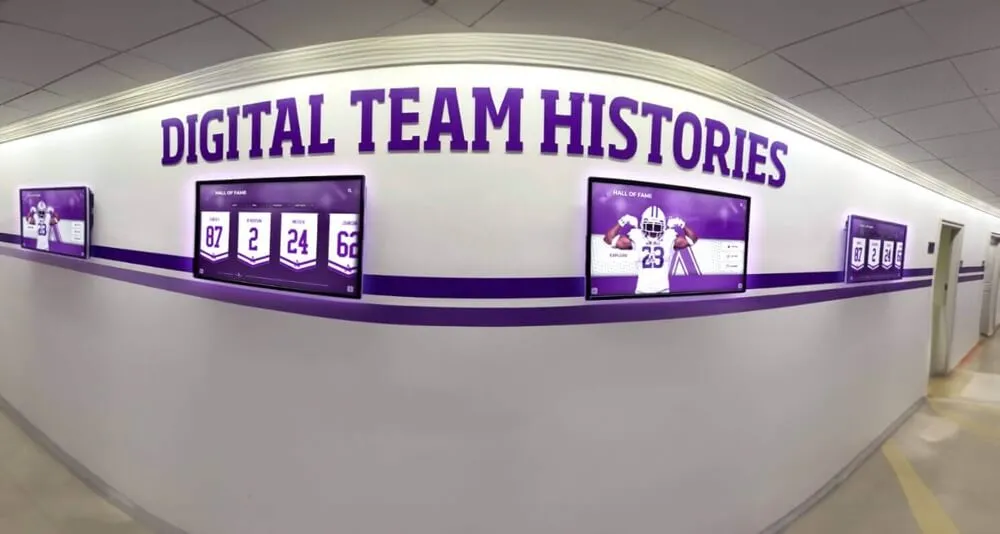
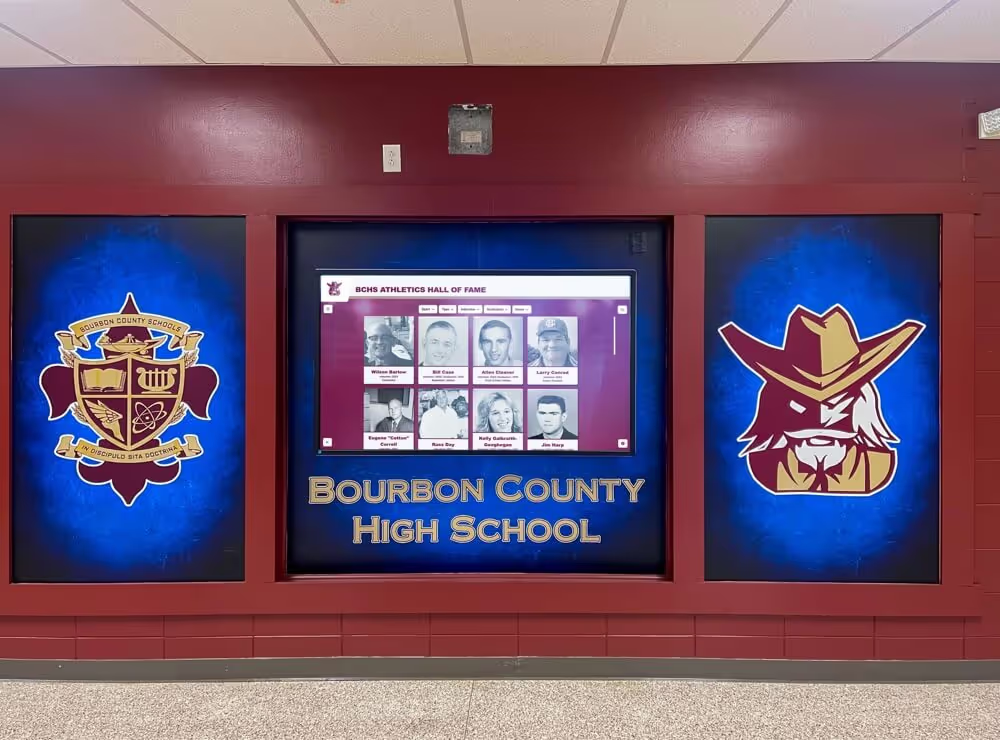
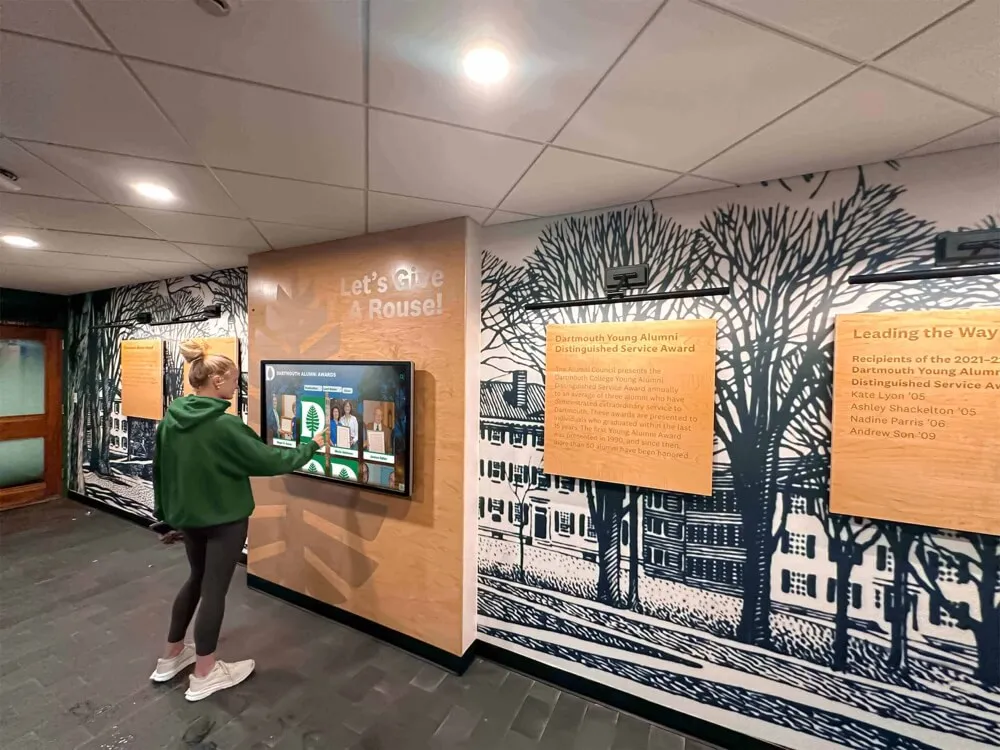
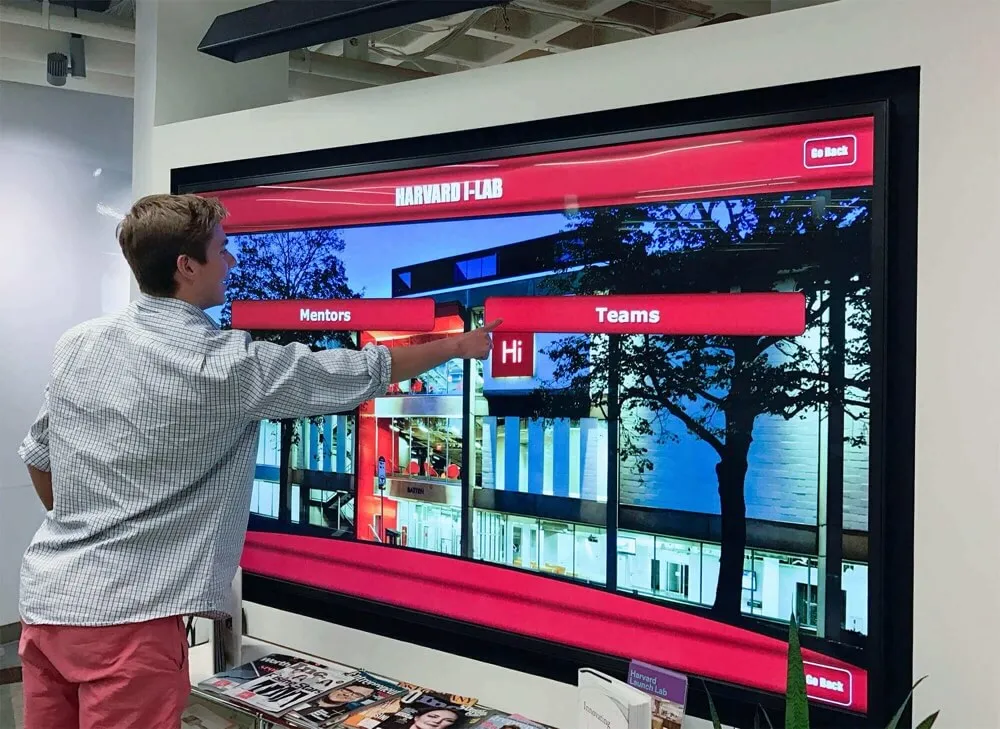
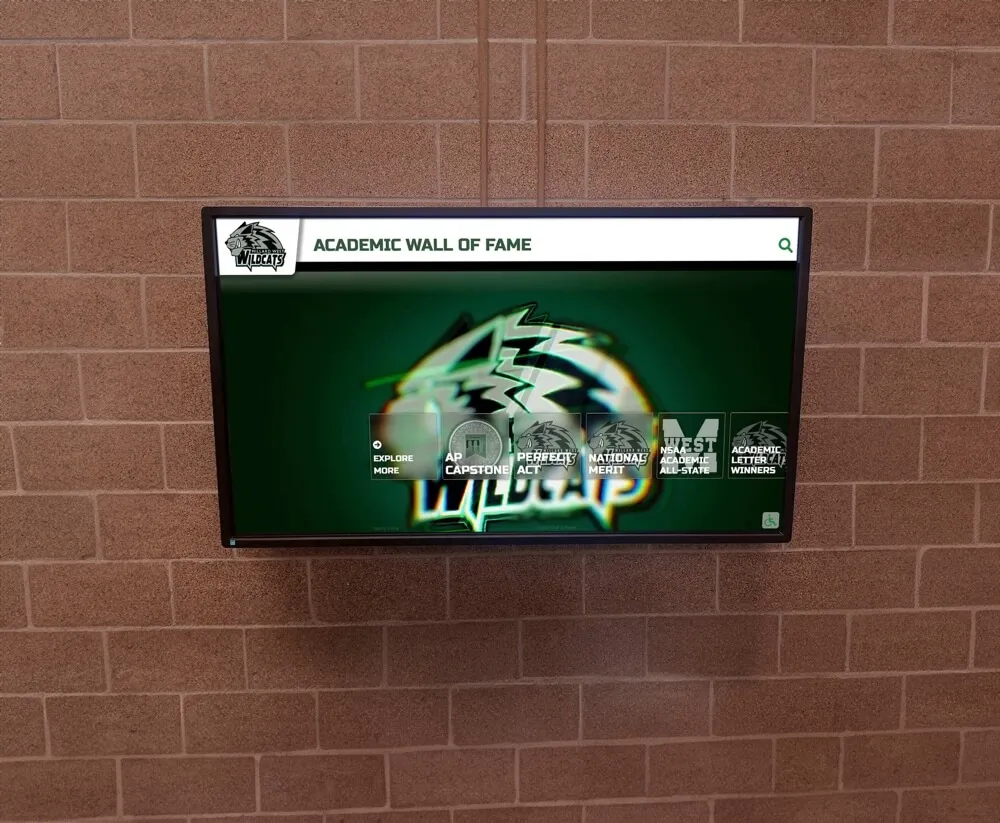
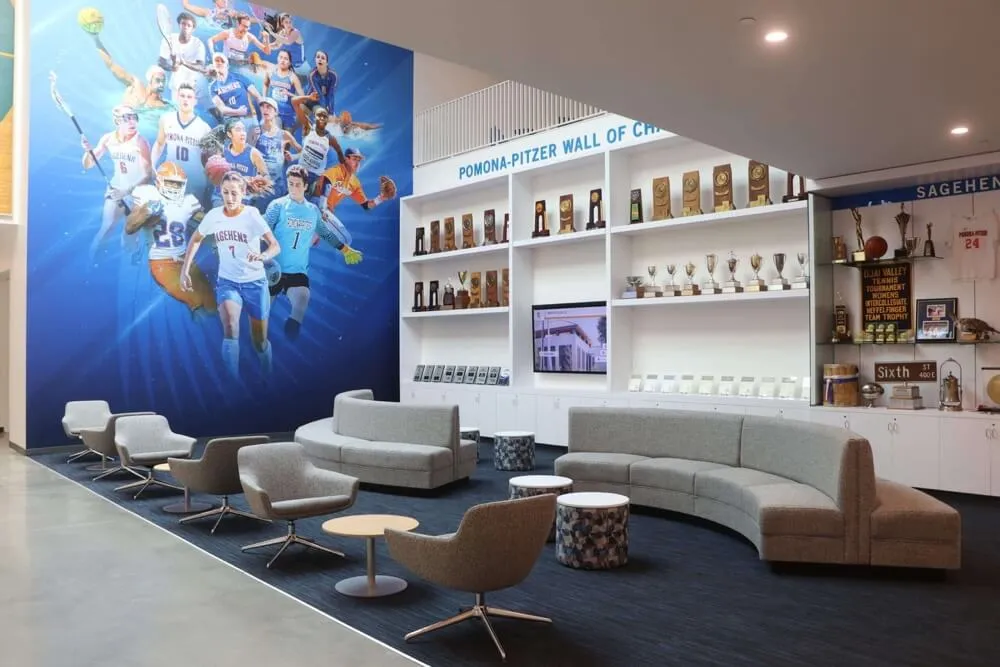
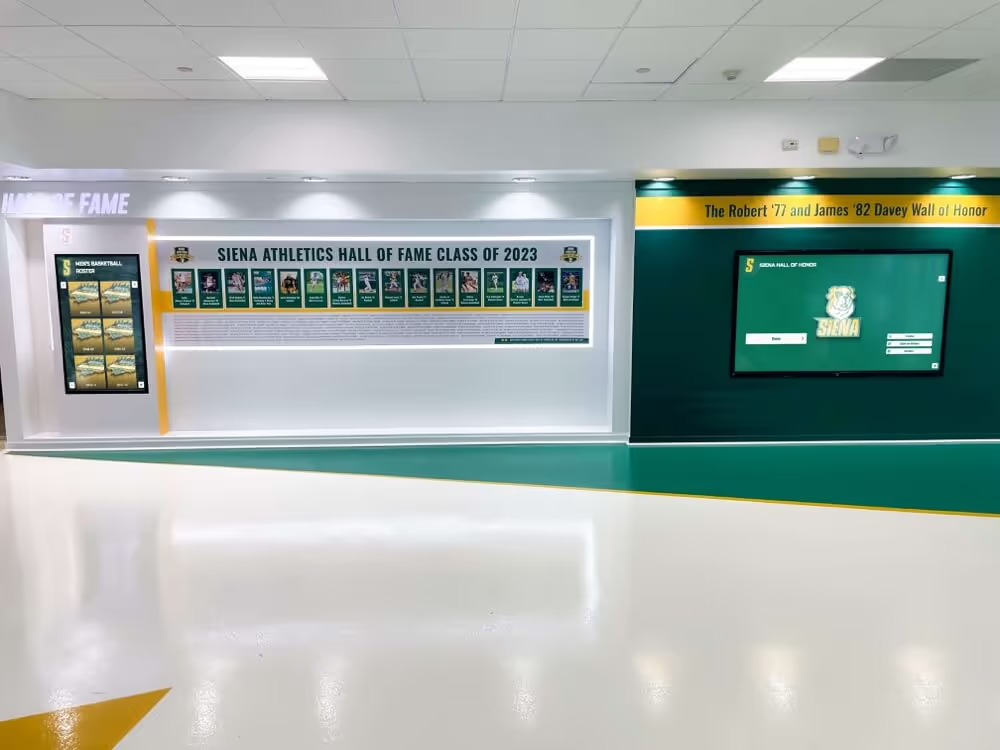
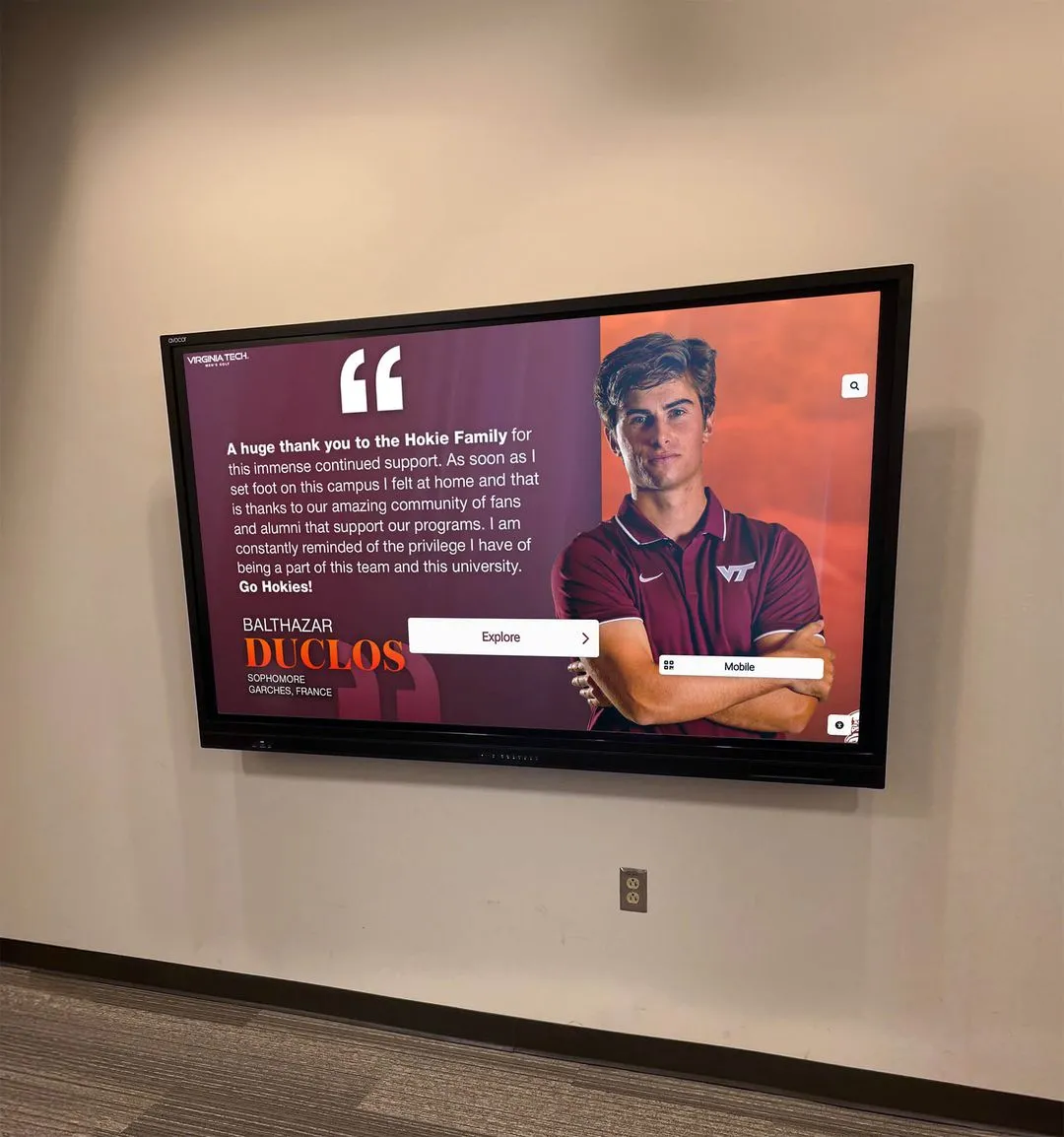
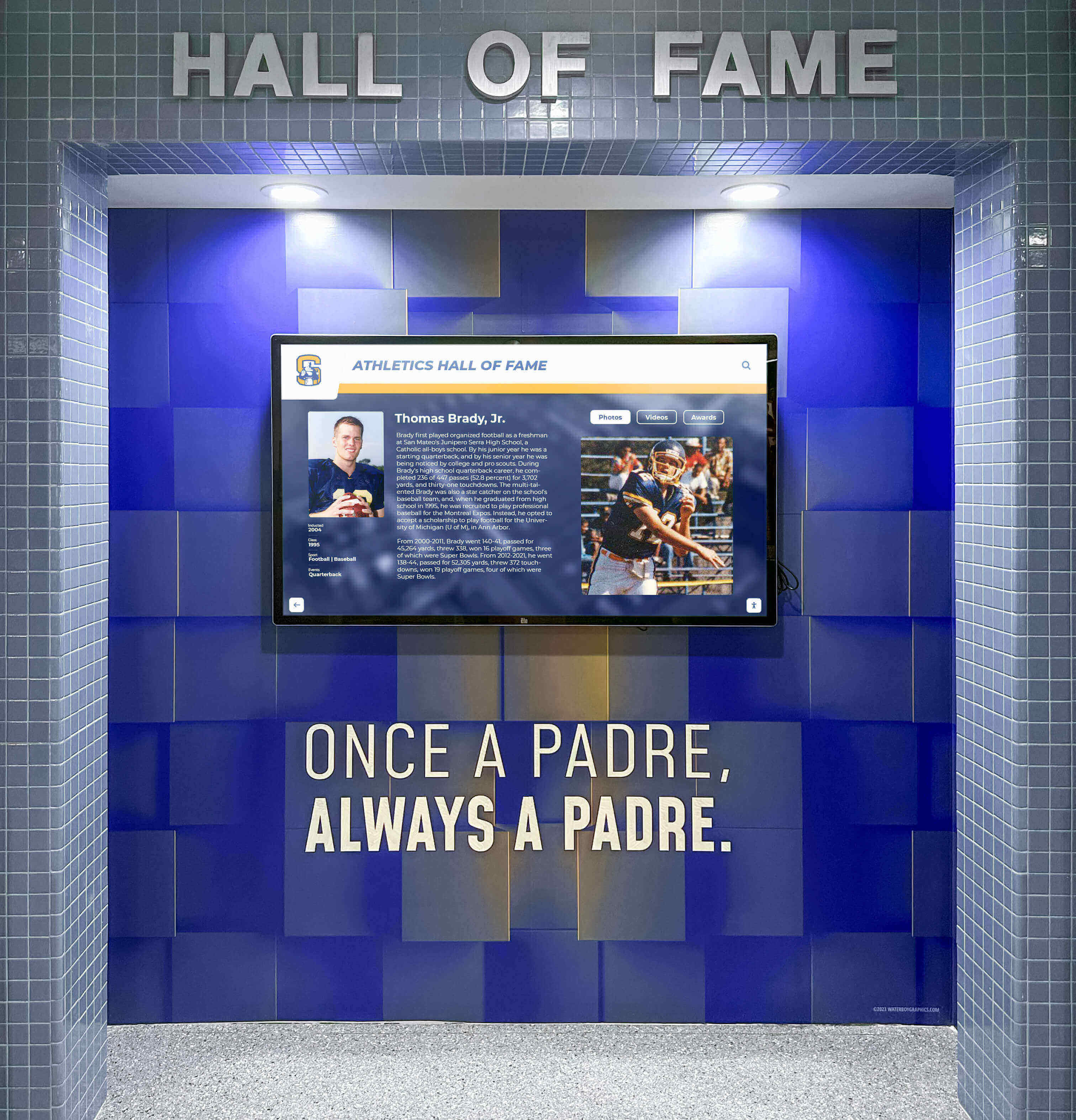
Digital displays in athletic facilities turn sponsorship recognition into a permanent, visible part of the facility environment — one that every athlete, coach, and visiting family sees throughout the season
What Athletic Sponsors Actually Expect
Before drafting a letter, it helps to understand what motivates local business sponsorship of school athletics. According to research from the National Federation of State High School Associations (NFHS), high school sporting events draw more than 11 billion attendances annually across the United States — making school athletics one of the most consistent sources of local community foot traffic for any organization. Local businesses sponsoring those events are not primarily motivated by altruism. They want:
- Brand visibility in front of their target customer base (community families, alumni, local residents)
- Association with positive community values — youth sports, school pride, student achievement
- A credible, recurring marketing channel that operates through an established institution
- Recognition that lasts beyond a single game — ideally something displayed year-round, not just on event nights
A thoughtful athletic sponsorship letter addresses all four of these motivations. It positions sponsorship as a community marketing investment, not a charitable donation. That reframing changes who you’re talking to (the marketing budget, not the charitable giving budget) and what evidence of value you need to provide.
The Core Components of an Effective Athletic Sponsorship Letter
An athletic sponsorship letter that consistently earns sponsors includes five sections: an opening that establishes credibility and context, a recognition inventory that itemizes exactly what sponsors receive, a tiered sponsor menu with clear pricing, a close with a specific ask and next step, and an appendix or attachment with the full recognition deliverables checklist.
Opening: Establish Reach and Credibility
The opening paragraph should answer one question immediately: why should this business care? Lead with audience size and community relevance, not with a list of your program’s accomplishments.
Effective openings sound like this: “Our athletic program serves 340 student athletes across 12 varsity and junior varsity sports and draws more than 8,000 attendances per year to home events at [School Name]. Every game, meet, and tournament puts your business in front of the families, alumni, and community members who make up your local customer base.”
Notice what is not in that opening: a request. The ask comes at the end, after the business understands the value. Leading with the request before establishing the value inverts the logic and weakens the letter immediately.
Recognition Inventory: What You’re Offering
The recognition inventory is the most critical section of any athletic sponsorship letter because it converts vague promises into concrete deliverables. For each sponsorship tier, list every specific item the sponsor receives — not categories, but items.
Weak: “Logo visibility at home games”
Strong: “Your business logo printed on the event program cover for all 14 home varsity basketball games (estimated 4,200 total attendances) and displayed on the gymnasium digital display screen during pre-game and halftime programming”
The difference between these two statements is the difference between a business owner shrugging and a business owner asking how to sign up. Specificity creates perceived value; vagueness destroys it.
Programs developing strong recognition inventories for the first time benefit from reviewing examples of award and recognition tools used by schools and athletic programs to understand the full range of display and acknowledgment options available. The inventory in your letter should reflect what you actually have — or plan to have — available as recognition assets.
Sponsor Levels and Pricing: Structuring the Menu
Tiered sponsor levels accomplish several things simultaneously: they create aspirational pathways for businesses with different budgets, they allow schools to offer more recognition to higher-level sponsors without improvising, and they make the letter easier to act on because the prospect simply selects a tier rather than negotiating from scratch.
A functional tier structure for high school athletics typically includes three to four levels:
Title Sponsor / Program Champion ($2,500–$5,000+): One exclusive sponsor per program or season. Receives the highest-visibility recognition across all categories — headline placement on all print materials, prominent digital display presence, naming in all public announcements, and a featured profile in digital recognition systems.
Gold Sponsor ($1,000–$2,499): Two to four sponsors per program. Receives logo placement on printed materials, game-day public address announcement, digital display recognition, and inclusion in season-end recognition.
Silver Sponsor ($500–$999): Up to eight sponsors. Receives program logo listing, digital display acknowledgment, and social media mention.
Friend of Athletics ($100–$499): Open enrollment. Business name recognition in printed programs and on a sponsor acknowledgment board in the athletic facility.
These dollar thresholds will vary significantly by school size, market, and program history. The key is to set levels that reflect your actual recognition inventory — promising title-level visibility to four different businesses simultaneously defeats the purpose of exclusive tiers and creates fulfillment headaches.
For schools building out or refreshing their recognition capabilities, exploring youth sports award ideas and recognition approaches can surface creative options for making sponsor recognition feel meaningful beyond standard logo placement.
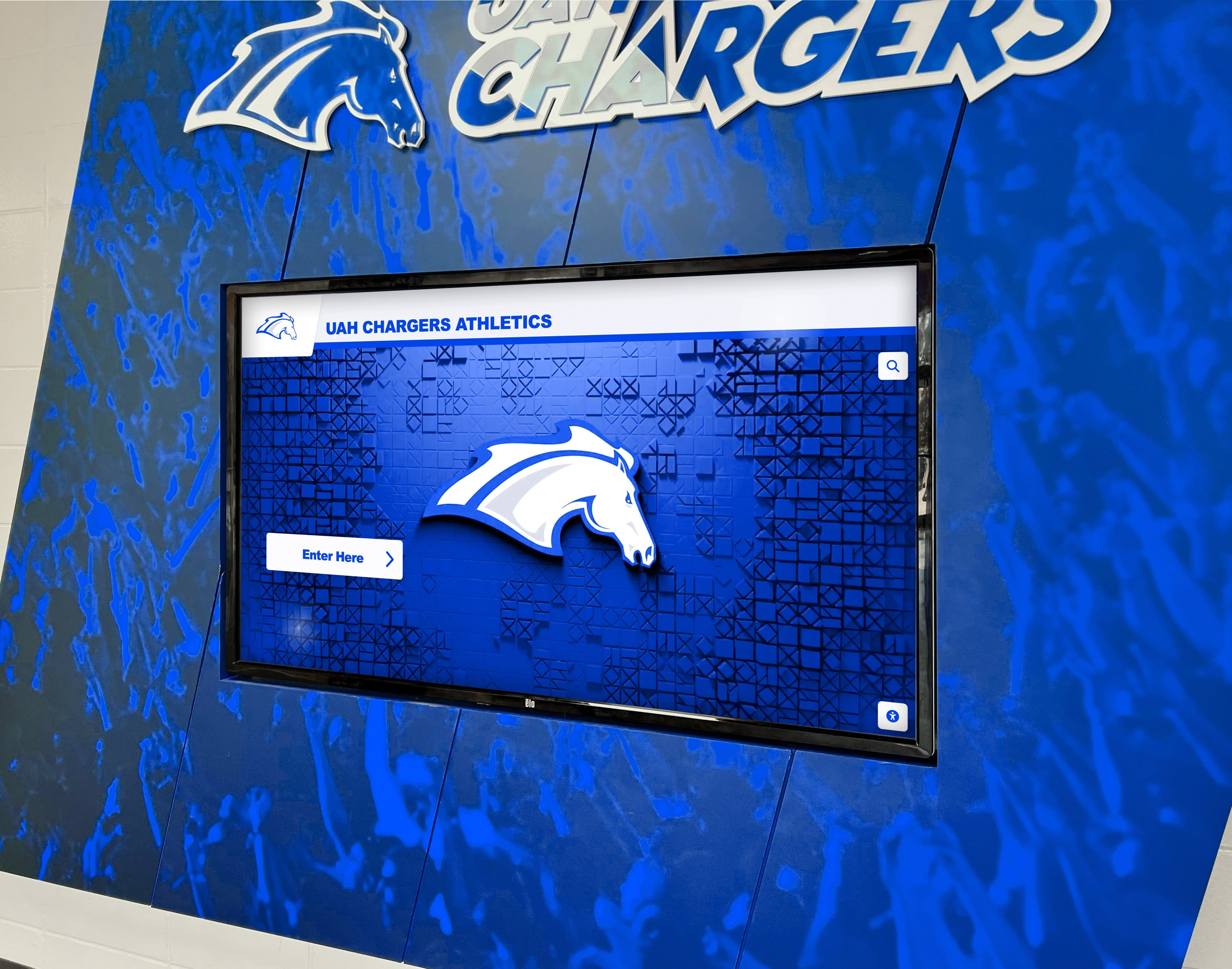
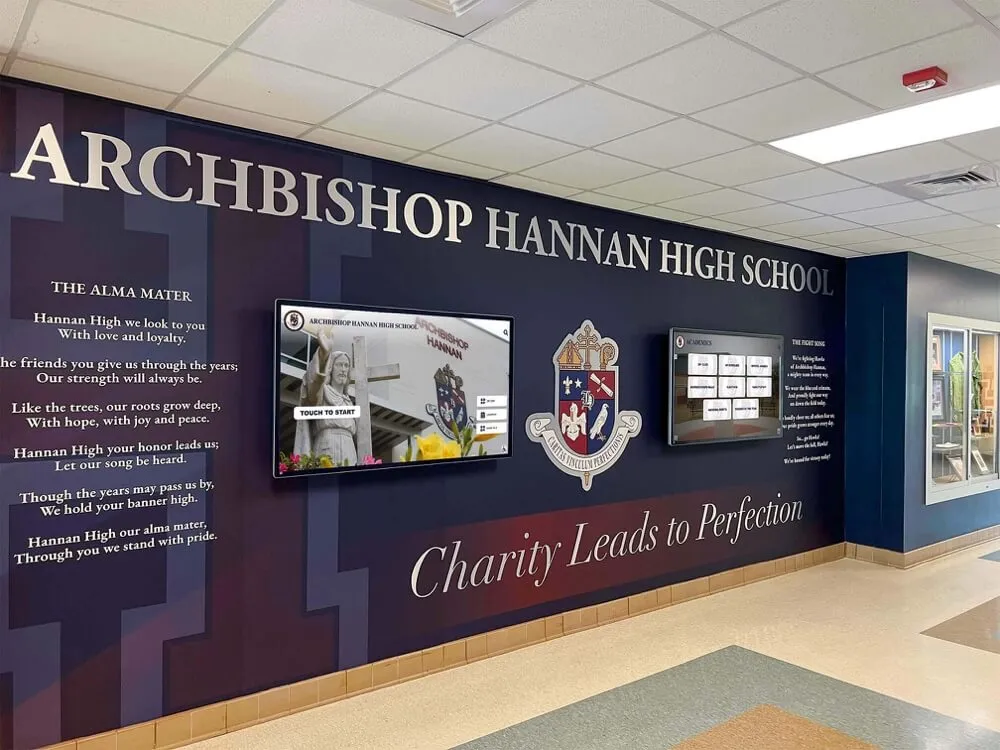
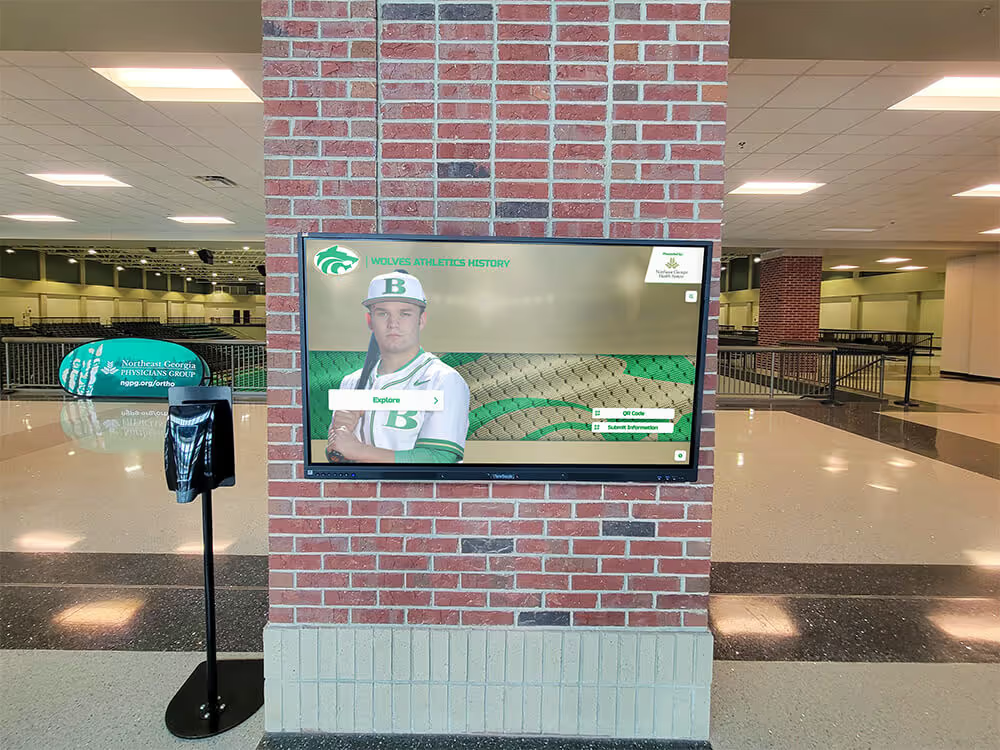
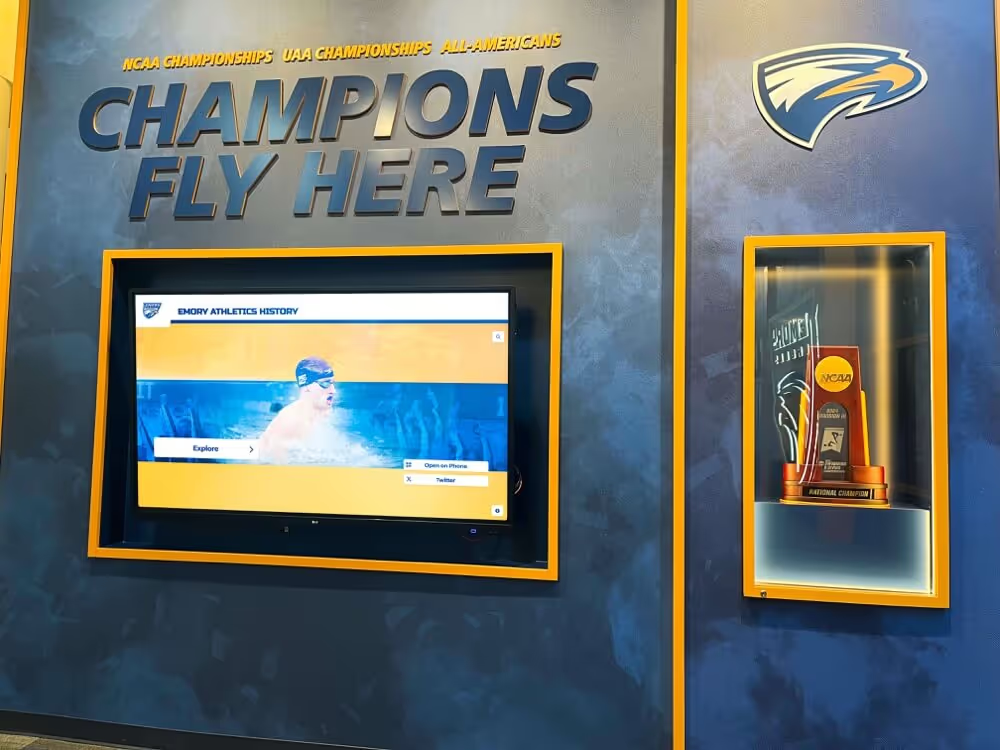
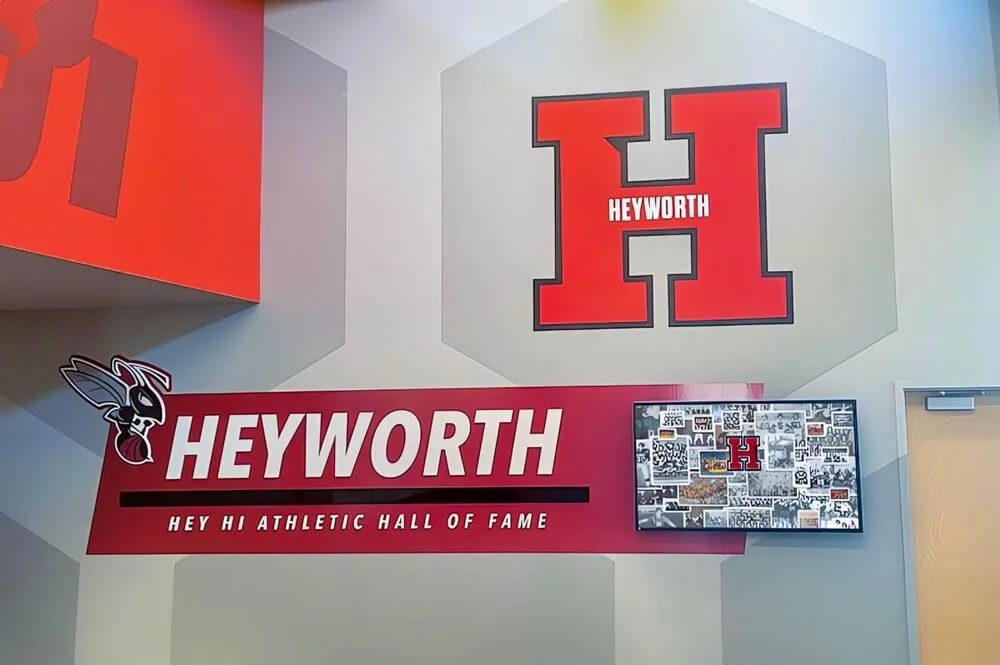
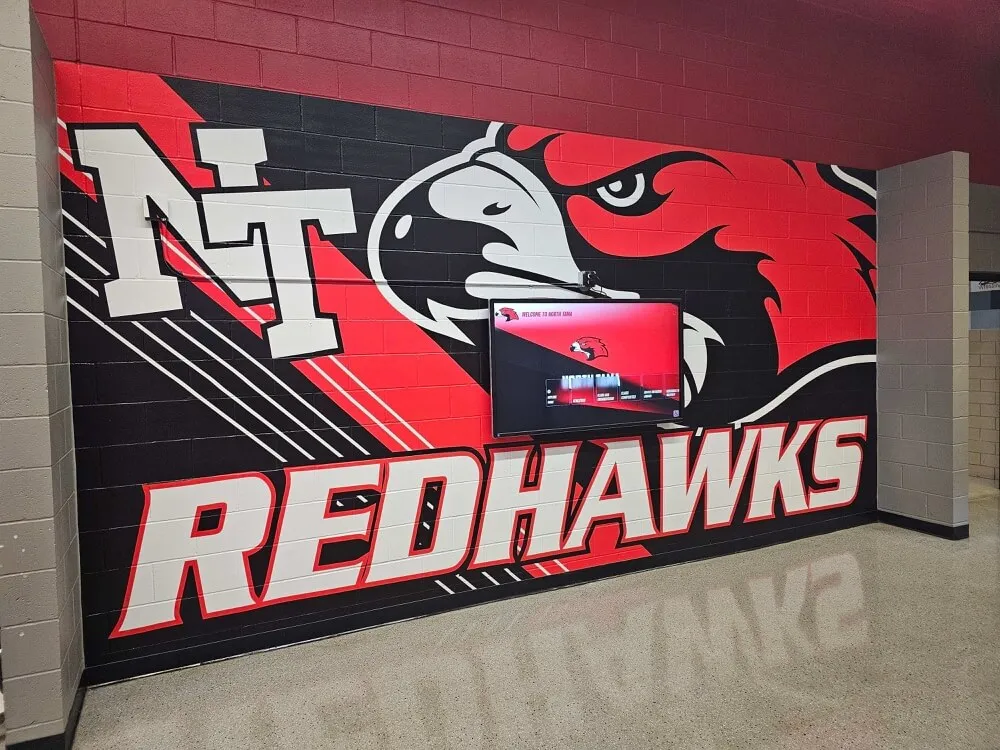
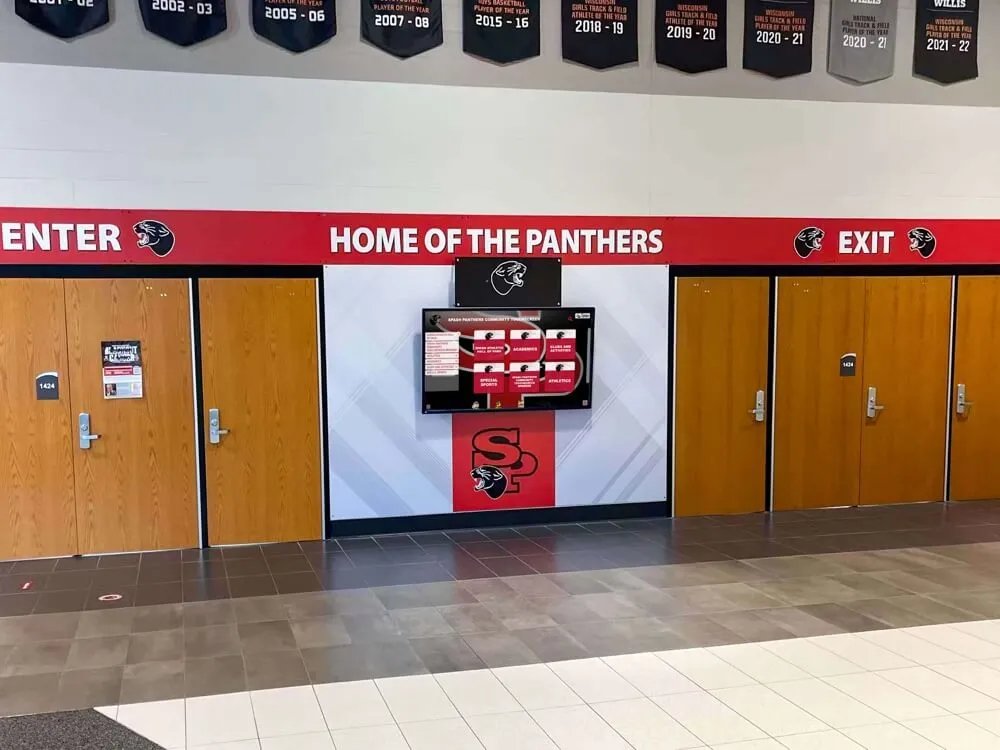
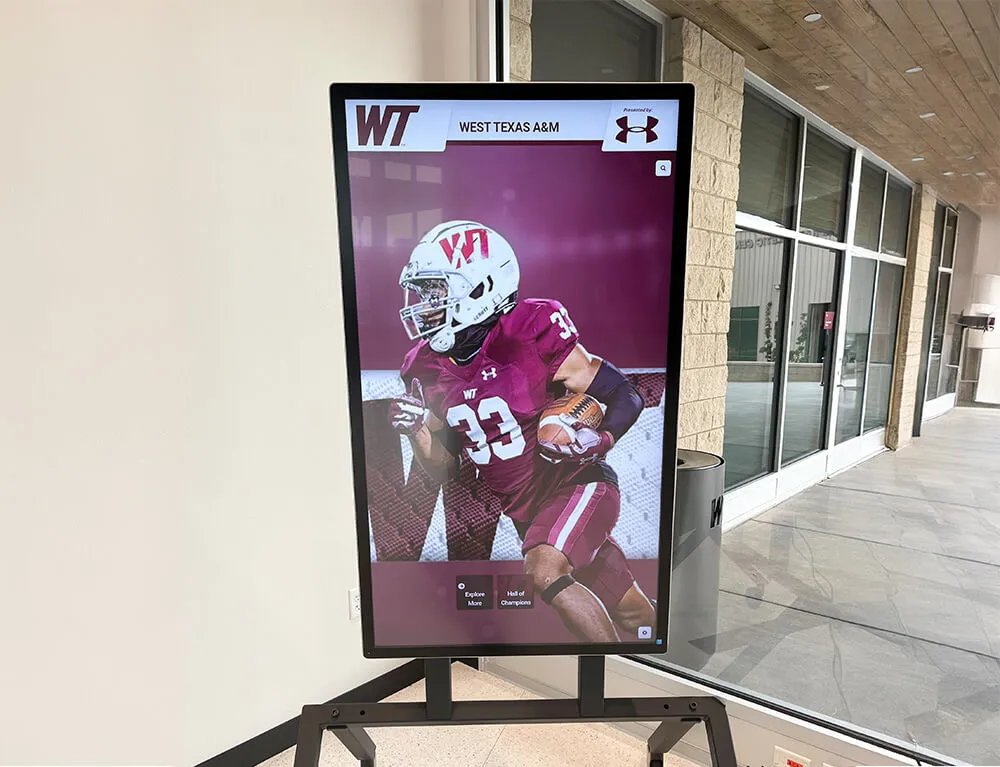
Athletic facility digital screens give schools a dynamic, year-round recognition channel — one of the most valuable deliverables a sponsorship letter can promise and fulfill
Athletic Sponsorship Letter Template Outline
Use this framework to structure your letter. Customize the specifics for your program’s actual numbers and recognition assets.
[School Name] Athletics — [Year] Sponsorship Opportunity
[Date]
[Business Name and Address]
Dear [Name or “Athletics Supporter”],
Opening (2–3 sentences): Establish audience size, event reach, and community relevance. Include specific numbers where available.
Program Overview (1 paragraph): Brief description of sports offered, grade levels served, competitive reach (district, state, regional), and the athletic culture of your program.
Sponsorship Levels (table or tiered list):
| Level | Investment | Key Recognition |
|---|---|---|
| Title Sponsor | $[X] | [List top 3–4 deliverables] |
| Gold Sponsor | $[X] | [List top 2–3 deliverables] |
| Silver Sponsor | $[X] | [List top 2 deliverables] |
| Friend of Athletics | $[X] | [List 1–2 deliverables] |
Recognition Promise (1 paragraph): Explain that a complete recognition deliverables checklist is attached and that your program tracks and fulfills every commitment in writing.
The Ask (1–2 sentences): Name a specific level you’re recommending for this business and include a specific next step (complete the attached form, contact [name] at [number], or return by [date]).
Signature: Athletic Director, Development Director, or Booster Club President — whoever has authority to confirm the agreement.
Recognition Deliverables Checklist
The checklist is what separates schools that renew sponsors year after year from those that lose them after one season. Every item promised in the letter should appear here, with a column for fulfillment status that your staff can track through the season.
Print and Game-Day Recognition
- Business logo in event program: _____ games / _____ estimated total attendances
- Business name in PA announcements: _____ games / _____ announcements per game
- Banner or signage in facility: _____ locations / dimensions: _____
- Business name / logo on team warm-ups or uniforms: _____ teams
- Sponsor recognition on printed schedules: _____ copies distributed
- Inclusion in season-end banquet program materials
Digital and Display Recognition
- Business logo on facility digital display screens: frequency _____ / season duration _____
- Sponsor profile or video on lobby touchscreen: rotation _____ / visibility hours _____
- Social media mention from official school or booster accounts: _____ posts
- Business featured in email newsletter to _____ subscribers
- Business listed on school athletics website sponsor page
Facility and Permanent Recognition
- Business name on sponsor recognition board in athletic facility
- Business name on permanent or semi-permanent hall display (for multi-year sponsors)
- QR code display linking to sponsor business information
Season-End and Relationship Recognition
- Business representative invited to senior athlete recognition event
- Season-end impact letter documenting attendance numbers and program outcomes
- Meeting with Athletic Director to discuss renewal and next-year opportunities
Schools that fulfill every line on this checklist retain sponsors. Schools that only deliver half of what they promised lose them — and lose the word-of-mouth referrals that come from satisfied business sponsors talking to other local business owners.
For programs considering how to recognize supporters who move beyond annual sponsorship into sustained multi-year partnerships, the principles that apply to hall of fame recognition tools translate directly to the premium tier of athletic sponsorship — where recognition becomes more about lasting legacy than seasonal exposure.
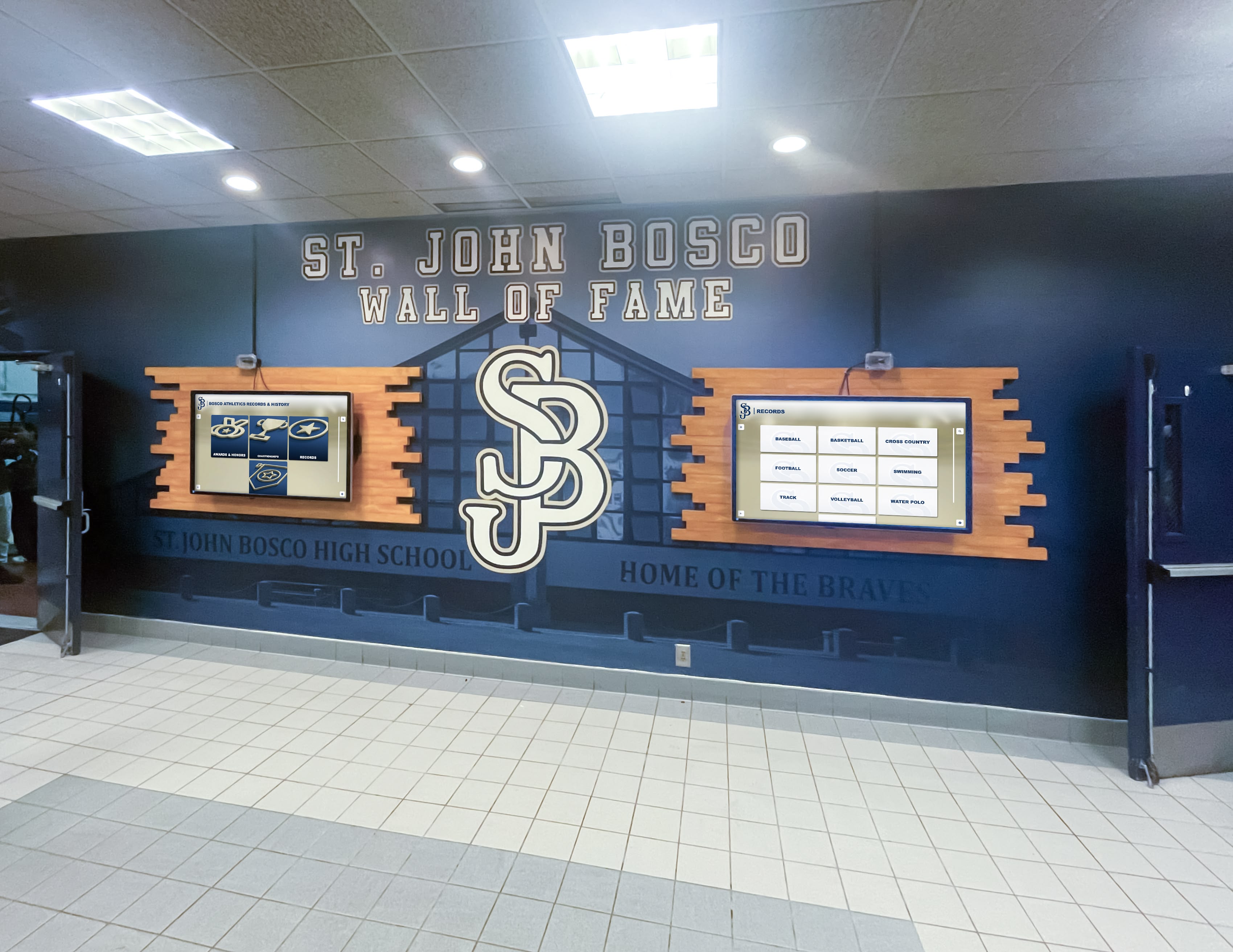
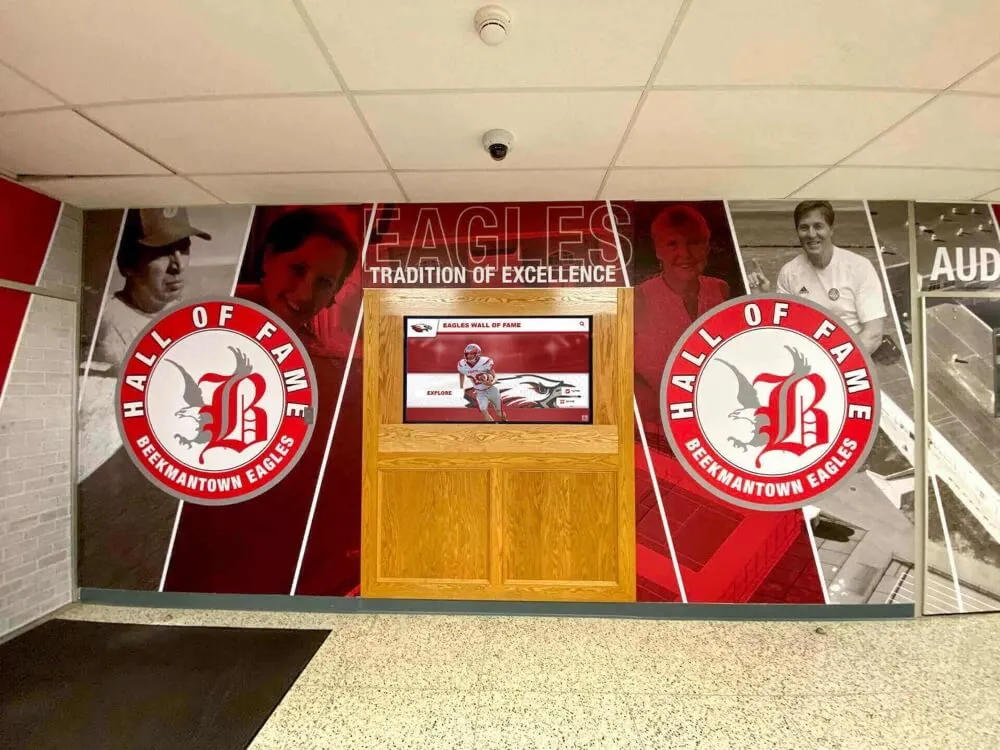
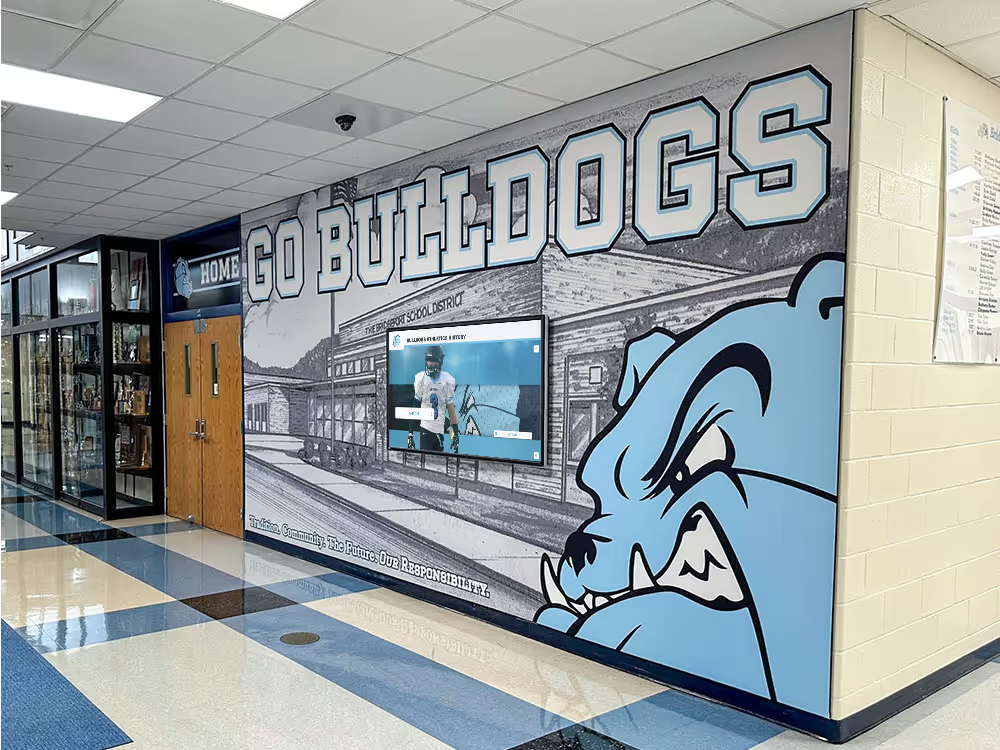
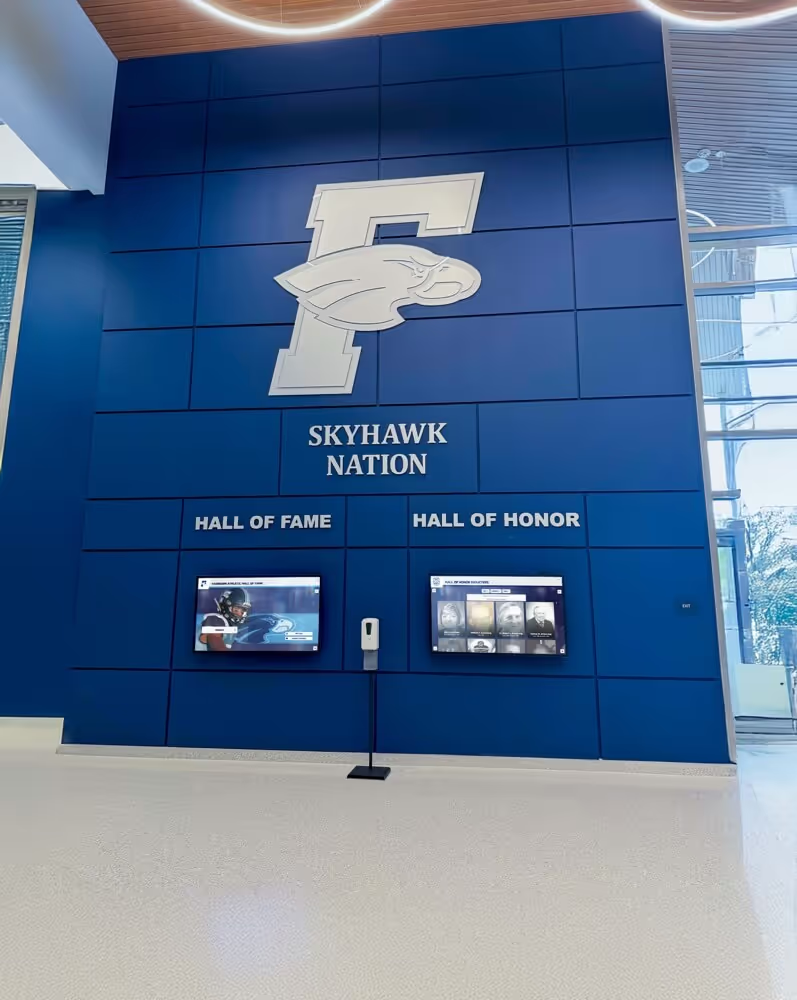
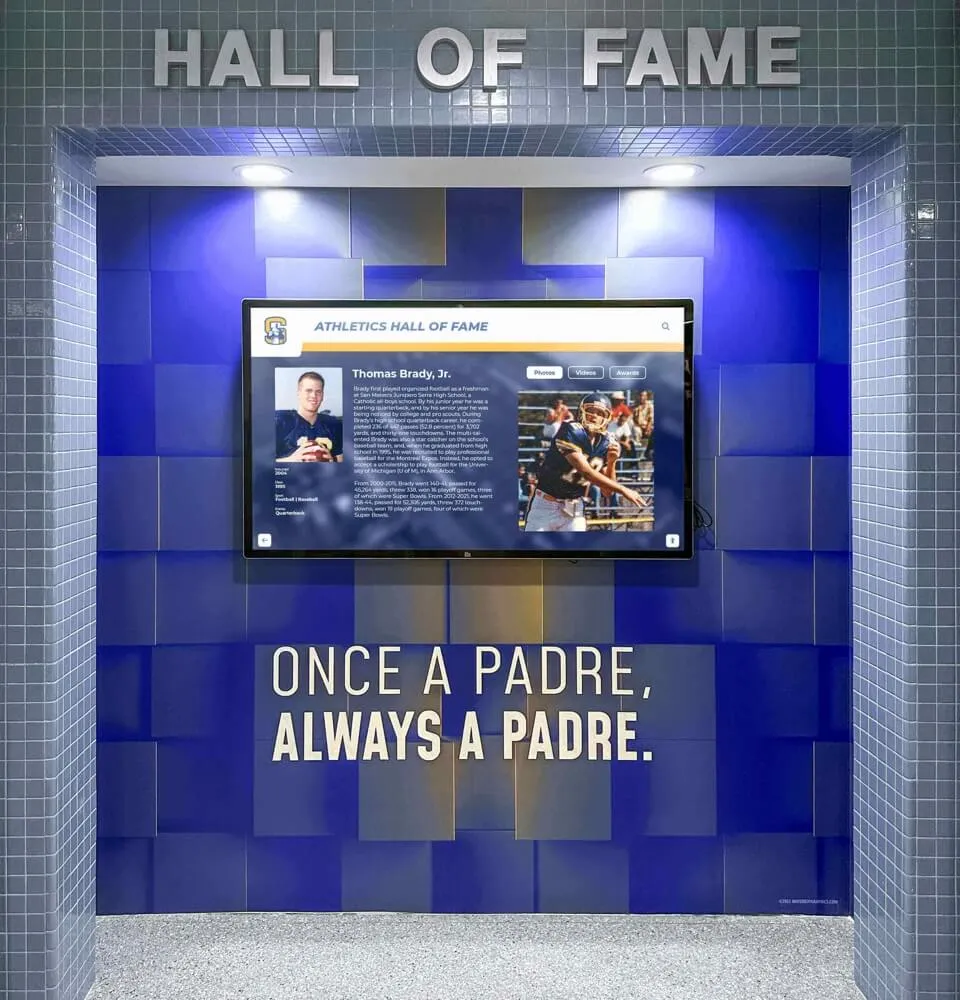
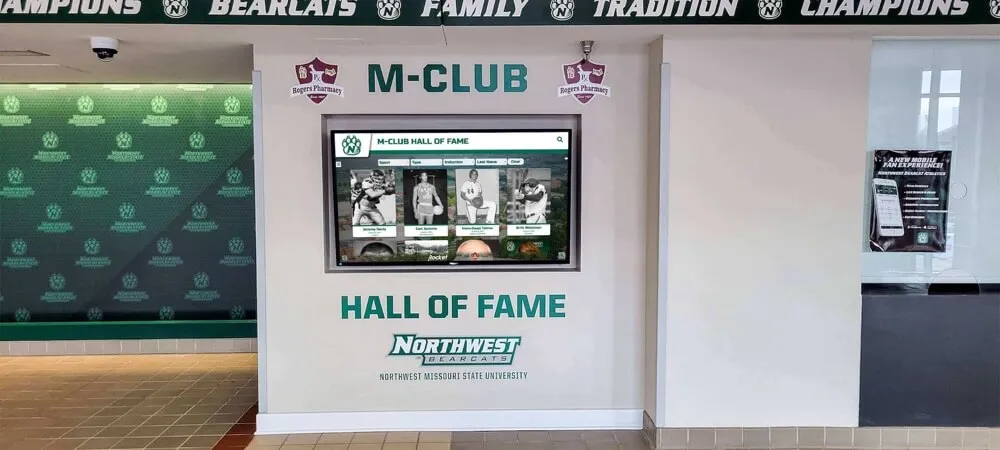
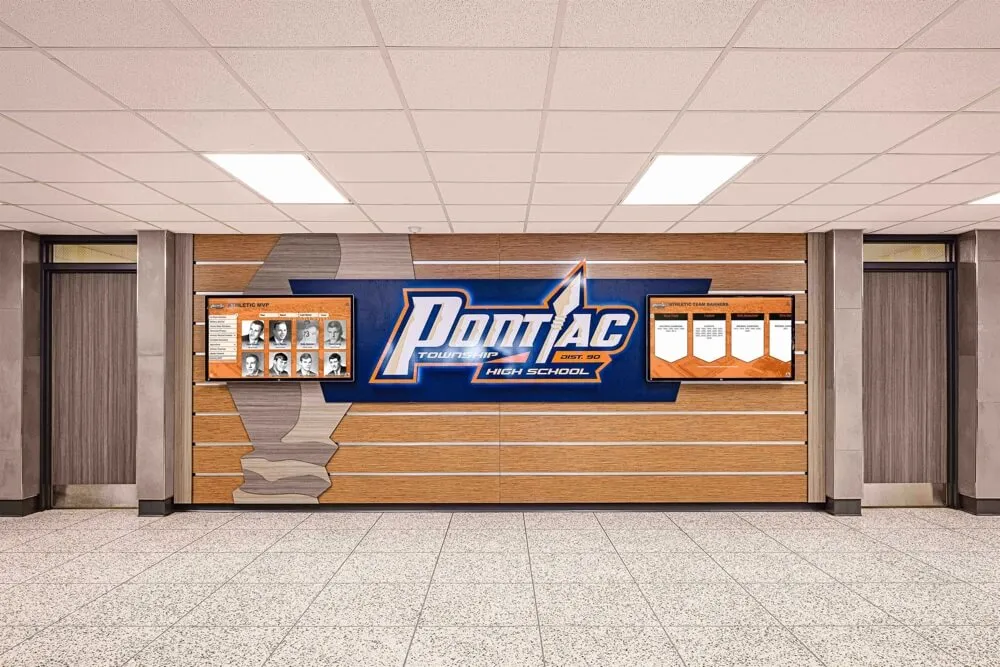
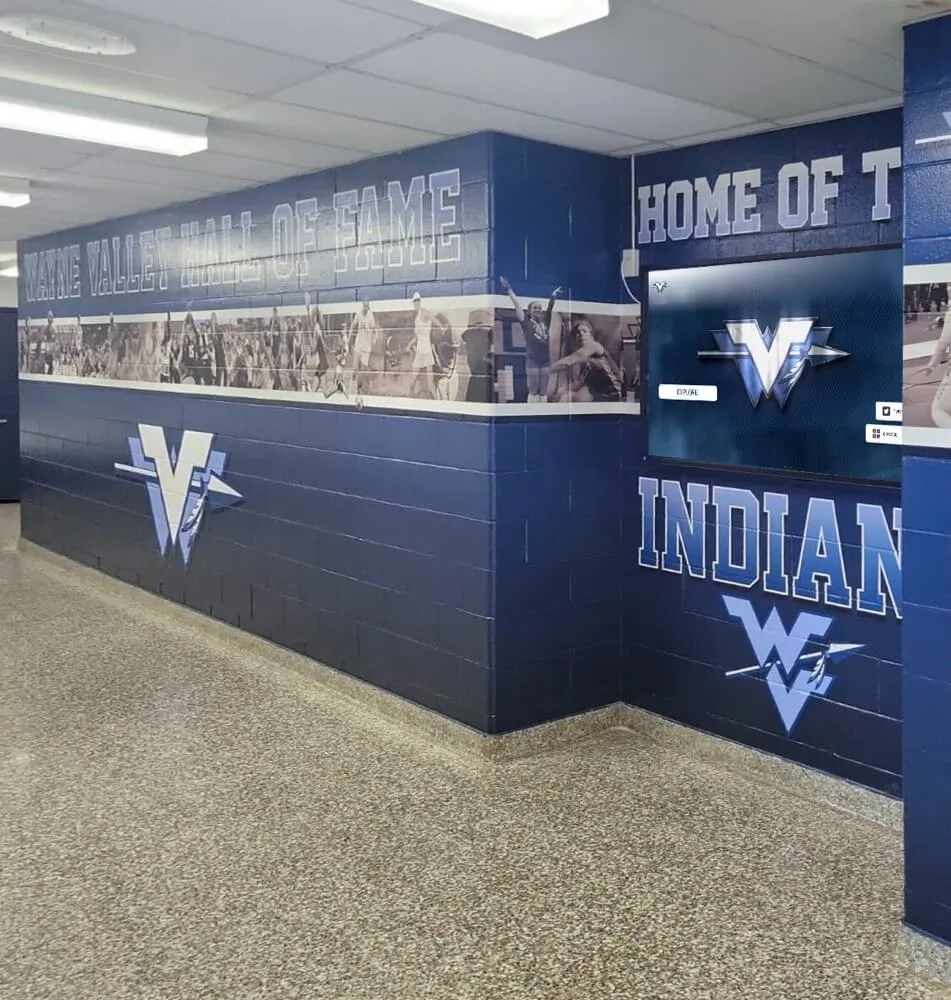
Schools with multiple digital screens in athletic corridors can build sponsor recognition into the visual environment year-round — not just during events — significantly increasing the perceived value of each sponsorship tier
Pricing Athletic Sponsorship Levels Realistically
One of the most common mistakes in athletic sponsorship programs is pricing based on what the school hopes to raise rather than what the recognition inventory actually justifies. A Title Sponsor level that promises the most visible recognition in your facility is worth more than one that promises name listing in a printed program. Pricing should reflect the gap.
Valuing Your Recognition Assets
To price tiers appropriately, assign a rough market value to each recognition element:
Facility signage: A banner in a gymnasium that draws 200 people per game, 15 home games per season, delivers 3,000 impressions per year minimum. Local advertising rates for community-level banner space range from $500 to $2,000 annually depending on market — use this as a floor for signage-heavy tiers.
Digital display visibility: Digital screens in athletic lobbies and corridors are visible not just during events but during every school day, practice, and visitor walk-through. A school with 1,000+ students means the sponsor message appears in front of student eyes hundreds of times per week during the school year, not just on game nights. This persistent visibility justifies premium pricing in higher tiers.
PA announcements: Event PA announcements have high immediate impact but are ephemeral. Value them as a supporting element, not the primary recognition asset.
Social media mentions: Value varies considerably based on account size and engagement. Schools with active, followed accounts can legitimately include this as a meaningful deliverable; schools with dormant accounts should be honest about its value.
Printed programs: Print programs are retained by families for the season and shared. Value them based on your print run size and typical game attendance.
The athletic programs that build the most sustainable sponsorship revenue treat recognition assets like media inventory — tracked, priced based on reach and frequency, and delivered with documented proof of fulfillment. That professionalism is itself a competitive advantage when businesses compare your sponsorship offer to requests from other organizations.
For schools looking to expand the scope of what they can offer sponsors, understanding how digital record boards and recognition displays function in athletic environments opens the door to recognition categories that make higher-priced sponsorship tiers far easier to justify.
Multi-Year Sponsorship Discounts and Incentives
The most efficient sponsorship programs minimize annual re-solicitation by building multi-year commitments into their tier structure. A business that commits to three consecutive years at the Gold level costs your program less staff time to retain than re-soliciting annually — and should receive a modest discount (10–15%) or an exclusive benefit (first right of refusal on Title Sponsor opening, dedicated facility recognition for multi-year sponsors) in return.
For schools with milestone reunions and alumni engagement events where sponsors gain visibility beyond regular sports seasons, integrating those touchpoints into the multi-year value proposition adds genuine additional reach. Schools planning reunion and alumni events can extend sponsor visibility to those contexts as a premium benefit for multi-year partners.
Making Sponsor Recognition Public and Permanent
The final gap between a well-written athletic sponsorship letter and a sponsorship program that sustains itself is fulfillment visibility. When sponsors can see their recognition deployed — on a digital screen, in a printed program, on a facility wall — they have tangible proof that the school delivered what it promised. That proof is what converts a one-time sponsor into a long-term partner.
Digital Displays as the Anchor of Modern Sponsor Recognition
The most valuable shift in school athletic sponsorship recognition over the past decade has been the adoption of digital display systems in athletic facilities. Unlike a printed banner that fades, a digital display can be updated instantly, can feature sponsor content in rotation with athletic programming, and remains visible every day the facility is open — not just on game nights.
A school with a lobby touchscreen or corridor digital display can offer sponsors something no print program can match: persistent, programmable, year-round visibility that the sponsor can verify in person whenever they visit the facility. That permanence fundamentally changes the calculus for businesses evaluating whether to renew.
For development teams building out digital recognition capabilities, understanding donor and sponsor recognition display options helps identify which technologies best fit the school’s space, budget, and recognition goals. Similarly, exploring sports recognition approaches for youth and high school programs reveals how sponsor recognition integrates with broader athletic recognition culture — creating environments where sponsors feel like genuine members of the program community, not just paying advertisers.
Ready to Make Sponsor Recognition Permanent?
Rocket Alumni Solutions builds interactive digital recognition systems for school athletic facilities — giving programs a professional, year-round platform to fulfill digital sponsorship recognition commitments. Sponsors see their recognition in place. Schools have documented proof of delivery. Renewals become easier conversations.
Explore Athletic Sponsorship Recognition Solutions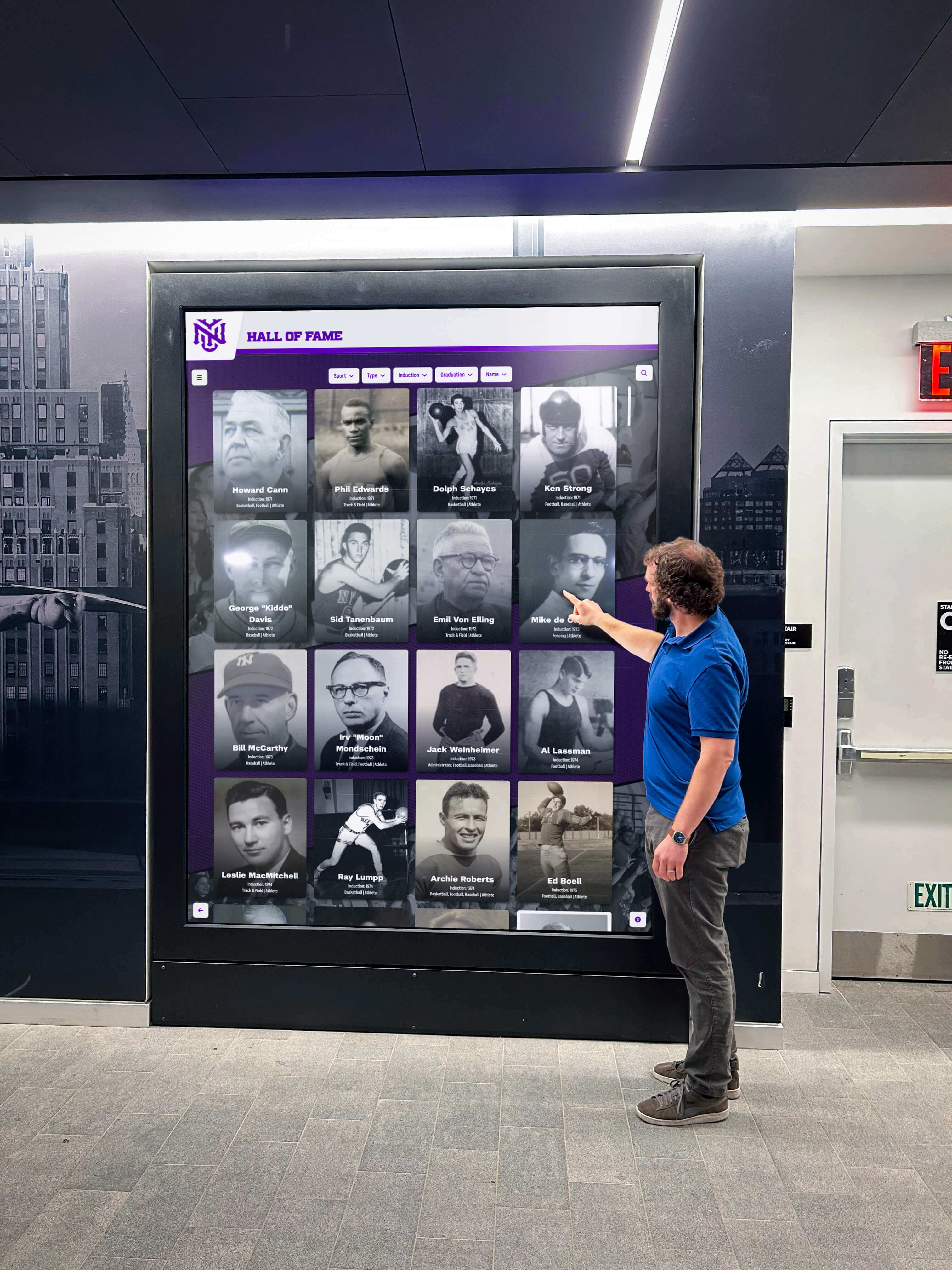
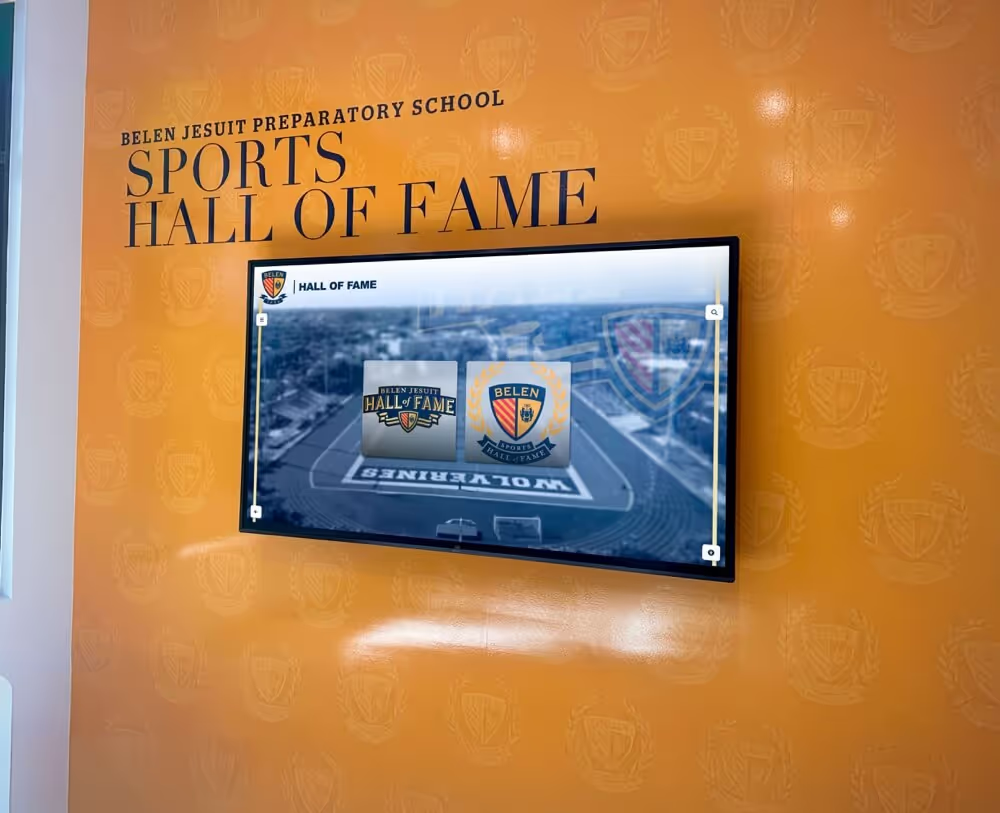
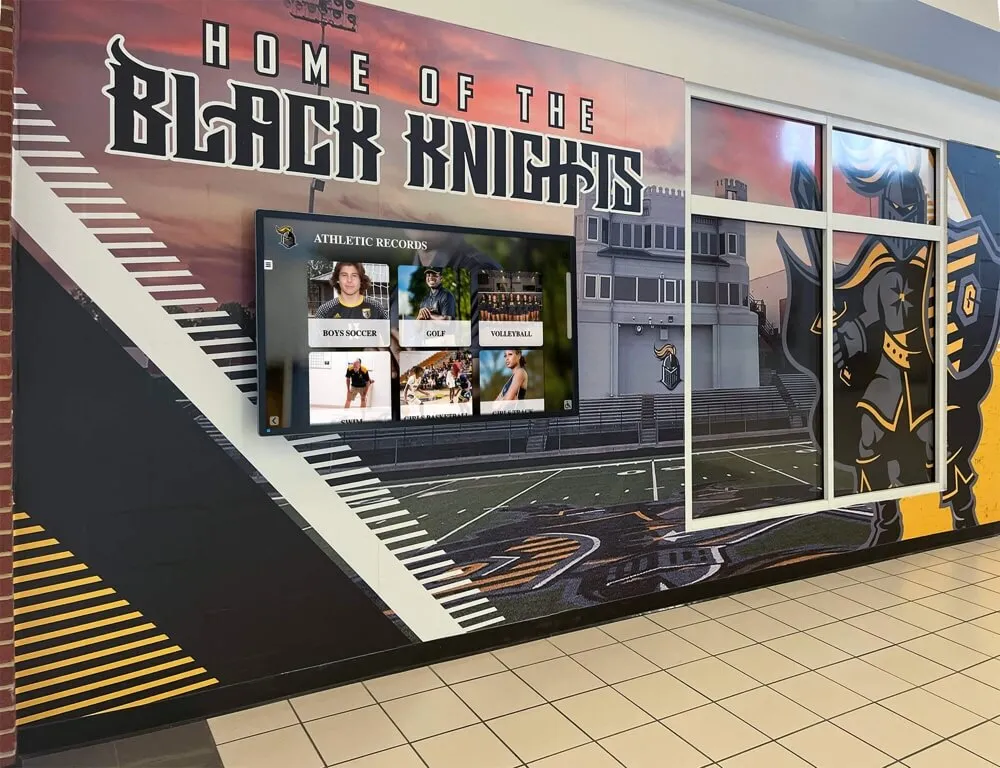
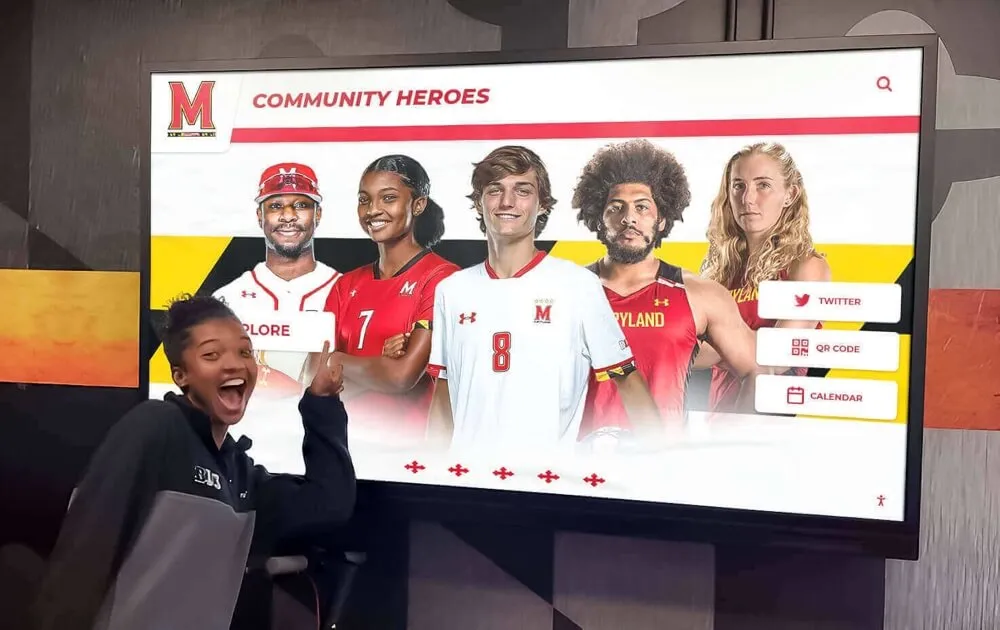
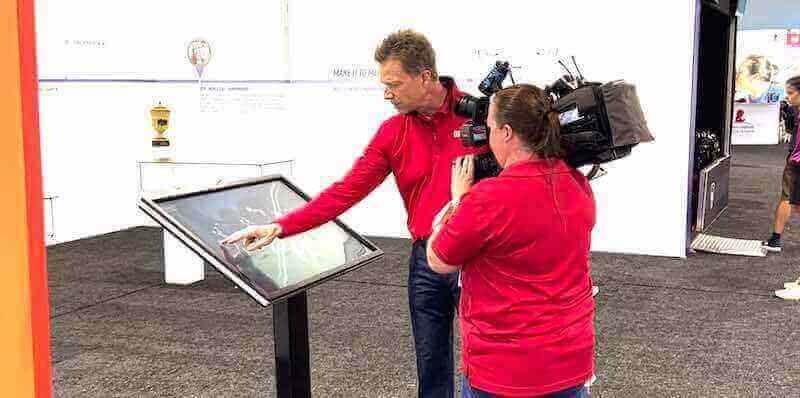
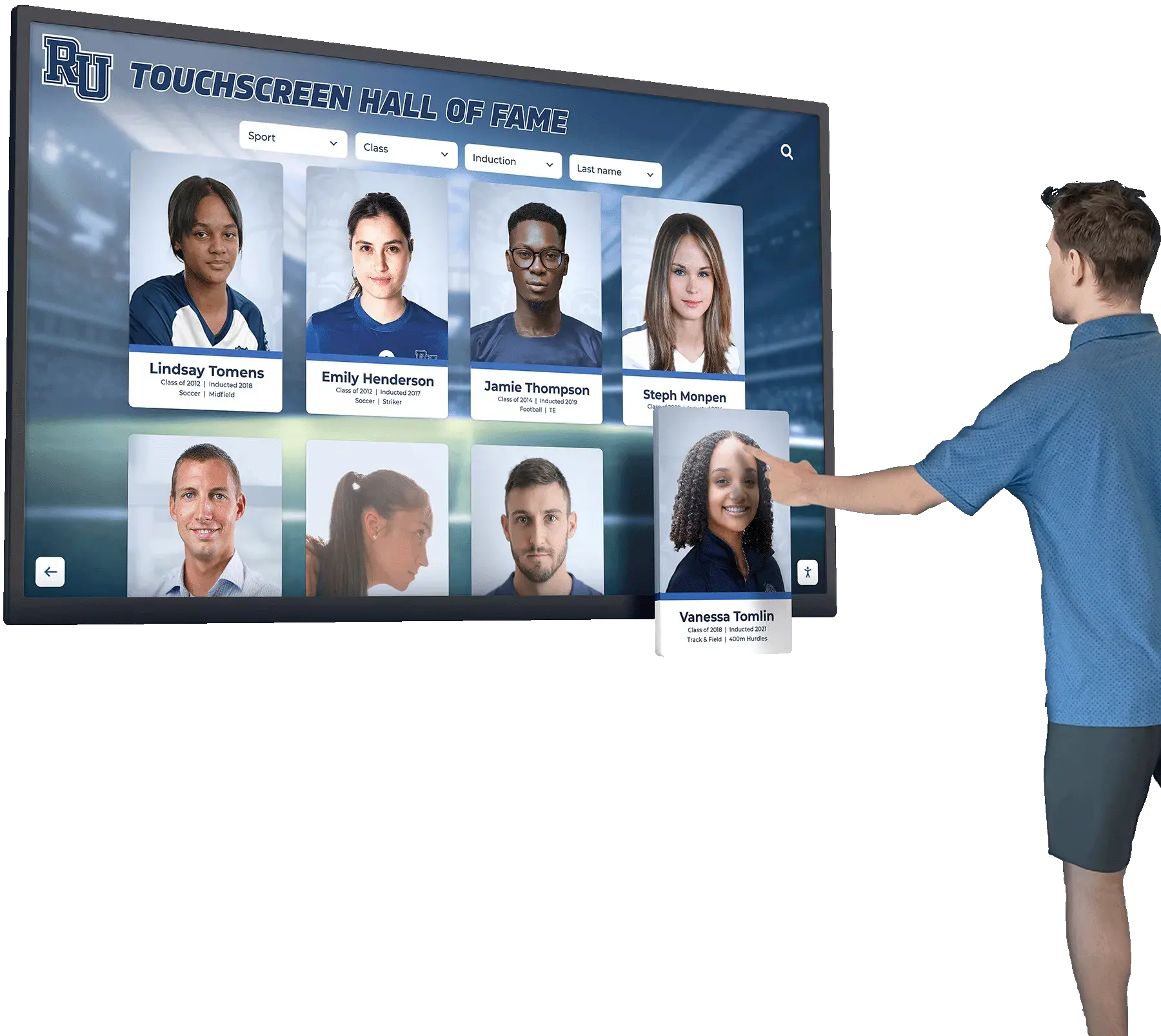
Interactive digital displays allow sponsors to see their recognition deployed in the facility in real time — creating the kind of proof-of-delivery that makes annual renewal conversations significantly easier
Hall of Fame and Long-Term Sponsor Acknowledgment
For schools with established or growing hall of fame programs, the connection between multi-year athletic sponsorship and hall of fame recognition creates a powerful retention incentive. A business that sponsors athletic programs for five or more consecutive years has invested meaningfully in the school community — and recognition that acknowledges that sustained commitment through a named display or hall of fame acknowledgment is a qualitatively different honor than seasonal logo placement.
Reviewing hall of fame recognition best practices gives athletic directors concrete ideas for how long-term sponsors can be honored in ways that motivate continued investment — moving the relationship from transactional advertising toward genuine legacy. Schools with established hall of fame display systems can naturally extend those platforms to include a dedicated sponsor wall or supporter recognition tier that sits alongside athlete and program recognition.
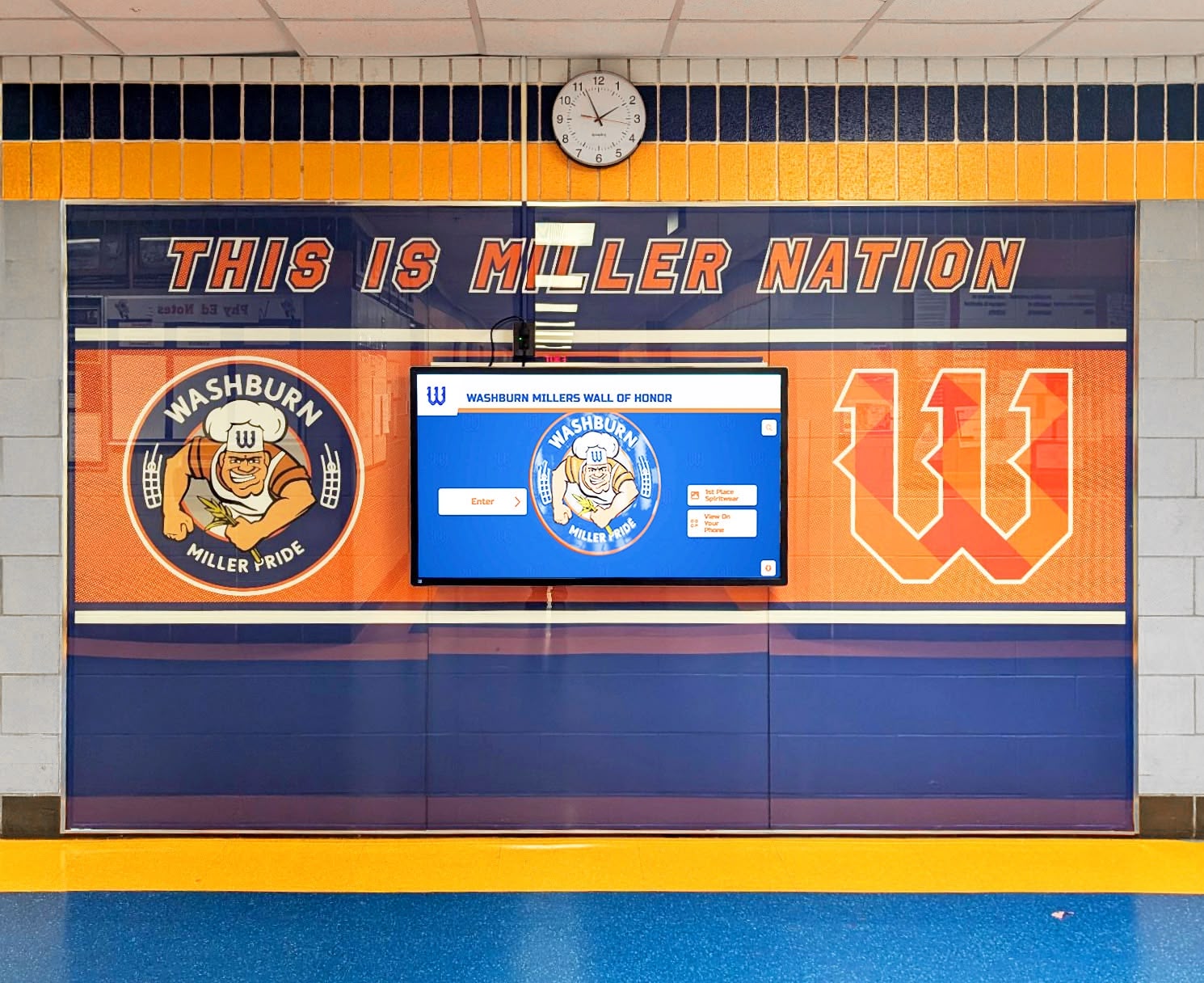
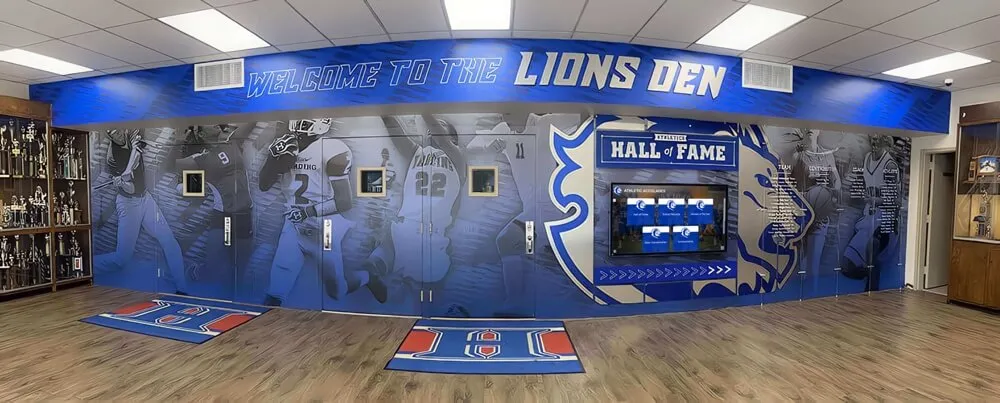
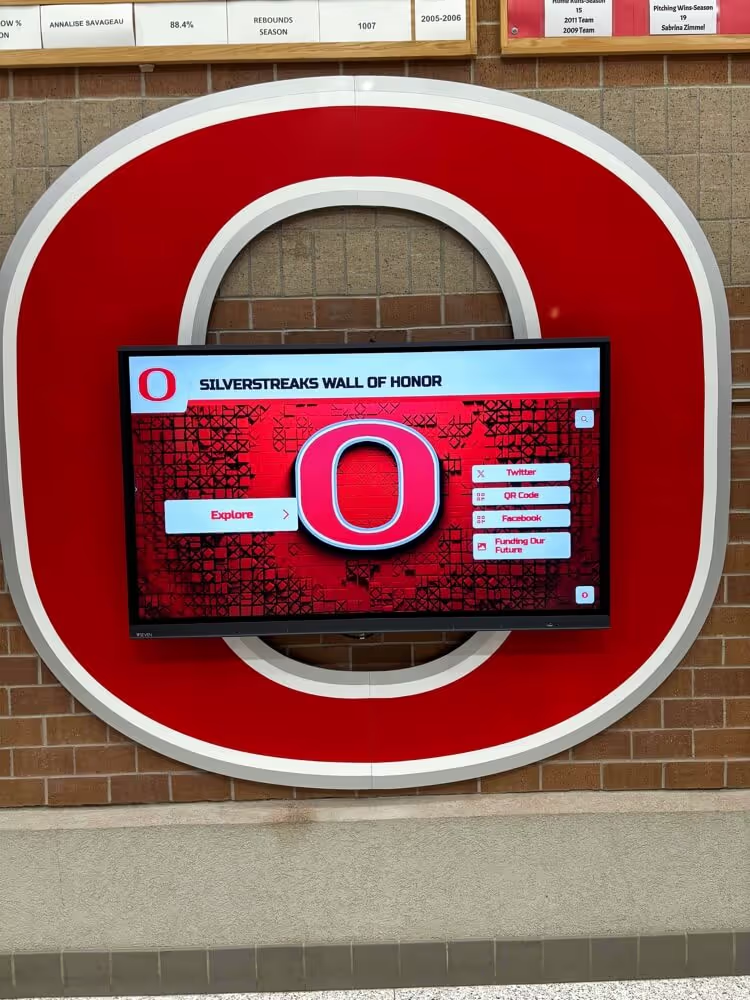
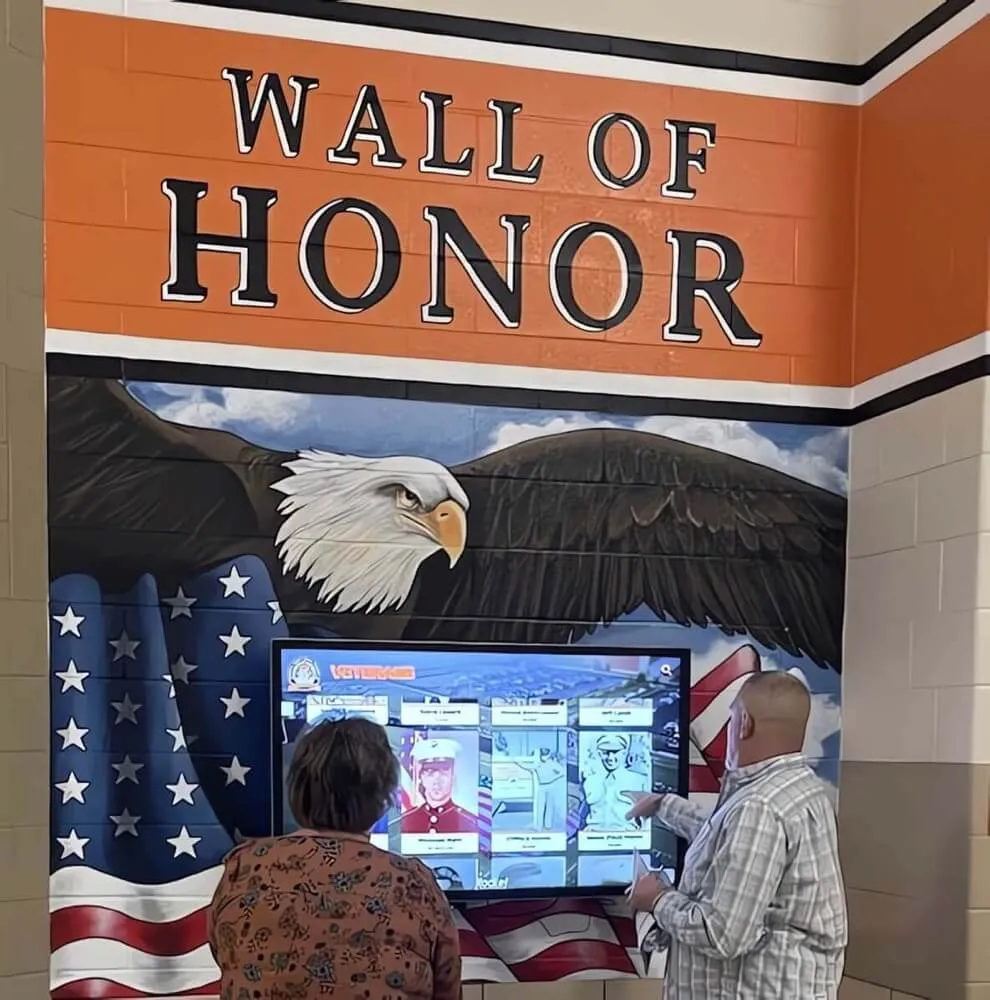
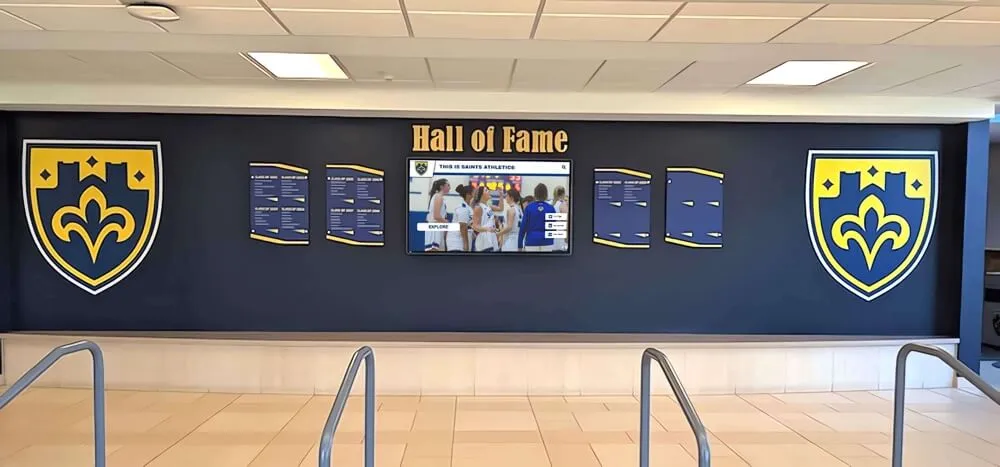
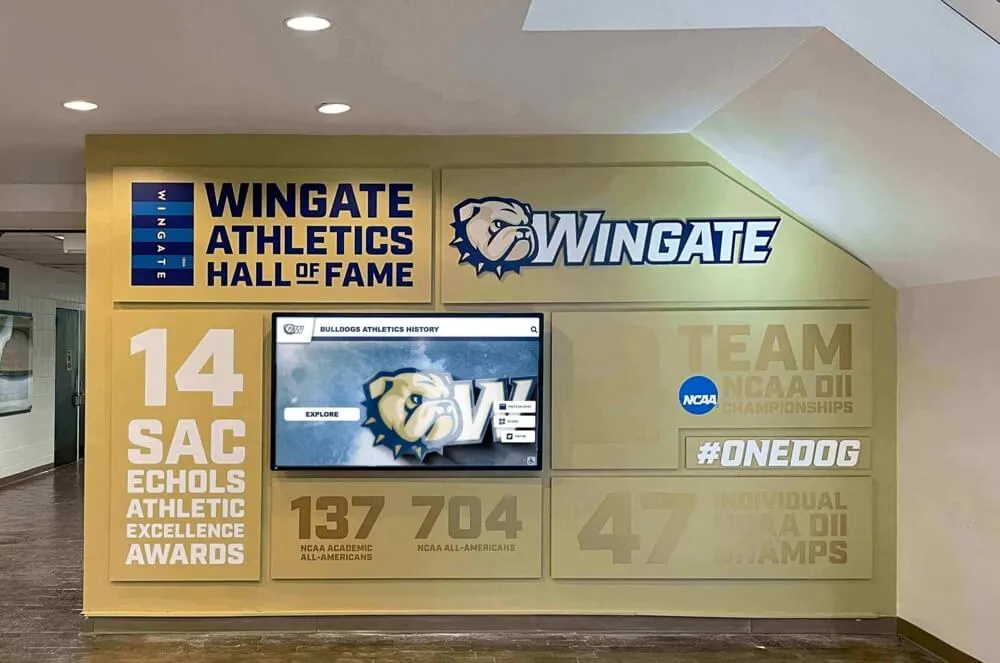
A wall of honor that incorporates sponsor recognition alongside athlete and alumni acknowledgment creates a unified tribute space where business partners feel genuinely included in the school community
Proof of Fulfillment: Closing the Loop
The final step in athletic sponsorship recognition is documentation. At season end, send every sponsor a fulfillment summary: a brief letter or email that itemizes every recognition element promised, confirms delivery, includes photos of signage and display recognition in place, and provides attendance data for events where the sponsor was recognized.
This documentation serves two purposes. First, it gives the sponsor everything they need to evaluate the investment’s value — which helps justify renewal to whoever controls the marketing budget. Second, it creates an internal record that your program uses to ensure consistency across seasons and staff changes.
Schools that treat sponsorship fulfillment as a professional obligation — not an afterthought — build the kind of reputation that earns referrals. When a business owner tells a peer that your school delivers exactly what it promises and follows up with proof, that word of mouth is worth more than any cold outreach letter. Programs exploring youth sports recognition ideas as a complement to sponsor recognition create athletic environments where the entire community — athletes, families, and business supporters — feels genuinely seen and honored.
Frequently Asked Questions About Athletic Sponsorship Letters
What should an athletic sponsorship letter include?
An effective athletic sponsorship letter should include: an opening that establishes your program’s audience reach and community relevance (with specific attendance numbers where possible), a tiered sponsorship level menu with clear pricing and itemized recognition deliverables for each tier, a recognition deliverables checklist that documents every specific benefit the sponsor receives, and a specific ask with a clear next step. The letter works best when it frames sponsorship as a local marketing investment rather than a charitable donation, addressing the business owner’s core question — what do I get? — before the ask appears.
How do you price athletic sponsorship levels for high school programs?
Athletic sponsorship pricing should reflect the actual reach and visibility of your recognition assets. Assign approximate values to each recognition element — facility signage based on game attendance and frequency, digital display recognition based on year-round visibility hours, print program placement based on print run and distribution — then build tiers that bundle those assets at price points reflecting their combined value. Most high school programs find functional tiers in the $250–$500 (community level), $500–$1,500 (program level), and $1,500–$5,000+ (title/naming level) ranges, though these vary significantly based on program size, market, and facility recognition capability.
What recognition should schools promise athletic sponsors publicly?
Schools should only promise recognition they can reliably deliver and document. Standard public recognition categories include: print program logo and name placement, game-day PA announcements, facility signage and banners, digital display recognition on facility screens, social media mentions from official accounts, athletic website sponsor page listing, and — for higher tiers — permanent or semi-permanent facility recognition (sponsor boards, digital profiles). Digital displays are particularly valuable because they offer persistent year-round visibility that sponsors can physically verify when they visit the facility, making them among the most compelling recognition assets a school can offer.
How do you get local businesses to sponsor school athletics?
Local business sponsorship of school athletics works best when outreach is personalized, the value proposition is clear, and the ask is specific. Identify businesses whose customer base overlaps with your athletic event audience — family-oriented businesses, local restaurants, healthcare providers, and home services companies near the school are natural fits. Send a personalized letter (not a mass form letter) that addresses the specific owner by name and references their community connection. Lead with your program’s audience reach, offer tiered options so businesses can choose a level that fits their budget, and always include a specific ask with a deadline and a concrete next step.
Should an athletic sponsorship letter be different from a donation request?
Yes — and the distinction matters. A donation request seeks charitable support, positions the school as the recipient of generosity, and typically directs the gift toward charitable budget (and the associated tax treatment). An athletic sponsorship letter positions the relationship as a marketing transaction: the business receives specific, documented public recognition in exchange for its investment. Sponsorship is more appropriately directed toward a business’s marketing budget rather than its charitable giving budget, which means it does not need to compete with nonprofit donation requests and can often be decided by a manager or owner without board approval. Framing the letter correctly — as a community marketing opportunity, not a charitable appeal — gets it in front of the right decision-maker and evaluated against the right criteria.
Building a Sponsorship Program That Compounds Over Time
A single athletic sponsorship letter is a transaction. A structured sponsorship program — with tiered levels, documented recognition, fulfillment tracking, and annual renewal conversations — is an asset that grows the longer it runs. Each year, satisfied sponsors refer peers. Multi-year sponsors build visible recognition in your facility that newer businesses see and want. The recognition infrastructure you build — including digital displays that make sponsor acknowledgment permanent and visible — becomes self-reinforcing: sponsors stay because the recognition is real, and the visibility of that recognition attracts new sponsors who want the same.
The athletic sponsorship letter is where the program starts, but what makes it sustainable is the commitment behind it: to deliver every promise in writing, document every fulfillment, and treat every sponsor as a genuine community partner worth keeping.
Build Athletic Sponsor Recognition That Renews Itself
Rocket Alumni Solutions designs interactive digital recognition systems for school athletic programs — giving you the display infrastructure to fulfill digital sponsorship promises professionally, document recognition for sponsors, and build visible acknowledgment that makes every renewal conversation easier.
See Athletic Sponsorship Recognition Solutions