Athletic directors face a persistent challenge: maintaining high school spirit and community engagement during every season, not just championship weeks. While traditional trophy cases and static wall plaques commemorate past victories, they quickly become outdated, fill available space, and do little to engage students who walk past them daily on their way to class.
The most innovative athletic directors are solving this problem with athletic director digital display solutions that transform how schools celebrate achievements, communicate with stakeholders, and build pride throughout the entire academic year. These dynamic systems turn lobbies, hallways, and athletic facilities into engaging recognition centers that showcase current athletes, highlight upcoming events, connect with alumni, and keep school spirit alive during both competitive seasons and quieter periods.
This comprehensive guide explores how athletic directors successfully implement digital displays to create year-round engagement, the specific strategies that maximize impact, and the measurable benefits these systems deliver for athletic departments, students, and entire school communities.
Digital displays represent more than upgraded trophy cases—they’re strategic tools for building athletic culture, strengthening community connections, and creating visibility for the full breadth of athletic department activities. Schools implementing these systems report increased booster participation, improved athlete recruitment, and transformed facility environments that communicate institutional pride the moment visitors enter the building.

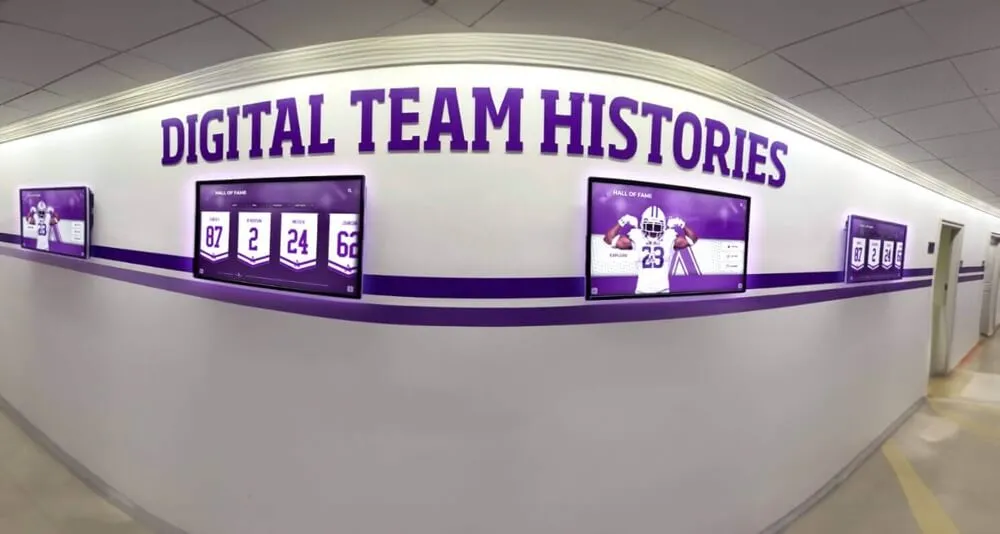
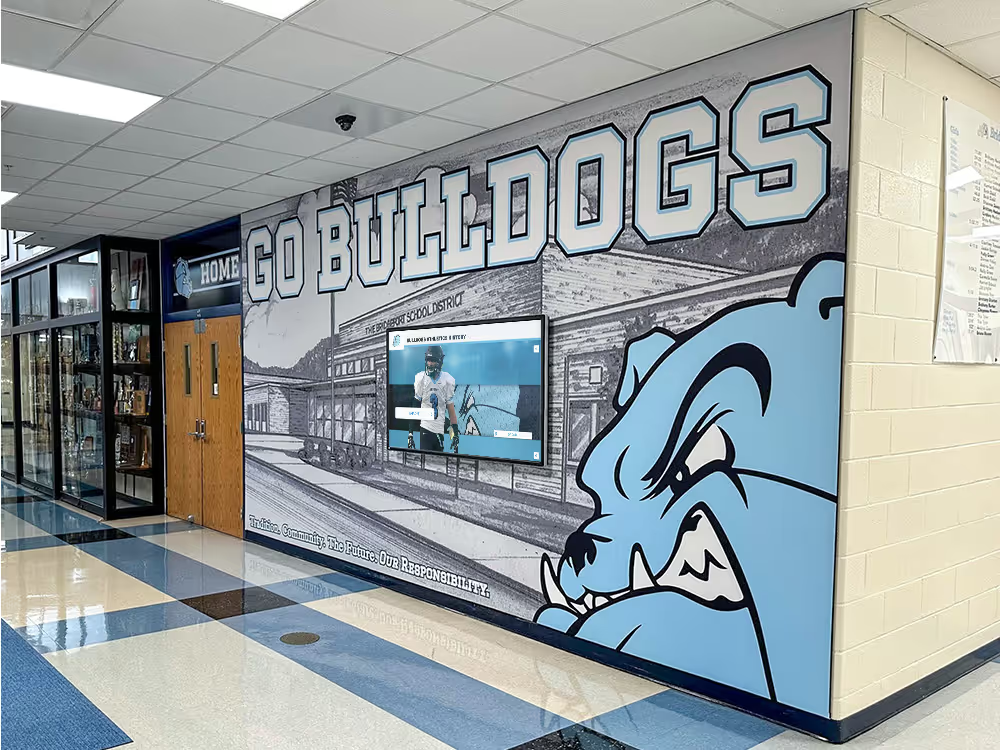
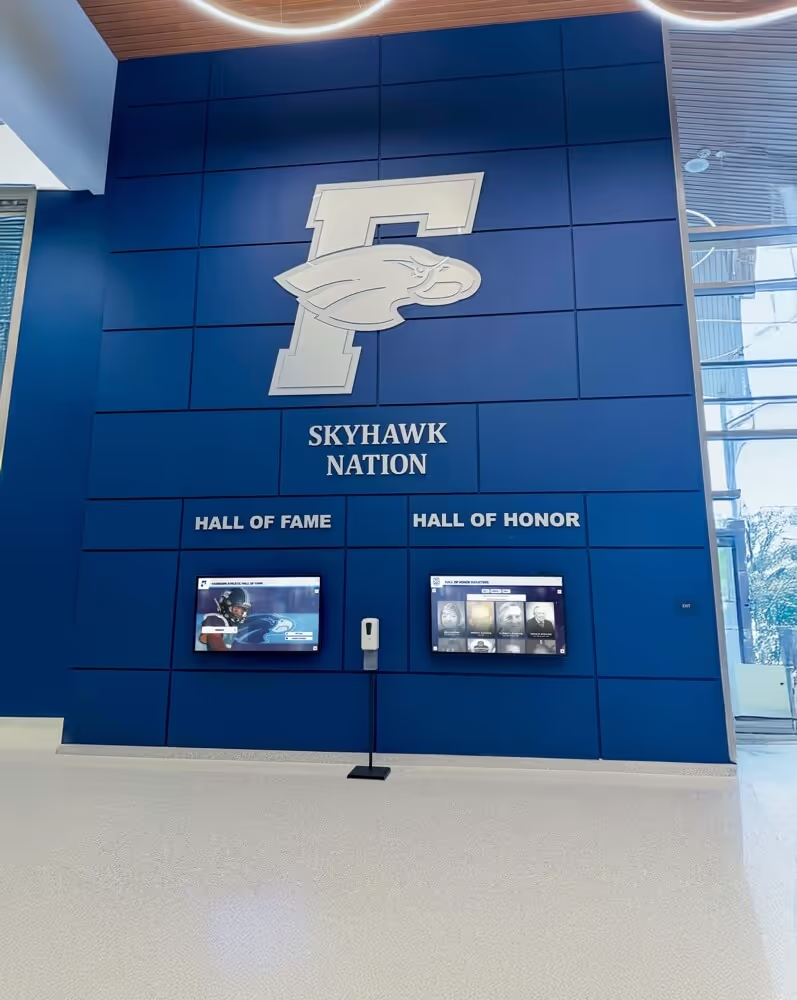
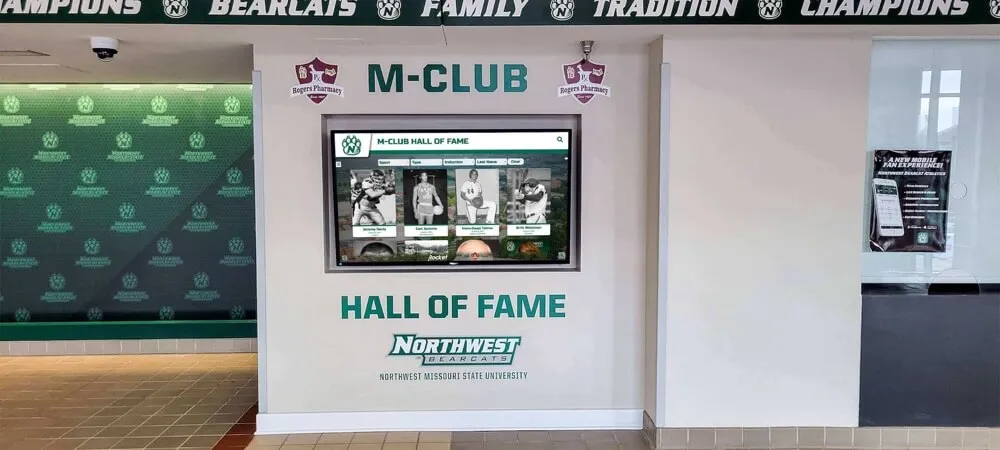
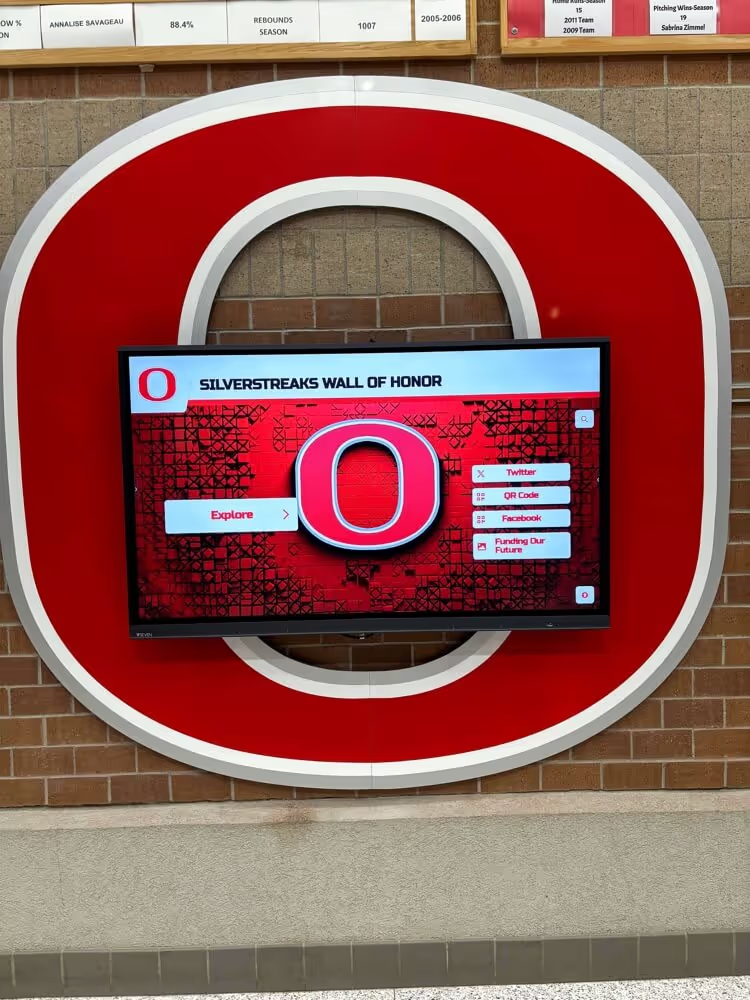
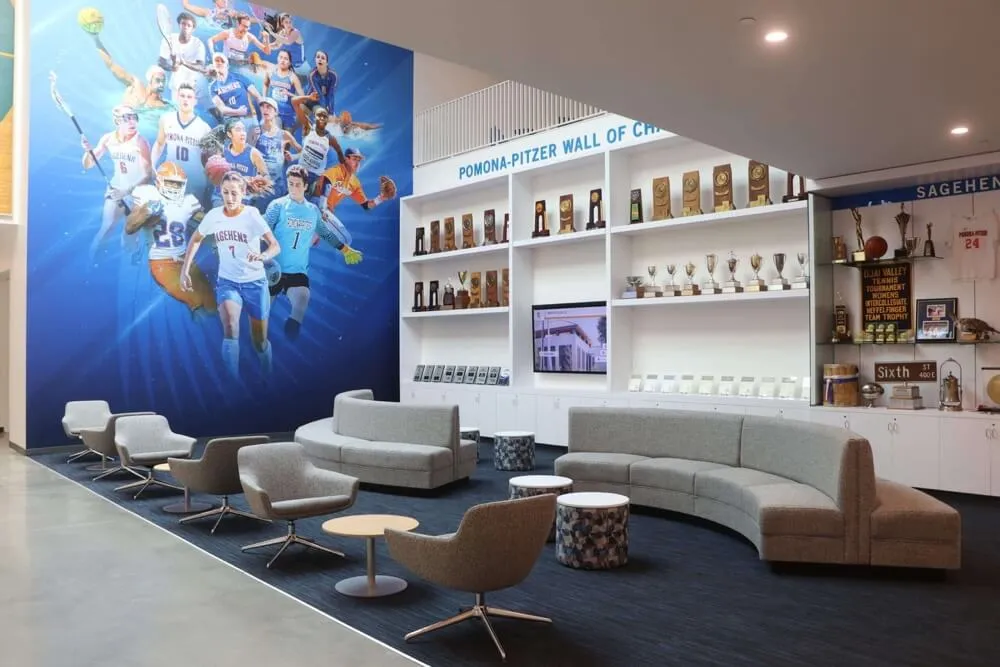
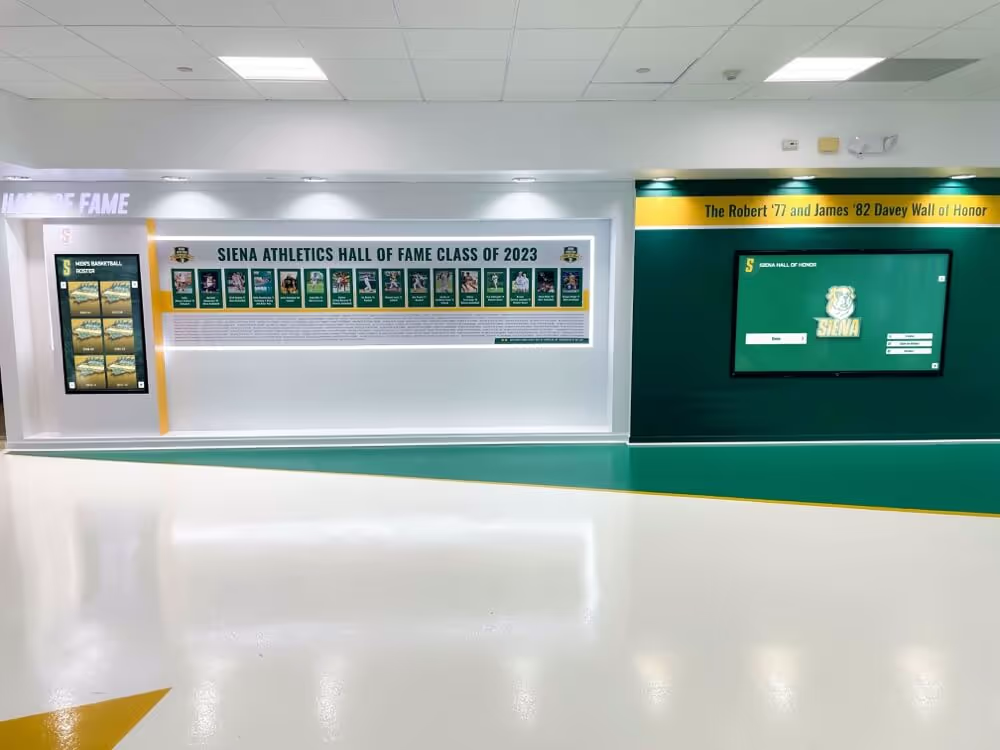
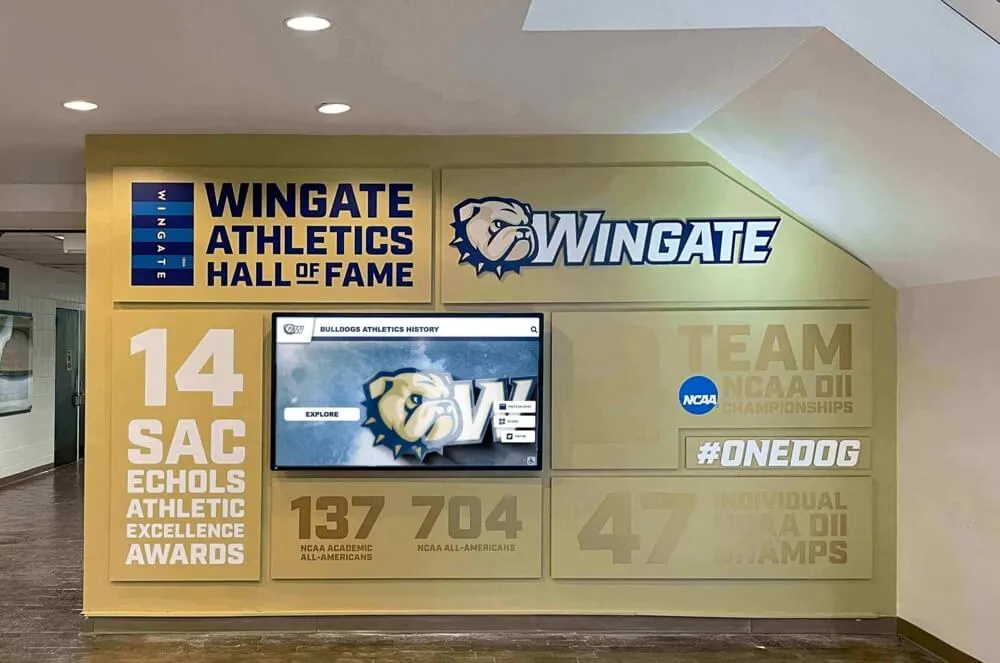
Strategic placement of digital displays in high-traffic areas ensures continuous visibility and engagement with athletic achievements
Why Traditional Athletic Recognition Falls Short
Athletic directors know that traditional recognition methods have significant limitations that impact their ability to maintain year-round school spirit. Static trophy cases fill up quickly, especially at schools with successful programs across multiple sports, leaving athletic directors making difficult decisions about what to display and what to store in closets. Physical plaques require ongoing investment, installation becomes increasingly difficult as wall space disappears, and updating information means replacing entire displays.
Beyond space constraints, traditional recognition creates temporal challenges. Fall sports achievements dominate displays during autumn, but by spring, those same displays feel dated while winter and spring athletes await their recognition. The cyclical nature creates periods where athletic facilities feel stagnant, undermining the continuous school spirit athletic directors work to cultivate.
Engagement Limitations
Traditional displays offer one-way communication with no interaction, making them easy for students to ignore during daily routines. Static information becomes invisible through familiarity—students stop noticing plaques they see every day. There’s no mechanism to highlight current athletes, share game schedules, or promote upcoming events where space is already dedicated to historical achievements.
Maintenance and Cost Challenges
Every new season requires new plaques, engraving, and installation costs that compound over time. Damaged or outdated displays create negative impressions rather than building pride. Correction of errors requires complete replacement, and traditional systems offer no scalability as programs grow or add sports.
These limitations don’t diminish the importance of recognition—they highlight the need for solutions that overcome these constraints while amplifying the positive impact athletic directors seek to create. Learn more about modern approaches to building school pride through creative recognition ideas.
Strategic Benefits of Athletic Director Digital Displays
Athletic directors implementing digital display solutions gain capabilities that transform how they manage recognition, communication, and facility environment. Digital systems provide unlimited capacity for showcasing achievements without physical space constraints, allowing athletic directors to recognize every team, every season, and every athlete who contributes to program success.
The ability to update content remotely and instantly means displays stay current throughout the year. Athletic directors can showcase fall athletes during autumn, seamlessly transition to winter sports, highlight spring achievements, and even feature summer training programs and camps—maintaining continuous relevance that keeps school spirit alive regardless of competitive schedule.
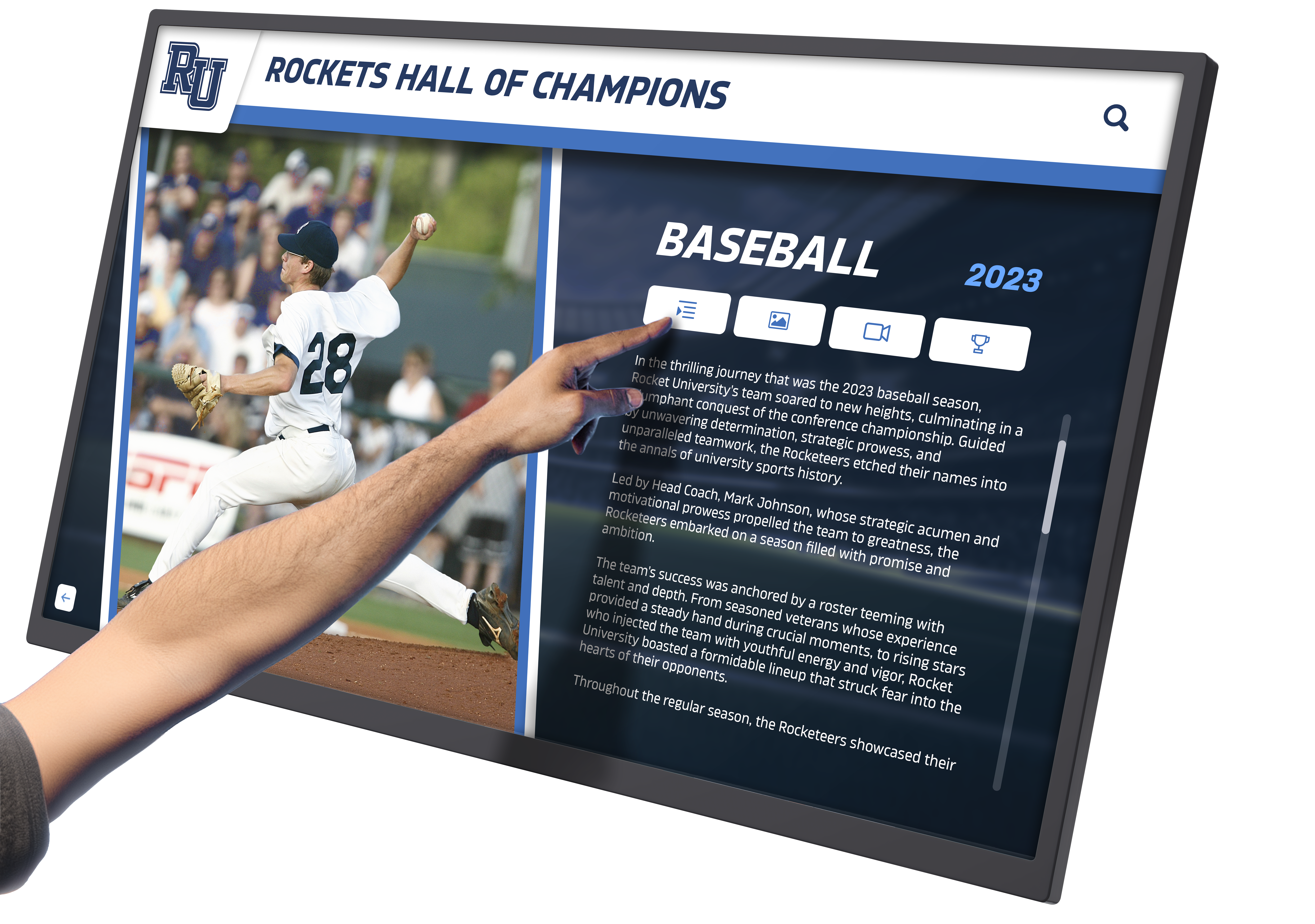
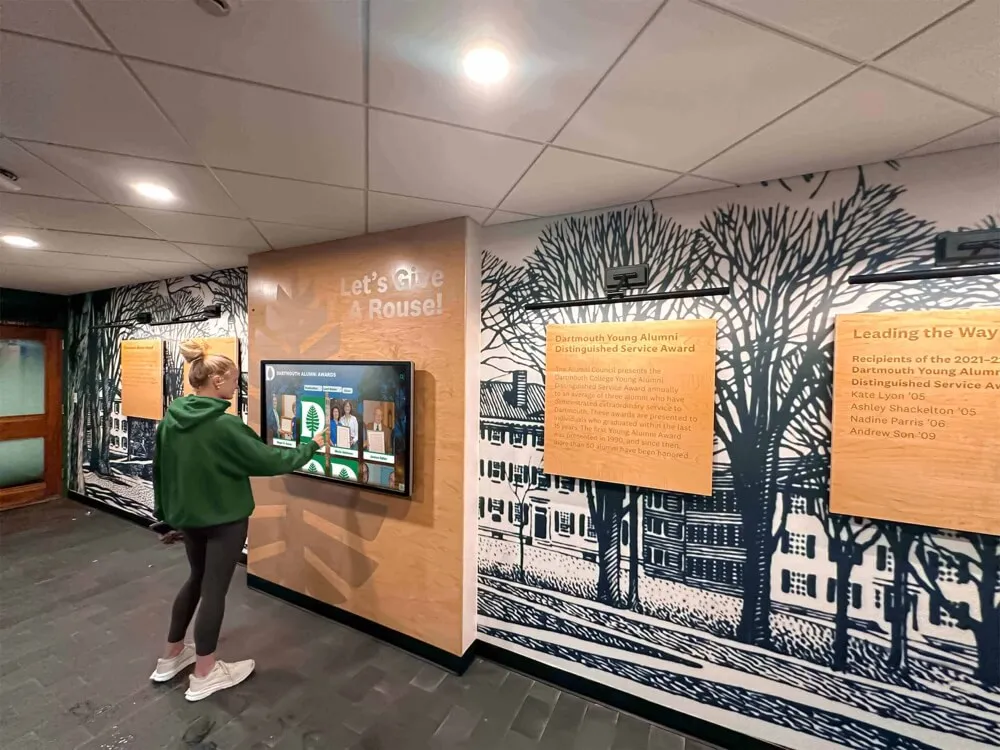
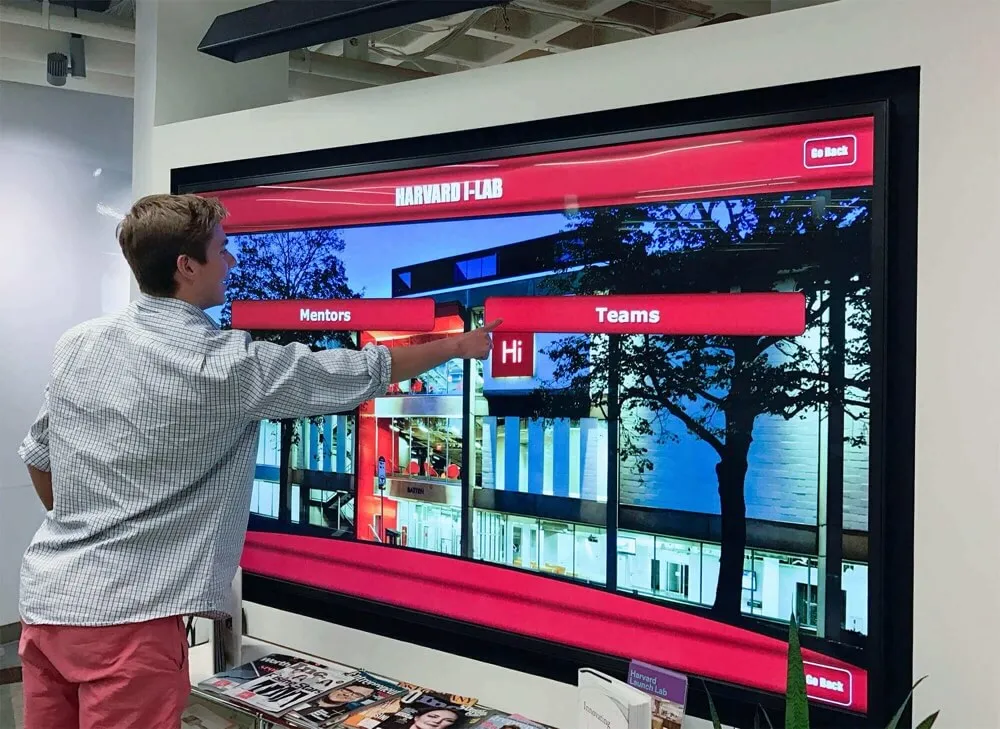
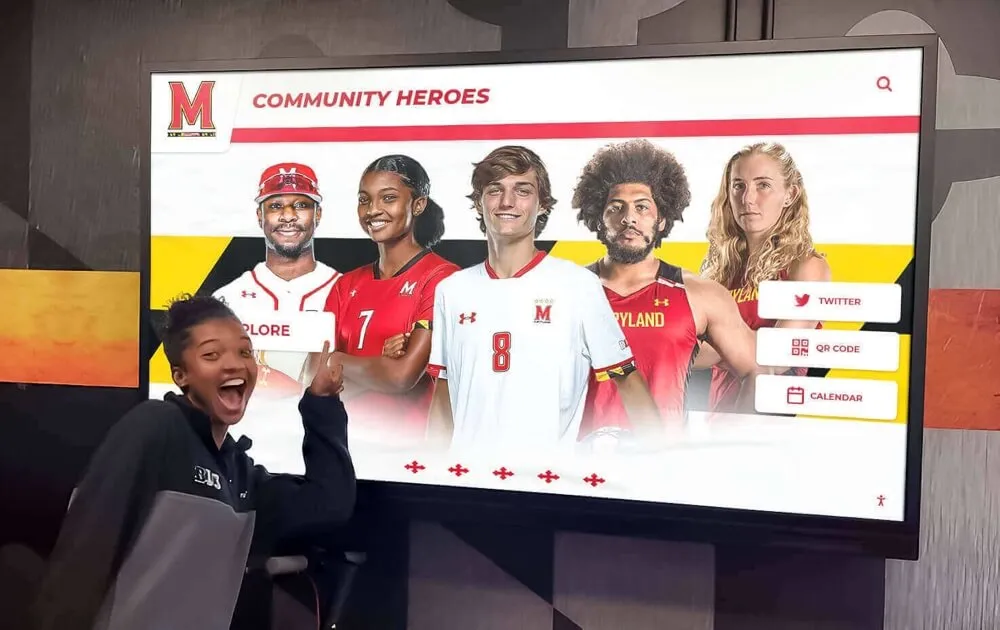
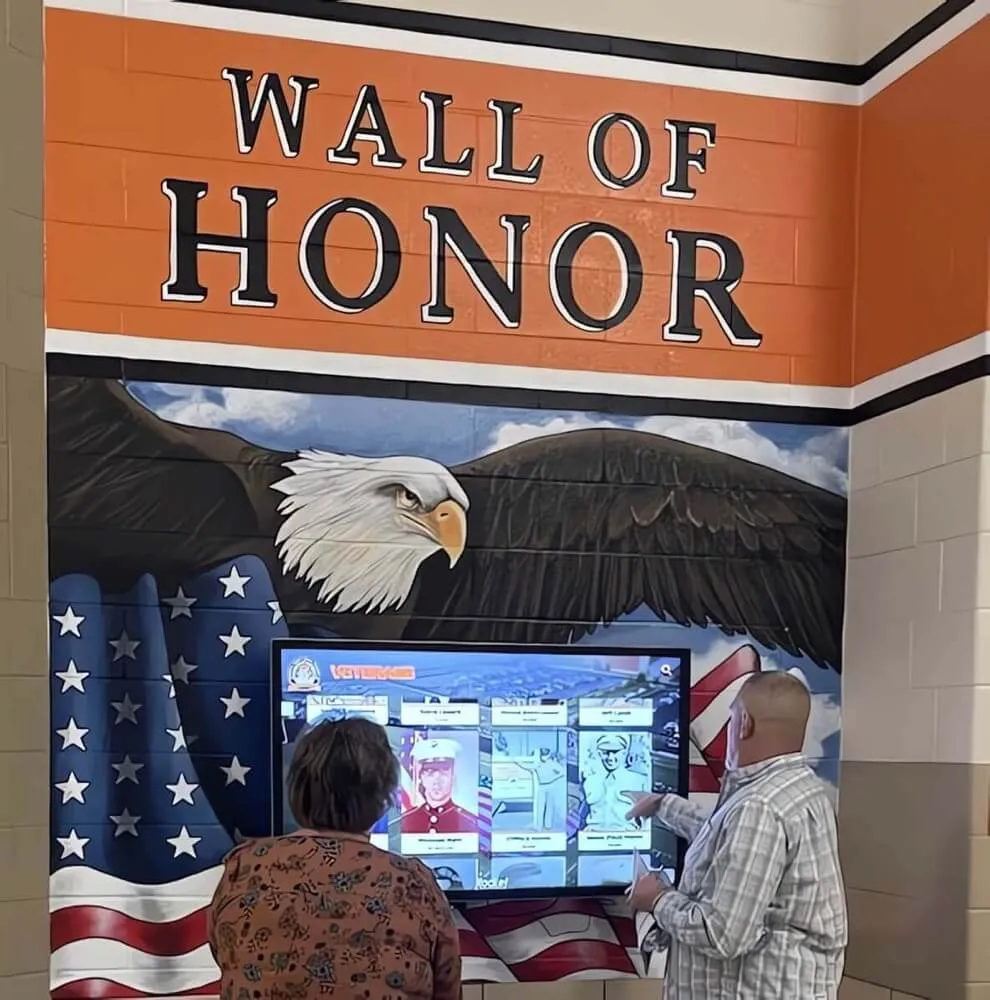
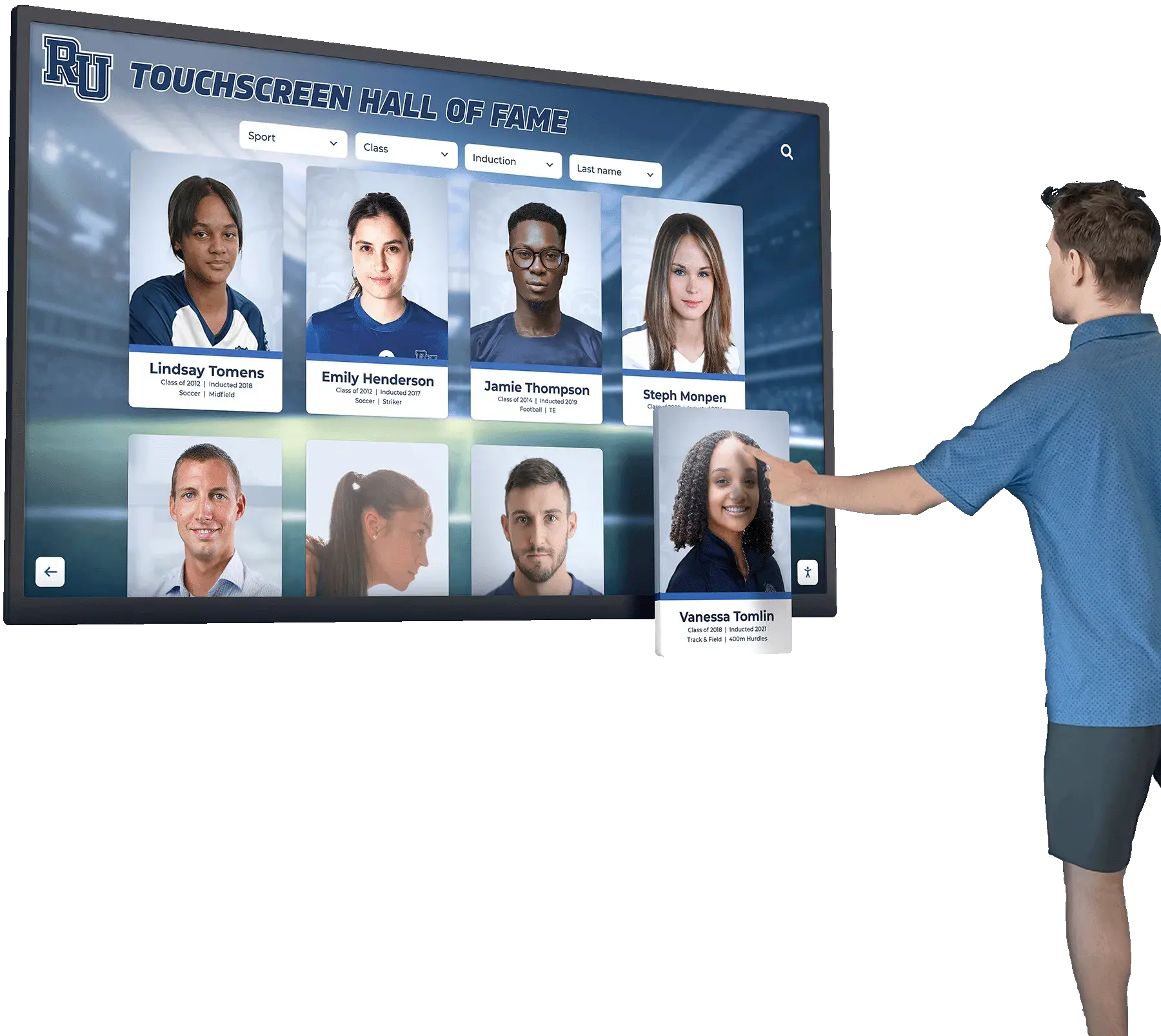
Interactive touchscreen displays create engaging experiences where students actively explore athletic achievements rather than passively viewing static information
Enhanced Stakeholder Engagement
Digital displays create multiple engagement opportunities that strengthen connections with key stakeholder groups:
- Current Students: Interactive displays allow students to explore athlete profiles, view team photos, check upcoming game schedules, and engage with athletic department content rather than passively viewing static plaques
- Prospective Athletes: Visiting recruits see dynamic displays showcasing program achievements, creating powerful first impressions that communicate program investment in recognition
- Parents and Families: Digital systems can include photo galleries from games and events, providing family members with visible connection to their students’ athletic experiences
- Alumni: Historical content and alumni athlete profiles maintain connections with former students while showing current athletes the legacy they’re joining
- Community Members: Game schedules, season highlights, and championship celebrations keep community supporters engaged with athletic programs
Cost Efficiency Over Time
While initial investment in digital systems exceeds traditional plaques, the total cost of ownership favors digital solutions over multi-year periods. Athletic directors eliminate recurring costs for individual plaques, engraving services, and installation labor. Content updates happen through cloud-based systems without additional expenses, and single digital displays can showcase content that would require dozens of traditional plaques.
Error corrections require simple edits rather than complete replacement, and scalability doesn’t require additional hardware investment. These digital athletic record boards offer flexibility that traditional solutions simply cannot match.
Professional Image and Competitive Advantage
Schools with modern digital recognition systems communicate institutional investment and forward-thinking approaches that resonate with prospective students and families. In competitive recruitment environments, facility impressions matter—digital displays signal that programs value their athletes enough to invest in contemporary recognition solutions.
Year-Round Content Strategies for Maximum Impact
The true power of athletic director digital displays lies in strategic content planning that maintains relevance and engagement throughout every season and school period.
Seasonal Sport Rotation
Athletic directors should plan content calendars that align with athletic seasons while maintaining visibility for all programs:
Active Season Highlighting
- Feature current team rosters with athlete photos and profiles during competitive seasons
- Display upcoming game schedules, opponent information, and venue details
- Showcase recent game highlights and scoring leaders
- Celebrate weekly or monthly athlete achievements
- Highlight senior athletes during their final seasons
- Share practice schedules and facility usage information
Transition Period Content
- Championship recaps and season highlight videos as seasons conclude
- Off-season training information and summer program details
- Academic achievement recognition for student-athletes
- Community service activities by athletic teams
- Recruiting announcements for incoming athletes
- Facility improvement updates and renovations
This rotation ensures displays never feel stagnant while giving every sport appropriate visibility during their competitive seasons. Athletic directors can plan quarterly content reviews to ensure balance across all athletic programs.
Building Athletic Culture Through Storytelling
Beyond statistics and schedules, effective digital displays tell compelling stories:
Athlete Journey Narratives
- Profile student-athletes from freshman year through senior year
- Highlight improvement and development over athletic careers
- Share athlete perspectives on team culture and program values
- Connect current athletes with alumni who played same positions
- Feature coaches and their coaching philosophies
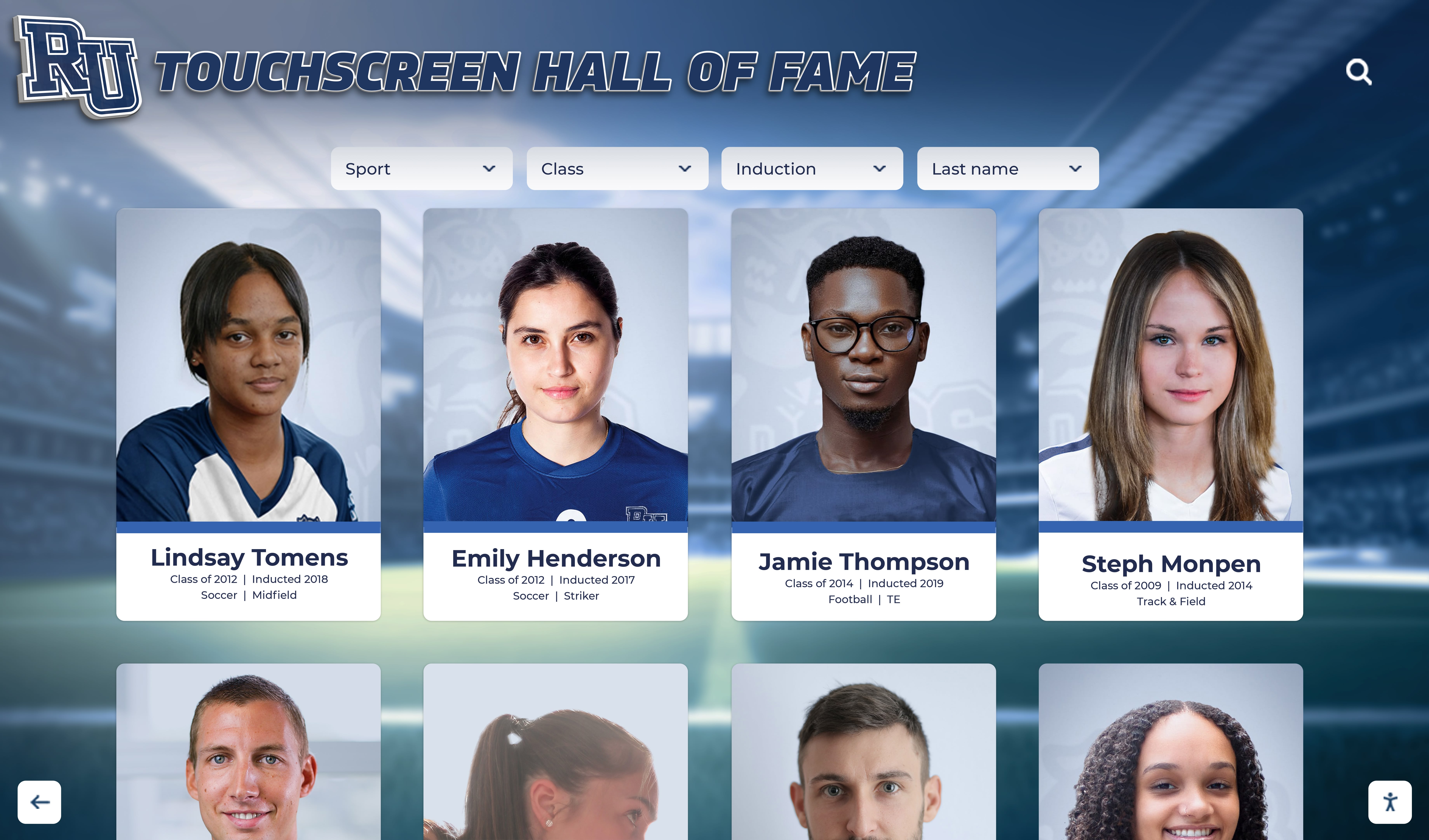
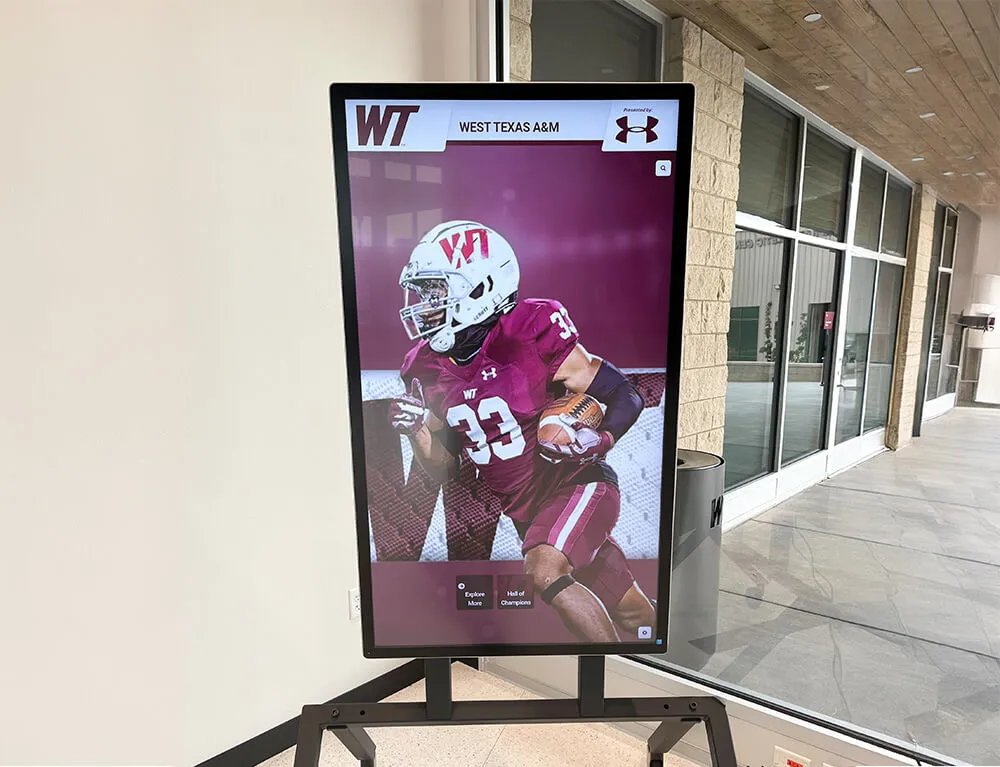
Individual athlete profiles create personal connections while celebrating contributions within team contexts
Historical Context and Tradition
- Showcase program milestones and championship history
- Feature legendary coaches and their accomplishments
- Highlight school athletic records with historical context
- Compare current teams with historical precedents
- Celebrate program anniversaries and significant dates
Values and Character Development
- Recognize sportsmanship and character award recipients
- Highlight community service by athletic teams
- Showcase academic achievements alongside athletic success
- Feature academic recognition programs that celebrate student-athlete academic excellence
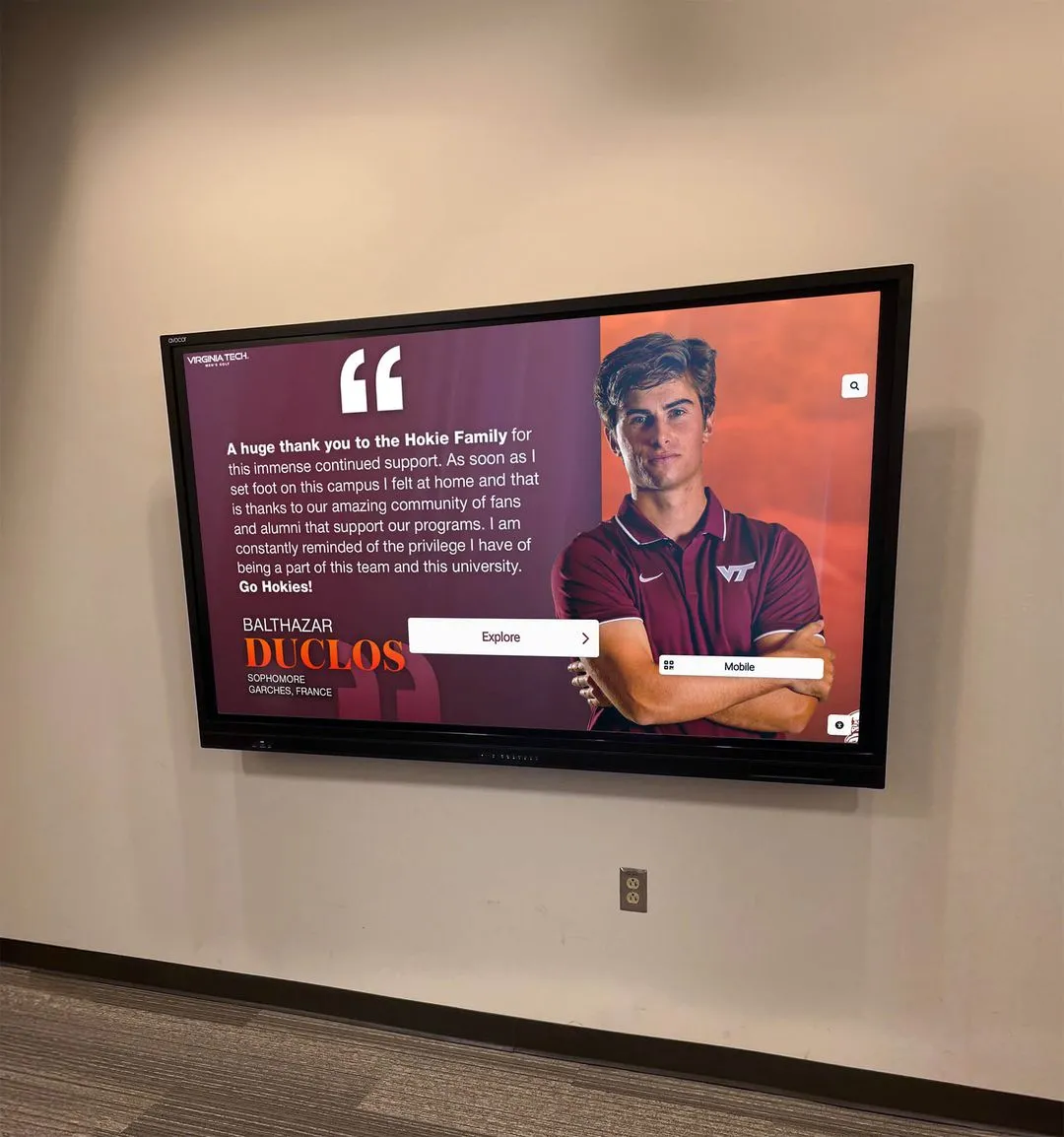
- Share quotes from athletes about lessons learned through sports
These storytelling approaches transform displays from data repositories into engagement platforms that build emotional connections with viewers.
Integrating Community and Donor Recognition
Athletic directors can leverage digital displays to strengthen fundraising and community support:
Booster and Sponsor Visibility
- Recognize booster club members and volunteers
- Acknowledge corporate sponsors and community partners
- Highlight major donors and facility naming recognition
- Share impact stories showing how donations support programs
- Feature fundraising campaign progress and goals
Alumni Engagement Content
- Showcase successful alumni and their achievements beyond athletics
- Highlight alumni who support current programs
- Feature “where are they now” alumni profiles
- Connect alumni achievements to current program culture
- Include calls to action for alumni giving and engagement
This integration transforms displays into development tools that support athletic department fundraising while maintaining recognition’s motivational benefits. Many successful programs combine these strategies with nonprofit digital display approaches to maximize donor recognition.
Implementation Strategies for Athletic Directors
Successfully deploying digital display systems requires careful planning across technical, logistical, and content dimensions.
Strategic Placement Decisions
Athletic directors should identify high-impact locations that maximize visibility and engagement:
Primary Athletic Facility Locations
- Main gymnasium lobbies where athletes, families, and spectators gather
- Athletic hallway corridors connecting locker rooms and practice facilities
- Weight room entrances showcasing strength program achievements
- Training room areas highlighting athlete wellness and recovery
- Concession stand areas during game events
Whole-School Integration Points
- Main school entrance lobbies greeting all students and visitors
- Cafeteria and common areas with high daily student traffic
- Library and academic spaces integrating athletic recognition
- Performing arts areas demonstrating school-wide achievement culture
- Administrative office areas for community and parent visibility
Location decisions should prioritize areas where displays will be seen regularly by target audiences while avoiding locations where they might feel like afterthoughts tucked in unused corners.
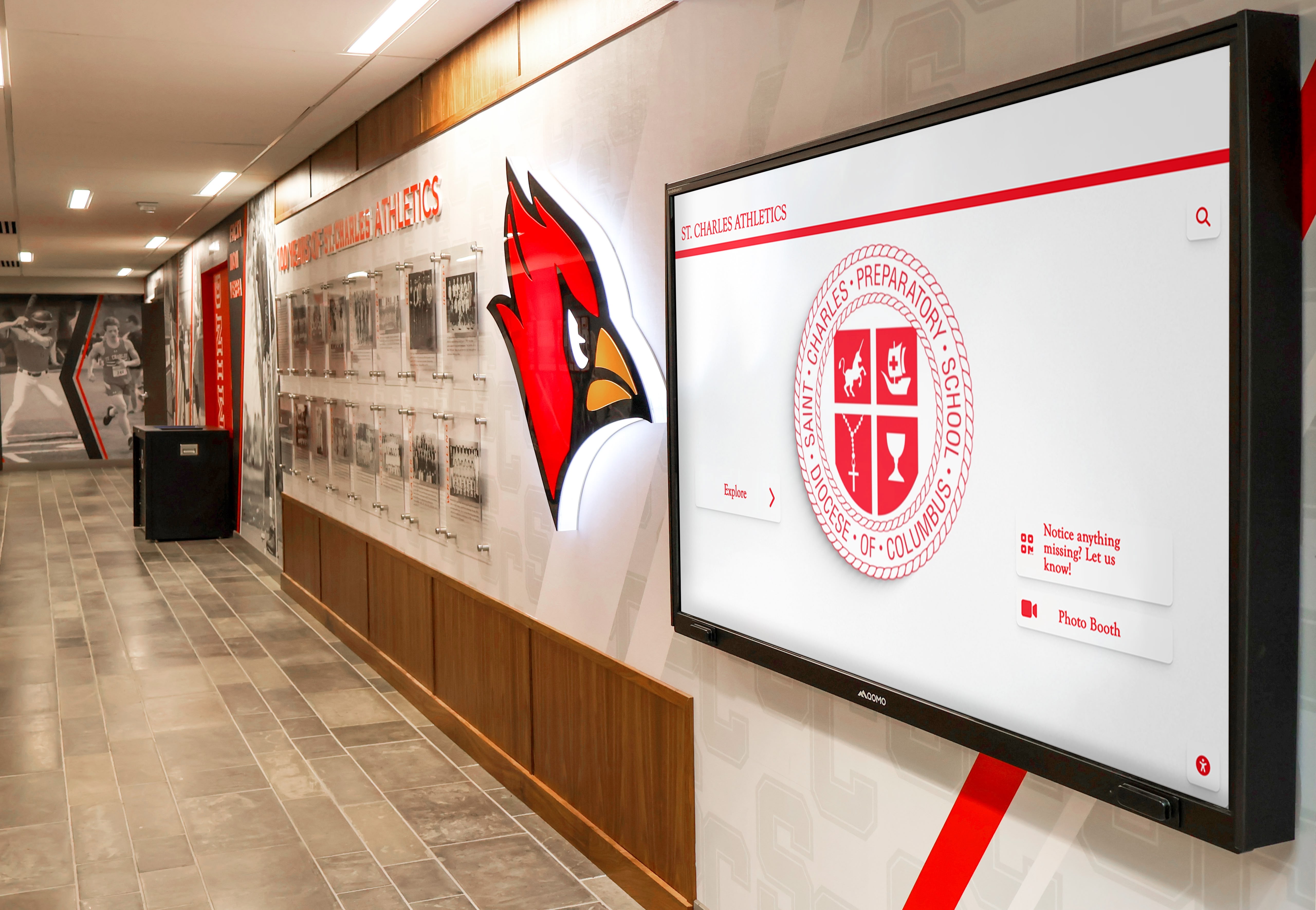
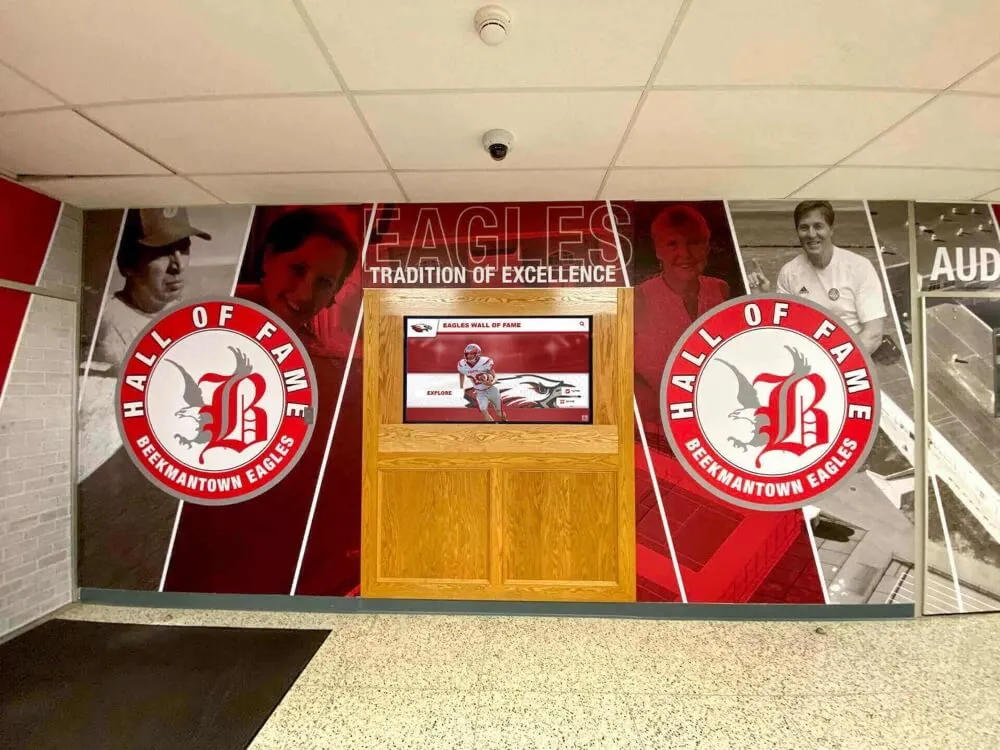
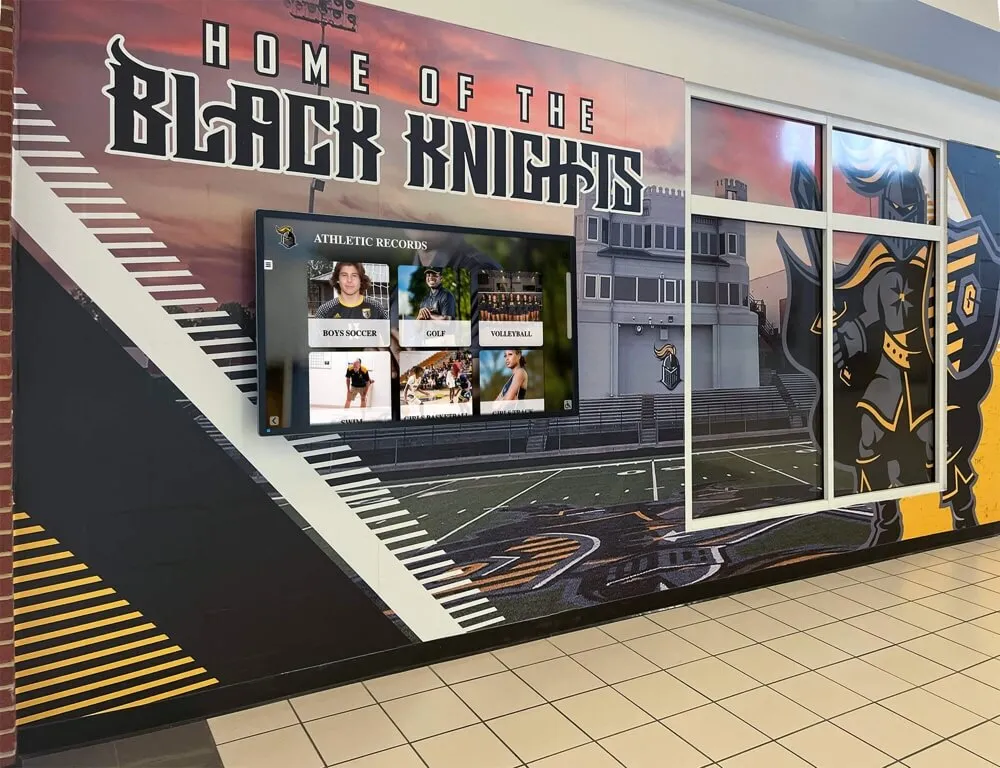
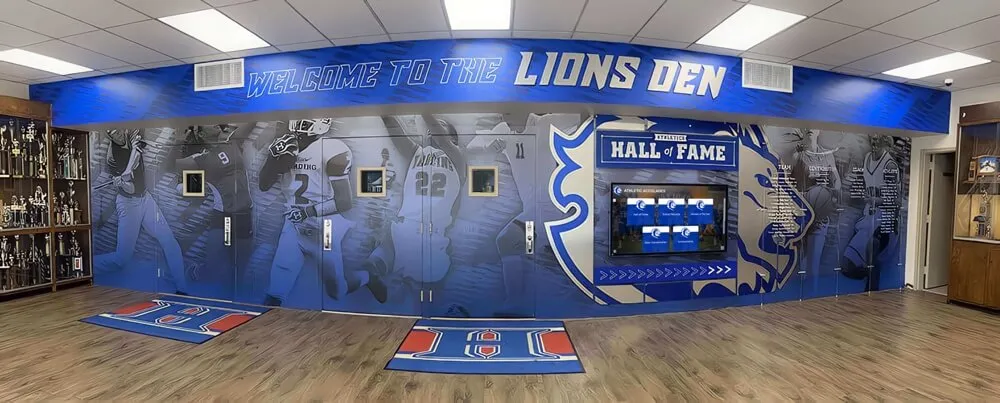
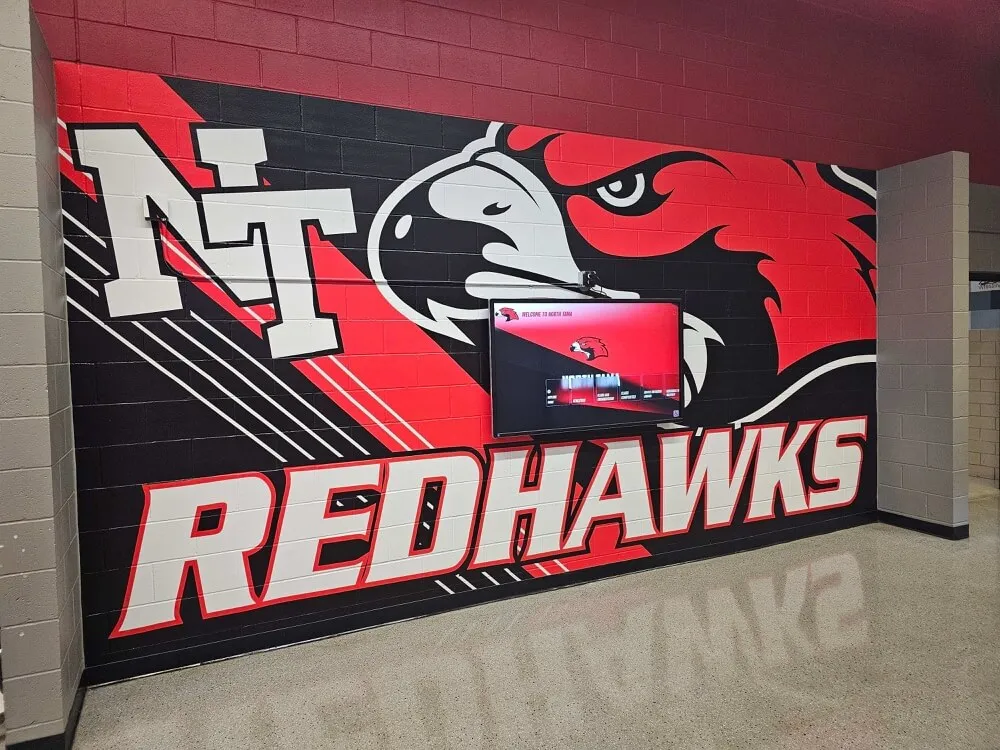
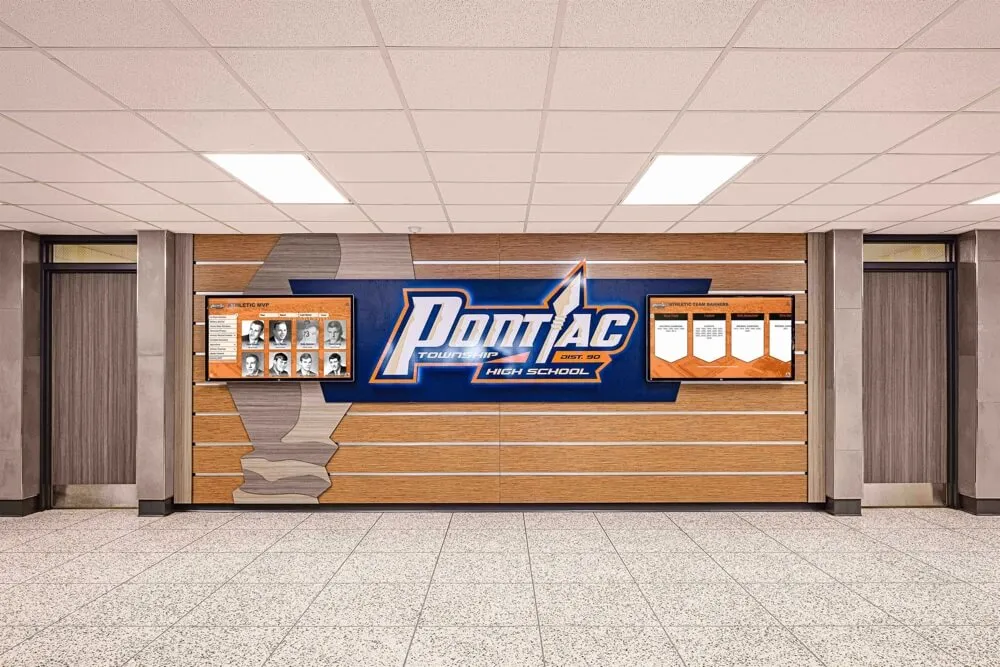
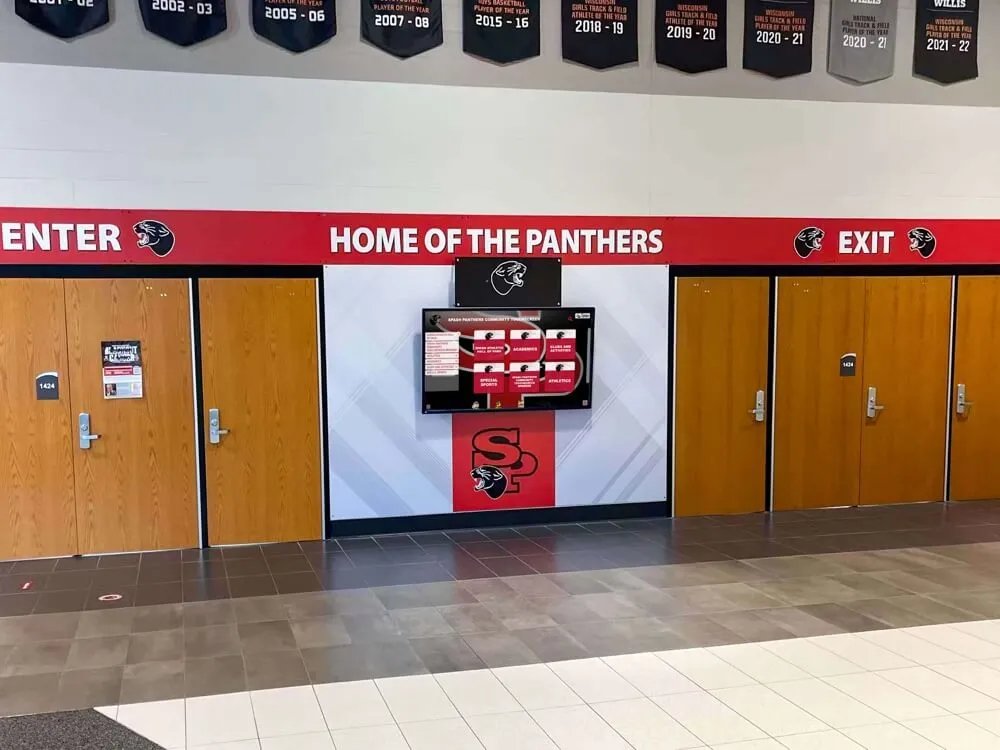
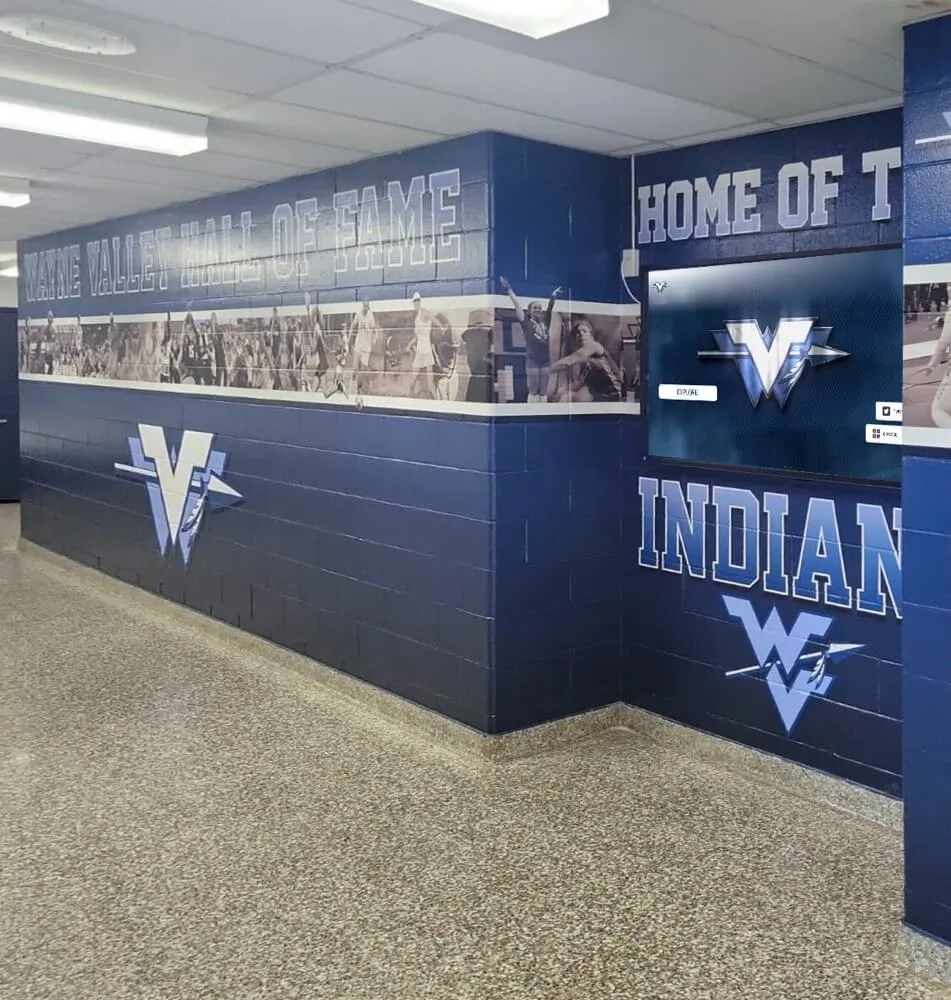
Thoughtful integration of digital displays into existing facility design creates cohesive environments that feel intentional rather than retrofitted
Content Management and Workflow
Athletic directors need sustainable systems for keeping displays current without creating overwhelming administrative burden:
Establishing Content Responsibilities
- Assign specific coaches responsibility for their team’s content
- Designate athletic department administrative staff as content coordinators
- Create student media teams as content developers
- Establish approval workflows ensuring quality control
- Set quarterly content review schedules maintaining freshness
Content Development Resources
- Build template libraries for consistent visual presentation
- Create photo and video capture protocols during events
- Establish athlete information collection processes
- Develop writing guidelines for profile content
- Compile historical information for archival content
Many athletic directors find success distributing content development across coaches and staff rather than centralizing all responsibility, creating shared ownership while preventing bottlenecks.
Technical Considerations and Infrastructure
Working with technology departments ensures reliable system operation:
Hardware Selection Factors
- Screen size appropriate for viewing distances and spaces
- Touchscreen capabilities for interactive experiences
- Brightness levels suitable for ambient lighting conditions
- Mounting solutions matching architectural features
- Network connectivity requirements and capabilities
Software Platform Requirements
- Cloud-based management allowing remote content updates
- User-friendly interfaces enabling non-technical content editing
- Mobile responsiveness for smartphone and tablet content management
- Template systems maintaining consistent design standards
- Analytics showing content engagement and viewer interaction
Explore comprehensive hardware setup considerations when evaluating athletic director digital display solutions.
Measuring Impact and Return on Investment
Athletic directors accountable to administrators and boards need frameworks for demonstrating digital display value and effectiveness.
Quantitative Impact Metrics
Engagement Measurements
- Touchscreen interaction rates and session durations
- Most frequently accessed content and athlete profiles
- Peak usage times correlating with school schedules
- Content views and interaction frequency
- Social media sharing of display content
Athletic Department Outcomes
- Booster membership and donation trends following installation
- Alumni engagement and giving participation rates
- Athletic program applications and recruitment yield
- Game attendance and spectator trends
- Corporate sponsorship and partnership growth
Communication Effectiveness
- Game attendance correlation with schedule display visibility
- Event participation rates for promoted activities
- Survey results measuring awareness of athletic achievements
- Social media engagement with content featured on displays
- Website traffic to athletic department pages
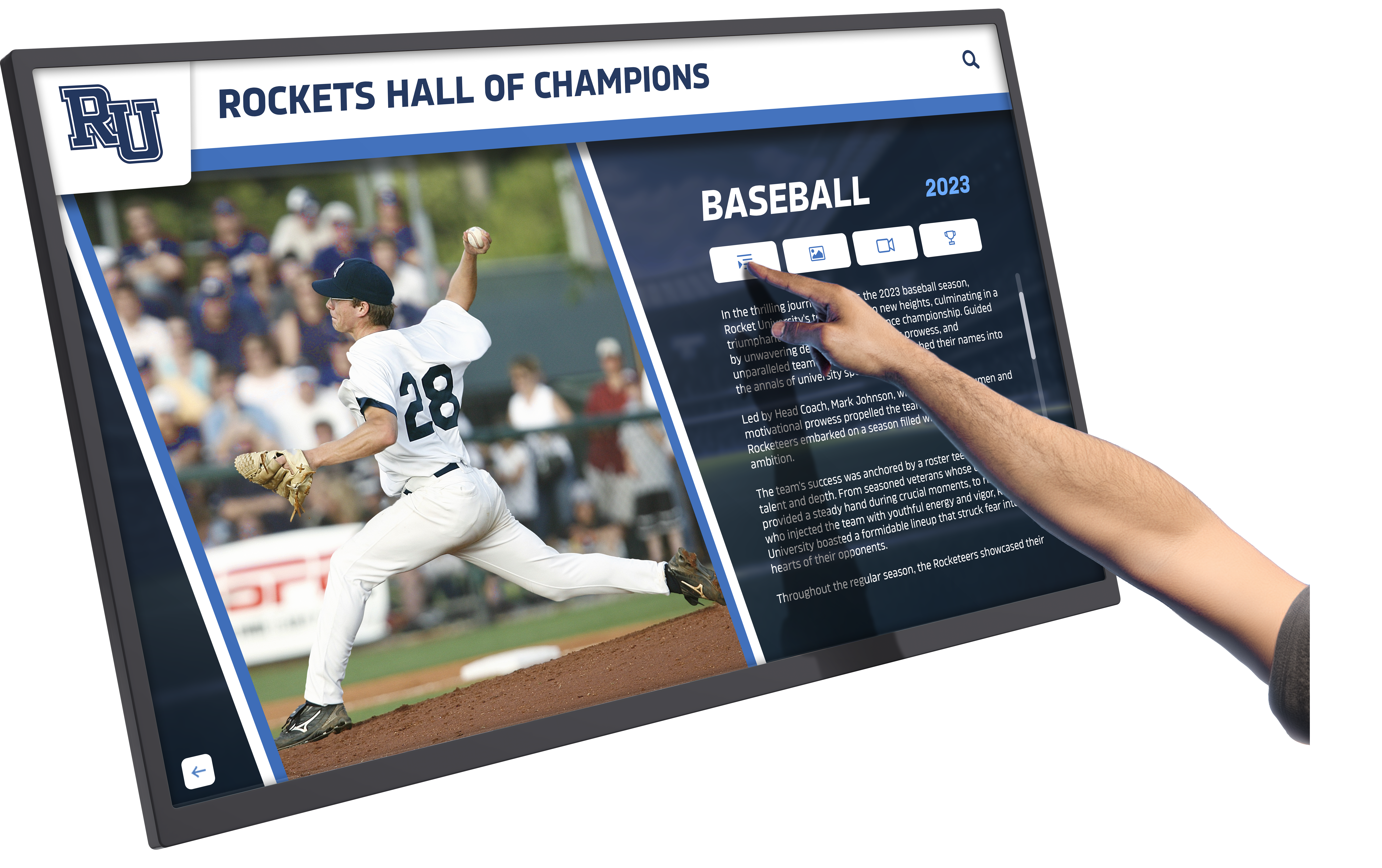
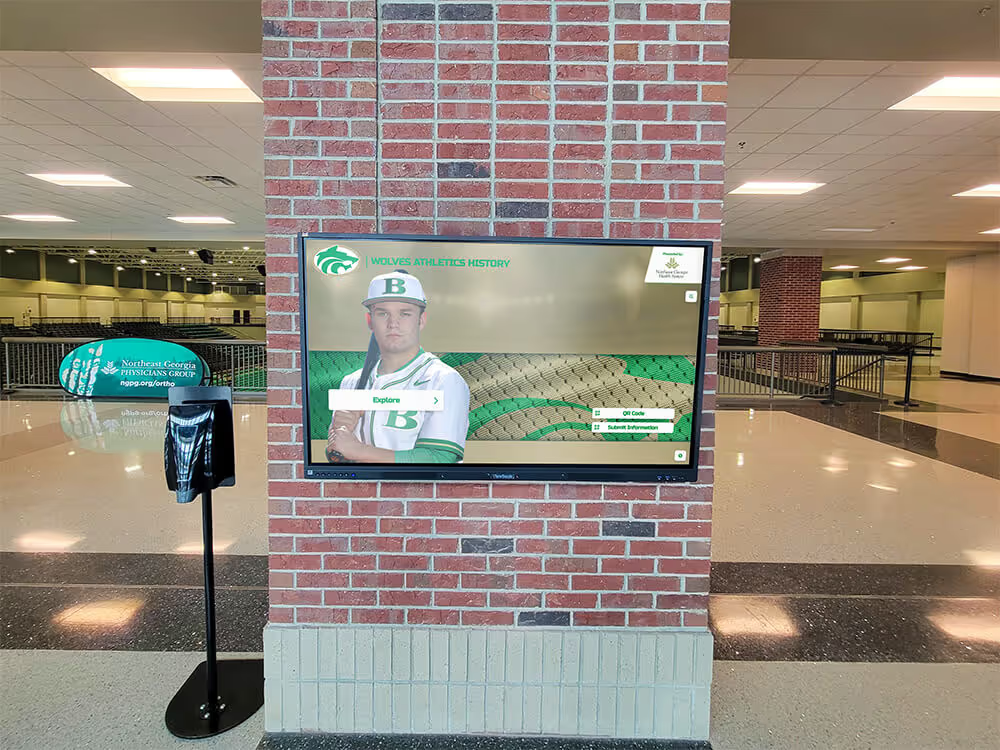
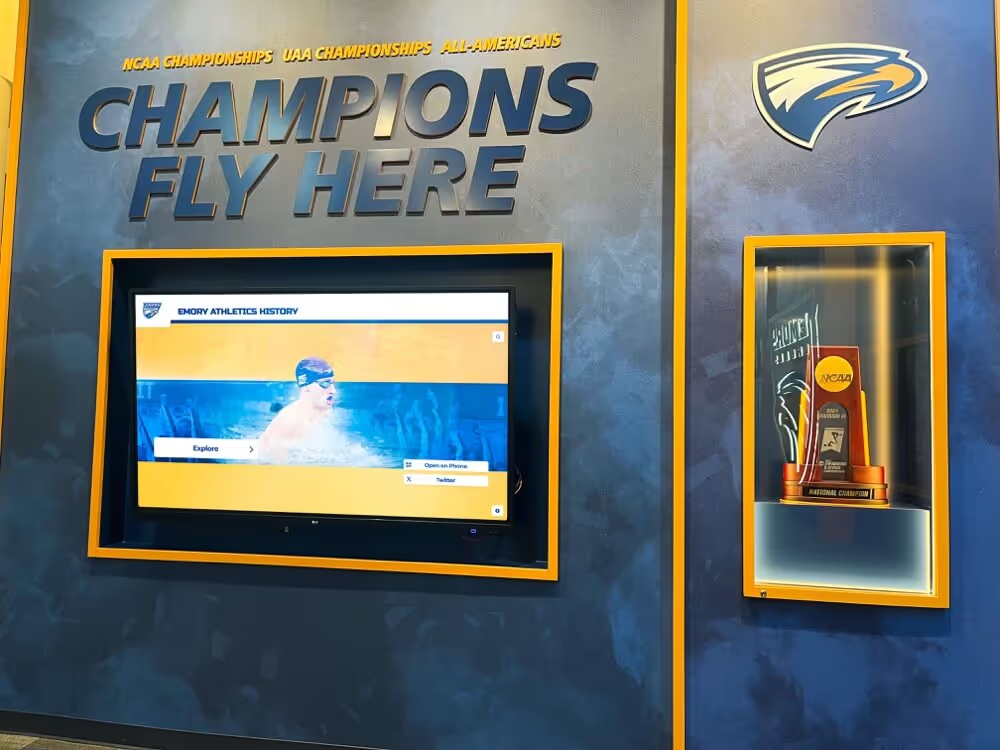
Interactive capabilities transform passive viewing into active engagement, creating memorable experiences with athletic content
Qualitative Impact Assessment
Beyond numbers, athletic directors should gather experiential feedback:
Stakeholder Testimonials
- Student-athlete perspectives on recognition experiences
- Parent feedback about visibility and engagement
- Alumni responses to historical content and connections
- Community member reactions to displays
- Prospective family impressions during campus tours
Cultural Observations
- Changes in hallway conversations about athletics
- Increased student awareness of athletic achievements
- Staff feedback about school spirit and pride
- Visitor comments during tours and events
- Coach observations about athlete motivation
Regular assessment helps athletic directors refine content strategies while building compelling narratives about program value for budget discussions and administrative reporting.
Overcoming Common Implementation Challenges
Athletic directors implementing digital displays typically encounter predictable obstacles that benefit from proactive planning.
Budget and Funding Strategies
Initial investment concerns represent the most common implementation barrier:
Funding Source Development
- Include digital displays in capital improvement campaigns
- Seek targeted booster donations for specific display projects
- Pursue corporate sponsorships offsetting installation costs
- Apply for educational technology grants supporting athletics
- Phase implementation starting with high-impact locations
Total Cost of Ownership Communication
- Calculate multi-year costs of traditional plaque approaches
- Project labor savings from simplified content updates
- Estimate increased booster revenue from enhanced engagement
- Compare maintenance costs between traditional and digital solutions
- Demonstrate scalability advantages over time
Many athletic directors find success framing digital displays as permanent infrastructure investments similar to scoreboards or facility renovations rather than technology expenditures. Understanding subscription and pricing options helps with budget planning.
Content Development Capacity
Concerns about ongoing content creation workload can delay implementation:
Sustainable Content Approaches
- Start with core content like rosters and schedules requiring minimal updates
- Develop content gradually rather than launching with complete historical archives
- Leverage existing content from programs, yearbooks, and websites
- Create student internship or class projects around content development
- Establish templates minimizing custom design for each update
Workflow Efficiency Strategies
- Set realistic content refresh cycles based on available resources
- Automate schedule displays pulling from existing game scheduling systems
- Batch content creation during natural transition periods
- Designate specific times for content development rather than ongoing demands
- Accept that dynamic content with occasional updates exceeds static displays even without constant changes
The perfect should not become the enemy of the good—displays with quarterly updates still dramatically exceed traditional recognition even if not updated weekly.
Technical Support and Maintenance
Athletic directors unfamiliar with display technology may worry about technical demands:
Support Structure Development
- Partner with school technology departments from project inception
- Select vendor solutions with strong support and training
- Establish clear responsibility delineation between athletic and technology staff
- Create documentation for common tasks and troubleshooting
- Build relationships with vendor support teams before issues arise
Preventive Maintenance Planning
- Schedule regular display cleaning and physical inspection
- Monitor software updates and system performance
- Test touchscreen functionality and responsiveness
- Review network connectivity and performance
- Maintain backup plans for display downtime during events
Most modern systems prove remarkably reliable with minimal technical intervention required, especially when compared to troubleshooting traditional static display installation and maintenance issues.
Advanced Strategies for Maximizing Display Impact
Athletic directors who have successfully implemented basic digital displays can explore advanced strategies that further enhance engagement and impact.
Multi-Display Coordination and Theming
Athletic directors managing multiple displays across facilities can create coordinated experiences:
Coordinated Content Themes
- Synchronize all displays around monthly themes or featured sports
- Create complementary content across different display locations
- Develop wayfinding systems directing viewers between related displays
- Coordinate timing so different displays highlight different aspects of same stories
- Build anticipation with coordinated content releases
Location-Specific Customization
- Tailor lobby displays toward visitors and prospective families
- Customize hallway content for daily student engagement
- Adapt athletic facility displays for athlete-specific content
- Design administrative area displays for donor and community focus
- Create event-specific content for displays visible during games
Integration with Broader School Recognition
Athletic directors can position displays as part of comprehensive school achievement celebration:
Cross-Department Recognition Alignment
- Coordinate with performing arts recognition initiatives
- Integrate academic achievement alongside athletic success
- Highlight student leadership and community service
- Feature teacher appreciation and staff recognition
- Celebrate high school graduation achievements and milestones
Holistic Student Recognition
- Profile multi-dimensional student achievements beyond sports
- Recognize students earning various honors and distinctions
- Highlight student-athletes excelling academically and athletically
- Feature students exemplifying school values across contexts
- Create comprehensive achievement culture beyond single departments
This integration positions athletic directors as leaders in school-wide culture development rather than solely athletic department advocates.
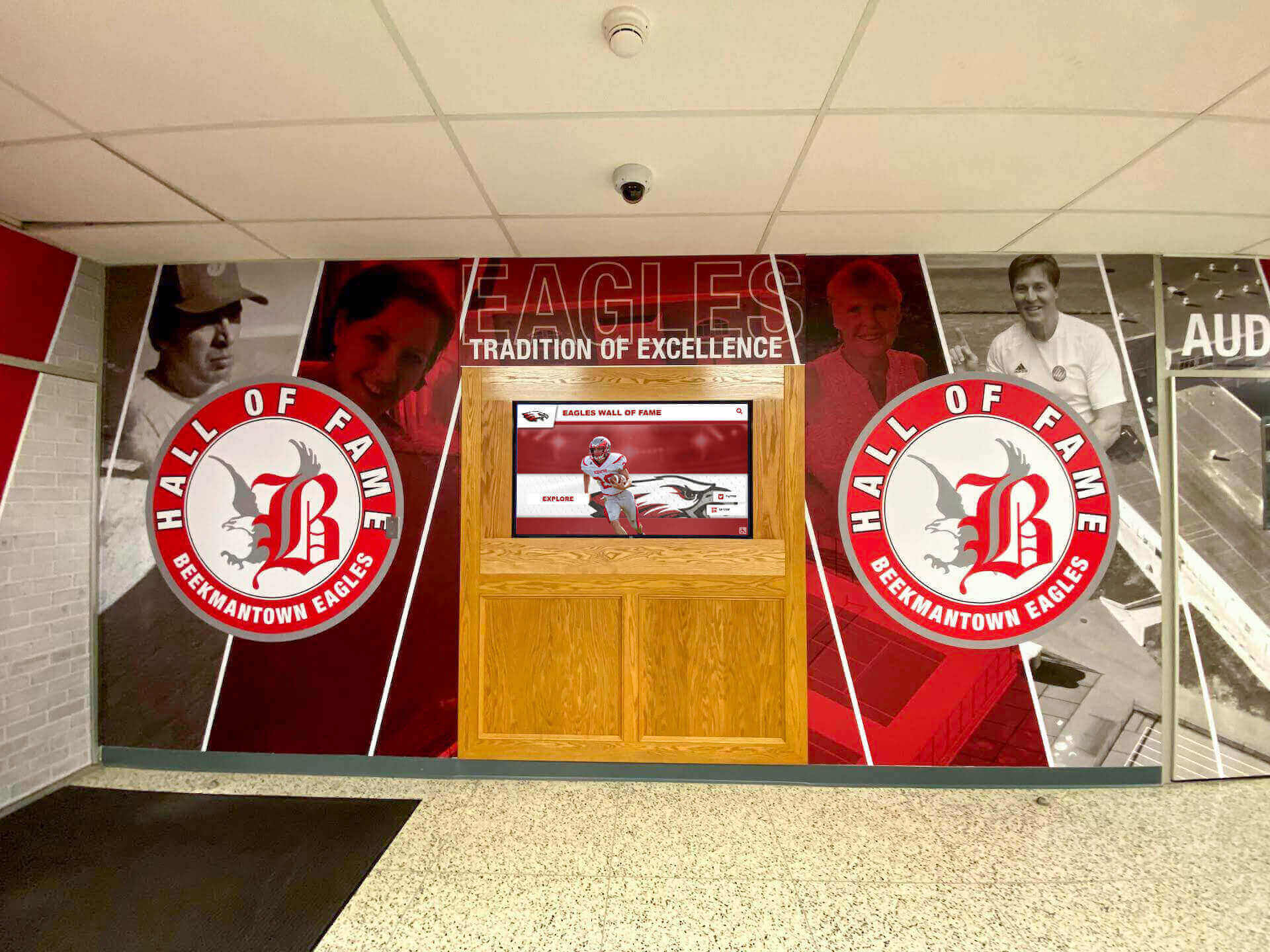
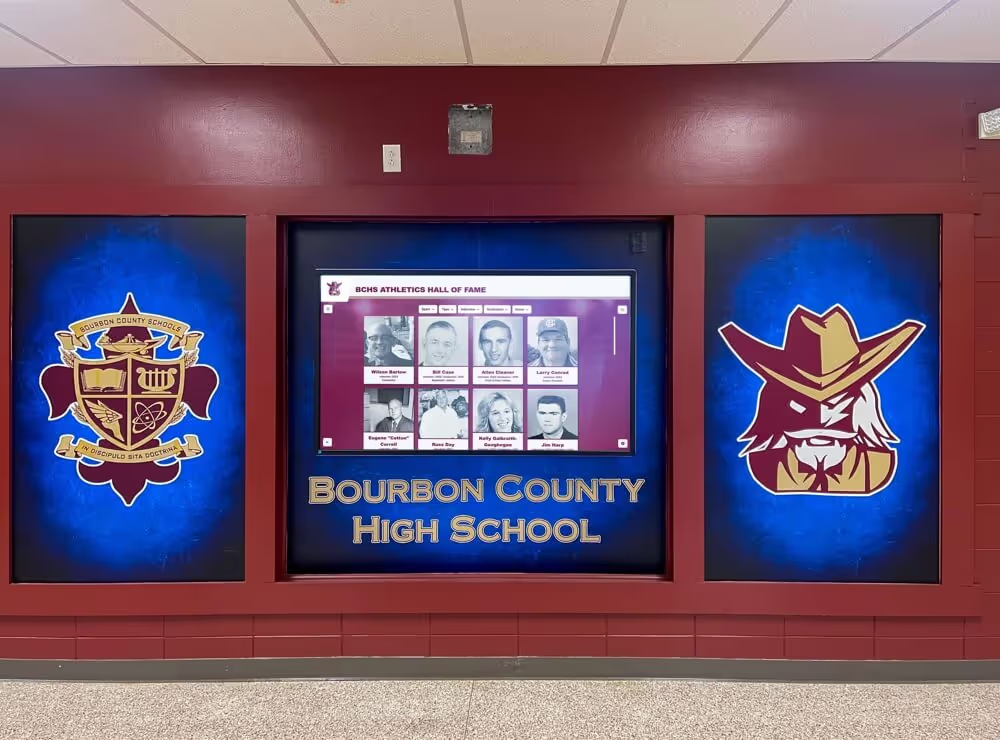
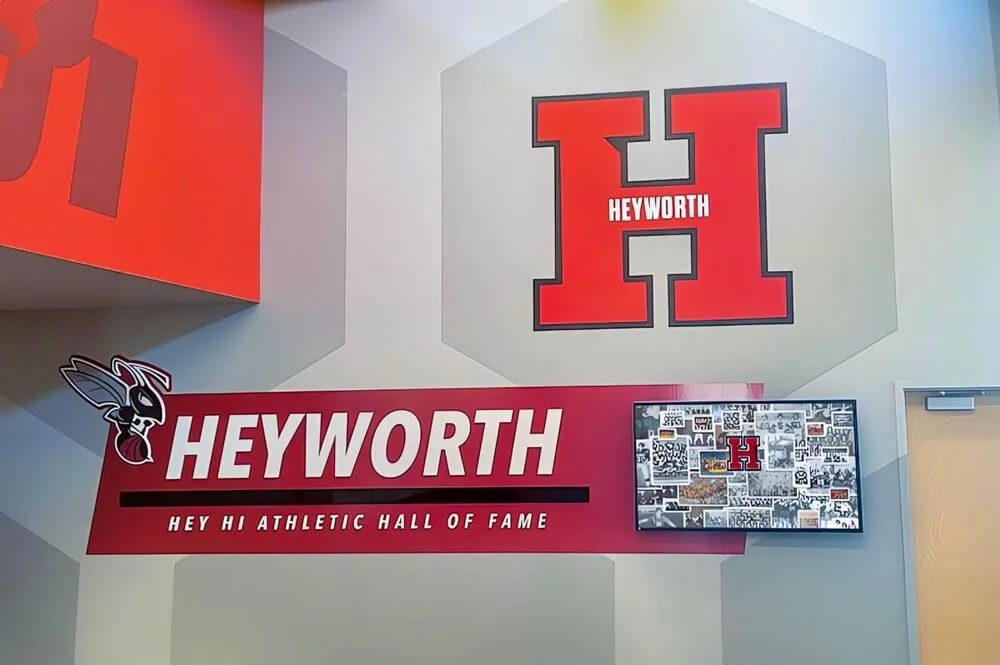
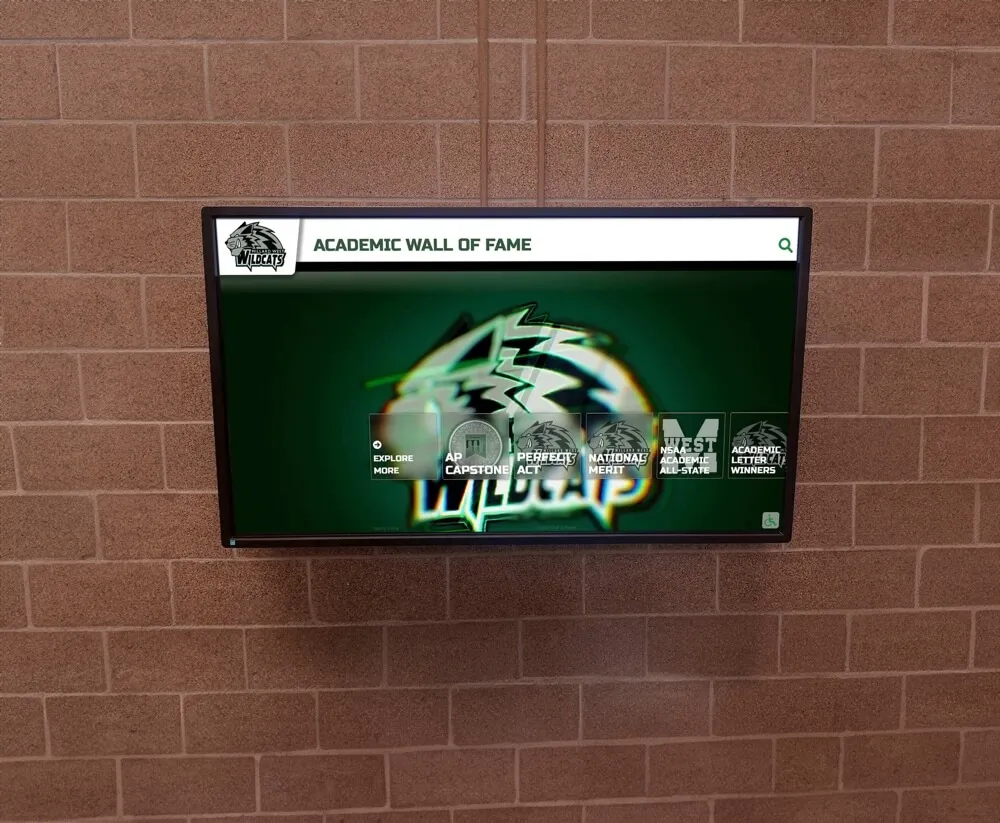
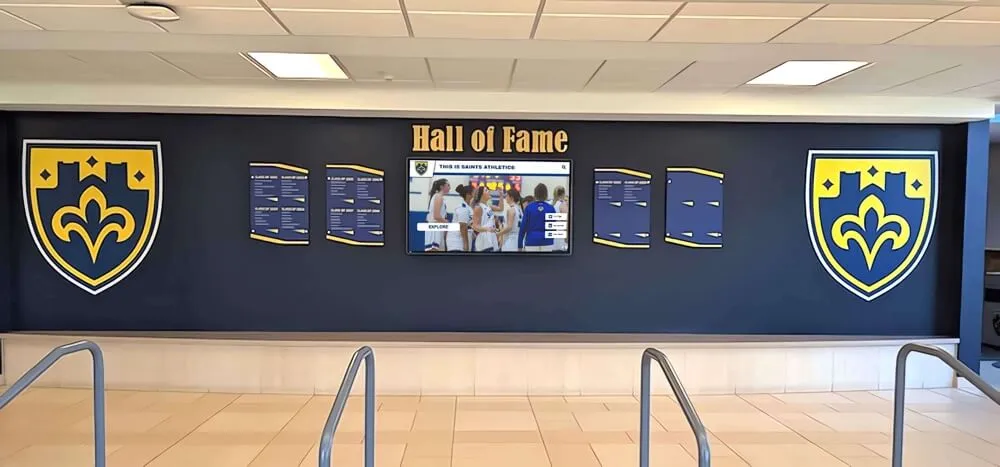
Integration of athletic recognition into main school spaces communicates institutional commitment to celebrating achievement across all domains
Mobile and Web Integration
Extending display content beyond physical screens amplifies reach and engagement:
Mobile Accessibility
- Develop mobile-responsive web versions of display content
- Enable QR codes at displays linking to extended content
- Create mobile apps featuring all display content plus additional materials
- Enable social sharing of specific athlete profiles and achievements
- Provide family access to content featured in school displays
Social Media Coordination
- Share display content across athletic department social channels
- Create hashtags connecting physical displays with digital conversations
- Feature social media content on physical displays
- Encourage students to share display interactions
- Highlight community engagement with display content
This integrated approach transforms single-location displays into comprehensive communication platforms reaching stakeholders regardless of physical presence at school facilities.
Frequently Asked Questions About Athletic Director Digital Displays
How much do athletic director digital displays typically cost?
Athletic director digital display costs vary based on screen size, interactive capabilities, and installation complexity. Basic non-interactive displays start around $3,000-$5,000 per screen including hardware and installation, while large interactive touchscreen systems range from $8,000-$15,000. However, when calculating total cost of ownership over 5-7 years and comparing against traditional plaque expenses (typically $150-$300 per plaque with ongoing engraving and installation costs), digital solutions often prove more cost-effective while offering dramatically expanded capabilities. Many athletic directors find that highlighting even a portion of their athletes with traditional plaques would exceed the cost of comprehensive digital systems showcasing unlimited content.
What content management skills do athletic directors need to operate digital displays?
Modern athletic director digital display systems require minimal technical expertise, typically no more complex than using social media platforms or basic website content management systems. Most solutions provide cloud-based interfaces accessible from any computer or tablet, with drag-and-drop functionality for updating content, pre-built templates for consistent design, and simple upload processes for photos and text. Athletic directors comfortable with email and basic computer use can effectively manage displays, though many successfully delegate content updates to coaches, administrative assistants, or student media teams. Initial vendor training typically requires only 1-2 hours to cover core functions, with most users becoming proficient within the first month of operation.
How do digital displays handle multiple sports seasons throughout the year?
Digital displays excel at managing seasonal sport transitions through scheduled content rotation and unlimited display capacity. Athletic directors can prepare content for each sport season in advance, scheduling automatic transitions as seasons change, or manually update displays as teams begin and complete their competitive seasons. Unlike physical trophy cases limited by space, digital systems can showcase every sport simultaneously through rotating content, searchable athlete databases, and categorical organization allowing viewers to explore specific sports of interest. Most athletic directors maintain year-round visibility for all programs while featuring active season sports more prominently, ensuring fall, winter, and spring athletes all receive appropriate recognition during their competitive periods without removing content from other seasons.
Can digital displays integrate with existing athletic facility design and branding?
Yes, athletic director digital displays integrate seamlessly with existing facilities through customizable mounting options, content design matching school branding, and display sizes scaled to available spaces. Screens can be wall-mounted flush with architectural features, incorporated into custom millwork matching existing trophy cases, or installed as freestanding kiosks complementing facility aesthetics. Content design uses school colors, logos, mascots, and visual identity guidelines ensuring consistency with overall branding. Many athletic directors work with display vendors during facility renovations or new construction to plan integrated solutions, though retrofit installations in existing facilities prove equally effective when thoughtfully designed to complement rather than conflict with established design elements.
How do athletic directors measure whether digital displays actually increase school spirit?
Athletic directors measure digital display impact through combination of quantitative metrics and qualitative feedback. Quantitative measurements include touchscreen interaction rates showing engagement levels, booster membership and donation trends before and after installation, game attendance data, and website analytics showing traffic to athletic content. Surveys of students, families, and community members provide qualitative data about awareness of athletic achievements, perceived school spirit, and display impact on their connection to athletics. Many athletic directors also track recruitment outcomes, noting whether prospective athletes and families mention displays during campus tours, and monitor social media engagement with content featured on displays. Successful measurement combines multiple data points rather than relying on single metrics, building comprehensive pictures of display effectiveness over time.
Conclusion: Building Lasting Athletic Culture Through Digital Recognition
Athletic directors implementing digital display solutions gain powerful tools for transforming how their schools celebrate achievements, communicate with stakeholders, and build the year-round school spirit that elevates entire athletic programs. These systems overcome the fundamental limitations of traditional recognition—space constraints, outdated content, and static presentation—while creating dynamic engagement platforms that keep athletic department activities visible and celebrated throughout every season.
The most successful implementations start with clear strategic vision about what athletic directors want to accomplish, whether increasing booster engagement, improving athlete recruitment, strengthening alumni connections, or simply ensuring every athlete receives the recognition they deserve. From there, thoughtful planning around display placement, content strategies, and sustainable management workflows ensures systems deliver ongoing value rather than becoming expensive installations that gradually fall into disuse.
Transform Your Athletic Recognition
Discover how Rocket Alumni Solutions helps athletic directors create engaging digital displays that celebrate achievements, build school spirit, and connect communities year-round.
Explore Digital Display SolutionsDigital displays represent more than technology upgrades—they’re strategic investments in athletic culture that compound over time as content libraries grow, community engagement strengthens, and recognition systems become embedded into school identity. The athletic directors who implement these solutions today position their programs for sustained success while creating environments where every athlete feels valued, every achievement receives appropriate celebration, and school spirit remains visible and vibrant throughout the entire year.
Whether managing established athletic powerhouses or building emerging programs, athletic directors have unprecedented opportunities to leverage digital recognition technology in ways that were impossible just a few years ago. The question is no longer whether digital displays can enhance athletic programs, but rather how quickly athletic directors can implement these solutions to gain the cultural and competitive advantages they provide.
Ready to elevate your athletic recognition program? Start by assessing your current recognition approaches, identifying the gaps and limitations holding you back, and envisioning what year-round school spirit could look like with dynamic digital celebration of your athletes’ achievements. The programs that create the strongest athletic cultures are those that recognize and celebrate their athletes comprehensively—and modern digital displays finally make that vision achievable for athletic directors committed to building lasting excellence.