



Walk into any high school that fields competitive programs across multiple sports and you will find something the rest of the building rarely has: a community of adults who have collectively invested thousands—sometimes hundreds of thousands—of dollars because they believe youth athletics matter. They covered the travel budget shortfall at state. They funded the scoreboard that greets every home team. They named a scholarship that sends a senior to college with a little less financial pressure. These are athletic booster donors, and in most schools they receive a thank-you note, maybe a mention in the game-day program, and nothing more.
An athletic booster spotlight wall changes that equation. Unlike generic donor recognition displays that acknowledge all institutional gifts in one location, a dedicated booster spotlight wall speaks directly to the unique culture of athletic giving—celebrating multi-year membership commitments, naming capital improvements, honoring championship sponsors, and building visible legacy that makes next year’s families want to be part of something that lasts. This guide explores the ideas, formats, recognition categories, and design approaches that help athletic programs create booster spotlight walls worthy of the donors who make competitive sports possible.
Athletic booster organizations operate differently from other school donor groups, and their recognition programs should reflect that difference. Most booster donors are current or former athletic families who understand the sport, attend the games, and feel a personal stake in program outcomes. A spotlight wall built for this audience does more than list names—it communicates program history, celebrates community investment, and creates a physical presence in the athletic facility that reinforces why giving to booster programs matters year after year.

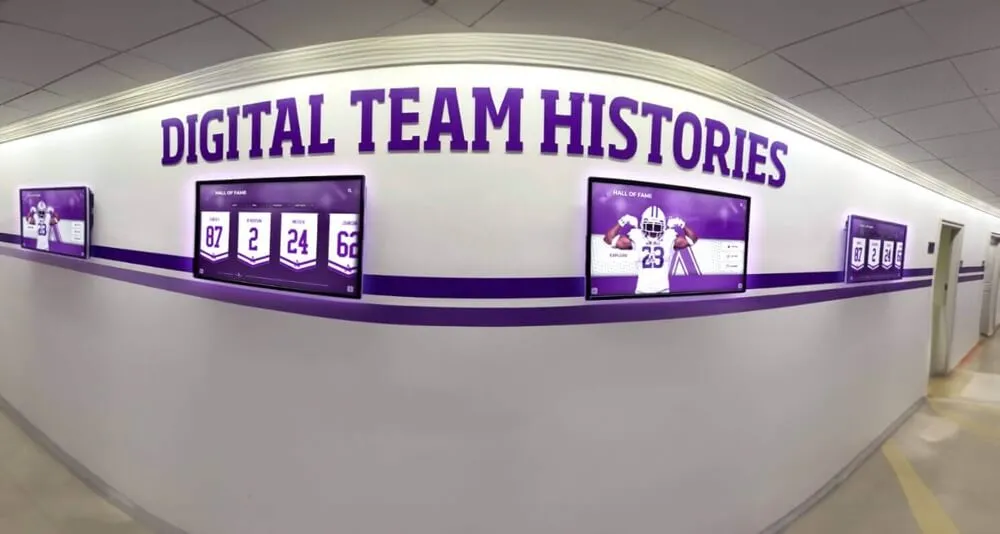
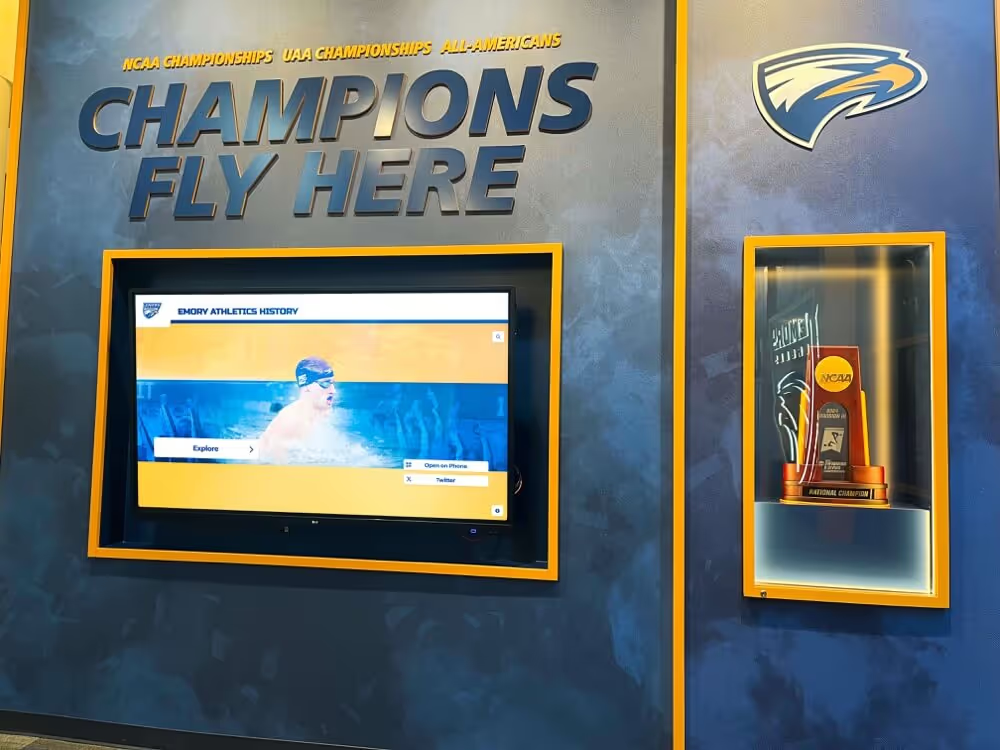
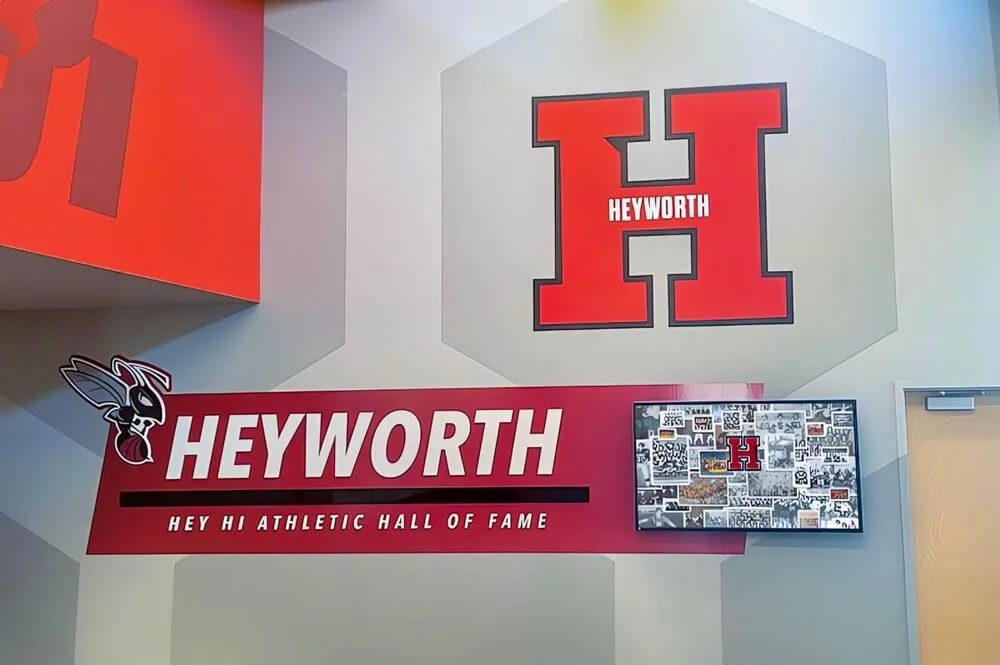
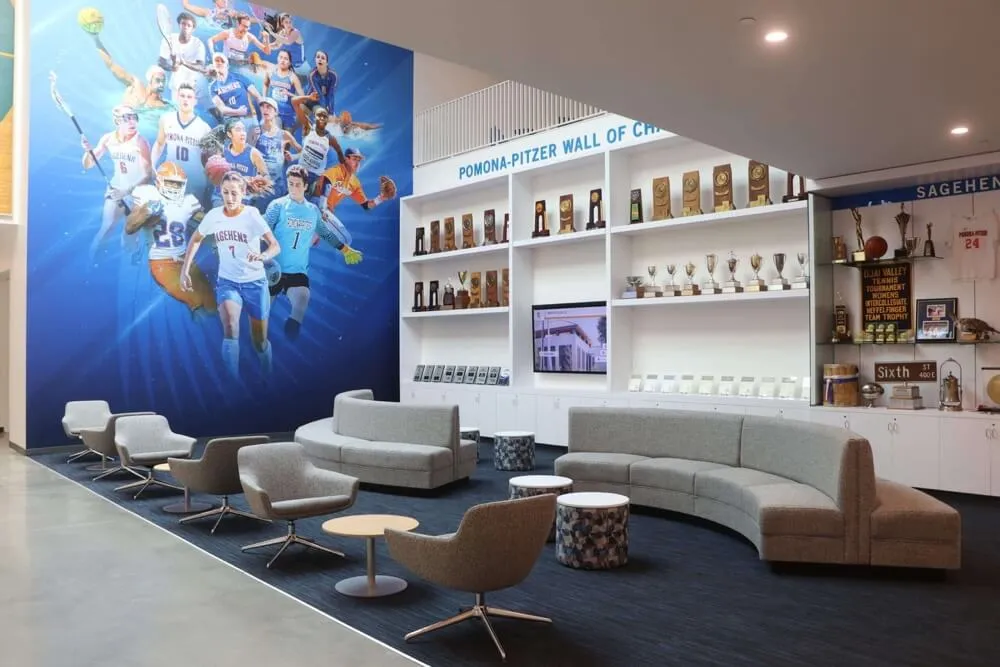
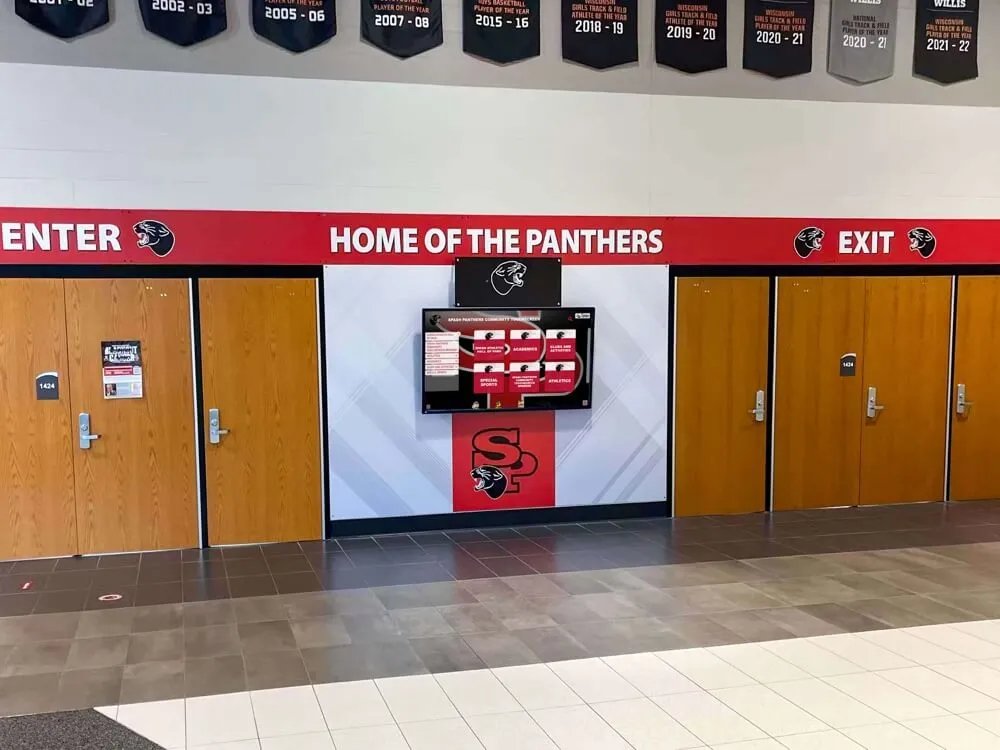
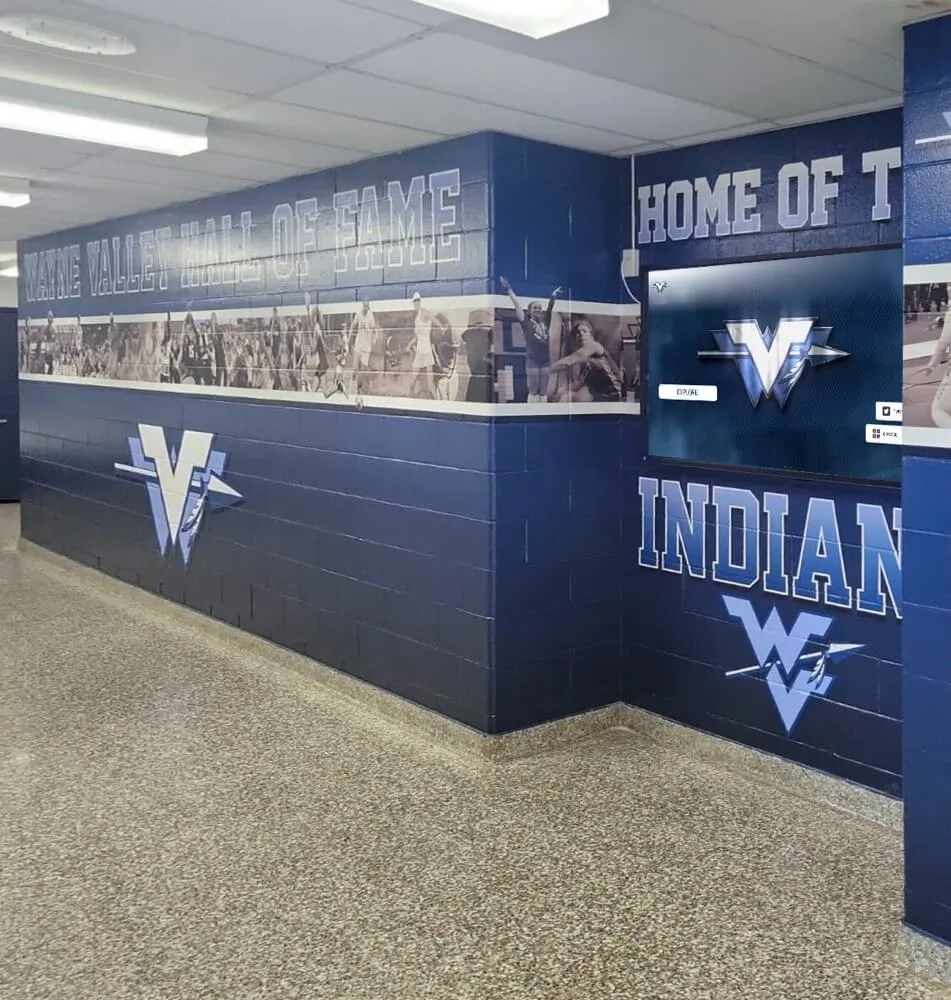
A well-designed athletic booster spotlight wall transforms a gymnasium corridor into a gallery of community investment, making visible the sustained support that powers competitive sports programs
Why Athletic Booster Donors Deserve a Dedicated Spotlight Wall
Athletic booster donors deserve a dedicated spotlight wall because generic donor recognition fails to acknowledge the specific programs, seasons, and outcomes their contributions funded. When a booster donor’s name appears inside the gymnasium—adjacent to championship banners and all-state athlete displays—the connection is unmistakable. The recognition lands in the right context, seen by the right audience: athletes, coaches, parents, and visiting teams who understand exactly what that support represents.
Most schools maintain some form of general donor recognition—a plaque near the main entrance, a list in the annual report, perhaps a named room in the main building. Athletic booster contributors often appear in these systems alongside annual fund donors, library supporters, and capital campaign contributors, which means their specific connection to athletic programs gets diluted into institutional language that says very little about why they gave or what their support enabled.
Three categories of booster donors particularly benefit from dedicated recognition:
Multi-year annual giving members who have consistently renewed booster club memberships across multiple seasons. A parent who has contributed to the booster program for eight consecutive years has invested far more than the dollar total suggests—they have shown up through losing seasons, coaching changes, and facility shortfalls. Recognition that specifically calls out tenure (“Member for 10+ Years,” “Founding Booster”) honors the commitment behind the contribution.
Capital project supporters who make larger, directed gifts to specific facility improvements—lighting upgrades, turf replacement, scoreboard installation, fieldhouse renovations. These donors often give significantly more than annual members, and their impact is visible every day. A spotlight wall that directly connects donor names to funded projects (“East Gymnasium Renovation — Funded in Part by…”) creates lasting attribution that generic recognition cannot provide.
Scholarship and award sponsors who fund named scholarships, senior banquet awards, or academic achievement incentives for student athletes. These donors often have personal stories behind their giving—a favorite coach, a child who played in the program, a family legacy in local athletics. Recognition that preserves those stories alongside the sponsor name transforms a plaque into a meaningful tribute. The principles behind writing meaningful dedications apply directly to scholarship recognition panels on athletic booster walls.
Physical Athletic Booster Spotlight Wall Ideas
Physical installations remain the foundation of most athletic recognition programs because they communicate permanence in a way that digital-only approaches sometimes cannot. The best physical booster spotlight walls combine material quality with thoughtful organization that makes the display easy to understand and visually impressive at a distance.
Shield and Plaque Arrays
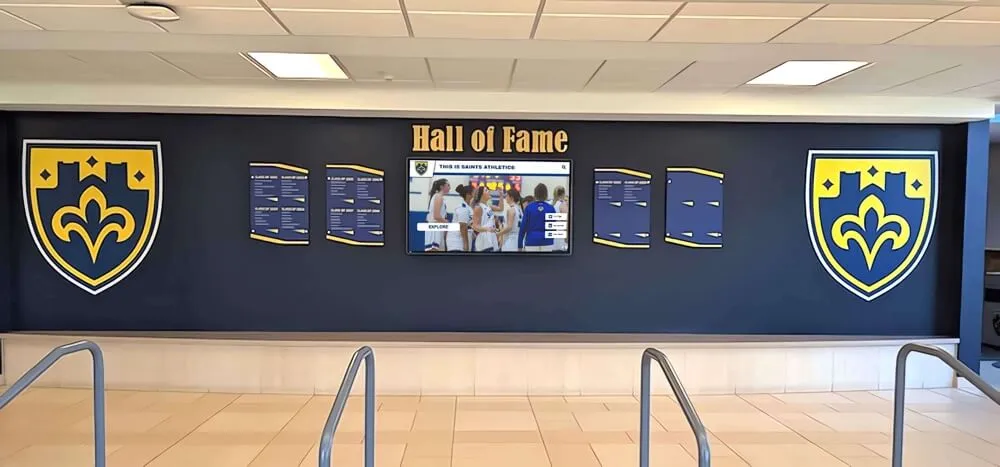
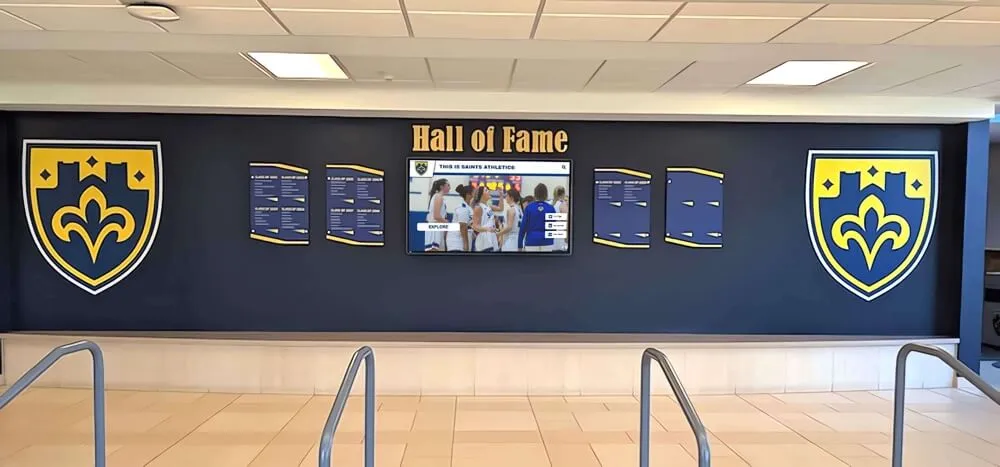
Shield-shaped recognition plaques carry visual weight that connects to trophies, crests, and championship hardware—an association that makes them particularly appropriate for athletic settings. An array of shields organized by giving level or program area creates a visual hierarchy immediately legible to anyone walking past.
Effective shield array layouts include:
- Individual shields for each named donor, organized by giving tier with different finishes or sizes distinguishing levels
- Sport-specific clusters where booster donors from a particular sport’s parent group are grouped together
- Chronological arrangements showing founding members alongside newer contributors
- Annual rows that add a new tier of shields each season, creating a living document of sustained community support
Shield arrays work well in gymnasiums, athletic lobbies, fieldhouses, and hallways adjacent to locker rooms. Materials like cast metal, engraved aluminum, and brushed bronze weather school environments and maintain professional appearance over decades without significant maintenance.
Framed Photo Recognition Panels
Photography-based recognition panels introduce human faces and specific moments into what can otherwise become a wall of names. For athletic booster walls, this means pairing donor recognition with images of the programs those donors support—game action shots, facility photos, team celebrations.
A panel structure that works well for booster recognition:
- Individual panels featuring a donor photo, name, giving tier, and a short caption describing their connection to the program
- Group panels organized by sport, showing a team photo alongside the booster members who specifically support that program
- Timeline panels documenting the history of a major capital project from groundbreaking to completion, with donor recognition alongside the visual story
Photo recognition panels require more content development than engraved plaques but create richer, more personal recognition that donors—and their families—respond to more emotionally. Schools that invest in photography-based booster walls consistently report stronger donor pride and more frequent facility visits by recognized supporters.
Record Board Integration
Athletic record boards and booster spotlight walls serve complementary purposes in the same facility, and integrating recognition for the donors who funded major programs alongside the records those programs produced creates powerful contextual acknowledgment. A scoreboard-adjacent donor recognition panel or a record board framed by naming recognition for the supporters who funded the sport honors donors in the most relevant context possible.
Viewing examples of senior sports banners and athletic recognition displays can spark ideas for how record-board-adjacent recognition integrates with other athletic recognition elements already present in most gymnasiums.
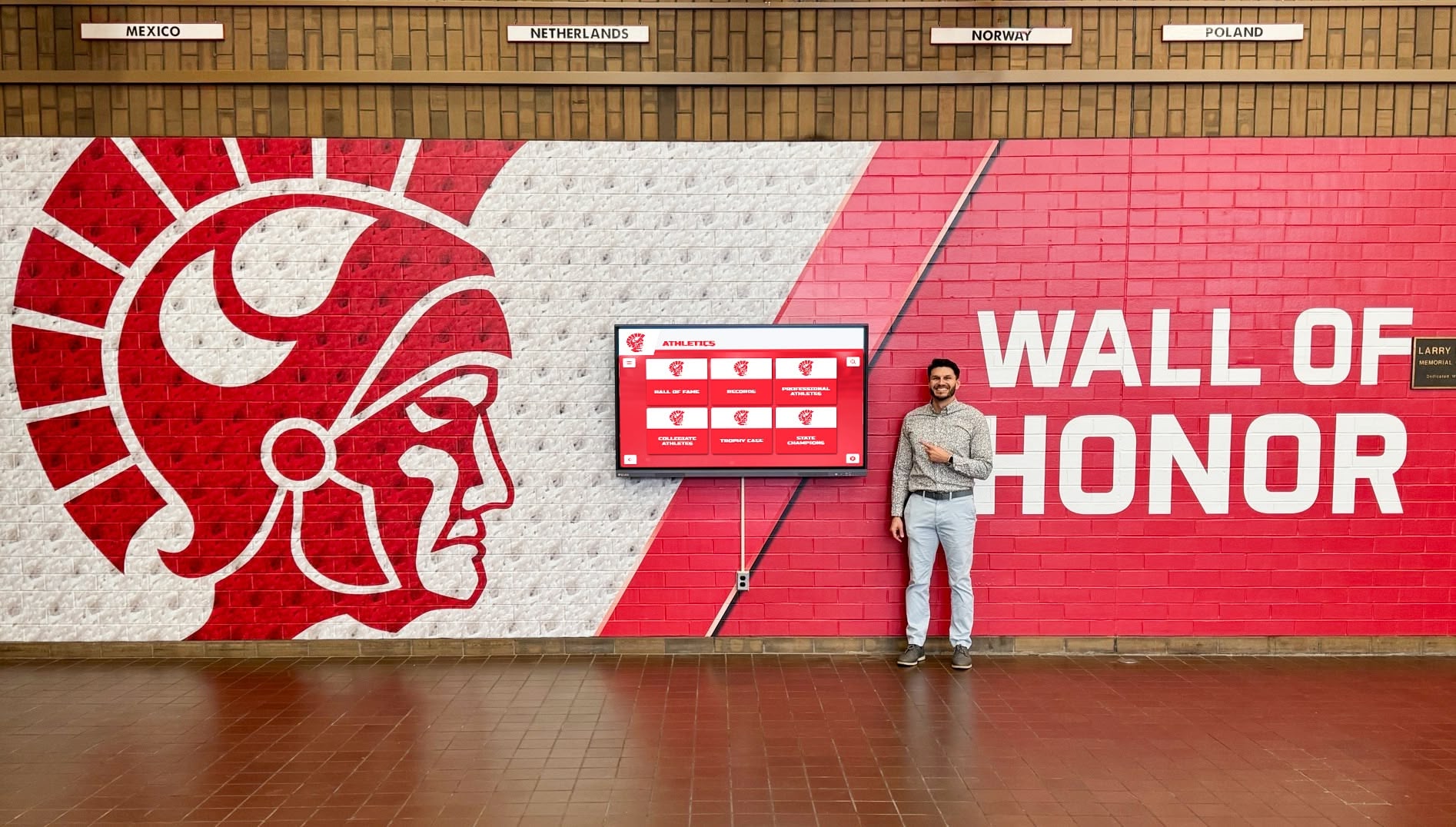
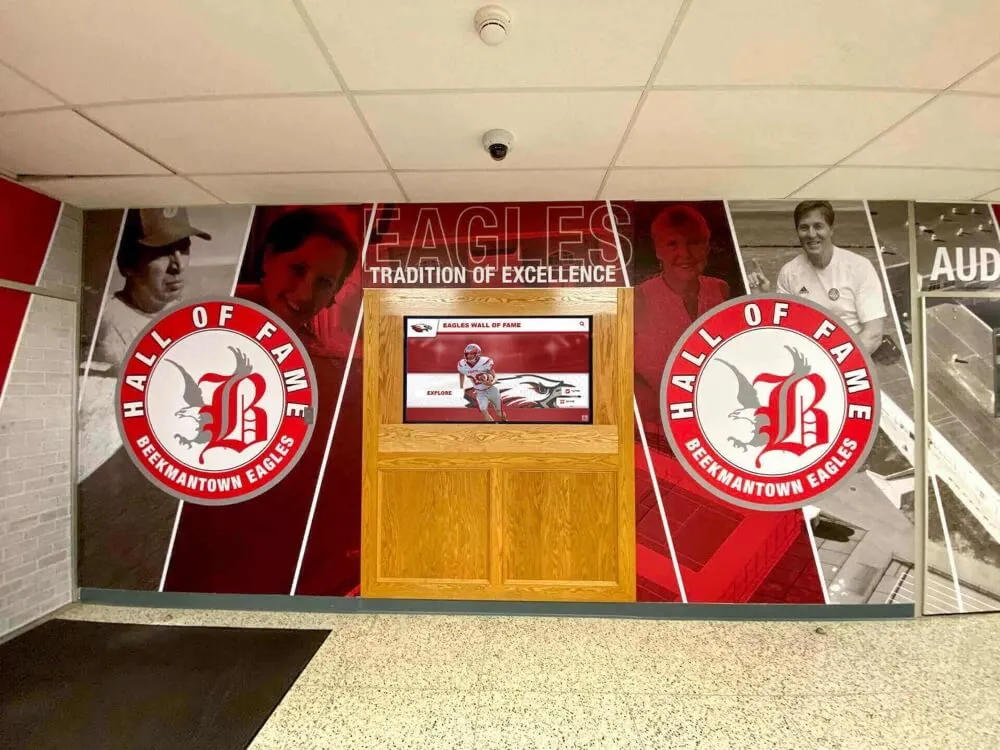
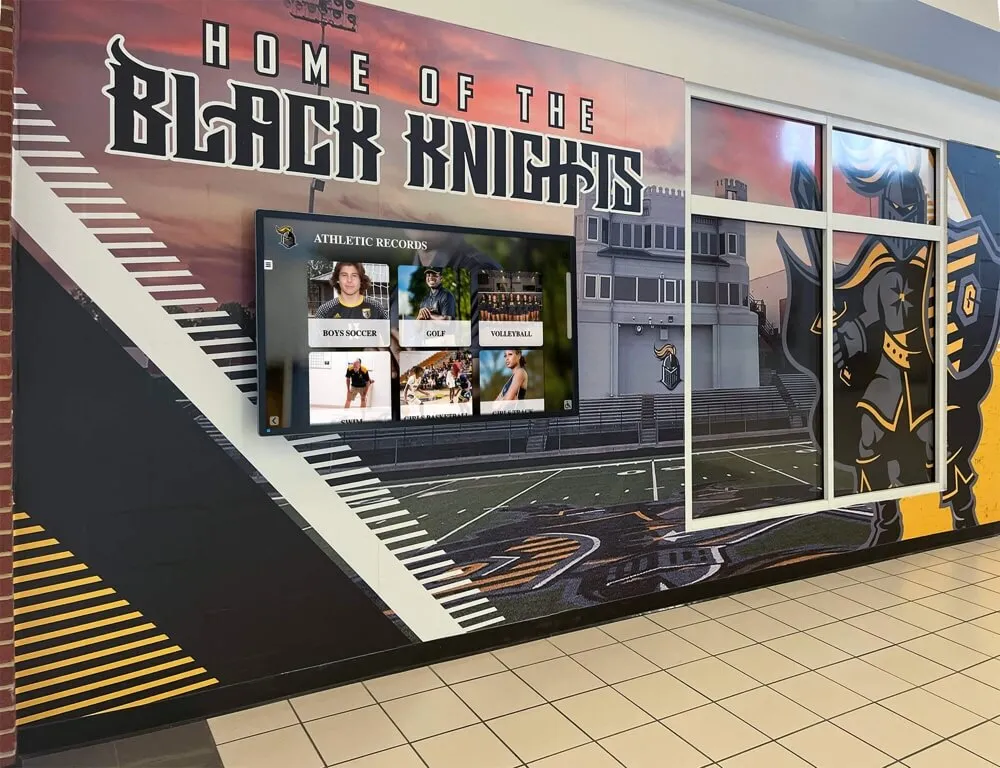
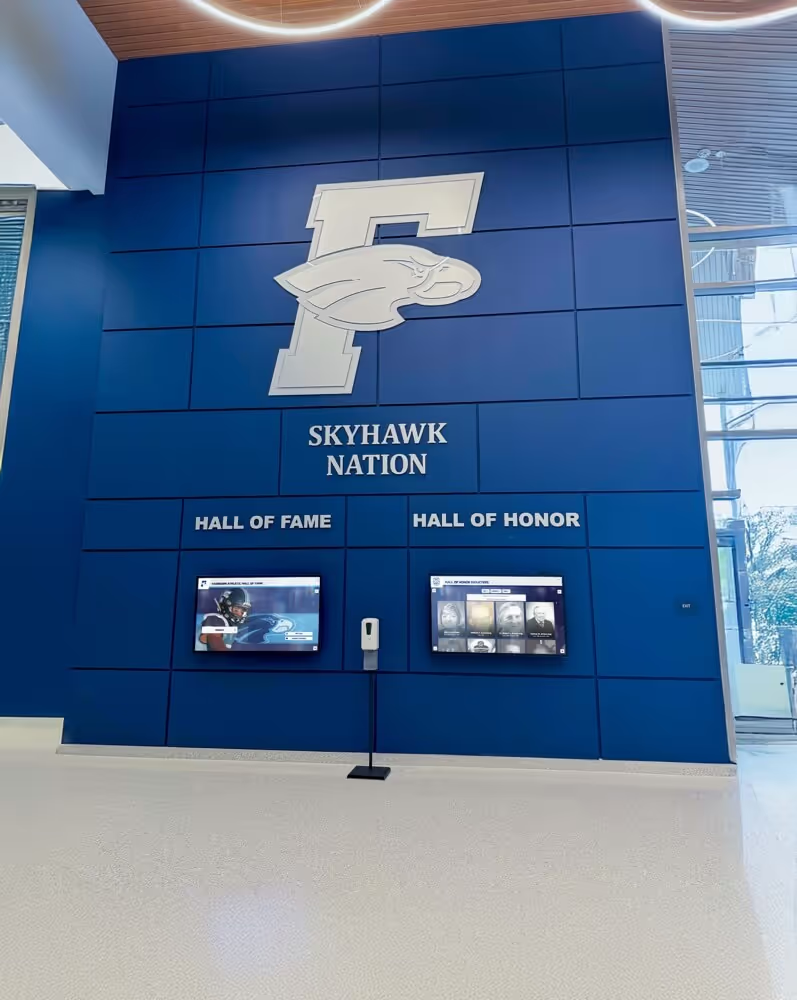
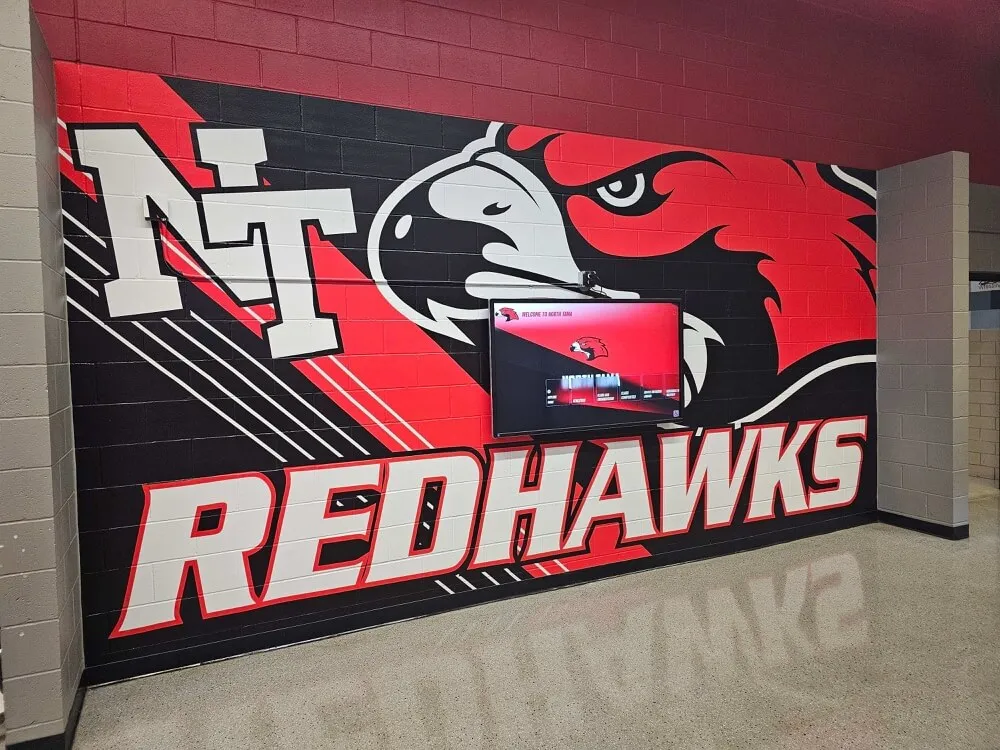
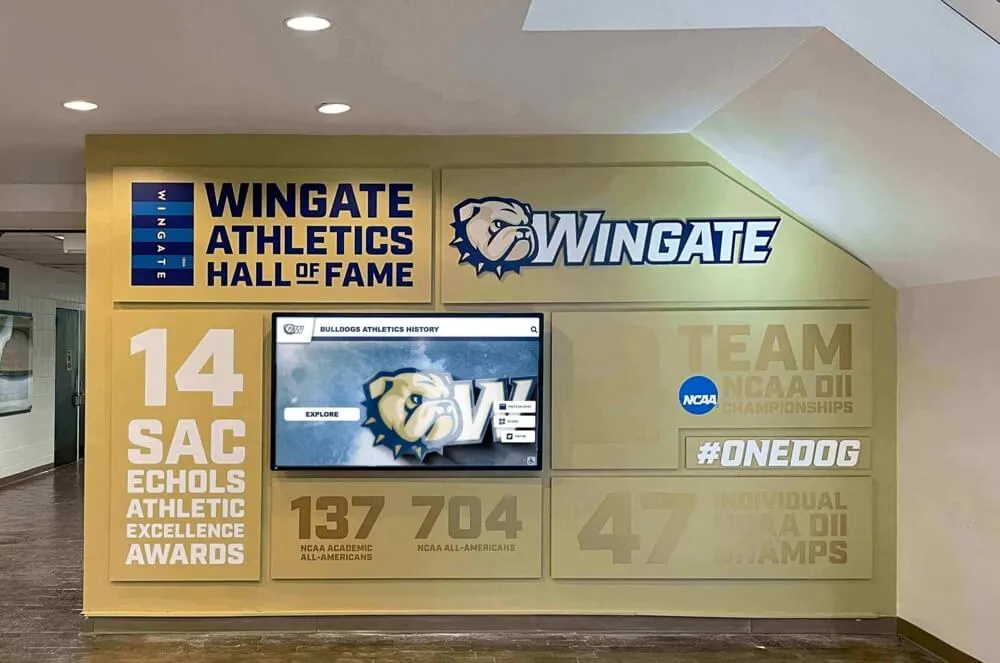
Physical booster spotlight walls use school colors, mascots, and premium materials to create recognition that visually communicates the prestige of the programs donors support
Digital and Interactive Athletic Booster Spotlight Wall Ideas
Interactive digital technology has transformed what athletic recognition displays can accomplish. Digital systems offer capabilities that physical installations simply cannot match: unlimited capacity, multimedia storytelling, real-time updates, and engagement features that make visitors active participants rather than passive viewers.
Understanding the full potential of interactive touchscreen displays in educational settings helps booster organizations evaluate whether digital recognition serves their specific facility and donor community goals.
Interactive Touchscreen Donor Displays
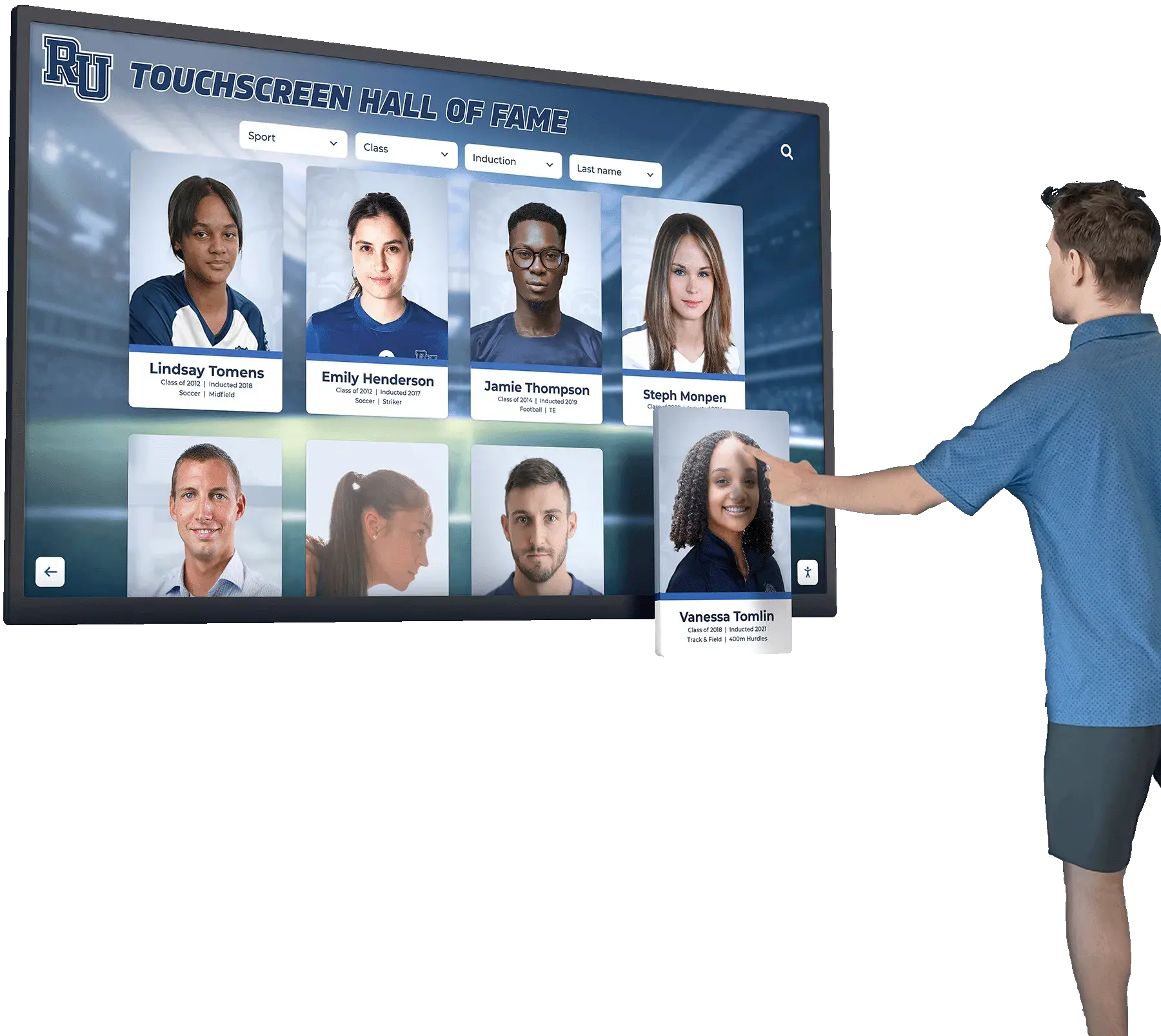
Touchscreen donor display systems installed in athletic lobbies, gymnasium entrances, or fieldhouse corridors allow visitors to search and explore booster donor communities in ways impossible with static plaques. Key features that matter most for athletic booster recognition include:
Searchable donor directories where athletes, parents, and visitors can find donors by name, giving level, sport affiliation, or graduation year. A player can find the booster donor who sponsored their scholarship; a visiting coach can see the depth of community support behind the program.
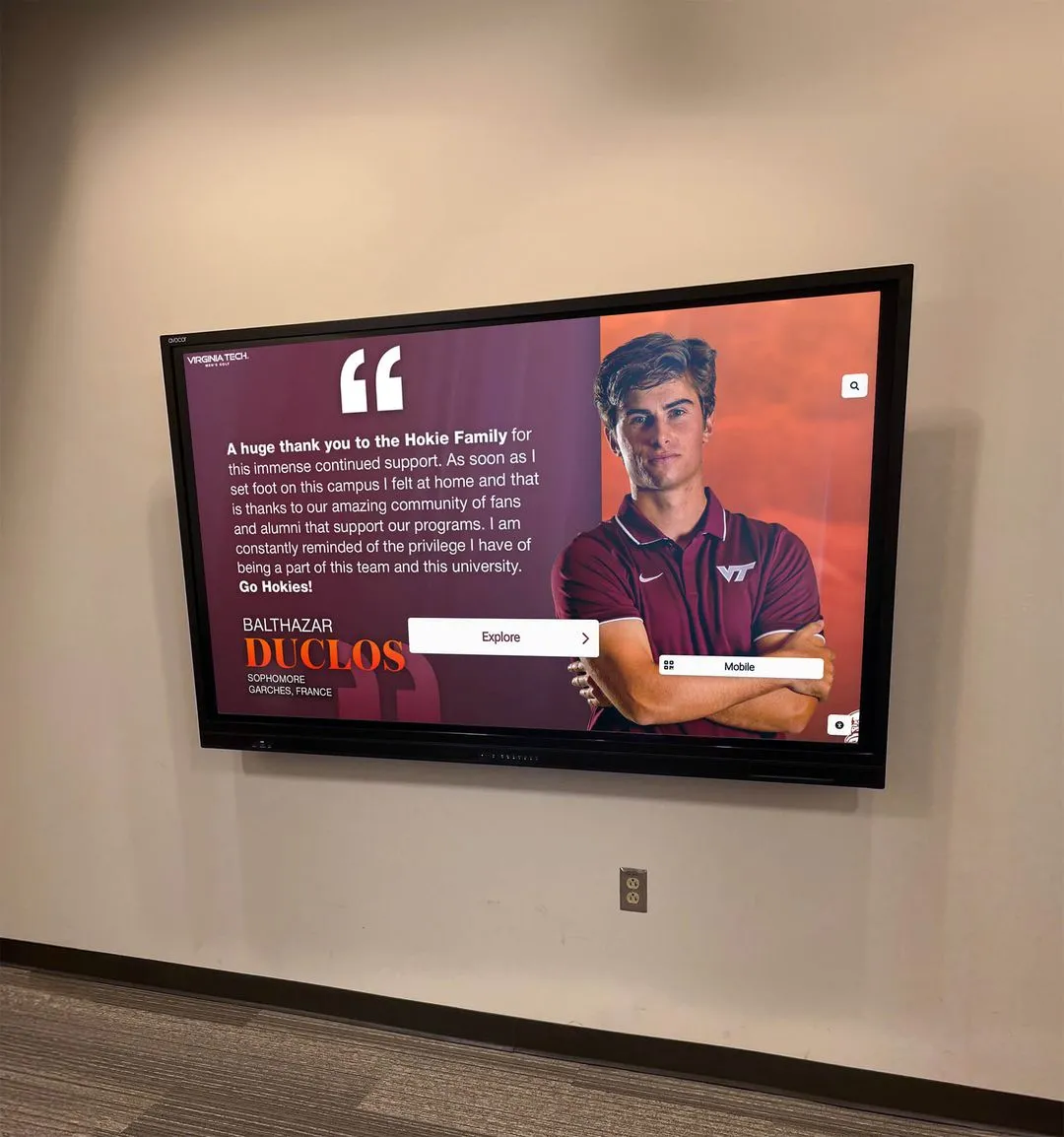
Multimedia donor profiles that go beyond names and dollar amounts to tell the stories behind the giving. A profile for a multi-year booster member might include a photo, a brief description of their family’s history with the program, the sports their children played, and the specific projects their cumulative giving funded.
Impact visualization showing how booster contributions translated into specific outcomes—the scoreboard purchased in year twelve of the facility campaign, the van that made regional travel possible for the cross-country team, the scholarship that supported a first-generation college student from the swim program.
Real-time recognition updates that allow new donors to appear in the system immediately after their gift processes, without waiting for a new plaque fabrication cycle. For annual membership drives, this timeliness reinforces giving as impactful and noticed.
Rotating Digital Spotlight Features
Not every athletic facility has the budget or lobby space for a permanent touchscreen kiosk, but a digital display already installed for game-day information or athletic announcements can serve dual duty as a rotating booster spotlight wall. Dedicated content blocks that cycle through featured donor profiles—a “Booster Spotlight of the Month” format—bring personalized acknowledgment to displays that might otherwise show nothing but schedules and scores.
This approach works particularly well for:
- Gymnasiums that already have LED display boards used for game operations
- Athletic hallway digital signage serving daily informational purposes
- School lobby displays visible to visitors during events and during the school day
The content rotation keeps recognition fresh across the year, ensures every donor gets featured visibility rather than permanent background presence, and creates ongoing storytelling opportunities that keep the booster community visible to the broader school population.
QR-Enabled Physical Recognition
A hybrid approach gaining traction in athletic facilities combines the permanence of physical plaques with the storytelling depth of digital content. QR codes embedded in shield plaques, engraved recognition panels, or naming opportunity displays link visitors directly to extended digital profiles—photos, videos, personal statements, impact stories—that the physical format cannot contain.
This approach is particularly effective for capital project recognition where physical plaques on scoreboards, courts, or facilities mark the gift permanently while QR links tell the full story: who gave, why they gave, what the facility means to the program, and how the investment has paid off over time.
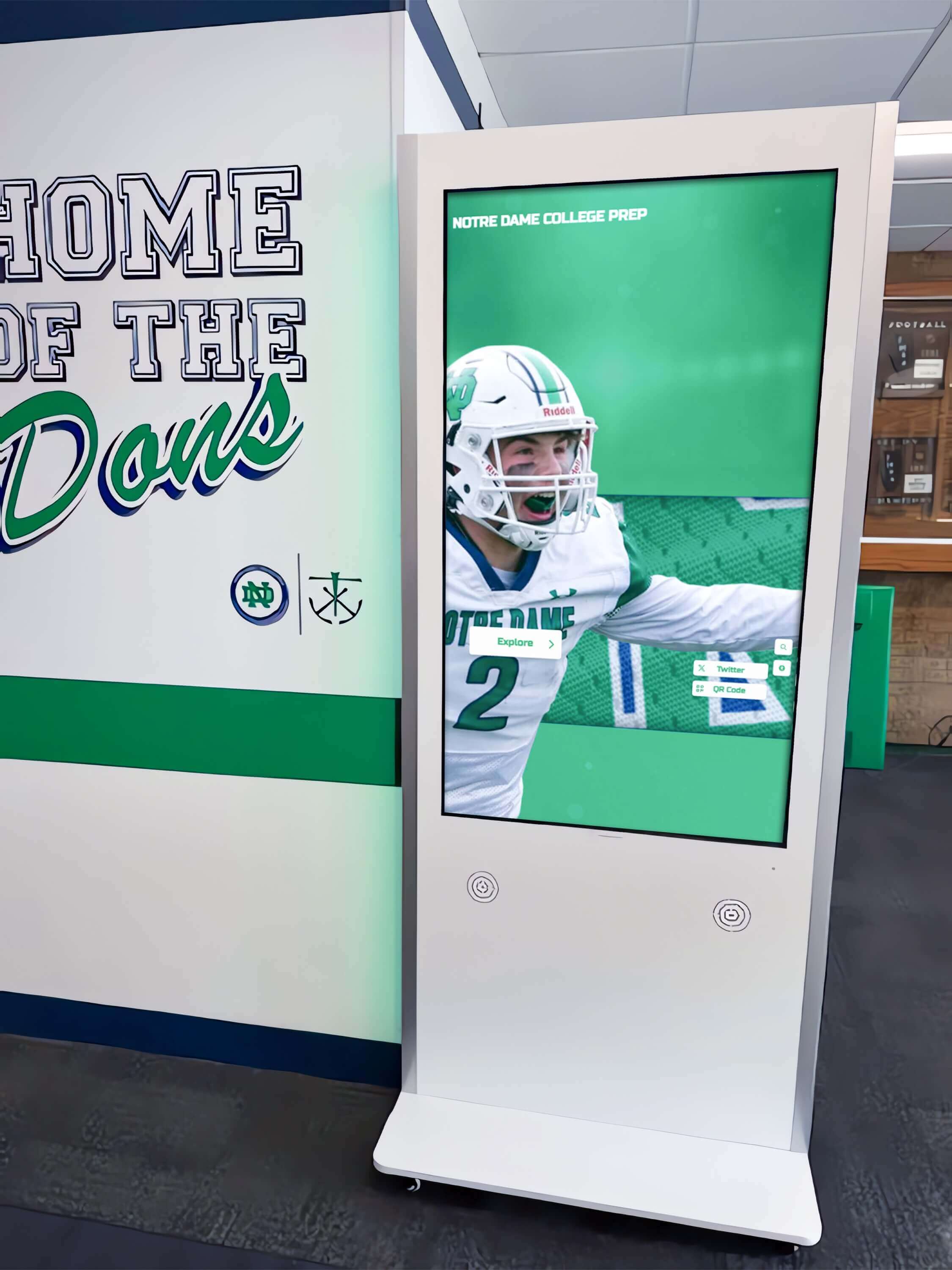
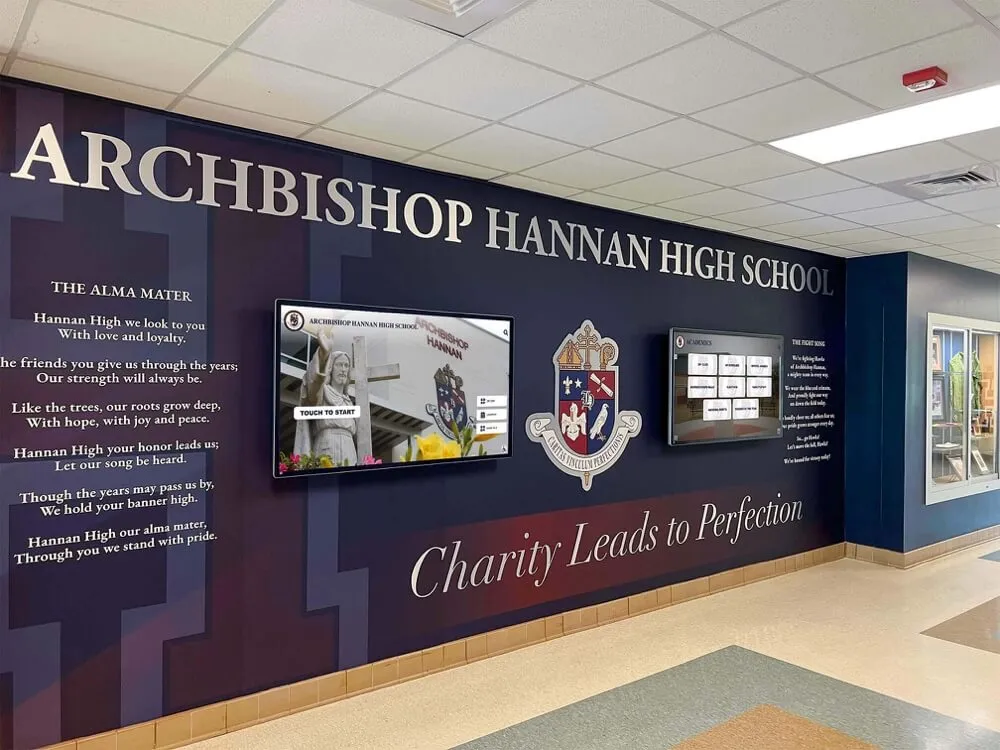
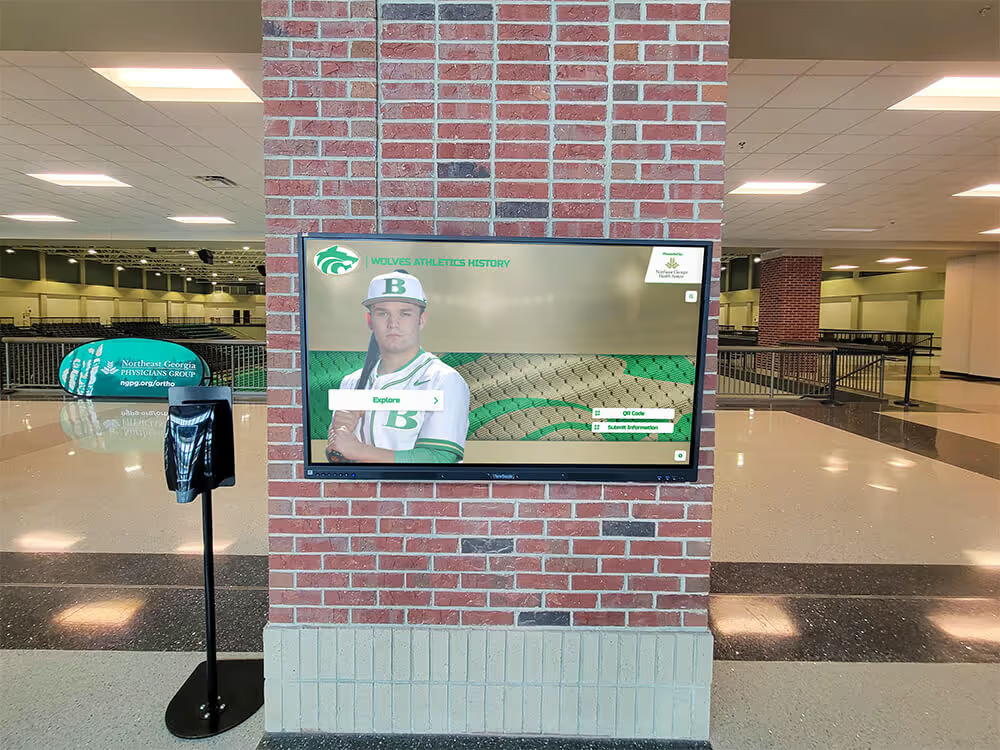
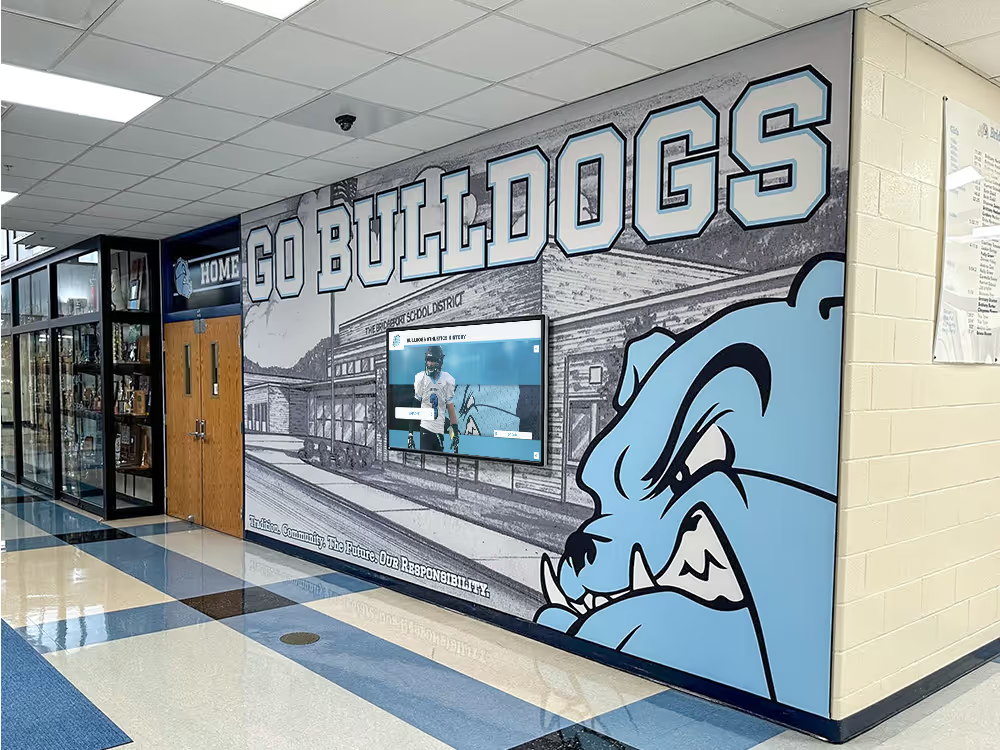
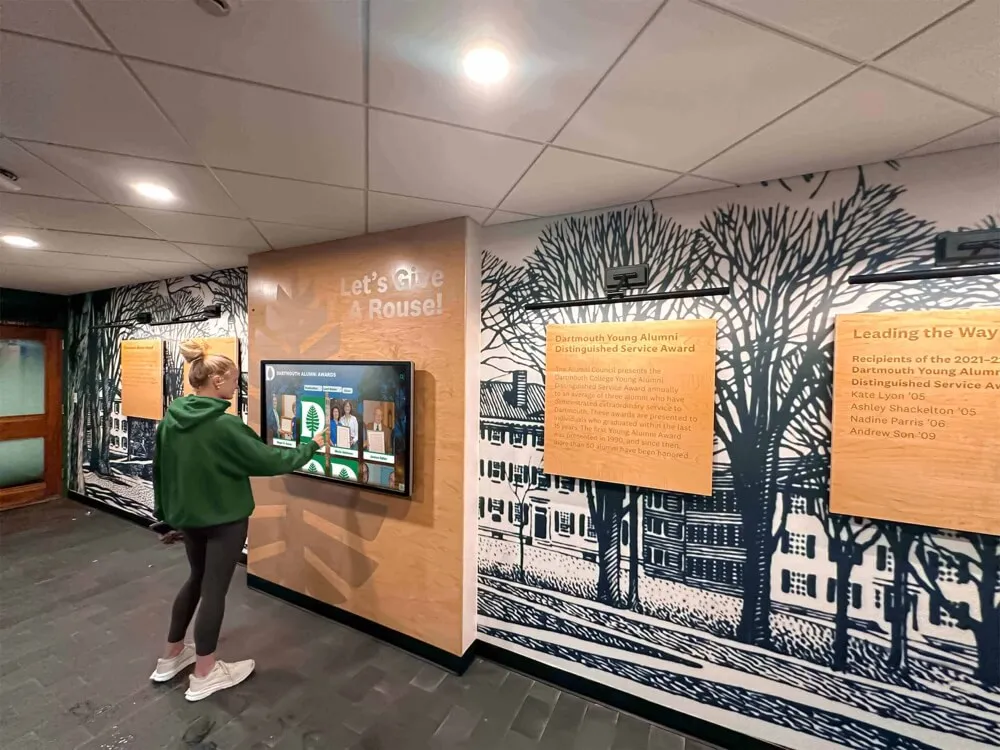
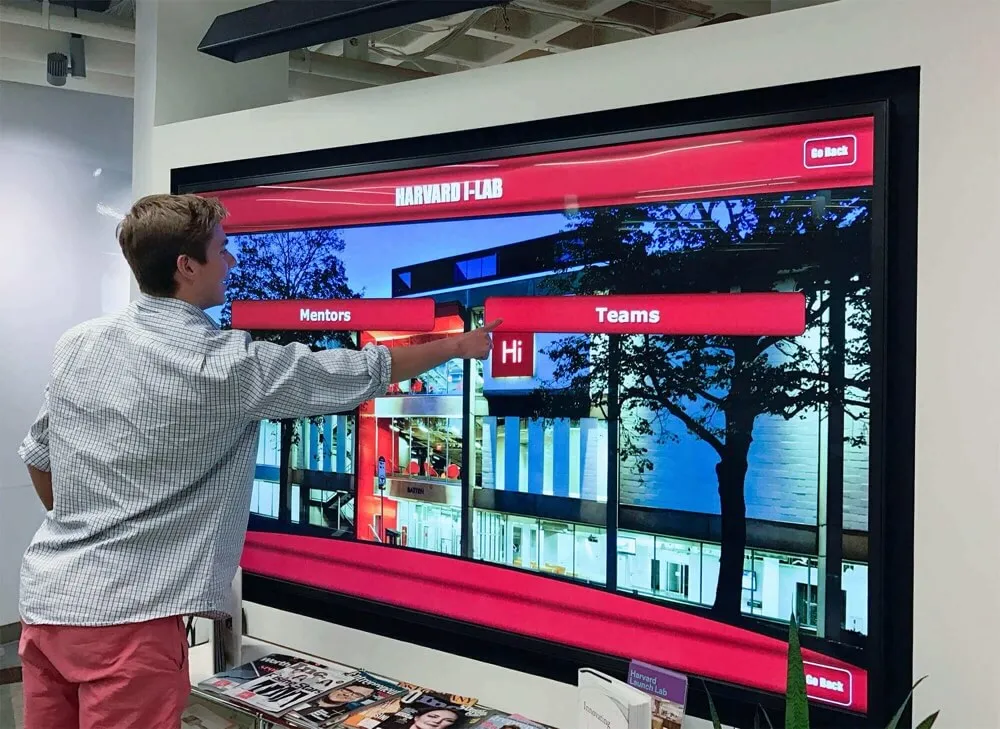
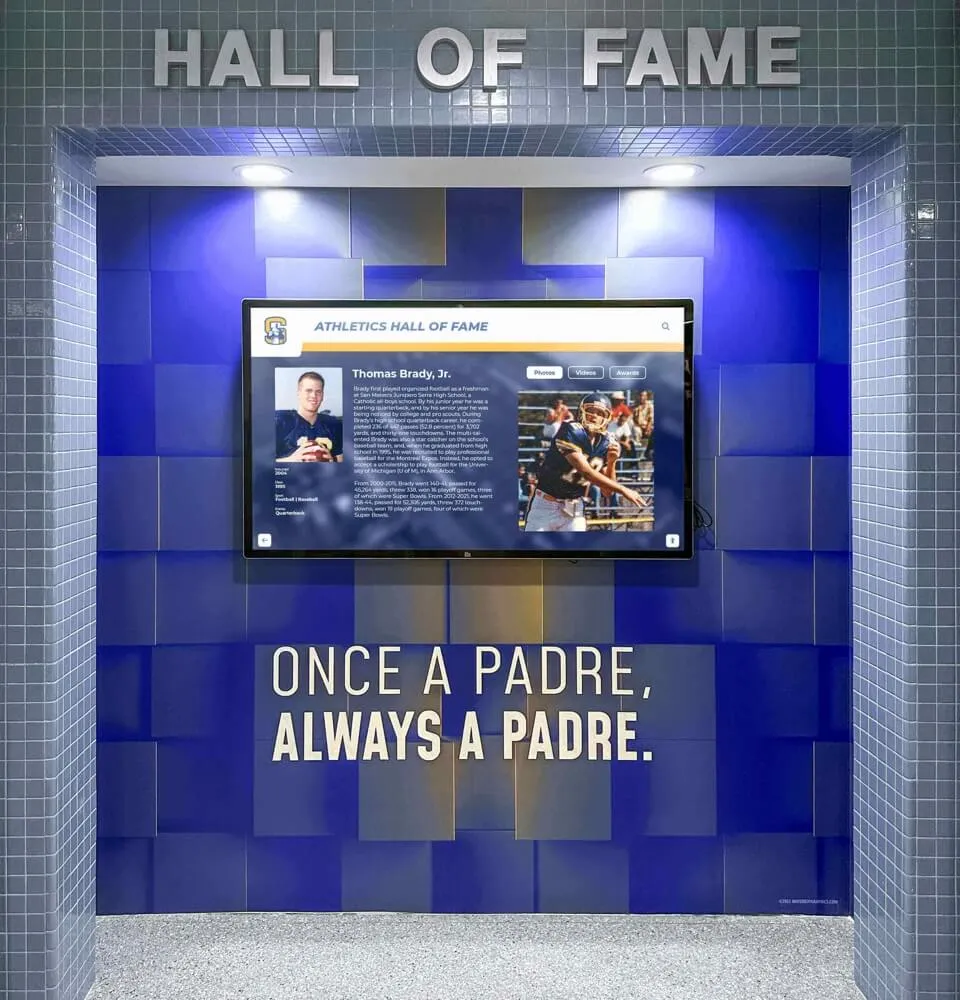
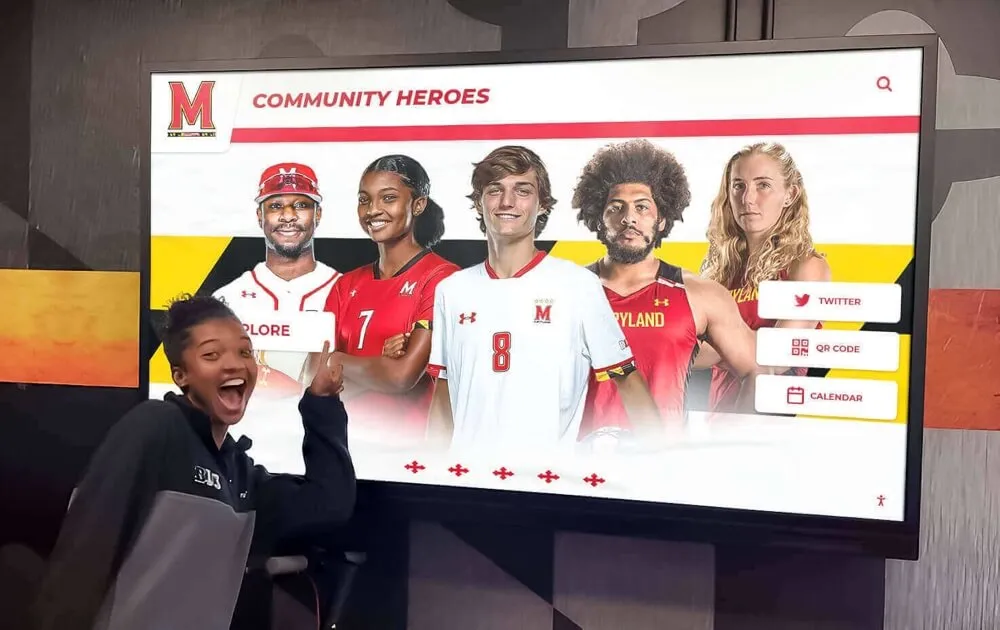
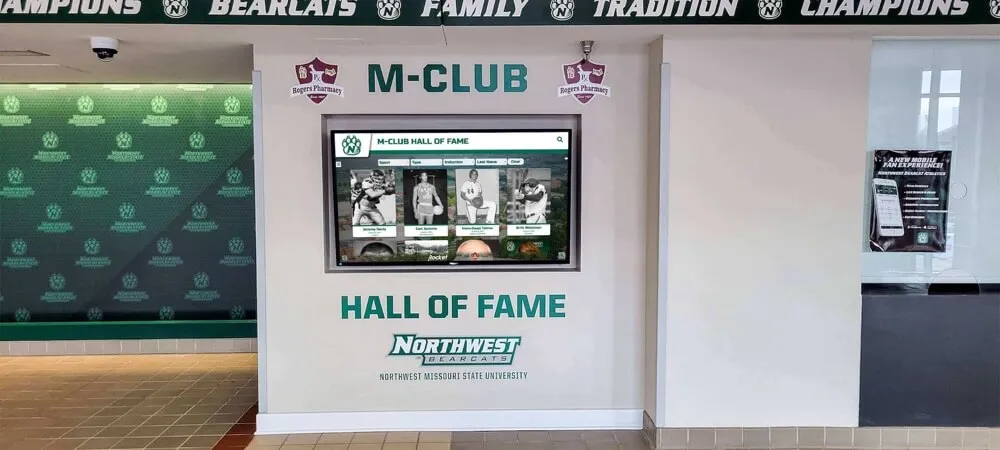
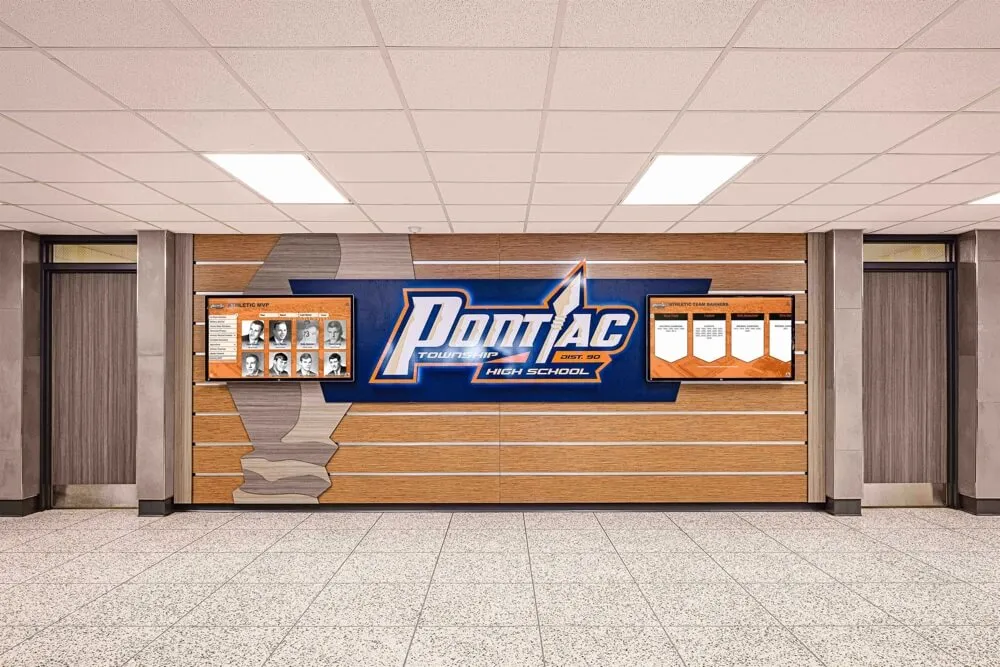
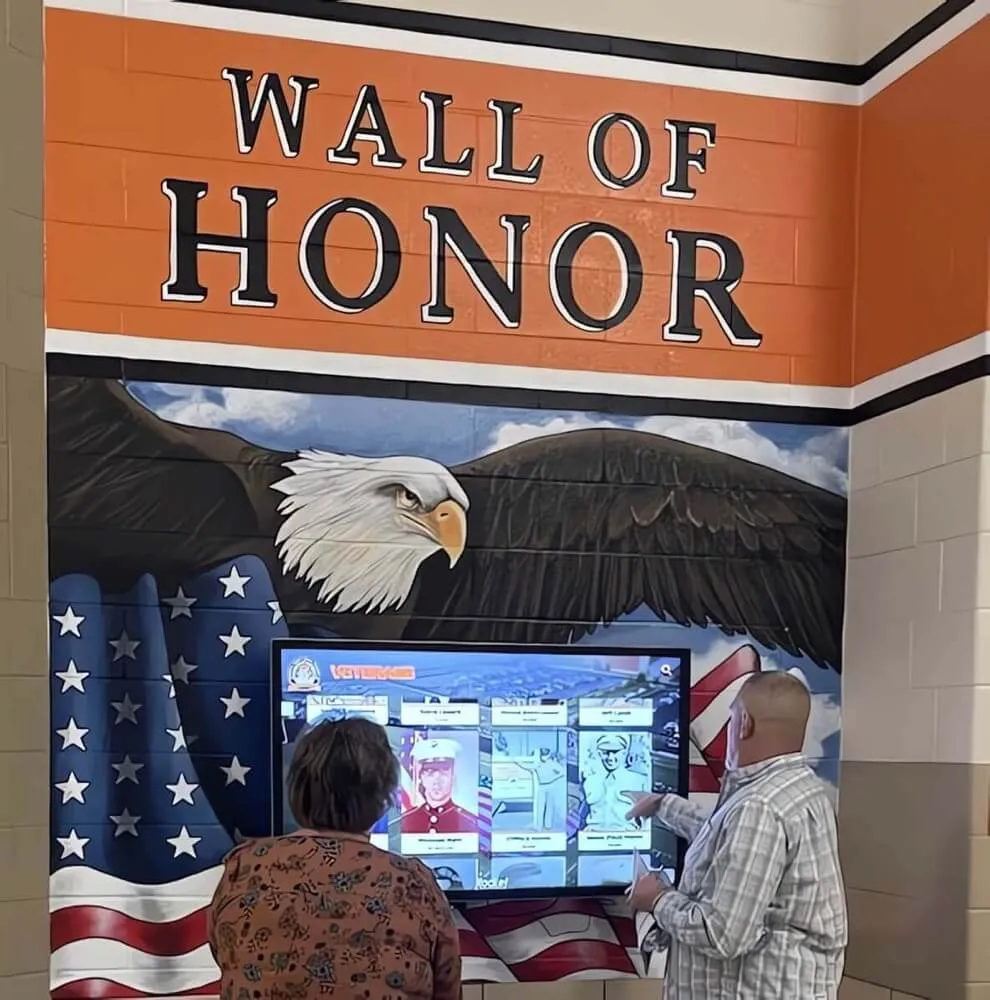
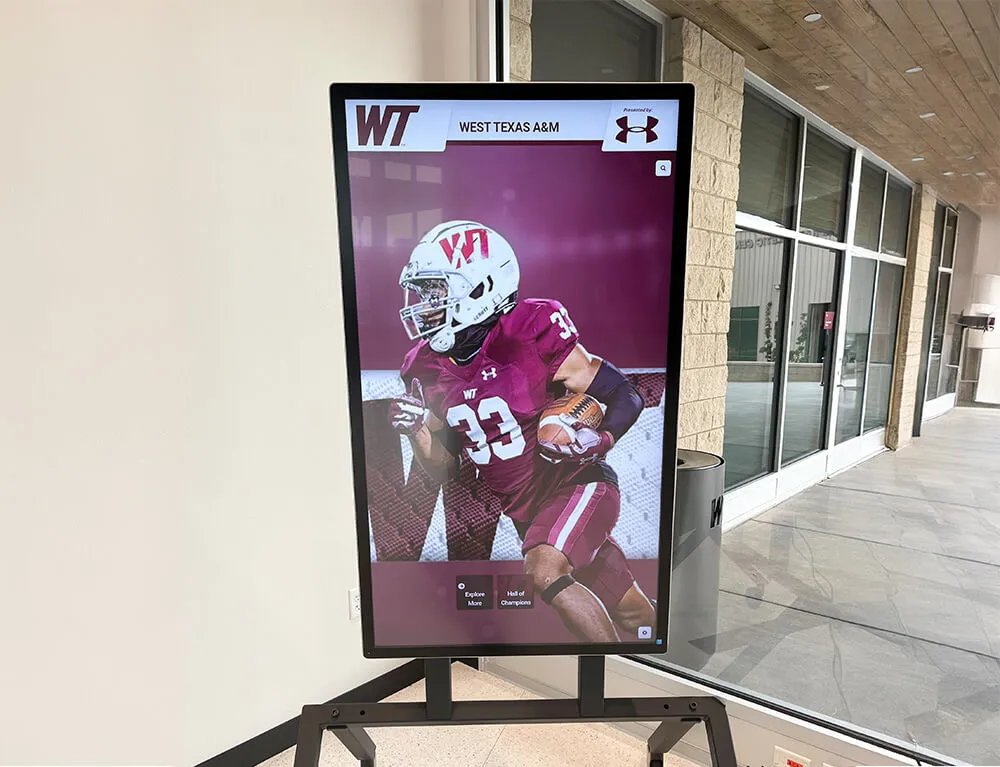
Interactive touchscreen systems in athletic hallways let visitors explore donor profiles, program history, and athletic records through an engaging digital interface
Recognition Categories Specific to Athletic Booster Walls
The most effective athletic booster spotlight walls organize recognition around categories that reflect how booster giving actually works, rather than imposing generic nonprofit recognition tiers that don’t map to athletic program culture.
Tenure-Based Recognition
Recognizing the longevity of booster membership communicates something different from recognizing the size of a single gift. A donor who has renewed booster membership for fifteen consecutive years has shown consistency, patience, and loyalty that deserves its own recognition tier—separate from and complementary to recognition based on giving amount.
Tenure recognition categories that resonate in athletic booster contexts:
- Founding Members: donors present from the booster club’s establishment or from a significant organizational milestone
- Decade Club: members who have maintained continuous membership for ten or more years
- Season Sponsors: donors who commit to annual giving at a named level for three or more consecutive seasons
These categories create aspirational pathways for newer members while honoring the people who were there before winning seasons made the program easy to support.
Program and Sport Designations
Athletic booster organizations often support multiple sports programs, and recognition that acknowledges sport-specific commitment creates stronger connection for donors whose giving is driven by personal ties to particular teams. A parent who has supported the swimming program for eight years feels differently seen by recognition that specifically acknowledges their support of aquatics rather than lumping their contribution into a general booster tier.
Consider organizing a portion of the spotlight wall by sport, with each sport’s dedicated booster section listing the supporters who have specifically supported that team’s operations, travel, equipment, or scholarship needs. The same philosophy that drives coach appreciation and recognition programs—specificity and genuine acknowledgment of contribution—should guide booster donor recognition categories as well.
Capital Project Naming
When booster funds are directed toward specific capital improvements, naming recognition on the facility improvement itself should be complemented by recognition on the booster spotlight wall that connects the project to the broader donor community. This dual recognition—a plaque on the scoreboard itself and a corresponding entry on the booster spotlight wall—creates complete attribution visible in both the program’s recognition destination and at the point of impact.
A comprehensive donor wall guide for schools and nonprofits provides detailed frameworks for structuring capital recognition programs alongside annual giving acknowledgment—approaches that transfer directly to athletic booster spotlight wall design.
Designing an Athletic Booster Spotlight Wall That Works
Design decisions determine whether a booster spotlight wall functions as a memorable community landmark or an overlooked installation that nobody reads. Athletic recognition displays compete visually with championship banners, trophy cases, team photos, and athletic murals—the design must hold its own in a visually active environment.
Incorporating School and Athletic Identity
A booster spotlight wall should look like it belongs to the athletic program, not like a generic donor recognition product installed by a vendor. This requires intentional design choices:
School colors throughout: Primary and secondary colors should appear in the design—whether in shield finishes, panel backgrounds, header graphics, or frame treatments. A display that uses institutional colors reads as intentional tribute rather than generic installation.
Athletic imagery integration: Logos, mascots, and sport-specific iconography give the wall visual anchors connecting recognition to athletic identity. Many schools incorporate a large-format mascot graphic or institutional seal as the focal point around which donor recognition radiates.
Typography consistency: Donor names, giving levels, and section headers should use fonts consistent with the school’s broader athletic branding. Consistency signals intentionality; inconsistency signals afterthought.
Hierarchy and Legibility
A booster spotlight wall serves viewers at multiple distances—people approaching from across the gymnasium should see the overall visual impression, while people standing in front of the display should be able to read individual names and entries clearly. Design choices should serve both viewing experiences:
- Section headers and giving tier labels in larger type, readable from 10–15 feet
- Individual donor names in a size appropriate for 3–5 foot reading distance
- Sufficient contrast between text and background that names remain legible under athletic facility lighting conditions
- Adequate spacing between entries to prevent visual crowding that makes the display feel overwhelming rather than celebratory
Expansion Planning
Most athletic booster communities grow over time, and a spotlight wall that cannot accommodate new donors without a full redesign will either stagnate or require expensive reinstallations. Physical installations should include either open mounting space for future plaques or a modular system allowing expansion without disruption to existing recognition.
Digital installations solve the expansion problem entirely—new donors can be added to touchscreen systems without any physical changes to the display hardware, making digital recognition particularly practical for active booster programs adding new donors each season.
Placement Strategy for Maximum Visibility and Impact
The most thoughtfully designed booster spotlight wall produces limited impact if it is installed somewhere nobody visits. Placement decisions should maximize both daily visibility and visibility during high-attendance events.
High-traffic athletic corridors leading to gymnasiums, locker rooms, or weight rooms ensure that athletes see the display regularly—not just during game days but throughout the practice week. When athletes pass donor recognition every day, the names become familiar; the people behind them become part of the program’s community in a tangible way.
Athletic lobby entrances position booster recognition at the first impression point for visiting teams, officials, and families attending events. A well-designed spotlight wall in the athletic entrance communicates program quality and community investment before a single game is played.
Adjacent to championship banners and trophy cases places donor recognition in direct visual conversation with the outcomes that donations support. The connection between community investment and on-field achievement becomes immediately visible in a single facility environment.
Schools considering how to make the most of lobby and corridor space can benefit from school lobby design ideas that address how physical and digital recognition elements work together in entrance environments.
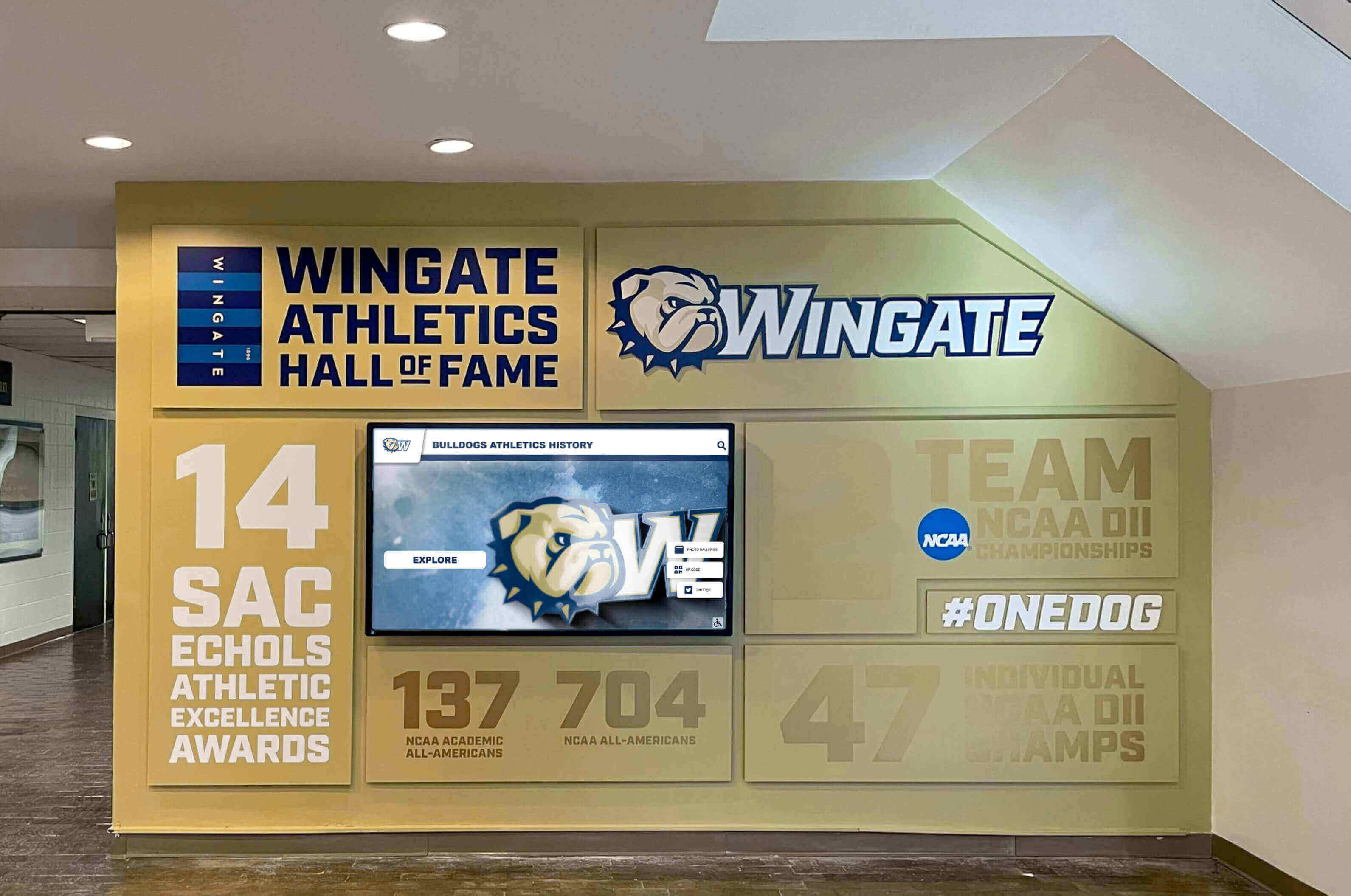
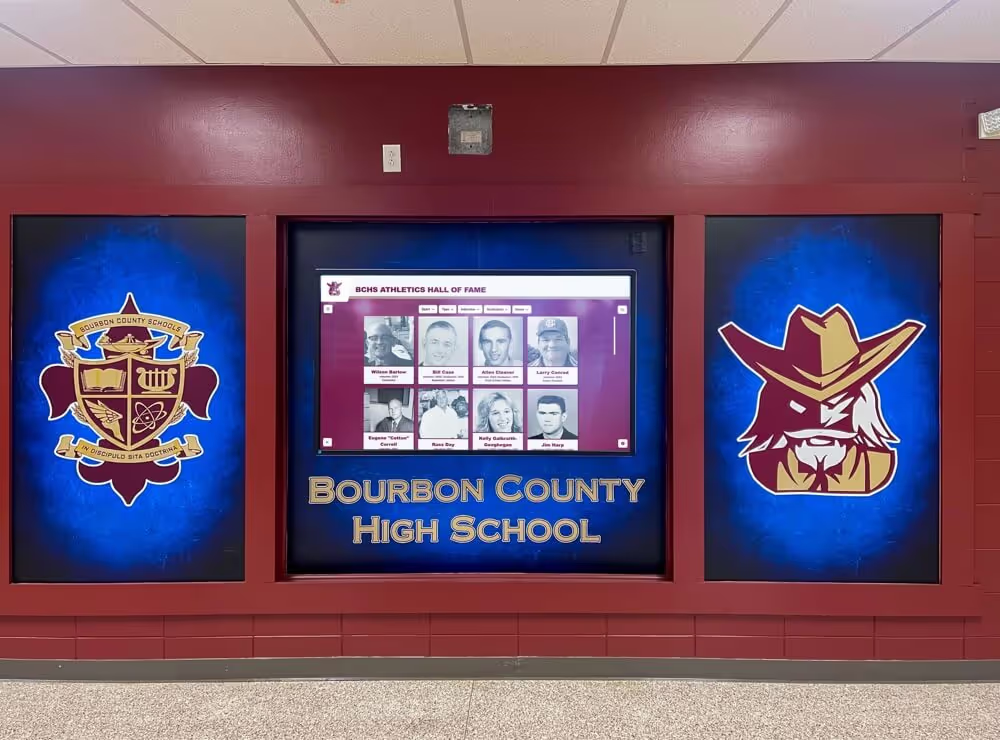
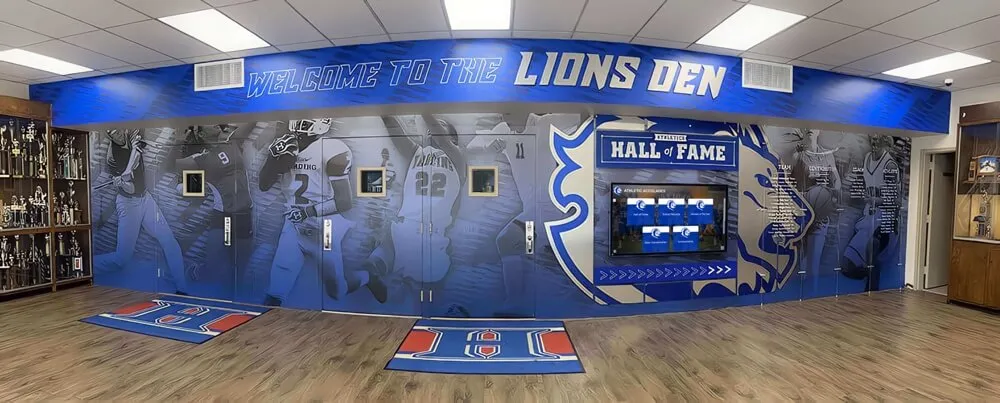
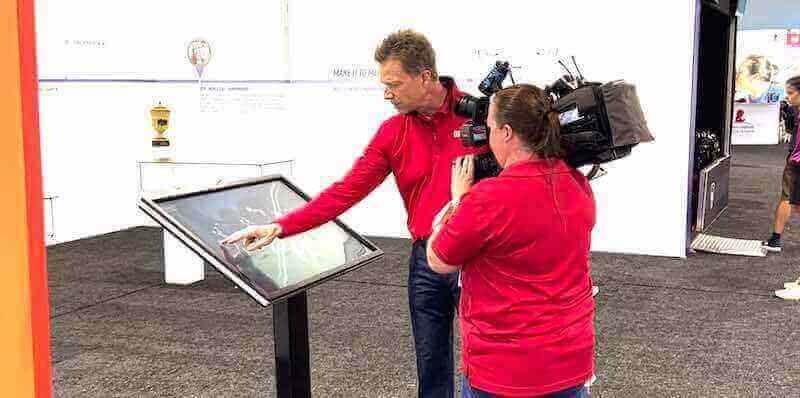
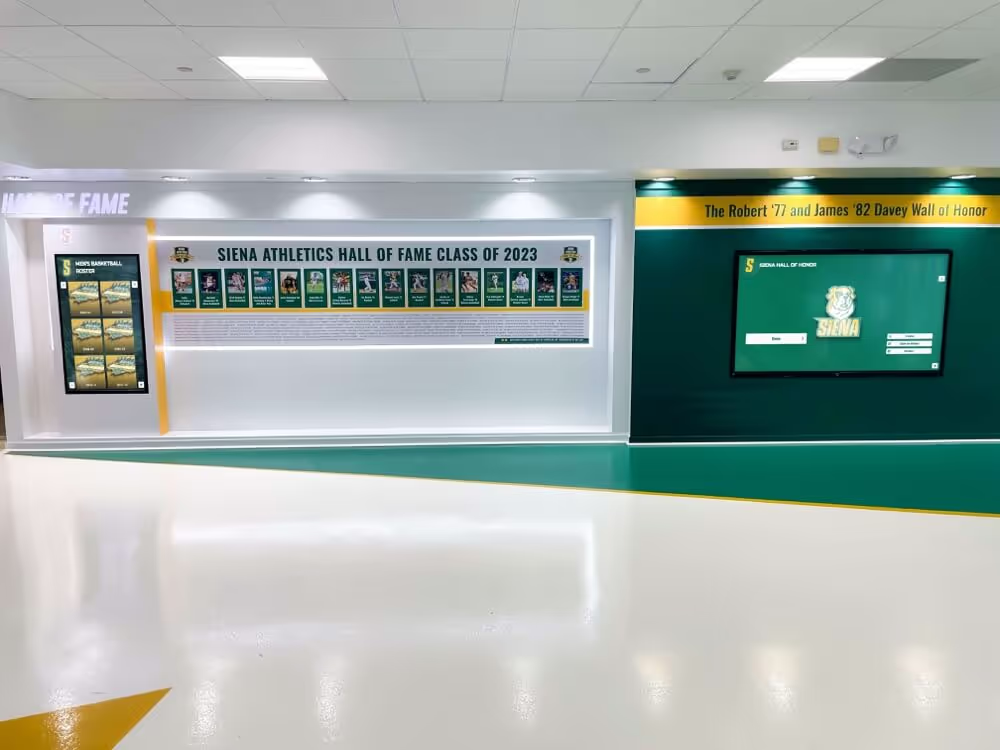
Lobby placement positions booster spotlight walls at the first impression point for every visitor, family, and competing team entering the athletic facility
Building a Tiered Recognition Structure for Booster Donors
A tiered recognition system creates aspirational pathways that motivate giving upgrades while ensuring every contributor receives appropriate acknowledgment regardless of level. Athletic booster organizations that implement clear, visible tiers typically see stronger retention rates and larger average gifts than those with undifferentiated recognition.
According to the National Federation of State High School Associations, booster clubs and parent organizations fund a substantial portion of high school athletic budgets nationwide—in many districts, 30–40% of total program costs. Recognizing the donors behind that investment with a structured, tiered spotlight wall honors both the financial contribution and the community culture that produces it.
Sample Booster Spotlight Wall Tier Structure
While specific dollar thresholds vary by program size and community capacity, a tier structure that works for many high school athletic booster organizations includes:
Platinum Boosters / Program Champions: Donors at the highest annual giving levels, typically $1,000+. These supporters appear prominently on the spotlight wall with individual recognition including name, years of support, and optionally a photo or personal statement. Physical implementations might use premium materials—cast metal shields, engraved granite, or brushed bronze—at a larger size than lower tiers.
Gold Boosters / Season Sponsors: Mid-level annual giving, typically $500–$999. Individual name recognition at standard sizing, organized by sport affiliation or alphabetically within the tier. Some programs add a distinctive material finish (gold anodizing, for example) to physically differentiate this tier.
Silver Boosters / Team Supporters: Entry-level annual giving, typically $100–$499. Grouped or listed recognition rather than individual panels, often organized by sport or by graduating class year. Digital systems can give every silver-tier donor a full individual profile even if physical space constraints mean smaller visual footprints.
Founding Boosters (cross-tier): A special category cutting across annual giving tiers that recognizes donors present since the program’s founding or a significant organizational milestone. Founding recognition typically uses distinctive visual treatment—a special badge, logo, or color—applied alongside whatever tier the donor also occupies.
Multi-Year Commitment Recognition: Separate callouts for donors who have maintained any tier of membership for 5, 10, or 15+ consecutive years. Tenure recognition communicates that consistency is valued as much as gift size, which resonates powerfully with the families who have supported programs through lean years as well as championship seasons.
From Concept to Installation: Implementation Steps
Moving from an idea for a booster spotlight wall to a finished installation requires coordination across the booster organization, athletic department, and school administration. A practical implementation sequence helps avoid the delays and scope creep that defeat many well-intentioned recognition projects.
Step 1 — Donor data audit: Before designing anything, compile and verify the complete list of donors to be recognized. Confirm current names, giving histories, tier eligibilities, and any special recognition categories (founding members, multi-year designations). Data gaps identified at installation time are expensive; data gaps identified at the planning stage are just a to-do list.
Step 2 — Recognition policy decisions: Establish written policies covering minimum giving thresholds for each tier, tenure calculation methods, how deceased donors are handled, and procedures for updating recognition when donors’ circumstances change. These decisions need board approval before installation to prevent conflicts later.
Step 3 — Format and technology selection: Decide whether the installation will be physical, digital, or hybrid. For programs with active donor communities and plans to grow, digital recognition technology offers long-term scalability that physical-only installations cannot match. Programs prioritizing cost-effective, low-maintenance recognition may find a well-designed physical installation with modular expansion capability the stronger choice.
Step 4 — Design development: Work with a designer familiar with athletic environments to develop a display that incorporates school branding, handles the visual hierarchy clearly, and translates well across the specific lighting and viewing conditions of your facility.
Step 5 — Content development: Gather photos, personal statements, and program descriptions for donors who will appear in profile format. This step takes longer than expected—allow six to eight weeks for outreach, collection, and approval.
Step 6 — Installation and unveiling: Plan a launch event that gives recognized donors a reason to attend. An unveiling during homecoming weekend, a championship celebration, or the annual booster banquet creates an occasion that honors donors publicly in front of the athletic community.
Maintaining and Growing the Booster Spotlight Wall Over Time
A booster spotlight wall is not a one-time installation—it is a living document of community investment that should grow, evolve, and be maintained with the same care as any other permanent athletic facility element.
Annual update cycles ensure new donors are added promptly and giving tier progressions are reflected accurately. Physical installations should have a designated process for new plaque orders, typically coordinated by the booster club treasurer in conjunction with the athletic director.
Tenure milestone updates should be built into the annual cycle as well—donors reaching 5-year, 10-year, or 15-year marks deserve acknowledgment of that milestone, not just continuation of their current tier recognition.
Content refreshes for digital systems keep profiles current and relevant. Profile photos should be updated when significantly outdated; impact stories should be refreshed when programs they describe have evolved.
Programs exploring strategies to sustain and grow booster engagement alongside recognition programs will find proven booster fundraiser ideas for schools a useful complement to recognition wall planning—recognition and fundraising reinforce each other when the two programs are designed together.
Connecting Booster Recognition to Fundraising Outcomes
Athletic booster organizations that invest in visible, meaningful recognition typically see direct fundraising benefits—not because recognition transacts directly into giving, but because recognition reinforces the culture of acknowledgment and appreciation that makes sustained giving feel worthwhile.
When prospective booster donors visit a facility during a game or event and see a well-designed spotlight wall honoring current members, several dynamics work in favor of giving:
Social proof: Seeing that many families in the community have chosen to support the program validates the decision to give. A robust spotlight wall communicates that booster membership is normal, expected, and widespread—not a niche commitment for unusual donors.
Aspiration: Visible giving tiers with clear recognition differentials create aspirational pathways. A parent who currently gives at the silver level can see what gold recognition looks like and consider what it would mean for their family to appear in that tier.
Legacy visibility: Multi-year and founding member recognition shows that sustained support creates lasting recognition—a powerful message for families making decisions about whether to continue or increase their booster membership.
Programs that take recognition culture in athletics seriously find that formal donor recognition programs amplify the culture of appreciation that makes athletic communities distinctive. The same values that drive player-of-the-month programs and senior night tributes apply directly to the booster donors who make those programs financially possible.
Schools with existing physical recognition elements—traditional gym banners, printed signage, static plaques—often find that evaluating replacing expensive gym banners with digital recognition is a natural starting point for upgrading the athletic recognition environment as a whole, with the booster spotlight wall as one component of a broader digital recognition strategy.
The benefits of digital recognition platforms extend to the comprehensive honoring of community accomplishments across athletic, academic, and civic contributions—making the investment in digital infrastructure doubly valuable for schools that want a unified recognition environment.
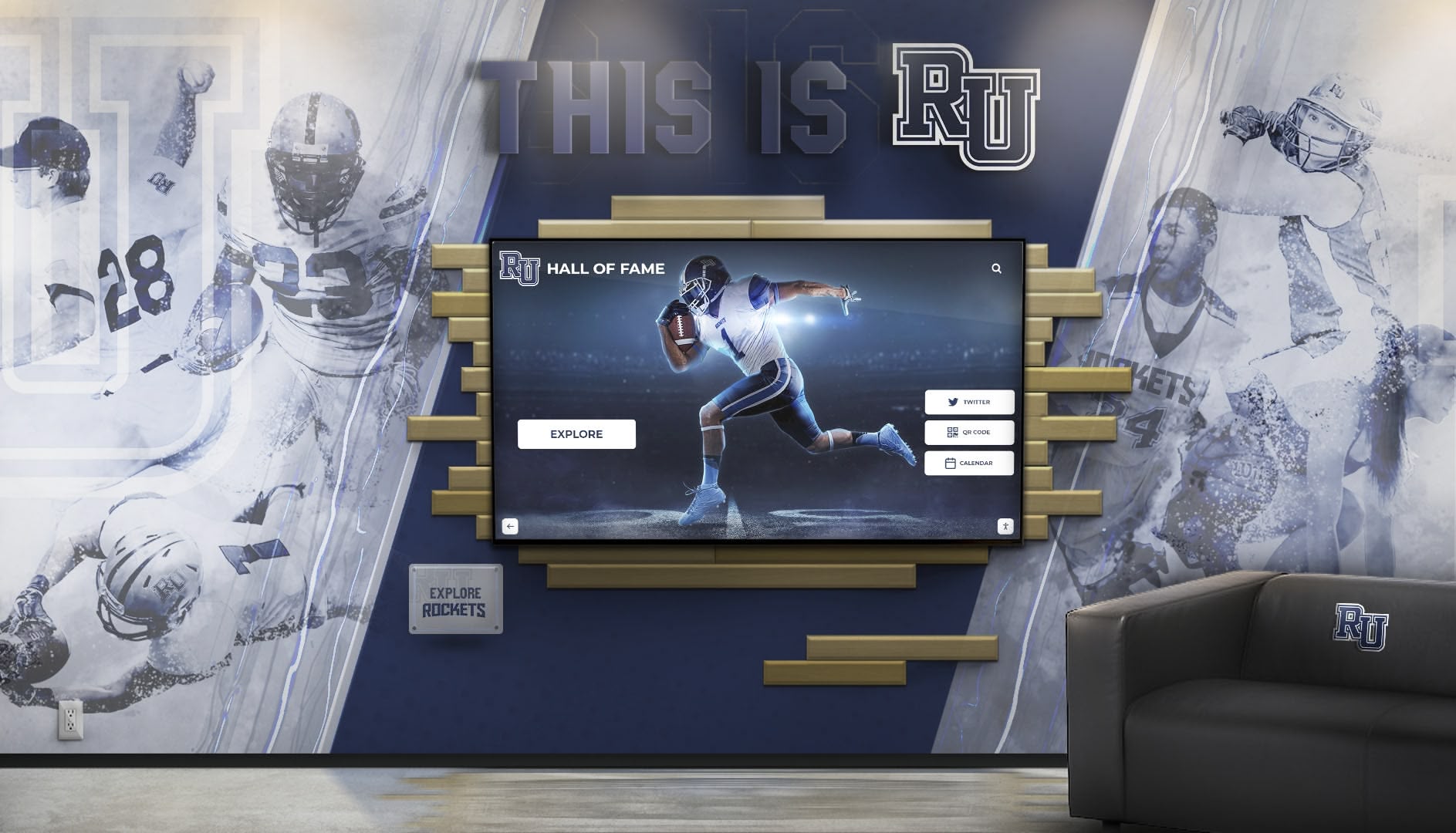
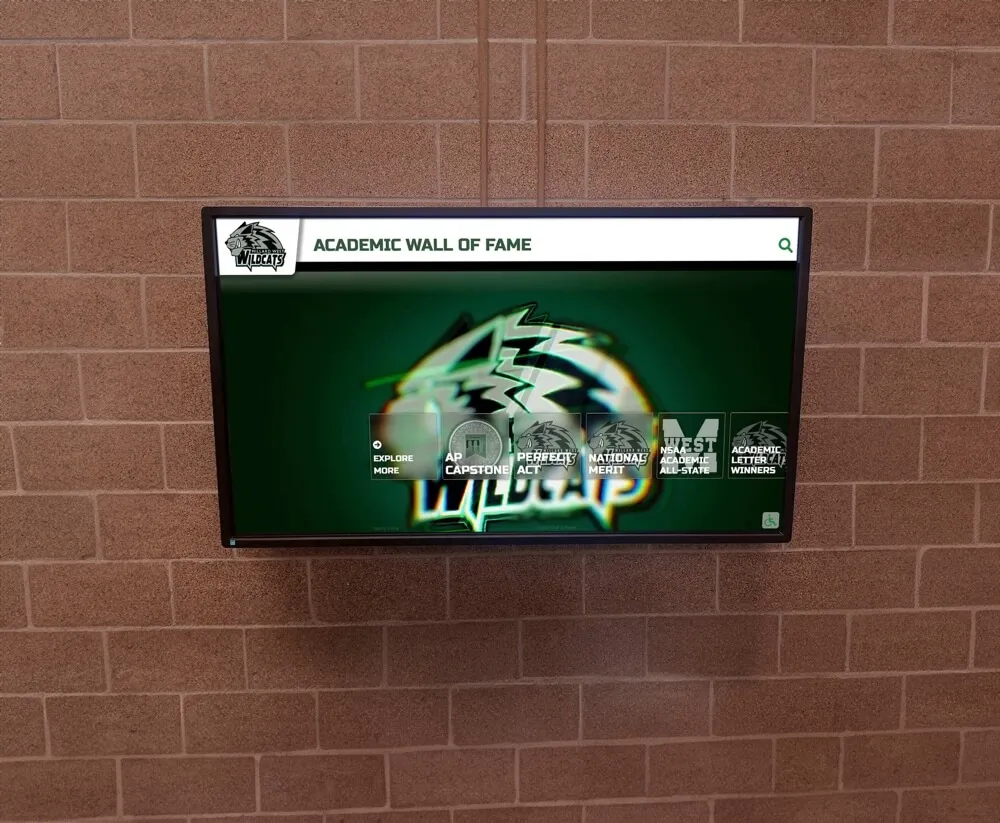
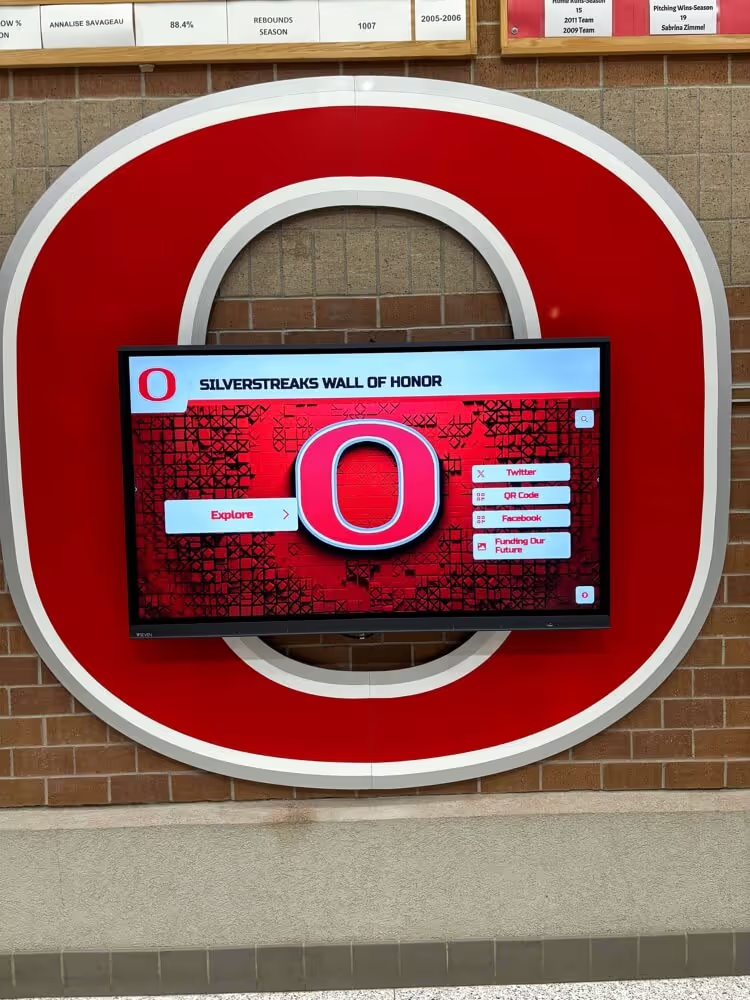
Rocket Alumni Solutions builds interactive recognition systems that combine athletic imagery with digital donor profiles, letting booster communities tell their full story in a single display
Frequently Asked Questions About Athletic Booster Spotlight Walls
What is an athletic booster spotlight wall?
An athletic booster spotlight wall is a dedicated recognition display installed in an athletic facility—gymnasium, fieldhouse, athletic corridor, or sports lobby—that specifically honors the donors, families, and supporters who contribute to the athletic booster club. Unlike general institutional donor walls, an athletic booster spotlight wall focuses on giving that directly funds athletic programs: annual booster memberships, capital facility improvements, scholarship sponsorships, equipment purchases, and travel funding. The display typically organizes recognition by giving tier, sport affiliation, or tenure category and may incorporate physical plaques, digital touchscreens, or hybrid elements combining both formats.
How is a booster spotlight wall different from a general donor wall?
A booster spotlight wall differs from a general donor wall in audience, location, content, and recognition categories. General donor walls typically appear in school main lobbies or administrative areas and recognize all institutional gifts together, regardless of purpose. Booster spotlight walls appear in athletic facilities, recognize specifically athletic-focused giving, organize recognition around booster-specific categories (tenure membership, sport affiliation, capital project attribution), and speak to an audience of athletes, coaches, and sports families who understand the specific programs being supported. The contextual placement—alongside championship banners, trophy cases, and athletic imagery—creates recognition that lands with appropriate meaning rather than general institutional acknowledgment.
What recognition categories should an athletic booster spotlight wall include?
Effective athletic booster spotlight walls typically include several recognition categories: annual giving tiers (organizing donors by total annual contribution amount), tenure recognition (honoring members who have maintained continuous booster membership for 5, 10, or 15+ years), capital project naming (attributing specific facility improvements to the donors who funded them), scholarship sponsors (recognizing families who fund named student athlete scholarships), sport-specific recognition (grouping supporters by the athletic programs they specifically support), and founding member designation (honoring donors present since the booster organization’s establishment). The most meaningful booster spotlight walls use categories that reflect how booster giving actually works, rather than imposing generic nonprofit recognition tiers that don’t connect to athletic program culture.
Should an athletic booster spotlight wall be physical or digital?
Both physical and digital formats have distinct advantages, and many programs implement hybrid systems. Physical installations—engraved shields, bronze plaques, framed panels—communicate permanence and prestige that many donors deeply value, require no technology infrastructure, and maintain professional appearance over decades with minimal maintenance. Digital and interactive systems offer unlimited capacity as booster communities grow, rich multimedia storytelling capability, real-time updates for new donors, and engagement features that make visitors active participants. Programs with small, stable booster communities and limited technology budgets often do well with high-quality physical installations. Programs with growing donor bases, significant capital project histories to document, or interest in detailed donor storytelling typically benefit from digital or hybrid approaches that can scale without physical reinstallation.
What does an athletic booster spotlight wall cost?
Costs vary significantly based on format, size, materials, and installation complexity. Basic physical plaque arrays using engraved aluminum or cast metal shields typically range from $2,000–$8,000 for 50–100 donors, with per-plaque additions of $50–$200 for new donors over time. Higher-end physical installations using custom metalwork, premium materials, or large-format graphic elements range from $8,000–$25,000+. Digital touchscreen donor display systems start around $8,000–$15,000 for hardware, software, and initial content development, with annual software subscription costs of $1,500–$3,500 and the advantage of unlimited donor capacity without additional hardware investment. Hybrid systems combining physical architectural elements with digital displays typically range $15,000–$40,000 depending on scope. Many booster organizations fund the initial installation through a specific capital campaign targeting current donors, framing the spotlight wall itself as the recognition project worth funding.
How can a booster spotlight wall help with future fundraising?
A well-designed athletic booster spotlight wall directly supports future fundraising by making the culture of giving visible to prospective donors. When families attending their first game or event see that a significant community of other families has chosen to support the program through booster membership, social proof reinforces the decision to give. Clear giving tier structures with visible recognition differentials create aspirational pathways that motivate upgrades from lower tiers. Multi-year and founding member recognition demonstrates that sustained giving creates lasting acknowledgment—valuable messaging for retention conversations with current members. And for major donors considering capital project funding, a spotlight wall that prominently attributes previous capital gifts to specific donors provides compelling evidence that significant contributions receive significant recognition.
Making Your Booster Spotlight Wall the Centerpiece of Athletic Recognition
An athletic booster spotlight wall is ultimately about respect: the respect that a program shows for the people who believed in it before it was winning championships, who funded the travel budget when the district could not, who gave the scholarship that mattered to a student athlete’s life more than the score of any game. When that respect is made visible—when a family walks into the gymnasium and sees their name on a display that says the program knows who showed up for it—the recognition becomes something more than acknowledgment. It becomes part of the story the program tells about itself and the community it represents.
The ideas explored in this guide cover a spectrum of approaches: physical shield arrays that honor giving with material permanence, digital touchscreens that allow the full story behind each donor to be told, tiered structures that create aspirational pathways for giving progression, and content strategies that connect booster support to the athletic outcomes that support makes possible. The right implementation depends on your program’s size, budget, culture, and goals—but the underlying principle remains consistent across all of them: donors who power school sports deserve recognition that honors their specific contribution in the specific place where that contribution comes to life.
Athletic programs that invest in thoughtful booster recognition discover that the spotlight wall itself becomes a fundraising asset—a visible demonstration of community investment that makes the next family’s decision to join easier and the existing donor’s decision to renew feel more meaningful. Programs that treat recognition as an afterthought discover the opposite: donors who feel overlooked do not stay donors for long.
Create an Athletic Booster Spotlight Wall That Donors Are Proud to Appear On
Rocket Alumni Solutions helps athletic programs and booster organizations design and install interactive donor recognition displays that honor every contributor with the visibility and storytelling depth their support deserves. From digital touchscreen systems to hybrid installations combining physical and digital elements, our platforms are built specifically for school athletic environments.
Explore Athletic Booster Recognition Solutions